




Abstract
Most of our workforce consists of members of Generation Y, making it necessary to understand their motivations to work on projects. In this article we investigate the motivation of young project professionals in the context of four case studies. Based on self-determination theory, we outline the Conceptual Model of Young Project Professional Motivation, which is comprised of autonomy, competence, relatedness, and purpose. The study offers several contributions to theory and practice. First, the article extends the understanding to self-determination theory by operationalizing the different needs of young project professionals in projects. Second, it explicitly adds the need for purpose as a central motivator to our theoretical understanding. Third, it puts the motivators in contexts and shows that these motivators have varying levels of importance in different project and organizational contexts. From a practice perspective, the study contributes to a better understanding of how to attract and retain young project professionals in organizations, for example, by fostering work environments and career opportunities that are aligned with their needs. We conclude this article with a research agenda.
Introduction
Studies on the future of work indicate that, starting in 2020 and onward, a majority of our workforce will be members of Generation Y (UKCES, 2014). This generation of young professionals has specific expectations for their work and careers. Having grown up connected, collaborative, and mobile, they strive for work-life balance and work for organizations that demonstrate strong corporate social responsibility (Paukert et al., 2021; Walker & Lloyd-Walker, 2019). They place high value on lifelong learning, personal development, and broadening their horizons (Seiler et al., 2012).
Projects offer features that meet these expectations. Projects allow young professionals to work on their own terms, which fits this generation’s lifestyle. They enable teamwork and the exchange of ideas. Moreover, projects allow young professionals to make a positive impact or contribute to a cause they believe in, as well as learn new skills and gain new knowledge (Havermans et al., 2019; Huemann et al., 2019). As temporary organizations, projects allocate resources to address uncertainties and carry out unique endeavors (Turner & Müller, 2003) and have become a common way of organizing work (Gemünden et al., 2018; Schoper et al., 2018). This projectification implies more job and career opportunities for young professionals (Walker & Lloyd-Walker, 2019).
While projects play a crucial role in various professions (Crawford et al., 2013; Huemann et al., 2019), current studies lack insight into the specifics that attract young professionals to project work, revealing a significant gap in our understanding of motivation in project work settings, especially for young generations. The growth of projects as a way of organizing work presents challenges in establishing career paths and providing career support in these dynamic work situations. Moreover, in academia and business, there is a growing interest in closer integration of research on project management and careers given the increasingly central role of projects in a wide range of professions (Crawford et al., 2013). This is supported by scholars, such as Keegan et al. (2018), who advocate for a synergistic integration of project management and career research. Understanding what motivates young project professionals is vital, as they represent the future of work and organizations adapt their talent management accordingly. Organizations offering project opportunities may attract young professionals seeking personal growth and development. However, a comprehensive understanding of project professionals’ careers (Akkermans et al., 2020) and their motivation are lacking. Our research question is: “What motivates young project professionals to work on projects?”
To address young project professional motivation to work on projects, we conducted a multiple-case study in project-oriented organizations. We base our work on self-determination theory (SDT), which states that people are naturally inclined toward mastery, learning, and relating to others (Deci & Ryan, 2000).
We draw on career research, project management research, and motivational theory to identify what motivational factors drive young professionals to work on projects. We identify key factors and categorize them into four narratives: young project professionals are motivated by opportunities to (1) learn and develop, (2) relate and connect, (3) create and deliver, and (4) work autonomously. We relate these narratives to SDT—the three basic psychological needs of autonomy, relatedness, and competence—suggesting a Conceptual Model of Young Project Professional Motivation. Our study adds the need for purpose as an essential element of motivation in the context of project work. Furthermore, we consider the influence of different project contexts on the manifestation of motivation by examining organizations across four different industries.
The article is structured as follows. It starts by introducing young project professionals and their career aspirations; it then outlines self-determination theory. After positioning the study in its theoretical background, the article describes the multiple-case study methodology. The empirical findings are presented in two parts, using narratives to express the motivators of young project professionals. The article first discusses the overall findings from all four case studies and then offers our within-case findings to examine motivators within the specific context. Then the article develops a Conceptual Model of Young Project Professional Motivation and concludes by outlining a future research agenda.
Young Project Professionals and Their Careers
Young professionals are defined as professionals between the ages of 25 and 31 with at least a bachelor’s degree (Abbott, 1988; Lattuch & Young, 2011). In our study, we specify young professionals as members of Generation Y (Howe & Strauss, 2000)—also called Millennials—which also includes individuals born between the early 1980s and the mid-1990s (Barford & Hester, 2011). Consequently, young project professionals are individuals at the beginning of their professional careers who belong to the Millennial generation. Young project professionals are typically responsible for developing project plans, coordinating resources, managing budgets, and communicating with project stakeholders when working on projects. They are also responsible for coordinating the identification and mitigation of project risks, tracking project progress, and ensuring that projects are completed on time and within budget.
In addition to their technical skills, members of Generation Y bring unique perspectives that differ from those of other generations (Schullery, 2013; Twenge, 2010). Their personal development is particularly important to them; they expect to learn new things and ways of doing things throughout their lives (Caraher, 2015). Consequently, lifelong learning, personal development, and broadening their horizons are important in their career choices (Seiler et al., 2012). A work-life balance is important to young professionals, and work and salary are seen as the means to maintaining a desired lifestyle (Seiler et al., 2012). They choose employers based on social responsibility and behavior that match their own values and would consider leaving a company that does not align with their ideas of social responsibility (Hershatter & Epstein, 2010). When young professionals do not experience sufficient development opportunities, they might seek growth opportunities at other organizations (June & Mahmood, 2011).
Interest in this group of young professionals is widespread among practitioners (Paukert et al, 2021; Hoover, 2009). Generation Y represents a significant portion of the population and workforce. Members of this generation are an important part of the current and future workforce, and their skills, values, and perspectives will have a significant impact on the way work is done and the types of jobs that are available (Lyons et al., 2015; UKCES, 2014). Organizations are keenly interested in attracting and retaining the next generation of professionals as baby boomers exit the workforce in large numbers (Burke & Ng, 2006; Perry & Buckwalter, 2010). Overall, Generation Y is an important generation that has had and will continue to have a significant impact on society and the economy.
Young project professionals’ careers differ from traditional career scenarios that consisted of long-term contracts between employees and organizations (Lyons et al., 2015). Now, relationships between organizations and young professionals are more unpredictable, non-linear, and vulnerable to change (Birdie & Madhavkumar, 2017). This requires a reconceptualization of careers, that of boundaryless careers—“sequences of job opportunities that go beyond the boundaries of single employment settings” (Defillippi & Arthur, 1994, p. 307). This new type of career enables professionals to take charge of their own career management, be professionally mobile and constantly acquire new skills and knowledge, find meaningful work, and take advantage of new opportunities (Bredin & Söderlund, 2013; Lyons et al., 2015). Project work in particular merits consideration in this context (Akkermans et al., 2020). Project activities are organized for a limited time (Keegan & Turner, 2002); therefore, project-based careers rely on mobility (Winch, 2014).
Self-Determination Theory
SDT is a macro theory of motivation that has been applied to the areas of work motivation and management (Ryan & Deci, 2017). The theory states that both employee performance and well-being are influenced by the type of motivation employees have for their work activities (Deci & Ryan, 2000). Motivation is divided into autonomous motivation and controlled motivation. Autonomous motivation refers to motivation that is driven by an internal desire to pursue goals and values that are personally meaningful and important to someone. Controlled motivation, on the other hand, refers to motivation that is driven by external factors such as rewards or the avoidance of punishment. According to SDT, autonomous motivation is more likely to lead to long-term well-being and success than controlled motivation. Thus, self-determination refers to people’s sense of control and autonomy over their own lives (Deci & Ryan, 2000).
SDT assumes that people have three basic psychological needs that must be met for them to feel self-determined and motivated to pursue their goals and values (Deci & Ryan, 1985). These needs are autonomy, competence, and relatedness. Their fulfillment is considered essential for vital, healthy human functioning (Niemiec & Ryan, 2009). The need for autonomy refers to “the volition—the organismic desire to self-organize experience and behaviour and to have activity be concordant with one’s integrated sense of self” (Deci & Ryan, 2000, p. 231). Self-organization relates to the desire to determine one’s own actions. Ryan and Deci (2006) referred to autonomy as “self-rule” (p. 796). Autonomous attitudes are those that a person willingly supports. The need for competence refers to “feeling effective in one’s ongoing interactions with the social environment and experiencing opportunities to exercise and express one’s capacities” (Ryan & Deci, 2002, p. 7). This implies that individuals want to interact effectively with their environment. White (1959) emphasized that the behavior that leads to efficiency and performance “is not random behaviour” but rather “directed, selective, and persistent” behavior that “satisfies an intrinsic need to deal with the environment” (p. 317). The need for relatedness refers to “the desire to feel connected to others—to love and care, and to be loved and cared for” (Deci & Ryan, 2000, p. 231). It is the desire to feel connected to significant others (Vallerand & Losier, 1999). People are motivated when they form stable and protective relationships with others (Ashford et al., 2003).
Figure 1 demonstrates the relationships among different variables, indicating how people’s basic psychological needs for autonomy, competence, and relatedness are related to their overall well-being (Deci et al., 2017).
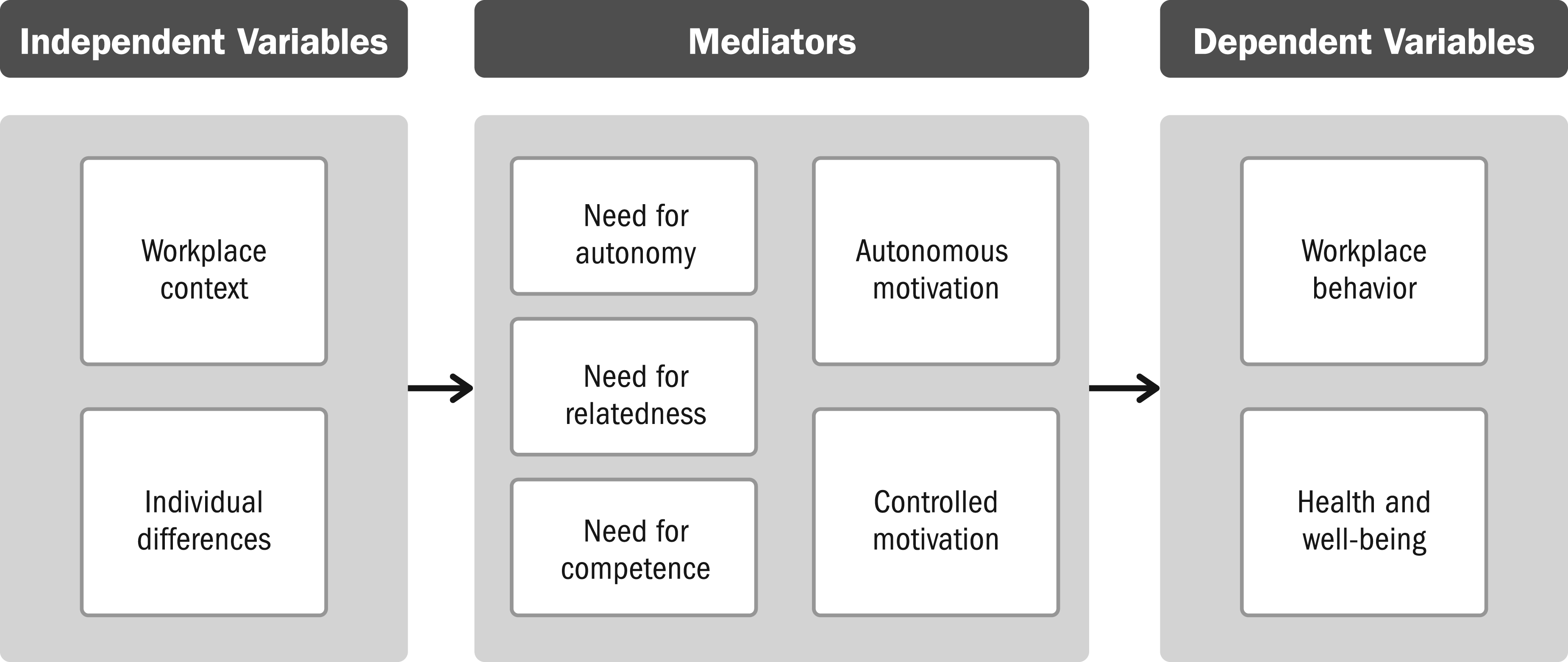
The basic self-determination theory model in the workplace (based on Deci et al., 2017).
The independent variables that influence the degree of satisfaction of basic psychological needs are the workplace context and individual differences; these in turn affect work behavior and well-being. Work behavior includes actions and decisions made in connection with one’s work or career. It consists of the effort and energy one puts into one’s work and the strategy one uses to achieve goals and meet needs. Well-being refers to feelings of happiness, satisfaction, and meaningfulness (Deci et al., 2017). In SDT, work behavior and well-being are often used as dependent variables because they are thought to be influenced by the degree to which basic psychological needs are satisfied and by feelings of self-determination. Contextual variables indicate the extent to which the satisfaction of basic needs is supported or hindered by organizational or project conditions. Individual differences have been measured with general causality orientations or with extrinsic and intrinsic goals (Deci & Ryan, 1985; Ryan et al., 1996). Supporting people’s autonomy, competence, and relatedness promotes a sense of self-determination, which increases well-being. SDT contains two mediating sets of variables that help explain the relationships among work context, performance, and well-being. These mediating variables are satisfaction of the three basic psychological needs and autonomous versus controlled motivation (Deci & Ryan, 1995).
Research Approach and Method
Given the exploratory nature of our research and our interest in the project context, we conducted an in-depth multiple-case study (Eisenhardt, 1989) that provides context-specific insights (Flyvbjerg, 2006; Martinsuo & Huemann, 2021a).
Sampling
Our sampling strategy was based on purposeful sampling (Suri, 2011) for the identification and selection of information-rich cases related to the phenomenon under study. The four organizations were selected based on specific predefined criteria. To keep some of the context stable we remained in the German-speaking countries, including Austria and Switzerland, but decided on different industries to cover different project types. Within this context, the case companies were chosen for their high level of project management maturity. This implies that these organizations have a mature approach to project management, with standardized procedures, the established role of project manager, and a consistent track record of successful project delivery. All companies were explicitly interested in the development and motivation of young project professionals, which facilitated the in-depth analysis and data collection, reinforcing the relevance of this study to their organizational development strategies. Finally, they showed an active willingness to be part of the research process, supporting an interactive and iterative approach to the study.
The four case-study organizations differ in terms of project types. Case A mainly conducts external high-tech projects as its core business but also internal projects. Case B mainly performs external engineering projects as its core business. Most of these projects are commissioned by public authorities and cities. In Case C, the focus is on internal projects, mainly transformation projects, as we only deal with the business unit of the company. Case D performs management and IT consulting projects, which are mainly external and partly internal. Figure 2 provides an overview of the sampled cases.
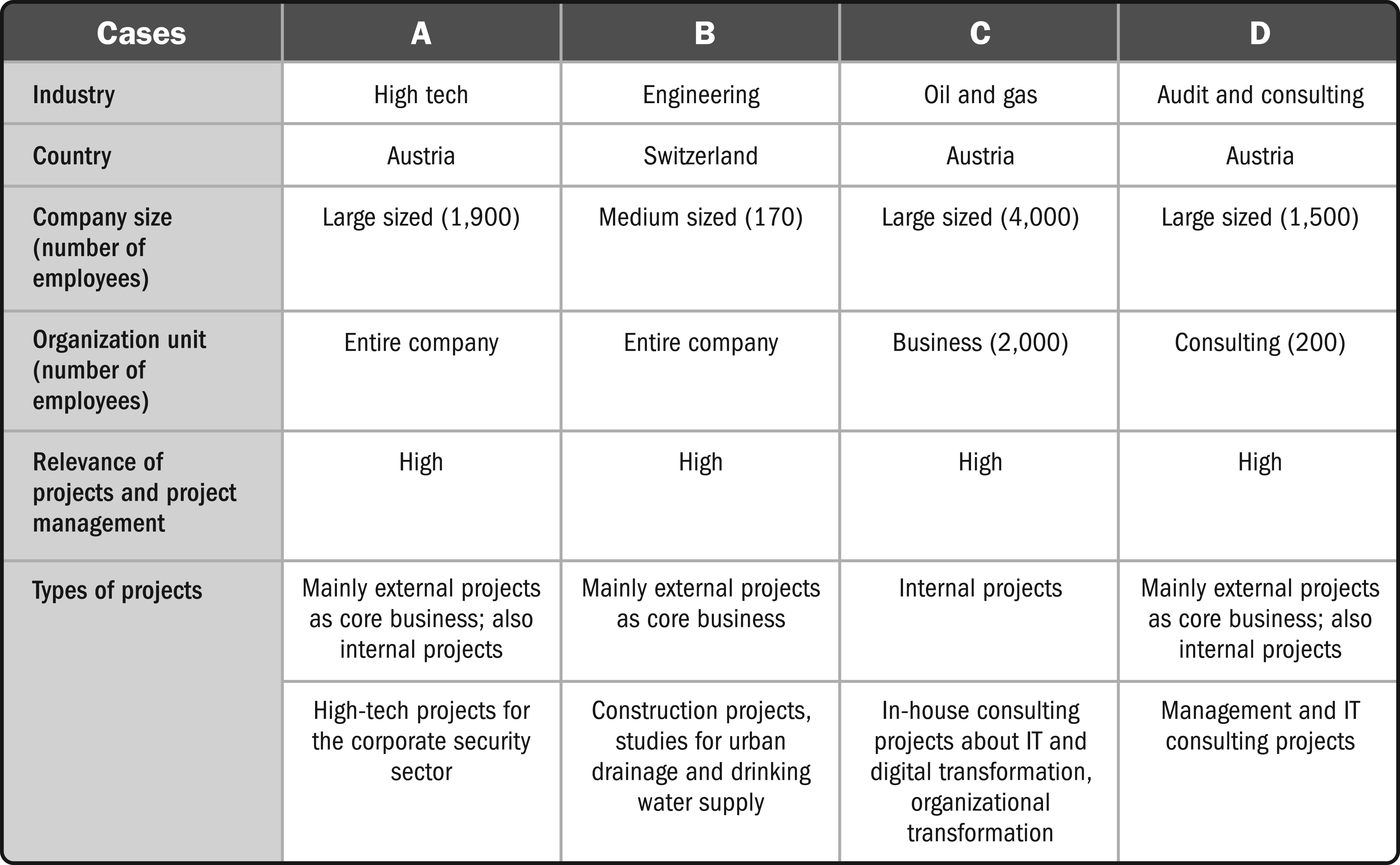
Overview cases.
Data Collection
Data collection lasted from November 2020 through July 2022. Following Martinsuo and Huemann (2021a) that case studies should be based on multiple data sources and types, we performed (1) in-depth interviews with multiple informants, (2) analyzed project-related documents, and (3) performed focus group workshops. For further details, see Appendix A: Data Sources, at the end of the article.
First, we conducted 58 interviews with professionals. These included young project professionals, project team leads, and managers (mostly HR managers). These structured qualitative interviews aimed to determine the motivators to work on projects and to understand to what extent the project itself acts as a motivator. In each of the cases, the entrance point was the project management office (PMO), which supported access to the interview partners. Interviews with managers provided us with a deep understanding of the case-related organizational context. Interviews with young project professionals aimed to understand their motivation to work on projects, the importance of projects for them, and the support they receive from the organization.
Interviews were conducted partly online (due to the COVID-19 pandemic) and partly in person. We interviewed an average of 10 young project professionals and four managers or team leaders per case study (for more details, see Appendix B: Interviews, at the end of the article). An average interview lasted 60 minutes and was conducted in English or German. In Case A, interviews were conducted in English; in Cases B, C, and D, the interviewees could choose English or German, to allow them to feel most comfortable. Interviews were transcribed and translated into English, ending in 808 pages of transcripts, which we checked for linguistic quality.
Second, we collected documents such as job descriptions, project-relevant process descriptions, work instructions, and project meeting guidelines. In total, 148 pages of documents were collected. Third, we held two focus group workshops with representatives of the case study organizations to reflect on and validate the results. The focus group workshops were documented in field notes.
Data Analysis and Interpretation
We analyzed the interview data based on thematic content analysis (Gioia et al., 2013), using an analytical approach that combines a first-order, informant-centered presentation of data with a more abstract, research-oriented second order of data analysis and theory building. We proceeded in three steps:
Initial coding involved the recognition and grouping of initial concepts into categories based on the participants’ ideas (first-order coding, n = 94). Concepts capture properties that describe a phenomenon of theoretical interest (Gioia et al., 2013). First-order concepts were grouped into second-order themes (second-order coding, n = 20). By reducing the categories developed in the first order to the development of themes, a focused coding emerged. Then, we further distilled emergent themes into aggregate dimensions that made sense of the data. This thematic development is also called the aggregate dimension (third-order coding, n = 9). For further details, see Appendix C: Coding Structure, at the end of the article.
We combined this inductive approach of theory building, with an adaptive approach in the later stages to interpret the data and conceptualize. While driven by the emerging data, we also considered SDT as a theoretical lens kept open enough to identify motivators beyond this established theory. Our basic assumption was that projects are a specific context for the motivation of young project professionals. The unit of analysis was motivation of young project professionals.
We applied a within-case study analysis as well as a cross-case analysis, to develop a better understanding of what the differences between the project and organizational contexts imply on the motivation of young project professionals.
The data derived from different sources such as interviews, projects, company documents, as well as focus group field notes. While the interviews were the core of the analysis, the other sources supported the context and helped to understand and validate the interpretations of our findings (Martinsuo & Huemann, 2023; Martinsuo & Huemann, 2021b).
Results
We present the results in two parts. First, we present the motivators of young project professionals, derived from all four case studies. Then we present the findings by putting them in the context of the single case-study organization and their projects.
Motivators of Young Project Professionals
We identified four sets of narratives related to young project professionals’ individual motivators. Narratives are a means by which people’s stories are systematically presented to show their individual experience and cultural context (Vaara et al., 2016). These narratives include data from all four cases and are the basis for our conceptual model.
“Learn and Develop” Narrative
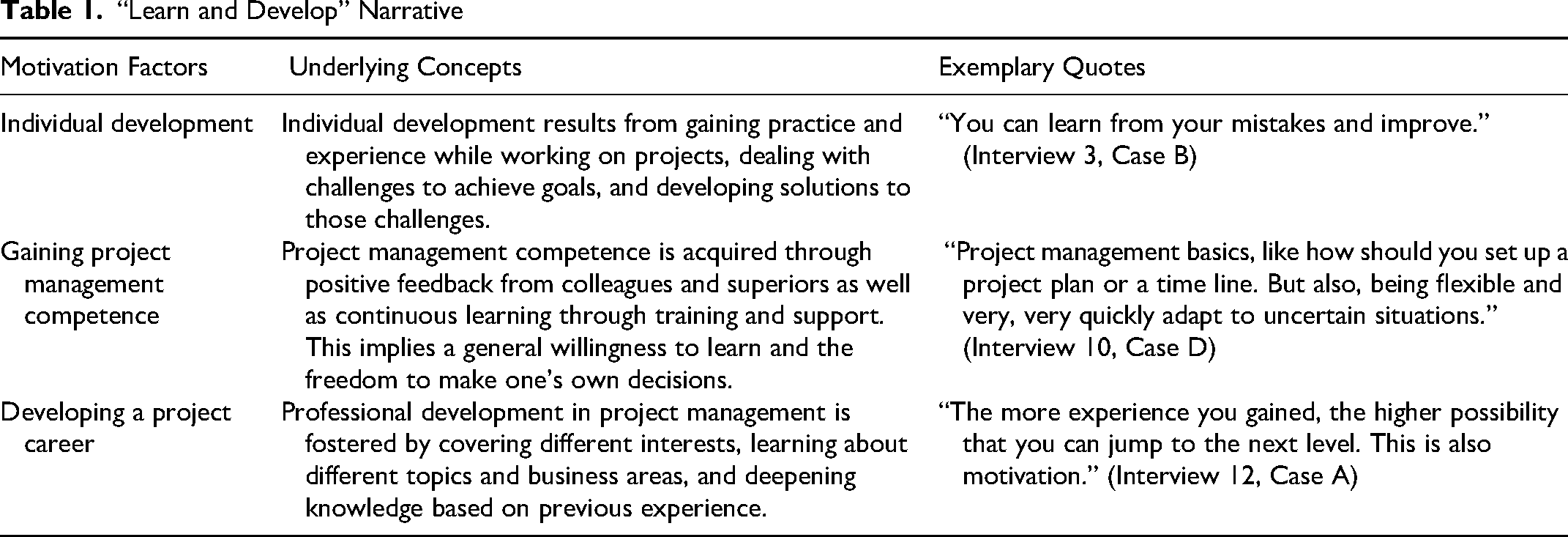
Young professionals seek individual development through new skills, experiences, and the expansion of expertise. Projects, as they present challenges, often take professionals outside of their comfort zone and lead to a sense of accomplishment upon completion of the project. By applying their new skills and experiences, young professionals look for opportunities to develop their career. This supports their personal and professional growth. Project managers are in demand in various types of projects and industries, which is attractive to young professionals seeking a diverse and varied career. Working on projects allows professionals to acquire project management skills, including the ability to identify and solve problems as they arise. Acquiring project management skills increases confidence in one’s abilities. Demonstrating these competencies leads to career advancement and growth opportunities within an organization. Table 1 provides an overview on the “learn and develop” narrative.
“Learn and Develop” Narrative
“Relate and Connect” Narrative
Young professionals seek a sense of belonging to the project. This may induce young professionals to be more personally invested and motivated to put forth extra effort to ensure project success. Belonging to a project team can enhance meaning, as project professionals consider their contributions to be meaningful and impactful.
Project work often requires collaboration with others and teamwork, which motivates young professionals who value the opportunity to work with others and contribute to a shared goal. Project professionals appreciate working with others to build relationships to support learning from and with others. Projects bring people together and create a sense of community. Overcoming obstacles together bonds the team and fosters a sense of connection.
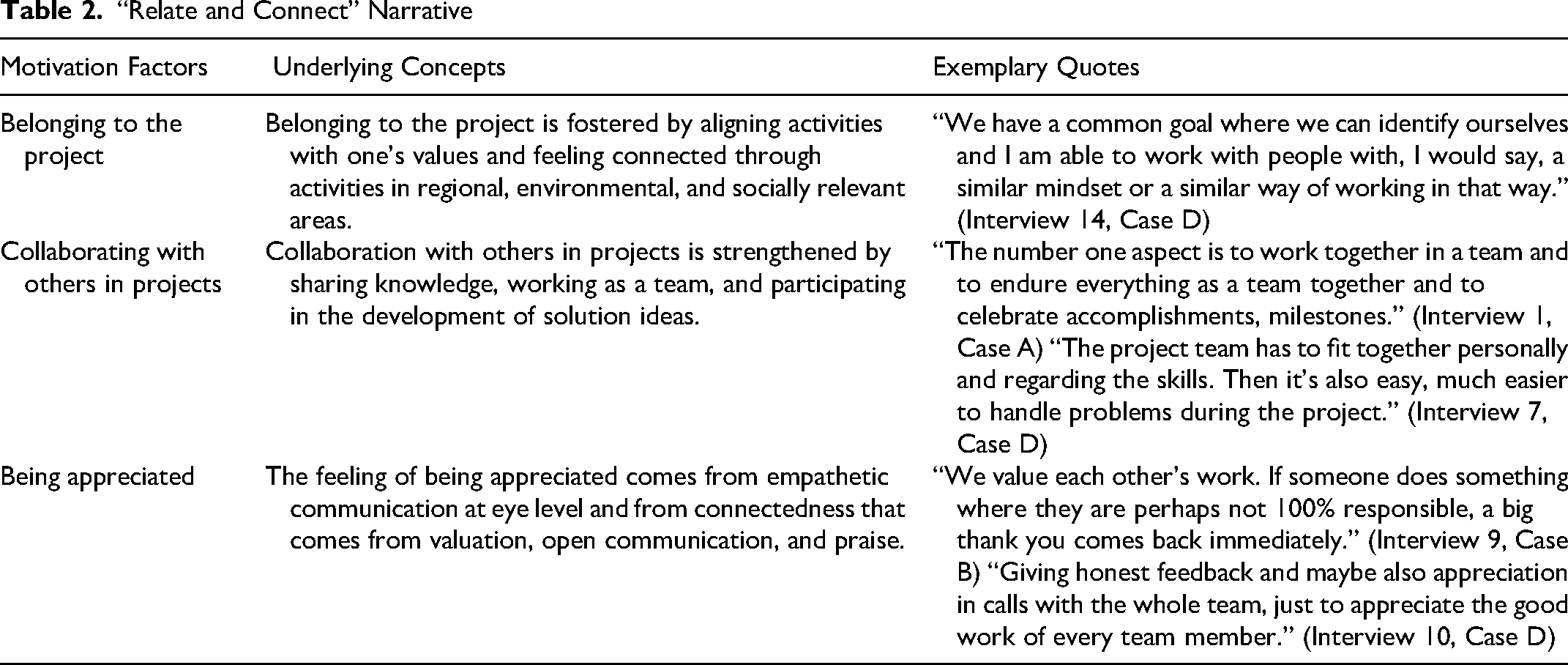
Appreciation is a major source of motivation. Appreciation refers to recognizing and valuing project team members’ contributions and efforts. Being recognized for one’s contribution to a project can provide a sense of accomplishment and validation for the demanding work one has done. It boosts self-esteem and confidence and strengthens relationships. Additionally, recognition of one’s work may increase one’s visibility within the company and lead to career advancement opportunities. Table 2 provides a summary of the “relate and connect” narrative.
“Relate and Connect” Narrative
“Create and Deliver” Narrative
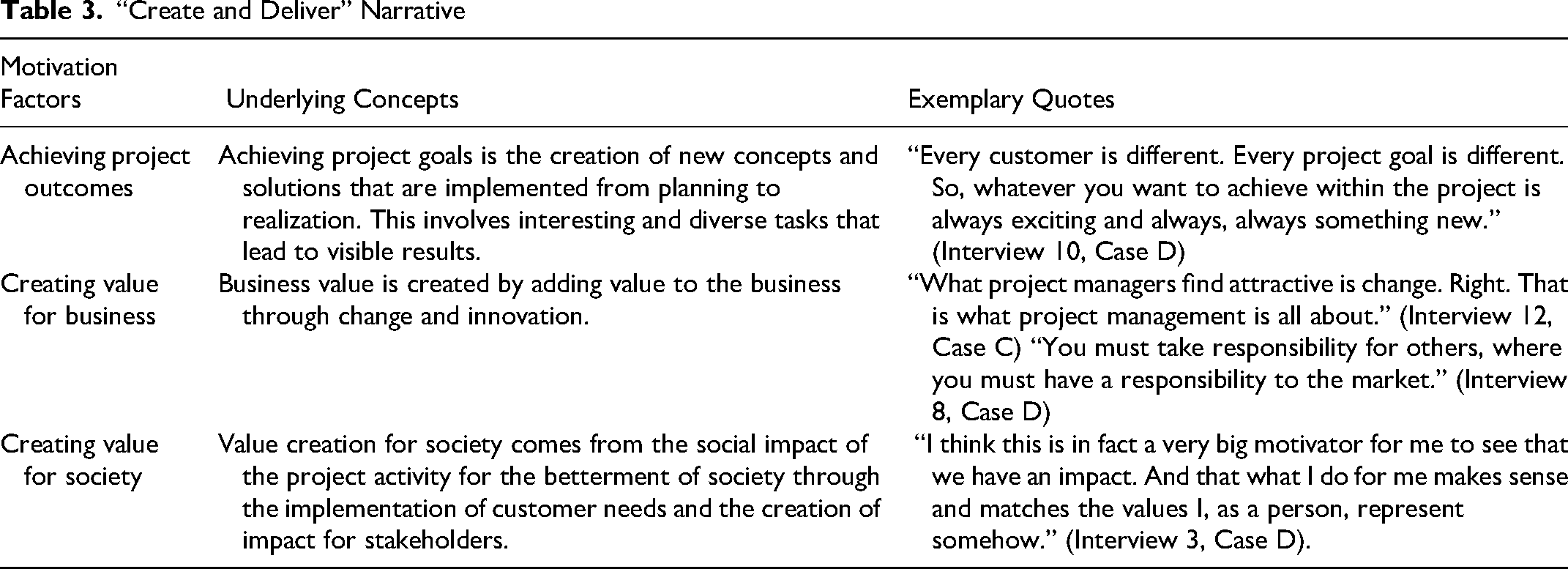
Achieving project goals gives young project professionals a sense of accomplishment and pride, especially if the project was complex and required a lot of effort. Project work is characterized by working toward a common goal and using one’s own skills and expertise to ensure reaching these goals. This creative process is fulfilling and meaningful, as project professionals understand how their contributions lead to project outcomes. Additionally, projects are often about solving problems through innovative ideas. Finding creative solutions and developing innovative ideas motivates young professionals because it gives them the opportunity to make a positive difference. Successful projects create value for business. To understand how one’s work contributes to developing business value motivates young project professionals. In terms of creating value for society, projects that address social or environmental issues can be particularly motivating and provide purpose. Table 3 provides an overview on the “create and deliver” narrative.
“Create and Deliver” Narrative
“Work Autonomously” Narrative
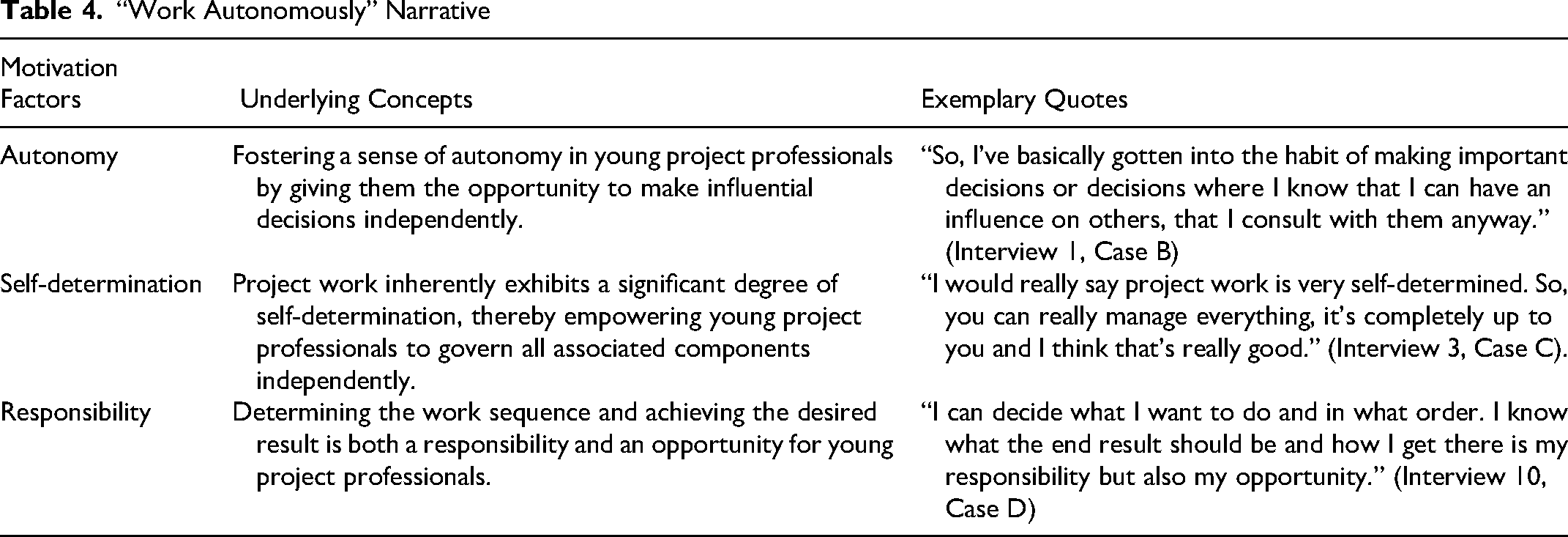
Young professionals report that projects create an environment that enables them to take responsibility and exercise self-determination, thus promoting further growth (Table 4). The autonomy to make decisions in the project is an important element in this context. This freedom enables young professionals to manage their tasks and develop solutions as they see fit when working on projects. Basing their performance on their expertise and judgment leads to greater commitment. This helps them to develop innovative solutions and achieve project goals. Additionally, the ability to control their own actions and make decisions on projects (self-determination) strengthens young professionals’ ownership of their project work. This control fosters a sense of responsibility for the project—from process to outcome. Consequently, their contributions go beyond the mere execution of tasks and have a significant impact on project success. Responsibility in this context means careful planning and execution. It encourages cocreation and strategic problem-solving with others. This increased sense of autonomous work increases motivation by highlighting the individual’s role and contribution.
“Work Autonomously” Narrative
Motivation in Context
The within-case analysis reveals the motivators inherent in the context of each of the four case organizations and their projects. The analysis indicates how different project types and organizational contexts influence motivation. Our data suggest that the importance of the narratives introduced in Tables 1 through 4 vary depending on the specific context. Figure 3 provides an overview of the perceived existence of the four narratives in the different contexts. The percentages represent the number of codes identified per narratives in the interviews.
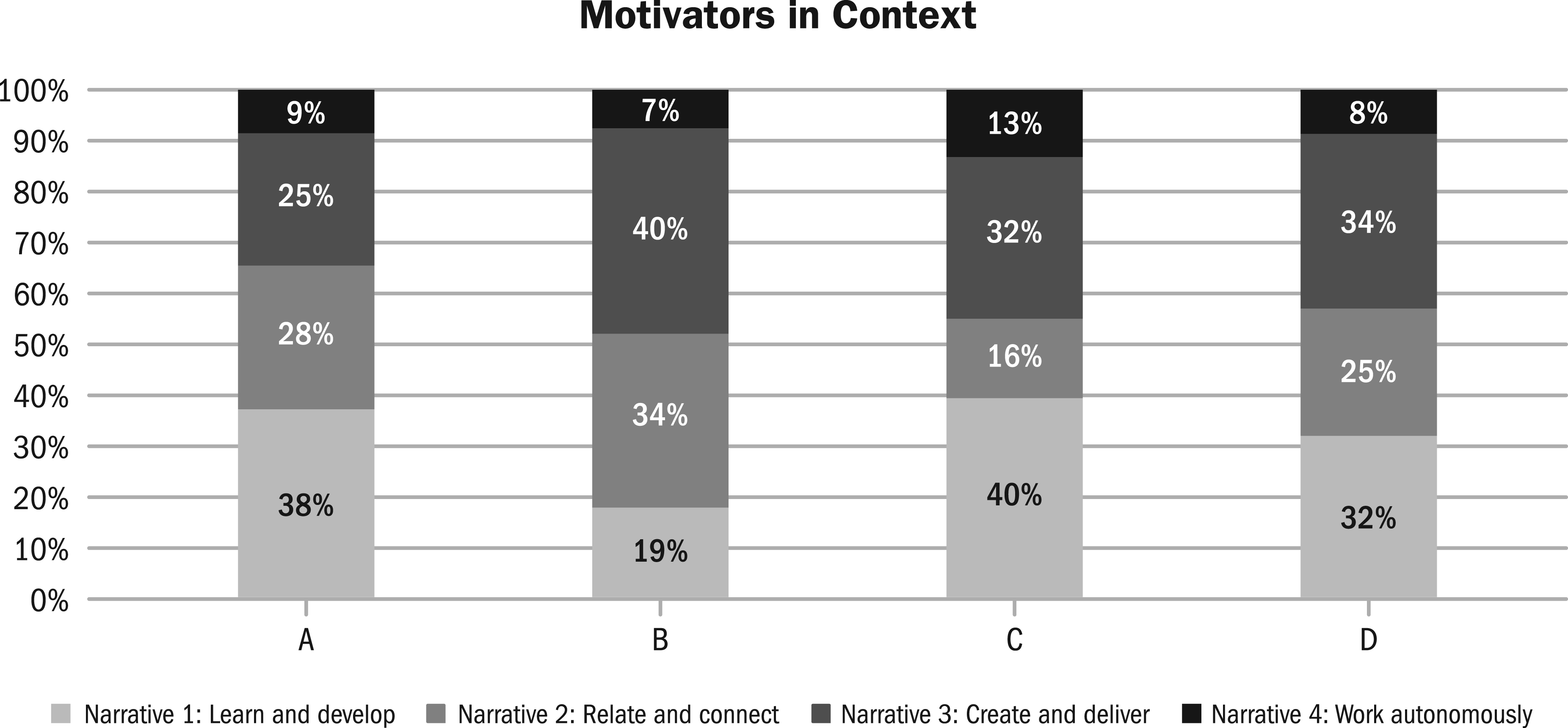
Motivators in context: Allocation of narratives across cases.
Case A: High-Tech Context—Learn and Develop
In Case A, young professionals mostly derive their motivation from the motivator “learn and develop.” The young professionals in this context find motivation in the multifaceted skill sets they can learn and then employ within these types of projects. As technology continues to evolve at a rapid pace, the acquisition and continuous upgrading of technical and interpersonal skills become a necessity. In the words of one young professional: “There are so many skills you can develop within projects. Meaning technical things and interpersonal things.” (Interview 7, Case A)
The projects require the use of their technical skills and the development of innovative solutions. This complexity needs collaboration with both internal teams and clients—an aspect that professionals find especially motivating as it fosters not only knowledge growth but also cocreation in a team. As an interviewee remarks: “I think you learn a lot about yourself, and you can develop yourself in projects, especially in learning to lead a team.” (Interview 11, Case A)
Young professionals in this context distinctly recognize the interplay between what they learn and the organization’s open communication culture. They appreciate an environment where they feel free to express their ideas, ask questions, and seek help when needed. As one project professional states: “There is an open communication culture: if I don’t know something, I don’t need to hide it. I can simply ask for help. I like that very much.” (Interview 1, Case A)
Therefore, the opportunities to learn and develop in high-tech projects provide significant motivation for these young professionals. Their desire to learning assists in their project work and enhances their professional career.
Case B: Engineering Context: Create for the Project, Company, and Society
Case B performs construction projects as well as studies on urban drainage and drinking water supply. In this context young project professionals feel motivated primarily by creating and delivering. In this context “create and deliver” is their most important motivator. One project professional explains: “I plan something and, at the end, I have the final product. And when I see that it works, then I’m satisfied. That’s actually my main requirement.” (Interview 11, Case B)
The significance of creating and delivering mainly derives from the tangible nature and the visibility of outcomes inherent to this type of project. As a young professional states: “I see that it gets realized. I see that it works.” (Interview 2, Case B)
This underlines their motivation to create and deliver as their efforts culminate in concrete results, which strengthens their sense of purpose and highlights the creation power inherent in these projects. However, these young professionals are not merely fulfilling project objectives and delivering project results—they are also crafting solutions that have far-reaching real-world consequences. The solutions developed within those projects are translated into practical applications that can have a direct impact on people’s lives. This is reinforced by the remarks of young professionals such as: “(…) and then all of a sudden you realize that this is totally exciting, because we’re making sure that there’s clean water again.” (Interview 3, Case B)
This tangible impact on society and the environment gives their work a purpose. Their project work becomes more than just a professional task; it becomes a social contribution. The manifestation of their social contributions significantly increases their motivation and commitment to their project work.
Case C: Business Unit of Oil and Gas Company: Learn, Develop, and Work Autonomously
Case C performs mainly internal projects on digital transformation, business development, and strategy. In this context, young project professionals feel motivated due to learning and development opportunities. Their projects often lead to substantial changes in organizational processes and structures within the organization. Project challenges include managing departmental interfaces, managing a variety of different stakeholders, and driving strategic developments within the organization. Young professionals develop their problem-solving, effective communication, leadership, and change management skills. In the words of one young professional: “There are so many things that we can actually learn in projects from the social component on how to deal with people, how to motivate people, how to keep them focused, how to take them out of their normal comfort zone (…).” (Interview 8, Case C)
In this context, young professionals stress the importance of working autonomously. Autonomy provided allows them to harness their individual learning opportunities. As one young professional stated: “I think [a project] increases the motivation because you can pretty much do your own thing and build on past experiences and find your own style and how you want to manage project situations.” (Interview 13, Case C)
In this context, young professionals are eager to develop new skills, tackle complex challenges, and contribute to the organization’s success.
Case D: Consulting Company—Create With Customers and Learn
Case D is a large audit and consulting company with mostly external but also internal projects. Projects relate to digitalization, transforming organizations, and business development. Young professionals enjoy both the diverse learning opportunities and the creation capabilities inherent in their project work. Consulting projects offer a stimulating professional environment. Young professionals gain exposure to a wide range of clients and industries, offering valuable insights into various organizational contexts and presenting diverse challenges to tackle. As stated by these young professionals: “Every customer is different. Every project goal is different. So, whatever you want to achieve within the project is always exciting and always, always something new.” (Interview 10, Case D) “I’ve grown a lot in my role the last at least two years, if not even longer. And this comes from meeting and facing new challenges every day and becoming more and more secure about what I do.” (Interview 3, Case D)
The dynamic and innovative nature of consultancy projects demands adaptability and openness, transforming these characteristics into integral facets of their project work. One young professional said: “Especially within a consulting company, probably the most interesting aspect is that you have different clients, you have different topics, you definitely have to be much more open and to try to adapt to the new kind of challenges that every customer or every project brings with them.” (Interview 2, Case D)
Young project professionals see that their projects can significantly impact their clients’ business operations. In the consulting context, motivation is mainly based on the opportunity to bring tangible, positive change and further develop themselves.
Comparison of Contexts
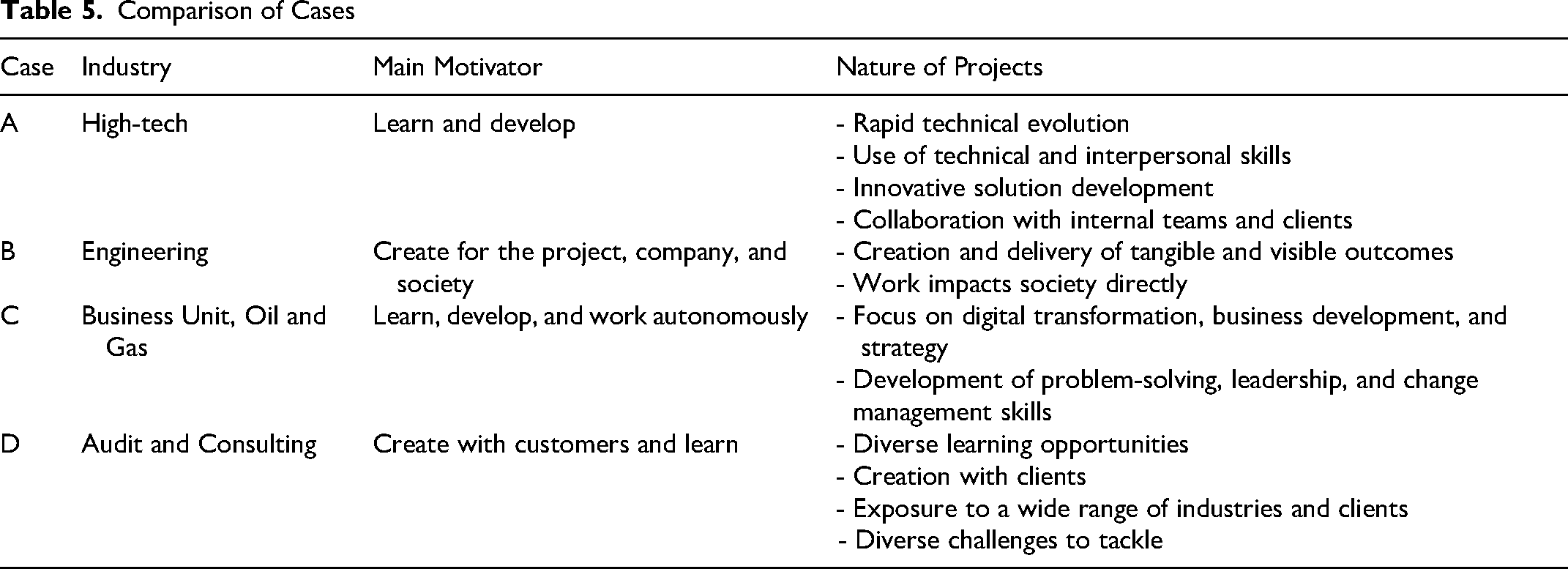
Table 5 presents a comprehensive comparison of the unique aspects of the four case studies. It emphasizes the distinct nature of projects in each case, which significantly impacts the main motivation to work on projects.
Comparison of Cases
Discussion
The study aims to identify what motivates young project professionals to work on projects. In this section we develop a Conceptual Model of Young Project Professional Motivation (Figure 4) by applying SDT.
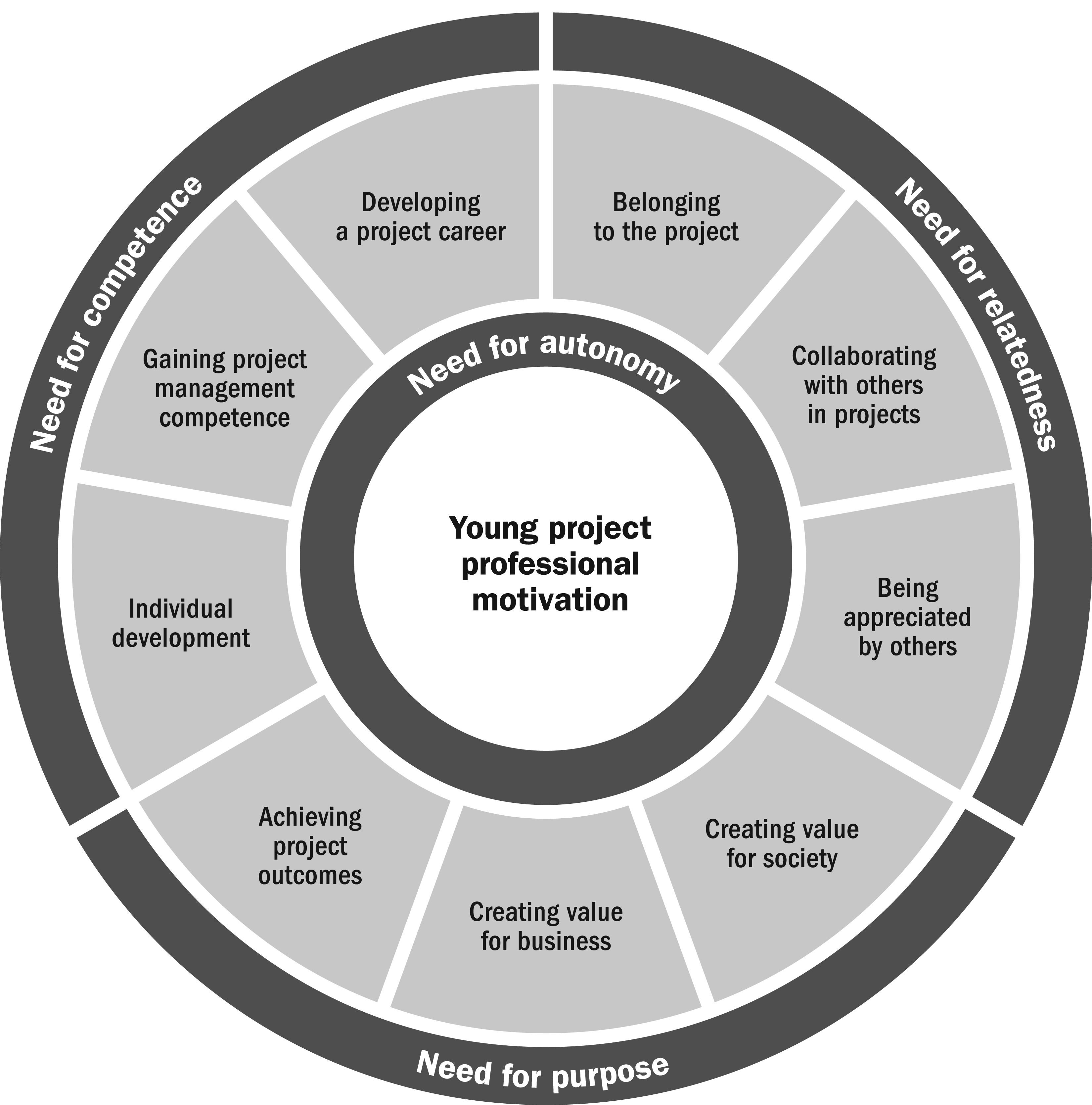
The conceptual model of young project professional motivation.
A Conceptual Model of Young Project Professional Motivation
Our empirical findings suggest different sets of motivation presented as narratives earlier in this article. These are mapped to SDT and described as the needs young professionals seek to fulfill in projects. These are the need for autonomy, the need for competence, the need for relatedness, and the need for purpose.
The Need for Autonomy
The need for autonomy is positioned in the middle of the model as we consider it to be core. The need for autonomy refers to “the volition—the organismic desire to self-organize experience and behaviour and to have activity be concordant with one’s integrated sense of self” (Deci & Ryan, 2000, p. 231). Our data suggest that the need for autonomy is the underlying need young professionals aim to fulfill in project work. Autonomy provides young project professionals with a sense of control over their work, which strengthens their sense of ownership of the project. This leads them to feel more connected to their work (need for relatedness) and enables them to perform it in the way they can develop themselves (need for competence). They also have a stronger sense of accomplishment when they feel responsible for their own work. In contrast, if young project professionals are micromanaged, cannot determine how to implement their tasks, and do not feel free in their decision-making power, the need for autonomy is violated. As two young project professionals stated: “With micromanagement, I would have a problem.” (Interview 14, Case C) “When you have people in the higher levels of hierarchy micromanaging, it becomes super inefficient.” (Interview 12, Case D)
The need for autonomy relates to the need for competence. Young project professionals are more likely to feel self-directed and motivated when they can self-determine what they learn. When young project professionals are in control of their own learning, they are more likely to take risks and explore new ideas, leading to deeper and more meaningful learning (Federmeier, 2019). This shows that autonomy influences the approach and engagement with learning. Young professionals enjoy their freedom of action when they believe they are capable of successfully completing the tasks at hand (Assor et al., 2002). This leads to higher productivity and greater well-being (Deci & Ryan, 1995). Young project professionals seek self-determination to make their own decisions to achieve the project goals. They feel motivated by the opportunity to take initiative and act according to their self-image. Research suggests that autonomy fosters a sense of independence and control over one’s own work, as well as a sense of being able to make decisions and have influence (Niemiec & Ryan, 2009).
The need for autonomy is also related to the need for relatedness, as work behaviors are influenced by how others recognize one’s feelings and work (Lopez-Garrido, 2021). Thus, young project professionals are motivated when their contributions are valued by others. As one young professional stated: “Someone says, looks great, you did really well.” (Interview 6, Case B)
This promotes a sense of connectedness. Hodgins et al. (1996) found that a sense of autonomy facilitates a more open and honest interpersonal experience. Therefore, young project professionals are more likely to collaborate or connect with others when they have ownership of their tasks and responsibilities. A sense of autonomy and relatedness also contributes to the confidence to take on more challenging tasks and responsibilities, as one young professional stated: “Simply have confidence. So, when a person gives you trust, and you made a mistake. I think most of the time, you don’t make a mistake twice.” (Interview 11, Case B)
The study data suggest that the need for autonomy relates to the motivator “create and deliver.” Young project professionals feel motivated when they have a high degree of autonomy in their project regarding how and what to create, leading them to achieve the project goals. Professionals are more creative in their work when they feel self-determined (Hon, 2012). By working in a self-determined way, young project professionals are enabled to take initiative and bring their own ideas and creativity to project work, as expressed in this statement: “So, I can decide what I want to do and in what order. I know what I want the end result to be, and how I get there is my responsibility but also my opportunity.” (Interview 10, Case D)
The Need for Competence
The need for competence is “feeling effective in one’s ongoing interactions with the social environment and experiencing opportunities to exercise and express one’s capacities” (Ryan & Deci, 2002, p. 7). In our study we identified the motivators individual development, gaining project management competence, and developing a project career. Thus, it refers to the desire to work effectively, achieve project results, and perform the required actions efficiently. A unique combination of skills required for project work and the ability to apply these skills can be a strong motivator for young project professionals, as one young professional stated: “It is a somehow crazy mixture of competencies, and I somehow check most of them quite well, so it is a good fit for me. So that is something that is quite motivating for me.” (Interview 3, Case D)
The need for competence involves knowing how to achieve various outcomes and being able to perform the required actions efficiently (Deci & Ryan, 1995; Lopez-Garrido, 2021). In the context of project work, the need for competence directly influences the learning process. Understanding how to achieve specific goals and perform required tasks drives the desire to learn and grow professionally. It encourages young professionals to continuously enhance their skills, adapt to changing project requirements, and effectively navigate through project challenges. This continuous learning reinforces their competence, leading to improved project outcomes and their own professional development.
Professionals who perceive themselves as competent are more likely to be motivated (Deci, 1975). When young project professionals see their skills and abilities contributing to project success, they are motivated to learn and grow. The need for competence influences the way young professionals’ approach and tackle learning tasks. For instance, young professionals who feel competent at work show a greater willingness to take on new challenges and seek learning and development opportunities. They are also more likely to actively seek feedback and advice from others to improve their skills and abilities (Garcia et al., 2019). In summary, feeling competent promotes self-confidence and a proactive approach, which effectively increases motivation and commitment to the tasks at hand. Young professionals who demonstrate such competence tend to realize their full potential and contribute positively to project outcomes while seeking opportunities for continuous professional development and learning in the context of project-related work.
The Need for Relatedness
The need for relatedness is defined as “the desire to feel connected to others—to love and care, and to be loved and cared for” (Deci & Ryan, 2000, p. 231). In the project context, the need for relatedness is described by belonging to the project, collaborating with others in projects, and being appreciated. Thus, relatedness concerns feeling close to and being accepted by others in the project environment. Positive relationships and collaboration with others in the project can provide a sense of closeness and connectedness. As two interviewees remarked: “I actually feel connected.” (Interview 11, Case D)
“It’s very collegial. You get along very well with the others. You can support each other when you have problems.” (Interview 1, Case B)
Relatedness is the universal desire to interact with, connect with, and care about others. It is the need to feel close to others and be emotionally secure in one’s relationships and be accepted by them (Deci & Ryan, 2000). This fundamental need to connect and build relationships with others is evident in the collaborative nature of project work, where relationships are built with team members and other stakeholders. The sense of connectedness can improve communication; feeling accepted and valued by others promotes a sense of belonging. This positive working environment encourages the exchange of ideas, constructive feedback, and mutual support, which are crucial for successful project outcomes.
An important aspect is the sense of belonging to a group that shares the same interests (Lopez-Garrido, 2021), which is reinforced when a project team comes together to pursue shared goals and interests. Young project professionals look for opportunities to collaborate and are more open to giving or receiving feedback and support when they feel related to others. This gives them the confidence to share ideas, which can lead to more creative and innovative outcomes. Feeling like part of a team or community can give young professionals a sense of confidence and security. It also fosters their engagement and satisfaction with the project work and their careers.
The Need for Purpose
Although SDT does not explicitly reference the need for purpose, our data strongly suggest that project professionals seek their motivation explicitly in projects as they can create and deliver something meaningful and make an impact to society. In projects, the need for purpose relates to achieving project outcomes, creating value for business, and creating value for society.
Purpose is the identification of highly valued, overarching goals that are anticipated to bring individuals closer to achieving their true potential and experiencing deep fulfillment (Kosine et al., 2008). By creating meaningful outcomes, project professionals find purpose and meaning in their work (Wrzesniewski et al., 2003). Purpose enables them to align themselves with the goals of the project and to find their work valuable and rewarding (Hackman et al., 1975). As expressed by one young professional: “I think this is, in fact, a very big motivator for me, that we have an impact. And that what I do for me makes sense and matches the values.” (Interview 3, Case D)
While self-determination theory postulates three basic psychological needs—namely autonomy, competence, and relatedness—we propose that purpose emerges as a crucial psychological need in the realm of project management. One interviewee argues: “And of course, I like the value that the project brings—that’s an added bonus (…). It motivates you when you are convinced that this project has a good purpose or that it has value for you in some way.” (Interview 15, Case C)
When young professionals perceive their work as having a purpose and providing value in some way, it enhances their motivation to work on the project. Many projects today are not solely focused on achieving project objectives and delivering business value but also aim to make a positive impact on the world, as one interviewee states: “Projects don’t make the work better; projects make the world better.” (Interview 8, Case C).
This highlights the broader relevance of projects in contributing to societal betterment and the desire of young professionals to contribute to higher goals. Young project professionals who see their project work contributing to positive change in the world derive motivation from it. In contrast to routine activities, projects offer a distinct opportunity to experience a deeper sense of purpose (Coopey, 1998). Engaging in projects enables professionals to align their work with broader goals and aspirations, empowering them to make a fulfilling impact, as expressed by this professional: “It’s very project-specific, very customer-specific. If something is planned and then implemented, then I have to say ‘yes,’ then it was meaningful and fulfilling.” (Interview 13, Case B)
Perceived personal fulfillment is an important factor in experiencing a sense of purpose. In projects, this stems from a clear project vision, goals, the chance to use their skills, being involved, and being able to contribute creatively (Sense & Fernando, 2011). In other words, young project professionals want to do more than just follow instructions—they want to help solve problems and create change. They find their project work purposeful when they feel like they are making a difference, as this quote emphasizes: “We want to be part of the solution and we want to make a change happen. So that’s the kind of meaningfulness of the job, just doing something to give back, I would say.” (Interview 9, Case C)
Projects that are perceived as meaningful are more likely to be successful and result in positive outcomes for both individuals and organizations (Wrzesniewski & Dutton, 2001), thus giving back and making a difference.
Theoretical and Practical Contributions
This article offers several contributions. First, the article extends the understanding of self-determination theory by operationalizing the different needs of young project professionals in projects. The article puts SDT in the general context of projects and offers the Conceptual Model of Young Project Professional Motivation. This model highlights four essential needs for motivation: the needs for autonomy, competence, relatedness, and purpose. These needs are operationalized in the article.
Second, the article explicitly adds the need for purpose as a central motivator for young project professionals to our theoretical understanding. While SDT identifies three basic psychological needs—namely autonomy, competence, and relatedness—we argue that purpose is an explicit need in the project context. Purpose provides meaning to project work by aligning it with broader business objectives and adding value to the business and the betterment of society. Developing the sense of purpose to motivate young project professionals contributes to the discussion that projects serve as catalysts for shaping the economy and society. At the same time, they foster a deep sense of meaning for the professionals involved. This need for purpose aligns with the creation power of projects (Huemann, 2022; Huemann & Silvius, 2017; Kier et al., 2023), the concept of projectivity (Winch et al., 2023), and the transformative role of projects (Whyte & Mottee, 2022).
Third, the article puts the motivation of young project professionals in specific project contexts and shows that the experienced motivators have varying levels of importance in different project and organizational contexts. In projects, such as engineering projects and consulting projects, the desire to create and deliver and to make a difference for the customer or society is in the foreground. Whereas in high-tech and business development projects, the desires to learn and develop seem more important to young project professionals.
From a practice perspective, the study contributes to a better understanding of how to attract and retain young project professionals in organizations, for example, by explicitly using the project as a learning and developing space and by relating projects to careers. In addition, our study informs experienced project leaders to collaborate better with younger project professionals, fostering a project work environment that better fulfills the needs of young project professionals. With these findings, we are in line with other researchers who suggest that companies should offer more development opportunities for young professionals and support them in their project careers (Alkhudary & Gardiner, 2021).
Conclusions, Limitations, and a Research Agenda
In this multiple-case study, we explored what motivates young project professionals to work on projects. Our study suggests four narratives that encapsulate motivators: (1) creating and delivering, (2) learning and developing, (3) relating and connecting, and (4) working autonomously. These narratives shed light on motivators that drive young professionals to work on projects. We then related these motivators to SDT, aligning them with the needs for autonomy, competence, relatedness, and added the need for purpose.
However, our study has limitations. We studied the motivation of young project professionals in four case study organizations, which sets the boundary conditions of the nascent theory we are offering in this article. We derived the motivators with a focus on young project professionals in four specific contexts. In conclusion, our work serves as a starting point to theoretically understand the motivation of project professionals to work on projects.
As a future research agenda, we suggest an international quantitative study; further qualitative studies will also improve our understanding. A comprehensive quantitative study has the potential to empirically test our model and relate the motivation of different age groups in different project types and industries. It is of interest to elaborate if there are differences in the age groups of project professionals and what motivates them or demotivates them to work on projects. Our assumption is that the needs identified are essential to project professionals in all age groups but might vary in their importance. We assume that young project professionals might be more attracted to projects that provide an impact on society.
Each of the needs offers great opportunities to deep dive into their conceptualization and provide more nuanced understanding. We especially see promising research in investigating the need for autonomy in projects and how work can be organized in projects to support self-organizing and empowerment. In practice, we see projects being more and more introduced as learning opportunities for young professionals. To better understand how learning, especially leadership learning, happens in projects is an interesting research topic. Further studies could also address the relations of the needs for autonomy, competence, relatedness, and purpose in relation to project leadership. On an organization level, we see potential to investigate incentive and career systems related to the needs of project professionals to attract and better retain important and highly motivated project professionals.
We invite fellow scholars to join us in investigating this people perspective on projects.
Footnotes
Acknowledgments
We are grateful to the Project Management Institute (PMI) for partly sponsoring this research, and to our institutions and the practitioners who supported our research by sharing their experiences in interviews. We would like to especially thank Julia Bauer and Anna Megawati for contributing to the data collection.

Author Biographies
Appendix A. Data Sources

| Case | A | B | C | D | Total | ||
|---|---|---|---|---|---|---|---|
|
|
|
|
|
||||
| Young Project Professionals | 11 | 8 | 10 | 9 | |||
| Project Team Leads | 2 | 4 | 4 | 3 | |||
| Manager (HR) | 2 | 2 | 1 | 2 | |||
|
|
|
|
|
||||
|
|
|
|
|
||||
Appendix B. Interviews
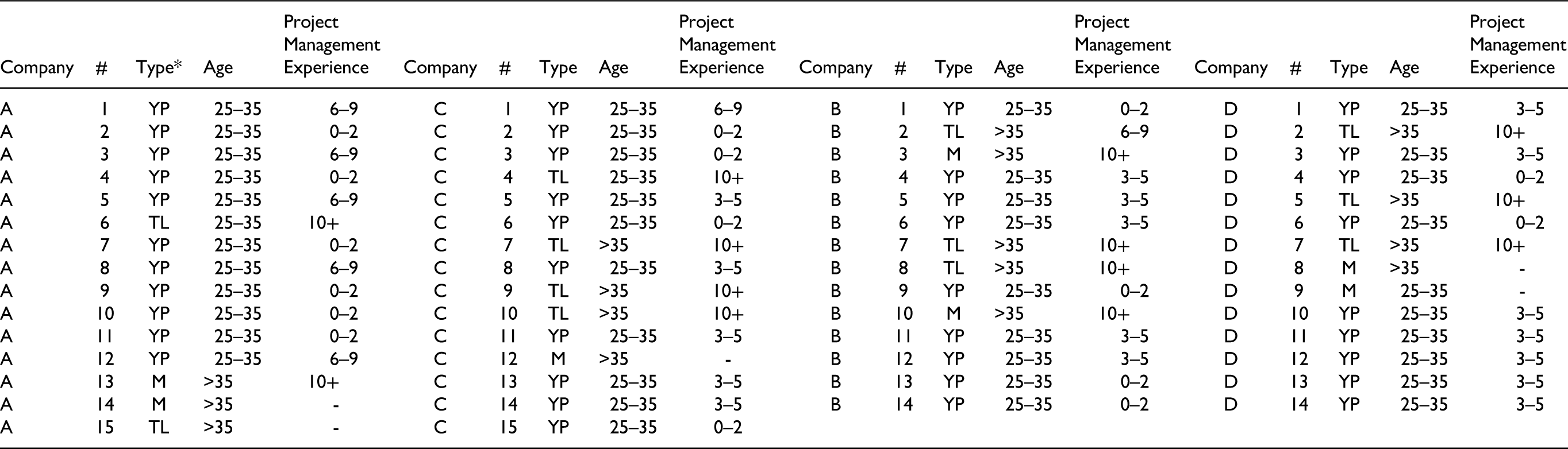
| Company | # | Type* | Age | Project Management | Company | # | Type | Age | Project Management | Company | # | Type | Age | Project Management | Company | # | Type | Age | Project Management |
|---|---|---|---|---|---|---|---|---|---|---|---|---|---|---|---|---|---|---|---|
| Experience | Experience | Experience | Experience | ||||||||||||||||
| A | 1 | YP | 25–35 | 6–9 | C | 1 | YP | 25–35 | 6–9 | B | 1 | YP | 25–35 | 0–2 | D | 1 | YP | 25–35 | 3–5 |
| A | 2 | YP | 25–35 | 0–2 | C | 2 | YP | 25–35 | 0–2 | B | 2 | TL | >35 | 6–9 | D | 2 | TL | >35 | 10+ |
| A | 3 | YP | 25–35 | 6–9 | C | 3 | YP | 25–35 | 0–2 | B | 3 | M | >35 | 10+ | D | 3 | YP | 25–35 | 3–5 |
| A | 4 | YP | 25–35 | 0–2 | C | 4 | TL | 25–35 | 10+ | B | 4 | YP | 25–35 | 3–5 | D | 4 | YP | 25–35 | 0–2 |
| A | 5 | YP | 25–35 | 6–9 | C | 5 | YP | 25–35 | 3–5 | B | 5 | YP | 25–35 | 3–5 | D | 5 | TL | >35 | 10+ |
| A | 6 | TL | 25–35 | 10+ | C | 6 | YP | 25–35 | 0–2 | B | 6 | YP | 25–35 | 3–5 | D | 6 | YP | 25–35 | 0–2 |
| A | 7 | YP | 25–35 | 0–2 | C | 7 | TL | >35 | 10+ | B | 7 | TL | >35 | 10+ | D | 7 | TL | >35 | 10+ |
| A | 8 | YP | 25–35 | 6–9 | C | 8 | YP | 25–35 | 3–5 | B | 8 | TL | >35 | 10+ | D | 8 | M | >35 | - |
| A | 9 | YP | 25–35 | 0–2 | C | 9 | TL | >35 | 10+ | B | 9 | YP | 25–35 | 0–2 | D | 9 | M | 25–35 | - |
| A | 10 | YP | 25–35 | 0–2 | C | 10 | TL | >35 | 10+ | B | 10 | M | >35 | 10+ | D | 10 | YP | 25–35 | 3–5 |
| A | 11 | YP | 25–35 | 0–2 | C | 11 | YP | 25–35 | 3–5 | B | 11 | YP | 25–35 | 3–5 | D | 11 | YP | 25–35 | 3–5 |
| A | 12 | YP | 25–35 | 6–9 | C | 12 | M | >35 | - | B | 12 | YP | 25–35 | 3–5 | D | 12 | YP | 25–35 | 3–5 |
| A | 13 | M | >35 | 10+ | C | 13 | YP | 25–35 | 3–5 | B | 13 | YP | 25–35 | 0–2 | D | 13 | YP | 25–35 | 3–5 |
| A | 14 | M | >35 | - | C | 14 | YP | 25–35 | 3–5 | B | 14 | YP | 25–35 | 0–2 | D | 14 | YP | 25–35 | 3–5 |
| A | 15 | TL | >35 | - | C | 15 | YP | 25–35 | 0–2 |
Appendix C. Coding Structure
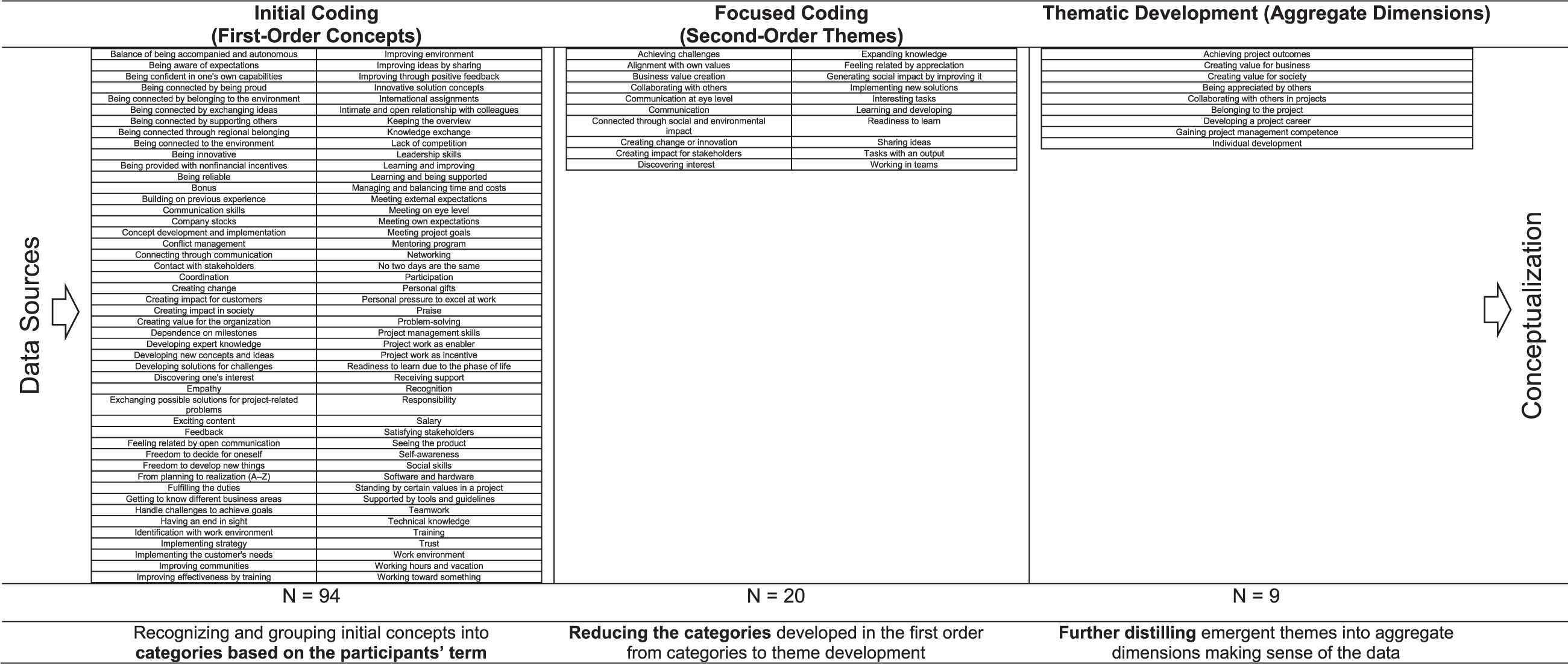
|