




Abstract
Sustainability integration in project portfolio management helps shape strategic, organizational, and project-based contexts. The authors conducted a structured literature review from 2000 to 2021 and developed a novel integrative framework presenting a holistic view highlighting three substantive research themes: sustainability mindset, sustainability assessment, and sustainability integration in project portfolio processes. Noteworthy progress has been made at the strategic and portfolio levels toward framing a sustainability mindset (definition, values, and principles) and developing frameworks/tools for sustainability assessment and project portfolio selection. However, areas for more research include integrating sustainability into project portfolio processes, reporting, and organizational learning for portfolio improvement.
Keywords
Introduction
Advances in incorporating sustainability goals and principles into the organizational strategy are of significance for projects, project portfolios, and longer-term organizational learning and development (Morris, 2013; Söderlund et al., 2014). A project portfolio refers to a group of projects and programs that share and compete for scarce resources under the centralized management of an organization (Archer & Ghasemzadeh, 1999; Cooper et al., 1999). Project portfolio management (PPM) involves a dynamic decision-making process through which project ideas are screened, selected, and prioritized; existing projects are continuously reprioritized; and resources are allocated and reallocated according to organizational goals (Cooper et al., 1999; Jonas, 2010). PPM is an essential building block of strategy implementation (Dietrich & Lehtonen, 2005; Meskendahl, 2010). Hence, PPM should play a critical role in organizations realizing their sustainability strategies (Marcelino-Sádaba et al., 2015; Silvius & Marnewick, 2022).
Previous research finds that the process of sustainability integration into PPM has been challenging and complex (Sánchez, 2015; Silvius & Marnewick, 2022). One challenge is that environmental and social sustainability goals (e.g., climate change and poverty) are multifaceted, complex, and lack clear solutions (Schipper & Silvius, 2018). These issues often involve varying business processes, practices, and diverse stakeholders (Silvius et al., 2017). Another challenge is that longer-term corporate and PPM sustainability goals may extend beyond the delivery horizons of individual projects (Silvius et al., 2017) or shorter-term portfolios (Martinsuo & Geraldi, 2020). These obstacles challenge project and portfolio managers to precisely define and align sustainable development objectives for projects and portfolios (Sabini et al., 2019). According to Meskendahl (2010), a project portfolio’s assessment of success must include measuring its execution performance and assessing its multiple products (portfolio components’ products) once they are in use in the future. The products’ long-term implications must be aligned with corporate business goals, which are often hard to define (Meskendahl, 2010). Hence, project and portfolio managers often find it hard to align the project portfolio’s short-term goals (e.g., multiple projects’ time, budget, and scope objectives) with longer-term project portfolio and corporate business goals (Sabini et al., 2019).
Recent research reports on the growing—but fragmented—research exploring the intersection between sustainability and project management (e.g., Huemann & Silvius, 2017; Martens & Carvalho, 2017; Sabini et al., 2019). Martens and Carvalho (2017) argued that despite the increasing number of studies in the field, the research topics have remained dispersed across different industries, while many studies still neglect core sustainability issues in projects (e.g., lack of sustainability integration in project management practices). Huemann and Silvius (2017) identified another source of fragmentation: the distinction between sustainability of the project and sustainability by the project, which creates confusion among researchers. Sabini et al. (2019) discovered inconsistencies in defining sustainability and understanding its key terms such as the triple bottom line (TBL) and sustainability development goals (SDGs). They also argued that most sustainability research in project management takes a rationalist stance, focusing on economic imperatives and business benefits from a sustainability focus. Such a view proposes sustainability integration mostly by adjusting the projects’ business cases but largely neglects the moral imperatives of sustainability integration. Other sources of fragmentation, such as difficulty in understanding sustainability, diversity of research questions, and various methodological approaches, are also reported in the literature (Huemann & Silvius, 2017; Sabini et al., 2019). This fragmentation could potentially limit the researchers’ ability to deliver consistent findings and provide coherent advice and best practice solutions to businesses and practitioners, which eventually undermines sustainability integration in the project management domain. This research builds on these studies to develop an integrative perspective where the emerging literature themes in this field are part of a larger framework in this article as a novel contribution to PPM research.
The Standard for Portfolio Management by the Project Management Institute (PMI) (2017) calls for recognizing and integrating sustainability as a principle for PPM design and practice but does not clearly articulate how this can be achieved. Also, it appears that the body of literature on PPM lacks frameworks that integrate sustainability strategies into projects and portfolio decision-making (Brook & Pagnanelli, 2014; Silvius & Marnewick, 2022). There is a need for more research and practical guidelines on how organizations can better integrate sustainability into practice. Improving PPM practices like project selection, portfolio steering, resource allocation, and risk management toward sustainability could help organizations with economic gains and their contributions to environmental and social benefits. More research is warranted to determine how successful sustainability integration can be achieved at the portfolio level.
In this study, we are particularly interested in examining the peer-reviewed conceptual and empirical literature focused on project portfolios and strategic interests in promoting sustainability in their strategies. We are interested in developing a comprehensive picture of the burgeoning PPM literature on sustainability. We review and compare the findings from the literature to identify trends and gaps toward conceptualizing sustainability in PPM as an emerging, multidisciplinary, and complex topic in project management (Silvius & Marnewick, 2022). Our contributions involve consolidating and critiquing the research on sustainability integration in PPM (2000–2021), developing new conceptual connections through a sustainability framework, and drawing attention to areas for future research.
We begin by describing our approach to the integrative review. We follow this with a framework of how we organized the literature findings. Within the findings section, we discuss the literature regarding the sustainability mindset in PPM, followed by the sustainability assessment in PPM. Then, we discuss how sustainability is integrated into PPM design and practice. We conclude with considerations and future research directions.
Methodology
For this integrative review, we targeted relevant literature from 2000 to 2021 and developed three literature review research questions (RQs): RQ1. What sustainability definitions, values, and principles impacted PPM? RQ2. What were the levels of sustainability assessment in PPM? RQ3. How was sustainability integrated into the PPM processes?
Our focus was on PPM in organizations with project portfolios and strategic interests toward integrating sustainability, as reflected in the extant literature. The term sustainable development is intricately linked with the term sustainability, one referring to the process, the other to the targeted outcome of balancing long-term economic, environmental, and social responsibilities. The literature review for this research found that most authors adopted the United Nations definition of sustainable development as “…development that meets the needs of the present without compromising the ability of future generations to meet their own needs” (United Nations, 1987, p. 49). Lim et al. (2018) state that sustainable development is a process that one practices to achieve sustainability, which is more of a resultant effect or a state of living. This statement is further supported by Klarin (2018), who suggests sustainability is the end goal of sustainable development. Therefore, the term sustainability, as used in this study, connects to the underlying United Nations definition of sustainable development.
Building on the established methods of literature reviews (Snyder, 2019; Torraco, 2016), we developed an integrative review to construct a conceptualization of sustainability in PPM. We chose the integrative review because it is suitable for reviewing dynamic and emerging topics experiencing rapid growth in the literature that have not been comprehensively reviewed and updated for an extended period (Torraco, 2016). Previous literature review studies have focused on sustainable project management (Armenia et al., 2019; Sabini et al., 2019; Silvius et al., 2017; Silvius & Schipper, 2014), project sustainability strategies (Aarseth et al., 2017), and sustainability in the construction industry (Goh et al., 2020; Kiani Mavi et al., 2021; Lima et al., 2021), but reviews on sustainability in PPM have remained scarce.
We designed a research process consisting of four stages (Snyder, 2019) that are summarized as follows:
Designing the review: We began by developing a review protocol following the systematic review guidelines by Snyder (2019). The review protocol specified the research objective, article selection process, inclusion/exclusion criteria, quality assessment criteria, data classification method, and method for synthesizing data. Conducting the review: Next, we used the review protocol to identify the potentially relevant articles. We systematically screened the potential articles by reading titles and abstracts and then by reading the full text of the articles. We followed a quality assessment protocol to identify the final set of articles for thematic analysis. Extracting and analyzing data: Then, we performed data abstraction and gathered descriptive data for each article in the final set of articles. We conducted thematic coding to identify, analyze, and report the relevant codes and themes in the articles. Structuring and writing the findings: In the last stage, we moved toward interpreting, conceptualizing, visualizing, and writing about the established codes and themes.
Throughout, we followed the basic steps of qualitative data analysis and maintained a chain of evidence (Creswell & Creswell, 2017). In the following section, we describe the detailed steps of the review protocol, including relevant actions taken at each stage.
Article Selection Process
We limited our search to the 2000–2021 time frame, peer-reviewed journal articles, and conference proceedings written in English. To gather relevant articles, we began by using different combinations of keywords and individual collections of PPM articles to gain an initial sense of the types of articles and relevant keywords. We followed this by using a structured approach to automated searches and augmented our article selection process with the snowballing strategy via Google Scholar. Automated searches were conducted in four universal digital databases (i.e., Scopus, Web of Science, Wiley Online Library, and IEEE Xplore). We scanned these databases for potentially relevant articles using the following search string: (“project portfolio” OR “product portfolio” OR “multiproject”) AND (“sustainable” OR “sustainability”).
Figure 1 shows the complete article selection process used to funnel the literature to the 63 articles selected for thematic analysis.
Article selection process.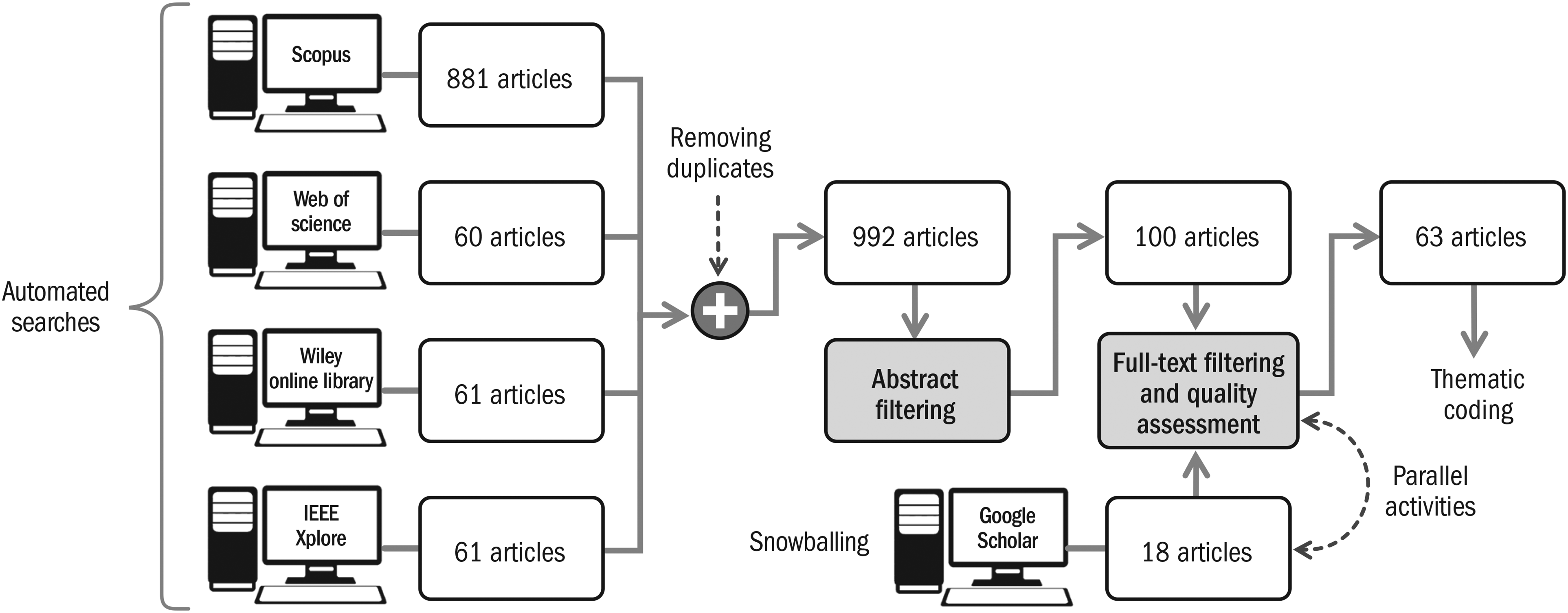
Procedurally, the first author reviewed each abstract, and the other authors spot checked the process. We agreed to include 118 articles for full-text filtering, out of which 100 were selected with abstract filtering, and the remaining were identified through snowballing searches. Snowballing searches further enhanced the search process beyond automated searches. In parallel to the full-text filtering of articles (see Figure 1), we used Google Scholar to identify additional relevant articles from the references of the retrieved articles, following the Wohlin (2014) recommendations for snowballing. The snowballing process allowed us to include articles that automated searches may have missed or have not indexed by the databases (e.g., conference proceedings). We added 18 more potential articles with snowballing. Then, the first two authors independently read the full text of all selected articles, followed the inclusion/exclusion criteria, and excluded the articles that did not meet the criteria. Throughout the full-text filtering process, we paid extra attention to the first criterion and rejected articles without a clear focus on sustainability in PPM.
In terms of validity, we used four digital databases because they are well sourced with scholarly peer-reviewed publications and have robust and similar search features. We combined the search results from these databases because they reflected journals usually deemed as high impact to be included in our study (Leiringer & Zhang, 2021). We affirmed full reliability by having two coauthors independently conduct the searches.
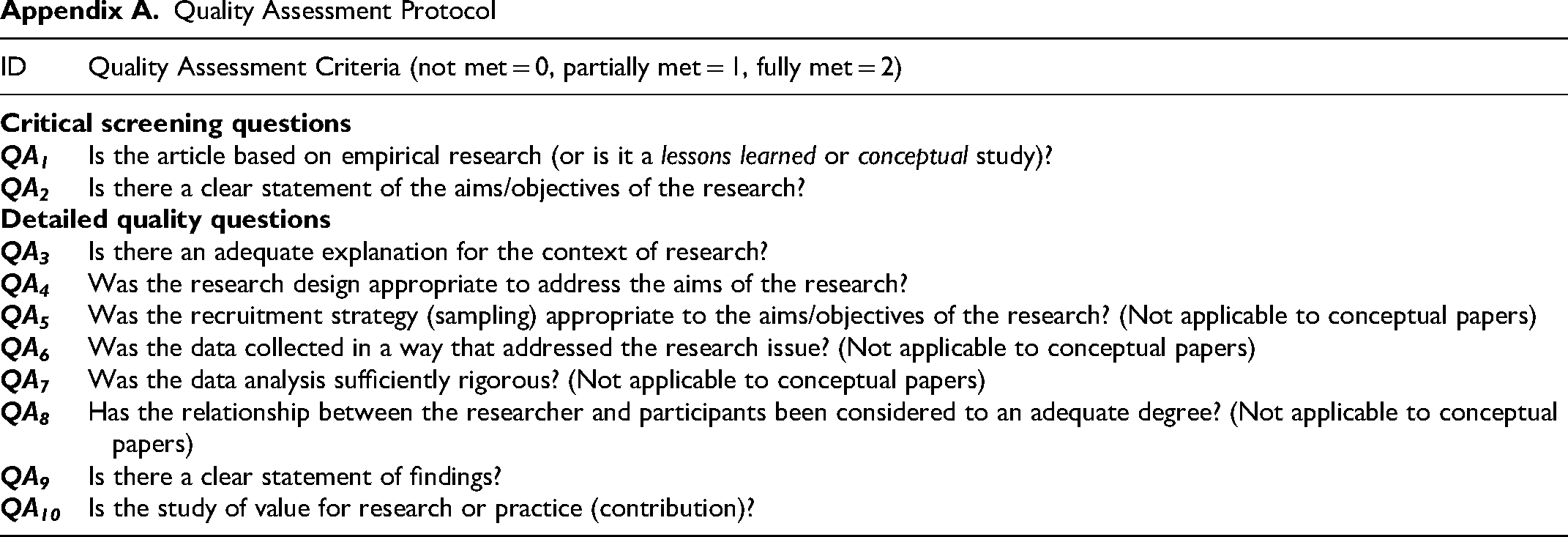
Furthermore, we performed quality assessments during the full-text filtering and before proceeding with thematic analysis to ensure the quality and trustworthiness of the review findings and improve internal and external validity (Snyder, 2019; Yang et al., 2021). We adopted the quality assessment protocol from the study assessment checklist developed by the Critical Appraisal Skills Programme (CASP). CASP (2022) checklists have been widely used to evaluate the quality of literature in review articles (Kitchenham & Brereton, 2013; Yang et al., 2021). Appendix A contains the quality assessment checklist.
We used a quality assessment scoring scale of 0, 1, and 2, following the CASP (2022) recommendations for scoring. The first two quality assessment criteria were critical screening criteria, meaning articles scoring 0 in any of these questions were immediately excluded from the study. No study was excluded by the critical screening criteria. The first two research team members independently performed the quality assessments on selected articles and calculated the quality scores. Then, the articles with low-quality scores were rechecked, and the first two authors discussed them and reached a consensus. Overall, six articles were excluded for reasons of low quality. By systematically following the previously mentioned procedures, 63 articles were selected for the subsequent thematic coding process. In this article, we refer to them as the primary articles.
Data Classification and Descriptive Overview of the Primary Articles
Based on our prior readings and understanding of the selected literature, we began by developing a basic data classification form for data extraction. The data classification form extracted six elements from the primary articles: publication year, publication type, journal name, research method, data collection method, and targeted industry. As we read each article and discussed how well the form worked, we modified the form accordingly. The data classification form is provided as supplemental material. The first two authors used NVivo 12 software to independently read the full texts of all 63 primary articles, extract data classification information, and code the text. The third author audited and mentored the entire process. Our collaborative approach helped us avoid groupthink, and the third author challenged the others’ thought processes by taking on the role of “devil’s advocate.” To exemplify, the third author audited the online database search strategy by conducting spot checks on the process and completing several searches independently using the same key terms and databases used by the first two authors. The third author complemented the team’s skill sets and areas of expertise, including familiarity with the literature. The data classifications were then aggregated and analyzed to generate a descriptive overview of the primary articles, as outlined next.
Overall, 50 journal articles and 13 conference proceedings were included in the descriptive and thematic analysis (Figure 2). The first articles that met our selection criteria were published in 2004. More research on sustainability in PPM was evident after 2013. The number of sustainability articles in PPM since 2013 corresponded to the rapid growth in sustainability literature in the project management field, as reported by Sabini et al. (2019). About 35% (22/63) of the selected articles were published in the last four years (2018–2021), indicating growing attention to the importance of sustainability integration in project portfolios.
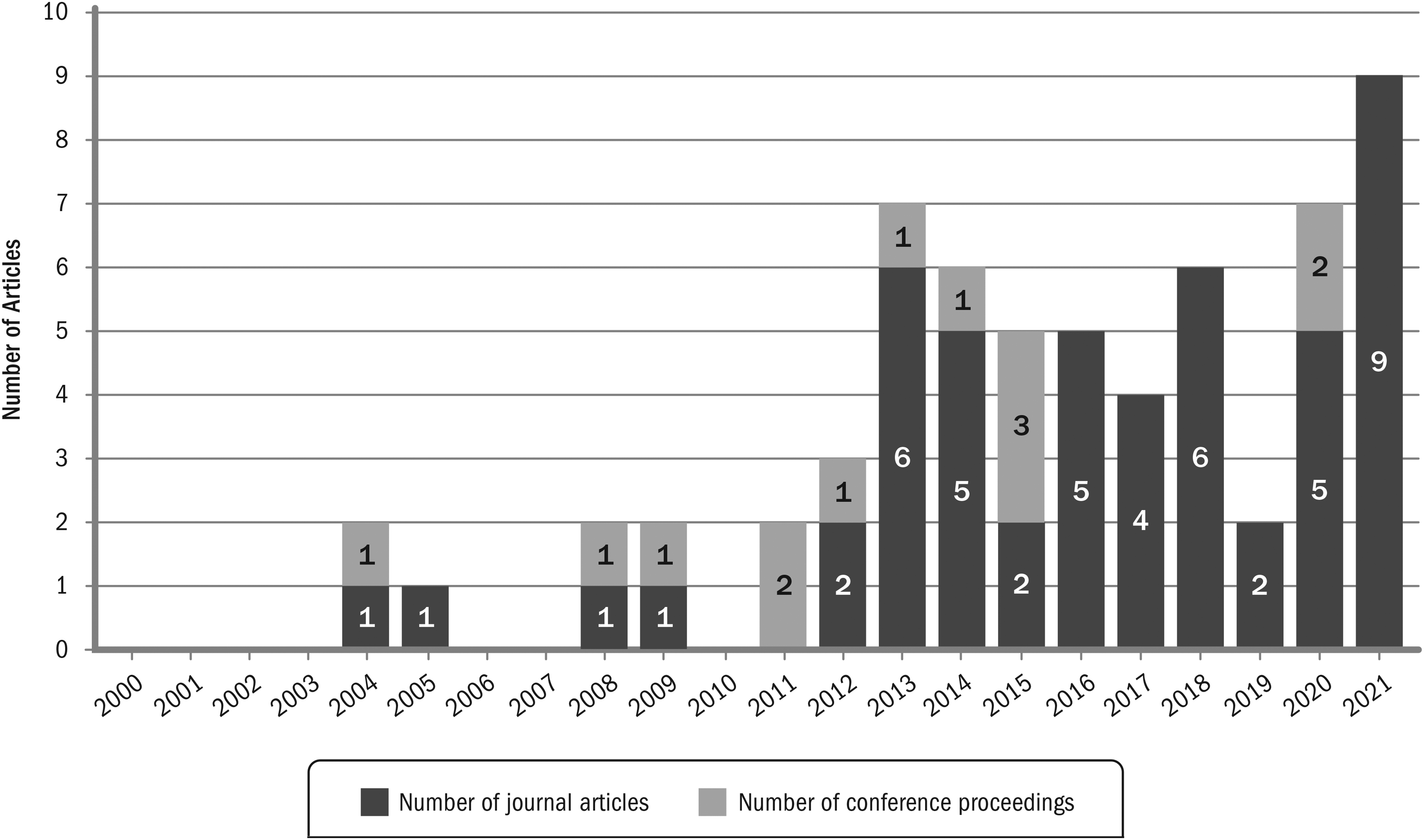
Distribution of selected articles with a focus on sustainability in PPM (N = 63).
Since 2004, 30 journals and 14 conferences have published articles related to our research topic. The top three publication journals were Sustainability - Switzerland (SS) (8), Journal of Cleaner Production (JCP) (5), and International Journal of Project Management (IJPM) (5), accounting for 12.7%, 7.94%, and 7.94% of the primary articles, respectively, and 28.58% of the articles analyzed. Diversity in publication venues may be due to journal focus (i.e., some journals do not accept modeling studies) and the sheer relevance of sustainability to multiple industries and disciplines. Although this diversity may reflect the fragmentation of the sustainability concept in project management discipline and PPM and contribute to some confusion in research and practice in sustainability (Sabini et al., 2019; Silvius & Schipper, 2014), it can also lend itself to healthy debates to advance conceptualization and research. The 63 publications provided an appropriate mix of initial cross-disciplinary (e.g., SS and JCP) and specialized journals, such as IJPM and Project Management Journal® for an exploratory evidence-based integrated review.
We also mapped the primary studies based on research methodology as design science, conceptual, case study, or survey. We defined studies that designed and evaluated an artifact (e.g., a simulation, mathematical model, or sustainability assessment tool) as design science articles, following Peffers et al. (2007). We categorized conceptual articles as those that did not present original data as empirical evidence but synthesized knowledge from previous work to deliver testable propositions, frameworks, or concepts (Gilson & Goldberg, 2015). We employed the categorization by Easterbrook et al. (2008) for the other empirical studies such as case studies and surveys. Design science was the most frequently used research method, accounting for 47.62% of primary studies. Of the 30 design science studies, 21 were multicriteria decision-making (MCDM) methods, and the rest were mathematical modeling studies. These articles focused on designing and testing project evaluation, prioritization, and optimization models to support project portfolio selection (PPS) and decision-making. Respectively, conceptual and case study articles accounted for 28.57% (18 articles) and 17.46% (11 articles) of the primary publications. Of the 11 case study articles, six were multiple-case studies, three were single-case studies, and one was an action research article; all were exploratory contributions. The high number of conceptual and case study articles is understandable for a relatively new and evolving field of study where concepts and theories are being debated and refined, and further research is warranted, for example, empirical contributions on sustainability integration in PPM practice. Figure 3 portrays the targeted industries that the 45/63 empirical primary articles identified.
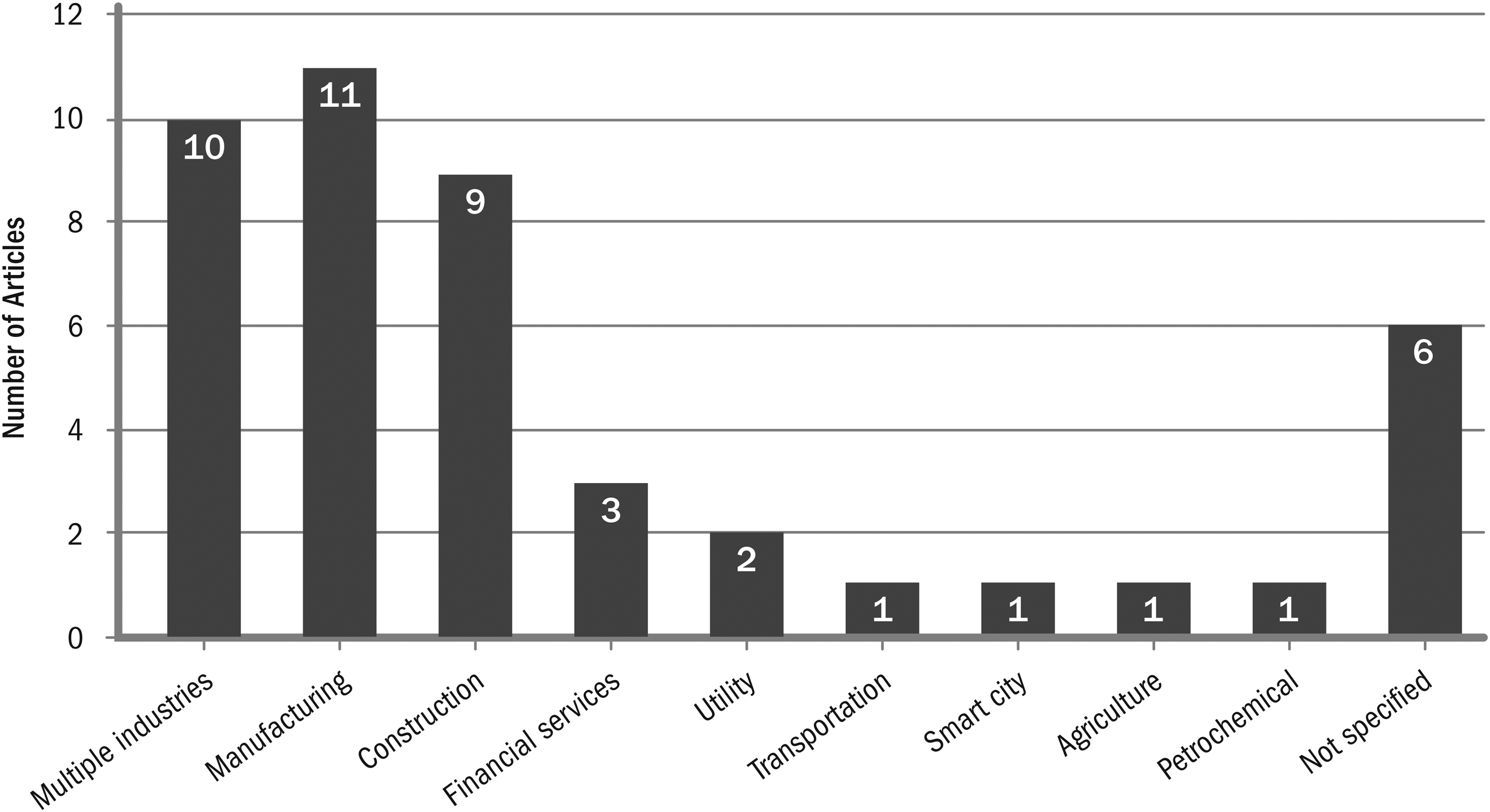
Distribution of selected articles by industry (excluding conceptual studies) (N = 45).
Method of Synthesizing Data
To understand the multifaceted and complex nature of sustainability in PPM, we coded the primary articles using iterative deductive and inductive approaches (Suddaby, 2006). All selected research articles were uploaded into NVivo 12 software and coded to identify what and how authors defined, described, and discussed sustainability in PPM.
To start with data analysis, we first established a priori list of codes. This list contained three code categories. The first category addressed RQ1 and later evolved to the first theme of the research, called sustainability mindset in PPM, for which we utilized the United Nation’s sustainable mindset approach (Hermes & Rimanoczy, 2018; Kassel et al., 2016; Parkes et al., 2017) to identify definitions, values, and principles of sustainability in PPM. The second code category focused on the levels of sustainability assessment in PPM and formed the second research theme addressing RQ2. We opted to use the characterization of the sustainability assessment process by Pranugrahaning et al. (2021) to analyze codes from the primary articles. Addressing RQ3, the third code category was concerned with how sustainability is integrated into the PPM processes. We adopted the categorization of PPM processes by Jonas (2010) to form the third research theme: sustainability integration in PPM processes.
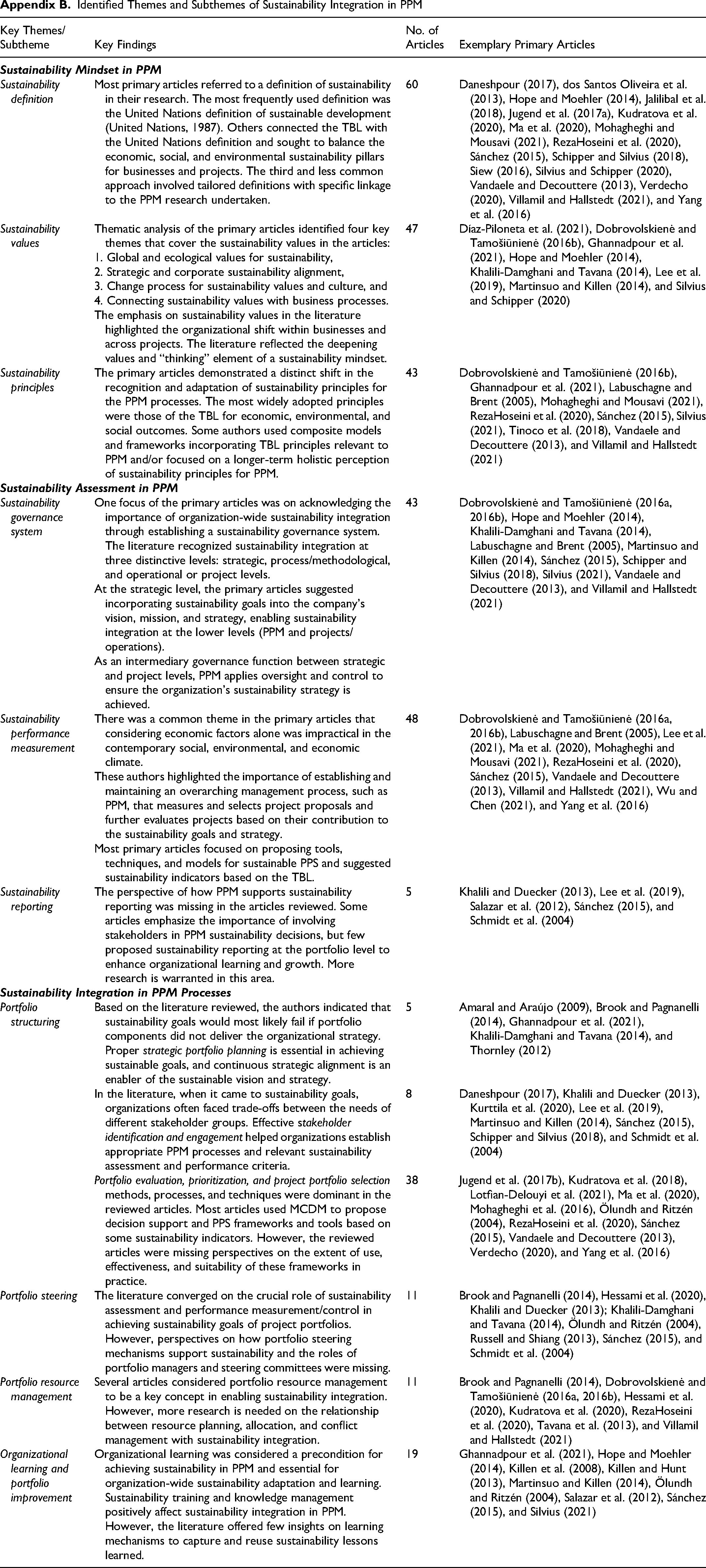
We concurrently examined quotations related to each code to develop key insights and identify recurring themes and subthemes. Several codes were recategorized during the coding process, and the definitions of a few categories were clarified and revised. The themes were also analyzed in terms of consistency, depth, or frequency in the literature, which, in turn, provided evidence of how, for example, sustainability was consistently defined and how it influenced PPM’s goals, values, and processes. Also, the iterative thematic analysis allowed us to identify where there was a lack of research, where the literature presented fragmented views, and what the emerging conceptual insights involved. Appendix B presents an overview of the three key themes and related subthemes that emerged from the thematic analysis of all articles reviewed. This approach allowed us to identify areas of research strength and connections as well as areas less developed and emerging. Moving beyond the findings in prior contributions (Sabini et al., 2019), we developed an integrative framework that encompasses the literature findings more holistically. These findings and the novel framework are outlined next.
Thematic Findings
We developed an integrative framework to capture the review of the primary articles and conceptualize sustainability integration in PPM (Figure 4). The framework categorizes recent research on sustainability in PPM into three distinct areas: sustainable mindset in PPM, sustainable assessment in PPM, and sustainability integration in PPM processes. These areas cover and connect the study’s identified research themes and subthemes (see Appendix B). The integrative framework allows for consolidating the existing research on sustainability integration in PPM and draws attention to defined and limited or emerging research to be addressed with future studies. As a novel contribution, the integrative framework proposes a higher-level conceptualization of the literature and offers potential avenues for positioning and strengthening future research within and beyond these areas.
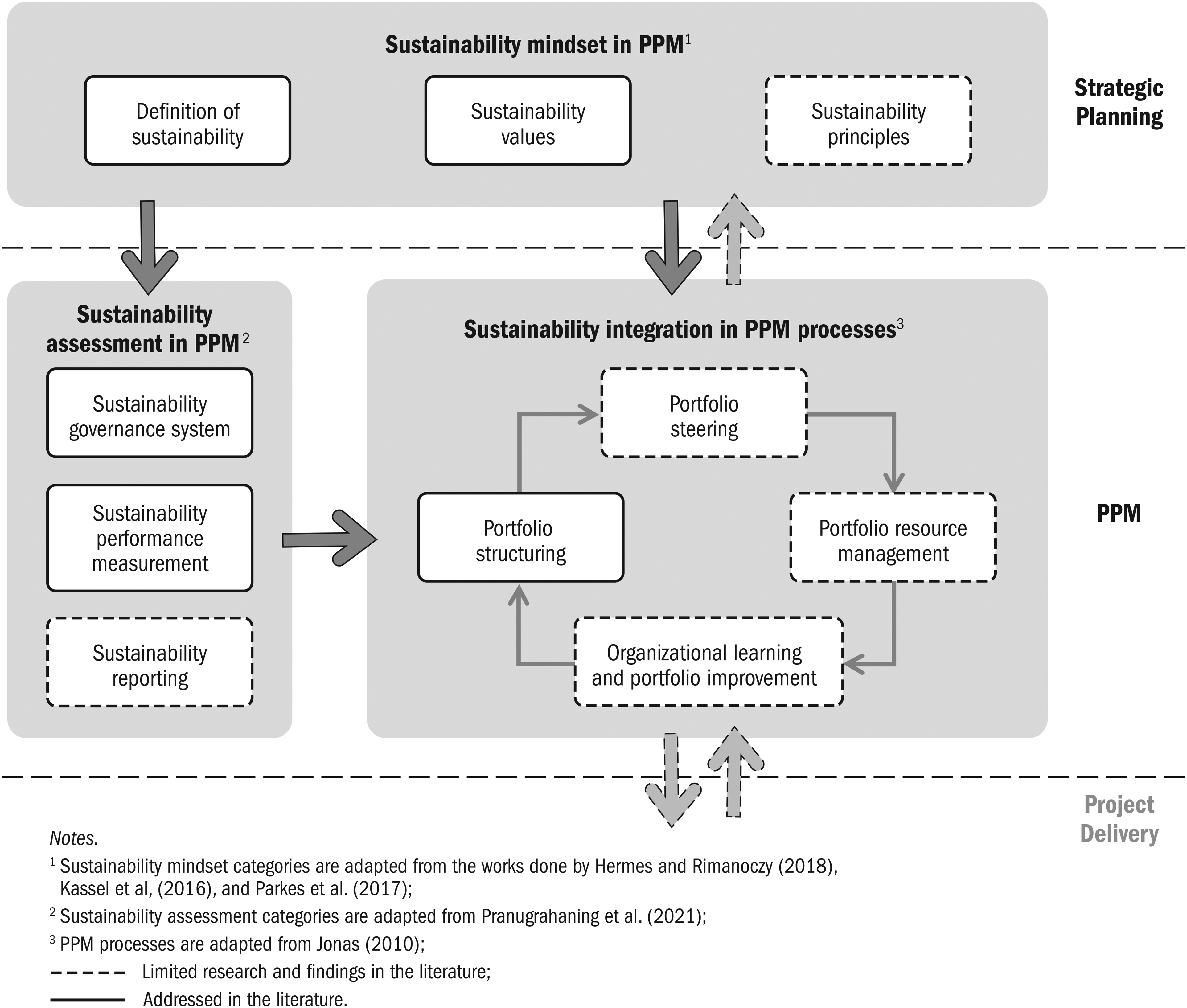
Sustainability in PPM: An integrative framework.
In Figure 4, components within each large text box are portrayed with solid or dashed lines to highlight areas addressed and identified in the current research and areas with limited research.
Theme 1: Sustainability Mindset in PPM
The concept of a sustainable mindset based on values, knowledge, and attributes is linked to the United Nations movement to support global sustainable development outcomes, more recently, the SDGs (Hermes & Rimanoczy, 2018; Kassel et al., 2016; Parkes et al., 2017). A sustainability mindset involves deep learning and intensive change. Rimanoczy convened the United Nations-backed principles of responsible management education (PRME) working group on the sustainability mindset (PRME, 2022). The PRME framework is being adopted across various disciplines and practices, including management, business consulting, and education (Haertle et al., 2017; Ruge, 2020). A sustainability mindset is a philosophy and way of being (i.e., behaving or acting) that results from a broad understanding of the ecosystem and introspection of the impacts. This mindset is also a lens for analyzing and interpreting information for decision-making (Kassel et al., 2016). We adopted the sustainability mindset concept to examine sustainability in PPM literature to understand current organizational values and information used to develop strategic plans, and we assessed how these values were actioned at the PPM strategic and operational levels. As shown in Figure 4, the primary articles were aligned with the United Nation’s sustainable mindset. We identified three subthemes related to PPM: definition of sustainability, sustainability values, and sustainability principles.
Definition of Sustainability
The primary articles adopted three definitions of sustainability. The most prominent definition was that of the United Nations, followed by the TBL combined with the United Nations definition, and then tailored definitions specific to article foci on PPM research. There was broad acceptance of, and references to, the definitions by the United Nations for sustainable development (United Nations, 1987) as a global and ethical value reference point (dos Santos Oliveira et al., 2013; Hope & Moehler, 2014; Mohagheghi & Mousavi, 2021; Sánchez, 2015; Schipper & Silvius, 2018; Vandaele & Decouttere, 2013). The time dimension in the wording “…development that meets the needs of the present without compromising the ability of future generations to meet their own needs” (United Nations, 1987, p. 49) is relevant in the PPM context. PPM also involves the life cycle with short-, mid-, and long-term project horizons (Schipper & Silvius, 2018; Silvius & Schipper, 2020). The TBL concept (Elkington, 1997) was often combined with the United Nations definition (Daneshpour, 2017; Jalilibal et al., 2018; Kudratova et al., 2020; Ma et al., 2020; RezaHoseini et al., 2020). Here, the focus was on balancing economic, social, and environmental sustainability for multiple projects of a portfolio. Another theme was that some authors proposed extended or tailored definitions of sustainability in the PPM context (Silvius & Schipper, 2020; Verdecho, 2020; Villamil & Hallstedt, 2021). For example, Villamil and Hallstedt (2021) defined the sustainable product portfolio as “a process to set a company platform of solutions, such as a cluster of products, services, technologies, and/or customized options, based on the company strategic plan and assessed by a strategic sustainability perspective” (2021, p. 396). In doing so, this approach strengthened the connection between PPM and business strategies and goals involving sustainability.
Sustainability Values
The thematic coding identified four strands related to sustainability values. These strands were labeled as global and ecological values for sustainability, strategic and corporate sustainability alignment, change process for sustainability values and culture, and connecting sustainability values with business processes.
To exemplify sustainability values in terms of the four strands, within the first strand labeled global and ecological values for sustainability, Dobrovolskienė and Tamošiūnienė (2016b) described it as “preservation of natural resources, positive impacts on society” (p. 2). Silvius and Schipper (2020) emphasized the importance of being concerned about the impact of portfolios of multiple projects on nature. Vandaele and Decouttere (2013) underscored ethical values, and Yang et al. (2016) highlighted justice between generations. Hope and Moehler (2014) emphasized the importance of a willingness to address global environmental issues.
Within the second strand, strategic and corporate sustainability alignment, Martinsuo and Killen (2014) described the importance of “radical change in underpinning values… Holistically understand and assess strategic value” (p. 66). Khalili-Damghani and Tavana (2014) underscored “aligning the strategic themes of the organization… With the tactical and operational considerations” (p. 84), and Schipper and Silvius (2018) highlighted how the “process of making strategy work is complex, not well understood” (p. 214).
For the third strand, change process for sustainability values and culture, Hope and Moehler (2014) and Díaz-Piloneta et al. (2021) described it as integrating and aligning the business and project activities with the principles of sustainable development. Dobrovolskienė and Tamošiūnienė (2016b) underscored the importance of “relating sustainable development to project life cycle management” (p. 2), and Lee et al. (2019) indicated that business sustainability could create value for a portfolio by taking in opportunities and handling risks derived from economic, environmental, and social development.
Finally, for the fourth strand, connecting sustainability values with business processes, Hope and Moehler (2014) noticed that businesses rarely aligned “project activities with the principles of sustainable development” (p. 359); or connected sustainable development to project life cycle management with three goals of social equity, economic efficiency, and environmental performance as also noted by Dobrovolskienė and Tamošiūnienė (2016b). The focus on aligning these three goals seems to have stepped up in more recent findings with indications that “running your business using the TBL can represent how profitable and sustainable your business is” (Ghannadpour et al., 2021, p. 3402).
These identified strands collectively highlighted the emphasis and focus on determining sustainability values, which is required for organizational mindset shifts to evolve from thinking to acting. We were struck by the impactful language used within the analyzed codes through, for example, such terms as preservation, justice, radical change, and coherence. The codes reflected a mind shift that appears to have begun shifting from the thinking element toward acting. Within these strands, the related codes revealed a range of views, which may indicate that the scope and attributes around sustainability values in project management and hence PPM are evolving, yet more research remains to be done. Martinsuo and Killen (2014) describe this as follows: Values are becoming increasingly relevant as part of studies concerning the value of single projects. Currently, many studies look at sustainability or social sustainability holistically, ecological, social, health, and safety values together [sic] sustainability is not sufficiently covered in the practices and standards that guide project-based management (p. 58).
Sustainability Principles
Sustainability principles primarily relate to the United Nation’s sustainable mindset and its attributes. The primary articles showed a distinct shift in recognition and emergence of the TBL pillars of economic, environmental, and social sustainability as sustainability principles for PPM decision-making and PPS. This was evident through the wide adoption of TBL pillars, followed by less established composite PPM models and frameworks incorporating TBL principles and emerging, longer-term holistic perception of sustainability principles for PPM.
To date, the research showed that PPM practices adopted approaches emphasizing technical and financial analyses, with less attention on balancing the three TBL pillars of sustainability, in particular beyond the prominent focus on financial criteria to include and enhance social and environmental values (Ma et al., 2020; Tinoco et al., 2018; Vandaele & Decouttere, 2013). This was reflected in the notable emphasis in recent research by Mohagheghi et al. (2019) that “financial criteria are no more the only or the most important factors and… considering the social and environmental aspects of project portfolios is one of the recent trends applied in PPS” (p. 1401). The TBL pillars have yet to be balanced. The PPM practices primarily adopted approaches emphasizing technical and financial analyses with less attention to balancing these pillars with sustainability’s environmental and social aspects (Tinoco et al., 2018; Vandaele & Decouttere, 2013).
The economic and financial sustainability principles for PPS extend beyond profitability and cost to include payback, project risk, and completion time. The findings suggest that three decades after the introduction of the TBL, there continues to be an imbalance between the three pillars of sustainability for PPM, with an emphasis on the financial and technical indicators. Some progress has been made in identifying environmental and social principles that can be used and measured, albeit subordinate to the main financial principle. For example, in the green construction supply chain sector, RezaHoseini et al. (2020) suggested that the sustainable economic criteria should include internal rate of return, the possibility of success, coordination of project implementation by organizational strategy, customer internal process, customer satisfaction, quality of products, production capacity, and improvement in the production process. The authors, Ma et al. (2020), proposed a PPS framework for manufacturing project portfolios based on net present value as the economic dimension, life cycle assessment as the ecological dimension, and workers’ conditions as the social dimension.
In terms of social sustainability, principles such as stakeholder response, the positive social impact of project implementation, and health and safety descriptions were identified as outcomes (RezaHoseini et al., 2020). Other studies specified sector-specific principles. For example, Dobrovolskienė and Tamošiūnienė (2016b) identified 15 sustainability criteria (four economic, six environmental, and five social) for construction project portfolios. Others suggested broadening corporate decision-making perspectives toward identifying cross-sector principles, such as resilience and cultural sustainability, to strengthen social sustainability as a principle for PPM decision-making (Mohagheghi & Mousavi, 2021).
A prominent approach using sustainability principles linking the TBL with corporate and PPM goals was the balanced score card (BSC). The BSC is based on financial, customer and stakeholder, internal business, innovation, and learning criteria (Kaplan & Norton, 2001). Several primary articles commented on the BSC as relevant to PPM and, in particular, the extension toward the sustainable BSC aimed at identifying environmental, social, and strategic objectives with the added potential value for social and environmental aspects and alignment to strategic corporate goals (Ghannadpour et al., 2021; RezaHoseini et al., 2020; Sánchez, 2015).
A recent trend in the literature involved studies that approached sustainability principles with longer term or holistic business and PPM perspectives. Labuschagne and Brent (2005) took an early position on this. Another recent development was about sustainability principles used in an integrative approach for PPM, for example, the maturity model proposed by Silvius and Schipper (2014). The model involved assessing the level of sustainability maturity regarding the business process, business model, product, and services delivered by the projects. This led the authors to develop a holistic conceptualization of sustainability principles and dimensions. The holistic dimensions state that sustainability is about (1) balancing or harmonizing economic, environmental, and social interests; (2) both a short-term and long-term orientation; (3) local and global orientation; (4) values and ethics; (5) transparency and accountability; (6) stakeholder orientation; (7) reducing risks; (8) eliminating waste; and (9) consuming income, not capital (Silvius, 2021).
In summary, considerable progress has been made at the strategic level in developing and fine-tuning sustainability definitions and articulating sustainability values. The sustainability mindset involves both a way of thinking and acting. More work is warranted on sustainability principles to balance the economic indicators with the environmental and social indicators. As such, we mapped this with dashed lines in Figure 4. This is important because sustainability integration in PPM requires significant attention and investment by those at the corporate and governance levels.
Theme 2: Sustainability Assessment in PPM
The primary articles largely focused on sustainability assessment through PPM. Sustainability assessment is seen as a management process that propels the overall planning and decision-making toward achieving sustainable development goals (Hacking & Guthrie, 2008). Sustainability assessment often focuses on long-term goals by clearly specifying and assessing economic, environmental, and social criteria, ensuring that the long-term objectives are not sacrificed for short-term gains (Pranugrahaning et al., 2021). We adopted the characterization of the corporate sustainability assessment process by Pranugrahaning et al. (2021) to categorize the articles’ sustainability assessment contributions in PPM. As a result, three subthemes emerged: sustainability governance system, sustainability performance measurement, and sustainability reporting (see Figure 4). We discuss these subthemes next in light of the primary articles analyzed.
Sustainability Governance System
A sustainability governance system drives organizational sustainability integration and supports achieving sustainability performance. The governance system involves configuring the organizational elements of a firm (e.g., strategy and structure) to address the sustainability demands of internal and external stakeholders. Dedicated sustainability committees and leadership roles are integral for effective, sustainable governance systems (Orazalin, 2020; Peters et al., 2019). Corporate governance cascades down to portfolio, program, and project levels at lower levels, with the scope becoming narrower at each level (Musawir et al., 2020; Too & Weaver, 2014). Even though governance structures, processes, and objectives vastly differ by organizational level, the goal of governance remains the same at each level: to define strategic objectives, facilitate the attainment of those objectives, and monitor progress (Musawir et al., 2020). The governance of a portfolio includes activities such as project selection and prioritization, investment decisions, portfolio steering, and involving all key stakeholders in portfolio governance decision-making. The authority to evaluate portfolio performance typically rests with the portfolio steering committee (Jonas, 2010).
The thematic analysis revealed the increasing importance of the concept of sustainability integration in strategic planning and PPM decision-making (Khalili-Damghani & Tavana, 2014; Villamil & Hallstedt, 2021). There was a general agreement among the reviewed articles that a PPM sustainability governance system is required to enable sustainability at the operational level (project management). The implementation of such a governance system has been deemed necessary to address the “complex [multiproject] dynamic setting where constant adjustments to boundaries, goals, and functions are required” (Mohagheghi & Mousavi, 2021, p. 3542). The primary articles indicated that organizations could improve their resilience and long-term performance in dynamic future markets by aligning strategic sustainability goals with project delivery through PPM (Lotfian-Delouyi et al., 2021; Mohagheghi & Mousavi, 2021; Russell & Shiang, 2013; Schipper & Silvius, 2018). Schipper and Silvius (2018) reemphasized the important point made by Shenhar et al. (2001), and later Hope and Moehler (2014), that project portfolios are “powerful strategic weapons” in the process of implementing the business strategy (Schipper & Silvius, 2018, p. 192).
Sustainability Performance Measurement
Sustainability performance measurement is recognized as a means of demonstrating how companies integrate sustainable goals and meet stakeholder expectations in their projects and operations (Jiang et al., 2018). Measuring sustainability performance reflects how organizational sustainable strategies and practices benefit or harm stakeholders. Ideally, performance measurement should reflect the roles of international and national standards, guidelines, and regulations. A system of sustainability measurement performance, including economic, environmental, social, and other institutional indicators, is needed to help plan, coordinate, and control an organization’s short-term and long-term activities (Mohagheghi & Mousavi, 2021; Pranugrahaning et al., 2021).
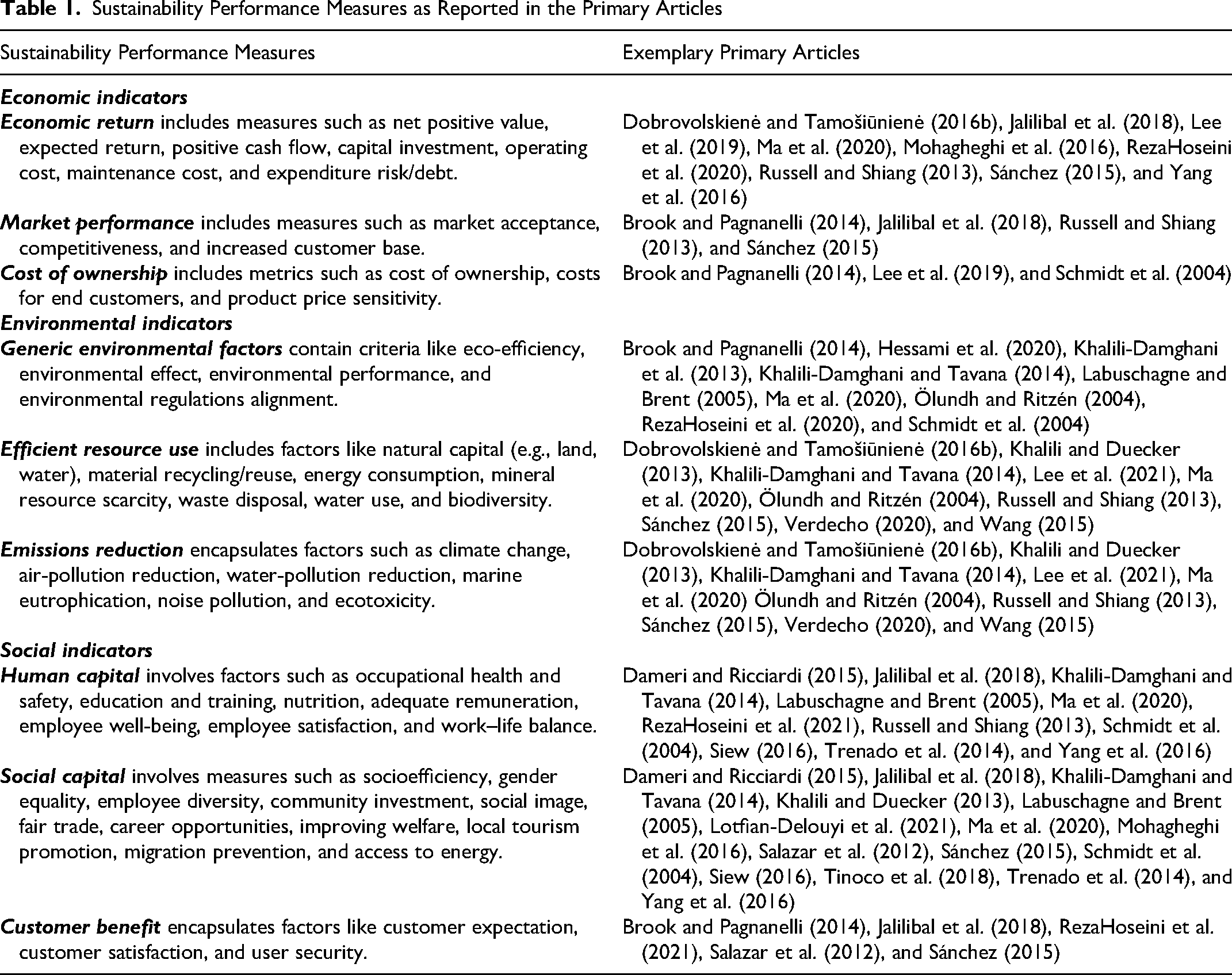
The primary articles viewed PPM as an overarching management process that can potentially assist organizations in achieving sustainability strategy and goals by establishing and maintaining sustainability performance measures for projects. About half of the articles proposed sustainability assessment frameworks, systems, and tools. These articles mainly focused on establishing various models of sustainability indicators based on TBL to assist portfolio decision-making and the selection of optimal and sustainable project portfolios. The economic indicators reflected commonly used management measures of project performance and were extensively reported as leading sustainability markers. We grouped the identified economic indicators into three main categories: economic return, market performance, and cost of ownership. The environmental indicators were also evident in the literature on the selection and integration of multiple projects. A crucial element of achieving environmental sustainability is that it is forward looking because when executing projects, many decisions and actions that impact the environment are not felt immediately (Carvalho & Rabechini, 2017). We grouped these indicators into three main categories: generic environmental factors, efficient resource use, and emissions reduction. In the reviewed articles, social indicators have become increasingly popular. These indicators cover companies’ impacts on their stakeholders, including employees, customers, and local communities (Sajjad & Shahbaz, 2020). Although social sustainability indicators received equal attention compared to environmental indicators and measures, they were difficult to explain and quantify (Ma et al., 2020). We clustered the social indicators into three main categories: human capital, social capital, and customer benefit.
Most of the research on sustainability in PPM focused on creating frameworks and tools for sustainability assessment to support PPM decision-making and PPS. The indicators comply with the TBL approach within the proposed frameworks, while economic indicators remain dominant. Although the literature on recognizing the importance and value of environmental and social indicators is on the rise, it remains secondary. Table 1 summarizes the sustainability performance measures proposed by the primary articles.
Sustainability Performance Measures as Reported in the Primary Articles
Sustainability Reporting
Sustainability reporting allows organizations to provide stakeholders with a clear picture of sustainability principles, governance, and achievements. Sustainability reporting impacts organizations in terms of compliance, legitimacy, transparency, and reputation. Reporting also supports organization-wide sustainability implementation. Sustainability reporting allows organizations to reflect on their economic, environmental, and governance efforts and performance (Pranugrahaning et al., 2021). Sustainability reporting is a participatory process involving stakeholders in dialogue, decision-making, and learning (Pérez-López et al., 2015).
Some of the primary articles discussed the importance of involving stakeholders in PPM decision-making regarding sustainability (Khalili & Duecker, 2013; Lee et al., 2019; Schmidt et al., 2004), but only a few highlighted the importance of sustainability reporting for organizational learning and growth (Salazar et al., 2012; Sánchez, 2015). Salazar et al. (2012) emphasized the importance of reporting sustainability outcomes rather than merely reporting on sustainability activities. They also proposed aggregating project-level sustainability measures at the portfolio level. However, among the reviewed articles, no article focused exclusively on sustainability reporting in PPM.
In summary, regarding sustainability governance systems, although the literature indicated that work on sustainability integration into PPM governance and related sustainability performance measures is underway, the area warranting more research and effort involves sustainability reporting. Organizations are used to economic and financial indicators, but environmental and social indicators are challenging to measure.
Theme 3: Sustainability Integration in PPM Processes
As per Figure 4, this section presents an analysis of the literature on integrating sustainability in PPM processes. Earlier research portrayed PPM design and practice using a process-based view (Cooper, 2008; Cooper et al., 1999; Jonas, 2010; Martinsuo & Geraldi, 2020). Jonas (2010) structured PPM processes using a sequence of four highly interdependent phases of portfolio structuring, portfolio steering, portfolio resource management, and organizational learning and portfolio exploitation. Using these phases as subthemes for Theme 3, we coded the primary articles regarding sustainability integration in PPM processes.
Portfolio structuring refers to all tasks undertaken to set up a portfolio based on a company’s strategic vision and goals; it includes activities like portfolio planning, evaluation of project proposals, and PPS (Meskendahl, 2010). Portfolio resource management involves planning for and allocating limited resources to portfolio components (Jonas, 2010). The portfolio steering process involves all tasks necessary to manage and oversee a portfolio such as ensuring strategic alignment, developing corrective measures, identifying synergies between projects, and coordinating projects (Mosavi, 2014). Drawing from organizational learning and interproject learning theories, Jonas (2010) indicated that the organizational learning and portfolio exploitation processes ensure that the PPM process captures lessons to enhance future projects and business. March (1991) described exploration as a long-term process involving experimenting, taking risks, and discovering, whereas exploitation is a short-term process involving incremental changes and refinements. Since we learn through “the exploration of new possibilities and the exploitation of old certainties” (March, 1991, p. 71), we used the more generic term organizational learning and portfolio improvement that, in our opinion, better reflects the continuous learning and improvements that occur through the dissemination and utilization of project results and lessons learned through PPM’s learning processes (Lichtenthaler, 2009).
Portfolio Structuring
About 70% of the primary articles addressed sustainability integration within portfolio structuring. Three strands emerged from the literature. The first strand focused on strategic portfolio planning (Ghannadpour et al., 2021; Khalili-Damghani & Tavana, 2014; Thornley, 2012). The second strand emphasized the importance of identifying portfolio stakeholders and engaging them in sustainable portfolio decision-making (Khalili & Duecker, 2013; Lee et al., 2019; Sánchez, 2015). The third strand, which was the most frequent in the literature, focused on portfolio evaluation, prioritization, and PPS. These studies mainly focused on evaluating and prioritizing portfolio components (Brook & Pagnanelli, 2014; Kudratova et al., 2018) and selecting project portfolios based on sustainability indicators (Khalili-Damghani et al., 2013; Ma et al., 2020; RezaHoseini et al., 2020).
Strategic portfolio planning through recurrent planning cycles was identified as a critical enabler of PPM success in general (Hoffmann et al., 2020) and in achieving sustainable goals in specific (Brook & Pagnanelli, 2014; Khalili-Damghani & Tavana, 2014; Sánchez, 2015; Thornley, 2012). Thornley (2012) stated that a significant threat to achieving sustainability was failing organizational strategies, policies, and initiatives during project delivery. Hence, PPM should continuously evaluate and measure strategic alignment as an enabler of the sustainable vision and strategy. Sánchez (2015) suggested using a strategy map based on key performance indicators to connect the TBL goals to stakeholder demands, internal processes, and resources. Brook and Pagnanelli (2014) suggested a five-step framework for integrating sustainability into innovation PPM: strategic analysis, resource management, project evaluation and mapping, sustainable PPS, and performance management. Khalili-Damghani and Tavana (2014) proposed an integrated approach for sustainable portfolio selection composed of two distinct but interrelated modules of sustainable strategic planning and PPS. The sustainable strategic planning process involves internal and external analyses based on the strategic and sustainable goals to determine sustainability gaps that the portfolio components should address (Khalili-Damghani & Tavana, 2014).
Stakeholder identification and engagement is crucial in establishing business-specific sustainability indicators to assess multiple projects of a portfolio. The literature identified sustainability governance as a firm’s capability to successfully operate over a long period as dependent on good stakeholder relationships (Sánchez, 2015). Martinsuo and Killen (2014) proposed that organizations move away from rational and rigid perspectives of portfolio value and embrace dialogue, interplay, and negotiation between stakeholders to manage strategic value in project portfolios. Effective stakeholder engagement starts with identifying stakeholders and their expectations, analyzing their relationships, and planning for stakeholder engagement (Sánchez, 2015).
Portfolio evaluation, prioritization, and project portfolio selection methods, processes, and techniques appeared in about 60% of the primary articles. PPS was seen as crucial to achieving success in product development and a sweet spot for integrating environmental and social aspects of sustainability before fully committing to executing projects (Jugend et al., 2017b; Ölundh & Ritzén, 2004). Such integration allowed an organization to evaluate project proposals using decision support systems (Sánchez, 2015; Schipper & Silvius, 2018) and select the most sustainable projects based on the strategic goals (Ma et al., 2020; Mohagheghi et al., 2016). Most articles in PPS suggested novel frameworks and tools connecting organizational strategy to project selection and weighed economic, environmental, and social criteria (Schipper & Silvius, 2018).
Portfolio Steering
Continuous portfolio steering ensures permanent coordination of a project portfolio, capacity utilization, and strategic alignment (Jonas, 2010; Mosavi, 2014). Strategic clarity, defined as transparency of strategies, goals, and objectives, is crucial for successful portfolio decision-making (Kock & Gemünden, 2016). At the same time, the collection and quality of information obtained from portfolio components (projects) are fundamental for portfolio decision-making and success (Kock et al., 2020; Martinsuo & Lehtonen, 2007). There was consensus in the primary articles on the impact of strategic clarity and alignment (including sustainability goals) with successful portfolio performance measurement and control (Brook & Pagnanelli, 2014; Khalili-Damghani & Tavana, 2014; Schipper & Silvius, 2018). The primary articles discussed sustainability performance measurement via product or project life cycle assessment (Labuschagne & Brent, 2005; Russell & Shiang, 2013) and portfolio optimization models with sustainability goals (Kudratova et al., 2020; Mohagheghi & Mousavi, 2021; Tinoco et al., 2018). However, none of the primary articles shed light on the practical mechanisms under which portfolio steering teams collect sustainability information from the portfolio components and make sustainable decisions for PPM. Also, it was unclear what roles and responsibilities portfolio steering committees played in monitoring the sustainability performance of projects, developing corrective actions, and identifying sustainable synergies among projects.
Portfolio Resource Management
The primary articles provided limited insights on sustainability integration in portfolio resource management. Schipper and Silvius (2018) and Brook and Pagnanelli (2014) proposed conceptual frameworks for sustainable PPM where resource allocation was considered a key concept of sustainability integration in PPM. They advocated considering balancing and optimizing project resources based on availability, constraints, and risks in structuring sustainable portfolios. RezaHoseini et al. (2020) developed a hybrid MCDM framework for PPS under budgetary and resource constraints where project resource constraints were considered inputs to the model. Dobrovolskienė and Tamošiūnienė (2016a) developed a sustainability-oriented MCDM model for financial resource allocation in PPM that integrated a range of sustainability indicators into Markovitz’s classical risk-return theory. However, the literature offered only a few practical insights on the impacts of sustainability integration on cross-project resource planning, resource conflict management, and resource reallocation in response to deliberate and emergent strategies.
Organizational Learning and Portfolio Improvement
Organizational learning is recognized as a dynamic capability that enhances an organization’s ability to attain and sustain a competitive advantage (Biedenbach & Müller, 2012; Killen et al., 2008, 2012). In PPM, organizational learning usually occurs as projects leave the portfolio process and their outcomes are handed over to operations. Postproject lessons learned and evaluations from operations contribute to organizational learning and portfolio exploitation (Jonas, 2010; Silvius, 2021).
The introduction of the organizational learning process to PPM that combines explicit and tacit knowledge was found to be challenging (Silvius, 2021). Yet, organizational learning is a precondition for achieving sustainability in PPM, as it empowers organizations to learn and adapt (Hope & Moehler, 2014; Killen & Hunt, 2013). Sánchez (2015) proposed that PPM augment strategy maps with BSC, as strategic maps already cover the TBL, stakeholder engagement, internal processes, and learning and growth. The learning and growth perspective involves skill-related, cultural, and technological goals for employees to make sustainable PPM decision-making. The BSC is highly contextual and depends on an organization’s needs and surrounding environment (Sánchez, 2015). The conceptual study by Silvius (2021) on the role of the project management office (PMO) highlighted two other responsibilities concerning sustainability integration: training and knowledge management/organizational learning. Providing training on the sustainability aspects of project management is a responsibility of the PMO that also positively affects sustainability integration in PPM. Overall, while emphasizing the importance of organizational learning and its contribution to sustainability integration in PPM, the literature offered little on learning mechanisms and processes necessary to capture and reuse sustainability knowledge and lessons learned.
Interestingly, whereas the primary sources on sustainability in PPM focused on portfolio structuring, more work needs to be done on the other three PPM processes. For example, regarding the roles and responsibilities of those with authority and responsibility (e.g., the portfolio steering committee), there is a lack of practical mechanisms for gathering project sustainability information for portfolio decision-making. There are gaps in terms of cross-project resource planning, conflict management, and resource balancing concerning sustainable portfolio resource management. From an organizational learning and portfolio improvement perspective, work is also warranted to gather and share sustainability learnings and lessons learned.
Finally, as an overall reflection on Figure 4, we note that there were three sections within the PPM processes (as portrayed with dashed lines) where the research is evolving (i.e., portfolio steering, portfolio resource management, and organizational learning and portfolio improvement). To advance progress on sustainability in PPM, a strong sustainability mindset is required at the strategic level, along with a fulsome sustainability integration process before PPM processes can be established and further progress made.
Insights for Future Research
There has been growing attention to the importance of sustainability integration in project portfolios through the emphasis on sustainability values (e.g., the TBL and SDGs) to balance the economic indicators with the environmental and social ones. Progress has been made toward establishing the thinking elements of the sustainability mindset in PPM. However, attention must now turn to the acting level, which raises promising opportunities for future research. Drawing on the categories of the integrative framework in Figure 4, we examine these opportunities to identify future research directions.
First, most of the studies we reviewed established sustainability definitions and articulated sustainability values at the strategic level to be used and fostered by PPM. Although this strategic approach has proven useful, more research on creating long-term value in multiproject environments is needed to enrich our understanding of sustainability principles in PPM. The existing research has focused on developing top-down sustainability assessment frameworks, systems, and tools to assist sustainable portfolio decision-making and PPS. As such, the emphasis has been on developing sustainability indicators (economic, environmental, and social) for PPS, and consideration has been given to sustainability issues in assessing projects’ business cases. Such an approach is limited to creating sustainable value within the life cycles of projects and rarely considers the long-term sustainable value of projects’ products once the projects conclude. One move toward long-term sustainable value creation (possibly as a sustainability principle for PPM) could focus on active stakeholder participation in portfolio decision-making. The conceptual sustainability PPM framework by Schipper and Slivius (2018) could be a good starting point to explore proactive dialogue approaches between PPM and wider stakeholder groups. Future research could explore the roles of both PPM and stakeholder groups in determining sustainable value from project portfolios and improving sustainable PPM capabilities.
Second, while there was evidence of integrating sustainability initiatives into the PPM’s governance system, more research is required to determine how organizations measure and report sustainability performance considering multiple projects’ environmental and social impacts. These impacts often extend beyond the projects and project portfolios lifespans and are thus more challenging to measure by PPM. In reflecting on the adage that “what gets measured gets done,” the challenges related to environmental and social indicators may be reflected in the emerging research on sustainability reporting in PPM. Sustainability reporting in PPM has the potential to play a broader role in corporate sustainability assessment. Sustainability reporting is challenging and confusing for companies and project practitioners (Pranugrahaning et al., 2021). Future research could focus on the practical processes and mechanisms currently applied within projects to report sustainability efforts and outcomes for portfolio steering and decision-making at multiple levels.
Third, the area of sustainability integration in PPM processes is in dire need of more empirical research. We observed a heavy focus on sustainability integration for structuring project portfolios in the reviewed articles. Many studies proposed sustainability indicators with PPS and portfolio decision-making frameworks mainly through MCDM and mathematical modeling. However, insights on the extent of use, effectiveness, and suitability of these frameworks in practice were limited. More empirical research is required to investigate the effectiveness of sustainable PPS and portfolio decision-making models while considering the context and industry within which project portfolios operate. Also, PPS should consider both deliberate and emergent strategies for successful sustainability integration. The deliberate strategies are based on an organization’s fully planned strategic intentions that consider external forces and the environment, whereas the emergent strategies are ones that an organization adopts or adapts to deal with unexpected and unplanned events (Kopmann et al., 2017). There was little insight into the effects of emergent strategies on sustainable PPS in the articles reviewed. Other research could explore the PPM processes suitable for sustainable cross-project resource planning and conflict resolution in the presence of deliberate and emergent strategies.
Fourth, our findings identified a need for future research to expand project-level lessons learned and how these are implemented to improve PPM processes. Opportunities for investigations include (the integration of) sustainability training and knowledge management for organizational learning and corporate development through skills-related, cultural, and technological changes for sustainable PPM decision-making.
Finally, more research is required to investigate multilevel barriers and drivers (at the strategic, portfolio, and project levels) of sustainability integration in PPM. Such investigations can potentially improve our collective understanding of how companies can more effectively promote sustainability in PPM and organization wide.
Conclusion
In the call for articles on the special issue titled “Principles-Based Project Management: Where to Now?” the editors welcomed articles on how project management principles have evolved (Sankaran et al., 2021). The topic is important because values and beliefs shape decisions and behaviors. The call for articles discussed how project management principles have broadened over time such as through governance and sustainability principles as well as through longer term perspectives on success. We responded to the call for action by reviewing 63 primary articles on sustainability in PPM and created an integrative framework (see Figure 4). In this framework, we conceptualize our findings based on the three posed research questions and across three key themes: sustainability mindset (definitions, values, and principles), assessment, and integration. This resulted in new insights for connecting established and emerging knowledge of sustainability integration in PPM. As such, the framework offers potential avenues for positioning and strengthening research for sustainability in PPM. The framework portrays subthemes where further research is warranted, per the dashed lines in Figure 4. As sustainability integration in PPM remains an emerging topic in project management, the identified problems/gaps in the literature may have contributed to the fragmented foundation of sustainability in the project management field.
Supplemental Material
sj-docx-1-pmx-10.1177_87569728231172668 - Supplemental material for An Integrative Review of Project Portfolio Management Literature: Thematic Findings on Sustainability Mindset, Assessment, and Integration
Supplemental material, sj-docx-1-pmx-10.1177_87569728231172668 for An Integrative Review of Project Portfolio Management Literature: Thematic Findings on Sustainability Mindset, Assessment, and Integration by Masoud Aghajani, Gesa Ruge and Kam Jugdev in Project Management Journal
Supplemental Material
sj-pdf-2-pmx-10.1177_87569728231172668 - Supplemental material for An Integrative Review of Project Portfolio Management Literature: Thematic Findings on Sustainability Mindset, Assessment, and Integration
Supplemental material, sj-pdf-2-pmx-10.1177_87569728231172668 for An Integrative Review of Project Portfolio Management Literature: Thematic Findings on Sustainability Mindset, Assessment, and Integration by Masoud Aghajani, Gesa Ruge and Kam Jugdev in Project Management Journal
Footnotes

Supplemental material
Supplemental material for this article is available online.
Author Biographies
Quality Assessment Protocol
| ID | Quality Assessment Criteria (not met = 0, partially met = 1, fully met = 2) |
|---|---|
|
|
|
|
|
Is the article based on empirical research (or is it a lessons learned or conceptual study)? |
|
|
Is there a clear statement of the aims/objectives of the research? |
|
|
|
|
|
Is there an adequate explanation for the context of research? |
|
|
Was the research design appropriate to address the aims of the research? |
|
|
Was the recruitment strategy (sampling) appropriate to the aims/objectives of the research? (Not applicable to conceptual papers) |
|
|
Was the data collected in a way that addressed the research issue? (Not applicable to conceptual papers) |
|
|
Was the data analysis sufficiently rigorous? (Not applicable to conceptual papers) |
|
|
Has the relationship between the researcher and participants been considered to an adequate degree? (Not applicable to conceptual papers) |
|
|
Is there a clear statement of findings? |
|
|
Is the study of value for research or practice (contribution)? |
Identified Themes and Subthemes of Sustainability Integration in PPM
| Key Themes/ Subtheme | Key Findings | No. of Articles | Exemplary Primary Articles |
|---|---|---|---|
|
|
|||
| Sustainability definition | Most primary articles referred to a definition of sustainability in their research. The most frequently used definition was the United Nations definition of sustainable development (United Nations, 1987). Others connected the TBL with the United Nations definition and sought to balance the economic, social, and environmental sustainability pillars for businesses and projects. The third and less common approach involved tailored definitions with specific linkage to the PPM research undertaken. | 60 | Daneshpour (2017), dos Santos Oliveira et al. (2013), Hope and Moehler (2014), Jalilibal et al. (2018), Jugend et al. (2017a), Kudratova et al. (2020), Ma et al. (2020), Mohagheghi and Mousavi (2021), RezaHoseini et al. (2020), Sánchez (2015), Schipper and Silvius (2018), Siew (2016), Silvius and Schipper (2020), Vandaele and Decouttere (2013), Verdecho (2020), Villamil and Hallstedt (2021), and Yang et al. (2016) |
| Sustainability values | Thematic analysis of the primary articles identified four key themes that cover the sustainability values in the articles: 1. Global and ecological values for sustainability, 2. Strategic and corporate sustainability alignment, 3. Change process for sustainability values and culture, and 4. Connecting sustainability values with business processes. The emphasis on sustainability values in the literature highlighted the organizational shift within businesses and across projects. The literature reflected the deepening values and “thinking” element of a sustainability mindset. |
47 | Díaz-Piloneta et al. (2021), Dobrovolskienė and Tamošiūnienė (2016b), Ghannadpour et al. (2021), Hope and Moehler (2014), Khalili-Damghani and Tavana (2014), Lee et al. (2019), Martinsuo and Killen (2014), and Silvius and Schipper (2020) |
| Sustainability principles | The primary articles demonstrated a distinct shift in the recognition and adaptation of sustainability principles for the PPM processes. The most widely adopted principles were those of the TBL for economic, environmental, and social outcomes. Some authors used composite models and frameworks incorporating TBL principles relevant to PPM and/or focused on a longer-term holistic perception of sustainability principles for PPM. | 43 | Dobrovolskienė and Tamošiūnienė (2016b), Ghannadpour et al. (2021), Labuschagne and Brent (2005), Mohagheghi and Mousavi (2021), RezaHoseini et al. (2020), Sánchez (2015), Silvius (2021), Tinoco et al. (2018), Vandaele and Decouttere (2013), and Villamil and Hallstedt (2021) |
|
|
|||
| Sustainability governance system | One focus of the primary articles was on acknowledging the importance of organization-wide sustainability integration through establishing a sustainability governance system. The literature recognized sustainability integration at three distinctive levels: strategic, process/methodological, and operational or project levels. At the strategic level, the primary articles suggested incorporating sustainability goals into the company’s vision, mission, and strategy, enabling sustainability integration at the lower levels (PPM and projects/operations). As an intermediary governance function between strategic and project levels, PPM applies oversight and control to ensure the organization’s sustainability strategy is achieved. |
43 | Dobrovolskienė and Tamošiūnienė (2016a, 2016b), Hope and Moehler (2014), Khalili-Damghani and Tavana (2014), Labuschagne and Brent (2005), Martinsuo and Killen (2014), Sánchez (2015), Schipper and Silvius (2018), Silvius (2021), Vandaele and Decouttere (2013), and Villamil and Hallstedt (2021) |
| Sustainability performance measurement | There was a common theme in the primary articles that considering economic factors alone was impractical in the contemporary social, environmental, and economic climate. These authors highlighted the importance of establishing and maintaining an overarching management process, such as PPM, that measures and selects project proposals and further evaluates projects based on their contribution to the sustainability goals and strategy. Most primary articles focused on proposing tools, techniques, and models for sustainable PPS and suggested sustainability indicators based on the TBL. |
48 | Dobrovolskienė and Tamošiūnienė (2016a, 2016b), Labuschagne and Brent (2005), Lee et al. (2021), Ma et al. (2020), Mohagheghi and Mousavi (2021), RezaHoseini et al. (2020), Sánchez (2015), Vandaele and Decouttere (2013), Villamil and Hallstedt (2021), Wu and Chen (2021), and Yang et al. (2016) |
| Sustainability reporting | The perspective of how PPM supports sustainability reporting was missing in the articles reviewed. Some articles emphasize the importance of involving stakeholders in PPM sustainability decisions, but few proposed sustainability reporting at the portfolio level to enhance organizational learning and growth. More research is warranted in this area. | 5 | Khalili and Duecker (2013), Lee et al. (2019), Salazar et al. (2012), Sánchez (2015), and Schmidt et al. (2004) |
|
|
|||
| Portfolio structuring | Based on the literature reviewed, the authors indicated that sustainability goals would most likely fail if portfolio components did not deliver the organizational strategy. Proper strategic portfolio planning is essential in achieving sustainable goals, and continuous strategic alignment is an enabler of the sustainable vision and strategy. | 5 | Amaral and Araújo (2009), Brook and Pagnanelli (2014), Ghannadpour et al. (2021), Khalili-Damghani and Tavana (2014), and Thornley (2012) |
| In the literature, when it came to sustainability goals, organizations often faced trade-offs between the needs of different stakeholder groups. Effective stakeholder identification and engagement helped organizations establish appropriate PPM processes and relevant sustainability assessment and performance criteria. | 8 | Daneshpour (2017), Khalili and Duecker (2013), Kurttila et al. (2020), Lee et al. (2019), Martinsuo and Killen (2014), Sánchez (2015), Schipper and Silvius (2018), and Schmidt et al. (2004) | |
| Portfolio evaluation, prioritization, and project portfolio selection methods, processes, and techniques were dominant in the reviewed articles. Most articles used MCDM to propose decision support and PPS frameworks and tools based on some sustainability indicators. However, the reviewed articles were missing perspectives on the extent of use, effectiveness, and suitability of these frameworks in practice. | 38 | Jugend et al. (2017b), Kudratova et al. (2018), Lotfian-Delouyi et al. (2021), Ma et al. (2020), Mohagheghi et al. (2016), Ölundh and Ritzén (2004), RezaHoseini et al. (2020), Sánchez (2015), Vandaele and Decouttere (2013), Verdecho (2020), and Yang et al. (2016) | |
| Portfolio steering | The literature converged on the crucial role of sustainability assessment and performance measurement/control in achieving sustainability goals of project portfolios. However, perspectives on how portfolio steering mechanisms support sustainability and the roles of portfolio managers and steering committees were missing. | 11 | Brook and Pagnanelli (2014), Hessami et al. (2020), Khalili and Duecker (2013); Khalili-Damghani and Tavana (2014), Ölundh and Ritzén (2004), Russell and Shiang (2013), Sánchez (2015), and Schmidt et al. (2004) |
| Portfolio resource management | Several articles considered portfolio resource management to be a key concept in enabling sustainability integration. However, more research is needed on the relationship between resource planning, allocation, and conflict management with sustainability integration. | 11 | Brook and Pagnanelli (2014), Dobrovolskienė and Tamošiūnienė (2016a, 2016b), Hessami et al. (2020), Kudratova et al. (2020), RezaHoseini et al. (2020), Tavana et al. (2013), and Villamil and Hallstedt (2021) |
| Organizational learning and portfolio improvement | Organizational learning was considered a precondition for achieving sustainability in PPM and essential for organization-wide sustainability adaptation and learning. Sustainability training and knowledge management positively affect sustainability integration in PPM. However, the literature offered few insights on learning mechanisms to capture and reuse sustainability lessons learned. | 19 | Ghannadpour et al. (2021), Hope and Moehler (2014), Killen et al. (2008), Killen and Hunt (2013), Martinsuo and Killen (2014), Ölundh and Ritzén (2004), Salazar et al. (2012), Sánchez (2015), and Silvius (2021) |
References
Supplementary Material
Please find the following supplemental material available below.
For Open Access articles published under a Creative Commons License, all supplemental material carries the same license as the article it is associated with.
For non-Open Access articles published, all supplemental material carries a non-exclusive license, and permission requests for re-use of supplemental material or any part of supplemental material shall be sent directly to the copyright owner as specified in the copyright notice associated with the article.
