




Abstract
Research has emphasized the need to understand change programs’ value creation (VC) within their organizational context. This article employs institutional logics to explore the change program–organizational context interface, and investigates how program management actors navigate the interface to create value. A longitudinal comparative study was conducted during the execution of two public-sector municipal merger programs. Contributing to the theory on change program VC by identifying change programs and contexts as different logics, findings show that perspectives on VC may conflict. We theorize navigation practices of problematizing, designing, and team building to resolve the tensions and facilitate program VC.
Keywords
“We [traveled] around looking at municipalities, [including the] smallest. The mayor […] told [us] about this little municipality. This created a sense of ownership and motivation to commit so that all should contribute to achieving the goals […] so it was a chance to come out of old roles and try to see and talk to each other as a team for a purpose.” (Case P: Joint Steering Committee Deputy [JSCD])
Introduction
Change programs aim to create a set of values in the initiator organization (Laursen & Svejvig, 2016; Thiry, 2002). Values (deliverables of value creation) are subjective and multidimensional and can be seen in different time perspectives and frames (Martinsuo & Killen, 2014). In change programs, value from a short-term perspective can include developing and establishing new work processes, whereas value from a long-term perspective may comprise increased organizational performance. Literature on the value-creation (VC) process in programs initially focused on developing stage-based models (Fernandes & O’Sullivan, 2021; Thiry, 2004). Such models advocate participation of program management team members (hereafter actors) (Zwikael & Smyrk, 2015) in organizing and managing identification, planning, generation, and capturing stages of VC. Although examined in various program types, the VC process in change programs has been neglected (Martinsuo & Hoverfalt, 2018). Specifically, we lack insight into how actors in a change program and its initiator organization may engage differently with VC.
Thus, VC should be understood, concerning program context, to reflect actual practices and subjectivity (Martinsuo, 2020). Change programs need particular attention as their management hinges on a program–organizational context interface with possible tensions (Pellegrinelli et al., 2007). This interface highlights the temporary organization’s embeddedness in the permanent organizational context, a dynamic border where the temporary organization’s characteristics and its organizational context meet (e.g., Nasanen & Vanharanta, 2016). Context entails organizational attributes, including organizational structure, time orientation, and perspectives regarding goals and purposes, which shape achievement of the organization’s ultimate objectives. This debate is important, as actors are often recruited from within the organization and continue at a high or full percentage in their functional roles in the permanent organization while contributing to the change program (Lundin & Söderholm, 1995). Thus, while being affected by organizational context, the oft-accidental actors manage programs through novel and ill-defined role and management ideas (Darrell et al., 2010), making them vulnerable to possible impacts of organizational context when managing change programs (Lehtonen & Martinsuo, 2008). Accordingly, context can be both enabling and inhibiting in realizing change programs’ desired values. This double-edged effect can be interpreted as possible tensions stemming from different organizational attributes that characterize change programs and their context.
To overcome the tensions, actors’ agency is key in that achieving change program goals depends on how actors navigate the program–organization context interface (Nasanen & Vanharanta, 2016; Pellegrinelli, 2002; Pellegrinelli et al., 2007). Such navigation refers to developing practices to problematize and address associated tensions (e.g., through discursive construction of operational context [Nasanen & Vanharanta, 2016]). These have implications for VC in change programs; however, how a program’s organizational context can affect VC and actors’ ability to create value remains underexplored.
In addressing this gap, we respond to calls for further research on VC in change programs (Martinsuo & Hoverfalt, 2018), and the need to consider programs’ contextual dynamics in VC studies (Martinsuo et al., 2019) at the microlevel (Martinsuo, 2020), by exploring such tensions concerning VC, and investigating how actors navigate these to create desired values. Investigating context-dependent managerial practices with a focus on actors in change programs’ VC is expected to enrich theory (Martinsuo & Hoverfalt, 2018). Accordingly, we propose the following research question: How do program management actors develop practices to navigate tensions between a change program and its organizational context in order to create value? In answering this, we enhance understanding of VC in change programs, of tensions arising from managing change programs within their organizational context to create values, and of how actors navigate these tensions to facilitate VC.
We utilize institutional logics theory (Thornton et al., 2012) to unpack organizational context, which has yet to be concretely defined, with a focus on VC. This theory offers a framework for understanding references that shape and form organizations’ and actors’ behaviors, actions, and decision-making processes (Friedland & Alford, 1991). The tool is appropriate to explore tensions at the program–organization interface by unpacking context as distinct references regarding VC, identifying possible dynamics, and learning how individual actors address contextual dynamics. Institutional logics is a fairly new perspective within project management, with few studies demonstrating its contribution to project issues (e.g., Corbett et al., 2018; Winch & Maytorena-Sanchez, 2020). We also employ a phenomenological approach to conduct a longitudinal comparative case study of two municipal merger programs in Norway. These are characterized as change programs, with accidental program management actors, and provide an appropriate empirical setting for our investigation. Additionally, under similar frameworks and goal sets, with somewhat different outsets, one case managed to create desired values while the other struggled, enabling comparison for more rigorous theorizing versus single-case study. We followed the cases from planning, to implementation and closure phases (the postmerger phase [value capture process] is excluded). To implement the merger programs, top politicians and administrators from within the organizations were recruited in the program management team to facilitate VC; they found the change’s purposes and methods novel and challenging to fit them into their organizational context. By employing the institutional logics perspective, we inductively arrive at investigating two specific organizational contexts as logics that created tensions. As the opening quote implies, navigating tensions required developing resolving actions.
The following section presents three themes from extant literature. The subsequent section presents the research methodology. The findings describe the identified logics mirroring the program and its contexts regarding four attributes (structure, time orientation, goals, and VC process) and explain the three practices (problematizing, designing, and team building) actors developed to navigate tensions between logics, which are then discussed in light of extant literature. The conclusion highlights theoretical contributions to project management literature, managerial implications, validity and reliability issues, and further research avenues.
Literature Review
Value Creation in Change Programs
Organizational changes are complex initiatives with fuzzy and intangible goals (Martinsuo & Hoverfalt, 2018). Change programs encompass groups of projects and activities directed toward the shared objective of creating value (Pellegrinelli, 1997) and realizing the desired change and strategic visions of the initiating organization(s) (Vereecke et al., 2003). Program values are more than goals and outputs; they are multidimensional concepts incorporating all direct, indirect, financial, and nonfinancial benefits (Thiry, 2004) realized through stakeholders’ perception of value while conditions, interests, and expectations evolve (Martinsuo, 2020). Depending on the time perspective, a change program’s values can range from establishing and delivering the change program’s evolving content (e.g., new organizational structure or new IT system and work processes) within or just after the program’s time line, to longer-term objectives (e.g., enhancing organizational efficiency, position in associated industry, or organizational culture).
The VC process requires translating desired values into program objectives and associated performance indicators (Laine et al., 2016). Intertwined with program management phases (Thiry, 2004), VC occurs throughout programs, entailing identifying, planning, generating, and capturing during and (particularly) after generation (Miterev et al., 2020). For VC, a systematic management framework is needed to establish necessary processes and secure the required structure, authorization, resource allocation, communication, interactions, and decision-making (Laursen & Svejvig, 2016). The identification of values influences definition of activities, working groups, and projects that are later needed to plan and deliver defined outcomes (Lehtonen & Martinsuo, 2008; Thiry, 2002). Identifying values requires cooperation and communication to perform complex processes of analyzing stakeholders and expectations, collective sensemaking, ideation, and evaluation in a learning loop (Liu et al., 2019; Thiry, 2004). Subsequently, VC frameworks suggest assigning roles to actors, including program manager as the leader, to create a flexible plan for delivering value (Thiry, 2004), the link to top executives, and the supporter for other actors who coordinate projects’ interdependencies. Detailed planning and generation coincide with continuous reevaluation of results and opportunities to pragmatically revise and develop the temporary organization (e.g., Maniak et al., 2014). Although existing findings provide some guidelines, VC does not happen in a vacuum.
Value Creation and the Change Program–Organizational Context Interface
VC is a contingency phenomenon that depends on underlying assumptions and activities (Lepak et al., 2007) and occurs in the minds and language of actors (Green & Sergeeva, 2019; Martinsuo, 2020). Earlier research highlighted the change program–organizational context interface, suggesting that the connections both enable and challenge actors’ performance (Johansson et al., 2007; Lehtonen & Martinsuo, 2008)—in other words, create tensions. Consequently, scholars have shown that the purpose and process of change programs are negotiated and shaped by actors at the change program–organizational context interface (Pellegrinelli et al., 2007). For instance, Lehtonen and Martinsuo (2008) reported that in the program’s initiation phase, actors are urged to manage the program–parent organization interface as some context attributes (namely, the parent organization’s norms and working style) could challenge program management practice. For this, the authors identified both integrating (e.g., creating legitimacy) and isolating activities (e.g., eschewing some parent-organization formal project procedures) developed by the program management team. Connecting change programs to their organizational context, Lehtonen and Martinsuo (2009) implicitly referred to possible tensions therein (characterized by project management experience and culture), which can be resolved by designing appropriate organizing structures and control mechanisms and adopting parent-organization procedures and standards. Nasanen and Vanharanta (2016) utilized a temporal view of contextual tensions in a change program, finding that actors resolve tensions by negotiating the activity scope through discursive patterns to shape the program purpose and process (e.g., by contrasting organizational context as past oriented and program as future oriented).
Similarly, assumptions regarding VC approaches have been challenged to address contextual impacts on VC and actors’ contributions (Breese, 2012). Research has identified different degrees of enacting program management in projects and programs, relating this to the context—namely the temporary organization’s position in the organizational context (e.g., Breese et al., 2015; Vuorinen & Martinsuo, 2018). Pellegrinelli et al. (2007) found that even when a complete program management guide is in place to guide change program management, actors’ evaluations and actions based on the organizational context determine the practice of VC. Within this stream, Green and Sergeeva (2019) discussed VC as a part of actor identity work. Martinsuo (2020) suggests that project VC occurs through sensemaking, negotiation, and cocreation by stakeholders who carry different values as beliefs. The author recognized that organizations hold certain values and have cultures through which actors construct and reconstruct their understanding of project value. Studying value in new product development programs, Laine et al. (2016) took an uncertainty view and implicitly considered value management within the associated organizational context. They delineated actors’ roles in negotiating the program–organization interface for VC, concerning organizational views of program goals and guidelines. The authors highlighted the need for a social sensemaking perspective to manage the interface. In a similar vein, while viewing values as deliverables of VC, we expand this by connecting VC to actors’ sensemaking of program’s content and process as a part of its wider organizational context.
Although research has considered change program VC regarding organizational context, empirical investigations are nascent. In particular, the theory of VC in change programs must include the effect of contextual tensions and how actors negotiate them when creating value. This article thus considers organizational context as an inclusive concept by employing institutional logics theory. Martinsuo and Geraldi (2020), who promoted understanding portfolios in their contexts, suggested that institutional lenses allow exploration of the relationship between temporary organizations and their contexts.
Institutional Logics Perspective
The institutional logics perspective has been influential in institutional theory for more than two decades. The strength of this perspective is in acknowledging and portraying the relationships among institutions, organizations, and actors. Institutional logics can be perceived as “the socially constructed, historical pattern of material practices, assumptions, values, beliefs, and rules by which individuals produce and reproduce their material subsistence, organize time and space, and provide meaning to their social reality” (Thornton & Ocasio, 1999, p. 804). Institutional logics offer a framework for understanding the references that shape and form organizations’ and actors’ behaviors, actions, and decision-making processes (Friedland & Alford, 1991). The perspective hinges on the notion of institutional contradictions (Lounsbury & Boxenbaum, 2013). Organizations often represent multiple logics that may come into conflict in a single situation, meaning that different prescriptions from multiple institutional logics may collide (Thornton et al., 2012). When an unfamiliar logic becomes a prerequisite for an organization’s survival, hiring and socialization policies can become the basis of an organizational identity that finds a balance between the logics (Battilana & Dorado, 2010).
Meeting multiple and sometimes colliding institutional logics, the organizational actors choose various strategies to mitigate the institutional pressure of logics. Under institutional pressures, actors interpret, translate, and embed elements of the logics into their work, routines, and values (Pallas et al., 2016). Considering many empirical studies, Johansen and Waldorff (2017) showed different relationships between the logics under competition and coexistence, hybrids, and bricolage themes. At the individual level, the competing notion focuses on how actors take competing logics as competing frameworks into account, where sometimes one logic gains dominance over another, or where logics offer divergent references in other situations. The coexisting theme suggests that competing logics can be cooperative, and thus mutually affect practices, and actors can move between the logics based on the dominant organizational issue (Johansen & Waldorff, 2017). The bricolage theme allows for actors to choose from and combine multiple logics, raising their agency and showing that they may resist an entire logic but choose and alter existing logics in their practices.
In project management research, the institutional logics perspective has been used to consider different issues in temporary organizations; for example, investigating how project organization influences institutional field changes (Winch & Maytorena-Sanchez, 2020). Tension navigation has been investigated in several settings. For example, to resolve competing institutional logics, Corbett et al. (2018) highlighted individuals’ efforts to develop reinforcing microprocesses, including learning and building networks that support the traditional project logic (organizing for a series of tasks, emphasizing professional efficiency, etc.) and environmental logic (reducing environmental impact for the natural ecosystem, contrasting capitalist economic approach, etc.). Similarly, Frederiksen et al. (2021) identified a compartmentalized structural approach to handle multiple logics by responding to each separately yet with coordination. Augmenting this literature, we employ institutional logics to assess the change program–organizational context interface when VC occurs.
Research Methodology
This explorative research is guided by the constructivist research paradigm (Patton, 2005). A comparative case study design was chosen to examine two goal-oriented (Pellegrinelli, 1997) public change programs for implementing municipal mergers in Norway. This design is appropriate for conducting both in-depth analysis and case comparisons (Yin, 2017), as it enables detailed exploration of a phenomenon and the development of conclusions while avoiding idiosyncratic results from a particular case (Eisenhardt, 1989).
Empirical Cases
In 2014, the Norwegian government initiated a national municipal reform that gave rise to 47 merger programs across the country. These are viewed here as change programs as they entailed extensive modernization of IT systems leading to work-process changes and to redesigning the organizational structure, financial plans, and organizational culture. These elements include several core characteristics of second-order change projects/programs (Gareis, 2010). Among the 47 programs, we study two (hereafter cases N and P) from the mid-Norway region, which were purposefully selected based on two considerations.
First, all organizations/actors involved in managing programs N and P had limited experience in program management and were recruited from within the municipal organizations, keeping most or all of their usual responsibilities. Moreover, municipality organizations, as public organizations, often differ from temporary organizations based on characteristics, including bureaucratic structures, adversarial political dynamics and conflictual goals (Wirick, 2009), lesser managerial autonomy, and limited possibilities to outsource expertise competencies (Boyne, 2002). Prior research has established institutional differences between private and public projects and programs regarding their management requirements (Löfström, 2010; Sjöblom et al., 2013). Hence, the actors and distinctive setting are appropriate for this study.
Second, under similar management frameworks and goal sets, the cases generated different results that enable us to compare the actors’ VC-related actions. To clarify, the programs’ long-term values included creating more robust and sustainable municipalities. Thus, the programs were tasked with (1) performing a defendable transition/change process to fulfill employees’ legal rights and maintain a good reputation in local communities; and (2) creating a sustainable and agile organizational structure and financial infrastructure. This article focuses on these two value categories. The second dimension was to be realized by centralizing specialist resources and establishing a balanced budget and financial plan. Assessment of the programs’ achievements of these values is based on perspectives of informants, review of financial documents, the county governor’s evaluation, and coverage in the media. Case P largely achieved its planned values, whereas Case N only partly did so, leaving important areas unfulfilled. The new organization was not financially effective, and several events negatively affected the merger’s public image.
Regarding the programs, Case N is a merger between two organizations affecting 900 employees, and Case P is a merger between more than two organizations affecting 1,700 employees. Both cases were formally confirmed by Norway’s Parliament in June 2017; Merger P was initiated by the end of 2016, and Merger N by June 2017. Program steering committees in both cases were in place after establishing the agreements, while the program manager in Case N was formally hired later than Case P’s program manager due to lesser initial enthusiasm in Case N as organizational interests and political agendas were not synchronized. Detailed background information is omitted to ensure the case and informants’ anonymity. Both programs were closed by December 2020.
Both programs were organized and managed similarly, with an overall stage-based time line and a budget of €3 to 4 million. The temporary thinking was imported from the ministry/ regional authorities and from experience of some former projects. Informants used the terms project and large project to describe the program. We substituted this with program, as the configuration and processes highly resemble the program management framework. There was no supportive program office; however, a clear program organization and themes were formed to plan and generate desired values in both cases. The program organization differed slightly between cases, comprising several working groups when conceptualizing and planning changes, and five to ten projects during implementation. Formal leadership of the programs was entrusted to one councilman as program manager, and political executives from all involved city councils were enlisted onto two committees—the joint steering committee and working committee—to discuss and make program decisions and delegate authority. The program manager in both cases had a reference group for discussing program processes, and functional managers as project managers to lead the projects and working groups. Figure 1 illustrates the programs’ content, time line, and structure.
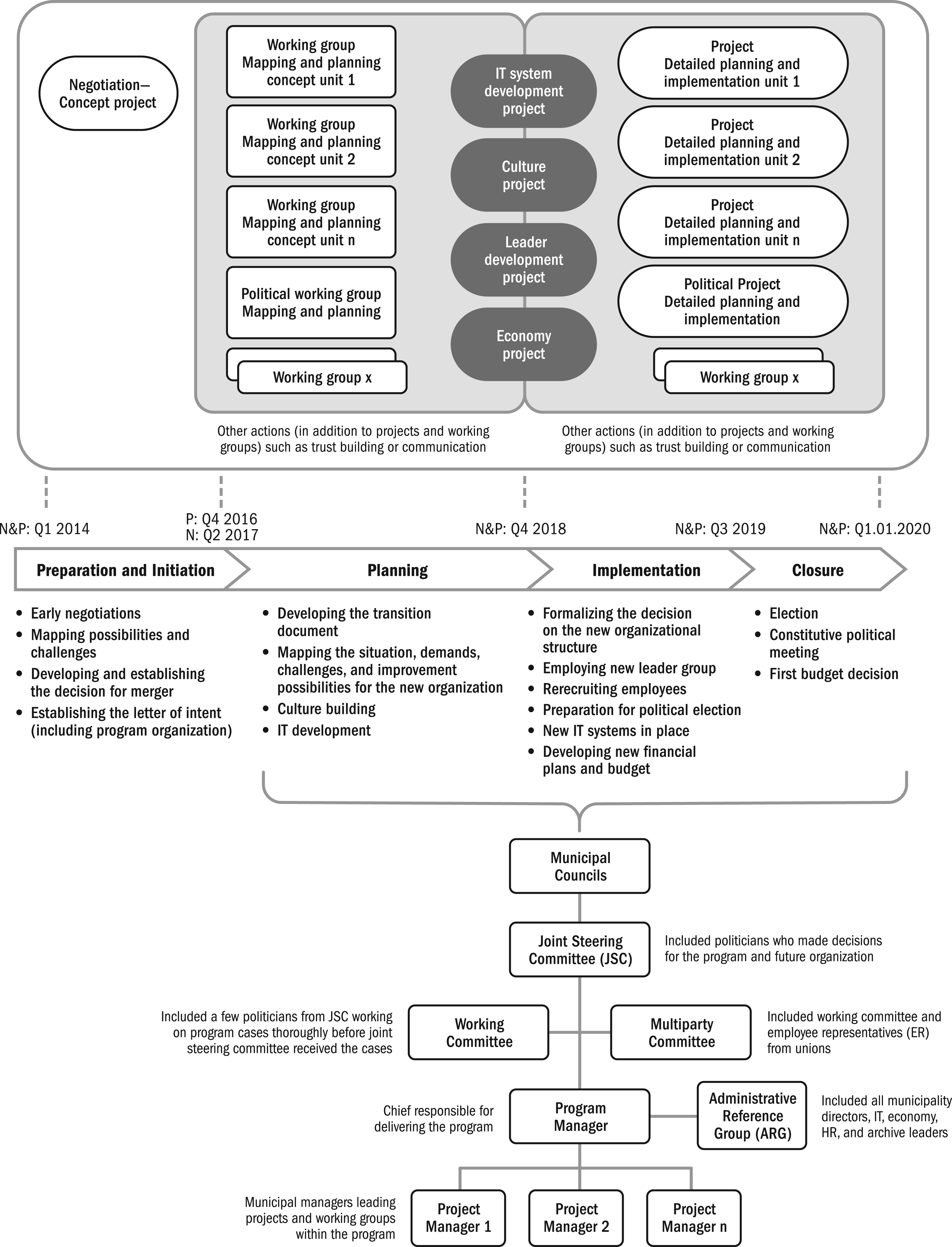
Programs’ content, time line/important events, and structures.
Data Collection
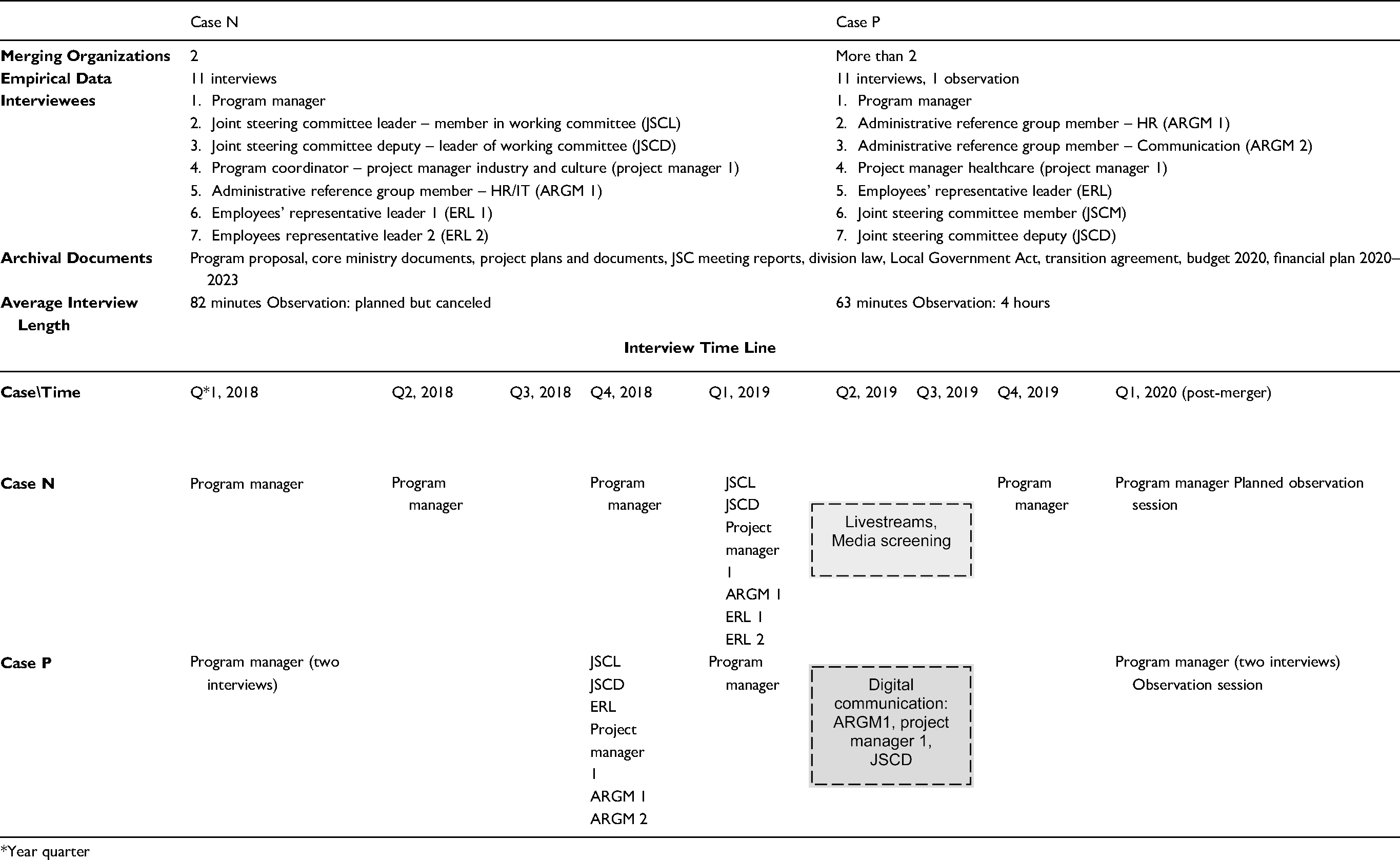
This study reports qualitative data collected from semistructured, open-ended interviews (Seidman, 2013), document reviews, and one observation session. Data were collected from planning in January 2018 to closure in January 2020. Interviewees were asked to reflect on important events in 2016 and 2017 (preparation/initiation and part of planning) retrospectively. An overview of the data collection and time line is given in Table 1. In the first interviews, program managers were asked about the history and context. When familiar with the cases and actors, several interviewees were chosen from all groups within the program organization, whereas the program manager remained the key informant during data collection (see Figure 1). Program managers were interviewed five times, and the other informants were interviewed formally in the implementation phase. Several participants in Case P were contacted by email one to three times for clarifications (see Table 1 for details). For Case N, local newspapers and livestreams of meetings were screened. The observation session for Case P occurred during the regional county governor visit to the merged municipality to receive a summary of the change process. An equivalent visit for Case N was planned but canceled by the municipality.
Data Overview and Interview Time Line
*Year quarter
Data Analysis
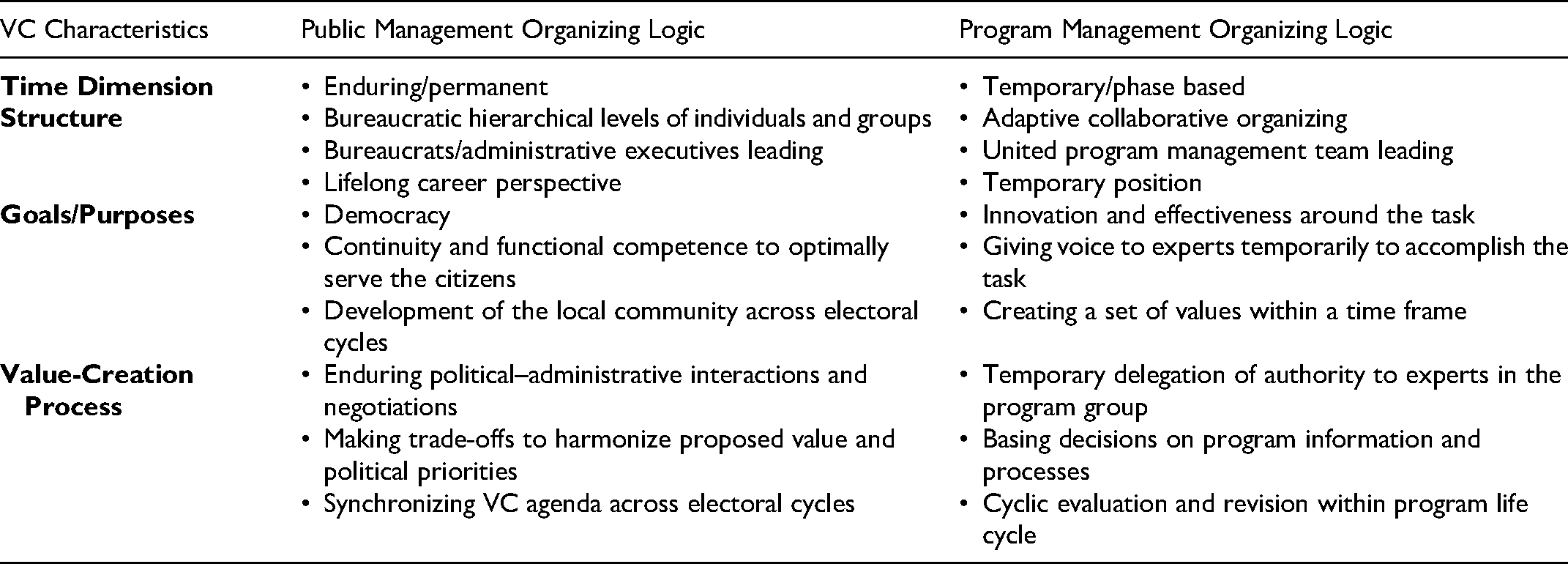
To analyze data, we reviewed the interview data and documents and developed a coherent write-up for each case. The write-ups narrated the data in an earlier–later template of VC, where process diagrams were used to visualize the significant events in each case (Langley et al., 2013). We then categorized/analyzed the data thematically looking for institutional logics localized in the particular setting. Institutional logics are often explored and identified inductively as sets of norms, values, and principles that are enacted by the actors in the organization under study (Reay & Jones, 2016). More specifically, we looked for the actors’ various interpretations of their organization’s VC in terms of its time dimension, structure, goals/purposes, and VC process. We focused on what the actors took for granted when performing organizational roles, how they organized VC, and which practices they developed when engaging in VC. Our analysis resulted in the identification of two similar and influential logics in both cases (see Table 2). The first logic, which we label a public management organizing logic (PubMo), was identified as the actors’ legitimate or normal way to run the organization and create values. The second logic, which we label a program management organizing logic (ProMo), was highlighted by actors as a new way to organize and create values.
Organizing Logics
PubMo–ProMo Dynamics
Next, we looked for possible dynamics between the two logics, because we realized that both logics were present simultaneously; in both cases, we observed tensions due to the impact of organizational context during VC. PubMo and ProMo came into conflict in many VC processes; however, three tasks stood out as making tensions visible and having major consequences for VC. During these tasks, actors experienced difficulty in adapting to the program’s way of working to create value while they were affected by the organizational context and old-school thinking. We labeled the three tasks setting up the program proposal (hereafter, the proposal), referring to developing and reaching agreement for the merger (overall objectives, milestones, program structure, and authority delegation) at the beginning of the program; structuring the new organization (hereafter, the structure), referring to processes of designing and operationalizing the new organization, which lasted throughout the program; and preparing the budget (hereafter, the budget), referring to financial planning for the new organization, which also lasted throughout the program. An exemplary quote referring to tensions between the identified logics is:
“My role is personally quite challenging. I face different expectations in two different roles and get criticized! As mayor, I am expected to commit myself 100% to their perspectives when deciding the budget or leadership positions, and being Joint Steering Committee Leader (JSCL) I am expected, by politicians from my hometown, to do the same. But in the Joint Steering Committee (JSC) I should consider the merger as a new and shared initiative” (JSCL, about structure and budget tasks in Case N).
Navigation Practices
By establishing the logics and identifying the impact of organizational context as tensions between them, we could focus on how actors made sense of and coped with challenging situations. We looked for what they did during the three tasks that enabled them to enact their program roles concerning VC. Performing within-case analysis, the data were inductively inspected and coded regarding how actors approached decision-making about VC, to search for the rationale behind their decisions. We used emic (from within) and etic (from outside) codes, where NVivo and descriptive coding techniques (Miles et al., 2014) were particularly beneficial.
To maintain rigor, we grouped actors’ activities into higher order themes, inspired by (Gioia et al., 2013). For first-order concepts, we identified how actors navigated logics as ways of highlighting one logic, which were then sharply elucidated in second-order themes. Simultaneously, emerging dimensions were iterated against the data and negotiated with institutional logics concepts, to identify aggregation possibilities (Eisenhardt, 1989; Miles et al., 2014). Using cross-case analysis, we compared practices identified in each case, screening possible similarities and differences (Eisenhardt, 1989). The data analysis revealed three practices that actors in both cases identified similarly but performed differently. The practices were used during the implementation of tasks, and therefore relevant in all program phases. The Data Structure for the Three Practices in the Appendix illustrates the analysis process from raw material to the aggregated dimension for each practice.
Findings
First, we present the organizing logics revealed by our inductive data analysis. Second, we explain how the actors resolved tensions between the organizing logics when realizing VC. The identified logics and their value-related characteristics are summarized and contrasted in Table 2. The VC characteristics were used in the analysis to identify clashes between logics and how actors developed practices to navigate the tensions.
Organizing Logics
Public Management Organizing Logic
The first logic identified, PubMo, had an enduring time orientation. To realize VC, the organization was structured on bureaucratic hierarchical levels, attributing responsibility and accountability to political and administrative actors. Leadership was granted to political executives within city councils and administrative leaders. There was a life-long career path for actors where politicians aimed to win electoral cycles, and administrators aimed to serve the political leadership by providing expertise to develop small cases exemplifying the values that are desired to be created (setting budget for the new education function for example, hereafter v-cases) and implement decisions. “There is typically a very clear line between administration and political level[s]; we work with functions and the bureaucratic structure connects all levels, and there is local-oriented thinking that pushes us [to work] toward the next election.” (Case N: Project Manager 1)
To create values, administrators worked with politicians to develop and realize different v-cases with legitimate possibility of returning the v-cases for further work or postponing decisions without a concrete time line. There were often inconsistencies between proposed v-cases and political support when making decisions. Therefore, administrative leadership was involved in creating a mandate to facilitate problem-solving, and also challenged to sell the proposed v-case, renegotiate, and attain trade-offs.
“When I normally meet my people in the health sector, I bring information to my boss …. When there is an issue or problem, we need to propose something that is aligned with the yearly and financial plan of the organization …. We do our best, but can never have a concrete process. Many times, we get a rejection because politicians have their own priorities in shorter or longer agendas.” (Case P: Project Manager 1)
Program Management Organizing Logic
The second logic, ProMo, entailed a temporary phase-based time orientation within an overall time line that included start and closure dates, and few major milestones. In this context, v-cases could be effectively assessed against the main milestones and evolving program plans. An explicit temporary structure was established to deliver intended change and create value. The structure was adaptive to ongoing processes and program requirements. Structuring concerned creating a tailored program management team to assign responsibilities to program roles in several groups, aiming to emphasize concrete, action-oriented, and quick decision-making processes. Although actors came from the line organizations and retained political and administrative positions, they were expected to act as a united team and engage in VC based on program responsibility allocations and cross-functional work. The program manager had accountability for ensuring VC processes, and decision makers in the JSC and working committee relied on evolving input from working groups, project managers, and the program manager to make decisions and delegate authority.
“This structure helps us to steer this extremely complex process. This is a steering method to avoid typical perspectives and ways of approaching problems …. The principle here is to take the new role and commit to necessary steps and relations and dependability to achieve what we want.” (Case P: Program Manager)
The agile program structure aimed to enable actors to be open and innovative, focus on the task, and step away from their usual processes. ProMo was concerned with creating concrete values from a one-time phenomenon within a predefined time frame using specific resources. The foundation for VC was the goal-oriented evaluation of current organizations and the ongoing work within and across the programs’ projects and working groups. Compared to PubMo’s standardized processes to solve operational tasks in the municipal organizations, ProMo focused on unique complex tasks through stakeholder management, planning and control, and benefits-management themes to ensure compatibility between projects and other activities during VC:
“I don’t have much project experience …. It is different from what we normally do. Maybe we do not do “industrial project management” but I see that we try to look at the issues and processes differently and position ourselves differently. We have some concrete goal areas that we treat with program thinking in the dedicated team. Everyone can perceive them differently of course, but we know that we need to land on solutions and work as a team. This is different than letting things go on and on.”
(Case N: Program Manager)
While emphasizing the need for action-oriented contributions to perform the program, ProMo was enacted to keep the VC characteristics relevant to the setting. The most important dimension was considering sufficient flexibility in program decision-making to ensure actors’ comfort in their new roles and accommodate changes in the context.
“We have used [a] generous amount of time for reviewing important cases and developing the final solution … we needed the familiar mentality that “the train won’t leave right away!” Otherwise, people can get suspicious.” (Case P: JSCM)
Practices of Navigating Tensions to Create Value
Problematizing
The first practice to navigate between PubMo and ProMo while performing the proposal, structure, and budget tasks was coded problematizing. We defined problematizing as how actors made sense of and created support for both the program’s purposes and the temporary organization as the framework to deliver the objectives. In Case P, problematizing manifested in constructive discussions that legitimized the program and facilitated VC, whereas in Case N, problematizing was performed to dispute possible benefits of the change initiative and capability of the new framework to realize the change, which limited VC.
In Case P, realizing the proposal and identifying and defining desired values required focused goal-oriented meetings in which actors tended to base discussions on local community development and manage interactions to preserve current political interests and career horizons. To manage the situation, actors made sense of the reform promises, translated them into their local context, and built arguments for establishing the program steering group. Actors agreed that the proposal should contain goals and a description of an extraordinary collaboration to realize them, focusing on creating ideas, openness, and innovativeness for the task at hand. Evaluating current situations, and highlighting the potential benefits of the merger, built readiness, support, and legitimacy for the program:
“We discussed what we are today, what can be challenges in future and what we can achieve by this change … and we got to see how we should manage ourselves. I think we managed to create a good anchor to the program through these discussions.” (Case P: JSCD)
Later in the program, when realizing structure and budget, actors were aware of the possibility of shaping VC based on PubMo, local-oriented input, postponing program v-cases, and deciding indefensible investments. To counter this, program’s expert reports, and ongoing results were continually used to explicate the change purposes, and this contributed to keeping the program legitimate and the group committed:
“We never took the willingness for granted and we knew it could go wrong [at] any moment. For example, the desire for focusing on local investment was increasing so we had to talk about it and say what the reasons are for the change and what we want to achieve.” (Case P: Program Manager)
In Case N, however, the problematizing was recognized, but instead of building legitimacy it seemed to dispute and undermine the change’s purposes and implementation method. Choosing a position against the ProMo delimited the sense of ownership to the program and delegitimized VC. Performing the proposal task, actors expressed that the solution was irrelevant to the involved organizations and was built upon careless and incomplete analyses by the ministry. The concrete program meetings became forums for making guarantees so that current political interests would be kept in the agreement and future processes. The same practice was used during the structure and budget tasks where the leadership centralization, financial commitment during the program, and budget allocation in the new organization were discussed. It was argued that improving the organizations and communities was best assured by maintaining the political history and horizon in each community:
“They had made this reform on their big desks in Oslo, but we are the ones that know our issues and communities. So, to me, there is inconsistency in what these big goals are and what they mean for us here … we are serving the citizens 24/7 here! And who says this is the solution to our problems? … We have inconsistency in an understanding of what is a legitimate way to do this. It is a part of the problem for my role.” (Case N: JSCL)
“It was a huge challenge for us to establish the framework and make the commitment to the new way of working that is not as flexible as we wished for. This is a very strange way of steering, and … I don’t think anybody looks at this way as logical! As a result, the financial matrix we ended up with is not cost effective! The effective way to establish services was proposed but it was politically negotiated and a lot of sacrifices made.” (Case N: JSCD)
To summarize, when performing VC tasks, the familiar PubMo VC characteristics clashed with ProMo and pushed actors to engage in value processes. To navigate the tensions, actors engaged in the practice of problematizing by, first, interpreting and elucidating the change purposes, and, second, evaluating and discussing the unfamiliar concepts and practices of the suggested program management. In Case P, problematizing led to creating legitimacy and commitment to the program’s purposes and processes, creating the basis for adopting elements of the new logic into actors’ behavior and actions. The actors managed to push the PubMo back and focus on the ProMo perspective of VC. In Case N, conversely, problematizing was used to downplay the ProMo perspective and legitimize adherence to the dominant PubMo VC characteristics in the new context. Consequently, elements of the ProMo were rejected.
Designing
The second practice that emerged from analysis was designing. The structure and budget tasks were perfect examples, where designing was used to navigate tensions between the logics. Designing concerns how the program work was continuously designed to formally and informally enroll relevant experts to perform concrete value tasks. Designing the interactions and decision-making processes influenced how value characteristics of logics could manifest. Although similar in the agreements, designing in Cases P and N diverged in practice, which impacted VC.
In Case P, designing established and maintained the program framework, concentrating on authority delegation to relevant individuals, meeting flow, information exchange, and decision-making based on the program’s circular inputs and changes. The availability of expert competencies and interactions through consistent meeting threads was ensured. Designing followed cyclic learning-oriented processes to reevaluate and revise the tasks. This included shaping and reshaping formal and informal interactions throughout the program. A reporting platform was established to circulate information and requests. Designing facilitated innovation and systematic stakeholder management:
“We were faithful to the program organization, a clear space for us to do this specific job effectively, which allowed doing what the guidelines advised us …. We changed the program organization several times to adapt to different states over time, to keep needed competences in the program.” (Case P: Program Manager)
In Case N, designing showed the same backdrop but contrary dynamics. The practice was found to be essential; however, practically, enrolling expertise to perform value tasks was mostly formal and somewhat inefficient. When actors intended to adapt the program structure to accommodate interactions and decision-making around the tasks, either the meeting threads were neglected or the meetings were used to discuss irrelevant issues, leaving v-cases inconclusive. For instance, during the budget and structure tasks, processes were breached several times by neglecting meeting attendance, or throwing the v-cases back and forth to seek trade-offs.
It was argued that to safeguard democracy, centralization of services and financial decisions needed to go through the current administration and city councils; thus, v-cases were left for future negotiations. Moreover, several unfavorable investments in merging communities—unjustified construction projects, for instance—were made that gave rise to a weak budget for the new organization. Although the problematic investments were discussed in program meetings, input from functional leaders from the line organizations was used to keep local VC agendas politically relevant. To enhance the designing process and facilitate necessary interactions, even the established systematic project-management tools were not used effectively. Furthermore, designing did not focus on the informal involvement of actors as they showed limited interest in discussing the value tasks outside meetings and workshops:
“When the issues are sensitive, we see that other priorities ‘hinder’ them to come to the meetings … or we used several hours of an important meeting to discuss the coat of arms for the new municipality, for example …. So it [leaves] little space and attention to make effective decisions for the task at hand.” (Case N: JSCD)
Team Building
The third practice used to navigate tensions when implementing the proposal, structure, and budget was coded as team building, defined as performing a set of activities to build the relationships and trust among actors and a culture of the new logic. Potential concerns with the ProMo view of VC were acknowledged to create trust and legitimize practices and motivate actors to align their focus on the VC tasks. Although recognized by actors in both cases, team building differed across cases, leading to different results.
In Case P, team building started when the proposal was being developed. Formal interactions were used to discuss the change’s potential benefits and explain the program’s contribution to creating value. Informal interactions were particularly encouraged to allow actors to build bonds and develop commitment to ProMo. Through formal and informal team-building activities, the new expert roles in the program and the possibility of optimizing the change through the new roles were discussed. Creating a common positive contribution was expressed to develop mutual trust and a united team culture, and let program input flow in decision-making:
“We arranged many gatherings, from bus trips and informal dinners to many meetings […] to seminars for employees where we shared a smile and talked about our new missions and roles for implementing the merger. This helped coming out of the old roles and creating A TEAM, you know, which is loyal and committed to achieving goals and own the process.”
(Case P: ARGM 1)
During the structure and budget tasks, the team emphasized communicating their commitment to fulfill program roles. Close formal and informal interactions focused on trust building, signaling small wins, and empowering the actors for further work. Actors experiencing the complex situation with contrary forces driving them in two different directions were frustrated, so resolving the tension by acting in favor of electoral perspectives and continuing local development seemed easiest. Team building was exercised to navigate these complexities, rhetorically explicating that goal achievement depended on a commitment to ProMo by sharing information and processing programs’ results. Team building normalized the program roles regarding task-oriented dependency of actors on each other, rather than political–administrative relationships:
“Interaction and focusing on trust have been extremely important to downplay the issues that the entire steering framework [has], which is giving the lines legitimate power for preventing what we should achieve in the program. I am very proud of being able to talk about and become committed to the program gradually.” (Case P: Program Manager)
As with the preceeding described practices, although recognized by actors of Case N, an opposing approach to team building was taken. All informants referred to the need for team and trust building, perceived as a solution to creating commitment to the new titles and trusting the program’s processes to make task decisions. However, actors minimally engaged in team-building activities. The tendency to discuss the structure and budget through enduring political–administrative negotiations to ensure upcoming votes overtook the situation and hampered the willingness to focus on team building. Only a few gatherings were arranged to build the program culture, and discuss roles and dependencies of actors in the new adaptive organization. Eschewing formal and informal interactions for team building was problematic in how actors owned and exercised their participation in the value processes, the level of trust, and making the culture of the ProMo appealing:
“I did put culture as the largest or biggest risk in our process. Like a separate project but even now [in the closure phase], there is still a problematic situation because people don’t talk to each other as ‘us!’ There is little acknowledgment and motivation for what we have done and I think it is unfair [given the] energy and resources we used.”
(Case N: Program Manager)
Discussion
This article explored how program management actors develop practices to navigate tensions between a change program and its organizational context to create value. Programs P and N represent two change programs with actors recruited from line organizations who were closely linked to the embedding organizational context and had limited knowledge and experience with program management. Exploring the program and its context as institutional logics, the cases demonstrated that different perspectives on VC stimulated tensions, as the context’s VC characteristics (PubMo) were dominating the program and its agenda (ProMo) to create values. This challenged actors; thus, they developed three practices—problematizing, designing, and team building—to facilitate the programs’ VC. Differences between the cases suggest that actors used their agency and acted differently to navigate tensions following how strongly the logics were perceived to confront each other. Thus, the findings suggest that actors’ engagement in VC in change programs rests on their perception of tensions between the program and its context’s VC characteristics, navigated through the constant exercise of at least three important practices. The findings make theoretical contributions concerning (1) understanding of the program and its organizational context as institutional logics and the tensions between them, (2) practices developed to navigate tensions to create values, and (3) VC in change programs.
Institutional Logics in the Project Management Field
The first contribution relates to explaining the VC in change programs by employing institutional logics. Documented by inductive and detailed empirical evidence, the identified attributes of contexts regarding time, structure, goals/purposes, and VC process characteristics enhance understanding of change programs, their organizational context, and their dynamic interface comprised of tensions (see Table 2). Namely, we offer a novel, clear, and inclusive understanding of the organizational context embedding the change program and the interface therein. Comparing these with earlier studies, although research has highlighted the embeddedness of change programs in context and the importance of this interface in delivering change programs’ desired outcomes (Lehtonen & Martinsuo, 2009; Pellegrinelli, 2002), it is unclear what constitutes context and dynamics or tensions at the interface. Regarding context, extant literature seems rather implicit and selective about contextual elements when managing change programs. For instance, uncertainty (Laine et al., 2016) or temporal views (Nasanen & Vanharanta, 2016) comprise underlying contextual attributes in change programs. Concerning possible tensions, there exists a similar tendency. For example, Lehtonen and Martinsuo (2009) implicitly identified several organizational-level factors, including experience with change programs, associated with actors engaging in integration and boundary activities. Vuorinen and Martinsuo (2018) implicitly recognized tensions when parent organizations (principals) and change program actors (agents) have conflicting interests and actions regarding uncertainties. Nasanen and Vanharanta (2016) discussed possible temporal pressures at the change program–context interface. We thus complement these studies by providing new insights.
Additionally, using institutional logics to explain VC suggests a more general contribution to the project management field. Former research has called for employing independent theories (e.g., institutional theory) in VC studies (Laursen & Svejvig, 2016). In doing so, we uncovered one way of analyzing change program management to create value in certain situations and avoided idealistic assumptions about the applicability of temporary organizations to implement changes. Moreover, via the institutional logics perspective, our analysis framework and results represent a new tool for researchers and project and program managers to manage temporary organizations in associated surrounding environment (see Table 2). This is particularly relevant, as the need to handle multiple, sometimes conflicting institutional logics is a contemporary dilemma for many organizations and organizational actors. Institutional logics has already identified various ways of addressing this dilemma (Greenwood et al., 2017). As this study identified three specific navigation practices, we show the perspective’s contribution to theoretical explanations for project or program issues.
While institutional logics has been used in project management to date, we examine it more fully as few studies have employed it as a lens. For example, Corbett et al. (2018) used institutional logics to identify microprocesses such as learning and building networks that enable the enactment of traditional project and environmental logic in institutionally complex green projects. Frederiksen et al. (2021) explored how programs integrate and coordinate resources and processes to handle multiple organizational logics. Adding thereto, our use of institutional logics at a microlevel enabled the development of a practice-oriented understanding of VC, providing greater depth.
Practices to Navigate Tensions to Create Values
Our second contribution concerns the identified practices to navigate tensions at the program–organizational context interface to create values. The data show that the practices were key in navigating tensions in both cases, creating different values as they were employed differently.
Comparing these practices to existing literature, they provide novel insights into growing research on the actor-centric view of VC in change programs within the organizational context (Vuorinen & Martinsuo, 2018). Practices shared a common foundation—social sensemaking—which led to shaping the program’s purpose and program work (Pellegrinelli et al., 2007). Practices aimed to legitimize and create willingness to adhere to ProMo, disrupt the normal/PubMo working practices to allow ProMo to manifest, and build a culture to normalize the new roles, expectations, behaviors, and activities. The practices suggest that purposeful disruption of old and comfortable logic, and engaging in collective participation, framing, theorizing, and rhetorical culture building, contribute to suppressing contextual pressures and directing new practices. In Case N, the dominance of PubMo caused stronger tensions that challenged actors to exercise practices intended to navigate the tensions and facilitate VC.
Comparing our findings to literature on managing program–context boundaries, we find a tendency toward a mechanism-centric focus in the literature, where mechanisms either integrate or isolate change programs; for example, creating legitimacy, differentiating the program’s working style from organizational work practices and culture (Lehtonen & Martinsuo, 2008), and using discourse patterns based on temporal and hierarchical dimensions of program–organization contexts to negotiate the scope of activities and responsibility (Nasanen & Vanharanta, 2016). Vuorinen and Martinsuo (2018) identified that actors use similar integration mechanisms differently to serve the goals of a specific change program, and that plans for integrating change programs are subject to actors’ subjective evaluation of the situation. Laine et al. (2016) found that VC occurs through verbal and nonverbal expressions of uncertainty within the program’s context. Although the three practices this article identified analytically resemble these activities, existing research is rather implicit and inconclusive regarding implications of tensions between characteristics of contexts for individual actors and their potential reactions aligned with different management ideas and VC principles. We addressed this neglect by explicitly looking at and unfolding such tensions and the role of actors in handling the tensions to create value in change programs.
Indeed, we considered very subjective individual viewpoints in navigating the program–organization interface concerning how to create values. Moreover, the literature has largely assumed that actors will fight to navigate tensions for the good of change program results. In Case N in this study this was not the case; thus, actors might choose not to facilitate VC based on their personal perceptions and preferences under strong program–context tensions. Therefore, while our findings align with former studies in change program management regarding individuals’ agency to manage the interface and influence program results, they explicitly show how actors navigate tensions to facilitate VC, which contributes to the change program VC debate (Martinsuo & Hoverfalt, 2018).
VC in Change Programs
Differences between cases N and P show how varying interpretations led to divergent prioritizations of the content and processes of value, signifying the subjectivity and complexity of VC in different conditions. In Case N, actors regarded VC as a process where values undergo many negotiations to optimally serve public demands and political agendas. While PubMo legitimization was highlighted, the ProMo view of effective goal setting, resource allocation, and so forth, was found to disrupt VC and thus rejected. The findings, thus, suggest that the enactment of program management’s design to create values is subjectively evaluated and depends on actors navigating available embodied perspectives on VC in a specific setting, which can impose constraints on actors enacting program value management. This augments former findings that actors’ understanding of project/program VC is influenced by organizational culture and values (Martinsuo, 2020), and that enactment of VC depends on temporary organizations’ position in line organizations (Breese et al., 2015; Vuorinen & Martinsuo, 2018).
Moreover, the identified influence of organizational context on change programs’ agendas and practices to create values, supported by empirical details on the nature of tensions, complement research suggesting organizational context as both an enabler and a barrier for change program management (Johansson et al., 2007; Lehtonen & Martinsuo, 2008). The findings support VC as a contingent phenomenon (Lepak et al., 2007), indicating that the purpose and process of change programs are not necessarily closely linked (Pellegrinelli et al., 2007). This necessitates movement from rigid toward more flexible program management (Lycett et al., 2004).
Indeed, consistent with former research, the idea of VC through a systematic management system (Laursen & Svejvig, 2016) that specifies the management and resources required for learning-oriented sensemaking, ideation, and evaluation early in programs (Liu et al., 2019; Martinsuo, 2019; Thiry, 2004), and advocates adaptive structures and processes later to deliver values (Thiry, 2004), was vital to shape our analytical scope and understand VC. However, it was insufficient to mirror the process concerning the organizational view of VC. Existing suggestions neglect possible tensions and overlook actors’ agency in understanding and attempting to navigate challenges. Thus, we found that generic VC designs and optimal prescriptions fail to reflect VC in practice (Breese, 2012; Breese et al., 2015). The findings challenge existing literature, which implicitly assumes that VC is developed by actors who recognize and enact program VC activities aligned with agreed changes, and separately from the contextual view of value. This assumption is misleading, as we found that what constitutes VC is negotiated across available logics or rooted perspectives within the program and its wider organizational context. Consequently, we contribute to research challenging how to do frameworks, suggesting that VC occurs in sociopolitical environments and calling for research into actual practices used by actors with varying power and interests (Breese, 2012).
Conclusion
We show that VC in change programs is connected to tensions between the change program and its organizational context regarding how to create values. Framing our study through the logics perspective emphasizing actors' agency to make sense and handle the institutional complexity (Johansen & Waldorff, 2017; Pallas et al., 2016), the article’s main contribution concerns actors’ agency to navigate tensions to enable VC, which was highlighted through identifying three practices: problematizing, designing, and team building. Thus, this article provides actor-centric insights on the role of actors in VC in change programs. The findings follow research on change program work and the VC process as emergent phenomena occurring in actors’ minds and language. We suggest that generic VC designs fail to reflect the actual process used by actors within the associated context; that it should not be assumed that actors will automatically apply the program management framework to create values; and that it takes time and individual and collective effort to develop the new management idea.
Practical Implications
This study emphasizes possible tensions between change programs and their organizational context(s) on VC. It shows that oft-accidental program management actors recruited due to their functional/leadership experience from the line organization(s) might be challenged to enact temporary organizing as a new way of working to create value because of the dominant organizational context(s). The study provides a new tool, institutional logics, to approach managing change programs. Moreover, it shows that actors understand and negotiate tensions between relevant logics to legitimize and enable VC. Purposeful relationship and trust building and consistent introduction and operationalization of the program management framework are important for program VC.
Validity and Reliability of the Study
To ensure the study’s internal validity (Bryman, 2016), we reviewed archival documents to triangulate the data sources. We had free access to all program documents. Moreover, the informants were sent the manuscript and asked to check and confirm the empirical descriptions (Creswell & Poth, 2016). To enhance external validity (Bryman, 2016), we presented thick and detailed case descriptions to provide comprehensive background information for further interpretation. To ensure reliability, a complete record of the research process was developed and stored (Bryman, 2016). Regarding limitations, our cases are limited to two change programs from one country. Moreover, the data regarding the preparation and initiation phase and a part of planning stage were reported retrospectively, which we supported by careful review of relevant documents.
Further Research
The case study research design was appropriate for developing knowledge on the studied phenomenon but cannot be used to generalize findings to large populations. We used an exploratory comparative case study; our detailed descriptions of two cases provide an opportunity to interpret the cases and findings regarding other settings. The public sector context was chosen because of the representativeness of the phenomenon and visibility of the temporary organization in the context. However, it would be interesting to study VC in change programs within other sectors and industries. The accidental recruitment of change program actors has long been recognized, but how actors enact program management and related VC perspectives has not been sufficiently explored, which encourages further research.
Although beyond the scope of this article, its findings relate to project management research on change projects/programs. Earlier studies have sought to explain how changes can be optimally organized to deliver desired outcomes (e.g., Gareis, 2010). Similarly, change management literature has been concerned with developing process designs for managing organizational changes. Although some studies have related management of change projects/programs to organizational context, they have largely focused on organizational performance or governance strategies (e.g., Parry et al., 2014). Following our findings, considering organizational context as an inclusive concept can enrich the literature on change project/program management.
Footnotes

Declaration of Conflicting Interests
The author(s) declared no potential conflicts of interest with respect to the research, authorship, and/or publication of this article.
Funding
The author(s) received no financial support for the research, authorship, and/or publication of this article.