




Abstract
Through a systematic literature review we explore how digital technologies reshape and catalyze digital innovations in the built environment—a highly project-based setting. We analyzed circa 3,000 titles, further narrowed down to 87 articles. We synthesized an original framework for data analysis. The article presents implications for the deployment of digital technologies on three levels: individuals, organizations, and projects. Whereas most of these studies examined the impact of digital innovation in projects, recommendations focused on organizations, suggesting future directions for performance measurement, developing capabilities of firms to manage changes in dynamic environments and interorganizational settings.
Keywords
Introduction
Digital innovation is created by introducing or deploying digital technologies in the innovation process (Nambisan et al., 2017). The transition from innovation to digital innovation creates new challenges and transformations to individuals, organizations, and society (Nambisan et al., 2017). Digital innovation as a sociotechnical phenomenon challenges established assumptions of innovation management. New thinking in digital innovation supports that it is less bounded than traditional innovation, with implications spilled across disciplines (Yoo et al., 2010) and with more distributed and less predefined interactions between individuals and organizations (Lyytinen et al., 2016). Recently, due to many technological advancements, a proliferation of studies defining and articulating digital innovation across industries has emerged. Viewing digital technologies through a digital innovation lens helps us define their managerial implications.
As a research setting, we selected the built environment (BE), an interdisciplinary hybridized field, where digital innovation affects individuals and organizations varyingly. BE includes the design, construction, management, and use of all forms of buildings (residential, industrial, commercial, hospitals, schools), all economic infrastructure (above and below ground), and the urban space and landscape between and around buildings and infrastructure (Bolton et al., 2018). Among these, construction is a highly project-based sector (Morris, 2004), with projects as main organizational vessels and where the outcomes of innovation are intertwined with projects (Shenhar & Dvir, 2007). To better understand the proliferation of digital innovation in projects, this article presents a systematic literature review (SLR) of digital innovation in BE. The BE is a wider term than construction and relates not only to physical assets, but also the industries across their life cycle, from the front end to handover and operation. The narrow definition of construction refers to on-site assembly and repair of buildings and infrastructure and is the domain of contractors (Pearce, 2006). Literature reviews promote the progress of the scientific field (Webster & Watson, 2002). Despite the increasing prevalence of digital innovations and their profound impact on the products and production of the BE (Wang et al., 2019), such a systematic and longitudinal view (Tranfield et al., 2003) does not exist, apart from SLRs targeting specific technologies, such as on building information modeling (BIM) (Oraee et al., 2017) or blockchain (Li et al., 2019).
The aim of this study is understanding how the evolution of digital innovation shapes project management in the BE through a longitudinal approach. Te’Eni (2001) found that communication had different meanings among individuals, groups, and organizations. There exist individual, collective, and shared affordances to digital innovation (Leonardi, 2013). As the BE is project-based and groups are interorganizational, we used a multilevel perspective of affordances of individuals, organizations, and projects to understand digital innovation. Specifically, this study addresses three research questions (RQ):
Whereas RQ1 focuses on artifacts, following Järvinen (2008), we focus on innovation, a more social and encompassing concept in RQ2–3. After introducing the problem and the research aim, the remainder of the study is organized as follows. Next, the research background explains key concepts around digital innovation, the research setting, and analysis lenses. Afterward, we present the methodology and SLR stages. The ensuing section presents, structures, and analyzes data to create new knowledge and show future directions. The discussion section explains the theoretical and knowledge contribution that in turn provides insights for policy and practice, formulates answers to the research questions, and concludes the study.
Research Background
Digital Innovation
Various terms, such as digital innovation, digitization, digitalization, and digital transformation, are widely used (often interchangeably) to describe processes of change in the digital economy, an economy based on digital computing technologies. Digitization is a largely technical term, referring to the transfer of information from analogue to binary, whereas digitalization refers to the process of changing businesses to digital ventures (Gartner, 2013; Ross, 2017). Although this is a subtle difference in terms, it is significant, with digitalization embracing the wider context of “technology in use” (Morgan, 2019; Orlikowski, 2000). General-purpose technologies (GPT) affect how eras grow and prosper (Bresnahan & Trajtenberg, 1995) and are pervasive with inherent potential for technical improvements and innovation.
Framing the introduction of digital technologies as innovation helps in understanding the impact of digital or technological change on organizations. Innovation refers to a new product, service, or process (Abernathy & Clark, 1985). Accordingly, individual agency, informal processes, tacit knowledge, and context shape the success of innovation. Traditionally, innovation has been typified as either incremental—evolutionary and involving gradual minor changes—or radical—revolutionary and engaging in completely new approaches (Abernathy & Clark, 1985; Burns & Stalker, 1961). Nambisan et al. (2017) refers to digital innovation as using digital technologies during the process of innovating or the outcome of innovation, fully or partly. However, digital innovation is inherently different than innovation as it is (1) less bounded in terms of temporal structure of the innovation process, (2) related to less predefined and more distributed agency, and (3) features dynamically interdependent innovation processes and outcomes (Nambisan et al., 2017). Digital innovation due to its distinct features is better understood within its context.
Orlikowski and Scott (2008) challenged the preexisting assumption in organizational theory literature that technology and work are discrete entities and support that they are better conceptualized as mutually dependent ensembles. Through the concept of sociomateriality, multiple, emergent, and dynamic configurations create contemporary organizational practices, where technology, work, and organization are interdependent (Orlikowski, 2007). Hence, individuals, organizations, and technology are interdependent systems that shape each other through ongoing interactions (Boudreau & Robey, 2005). This sociomaterial view of digital innovation helps to understand how individuals/organizations and technology are assumed to exist only through their temporally emergent constitutive entanglement and not as separate intertwined entities.
Orlikowski and Iacono (2001) stressed the lack of information technology (IT)-centered research in the information systems (IS) field. After studying the IS field they concluded that research on digital innovations approached digital technology as nominal (undefined/absent technology), computation (algorithms, models, and simulations), tool (discrete technical entity), proxy (technology as surrogate for user acceptance, business benefits, etc.), and ensemble (sociotechnical project, system, or social structure) (Orlikowski & Iacono, 2001). Their lens is important in further analyzing our SLR data, as it is used as a device to qualify digital innovation studies.
Leonardi (2013) explained that as people have different goals, they enact different affordances from the same (digital) technology. This results in groups using features of digital technologies in different ways than other groups. With various group members and varying features of the digital technologies, there are infinite affordances that may be enacted during the use of technology. Leonardi (2013) recognized individual (relating to benefits to a person), collective (relating to pooled individual affordances with nonexistent interdependence), and shared (relating to reciprocal interdependence) affordances of digital innovation. This tri-partite view of individual, collective, and shared affordances of digital technology corresponds with the three levels that we focus on: individuals, organizations, and projects.
Built Environment as a Research Setting
Contrary to other industries (e.g., creative industries, which have seen rises in economic significance and innovation policy) (Potts, 2009), the BE is undergoing a gradual process of digital innovation, being a hybrid setting and complex system including both design and construction (Pearce, 2006), on the verge of being disrupted by digital technologies. Drawing upon Gann and Salter (2000), for the purpose of this study we take the 1950s as the starting point for investigating the digital innovation process. Various digital technologies have shaped digitization in BE, which in turn allows for digital innovation in business and project processes, moving toward an eventual digital transformation of the BE.
Innovation appears in various types, categorized into products (e.g., new materials) and processes (e.g., novel workflows and digital technologies) (Nam & Tatum, 1997). The BE often imports technological innovations from other sectors (Winch, 1998). However, other sectors are doing better than BE in leveraging the “digital thread”—a connected flow of data from design to production (Papadonikolaki, 2020). These innovations are also proving slow to diffuse. Given its high product and demand variability (Ballard et al., 2001) and temporary character, the BE is notorious for adopting innovations in an ad hoc manner with slow technology takeoff (Davies & Harty, 2013).
Scholars have identified the profound advantages that digital innovations can bring. In the last decade, segments of the BE have been transformed by “wakes” of innovation across project networks (Boland et al., 2007). From digital 3D representations of built assets until automated design and construction processes using BIM—a 3D-data modeling approach—and various realities (Whyte et al., 2000), the BE has witnessed changes in technologies, work practices, and knowledge across multiple communities (Boland et al., 2007). Presently, BIM is considered the most representative digital technology and information aggregator globally. While it promises to modernize the BE, its adoption has created new challenges, particularly around leadership, communication, coordination (Bryde et al., 2013), and collaboration (Barlish & Sullivan, 2012). To this end, the BE includes various organizational forms, projects, individuals involved, production of assets, and physical assets with intertwined outcomes. As an important eco-sociotechnical system, project outcomes in the BE affect the lives of billions of earth's inhabitants.
Methodology
Research Design
Drawing upon the theoretical lens explained above, this study aims at conducting an SLR to synthesize and compare findings from studies and answer specific research questions (Klein & Müller, 2020). These questions are about the evolution of digital technologies (RQ1); how our knowledge of the impact of digital innovation can be structured around (i) individuals, (ii) organizations, and (iii) projects (RQ2); and how the consolidation of this new knowledge can inform future practice and theory (RQ3). From these three RQs, we answered RQ1 (which is descriptive) through a quantitative and bibliometric approach, and RQ2 and RQ3 (which are interpretative) through qualitative methods and thematic analysis.
Originally developed in the medical sciences to consolidate information from several sources, SLRs are transparent, rigorous, and detailed methodologies used to support decision-making (Tranfield et al., 2003). SLRs build theory by accumulating knowledge and evidence after analyzing a large number of studies and methods, thereby increasing consistency in the results and conclusions (Akobeng, 2005). These instruments can produce new knowledge (Tranfield et al., 2003) or can document the state of the art (Lockett et al., 2006) to provide a better understanding of the nature of digital technologies in BE projects and produce new knowledge by revealing patterns useful for practitioners and scholars.
Research Methods
Data Collection
The sample consists of research articles on digital technologies in the BE published since 1950 up until June 2020. We used two of the largest academic online databases, Scopus and Web of Science (WoS), to sample articles. We limited the sampling to refereed journal articles. Books and book chapters are typically excluded from SLRs, as they are often categorized into gray literature (Adams et al., 2017) or not considered to be subject to the robust review process journal articles go through (Clemens et al., 1995). Also, book chapters are typically addressed to students and are more propositional than research based. There is also a limitation by the existing databases to sufficiently search for books in comparison to searching for articles. We excluded conference papers as many do not undergo peer review. Appendix A includes the exclusion and inclusion criteria. The review focused on literature devoted to BE, project management, management and business journals, and specialist journals devoted to IT. The sampling was as follows:
Initially, we searched for articles spanning across several outlets. We used two major academic databases: Scopus and Web of Science (WoS). We searched through a combination of keywords, falling into two categories: (a) digital (or IT) artifacts (Digital, Digit*, ICT) and (b) project-based setting in the BE (Construction, Built Environment, Physical Infrastructure, Architec*, Engineer*, AEC, Contractor). The research team arranged two one-hour sessions to verify the keywords used in this step. This step returned 121,579 articles in Scopus and 61,551 in WoS. We then filtered the returned articles according to: English language, peer-reviewed journals, and research domain, such as social sciences, business, management, built environment, construction, architecture. Appendix A shows the key strings that we used in Scopus and WoS to narrow down per subject areas. The returned articles for Scopus were 2,116 and 1,741 for WoS. We then consolidated the articles and ended up with 3,903 articles after removing duplicates. We inserted them into Mendeley software and evenly split them among four researchers. We screened each returned article's title and abstract and excluded it if all of the following three criteria applied: (a) the title of the article and abstract do not explicitly state BE as research context; (b) articles focusing explicitly on technology development without implications for individuals, organizations, or projects; and (c) journal title outside the following: built environment, project management, business and management, and specialist journals devoted to technology. We excluded articles based on these three exclusion filters and also removed duplicated articles. This step was critical, as there was a large subset of articles related to the keyword “ICT” and the “architecture” subject area that were on software architecture and not BE, and hence were excluded after reading the abstract. We introduced transparency and a quality assurance process by having a second researcher for each excluded article. Only if both researchers agreed were articles then excluded. Our focus was to have as many articles as possible for the next step. This step returned 175 articles. We then inserted the 175 articles into MS Excel and divided them evenly among three researchers. We read the articles in full and applied the inclusion criteria (see Appendix B). We again introduced quality assurance measures, as described in the step above, to ensure relevance to the RQs. Studies that were simply reporting technology development and did not relate to implications to individuals, projects, or organizations were excluded. This step returned 87 articles, which is the core of our qualitative synthesis.
Data Analysis
We used theoretical thematic analysis (Braun & Clarke, 2006) to analyze the 87 articles. Data analysis focused on the three units of analysis (UoA) (individuals/organizations/projects) as per introduction (RQ2). We reviewed the articles using a theoretical or deductive way (Boyatzis, 1998), driven by the theoretical or analytic interests identified in the introduction, and thus analyst-driven as opposed to inductive (data-driven). We synthesized an original analysis framework to drive the theoretical thematic analysis. This approach fits well with our overall methodology because we were interested in coding according to the three RQs. The coding of data was done as follows:
The 87 articles were evenly split among three researchers. We prepared an extraction form in MS Excel (see Appendix C) to extract information after reading each article. We extracted descriptive data (e.g., authors, title, journal title, empirical setting). We generated initial codes regarding digital technologies discussed in each study to answer RQ1, using open coding and descriptive statistics. We classified the articles as to where their main contribution was using our synthesized analysis framework and protocol coding to answer RQ2 and RQ3. We then reviewed the preliminary themes from Step 3, ensuring that the themes represented the entire data set, did not overlap, and related to the RQs. We then looked for other emerging themes. Then, we finalized the thematic analysis following advice from Maguire and Delahunt (2017, p. 33511) for being inductive: “What is the theme saying? If there are subthemes, how do they interact and relate to the main theme? How do the themes relate to each other?” Answering these questions, we identified emerging/data-driven codes, illustrated the relationships among themes, and developed the narrative for each RQ.
In Figure 1, we illustrate all the steps of the mixed (quantitative and qualitative) SLR as well as the data analysis logic.
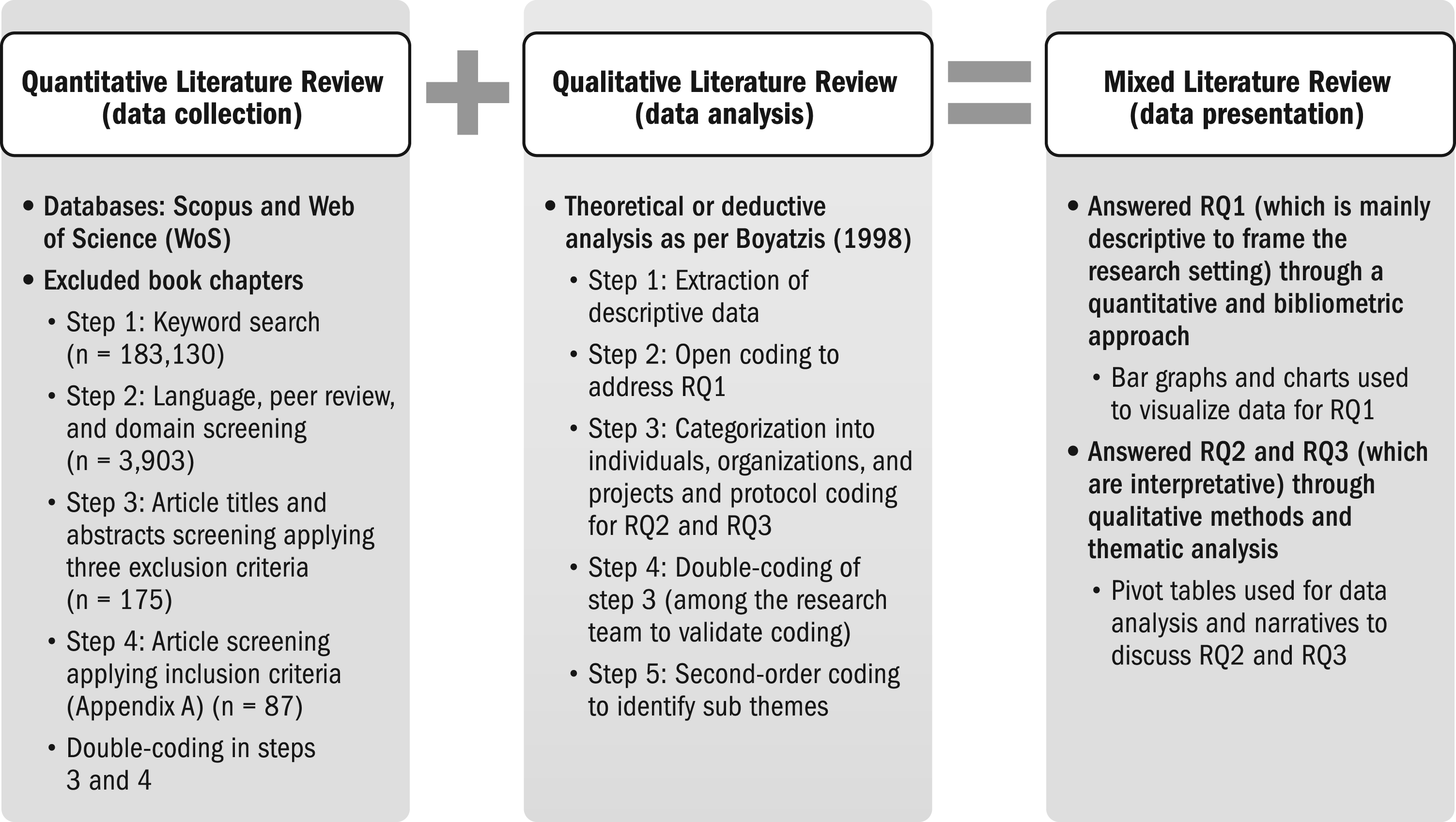
Research stages of the mixed systematic literature review (SLR).
Synthesis of Analysis Framework
Webster and Watson (2002) suggested the use of guiding theories in structuring reviews in IS. To provide a holistic understanding of the topic, we synthesized an integral analysis framework to “consolidate disparate, fragmented, complex, large and possibly inconsistent bodies of literature” (Rojon et al., 2020, p. 196). We followed a design-oriented research synthesis drawing upon Aken (2004), Denyer et al. (2008), and Järvinen (2007), focusing on providing solutions to the RQs. We draw on three frameworks that contribute to understandings of digital technologies in the BE.
First, the framework of Leonardi (2013) shows how various groups of individuals in the BE work with digital innovations and use its features in numerous configurations. His conceptualization of individual, collective, and shared affordances guided our research into categorizing digital innovations in the BE and guided the formulation of the RQs (see Introduction). Looking at these aforementioned affordances (Leonardi, 2013), there are three UoAs to study digital innovations:
Individuals, relating to an individual (derived from individual affordances); Organizations, relating to pooled noninterdepended individuals (derived from collective affordances); and Projects, relating to reciprocal interdependent individuals (derived from shared affordances).
Secondly, at a descriptive level, Slaughter (1998) ordered innovation in the BE as to its complexity from (1) incremental, (2) modular, (3) architectural, (4) system, and (5) radical innovations. These categorizations depend on how innovation spills from projects across other systems and is important for differentiating research in project-based sectors from other fields, such as IS, that only consider organizational levels. The incremental and modular categories require no coordination among the project team, whereas architectural innovations require coordination among parts of the project team, system innovations need coordination among the whole project team, and radical innovations additionally need coordination with top management, highlighting varying levels of complexity when moving from projects to organizations and vice versa.
Thirdly, at an interpretative level, innovation is not linear as implied in the Slaughter (1998) framework, but instead entangled in a constitutive relation between social and material in firms, due to the intersection of technology, work, and organization. Hence, the Orlikowski and Iacono (2001) framework—developed for a literature review study in the IS field—helps us critically review the concept of an IT artifact in the data and identify the extent of sociomateriality of digital objects as (1) nominal, (2) computation, (3) tool, (4) proxy, or (5) ensemble. This approach helps create a deeper engagement with the subject matter (Orlikowski & Iacono, 2001). These three frameworks are the basis for developing the analysis framework of our SLR, following recommendations by Webster and Watson (2002) on using guiding theories in structuring IS reviews. The three theoretical frameworks are not overlapping but complement and reinforce one another by building up from lower-level (problem identification) to higher-level (evaluation) cognitive processes (Krathwohl, 2002). The synthesized analysis framework of three theories was visualized as a matrix (shown in Figure 2) that helped us guide the analysis by:
Identifying the UoA following (Leonardi, 2013); Describing complexity between organizations and projects (Slaughter, 1998); and Evaluating sociomateriality of digital artifacts (Orlikowski & Iacono, 2001) in the data.
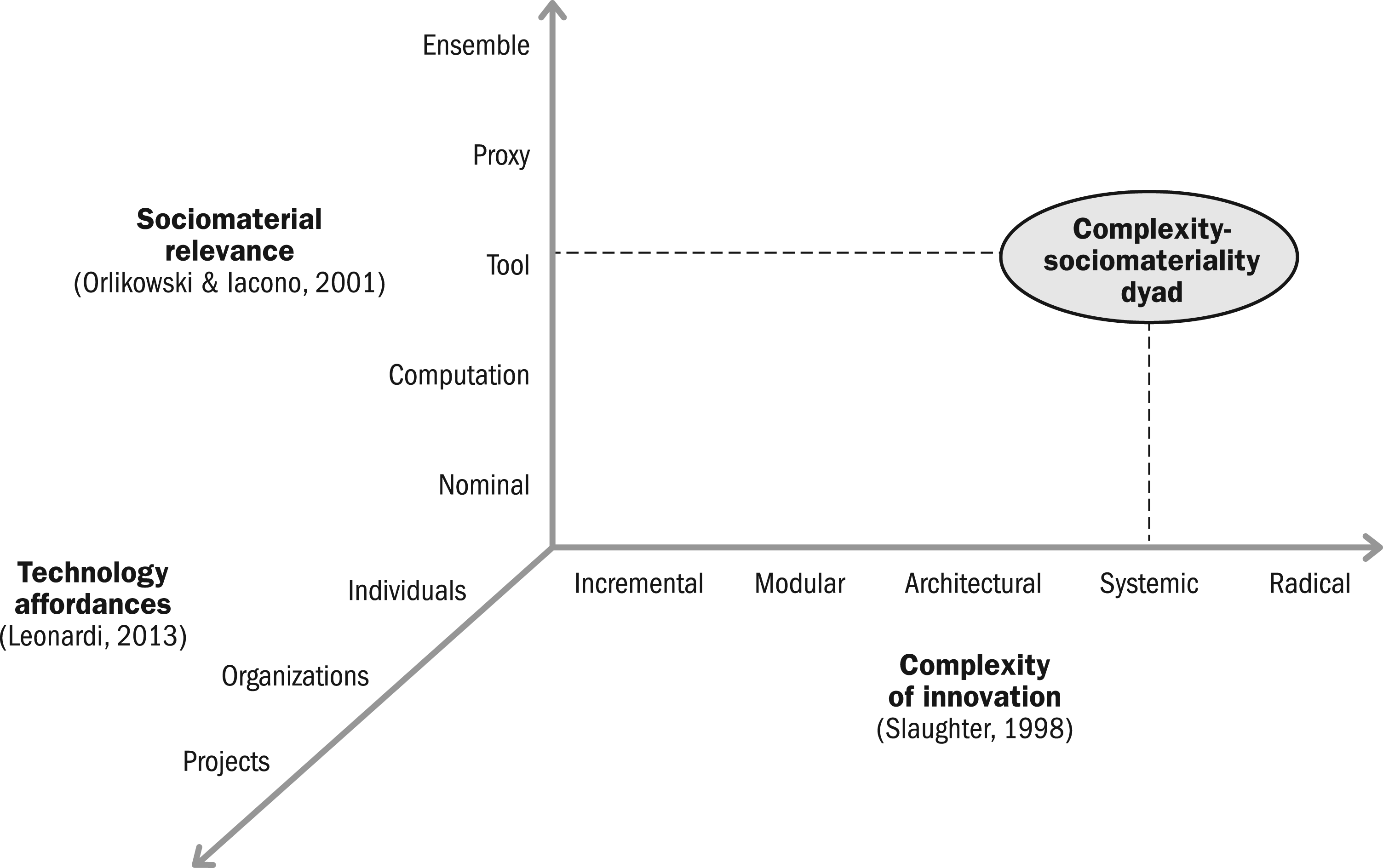
Qualitative analysis protocol lens of digital innovation studies.
Results
Evolution of Digital Innovation in the BE
To address RQ1, we generated codes on digital technologies discussed using open coding and then analyzed them with descriptive statistics. A variety of studies demonstrates the evolution of digital innovation in the BE (RQ1). The articles analyzed were qualitative, quantitative, mixed methods, and conceptual studies. Most studies were qualitative as to data collection and data analysis (n = 38). The prevalent research methods were case studies with data from either interviews or numerical data from the United States, Australia and Southeast Asia, Scandinavian countries, and the Netherlands. Most studies’ settings were buildings (n = 26), infrastructure projects (n = 16), mixed use (n = 19), and urban development (n = 9).
Half of the studies were published after 2015. In the last five years, the research on digital innovation quadrupled, although the topic has been investigated since the 2000s. Figure 3 illustrates how the analyzed literature appeared chronologically. After 2000, research on computer-aided design (CAD), digital prototyping, internet applications, generative design algorithms, and information communication technology (ICT) increased steadily. In 2014 there was a sharp increase in research on closed-source/proprietary BIM applications that is still dominant, with more research on robotics, big data analytics, cloud computing, and smart cities solutions. Figure 4 illustrates the frequency of various digital technologies and any of their combinations across the data, and Figure 5 shows their evolution per year.
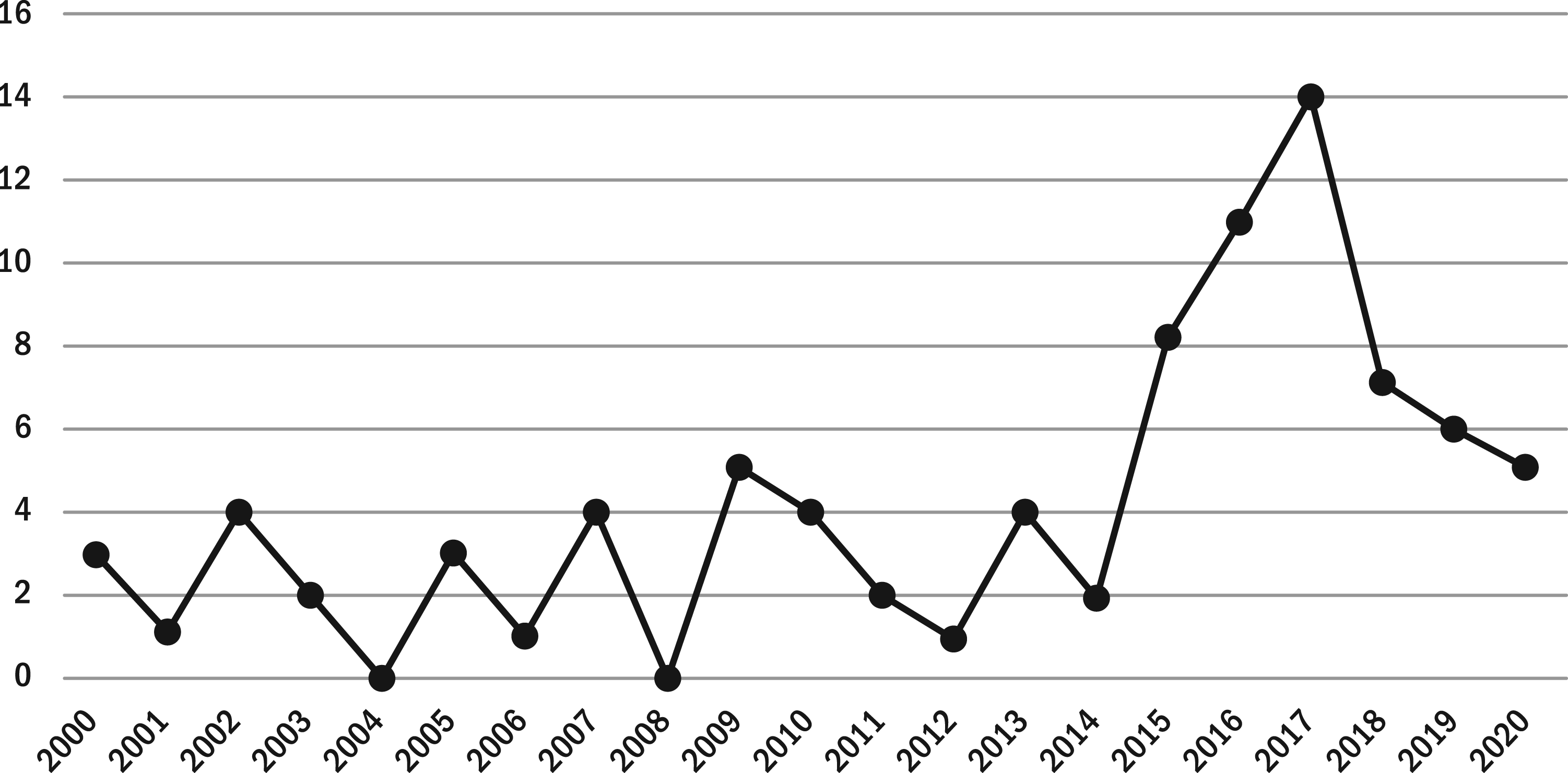
Publication year of data set of studies on digital innovation.
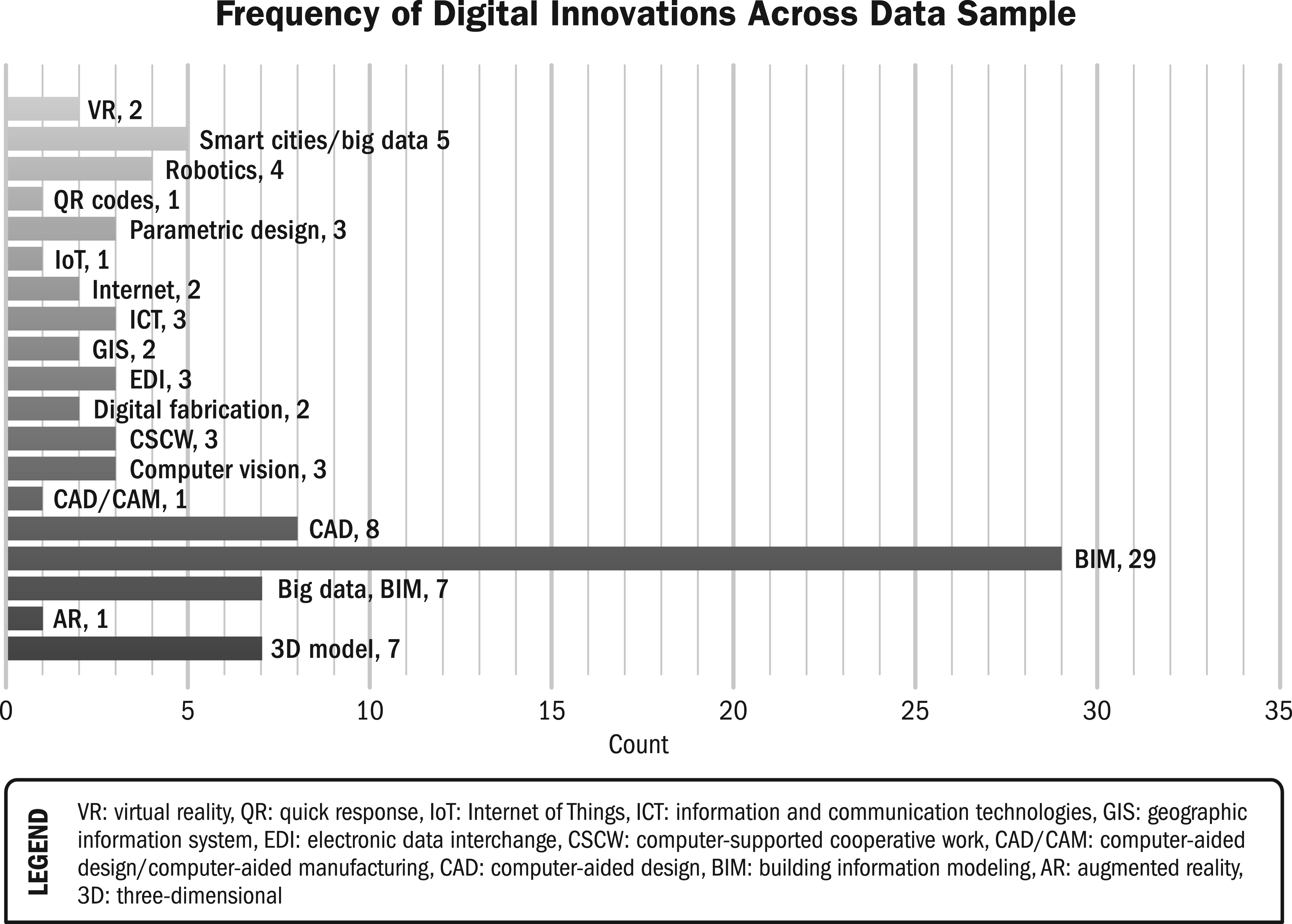
Frequency of digital technologies and combinations thereof in the data (ordered alphabetically).
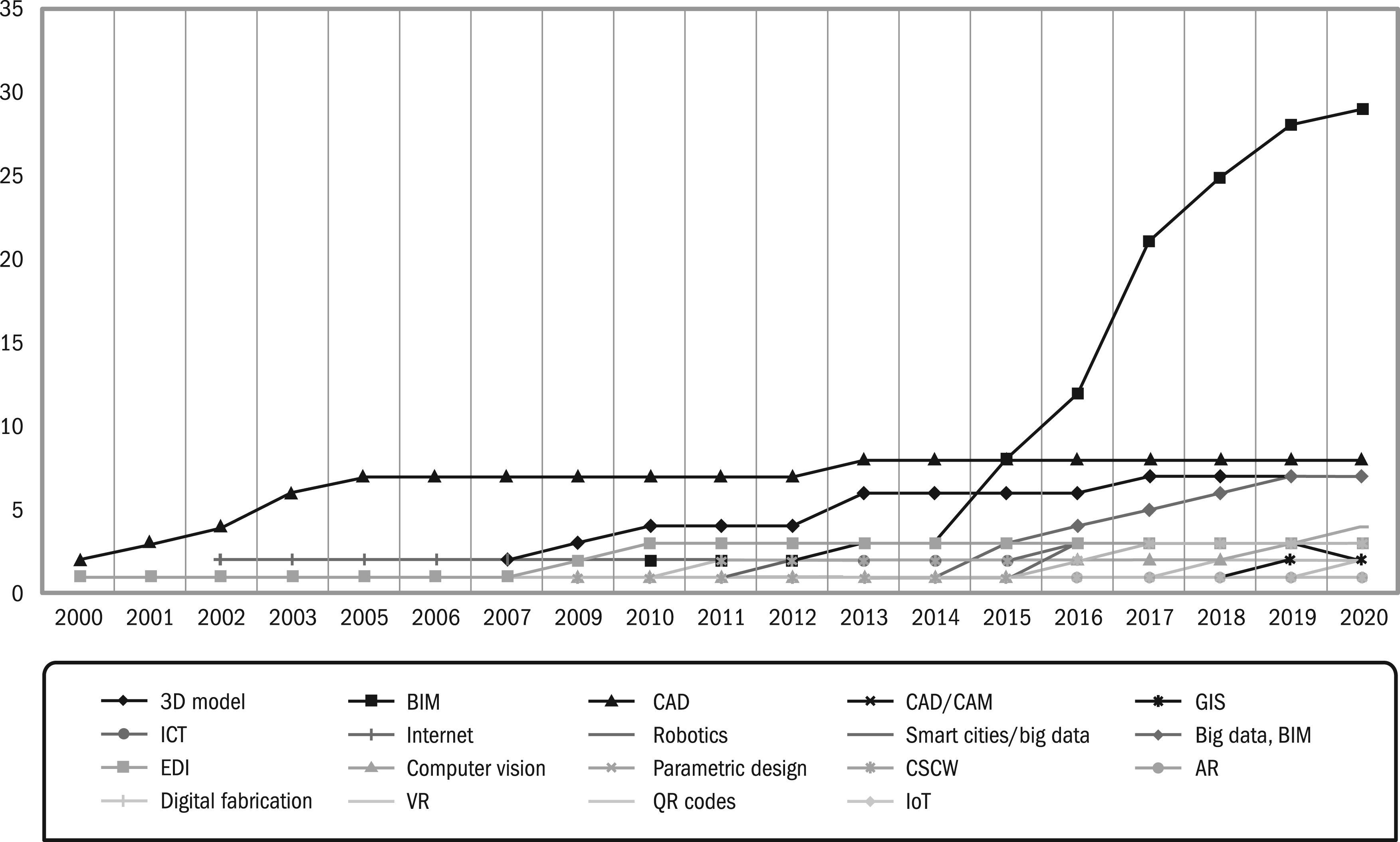
Evolution of digital technologies and combinations thereof per publication year.
Structuring Knowledge on Digital Innovation
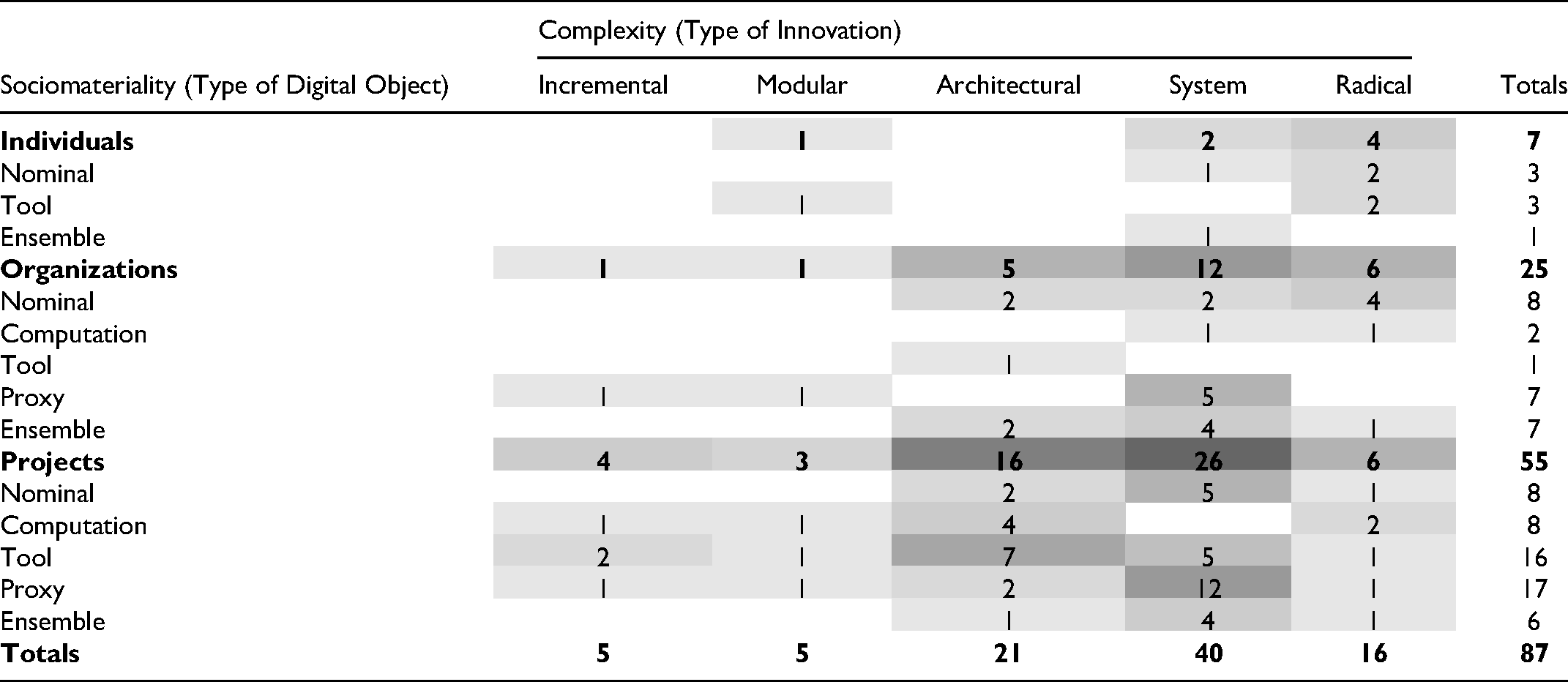
To respond to RQ2, we classified the articles as to where their main contribution was, using our synthesized analysis framework (see Figure 2) as protocol coding. Most studies discussed digital innovations in projects (n = 55), signature organizational forms through which the BE is organized, followed by digital innovations in organizations (n = 25) with a marked drop in studies pertaining to individuals (n = 7). The data analysis was supported by structuring knowledge into a structured data matrix (seen in Table 1) using the integrated framework that formed the protocol coding for data analysis (Saldanā, 2009). First, the Leonardi (2013) framework is used to identify the UoAs: individuals, organizations, and projects. Secondly, at a descriptive level, the Slaughter (1998) framework on complexity of innovation described commitment, coordination within the project team, and the resources needed to innovate. Thirdly, at an interpretative level, the Orlikowski and Iacono (2001) lens evaluated digital innovations as per sociomateriality across the spectrum from nominal (undefined/absent technology) to ensemble (sociotechnical project, system, or social structure).
Pivot Table of Data Analysis Per UoA (Leonardi, 2013), Innovation Type (Slaughter, 1998), and Digital Object Type (Orlikowski & Iacono, 2001).
Individuals
Drawing on Leonardi's framework, the smallest subset of the articles focused on the individual level of analysis (n = 7). These studies were published in the last nine years. While the findings that can be drawn from such a small categorical data set are limited, the studies share a common thread of considering the context of digital innovation deployment. All studies acknowledge that different individuals in the BE require different applications of technologies. The studies in the system-nominal dyad treat digital innovation as creating system-wide changes on an urban scale, focusing on the impact of these innovations on citizens’ everyday experiences in urban environments (Macrorie et al., 2021), or with relation to how decision makers consider future scenarios (Lavikka et al., 2018). From a system-ensemble view, Çıdık et al. (2017) adopted a practice-based perspective to show that the coming together of technology and individuals involves reciprocal change; they engage with change from both emic and etic perspectives by viewing it from within and without organizations. The four studies on radical innovation view digital innovations as disrupting traditional practices or outputs, from architectural forms (Quin, 2016) to construction practices (Edirisinghe & Lingard, 2016; Mäki & Kerosuo, 2015). However, the challenge of this data set is that although they concern potentially radical innovations, they fall short of the sociomaterial understanding of technology that is nominal and tool-focused.
Organizations
Our analysis yielded 25 papers with data on an organization level. Of these, most papers (n = 12) discussed digital innovation following the system view of innovation, spreading across three categories of sociomateriality. Studies on the system-proxy view show how new technologies are diffused in organizations and how organizations perceive them as means for competitive advantage. Shibeika and Harty (2015) studied the diffusion of digital technologies in project-based organizations, following government mandates calling for wide adoption of digital technologies in publicly funded projects. They argued for understanding digital innovations as unbounded, mutating, iterative, complex, changing, and reciprocally interacting with the organization. Lobo and Whyte (2017), aware of construction project complexity, argued that new generations of software challenge project delivery and that organizations develop two dynamic capabilities (aligning and reconciling) to deliver complex projects digitally, sustaining competitive advantage.
Four organizational studies from the system-ensemble dyad focused on dynamic interactions between organizational actors and technology (e.g., interactions of technological and organizational structures, or dynamic interactions of technology in interorganizational settings in supply chains) (Papadonikolaki & Wamelink, 2017), arguing that preexisting partnering relationships support digitalization. Similarly, Dainty et al. (2017) held a critical view on BIM to challenging claims of industry-wide integration of technology and outlined barriers of adoption such as motivational, material, skills, and access. Timeus et al. (2020) contended that city governments, just like organizations, increasingly adopt smart technologies to create and deliver value to citizens, thus there is a need to understand how smart city business models can be developed to ensure value creation and offer opportunities to redefine and reconceptualize “communities” (Baker & Ward, 2002).
At the radical-nominal dyad, four highly ambitious organizational studies used novel empirical settings (e.g., strategy planning and business competition to develop cutting-edge technology), but remained nominal in depicting technology. Park et al. (2018)—driven by patented technology commercialization, patent creation, and patent strategy—discussed the increasing importance of strategy for creating new business value in the BE.
Projects
From the largest subset of data on projects (n = 55), we only found studies mainly looking at architectural (involving only affected project parties) and system innovations. But these studies were of all possible categorizations of sociomateriality. In the architectural-computation dyad, four studies focused on algorithms, models, and simulations. Pignataro et al. (2014) developed and implemented digital objects to model and simulate a new design solutions process for sustainability. Few studies developed digital objects and models to simulate risks during facilities operation by end users (Heydarian et al., 2015), construction site activities (Rozenfeld et al., 2009), or off-site construction (Li et al., 2018). Similarly, there were seven studies on the architectural-tool view that focused on architectural innovation, but viewed digital objects as isolated technical entities. Digital innovations were seen as merely visualization (Harvey, 2009; Koutamanis, 2000), design (Hew et al., 2001), or clash avoidance tools (Akponeware & Adamu, 2017) for applications in construction site management, building management systems (BMS) (Oti et al., 2016), and facility management (FM). Such isolated computational and tool-centric approaches among few project team members are fragmented, focused on step-change improvements, and fail to utilize a sociomaterial view of digital objects or further knowledge sharing in projects.
In the system-nominal dyad, five project studies focused on digital innovation as system innovation across the whole project team, but at a nominal level, with digital objects as undefined/absent technologies. These nominal technologies bring networks of suppliers together to work collaboratively, develop organizational capabilities to leverage new technologies (Wynarczyk, 2000), and manage information complexity (Khan et al., 2016). Braun and Sydow (2019) further this from organizational to interorganizational capabilities, including searching for, evaluating, and selecting digitally capable suppliers. Similarly, Whyte et al. (2016) looked at how organizations delivering complex projects rely on digital innovation to manage big data and control asset information integrity for handover to owners/operators. In the system-tool dyad, five studies focused on system innovation and approached digital technologies as tools for better outcomes at the end-of-project life cycle and for automating remote monitoring of progress, safety, quality control, and site layout management with digital tools (Golparvar-Fard et al., 2011). Digital technologies were seen as tools to transfer data from site to operations fulfilling business objectives (Love et al., 2018) and supporting digital briefing and model-based compliance review for digital project delivery (Cavka et al., 2017).
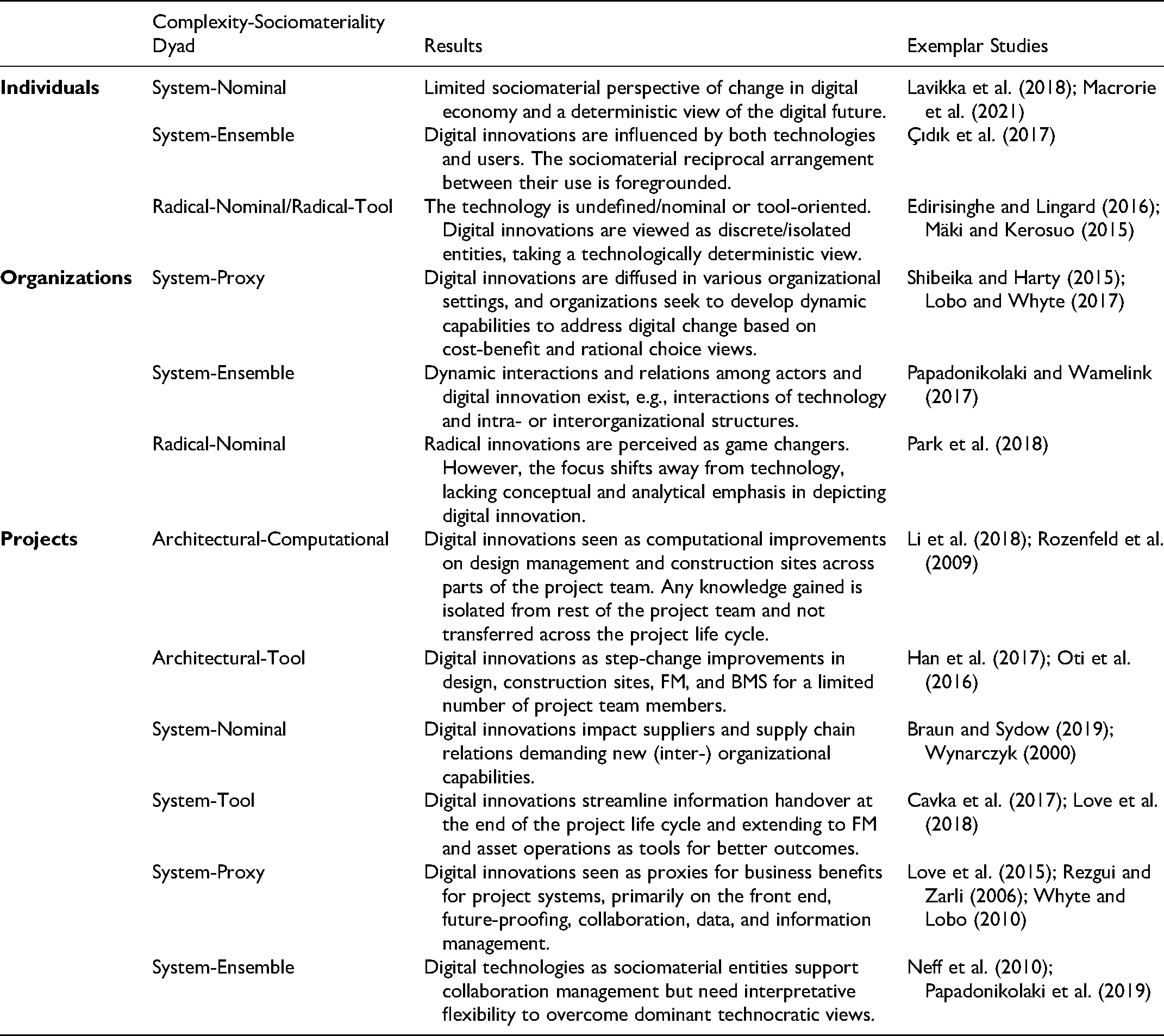
Finally, a large subset of data (n = 12) focusing on a system-proxy view sought to explore digital innovations that included all project team members and address digital innovation as proxy/surrogate for business benefits (e.g., future-proofing, collaboration/data/information management). Such benefits included “hybrid briefing methods” by effective stakeholder engagement and digital objects to streamline project delivery (Whyte & Lobo, 2010). Following a life cycle perspective, Krystallis et al. (2015) and Love et al. (2015) emphasized the business benefits of BIM for future-proofing and benefits realization in built assets. Few studies were motivated from collaboration management (Poirier et al., 2017), integration across professional roles (Jaradat et al., 2013), project team relations (Aibinu & Papadonikolaki, 2020; Moum, 2010), and information management (Rezgui & Zarli, 2006). In the system-ensemble view, only four studies viewed digital innovation as a sociomaterial system innovation. These studies focused on how relations among suppliers transform from transactional into digitally ready supply chains (Papadonikolaki et al., 2016). Other studies focused on digital technologies as sociomaterial entities that encourage user groups to develop interpretive flexibility in deploying digital tools (Neff et al., 2010) and overcome the technocratic view of digital (Papadonikolaki et al., 2019). The results discussed above are further summarized and presented in Table 2.
SLR Results on Digital Innovations in the BE
Suggested Future Research on Digital Innovation
To respond to RQ3, we used the dyads emerging from the framework to identify patterns and also used inductive coding for emerging themes. The analysis focused on structuring future research directions as suggested in the 87 articles.
Individuals
A limited number of papers (n = 7) relate primarily to the individual and limited suggestions for future research are drawn. The studies acknowledge pluralism in requirements of different groups of users or producers of the BE and identify specific future research requirements for these groups. These groups are national (Evia, 2011), professional (Mäki & Kerosuo, 2015), and managerial (Lavikka et al., 2018). Future research is needed on specific technologies and their impact on individuals’ experiences of the BE (Edirisinghe & Lingard, 2016; Quin, 2016), including urban scale (Macrorie et al., 2021). Çıdık et al. (2017) employ a sociomaterial-theoretical perspective, adopting a practice perspective on the role of individuals in creating digital innovations. They emphasize the reciprocity between digital innovations and users, where individuals are not passive recipients of digital technologies but can alter their use (mutual adaptation) (Çıdık et al., 2017), offering a nondeterministic view, which they advocate future studies explore further.
Organizations
These subsets of studies provide significant insights into how technology enters organizations and the dynamics of digital innovation in organizations. Three clusters analyze this setting. First, in the system-proxy dyad there are suggestions to unpack digital innovations alongside organizational phenomena from a rational choice account to carefully evaluate technology. Shibeika and Harty (2015) suggest investigation of diffusion dynamics for digital innovations for project delivery at the organization's interface with the industry, clients, and technology providers. Dainty et al. (2017) probe future research to provide scrutiny of the policy process and call for legitimacy of policy ideas such as BIM. Lobo and Whyte (2017) call for more research on dynamic capabilities at the strategic level for digital delivery of complex projects.
Second, the system-ensemble dyad adopts sociomateriality and proposes greater interaction of organizational structures and technological change. Timeus et al. (2020), detaching from the prevalent technocratic views on smart cities, propose future research should investigate how smart city initiatives could offer value for residents by applying business model logic to develop smart services and coordinate stakeholders. Papadonikolaki and Wamelink (2017) probe future research to explore how to align digital strategies across the supply chain to meet demand for innovation.
Third, articles in the radical-nominal dyad deal ambitiously with “game changing” digital technologies and how they affect organizational strategy. Säynäjoki et al. (2017) identify research potential in new business models toward a functional data commercialization ecosystem for smart cities and data utilization and recognizing suitable roles for real estate and construction sector stakeholders. Similarly, Cook (2015) offers several areas for future research to investigate new skills needed, new business models, and new roles needed by institutions, governments, and society.
Projects
In the project-based category of 55 studies, most (n = 42) were categorized under architectural and system digital innovation type as per Slaughter (1998) (see Table 1). Digital technologies were seen as infrastructures and boundary objects (Zhang et al., 2009) for architectural design, visualization, cocreation in digital asset management, and spatial integration with future implications about how technologies shape practices and interpretations of professionalism (Boland et al., 2007), calling for relativist/multilevel perspectives of communication and IT (Jaradat et al., 2013; Moum, 2010).
As system innovations (n = 26) require coordination across the whole project team, the data set showed future research in project learning from IT (Harty & Whyte, 2010), interactions between project–based work and integrated digital systems (Whyte, 2019; Whyte & Lobo, 2010), and interactions between procurement/supplier selection and digital work (Aibinu & Papadonikolaki, 2020; Braun & Sydow, 2019; Chang et al., 2017; Papadonikolaki et al., 2019). Further research suggested the need to adapt into flexible ensembles when working with digital technologies (Neff et al., 2010; Papadonikolaki et al., 2019).
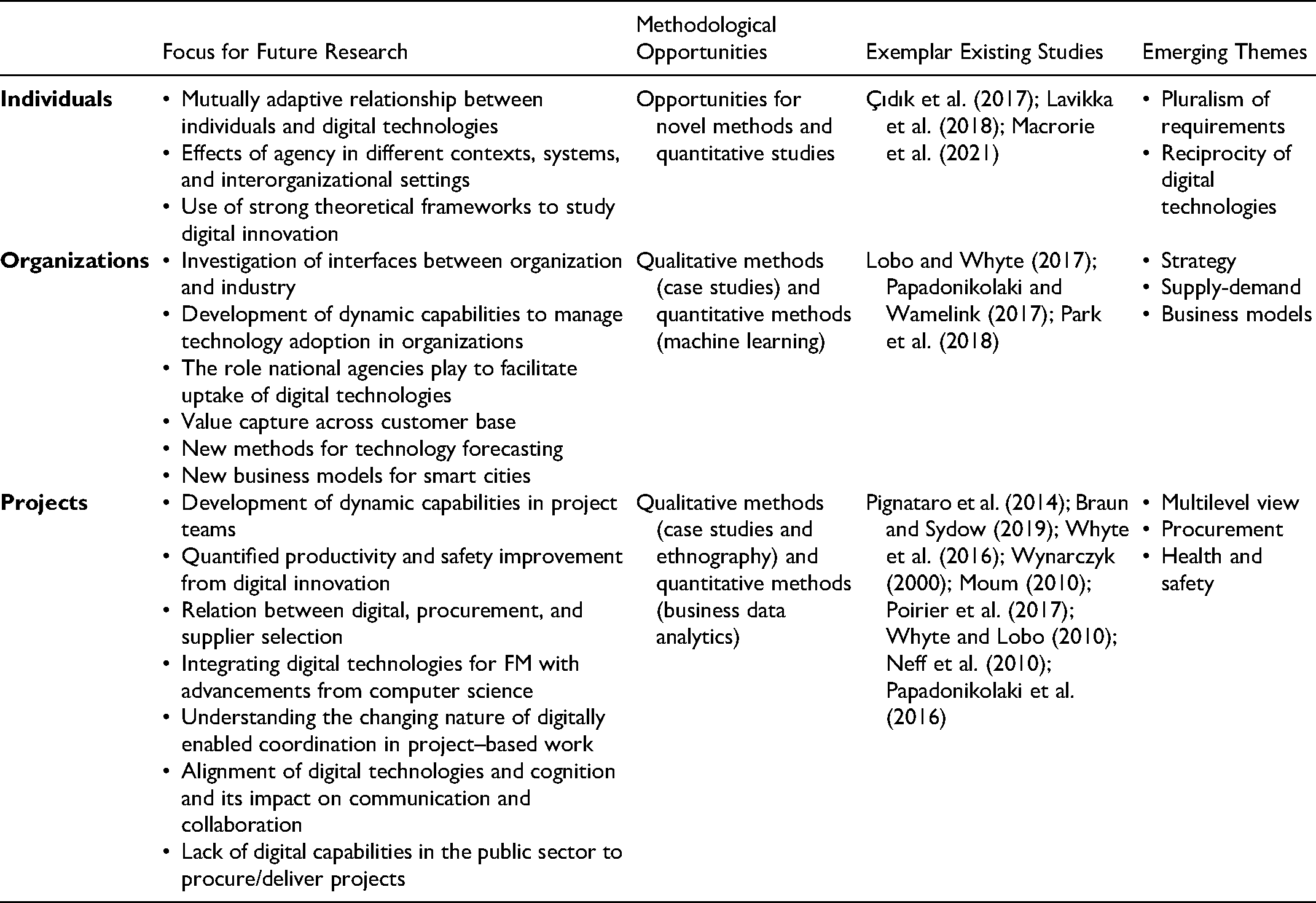
Another key theme in future research was health and safety (H&S), namely suggesting the need to use digital technologies to quantify productivity, safety, and quality improvement (Bryde et al., 2013; Han et al., 2017; Li et al., 2018) and improve construction site H&S (Larsen & Whyte, 2013). Overall, there were few studies viewing digital innovation as a radical innovation that needs coordination with top management, revealing a strategic gap in linking digital innovations in projects to top management. Table 3 summarizes the above suggested future research.
Future Research Around Managing Digital Innovation in the BE Emerging From the Data
Discussion
This study makes a number of theoretical and practical contributions to the understanding of digitalization in the BE and its projects. Our main methodological contribution is developing an original integrated framework, which brings theoretical contributions in project studies. These are discussed next, followed by answers to the RQs and a discussion of findings and recommendations for future research based on the identified cross-cutting themes.
Integrated Analysis Framework
Whyte and Levitt (2011) analyzed waves of digitalization in project management and found that IT challenges traditional project management approaches. In comparison with previous reviews on digital innovation in the BE, this review distinguishes itself because it focuses on a broad spectrum of digital technologies, as opposed to Oraee et al. (2017) and Li et al. (2019), focusing on BIM and blockchain, respectively. Our work represents an important departure from Slaughter’s (1998) linear innovation continuum and suggests a new integrated framework more suitable for considering digital innovations. By taking sociomaterial views of digital innovations, we critically view the particularities of digital innovations and consider the significance of their context of use, users of technology, as well as the technology itself, reflecting on the “technology-in-use” view (Orlikowski, 2000). The novelty of our research is that we developed an integrated analysis framework that consolidates digital technologies to project studies, something that has previously been lacking. Most importantly, we bring project organizing to the forefront, since previous reviews of digital innovation did not discuss this aspect in detail. This in turn leads to an ontological contribution, namely to structuring knowledge on digital technologies in projects. This review approached the field from a novel perspective based on a new integrated framework.
The purpose of this review was to systematically analyze digital innovation literature in the BE. After formulating RQ1, RQ2, and RQ3, we linked different theoretical juxtapositions, application areas, and ontologies. As our main ontological contribution, we developed an original integrated framework (see Figure 2) combining three extant lenses that can be used for future empirical studies on digitalization and projects. These three frameworks are complementary and address the multiple UoAs in project studies, project complexity, and the concept of sociomateriality. This study also tests and demonstrates the value of the integrated framework by mobilizing it in the analysis of digitalization in the BE (see Table 1).
Evolution of Digital Technologies and Management of Digital Innovation
In response to RQ1, the data show an accelerated pace of relevant studies around 2000 with marked interest in design/construction interfaces. A proliferation of digital innovation was discussed in studies from 2014 onward (see Figure 3). Main digital technologies discussed were: BIM, augmented reality, virtual reality (VR), Internet of Things (IoT), cloud computing, and big data (see Figure 4). Based on our findings, the concept of digital evolves toward connected technologies such as BIM and big data and smart cities/big data. This trend shows that the BE finds solutions to its problems in the use of technologies that rely on big data. Unlike other sectors where big data are available, the BE is behind the curve in terms of digitization of assets, usage, and labor (Agarwal et al., 2016). We found that the sector is slowly picking up.
Answering RQ2, we show how increasingly the studies (n = 40) were aligned with the “system” innovation view by Slaughter (1998). This reinforces the definition of digital transformation as affecting systemic change and being distributed with less predefined interactions between agencies (Lyytinen et al., 2016), echoing increased project complexity (Khan et al., 2016; Whyte et al., 2016). The data indicated significant research interest in the impact of digital innovation on projects, as opposed to other levels of analysis in the BE, such as individuals and organizations (see Table 1), making project management a dominant UoA in digital innovation. The BE sector chooses to innovate in the boundaries of the projects it builds instead of the boundaries of the organizations who own and operate the built assets. The data confirm persistent tensions between short- and long-term thinking in projects as they are inherently limited in temporal dimensions, but strategic thinking becomes increasingly crucial (see Table 3, fifth column). There is a clear scarcity of studies on digital innovation from an individual's perspective. Moreover, projects are important for digital innovation and are perfect settings for advancing digital innovation because of shared affordances necessities (Leonardi, 2013). Our study brings project organizing to the forefront of digital innovation.
Future Research Directions for Digital Innovation in Project Management
In response to RQ3, we identified four main points. First, the data on future research reveal a lack of emphasis on understanding the micro foundations and individual-level attributes of digital innovation. Our findings for future research (see Table 3) also indicate a mismatch between individuals and digital technologies, and how individuals need to develop “soft skills” such as collaboration, flexibility, integration, boundary spanning for teamwork, experimentation, risk taking, and avoiding overreliance on commercial software. Building on extant research, future research could explore the specific needs and impacts of digitalization on individuals, for example, those in leadership positions and key decision makers (Lavikka et al., 2018) as this seems a promising research avenue. Such research should explore the mutually adaptive relationship between users and technology. Building on, for example, Çıdık et al. (2017), research grounded in strong theoretical frameworks can provide rich insights and contributions to understandings of the micro foundations of digitalization in the BE. This echoes new ideas in digital innovation, whose implications spill across disciplines (Yoo et al., 2010).
Second, an unexpected finding was the mismatch between heavily project-oriented results (see Table 2) and suggested future research across the literature that are organization oriented, for example, dynamic capabilities and business models (see Table 3). Surprisingly, further research directions in the literature focused more on ecosystems and organizations and less on project management, which was the dominant UoA in our data. This mismatch shows an interest in looking outside the tight boundaries of project-based considerations and traditional governance and business models in the BE and engaging in business model innovation. Digital transformation activates the need for organizational and ecosystem considerations to address the threat of digital divide (Van Dijk, 2006) and better support diffusion of digital innovations across the sector. Similarly, organizations are called to develop new dynamic capabilities and change their business models and strategy for digital innovation.
Third, in most studies, digital technologies were approached as discrete tools (n = 16) or proxies of technology, surrogate for business benefits (n = 17), following Orlikowski and Iacono (2001) (see Figure 2). This implies a technocratic and functionalist view of digital innovation and a one-sided view focusing more on how digital technologies affect project teams and less on how project teams influence them. Therefore, this shows room for future research into how project teams reorganize and contribute to shaping digital innovations. Moreover, studies looked across the project life cycle, from design to FM and handover (Cavka et al., 2017; Love et al., 2018), but very few looked at incorporating digital innovations into the front end of projects (e.g., Krystallis et al., 2015).
Finally, the study paved the way to develop cross-cutting future research areas (see Table 3) that show managerial implications. Due to digitalization, project managers need to become more strategic, as strategy was a recurring theme across UoAs. This included dynamic capabilities studies to address the lack of public sector capabilities (Neff et al., 2010) and how to incentivize the supply chain to develop capabilities for digital delivery (Lobo & Whyte, 2017). In turn, this trend stresses the importance of business model change and how to align existing business models, partnerships, and procurement routes with digital work to maximize value capture. Our study revealed the potential for multilevel research, where scholars begin to address projects and organizational issues simultaneously, linked by the above concepts. Additionally, interpreting the results of our study, there are new emerging UoAs, especially at interorganizational levels: networks, ecologies, and communities of practice, all of which are important for stakeholder management. These new UoAs create opportunities for researching the role of national agencies and developing policies for IT adoption.
Conclusions
In this SLR, we explored how digital technologies reshape the innovation process and catalyze digital innovations in a highly project-based setting: the built environment. Our SLR involved both bibliometric and critical analysis elements and contributed epistemologically by synthesizing an analytic lens to link IS and innovation, which can also be used for explaining and structuring empirical studies. We departed from solely inductive/pattern-spotting reviews and combined protocol coding with thematic analysis to critically analyze the data on digital innovation, based on complexity-sociomateriality dyads.
This leads to an ontological contribution, namely to structuring knowledge on digital technologies in projects. This review approached the field from a novel perspective based on a new integrated framework. Despite the increasing prevalence of digital innovations and their profound impact on the products and production of the BE, such a systematic and longitudinal view did not exist. Our review provided a comprehensive consolidation of the literature, opening the road for future research on digital technologies in projects and revealing cross-cutting themes such as strategic thinking, including business models, procurement, and dynamic capabilities. We hope our review aids scholars in identifying interesting research questions and contributes to the further development of a growing body of research relating to digital innovations in projects.
Footnotes
Acknowledgments
This project was sponsored by the International Construction Project Management Association (ICPMA) during the 2019 funding round. The project is also an outcome and has received funding from the Engineering and Physical Sciences Research Council (EPSRC), grant number [EP/N509577/1]. The authors are grateful for the support of Wu Yanga at the initial stages of this research.
Declaration of Conflicting Interests
The author(s) declared no potential conflicts of interest with respect to the research, authorship, and/or publication of this article.
Funding
The author(s) disclosed receipt of the following financial support for the research, authorship, and/or publication of this article: This work was supported by the Engineering and Physical Sciences Research Council (grant number EP/N509577/1, 178701). This project was sponsored by the International Construction Project Management Association (ICPMA) during the 2019 funding round.

Author Biographies
Appendix A. Key Strings for Searching Papers in Scopus and WOS
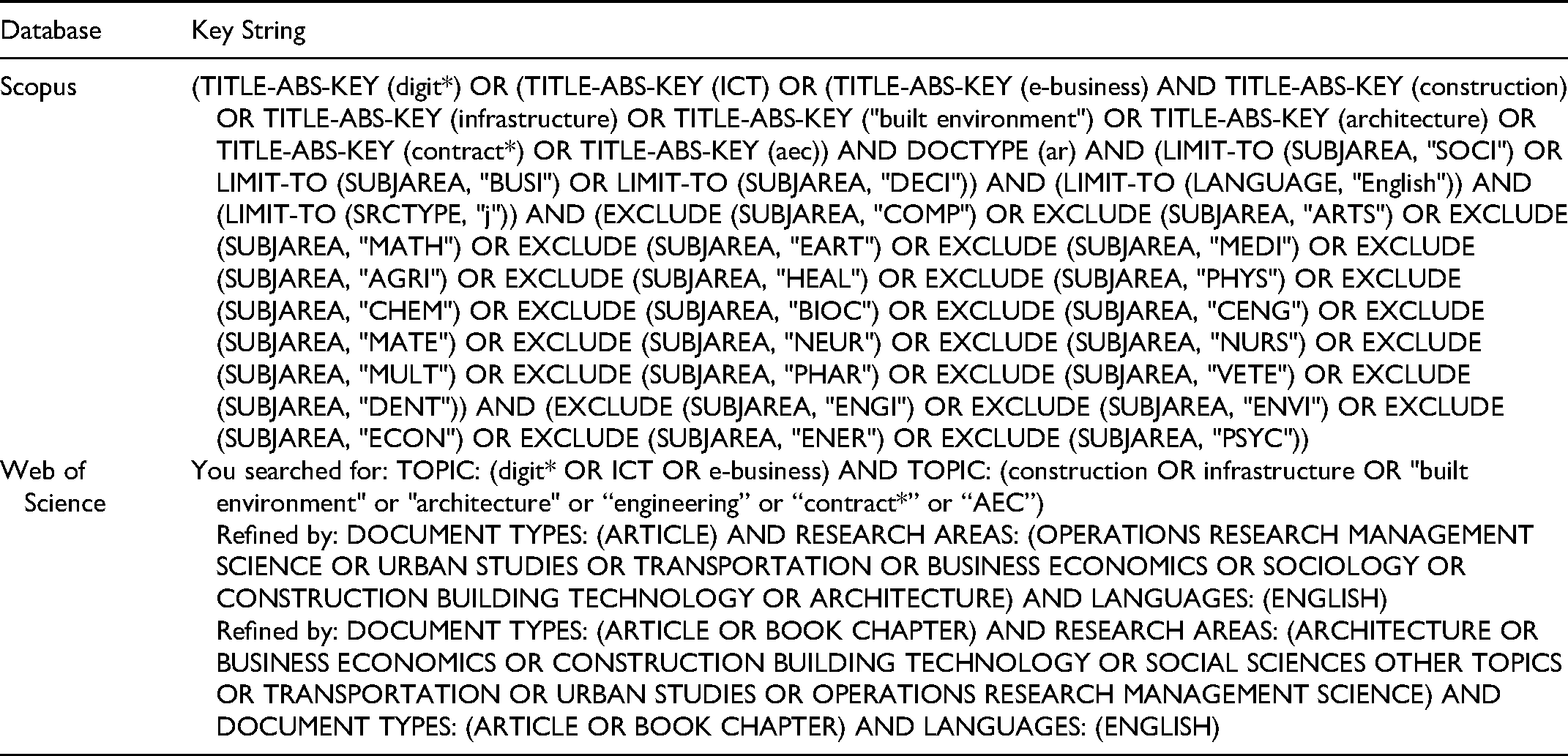
| Database | Key String |
|---|---|
| Scopus | (TITLE-ABS-KEY (digit*) OR (TITLE-ABS-KEY (ICT) OR (TITLE-ABS-KEY (e-business) AND TITLE-ABS-KEY (construction) OR TITLE-ABS-KEY (infrastructure) OR TITLE-ABS-KEY ("built environment") OR TITLE-ABS-KEY (architecture) OR TITLE-ABS-KEY (contract*) OR TITLE-ABS-KEY (aec)) AND DOCTYPE (ar) AND (LIMIT-TO (SUBJAREA, "SOCI") OR LIMIT-TO (SUBJAREA, "BUSI") OR LIMIT-TO (SUBJAREA, "DECI")) AND (LIMIT-TO (LANGUAGE, "English")) AND (LIMIT-TO (SRCTYPE, "j")) AND (EXCLUDE (SUBJAREA, "COMP") OR EXCLUDE (SUBJAREA, "ARTS") OR EXCLUDE (SUBJAREA, "MATH") OR EXCLUDE (SUBJAREA, "EART") OR EXCLUDE (SUBJAREA, "MEDI") OR EXCLUDE (SUBJAREA, "AGRI") OR EXCLUDE (SUBJAREA, "HEAL") OR EXCLUDE (SUBJAREA, "PHYS") OR EXCLUDE (SUBJAREA, "CHEM") OR EXCLUDE (SUBJAREA, "BIOC") OR EXCLUDE (SUBJAREA, "CENG") OR EXCLUDE (SUBJAREA, "MATE") OR EXCLUDE (SUBJAREA, "NEUR") OR EXCLUDE (SUBJAREA, "NURS") OR EXCLUDE (SUBJAREA, "MULT") OR EXCLUDE (SUBJAREA, "PHAR") OR EXCLUDE (SUBJAREA, "VETE") OR EXCLUDE (SUBJAREA, "DENT")) AND (EXCLUDE (SUBJAREA, "ENGI") OR EXCLUDE (SUBJAREA, "ENVI") OR EXCLUDE (SUBJAREA, "ECON") OR EXCLUDE (SUBJAREA, "ENER") OR EXCLUDE (SUBJAREA, "PSYC")) |
| Web of Science | You searched for: TOPIC: (digit* OR ICT OR e-business) AND TOPIC: (construction OR infrastructure OR "built environment" or "architecture" or “engineering” or “contract*” or “AEC”) Refined by: DOCUMENT TYPES: (ARTICLE) AND RESEARCH AREAS: (OPERATIONS RESEARCH MANAGEMENT SCIENCE OR URBAN STUDIES OR TRANSPORTATION OR BUSINESS ECONOMICS OR SOCIOLOGY OR CONSTRUCTION BUILDING TECHNOLOGY OR ARCHITECTURE) AND LANGUAGES: (ENGLISH) Refined by: DOCUMENT TYPES: (ARTICLE OR BOOK CHAPTER) AND RESEARCH AREAS: (ARCHITECTURE OR BUSINESS ECONOMICS OR CONSTRUCTION BUILDING TECHNOLOGY OR SOCIAL SCIENCES OTHER TOPICS OR TRANSPORTATION OR URBAN STUDIES OR OPERATIONS RESEARCH MANAGEMENT SCIENCE) AND DOCUMENT TYPES: (ARTICLE OR BOOK CHAPTER) AND LANGUAGES: (ENGLISH) |
Appendix B. List of Exclusion and Inclusion Criteria
Exclusion criteria:
The article is part of conference proceedings. There is no abstract available. The article is in not in English. The subject area is not engineering, built environment, construction, business, management and accounting, organization science, or decision sciences.
Inclusion criteria:
Study has to be published as an original article.
Concept of digital and derivatives has to be essential for the intervention and therefore explicitly mentioned.
Articles focusing only on technological aspects (i.e., electrical engineering) will be excluded.
Studies have to be based on empirical data collection or conceptual articles.
Literature review articles are excluded.
Appendix C. Data Extraction Form
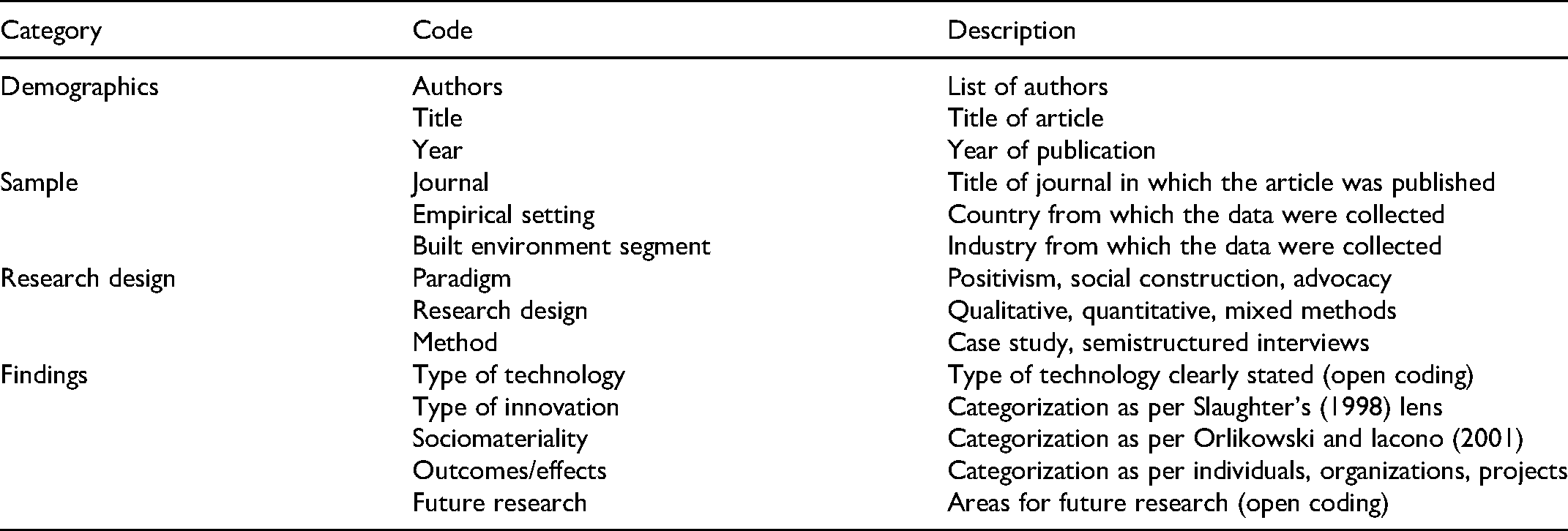
| Category | Code | Description |
|---|---|---|
| Demographics | Authors | List of authors |
| Title | Title of article | |
| Year | Year of publication | |
| Sample | Journal | Title of journal in which the article was published |
| Empirical setting | Country from which the data were collected | |
| Built environment segment | Industry from which the data were collected | |
| Research design | Paradigm | Positivism, social construction, advocacy |
| Research design | Qualitative, quantitative, mixed methods | |
| Method | Case study, semistructured interviews | |
| Findings | Type of technology | Type of technology clearly stated (open coding) |
| Type of innovation | Categorization as per Slaughter’s (1998) lens | |
| Sociomateriality | Categorization as per Orlikowski and Iacono (2001) | |
| Outcomes/effects | Categorization as per individuals, organizations, projects | |
| Future research | Areas for future research (open coding) |
References
Supplementary Material
Please find the following supplemental material available below.
For Open Access articles published under a Creative Commons License, all supplemental material carries the same license as the article it is associated with.
For non-Open Access articles published, all supplemental material carries a non-exclusive license, and permission requests for re-use of supplemental material or any part of supplemental material shall be sent directly to the copyright owner as specified in the copyright notice associated with the article.
