




Abstract
Research on explorative learning has primarily focused on the organizational level. Not much research has been done at the megaproject level, which is a more complex form of organizing. Therefore, it is advisable to analyze how the pursuit of explorative learning is enabled at the megaproject level. This research draws upon the case study of the Hong Kong-Zhuhai-Macao Bridge (HZMB)—a cross-sea link construction project—to study how explorative learning was achieved and sustained. The findings from archival documents, interviews, and focus group discussions indicate that megaprojects are more likely to increase in complexity but might bring value via more significant learning opportunities. Explorative learning is enacted through the complementary use of owner leadership, collaboration, external resources, and experiments. This research adds to our knowledge of how explorative learning works in practice and highlights its significance in the context of megaprojects.
Introduction
Infrastructure megaprojects are characterized by their unique and one-off nature; long-term design and construction cycle; and high organizational, technological, and environmental complexity (Bosch-Rekveldt et al., 2011; Geraldi et al., 2011). Their goal is to be executed on time and within the budget. To achieve this goal, project-based learning is essential for achieving and sustaining competitive advantage. It is crucial to take advantage of the lessons learned from projects and partners to avoid reinventing the wheel. However, it has been acknowledged in the literature (Carrillo et al., 2013; Savelsbergh et al., 2016) that it is challenging to learn in the project context, not to mention in programs and megaprojects.
Chronéer and Backlund (2015) argued that despite the rhetoric from all sides about how important learning is for business growth and innovation, the practice of learning that delivers these results is challenging to find empirically. We noticed some problems with the current framing of learning in megaproject studies. First, a post-project evaluation of learning with much knowledge gained but lost may restrict our understanding of learning management. An erroneous project evaluation may create a lock-in (Cantarelli et al., 2010). Second, a narrow view of avoiding mistakes may downplay the value of learning provided by the complexity of megaprojects (Bledow et al., 2009).
Explorative learning aims to explore unknowns, generate new knowledge, and create novel solutions (Brady & Davies, 2004). There is a gap in our understanding of the underlying mechanisms and dynamics through which project-based organizations can achieve exploration. Given the persistence of a low level of project success, the question of project learning remains unfathomed. Research avenues for megaprojects remain largely to be explored. Little is known about the functions and roles of actors in the project-based explorative learning involved in megaprojects. We raise the following research question: How does explorative learning address the complexity of infrastructure megaprojects?
The remainder of this article is organized as follows. The Literature Review section focuses on the complex characteristics of megaprojects and the theoretical background of explorative learning. The research aims to stimulate discussions about how explorative learning contributes to coping with the complexity within the infrastructure megaproject. A case description of the Hong Kong-Zhuhai-Macao Bridge (HZMB) project is presented in the Methods section. The Results section provides evidence for this topic. The relationship between explorative learning mechanisms is considered in the Discussion section. The research concludes with the Theoretical Value, Practical Implications, and Research Limitations and Future Work sections.
Literature Review
Complexity in Megaprojects
A megaproject is often empirically defined as a complex system with budgets over US$1 billion involving many private and public stakeholders and impacting millions of people over a long period (Brookes et al., 2017; Flyvbjerg, 2014; Flyvbjerg et al., 2003). The characterization and classification of project complexity have been supported by models and frameworks (De Rezende et al., 2018). Examples of these models and frameworks are the TOE (technical, organizational, and environmental) framework (Bosch-Rekveldt et al., 2011); the five dimensions of complexity (structural, uncertainty, dynamics, pace, and sociopolitical complexity) (Geraldi et al., 2011); a system of systems (Davies & Mackenzie, 2014); and the complexity theories view (Bakhshi et al., 2016). The specific exploratory characteristics of megaprojects that shape practices are: (1) being bespoke (created for a particular purpose) (Sergeeva & Zanello, 2018); (2) one-off (with a specific end date but typically with a long lifespan with multiorganizational interfaces (where, at the end, megaproject members separate and not always work together on subsequent megaprojects) (Brookes et al., 2017; Sato & de Freitas Chagas Jr, 2014); and (3) different organizational roles (e.g., clients/owners and suppliers) (Smits & van Marrewijk, 2012).
Based on the above characteristics, adopted technology and designs are often non-standard in megaprojects, leading to uniqueness bias among planners and managers, who tend to see their projects as singular and complex, which impedes learning within and from projects (Flyvbjerg, 2014; Li et al., 2018). The more complexity the project members face, the less prior experience they can use. The exploratory nature of megaprojects brings together significant tacit knowledge embedded within particular project participants (Bresnen et al., 2003). On the one hand, project participants have to experiment and innovate in action, which makes the development of the project unpredictable. Simultaneously, some tasks cannot be accurately defined initially and can only be gradually formed into clear outlines during execution (Lundin & Söderholm, 1995). On the other hand, there is often over-commitment to a specific project concept at an early stage, resulting in lock-in or early convergence, and leaving the analyses of alternatives weak or absent, which leads to escalated commitment in later stages (Bakker & De Kleijn, 2014; Hertogh & Westerveld, 2010). Megaprojects require unique and integrated structures to manage differentiation and interdependencies (Baccarini, 1996).
Megaprojects are application areas for the theories and tools developed in project management research. This provides a theoretical background for exploration. Considering the extraordinarily complicated and non-routine characteristics of megaprojects, exploration is required to make them flexible and adaptive and facilitate the discovery of new knowledge and technologies (Geraldi, 2009). Complexity raises the need for learning to develop new ranges of adaptive solutions when circumstances change (Eriksson, Larsson, et al., 2017). Megaprojects can be socially constructed as opportunities for learning, through the ways people communicate, interact, and share knowledge in the context of organizing project alliances (Hartmann & Dorée, 2015). Explorative learning can facilitate the identification and testing of new technical solutions and organizational processes (Lenfle & Loch, 2010; Perminova et al., 2008).
Explorative Learning in Projects
A range of different perspectives in the literature investigates the mechanisms and processes of how knowledge is generated, utilized, and transferred. A serious debate exists on the ambidextrous view of the capacity to organize a high level of explorative and exploitative learning in management science (Levinthal & March, 1993; March, 1991). Exploitation and exploration are two different learning activities (March, 1991). Exploitative learning focuses on multiple experiences and existing solutions to achieve high levels of consistency and efficiency, whereas explorative learning is characterized by experimentation and innovation to generate novel solutions (Eriksson, Leiringer, et al., 2017; Eriksson & Leiringer, 2015). Therefore, exploitation involves activities characterized by refinement, efficiency, and execution, whereas exploration involves activities characterized by search, discovery, experimentation, and innovation (He & Wong, 2004). A certain tension exists between these two activities. Exploration and exploitation compete for rare organizational resources. Exploration and exploitation require different organizational structures, processes, strategies, capabilities, and cultures (Zhou & Xue, 2013).
Davies and Brady (2016) identified two types of projects: routine and innovative. The former exploits proven technologies and mature products, addresses current customer demands, and achieves predefined goals with a given set of resource constraints (time, cost, and quality). Routine projects rely on traditional forms of project management based on compressed sequencing tasks and economies of repetition to achieve reliability and predictability. The latter supports the exploration of innovative alternatives and testing new ideas and technologies in an uncertain environment. Innovative projects deal with highly unforeseeable conditions when the means to achieve the objective are too difficult to define at the outset. Loch et al. (2011) had a similar proposition to identify simple projects that address predictable and repetitive tasks, and novel projects that deal with unforeseen uncertainties, which focus on elements of exploitation and exploration presented in projects (Tillement et al., 2019). Davies et al. (2016) linked complexity to exploration. If an organization can tap into the rich possibilities afforded by complexity, it can turn learning into the achievement of business value.
Megaprojects have been studied in domains with a technological dimension, such as the military and space (Lenfle & Loch, 2017). These megaprojects, which are always innovative, are characterized by the challenge of defining the goals (customer requirements) and attaining technologies at the start of the project (Lenfle, 2008). Conventional planning and control tools can efficiently perform routine tasks, but they face significant limitations when encountering highly uncertain tasks (Lenfle & Loch, 2010). Exploration has long been legitimate and considered (Lenfle, 2012, 2014). When considering infrastructure megaprojects, we find that other major challenges are included in the development of collaboration of partners (Ruijter et al., 2021), the governance of institutional complexity (Qiu et al., 2019), and the cultural phenomena (van Marrewijk & Smits, 2016). The particularity calls for new contributions to the contingency theory of megaproject studies.
It should be noted that regular tasks and highly uncertain tasks should be distinguished and the two cannot use the same management tools and methods. The distinction between the two types of learning appears to be between the learning achieved through disruptive activities and the learning attained incrementally. For highly complex tasks, trial and error, iteration, parallel testing, and selection, which belong to explorative learning, may be used. It is a useful strategy in studies (Browning & Ramasesh, 2015; Ramasesh & Browning, 2014) to reduce unknown unknowns (Loch & Sommer, 2019).
Methods
Research Design
A case-study approach has been defined as an empirical inquiry that investigates a phenomenon within its real-life context when multiple sources of evidence are used, and the boundaries between phenomenon and context cannot be seen (Yin, 1984). In practice, the HZMB project offers an immense opportunity for research on the learning process of the management practices in infrastructure megaprojects. The case-study approach was chosen because it fits the interpretative and qualitative nature of this research and is suitable for studying complex phenomena (Klein & Myers, 1999). The research method combines the historical analysis of key events in the megaproject and a content analysis of the key stakeholders’ narratives. Various data sources, combined with deep engagement in the field, have been reported to lend themselves to insightful inductive theory building (Gioia et al., 2013).
Case Description
The HZMB project was chosen because it is particularly well suited to examine the complexity of megaprojects and explorative learning. The 55-kilometer-long HZMB is situated in the Pearl River Estuary of the Lingdingyang Sea, which consists of a dual three-lane carriageway in the form of a bridge structure, an immersed tunnel of approximately 6.7 kilometers, two artificial islands, and two link roads in the east and west of the estuary (Figure 1). HZMB links the Hong Kong Special Administrative Region, Zhuhai City in Guangdong Province, and the Macao Special Administrative Region in China. Construction formally began in December 2009, was completed in May 2018, and HZMB opened to the public in October 2018. The total cost of the main bridge was approximately 127 billion RMB (US$18.63 billion) and it is the world's longest sea crossing, as well as the world's longest open-sea fixed link.
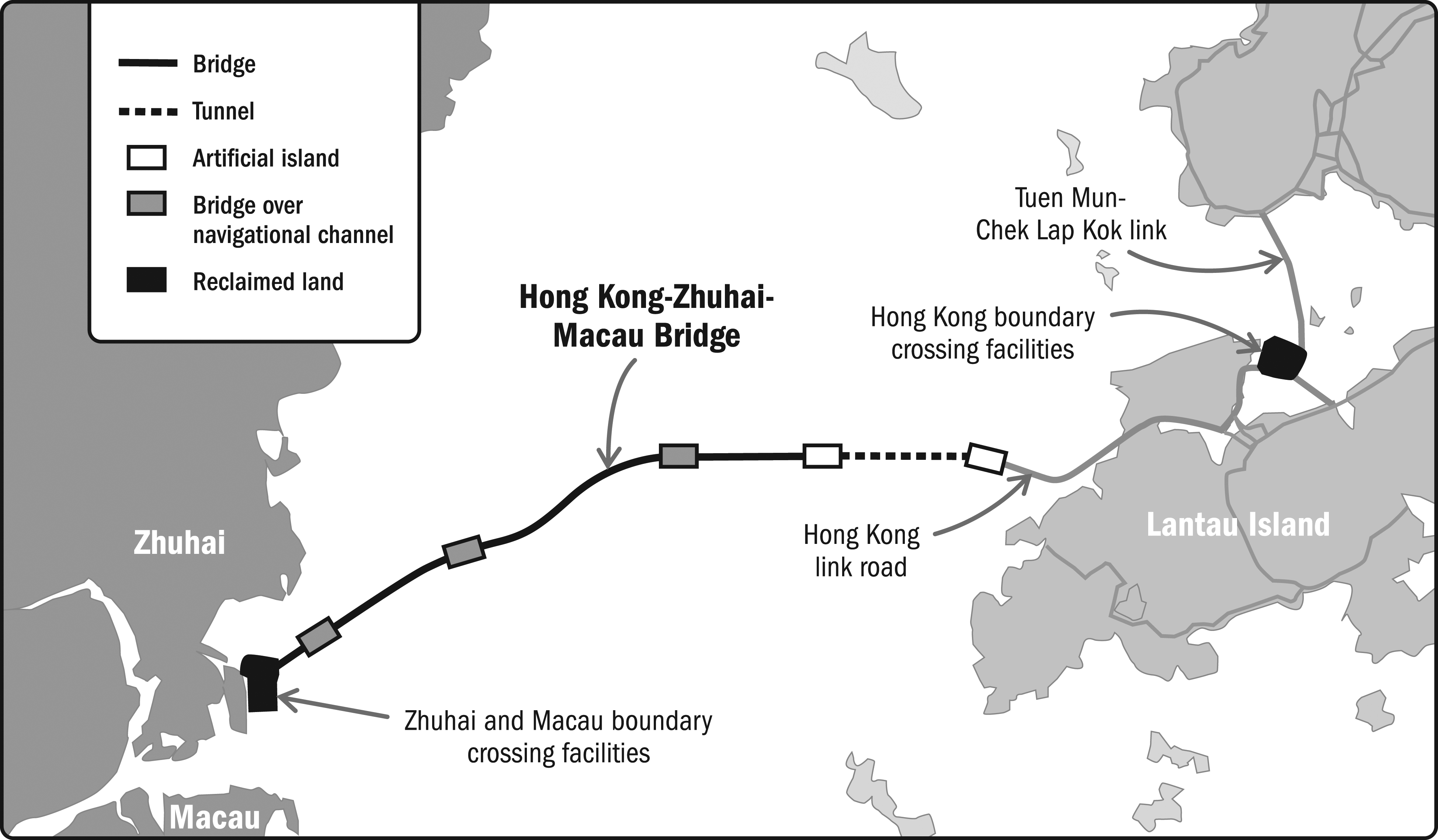
HZMB map (source: South China Morning Post).
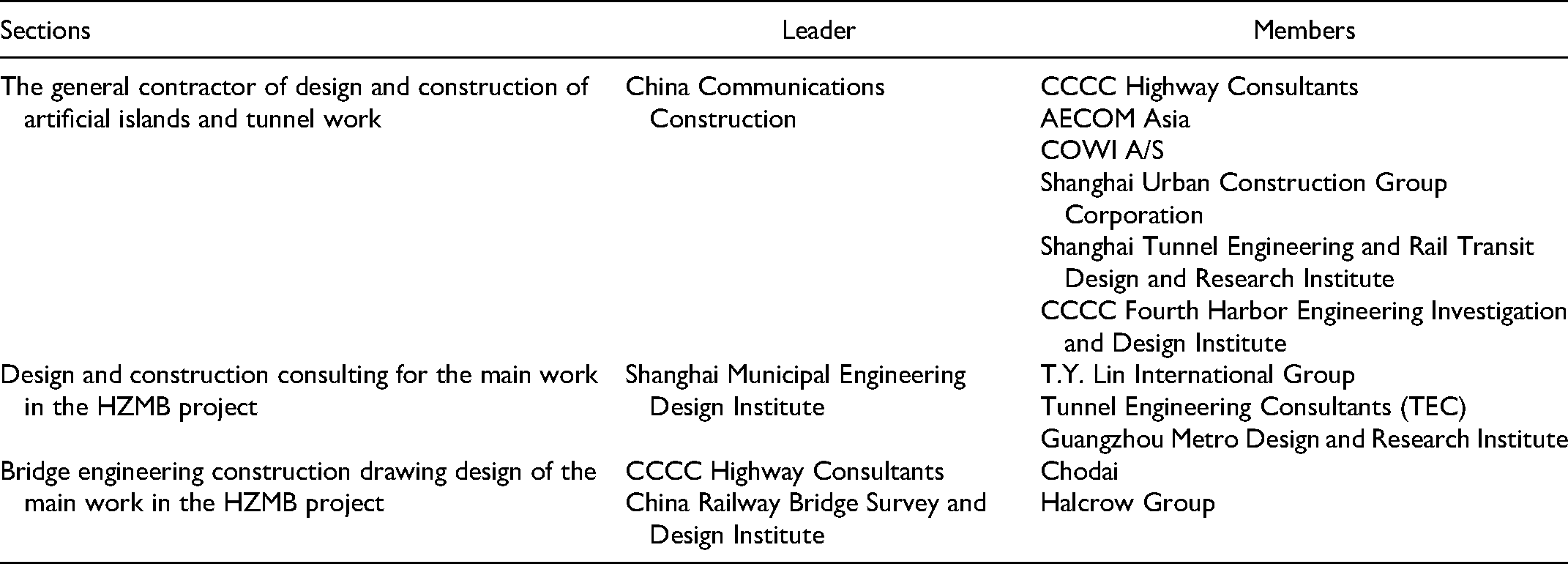
The justification for focusing on HZMB relates to its status as a pioneering ecosystem for developing a combination of reclamations, artificial islands, immersed tunnels, marine viaducts, and cable-stay bridges; its design has been driven by esthetic, environmental, engineering, and durability aspects. The HZMB route passed the busiest main channel in the Lingdingyang Sea. Because of the environment, it was decided that the bridge must be a suspension bridge with a large span, high clearance, and tower. Simultaneously, the location is close to the Hong Kong International Airport, and the height of the structure in the aviation area restricts large-span, high-tower structures; therefore, a tunnel is the only viable option. Two artificial islands were constructed at both ends of the tunnel to create a connection between the bridge and the immersed tunnel. During development, the project faced many global technical challenges, including the rapid formation of offshore artificial islands, tunnel foundation treatment and settlement control, immersion and docking of tunnel sections, large-scale factory production, embedded pile cap installation, water tightness for underwater construction, extensive pavement work on steel bridges, and system integration for traffic engineering. Given the scale, complexity, and sensitivity of the project, advanced technologies and management philosophies were adopted to develop innovative systems and mechanisms. Excellent design, construction, and consultancy companies were invited to build this project. Table 1 lists the main participants of the HZMB project organization.
The Main Participants in the HZMB Project Organization
Data Collection
Three primary data sources were used: access to archival documents, interviews with senior stakeholders, and focus group discussions. The data collection proceeded in an inductive and exploratory manner (Siggelkow, 2007).
We focused on events that facilitated learning. Fortunately, we could access an internal project magazine named HZMB Bridge, run by the HZMB Authority. The magazine published six times a year between 2011 and 2017. All articles in the magazine were stored and categorized in a database that enabled searches for keywords and topics, which facilitated our empirical analysis. We searched the empirical material for critical events (Flanagan, 1954), during which actors faced challenging problems and learned to find solutions. The initial data set extraction resulted in all learning-related events from the case, which we called learning action episodes. Each episode is a snapshot in time, encapsulating a moment that includes a set of activities resulting from learning (Gardiner et al., 2018). A learning action episode can relate to any project actor or event, including risk-taking, distant search, and experimentation. The learning action episodes are outlined as activity configurations (Regnér, 2008), which refers to a collection of actions that form a set of activities observed and analyzed by the researchers. In a learning action episode, all relevant direct and indirect data should be available so that researchers can analyze and assess what has been learned and improved. The intended outcomes of a learning action episode are solved problems and enhanced project team capabilities. We do not guarantee that the examples represent an exhaustive list but they indicate explorative learning.
Following the case study research guidelines, interviews are an example of an essential information source (Yin, 1984). The purposive selection of interview samples is essential for qualitative research (Schwandt, 1996). The primary contact helped identify and get approval for people to be interviewed and we also adopted snowball sampling as the interviews progressed (Table 2). For productive interviews, it is essential to encourage interviewees to speak openly. Interviewees reflected on their project management and learning processes and added more details to the learning action episodes. The interviews varied in duration but ranged between 30 and 90 minutes.
Interview Participants
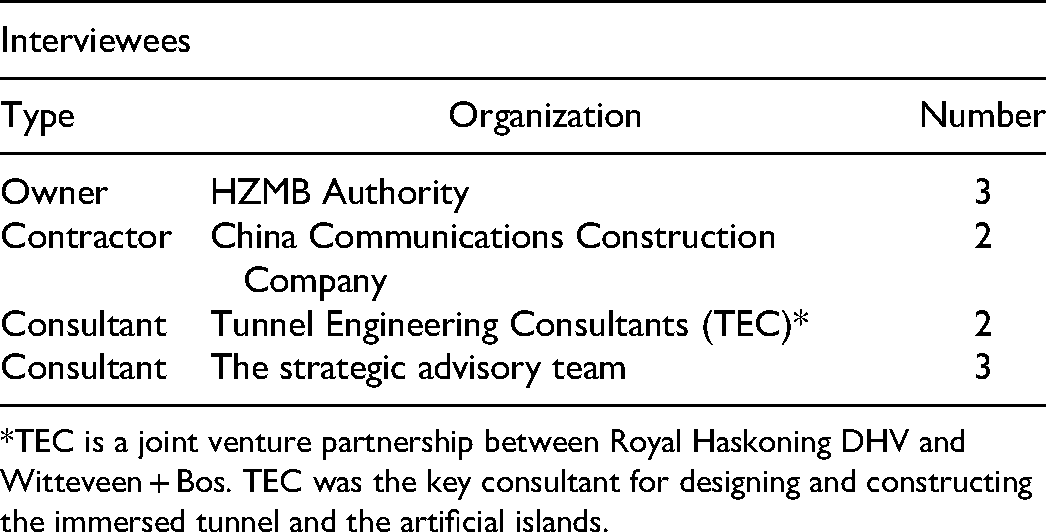
TEC is a joint venture partnership between Royal Haskoning DHV and Witteveen + Bos. TEC was the key consultant for designing and constructing the immersed tunnel and the artificial islands.
The purpose of the focus group discussion was to validate the findings from the document analysis and interviews. Two focus group discussions were arranged separately at (1) TU Delft in the Netherlands, involving more than ten representatives from the general contractor, consultants; and (2) the HZMB Authority in Zhuhai, China, involving five representatives from the owner and the consultants. The focus group discussions allowed the respondents to share their experiences and opinions on explorative learning and megaprojects. In addition, five webinars with different themes hosted by the authors and the deputy director of the HZMB Authority were held over three months between April and June 2020.
Other press coverage on interviews with top managers in professional outlets, academic articles, promotional and documentary videos, technical management systems, and HSE (health, safety, and environment) management system documents, and a series of visits to the projects were also used to triangulate the information provided by the direct data and interviewees. Multiple data sources added contextual and validated information to the analyses.
Data Analysis
Our unit of analysis is the project actors’ actions and interactions concerning learning action episodes. First, we identified multiple specific learning action episodes within the megaproject by coding the learning practices. We searched for patterns over time in our codes and compared them with the learning action episodes. Supplementary stakeholder interactions helped corroborate and provide nuanced and contextual insights into the information gathered from the learning action episodes. By analyzing the learning action episodes with the help of stakeholder interviews and focus group discussions, we identified the key events (interviewee), terms, and concepts. We conceptualized these concepts into more abstract concepts with similar characteristics and related meanings. As our study progressed, the data collection became more analytical as we began testing ideas and concepts derived from our interpretation of the collected data. We iteratively performed this to fine-tune the coding. Megaproject dynamics reveal the emergence of key events that impact project decisions and outcomes (Hertogh & Westerveld, 2010). The megaproject's different moments make it possible to consider the megaproject as a set of episodes or short-term events (Ruuska et al., 2011). We centered on the learning action episodes to make sense of our data and additional data from stakeholders’ interactions to explore the consequences of these learning action episodes. The analysis was conducted by synthesizing emerging patterns or themes by considering all the empirically derived series of short-term learning action episodes embedded in a more comprehensive megaproject history. This is consistent with the critical incident technique (Flanagan, 1954). The purpose of synthesizing was to develop a higher level of abstraction and conceptualize how the various codes may be related and labeled to reveal patterns of evolution initiated by various stakeholders. Figure 2 displays how the analysis progressed from the raw data to the themes. The data structure allowed for the configuration of the data. Our interpretations and discussions of the concepts enabled the identification of four mechanisms of explorative learning in the megaproject.
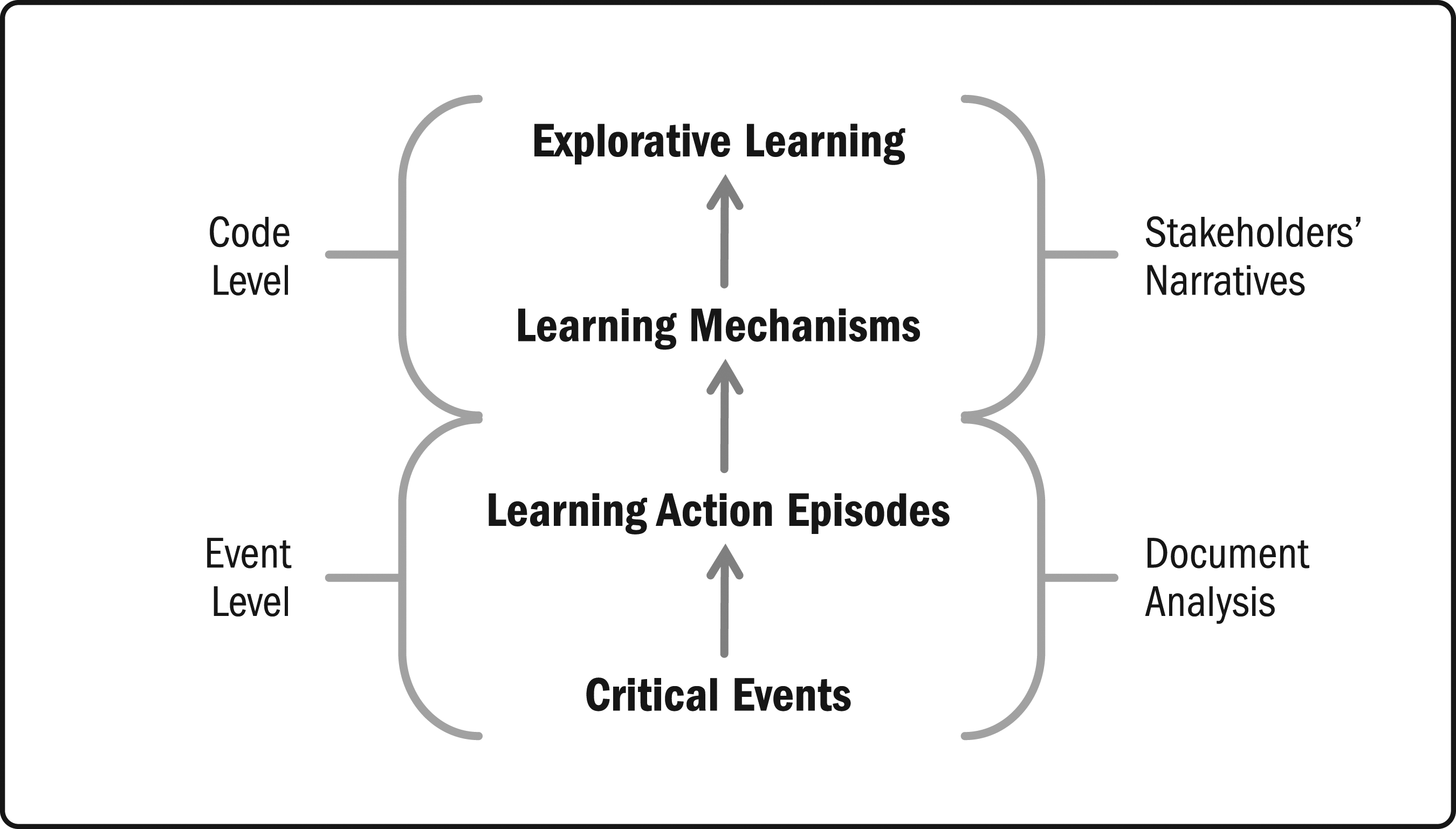
The process of data analysis.
Results
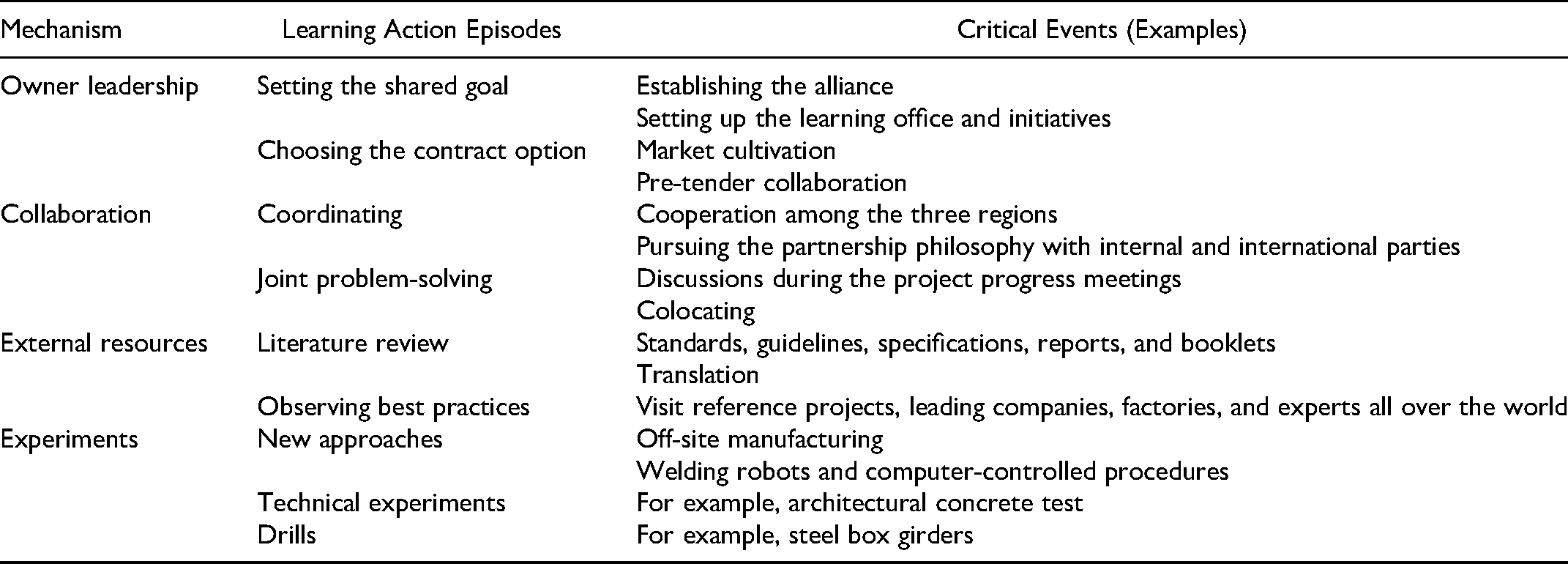
This section presents the key findings of explorative learning from the data of the HZMB project. Our analysis revealed four explorative learning mechanisms. The mechanisms and their action episodes and critical events are listed in Table 3.
Explorative Learning Mechanisms in HZMB
Learning by Owner Leadership
In July 2010, the HZMB Authority was established as the project owner and was mainly responsible for its delivery and operation. It should be noted that the HZMB Authority created an appropriate communication and knowledge exchange environment. One top manager from the HZMB Authority summarized managing the project as “the owner's positioning of the project, the owner's thinking and mind in the organizational management determine the megaproject's success or failure.”
The HZMB Authority chose the general contracting mode to organize the artificial island and tunnel sections. The critical starting point was to find a contractor with sufficient construction capability and the ability to mitigate risks. A learning action episode was identified during this phase. It took two years to plan and carry out the tender process. In the first round of tender, there were eleven potential contractors. After evaluating their performance and experience in hydraulic engineering, the candidate number finally shrank from eleven to three, namely, China Communications Construction Company, China Railway Construction Corporation, and China Railway Engineering Corporation. According to the Chinese bidding law, at least three companies are required to participate in the bidding and if one of them does not join, it will risk failing to be sold at auction. “We do not have enough experience, and we have to do that by ourselves. However, this is a fundamental challenge. Then you will need to do it differently.” (Interviewee from owner)
Thus, the HZMB Authority adopted a different approach to traditional tendering. The HZMB Authority director led a team to visit the three major candidates to promote the HZMB project. It was a problem- and goal-oriented, in-depth discussion of the Design-Build general contracting mode; technical difficulties faced by the HZMB project; and how to improve the bidding mechanism, contract mechanism, technology solutions, among others.
Among the three, the China Railway Construction Corporation and China Railway Engineering Corporation were not relatively good in marine engineering. The China Communications Construction Company is the largest in the global offshore market. The HZMB Authority adopted two approaches. First, they encouraged bidding candidates to integrate their industrial resources. Three candidates quickly took action to speed up mergers and acquisitions on the one hand, accelerate cooperation with overseas first-class offshore enterprises, and establish the auxiliary port and shipping bureau on the other hand. They were allowed to use construction consulting services and equipment leasing to compensate for offshore construction shortcomings. The purpose of this was to create equal conditions and enhance competitiveness for all bidders on the same starting line. This achieved good results. Second, considering the risk that companies would not invest in the bidding stage, the HZMB Authority applied to the three governments for a special fund for bidding compensation; the amounts were 6 million, 4 million, and 2 million RMB, respectively, which could partially cover the cost of the bid preparation. At the same time, potential candidates were provided with many project-planning materials, including the latest planning documents. Top-ranking candidates with enthusiasm and technical strength were mobilized and they also offered constructive opinions and suggestions on risk control. As a contribution to knowledge achievement, they later served the overall goal of accomplishing the HZMB project.
Learning by Collaboration
The Hong Kong side led the HZMB's preliminary work due to its rich and mature experience. Hong Kong is an internationally open market, so the project applied benchmarking globally from the very beginning. This is an example of cooperation among the three regions.
It is necessary to fully absorb and learn from the experiences of similar projects globally to attract global professionals and experienced organizations to participate in the HZMB project. The purposes of this are to control risks, improve quality, and ensure the smooth implementation of the project. In the HZMB project, a joint venture for Design-Build general contracting was adopted and collaboration was undertaken with large networks of market actors.
Partnership is the philosophy pursued by the HZMB Authority. This requires the cooperation of all parties to solve the problems. The life cycle design and construction consulting services, including special services, were adopted directly by the owner. From the planning and design stages through the construction stage, the international characteristics of the HZMB participants were outstanding—from designers and contractors to construction quality consultants. The teams participating in the HZMB project came from all over the world, including the United States, the United Kingdom, Germany, the Netherlands, Denmark, and Japan. Twelve overseas enterprises cooperated with the HZMB Authority, with a total contract price of nearly 300 million RMB. To meet the relevant provisions of domestic laws and regulations and effectively introduce external professional resources, the HZMB Authority adopted a Sino-International cooperation joint model:
COWI A/S (Denmark) and ARUP (the United Kingdom) participated in the design of the immersed tunnels and steel bridge girder box. Chodai (Japan) and Halcrow (the United Kingdom) joined the design of the steel box beam structure and steel-concrete composite beam structure. Anderson Asphalt (Hong Kong) attended to the deck-pavement design stage. TEC (the Netherlands) and T.Y. Lin International Group (the United States) were introduced to the immersed tunnel and bridge consulting team. Mott MacDonald (the United Kingdom) was hired as a life cycle quality management consultant.
More companies were added to cross-check the design and construction quality, for example: AECOM (the United States), COWI A/S (Denmark), and NCC (Japan) joined the island tunnel engineering design and construction. Aeschlimann AG (Germany) participated in bridge-deck pavement construction. “TEC from the Netherlands undertook the design and construction consultation on the immersed tunnel and artificial islands for the life cycle of the HZMB. I had numerous conversations with the head of the consulting firm.” (Interviewee from the owner)
Close collaboration was verified by interviewees from the owner and consultants:
“Monthly or at the key design or construction implementation time, I would come to the site of the HZMB. I had face-to-face communication with the person in charge of the project planning and contract, on project management, and immersed tunnel technology almost whenever I came to Zhuhai.” (Interviewee from the consultant)
In the focus group discussion it was agreed that, in the context of the deep involvement of international resources and high concentration of the domestic best quality resources, the HZMB Authority established the best partnership, which had been extremely rare in previous Chinese domestic projects. A quote from an international consultant stated this better: “I am enthusiastic about the HZMB. Yes, I very much enjoy being a part of this.”
The participation of a large international support group is constructive. The most important aspect is providing support for systemic risk control, optimization, and monitoring in detail design, manufacturing processes, and overall project management. The HZMB project is full of independent innovations and the active introduction of international resources for my use. There are approximately 100 people in the HZMB Authority. The HZMB Authority invited the most experienced international organizations to help them achieve better control. They are gatekeepers and play an essential role in the field of risk prevention and control. These international partners have also introduced new management ideas and technologies.
Learning by External Resources
Many learning action episodes are found in the planning and design stages. The HZMB Authority had little experience in offshore megaprojects. They visited the United States, Japan, South Korea, Denmark, and Sweden on study tours to understand how reference projects (e.g., immersed tunnels) had been conducted, especially the existing strait passages, such as the Öresund Channel between Sweden and Denmark (completed in May 2000) and the Busan Geoje Channel in South Korea (completed in 2010). The HZMB Authority learned that all of these projects adopted the mode of general contracting, which inspired it to use the same mode. The project delivery of the HZMB Authority benefited from similar projects. A great deal of knowledge and experience has been transferred. This put the HZMB Authority at the forefront of research and development in relatively proven technology, thereby improving the solution and decreasing risks later.
Some standards, specifications, and technologies were unavailable, so HZMB Authority team members often relied on mature international ones. The HZMB Authority organized the design and consulted consortia and scientific research organizations to collect relevant existing specifications. They analyzed and compared applicability of the specifications and proposed a standardized use of requirements according to specific design contents and project characteristics. A complete HZMB project technical standard system was gradually established covering all aspects of design, construction, and operation. These aspects included: (1) the design life of HZMB adopts the British standard of 120 years; (2) the concrete technical index adopts the highest standard from Europe; (3) the lane width adopts the Mainland China standard of 3.75 meters; and, (4) the emergency lane width adopts the Hong Kong standard of 3.1 meters. Regarding the quality management system, reference was made to the product certification systems for concrete production in Hong Kong, Macao, and high-speed rail construction in Mainland China. An interviewee from the HZMB Authority explained: “We cannot just copy and paste. What we can do is learn from the world and do it for the project.”
Learning by Experiments
Most of the interviewees faced challenging situations together during the HZMB project. They contended that these challenging situations and experiments could be learning opportunities.
The focus group discussion provided a learning action episode to explore how new concepts (e.g., manufacturing) could be applied. Effective use has been made of large precast and prefabricated elements to minimize disturbance to marine life and achieve quality and construction speed. Pile caps, steel bridge decks, and steel towers were manufactured off-site, then transported to the construction site for assembly. The tunnel sections were precast at the yard on Guishan Island, then transported by tugboats to the construction site for final placement. Prefabricated steel structures were adopted to reduce the difficulty of working under deep-water conditions and shorten the construction time.
Another example of learning by experiments is the integral assembly method for erecting the steel tower of a channel bridge. There were numerous challenges, including water current, wind speed, and existing navigation channel operation. This method could substantially reduce on-site welding work and enhance the quality of steelworks during construction. Site trials were conducted to ensure the safety and quality of the practices before erection of the steel towers. The adaptation of inter-industry knowledge could be a crucial element in explorative learning.
An example illustrating the experiment was the towing and immersion of the tunnel sections in the open sea. A standard tunnel section immersed pipe weighed approximately 80,000 tons, similar to an aircraft carrier. The sections were towed through the busiest area of the Lindingyang Sea, where more than 4,000 ships come and go every day. Strong and unstable wind speed, water current conditions, airport height restriction, working under deep water, and tight tolerance of connection within ± 25 millimeters had to be overcome when tunnel sections were placed. As a result, controlling a section during the towing process was a significant challenge. Eight high horsepower propeller tugboats were used to tow a section when scientific forecasting techniques predicted suitable weather and hydrological conditions.
Moreover, the contractor developed the first immersion pontoons in China to be equipped with comprehensive operating and control systems. By applying remote control and information technology, the two pontoons can adjust the position, control the axis of the section, and achieve a precise connection. After 96 hours of uninterrupted transportation and installation, the first tunnel section was installed on the western artificial island on 6 May 2013. In 2014, tunnel sections were installed as deep as 46 meters below sea level. The contractor deployed the largest lifting barge in the world to erect and install the final connection. In 2015, the E15 tunnel section encountered a severe challenge of exceptional siltation. After two unsuccessful towing and immersion attempts and the Guangzhou government's support, tunnel section E15 finally achieved a precise connection on 26 March 2015. This played an exemplary role in subsequent tunnel immersion projects. Workers were deployed to perform welding and grouting works inside the tunnel sections immediately after tunnel sections E29 and 30 were connected. On 7 March 2017, the last tunnel section was successfully put in place and a closure joint was installed on 2 May of the same year.
The HZMB is an international infrastructure project. The HZMB Authority had a global vision and cross-domain thinking. They actively introduced management concepts and technologies from international markets while focusing on independent innovation through cross-industry and cross-disciplinary learning and reference. The project was managed partly through original innovation, introduction, absorption, and re-innovation.
Discussion
Our research found that explorative learning can be at the heart of learning action episodes. From the data, we identified four mechanisms (owner leadership, collaboration, external resources, and experiments) that enable explorative learning and can significantly augment the learning process. The four mechanisms are information-rich and useful in dealing with high levels of ambiguity and uncertainty in a megaproject.
Reflections on Megaproject Complexity
As an infrastructure megaproject, there are some inherent exploratory characteristics in the HZMB project. Construction methods have transitioned from traditional site-construction methods to prefabricated production and rapid manufacturing approaches. The megaproject's complexity requires more new project participants, such as special equipment and material suppliers, immersed tunnel design, construction consultancy, and so on in a system of systems (Davies & Mackenzie, 2014). Finally, there are many first-ever encountered situations in this megaproject due to the complex environmental conditions and the three separate legal systems and technical standards (Mainland China, Hong Kong, and Macau). There had been no similar lessons learned in this technical, organizational, and environmental context (Bosch-Rekveldt et al., 2011) in the past.
Megaprojects are viewed as voyages of discovery (Chudson & Hirschman, 2006) that depend on creativity and innovation while underway to achieve project goals. The uniqueness of the task and the project's complexity can lead to learning (Burke & Morley, 2016; Tatikonda & Rosenthal, 2000). Innovative projects are characterized by high levels of ambiguity and uncertainty; the usefulness of traditional knowledge management tools might be severely reduced. The managers of megaprojects must conduct exploration, which makes the execution of the task unpredictable. Uncertain environments offer more scope for learning in complex projects (Cooke-Davies et al., 2007), which makes them much more challenging to manage and, equally, much more interesting to research.
HZMB was successfully delivered, and the project we observed exhibited explorative learning. The results show that explorative learning was used to explore new engineering technologies and management knowledge. The results revealed that exploration has shaped the learning process in the infrastructure megaproject and has further affected the evolution and operation across various project development stages. The efficient integration of learning can improve design and construction performance. It is critical to recognize the complexity and navigate it, be aware of the inevitable criticalities and threats, and develop distinctive organizational capabilities for continuously driving complexity factors.
In summary, many organizational factors that potentially influence explorative learning are likely to become more prominent with scale and complexity. This case project is technically complex and pushes organizational boundaries, which leads to higher levels of explorative learning.
Relationships of Key Learning Mechanisms
Because megaprojects have an unusually long supply chain with very complicated and diverse manufacturing and construction sections, they will undoubtedly stimulate explorative learning. Learning opportunities are extraordinarily significant. Our case study demonstrates the importance of a better understanding of different kinds of explorative learning mechanisms and how they gradually unfold to shape project progress. Explorative learning is formed by the interplay among the four mechanisms of leadership, collaboration, external resources, and experiments. The project's reaction to learning depends on interrelationships. These elements are analytically distinct and collectively influence the project.
Such exploration requires a fundamental shift in organizational design and a break with prior project routines and capabilities (Davies & Brady, 2016). It involves establishing a vanguard project to investigate new opportunities, encourage creative problem-solving, and establish new project routines. This includes experiential search processes, real-time learning, and the pursuit of multiple solutions until the best one can be selected (Klein & Meckling, 1958; Lenfle, 2008; Nightingale & Brady, 2011).
Owner Leadership as the Driver
Decision-making, planning, and project management are typically multiactor processes involving multiple stakeholders with conflicting interests in megaprojects. Often, projects are led by planners and senior managers who lack deep domain experience throughout lengthy project cycles, leaving project leadership weak (Flyvbjerg, 2014). They may sufficiently drive their own actions but not enough to motivate others, which is not beneficial for interorganizational learning. Extant literature has underlined that in multifirm collaborative settings, of which megaprojects are a noteworthy example, specific organizations play a fundamental role as lead innovators (Baldwin & von Hippel, 2011). Our research provides more insights into the owner's role, as summarized by an HZMB Authority manager that “the owner's thinking determines the project's success or failure. The contractor's conduct determines project quality. The composition of the project team and stakeholders determine the reputation of the project.”
Respondents in our research indicate that they experience the owner's proactive attitude and open mindset quite heavily. The owner sets the tone, breaks the ice, and plays a pivotal role in driving learning. Bakker et al. (2011) determined that the project parent organization's responsibility is to ensure that knowledge is valued and utilized, not that of the project manager. A high level of absorptive capacity is required for success. Davies et al. (2009) demonstrated how system integrators search for improving megaproject performance by carrying out innovations according to the rule of recombination and the replication of a system of production processes. A strong owner made a significant contribution to the absorption of lessons learned from reference projects and best practices from proven technologies, bringing internal and international professions together, stimulating them to share experiences and lessons learned from one another, and finally improving project performance (Winch & Leiringer, 2016).
Construction has tended to treat errors as problematic and a source of failure rather than a road to eventual success and source of innovation (Love et al., 2013). Breakthrough innovation is often avoided because it often creates uncertainty and increases infrastructure project costs (Van Marrewijk et al., 2008). The inherent issue has become ingrained within project-related practices, focusing on error prevention and relying on existing technologies and established routines (Love et al., 2019). Several innovations have been implemented in this case. These innovations did not go smoothly, but they would not come into being at all without the owner's open mind. However, errors do not necessarily have negative consequences. Project development is dependent upon doing something new, making errors, and then trying to improve. Repeating experiments and optimizing the positive consequences can lead to further problems being resolved, contributing to its progression and maturity (Frese & Keith, 2015). Explorative learning optimizes the positive consequences of new concepts and errors.
Mutual Relationships Between Collaboration and External Resources
We show that learning cannot be segregated from partnerships. The HZMB project's case addresses how internal project partners and international networks are aligned to drive and disseminate innovation. The cross-border feature also provided us with another insight into management issues due to the three different political systems (Qiu et al., 2019). HZMB was the first infrastructure megaproject built jointly by the three governments of Mainland China, Hong Kong, and Macao with different legal systems and technical standards. Each of these three regions had its own administrative rules and procedures for the significant project management processes. This project was based on collaboration and partnership. The owner brings all parties together to form complementary competencies, especially international pioneers, which is one of the most influential and efficient ways to facilitate innovation and knowledge sharing among like-minded individuals and introduce new members into the organization. This is echoed by the importance of adopting a community-based approach to managing knowledge in project settings (Bresnen et al., 2003). Interorganizational collaboration is vital for explorative learning (Parida et al., 2017; Shenhar et al., 2016). Exploration is enhanced by various teams in which individuals have different experiences and affiliations (Andriopoulos & Lewis, 2010; Eriksson, 2013; Lavie & Rosenkopf, 2006), which is reflected in the form of an international support group in the HZMB case. Sharing local and tacit know-how is essential for sound decision-making.
As high levels of ambiguity and uncertainty exist, one approach is to replicate previous projects and proven technologies and/or standards. The project management team should learn about the best practices at different locations to improve outcomes. Learning allowed us to assess what worked before (Davies et al., 2017) along with interproject learning (Brady & Davies, 2004; Prencipe & Tell, 2001).
Therefore, proactive owner attitudes drive better collaboration across project stakeholders and require an open mindset to look for abundant external resources from the market. The combination of collaboration and external resources brings more approaches in parallel for actors to pursue. The project has the opportunity to observe which approach works and which does not so that the appropriate approach can be selected under high uncertainty (Lenfle & Loch, 2017).
Experiments as an Acceptable Process
Traditional systems engineering instructs us to identify as many risks as possible in the preliminary design to reduce the cost of errors. Routine learning practices have been established in permanent organizations. Learning speed tends to be slower than in megaprojects as there is less sense of urgency (Hobday, 2000; Prencipe & Tell, 2001; Sergeeva & Roehrich, 2018). Megaprojects can be seen as experimental learning processes (Lenfle, 2008; Sommer et al., 2009). Exploration specifically refers to learning through planned experimentation (Baum et al., 2000). The production philosophy learned from other industries, especially manufacturing, was considered worth exploring (e.g., Koskela 1992). The HZMB project explored how manufacturing concepts can be applied to the construction context to improve productivity. The research shows that in a megaproject with new assignments and vital innovation components, the first projects are innovation driven and, therefore, at the forefront, they are vanguard projects. These goals are often achieved through trial-and-error experiences. An application, tool, or idea applied for the first time can be further explored, ultimately leading to a routine that can be used. The megaproject innovations are developed in such a way that they lead to more routine work and more efficiency. The developments within a megaproject can be shared in a broader context. There must be room for mistakes, development, and variations. Innovative solutions most frequently stem from adapting to tasks that turn out to be more challenging than initially expected.
Furthermore, innovation is an unattainable goal without performing experiments and making errors; the discovery processes are inherently contradictory, chaotic, and naturally prone to errors (Bledow et al., 2009). Punishing failure stumps innovation. In the HZMB project, project teams implemented mechanisms to report, share, communicate, assist with, and quickly handle errors that arise in projects. Mistakes made in one section will be reduced or absent in subsequent sections, and smart solutions can be applied immediately and further developed in following projects. Establishing a vanguard project and then gradually developing routines contributes to achieving economies of repetition in the execution of projects (Brady & Davies, 2004; Davies & Brady, 2000). First, rehearsal can help identify risks and explore options (Davies et al., 2017). This is an iterative process of producing new knowledge through experiments, trials, and feedback. The owner shares the risk with partners as collaborative project participants and innovatively uses external resources. This saves time and ensures recognizable uniform projects. This echoes the trial-and-error learning action (Lenfle, 2016; Lenfle & Loch, 2017), which argued that failure is a source of learning, and experimentation plays a central role in megaprojects.
Conclusion
This research applies the learning perspective to explore how megaprojects construct their identities as learning organizations. A megaproject is a system of systems. Engineers tend to reduce complexity (Tywoniak et al., 2021), but increasing complexity might bring value with more significant learning opportunities. Our research explores the emergence and role of explorative learning in megaprojects. On the one hand, there is the hope that the project itself will succeed. On the other hand, the project will enhance the technology level and catch up with the technological trend so that exploration can drive the primary project team and keep in line with the industry's frontiers. We emphasized the need for more dynamic learning focused on innovative changes within megaprojects. Examples of learning action episodes in HZMB have been reported, and explorative learning mechanisms in megaprojects are being sought. This research explains how explorative learning is enacted by owner leadership, collaboration, external resources and experiments, as well as their relationships. At the macro level, explorative learning is supported by intensive collaboration and the effective use of external resources. At the micro level, there is spontaneous problem-oriented experimental learning. The owner's leadership drives all of these factors. These mechanisms are distinct from traditional project planning and controlling mindset and fit with the logic of entrepreneurial orientation, in line with the research stream on the management of exploration projects (Brady & Davies, 2004; Frederiksen & Davies, 2008; Lenfle, 2008, 2014, 2016). This exploratory and interpretive research helps to understand the linkages between explorative learning and megaprojects and inspires researchers and practitioners to manage innovative projects and project-based learning in the future.
Theoretical Value
The megaproject is so complex that a single partner cannot solve all its problems and forecast the future alone. Megaprojects can be treated as organic phenomena (rather than static engineering artifacts) (Dimitriou et al., 2013). In the past, project management was viewed as a card-playing game in a closed system. It focuses on the iron triangle, which applies to simple projects that address predictable and repetitive tasks, but not to novel projects organized to deal with unforeseen uncertainties (Loch et al., 2011). Large complex megaprojects are becoming more innovative. Extant knowledge cannot satisfy project requirements. Research on megaprojects offers an alternative to the conventional firm-centric view of innovation.
Prior research has highlighted the importance of simultaneous explorative and exploitative learning (ambidexterity) within and across projects (Awojide et al., 2018; Liu et al., 2012; Midler et al., 2019; Turner et al., 2014). The research tentatively explored learning in an infrastructure megaproject and analyzed the practical and explicit benefits of taking advantage of new and existing knowledge. The value of conceptualizing explorative learning at the project level is demonstrated in this study. Our case study illustrates that several mechanisms jointly shape the major learning action episodes and that these mechanisms build on each other. Prior concepts have been confirmed, such as transformational leadership (Jansen et al., 2009), collaborative innovation (Baldwin & von Hippel, 2011), external learning capabilities (Bierly III et al., 2009), and trial-and-error learning action (Lenfle, 2016; Lenfle & Loch, 2017). For researchers, we contribute to the emerging literature on project-based learning from a megaproject perspective.
Practical Implications
Large and complex megaprojects are characterized by uncertainty and ambiguity. Project participants can take projects as an opportunity to implement novel design ideas with innovative construction methods and management. It is essential for learning to occur. This is also in line with rules for managing complex megaprojects (Davies et al., 2017). Project managers should be aware of learning in megaprojects and adapt their learning behaviors to brace project complexity. Exploration plays a strategic role. We propose that public entities need to be more proactive in the support they provide for these megaprojects. Infrastructure megaproject managers must proactively absorb external knowledge resources, strengthen their expertise, and develop flexible learning capabilities. They should think of the partnering arrangements, such as the pain and gain share, to identify which behaviors should ideally be encouraged. The project must engender a learning culture and communicate learning, where trial and error are a likely eventuality (Rerup & Feldman, 2011). Actors, especially international contractors and engineering consultancies, benefit from understanding the logic of explorative learning. The best practices from the HZMB project will provide valuable experience for future cross-border Belt and Road initiative projects and the Shenzhen-Zhongshan link.
Research Limitations and Future Work
Megaprojects could illustrate a higher propensity toward explorative learning, as procedural controls and limited autonomy prevent disruptive activities that require explorative learning. The level of explorative learning is directly influenced by organizational structure. It is interesting to explore the temporal dimension of the relationship between the deployment of learning and the project system organization (PSO) (Denicol et al., 2021) or project network organizations (Lundin et al., 2015) in the progress of projects. Further research assessing explorative learning as a comparative case between a traditional organization and a program-based organization consisting of largely autonomous projects (Midler et al., 2019) would be of great interest.
The case of the HZMB project might have caused some bias. Although the research was conducted in the Chinese context, it is suggested that the findings presented align with the experiences of construction organizations in other parts of the world. Clearly, cultural nuances must be considered. There are limits to the extent to which the findings based on a single case study can be generalized. To generalize conclusions regarding the learning process in infrastructure megaprojects, surveys are required among various organizations.
Footnotes
Acknowledgments
The foundation of the manuscript is from the first author's PhD thesis. Previous versions were presented at the Driving Complexity PMI® Italian Academic Workshop (September 2018, Rome, Italy) and the EURAM (European Academy of Management) Annual 2019 Conference (June 2019, Lisbon, Portugal). The authors gratefully acknowledge the National Natural Science Foundation of China (Grant Nos. 71671088, 71732003 and 71841026). We also acknowledge the feedback received on earlier versions of this article from participants, Professor Miia Martinsuo, and other attendees at the International Journal of Project Management paper development workshop (August 2020, online).