




Abstract
A shortage of certified teacher candidates nationwide is especially challenging in the field of special education. U.S. rural school districts are even more impacted due to limited access to universities because of geographical distance. In this program description, we look at the University Louisville’s fully online special education alternative teacher preparation (ATP) program in moderate to severe disabilities, which was developed to lessen the teacher shortage and meet the needs of teacher candidates in school districts in Kentucky. Both the program mentoring structure and course information are provided. Feedback regarding ATP candidates’ perceptions of the mentoring support they received are shared based on school setting (rural or urban) as well as data highlighting the growing increase in enrollment since adapting to an online format. Limitations of the current program and future directions are described.
The special education teacher shortage is a persistent nationwide crisis. According to the U.S. Department of Education (2021), 49 states and the District of Columbia currently face shortages of special educators. Despite an increase in demand, the number of highly qualified special education teachers in the United States dropped from 420,000 in 2005 to 340,000 during the 2014–2015 school year. In addition, the supply of special education teachers continues to lag, leading to many students with disabilities receiving instruction from teachers who have not yet met full professional standards (Peyton et al., 2021).
Much like the rest of the country, Kentucky has also experienced an increase in students receiving special education services while facing a special education staffing shortage. According to the Kentucky Department of Education (KDE) School Report Card (KDE, 2021), nearly 16% of Kentucky’s approximately 682,953 students in Grades P to 12 received services through an Individualized Education Program (IEP) during the 2020–2021 school year, with many students requiring a certified educator prepared to provide specially designed instruction (Individuals with Disabilities Education Improvement Act [IDEA], 2004). According to the Education Commission of the States (2019a), which compiles reports and data from the U.S. Department of Education Title II Reports, the number and percentage change in Kentucky’s education preparation program completion decreased across all reported areas—including special education from 2008–2009 to 2016–2017. In Kentucky, all categories of educator preparation program completion decreased by 37% (Education Commission of the States, 2019a; Evans et al., 2019). The total supply of special educators in 2016 was 755, while the total demand was 807. Only 44% of the supply was met by new teachers in their first year of employment in a district (Kentucky Center for Education and Workforce Statistics, 2016, 2017).
The shortage of certified special education teachers in Kentucky is compounded by its primarily rural geography. According to the 2010 U.S. Census County rurality report, Kentucky is a mostly rural state, with 52 counties classified as “mostly rural,” 40 counties classified as “completely rural,” and only 28 counties classified as “urban,” meaning more than 76% of the state (92 of 120 counties) is classified as rural. Barriers rural educators face, such as school location, insufficient resources, and the expectation to teach students with diverse disabilities, are challenging to remediate without partnerships between institutions of higher education (IHEs) and local education agencies (LEAs; Brownell et al., 2018; Hager & Fiechtl, 2019).
Alternative Teacher Preparation Programs
One collaborative approach between IHEs and LEAs that addresses the special education teacher shortage is the development of alternative teacher preparation (ATP) programs. Alternative teacher preparation programs are an accelerated path into the teaching profession in which candidates serve as the teacher of record in a classroom while simultaneously completing coursework through the support of mentors (Constantine et al., 2009; Humphrey & Wechsler, 2007; Redding & Smith, 2016). Alternative teacher preparation candidates are individuals who already hold a bachelor’s degree in a specific content area but do not have an education certification or formal training. These candidates are often individuals who may have some previous work experience but are pursuing a career change. Alternative teacher preparation programs offer a promising means of addressing teacher workforce shifts since ATP teachers can earn an income while completing their program. School districts are able to hire ATP teachers to fill high-need positions, such as in special education, while they complete their coursework (Lohmann et al., 2019). Traditional post-baccalaureate initial licensure programs typically take 2 years to complete, with a full semester devoted to student teaching, thus precluding many candidates from working during this period. Furthermore, these candidates are not permitted to work in classrooms as the teacher of record until their program is completed. Alternative teacher preparation programs range from 1 to 2 years and are a cost- and time-effective option for individuals interested in immediately joining the teaching profession.
Although ATP programs have been developed to increase the number of certified teachers, there is disagreement in the field surrounding program effectiveness and ATP candidates’ long-term sustainability. Redding and Smith (2016) examined data administered by the National Center for Education Statistics using the Schools and Staff Survey and Teacher Follow-Up Survey to compare teacher turnover rates for ATP teachers and traditional certification (TC) teachers for four academic school years. They found that the gap in teacher turnover between ATP and TC teachers has grown from no relationship between certification status and turnover in 1999–2000 to an 83% greater chance of turnover for ATP teachers compared with TC teachers in 2007–2008. Even after controlling for school and teacher characteristics, there was evidence of a sizable turnover gap between early-career ATP and TC teachers, with predicted turnover rates being 10 percentage points greater for the former than for TC teachers. Redding and Smith (2019) further examined early career ATP teachers’ professional learning and found that these teachers enter teaching feeling less prepared than TC teachers. The authors concluded that schools and districts could do more to target induction support for ATP teachers, such as mentoring, induction programs, regular communication, and new teacher classes to increase feelings of preparedness.
ATP Programs to Address the Rural Teacher Shortage
Lachlan et al. (2020) describe a teacher continuum based on the Great Teachers and Leaders Center Talent Development Framework, which is composed of three phases: attract, prepare, and retain. While there are several positive aspects for working in rural districts, rural areas often struggle in attracting and retaining new teachers from other geographical areas due to lack of personal ties or connections to the community, local financial conditions, lack of housing options, and geographical isolation (Berry, 2012; Berry & Gravelle, 2013). Alternative teacher preparation programs allow the opportunity to attract and train local members of the community, such as mid-career professionals who may have been interested in teaching but could not afford to lose their income while going back to school.
One example of an ATP program serving rural special education teacher candidates is the program at Colorado Christian University (Lohmann et al., 2019). It consists of 29 credit hours across 12 months, including both instructional and internship courses. Instructional courses are 5 weeks long and are completed one at a time in an asynchronous format. Alternative teacher preparation candidates receive a rigorous mentorship model, including a university supervisor and certified special education mentor teacher at their school to support their growth and development throughout the program. Colorado Christian University has a greater than 90% completion rate, and more than 170 students have become Colorado-certified teachers (Lohmann et al., 2019).
Another example of a successful ATP program that has been used to train rural and remote teachers is the University of Utah ATP program (Jameson et al., 2019). Coursework is delivered via distance technologies in both synchronous and asynchronous formats to provide high-quality instruction to students at a distance. One of the strongest components of the University of Utah’s program is the strong collaboration between rural and remote LEAs. Over the last decade, more than 14 school districts across the state have participated in the ATP programs, many of which serve diverse and high-poverty areas. Jameson et al. (2019) highlighted this program’s use of federal grant funding, consistent communication using web-based technology, on-site coaching, and postgraduation mentorship to support teacher candidates in rural areas.
Kentucky ATP Programs
Kentucky Revised Statute 161.048 establishes eight alternative routes to teacher certification allowed by the Commonwealth of Kentucky Education Professional Standards Board (EPSB; 2017) and the KDE (2020; Guiden et al., 2021). One route provided by the Kentucky General Assembly (2021) is the completion of training in an approved institution of higher education ATP program. In the 2016–2017 school year, 13% of Kentucky’s educator preparation graduates came from an ATP program (Education Commission of the States, 2019b).
Abell et al. (2014) reported that in 2013, only three IHEs in Kentucky had EPSB-approved ATP programs that led to certification in moderate and severe disabilities (MSD; i.e., Morehead State University, University of Louisville, and University of Kentucky). Currently, EPSB shows six IHEs with approved programs (i.e., Georgetown University, Murray State University, Northern Kentucky University, University of Kentucky, University of Louisville, and Western Kentucky University). Despite the Kentucky legislature’s creation of multiple ATP pathways, a large dip in the percentage of individuals completing ATP programs in Kentucky occurred from the 2008–2009 school year to the 2016–2017 school year.
In response to national and regional teacher shortages and in compliance with state regulations, the University of Louisville offers an ATP program in the area of MSD for the Grades P to 12 setting. According to the Commonwealth of Kentucky EPSB 2017 Certification Handbook, certification in MSD allows teachers to instruct students found eligible under seven IDEA categories of disability (i.e., autism, developmental delay, functional mental disability, multiple disabilities, orthopedic impairment, other health impairment, and traumatic brain injury). Although University of Louisville is located in an urban setting, it is the second largest public university in the state and serves students from both rural and urban settings.
Alternative Teacher Preparation Program Description for the University of Louisville
Program History
The ATP option for a master of arts degree in the area of Teaching Moderate to Severe Disabilities was approved at University of Louisville in 2008. Upon approval, the program featured face-to-face classes, including classes on Saturdays, so students who lived a distance from the campus would be able to travel on the weekends to attend classes. As the teacher shortage became more dire and distance education technology became more readily available, however, LEAs communicated the need for the ATP program to be available online to address needs of districts across the Commonwealth, including rural school districts facing geographical barriers (Peyton et al., 2021). Without this option, rural LEAs facing drastic shortages might bear the responsibility of developing their own teacher training programs through non-TC routes, such as local district training programs. There are currently no EPSB-approved local district training programs in the Kentucky commonwealth (KDE, 2023). This has the potential to be demanding both in terms of district financial commitment and time investment. In addition, teacher candidates would not have access to the same supports as an ATP that has university-based mentors and rigorous coursework.
In response to the need, the University of Louisville approved an online option of the ATP program in MSD in 2019. The ATP program is now offered in an online format with classes provided synchronously (online with a live meeting) in the evenings and asynchronously (online with no set meeting time). This has led to drastic growth in ATP student enrollment at the University of Louisville that may lessen the burden on local LEAs and the overall shortage of teachers of students with MSD in Kentucky.
Program Overview and Sequence
To be considered for admission to the university’s ATP program, individuals must hold a bachelor’s degree in a discipline outside of education, gain employment as the teacher of record for students with MSD by mid-October of the year of admission, and receive a temporary provisional certificate by the Kentucky EPSB. Although the University of Louisville does not offer specific funding for the ATP program, the College of Education does provide prospective students with resources such as the Teacher Education Assistance for College and Higher Education (TEACH) Grant Program and has a long history of offering scholarships to students pursuing an education degree. Some school districts also provide tuition support for ATP candidates teaching in district.
As mentioned, the ATP courses at the University of Louisville are offered in an online format (both synchronous and asynchronous) in the evenings to serve ATP candidates across the Commonwealth and to allow the flexibility to teach in a classroom during the day. The learning management system, Blackboard, serves as the platform for all of the university’s courses. Students can access course materials, view grades and feedback, receive instructor announcements, and interact with other classmates via discussion boards. Blackboard Collaborate is used for synchronous courses where the candidates attend live weekly classes from their computers, no matter the distance. Due to low enrollment rates in the traditional MSD programs, ATP candidates attend some courses with undergraduate students and students seeking master of education (advanced) degrees in MSD. Course requirements are differentiated in that ATP and other graduate students complete more complex assignments than undergraduates to meet their more advanced needs.
The University of Louisville’s ATP program is 2 years and requires the completion of 12 courses for a total of 36 credit hours. Course content aligns to Kentucky Teacher Performance Standards (KTPS), Kentucky Academic Standards, and the CEC Initial Practice-Based Professional Preparation Standards for Special Educators (CEC; Council for Exceptional Children, 2020). Candidates begin taking courses during the summer to gain foundational knowledge before beginning employment in teaching students with MSD (see Table 1 for course sequence). The three courses taught in the summer are an introductory special education course, an applied behavior analysis (ABA) course, and foundational concepts in intellectual and physical disabilities course. These courses were chosen to give candidates vital information that can be applied while designing and planning for their classrooms, such as an overview of different disabilities, educational and health needs of students with intellectual disability, and behavior principles and procedures.
University of Louisville Alternative Teacher Preparation Course Sequence.
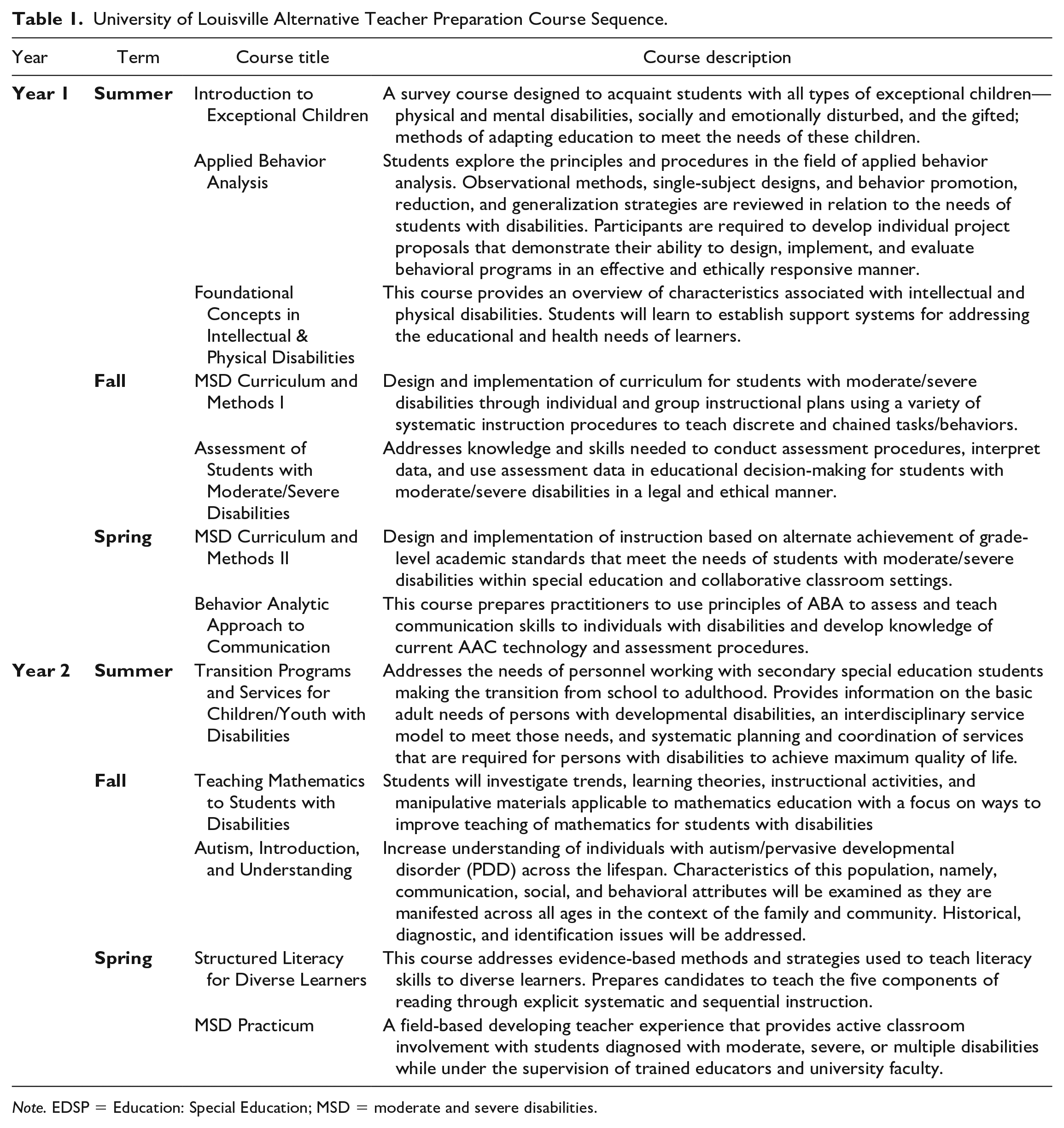
Note. EDSP = Education: Special Education; MSD = moderate and severe disabilities.
Candidates complete two classes per semester during the Fall and Spring semesters and attend one summer course after Year 1. All courses prioritize applied assignments that are completed with their current students in their classroom for students with MSD (see Table 2 for applied assignment examples). This provides the opportunity to generalize content acquired in courses to real-life circumstances they are facing in their own classrooms. Applied assignments are supported by video or in-person observations by the instructors to advance skill development in real classroom contexts. The flexibility of video observations allows instructors to provide personalized performance feedback to the ATP candidates in rural settings that would be otherwise too far away to observe.
Applied Assignment Examples.
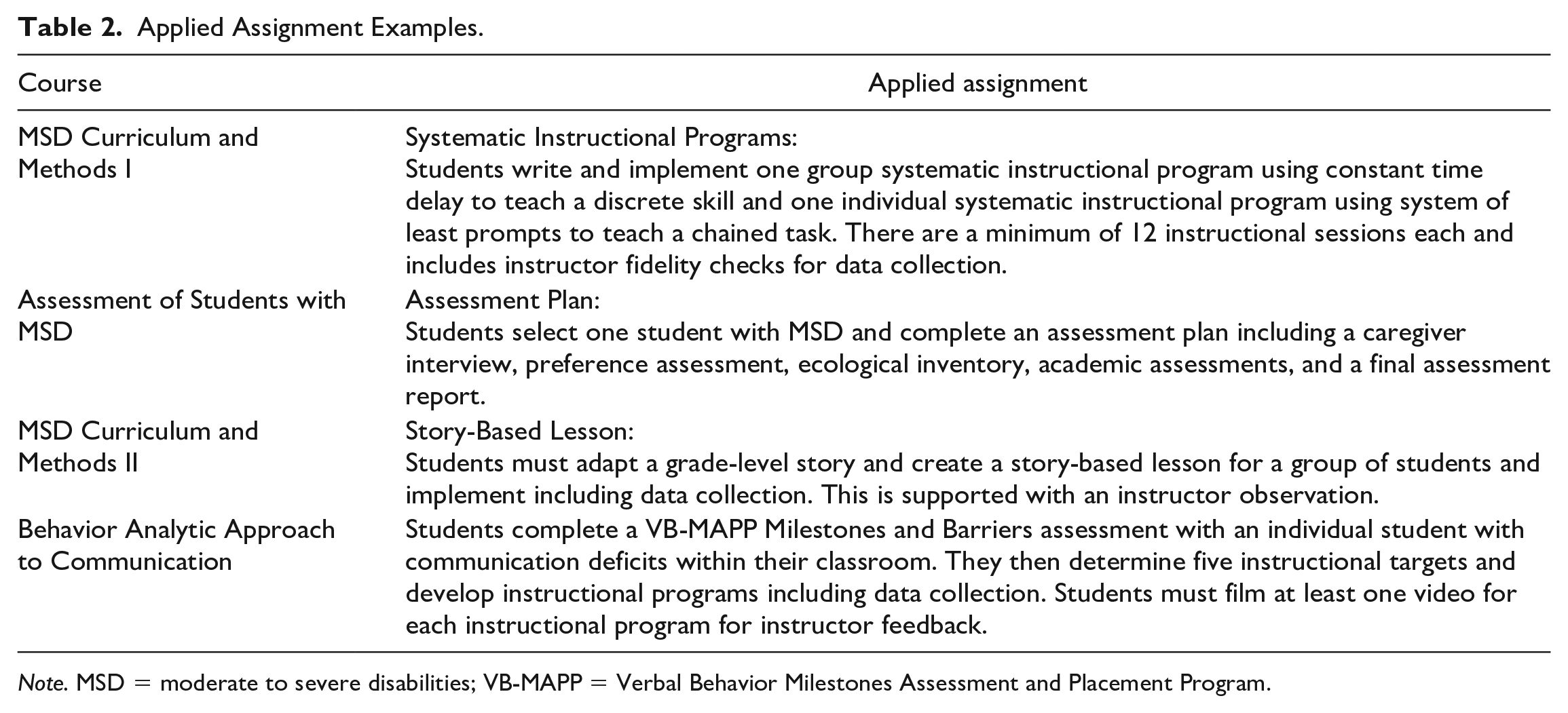
Note. MSD = moderate to severe disabilities; VB-MAPP = Verbal Behavior Milestones Assessment and Placement Program.
Mentorship
In addition to coursework completion, ATP candidates at the University of Louisville are assigned three mentors to provide support: a university-based mentor, a school-based mentor, and a school-based administrative mentor. The university-based mentor has often been a faculty member or teacher educator with knowledge in special education; the school-based mentor is typically another special education teacher or staff member, such as a counselor with a background in special education; and the school-based administrative mentor is often the ATP candidate’s principal or assistant principal. Kentucky’s Administrative Regulations (16 KAR 9:080; 2021) require a minimum of 15 hr of annual observations completed by the university and district, with a minimum of 5 hr per mentor. The regulated support of university-based mentors is something that is unique to ATP programs when compared with traditional post-baccalaureate initial licensure programs or some certification routes that are not university-based.
Mentor observations take place through in-person classroom visits and/or distance technology, such as Microsoft Teams or Zoom. By providing flexibility in the observation format, the program can serve candidates in rural areas or out of driving range from the university. The university also provides funding to university mentors for travel expenses if in-person visits are needed; however, the candidates always have access to in-person support from their local school-based mentors.
Securing quality mentors for teachers of students with MSD has been a challenge in the past due to the small number of professionals in the moderate to severe disabilities field. The University of Louisville is in charge of securing the university-based mentor. In recent years, special education doctoral students have served as mentors due to higher enrollment rates of ATP candidates. This not only benefits the candidates, but it also gives the doctoral students experience in mentorship and coaching that can be applied to their future careers in higher education. The school-based mentor and administrative mentor are selected by the school district and must meet with university staff to complete a mentor training and discuss expectations. The combination of mentors is especially important for rural ATP candidates because they can still receive pedagogy-specific support from their university mentor while also being guided by their local mentors on school or community-specific needs.
Mentor observations, unlike those of the course instructors, are not evaluative in nature and aim to provide support to the candidates while pinpointing their strengths and areas of improvement. While no formal observation tool is required, the University of Louisville provides mentors with the Autism and Low Incidence Classroom Observation Tool (ALCOT; Pennington, 2018) that has targeted indicators in the areas of environmental supports, instructional supports, instruction, communication instruction, behavior management, and staff interactions. In addition, mentors and candidates have the option of using a “Next Steps Action Plan” to target areas of growth in a systematic format. Alternative teacher preparation candidates in rural areas can complete this plan virtually with their mentors and can use a live document such as Google Docs or OneDrive to update progress in real time.
Mentors are not limited to just communication through observations. They also serve as a valuable source of support and guidance for ATP candidates through the program. Mentorship can include phone calls, online check-in meetings, work sessions, or other informal means of support based on the candidates’ specific needs and communication preferences. For example, many candidates turn to mentors for support in writing their first IEPs, developing classroom systems, or navigating supervision and support of paraeducators. Many candidates utilize text messaging to get quick answers from mentors while others prefer in-person guidance.
In the University of Louisville’s current practice, each mentor supports the candidate individually as opposed to a collective whole. This lessens the logistical challenges of aligning schedules for people but does not facilitate collaboration among the team. Typically, ATP candidates utilize their school-based mentors for more specific help in IEP and alternate assessment training because districts have their own policies and practices. The University of Louisville mentors focus on instructional practices, creating access to general education curricula, and embedding evidence-based practices within the classroom. While the ATP program at the University of Louisville has existed since 2008, the experiences and needs of teachers in the program have changed as the landscape of special education has also changed.
Program Data and Feedback
Enrollment and Degrees Awarded
Since switching to an online format in 2019 to address the geographical and time barriers that ATP candidates in rural districts may face, the University of Louisville has seen a drastic increase in program enrollment (see Figure 1). In the last year of in-person coursework (2018), the MSD ATP program enrollment consisted of only three candidates (University of Louisville Office of Academic Planning and Accountability, 2022b). The first year of online coursework more than doubled the MSD ATP enrollment to eight, and the ATP program had an enrollment rate of 17 for the 2023 academic school year. Since switching to the online format in 2019, the university has enrolled 77 candidates into the MSD ATP program (University of Louisville Office of Academic Planning and Accountability, 2022b). In 2021–2022, 10 master’s-level degrees were awarded in MSD, which correlates to the first cohort that began in the online format (University of Louisville Office of Academic Planning and Accountability, 2022a). Of those 10 degrees awarded, 80% were from the MSD ATP program. As the online cohorts progress through the program, the University of Louisville anticipates seeing a continued increase in degrees awarded.
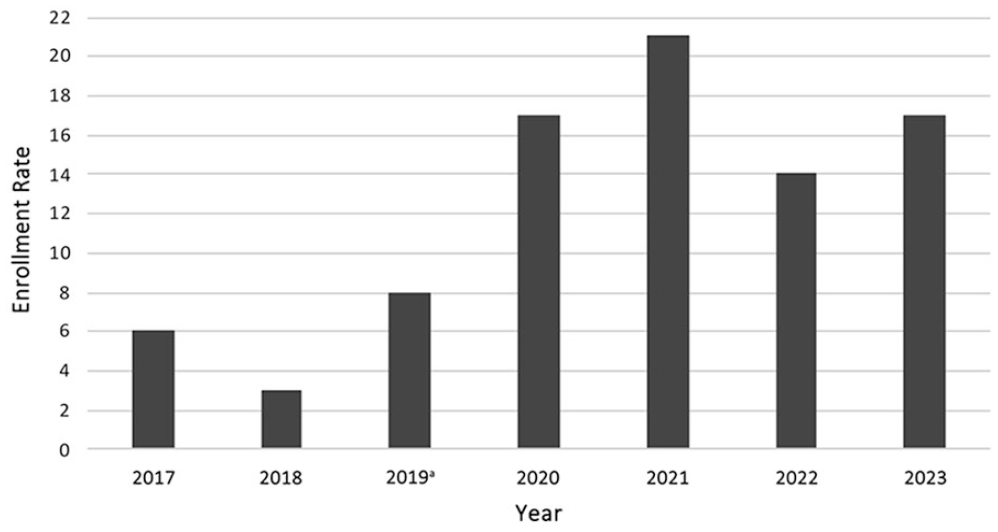
University of Louisville MSD Alternate Teacher Preparation Program Enrollment Rates Over Time.
Pilot Survey Data
To gather feedback on candidates’ experiences regarding their mentoring support in the ATP program, a pilot survey was administered at the end of the candidates’ first year in the program for the 2020–2021 and 2021–2022 school years. Data were analyzed based on school setting (urban vs. rural) to determine whether candidates’ experiences differed based on location. The total number of participants was 14 out of 17 (82.3%), with 64.3% (n = 9) working in urban school settings and 35.7% (n = 5) working in rural schools. Due to the small sample size, data collected are being treated as preliminary, rather than evaluative, feedback.
Alternative teacher preparation candidates were asked about their mentoring experiences, and 100% (n = 5) of the rural candidates rated their university mentor as “adequate to meet their needs” (n = 4) or “beyond” (n = 1). Of the urban candidates, 67% (n = 6) rated their university mentor as “adequate” (n = 3) or “beyond” (n = 3; see Table 3). Despite receiving less in-person support from their university mentors, the results demonstrate that the rural candidates still felt supported. When examining both school-based mentors and school-based administrative mentors, 80% (n = 4) of the rural candidates rated their mentors individually as “adequate to meet my needs” (n = 3) or “beyond” (n = 1). This is higher than for the urban candidates (n = 9): 44% (n = 4) rated the support they received from their school-based mentors and school-based administrative mentors as “adequate to meet their needs” (n = 3) or “beyond” (n = 1) and 56% (n = 5) rated their support as “not adequate to meet my needs.”
Mentoring Experiences of Alternate Teacher Preparation Candidates Based on Setting.
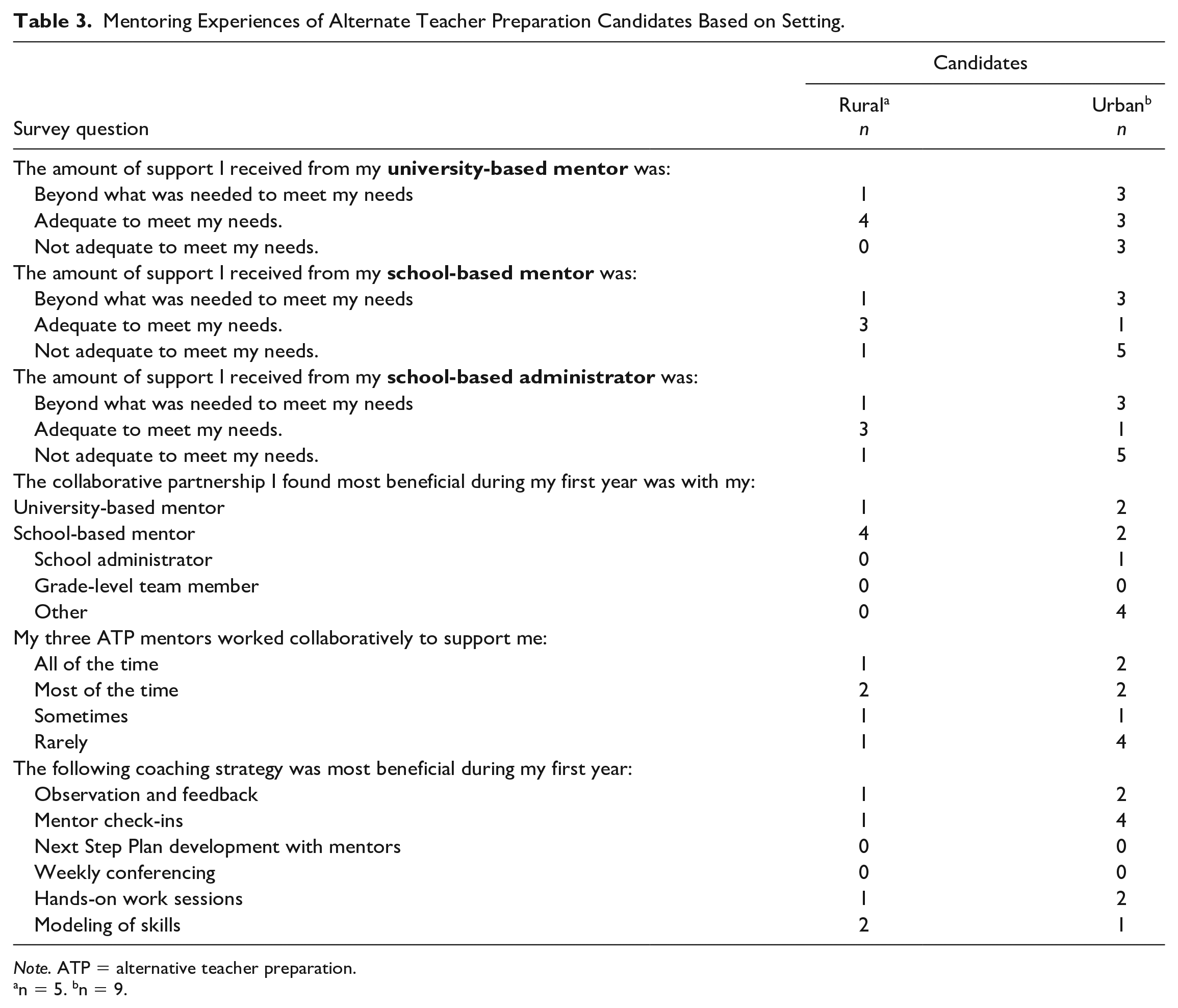
Note. ATP = alternative teacher preparation.
n = 5. bn = 9.
Candidates were asked which collaborative partnership they found most beneficial during their first year. The majority of rural candidates selected the school-based mentor (n = 4), while the most frequent response for urban candidates (n = 4) was “other.” The survey did not give the option to specify “other”; therefore, further investigation is needed to determine from whom urban candidates received support outside of their mentors. Only two urban candidates chose the school-based mentor as the most beneficial partnership. The ATP candidates were also asked to report how often they felt their three mentors worked collaboratively to support them. For the rural participants, 20% (n = 2) indicated “all of the time,” 40% (n = 2) reported “most of the time,” 20% (n = 1) reported “sometimes,” and 20% (n = 1) indicated “rarely.” Based on these data, there is room for growth to increase mentor collaborative efforts in the program.
Participants were asked to choose which coaching strategy was most beneficial during their first year. The rural participants selected “modeling of skills” (n = 2), observations and feedback (n = 1), mentor check-ins (n = 1), and hands-on work sessions (n = 1). This differed from urban candidates, who primarily preferred mentor check-ins (n = 4), observations and feedback (n = 2), hands-on work sessions (n = 2), and modeling of skills (n = 1). As there was a range of preferred coaching strategies across all participants and settings, this may indicate that personal learning styles are more important than setting location. Overall, our data suggest that the rural participants felt supported by their mentors and the strategies used for coaching were effective.
Discussion
The steady increase in enrollment rates for the University of Louisville’s MSD ATP program is a promising contribution toward lessening the gap between MSD teacher supply and demand in the rural commonwealth of Kentucky. Shifting to an online format to better meet the needs of rural LEAs in Kentucky has more than doubled the program enrollment rate. In addition, our preliminary findings from our survey indicate that rural ATP candidates felt supported by their mentors, regardless of distance. Collecting these data early in the shift to a virtual format allowed the University of Louisville to see areas of strength and growth related to mentorship.
What’s Next?
Structured Mentoring
Although ATP candidates rated feeling supported by their mentors, the University of Louisville recognizes a lack of synchronicity and cohesion among mentors. While not all ATP candidates have the same needs or styles, having a more structured approach to mentoring may increase efficiency and accountability for mentors, and potentially prevent future ATP candidates from feeling their support was “not adequate to meet their needs.” The mentorship model used by Colorado Christian University’s ATP program requires a meeting involving the university supervisor, the school-based mentor, the principal, and the teacher candidates prior to the start of the school year (Lohmann et al., 2019). Likewise, Utah State University requires a Memorandum of Understanding between the school district, the university, and the teacher candidate that outlines clear roles and responsibilities (Hager & Fiechtl, 2019). Implementing regular meetings between university and district mentors at the University of Louisville in which all three mentors meet to identify priorities in their ATP candidate’s growth may streamline the feedback given so that the candidate can focus on a smaller number of manageable skills as opposed to different skills/ideas from each mentor. This also builds in accountability for the mentors and local LEAs. As many meetings have been moved to online formats and infrastructure to improve internet capacity has increased in rural areas, teachers and mentors in these areas can stay in close connection with university faculty and mentors.
Funding Opportunities
Jameson et al. (2019) noted that one of the key contributors to success in the University of Utah’s ATP program is the financial support provided to candidates. Candidates always receive one of two forms of financial support through state and federal grants. While the grants vary in amount and duration, the University of Utah has successfully provided some amount of financial support over a 14-year span. The University of Louisville provides candidates with resources that can assist in covering program expenses, however, there is currently no long-term funding specifically for the ATP program. Prioritizing and securing grants that target rural teacher shortages may increase enrollment and completion rates as well as bolster mentoring programs as candidates and universities have more financial support.
Limitations
While our program description reports that we have successfully improved recruitment and program completion rates for the MSD ATP program, this is only half the battle for addressing the teacher shortage in rural districts. The current University of Louisville ATP program does not collect follow-up data to determine retention rates or if rural teachers are staying within rural areas after program completion. The program is currently exploring options for collecting follow-up data, including employment locations and burnout levels. These data will offer the ability to examine the impact of the University of Louisville ATP program on retention rates in Kentucky’s rural communities.
Another limitation is the pilot data sample size. Due to the small sample size, these data can only be used as preliminary feedback. While we were able to report differences in scores based on setting (rural or urban), less than half of the participants were from rural settings. Administering the pilot survey to future cohorts can increase the participant size in both setting types to allow further comparisons, including identifying trends using inferential statistics for future programming decisions.
Conclusion
Much like the rest of the country, Kentucky is experiencing a special education teacher shortage that is affecting the ability to provide specialized instruction to the growing number of students receiving special education services within the commonwealth. Because Kentucky is mostly rural, this is exacerbated for these districts due to geographical barriers to IHEs and difficulty recruiting and retaining teachers from outside the local community. The University of Louisville’s MSD ATP program recently switched to an online format that increases accessibility for candidates who are separated by distance but interested in pursuing a degree in special education. The program offers a combination of synchronous and asynchronous courses that are sequenced to provide candidates with the necessary information to be successful within their classroom. Furthermore, the program allows students the opportunity to seek an accredited university degree from a program designed to meet district needs while maintaining high-quality preparation. Preliminary data highlight an increase in program enrollment since switching formats and show positive results regarding the mentorship provided to candidates. There is a need for future research investigating the use of university-based ATP programs to address the rural special education teacher shortage and what factors lead to increased enrollment and completion rates over time.
Footnotes
Declaration of Conflicting Interests
The author(s) declared no potential conflicts of interest with respect to the research, authorship, and/or publication of this article.
Funding
Some authors received financial support for the research through the Office of Special Education Programs grant H325D190030.
