




Abstract
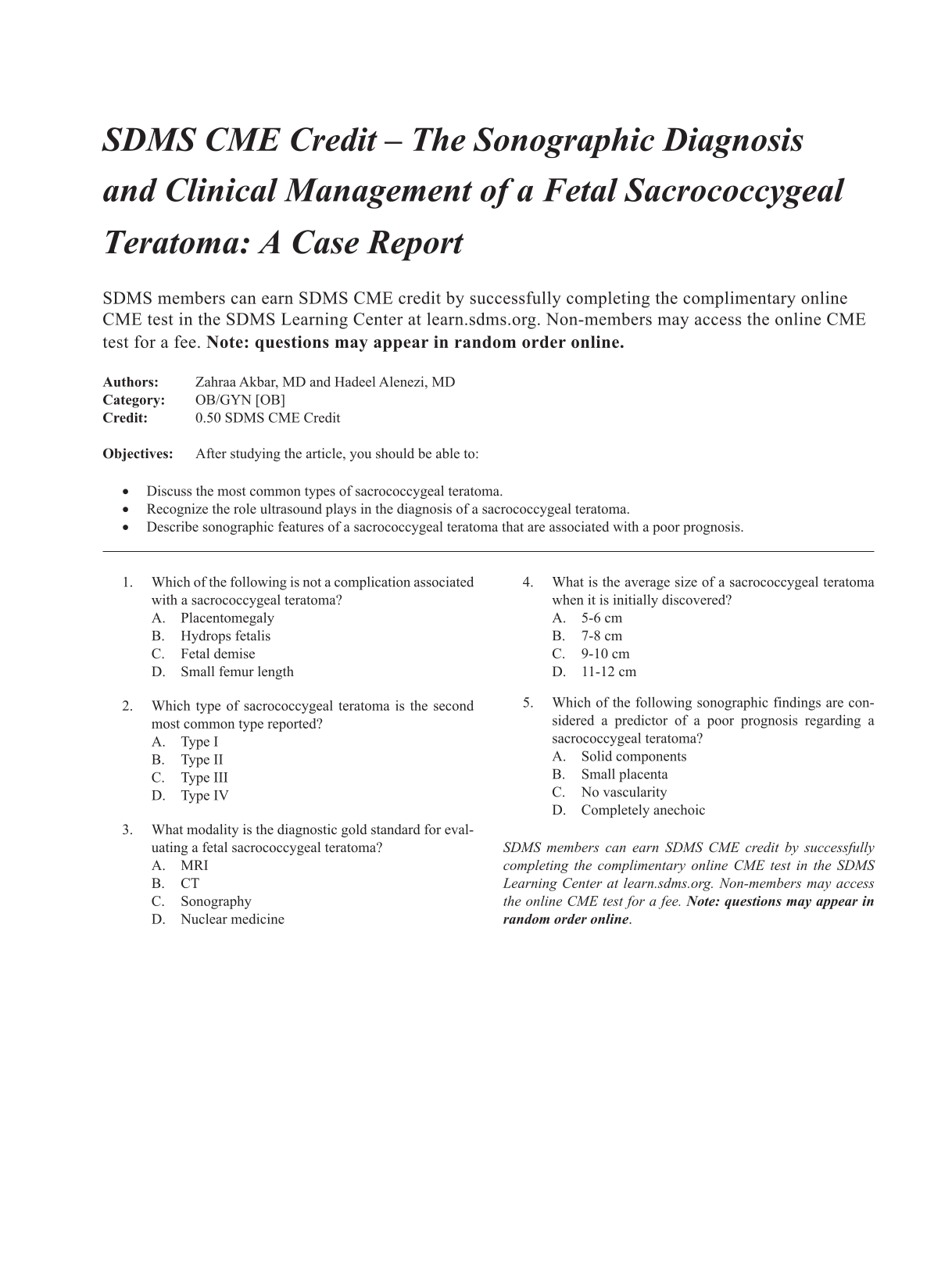
SDMS members can earn SDMS CME credit by successfully completing the complimentary online CME test in the SDMS Learning Center at learn.sdms.org. Non-members may access the online CME test for a fee.
Discuss the most common types of sacrococcygeal teratoma.
Recognize the role ultrasound plays in the diagnosis of a sacrococcygeal teratoma.
Describe sonographic features of a sacrococcygeal teratoma that are associated with a poor prognosis.
Which of the following is not a complication associated with a sacrococcygeal teratoma? A. Placentomegaly B. Hydrops fetalis C. Fetal demise D. Small femur length
Which type of sacrococcygeal teratoma is the second most common type reported? A. Type I B. Type II C. Type III D. Type IV
What modality is the diagnostic gold standard for evaluating a fetal sacrococcygeal teratoma? A. MRI B. CT C. Sonography D. Nuclear medicine
What is the average size of a sacrococcygeal teratoma when it is initially discovered? A. 5-6 cm B. 7-8 cm C. 9-10 cm D. 11-12 cm
Which of the following sonographic findings are considered a predictor of a poor prognosis regarding a sacrococcygeal teratoma? A. Solid components B. Small placenta C. No vascularity D. Completely anechoic
SDMS members can earn SDMS CME credit by successfully completing the complimentary online CME test in the SDMS Learning Center at learn.sdms.org. Non-members may access the online CME test for a fee.