



Abstract
Objective:
This study was designed to explore the teaching self-efficacy, by clinical preceptors instructing sonography students, in bachelor’s degree-accredited sonography programs.
Materials and Methods:
A survey was provided to sonography clinical preceptors, to gauge their level of teaching self-efficacy. The survey instrument, Sonography Preceptor Teaching Self-Efficacy Inventory (SPTSEI) was used. The intent of the survey was to gauge, holistically, sonography preceptors’ perceptions of influencing student learning, in a clinical setting.
Results:
The survey respondents suggested that they had a high level of confidence in their skill to transmit knowledge and abilities to students. However, it was found that preceptors who had received some type of professional development, as preceptor, had a statistically significant higher level of teaching self-efficacy than those who had not received any type of training.
Conclusion:
Clinical preceptors are skilled health care professionals in their chosen discipline but may have little to no teaching experience. If preceptors do not fully understand their role in the educational process, both they and their students may not attain educational goals. It is therefore critically important that proper training and education, to support clinical preceptors, be provided for them. This survey would suggest that clinical preceptors, with training, can better perform their educational roles and better handle any challenges that might arise, as a part of providing clinical education.
Health care education requires not only didactic coursework but also hands-on clinical experiences, as a vital component in the process of educating future health care professionals. 1 Foundational skills and theories are taught in classrooms and laboratories prior to students beginning their clinical education. 2 Then, through the process of clinical education, that theory is translated into practice. Textbook readings and lecture theories become entwined with authentic experiences carried out in actual health care settings. It is here that students’ cognitive domain fuses with their psychomotor and affective domains. 3
A student’s clinical education is supervised by clinical preceptors. A clinical preceptor is an experienced ultrasonographer who assumes the role of instructor for students engaging in their clinical education. 4 Clinical preceptors facilitate and evaluate student learning during clinical education rotations. 5 They are charged with not only helping to further the education of the student but also facilitating the student’s professional development, 6 assisting students in the development of clinical skills, 7 and serving as role models who exemplify professional behavior. 8
However, many preceptors step into this clinical teaching role without having received any type of formal training in educational theories, even though teaching techniques, such as sequential teaching and experiential learner-centered teaching methods are known to improve student learning and enhance their overall experience. 6 Preceptors are often expert clinicians who may find themselves unprepared to manage the many clinical teaching challenges that call for specific educational and evaluative strategies. 9 This is concerning because a health profession student’s success can depend on the effectiveness or ineffectiveness of their clinical preceptor. 10 Because student success in large part rests on the shoulders of their preceptors, it is important that preceptors receive proper training and education for these roles. Research suggests that if preceptors do not fully understand their role in the educational process, both they and their students will struggle and lack attaining educational goals. 11
An effective preceptor can enhance the learning experience, while ineffective teaching obstructs learning in the clinical environment, affects students’ desire to succeed, and impairs students’ professional development.13,14 Sonography students can receive a better clinical experience when placed with a clinical preceptor who has obtained the necessary education and professional development to comfortably instruct and evaluate the student’s clinical performance. There is a pervading assumption that clinical expertise carries over into teaching and that a skilled health care practitioner can simply step into the role of clinical preceptor without any preparation. However, this assumption has been proven to be not true.9,15 –17 Because of a lack of training and preparation, preceptors often do not have a clear understanding of their role in the academic program nor in the overall process of the education of the students who are assigned to them.2,9,11,14 They seldom have any formal training in areas, such as teaching methodology, evaluation of clinical performance, or learning styles prior to receiving students. 15 However, preceptors will be able to better perform their roles and do so more confidently if they are offered some type of formal training and preparation. 18 Professional development can translate into improved teaching effectiveness and therefore improved student learning outcomes. 19
While much has been written about the importance of clinical instruction and the need for training and preparation for the preceptors who assume this role, little attention has been paid to how sonography preceptors feel about their ability to accomplish the task of teaching sonography students. Bandura was the first to introduce the behavioral learning concept of self-efficacy.
12
Perceived self-efficacy is defined as a
person’s judgment of their capabilities to organize and execute courses of action, which are required to attain designated types of performances. It is concerned not with the skills one has but with judgments of what one can do with whatever skills one possesses.
12
Teaching self-efficacy is a teacher’s belief that they can exert an influence over their students that will bring about learning. It stems from the teacher’s confidence that they can effect change with their teaching ability and is related to perceived capability in specific situations and tasks.20,21 Preceptor teaching self-efficacy has been shown to directly influence student learning achievements. 22 While preceptors may possess a high level of professional self-efficacy due to their clinical expertise, their self-efficacy regarding teaching may be less highly developed. 22 Higher self-efficacy will result in a better teaching attitude and stronger expectations of the ability to affect learning in students. 23 Structured education and training by faculty leadership can enhance the knowledge and abilities of preceptors, as well as increase their perceived teaching self-efficacy. Conversely, a lack of proper training, coupled with role ambiguity, can potentially lead to decreased feelings of self-efficacy for clinical preceptors. A low sense of self-efficacy on the part of preceptors can lead to role dissatisfaction for them, and a poor clinical experience for their students.
Little to no literature was found pertaining to clinical preceptors working with diagnostic medical sonography students, nor the teaching self-efficacy of sonography clinical preceptors. Therefore, the purpose of this research is to evaluate the perceived teaching self-efficacy among clinical preceptors teaching sonography students in bachelor’s degree programs, accredited by the Commission on Accreditation of Allied Health Education Programs (CAAHEP). The knowledge gained from this study could improve the educational process for both sonography preceptors and students. The implications from this research may help educational leaders understand how to better prepare sonography preceptors and improve the overall clinical experience for both the preceptors and the students. Therefore, this study focused on two research questions: (1) What is the level of teaching self-efficacy of clinical preceptors teaching sonography students in bachelor’s degree programs, accredited by CAAHEP? (2) Is there a difference in the level of teaching self-efficacy between preceptors who have received prior training for their teaching role and those who have not received training?
Materials and Methods
This study received institutional review board’s (IRB # 1741443-1) approval to conduct educational research in January 2021. The teaching self-efficacy of sonography preceptors was assessed using a quantitative research design that was positioned in a postpositivist paradigm. Through a single, cross-sectional survey approach, this study was designed sought to gauge sonography preceptors’ teaching self-efficacy in a clinical setting. The survey instrument, Sonography Preceptor Teaching Self-Efficacy Inventory (SPTSEI), was used to capture respondents’ perceptions. It was adapted from two surveys that investigated teaching self-efficacy and clinical teaching effectiveness: the Self-Efficacy Toward Teaching Inventory (SETTI) and the Nursing Clinical Teacher Effectiveness Inventory (NCTEI).13,20 The SETTI was originally designed by Tollerud 24 and was utilized to measure the perceived teaching self-efficacy of doctoral students and graduates of counselor education programs. It was later revised by Nugent et al 20 to assess the perceived teaching self-efficacy of new nurse educators. The adapted survey used 19 of the 48 statements in the original survey, specifically the ones that pertained only to clinical education. The NCTEI was developed by Knox and Mogan 13 and was originally used to evaluate the importance of clinical teacher behaviors from the perspective of nursing students, graduates, and faculty members. The adapted survey used 32 of the original 47 questions, specifically the ones pertaining to clinical teaching ability, evaluation, and interpersonal relations. There was some redundancy in the questions selected from the two surveys, therefore, some of the questions were combined for a total of 45 questions on the final version of the survey. It was also important to re-word the questions, in order for preceptors to self-evaluate their effectiveness in performing these clinical teaching behaviors. Permission was obtained for the use of these survey instruments, as part of this study. Together, these combined surveys were adapted to include language that is specific to diagnostic medical sonography clinical education and ultimately became the SPTSEI. The intent of this survey was to capture a holistic view of sonography preceptors’ perceptions of their ability to influence student learning, in the clinical setting.
The survey focused specifically on teaching self-efficacy and was divided into three sections. The first section focused on teaching ability and contained 22 statements designed to gauge the participant’s perceived level of ability to effectively instruct students. The second section focused on the evaluation process. It contained 13 statements designed to gauge the participant’s perceived level of ability to evaluate the performance of the students they are teaching. The third section focused on interpersonal relations with students. It contains 10 statements designed to evaluate the participant’s perceived level of ability to relate with their students (see Appendix A for the complete SPTSEI).
To determine the SPTSEI’s face and content validity, it was important to deliver the survey electronically to medical imaging educators who are familiar with the research process and have them review the survey. Using experts in the field to review survey instruments is an accepted practice for establishing face and content validity. 25 To establish the reliability of the survey instrument, internal consistency was measured by calculating a Cronbach’s alpha for each scale for the survey. The results demonstrated a Cronbach’s alpha of 0.848, or greater, for all three scales designed to measure teaching ability, evaluation of student performance, and interpersonal relations, respectively.
All survey questions were design to rate participant’s level of agreement with the statements using a Likert scale of 1 to 10, with 1 being “strongly disagree” and 10 being “strongly agree.” The SPTSEI survey contains three main parts. The largest section at the beginning of the survey focuses specifically on teaching self-efficacy and is divided into three sections. The second section focuses on the evaluation process and the third section focuses on interpersonal relations with students. A demographics section was included at the end of the survey, which asked participants for information regarding gender, age, race, years of experience as an ultrasonographer, and level of education.
Survey Sampling
A non-probability purposive sample of clinical preceptors from United States-accredited baccalaureate programs was studied. 26 The survey was given to preceptors in sonography programs, accredited by CAAHEP, and included a mixture of general, cardiac, and vascular sonography concentrated programs. Participants were contacted through the program directors of these programs.
Research Procedures
The SPTSEI was built as an electronic survey and utilized Qualtrics survey software. The researcher contacted participants via email to explain the research, to the sonography program directors. The email asked them to distribute the letter, survey link, and informed consent to all their clinical preceptors associated with their respective programs. Research has shown that participants are more likely to complete electronic surveys received from authority figures compared with surveys received from individuals or organizations that they do not know personally. 27 The survey link was active for a period of 2 weeks.
Data Analysis
Statistical analysis was conducted using SPSS. A variety of statistical tests were utilized to answer the research questions associated with the study. Descriptive statistics, such as means and standard deviations, were anticipated for demographic data. Parametric testing was used to analyze the Likert-type scale data. Independent variables included years of experience working as an ultrasonographer, years working with students, evidence of prior preceptor training, type of training, and level of education. The dependent variable was the preceptors’ level of teaching self-efficacy. Data were analyzed using Statistical Package for the Social Sciences (SPSS, IBM Corp.). A Student t-test was used to examine differences in levels of teaching self-efficacy, based on these independent variables. The relationship between demographic variables and the level of teaching self-efficacy was examined by performing multiple regression analysis to attempt to predict which independent variable had the most influence over the dependent variable. The statistical significance for this study was set at a P value of .05, a priori.
Results
There were 48 clinical preceptors who responded to the survey and this was carefully checked, given that some programs utilized multiple clinical preceptors. Four of the surveys were not filled out in their entirety. Because a self-efficacy index could not be calculated from these respondents, their data were not included. The completed data provided by 44 participants were utilized for the final data analysis.
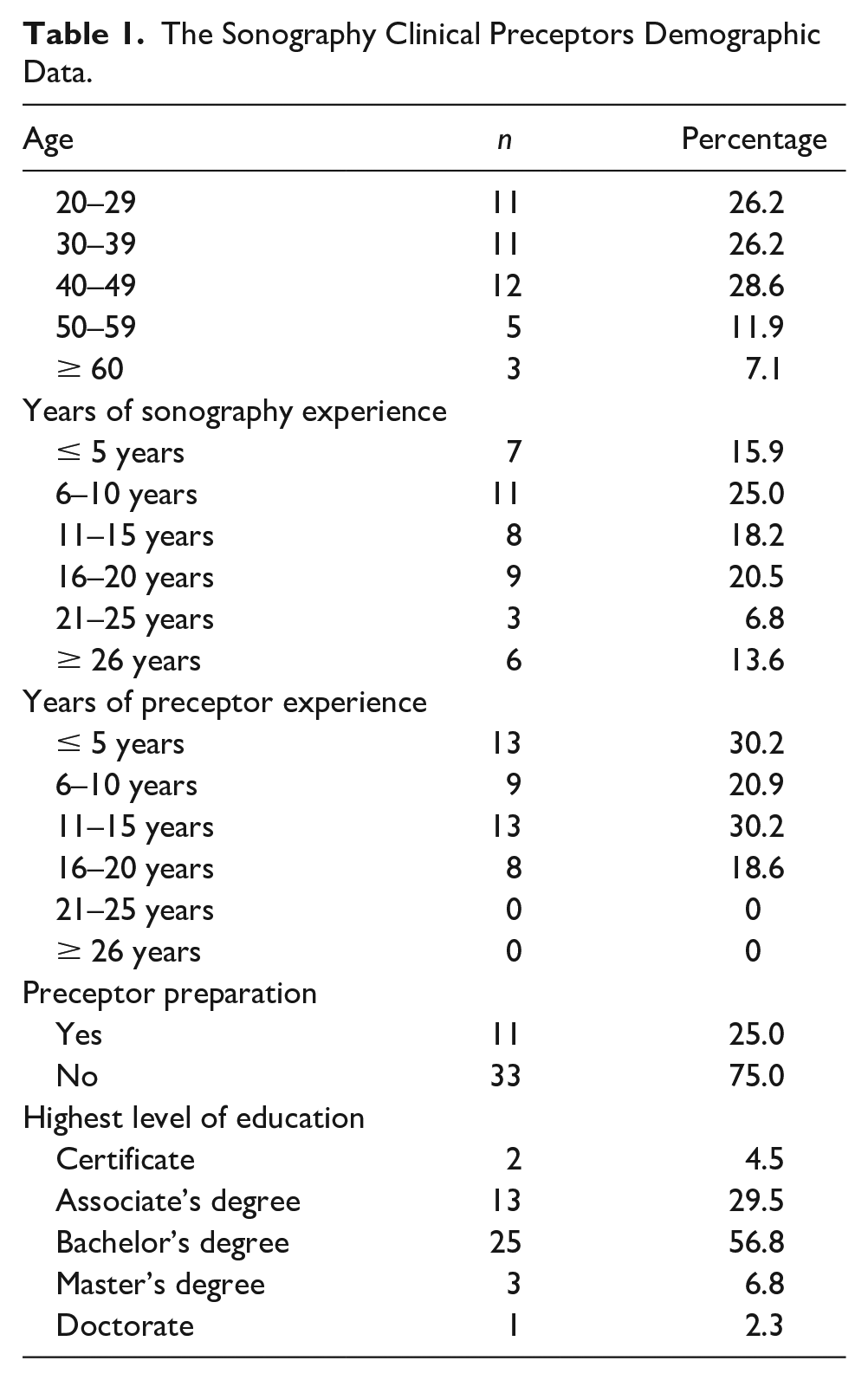
Of the 44 participants in the study, 39 were female (89%) while the remaining five were male (11%). The age of survey participants ranged from 21 to 64 years of age, with the mean age being 38.86 years of age (SD = 11.57). These respondents had a wide range of sonography experience, ranging from those who had only worked in the field for 1 year up to ultrasonographers with 31 years of experience (13.64, SD = 9.16). Participants also demonstrated a wide range in the number of years they had been serving as a sonography student preceptor. Their years of experience ranged from 1 year up to 20 years, with a mean of 9.60 years (SD = 6.09).
Study participants reported varying levels of education with 4.5% having a certificate, 29.5% having an associate degree, 56.8% having a bachelor’s degree, 6.8% having a master’s degree, and 2.3% having a doctoral degree as their highest level of education. Eleven of the 44 participants, or 25%, reported having received some type of training for their role as a clinical preceptor (see Table 1 for a summary of the demographic data).
The Sonography Clinical Preceptors Demographic Data.
Data Specific to the First Research Question
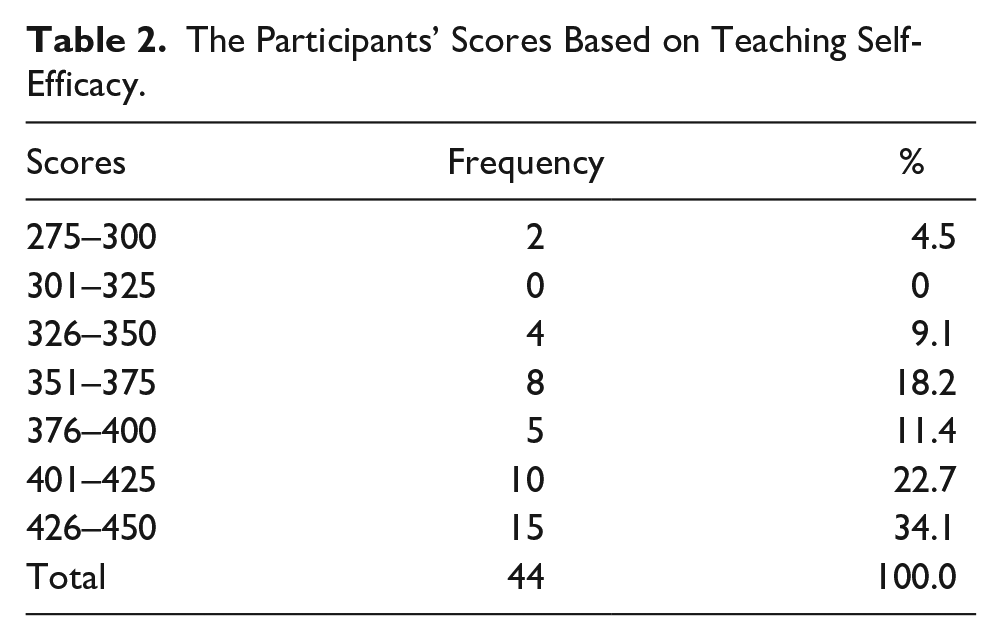
The first research question was: What is the level of teaching self-efficacy of clinical preceptors teaching sonography students in bachelor’s degree programs, accredited by CAAHEP? To answer this question, a self-efficacy index or score was created for each participant by adding together their responses to 45 statements, in the SPTSEI survey, about clinical teaching behaviors. The mean, range, and standard deviation of the self-efficacy index were calculated. This score gave an indication of each preceptor’s teaching self-efficacy or the belief in their ability to effectively handle the tasks, obligations, and challenges related to teaching and their ability to influence student academic outcomes. The maximum score possible was 450. Participants’ scores ranged from a minimum of 279 to a maximum of 450 with a mean score of 397.25 (SD = 41.77). See Table 2 for the range of scores.
The Participants’ Scores Based on Teaching Self-Efficacy.
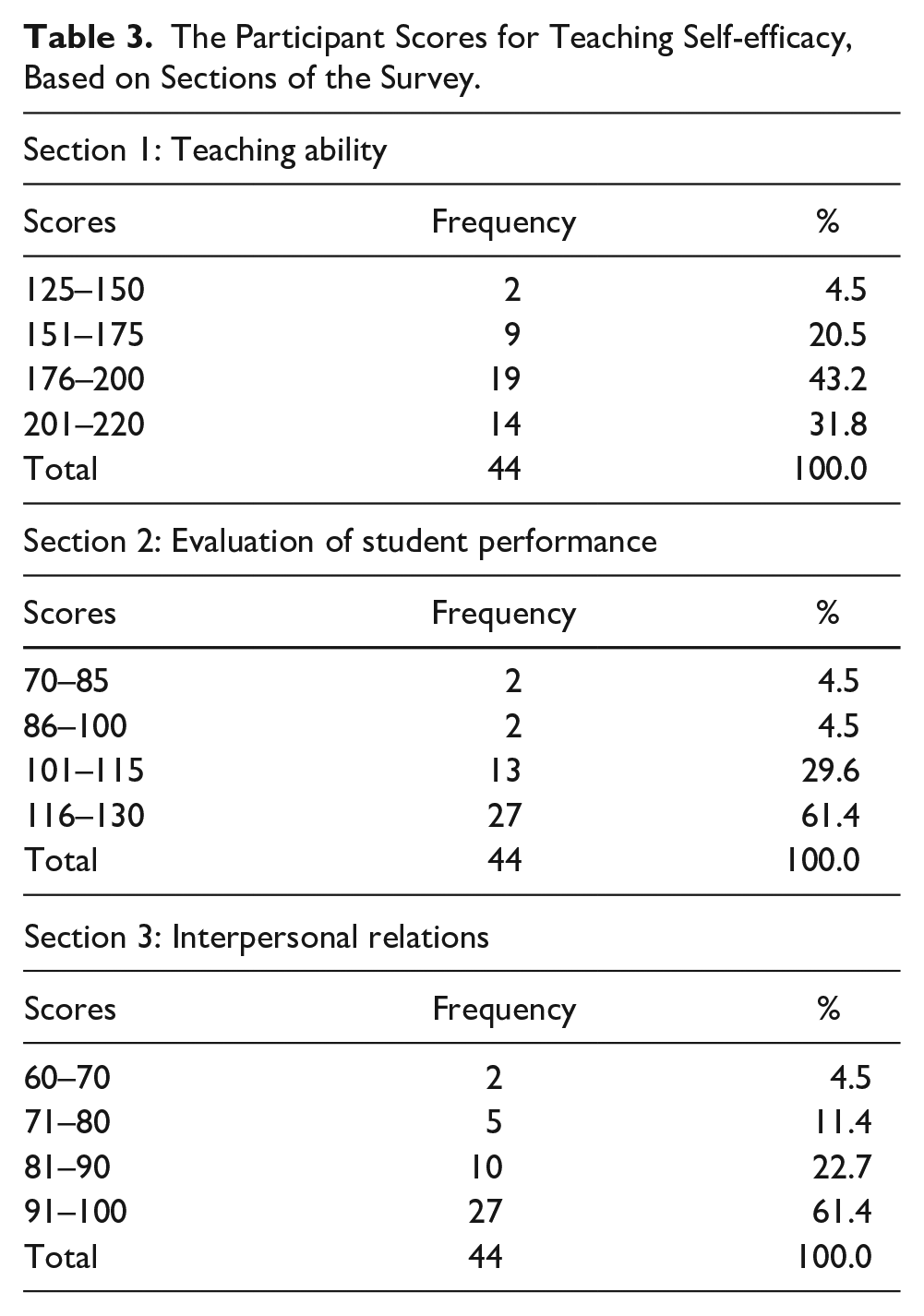
The 45 statements used to create the teaching self-efficacy index were broken down into three separate categories. The mean, range, and standard deviation for each category were computed. The first category was teaching ability. This section consisted of 22 statements for a maximum score possible of 220. The scores in this section ranged from a minimum of 133 to a maximum of 220, with the mean being 190.18 (SD = 21.36). The second category dealt with the evaluation of student performance. This section contained 13 statements for a maximum score of 130. The scores in this section ranged from a minimum of 71 to a maximum of 130 with a mean of 116.05 (SD = 13.33). The third and final section explored the ability of the preceptor to engage in constructive interpersonal relations with a student. This section contained 10 statements for a maximum possible score of 100. The scores in this section ranged from a minimum of 62 to a maximum of 100 with a mean score of 91.02 (SD = 9.70). Table 3 provides the scores for each section of the survey.
The Participant Scores for Teaching Self-efficacy, Based on Sections of the Survey.
Data Specific to the Second Research Question
The second research question was: Is there a difference in the level of teaching self-efficacy between preceptors who have received prior training for their teaching role and those who have not received training? A t-test was conducted to determine whether there is a difference between these two groups. There were 11 participants in the group who had received prior training and 33 participants in the group who had not received prior training. A Welch t-test was run to determine whether there were differences in the mean teaching self-efficacy index between the two groups due to the assumption of homogeneity of variances being violated, as assessed by Levene’s test for equality of variances (P = .034). There were no outliers in the data as assessed by inspection of a boxplot. The mean teaching self-efficacy index of those who received training prior to becoming a clinical preceptor was higher (426.00 ± 23.79) than those who had not received any training (387.67 ± 42.30), a statistically significant difference of 38.33 (95% CI, 17.37–9.29), t(31.31) = 3.73, P = .001 (see Figure 1).
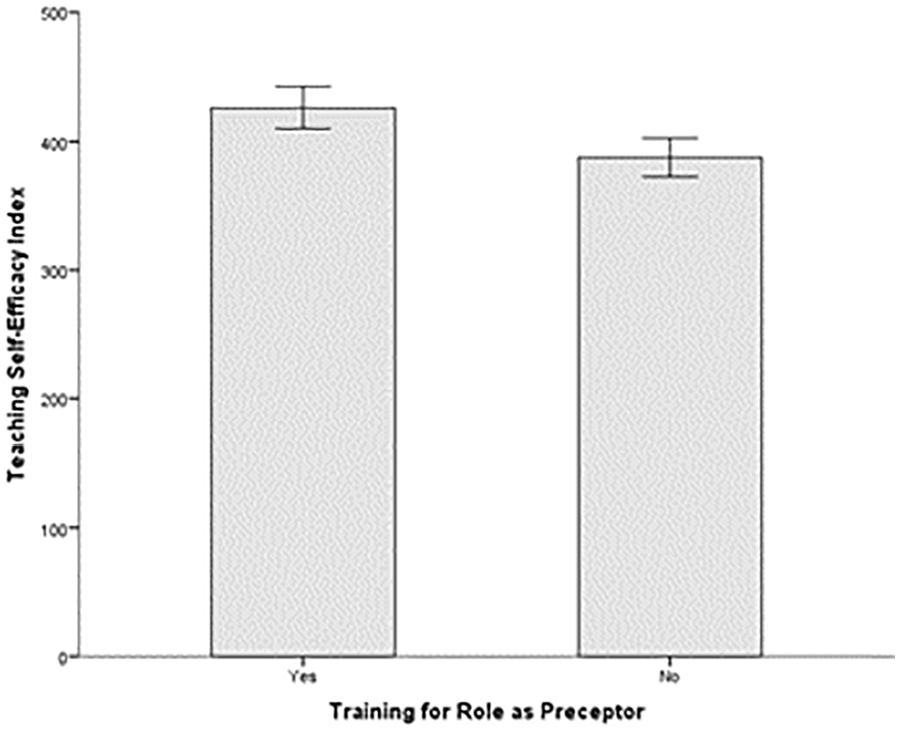
A Box Plot of Participant Responses as to Their Teaching Self-Efficacy Index Compared to Training Data as a Preceptor.
When asked to rate the perceived importance, on a scale of 1 to 10, for having a preceptor-training program available from the sponsoring educational program, the mean importance score was 8.07 (SD = 2.27), with 1 representing “not at all important” and 10 representing “very important.” Based on those who participated in the survey, 42% of the participants (n = 20) rated a preceptor-training program as “very important.”
Discussion
The purpose of this study was to explore the teaching self-efficacy of sonography clinical preceptors in accredited bachelor’s degree programs. The programs surveyed included general, cardiac, and vascular sonography concentration programs. The important role of clinical preceptors is to educate sonography students to become clinically competent and prepare them for entry into practice. Studies and literature have demonstrated that while clinical preceptors may be competent practitioners, they may have little to no experience in the teaching process and could therefore benefit from professional development to hone their knowledge of pedagogical techniques and better prepare them to facilitate student learning. A prepared and confident clinical preceptor will possess a higher level of teaching self-efficacy and will be better prepared to affect learning in their students through their teaching abilities.
Discussion Specific to the First Research Question
While there is a pervading assumption that clinical expertise carries over into teaching and that a skilled health care practitioner can simply step into the role of clinical preceptor without any preparation, this assumption may not be true.9,14 –16 Existing research suggests that clinical preceptors may be lacking in teaching self-efficacy 22 and may not have a clear understanding of their role and the process of educating the students that are assigned to them.2,9,11,17 No research was found that specifically addressed the teaching self-efficacy of sonography clinical preceptors.
However, the findings from this study indicate that participants felt confident in their teaching ability, their interpersonal relationship with their students, and their ability to evaluate student performance in the clinical setting. This is based on their average self-efficacy score of 397.25 of a possible 450. This confidence translates into a high level of overall teaching self-efficacy. Most study participants seemed to have a strong belief in their ability to effectively handle the tasks, obligations, and challenges related to their teaching and their ability to influence positive academic outcomes for the students they are teaching. These results conflict with the findings of Kim and Shin 22 who found that a high level of teaching self-efficacy cannot be accomplished without a systematic educational process that focuses on teaching principles that will prepare clinical preceptors for their educational activity, as 75% of participants in this study had not received any type of training prior to assuming their role as preceptors.
The relatively high level of teaching self-efficacy found in this study may be due to the fact that preceptors are falling back on the knowledge of how they were taught as students. However, this does not mean that they are employing evidence-based teaching strategies, suggesting that despite high teaching self-efficacy scores, training and professional development may still be necessary to ensure that consistent teaching approaches and standardization of clinical experiences based on evidence are being utilized. 27 Furthermore, the literature has shown that preceptors tend to struggle with providing effecting feedback and performing evaluations of student work, most often because they are unfamiliar with the process.9,11,28 –30 The scores from the evaluation of student performance of this study seem to refute this claim, suggesting that sonography clinical preceptors do indeed feel comfortable evaluating the students they are charged with educating.
Discussion Specific to the Second Research Question
The literature indicated that while preceptors are often experts in their clinical practice, their clinical expertise does not always translate into teaching ability.9,16 This lack of preparation seems to indicate the importance of and the need for training and professional development for clinical preceptors. They cannot be expected to become effective teachers without proper training and education about pedagogical techniques. Studies have shown that preceptors need instruction in teaching and learning theory and strategies to become more effective in their work.2,18,31,32
To explore the importance of prior training, this survey asked participants if they had received any type of training or education prior to receiving and instructing students at their clinical site. Only 11 of the 44 participants or 25% of respondents indicated that they had received any training for their role as a sonography clinical preceptor. This finding agrees with the literature in the fact that few preceptors have undergone formal or even informal training about educational concepts and principles.9,16,18,31,33
Statistical analysis was conducted to ascertain if there was a difference in the level of teaching self-efficacy between preceptors who had received prior training for their teaching role and those who had not. The analysis of the data regarding the impact of professional development on the self-efficacy of clinical preceptors demonstrated a statistically significant positive difference between the two groups, with the mean self-efficacy index of those who had received prior training higher on average than those who had not received any training (426.00 vs 387.67). Results from these analyses indicated that prior training is indeed positively impactful on the level of teaching self-efficacy. This finding supports what has been reported in the literature. Preceptors are better able to perform their roles and to do so more confidently if they are offered some type of formal training and preparation.4,18,34 –36 To further reinforce the importance of training, study participants were asked to rate the perceived importance of having a preceptor-training program available from the sponsoring educational program. The mean score indicated that whether they had received any training for their role, study participants still recognized the value of professional development.
Limitations
The greatest limitation to this study was the research design with inherent threats to internal and external validity. Another issue was the small sample size due to the response rate. The research design and small sample size limits the generalizability of the findings. Thus, the findings may not reflect those of the general population of sonography preceptors. In addition, only preceptors from accredited bachelor’s degree programs were surveyed. There are many other accredited sonography programs that offer associate degrees. In addition, surveys were sent to general, cardiac, and vascular sonography programs. This also adds an element of variability to the results. Because the survey instrument required self-reporting, which can be vulnerable to over-rater or under-rater bias. Therefore, some subjects may have given consistently low or high ratings that may not be completely reflective of their actual teaching self-efficacy. Regardless of the single variable that prompted a preceptor to participate in the study and provide specific responses, the results of the study, while an important contribution to existing research, are limited.
Implications for Practice
The results of this study indicated that ultrasonographers who have received prior training for their role may have a greater level of teaching self-efficacy than those preceptors who have not received prior training. Thus, some form of training may be important to producing sonography preceptors who are comfortable in their role and who feel that they can successfully exert an influence over their students that will bring about learning in the clinical setting. Because preceptor teaching self-efficacy has been shown to directly influence student learning achievements, 22 it is important that preceptors possess a high level of teaching self-efficacy. It is therefore critically important that proper training and education in support of preceptors be provided in order for them to perform their role effectively and to face any challenges that might arise in the process of clinical education. 9 Preceptor training should be a top priority for accredited sponsoring program faculty who are sending their students to these health care institutions for their clinical education. Faculty support for preceptors will enhance the preceptors’ understanding of their role which in turn will result in a standardized clinical experience for their students. 2
Regarding implications for practice, the correlation between prior training and higher reported teaching self-efficacy scores should be evidence to university faculty and clinical coordinators that professional development and educational workshops are beneficial to sonography clinical preceptors. Training from faculty will provide preceptors with the support they need to perform their roles effectively and to face any challenges that might arise. 9 Furthermore, research has shown that preceptors greatly value effective communication with their sponsoring program faculty and the instruction and mentoring that they provide. 37
Conclusion
In conclusion, this research study explored the importance of a properly prepared clinical preceptor, to provide education to sonography students. These results indicated that those sonography preceptors who have had prior training for their teaching roles possessed a higher level of teaching self-efficacy than those who have not received any type of training. This higher level of teaching self-efficacy may translate into more positive beliefs in their ability to positively influence student learning. Ultimately, this increased teaching ability and self-confidence may provide a more positive and productive clinical learning experience for sonography students.
Supplemental Material
sj-docx-1-jdm-10.1177_87564793231202269 – Supplemental material for The Ability for Teaching Self-Efficacy by Clinical Preceptors in Diagnostic Medical Sonography
Supplemental material, sj-docx-1-jdm-10.1177_87564793231202269 for The Ability for Teaching Self-Efficacy by Clinical Preceptors in Diagnostic Medical Sonography by Katherine Peak in Journal of Diagnostic Medical Sonography
Footnotes
Declaration of Conflicting Interests
The author declared no potential conflicts of interest with respect to the research, authorship, and/or publication of this article.
Funding
The author received no financial support for the research, authorship, and/or publication of this article.
Ethics Approval
Ethical approval for this study was obtained from the Institutional Review board of the University of Southern Indiana, Evansville, IN (approval id. IRB # 1741443-1).
Informed Consent
Written informed consent was obtained from all subjects before the study.
Animal Welfare
Guidelines for the humane animal treatment did not apply to the present study because no animals were used in this study.

References
Supplementary Material
Please find the following supplemental material available below.
For Open Access articles published under a Creative Commons License, all supplemental material carries the same license as the article it is associated with.
For non-Open Access articles published, all supplemental material carries a non-exclusive license, and permission requests for re-use of supplemental material or any part of supplemental material shall be sent directly to the copyright owner as specified in the copyright notice associated with the article.
