




Abstract

Are you part of a sociotechnical system? Does that sound like something from science fiction or a dystopian future? Actually, if you work for a health care organization, you are part of a sociotechnical system. The term “sociotechnical system” refers to work systems that include technical elements (machines and work organization components) and social elements (people and work environment); both of these major subsystems, the technical and the social, should be equally valued and attended to in order to provide a high quality and satisfying work environment for workers in these systems. 1
The field of ergonomics (human factors engineering) is concerned with creating enabling work systems that preserve and promote worker health, enable work capabilities of a diverse workforce with a range of capacities, and promote sustainability of organizations, through intentional design of work and work systems. Potential benefits of applying ergonomics principles and knowledge when designing work systems can include improvements in worker and systems safety, work quality, and system resiliency, as well as reductions in errors, injuries, and turnover. For health care organizations, the potential benefits also include improved patient safety and outcomes.
The conceptual framework of sociotechnical systems provides us with a means to examine work systems as they are designed (work as imagined) and as they currently are structured and operate (work as done). 2 A sociotechnical systems model/framework helps us appreciate the importance of examining and understanding a system from multiple perspectives, as well as viewing the system-as-a-whole. By adopting a systems view, we recognize that it is the relationships, the interactions, between components of a system that produce the outputs. 3 The framework facilitates examination of each component in the system, but importantly also encourages examination of the various interactions between system components. 3 Using a sociotechnical systems framework aids us in examining the interdependencies and interactions among the various components of a work system. This is useful, for example, when we are identifying factors that put worker health and safety at risk, either when designing a new system or when we are attempting to identify opportunities to intervene to improve existing work conditions and reduce or eliminate risk exposure. Adopting a sociotechnical systems approach to workplace safety reflects a belief that many dimensions of workplace health and safety are emergent properties of these systems. Emergent properties are only exhibited when system components interact, and are not obvious when examining components in isolation. 4 Sociotechnical systems are dynamic, not just in that components interact, but also that decisions are made to change elements, or that change elements, of the system on an ongoing basis. The sociotechnical systems framework encourages examination of potential effects of those decisions in advance, when they are being developed, well in advance of them taking effect. The framework also encourages flexibility and resilience in the design of these systems, to allow for flexibility in response while navigating the system and challenges posed by the system.
Safety is a long-term, chronic goal of most work systems, but, on a daily basis, workers may feel pressure to prioritize production over their safety, in work systems without a strong safety culture. This also may be more likely to occur in work systems that are more highly prescriptive, in contrast to those where workers have more autonomy. Worker involvement is an essential aspect of sociotechnical systems, including worker autonomy and decision-making. A way this can be manifested is to foster discussion and request input from workers and work groups specifically in regard to goal setting and resolving goal conflicts workers encounter. This creates opportunities for workers to offer solutions that may achieve acceptable balance between safety and production when those goals conflict.
Work-related Musculoskeletal Disorders (WRMSD) and discomfort are a particularly persistent health and safety challenge for the community of medical ultrasound users. Reports of elevated prevalence of WRMSD in sonographers, sonologists, vascular technologists, and cardiac sonographers have been reported for more than two decades.5 -9 Examining health care work systems using a sociotechnical systems framework can be helpful in identifying factors that contribute to the problem of WRMSD for ultrasound users, as well as making progress on developing solutions.
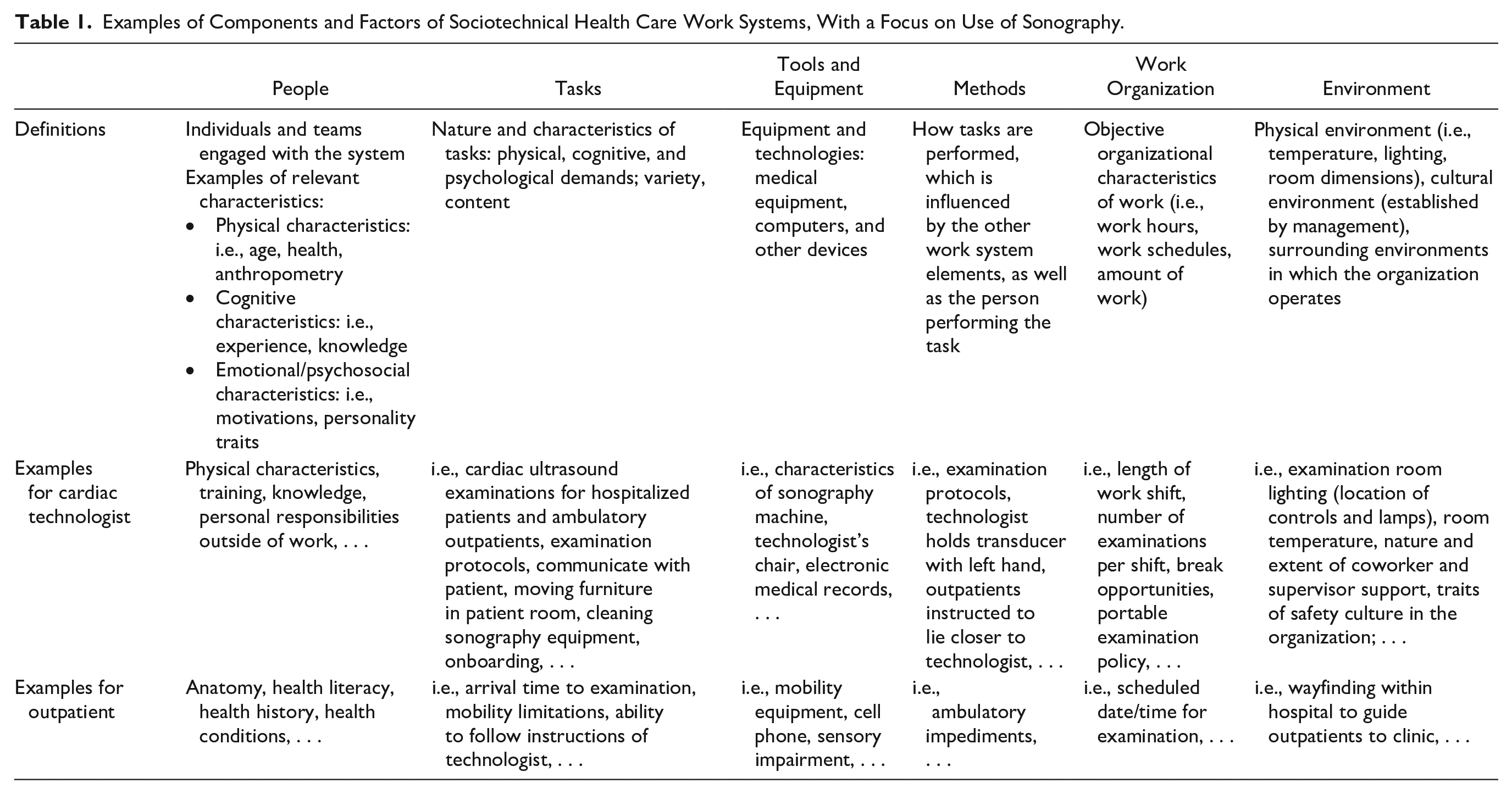
Illustrations of a generic, human-centered, sociotechnical work system model are provided in Figure 1A, as well as one that is modified to be more representative of a health care work system (Figure 1B). At the center of the work system are the people in the system (workers, clients, etc.). The other main categories of work system components include tasks, tools and equipment, work organization (i.e., how work is organized, including work schedules, how workers are paid, etc.), and the environment (may include physical and psychosocial aspects) as well as the environment in which the organization operates. In developing any model, it is always important to define the boundaries of the system that is being modeled. Figure 1C illustrates the complex nature of the interactions of workers and the work system of which workers are an integral part. The outputs of any sociotechnical systems are the products the system produces and effects on the people in the system. In the case of health care systems, effects are experienced by patients and health care workers. We are all acutely aware of these outcomes and how they have been influenced by current external environmental factors (i.e., pandemic, vaccine uptake rates, etc.), as well as the various components within the health care systems (i.e., shortages of equipment and staff, etc.). As described, Figure 1 is a depiction of a generic sociotechnical work system model. The Systems Engineering Initiative for Patient Safety (SEIPS) model is a widely referenced human factors model of person-centered sociotechnical systems with particular relevance to health care systems. 10 While the original version of the model was focused on patient safety, SEIPS 2.0 addresses worker safety, as well. Holden, et al. 11 provides a thorough and detailed explanation of the SEIPS model along with an illustration. The component categories of a sociotechnical systems framework can be used as an organizing structure for aggregating known and new factors that are relevant to the issue of WRMSDs in medical ultrasound users, as demonstrated in Table 1. This table only provides a few examples of known or potentially relevant factors and characteristics. Comprehensive knowledge is desired to provide a full understanding of the exposures of ultrasound users, as well as where exposure reduction opportunities exist.
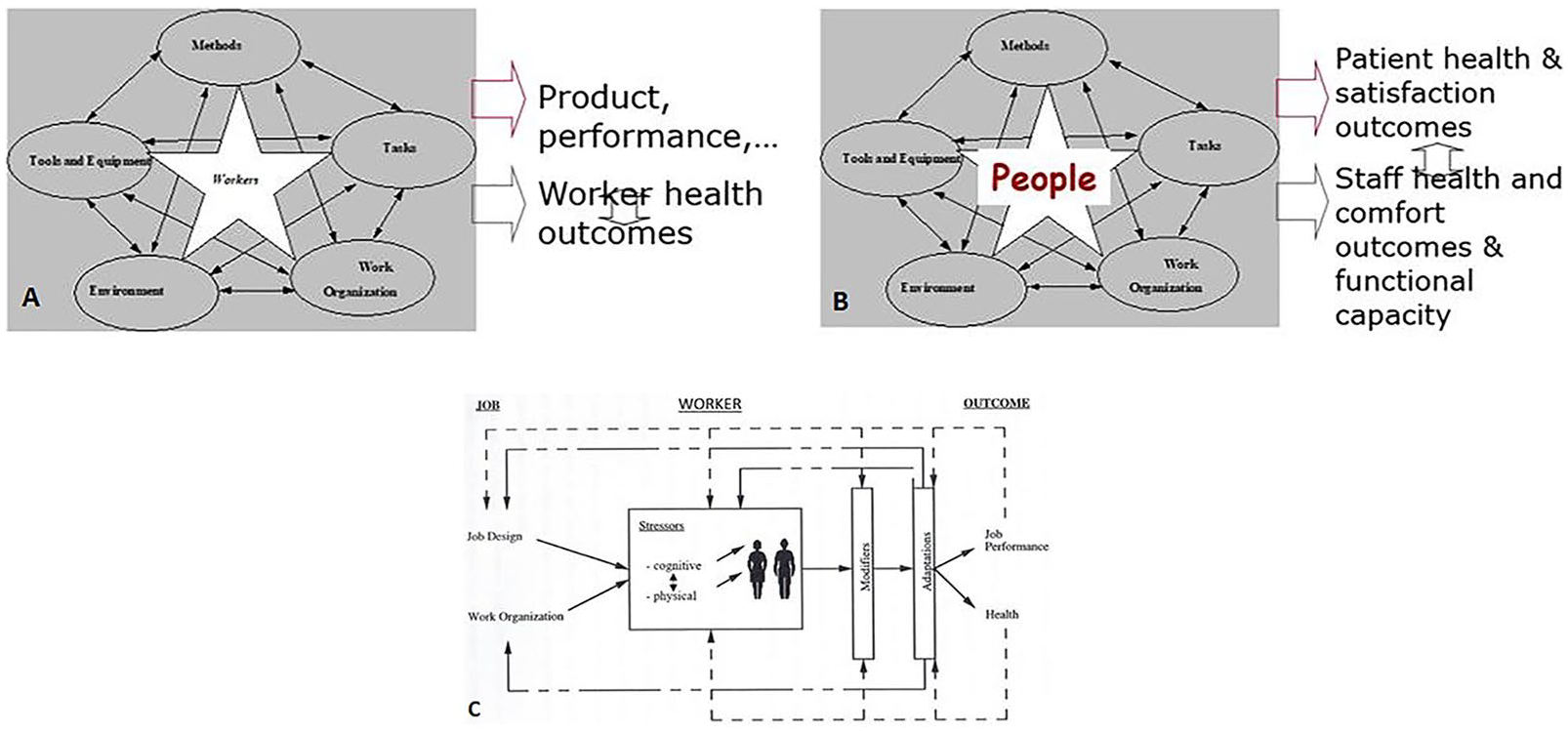
Depictions of a sociotechnical work system; (A) generic model of a sociotechnical work system; (B) generic model of a health care sociotechnical work system; people include patients, families, staff, management, and administrators; and (C) model of a sociotechnical work system that provides a close examination of worker’s experience in the system.
Examples of Components and Factors of Sociotechnical Health Care Work Systems, With a Focus on Use of Sonography.
A longitudinal research study was initiated in spring 2021 with the goal of building a deeper understanding of the factors that affect the health and well-being of those working with ultrasound. The research is part of the WRMSD Grand Challenge, which was initiated by an alliance of ultrasound-related professional organizations in 2019 (https://www.ardms.org/wrmsd-grand-challenge/), with the objective “to stop WRMSDs resulting from the performance of diagnostic medical ultrasound.” The longitudinal research study is employing a sociotechnical systems framework to inform the investigation; involvement of ultrasound users is essential to the success of the research. A questionnaire was deployed in summer 2021 as the first stage of the research. It included questions about task (i.e., specialty), environment (i.e., work setting, ergonomics policies), person (i.e., demographics, anthropometry, scanning hand preference, ergonomics training, psychosocial work factors), tools and equipment (i.e., characteristics of ultrasound machine, chair, workspace), and outcomes (i.e., musculoskeletal discomfort, headache, visual discomfort). A second questionnaire will focus on work organization, tools and equipment, and additional outcomes. Interviews are being planned that will focus on work organization and changes that may have occurred in response to the pandemic. Subsequent stages of the research will investigate each of the work system components in more detail. Through this research, and efforts by others involved in the WRMSD Grand Challenge, we believe that a better understanding of how to address WRMSDs in ultrasound users will be achieved. The ultimate objective, though, will be utilization of the knowledge (that better understanding) to make changes that create safer work systems for and with ultrasound users.