



Abstract

Calendar of future events
Battery Materials: Next-Generation & Beyond Lithium Ion
Online Event
This will be TechBlick’s third online event covering three major themes in the battery industry: • Solid state batteries • Beyond Li-ion battery technologies • Next-gen and frontier Li-ion chemistries
https://www.techblick.com/event/beyond_li_ion

SPE International Polyolefins Conference 2024
This will be a Hybrid Conference (both in-person and virtual)
Galveston Island Convention Center at the San Luis Resort, Spa & Conference Center
5600 Seawall Blvd
Galveston, Texas 77551

ANTEC® 2024, Marriott St. Louis Grand
800 Washington Avenue
St. Louis, Missouri, USA, 63101
ANTEC® 2024 will showcase the latest advances in industrial, national, laboratory, and academic work focused on plastics and polymer science.
https://www.4spe.org/i4a/pages/index.cfm?pageid=8330

13th European Thermoforming Conference
Beurs van Berlage,
Amsterdam Conference Centre
Damrak 243
1012 ZJ Amsterdam, Netherlands
Hosted by the SPE European
Thermoforming Division
The European Thermoforming Conference is unique because it is run specifically for the thermoforming industry and is organized solely by members of the industry. It offers: • Workshops and Technical Sessions • Sponsors and Exhibitors • Training course
https://thermoforming-europe.org/
The Screw Design Conference - Topcon
UMASS - Lowell, Lowell, MA, USA
Hosted by the SPE Extrusion Division
https://www.4spe.org >Connections >Events
SPE FOAMS® 2024
King of Prussia, PA
Hosted by the SPE Thermoplastic Materials and Foams Division and the SPE Palisades-MidAtlantic Section
Industry News
The American Institute of Chemical Engineers has monthly bulletins on process safety. They are accessible at the following web site.
https://www.aiche.org/ccps/resources/process-safety-beacon/archives
Three recent bulletins are: • October 2023 - Keep the manway tightly closed. • November 2023 - The agitator stopped! Now what?? • December 2023 - The Worst Ammonia Incident Ever - What Can We Learn? Read the Chemical Process Engineering article about this incident free of charge at: https://www.aiche.org/resources/publications/cep/2023/july/learning-worst-ammonia-accident
The Process Safety Beacons Archive is available in 32 languages, includes all past Beacons and is available to everyone to download and share. Reproduction for non-commercial, educational purposes is encouraged. However, reproduction for any commercial purpose without express written consent of AIChE is strictly prohibited.
Another source for understanding safety comes from the U.S. Chemical Safety Board (CSB) which is an independent, nonregulatory federal agency that investigates the root causes of major chemical incidents. Their web site is https://www.csb.gov/. They have recently released the following reports
1
: • Fatal Dust Explosion and Fire at Didion Milling Facility in Cambria, Wisconsin • 2021 Fatal Vapor Explosion and Fire at Yenkin-Majestic Facility in Columbus, OH
Safety is very important and being aware and having a proper sense of vulnerability should always be at the top of your list. Being mindful is the art of being engaged in the present moment and not being troubled by the past or having anxiety about the future.

Dow's Board of Directors Approves Final Investment Decision for Path2Zero Project
NEWS PROVIDED BY
The Dow Chemical Company
28 Nov, 2023, 06:30 ET • Brownfield investment in Fort Saskatchewan, Alberta, will be the world's first net-zero Scope 1 and 2 emissions ethylene and derivatives complex. • Delivers 2 million MTA of organic growth in attractive, high-end markets while decarbonizing 20% of Dow's global ethylene capacity. • $1 billion of EBITDA growth expected at full run rates over the economic cycle; expected to be one of Dow's most cost-competitive sites in the world. • Eliminates 1 million MTA of CO
2
e by converting hydrogen from cracker off-gas as a clean fuel as well as CO
2
capture and storage. • Best-owner mindset leverages additional $2 billion of investment from third-parties for circular hydrogen, CO
2
capture, and other infrastructure assets. • Subsidies and incentives from federal, provincial, and local authorities support Dow's targeted returns.
MIDLAND, Mich., Nov. 28, 2023 /PRNewswire/ -- Dow (NYSE: DOW) today announced that its board of directors has declared Final Investment Decision on the Company's Fort Saskatchewan Path2Zero investment to build the world's first net-zero Scope 1 and 2 emissions integrated ethylene cracker and derivatives facility in Alberta, Canada.
The $6.5 billion project, excluding governmental incentives and subsidies, includes building a new ethylene cracker and increasing polyethylene capacity by 2 million MTA as well as retrofitting the site's existing cracker to net-zero Scope 1 and 2 emissions. The investment is expected to deliver $1 billion of EBITDA growth per year at full run rates over the economic cycle while decarbonizing 20% of Dow's global ethylene capacity.

This new capacity will enable Dow to capture growing customer demand in high-value markets, such as packaging, infrastructure and hygiene, among others, with potential additional value captured from commercializing low and zero-emissions products. The project builds on Dow's expertise in successfully implementing large projects, such as its TX-9 cracker in Freeport, Texas, which has delivered more than 15% return on invested capital since its 2017 start-up through best-in-class capital intensity, conversion cost, and low emissions intensity.
The board's approval enables the Company to begin construction in 2024. Capacity additions are expected to come online in phases, with the first phase starting up in 2027, adding approximately 1,285 KTA of ethylene and polyethylene capacity, and the second phase starting up in 2029, adding an additional approximately 600 KTA of capacity.
To achieve net-zero Scope 1 and 2 emissions, the Fort Saskatchewan Path2Zero project will deploy Linde’s air separation and autothermal reformer technology to convert the site’s cracker off-gas to hydrogen, which will be used as a clean fuel to supply the site’s furnaces. In addition, carbon dioxide emissions will be captured and stored, reducing existing emissions by approximately 1 million MTA of CO2e while abating all emissions from the addition of the site’s new capacity.
The Canadian and Alberta Advantage
Dow selected the Fort Saskatchewan site for this investment as Western Canada offers highly cost-competitive natural gas relative to other regions, as well as cost-advantaged ethane, a key feedstock for ethylene production. At full run-rates, the site is expected to be one of Dow's most cost-competitive in the world. The region also features access to existing CO2 transportation and storage infrastructure with available capacity to fully support decarbonization of the project. It is home to a high-class workforce and Dow has been part of the community for more than 60 years.
Additionally, the governments of Canada, Alberta, and Fort Saskatchewan have made subsidies and incentives available to support this project and to drive innovation in low-emissions manufacturing in Canada. It will be the first project to access Canada’s new ITC program.
Dow's investment leverages approximately $2 billion of investment from third-party companies for circular hydrogen, CO2 capture, and other infrastructure assets critical to the project execution. Earlier this year, Dow announced that Linde had been selected as its industrial gas partner for the supply of clean hydrogen and nitrogen for the site, and Fluor was selected for front-end engineering and design. Additionally, Dow is partnering with Wolf Midstream, which will provide CO2 transportation along the Alberta trunk line, and with Ravago which will provide third-party logistics for finished products from the site.
Attributable Quotes
Jim Fitterling, Dow Chair and CEO
• “The project serves as a leading example that industrial decarbonization is both possible and profitable.” • “The opportunity to decarbonize our assets while driving growth is central to Dow's business strategy. All our stakeholders benefit from this investment – creating value for our customers and shareholders, new opportunities for our employees, economic growth for the community, and fewer greenhouse gas emissions for the environment.”
Karen S. Carter, Dow President, Packaging & Specialty Plastics
• “This investment paves the way for growth of our entire Packaging and Specialty Plastics portfolio. It gives us the opportunity to become the industry's first provider of zero-emissions products and solutions. Our commitment to innovation and designing products for circularity allows us to meet the evolving needs of our customers across growing sectors such as packaging, infrastructure, and hygiene, among others.” • “Plastics have long been recognized for their environmental advantages, with a greenhouse gas footprint that is typically less than half of alternative materials. With this strategic investment and our commitment to transform plastic waste to create circular and renewable solutions, we are poised to achieve even greater reductions in emissions, empowering our customers to make significant strides in their sustainability efforts.”
Diego Ordonez, Dow Canada President
• “This project will have a profound positive impact on our employees and the community, creating jobs and economic opportunity while positioning the region to be a leader in low emissions manufacturing. Our collaboration with government officials, the community of Fort Saskatchewan, our Indigenous neighbors, and the host of partner companies involved has been key to enabling this investment to move forward.”
Danielle Smith, Premier of Alberta
• “This investment by Dow is further evidence of the opportunity that exists in Alberta. We are proud that Dow has chosen to build and launch their project here. This project does not just mean net-zero emissions, it means more jobs and a stronger economy. I look forward to the next steps, including construction starting next year.”
About Dow
Dow (NYSE: DOW) combines global breadth; asset integration and scale; focused innovation and materials science expertise; leading business positions; and environmental, social and governance leadership to achieve profitable growth and help deliver a sustainable future. The Company's ambition is to become the most innovative, customer centric, inclusive and sustainable materials science company in the world. Dow's portfolio of plastics, industrial intermediates, coatings and silicones businesses delivers a broad range of differentiated, science-based products and solutions for its customers in high-growth market segments, such as packaging, infrastructure, mobility and consumer applications. Dow operates manufacturing sites in 31 countries and employs approximately 37,800 people. Dow delivered sales of approximately $57B in 2022. References to Dow or the Company mean Dow Inc. and its subsidiaries. For more information, please visit www.dow.com or follow @DowNewsroom on Twitter.
Circular Polymers by Ascend and ReDefyne experts highlight expanded options for post-consumer recycled nylons, PET and PP
Recycling post-consumer nylons for high-performance applications is possible – and achievable with high product consistency and low energy consumption. Circular Polymers by Ascend leader Maria Field was presented at Compounding World Expo to show attendees the possibilities.
In her talk titled “Nylon Recycling: A Circularity Story,” Field discussed how mechanical recycling can convert end-of-life carpet back into usable nylon 6,6 or nylon 6, without the use of added water. With Circular Polymers’ recycling technology, these materials can find new life as fibers or pellets used in new applications, including high-performance engineered materials. The company also recycles polypropylene, PET and calcium carbonate from carpet.
“Recycling carpet has never been more efficient or effective,” Field said. “At Circular Polymers, our proprietary process allows us to convert landfill-bound carpet into feedstocks for materials that go into finished goods such as automobiles, electric vehicles, furniture, household appliances and more.”
“Customers around the globe are seeking consistent and reliable post-consumer recycled materials,” said Maria Field, business director of Circular Polymers by Ascend. “All our feedstocks and Cerene materials come from a mechanical recycling process that minimizes carbon footprint and environmental impact.”
Circular Polymers by Ascend has redirected 85 million pounds of carpet from landfills into new goods in its California facility since 2018. Industry recognition includes the Plastic Industry Sustainability Innovation award, Innovation Showcase award from the Association of Plastic Recyclers, Arrow Award from the California Product Stewardship Council and Processor of the Year award from the Carpet America Recovery Effort.
Ascend has published its 2030 Vision, a set of nine sustainability targets
Field is a leader in the commercialization and manufacturing of recycled products. As the business development director for Circular Polymers by Ascend, she leads the growth of the company’s recycled nylon 6, nylon 6,6, PET, polypropylene and calcium carbonate feedstocks. She previously helped create the carbon neutrality program for Ascend and its customers.
HOW THE OCEAN CLEANUP ENSURES AN ENVIRONMENTALLY SOUND CLEANUP
Matthias Egger
Head of Environmental and Social Affairs (LT)

Since our foundation over ten years ago, The Ocean Cleanup has closely followed and contributed to the latest science in our efforts to rid the oceans of plastic in an environmentally sound way. From design to deployment, expert recommendations and peer evaluations keep us transparent and accountable for our work. Here, we outline what this means across our operations, both in oceans and rivers, and how science drives our environmental mitigation.
What mitigation means
In simple terms, mitigation means trying to reduce any negative impact of our operations on the environment. People often think of mitigation in relation to our cleaning operations in the Great Pacific Garbage Patch
3
(GPGP) – home to a host of wildlife, which must be studied and, where necessary, for whom we must innovate new ways to ensure our unique activities cause as little disturbance as possible. However, mitigation of any environmental harm is a top priority in all our cleaning operations: from System 03 in the GPGP to each of our Interceptor deployments in rivers around the world.
How We Make Sure Cleanup Operations Are Safe for the Environment
System 03, deployed to the GPGP in August 2023
4
, is equipped with a range of deterrents and features to minimize the chances of harm to marine life. But our mitigation efforts are not limited to simply ensuring animals are physically unbothered by our cleaning systems; our approach to mitigation extends beyond this.
To ensure we maximize benefits not only to wildlife but to ecosystems, environments, and communities, our mitigation must align with the latest empirical data and embrace a holistic perspective. As well as learning from the best science on ocean plastic pollution and life in aquatic environments, we also contribute through our own research in this emerging field. Since our first peer-reviewed publication in 2015, we have shared our data and findings with the scientific community and the public through over 50 peer-reviewed and open-access publications 5 .

Ensuring we follow the best available science of others, while contributing through our own experience and collaborative research studies results in better mitigation and a growing understanding of ocean plastic pollution and how to tackle it in the most responsible way.
In advance: Environmental (And Social) impact assessment
We conduct an environmental impact assessment (EIA) before every new deployment of our technology in oceans and rivers, and continuously re-assess for every new iteration of our technology. In rivers, we conduct a comprehensive environmental and social impact assessment (ESIA), recognizing that social aspects form a crucial element of our operations on land. All impact assessments are based on recognized international standards.
As well as investigating the particular geography and wildlife in the area, the EIA considers any other potential adverse impact of our technology, such as whether materials or malfunctions may be dangerous or harmful to the environment and people. The EIA further sets out Environmental Management Plans that guide monitoring of our work and handling potential environmental emergencies.
Our decision to conduct EIAs for our ocean technology was initially a voluntary one, formalized in our 2018 Covenant with the Government of the Netherlands
6
. By choosing to place our GPGP operation under government responsibility, we signed up to the highest levels of scrutiny and accountability – with the EIA and incidental catch reporting obligations as first steps. We are pleased to see that EIAs are increasingly required by law in other marine and riverine environments, and we hope to see this continue.
We collaborate with authorities, communities, and individuals to ensure that we understand their sensitivities or priorities, and make sure our operations work around them.
We also engage on a societal level, demonstrating the economic and social benefits of clean waters to those most affected by this pollution. Ongoing study and dialogue ensure that medium- and long-term effects are considered from all angles prior to deployment. This holistic approach gives us the best chance of tackling plastic pollution around the world while ensuring benefits at both global and local levels.
The pre-deployment EIAs and (ESIAs in rivers) identify areas where mitigation and monitoring of impacts are needed. Based on this, we develop environmental and social management plans specific to each technology deployment.
Minimizing incidental catch
Any operation which involved significant levels of incidental catch (fish or other animals extracted from the water with the plastic) could have a serious harmful impact on the respective ecosystems. It has therefore always been a top priority for us to minimize incidental catch and other adverse interactions between organisms and our technology. Through our pre-deployment research we can identify which specific species may encounter our system and design our technology with this in mind.
We have incorporated years of technical and scientific learning into our technology, and we continue to trial both existing and innovative solutions to ensure maximum benefits to the environment. You can view a selection of System 03’s mitigation features in the infographic below and learn more about how System 03 works go to YouTube here 7 .

Overview of the mitigation measures in System 03
The Overview of the mitigation measures in System 03 shows that the large mesh size allows small marine animals such as plankton to pass through Escape aids are located throughout the Retention Zone of System 03 to allow animals to swim out safely. The Marine Animal Safety Hatch (MASH) blocks further entrance into the Retention Zone and opens a hatch on the bottom. Access to air for air-breathing animals is ensured with the breathing hatches and circular float rings. The end of the retention zone has an emergency release that would flush out the entire Retention Zone. Green led lights are installed for visual detectability of the system. Acoustic deterrents are installed to safely deter high-frequency hearing animals. Cameras are used to monitor marine life 24/7.
In the GPGP, our mitigation on incidental catch is not limited to design features. We also plan our operations to lower the possibilities of encountering wildlife. For example, we actively steer away from waters at certain temperatures throughout the GPGP, as these areas are known to contain loggerhead turtles. This is supplemented by our research in the field; the more we clean, the more we add to the knowledge of this species in this environment – knowledge that we share with the scientific community and researchers from the US National Oceanic and Atmospheric Administration (NOAA).
We are transparent in the documentation and reporting of incidental catch in our oceans operations. All specimens are recorded and documented by onboard marine biologists, allowing us to track our incidental catch rates over time, make adjustments to our system, and monitor improvements. Since our first ocean catch, we have tracked this data and we provide frequent updates on our performance (see the environmental updates in our various reports on System 002 8,9. Through this rigorous documentation and publication, accountability is guaranteed throughout our operations to minimize incidental catch. In rivers (which often contain minimal life in the areas we operate), we thoroughly investigate riverine life as well as impacts on downstream ecosystems (such as mangroves) as part of the EIA/ESIA and are currently gathering similar data on incidental catch in rivers.
Monitoring: Transparency, accountability, and insight
Monitoring is a vital part of our mitigation efforts because it allows us to directly measure our impact and adjust our operations where we need to. Incidental catch is one vital part of our monitoring process, as described above, but equally important is our role in monitoring the ecosystem and plastic itself: how it enters waterways, how it moves once it is afloat, how it is impacting wildlife, and where it finally ends up. This information is not only vital for The Ocean Cleanup, but for all scientists and organizations interested in the health of our oceans.
The benefits of monitoring for our own operations are clear. For instance: plastic in the GPGP is constantly moving, which means it is not evenly spread throughout the area. Some areas contain less plastic, while some areas are dense with floating pollution: we call these areas hotspots.
By continuously monitoring how plastic moves, where these hotspots develop, and how this relates to densities of marine life, we can steer our cleaning vessels towards them, using less fuel and cleaning more plastic while sweeping a smaller area.
Our dedication to researching, recording and gathering data on plastic pollution and ecosystems throughout the world allows us to learn more about plastic behavior and impacts. However, it has another benefit: by measuring the quantities and composition of plastic and the health of key bioindicator species, we can monitor and give indications whether other anti-plastic pollution policies (such as plastic reduction schemes upstream) are having an effect.
We share our research findings with local partners and policymakers, aiding them in forming comprehensive strategies to combat plastic pollution. Our Interceptors are not just removing plastic from rivers and preventing it from reaching the oceans; they are also providing never-before-seen data on riverine plastic.
Citizen Science 10 plastic monitoring initiatives also allow people all over the world to get involved and help us gather data while raising awareness on the ground.
We are also engaging in long-term research projects with educational institutions around the world; monitoring with cameras and AI object recognition software, and contributing to local understanding of the plastic pollution problem. We conduct site-specific and species-focused research too; we monitor neuston
11
before and after our system passes through to guide our mitigation efforts in the GPGP.

The scale of our monitoring is increasing, and new technologies allow us to process larger datasets with less resource drain. As plastic pollution becomes a pressing priority around the world, monitoring provides a valuable accountability and efficiency check to ensure that solutions are working effectively.
Managing our plastic catch responsibly
Our responsibilities do not end at the water’s edge. Once we have removed plastic from an ocean or river, we aim to ensure it never again returns to the environment. We aim to recycle as much of our GPGP plastic catch as possible.
From the moment of extraction, our GPGP plastic is subject to a certifiable Chain of Custody procedure, guaranteeing its authenticity as ‘ocean plastic’ throughout the value chain and allowing us to ensure the most sustainable options are chosen to give this plastic a new life.
This documentation also provides confidence to partners and eventually consumers that what they are purchasing is the real thing: ocean plastic, recovered responsibly from the GPGP.
In rivers, where extracted plastic is automatically the legal property of the local authorities, we focus during pre-deployment on identifying the best options for responsible waste management. Opportunities for recycling, reusing, or safe disposal are discussed, and networks are established with municipal partners and other local collaborators to ensure the local waste management infrastructure can develop alongside our interception operations.
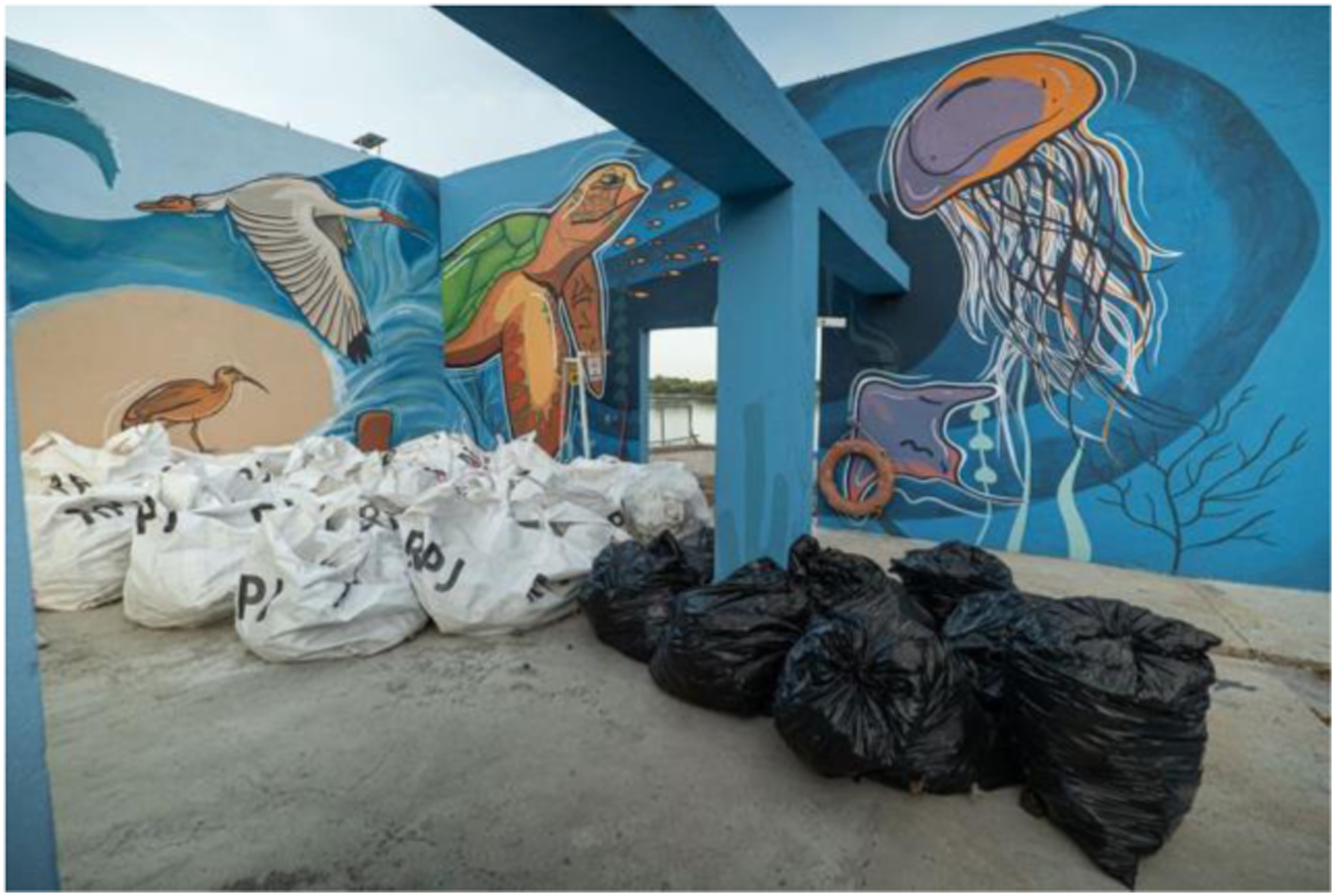
An environmentally sound cleanup is essential
The Ocean Cleanup fully supports all recently-published scientific findings and recommendations and is committed to continuing to lead the world in environmentally sound cleanup of plastic pollution in oceans and rivers, guided by experts and with full accountability. We continue to innovate in mitigation; we are currently researching how AI can better help us protect marine life, specifically turtles.
We have been operating in line with these recommendations and with all international regulations and standards since the start of our operations. As progress continues towards a UN Global Plastics Treaty, we are pleased to see standards rising and ocean plastic pollution being treated as the global emergency that it is.
We urge the international community to continue to promote responsible and vital cleanup of plastic pollution in oceans and rivers around the world as part of our shared response to this challenge.
We encourage anyone with concerns, recommendations, or any questions about our environmental mitigation measures to contact our Environmental and Social Affairs team at
Matthias Egger
Head of Environmental and Social Affairs (LT)
Matthias Egger is an environmental scientist with expertise in environmental plastic pollution and aquatic biogeochemistry. He holds a PhD in Marine Biogeochemistry and a BSc and MSc in Environmental Sciences. He has published dozens of peer-reviewed studies and regularly gives lectures on plastic pollution around the world. Since joining The Ocean Cleanup in 2018, he has focused on improving our understanding of the sources, fate and impacts of plastic in aquatic systems and how this knowledge can be used to maximize the environmental and social benefits of The Ocean Cleanup’s operations.
Plastic-eating Enzyme Could Eliminate Billions of Tons of Landfill Waste
AUSTIN, Texas — An enzyme variant created by engineers and scientists at The University of Texas at Austin can break down environment-throttling plastics that typically take centuries to degrade in just a matter of hours to days.
This discovery,

“The possibilities are endless across industries to leverage this leading-edge recycling process,” said Hal Alper, professor in the McKetta Department of Chemical Engineering at UT Austin. “Beyond the obvious waste management industry, this also provides corporations from every sector the opportunity to take a lead in recycling their products. Through these more sustainable enzyme approaches, we can begin to envision a true circular plastics economy.”
The project focuses on polyethylene terephthalate (PET), a significant polymer found in most consumer packaging, including cookie containers, soda bottles, fruit and salad packaging, and certain fibers and textiles. It makes up 12% of all global waste.
The enzyme was able to complete a “circular process” of breaking down the plastic into smaller parts (depolymerization) and then chemically putting it back together (repolymerization). In some cases, these plastics can be fully broken down to monomers in as little as 24 hours.
Researchers at the Cockrell School of Engineering and College of Natural Sciences used a machine learning model to generate novel mutations to a natural enzyme called PETase that allows bacteria to degrade PET plastics. The model predicts which mutations in these enzymes would accomplish the goal of quickly depolymerizing post-consumer waste plastic at low temperatures.
Through this process, which included studying 51 different post-consumer plastic containers, five different polyester fibers and fabrics and water bottles all made from PET, the researchers proved the effectiveness of the enzyme, which they are calling FAST-PETase (functional, active, stable and tolerant PETase).
“This work really demonstrates the power of bringing together different disciplines, from synthetic biology to chemical engineering to artificial intelligence,” said Andrew Ellington, professor in the Center for Systems and Synthetic Biology whose team led the development of the machine learning model.
Recycling is the most obvious way to cut down on plastic waste. But globally, less than 10% of all plastic has been recycled. The most common method for disposing of plastic, besides throwing it in a landfill, is to burn it, which is costly, energy intensive and spews noxious gas into the air. Other alternative industrial processes include very energy-intensive processes of glycolysis, pyrolysis, and/or methanolysis.
Biological solutions take much less energy. Research on enzymes for plastic recycling has advanced during the past 15 years. However, until now, no one had been able to figure out how to make enzymes that could operate efficiently at low temperatures to make them both portable and affordable at large industrial scale. FAST-PETase can perform the process at less than 50 degrees Celsius.
Up next, the team plans to work on scaling up enzyme production to prepare for industrial and environmental application. The researchers have filed a patent application for the technology and are eying several different uses. Cleaning up landfills and greening high waste-producing industries are the most obvious. But another key potential use is environmental remediation. The team is looking at a number of ways to get the enzymes out into the field to clean up polluted sites.
“When considering environmental cleanup applications, you need an enzyme that can work in the environment at ambient temperature. This requirement is where our tech has a huge advantage in the future,” Alper said.
Alper, Ellington, associate professor of chemical engineering Nathaniel Lynd and Hongyuan Lu, a postdoctoral researcher in Alper’s lab, led the research. Raghav Shroff, a former member of Ellington’s lab and now a research scientist at the Houston Methodist Research Institute, created the 3DCNN machine learning model used to engineer the plastic-eating enzyme. Danny Diaz, a current member of Ellington’s lab, adapted the model and created a
Editor’s Note: This release has been changed to clarify contributions to the machine learning model.