




Abstract
Blade coating is a technique for coating the moving substrate with a protective fluid layer through the blade as a common smoothing device. The heat transfer and slip effects of the rheological Sisko fluid model for plane coater are considered under blade coating process. This model combines the power-law and Newtonian fluids and taken as the limiting behavior of a blade coating in the stiff blade limit. The flow of greases is the most significant example of this type of fluid, which is easily found in nature and has many practical uses. To solve the non-linear expressions, LAT (Lubrication Approximation Theory) is applied, and a shooting technique is used for numerical solutions. The impacts of several parameters on flow characteristics, particularly the velocity ratio K, the Sisko fluid parameter b, the power-law index n, and the slip parameter α are investigated. The effects of both shear-thinning and shear-thickening behaviors are also investigated. The lubrication pressure and temperature increase with the Sisko fluid parameter b and decrease with the slip parameter α. As material parameter b increases from (0.001–1), 20.7% reduction in coating thickness and a 53.2% pressure reduction is noted as compared to the Newtonian case.
Introduction
A fluid layer is deposited between a moving substrate/sheet and a fixed blade during the blade coating process to create a thin coating layer. The coating technique has several practical uses in the paint and electronic markets. It serves as a protective layer in paints but also saves data in electronic industries. Blade coating is a standard laboratory procedure used in the production of magazines, magnetic storage devices, newspapers, photographic films, and textiles. Coater types are identified by the shape of their blades. Modern blade coating machines operate at speeds of more than 20 m/s (4000 FPM).
For the first time, Booth 1 demonstrated the accurate relation between blade angle and coating weight by spreading butter over toast. Both Middleman’s book 2 and Ruschak’s article 3 are invaluable resources for learning about blade coating. To evaluate the impact of viscoelasticity for the Newtonian case, Greener and Middleman 4 used the LAT and perturbation technique to perform theoretical research on blade coating for viscoelastic fluids. Saita 5 proposed an elastohydrodynamic model of an undeformable incompressible substrate. In another article, Saita and Scriven 6 used a flexible thin blade for fluid flow in a narrow slim channel generated by a blade and moving plane system. During the blade coating process, Ross et al. 7 simplified the governing equations for blade coating using lubrication theory and got explicit expressions for the pressure gradient in order to analyze the power-law fluid model. Using the Williamson fluid model, Siddique et al. 8 analyzed the Adomian decomposition method to evaluate the volumetric flow rate and pressure gradient of blade coating analysis. Rana et al. 9 introduced the perturbation approach to the Powell-Eyring fluid model in which they discovered the effects of only non-Newtonian and viscous terms, whereas, Sajid et al. 10 investigated a viscous fluid mathematical model by utilizing slip and MHD effects in the process of blade coating. Magnetohydrodynamics (MHD) is the study of the dynamics of electrically conducting fluids (also known as magnetofluid dynamics or hydromagnetics). Plasmas, liquid metals, salt water, and electrolytes are examples of such fluids. Shehzad et al. 11 studied the impacts of Oldroyd-4 constant during the blade coating process. The effects of the rheological parameters are investigated through shooting technique. Kanwal et al. 12 introduced the micropolar fluid to demonstrate the impacts of microrotation and coupling number on the blade coating process using LAT and a shooting technique. Mughees et al. 13 studied the blade coating using the couple stress fluid model. Load and pressure distribution, which are considerably influenced by stress parameters, are the main factors influencing coating thickness. Wang et al. 14 proposed a mathematical model for a flexible blade coater and analyzed the MHD and slip effects in the blade coating process. Abbas and Khaliq 15 used the shooting approach on the upper-convected Jeffery’s model in order to modify the coating thickness for the blade coating analysis. Abbas et al. 16 investigated how Sutterby fluid affected the coating thickness during the isothermal blade coating process. They employed LAT to acquire both the numerical and analytical results and found good agreement as compared to the Newtonian case. Javed et al. 17 developed a Carreau–Yasuda model of a non-isothermal calendering process along with wall slip. They discovered that increasing raising the Brinkman number causes an increase in temperature distribution, but increasing the slip parameter causes a temperature decrease near the roll surface. Some articles are helpful to readers.18–21
Due to their widespread application in industry, the study of non-Newtonian fluids has received considerable attention from scientists in recent decades. Since there are many non-Newtonian fluids in nature, numerous fluid models have been proposed to investigate their physical characteristics. Especially for most of the non-Newtonian fluids used as lubricants, a power-law model can be utilized to estimate the flow. However, this model cannot describe fluid properties under a high shear rate. A Sisko fluid model
22
has been proposed due to its practical applicability in lubricants. Several realistic fluids are created using this model, including blood flow, drilling muds, biological fluids, lubrication greases, cement slurries, paints, and water-based coatings. A combination of Newtonian and non-Newtonian fluids makes the basis of the Sisko fluid model. The flow of greases is the most significant example of this type of fluid, which is easily found in nature and has many practical uses. Particularly, the generalized power-law model can be recovered for
The novelty of this study is to analyze the flow characteristics of a non-isothermal Sisko fluid model during the blade coating procedure, which involves slip at the blade’s surface. The majority of industrial coating procedures are based on theoretical results gained from Newtonian fluids, whereas most fluids employed in industrial coatings have rheologically complicated features. We aim to describe the consequences of these rheological features in this study, which may be useful in improving the coating process. As it is difficult to present the graphical results of dimensionless parameters involved in the problem, therefore numerical solution using shooting technique is employed to achieve the accurate results. The structure of the paper is as follows: The following Section discusses the governing equations for the Newtonian fluid and power law models. Next section contains the problem description. Next describes the calculation of stream function and heat transfer rate. The graphic results for various values of the key parameters are shown in in the results and discussion section. Some concluding remarks are presented in the very last Section.
Governing equations
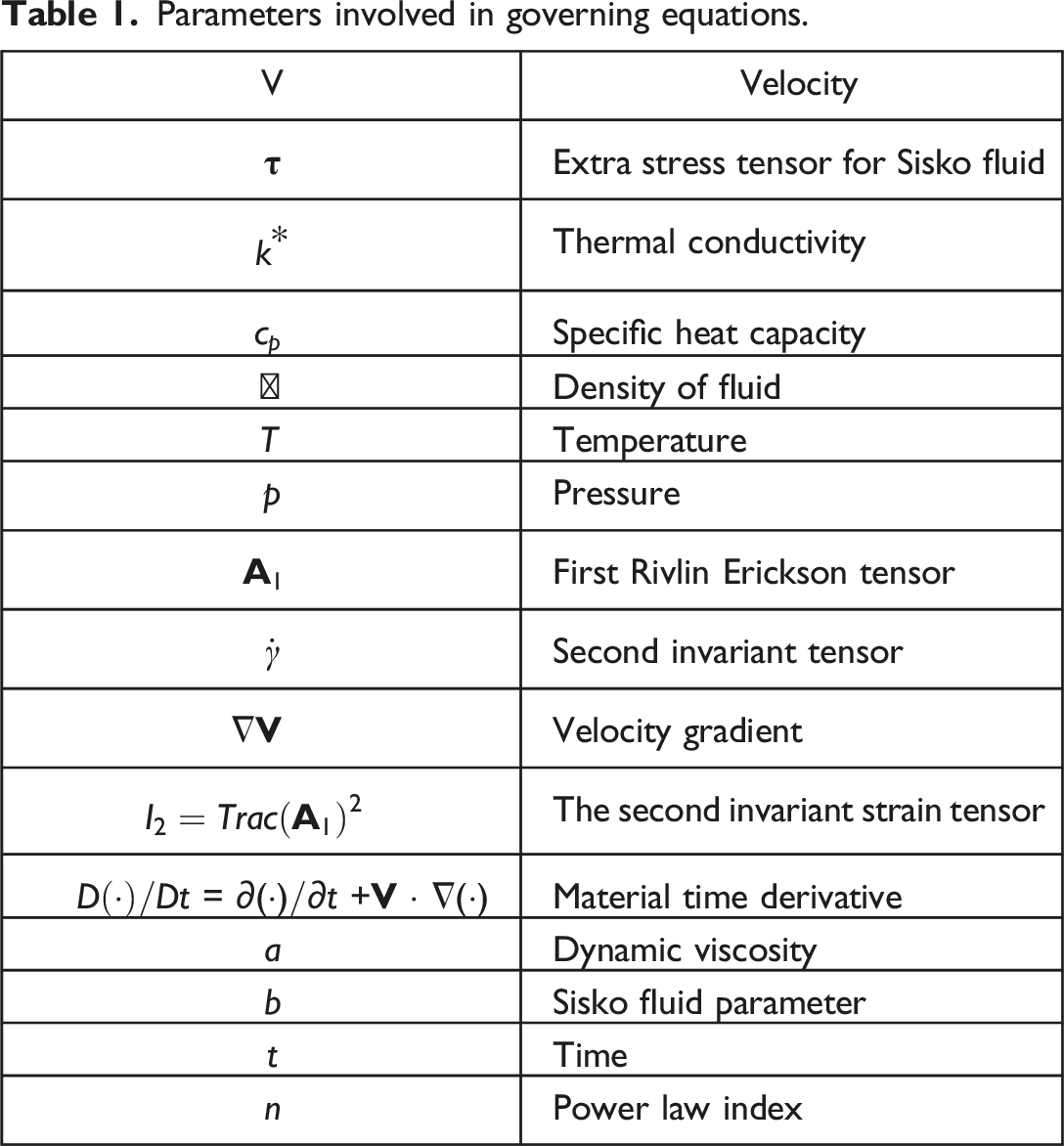
The basic expressions of mass, momentum, and energy equation for incompressible, two-dimensional, steady, and non-isothermal Sisko fluid are considered as11,18;





Parameters involved in governing equations.
If
If
Problem description
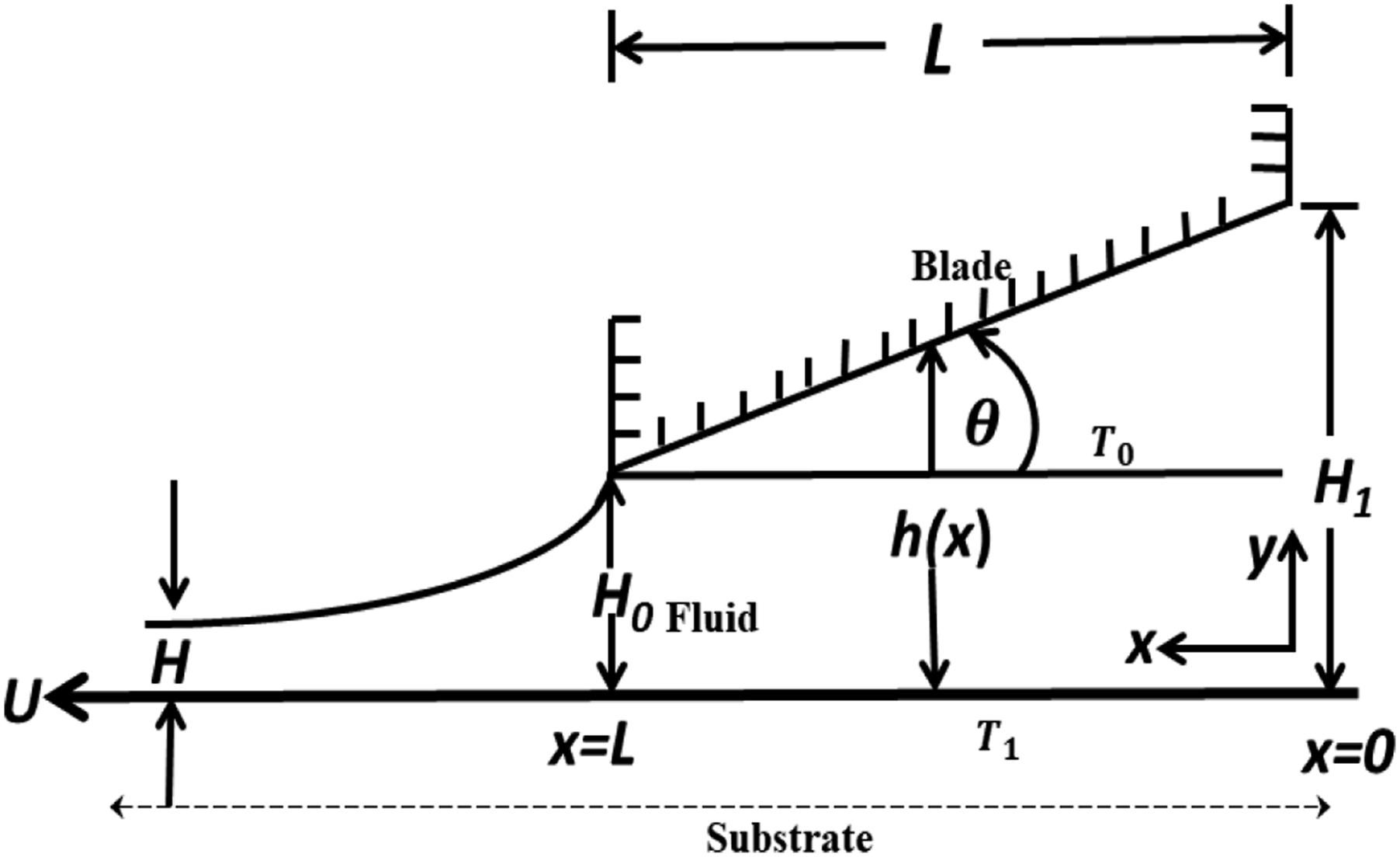
A two-dimensional blade coating process is considered in Figure 1.
4
To produce a uniform coating thickness layer H, a steady, non-isothermal, and incompressible Sisko fluid is passed between the fixed blade and the moving substrate/sheet. A substrate is moving along x-direction at: • • Slip is applied to a fixed blade at • The blade’s length L is set at an angle Physical model of blade coater with a moving substrate.
A two-dimensional velocity field is given as;
Using equation (6) in all above expressions from equations (1)–(3), we have;






The physical boundary conditions for velocity with shear slip and temperature are defined by10,18,37;

Dimensionless analysis
The parameters and dimensionless variables for the current flow are defined by10,11;


After inserting equation (16) into equations (7)–(13) and eliminating the (



Lubrication approximation theory
According to lubrication approximation theory (LAT), the coating thickness 



It is clear that p is a function of x only, so equations (21)–(23) can be expressed as;

Dimensionless slip conditions are defined by10,38; • • 

Defined by. 16
Differentiating equation (25) with respect to “y" provides the following expression after eliminating 
Numerical solution
The non-linear expressions given in equations (25), (26), and (29) cannot be solved analytically. As a result, to find their solution, a numerical technique known as the shooting technique38–40 is applied. We define the stream function11,16;
Using equation (30), equations (25), (26), and (29) can be expressed as;


In terms of 
Due to slip, the required boundary conditions for equation (34) are;

To convert the higher order equations into 1st order, we use the following substitutions
34
;
After applying these substitutions into equations (32), and (33), we get the 1st order system as;

The required boundary conditions for equations (38), and (39), we have;


Additionally, the pressure is zero at the entry and exit places of the blade, which corresponds to the following pressure boundary conditions;
Integrating the pressure gradient from 0 to one to determine the pressure;
The blade load 
The stream function
Results and discussion
A rheological impact of the Sisko fluid layer coated on the substrate with slip at the blade surface in case of a plane coater is discussed here. The effects of the involved parameters n (power law index), K (normalized coating thickness),
Figure 2(a)–(d) depicts the pressure profile curves (p vs x) for the relevant parameters n, K, b, and • • • Plots of pressure profile versus x by varying (a) n, (b) K, (c) b, (d)
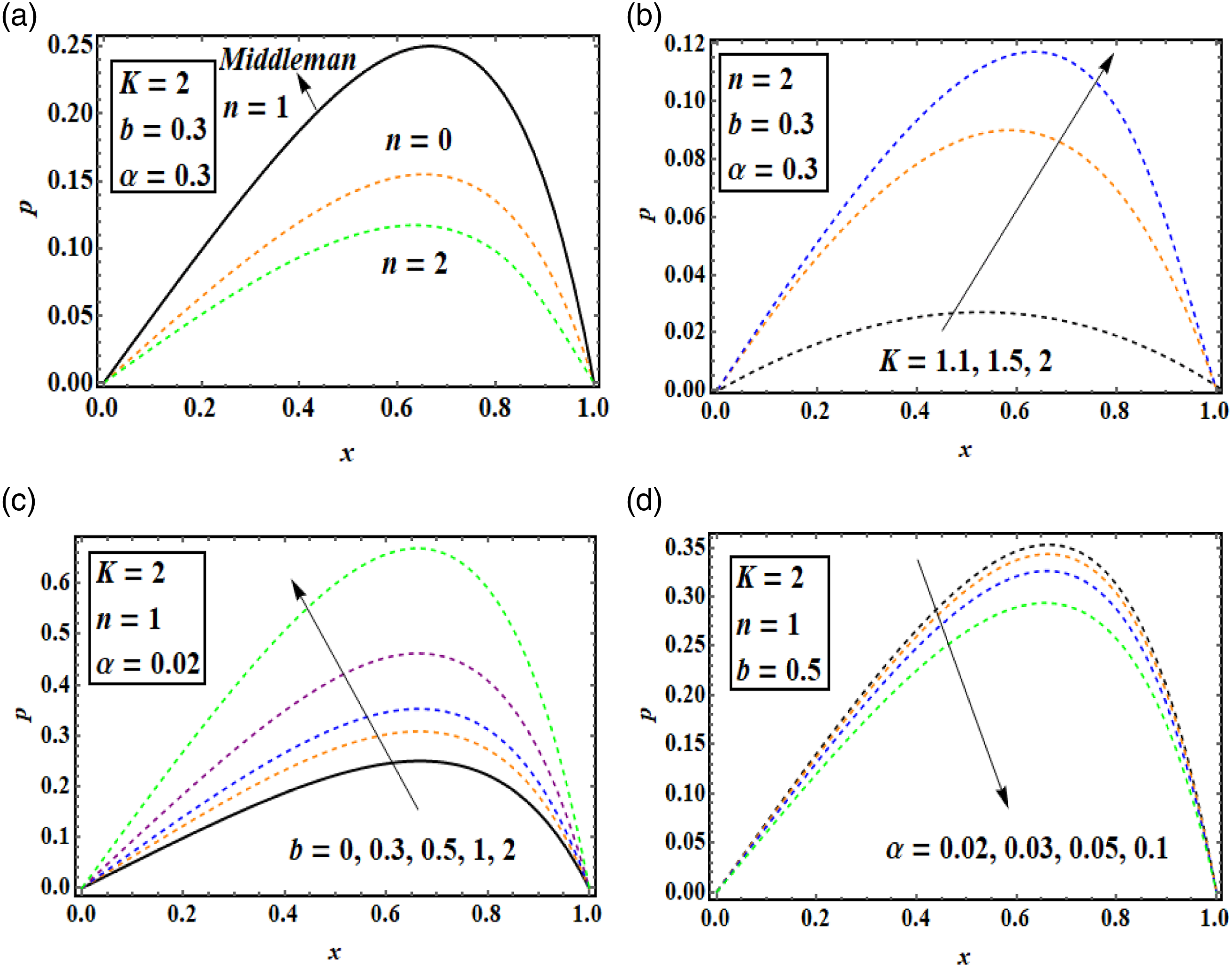
Influence the pressure profile. There is also a comparison between a Newtonian fluid
4
(
Figure 3 shows the normalized pressure Plots for normalized pressure against K.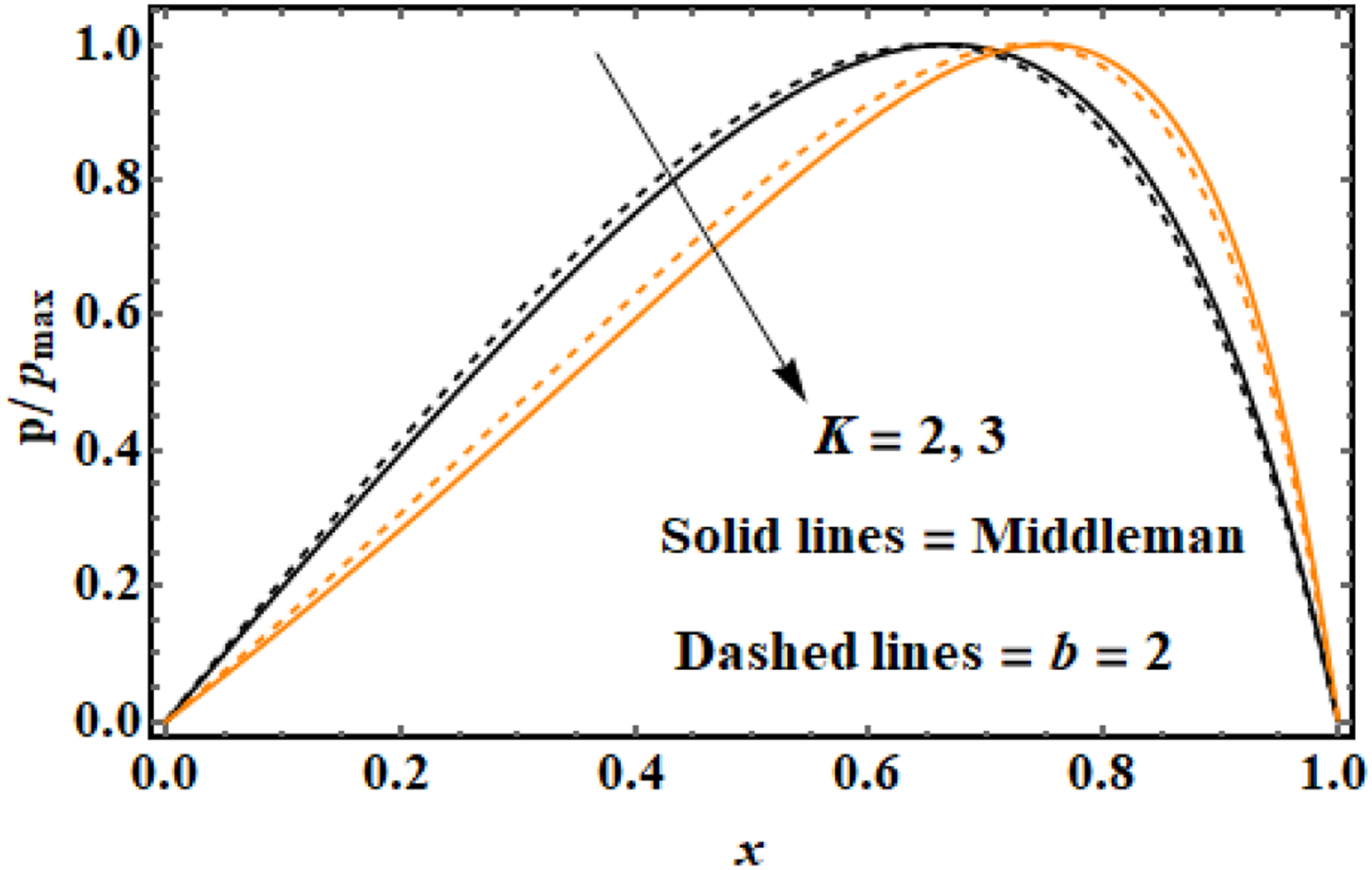
Figure 4(a)–(d) represents the pressure gradient Plots of pressure gradient versus x by varying (a) n, (b) K, (c) b, (d) 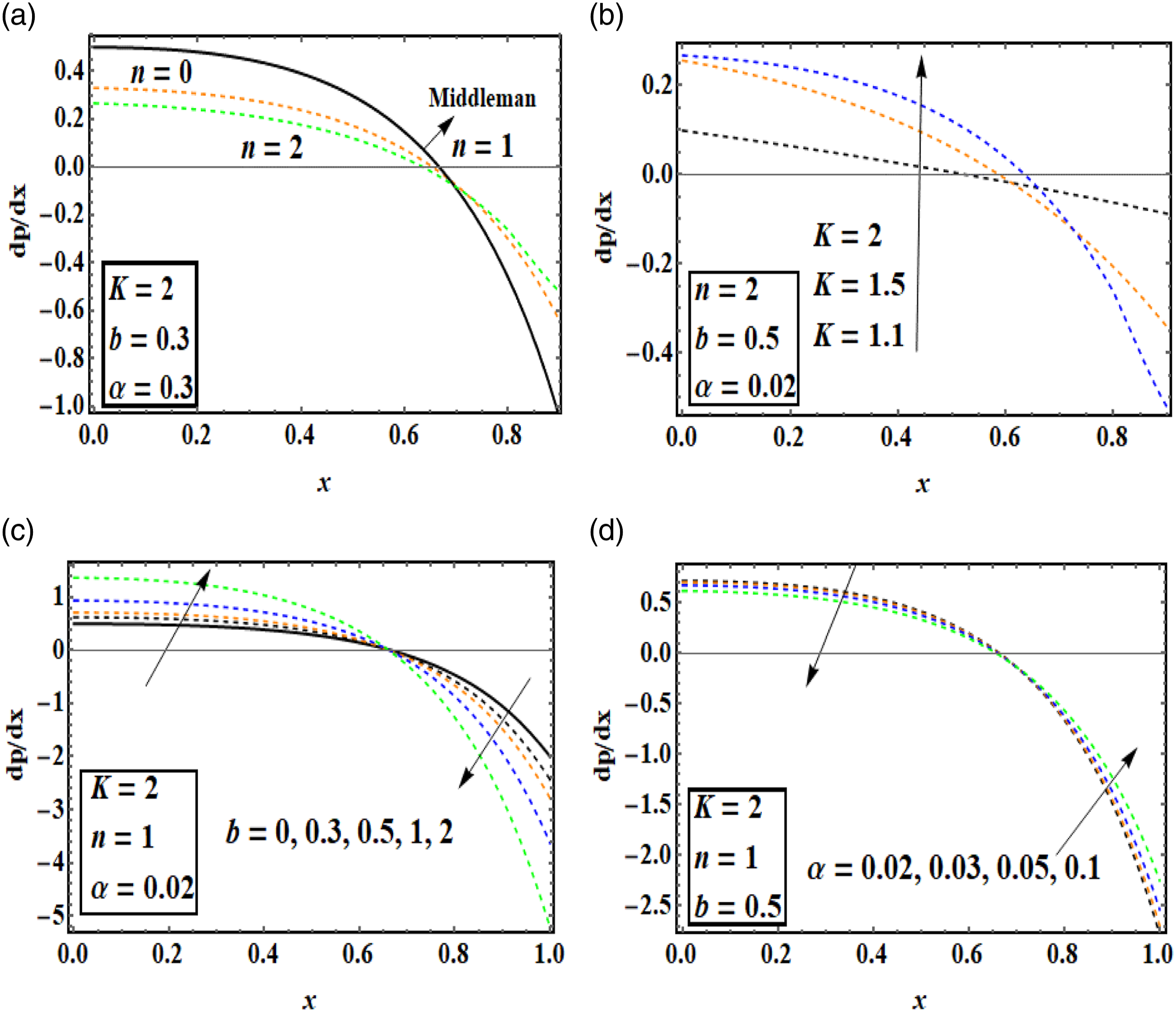
Figure 5(a)–(d) demonstrates the variations of velocity curves for the involved parameters n, K, b, and Plots of velocity profile versus y by varying (a) n, (b) K, (c) b, (d) 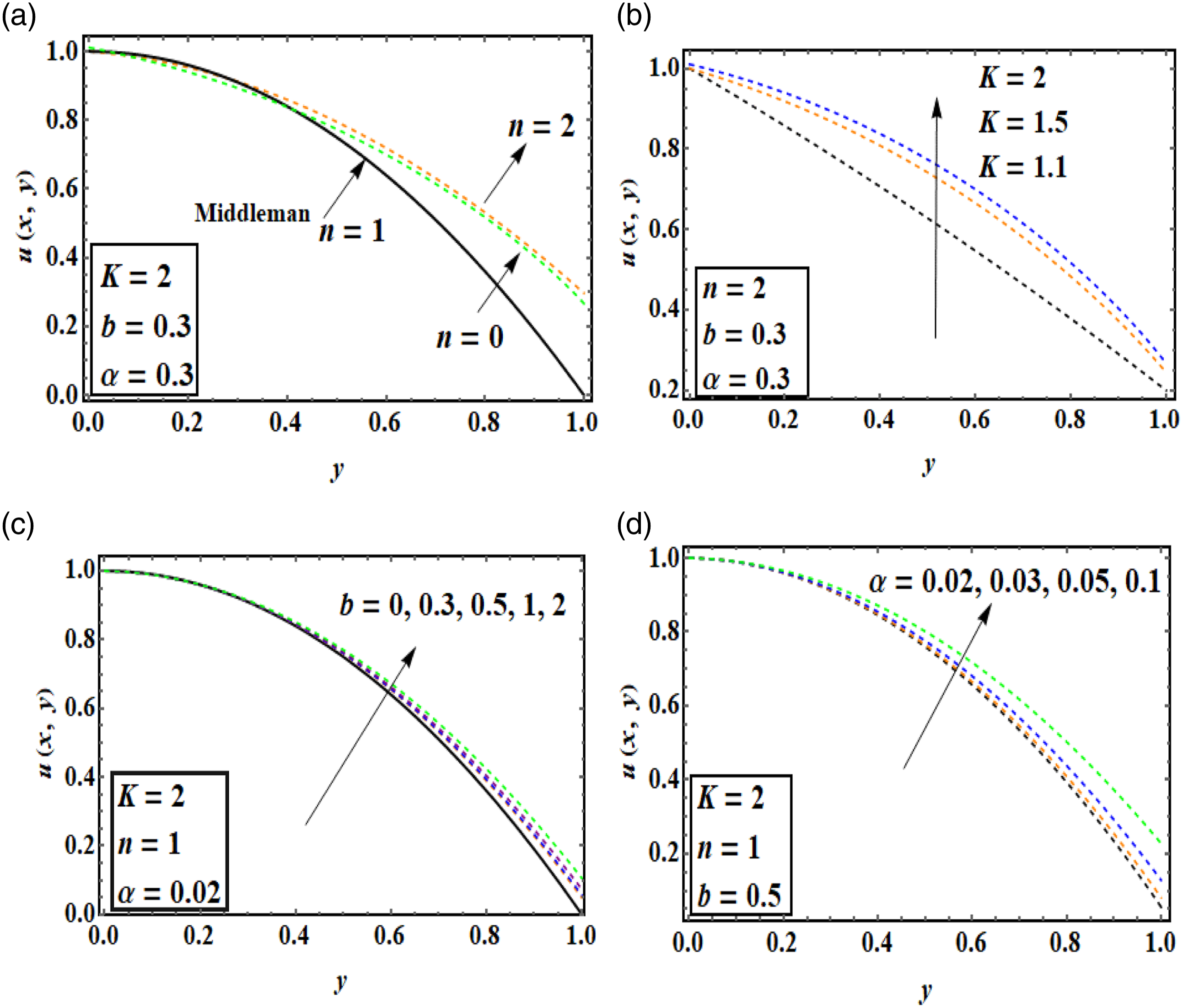
Figure 6(a)–(c) represents the influence of the temperature profile by varying the power law index (n), slip parameter ( Influence of (a) n, (b) b, and (c) 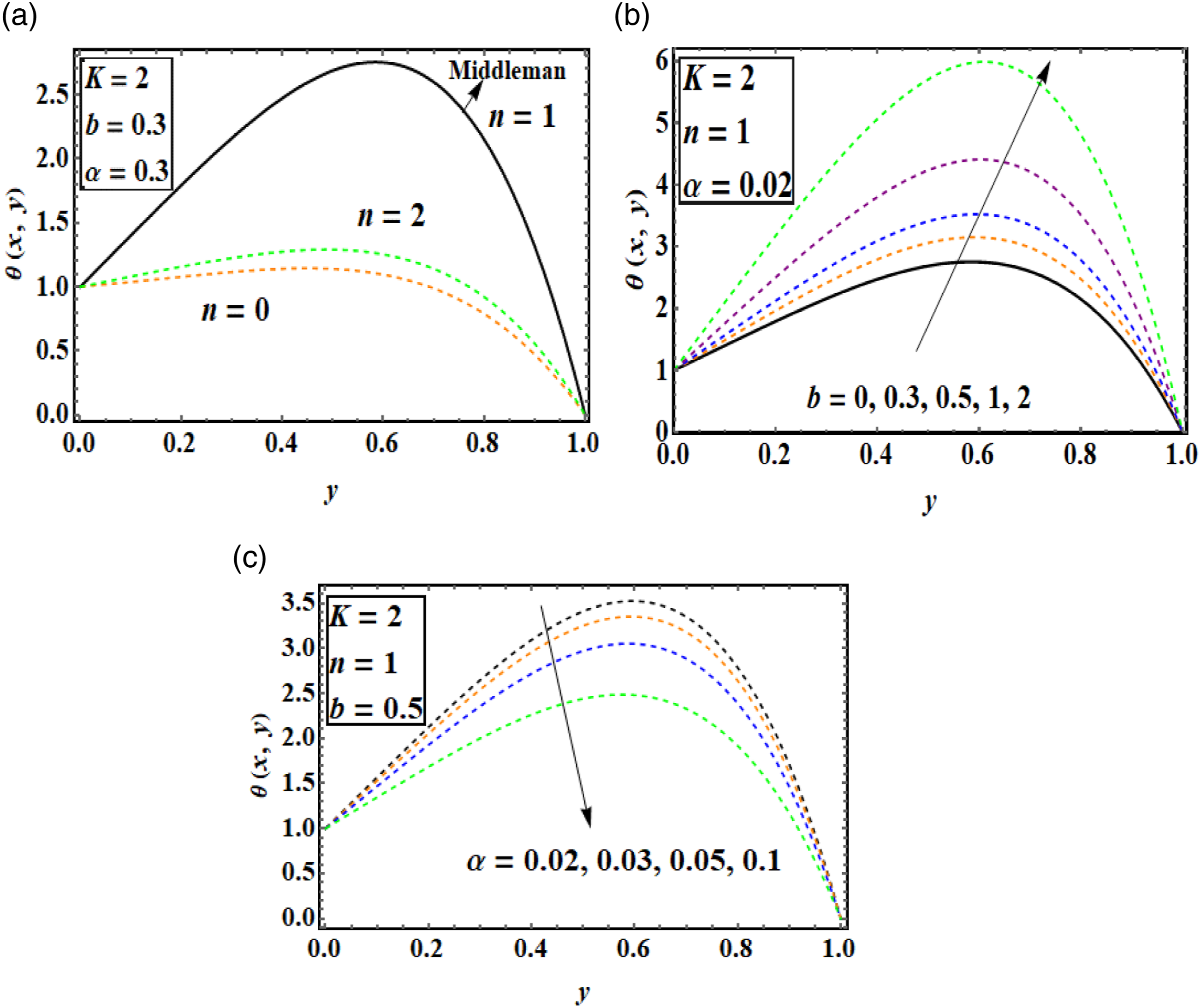
Figure 7(a)–(c) shows the graphical representation of shear stress for K (Normalized coating thickness) Plots of shear stress for varying (a) K, (b) 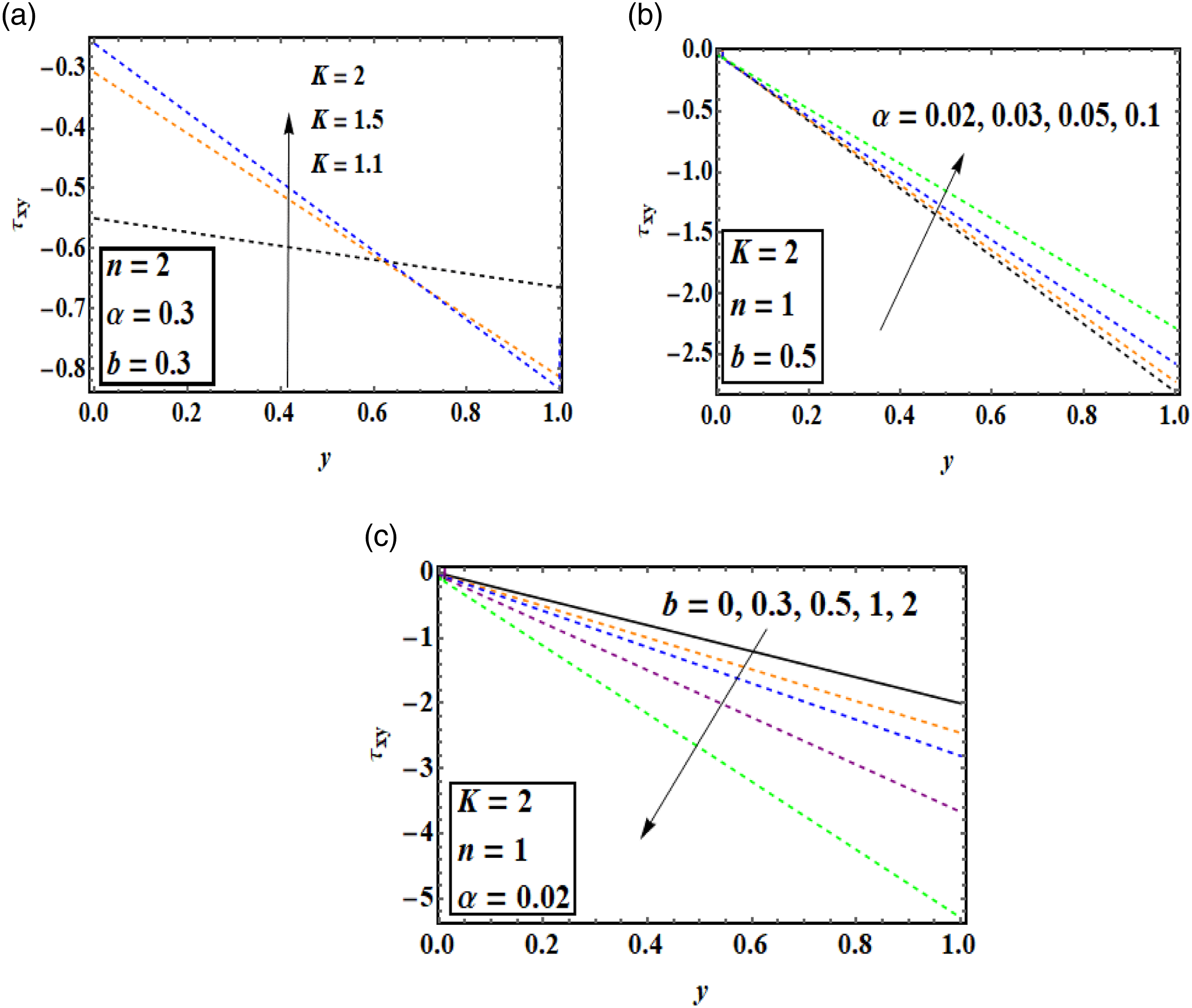
Variations of thickness
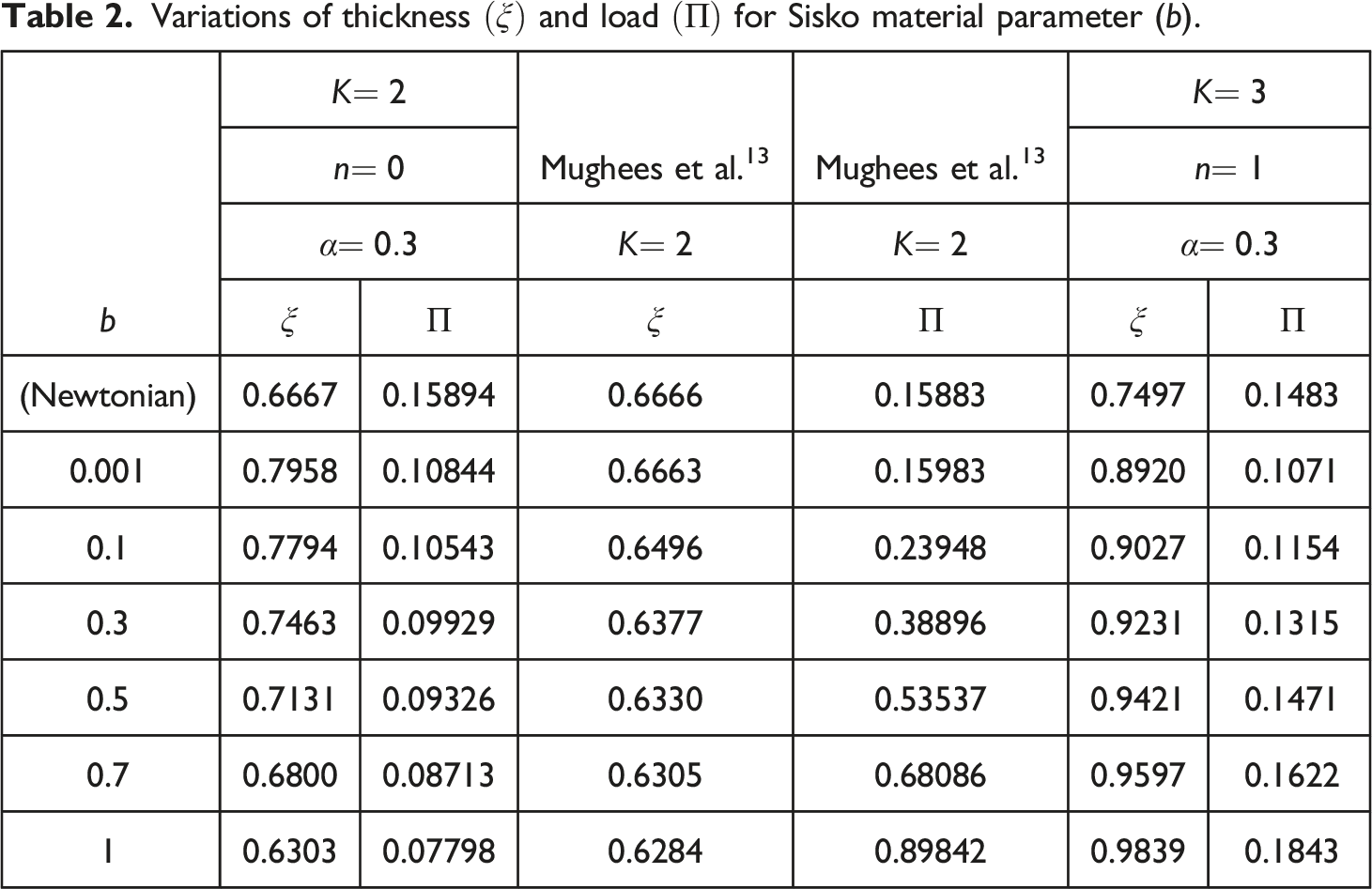
Variations of thickness
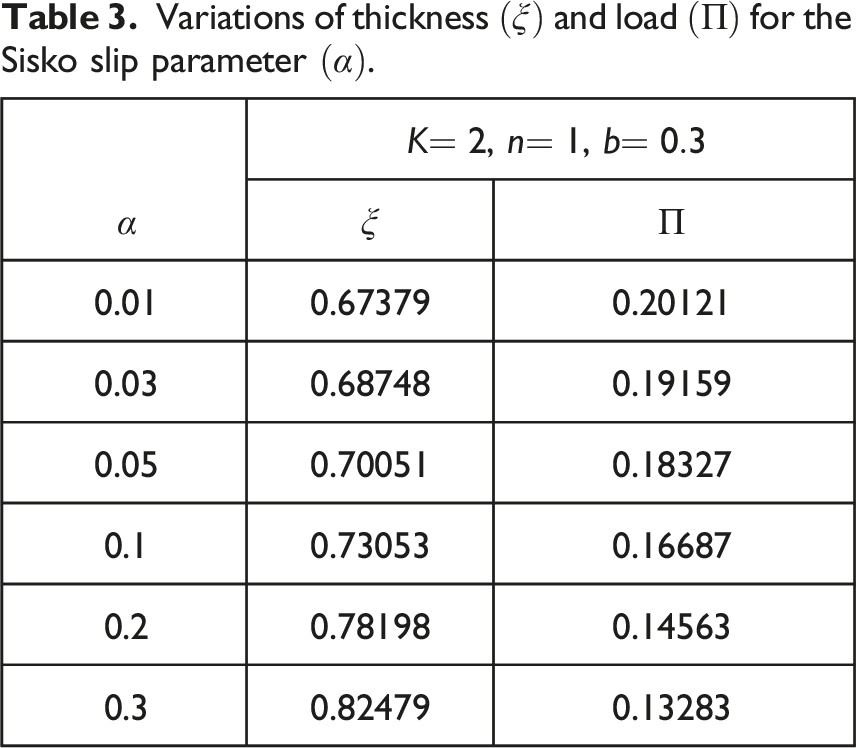
Variations of thickness
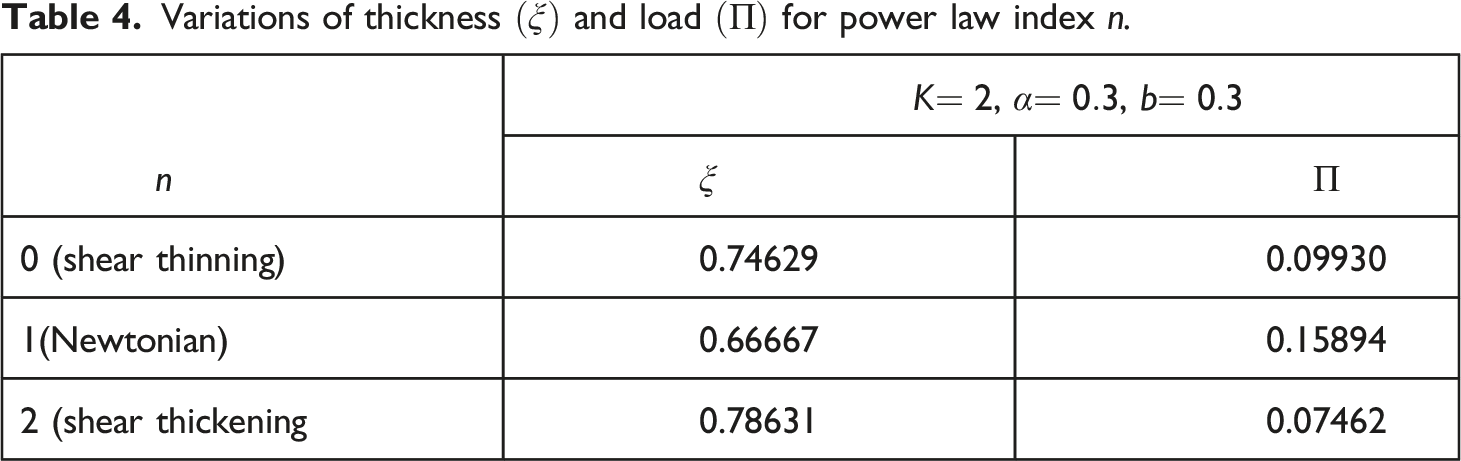
Conclusions
In the present analysis, the steady and non-isothermal flow characteristics of rheological Sisko fluid with velocity slip under the blade coating technique are studied. The Shooting technique is applied to solve the highly nonlinear governing equations numerically. The effects of non-dimensional parameters including power index, material parameter, slip parameter, and velocity ratios are examined through graphs and tables. As special cases, the given equations can be used to find power law equations and Newtonian equations. The outcomes demonstrate the following findings: • The pressure and pressure gradient for rheological Sisko fluid ( • The Sisko fluid’s velocity profile rises more rapidly than a Newtonian fluid. • Due to an increase in slip parameter and velocity ratio, both the pressure gradient and pressure decrease but the opposite effect can be seen with increasing the material parameters. • Sisko fluid has 44.18% lower temperature profiles than a Newtonian fluid. • The fluid temperature rises as a material parameter and the velocity ratios are increased however; the slip parameter causes a decrease in temperature. • As b increases from (0.001–1), 20.7% reduction in coating thickness is noted as compared to the Newtonian case.
4
Footnotes
Declaration of conflicting interests
The author(s) declared no potential conflicts of interest with respect to the research, authorship, and/or publication of this article.
Funding
The author(s) received no financial support for the research, authorship, and/or publication of this article.
