



Abstract
One-dimensional (1D) site response analysis (SRA), which considers vertically propagating seismic waves from the bedrock to the surface, has been a common technique among geotechnical engineers to examine site-specific ground shaking. However, observations from past earthquakes and analytical studies indicate that idealizations ingrained in 1D SRA may be too severe to capture the ground truth, such as the omissions of spatial variability of soil properties, surface topography, and basin and directivity effects. Physics-based three-dimensional ground motion simulations (GMSs) can incorporate these factors and yield more reliable predictions. In this study, we utilize ground motions from 57 physics-based broadband (from 0 to 8–12 Hz) GMS for a region of Istanbul. A total of 2912 sites with experimentally measured soil profiles that are distributed over the 30 km-by-12.5 km area are also modeled as soil columns and analyzed through 1D SRA. The ground responses from 1D SRA and three-dimensional (3D) GMS are then compared for all 57 earthquake scenarios. These systematic comparisons are then used for examining model features that are correlated with variations in the ratios of various ground motion intensity measures (IMs) and for developing regression-based formulas that can be used for determining simple factors for the considered region to correctly scale (up or down) the site-specific ground motion intensities obtained from 1D SRA, including peak ground acceleration (PGA), peak ground velocity (PGV), and spectral acceleration (Sa) values.
Keywords
Introduction
Site response analysis (SRA), especially one-dimensional (1D), has been commonly adopted as a simple numerical technique for geotechnical engineers to assess the potential ground-shaking level and evaluate the seismic hazard at a specific location (Kramer, 1996). 1D SRA is designed to simulate the seismic waves (e.g. P- or S-wave or both) traveling vertically from a certain depth (usually bedrock), through different horizontal soil layers, and eventually to the ground surface. This analysis method can consider the local soil conditions and hence calculate the time histories, ground response spectra, and other intensity measures (IMs), such as peak ground acceleration (PGA) and peak ground velocity (PGV), and characterize site amplification factors (Rathje et al., 2010). The usage of 1D SRA is versatile, including ground motion characterization (Huang and Mccallen, 2023; Stewart et al., 2002), seismic hazard assessment (Abrahamson, 2006; Baker et al., 2021), soil liquefaction evaluation (Idriss and Boulanger, 2008), site-specific design (Bradley, 2015), soil–structure interaction (Stewart et al., 1999; Zhang et al., 2022), and so on.
Despite the aforementioned advantages, 1D SRA also has some obvious drawbacks. Various studies and observations have demonstrated that 1D SRA cannot accurately capture (1) the soil profile and ground motion spatial variability (Madiai et al., 2016; Makra and Chávez-García, 2016; Pretell et al., 2022) and basin effects (McGann et al., 2021); (2) topographic site-effect amplification/de-amplification (Bahrampouri and Rodriguez-Marek, 2023; Smerzini et al., 2011); and (3) impact of incident angles of seismic waves and wave scattering (de la Torre et al., 2022; Oral et al., 2022). Formulations and mechanisms of 1D SRA have inevitably limited its capability to consider these factors. To remedy this, three-dimensional (3D) physics-based ground motion simulation (GMS), embedded with a realistic kinematic rupture model, 3D soil velocity structure and surface topography, can intrinsically take all the source-path-site effects into account.
3D physics–based GMS is pretty computationally expensive, and the minimum shear wave velocity and maximum resolvable frequency are two major factors controlling its accuracy, applicability, and computational cost (Poursartip et al., 2020). A relatively high minimum shear wave velocity cannot capture the ground motion amplification due to soft soil layers in the shallow crust. At the same time, a low maximum resolvable frequency will directly filter out the high-frequency components in seismic waves, which are crucial for some ground motion IMs, such as PGA and short-period Sa. Up to date, a number of 3D GMS have been carried out to simulate earthquakes in different regions, for example, Istanbul, Turkey (Akinci et al., 2017; Douglas and Aochi, 2016; Infantino et al., 2020; Zhang et al., 2023, 2021), San Francisco, USA (McCallen et al., 2021), Bogota, Colombia (Riaño et al., 2021), Tangshan, China (Fu et al., 2017), Southern California, USA (Graves, 1998; Lee et al., 2008; Roten et al., 2016), Tokyo, Japan (Ichimura et al., 2015), Grenoble, France (Stupazzini et al., 2009), Norcia, Italy (Pitarka et al., 2022), and Kobe, Japan (Pitarka et al., 1998). Most of the existing 3D GMS have a lower than 2 Hz maximum frequency or a high frequency but with only a limited number of earthquake scenarios (e.g.
Furthermore, few studies have quantitatively compared the performance between 3D GMS and 1D SRA. Olsen et al. (2000) conducted a 3D 2-Hz wave propagation simulation for an Mw 4.9 earthquake in Southern California and then assessed the capability of 1D models to predict the surface response. Smerzini et al. (2011) built a 3D model with a homogeneous basin embedded in a layered soil media to simulate an Mw 6.0 earthquake in Central Italy and compared it with 1D models. Özcebe et al. (2019) utilized 3D, two-dimensional (2D), and 1D approaches to evaluate the seismic site amplification of the Norcia basin when subjected to the Mw 6.5 2016 earthquake. All these studies indicated that the 1D simulations were inclined to underpredict motions. A particular study from Seylabi et al. (2021) performed a nonlinear 3D physics–based GMS up to 5 Hz for Garner Valley in Southern California and also used the computed motions from 3D GMS at the bedrock level to conduct 1D SRAs for 3640 stations. However, their study showed inconsistency in the findings with respect to PGA—that is, 1D simulations yielded greater PGAs than 3D.
In this study, we utilize simulated ground motions from 57 physics-based broadband (from 0 to 8–12 Hz) GMS for the Istanbul region in Turkey (Zhang et al., 2023, 2021). A total of 2912 sites distributed over a 30 km by 12.5 km area with measured soil profiles are modeled as 1D soil columns and then analyzed by performing 1D SRA on OpenSees (Mazzoni et al., 2006). In all 57 3D GMSs, the acceleration time histories at both ground surface and engineering bedrock 1 levels of those 2912 boreholes were recorded. Thus, the bedrock-level motions are adopted as the input motions in 1D SRA. Then, the ground surface responses from 1D SRA are compared with ones computed from 3D GMS for all 57 earthquake scenarios.
A comprehensive comparison is conducted between 3D and 1D simulations. We first examine the 3D/1D ratios of mean horizontal and vertical PGA, PGV, and Sa in multiple periods among 57 scenarios and the frequency distributions and their uncertainties of those ratios over 2912 sites. Then, we investigate correlations between 3D/1D ratios and three commonly used parameters—that is,
Problem background
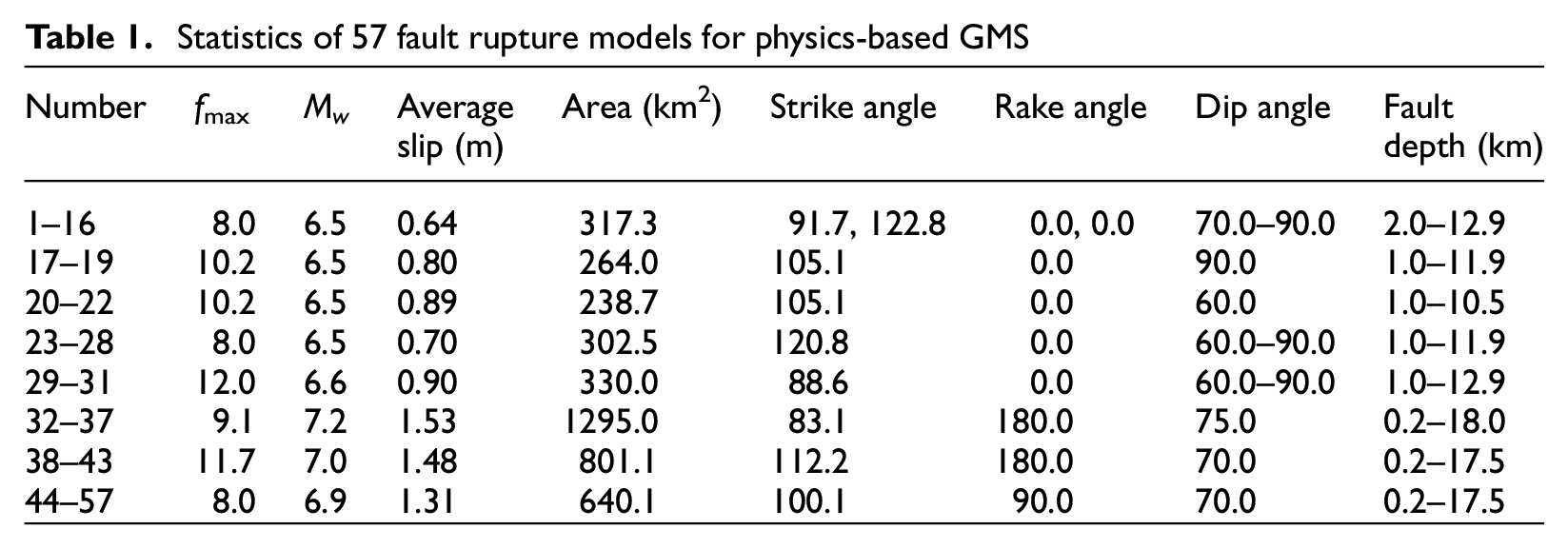
Recently, we performed 57 3D broadband (from 0 to 8–12 Hz) physics-based GMS for a region in Istanbul, Turkey (Zhang et al., 2023) using Hercules (Tu et al., 2006). These 57 GMS, which included realistic surface topography and ocean bathymetry, 3D heterogeneous soil media, and source models with varying earthquake magnitudes (Mw = 6.5–7.2), locations of hypocenters, fault geometry, and rupture time distributions aimed at generating numerous possible strong earthquakes from the North Anatolian faults. Table 1 summarizes some key parameters for fault rupture models. Figure 1 shows the topography/bathymetry map and locations of fault planes and hypocenters for the studied area. The domain of interest (i.e. the red rectangle in the upper center area) encompasses a 30 km by 12.5 km region, in which a total of 2912 borehole stations were drilled from a completed microzonation study (LessLoss Integrated Project, 2004–2007). These boreholes were approximately evenly distributed in every 250 m in both north–south and east–west directions, and standard penetration tests (SPTs) were conducted to measure all boreholes’ properties including soil layer thickness, shear wave velocity
Statistics of 57 fault rupture models for physics-based GMS
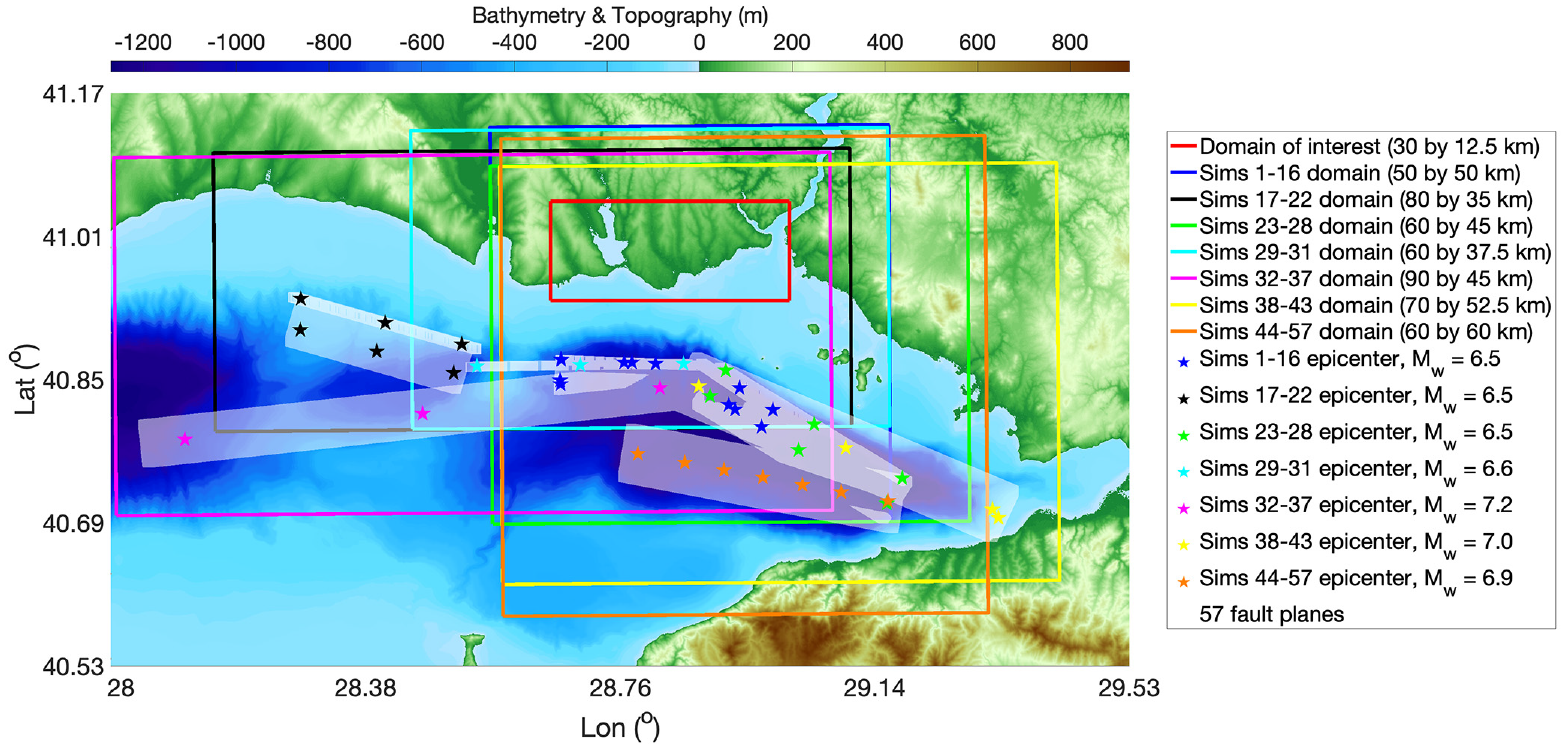
Topography/bathymetry map, dimensions, and locations of fault ruptures of all 57 simulations.
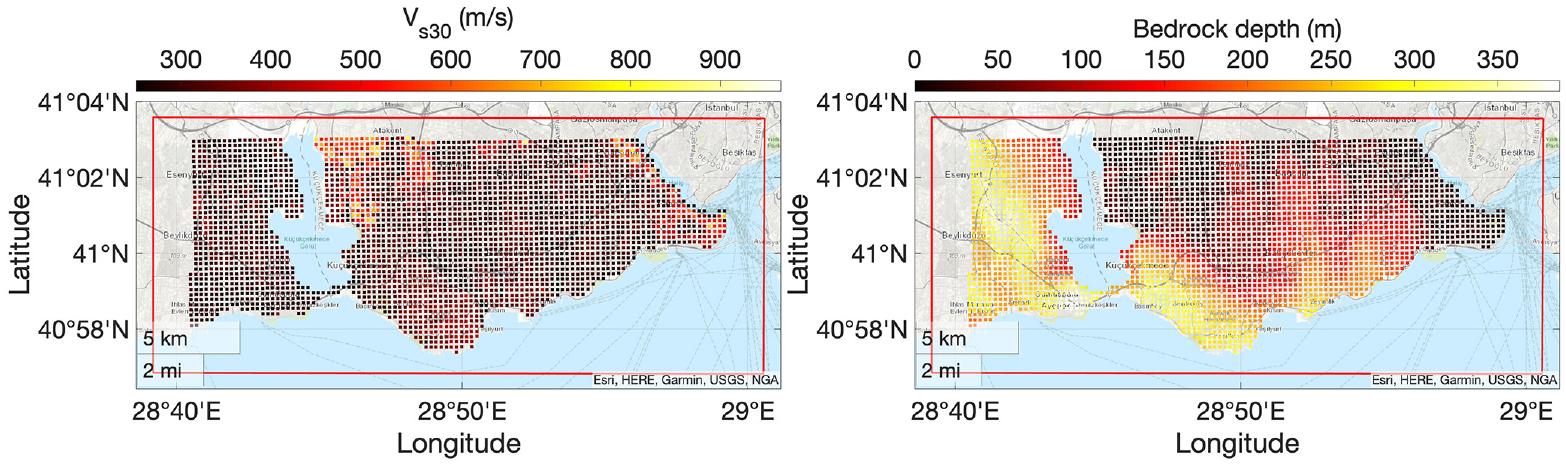
In every 3D physics–based GMS, we recorded the three-directional (east-west, north-south, and up-down) acceleration time histories at both ground surface and engineering bedrock levels of all 2912 boreholes. The time histories at the bedrock levels are used as excitations for the following 1D SRA, which will be explained in the next section.
1D SRA
Each borehole station contains a different soil profile. Thus, we built a total of 2912 1D soil columns in OpenSees (Mazzoni et al., 2006). Figure 3 illustrates the configurations of the 1D soil column model built in OpenSees for 1D SRA. As seen, three dashpots are attached to the bottom of the soil column, and the equivalent nodal forces are applied to the other ends of the dashpots. Here, all nodal force time histories have a uniform duration of 30 s and a time increment of 0.01 s. The soil materials and layers in 1D SRA are identical to those in 3D GMS. Eventually, 2912 × 57 ≈ 1666 k 1D SRA are conducted using OpenSeesMP on the supercomputer Frontera at the Texas Advanced Computing Center (TACC) (Stanzione et al., 2020). Acceleration time histories in all three directions at the surface level are recorded.
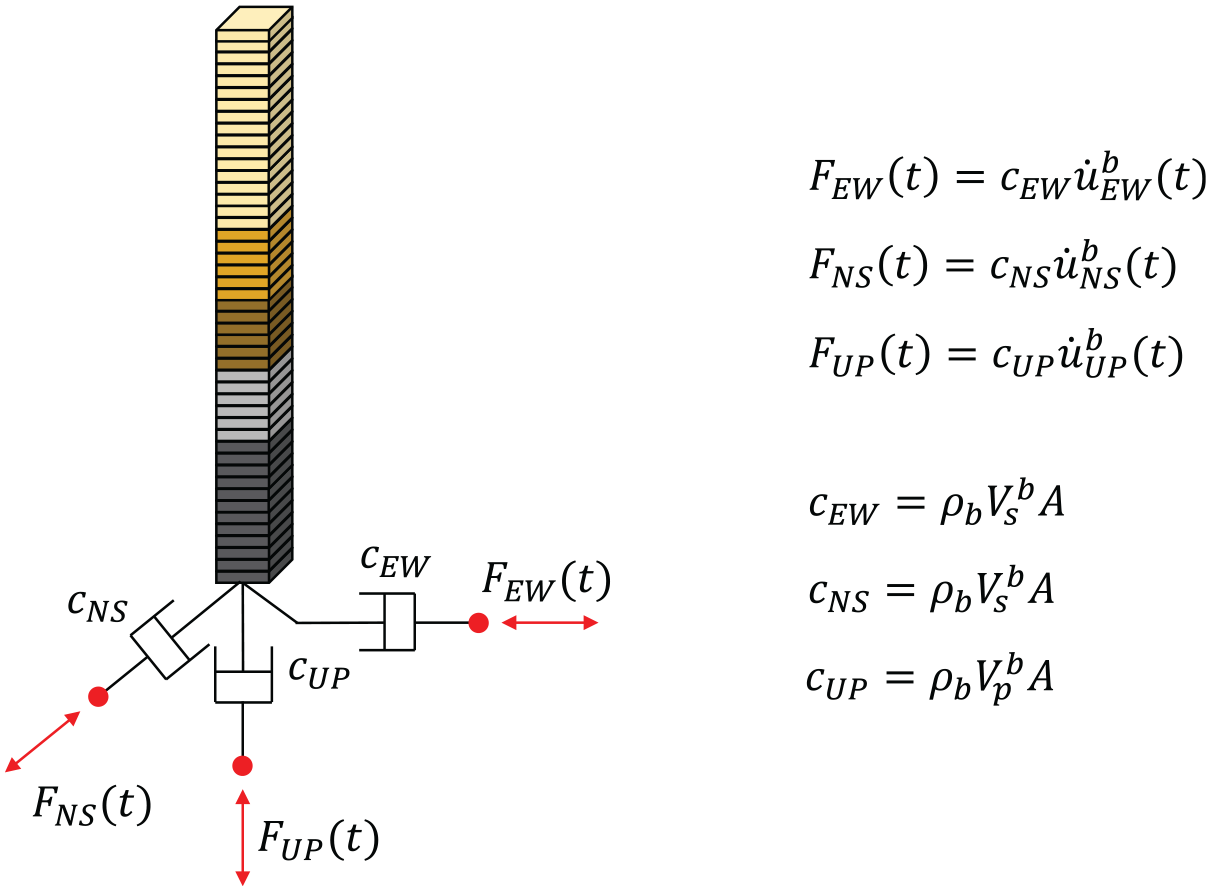
Configurations of the 1D soil column model built in OpenSees for 1D SRA.
1D SRA versus 3D GMS
PGA
This section compares computed horizontal (in the format of RotD50) and vertical PGAs ratios of 3D GMS to 1D SRA. Figure 4 shows average ratios of PGAs among all 57 earthquake simulations for the entire region, and Figure 5 displays their distributions and other statistical properties, including the mean, median, and standard deviation. As seen, most sites experience amplified responses under 3D simulations—that is, 92% and 89% for horizontal and vertical PGAs, respectively. And the ratios range from 0.5 to 2.5, with a mean amplification factor of 1.37. The majority of sites that exhibit de-amplified behavior are located at the edges of the domain or land, which is because we (1) assumed a simplified multi-layer soil media outside the domain due to lack of data and (2) modeled the ocean as viscoelastic solid since Hercules is not yet able to simulate the fluid–solid coupling behavior. Such assumptions may lead to less reliable results for 3D GMS (Zhang et al., 2023).
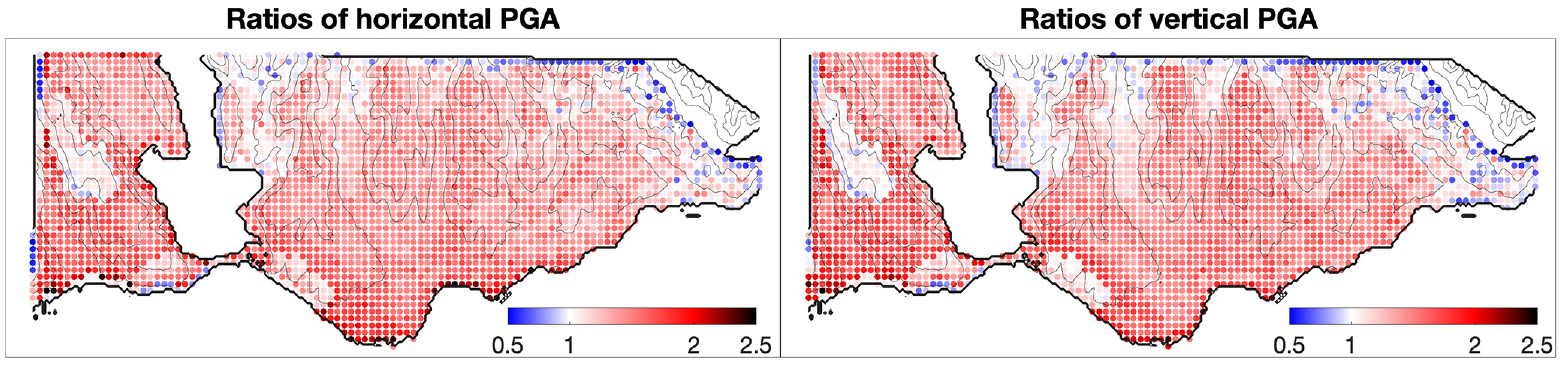
Horizontal (left) and vertical (right) PGA ratios of 3D GMS to 1D SRA.
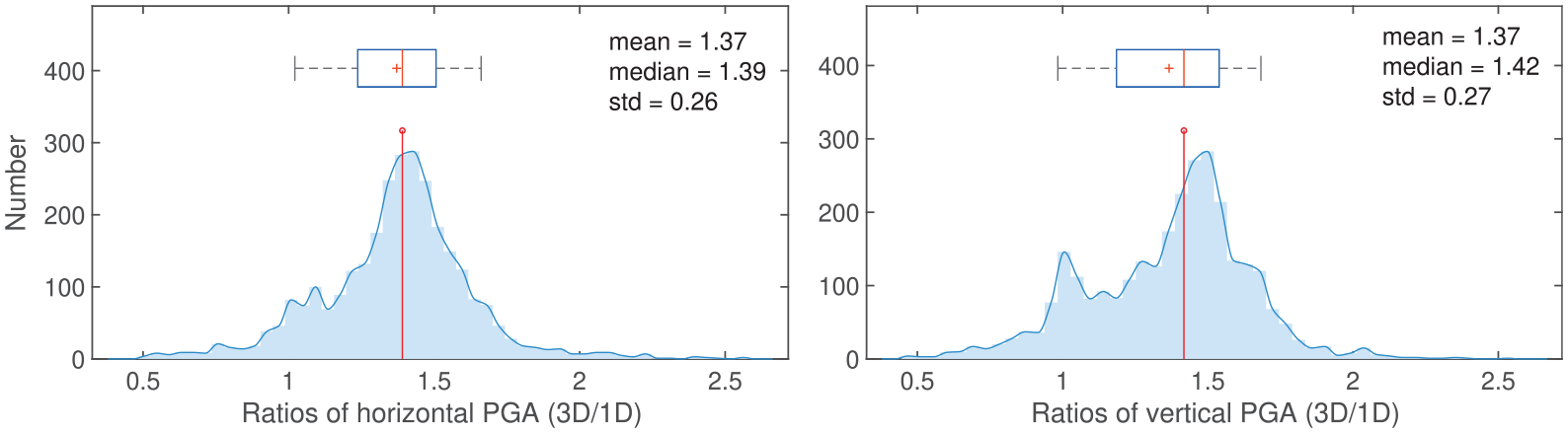
Distributions of horizontal (left) and vertical (right) PGA ratios of 3D GMS to 1D SRA. The vertical red line and cross symbol indicate the median and mean ratios, respectively.
PGV
Similarly, we compare both horizontal and vertical PGVs from 3D GMS and 1D SRA. Compared to PGA, PGV is more accurate in predicting the response of long-period structures, such as pipelines and bridges (Zhang et al., 2020). As shown in Figure 6, similar to PGA ratios, most sites’ PGVs are intensified when 3D effects are considered (91% and 85% for horizontal and vertical PGVs, respectively). Figure 7 examines the distributions of PGV ratios. As seen, compared to PGAs, PGV ratios are slightly reduced—that is, from 1.39 to 1.31 and 1.42 to 1.26 for their median values in horizontal and vertical directions, respectively. This phenomenon indicates that the 3D effects have a larger impact on PGAs than PGVs.
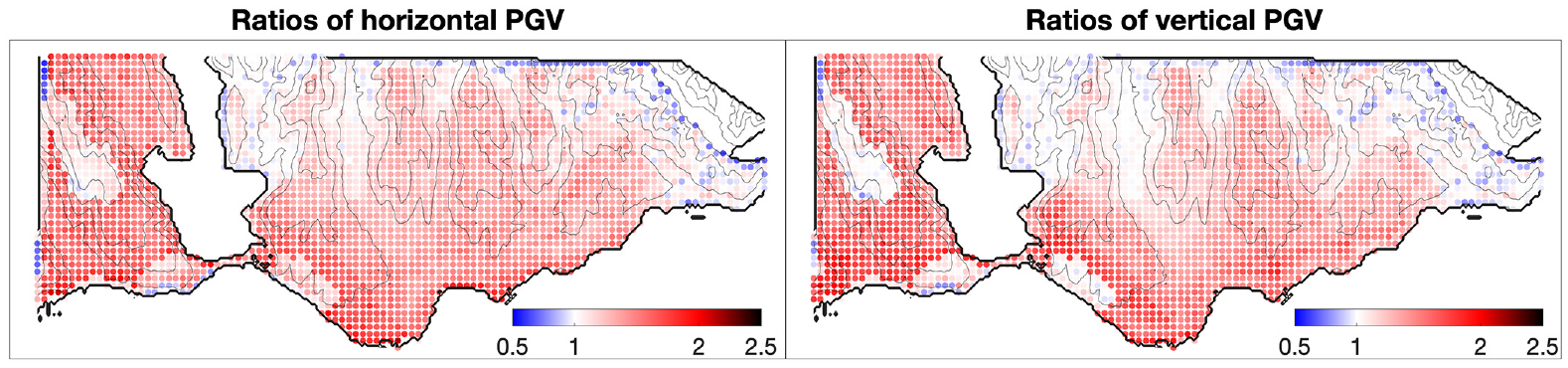
Horizontal (left) and vertical (right) PGV ratios of 3D GMS to 1D SRA.
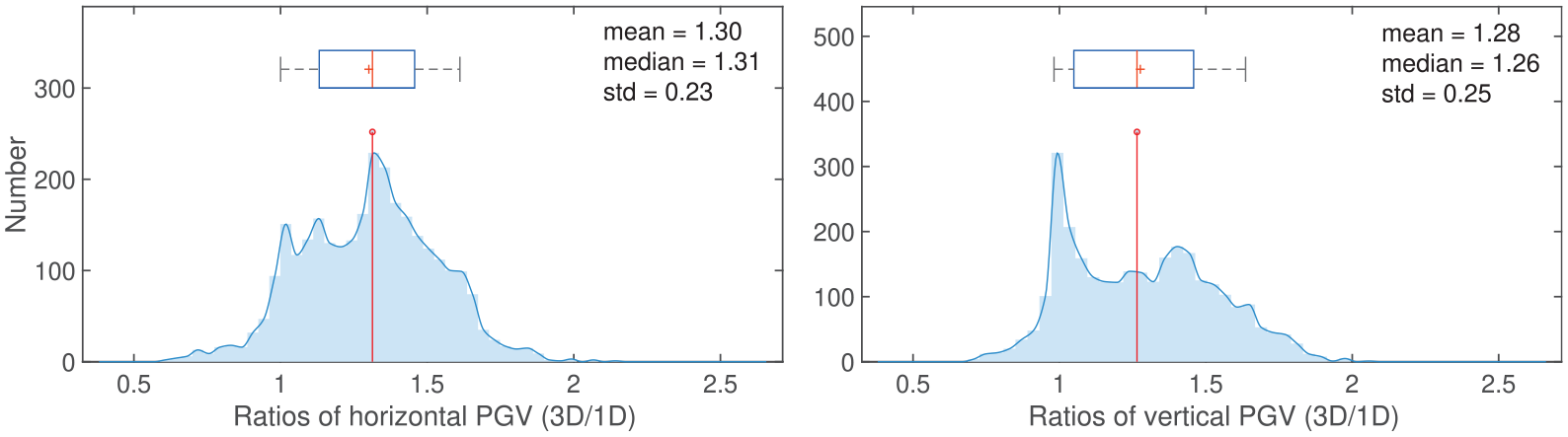
Distributions of horizontal (left) and vertical (right) PGV ratios of 3D GMS to 1D SRA. The vertical red line and cross symbol indicate the median and mean ratios, respectively.
Spectral acceleration (SA)
This section investigates the ratios of horizontal Sas at six different periods, including 0.1, 0.2, 0.5, 1, 5, and 10 s. Figures 8 and 9 show the Sa ratios for the entire domain of interest and their statistical distributions among all 2912 sites, respectively. It can be seen that although the majority of sites’Sas are amplified at all six periods under 3D simulations, the maximum and minimum values of Sa ratios are bi-polarized at the periods ranging from 0.5 to 1.0 s. In other words, the variances of Sa ratios increase. In addition, an average amplification factor of 1.35∼1.40 is observed for periods below 1.4 s, while gradually reduced to 1 when the period increases. Similar to both PGA and PGV, most sites that have de-amplified responses are located at the domain edges or on shorelines.
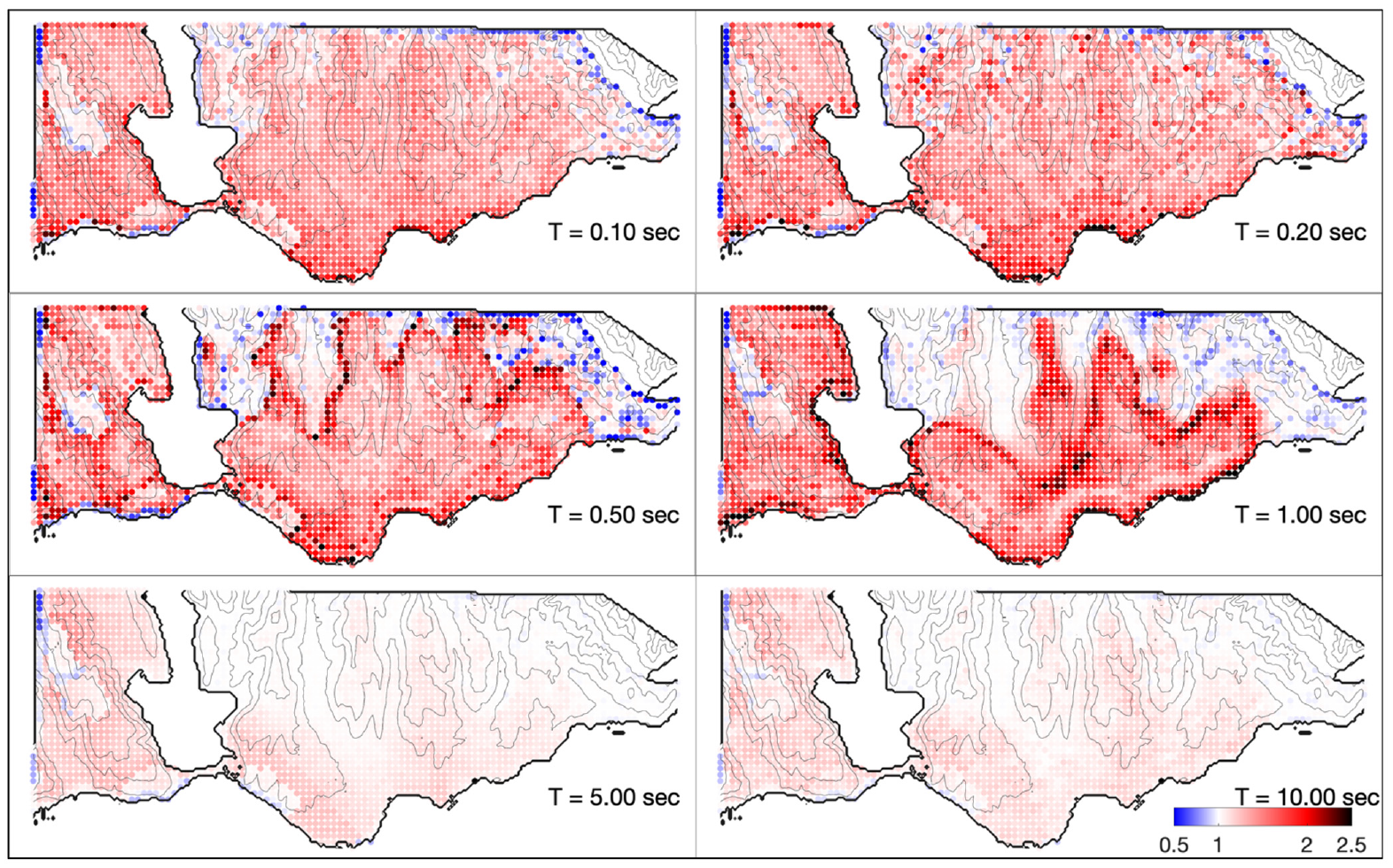
Horizontal Sa ratios of 3D GMS to 1D SRA.
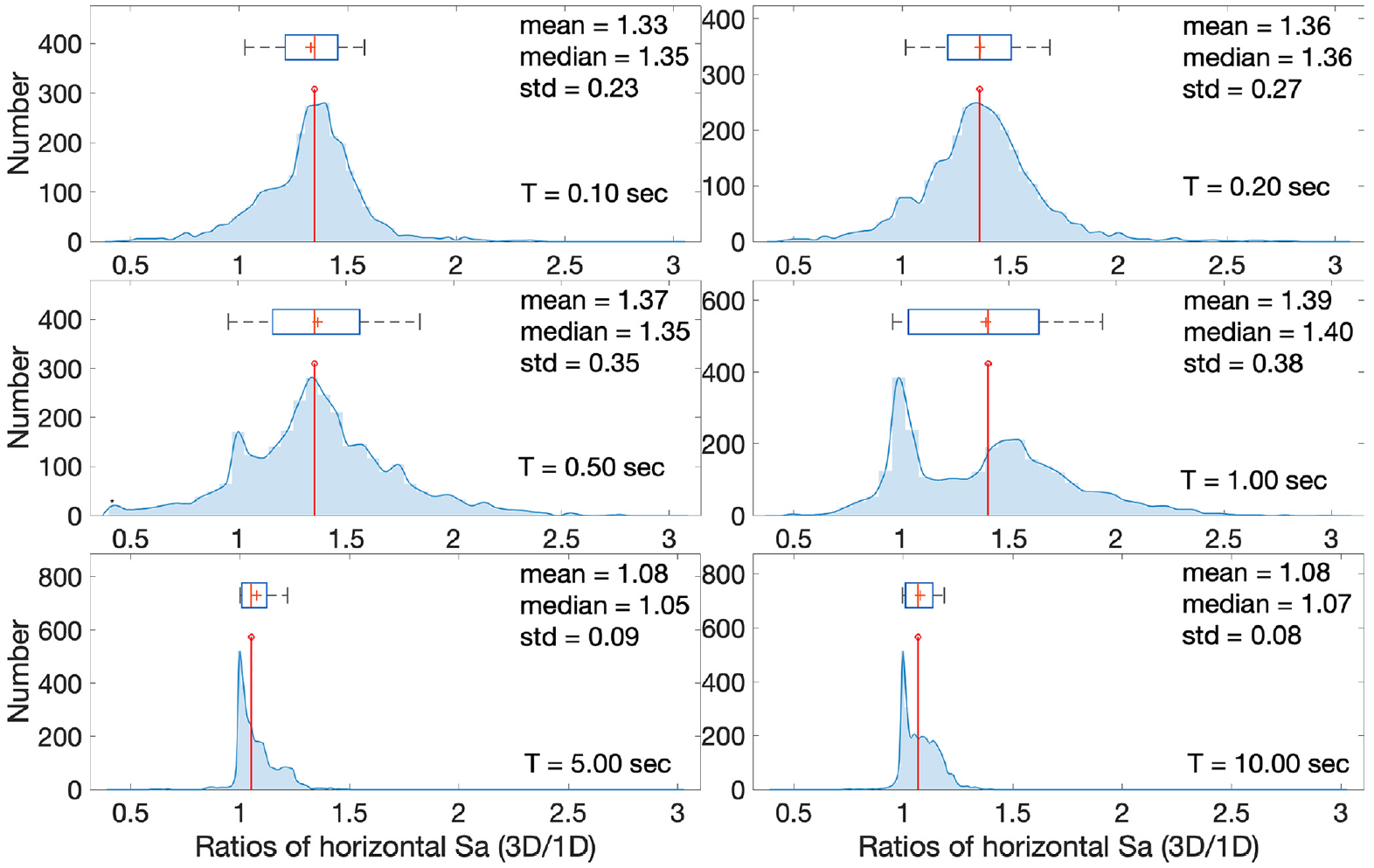
Distributions of Sa ratios of 3D GMS to 1D SRA. The vertical red line and cross symbol indicate the median and mean ratios, respectively.
Correlations of 3D/1D ratios and geotechnical and topographical parameters
To further explore the root cause of the amplification/de-amplification factors due to 3D effects, we conduct linear regression analyses to examine possible correlations between 3D/1D ratios and three popular geotechnical and topographical parameters—that is, (1)
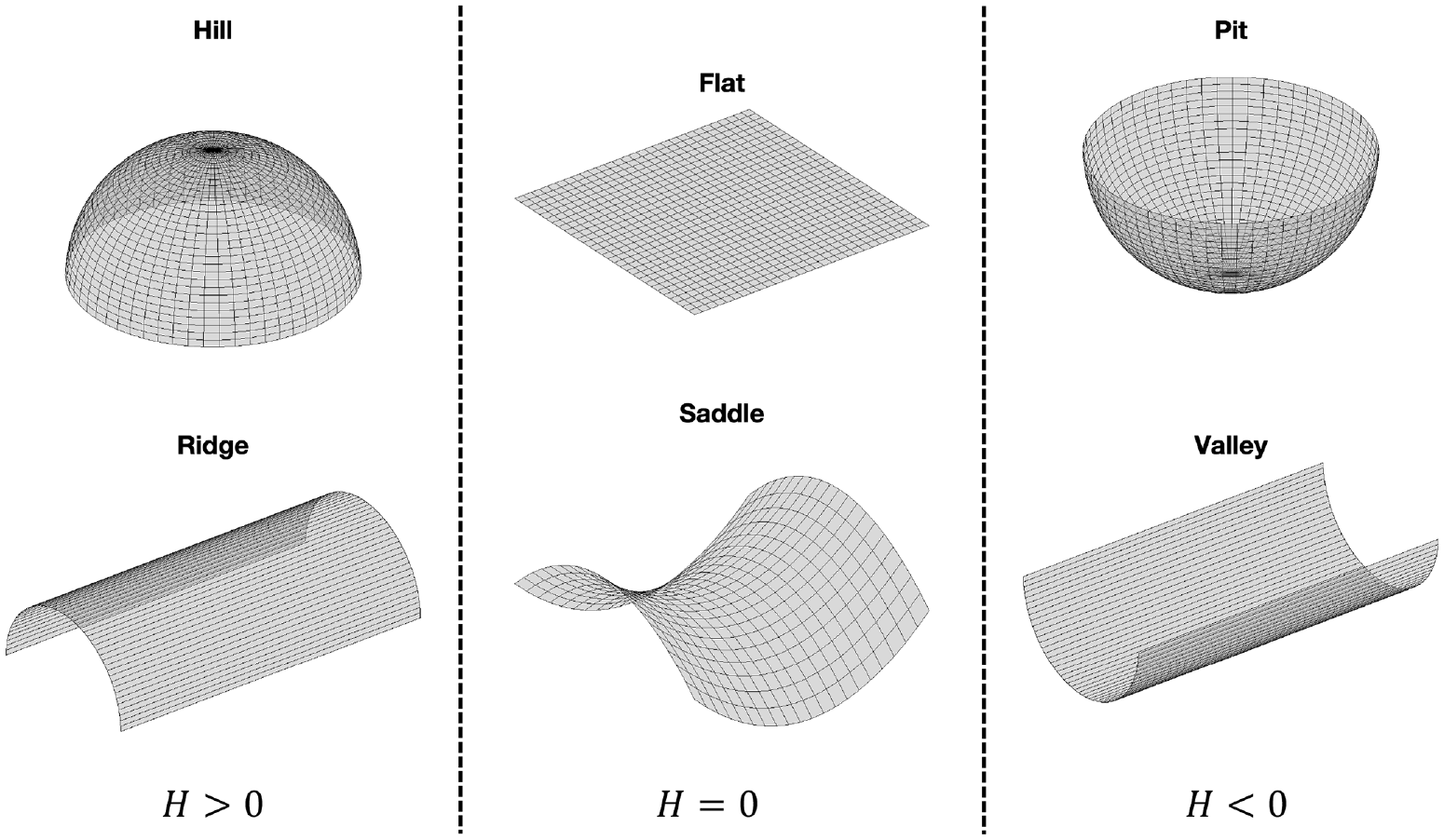
Graphical representation of surfaces with different mean curvatures.
Figures 11 and 12 show scatter plots and fitted lines for PGA and PGV ratios, respectively. As seen, there is a large variability of PGA and PGV 3D/1D ratios, especially for those stations who have
The data points for 3D/1D ratios are collected from a total of 2912 stations and every station has a different bedrock depth, ranging from 0 to 300 m. For those stations who have
Those stations that are adjacent to the coastline are likely to have very large (or small) 3D/1D ratios. This is because we do not have velocity data for the soil beneath the seabed, we simply make up a layered soil media for the water area. Such huge contrast and discontinuity in terms of soil velocity can result in a large variability of PGA and PGV 3D/1D ratios.
There are many important features in affecting ground motions that 1D simulations cannot capture, such as obliquely incident waves, surface topography, non-horizontal soil layers, complex reflections, refractions and diffractions, and so on.
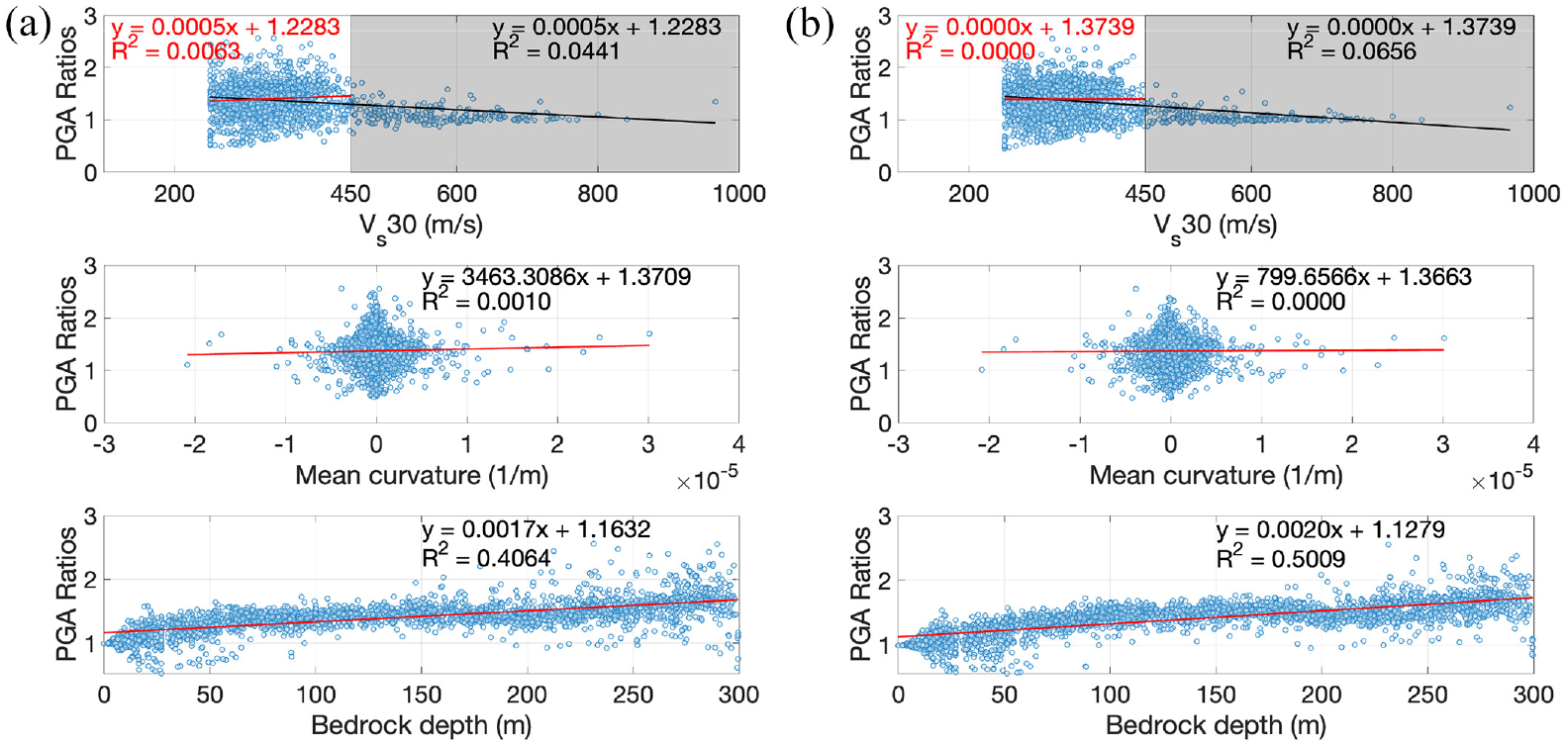
Linear regression analysis of the ratios (3D/1D) of horizontal (left) and vertical (right) PGAs and
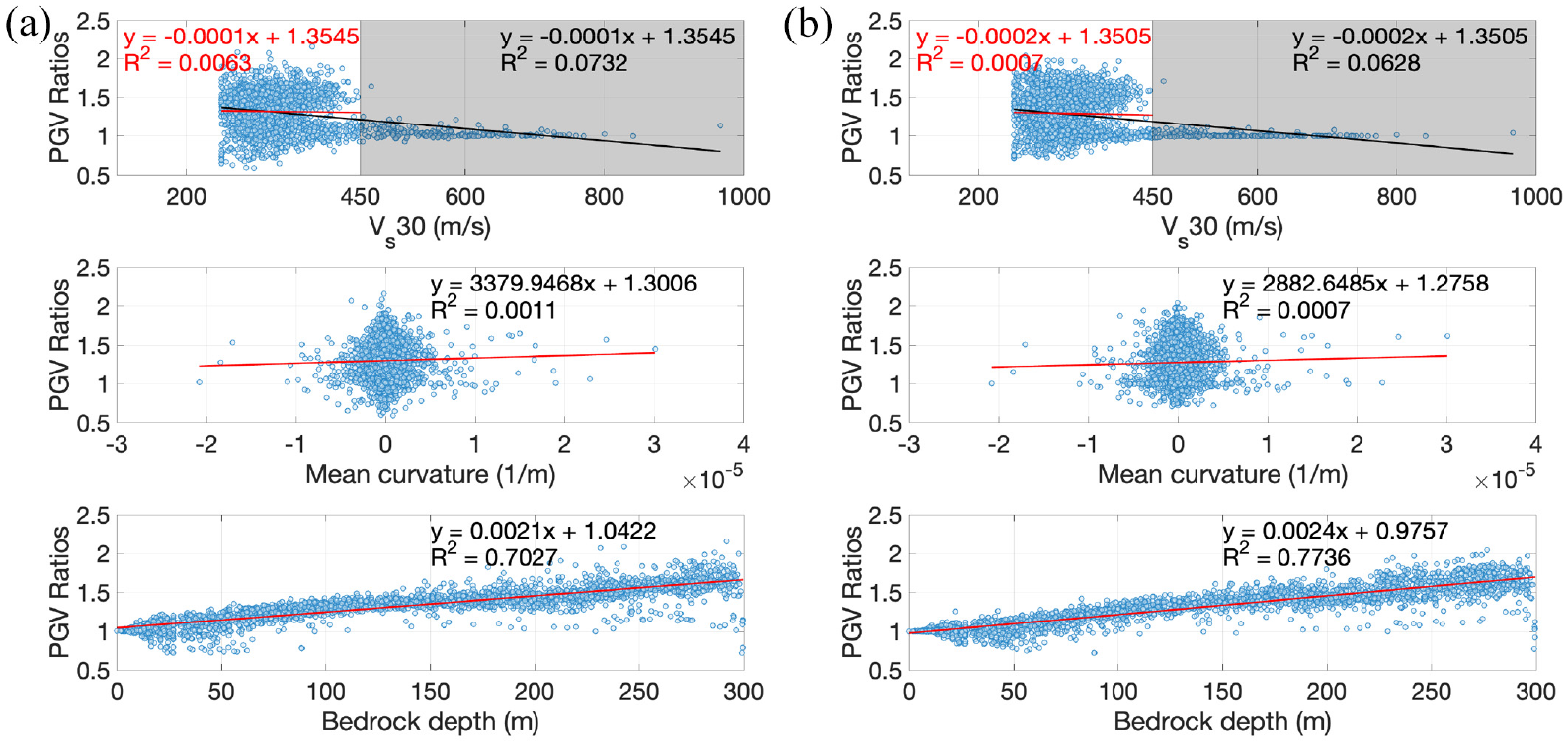
Linear regression analysis of the ratios (3D/1D) of horizontal (left) and vertical (right) PGVs and
Figure 13 displays regression analysis results between the bedrock depth and horizontal Sa ratios at six different periods. Please note that the y-value of each point represents the average 3D/1D ratio among 57 earthquakes for a given site. It is observed that bedrock depth has an evident linear relationship with all PGA, PGV, and Sa ratios in terms of
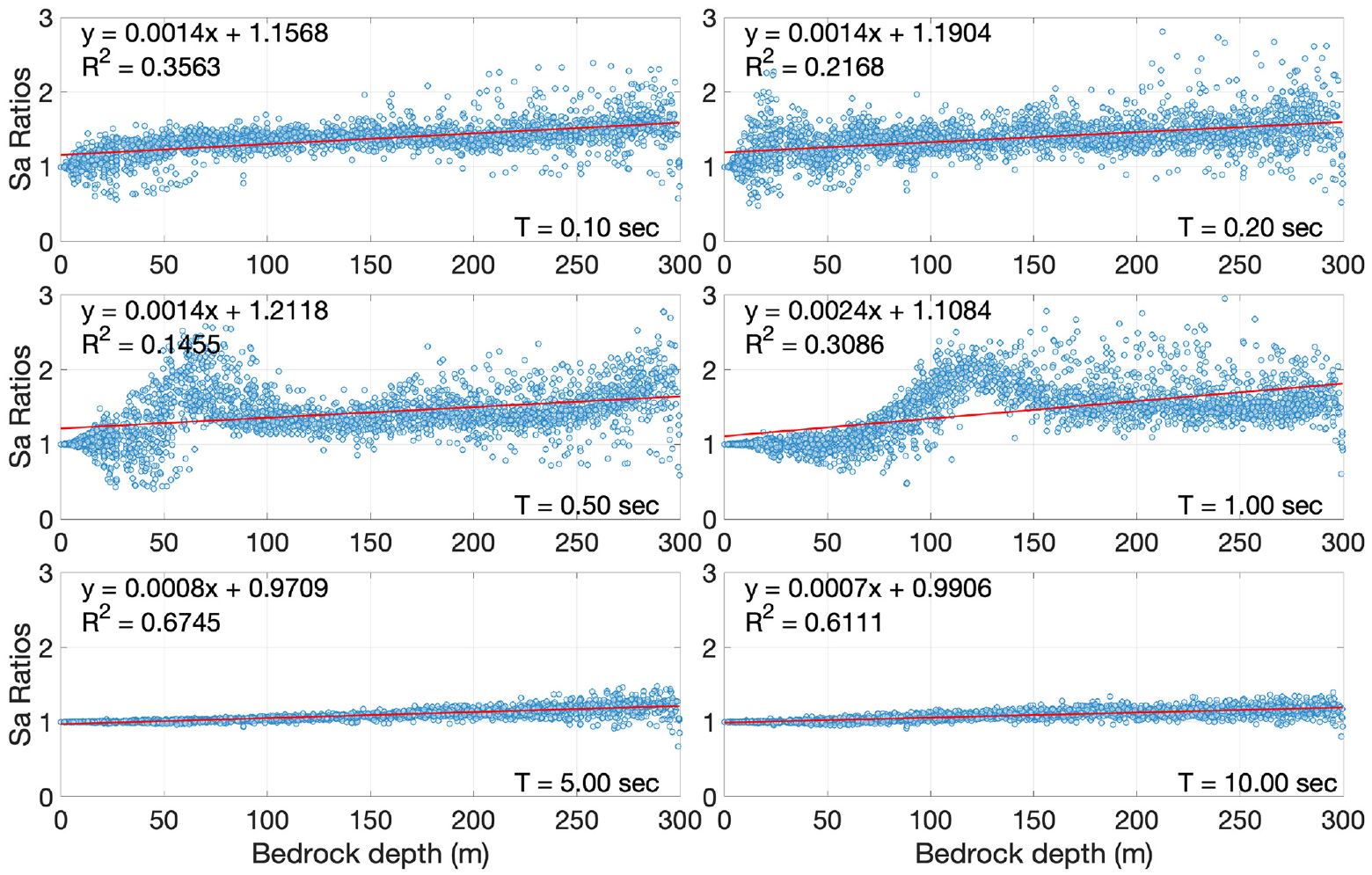
Linear regression analysis of the ratios (3D/1D) of horizontal Sas at different periods and bedrock depth.
Twelve representative stations
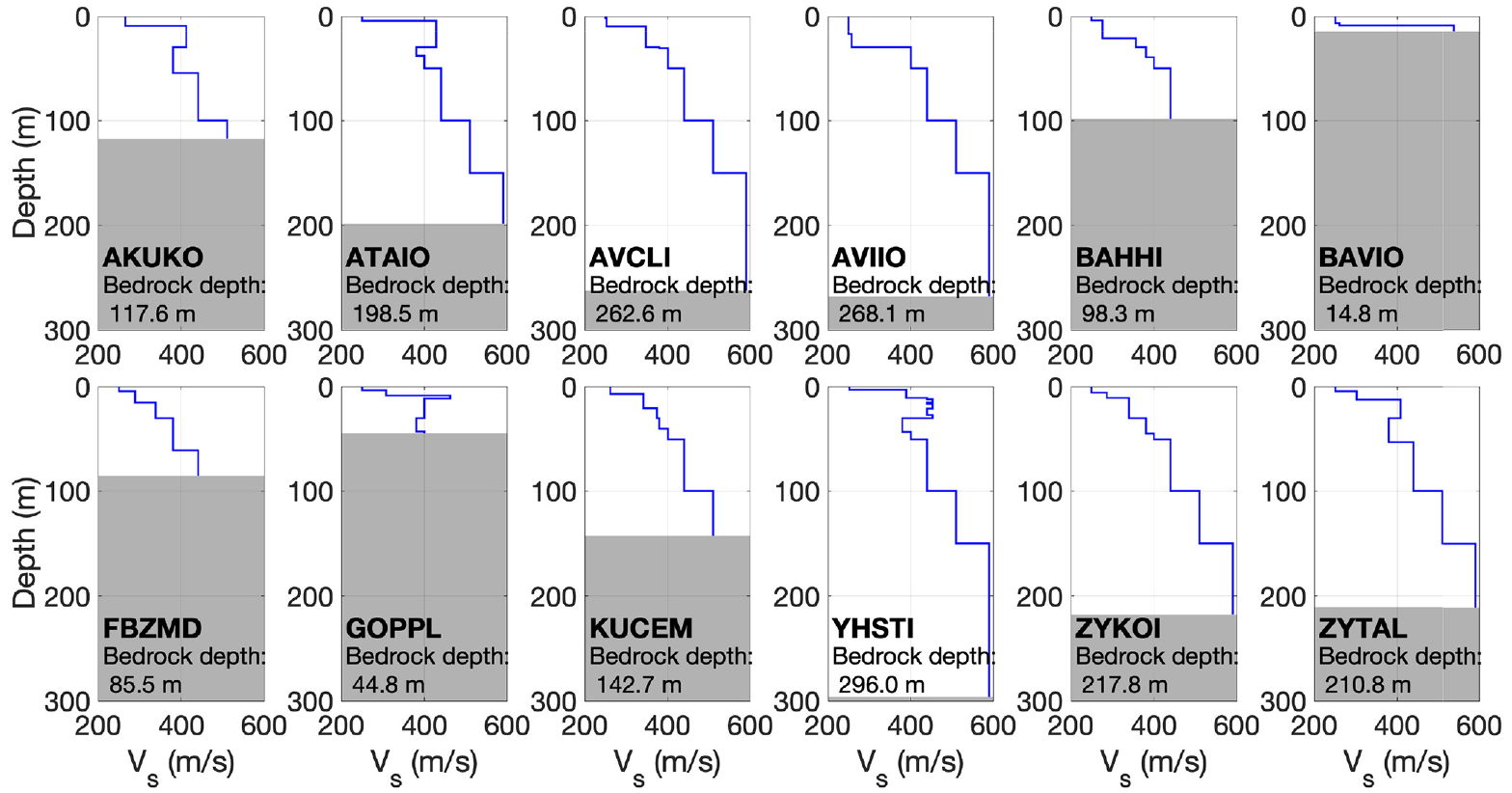
In this section, we consider 12 representative stations (see Figure 14 for their locations on the map), which have been used to validate our 3D GMS against recorded motions from the 2019 Mw 5.7 Silivri earthquake (Zhang et al., 2023), to further investigate the 3D effects on the 3D/1D ratios of PGA, PGV, and Sa, and their correlations with bedrock depth. Figure 15 shows the
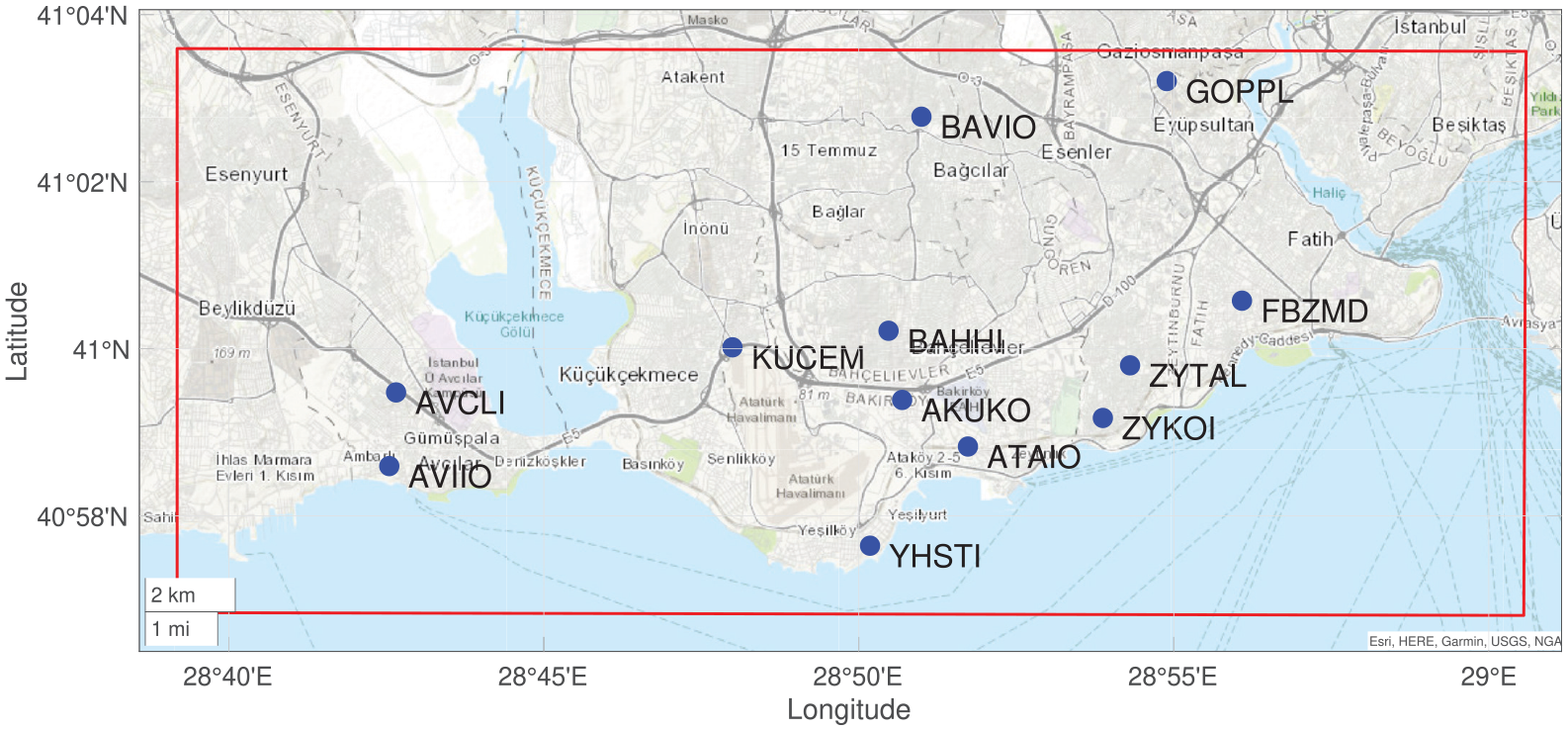
Locations of 12 representative stations used in this study.
Figures 16 and 17 display box plots for the ratios of 3D to 1D PGAs and PGVs for these 12 representative stations, respectively. The box plot for each station is generated using the 3D/1D ratios from 57 earthquake simulations. It can be seen that the ratios of PGAs exhibit a similar behavior/trend to the ratios of PGVs, but they are slightly greater than the ratios of PGVs. Most stations (i.e. 11/12, except station GOPPL) show amplified responses. These stations, which have the greater amplification factors, such as stations AVIIO and YHSTI, also have large bedrock depths. On the contrary, stations BAVIO and GOPPL experience neutral or de-amplified behavior, and their bedrock depths are also the smallest ones among all 12 stations. This trend is consistent with what we discovered in the previous section.
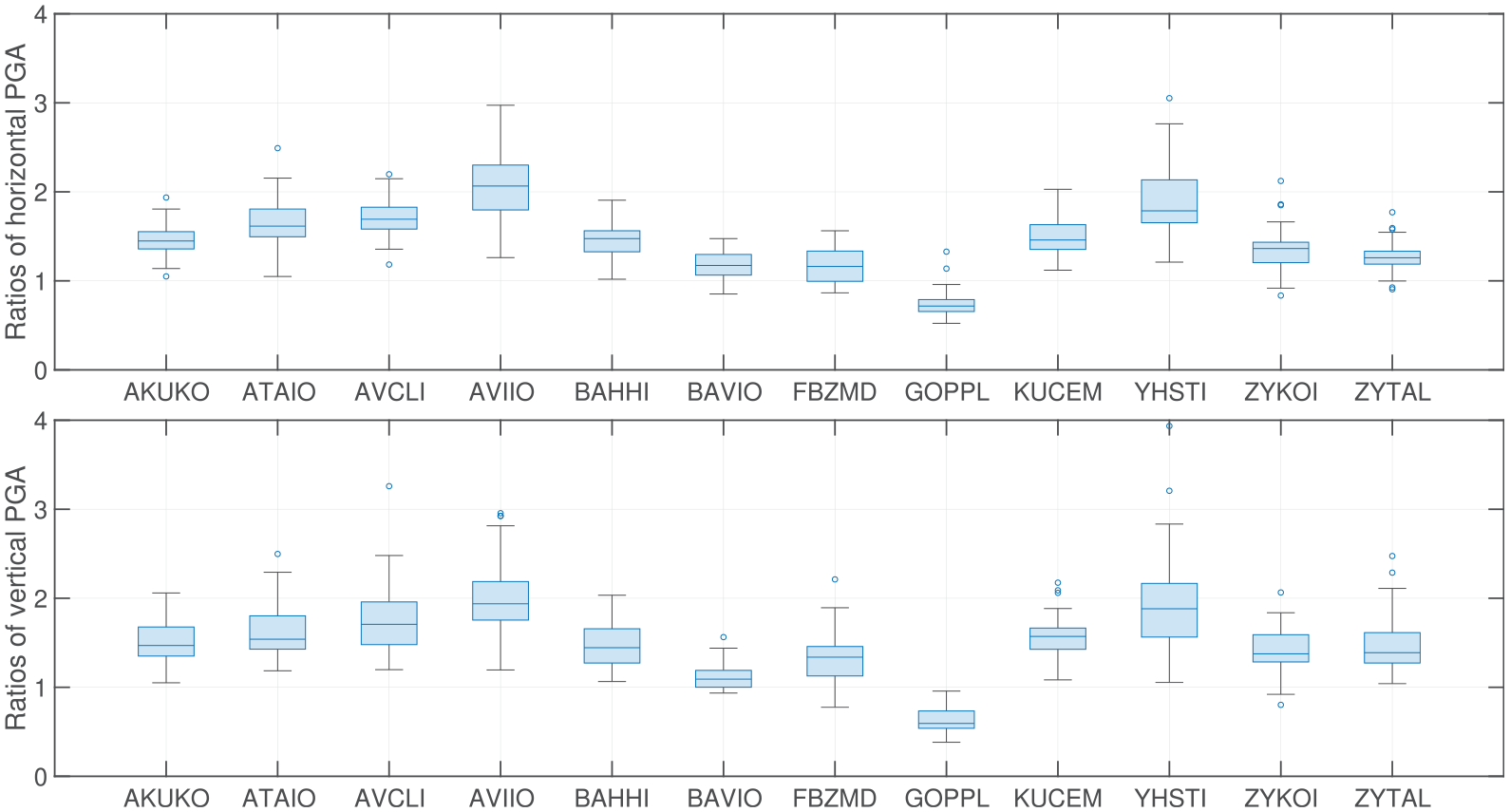
Box plots for the ratios of horizontal (top) and vertical (bottom) PGAs (3D/1D) of 12 representative stations used in this study.
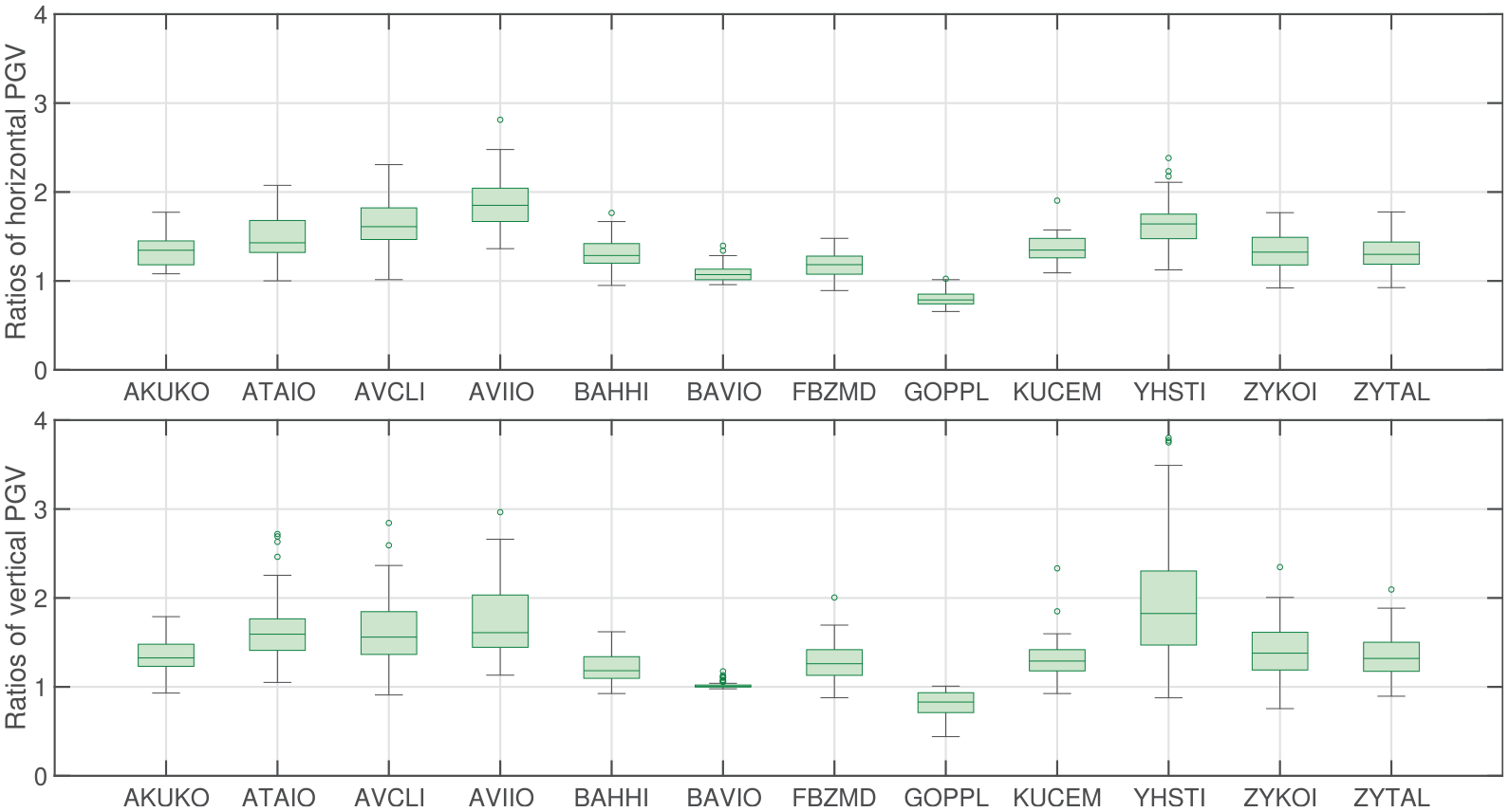
Box plots for the ratios of horizontal (top) and vertical (bottom) PGVs (3D/1D) of 12 representative stations used in this study.
In addition, it is worth discussing the performance of station GOPPL, which is the only station showing the de-amplified responses for both PGA and PGV ratios, and in both horizontal and vertical directions as well. From Figure 15, we see two noticeable
Figure 18 depicts 3D/1D ratios of the horizontal Sa curves from 0.01 to 10 s for the 12 representative stations. Each subplot has 57 gray curves, which correspond to 57 earthquake simulations. The solid blue curve represents the mean ratios among 57 simulations, and the two dashed blue curves are mean ± standard deviations. The ratios are close to 1 within the long-period range (e.g.
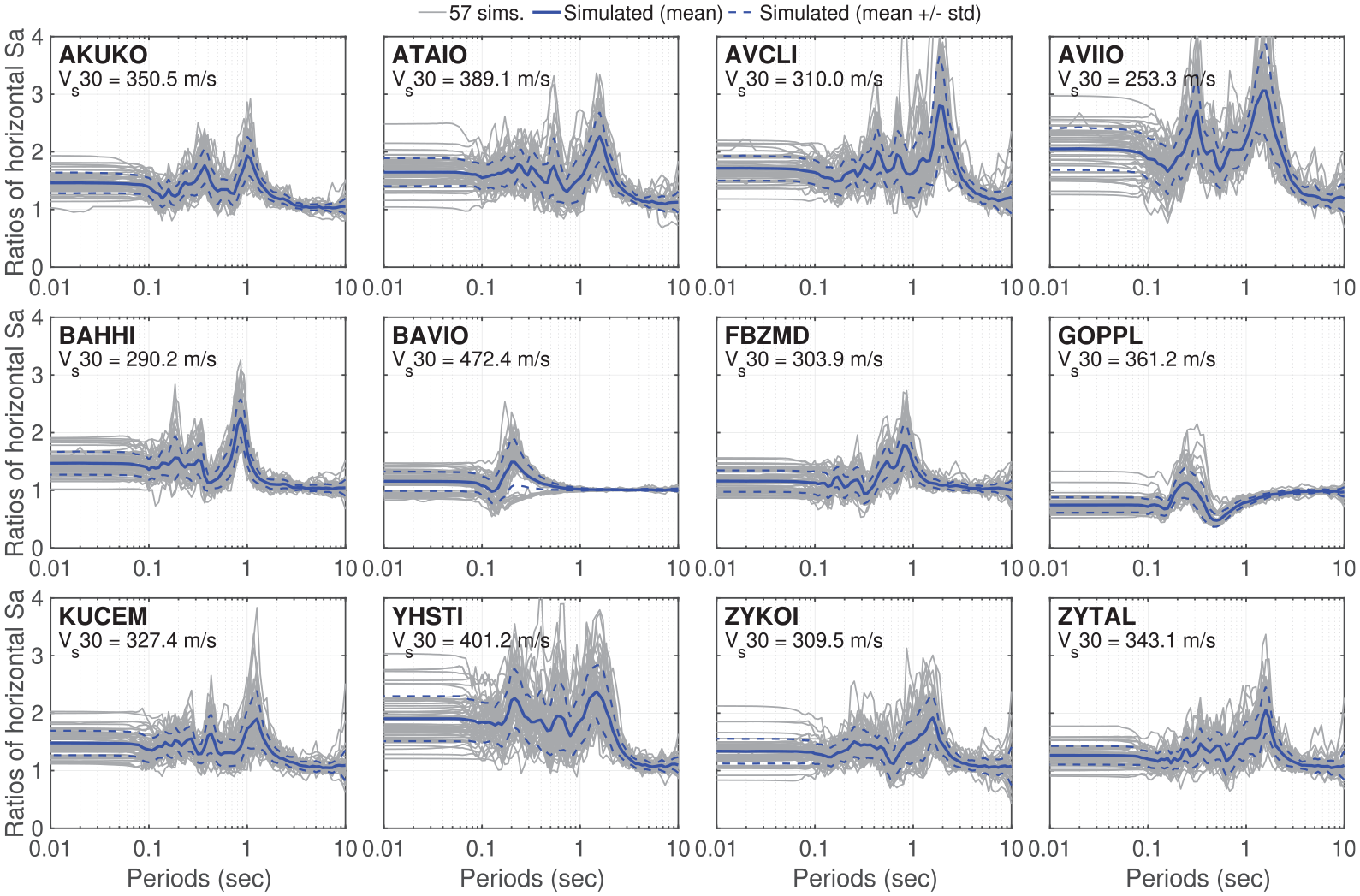
Ratios of horizontal Sas (3D/1D) of 12 representative stations used in this study.
To quantify the site-specific feasibility of the 1D SRA, a taxonomy proposed by Tao and Rathje (2020) is utilized in this study. Specifically, the transfer functions (TFs) (Aki and Richards, 2002; Garcia-Suarez et al., 2022; Kramer, 1996) and the Horizontal-to-Vertical Spectral Ratios (HVSRs) (García-Jerez et al., 2016) are incorporated in the evaluation procedure. The empirical HVSR from the 3D GMS is computed to identify the first-mode resonant frequency of the site, and the within and outcrop TFs are used to distinguish true outcrop-resonances from pseudo-resonances (Tao and Rathje, 2020). The sites are then classified into four groups: dominated by only true-resonances (group A), both pseudo-resonances and true-resonances (group B), only pseudo-resonances (group C), and not modeled well using 1D SRA (group D). Figure 19 depicts the taxonomy workflow to categorize all four site groups. The site is considered as being well-characterized by 1D SRA if it falls into groups A, B, and C, whereas it is deemed unsuitable for 1D analysis if it belongs to Group D.
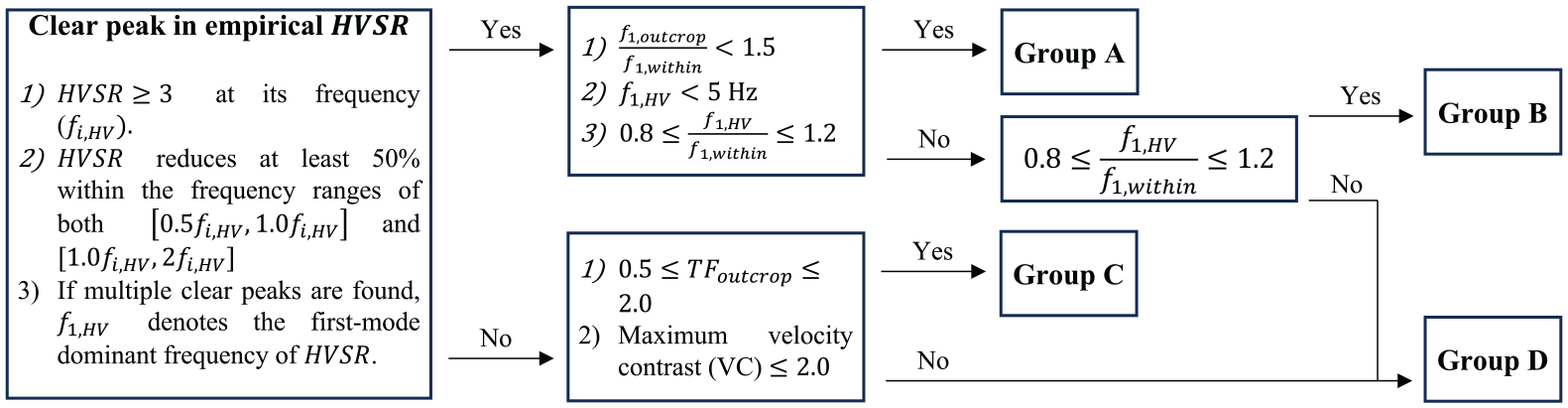
Taxonomy for assessing the feasibility of 1D SRA (Tao and Rathje, 2020).
In this study, all 12 representative stations are classified following the aforementioned criteria to assess their suitability of 1D SRA. As shown in Table 2, no clear peak is detected for all 12 stations, which is because their maximum HVSRs are no greater than 3. And 9 out of 12 stations are classified as Group D, which can explain the discrepancies between 1D SRA and 3D GMS. However, for those three sites that are classified as Group C, their 3D/1D ratios are not close to 1, either. This is mainly because the taxonomy approach proposed by Tao and Rathje (2020) is based on empirical HVSRs that are computed using real-life low-amplitude earthquake recordings. But our HVSRs are calculated from simulated ground motions, whose accuracy mainly depends on the quality of the 3D velocity model. Such discrepancies can make the taxonomy method limited in this study. The outcrop and within TFs and HVSR curves are shown in Figure 20.
Taxonomy results for 12 representative stations
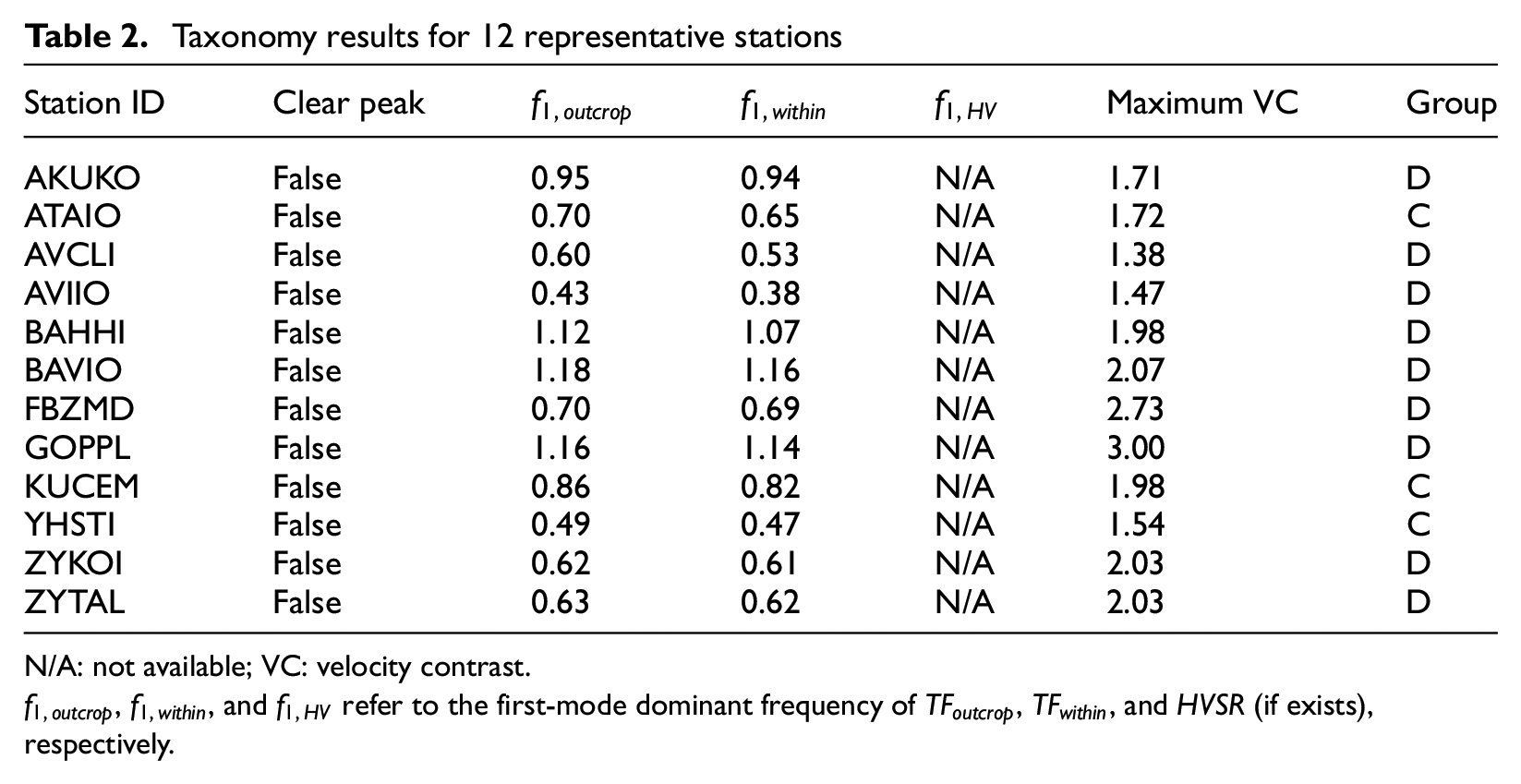
N/A: not available; VC: velocity contrast.
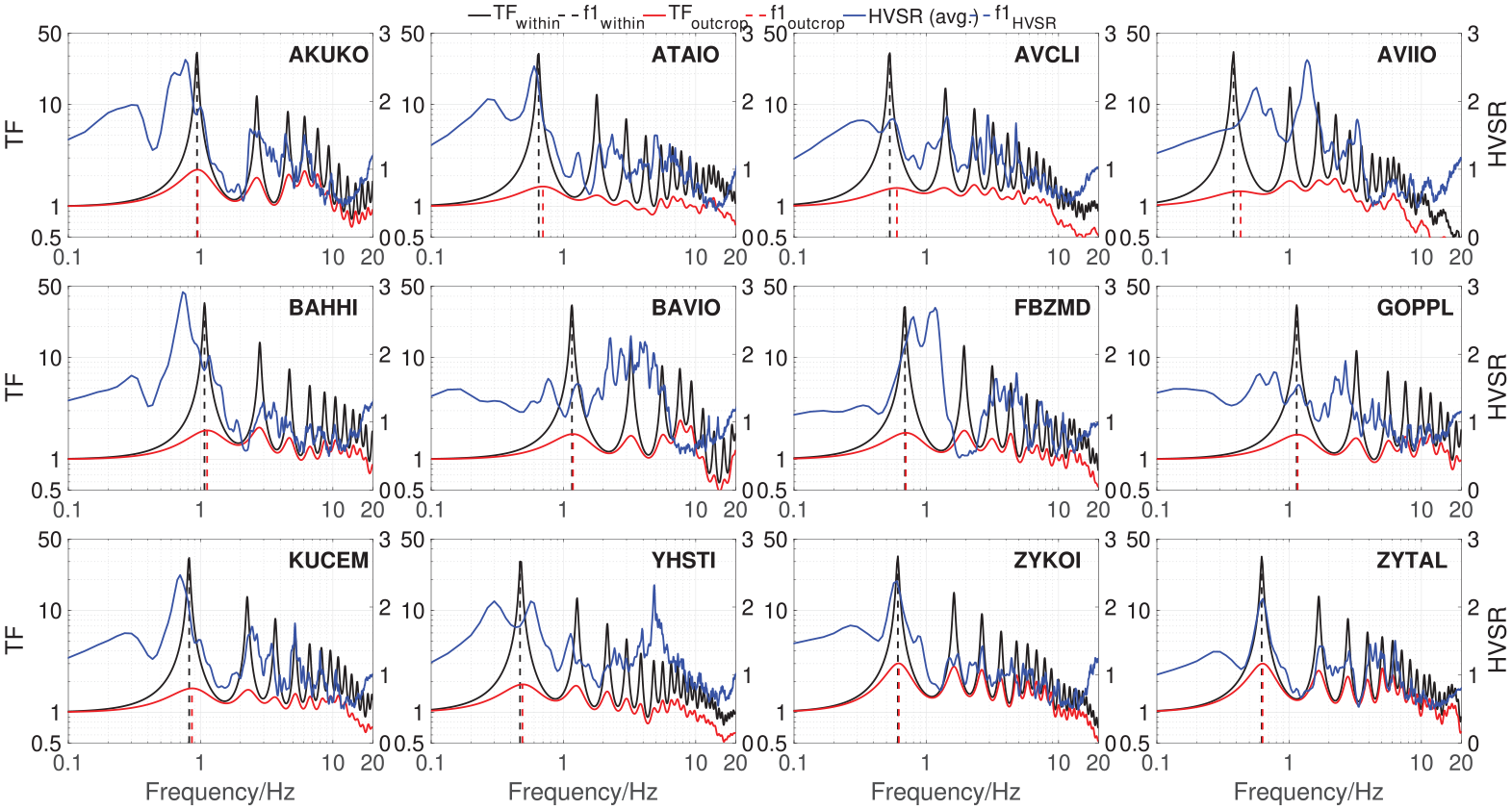
Within and outcrop transfer functions and HVSRs of 12 representative stations used in this study. The HVSRs for each station are average HVSRs among 57 simulations.
Conclusion
By utilizing simulated ground motions from a suite of 57 3D physics–based broadband (from 0 to 8–12 Hz) GMSs for the Istanbul region, this study uses regional-scale 1D three-directional site response analyses for a total of 2912 borehole stations, which are distributed in an area of 30 km by 12.5 km with an approximately uniform distance of 250 m by 250 m between each other. Each borehole station is modeled as a 1D soil column with identical soil layers as used in 3D simulations. For each earthquake scenario, every 1D soil column is excited by the motions from 3D GMS that are recorded at the engineering bedrock level of the site where the soil column is located. Then, various IMs of ground surface motion—including both horizontal and vertical PGAs and PGVs, and spectral accelerations at multiple periods—are compared between the 1D SRA and 3D GMS.
For PGAs and PGVs, results show that roughly 90% of the site responses are amplified under 3D simulations, with median amplification factors of 1.4 and 1.3, respectively. As for horizontal Sa values, different behaviors are observed under different periods. The variations are reduced under long periods (i.e.
To further investigate the correlations between 3D/1D ratios and potential engineering parameters, we first select three commonly used parameters to represent: (1) soil conditions—
Finally, we adopt 12 stations, which have been used to validate our 3D GMS against the recorded earthquake in the past, as a case study. Similarly, most stations (11/12) have intensified responses, with median amplification factors ranging from 1.0 to 2.0. The only station which displays de-amplified performance has a relatively shallow bedrock depth, which is consistent with what we discern from the linear regression analysis.
This study comprehensively examined ground motion intensity predictions from 1D SRA in comparison to 3D GMS at a regional scale. It also explored the influence of various engineering parameters that are nominally considered to control 3D/1D amplification/de-amplification factors. However, please be advised that the accuracy of 3D physics–based simulation results heavily relies on the accuracy in fault rupture source modeling and quality of velocity model. Thus, further validations need to be performed in order to make the direct use of these 3D/1D ratios in real applications reliable. It is also worth noting that this study models the soil as a linear elastic material, which is unrealistic considering such large earthquake magnitudes and low shear wave velocities. In our future study, we will use advanced soil constitutive models to simulate the shallow crust and investigate the effects of soil nonlinearity on physics-based GMSs. Furthermore, the earthquake magnitude, fault depth, and distance can also play an important role on 3D/1D response. A comprehensive parametric study will be needed to explore their interlocked correlations.
Footnotes
Declaration of conflicting interests
The author(s) declared no potential conflicts of interest with respect to the research, authorship, and/or publication of this article.
Funding
The author(s) received no financial support for the research, authorship, and/or publication of this article.
