



Abstract
Recent numerical and experimental studies on reinforced concrete shear walls and coupled walls have shown shear forces greater than expected when the walls are subjected to earthquakes at an intensity level that does not exceed the design values. This amplification of shear forces is attributable to the effects of higher modes after the walls develop a plastic hinge at the base. These effects have been recently recognized in North American design codes for cantilever walls and is currently neglected in the design of ductile coupled walls. As part of the research program described in this article, a parametric study was carried out on coupled wall systems to identify the geometric and physical parameters having the greatest influence on the seismic shear amplification. Using the results of this parametric study, an extensive numerical study was conducted on classes of ductile coupled walls subjected to seismic excitation representative of Western and Eastern Canada. This extensive study led to the establishment of shear amplification prediction equations for use in building codes.
Keywords
Introduction
Capacity design of shear walls as the primary seismic force-resisting system (SFRS) is based on favoring a ductile mode of failure by flexure at the base of the walls while ensuring that other fragile modes of failure, such as by shear, are enforced to remain in the elastic range. This design is achieved by reducing the flexural demand by a force reduction factor, thus favoring the formation of a plastic hinge at the base of the shear walls while providing ductile flexural behavior through adequate reinforcement detailing in the so-called plastic hinge zone. The design shear envelope over the height of the walls is then based on the probable flexural capacity of the walls at their base, accounting for flexural overstrength. Although theoretically sound, inelastic seismic analyses of shear walls have shown that the shear force continues to increase long after the formation of a plastic hinge at the base. This behavior has been attributed to the effects of higher modes when yielding at the base of walls tends to elongate the first mode period, thus limiting the seismic shear demand of that mode, while the demand of the higher modes is increasing. An inelastic shear amplification due to higher modes effects has been recommended for a long time in New Zealand for cantilever walls and is now incorporated in the most recent American Concrete Institute (ACI) code. It was not before 2014 that an amplification factor, based on analytical research, was formally proposed for the determination of the design shear envelope for cantilever shear walls in the Canadian Standard. This recommendation does not apply to walls linked by stiff coupling beams, known as coupled walls. The main objective of the current research is to investigate if there is an inelastic higher mode shear amplification in coupled shear wall structures and, if so, to develop a predicting equation that can be adopted in design codes. To achieve this goal, a numerical parametric study was conducted to identify the main geometric and physical parameters controlling the inelastic higher mode shear amplification. Using the results of this first step, an extensive numerical study was conducted on a large range of coupled wall systems designed according to the Canadian codes to determine the shear amplification factors as a function of these controlling parameters.
Capacity design of walls according to CSA A23.3-14 and NBCC-15
Since the 2005 edition of the National Building Code of Canada (NBCC), the linear dynamic method has been recommended for the calculation of seismic forces. A combination of spectral responses is generally obtained based on the uniform hazard design spectrum (UHS), which represents the 5% damping response of a single degree of freedom oscillator to a suite of acceleration excitations having the same 2% probability of exceedance in 50 years. The NBCC-15 allows a reduction in seismic design forces to account for the ductility and overstrength of the structures:

where
Seismic force reduction factors Rd and Ro for some reinforced concrete structures in the NBCC-15 (National Research Council of Canada, 2015)
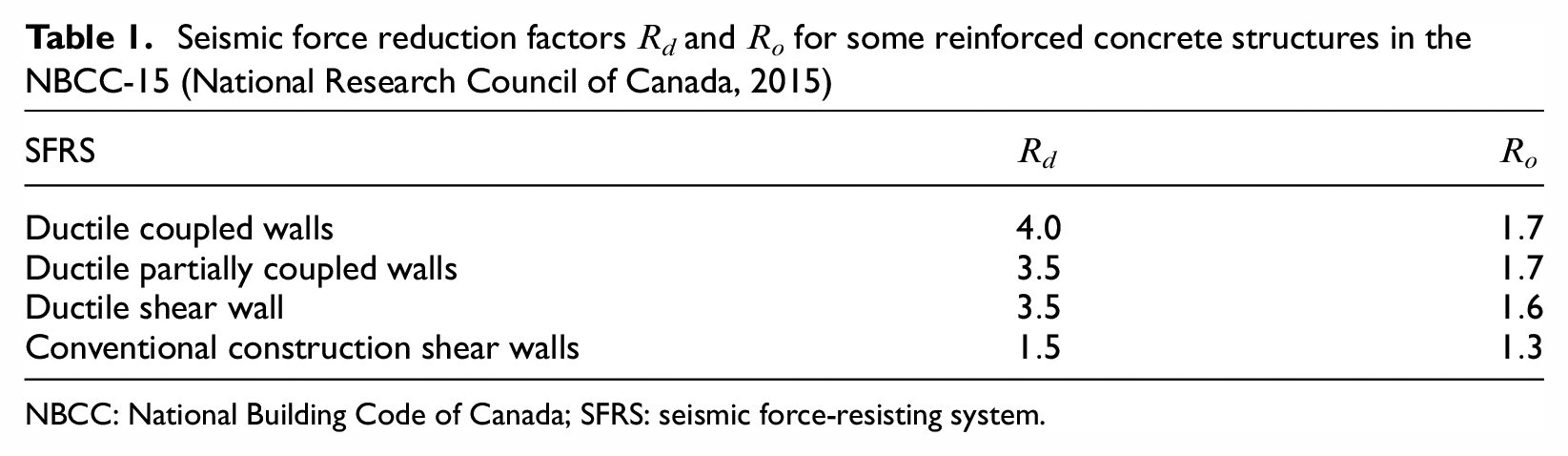
NBCC: National Building Code of Canada; SFRS: seismic force-resisting system.
Capacity design is used in the Canadian and New Zealand codes to prevent undesirable failure mechanisms and allow energy dissipation through inelastic behavior. It is basically a three-step process (Maffei and Yuen, 2007; Paulay and Priestley, 1992):
Select a desirable ductile inelastic mode of deformation, which, in the case of a shear wall structure, is based on the formation of a flexural plastic hinge at the base of the wall;
Detail the walls to have sufficient ductility according to the ductility level
Design all other elements and actions of the structures to remain in the elastic range. In the particular case of walls, shear behavior should remain elastic.
As mentioned, among the failure mechanisms, shear failure prior to the development of a plastic hinge at the base should be avoided since such failures occur suddenly and limit the ability of the structure to dissipate energy during subsequent loading cycles. To prevent these failure modes, the shear strength must be greater than the required demand to allow the development of the wall probable flexural capacity at the base. To ensure a hierarchy of failure of a structure, the A23.3-14 Design of Concrete Structure Standard (CSA, 2014) defines three classes of resistance: (1) the factored resistance,
To prevent shear failure, capacity design requires the cantilever wall factored shear resistance to be sufficient to resist the shear force corresponding to the development of the probable flexural resistance at the base of the wall. Assuming a linear relationship between the shear force and the bending moment, this requirement is satisfied using the factored shear force envelope corresponding to the probable moment resistance at the base. The shear envelope is further increased by a factor of

where
Review of the inelastic higher mode response of reinforcedconcrete shear walls
The linear dynamic behavior of structures can be described by the superposition of the responses of the different modes of vibration. These modes depend essentially on the mass and stiffness distribution over the entire height of the building. The equivalent static procedure proposed in building codes is based on the first mode response. This procedure is adequate for predicting the lateral displacement of multistory structures but not for the shear force distribution over the height of the structure, which depends on the frequencies squared and, therefore, more heavily on the higher modes. In the equivalent static force procedure, this distribution is usually addressed using an additional force at the top of the building and, sometimes, with an elastic shear amplification factor. Linear dynamic analysis using a combination of spectral responses is now the recommended procedure for seismic design in most modern codes, such as the 2015 National Building Code of Canada (NBCC-15; National Research Council of Canada, 2015), and these shear amplifications are automatically considered by using an appropriate number of modes whose sum of modal masses represents a specified minimum value of the total mass of the structure, usually 90%. This well-known phenomenon is not the subject of this research program, which concentrates on the unexpected additional shear amplification that comes after yielding at the base of shear walls designed according to the capacity design method, as shown by recent research. Recall that, in the capacity design method, the shear force is amplified to avoid shear failure after forming a flexural plastic hinge at the base of cantilever walls. At a given instant during seismic responses, when the flexural plastic hinge is fully developed, the shear force will be influenced much more by the higher modes, whose shapes and associated periods do not change considerably depending on whether the base of the wall is hinged or fixed, than by the first mode, whose shape changes and associated period lengthens when a plastic hinge is formed at the base, substantially reducing its participation. Another way to consider this problem is illustrated in Figure 1, which shows the distribution of seismic forces predicted by nonlinear dynamic analysis of a 12-story shear wall structure under the action of a given earthquake at the time of maximum shear force at the base (Boivin and Paultre, 2010). The distribution of the elastic lateral seismic forces determined using a response spectrum analysis is shown in Figure 1b for the factored seismic loads and in Figure 1c when the base moment reaches the probable resistance
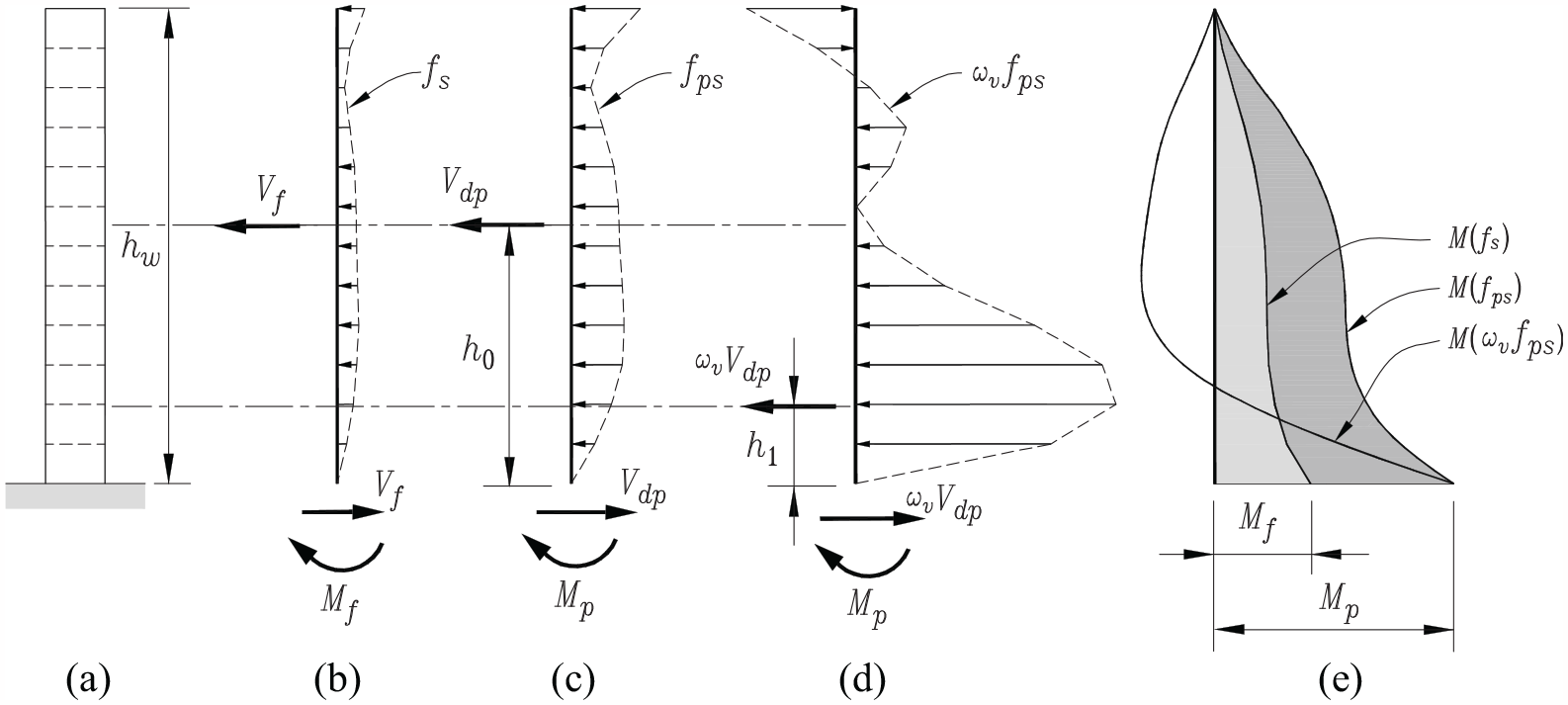
Inelastic higher mode effects on lateral seismic force distributions: (a) shear wall, (b) factored lateral seismic forces, (c) amplified lateral seismic forces for capacity design, (d) lateral seismic forces at maximum base shear during NLTHA, and (e) overturning moment envelopes for factored loads, capacity design and at the maximum base shear during NLTHA (Boivin and Paultre, 2010).
In the case of coupled walls, the capacity design procedure requires that all coupling beams should reach their yielding capacity before the formation of plastic hinges at the base of the walls. This design procedure changes the behavior of coupled walls compared to single walls. Therefore, the shear response of the former system must be studied. Indeed, Lybas (1981) seems to be the first to experimentally observe the effects of higher modes on the shear response of coupled walls. His research showed that the second lateral mode response had a major effect on the shear demand at the base and that the contribution of higher modes to the total response increased as the strength and stiffness of coupling beams decreased. He also noted that the shear demand exceeded the values consistent with the flexural failure mechanism because of the contribution of the second mode.
Shear amplification in cantilever walls in the New Zealand standard and the ACI code
Blakeley et al. (1975) were the first to study the higher mode effects on the shear and flexural demand from structural walls during earthquakes. Their work led to the adoption in the New Zealand Standard (2006) of a correction factor,

where
Since the work of Blakeley et al. (1975), much research has been conducted on this subject, and an extensive list of publications is currently available. However, a consensus does not yet seem available. In addition, the correction factors proposed in North American codes were generally derived for isolated walls. Their application to coupled walls has not yet been investigated, although some design codes recommend the same amplification for walls and coupled walls. Reviews of inelastic shear amplification due to higher mode effects in cantilever shear walls have been presented in Boivin and Paultre (2012b), Rutenberg (2013) and Fatemi et al. (2020).
Shear amplification in the CSA A23.3-14 standard
Recent nonlinear numerical studies of cantilever walls have shown that an amplification factor, varying linearly from 1 to 2 as a function of the flexural overstrength and the fundamental period of vibration, is needed to safely estimate the seismic shear demand (Boivin and Paultre, 2012b; Dezhdar, 2012). However, the amplification factor in the CSA A23.3-14 standard has been limited to

in which:

and:

where

The precise definition of
Methodology
The main objective of this research is to study the seismic shear amplification in coupled shear walls when using a capacity design approach. A parametric study was therefore carried out to identify and quantify the influence of selected parameters on the shear demand. The following methodology was adopted:
Select studied parameters based on previous study results;
Select ground motions according to the most recent methods;
Design the walls and coupling beams for each case study;
Compare the shear demands obtained from the design values and NLTHA;
Obtain a shear amplification factor that can be used for coupled wall systems.
Studied parameters
The selection of the parameters was based on isolated wall results from previous works (Boivin and Paultre, 2012a; Dezhdar, 2012) and on coupled wall analyses where it was noted that the coupling beams may influence the shear response (Pennucci et al., 2015). The parameters studied in this research are listed in the following:
Fundamental period of vibration,
Degree of coupling (DOC) (defined below);
Flexural overstrength at the base,
Shear design method; and
Geographical location of the structures.
The fundamental period corresponds to the first elastic period of numerical models according to the requirements of NBCC-15 and CSA A23.3-14. In these models, the section properties are reduced to consider concrete cracking. The geometries of these models were chosen such that the fundamental period calculated from the finite element analysis was between

where
The degree of coupling (DOC) is defined as the ratio of the base overturning moment caused by axial forces in the wall piers and resulting from the shear transmitted by the coupling beams to the total factored seismic base overturning moment:

where

where

and

where

where

The parameters of Equation (9) are illustrated in Figure 2. The wall piers are called compression or traction walls depending on whether the shear transmitted by the coupling beams increases or decreases the compression force due to the gravity loads acting on each wall. Wall systems with a DOC less than 66% are defined as partially coupled walls, while the term coupled walls is used to describe those with a DOC greater than 66% in the NBCC-15 and the CSA A23.3-14 standard (see Table 1). In this research program, the DOC was adjusted by modifying the slenderness of the walls and the height-to-length ratio of the coupling beams and was assessed using the simplified equivalent seismic static (triangular) lateral forces distribution as recommended by the NBCC-15.
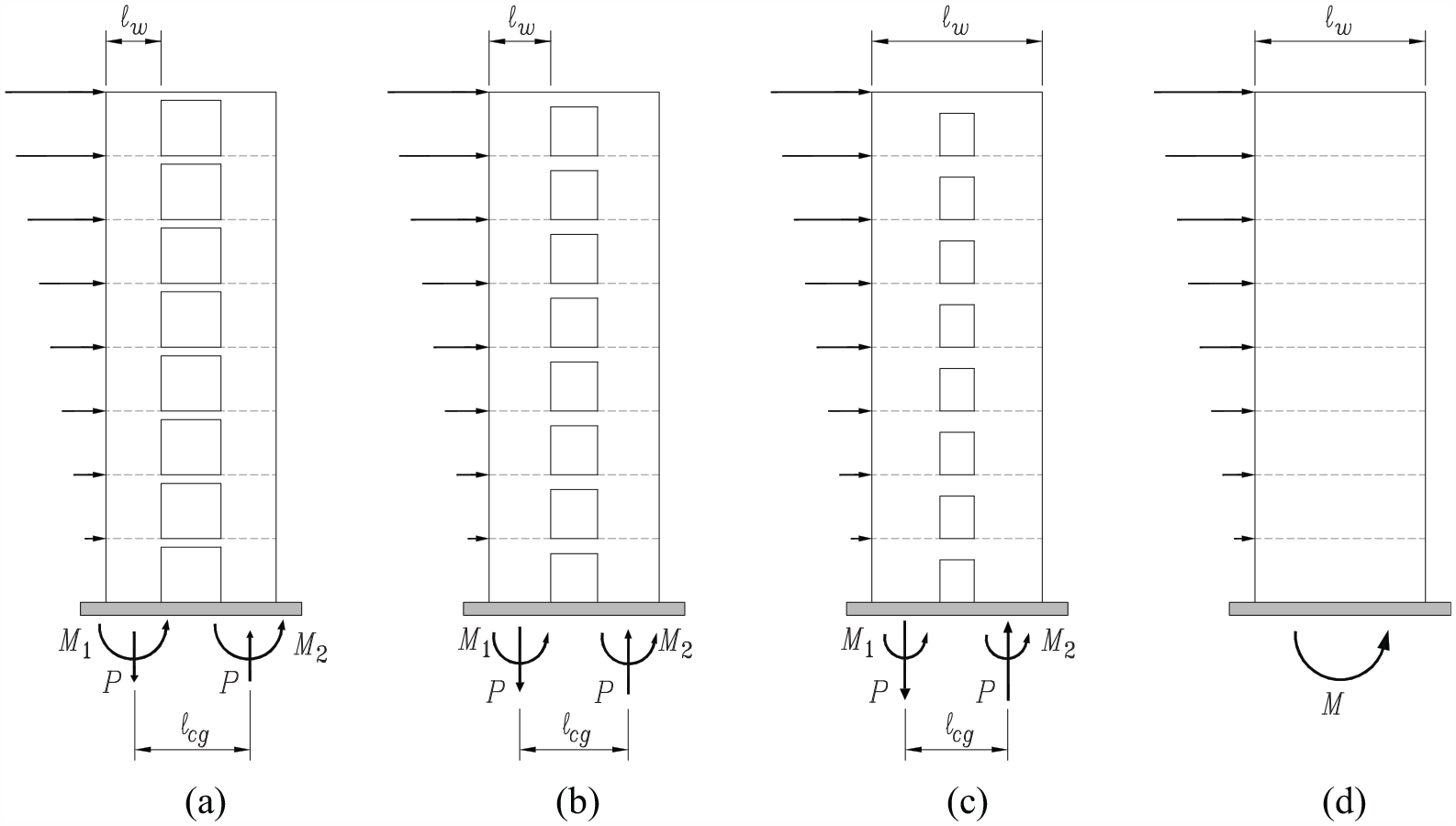
Geometry of systems: (a) weakly coupled, (b) moderately coupled, (c) strongly coupled, and (d) cantilever walls.
Two regions of Canada were selected to study the effect of the frequency content on the seismic shear demand. For western North America, the city of Vancouver was chosen because it is the Canadian city with the highest seismic risk. For eastern North America, the city of Baie-Saint-Paul was chosen because of its significant seismic hazard, allowing greater control of
The walls were designed for type D soil conditions with average shear wave velocities in the top
Varying parameter values of coupled walls for the parametric study
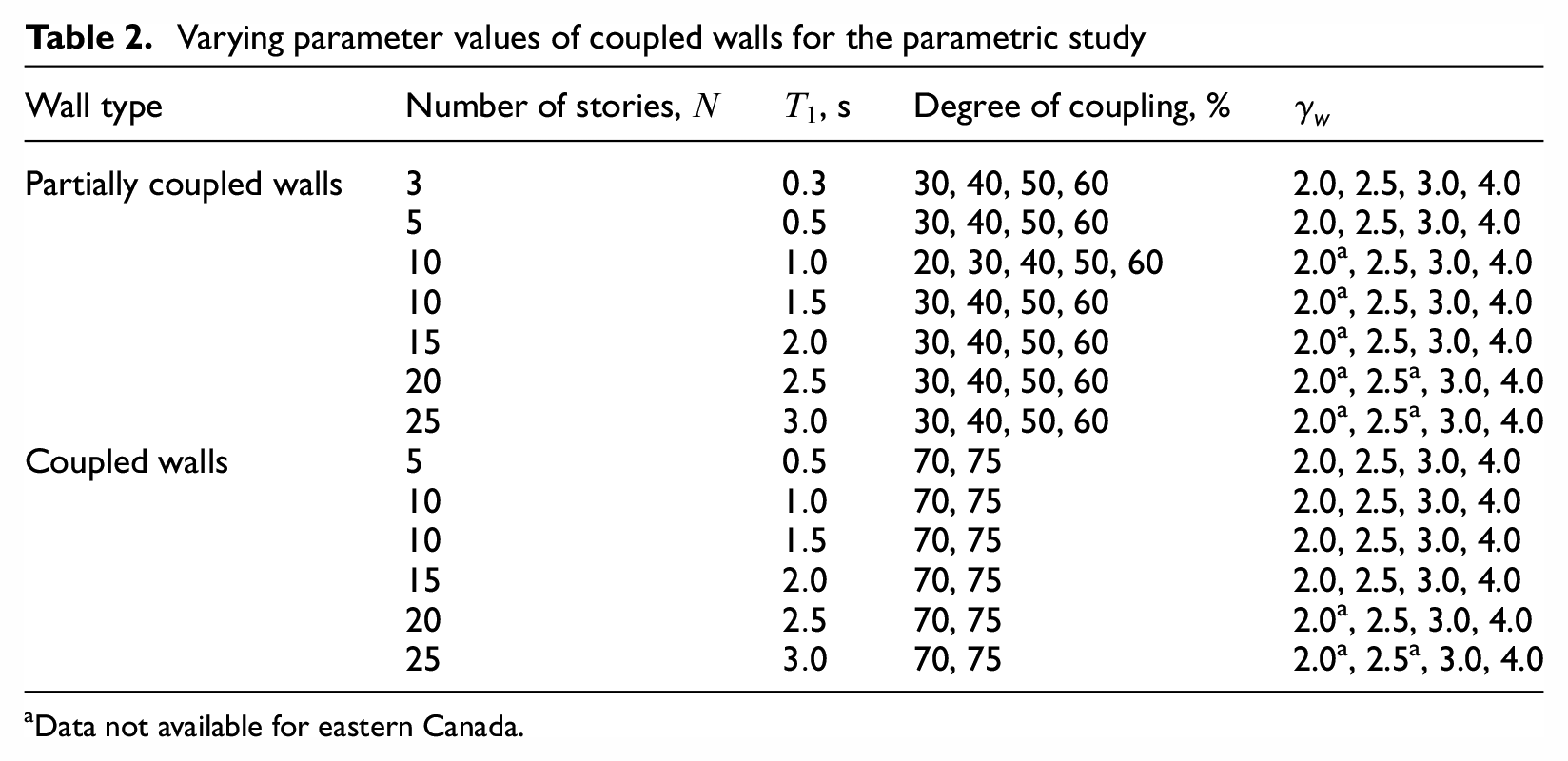
aData not available for eastern Canada.
Record selection
The NBCC-15 UHS has often been used as a target spectrum for record selection. These spectra are, however, too conservative for record selection because they represent the envelope of the spectral responses at all periods with a 2% probability of exceedance in 50 years. Thus, they do not represent the spectra of any single seismic event (Baker, 2011). Furthermore, the variability of the response is reduced when UHS-compatible records are used in NLTHA, and the randomness of a seismic response may not be well represented (Dezhdar and Adebar, 2015).
An interesting alternative, proposed by Baker (2011), is to select ground motions compatible with the conditional spectrum. These spectra consider the variability and uncertainty of earthquakes. They are more representative of real earthquakes that produce a spectral acceleration
The first step in the construction of the conditional spectrum is to identify the seismic scenario with mean magnitude/distance (
For each of the seven selected conditional periods, a set of 40 historical records were selected and scaled for Western Canada and Eastern Canada sites, resulting in
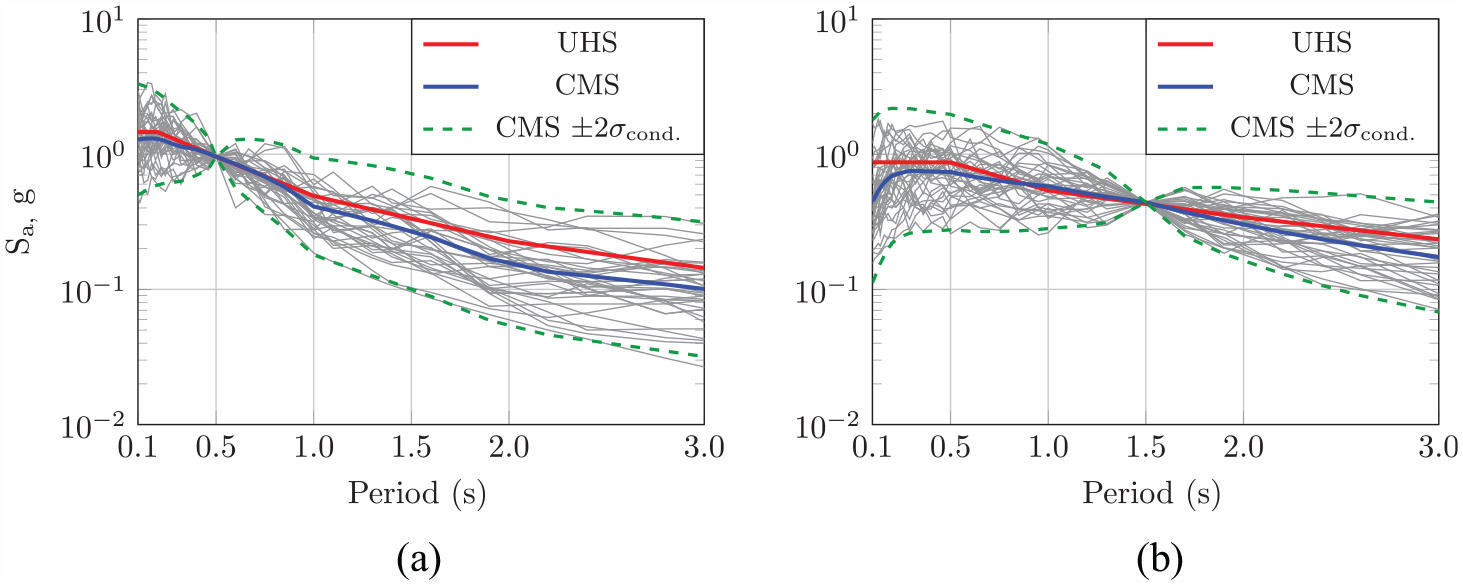
Uniform hazard spectrum (UHS), conditional mean spectrum (CMS), and response spectra for historical records conditioned on (a) a
Shear design of coupled walls
As mentioned, the design of coupled shear walls is analogous to the strong-column weak-beam procedure in frames in which yielding of all coupling beams precedes the formation of plastic hinges at the base of the walls as shown in Figure 4a. The elastic distribution of the shear forces in coupling beams over the height of coupled wall systems is typical, with very large shear forces in the lower one-third to one-half of height of the system, with a rapid reduction in the shear force amplitude toward the top of the system as shown by the solid line in Figure 4b. Two types of coupling beam reinforcements are recommended to resist the shear stresses in the coupling beams. For
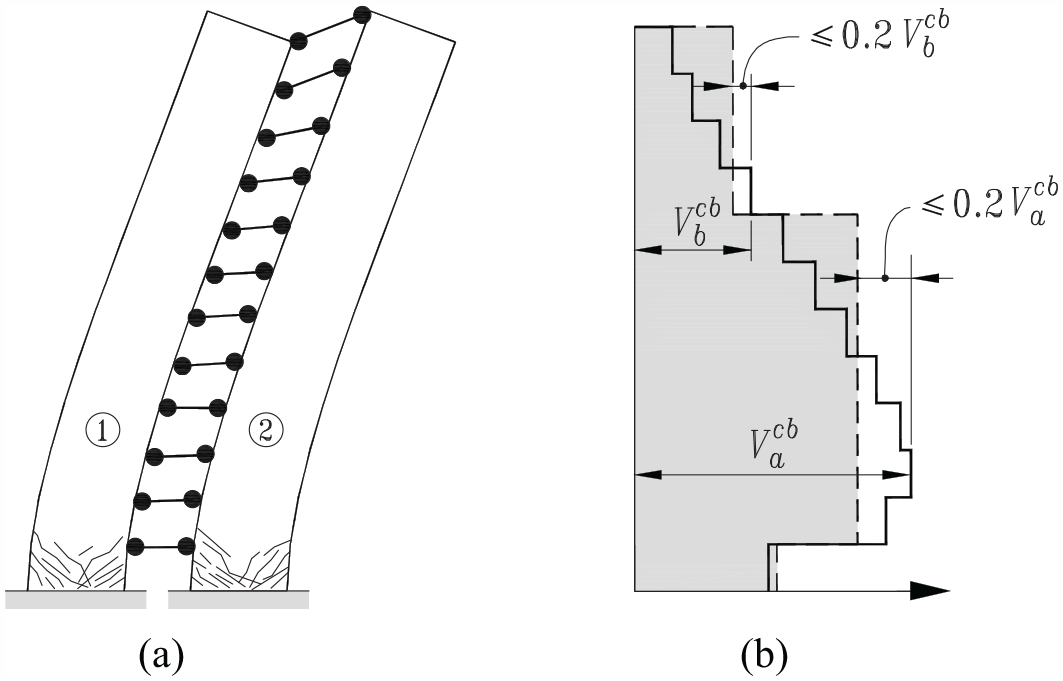
Shear design of coupling beams in a coupled wall system: (a) energy dissipating mechanism and (b) shear force distribution in coupling beams and redistribution of shear forces over the height of the structure.
Because the coupling action of structural walls linked by properly designed slabs or shallow beams (see Figure 2a) is negligible, these walls can be considered two isolated cantilevered walls. For these systems, both walls of the symmetrically reinforced, rectangular SFRS will have the same probable flexural overstrength because the axial forces resulting from the shear transmitted by the coupling beams are low compared to the gravity loads. However, in the case of moderately coupled walls with
Shear design envelope for ductile partially coupled walls
In the case of ductile partially coupled walls with
Shear design envelope for ductile coupled walls
To determine the shear design envelope of coupled wall systems with a high DOC, the approach recommended by Paulay and Priestley (1992) in which, according to the capacity design method, the factored shear envelope is amplified by the ratio
Determination of the nominal and probable flexural overstrengths
The probable flexural overstrength is used to determine the amplified design shear envelope according to capacity design procedures, while the nominal flexural overstrength is used to further increase the shear envelope to account for the shear amplification due to inelastic higher mode effects. It indicates the capacity reserve that the walls possess compared to the factored moment resistance required to resist the factored design forces. In the CSA A23.3-14 standard, the axial force (

where

where
The determination of the probable moment resistance,
Modeling for inelastic analyses
Nonlinear analyses were performed with OpenSees (OS) software (McKenna et al., 2010). The walls were modeled with the multilayered beam-column elements as shown in Figure 5c. The number of degrees of freedom is greatly reduced with this model, which considerably reduces the computation time compared to full finite element modeling. The cross section of this line element is subdivided into multiple layers of concrete and steel, for which a material behavioral law is specified. The uniaxial concrete behavior was modeled with the Concrete06 model Popovics (1973), while the reinforcement was modeled with the Steel02 law, which considers strain hardening and the Bauschinger effect. The fiber elements neglect the interaction between the shear, flexure, and axial load because their formulation is based on Euler–Bernoulli beam theory. Thus, the shear deformations were considered uncoupled with an elastic behavior. P-delta effects were considered through a corotational transformation. The walls were modeled with one force-based beam column element per story with five integration points. The mass of the building was concentrated on each floor.
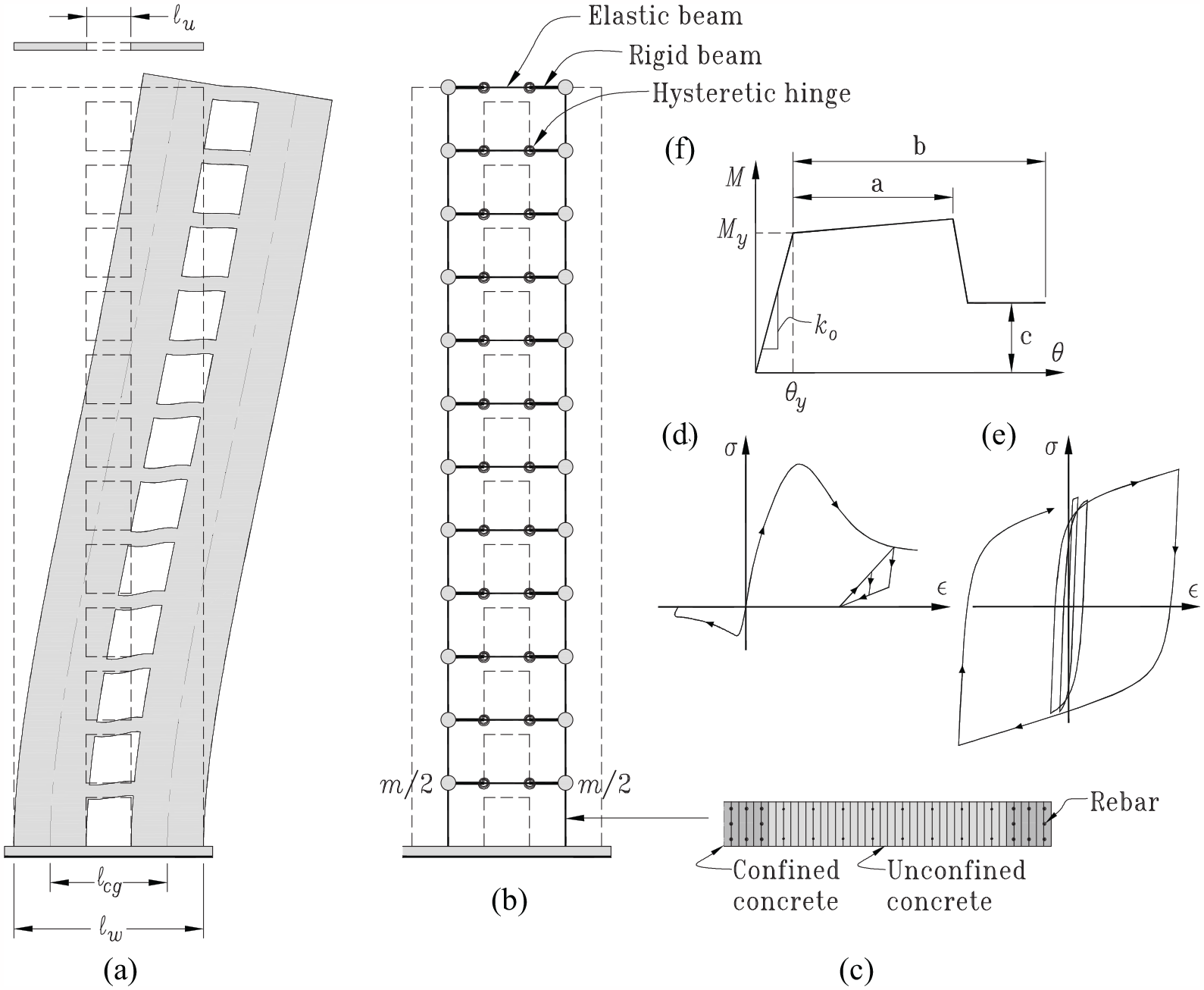
Modeling of coupled walls in OpenSees: (a) wall system, (b) finite element model, (c) layered beam-column element, (d) Concrete06 behavioral model, (e) Steel02 behavioral model, and (f) backbone of zero-length rotational spring element at the end of coupling beams.
The coupling beams were modeled with linear beam elements with concentrated zero-length hysteretic hinges at both ends since yielding is expected at the ends of the coupling beams. The initial stiffness of these hinges was calculated from an effective inertia using the expression proposed by Son Vu et al. (2014) for conventionally and diagonally reinforced coupling beams. A chord rotation model, according to ASCE 41 (ASCE, 2014), was used to estimate the end yield moment as a function of the yield rotation, resulting in an initial stiffness,

where

for conventional shear reinforcement and

for diagonal shear reinforcement, in which
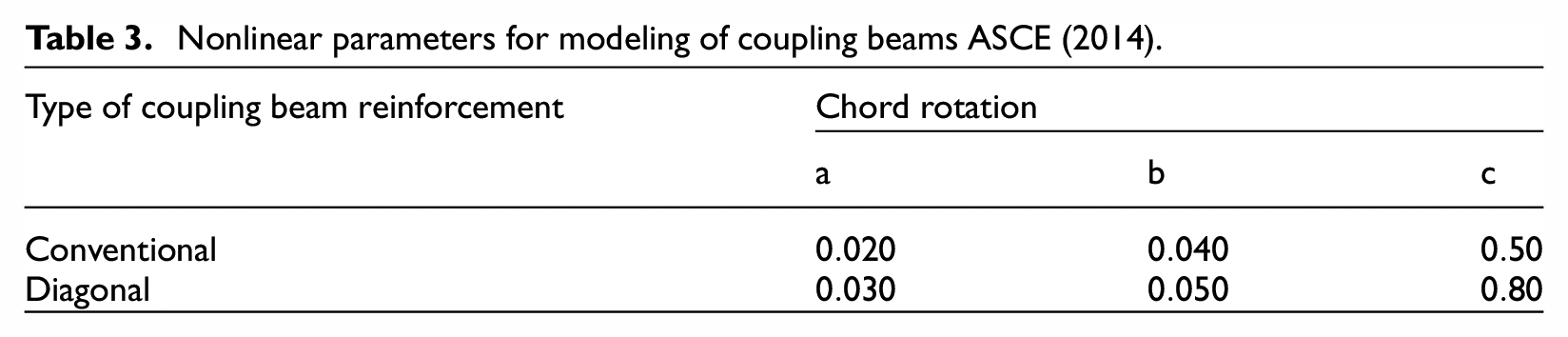
The moment-rotation behavior was described with the modified Ibarra-Medina-Krawinkler deterioration model with a bilinear hysteretic response (Ibarra et al., 2005; Lignos and Krawinkler, 2011). The parameters
Nonlinear parameters for modeling of coupling beams ASCE (2014).
In the nonlinear response, energy dissipation is primarily due to hysteretic damping from the inelastic deformation of the structure. However, other mechanisms, such as internal damping, are present when structures exhibit dynamic behavior. These mechanisms are difficult to quantify and are generally modeled with Rayleigh damping. In this approach, the damping matrix is chosen to be proportional to the mass and stiffness matrices. The fundamental period lengthening will lead to an increase in the modal damping ratio and cause unrealistically large damping forces compared to the internal forces in the equation of motion (Hall, 2006). To limit these problems, the updated tangent stiffness matrix should be used at each step of the time-history analyses to define the stiffness proportional term for a system when no abrupt changes in stiffness, such as the systems analyzed in this research program, occur (Charney, 2008).
Damping ratios between 1% and 2% were measured on undamaged reinforced concrete structural walls (Boroschek and Yáñez, 2000). ATC-72-1 (2010) recommends the use of Rayleigh damping for nonlinear dynamic analyses with a damping ratio between 2% and 5%. However, recent numerical analyses have shown that the higher mode effects could be hidden when a 5% damping ratio is considered (Boivin and Paultre, 2010). Thus, a Rayleigh damping model proportional to the mass matrix and the tangent stiffness matrix with a damping ratio of 2% for the first and last lateral modes was considered to construct the damping matrix for the NLTHA.
Dynamic analysis results
The seismic shear amplification factors at the base shown in Figures 6 to 8 were calculated from the average results of 40 ground motions compatible with the conditional spectra. They represent the ratio between the maximum shear demand (
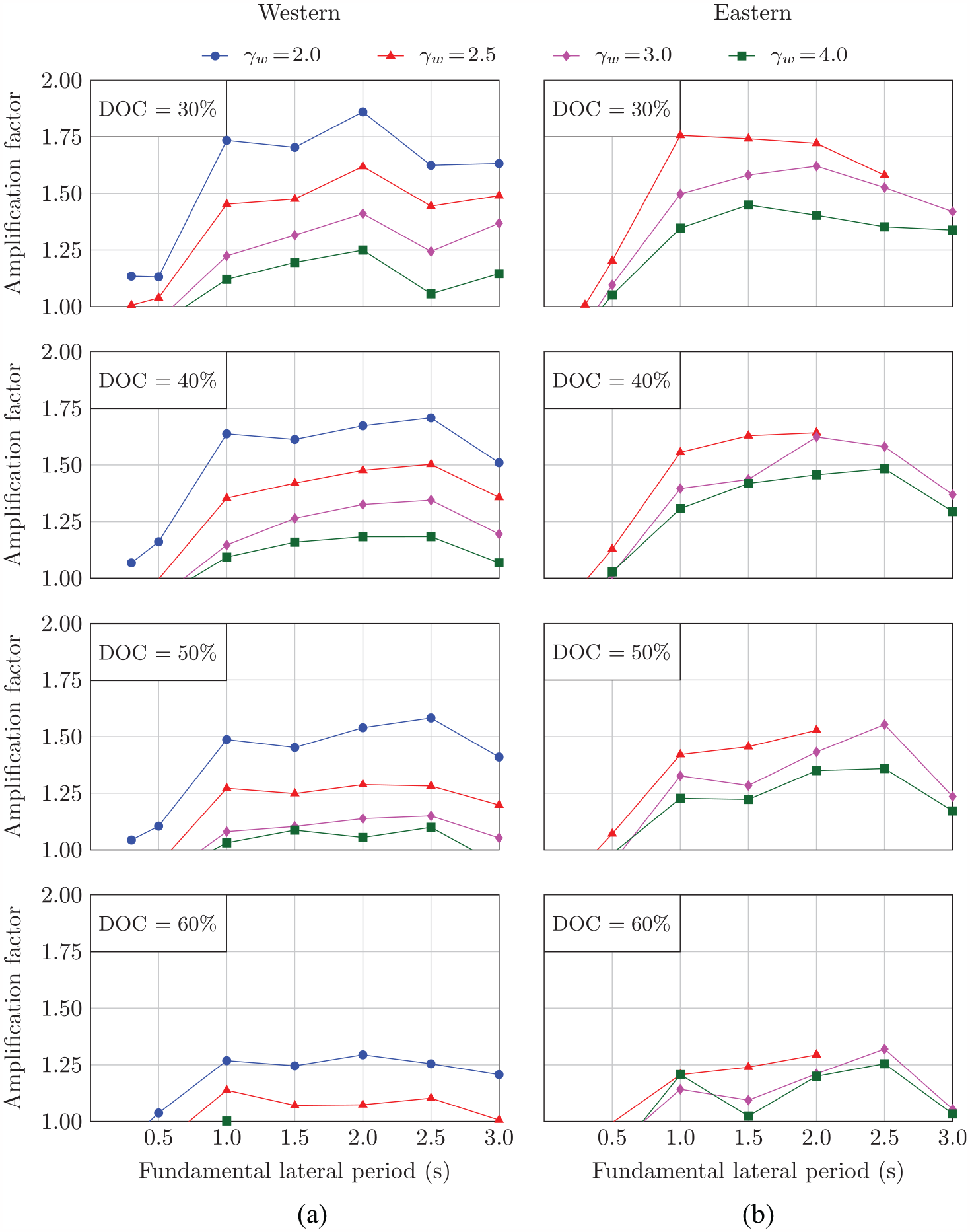
Seismic shear amplification factor for partially coupled shear walls for different DOC values for (a) Western Canada and (b) Eastern Canada.
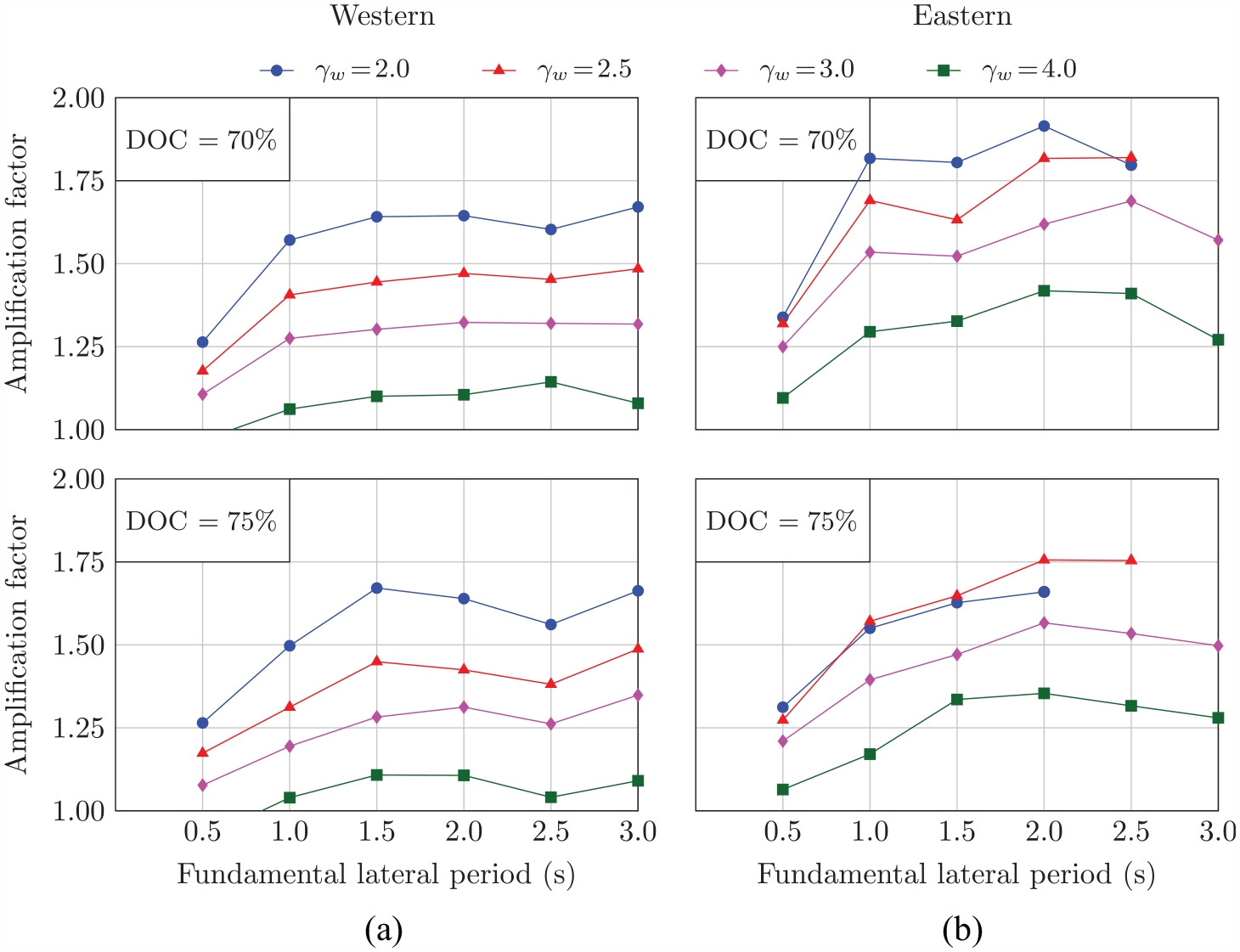
Seismic shear amplification factor for fully coupled shear walls with
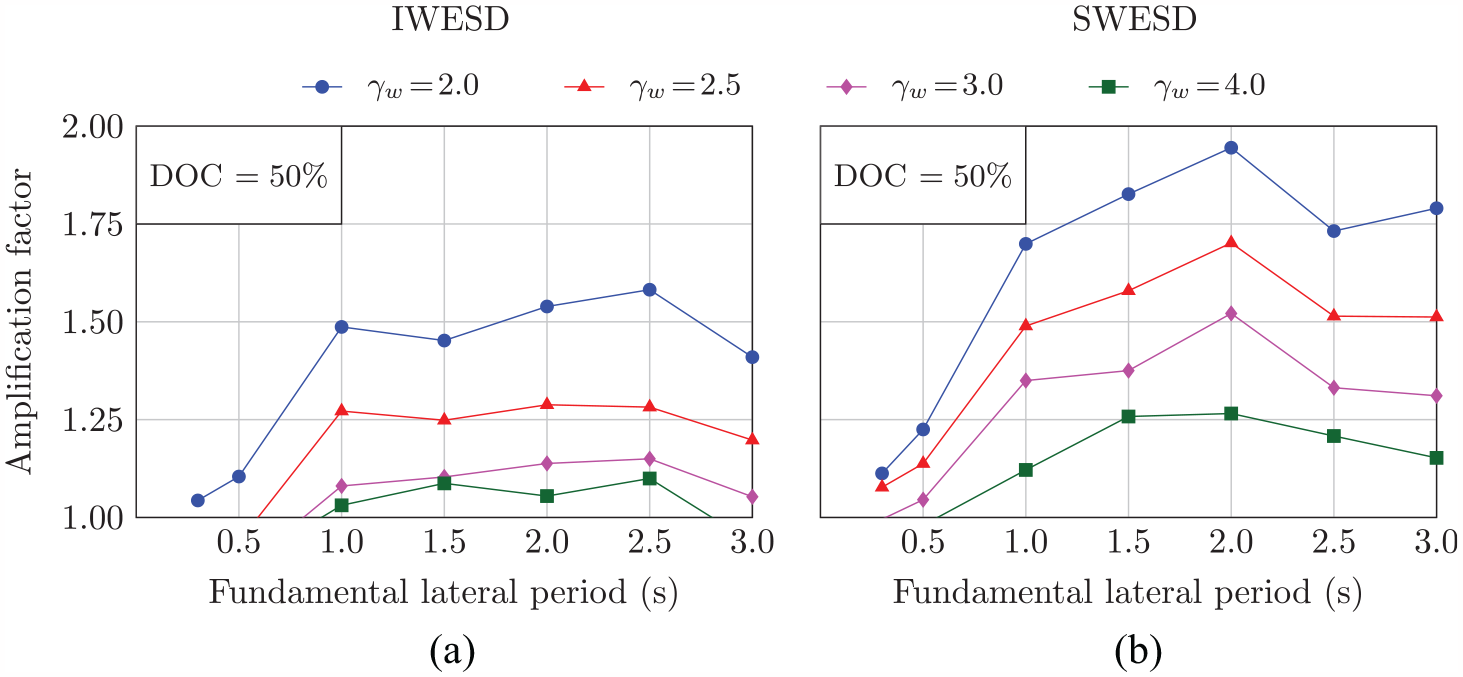
Influence of the design method on the seismic shear amplification factor of partially coupled walls (
For partially coupled walls designed with the IWESD approach (see Figure 6),
As stated earlier, shear design envelopes differ between the IWESD and SWESD approaches. It is complex to define a specific DOC value for which a design method should be favored. Figure 8 shows the influence of the design approach on the seismic shear amplification factor for partially coupled walls with a DOC of 50% located in Vancouver. As can be seen, both methods tend to generally underestimate the shear demand, while the IWESD method could overestimate the shear force in systems with large overstrength values. Both techniques could be used for design if an appropriate correction factor is considered to amplify the design shear demand when redistribution of the shear forces between the two walls is allowed, as the SWESD method is based on this assumption.
Influence of flexural overstrength at the base
The results from these nonlinear analyses show that the shear amplification decreases with increasing nominal flexural overstrength at the base. Because design forces are higher as the flexural capacity is increased, this leads to a reduction in the shear amplification factor. This influence of the nominal flexural overstrength at the base is observed independent of the period for every DOC value studied. Furthermore, ground motions compatible with the conditional spectra conditioned at frequencies higher than the fundamental one led to a higher shear demand, while the flexural demand at the base was reduced. Thus, the flexural demand at the base predicted by NLTHAs was generally lower than the probable flexural resistance from the CSA A23.3-14 standard for high flexural overstrength values.
Influence of the fundamental period
Seismic shear amplification is also a function of the fundamental period of vibration. Its influence on the shear demand of coupled and partially coupled walls is more significant when the period increases from
Influence of the degree of coupling
The degree of coupling is the third parameter that showed the highest influence on the shear amplification. As observed in Figure 6, the dynamic amplification decreases with the DOC. For low DOC values, the results tend toward those of isolated shear walls, while for DOCs near 60%, the actual provisions of capacity design in CSA A23.3-14 are adequate for estimating shear demand for
Strongly coupled walls are designed to exhibit similar behavior to isolated walls with openings. These systems, designed according to the SWESD method as part of this study, will present a lower shear demand than shear walls. The coupling beams are expected to contribute in a more substantial way to the hysteretic damping in coupled wall systems. In addition, yielding of coupling beams leads to a greater increase in higher mode periods, which contributes to a reduction in the shear demand of these modes.
Proposed modification of the capacity design in CSA A23.3
The amplification of shear forces by a factor

where

is a correction factor introduced to consider the influence of the DOC on the seismic shear amplification in the expression recommended in the CSA A23.3-14 standard,
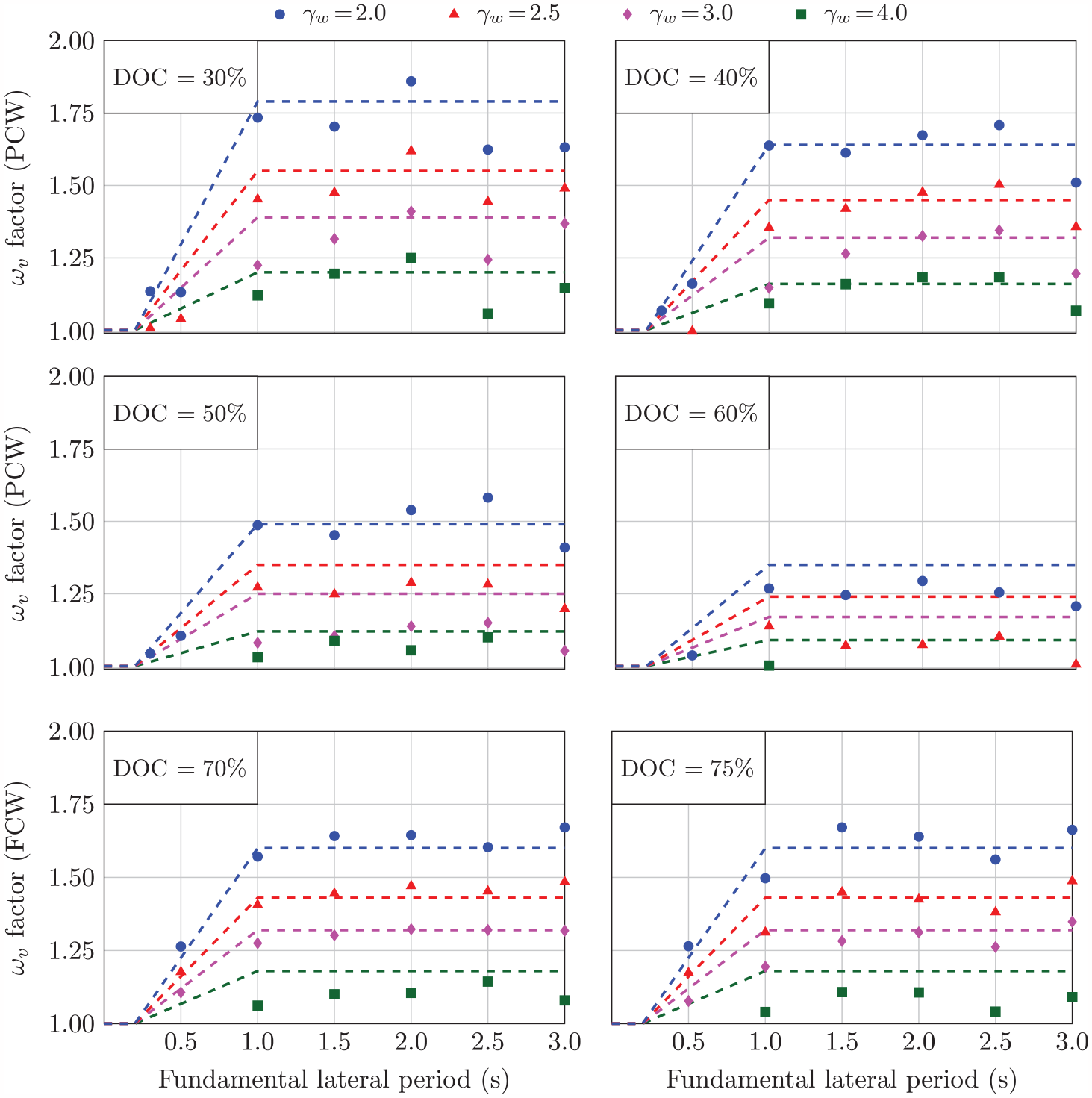
Proposed amplification factor for the seismic shear envelope in partially and fully coupled walls in comparison with the numerical results for Vancouver for different values of DOC.
The proposed
Discussion
Nonlinear analyses have shown that the seismic shear amplification may be higher in eastern Canada, which is characterized by earthquakes with a high-frequency content. The decision was made to neglect the influence of the design spectrum shape in the above proposition since only two cities have been studied, and the seismic risk is low in eastern regions with high seismic hazard. This parameter could have been expressed as the ratio
The proposed design method was developed for ductile, rectangular, and isolated coupled walls. Current CSA standard provisions extend the use of the amplification factor to moderately ductile shear walls. For the case of moderately ductile coupled walls, fewer inelastic deformations are expected in the coupling beams since they are designed for higher loads. This design will lead to a reduction of the hysteretic damping, and elongation of higher mode periods is expected to be less important. Thus, the DOC may have a lesser effect on moderately ductile systems, and the proposed method may underestimate the shear demand. However, moderately ductile coupled walls generally present lower
The
Conclusion
This research program focused on the seismic shear demand for reinforced concrete, ductile, partially, and fully coupled walls. To the authors’ knowledge, no parametric study of this extent had been conducted on this subject. Shear amplification due to higher mode effects is now well known for cantilevered RC walls and has been the subject of several numerical and experimental studies. Since 2014, the CSA A23.3 standard has recommended a simple way to amplify shear forces to account for inelastic higher mode effects. However, this factor only applies to isolated single walls, and no indication is currently available for the quantification of higher mode amplification in ductile coupled walls. Recent research has shown lower amplification of the shear demand for coupled and partially coupled walls, which is attributable to the presence of coupling beams in each story. The results of this research have shown that the shear amplification due to higher mode effects is substantial in coupled and partially coupled walls and must therefore be considered. The influence of the studied parameters was also quantified, and changes to the capacity design of coupled walls in the CSA A23.3 are proposed. These changes can be incorporated into other North American codes. The proposed changes are based on the results of a parametric study, whose important conclusions are summarized in the following:
Contrary to what is believed, a shear amplification occurs in coupled shear walls due to inelastic higher mode effects.
This shear amplification factor decreases with increasing nominal flexural overstrength,
The higher mode effects on the shear response increase linearly up to a value of the fundamental period
The shear amplification is more important for the eastern North America region, where earthquakes are characterized by a high-frequency content. However, more analyses are required with different hazards to specify a spectral shape-related amplification factor.
The probable shear at the base is strongly dependent on the shear design approach used, and thus, a different shear amplification factor due to inelastic higher mode effects has to be employed. This research suggest a limit on the DOC when the shear design should be based on the most heavily loaded wall (IWESD) (
Footnotes
Appendix 1
Declaration of conflicting interests
The author(s) declared no potential conflicts of interest with respect to the research, authorship, and/or publication of this article.
Funding
The author(s) disclosed receipt of the following financial support for the research, authorship, and/or publication of this article: The authors gratefully acknowledge the financial support of the Natural Sciences and Engineering Research Council of Canada (NSERC) and the Fonds de Recherche du Quebec—Nature et Technologies (FRQNT). The authors also acknowledge the financial support of the Interuniversity Research Center for the study of structures under extreme loads (CEISCE) and the Earthquake Engineering and Dynamics of Structures Research Center of the University of Sherbrooke.
