




Abstract
Earthquake affected households too often insufficiently apply seismic construction knowledge during reconstruction. This study aims to assess to what degree safety guidelines have found their way to practice in Nepal. Differences are explored between communities in the Gorkha and Okhaldhunga districts, which received differing levels of technical assistance following the 2015 earthquakes. Seismic resistance of houses was assessed 3 years after the earthquakes. Findings from 955 houses in 25 communities show high degrees of adoption of earthquake-resistant construction knowledge in all selected communities. Variation in safer construction across communities differs only slightly for different intensities of humanitarian technical assistance. This finding points toward the need to more closely examine the communication methods employed and motivations of households to build back safer.
Keywords
Introduction
Disasters disproportionally impact low- to low middle-income countries, accounting for 80% of the global life years lost due to disasters (World Bank Group and GFDRR, 2016). 56% of disaster fatalities are caused by earthquakes and these can largely be attributed to poorly constructed dwellings (Wallemacq and House, 2018). Hence, it is increasingly important to reduce seismic vulnerability and to invest in “Build Back Safer” methods of housing reconstruction after earthquakes (United Nations Office for Disaster Risk Reduction (UNISDR), 2015).
For marginalized communities, it is crucial to understand which housing safety measures are essential and achievable (Tran, 2015). Humanitarian organizations often provide technical assistance. However, it is unclear how the earthquake resistance of reconstructed housing differs for different intensities of humanitarian technical assistance (United Nations Human Settlements Programme (UN-Habitat) and AXA, 2019). In addition, little empirical research examines how communities self-recover after a disaster, when they are left to reconstruct with little to no technical assistance, using their own resources and knowledge (Hendriks and Opdyke, 2020; Maynard et al., 2017; Twigg et al., 2017). Furthermore, humanitarian assistance only reaches a small percentage of disaster-affected populations (Morel and Global Shelter Cluster, 2018). The percentage of underfunded emergencies is rising, in part because the global demand for emergency shelter and permanent housing after disaster is outpacing donor investments in humanitarian activities (Development Initiatives, 2018; UN CERF, 2019). This research will take the first step toward addressing these gaps in post-disaster reconstruction, focusing on decision-making outcomes of low-income disaster affected communities and the adoption of technical construction principles.
This study describes the earthquake resistance of reconstructed housing in communities that received varying degree of technical assistance following the 2015 Gorkha earthquake in Nepal. We describe the safety of housing through structural assessments of 955 houses. Based on guidelines in Nepal, we developed an earthquake resistance assessment tool to evaluate reconstructed houses and unpack contributing technical assistance dimensions. This study provides a foundation for future work exploring knowledge adoption processes in post-disaster reconstruction. Therefore, we question:
RQ: How were earthquake-resistant construction techniques applied in housing reconstruction after the 2015 Gorkha earthquakes in Nepal for different intensities for humanitarian technical assistance?
Research setting
On 24 April 2015, a devastating earthquake of magnitude 7.8, with an epicenter in the Gorkha district, and multiple aftershocks hit central Nepal, affecting 5.4 million people and killing another 9000 (National Planning Commission (NPC), 2015). Over 490,000 homes were destroyed and another 265,000 were damaged (NPC, 2015). Nepal was already one of the poorest countries in Asia, and due to the earthquake, its economy lost approximately one-third of its GDP (NPC, 2015). An estimated 81% of damaged buildings were in rural areas. Totally damaged housing consisted primarily (95%) of low-strength masonry using natural stones; from which the majority was constructed using a mud mortar (NPC, 2015). In affected areas, National Society for Earthquake Technology—Nepal (NSET, 2017) estimated that 67% of the housing stock had to be demolished and fully rebuild, and 14% required retrofits. Stone and mud typologies were the most vulnerable and required the highest replacement rate. 59% of the total estimated losses were stone and mud typologies compared to 9% reinforced concrete buildings. Observations showed that the primary failure of structures was linked to the lack of hazard-resistant construction techniques. Dizhur et al. (2016) analyzed performance of unreinforced masonry and infilled reinforced concrete buildings during the earthquakes, finding that unreinforced masonry primarily failed due to (1) the lack of integrity between walls as well as lack of connection between the walls and floor/roof diaphragms, (2) movement of floor diaphragms relative to the load-bearing walls, (3) overturning of façades, and (4) out-of-plane wall failures due to roof diaphragm flexibility. These vulnerabilities show the importance of enhancing the seismic resistance of housing structures in Nepal.
Background
Different types of support in Nepal have aimed over the last 50 years to enhance structural safety, including humanitarian technical assistance, building codes, and governmental financial support. Humanitarian technical assistance is a form of recovery support that includes all non-financial and material measures that can be used to support people to build back safer. The measures aim to accelerate the adoption of disaster risk reduction policies and practices. However, the construction of permanent housing for affected households is often outside the mandate of humanitarian organizations. A better understanding of the impact of technical assistance can result in improved implementation of humanitarian interventions (UN-Habitat and AXA, 2019). Evaluations of humanitarian technical assistance in housing reconstruction generally do not reflect upon recovery outcomes outside immediate assistance. Evidence, through comparative studies, is needed to understand the cost effectiveness of technical assistance. To date, there is limited transfer of experience and lacking analysis of technical assistance to achieve aspirational policies. Anecdotal evidence thus far has pointed to technical assistance contributing to successful owner-driven housing outcomes, which this work will seek to more closely examine.
Low-cost earthquake-resistant construction
Substantial scientific advances of seismic-resistant building codes and regulations have emerged in the last several decades. For example, Performance Based Seismic Design translates specific performance targets into design standards to save lives and minimize damage during earthquakes (Bertero and Bertero, 2002; Fajfar, 2000; Leelataviwat et al., 1999; Liu et al., 2005; Poland, 1995; Priestley, 2000). Specific structures can be identified that require full operational performance during earthquakes, where others are permitted to have only lifesaving or near collapse performance. Available technical guidelines for low-cost earthquake-resistant structures are widely known, yet not necessarily widely adopted (Department of Urban Development and Building Construction (DUDBC), 2015b; Laghi et al., 2017; Murty, 2005). There is, however, wide consensus that performance is enhanced by regular geometry, avoiding soft stories, avoiding short columns, reducing the number and size of openings, horizontal bands, vertical support of openings, integrity of walls, profound foundations, and lightweight roofing (DUDBC, 2015b; Laghi et al., 2017; Murty, 2005).
Pre-earthquake structural safety guidelines in Nepal
An earlier earthquake in 1988 resulted in the first Nepalese National Building Code (NBC), from which a series of guidelines and “Mandatory Rules of Thumb” was published in 1994 under NBC 201-205 (DUDBC, 1994a, 1994b, 1994c, 1994d). This building code informed housing design with ready-to-use dimensions and details for both structural and non-structural elements. This included a description of design loads, seismic zoning in Nepal, and soil conditions for structures up to three stories. The Mandatory Rules of Thumb aimed to support mid-level technicians who are not trained in the structural design of buildings and guide qualified engineers. Just before the 2015 Gorkha earthquakes, the Government of Nepal updated their building code but did not publish the final document before the 2015 earthquakes (DUDBC, 2012).
Unlike other building codes, the Nepalese building code originally allowed for vernacular structures, such as non-engineered adobe (Chmutina and Rose, 2018). This original code showed respect for local knowledge and acknowledged its potential value for earthquake resistance and supporting local building techniques. Although the guidelines are primarily based on cement mortared walls, they were also used in Nepal for mud mortar walls, which have a different seismic behavior and can result in inferior safety (Carabbio et al., 2018).
Despite the existence of the building codes in Nepal, there was little evidence that these were actually applied prior to the Gorkha earthquake (Build Change, 2015; Giri, 2013; Oven et al., 2016). Before the Gorkha earthquake, attempts to construct earthquake-resistant housing had been limited and lacked necessary verification of compliance or enforcement by the government (Giri, 2013). Formulated “Mandatory Rules of Thumb” were not simple enough, and guidelines were not applicable to the majority of structures (Giri, 2013; Oven et al., 2016). Common practice for construction workers was typically verbal contracts with limited oversight during construction without any imposed liability (Chmutina and Rose, 2018). There was furthermore no verification process to ensure that buildings were constructed to designs, unless engineers were paid for the supervision and the limited number of municipal engineers could not oversee the large amount of construction activities (Chmutina and Rose, 2018; Giri, 2013). These constraints were also set in a broader cultural context of poor regulatory compliance, limited local capacity, and corruption (Ahmed et al., 2019; Lewis, 2008). Fortunately, evidence suggests that historically people living in seismically active regions develop alternative ways to adapt vernacular houses to seismic risks, showing a number of typologies that survived the earthquakes in rural mountainous areas (Adhikary, 2016; Bosher and Chmutina, 2017; Gautam et al., 2016).
Post-earthquake structural safety guidelines in Nepal
The scale of the 2015 Gorkha earthquake, the inaccessible mountainous terrain, and scattered settlements posed challenges for reconstruction programming. A largely owner-driven reconstruction approach was embraced, where homeowners were responsible for reconstruction, with technical and financial support from the government. The government of Nepal included technical guidelines for earthquake resistance in a renewed national building code. The government also provided a catalogue of earthquake-resistant designs that facilitated application of the building code (DUDBC, 2015b, 2017), and developed retrofitting manuals (DUDBC, 2013, 2015c, 2015d). Although the government attempted to include vernacular construction through exception manuals (National Reconstruction Authority (NRA), 2017), the extensive variety of techniques that existed across the country was not reflected in policies. Due to the restriction by the government on the use of wood, vernacular best practices of houses that survived in the rural areas were overlooked (Adhikary, 2016).
Different types of assessments were used to assess damage, such as rapid visual assessments, modeled earthquake damage estimates, post-disaster needs assessment (PDNA), remote-sensing–based damage assessments, rapid visual engineering building safety assessments, and recovery-oriented housing damage surveys (Lallemant et al., 2017). The Government of Nepal established the NRA that had overall responsibility to provide guidance and oversight of the housing reconstruction program. The NRA engineers used technical inspection guidelines for housing reconstruction in the field, developed by the Government of Nepal in collaboration with invited technical experts from local universities and governmental bodies (NRA, 2016b). This checklist of minimum requirements was used to inspect construction by affected households at different stages for government funded housing reconstruction. A total of 300,000 NPR (Nepalese rupee) (approximately US$2630) per completely damaged house was released in three installments upon completion of each respective construction stage. The checklist included observations of site selection, shape and dimensions, foundation, wall and openings, roof, joints, and material use. In case minimum requirements were not met, technical inspectors of the government could require remedial measurements from the correction or exception manual (NRA, 2017). The protocol for the NRA engineers was a countrywide procedure applied in the most affected districts. The engineers had little possibilities to deviate from these protocols as everything was carefully documented, including photo documentation. Based on our experience in the field, we confirmed only minimal differences in NRA involvement between the communities.
Apart from community-specific humanitarian technical assistance, broader awareness was raised by communicating guidelines. Information, Education, and Communication (IEC) materials were used, including brochures, pamphlets, posters, newsletters, books, billboards, booklets, and training material (NSET, 2017). Posters of the Shelter Cluster, the inter-agency standing committee mechanism for coordination of shelter activities, aimed to highlight 10 key-messages of earthquake-resistant construction techniques in Nepal. These key-messages were based on others scientific studies and the Nepal building code. Additional awareness was raised via radio and television broadcasting (BBC Media Action, 2017).
Methods
This study explored differences in the application of earthquake-resistant construction techniques across communities that received differing levels of technical assistance from humanitarian organizations. The research draws from 955 structural assessments of reconstructed houses, across 25 communities, in two earthquake-affected districts.
Community selection
In total, 32 districts were affected by the earthquakes. The government assigned engineers launched a financial support program for the reconstruction and retrofit of damaged houses. Governmental support was equally provided to all affected districts through the NRA. The 14 most affected districts were prioritized with humanitarian technical assistance which included methods such as door-to-door assistance, demonstration houses, or short informative community gatherings. Not all districts were equally covered by this assistance. Initial analysis of the Housing Recovery and Reconstruction Platform (HRRP) mapped the number of technical assistance activities in each district, shown in Figure 1. We decided to describe the most covered district, Gorkha, and the least covered district, Okhaldhunga, aiming to unpack differences in the structural safety of housing for different intensities of humanitarian technical assistance.
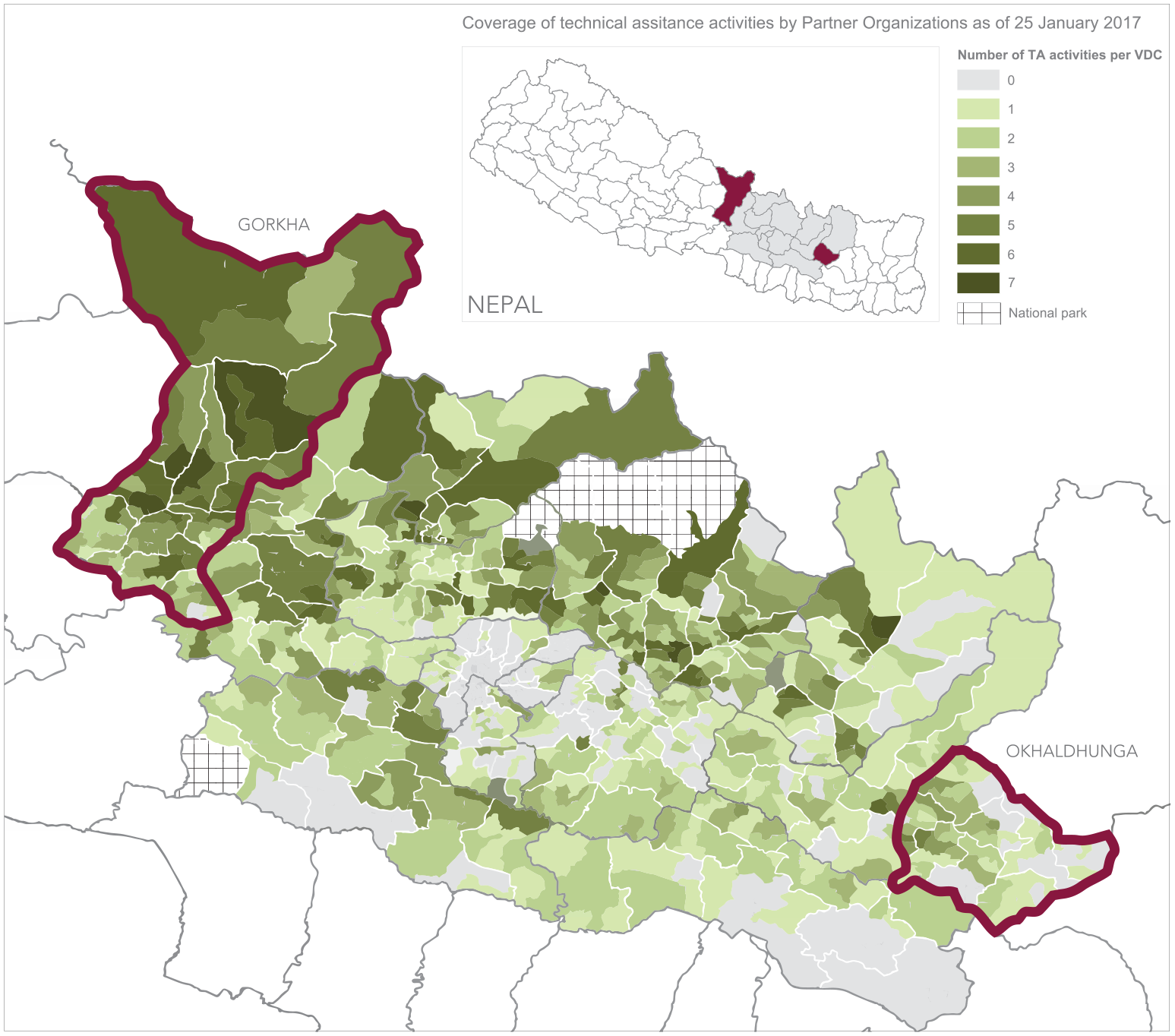
Coverage of technical assistance activities of the 14 most affected districts by the earthquake in Nepal.
Definitions of community in disaster scholarship are often context dependent (Marsh and Buckle, 2001). Communities can vary from being place-based, interaction-based, or based on practice and interest (Räsänen et al., 2020). For this study, we defined communities based on their location using a combination of geographical boundaries and the smallest identifiable administrative order in Nepal, the ward level. However, we acknowledge that actual social boundaries may not be solely geographically based, as wards sometimes consist of multiple groups that identify themselves as different, that is, on grounds of caste, religion, gender, or occupation.
Within districts, Village Development Committees (VDCs) are comprised of wards headed by democratically elected ward leaders. In the two districts selected, wards were selected in collaboration with humanitarian agencies, based on differing presence and engagement of humanitarian technical assistance. Wards were selected on the basis of similar damage levels, similar socio-economic demographics, comparable household numbers (not larger than 250), and variation in technical assistance approaches. Types of technical assistance provided were categorized into seven types: (1) community/household orientations, (2) continuous door to door technical assistance (mobile technical support), (3) short training for masons, (4) on-the-job training for masons, (5) helpdesk/technical resource center, (6) demonstration construction, and (7) community reconstruction committees (HRRP, 2017). The amount of assistance interventions was used to generate a total number of technical assistance interventions per community.
Communities in Gorkha received the most intensive assistance types, such as demonstration construction or door-to-door assistance. Less intensive assistance was provided in Okhaldhunga, such as community reconstruction orientations and short trainings. Communities are categorized as high-, medium-, and low-intensity technical assistance, based on the quantity, variety, and types of interventions, as shown in Tables 1 and 2. High intensity assistance is defined by at least 4 types, and 12 interventions, including at least door-to-door assistance. Low-intensity assistance is defined by a maximum of two types of assistance and not more than six interventions in total, not including demonstration houses or door-to-door assistance or vocational training.
Overview of technical assistance coverage in selected community, based on data from the Housing Recovery and Reconstruction Platform, as of 25 January 2018 for Gorkha
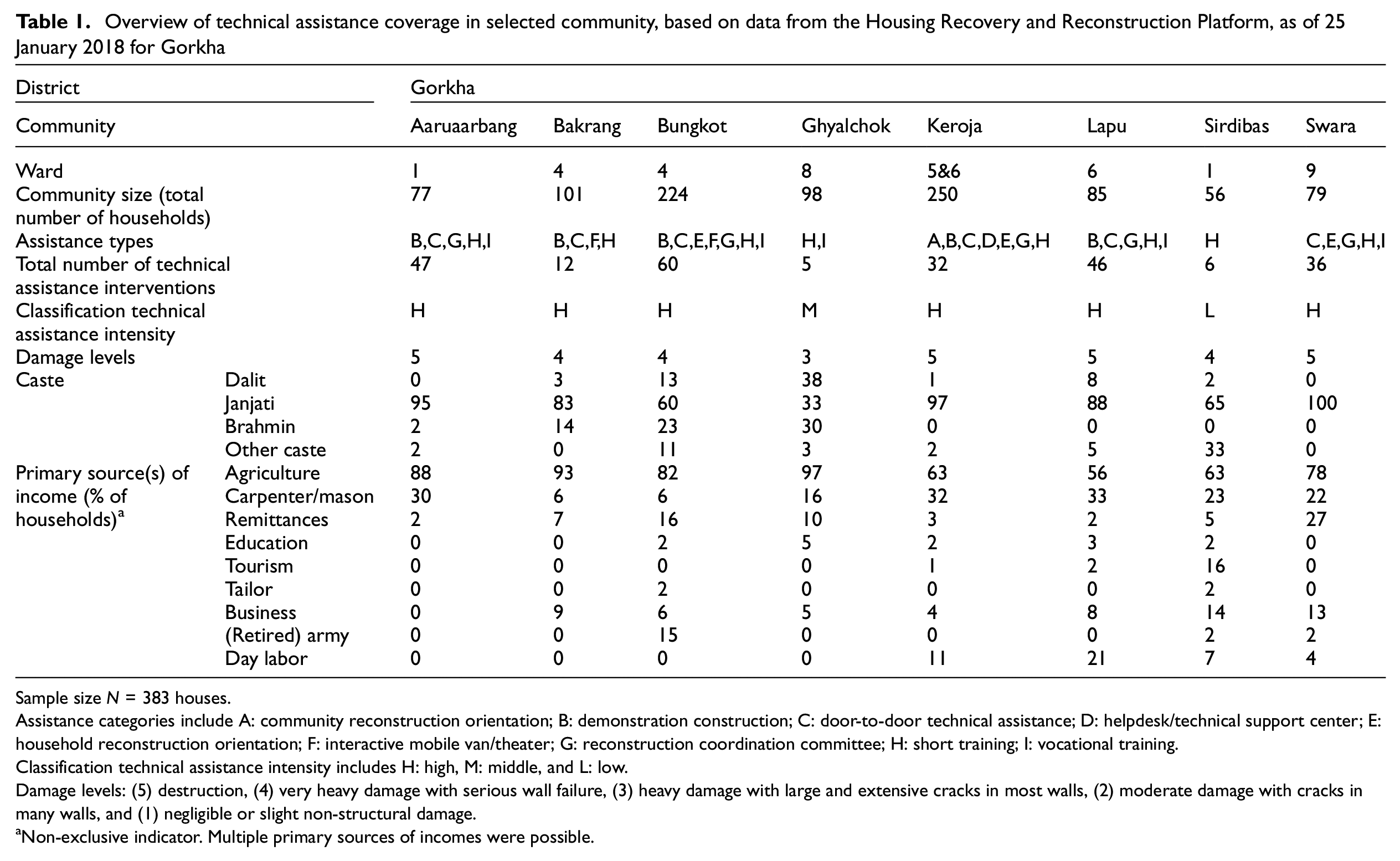
Sample size N = 383 houses.
Assistance categories include A: community reconstruction orientation; B: demonstration construction; C: door-to-door technical assistance; D: helpdesk/technical support center; E: household reconstruction orientation; F: interactive mobile van/theater; G: reconstruction coordination committee; H: short training; I: vocational training.
Classification technical assistance intensity includes H: high, M: middle, and L: low.
Damage levels: (5) destruction, (4) very heavy damage with serious wall failure, (3) heavy damage with large and extensive cracks in most walls, (2) moderate damage with cracks in many walls, and (1) negligible or slight non-structural damage.
Non-exclusive indicator. Multiple primary sources of incomes were possible.
Overview of technical assistance coverage in selected community, based on data from the Housing Recovery and Reconstruction Platform, as of 25 January 2018 for Okhaldhunga
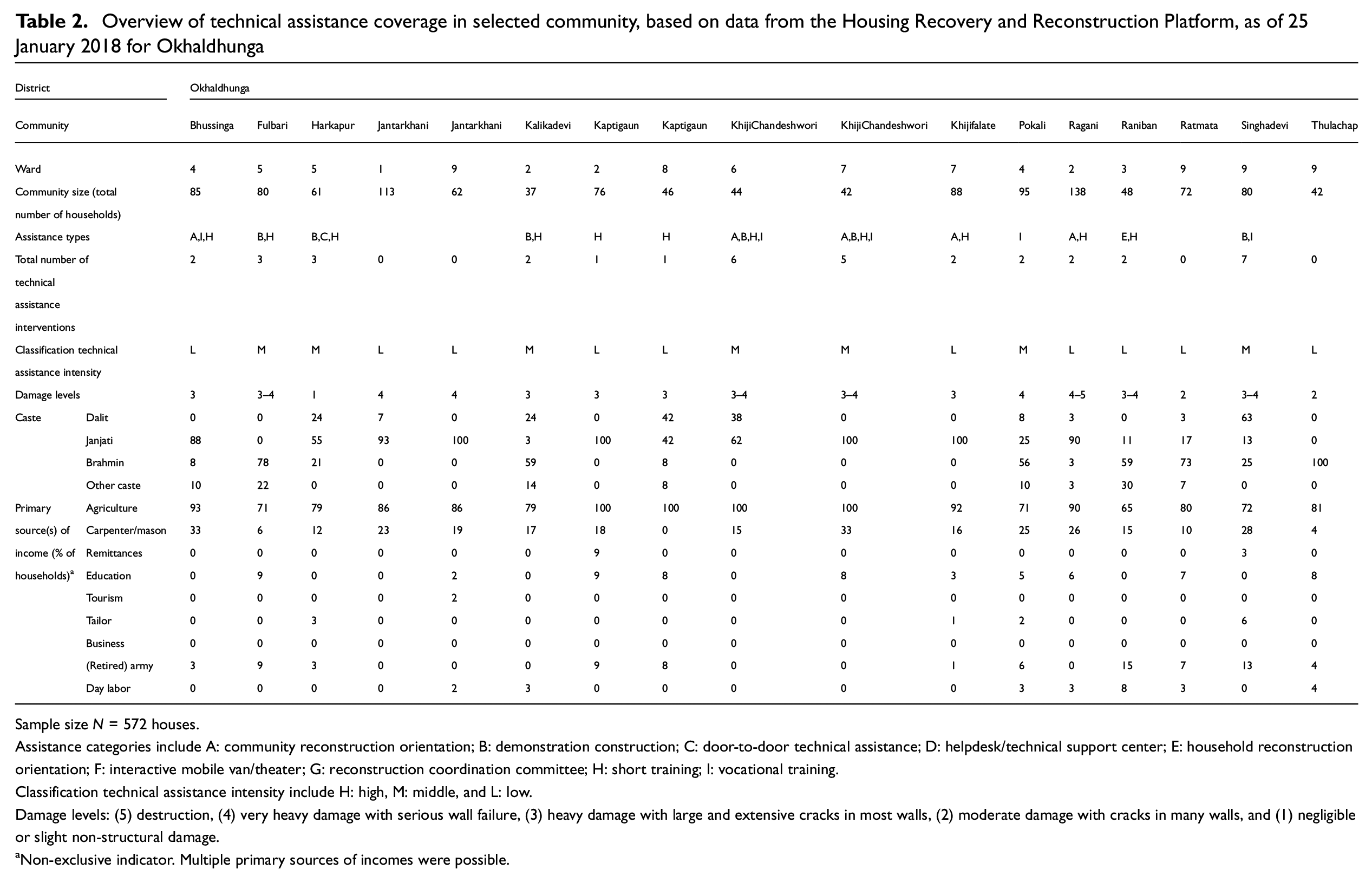
Sample size N = 572 houses.
Assistance categories include A: community reconstruction orientation; B: demonstration construction; C: door-to-door technical assistance; D: helpdesk/technical support center; E: household reconstruction orientation; F: interactive mobile van/theater; G: reconstruction coordination committee; H: short training; I: vocational training.
Classification technical assistance intensity include H: high, M: middle, and L: low.
Damage levels: (5) destruction, (4) very heavy damage with serious wall failure, (3) heavy damage with large and extensive cracks in most walls, (2) moderate damage with cracks in many walls, and (1) negligible or slight non-structural damage.
Non-exclusive indicator. Multiple primary sources of incomes were possible.
A list of characteristics of the selected communities, and technical assistance details, are provided in Tables 1 and 2 based on government data. HRRP data distinguished different damages levels: (5) destruction, (4) very heavy damage with serious wall failure, (3) heavy damage with large and extensive cracks in most walls, (2) moderate damage with cracks in many walls, and (1) negligible or slight non-structural damage. We sought communities with similar levels of damage in both districts. All selected communities had high damage levels in Gorkha (3–5) and high levels of technical assistance. Okhaldhunga was slightly less affected and communities were selected with the highest damage levels and lowest assistance. In this study, only households were included that were severely affected and had to fully reconstruct their house. Eight communities were selected in Gorkha and 17 communities were selected in Okhaldhunga.
The rural character of the communities was expected to show similarities in the earthquake impact and possibilities for reconstruction. The NPC (2015) described a number of significant differences between rural and urban areas. Rural areas were further isolated due to infrastructure damage, such as power supply, water distribution systems, and cellular communication systems. Poorer rural areas were also disproportionally affected due to inferior quality of housing structures. The earthquake had a serious impact on agriculture-based livelihoods, as the earthquake hit only few weeks prior to the planting season and caused significant loss of livestock. This endangered both short-term and long-term incomes and increased the vulnerability of rural communities to hunger and food insecurity. Consequently, poverty in rural areas disproportionally increased. Some rural districts had a higher female population due to male outmigration, placing larger responsibility on women in rebuilding their house and managing agriculture and livestock.
Prior to the earthquake, access to technical knowledge in the form of documentation and vocational training was already limited in rural areas. Therefore, these cases represent challenging contexts to introduce new building construction knowledge. Adoption of new technological knowledge can be better observed in these cases than, for example, in an urban area where there are multiple access points for new knowledge and undefined community borders. Communities were selected with a relatively small population between 42 and 250 households. All communities were geographically remote and isolated, often accessible by a dirt road or footpath only. Most materials were transported to the communities using donkeys or human transport for steel, concrete, wood, and stones. Some communities were supplied with materials through vehicles over dirt roads. All communities were primarily low-income households, with low levels of education, sharing the similar occupations and income sources (agriculture).
In most cases, geographical ward boundaries were clearly visible bound by mountainous landscapes, separated by hours walking from neighboring wards. In case two wards were not geographically separated, for this study, they were considered as one larger community. In cases where a ward was geographically separated into sub-wards, all these sub-wards were included in the study as part of a single community. Further differences between the communities are described in Tables 1 and 2.
Data collection
Data was collected during a 4-month period between February and May 2018, approximately 3 years after the earthquake. The research protocol was developed in close collaboration with humanitarian agencies and practitioners, contextualizing observations and questions for Nepal. In-situ structural assessments were completed for 1456 structures, including both houses under construction and fully reconstructed houses. To measure the adoption of safety measures, only the 955 houses that were fully reconstructed at the time of the assessment are discussed. Houses were selected through stratified random sampling (using wards as strata). A confidence interval of 90% was used to determine the total number of households required in each community, leading to an inclusion of almost all houses in the community.
This study used the NRA evaluation tool for visual assessment of technical details covered under the revised building code of Nepal, for different stages of the reconstruction process. In this study, we do not intent to revise this official evaluation tool. For the purpose of this study, the checklist assessed observable characteristics of components and applied technical messages (see Supplemental Appendix A). Observations targeted the location, geometry, foundation, walls, connectors, joints and bracing, and material use. For example, the presence of slopes, edges, and other buildings in the direct environment of the house were assessed. For the material use, for example, the shape of stones, the type of mortar, and the material used for the bands in the wall were assessed. The number of bands, exact location, and thickness of bands were also assessed. Measurements of the length of the walls were taken using strides to estimate length. It was not possible to assess rebar in walls, although guidelines prescribe it as important for earthquake resistance. However, our observations and photo documentation showed that houses under construction in both districts almost always included vertical rebar next to openings that was often carefully connected to the horizontal bands, so despite less complete data, we do not expect the presence to greatly differ based on the fieldwork team’s extensive case knowledge. The soil condition was also not included in the data collection, despite being an important indicator of seismic vulnerability.
Responses were collected using Kobo Toolbox (link: https://kf.kobotoolbox.org/accounts/login/?next=/#/forms/aa5iL3Gqb4p3aYL9h4NsTe), a digital data-collection platform developed by the United Nations Office for the Coordination of Humanitarian Affairs (UNOCHA) and the Harvard Humanitarian Initiative, allowing off-line data collection through a smartphone app, including geo-localization. Lessons learned from the use of the NRA assessment tool were considered before drafting this assessment tool (Didier et al., 2017). Evaluators could diverge from the standardized response fields if necessary, which increased the quality and completeness of the data. Questions included mandatory input fields and linked follow-up questions to ensure the validity of responses. Technical images to illustrate terminology used in the assessment were simplified and tailored to the understanding of the Nepalese team. An international technical team of senior construction engineers and undergraduate thesis students collaborated in the formulation of questions, following extensive discussion of the assessment criteria. Measurements were taken through estimation, such as strides and arm lengths, and then transformed into the metric lengths.
Local research assistants were selected based on their understanding of English, Nepali, local dialects, and their understanding of basic construction technology. Due to their differing local dialects and availability, the composition of the team slightly changed between Gorkha and Okhaldhunga. Assessments in Gorkha were taken by the international technical team. Before data collection in Okhaldhunga, assessments were further simplified with images to increase the understanding of concepts and additional answer categories were created where this was appropriate, assuring that the content remained consistent. To avoid potential bias, the assessors were divided in three teams and received guidance and assistance during the assessments by at least one senior and one junior engineer. In addition, pilot assessments and a 1-day training were completed to ensure assessors were qualified and prepared before collecting data.
The aim of this study was to assess to what degree safety guidelines have found their way to practice. We found that, 3 years after the earthquake, 19% of the households in Gorkha had only completed up to a foundation level and did not start with the walls yet, compared to 13% in Okhaldhunga. For the purpose of measuring knowledge adoption, these houses were excluded, and only fully reconstructed houses were assessed. We were also not focused on pre-disaster housing, rather housing reconstructed after the earthquake to understand the extent to which seismic-resistant construction techniques were used. It occurred that people had already reconstructed a simple shelter or full house directly after the earthquake, but non-compliant with the government guidelines. In such cases, households were often still preparing for an additional house with government funding. Only the latest reconstructed structures of the households are described in this study. Reconstructed houses were assessed regardless of the status of use. In many cases, the new house was often too small to substitute fully for pre-disaster dwellings, which therefore remained in daily use. In these cases, the new house was often for secondary purposes, such as shelter of some (often older) children at night. In some cases, households resided in their partly damaged houses. In future research, it would be interesting to separate houses in the analysis based on the use.
Data analysis
Assessment responses were categorized using SPSS software. Based on the NRA assessment tool and the Nepalese Building Code (DUDBC, 2015a, 2015b, 2017), observations were categorized into safe and unsafe practices. For example, the surface of wall openings was estimated as a percentage of total wall and cases with openings above 50% were assigned as unsafe. Furthermore, wall thickness was recorded and measurements less than 35 cm were assigned as unsafe for masonry walls. This categorization was based on the minimum needed for earthquake resistance according to government guidelines. Thresholds applied can be seen in Table 3. We used Pearson’s chi-square test to investigate the dependence of application of hazard-resistant construction techniques, assessed through 14 safer building indicators, on the intensity of humanitarian technical assistance. Safety outcomes were analyzed per district. Observations were then aggregated into percentages to compare overall trends in application of specific components.
Adoption rates by earthquake resistance indicators
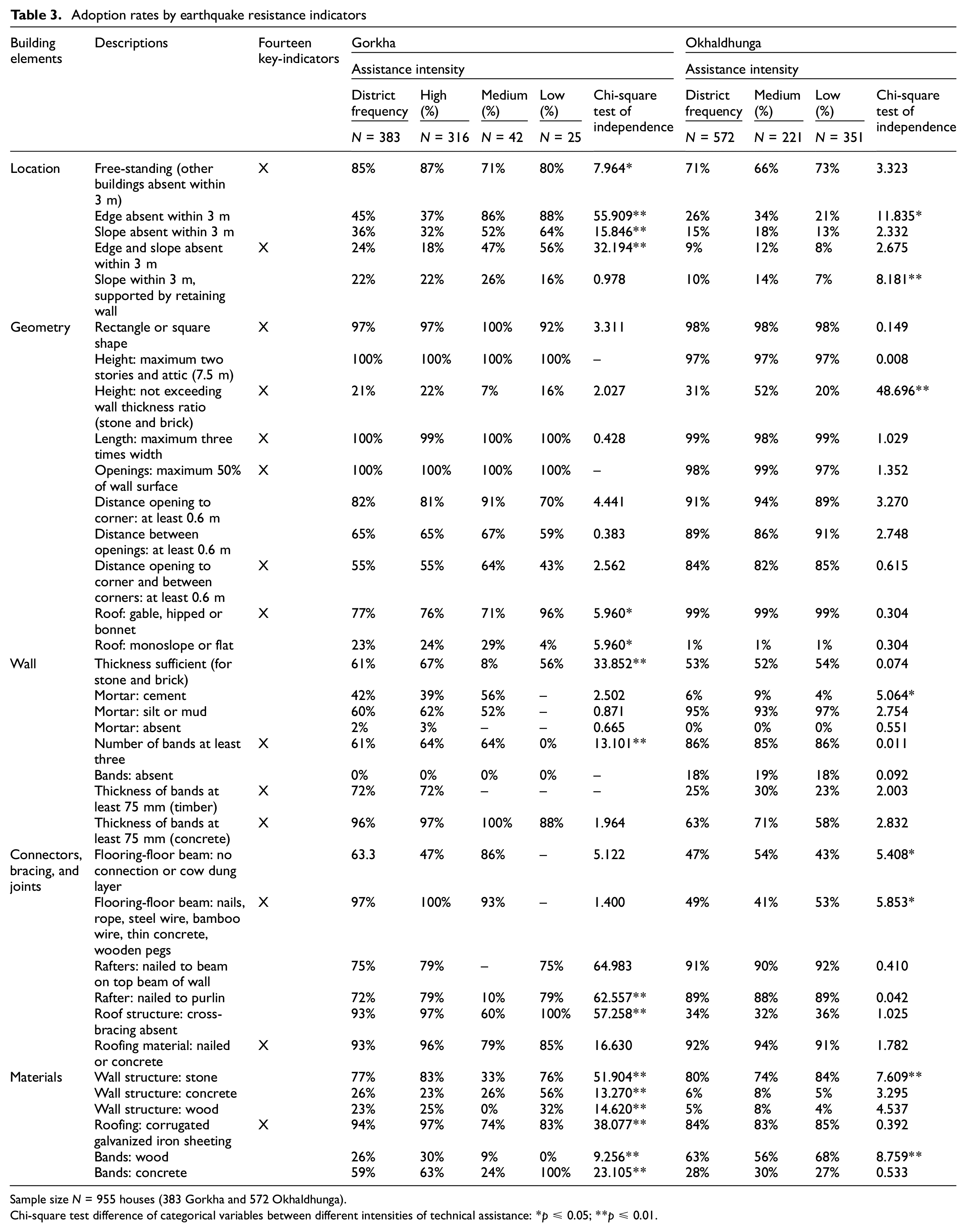
Sample size N = 955 houses (383 Gorkha and 572 Okhaldhunga).
Chi-square test difference of categorical variables between different intensities of technical assistance: *p ≤ 0.05; **p ≤ 0.01.
The number of applied earthquake-resistant construction techniques was calculated for each household in both districts, out of a selection of 14 key-earthquake-resistant construction techniques. This calculation generated frequencies of safer construction adoption for the different intensities of technical assistance. These 14 indicators are used to represent the amount of techniques that were applied in combination.
The 14 indicators were selected based on their importance for seismic resistance according to an extensive literature review and grading and importance of the indicators defined by several earthquake engineers. We consulted humanitarian, academic, and governmental earthquake engineers to define the importance. These engineers highlighted that seismic resistance should not be measured by individual indicators alone. The overall resistance is best represented by the amount of seismic-resistant characteristics combined in practice. Based on this understanding, we included indicators for the following categories: location, geometry, foundation and walls, connections, bracing and joints, and materials. The field observations allowed us to select from these categories representable variables to give a multifaceted general overview of seismic resistance, shown in Table 3. The selected safety indicators were as follows: (1) free-standing, other buildings absent within 3 m, (2) edge and slope absent within 3 m, (3) rectangle or square shape, (4) length: maximum three times width, (5) height: not exceeding wall thickness ratio (1:8 for stone walls and 1:12 brick walls), (6) openings in the walls maximum 50% of wall surface, (7) distance opening to corner and between corners: at least 0.6 m, (8) roof: gable, hipped, or bonnet, (9) wall thickness sufficient (0.35 m for stone and 0.23 m for brick), (10) at least three bands applied, (11) thickness of bands at least 75 mm (concrete or wood), (12) flooring-floor beam: connected, (13) roofing material: nailed or concrete, and (14) roofing: relatively lightweight corrugated galvanized iron (CGI) sheeting.
Findings
This section reports the relative frequencies of design elements for the 25 examined communities at the district level for different levels of technical assistance. Findings are reported in five main sections: (1) location, (2) geometry, (3) foundation and walls, (4) connectors, bracing, and joints, and (5) materials. To reiterate, Gorkha generally received higher rates of technical assistance compared to Okhaldhunga.
Location
The Nepalese building code (DUDBC, 2015b) and technical inspection guidelines (NRA, 2016b) did not prescribe distances to potential threats on site for low-strength masonry. They did recommend staying away from geological fault or rupture areas, landslide susceptible areas, steep slopes (>20°), filled areas, liquefaction susceptible areas, riverbank and waterlogged area, and rock fall areas. The Shelter Cluster guidelines for Nepal (2015) recommended approximately a one-story separation from slopes and cliffs. Furthermore, they recommended distance from neighboring structures to avoid damage from their collapse and to assure a safe exit plan. Since these guidelines are based on both scientific seismic engineering and the Nepalese building code, the research team decided to consider 3-m separation as a safe minimum. To avoid pounding of two adjacent buildings, smaller separations are allowed from at least 5 cm (Paz, 1994), 25 cm (Murty et al., 2012), or 60 cm (Szakats, 2006).
85% of houses in Gorkha and 71% of houses in Okhaldhunga were free-standing, separated at least 3 m from the nearest structure. Due to the mountain relief, in both districts, 43% of houses in Gorkha and 54% in Okhaldhunga were constructed within 3 m of a slope and a mountain edge. Examples of typical site locations are shown in Figures 2 and 3. Only a small number of mountain slopes were secured with a retaining wall for 22% of structures in Gorkha and 10% in Okhaldhunga.
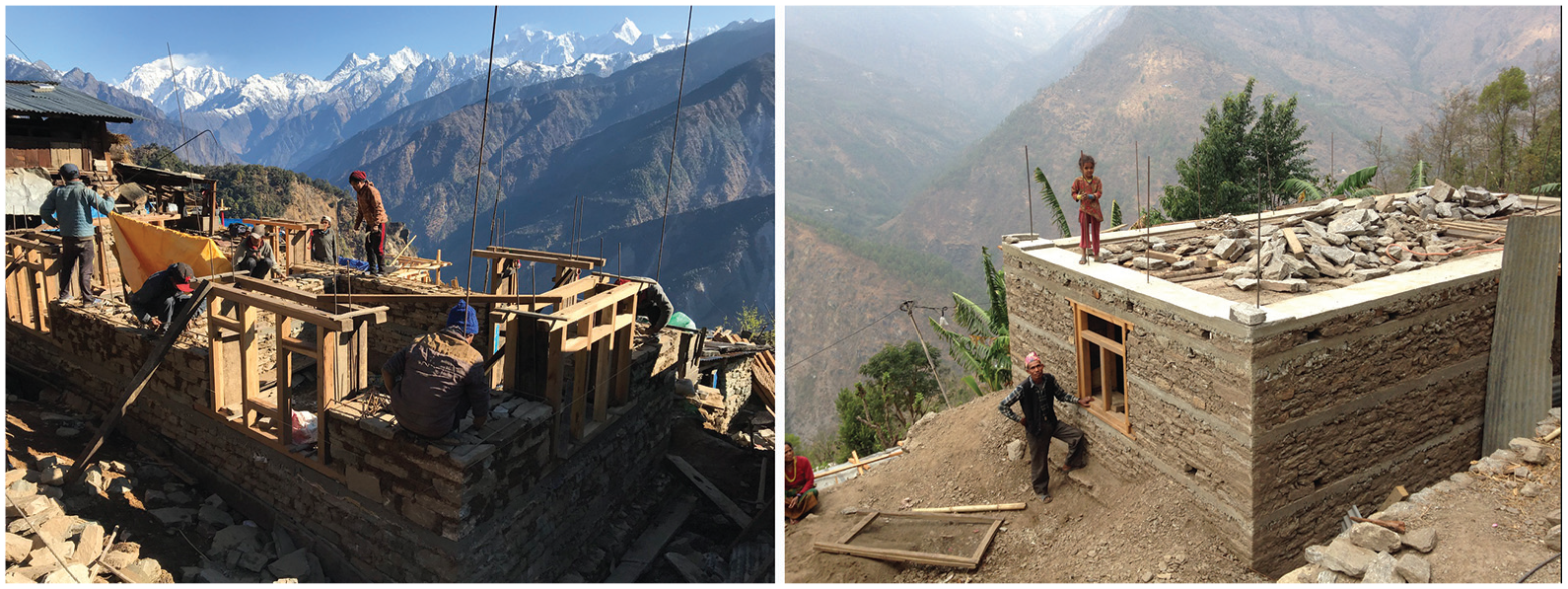
Houses under construction in Gorkha.
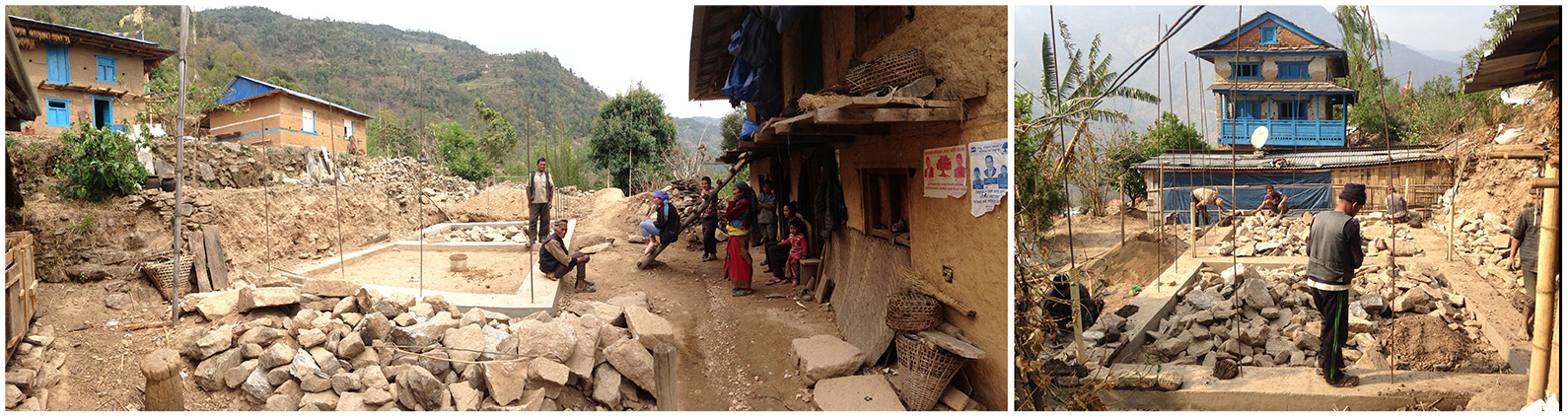
Houses under construction in Okhaldhunga.
Geometry
Almost all houses in both districts used a safe rectangular or square layout (97% Gorkha and 98% Okhaldhunga), remaining within the recommended length to width ratio of 3:1 (DUDBC, 2015b). The width of the houses did not differ significantly between the districts (4.4 m in Gorkha and 4.3 m in Okhaldhunga). However, the length in Okhaldhunga was significantly longer (8.1 m vs 6.2 m). Nevertheless, our observations showed that some houses had (primarily wooden) extensions loosely attached to the main structure, a result of the main structure failing to meet households’ needs and indicating early incremental expansion. These covered areas were often used to store wood, food, livestock or tools. If extensions transform in more permanent use, they could potentially have a negative impact on the structural integrity of the building.
The average height in Gorkha (3.1 m) was found to be significantly lower than in Okhaldhunga (4.0 m). The height was not allowed to exceed 8 times the thickness of stone walls or 12 times brick walls. The average wall thickness was significantly different in the two districts (29 cm in Gorkha vs 41 cm in Okhaldhunga). The height exceeded the threshold in 83% of structures in Gorkha and 66% in Okhaldhunga. We expect that this finding can be partly explained by rounding of measurements in the field (300 mm instead of 350 mm estimated for the wall thickness). In Gorkha, houses commonly (76%) had only one story, and in Okhaldhunga, houses varied from one story (31%) to one story with a half story attic (56%), commonly used to store agricultural products. In both districts, low-strength masonry buildings rarely exceeded the maximum of two-story guidance and an attic (approximately 7.5 m) (DUDBC, 2015b). Gable roofs were most common in both districts. Safe roof shapes were applied for 76% in Gorkha and 98% of houses in Okhaldhunga (DUDBC, 2015b). A large number of flat roofs were observed, primarily in Gorkha, as a result of early plans for second story expansions cited by households.
In both districts, most households complied with the NRA instruction manual suggesting not to exceed 50% of the wall length with openings for stone masonry with cement mortar (NRA, 2016a), 84% in Gorkha and 97% in Okhaldhunga. However, for single-story mud mortar buildings, the maximum opening was set at 30% of the wall length (DUDBC, 2015b; NRA, 2016b). We found in Gorkha the presence of significantly more large openings in the front façade of houses to create a porch, often supported by columns. These porches resulted in vertical irregularities in the structure. Similarly openings were positioned too close to wall corners and near other openings in Gorkha, with distances less than 0.6 m (DUDBC, 2015b).
Foundation and walls
The building code prescribes the necessary depth of the foundation based on the soil condition and the wall material. For example, stone masonry in medium hard soil required a minimum depth of 750 mm for one-story buildings and 800 mm for two stories (DUDBC, 2015b). This study did not assess the soil condition, and foundation depth was estimated by the household members. We discarded some data for this assessment because assessors were not consistent in the use of feet and meters (only for this measurement). Yet, we can safely conclude that the majority in Gorkha had only a depth of 300 mm, and the majority in Okhaldhunga had a depth of 800 mm.
The majority of the sample was stone masonry in mud mortar, that required a thickness between 350 mm for one-story buildings and 450 mm for two stories and an attic (DUDBC, 2015b). For brick walls, a thickness of 230 mm is sufficient for one story and 350 mm for two stories (DUDBC, 2015b; NRA, 2016b). Field measurements were often estimated at rounded numbers of 300 and 400 mm but were likely higher due to variations in thickness. Based on evaluation of the research team, these measurements were included as “safe.” Based on these criteria, sufficient wall thickness was found equal for structures in both districts (51%). Mud mortar was often used and has been proven less seismically resistant than cement mortar (NPC, 2015). Observations revealed that the mud mortar consisted mostly of a combination of cow dung, water, sand, and hay, or sometimes cement. Mortar use in Okhaldhunga was significantly inferior (95% mud vs 60% in Gorkha).
Our data showed that, after the earthquake, it became common knowledge in the participating communities to use horizontal bands. It was rarely used before the earthquake and new to most participants in this study. Governmental engineers strongly emphasized the use of these bands, and almost all houses in this study in both districts applied them to some extent, with an average of 2.7 bands in Gorkha and an average of 4.1 in Okhaldhunga, shown in Table 3. Widely applied were the plinth, sill, and lintel bands. A minimum thickness of 7.5 cm was required for timber and reinforced concrete plinth, sill, lintel, and roof bands (DUDBC, 2015b). Primarily in Okhaldhunga, thickness of both timber (75%) and concrete bands (37%) was insufficient. Observations showed that vertical reinforced steel bars were often applied within the walls, on the corners and next to door and wall openings.
Connectors, bracing, and joints
We found that wooden bands were often interlocked using notches, but walls lacked sufficient connections to the floor beams. In both districts, beams were primarily placed on a horizontal band, often without connectors. In Okhaldhunga, beams were often (38%) only supported by the wall and not placed on a band in the wall. Most houses had a floor with a thin concrete layer mixed with cow dung but no use of rigid fixations (63% Gorkha and 47% Okhaldhunga). In other cases, connectors were used to secure the flooring to the floor beams (Gorkha 29% nails, 3% steel wire, Okhaldhunga 45% nails).
In both districts, the roof structure was mostly connected to the top band in the wall using nails (75% Gorkha and 91% Okhaldhunga) and in Gorkha saw selective application of steel wire for roof ties. The rafter was often directly nailed to the purlin, or in other cases, steel wire or timber cleats were used. Although strongly recommended in the guidelines, bracing was rarely found in the roof. Traditionally, roofing materials were held down with loose stones. The lack of firm connections is of particular concern during future earthquakes. Occasionally, houses were still found to use loose stones on the roof, yet most had employed nailing CGI sheeting instead (94% Gorkha vs 84% Okhaldhunga).
Materials
The majority of the sample consisted of stone masonry (77% of the houses in Gorkha and 80% in Okhaldhunga), either in combination with wood or concrete. Bricks were almost never used (6% in Gorkha and 0% in Okhaldhunga). The selection of materials can strongly influence the earthquake resistance of buildings, with the shape of the stone influencing the friction and shearing in the wall. Round stones are least favorable because of the limited friction they provide. Most stones were commonly collected in the surrounding mountains and carried down on back, mostly by women. Upon arrival in the communities, the men were often responsible for cutting the stones manually in squared shapes. Almost all stones in the study were found to be rectangular.
Second, lightweight roofing materials were recommended for safety as they can prevent fatalities during earthquakes. Traditionally, in the affected areas, heavy stone slabs were used as a roofing material. Some of the structures assessed still had stone slabs on the roof, due to people still living in the damaged house or reconstruction of their house before guidelines were in place. In almost all other buildings, CGI sheeting was used, showing a significant change in building traditions (88% Gorkha and 83% Okhaldhunga).
Finally, the material used for the horizontal bands strongly depended on financial and logistical limitations. Households in Okhaldhunga were often not able to import concrete for the bands and used mainly wooden bands (63%). In Gorkha, concrete bands were common (59%), shown in Table 3.
Overall adoption rates of safer construction
For those households that received minimal or no technical assistance, nearly 8 out of 14 safer building techniques were applied on average. Figure 4 presents the outcomes for the 14 key characteristics for earthquake-resistant housing in both districts aggregated by intensity of technical assistance. Outcomes count the number of applied techniques and indicate a higher overall application in Okhaldhunga, with only limited technical assistance. For example, 71% of the households in Okhaldhunga applied at least 9 out of 14 characteristics, compared to 47% in Gorkha. On average, households in Gorkha applied 11.1 techniques, and Okhaldhunga 10.3.
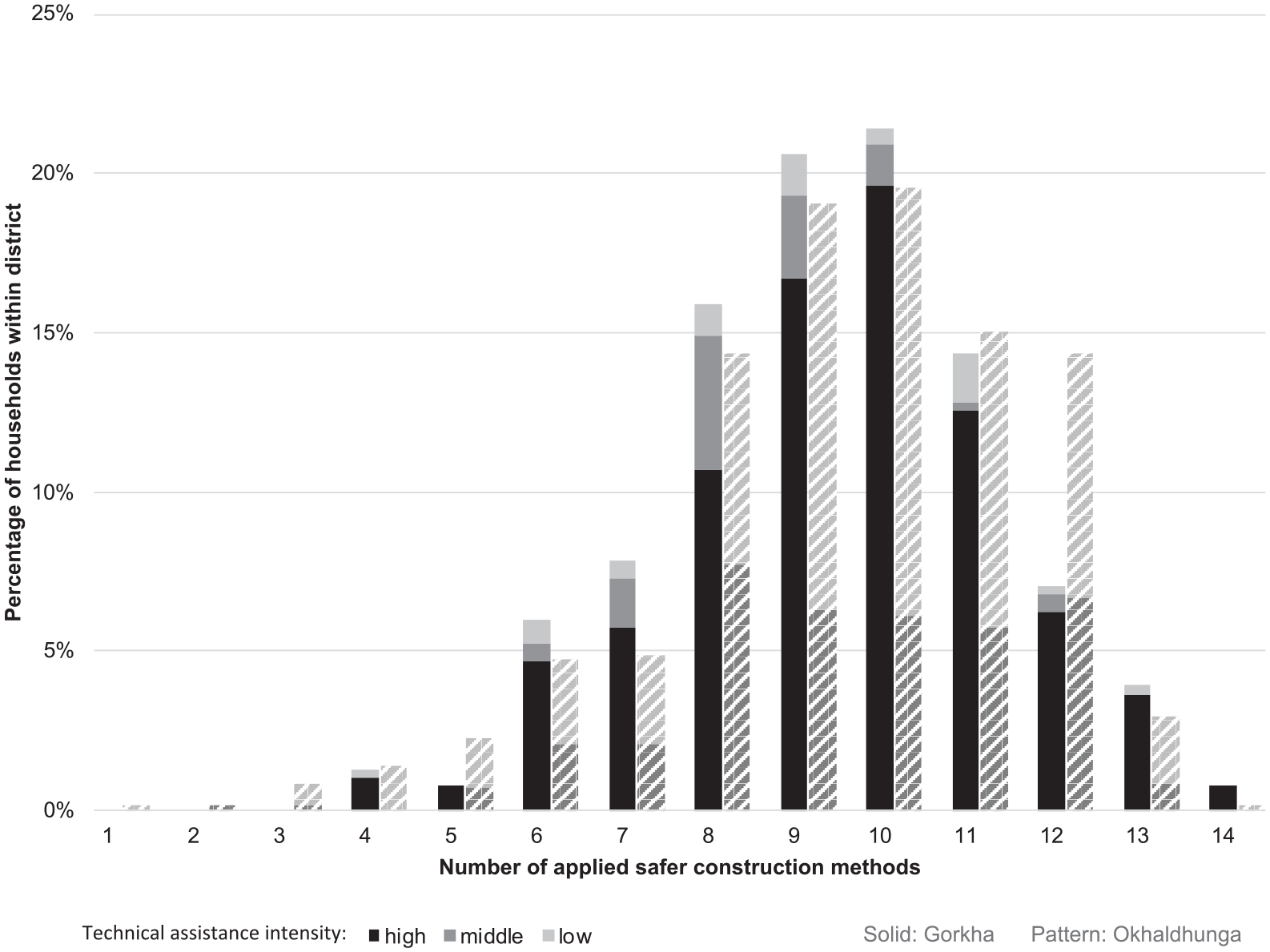
Number of applied key-earthquake construction techniques, out of 14.
The results show a normal distribution for high technical assistance with the largest group at 10 out of 14 applied techniques (an average of 9.45). Households receiving a moderate intensity of technical assistance had a mode of eight techniques and a slightly lower average of 9.30. Households with little to low technical assistance had a mode of 10 out of 14 applied techniques, yet a lower average of 9.38. We recognize that the 14 indicators are not necessarily of equal importance yet determining the weight of indicators needs to be studied in further research.
In addition to comparing technical assistance, we also synthesized and compared broader adoption of specific components. Table 3 gives a selection of means and frequencies for all the applied building techniques examined. Reported frequencies are not exclusive, and it was possible for a household to fit into more than one category. For example, households could build with combinations of concrete, brick, stones, and wood. Frequencies present a ratio of the presence or absence of characteristics (more or less than the safety threshold described in the results section).
These frequencies were described in Gorkha and Okhaldhunga comparing different intensities of humanitarian technical assistance within districts, using Pearson’s chi-square test (degrees of freedom = 1, safe vs unsafe). We found significant differences in the adoption of safer building between different intensities of technical assistance in 16 of the 35 elements, in Gorkha, and 8 out of 35 in Okhaldhunga. The indicators of geometry showed most similarities. The chi-square test results within the two districts show a potentially ambiguous impact of humanitarian assistance on adoption. Overall, 7 out of 14 key-indicators show insignificant differences based on intensity of technical assistance within both districts.
In Gorkha, from the 14 key-indicators, we see only 5 significant differences between the intensity groups. A positive impact of technical assistance was observed for roofing material, a negative impact for position in relation to edge and slope, and differences across technical assistance for number of bands applied and roof type, but no clear direction of relationship. In Okhaldhunga, between medium- and low-intensity assistance, we found only two significant differences, yet without a clear indication direction of impact of technical assistance. This suggests overall low correlations between short-term, humanitarian technical assistance and adoption of earthquake-resistant construction techniques.
Discussion
The results of this study describe the differences within the two selected districts, presenting an initial step in exploring the relationship between technical assistance and safer construction outcomes. Studies have confirmed that earthquake damage was primarily caused by lacking code compliance in both the construction planning and execution (NPC, 2015). Based on the reasonable assumption that most houses prior to the earthquake did not follow code standards, this study shows improvements of overall safety. This study shows high compliance to the building code in both affected districts after the earthquake in Nepal. Similarly, another study found that building code compliance of construction drawings submitted to municipal offices (N = 4097) increased from 56% of households before the earthquake to 82% of households after the earthquake (NSET, 2017). The same study used field research to assess application of a set of minimum building code requirements in practice (N = 2813) and found an increase from 49% to 76% after the earthquake.
Our findings call for further research into the impact of humanitarian technical assistance following the earthquakes. Affected household within the studied districts were found to have similar levels of housing construction practice, despite substantial differences in humanitarian technical support. For example, Okhaldhunga district, which received less technical assistance, was found to have slightly safer housing. We cannot state with certainty that the differences or lack of differences we have identified are caused by humanitarian technical assistance. Yet, we hypothesize that, humanitarian technical assistance, in the forms provided in Nepal, has not been essential for the adoption of safety measures. Based on our recent work (Hendriks and Stokmans, 2020), we expect that adoption is influenced by perceived opportunities to adopt. This could be an interesting starting point for further research.
It appears that people have been informed in other ways, not directly linked to the provided humanitarian technical assistance in communities. Assessed communities in both districts were isolated and geographically separated in remote mountainous areas. Nevertheless, it is possible that the key-messages communicated elsewhere had reached communities with less technical assistance coverage. Our supplementary data (Hendriks et al., 2020) showed knowledge sources used for reconstruction decisions. For example, masons referenced photos they had found from demonstration houses constructed elsewhere as knowledge sources. We found another explanation for differences in application in the high use of radio, television, community meetings, and interaction with governmental engineers to reconstruct earthquake-resistant housing when humanitarian technical assistance was absent, highlighted in focus group discussions. The strong dependency on governmental engineers in Okhaldhunga shows the effectiveness of the governmental support program as an enabling mechanism for earthquake-resistant reconstruction.
In addition, the high compliance rate in Okhaldhunga can possibly be explained by lessons learned from previous earthquake events in the region prior to 2015, such as the Bihar earthquake in 1934 and earthquake in 1988. Yet, high-level indicators prior to the earthquake that support this assumption are lacking. The higher adoption of safety measures in Okhaldhunga can potentially be explained by the slightly lower damage levels. Lower community level damage could have lowered the impact on the community as a whole and could have resulted in a higher capacity for reconstruction activities within communities. Nevertheless, in this study, we only included households that fully reconstructed their houses, and were considered highly affected. The influence of damage levels could be explored in further research. The influence of caste on the adoption also needs further exploration. The high adoption in Okhaldhunga could potentially be explained by the slightly higher Brahmin representation in the sample.
This study uses a narrow concept of building back “better,” evaluating only the hazard-resistance of housing. Short-term application of hazard-resistant construction principles only partly contributes to reduce disaster risk. Assistance to build back better after disaster needs greater reflection on the concept “better” (UN-Habitat and AXA, 2019), emphasizing contextual needs of households. The impact of technical interventions cannot solely be explained by applied techniques. Adhikary (2016) noted that regulations were too strict to follow for many, and it is likely that people will fall back on vernacular construction techniques. He calls the governmental policy therefore “self-defeating.” Our supplementary data from household interviews have already indicated that household members are not always satisfied with the governmental approved design and had a limited understanding how to construct more desirable earthquake-resistant designs (Hendriks et al., 2020). Our findings have shown that households often built single-story houses, although we observed that their pre-earthquake houses were substantially bigger and were commonly multiple stories. In line with other studies (Maynard et al., 2017; Stephenson, 2018; UN-Habitat and AXA, 2019), we assume that when the income and household size increase, houses will grow incrementally. In their one-size-fits-all approach, the government overlooks meaningful alternative construction methods and aspirations of households to live in larger or different houses. The approach of the government is normative and assumes that measurable targets are the basis for successful technical interventions.
The results show a mix of planning-level vulnerabilities and household-level vulnerabilities. It is often true that households have limited control on planning-level vulnerabilities such the criteria of a free-standing house, no edge/slope within 3 m. Although the influence of the household on these indicators is limited, they do reflect upon the overall safety of the reconstructed houses. The lack of applied location-related recommendations reflects not only upon the influence of the household to take a decision but also on their possibilities or willingness to comply. In this research, we did not look at the motivations that underly knowledge adoption, only at the actual adoption.
Based on the findings, we stress the importance understanding of safety reasons by households that increase local knowledge production and implementation. For example, households should be able to understand the importance of single-story houses, simple geometries, and technical details, so that they are able to balance risks in their decision-making. Like Subedi and Chhetri (2019), we argue that assistance approaches should incorporate the aim to educate people to build back safer, rather than enforcing measurable outcomes. There are still significant gaps in hazard-resistance that need to be stressed, such as the lack of bracing in the roof in both districts and the position of openings in Gorkha.
The goal to protect people from potential harm has been institutionalized into a system of labeling their assets as being inadequate. Although the aim is not necessarily wrong, a more holistic view on the lives of individuals would benefit affected households. Without romanticizing informal housing development, the strengths of construction networks in Nepal reveal opportunities to work with households and construction professionals instead of overregulating their efforts. We further recommend prioritizing household satisfaction in the dialogue toward culturally embedded solutions. Limited freedom was given to deviate from the standard, although it is likely that the best solutions are developed by those who fully understand contextual challenges. Innovation can be found anywhere. Differences are to be celebrated instead of rejected. We argue that the pragmatic, metrics-driven approach of the government is insufficiently inclusive.
The government has attempted to overcome these limitations by adding designs in a more extensive catalogue for earthquake-resistant housing. Yet, the government still connects grant approval to measurable items. There remains a pressing need to move beyond the performance-based construction guidelines and allow for alternative technical solutions. We recommend continuing with the diversification of technical solutions via closer collaboration between community-based construction stakeholders and governmental engineers. We have met engineers in Gorkha district that acknowledged the limitations of the initial earthquake-resistant design. These engineers developed and approved new designs in Kathmandu that could be made with the available materials at a high altitude in the Manaslu region. Unfortunately, negations were time-consuming and delayed construction. In the areas under investigation, knowledge was insufficiently used as a tool for negotiation. Based on this study, we would urge construction engineers to take a facilitative and enabling approach, acknowledging the value of local knowledge, instead as assuming the role of “all-knowing” experts.
Conclusion
Nepalese construction practice is predominantly characterized by rural communities that depends on locally available construction materials in mountainous areas prone to multiple hazards, such as earthquakes and landslides, with limited manpower and financial resources. This research can help to evaluate similar contexts and the adoption of earthquake-resistant construction techniques. We assessed the structural safety of Nepalese post-earthquake reconstructed housing by analyzing design and material choices made by communities with different intensities of technical assistance. Technical guidelines for earthquake-resistant reconstruction were used as a framework to assess structural safety in the field, using detailed observations and photo documentation.
The results fill a gap in knowledge surrounding the current state of adoption of structural safety measures. Findings present a comparison of different intensities of humanitarian technical assistance. This study has provided an initial step in analyzing these differences. These results also show that those that recover with limited technical assistance after disaster are not necessarily reconstructing less safely. In particular, design elements selected by households were quantified following the 2015 Gorkha earthquake. Findings provide a useful step in evaluating progress toward successful implementation of the Sendai framework for Disaster Risk Reduction.
The overall safety of the evaluated households appears to be high, suggesting that overall improvements were made in seismic safety to housing. However, despite the different intensities of humanitarian technical housing assistance, findings showed relatively small differences between households, communities, and districts in adopting safer construction methods. This points to a need to more closely examine the methods employed in communication and motivations of households. Humanitarian and governmental agencies should go beyond short-term application of knowledge and seek to support incremental development of designs.
Supplemental Material
sj-pdf-1-eqs-10.1177_87552930211009530 – Supplemental material for Adoption of seismic-resistant techniques in reconstructed housing in the aftermath of Nepal’s 2015 Gorkha earthquake
Supplemental material, sj-pdf-1-eqs-10.1177_87552930211009530 for Adoption of seismic-resistant techniques in reconstructed housing in the aftermath of Nepal’s 2015 Gorkha earthquake by Eefje Hendriks and Aaron Opdyke in Earthquake Spectra
Footnotes
Acknowledgements
The authors thank Jamie Richardson, Katherine Price, Abhishek Shrestha, Milan Mukia, Adeel Javaid, Krishna Mohan, Emily Lobo, Loren Lockwood, Siobhan Kennedy, Uttam Paudel, Minar Thapa Magar and their teams, Laura Howlett, Benjamin Schep, Gijs van Duren, Jim de Kort, Sandra van Ekeren, and Ranon Caris, for their assistance in the data collection. The authors also thank Martijn Schildkamp and Andre Jorissen for reviewing earlier versions of this manuscript.
Declaration of conflicting interests
The author(s) declared no potential conflicts of interest with respect to the research, authorship, and/or publication of this article.
Funding
The author(s) disclosed receipt of the following financial support for the research, authorship, and/or publication of this article: This research was supported by the Netherlands Organization for Scientific Research (grant no. 023011055) and the Catholic Relief Services. Any opinions, findings, and conclusions or recommendations expressed in this study do not necessarily reflect the views of the funding organizations.

Supplemental material
Supplemental material for this article is available online.
References
Supplementary Material
Please find the following supplemental material available below.
For Open Access articles published under a Creative Commons License, all supplemental material carries the same license as the article it is associated with.
For non-Open Access articles published, all supplemental material carries a non-exclusive license, and permission requests for re-use of supplemental material or any part of supplemental material shall be sent directly to the copyright owner as specified in the copyright notice associated with the article.
