




Abstract
Background:
Pediatric airway foreign body aspiration (PAFBA) is a leading cause of morbidity and mortality in children under 3. This study evaluates clinical presentations, foreign body types, management, complications, and seasonal trends over 5 years.
Methods:
A retrospective analysis was conducted on 237 patients (<17 years) with suspected PAFBA at Shar Emergency Hospital from June 2019 to June 2023. Data included demographics, symptoms, imaging, and bronchoscopy outcomes.
Results:
The median age was 3.5 years, with a male-to-female ratio of 1.34:1. Cough and breathing difficulty were common symptoms; 67.5% of cases were witnessed. Rigid bronchoscopy confirmed foreign bodies in 69.6% of cases, commonly sunflower seeds (14.3%) and scarf pins (13.5%), lodged in the right main bronchus (30.8%). Spring showed the highest incidence (34.1%). Complications were rare (1.2% mortality).
Conclusion:
PAFBA requires urgent diagnosis and rigid bronchoscopy. Increased family education and preventive measures are crucial, particularly during high-risk seasons.
Keywords
Introduction
Pediatric airway foreign body aspiration (PAFBA) is a common emergency condition that can lead to severe airway distress, morbidity, and mortality if not promptly diagnosed and treated, particularly in children under the age of three. 1 PAFBA is a silent yet critical threat, presenting one of the most challenging diagnostic and therapeutic issues in Pediatric Thoracic Surgery. The narrow airways and underdeveloped protective mechanisms in children under 3 contribute to higher mortality rates and an increased risk of both short- and long-term complications associated with PAFBA. 2
Several factors heighten the vulnerability of this age group, including immature swallowing coordination, a tendency to become easily distracted while eating (such as playing or running), and incomplete dentition. Specifically, while incisors allow for tearing food, the absence of cuspid molars prevents proper grinding into a smooth bolus. 3 As children grow and become more mobile, reduced adult supervision further raises the risk of aspiration.4 -6
The clinical presentation of PAFBA varies depending on the type, size, and location of the foreign body (FB) within the respiratory tract, as well as the duration it remains in the tracheobronchial system. 7 Organic foreign bodies tend to cause more severe mucosal inflammation, whereas small inorganic objects may remain asymptomatic unless they fully obstruct a terminal airway.6,7 Although foreign bodies can become lodged at various locations, they most commonly settle in the right main bronchus (RMB). This occurs because the RMB is more horizontally aligned with the trachea, creating a relatively direct path from the larynx to the RMB. 8
Following foreign body (FB) aspiration, 3 clinical phases are typically observed. The initial phase occurs immediately after aspiration, marked by acute coughing, choking, gagging, cyanosis, and potential airway obstruction. The asymptomatic phase follows, where symptoms subside as the FB settles, often leading to delays in diagnosis due to overlooked symptoms or misdiagnosis.9,10 The complication phase involves scar formation, obstruction, or infection, drawing renewed attention to the FB. 2
A history of FB aspiration alongside asthma-like symptoms is crucial for diagnosing partial airway foreign body aspiration (PAFBA). Misdiagnosis is common, as initial choking episodes may go unwitnessed, and symptoms can mimic conditions like recurrent pneumonia or respiratory infections. 9 Normal imaging or clinical evaluation does not exclude FB presence; up to 25% of children with bronchoscopy-confirmed FBs have normal chest X-rays.10 -13
Imaging, particularly frontal and lateral chest radiographs, is valuable for diagnosing PAFBA and its complications. While inspiratory and expiratory phase images are ideal, they are often impractical in young children. Radiopaque FBs are rare, visible in only 11% of cases, 11 as most PAFBA cases involve organic, radiolucent objects. Subtle radiographic findings such as unilateral hyperinflation, air-trapping, atelectasis, or infiltration are commonly associated with PAFBA. 12
Four types of bronchial obstruction related to PAFBA have been described. The bypass valve type partially obstructs both inspiration and expiration, often resulting in a normal chest X-ray due to diminished but present aeration beyond the obstruction (eg, organic FBs or small flat items). The check valve type allows air in during inspiration but prevents exhalation, leading to hyperinflation of the affected lung, visible on X-rays. Inspiratory/expiratory films best demonstrate this, but in children, lateral decubitus films are often used instead. Significant differences in lung volume may cause mediastinal shift toward the unaffected side. 13
On a left lateral decubitus film, the mediastinum/heart should shift leftward, and on a right lateral decubitus film, it should shift rightward. However, if a foreign body obstructs the right main bronchus, the ipsilateral lung will remain inflated/aerated on the right lateral decubitus view.
The third type of bronchial obstruction is the ball valve type, caused by an intermittently prolapsing object partially obstructing the bronchus. This leads to mediastinal shift toward the involved side, decreased air entry, and early atelectasis or collapse. The fourth type, the stop valve obstruction, represents complete bronchial blockage, impeding airflow during both inhalation and exhalation. 13
High-resolution spiral CT of the chest is useful for delineating parenchymal pathology in unclear cases. To prevent complications, rapid diagnosis and immediate foreign body extraction via rigid bronchoscopy under general anesthesia are recommended, as it ensures secure ventilation and effective tool use. 14
This study retrospectively evaluates clinical presentations, types of foreign bodies, management strategies, complications, and seasonal patterns of PAFBA cases at our center over the past 5 years.
Patients and Methods
This retrospective study included patients admitted to Shar Emergency Hospital (Al Sulaymaniyah City, Iraq/Kurdistan Region) from June 2019 to June 2023 for suspected foreign body inhalation who underwent diagnostic and/or therapeutic rigid bronchoscopy. A total of 237 patients under the age of 17, of both genders, were selected. Admissions comprised cases directly received from the emergency room (ER) or referred from other hospitals or outpatient clinics, all assessed and treated by the Cardiothoracic Surgery team.
Upon admission, a complete history and physical examination were performed, followed by imaging, including plain chest X-rays or native chest CT scans when necessary. The patient’s stability determined the urgency of the operative intervention. All patients underwent rigid bronchoscopy under general anesthesia in the emergency theater using the Karl Storz Endoscope system (sizes 3-6 mm). Due to the lack of monitors in the emergency department, procedures were performed by direct visualization through the bronchoscope channel. Routine blood investigations (complete blood count and viral markers) were conducted for stable patients; unstable patients were transferred directly to the operating room.
In this case series, the inclusion criteria comprised pediatric patients (under 17 years) with: (1) a history and clinical features suggestive of foreign body aspiration, (2) unresolved respiratory symptoms despite medical treatment, even without a clear history of foreign body aspiration, (3) radiological findings indicative of foreign body aspiration, and (4) emergency situations necessitating immediate bronchoscopic intervention.
Exclusion criteria included patients aged 17 or older, those undergoing flexible fiberoptic bronchoscopy, and those requiring thoracotomy. Written preoperative consent was obtained from guardians for both the procedure and research purposes.
Statistical Analysis
Data were retrospectively extracted from patient admission records and entered into Microsoft Excel (version 2019). Analysis was performed using IBM SPSS (version 25), employing descriptive statistics for data summary. Independent t-tests and cross-sectional analysis were applied for comparison.
Results
A total of 237 patients aged 1 month to 17 years (median age 3.5 years) were evaluated. Males accounted for 136 patients (57.4%), while females comprised 101 patients (42.6%). The primary presenting symptoms were cough and difficulty breathing. A witnessed history of foreign body aspiration (AFBA) was reported in 160 patients (67.5%), while 32.5% had no witnessed history.
Physical examination revealed cough and localized or diffuse wheezing in 183 patients (77.2%), with the remaining patients showing no significant findings. Among 230 patients who underwent imaging (chest X-rays or CT scans), 122 (51.5%) showed positive findings indicative of foreign body inhalation, while 48.5% had no significant findings. All 237 patients underwent rigid bronchoscopy; 169 (69.6%) had positive findings, while 72 (30.4%) showed no abnormalities.
The most common foreign body (FB) location was the right main bronchus (30.8%), and the least common was between the vocal cords, observed in only 1 patient (0.4%; details in Figure 1). Organic FBs were found in 40.2% of patients, while metallic FBs accounted for 25.3%. Sunflower seeds were the most common FB (14.3%; Figure 2a and b), followed by headscarf pins (13.5%). Rare FBs included a smartwatch button (Figure 3) and a TV remote control IR-LED light (Figure 4), each identified once. Foreign body types and frequencies are detailed in Table 1. Seasonal distribution of AFBA peaked in spring (34.1%; Table 1).

Different location of FB impactions in our case series.

(a) Sunflower seed shell extracted 3 weeks after aspiration. (b) Chest X-ray shows hyperinflated left lung due one-way valve FB impaction in the left main bronchus and Coronal Chest CT shows a large foreign material impacted in the right main Bronchus.

Smartwatch button battery.
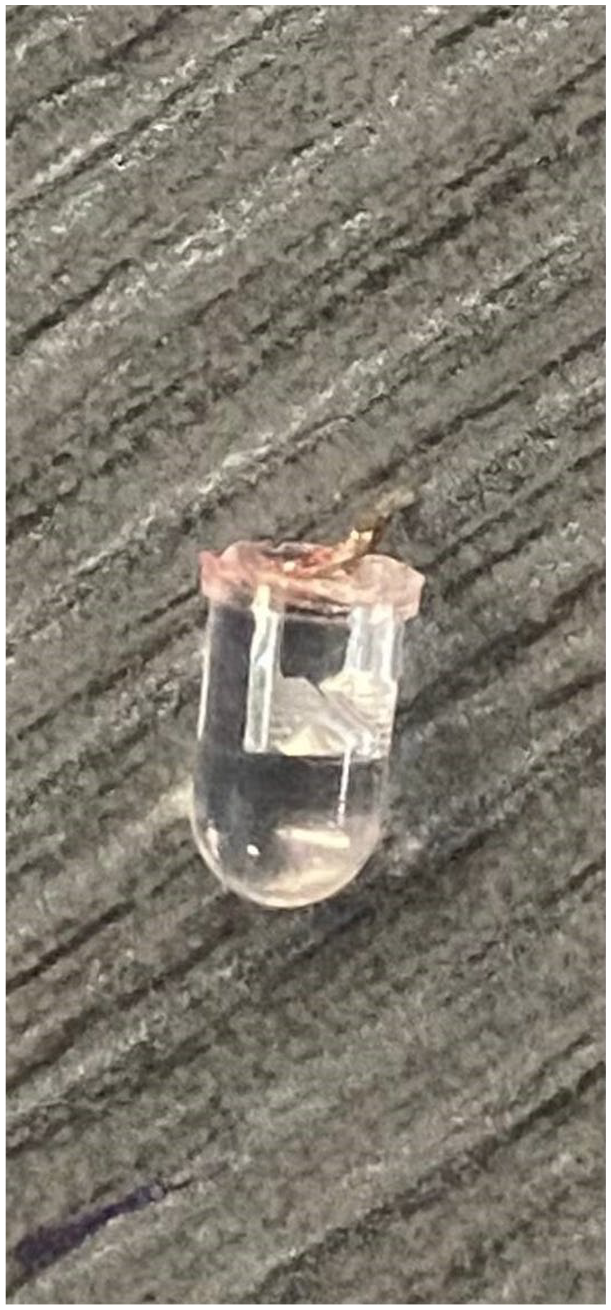
TV remote control IR-LED light.
Rigid Bronchoscopy findings and Types of the Foreign bodies.

The majority of patients were discharged within 24 hours of the procedure without significant complications. However, 1 patient developed massive postoperative bilateral pneumothorax, pneumomediastinum, and subcutaneous emphysema following extubation. The provisional diagnosis was tracheobronchial injury, which was managed conservatively with bilateral intercostal drain insertion.
Tragically, 3 patients were lost during the course of treatment. The first was a 3-year-old male who suffered massive bleeding and deceased on the operating table due to pulmonary artery injury following retrieval of a metallic foreign body (needle) from the left main bronchus (LMB).
The second was a 5-year-old female involved in a car accident while eating street food. After removal of an organic foreign body, she developed intracranial hemorrhage, necessitating a craniotomy performed by the neurosurgery team. Despite efforts, she succumbed in the ICU a week later.
The third patient was a 2-year-old male with an organic foreign body (bean) obstructing the carina, which was retrieved after multiple attempts. He was intubated and transferred to the ICU but passed away 3 days later due to hypoxic brain injury.
Discussion
Airway foreign body aspiration (AFBA) is a common pediatric emergency and a significant cause of morbidity and mortality, particularly in preschool children. Diagnostic and therapeutic bronchoscopy is critical for confirming AFBA and facilitating treatment. 15
In this retrospective study, we aimed to analyze various aspects of AFBA, including clinical presentation, types of foreign bodies, site of impaction, seasonal variation in presentation compared to nearby countries, management approaches, and outcomes. Our findings reveal a correlation between seasonal variation and AFBA presentation, with a predominance observed in spring compared to other seasons. We hypothesize that this may be linked to increased social and cultural activities during spring, as well as school spring breaks. This may be due to an increased interaction between children in large gatherings that result in less vigorous monitoring of the children.
Our results showed an average age of 3.5 years, with 70% of cases occurring between 1 month and 3 years of age. This aligns with findings from other studies, where 66.2% of aspiration cases were reported in the 1 to 3-year age group.2,8
The male-to-female ratio in our study was 1.34:1.0, slightly lower than ratios reported in other literature. For instance Budhiraja et al found ratios of 1.5:1.0 and 1.7:1.0, respectively. 1 Conversely, a study by Baram et al reported a lower ratio of 0.93:1.0 compared to our data. 8
Coughing and wheezing were the most common clinical findings, observed in 77.2% of patients. A witnessed history of aspiration was reported in 67.5% of cases, slightly lower than the 73.3% reported by Reyad et al in Egypt. 7 Positive radiographic findings were identified in 51.5% of our cases, which is lower than the rates reported by Li et al 2 Although imaging assists in detecting airway foreign body aspiration (AFBA), it proved less sensitive compared to clinical history and physical examination findings (Image 1). This highlights the critical importance of a thorough initial history and examination, particularly in resource-limited settings where advanced imaging may not be readily accessible.

Comparisons of different modalities in diagnosing FB aspiration in children.
Positive bronchoscopy findings were observed in 69.6% of patients, with negative findings in 30.4%. The right main bronchus was the most common site of impaction (30.8%), followed by the left main bronchus (28.7%). These findings differ from those reported by Freitag et al, who found right main bronchus impaction in 60% of cases and left main bronchus impaction in 23%. 16
Sunflower seeds were the most commonly retrieved foreign body (FB), accounting for 14.3% of cases. This is lower than rates reported in existing literature. For instance, Baram et al reported sunflower seeds in 49.4% of cases at Slemani Teaching Hospital, 8 while Pietraś et al found nuts to account for 57.14% of cases. 14 Notably, some rare FBs were retrieved during our practice, including a smartwatch button. This raises an important question: Are such devices being manufactured with child safety and aspiration risk in mind?
Another noteworthy foreign body is plastic bags. Preschool children, while developing their fine motor skills, frequently engage in play involving plastic bags, as observed by many parents. Due to the fragile nature of these bags, small pieces can easily tear off and be aspirated by the child. This exact scenario was encountered in our practice, as illustrated in Figure 2a and b.
In this study, we hypothesized that the number of siblings in a family might influence parental monitoring and the likelihood of a witnessed aspiration event. We recorded sibling numbers ranging from 1 to 6 and found no statistically significant correlation between the number of siblings and these factors. Interestingly, we identified 1 patient from a family of 4 siblings who experienced AFBA twice (0.4%), as well as 3 families where more than 1 child was diagnosed with AFBA (1.3%). These findings highlight the potential role of environmental and familial factors in AFBA occurrences.
In 2023, a study by Bin Laswad et al in Saudi Arabia (KSA) evaluated 1087 parents and found that 17.6% reported at least 1 episode of AFBA in their children, while 2.8% and 2.7% reported 2 episodes or more than 2 episodes, respectively. 17 These findings underscore the importance of family education following the first aspiration incident, as AFBA can recur in the same child or among their siblings. This highlights the need for proactive measures to educate families and raise awareness about AFBA prevention even before an initial incident occurs.
Perioperative complications, including pneumothorax and subcutaneous emphysema, occurred in 1 patient (0.4%). The remaining patients underwent uneventful bronchoscopies and were discharged within 24 hours postoperatively. A mortality rate of 2.38% was reported in a study by Ganie et al from Kashmir, which aligns with findings from other international studies. 18
Limitations of the Study
Our study’s limitations include the absence of long-term patient follow-up after ABFA, insufficient details on family habits, demographics, and education, and the inability to assess the surgeon’s learning curve for emergency rigid bronchoscopy. Comparing results with other centers is also hindered by limited data. These gaps highlight opportunities for broader research, focusing on long-term outcomes and involving multiple centers and surgeons. Collaboration with government health departments could enhance prevention and awareness of AFBA. Improving quality control of imported toys to meet safety standards by age group may reduce pediatric inhalation incidents. We recommend enhanced communication between specialties for early diagnosis and timely referral to specialized centers for suspected AFBA cases.
Conclusions
PAFBA is a silent yet leading cause of death in preschool children. Early diagnosis relies heavily on history, clinical examination, and a high index of suspicion, which are critical for better outcomes. Common aspirated materials in our locality include nuts and children’s toys, both of which are preventable. Bronchoscopy is a safe and effective tool for diagnosing and managing PAFBA, with acceptable morbidity rate in pediatric cases.
Footnotes
Acknowledgements
We would like to acknowledge all our personnel who assisted in serving our patients.

Ethical Considerations
This study was approved by the ethics and scientific committees of the Kurdistan Board for Medical Specialties (approval number: 1695 on 27/6/2022).
Consent to Participate and Consent for Publication
Written informed consent for participation and publication was obtained from all participants and/or their legal guardians.
Author Contributions
ZSM: contributed to conception or design; contributed to acquisition, analysis, or interpretation; drafted the manuscript; critically revised the manuscript; gave final approval; Agrees to be accountable for all aspects of work ensuring integrity and accuracy.
YNO: contributed to conception or design; contributed to acquisition, analysis, or interpretation; drafted the manuscript; critically revised the manuscript; gave final approval; Agrees to be accountable for all aspects of work ensuring integrity and accuracy.
VAB: contributed to conception or design; contributed to acquisition, analysis, or interpretation; drafted the manuscript; critically revised the manuscript; gave final approval; Agrees to be accountable for all aspects of work ensuring integrity and accuracy.
BJA: contributed to acquisition, analysis, or interpretation; drafted the manuscript; critically revised the manuscript; gave final approval; Agrees to be accountable for all aspects of work ensuring integrity and accuracy.
MYR: contributed to acquisition, analysis, or interpretation; drafted the manuscript; critically revised the manuscript; gave final approval; Agrees to be accountable for all aspects of work ensuring integrity and accuracy.
AB: contributed to conception or design; contributed to acquisition, analysis, or interpretation; drafted the manuscript; critically revised the manuscript; gave final approval; Agrees to be accountable for all aspects of work ensuring integrity and accuracy.
Funding
The author(s) received no financial support for the research, authorship, and/or publication of this article.
Declaration of Conflicting Interests
The author(s) declared no potential conflicts of interest with respect to the research, authorship, and/or publication of this article.
Data Availability Statement
The data is available with the corresponding author and can be achieved on request.