



Abstract
Background:
The practice of facial injectable treatments has matured significantly over the past two decades, transitioning from an artistic endeavour into a science-informed specialty. Among the pivotal advancements, the Medical Codes (MD Codes) system stands out as a pioneering codified framework that brought structure, reproducibility and emotional intelligence to facial filler treatments. While initially developed to improve clinical safety and aesthetic outcomes, its broader significance lies in creating a shared anatomical language that enhances communication across practitioners and paves the way for future technological integration.
Objective:
This narrative review explores the MD Codes system as the foundational example of an anatomy-based codified framework for facial injectables. It evaluates how this structured approach facilitates emotion-based consultation, standardised treatment planning and improved psychosocial outcomes, while offering a scalable model for future integration with emerging technologies such as artificial intelligence (AI), ultrasound guidance and robotics.
Methods:
Following Scale for the Assessment of Narrative Review Articles guidelines, a narrative review was conducted using literature from 2018 to 2024 across PubMed, Scopus and Google Scholar. Keywords included MD Codes, dermal fillers, facial anatomy, emotional attributes, ultrasound, robotics and AI. The review is enriched by the authors’ clinical experience and practical application of the MD Codes in aesthetic practice.
Results:
The MD Codes system has transformed aesthetic medicine by codifying anatomical landmarks and emotional concerns into a structured, reproducible methodology. It enables practitioners to systematically translate patients’ emotional needs into safe and anatomically precise injection plans. Furthermore, this framework’s standardised, machine-readable nature makes it uniquely compatible with AI-powered facial assessment, ultrasound-guided mapping and robotic-assisted injection systems. While MD Codes currently represent the most evolved framework of its kind, its conceptual foundation opens the door for refinement or the emergence of next-generation codified systems aligned with digital platforms and smart technologies.
Conclusion:
MD Codes have emerged as more than a technique—they constitute a transformative language that aligns anatomy, aesthetics and emotion. As aesthetic medicine enters an era of AI-driven planning and robotic-assisted precision, such codified frameworks will serve as the vital interface between human expertise and machine execution. These Codes offer a glimpse into a future where structured, emotionally intelligent treatment can be delivered through collaborative human–machine models.
Keywords
Abbreviations
MD Codes, facial injectables, hyaluronic acid fillers, artificial intelligence, robotics, aesthetic medicine, ultrasound-guided injections, emotional attributes
Introduction
The past two decades have witnessed an extraordinary transformation in the practice of facial rejuvenation. The rise of hyaluronic acid (HA) fillers has empowered aesthetic practitioners to achieve remarkable, minimally invasive results for different layers of the face, with short recovery times, minimal downtime and high patient satisfaction. 1 However, as the field rapidly expanded, it became increasingly clear that filler injections lacked a systematic and reproducible methodology. The prevailing approach was dominated by artistic intuition, varying significantly among practitioners and often yielding inconsistent or unpredictable outcomes. 2 While artistry is integral to facial aesthetics, relying on artistry alone without a scientific foundation sometimes results in asymmetries, overtreatment and a disconnect between patient expectations and clinical results.3,4
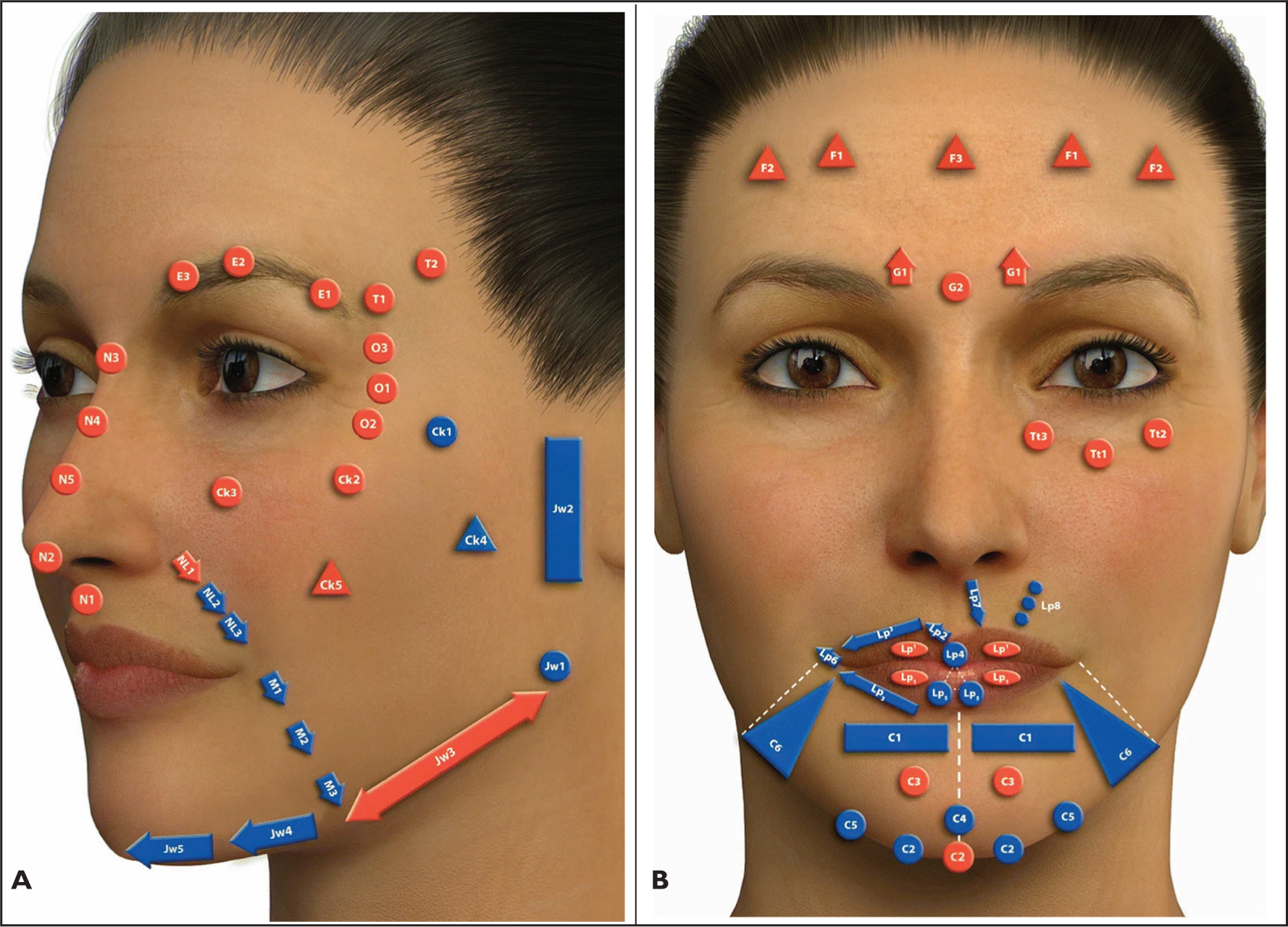
Recognising these limitations, Dr Mauricio de Maio, a plastic surgeon, introduced the concept of Medical Codes (MD Codes), which has since become a landmark innovation in the field of injectable aesthetics. 5 These codes offer a structured and anatomically validated system for planning and executing filler treatments (Figure 1A,B). By organising the face into coded regions, subunits and treatment vectors, these codes enable injectors to move beyond isolated wrinkle correction towards restoring facial harmony and addressing the emotional messages conveyed by ageing.
The most profound shift introduced by MD Codes was the recognition that patients rarely seek treatment because of a specific line or volume deficit. Instead, they express concerns that they ‘look tired’, ‘appear sad’, ‘look angry’ or ‘seem saggy’. These are not simply physical attributes but perceived emotional states projected through facial expressions. These codes provided a framework for practitioners to systematically identify and correct these negative emotional attributes by treating underlying structural deficiencies. Since its inception, this system has evolved further. The subsequent development of MD DYNA Codes introduced a dynamic dimension, addressing facial movement and muscle modulation (myomodulation) as part of the filler strategy. 6
A complementary framework known as the Multi-Dimensional Aesthetic Scan Assessment (MD ASA) was developed to support this philosophy. 7 This tool expands on the foundational MD Codes approach by guiding practitioners through a step-by-step evaluation of facial structure, symmetry, proportion and emotional attributes. By combining subjective patient perception with objective clinical analysis, MD ASA™ enhances the practitioner’s ability to tailor treatments to anatomical and emotional concerns, making the consultation process more structured, reproducible and emotionally intelligent.
The clinical adoption of these codes has yielded several critical benefits. It has improved treatment safety by respecting anatomical danger zones, enhanced reproducibility across practitioners and practices and provided an accessible teaching and communication tool through its ‘universal language’ of codes.
In recent years, interest has grown in exploring the broader psychosocial impact of these codes. MD Codes-guided treatments not only correct negative emotional attributes but also improve patients’ social perceptions and self-confidence, contributing positively to their overall quality of life. 8 Additionally, the structured and machine-readable nature of these codes positions them as a logical interface for technology-assisted procedures.
Perhaps most exciting is the emerging role of this codified model as a potential bridge to the integration of artificial intelligence (AI), robotics and real-time ultrasound imaging in aesthetic medicine. As aesthetic interventions enter the age of human–machine collaboration, codified anatomical systems like MD Codes may form the conceptual backbone for automated or semi-automated treatment algorithms.
This article presents a narrative review of MD Codes, their structure, philosophy, clinical significance and evolving role in modern practice. It will also explore the possibility that these codes serve as the blueprint for future AI and robotics-assisted aesthetic treatments, setting the stage for the next evolution in the art and science of facial rejuvenation.
Methods
This article is presented as a narrative review, aiming to synthesise the development, structure, clinical applications and emerging technological integration of the MD Codes system in modern aesthetic practice. The narrative format was chosen to allow for a comprehensive exploration that goes beyond technical descriptions, drawing connections between anatomical foundations, emotional aesthetics, clinical outcomes and future technological innovations, including AI, robotics, ultrasound, augmented reality (AR) and virtual reality (VR).
The literature search supporting this review was performed using major biomedical databases, including PubMed, Scopus and Google Scholar, covering the period from 2018 to 2024. The search strategy employed combinations of key terms such as ‘MD Codes’, ‘facial fillers’, ‘hyaluronic acid’, ‘emotional attributes’, ‘filler safety’, ‘facial assessment’, ‘myomodulation’, ‘MD DYNA Codes’, ‘AI in aesthetic medicine’, ‘robotics in facial aesthetics’ and ‘ultrasound-guided filler injections’.
Original contributions by Dr. Mauricio de Maio and collaborators were prioritised, as these constitute the primary source of the MD Codes framework. Additionally, peer-reviewed publications evaluating the clinical utility, emotional and social impact and recent technological adaptations of MD Codes were thoroughly analysed. Special attention was given to literature proposing future models of human–machine collaboration, algorithmic planning and interface design based on codified aesthetic frameworks.
The methodology for this review adhered to the principles outlined by the Scale for the Assessment of Narrative Review Articles. This method included clear articulation of the article’s objectives, comprehensive selection of relevant literature, proper referencing, sound scientific reasoning and systematic organisation of the findings. While not exhaustive, this review focuses on the most influential and pertinent literature, enriched by the author’s clinical expertise and interpretation, to provide a meaningful and applicable perspective for contemporary practitioners and researchers. The methodology was guided by the intent to provide readers with a cohesive understanding of MD Codes as a structured, reproducible and adaptable tool—and as a potential foundation for codified systems supporting AI-enabled injectables and robotic assistance—for modern and future aesthetic practice.
Discussion
Concept, Structure and Philosophy of MD Codes
At its core, the MD Codes system is a revolutionary framework that transformed the practice of facial aesthetic injections from a purely artistic craft into a structured, codified and reproducible medical procedure. 5 These codes provide a system of alphanumeric designations for anatomical areas, subunits and injection points of the face. What distinguishes this system is not only its anatomical accuracy but also its capacity to link structural deficits with the emotional expressions patients wish to improve. It represents one of the first successful attempts to formalise a universal ‘language’ of facial injectables that is both human- and machine-readable.
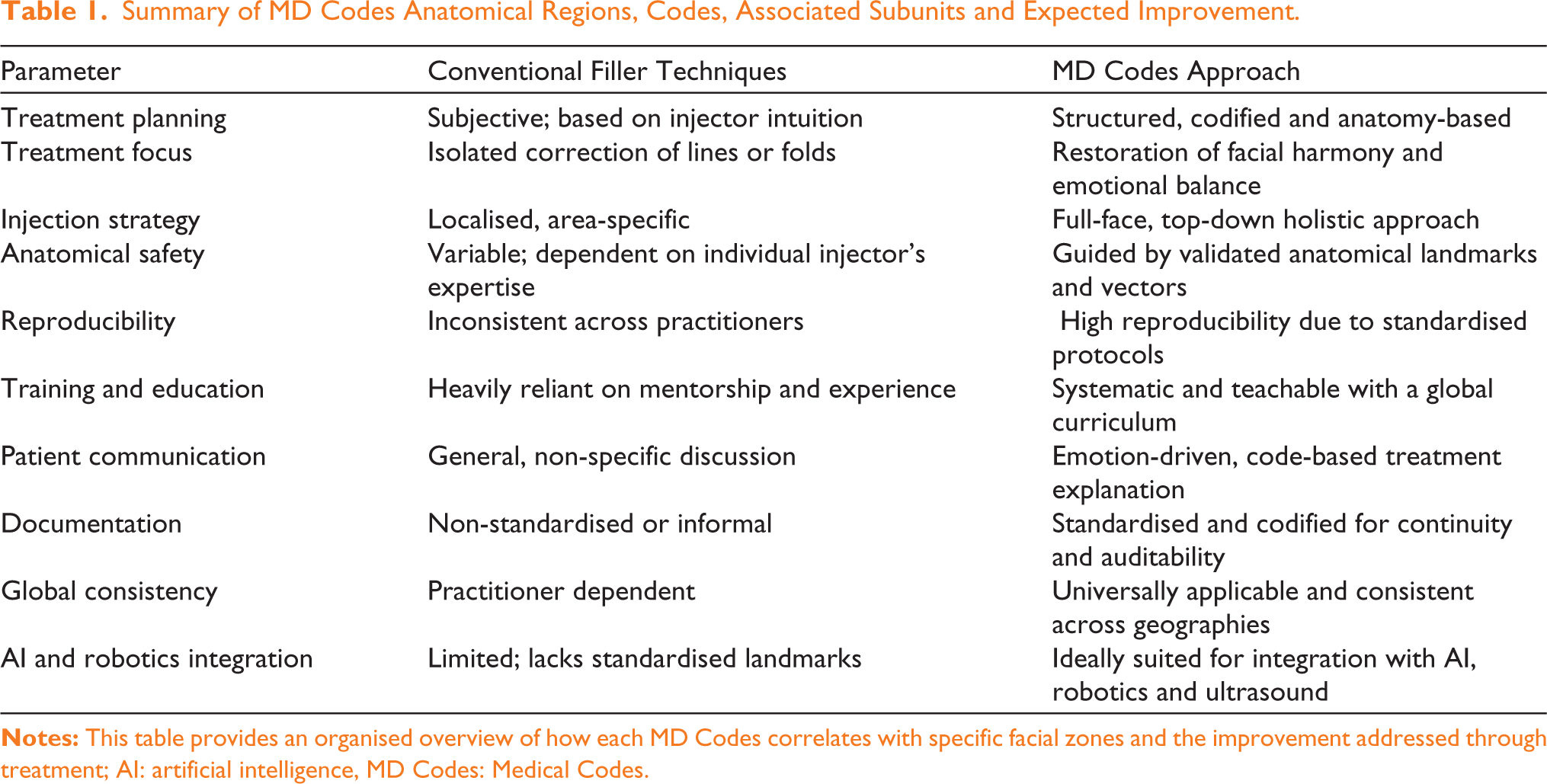
The MD Codes system divides the face into distinct anatomical regions—including the cheeks, chin, jawline and temple—further subdivided into specific injection points, each designated by a unique code (Figure 1A, B). This codified approach is not arbitrary but based on a deep understanding of facial anatomy, soft tissue distribution, ligamentous structures, vascular pathways and aesthetic vectors. Each code specifies the ideal depth, recommended filler type, vector orientation and expected contribution to facial harmony (Table 1). This level of standardisation makes MD Codes uniquely suited for digital integration, enabling scalable training, algorithmic planning and even robotic execution.
Summary of MD Codes Anatomical Regions, Codes, Associated Subunits and Expected Improvement.
What makes this framework conceptually innovative is its departure from the treatment of isolated wrinkles or folds. Instead, it addresses how facial ageing leads to negative emotional expressions such as sadness, tiredness, anger and sagging. It has been emphasised that patients rarely complain about anatomical defects in isolation but rather about how they feel others perceive them. These codes empower practitioners to translate these emotional concerns into an anatomically precise treatment strategy. 8
The system is further strengthened by the foundation, contour, refinement (FCR) sequence. This three-step principle emphasises correcting deeper structural elements first (foundation), followed by sculpting and restoring natural contours (contour) and finally addressing superficial details and refinements (refinement).9,10 This hierarchy ensures the final aesthetic outcome is harmonious, durable and naturally expressive.
Recognising that facial movement is integral to emotional expression, MD DYNA Codes were introduced, extending the system beyond static volume restoration. MD DYNA Codes focus on the dynamic modulation of facial muscle function through strategic filler placement, also known as myomodulation. 6 This allows practitioners to soften undesirable expressions caused by muscle hyperactivity or imbalance, such as marionette lines exacerbated by depressor anguli oris activity, without resorting exclusively to neurotoxins. 11
MD Codes have evolved into a universal language for practitioners, trainers and researchers. They facilitate communication among clinicians, enable reproducible documentation of treatment plans and allow structured training for beginners and advanced injectors. Whether used for record-keeping, multi-operator practices or AI-based systems, this anatomy-based codified system forms the anatomical and conceptual vocabulary of modern filler injection. As aesthetic medicine transitions into the digital era, the MD Codes’ codified logic offers a blueprint for integrating facial injectables into AI platforms, AR simulations, robotic-assisted systems and intelligent diagnostic tools. The MD Codes harmonise anatomical precision, emotional understanding and treatment reproducibility. 12
Clinical Significance and Practical Applications
The clinical significance of MD Codes is far-reaching, extending well beyond the technical realm of anatomical markings. Its greatest strength lies in the ability to bring reproducibility, safety and emotional resonance to filler-based rejuvenation. 13 In daily practice, these codes serve as a reliable tool for risk reduction. Based on validated anatomical research, the system guides injectors away from danger zones, such as major vessels and nerves, by defining optimal injection points and vectors. This guidance enhances patient safety, reduces the risk of complications and increases injector confidence, particularly among less experienced practitioners. 14
The system has also significantly improved consistency and reproducibility. Unlike traditional approaches, which rely heavily on individual injectors’ subjective judgement, this framework provides a systematic methodology that can be taught, learned and reproduced globally. This standardisation is critical not only for multi-clinic chains and academic programmes but also for future machine-learning models and robotic applications that depend on clearly defined, codified inputs.
Importantly, these codes integrate seamlessly with multimodal aesthetic treatments. The system facilitates logical sequencing when combining fillers with botulinum toxin,11,15 energy-based devices, biostimulators or thread lifts. The FCR model aligns perfectly with the stepwise correction often required when layering multiple treatment modalities, ensuring harmonious and durable results. 10
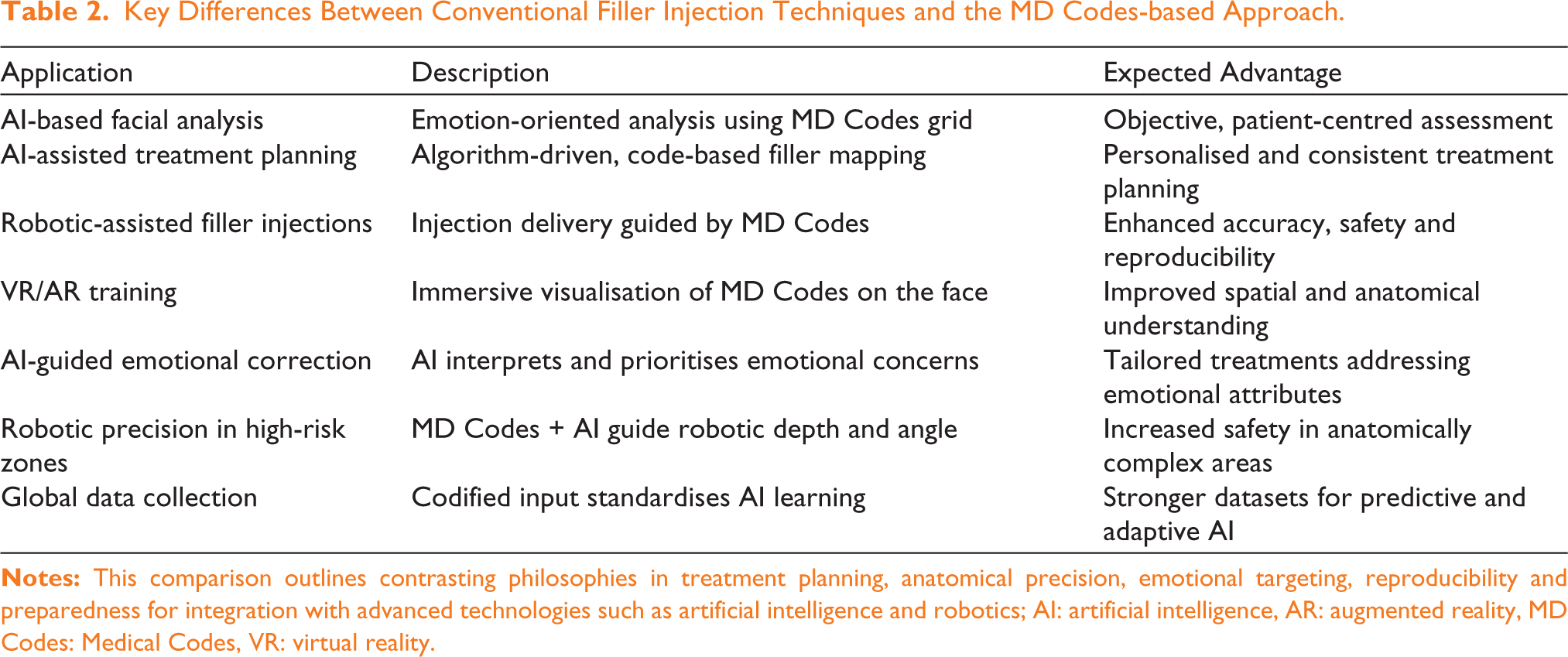
Finally, this codes-based system has proven invaluable in teaching and education. These codes enable novice and advanced injectors to learn not only the technical aspects of filler injections but also a deeper understanding of facial dynamics and emotional restoration. The MD ASA model further enriches this educational value by offering a diagnostic algorithm that helps injectors identify the most appropriate codes for treatment based on a comprehensive facial scan. 7 It emphasises five key domains: symmetry, proportions, facial angles, emotional messages and treatment priorities—allowing for a more holistic, data-informed consultation experience. By incorporating this model during patient assessments, clinicians can elevate the precision and predictability of their treatment planning. Such structured assessments form the basis for future digitised workflows in AI-assisted facial analysis. This structured approach stands in contrast to conventional filler techniques, as summarised in Table 2. Combined with modern tools such as ultrasound guidance and three-dimensional simulation, these codes continue to evolve as a cornerstone of contemporary aesthetic practice.
Key Differences Between Conventional Filler Injection Techniques and the MD Codes-based Approach.
MD Codes for Emotional and Social Transformation
Beyond their anatomical precision, MD Codes have introduced a paradigm shift by emphasising the importance of emotional and social perception in facial aesthetics. Traditionally, filler injections were primarily aimed at correcting visible signs of ageing—wrinkles, folds and volume loss—without systematically addressing the negative emotional expressions often associated with these changes. 16 Patients, however, rarely express dissatisfaction solely about a deep nasolabial fold or a sunken midface; instead, they describe their concerns in emotional terms, saying they ‘look tired’, ‘appear sad’ or ‘look angry’. 7
This insight, embedded deeply in the MD Codes philosophy, allows clinicians to structure treatments not merely to erase lines but to transform how patients feel they are perceived. The system systematically links each code to the correction of negative emotional attributes, such as tiredness, sadness, anger and sagging, promoting more positive attributes like youthfulness, attractiveness and increased masculinity or femininity.
Recent studies have validated these observations. A retrospective analysis involving over 100 patients treated exclusively with MD Codes found that more than 90% reported an improvement in emotional expression, such as looking less tired and less sad. Perhaps more importantly, these changes extended beyond self-perception. Blinded external evaluators also consistently observed positive shifts, noting that treated individuals appeared more youthful, friendly and emotionally positive after treatment. 8
Such outcomes are not superficial. Patients frequently report significant improvements in self-esteem, social confidence and overall psychological well-being after codes-guided interventions. The system empowers patients by aligning their outer appearance with their internal sense of vitality, enthusiasm and positivity. Patients often describe feeling more socially engaged, more confident in professional settings and more satisfied with their interactions, all of which contribute to an enhanced quality of life.
This emotional transformation is not accidental but deliberately embedded in the logic of MD Codes. By treating vectors of descent, supporting facial ligaments and optimising volume restoration, this codified system corrects structural ageing and the vectors responsible for negative emotional cues. This fusion of anatomical precision and emotional intelligence makes this framework uniquely translatable into emotionally aware AI systems capable not only of identifying volume loss but also of interpreting its psychosocial implications.
In modern aesthetic practice, where patients are increasingly aware of the interplay between appearance and emotional health, these codes offer a unique tool to deliver holistic, emotionally intelligent rejuvenation. The ability to address both the anatomy and the emotional narrative behind a patient’s concerns positions MD Codes at the forefront of patient-centred aesthetic medicine.
Integration of MD Codes with AI, Robotics, Ultrasound, AR and VR
Few innovations in aesthetic medicine have arrived with as much potential to shape the future as AI, robotics and advanced imaging technologies. However, as these tools advance, the question arises: How do we ensure that technology enhances rather than overshadows the subtle art of facial rejuvenation? The answer lies in the structure and philosophy of anatomy-based codified systems such as MD Codes, which offer not only a roadmap of facial anatomy but also a structured language that machines and humans alike can understand.
AI, particularly in the realms of facial recognition and computer vision, has reached a point where it can analyse facial proportions, identify asymmetries and predict age-related changes with impressive accuracy. Yet, AI alone cannot interpret beauty, harmony or emotional expression without a framework. This is where codified frameworks like MD Codes can fit seamlessly. The system can provide AI with a structured vocabulary—a grid of well-defined, anatomically validated regions, subunits and vectors—allowing algorithms to move beyond crude measurements towards meaningful, human-centred recommendations. 17
AI tools, when trained on MD Codes’ logic, could help practitioners visualise ageing patterns, predict treatment needs and even simulate outcomes, all the while keeping the emotional attributes of the patient in sharp focus. Integrating MD ASA into these systems provides a more robust data structure for machine learning models. With its multidimensional parameters and treatment prioritisation matrix, it can serve as the cognitive scaffold for AI-based planning engines, enabling algorithms to assess anatomical deficits, emotional cues, patient expectations and strategic treatment sequencing. In this way, MD ASA bridges the gap between clinical artistry and algorithmic logic.
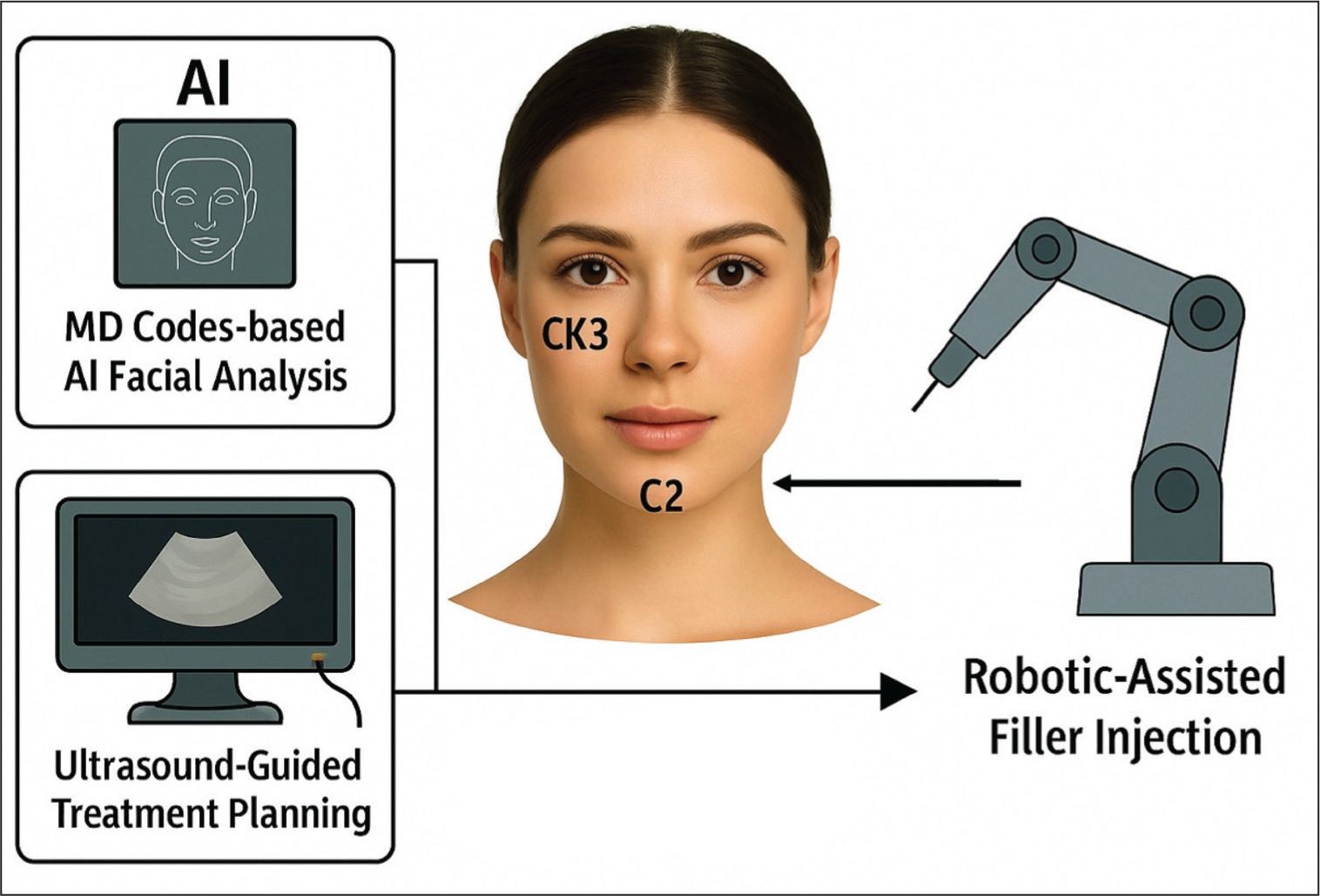
Robotics, already well-established in surgical disciplines, have begun knocking at the door of aesthetic medicine. The precision of robotic-assisted interventions is undeniable—but without a systematic anatomical map, precision alone is meaningless. The MD Codes system offers robotics the anatomical ‘GPS’ they need, specifying exactly where, how deep and at what angle injections should be performed to achieve optimal results. While robotic-assisted filler delivery may seem futuristic, it is increasingly viewed as a logical evolution, particularly in standardised treatments or in regions where consistent depth and angulation are critical. 18 However, it is worth emphasising that robotics, no matter how advanced, will not easily replace the nuanced decisions skilled practitioners make in every treatment session—from reading a patient’s subtle facial expressions to adjusting plans based on dynamic tissue responses. In this context, Figure 2 illustrates a conceptual workflow where MD Codes-based AI planning and ultrasound-guided treatment converge to inform robotic-assisted injection systems under clinical supervision (Figure 2).
The integration of ultrasound guidance with MD Codes is already a reality, enhancing both safety and precision.19,20 Ultrasound allows injectors to see the vascular structures, soft tissue planes and filler distribution, offering a level of control previously reserved for cadaver labs or surgical exposures.21,22 The combination of MD Codes planning with ultrasound feedback creates a powerful synergy, particularly when approaching high-risk areas like the tear trough, temple or nasolabial region.
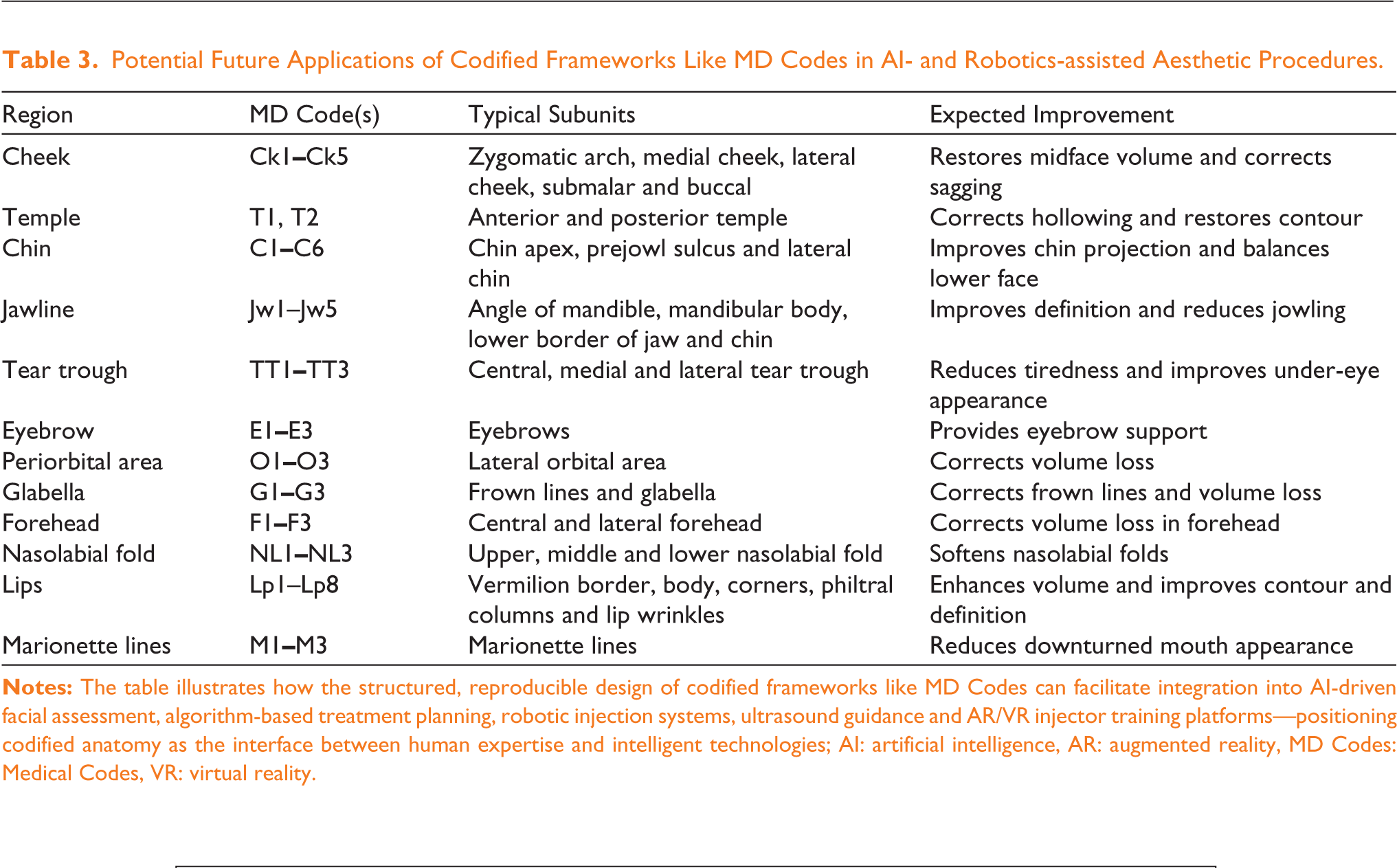
What is equally fascinating is how technologies like AR and VR are poised to transform training and education in the modern era. 23 Imagine young practitioners donning AR headsets, visualising MD Codes directly projected on the patient’s face during the assessment or practising virtual procedures in fully immersive VR simulations. These technologies accelerate learning and instil a deeper understanding of how structural interventions affect emotional expression. Such immersive tools make the codified language of MD Codes both visual and interactive—an essential step in human–machine training protocols. Table 3 outlines the future potential of codified frameworks like MD Codes in enabling AI-assisted analysis, robotic interventions and AR/VR education.
Potential Future Applications of Codified Frameworks Like MD Codes in AI- and Robotics-assisted Aesthetic Procedures.
However, amid all this technological promise, one truth stands firm: codified anatomical frameworks like MD Codes are not designed to replace the human injector anytime soon—they are designed to empower them. The ability to read a patient’s story, recognise the subtleties of their expressions and balance science with artistry cannot be delegated to machines alone at this point in time. AI and robotics may guide, suggest and assist, but it is the trained injector who ultimately brings life to the treatment.
In this emerging era of human–machine collaboration, codified anatomical frameworks represent more than a clinical tool—they are a shared language through which AI, robotics and clinicians can work cohesively. As aesthetic medicine continues to evolve, the ability to speak this language fluently may define the difference between merely technical interventions and truly transformative outcomes.
Limitations
While MD Codes have revolutionised facial aesthetic practice, certain limitations merit attention. One challenge is the risk of over-standardisation—particularly among less experienced injectors—leading to formulaic applications that overlook patient individuality, cultural context and aesthetic goals. The framework is a guide, not a substitute for anatomical knowledge and clinical judgement.
Another concern is limited generalisability across ethnicities. Initially developed for Caucasian facial types, adaptations for other populations such as Asian, Indian and Latin American remain informal, highlighting the need for ethnically tailored codes. Moreover, the learning curve remains steep; effective use of MD Codes demands a solid grasp of anatomy and technique.
In complex cases—such as those involving asymmetries or delicate areas—injectors must often deviate from codified protocols. While MD ASA enhances planning by incorporating emotional and structural assessment, interpreting emotional cues remains inherently subjective and culturally influenced.
Technological integration with AI, robotics and ultrasound remains conceptual, with limited large-scale clinical validation. Though promising, these tools currently serve more as adjuncts than replacements for skilled injectors. MD Codes must continue evolving to accommodate new technologies, populations and treatment paradigms.
Conclusion
In conclusion, the MD Codes system has marked a pivotal evolution in facial aesthetic medicine by establishing a reproducible, anatomy-based and emotionally intelligent approach to injectable treatments. This holistic perspective has enhanced both patient satisfaction and psychosocial outcomes, elevating the purpose and scope of aesthetic medicine. MD Codes have also laid the groundwork for the future of technology-integrated aesthetics. As AI-driven facial analysis, ultrasound-guided visualisation and robotic-assisted injection systems emerge, there is a growing need for standardised anatomical mapping and procedural logic. As aesthetic medicine enters an era of rapid technological convergence, MD Codes may be remembered not only as a transformative injection system but also as the first generation of anatomical language systems capable of shaping truly intelligent and collaborative rejuvenation.
Footnotes
Author Contributions
The author conceptualised and designed this review, performed the literature search, drafted the manuscript, made critical revisions and approved the final version for submission.
Declaration of Conflicting Interests
The author declared no potential conflicts of interest with respect to the research, authorship and/or publication of this article.
Funding
The author received no financial support for the research, authorship and/or publication of this article.
Ethics Statement
This article is a narrative review based on previously published studies and does not involve any new experiments with human participants or animals. All procedures described in the cited literature were originally performed according to relevant ethical standards and guidelines. No new patient data were collected for this work, and no identifiable personal information was included.