




Abstract
This paper evaluates Roger Keil's influence on the fields of urban and regional governance and suburban studies, underscoring his foundational contributions and identifying pathways for future sub/urban research. We trace Keil's intellectual trajectory from his early work on metropolitan politics and new regionalism in Los Angeles to his later engagement with the evolving landscapes of twenty-first-century global suburbanization. Through this progression, we demonstrate how his scholarship illuminates the intricate co-constitutive relationship between sub/urban governance and extended urbanization. Cutting through rote critique and caricature, we argue that Keil's research, theoretical interventions, and activism on the urban periphery have consistently opened new lines of inquiry while offering generous analytical tools and provocations to probe our possible urban futures. Essential to his approach is a distinctive interdisciplinary sociospatial perspective that critically interrogates the dialectics of suburbanization–suburbanism, decenters the city within critical urban studies, and situates urban knowledge production at the intersection of global urban processes and politics on the street. In an ‘urban age’ that is increasingly characterized by the suburban, Keil's work offers a vital foundation for researchers, scholar-activists, and practitioners seeking to develop deeper insights into post-city urban worlds where diverse, transformative sub/urban politics and polities continue to emerge.
It's easy to miss the people for the landscape especially if that landscape isn’t conventionally handsome, like Toronto's inner and outer suburbs […] The layers have built up and roots have grown deep, though. (Micallef, 2016: 254)
Over the past two decades, Roger Keil has compellingly asserted that the “urban” twenty-first century is more accurately a suburban one; an argument made visible in the extended morphologies of peripheral development, in the ways in which these spaces are inhabited and lived, and as a consequence of how we govern ourselves (Keil, 2018a). The dynamics of extended sub/urbanization affect urban governance in profound ways, challenging conventional understandings of community and citizenship, elevating individual rights over collective responsibilities, and disrupting the possibilities for, and of, engaged local democracy. Yet politics and governance on a suburban planet does not necessarily mean a narrow drive toward atomized neoliberal governmentality. It compels us to both reconsider the urban region as a viable foundation for collective and political life and directs our attention to emergent enclaves of local in/formal political autonomy within a globalizing urban fabric (Dear and Dahmann, 2011). Organizing around the right to the city in suburban space, for instance, opens opportunities to integrate place-based narratives into relational, issue-driven activism that can foster robust networks of care across metropolitan landscapes (Carpio et al., 2011; Kymäläinen and Kuoppa, 2025). Such ideas have been central to Keil's expansive engagement with sub/urban studies, shaping his intellectually productive—occasionally contentious, consistently generous—dialogues with a wide range of urban interlocutors.
In this paper, we examine Keil's interdisciplinary contributions to debates in urban and regional governance and suburban studies—interventions which we have each been directly engaged with and deeply influenced by. We chart Keil's intellectual trajectory, beginning with his early theorization of urban and metropolitan politics in Los Angeles and extending to his more recent explorations at the frontiers of global suburbanization. In analyzing the advancements and implications of Keil's research for urban theory, political action, and transformation, we underscore several of his foundational contributions to the field of urban studies—most notably his open dialectical approach to rethinking the urban “from the outside in.” We also identify future directions for sub/urban scholarship that both build on this legacy and respond to the social, spatial, and political challenges of the current moment.
Suburban succession in the globalizing region
At the end of the 1990s, a wave of municipal secessionist movements gripped Los Angeles. Keil had just published his monograph on Los Angeles, which skillfully unpacked the political shifts underpinning this conjuncture (Keil, 1998). Politically and intellectually informed by generative interactions with Davis (1990, 1998) and Soja (1996) among others, Keil's reading of Los Angeles deftly deciphered how local union activists, local boosters, community organizers, and local politicians were attempting to negotiate the globalization of the city. This was far from a consensual process, as conservative white communities from the port area of San Pedro and in the San Fernando Valley actively pushed to secede from the City of Los Angeles. Their efforts were a direct affront to the idea of regional governance that Keil had been comparatively developing throughout the 1990s—and continued to refine into the first decade of the 2000s when his empirical work shifted to the Greater Toronto Area (Keil, 1994, 2000). Stressing the need for a more robust theoretical assessment of successionist politics, Keil's analysis distinctively situated Los Angeles's localized urban politics within the historical governance traditions of the globalizing region. As such, the contortions in global Los Angeles's political fabric informed one of his key contributions to the new regionalism debates of the time, which was to insist on the fact that the emergence of a regional collective actor is not a given. 1 To the contrary, the views of southern Californian suburban conservatives and downtown elites each disclosed how conflictive the process of governing city-regions in a globalizing world is in practice (Boudreau and Keil, 2001). In Los Angeles, institutional changes triggered by globalization were marked by intense social, political, and cultural struggles. We tend to forget this today, as we are witnessing the fading out of neoliberalism and its evolution in various forms of protectionism and, arguably, renewed geopolitics of imperialism.
Nearly three decades on, it is striking how relevant these early regional encounters in global Los Angeles still are. It felt very uncomfortable to interview the conservative folks turning their backs on the city back then. These were people who had brought Ronald Reagan to power, and they remained profoundly attached to their suburban lifestyle amid the rapid shift to an even more radical form of neoliberalism during the late 1990s. Moreover, they deeply felt and resented these political, economic, and cultural changes and yearned for the comfortable and predictable years of Reagan and the bonanza of the military-industrial complex. Stepping into their suburban kitchens and sipping watered-down coffee meant encountering by-then quaint Reaganites, clinging to their status quo, rallying behind the slogan “no-tax-without-representation” to justify their secession from an increasingly diverse and immigrant-rich Los Angeles. Elsewhere, an oil mogul interviewed on the top floor of the Arco tower epitomized another strain of this conservatism; decked out in a cowboy hat, explaining how Los Angeles should be governed with his snakeskin boots on his desk.
Such encounters evoked an awkward sense of despair then and continue to do so now. The early 2000s also saw a resurgent cityhood movement in Metropolitan Atlanta, highlighting the persistent tension between fusion and fragmentation within regional political envelopes. In Georgia, several unincorporated areas and affluent, predominantly white neighborhoods within existing cities pushed to detach themselves from established jurisdictional territories and create themselves as new municipalities (Connor, 2015). These efforts, as with those in Los Angeles, were often justified by conservative pearl-clutching over political representation and the allocation of local tax revenues, but animated by a deeply racialized discourse of crime in and from “the city” (Allums et al., 2022; Godinez Puig, 2024). This movement came to a head in 2021 when elites in the wealthy district of Buckhead mobilized to secede from the City of Atlanta. The reactionary Buckhead City Movement, burning with more heat than light, was ultimately rejected by the Georgia State Senate in 2023; its former CEO, Bill White, subsequently tapped by the freshly re-elected Donald Trump as his pick for U.S. Ambassador to Belgium.
Studying right-wing activism is not easy, but it is necessary (Avanza, 2019; Blee, 2007). This is even more apparent in 2025, as extreme forms of right-wing activism gain global prominence. The configuration of forces and the radicality of today's right-wing politics are different. Yet, Keil's earlier work can teach us much about how to study these grassroots right-wing movements. His work underscores the importance of relationally analyzing seemingly “undesirable” social, political, and geographic phenomena, such as conservative secessionist movements or the suburbs themselves. Indeed, another of Keil's key contributions to the new regionalist debates was to insist, alongside Amin (2004) and Allen and Cochrane (2007), that regional growth and governance takes shape topologically. The concept of “real existing regionalism” (Addie and Keil, 2015), for instance, challenges the idealized and often abstract models of regional governance found in new regionalism literature. Instead of viewing regions as coherent or universally applicable planning units, this reading emphasizes that regions emerge through the interplay of discourse, territorial relationships, and technologies (both material and of power). Real existing regionalism, then, results in an uneven and varied landscape marked by areas of both success and disadvantage. What is particularly useful in such a topological understanding of urban regions is how it reveals interstices, in-betweens, and indescribable landscapes—like those of the San Fernando Valley—that are populated by junk yards, strip malls, vacant lots, fast food chains, and truckers’ meeting spots. Keil's fascination with these landscapes was unusual in the late 1990s, but it tellingly suggested that these overlooked places were significant sites where regional governance occurs: this is the basis of regional growth, this is where political cultures clash. In a way, his insight was comparable to McGirr's (2001) study of kitchen parties hosted by conservative housewives, the backbone of Reagan's rise to power and it constituted an important foundation of his subsequent thinking about global suburbanisms.
Now, as then, we need to look carefully at these interstices, these in-between spaces, if we want to understand today's political shift to the right and its possible alternatives: a clear and urgent task in today's geopolitical climate (Fainstein and Novy, 2023). Global urban politics can function as a substantial force of state informalization, leading to increasingly blurred distinctions between the state, the market, and civil society. Drawing inspiration from Keil's topological understanding of regional governance, Boudreau (2017) analyzes these dynamics as processes of uneven regional regime stabilization. Today's populist right-wing politics illustrates how state formalization processes are elastic: formalization is never complete and cannot be taken for granted. Populist leaders possess the capacity to significantly reshape state institutions, amplifying informalization through inflamed rhetoric and unwritten rules. Yet at the same time, today's right-wing geopolitics signifies a strong return of state power. This complex process materializes, is spatialized, and resisted, within the regional interstices of a new conjuncture of “crisis urbanism.” And as Keil and Beveridge (2025) recently argued, the paradoxes of political stasis and hyperpolitics unfurling here require deeper conceptual and political examination. This is suburban planet politics.
Revealing suburbia
In a March 19, 2025 opinion article, Hurst (2025), Europe correspondent for The Guardian, reflected on his attempts to understand the appeal of Donald Trump's “Make America Great Again” movement, finding it writ large across the “the endless nowhere land” of the nation's suburban sprawl. For Hurst, this world not only captured the aesthetics of Trump's America but functions as the very embodiment of neoliberal society and space; the apotheosis of freedom as the expansion of the market slouches over the landscape and atomized privatism animates suburbanism as a way of life (see Walks, 2013): Perhaps there is something authentic to suburban sprawl when experienced as a spectator and anthropologist. But as everyday life, sprawl is deadening, ugly, fake. Devoid of art, beauty and truth alike… In this instance in particular, abundance did a disservice to the US by drawing it into an absence of experience. What surprise that a moribund ideology would take root in physical spaces that radiate the peculiar desolation of too much. (Hurst, 2025)
Certainly, the discursive and material manifestation of white supremacy continues to be inscribed across U.S. city–suburb divides. Yet the reliance on what Airgood-Obrycki and Hanlon (2021) name the “census-convenient definition” of an urban–suburban binary (primarily based on physical location) acts to reinforce a center-periphery dichotomy that disconcertedly ties problems to people in place rather than examining such issues in relation to broader structural challenges. By embedding our understanding in a topological reading of city-regional space and geopolitical ordering, we might better recognize the social and spatial complexities of contemporary suburbia, which toward the end of the twentieth century “had lost its coherence, both in material and in discursive terms” (Nijman, 2020: 9). Other suburban worlds can and do exist. This idea is central to Keil's contribution to the field of critical urban studies in general, and suburban studies in particular.
To argue that suburbs are complex and deserving of concerted attention is no longer a controversial proposition, yet it remains an important intervention in a field of urban studies still blinded, as German planner Sieverts (2003: 18, 19) had it, by a “one-sided love for the historical city… [even as] the identity structure of the Old City is overloaded and collapsing.” But it is not enough to direct our attention to, or aspire to “retrofit” (per Dunham-Jones and Williamson, 2009), “unloved suburbia.” We need to confront why the suburbs matter, and for whom. Keil's work has done much to elevate the significance of suburban governance in wider debates around urban and regional politics. His frequently collaborative work shines a light on the governance of suburbanization, the distinct approaches to local governance adopted by suburban elites, and the political constellations influencing everyday life and sociospatial practices in suburban space (Ekers et al., 2012). A topological city-regionalism shows us that centers and peripheries, cities and suburbs, are bound by deep relational connectivity. Traditional narratives frame suburbs as dangling dependently from a singular urban center yet, since the Second World War, urban expansion into surrounding regions has introduced new governance challenges and reshaped metropolitan dynamics. Globalization has driven urban areas, from Los Angeles to the Ruhr Valley and China's Greater Bay Area, to restructure the scale and substance of their governance boundaries (Boudreau and Keil, 2001; Keil and Ronneberger, 1994; Meulbroek et al., 2023). The postwar growth of city-regions has reworked and rewired the interconnections between cities’ central cores and their metropolitan hinterlands, catalyzing persistent tensions as suburban polities assert institutional individualism and independence in the face of pressures for regional growth and governance (Keil and Addie, 2016).
Viewed through one lens, this raises problematic questions regarding the conservative suburbanization of urban politics and the on-going spatial expansion of Hurst's deadening sprawl. Yet what Keil's research has helped illuminate is that what might be dismissed as monotonous, nondescript, reactionary placelessness is not only where most of the urban age's urban inhabitants will live, but an essential landing site that contains the infrastructural preconditions for, and “disjunct fragments” of, global urbanization (Addie, 2016; Keil, 2018b). This includes the economic geographical formations (from airports to office parks and innovation clusters) through which many intraurban and international economies operate (Li et al., 2025; Phelps, 2017) and the maligned factories and strip malls of the in-between city that provide a variety of communities—out of necessity or choice—with access to flexible low-cost spaces (and thus the possibilities of local political autonomies) in ever more expensive and exclusionary metropolises (Figure 1).
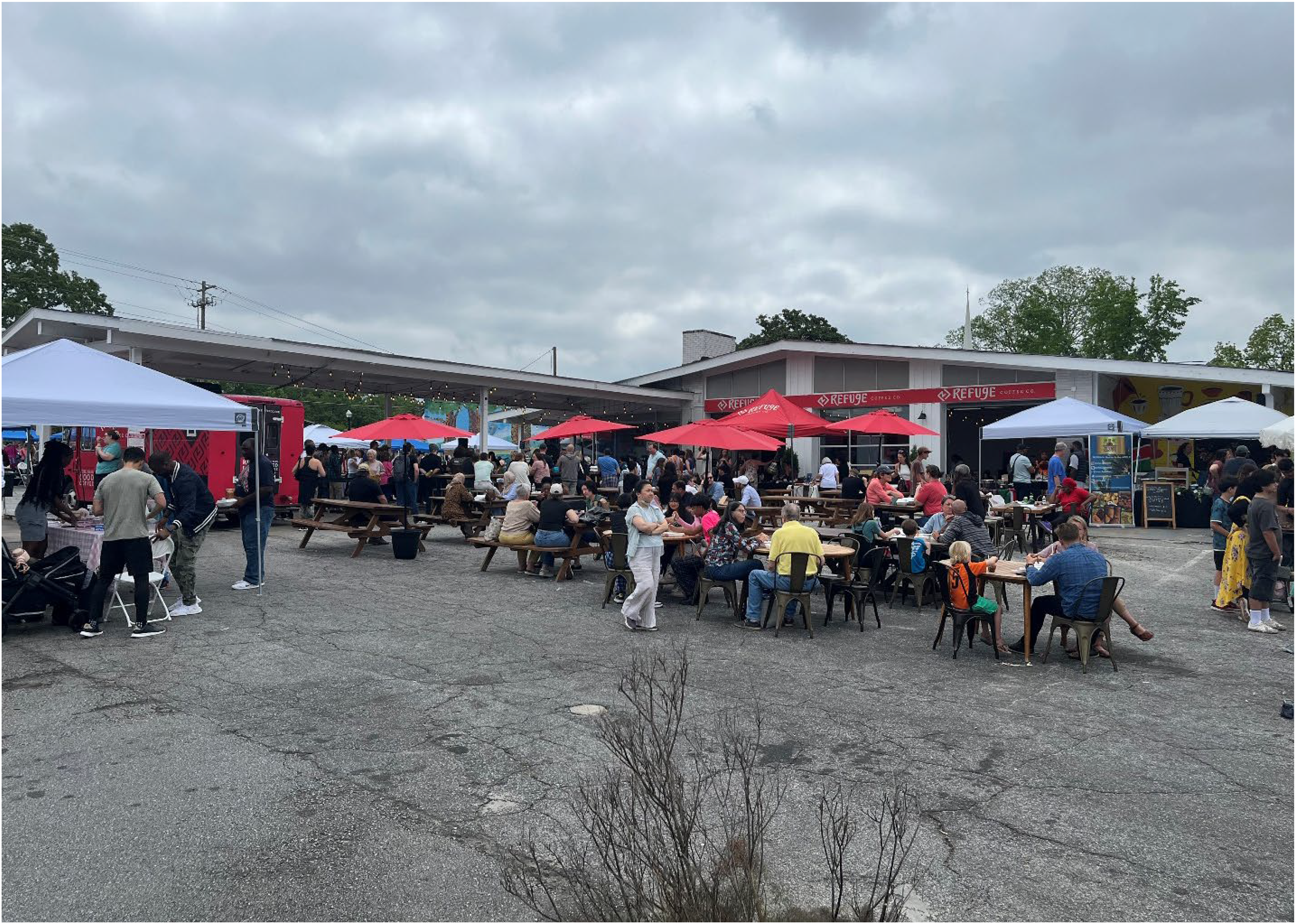
Peripheral centrality and the adaptive reuse of suburban space: Refuge Coffee Spring Market, Clarkston, Georgia, April 26, 2025.
The situatedness of sub/urban theory
So, what is distinctive about Keil's approach to, and influence on, the field of sub/urban studies? In considering this question, it is important to acknowledge the intellectual antecedents and contemporary debates Keil's particular “suburban revolution” has developed in dialogue with. There is a rich history of scholarship looking to understand the reality behind twitching net curtains and pervasive stereotypes, both in relation to suburbs themselves and the situation of urban peripheries within wider processes of peripheral urbanization (see Keil, 2018a: chapters 2–4). The (American) “new suburban history” challenged traditional narrative of suburbs as homogenous, conflict free spaces, foregrounding them instead as key battlegrounds for struggles over residential segregation, racial discrimination, economic inequality, environmental justice, and political activism (Hurley, 2019; Kruse and Sugrue, 2006). Richard Harris's historical work on Canadian suburbs profoundly complicates both classed and raced assumptions abstracted from the postwar United States and the idea that suburban homeownership necessarily produces more conservative politics (Harris, 2004, 2006; Harris and Lewis, 1998); themes that Keil and colleagues would explore in the contemporary era through Canadian–European comparative research on city-regional governance (Keil et al., 2017). Different strands of postsuburban scholarship have highlighted a shift from earlier suburban patterns, pointing to new forms of urbanization that challenge traditional ideas about the relationship between cities and their surrounding areas (e.g. Phelps and Wood, 2011; Phelps and Wu, 2011; Teaford, 1997).
Within this milieu, we suggest Keil's approach to sub/urban studies has several distinct points of emphasis. First, it incorporates a sociospatial perspective to examine diverse suburban constellations as objects of analysis. Global suburbia is read as a contested social, political, and environmental product of governance (Hamel and Keil, 2015), infrastructure (Filion and Pulver, 2019), and land (Harris and Lehrer, 2018). We cannot simply understand suburbanization as the territorial manifestation of noncentral population and economic growth or the role of suburbs as a spatial fix for postwar capitalism. Demographic, socioeconomic, and cultural transformations belie the construction of suburbia as undifferentiated, homogeneous constellation. Therefore, we also must account for the distinctive valorization of suburbs as lived spaces, the qualitatively distinct “suburban ways of life” practiced beyond the central city, and their imbrication within wider processes of city-making (Phelps et al., 2023; also see Walks, 2013). Leaning on Lefebvre to extend this postulation, we argue that this must involve asking: what is the value of the suburbs (in exchange and use terms)? What do the (diverse and heterogeneous) suburbs value (in hegemonic and counter-hegemonic forms)? And how are both values articulated in, and mediated through, wider scalar and governance systems?
Second, Keil's work is distinctive for its attempt to decenter the city in urban theory and to position suburbanization as a critical lens to understand global urbanization. Extensive comparative research asserts that the suburbs differ globally and are where the global lands in concrete terms. Contrary to earlier views of linear outward urban expansion, suburbanization is not simply a byproduct of urbanization but a driving force fundamentally shaping global urban landscapes from Los Angeles and Toronto to Istanbul, Johannesburg, Casablanca, and Shenzhen (Güney et al., 2019). This, then, is not a simple call to “depart from the suspicions traditionally expressed towards the urban periphery” but an invitation to reevaluate suburbanization “as an important part of the materiality of the urban through which we need to rethink and reload urban theory” (Keil, 2013: 10). There is necessary scope here for future suburban scholarship to unpick the nuanced interplay between sub/urban processes and politics, as well as the varying degrees to which diverse sub/urbanities are able to imprint their functional logics onto an extensive global urban fabric (Addie, 2020; Maginn and Phelps, 2023).
Third, in asking us to “rethink urban theory from the outside in,” Keil's work, along with the scholarship it has inspired and continues to engage with, both expands upon and transcends studies on both planetary and extended urbanization. Keil draws from Lefebvre's (2003) understanding of urbanization as a dynamic process of concentration (implosion) and dispersion (explosion) of people, resources, and activities but, unlike some strands of the planetary urbanization literature, refuses to be coopted into narrow discourses recounting the operational landscapes of global capitalism. His theoretical approach to extended urbanization engages cities and suburbs as products of social struggles in time and space: Keil's (2018b, 2018c) creative, decidedly humanist, interventions insist that we attend to the multifaceted dialectics of suburbanization and suburbanism, binding Lefebvre's “virtual object” of urban society to the actual urban actors who make it and the streets where global urban politics are forged. This, of course, also stresses the importance of a substantively global approach to sub/urban studies, one that peels back the calcified imaginaries of postwar American suburbia and encounters peripheral urbanization in and from sites as varied as Turkish gecekondu and the Indonesian kampung (Wu and Keil, 2020). As a challenge to city-centric urban theorizing, a resurgent global suburban studies aligns with Roy's postcolonial call “to blast open theoretical geographies, to produce a new set of concepts in the crucible of a new repertoire of cities” (2009: 821). Where we theorize—and act—from matters. This is true both in terms of animating new geographies of global urban theory and in unpacking differentiated spaces and experiences within the highly varied metropolitan environments of our sub/urban planet.
The significance of this analytical (epistemological and ontological) reframing is evident in Keil's own situated theorizing of urban society from Toronto's peripheral centralities. As with the suburban constellations of the San Fernando Valley, the view of York University's Kaneff Research Tower—home of the City Institute, which Keil served as the inaugural Director of, from 2006 to 2013—takes in a palimpsest of urban abundance and scarcity. Regional infrastructures unevenly criss-cross a rapidly changing environment. Beyond the boundaries of what was initially a greenfield campus built on the edge of Metropolitan Toronto in the late 1950s, now lies a cacophonous landscape of oil refineries, electricity pylons, auto repair shops, strip malls, intermodal yards, and the residential subdivisions characteristic of Fordist suburbanization—a tragically hip “greasy jungle metropolis noir.” Keil (1996) recounted traversing on his 45 km commute from Toronto's eastern streetcar suburbs to his office at York. To the south, the CN Tower offers a beacon for the traditional urbanity of Downtown and the urbane, now gentrified, neighborhoods Jane Jacobs helped spare from modernity's meat ax in the 1970s. Yet look north and an array of incipient urban centralities emerges across the morphologically varied and socioeconomically diverse city-regional urban fabric which now envelops York's Keele Campus. These are, in Keil's (2020) reading, “cities in waiting”—both in the sense of their municipal government and their emergent discursive and material postsuburban character. This suburbia is a “place where everything happens at once, where mixes of land uses and people are common and where density of uses is more urban than classically suburban” (Keil and Young, 2009: 492). Such landscapes defy normative imaginaries generalized from the postwar American single-family home subdivision (Pitter and Lorinc, 2016) or a neat reading of “Ford Nation” right-wing populism onto Toronto's suburbs (Filion, 2011; Kipfer and Saberi, 2014). In its fissures, sub/urban futures are being made and redefined through sites of risk, vulnerability, and new possibilities. 2
The underlying imperative here is to see suburbia—both distant and close to home—with “soft eyes,” broadening our field of vision with a peripheral awareness and observation to see the qualitative ramifications of quantitative shifts (e.g. the uneven suburbanization of poverty, race, etc.). Let us meet global suburbia where it is, rather than either where we wish or imagine it to be! This is not to lead us down a path of celebrating localized particularities in a world of suburbs. Rather, it is a challenge to traditional dichotomies (such as urban vs. suburban or Global North vs. Global South) and relationally brings together diverse suburbanisms and suburbanization processes that can illuminate the complexities of contemporary urban society. In this sense, global suburbia provokes the need for a more nuanced understanding of global urbanization, one that is open to both the colonizing imperatives of capitalist expansion and the possibility of encountering—and fostering—difference (in a Lefebvrian sense) on the edges of the urban. We may still encounter social–spatial formations in which Trumpism (or Doug Fordism, or Alternative für Deutschland nostalgia, or any other far-right populism) takes root, but we need to confront their conjunctural geohistorical specificity and alternatives.
Massive suburbanization revisited
To offer a case in point, we can consider how Keil's work on global suburbanization presents an underexplored framework to advance critical scholarship on the financialization of housing. Housing financialization has developed as a critical object of analysis following the 2008 Global Financial Crisis, with many researchers highlighting the impact of mortgage-based securities in rapidly accelerating the commodification of housing worldwide (Aalbers, 2016; Fields, 2017; Rolnik, 2019). Much of this literature has tied housing financialization to gentrification, marked by evictions, displacements, and the rising dominance of institutional investors such as real estate investment trusts that acquire social housing stock and convert it into higher-end rental properties, thereby fueling new articulation of urban rent gaps (August, 2020; Wijburg et al., 2018). Additionally, housing financialization correlates with increased household indebtedness, entrapping individuals in perpetual debt cycles (Graeber, 2011; Karaagac, 2020; Soderberg, 2014) and fundamentally detaching housing from its fundamental purpose: providing a secure place to live (Madden and Marcuse, 2016).
Although existing literature effectively explains the logic of financialization and the mechanisms through which it is enacted, it has tended to overlook the importance of uneven geographical development within and between metropolitan contexts. Keil and colleagues’ work on global suburbanisms helps address this oversight because it recognizes that, first, a majority of housing financialization is taking place in suburban areas, and second, immense developments on the urban peripheries of cities around the globe has been facilitated through the implementation of such financialization processes (Güney et al., 2019). This “massive suburbanization” fuels immense debt accumulation in the suburbs, whether through increased household indebtedness or public debt tied public–private partnerships or state-led megaprojects (Güney, 2019; Shen and Wu, 2017). The process of suburbanized housing financialization is inscribed in differing ways across a variety of urban peripheries. Istanbul's suburban expansion is an extension of state-led financialization that boosts land-rent speculation through public–private partnerships and an authoritarian urban regime (Yeşilbağ, 2019). Massive suburbanization in China discloses the spatial and sectoral expansion of financial capital through widespread investments in housing and critical infrastructure (Wu, 2024). In Toronto, massive suburbanization is directly linked to financialization, with an increasing reliance on household debt to finance housing (Keil and Üçoğlu, 2021; Kipfer and Sotomayor, 2024, Üçoğlu et al., 2021).
The expanding convergence of predatory housing financialization and massive suburbanization is captured in the concept of a “suburban–financial nexus” (Üçoğlu, 2021). In this framework, massive suburbanization primarily functions as a key driver of financial accumulation. Suburban housing markets are increasingly shaped by, and for, profit-driven private market actors who operate as a predatory class alliance. As market rate housing is only produced for profit-making developers, institutional investors, and landlords, any additional supply is readily absorbed into the existing price mechanisms of the financialized mortgage system (Kipfer and Sotomayor, 2024). Consequently, households must typically access these homes through mortgage debt, which is then transformed into financial instruments via securitization. This not only results in the further integration of suburban housing into broader financial systems but reproduces extractive landscapes scarred by “the destruction of natural environment, highly indebted households, segregated communities and, most cruelly, workers who lost their lives in construction sites due to urgent growth discourse of developmentalist strategies” (Üçoğlu, 2021: 984–985).
Suburbanization takes various forms. This is also the case for massive suburbanization, which we see ranging from North America's sprawling subdivisions to China's high-rise tower blocks and the luxurious gated communities of Istanbul (Üçoğlu and Güney, 2024). Despite their differences, such suburban constellations share a common link to financialization, whether manifested through private sector-driven “free market” models or state-led authoritarian regimes. If housing supply is increasingly driven by the interests of housing financialization, we cannot ignore the geographic, conceptual, or political significance of suburban space in this process. Most housing supply is focused on the suburbs and, while we might assume we have reached a collective consensus around the need to curtail outward urban expansion, right-wing urban commentators are now feeling emboldened enough to argue that “America should sprawl” to fix its housing crisis, regardless of the social, economic, and environmental costs (Doughety, 2025). Indeed, there is scope to draw out the suburbanity inherent within the increased scholarly attention being paid to connections between housing and right-wing populism (Adler and Ansell, 2020; Rossi, 2018; Waldron, 2021).
Put simply, suburbanization is the dominant form of urbanization and the financialization of housing is the dominant form of housing economics and land economics more broadly, as Raimbault (2022) charts in relation to the logistics real estate industry in the outer suburbs of Paris. As such, taking global suburbia seriously is essential if we are to understand the contemporary political economy of housing and geographies of financialization and debt accumulation. This is the case both because it attunes us how the production of suburban space (material and social) is leveraged for wealth accumulation by growth coalitions capitalizing on suburban land-rent speculation and because the places produced at the intersection of massive suburbanization and financialization are where most of the world's urban population will be making their homes, making meaning, and collectively producing the everyday lived realities of urban society.
Suburban praxis
If the suburbs are not neatly atomized and individualistic, neither is the way we study them. It is therefore important to acknowledge that much of Keil's influence on contemporary sub/urban studies is anchored in what we might think of as global suburbia as a modality of research—that is, through the practice and findings of the Global Suburbanisms Major Collaborative Research Initiative (MCRI). 3 The Global Suburbanisms project brought together over 50 researchers, 20 partners, and a multitude of students studying suburbanization as a critical aspect of twenty-first-century urban development. In doing so, it operationalized an interdisciplinary endeavor and collaborative model for how to “do” global urban research (Harrison and Hoyler, 2018), incorporating a wide variety of what Sheppard et al. (2013: 897) term geographic, methodological, and analytic “loci of enunciation” to decenter the current spatiality of urban knowledge and theory production. Analytically, the initiative examined diverse suburban constellations worldwide (from gated communities to informal settlements) in order to attend to the blind fields and omissions of mainstream and critical urbanism.
Asserting that the suburban “always has to be present when we act” (Keil, 2020: 15) is not a didactic proposition. Rather, it serves as an invitation to engage in the hard work of theory-building; one open to the generative challenge of learning from elsewhere and elsewhens, and extended to a growing cadre of students, early-career researchers, practitioners, and scholar-activists. It is difficult to overstate Keil's contributions as a mentor and colleague in this context. Through the collaborative ethos fostered at York University and beyond, Keil has advanced scholarly discourse on suburbanization by organizing seminars and workshops that welcomed new partners, and engaged a diverse range of academics and through his editorship of the Global Suburbanism book series with University of Toronto Press. Perhaps most significant though, has been Keil's capacity to inspire and support early-career researchers in producing new perspectives on suburban processes and experiences, viewed from such diverse sites as Brampton, Istanbul, Manila, Prague, and Tehran.
The Global Suburbanisms MCRI was not just an academic enterprise. It was informed by an intentional modality of praxis centered on recalibrating how we perceive and act upon suburban spaces. This impetus was embodied, for example, through the Great Toronto Suburban Working Group (GTSWG) which served as a forum to exchange information regarding the development and governance challenges of suburbs in the Greater Golden Horseshoe from 2010 to 2015. GTSWG meetings facilitated collaborative discussions with the aim of inspiring new modes of governance within the region. While one initial aim of the group was simply to bring people together to talk, its larger objective was to apply wider perspectives and new knowledge (such as that generated through the MCRI) to the processes through which the suburbs are shaped, perceived, worked in, and lived (Hertel and Keil, 2013).
While not without precedent, GTSWG functioned in several distinctive ways that illustrate how Keil's work at the intersection of regional governance and suburban studies has prompted professional practice to think about, and act, more deliberately on, sub/urban actors, processes, and outcomes. Notably, collaboration and collective action (especially in Greater Toronto) has rarely started from thinking through expansive suburban space. In calling for a more nuanced understanding of its suburban landscapes, GTSWG pushed back against often-dismissive attitudes expressed by urbanists toward suburbia and suburbanites. The group instead emphasized the need to tackle suburban issues from within, by engaging with the lived experiences and expertise of suburban communities rather than imposing solutions from urban cores. GTSWG operated as a bottom-up, voluntary space born from academic–practitioner engagement rather than functioning as a governmental or agency-based initiative. Its work highlighted the importance of collaboration, communication, and capacity-building in contemporary planning. These developments have both procedural and substantive dimensions, as calls for more democratic processes have emerged alongside new political actors and policy arenas (e.g. new socioeconomic and sociospatial divisions, the environment, culture, identity, etc.) (Keil and Hertel, 2022). As such, GTSWG ultimately aspired to rethink the practice of governance itself, rather than merely operating within its existing frameworks.
Writing sub/urban futures from somewhere
If, as Keil consistently acknowledges, we are always theorizing and writing from somewhere, the situatedness of critical sub/urban theorizing cannot be reduced to its materiality. As we have alluded to throughout this paper, writing from somewhere also means writing while acknowledging the stories that nurture the story we are writing. It would indeed be impossible to compile a paper like this without considering the analytical and political significance of sub/urban imaginaries. These stories frequently pepper Keil's work and the richness of the material he brings to his texts has always impressed us. We can think of how he uses specific movies to make a point, Blade Runner being one of his favorites (Brenner and Keil, 2014; Tzaninis et al., 2020) as well as the impact of a well-placed Arcade Fire lyric. But there is much more. His analysis of pop culture images in the making of global suburbia is central to politically understanding the process of regional governance. In a recent interview with Sébastien Darchen, Keil explains that, starting with his 1998 book on Los Angeles, he began to think about space not just: as existing or as being constructed again through political and economic circumstances, but how space represented itself. How actors in space—who were not just automobile workers or film workers, or garment workers, people who were in the economy as we classically defined it—like painters or movie directors, and the images they created became part of that process of creating space too. (Keil in Darchen, 2025: 230)
The dissolution of the city into the urban continues to create space, conceptually and politically, for the suburban. In this sense, we suggest the value of Keil's work on issues of urban and regional governance and global suburbanisms lies not so much in the provision of concrete conclusions and prescriptions regarding the path forward. Rather, it illuminates new lines of inquiry that require further deep contemplation while generously offering analytical tools and propositions with which to interrogate our possible sub/urban futures. Important questions remain open regarding, for instance, the prospects of environmental resilience in peripheries confronted with Anthropocentric climate breakdown (see Keil, 2019; Keil and Macdonald, 2016); the impact on, and opportunities for, extended urbanization to confront the a variety of urban public health challenges (see Connolly et al., 2020; Lorimer et al., 2025); how practices of suburban maintenance and repair are intertwined with the roll-out of massive suburbanization projects (Logan, 2021); and the possibility of generating engaged sub/urban futures animated by “caring” democratic practices in, and for, urban peripheries (Boudreau, 2024). Research on sub/urbanization will remain central to political debates, as rising housing unaffordability becomes a global concern and land-related tensions signal a hegemonic shift toward more authoritarian political and urban governance. Here, comparative attention—to geographic difference (national and within evolving metropolitan space) and the shifting politics of suburban conservatism and right-wing populism—remains vital (Fainstein and Novy, 2023). The temporal configurations and experience of suburbia—suspended in a perpetual present, at once built to change and yet unchanging—also beckon analytical attention (Quinby, 2011; Simone, 2024). Indeed, Keil notes that even “as suburbanization becomes the form and suburbanism becomes the life of much of the urban revolution, we are entering as an of postsuburbanization” (2018b: 494). While we may encounter this emergent postsuburban world most immediately in morphological terms, it is also present in the everyday lifeworlds of a globalized suburbia less determined by a narrow base of urban political economy than by the refusals and indeterminacy of what Simone (2022) terms “the surrounds.” Here, to see and write the suburbs in a new, grounded light is ultimately a political provocation; one that can help us better understand, inhabit, and act in post-city urban world where, as Keil argues, a myriad of sub/urban politics, polities, and lives are both present and possible.
Footnotes

Funding
The authors received no financial support for the research, authorship, and/or publication of this article.
Declaration of conflicting interests
The authors declared no potential conflicts of interest with respect to the research, authorship, and/or publication of this article.