



Abstract
The growing popularity of digital entertainment, growing user bases and ongoing advancements in game design and technology significantly made the online gaming business stand out as a growing sector with enormous growth potential. As a key factor in this expansion, game creators place a lot of emphasis on creating more immersive and interactive experiences, such as avatars. Drawing on the self-determination theory, self-congruity theory and psychological ownership theory, this study aims to understand how avatar characteristics influence players’ commitment and loyalty to online games through emotional attachment to avatars and perceived alignment with their self-image. The data were collected through a structured questionnaire. The study performed structural equation modelling using AMOS version 21. Based on the analytical results, avatar loyalty is strongly predicted by psychological ownership and self-congruity, whereas self-congruity is adversely affected by customization. The study contributes to the marketing literature by shifting the application of self-congruity and psychological ownership from general gaming contexts to avatar-specific interactions, thereby offering a more granular understanding of identity-based mechanisms in digital environments. It further extends prior research by simultaneously examining the mediating roles of psychological ownership and self-congruity and by highlighting the nuanced effect of customization on self-perception. The study is beneficial for game designers by emphasizing the need to balance customization features with users’ self-concept alignment to enhance long-term engagement and loyalty.
Introduction
The COVID-19 pandemic has had a profound impact on people’s lifestyles, purchasing habits and mental health. When people confined themselves to their houses during the pandemic, that caused them to use digital devices, such as smartphones, social media and the internet, more than ever before (Arora et al., 2021). The rapid growth of this digital entertainment has significantly reshaped patterns of leisure consumption, with online gaming emerging as a dominant cultural force (Baudet & Parmentier, 2025). Games not only offer amusement but also contribute to the development of social capital (Kuss et al., 2012) within the community, which fosters cooperation, intergroup trust and shared group values.
This growing social and cultural significance of online gaming is evident in its expanding market presence, as India’s online gaming market is projected to reach 198.7 million users by 2029, with user penetration expected to increase from 11.9% in 2025 to 13.2% (FICCI EY Report, 2025). The Online Gaming Bill, recently approved in the Lok Sabha, marks a major policy step in recognizing online gaming as ‘one of the most dynamic and fastest-growing segments of the digital and creative economy’ that contributes to innovation, employment and global competitiveness (Bill No. 110 of 2025) (Government of India, 2025). In order to withstand this tough competition in the economy, game developers desperately need to know how to boost player loyalty. In consumer behaviour studies, a significant number of studies have investigated and confirmed the image congruity perspective as a significant determinant of customer loyalty (Jamal & Goode, 2001; Sirgy et al., 1997). Meanwhile, in online games studies, it has demonstrated that player dedication, avatar traits and gaming experience can all have an impact on game loyalty (Brockmyer et al., 2009; Hsu et al., 2009). These avatars received a lot of attention due to their profound impact on the self-congruity perspective of game players. Anthropomorphic digital entities that can interact and are controlled by either software or people are known as avatars (Miao et al., 2022). In this context, an avatar is a player’s visual representation that they use to connect with other players or the virtual world in online or multiplayer games. Due to the enhanced customization and immersion aspects accessible in online gaming, these avatars’ characteristics have been increasingly important in recent years (Liao et al., 2019; Teng, 2010). Users choose or change their avatars based on how they see themselves or the scenario because avatars are important for making impressions (Westerman et al., 2015).
Previous research had acknowledged the significance of avatar traits and looked at how they affected various areas. Players’ perceptions of themselves and their interactions with the game world are shaped by their avatars, and this has a big impact on the whole gameplay experience. A number of studies has evaluated the complicated and subtle interaction between avatars and player loyalty, especially in virtual environments and online gaming worldwide as well as in the Indian context (Li et al., 2018; Liao et al., 2019). Despite these insights, the existing literature remains limited in several important ways. First, prior research mostly focused on the various impacts of avatar perception from the players’ perspective, ignoring how specific avatar characteristics can be strategically designed to effectively boost positive player impressions. Second, while constructs such as self-congruity have been explored, there is a lack of integrated frameworks that explain the underlying psychological mechanism, particularly the role of psychological ownership (PO) in linking avatar features to loyalty outcome. Third, online game loyalty studies show an increased pattern of repetition in the selected games, limiting the generalizability of findings.
Addressing these gaps, the current study investigates the relationship between avatar characteristics and game loyalty by incorporating the mediating roles of self-congruity and PO. This study provides a deeper knowledge of how avatar features can strengthen player–game connections by moving the focus from mere perception to the strategic design of avatars. The study contributes to the literature by integrating the self-congruity theory with PO in the context of online gaming, thereby extending existing models of player loyalty. Practically, the findings provide actionable insights for game developers to design more engaging and personalized avatar experiences that enhance user retention and long-term loyalty.
Theoretical Background and Hypotheses
Avatars
Richard Garriott coined the term ‘avatar’ in 1985. Avatars are digital player depictions that enable interactions with the environment and other users in virtual environments (Lohle et al., 2014). Since avatars are important means of communicating perceptions, their features are vital in determining avatar identity (Westerman et al., 2015). Although prior studies acknowledge the importance of avatars in influencing user engagement, they largely focus on general avatar presence, thereby neglecting the role of specific avatar characteristics and their contributions to deeper psychological mechanisms and behavioural outcomes.
Self-concept and Self-image Congruity
Self-concept can be defined as ‘The totality of the individual’s thoughts and feelings having reference to himself as an object’ (Rosenberg, 1989). Studies in consumer behaviour indicate that consumers preferentially select brands that align with their self-concepts or self-images (Liu et al., 2012; Mazodier & Merunka, 2012). Extending this notion, in consumer behaviour studies, self-image congruity (SIC) refers to the degree of match between an individual’s self-concept and an external entity, such as a brand or an avatar (Sirgy et al., 1997).
Self-congruence happens when a user tries to create their own avatar. During this process of shaping the avatar’s appearance, the physical appearance would be their major consideration, keeping themselves as the best reference. Numerous research studies have clearly documented this effect. According to earlier studies, people typically select avatars that represent elements of their true selves (Nowak & Rauh, 2005). According to earlier research, self-congruity will affect post-purchase behaviours such as loyalty and word-of-mouth (Krishen & Sirgy, 2016). While these studies establish the relevance of SIC in avatar selection, they provide limited insights into how SIC functions as a mechanism linking avatar characteristics to loyalty outcomes through specific psychological mechanisms.
Avatar Customization, Positive Avatar Image and Avatar Ability to Achieve
The extent to which a game enables gamers to design their avatars is referred to as avatar customization (Teng, 2019). Gamers perceive high enjoyment when the avatar features resemble those of gamers, leading to reduced deceptive behaviour, identification of avatars, etc. (Hooi & Cho, 2013, Midha & Nandedkar, 2012). Through avatar customization, increasing immersion satisfaction is achieved (Teng, 2010).
The choices made throughout the process of customizing one’s avatar are closely related to the key features of self-concept. Avatar customization enables users to project their ideal or actual self into the virtual world (Bailey et al., 2009) and strengthens their sense of connection with their avatars (Ratan et al., 2015). By encouraging users to carefully consider and select the different facets that constitute their self-concepts, a customization process helps individuals create memorable mental images of themselves (Kim & Sundar, 2012). Hence, we propose the hypothesis:
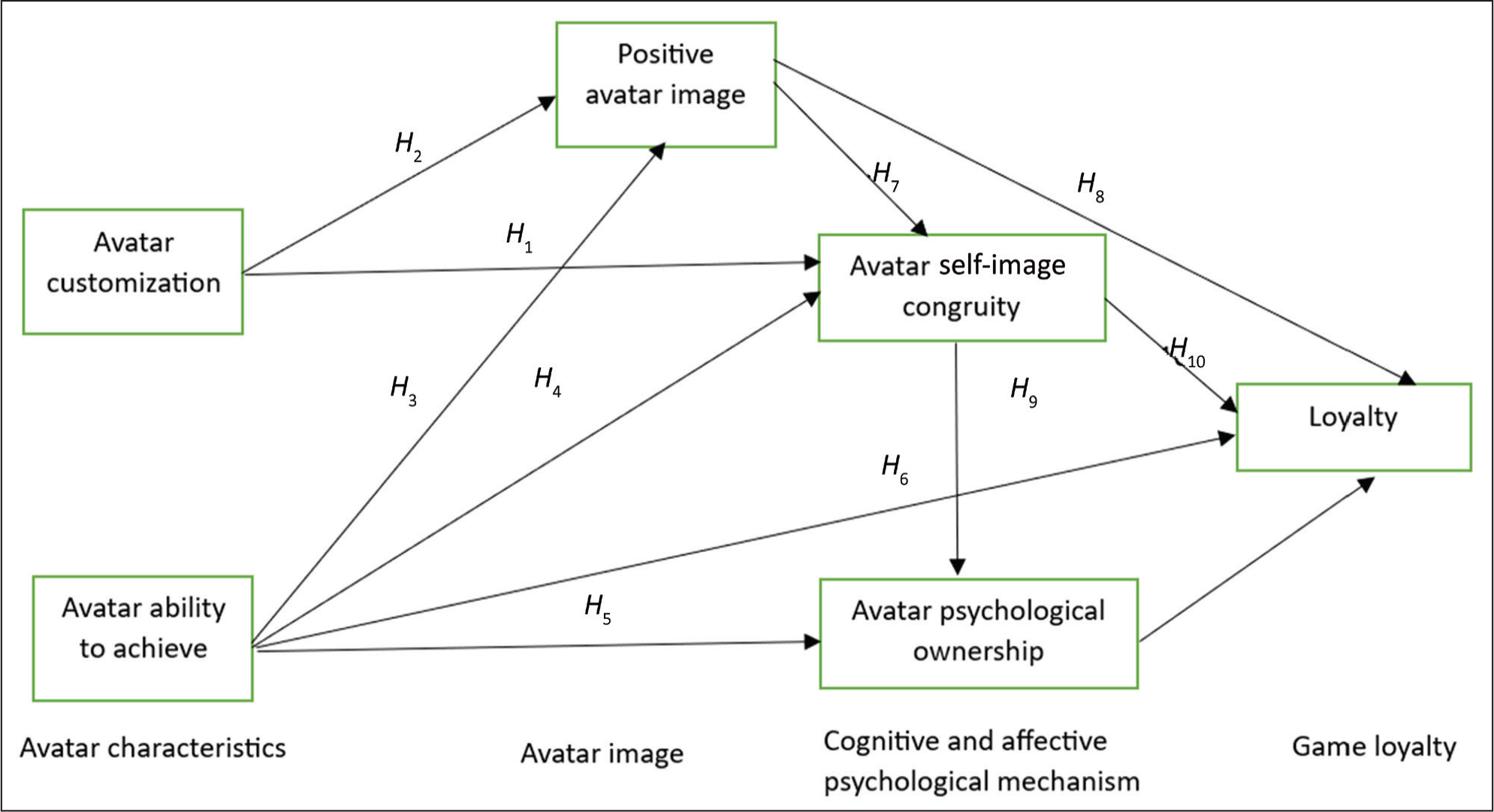
H1: Avatar customization is positively related to SIC.
The degree to which an avatar is positively evaluated is treated as positive avatar image. According to Norton et al. (2012), gamers can create and customize their avatars, which people frequently find to be valuable. According to the self-affirmation theory, making something personally significant, such as a personalized avatar, can satisfy people’s demand for self-worth and result in favourable assessments (Steele, 1988). As a result, personalized avatars are probably going to be seen favourably. Our hypothesis, which links avatar customization to a favourable avatar image, is based on this relationship. Therefore, we propose the following hypothesis:
H2: Avatar customization is positively related to positive avatar image.
The concept of ‘avatar ability to achieve’ refers to how successfully an avatar helps a player accomplish objectives, which in turn fosters a sense of control and achievement (Teng, 2019). This is in line with the self-affirmation theory (SAT), which maintains that meeting a fundamental human desire for self-worth is crucial (Steele, 1988). Because they satiate this innate need, avatars that make achievements easier are therefore likely to be well-reviewed by players. As a result, users’ positive perceptions of avatars are linked to their ability to succeed, underscoring the link between achievement capability and a positive avatar image.
The ability of avatars to achieve also shows how important players believe avatars are to winning games. Avatars that facilitate the fulfilment of goals are appreciated because gamers are highly motivated to achieve them (Teng, 2017a) and view accomplishments as indicators of supremacy. Avatars and other items that boost a person’s sense of competence will be seen favourably, according to the SAT. This leads us to the hypothesis that players will favour avatars with a high achievement capability. Accordingly, we hypothesize:
H3: A positive avatar image is positively correlated with the avatar’s ability to achieve.
According to the self-determination theory (SDT), humans are encouraged to actively seek out new experiences, master them and integrate them into their lives in an organismic–dialectic framework of motivation (Sinha & Srivastava, 2022). According to this theory, humans have three fundamental psychological needs: autonomy, competence and relatedness—all of which are essential for motivation and personal growth (Deci & Ryan, 1985). Avatars satisfy the need for competence, a fundamental component of SDT, when they help players accomplish their objectives. Players’ self-esteem is raised by this sense of accomplishment, which also helps them to better match their virtual selves. Therefore, we hypothesize:
H4: An avatar’s ability to achieve is positively related to SIC.
According to the extended self theory, people view their belongings, including digital avatars, as extensions of themselves (Belk, 1988). When an avatar accomplishes goals and exhibits abilities that the user values, the sense of PO will strengthen because the avatar becomes a symbol of the user’s identity and their accomplishments. When avatars carry out tasks or exhibit traits that the user values, they increasingly become a part of the user’s identity, leading to a greater sense of ownership. Thus, our hypothesis is:
H5: An avatar’s ability to achieve is positively correlated to the PO of the avatar.
The phrase ‘self-efficacy’, which was first used by Albert Bandura, refers to an individual’s belief in their ability to take the steps required to achieve specific goals (Bandura, 1978). Users feel mastery when they employ their avatars to accomplish goals. Even in a virtual setting, the user’s confidence in their own abilities is strengthened by the avatar’s ability to complete tasks. The user’s self-efficacy is subsequently increased by this achievement. Their devotion is further strengthened by the likelihood that they will return to the platform as their confidence in their avatar’s skills grows. Therefore, we hypothesize:
H6: An avatar’s ability to achieve is positively related to loyalty.
People have a strong tendency to maintain a positive image, which leads them to identify with positive objects (Steele, 1988), according to the SAT; Sherman & Cohen, 2006). In a virtual environment, this tendency can be extended in terms of avatar selection. According to Behrend et al. (2012), attractive avatars make people believe they are good people. This perception can be traced to the concept of SIC, which is the degree to which an individual’s self-concept—their perceptions of themselves—aligns with external representations, like avatars. People usually select an avatar that is consistent with their self-concept, whether that self is their actual self or their ideal self. A powerful method of reaching SIC in this situation is choosing a positive avatar image, which turns into a means of expressing and reaffirming one’s identity. Accordingly, we hypothesize:
H7: Positive avatar image is positively related to SIC.
The relationship between loyalty and a positive avatar image is fundamentally dependent on SIC. Users are more likely to form emotional bonds and show devotion to companies that align with their self-concept when they believe that their avatars represent who they are. This dynamic emphasizes how crucial avatar representation is in influencing how customers behave in virtual settings. Accordingly, we propose the hypothesize:
H8: A positive avatar image has a positive correlation with loyalty.
Psychological Ownership
According to the psychological ownership theory, people who have a psychological bond with things or entities grow to experience a sense of ownership over them (Pierce et al., 2001). The idea that an avatar ‘belongs’ to a user is strengthened when the avatar’s appearance closely resembles their self-concept. The extended self theory (Belk, 1988) holds that people view their possessions, including virtual personas, as extensions of who they are. An avatar becomes more than just a digital object when it is created or altered to represent a user’s ideal self or self-image; it becomes an essential component of the user’s extended self. Because the avatar reflects individual traits and ideals, this increased sense of congruence and representation heightens the sensation of PO. Therefore, we hypothesize:
H9: Avatar SIC is positively related to the PO of the avatar.
Online Gamer Loyalty
Loyalty can be defined as a customer’s intention to repurchase a product or service (Zheng et al., 2017). In an online gaming scenario, loyalty is precisely defined as the intention to play a game again (Teng, 2017a, 2017b). This concept is closely linked to the idea of continuous intention in gaming (Sharma et al., 2022). The antecedents of online gamer loyalty, such as perceived interest (Wu et al., 2018), network centrality (Hsiao & Chiou, 2012), motivation to accomplish gaming goals (Teng, 2017a) and team engagement (Teng & Chen, 2014), have been the subject of several research.
The psychological ownership theory claims that people who have a psychological connection to objects or entities have a sense of ownership over them (Pierce et al., 2001). When an avatar’s look closely reflects the user’s self-concept, the sense that the avatar ‘belongs’ to them is reinforced. People perceive their possessions, including digital avatars, as extensions of who they are, according to the extended self theory (Belk, 1988). When an avatar is made or modified to reflect a user’s ideal self or self-image, it transcends its status as a digital object and becomes a vital part of the user’s extended self. The feeling of PO is enhanced by this greater sense of congruence and representation since the avatar embodies personal characteristics and values. Consequently, we hypothesize:
H10: Avatar SIC is positively related to loyalty.
The success of online games is greatly influenced by the attitudes of players, which has led many businesses to investigate the feelings that players have while playing. According to this study, users and their in-game personas have psychological ties. Consequently, using a psychological ownership theory-based approach promotes PO. According to this hypothesis, people are in a state where they believe that something—whether it be a tangible item, an idea or an entity—belongs to them. PO of an avatar is directly linked to increased loyalty (Moon et al., 2013). This is because it is anticipated that more PO will improve sentiments of accountability, concern and stewardship, all of which should boost player loyalty in online games. Therefore, we hypothesize:
H11: Avatar PO is positively related to loyalty.
According to the literature, there are limited studies examining how avatars can enhance gamer loyalty. Few studies have investigated the impact of avatar characteristics (Li et al., 2018; Liao et al., 2019; Teng, 2019) on gamer loyalty, with potential mediators such as flow (Liao et al., 2019), avatar friendliness (Li et al., 2018) and satisfaction (Teng, 2010). However, these studies have not examined the potential mediating effect of avatar image, self-congruity and PO. By providing a new perspective on these important components, this work aims to close these gaps. Figure 1 shows the research framework with the proposed hypotheses.
Hypothesized Model.
Sample and Data Collection Process
Data were gathered using the survey approach in order to test the suggested model. The total response received was 316, out of which 300 valid responses were taken for analysis. Given the absence of a comprehensive sampling frame for online gamers, this study employed a snowball sampling technique to reach respondents who actively engage in online gaming. For accessing the dispersed and digitally connected population, snowball sampling is particularly suitable. A group of initial participants were requested to refer other eligible respondents within their networks, thereby facilitating efficient data collection.
To minimize the potential sampling bias, a few precautions were taken. First, we deliberately chose three specific games (Free Fire, Call of Duty and BGMI) rather than nominating any game at random. Thus, the prioritization and variety of features available to avatar characters, specifically focusing on how these features are implemented on the three gaming platforms, can be evaluated. Second, the survey was distributed across diverse online platforms and gaming communities to ensure heterogeneity in the sample. Third, screening questions were used to include only active online gamers of the chosen games. Finally, demographic diversity (e.g., age, gender and gaming frequency) was monitored to avoid overrepresentation of specific groups. These measures help improve the representativeness and reliability of the data.
Measurement
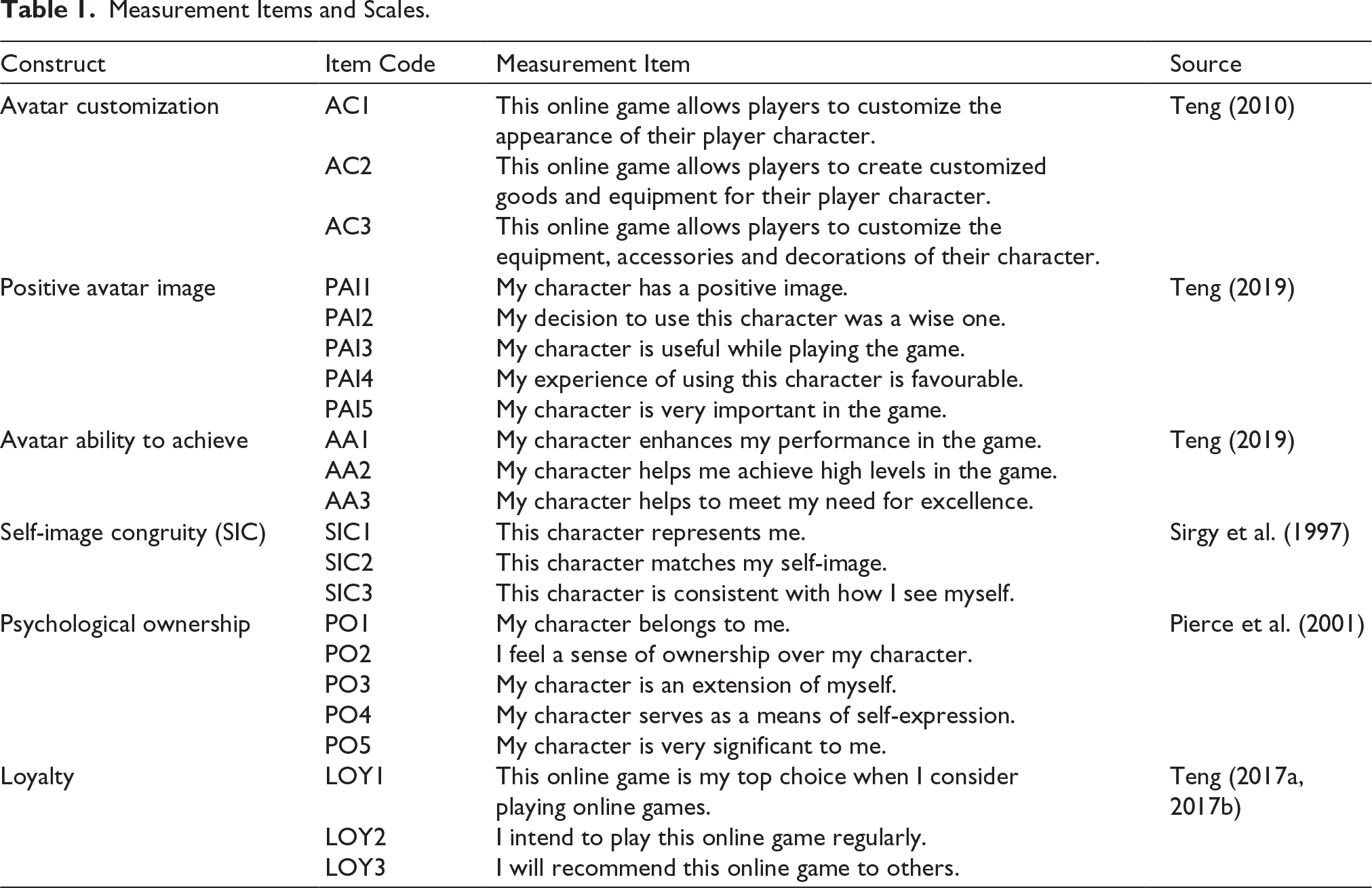
All questionnaire items were adopted from the previous literature. The items were measured on a 5-point scale, with 1 representing strongly disagree, 2 disagree, 3 neutral, 4 agree and 5 strongly agree. Structural equation modelling using AMOS 21 was used to test the proposed model. Table 1 summarizes the measurement scales, item descriptions and their corresponding sources adopted for this study.
Measurement Items and Scales.
Results and Findings
Sample Profile
A gender gap can be seen in the data, since there are more male gamers (62%) than female gamers (38%). This indicates that games, in this sample, are more popular among males, which aligns with common trends in game demographics. The respondents were between the ages of 17 and 35. The responders appear to be young adults based on their age range, most likely students or professionals just starting their careers. Given that they frequently have the leisure and desire to play video games, this age group is typical of gamers. With over 40% of respondents playing it, Free Fire is the most popular game among this category, according to the distribution of players among the three games. BGMI comes in second, with 33% of those surveyed playing the game. Despite its continued popularity, Call of Duty has the lowest share (28%), which may indicate that it targets a more specialized or niche audience within this age range.
Structural Model and Hypotheses Testing
A model has been developed based on the literature research, and it was evaluated using path analysis. Every construct’s validity and reliability were assessed. The Cronbach’s α of all variables was higher than the permissible threshold of 0.70. Model fit indicators were evaluated in order to get the structural adequacy. The ratio between χ2 and the degree of freedom ratio was discovered to be 0.759, which indicates that the model matches well with the data. The goodness-of-fit index is 0.997, with a comparable fit index of 1.000, a normed fit index of 0.997, a GFI of 0.997 and an AGFI of 0.982. According to these indices, a good model fit was attained, providing a good platform for analysing the proposed routes.
Based on the hypothesis testing, Table 2 reveals varied outcomes. H1 assumes a positive correlation between avatar SIC and personalization, expecting users to design avatars that mirror their self-image when customization options are available; however, the findings show a negative correlation (β = −0.258, CR = −3.266, p < .05). H2 proposes that favourable avatar image positively influences customization, assuming users feel better when they can alter appearance or attire, which was supported (β = 0.310, CR = 8.529, p < .001) and also aligned with the findings of Teng (2019). H3 suggests a positive link between favourable avatar image and achievement, assuming positive impressions make avatars appear more capable; results confirmed this (β = 0.396, CR = 11.139, p < .001) and were consistent with Teng (2019). H4 posits that SIC relates to avatar achievement, when an avatar can successfully complete activities or reach objectives, it strengthens the user’s sense of self and makes the avatar seem like a more ideal or accurate depiction of who they are or want to be, supported by results (β = 0.423, CR = 5.137, p < .001). H5 suggests that PO of an avatar has a favourable correlation with its ability to achieve. People have a greater sense of personal connection or ownership over their avatar when they see it accomplishing objectives (β = 0.143, CR = 3.877, p < .001).
Model Testing.
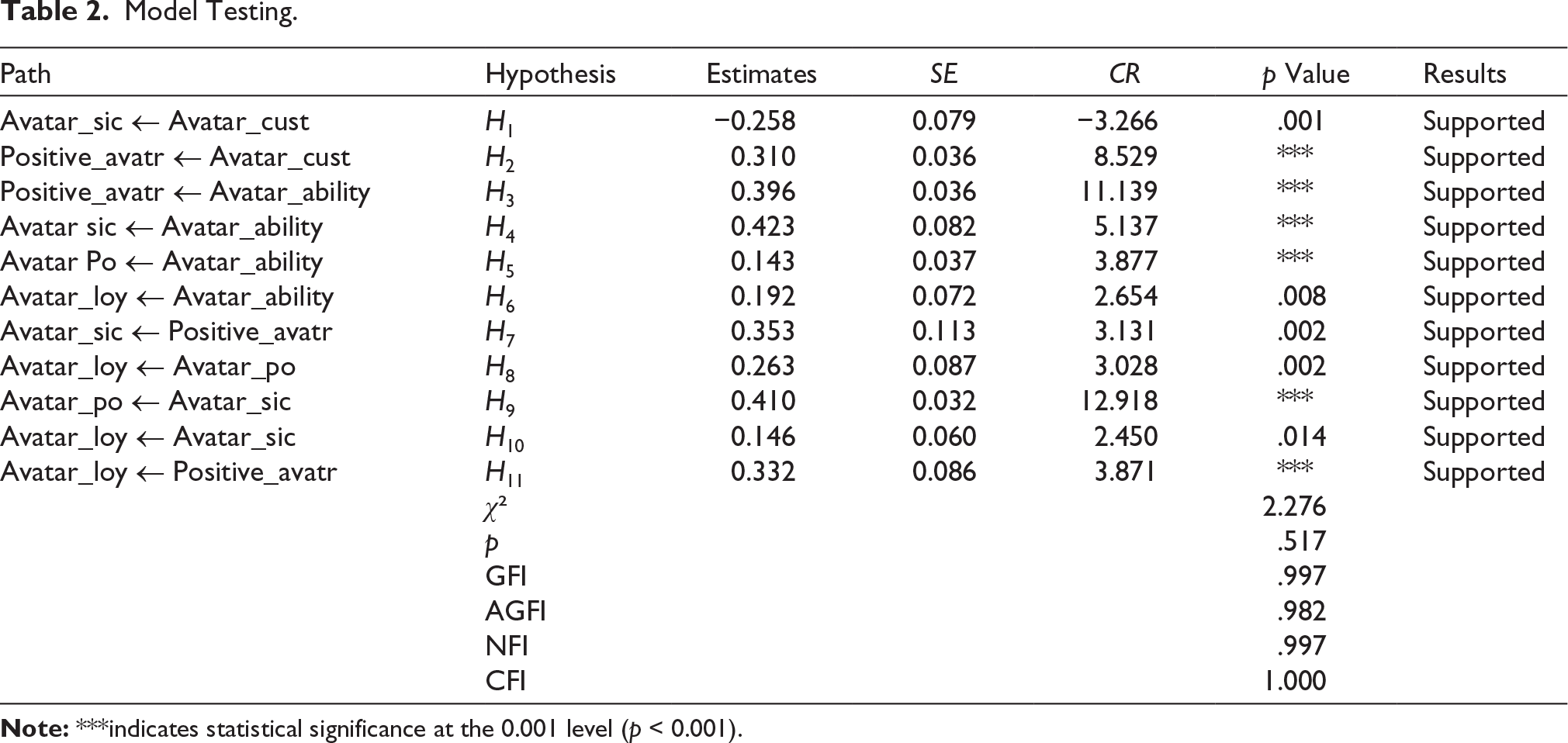
H6 suggests loyalty is tied to avatar achievement, assuming goal completion drives commitment, and results confirmed this (β = 0.192, CR = 2.654, p < .05). H7 proposes SIC relates to favourable avatar image, assuming when people have a positive perception of their avatar, it more accurately reflects their own self-perception supported by findings (β = 0.353, CR = 3.131, p < 0.05). H8 assumes game loyalty correlates with favourable avatar image, expecting positive impressions to increase devotion and eventually becoming more involved, which is supported (β = 0.332, CR = 3.871, p < .001). H9 suggests PO strengthens SIC, assuming people are more likely to have a sense of personal connection and ownership towards their avatar if they believe that their avatar accurately reflects how they see themselves, which is strongly supported (β = 0.410, CR = 12.918, p < .001). H10 proposes that loyalty relates to SIC, assuming when people think their avatar truly reflects who they are, they are more likely to feel committed to it, which increases their platform loyalty and drives commitment, confirmed by results (β = 0.146, CR = 2.450, p < .05). Finally, H11 assumes loyalty correlates with PO, assuming users are more likely to feel devoted to their avatar and be more involved on the platform when they have a strong sense of ownership over it, which is supported (β = 0.263, CR = 3.028, p < .05).
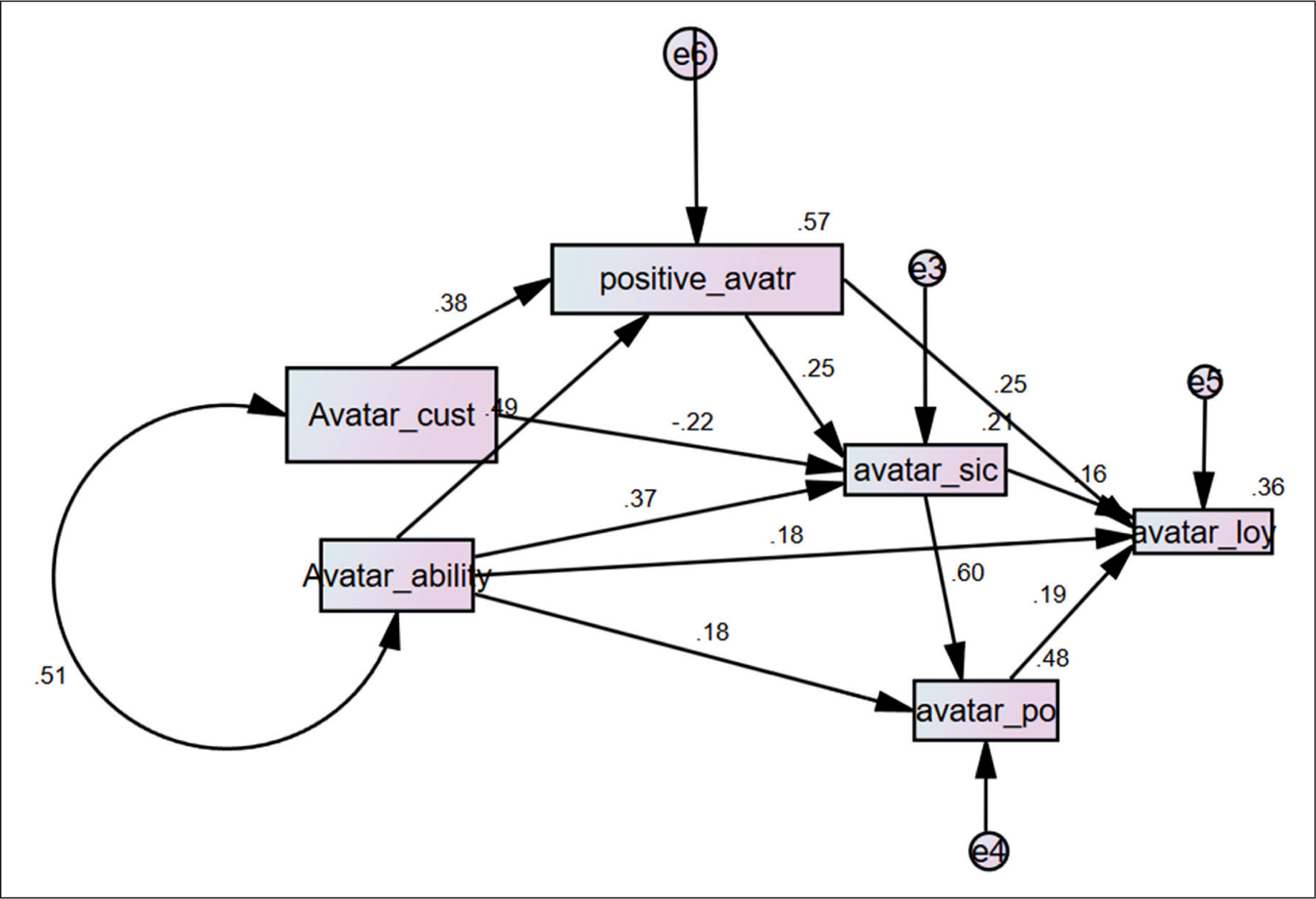
The results indicate that positive avatar perception exerts strong direct effects on avatar ability (0.491), customization (0.376) and loyalty (0.463), showing its central role as a driver of user responses. However, it has no direct effect on SIC or PO (0.000), implying that its influence on these constructs is indirect. In contrast, avatar SIC has a powerful direct effect on PO (0.596) and also shows direct effects on loyalty (0.271) and positive avatar (0.245). This suggests that SIC functions as a key antecedent of ownership while also partly shaping loyalty both directly and indirectly. PO demonstrates a mediating role: it receives strong input from SIC and then contributes further to loyalty (0.193). Thus, loyalty is shaped by both direct effects (from positive avatar and SIC) and indirect effects through PO. A summary of the total effect values among the constructs is presented in Table 3. Overall, the model highlights that while positive avatar perception drives ability, customization and loyalty directly, SIC operates as a critical pathway to PO, which then mediates its impact on loyalty. For instance, through SIC and PO, avatar ability indirectly increases loyalty, creating a chain mediation: ability → SIC → PO → loyalty. This multi-layered process demonstrates that users’ loyalty is more influenced by their personal sense of ownership and identification with their avatars than by just their functionality or outward appearance.
Total Effect.

Discussion
The current study evaluated how players’ loyalty to the game was impacted by avatar traits. We found that avatars that are believed to be capable in improving both users’ positive perceptions and their sense of identification with the avatar. Even though customization increases positive avatar impressions, it unexpectedly reduces the perceived resemblance between users and their avatars. Positive avatar images increase self-congruity and loyalty. As a result, self-congruity increases sentiments of psychological ownership, which further contributes to user loyalty. Overall, the findings show that the avatar ability to achieve, psychological ownership and self-congruity are important predictors of user loyalty in avatar-based environments. The model was developed to explain the underlying mechanisms, which link avatar features to self-congruity, psychological ownership and loyalty. Moreover, the model was empirically tested and verified, being a major contribution of the study.
Theoretical Implications
The study extends the self-congruity theory (Sirgy, 1986) and psychological ownership theory (Pierce et al., 2001) into the avatar environment by identifying distinct psychological mechanisms that shape loyalty. First, the study demonstrates that avatar SIC not only directly affects loyalty but is also a foundational cognitive mechanism that activates deeper psychological processes. In particular, a sense of psychological ownership is fostered when the users’ self-concept and avatar representation are congruent, creating a sequential pathway from identity alignment to emotional connection and, eventually, behavioural loyalty.
Second, by incorporating the psychological ownership theory, the study provides a more nuanced explanation of how emotional bonds are formed in non-physical contexts. The findings suggest that psychological ownership is not automatically derived from favourable perceptions or functional attributes of avatars, but rather emerges primarily through identity-based alignment. In doing so, the study challenges the implicit assumption in prior research that positive perceptions are sufficient to generate strong user–object bonds, demonstrating instead that ownership requires a deeper sense of self-relevance and personal investment.
Third, the work advances the theory by separating the functions of direct and indirect impacts in interactions using avatars. Positive avatar image is influenced by design-related elements such as customization and avatar ability to achievement, but it has little effect on psychological ownership and self-congruity, suggesting that functional evaluation and aesthetic appreciation follow different psychological processes. This enhances the current theoretical framework by demonstrating that not all positive views result in significant psychological attachment or loyalty. Rather, identity congruence and the ensuing growth of ownership sentiments are the main forces behind long-lasting consumer–avatar interactions. This integrated viewpoint clarifies how cognitive alignment and emotional attachment work together to influence behaviour in immersive digital settings.
Practical Implications
The practical implications of the study majorly focus on game designers. The findings of the study provide important new information for real-world implementation in user interaction tactics and avatar design. One important finding from the study is the negative relationship between avatar customization and self-congruity. The key implication of this focuses on the dual role of customization. Even though it improves favourable opinions of avatars, over-customization might paradoxically make users feel less aligned with themselves. This means that either through AI suggestions or through platform-sponsored default template-based modifications, designers should put in place guided customization mechanisms that strike a balance between frameworks, maintaining essential identity components and creative freedom.
The strong relationship between the perceived competency of avatar and loyalty should be given priority while developing an avatar. Figure 2 presents the tested model along with the standardized beta (β) coefficients. Real-time performance feedback mechanisms and skill-building could be beneficial additions while designing platforms. Additionally, the psychological ownership mediation shows that loyalty is derived from both emotional connection and utility. This promotes designs that employ narrative richness and consequence-driven experiences to create meaningful user–avatar interactions. According to the findings, the self-congruity theory is context-dependent while designing digital environments, where platform-specific characteristics such as ability perceptions can reduce the benefits of traditional customization.
Tested Model.
Limitations and Future Research
We adopted a cross-sectional design, as it is commonly used in the relevant literature. Nonetheless, it is also well known that this design has limited capacity to investigate causation directly. Therefore, the experimental or longitudinal design may be used in subsequent research to verify that the relationships under investigation are causal.
The study’s deliberate selection of just three games with a significant avatar-related component is another drawback. By investigating other games that might use avatar features more creatively or successfully, future studies can broaden the focus and provide more comprehensive understandings of avatar-driven user experiences. The study aids in the development and comprehension of avatar-related characteristics that affect online role-playing game players’ loyalty. Only three aspects of avatars—achievability, customization and a positive avatar image—are the subject of the current study. Future research can concentrate on additional characteristics such as physical attractiveness, unique avatar image and irreplaceability within a team from various theoretical perspectives.
Conclusion
In recent years, online games have become increasingly popular and have attracted the attention of researchers around the world. The present study attempts to study how avatar characteristics can contribute to online game loyalty through self-congruity and psychological ownership. This study provides a theoretical explanation and empirical evidence that the connections between avatar attributes and psychological interactions result in online gamers becoming more loyal. These results help administrators of electronic commerce to create and use avatars in a way that effectively cultivates a devoted clientele.
Footnotes
Declaration of Conflicting Interests
The authors declared no potential conflicts of interest with respect to the research, authorship and/or publication of this article.
Funding
The authors received no financial support for the research, authorship and/or publication of this article.