



Abstract
This study investigates the transformative potential of the African Continental Free Trade Area (AfCFTA) in reshaping intra-African trade dynamics. Employing a gravity model approach, the research elucidates the complex trade relationships intrinsic to the African continent, highlighting the opportunities and growth prospects AfCFTA presents for economic advancement, trade efficiency enhancement and regional integration promotion. To conduct this analysis, panel data were sourced from diverse data sources, including the CEPII Data, the International Monetary Fund, the World Integrated Trade Solution (WITS), the Worldwide Governance Indicators (WGI) and the World Development Indicators. The ordinary least squares (OLS) regression results reveal a notable positive correlation between the AfCFTA and intra-African trade, suggesting a potential increase of 52.3% in intra-African trade attributable to the AfCFTA. The findings further delineate significant disparities in gross domestic product (GDP) among member nations, thereby underscoring the existing economic imbalances within the trade area. The results indicate that for every percentage increase in GDP, intra-African trade has a 50% likelihood of experiencing an uptick. Conversely, a percentage increase in distance yields an average decrease of 8.9% in intra-African trade, all other factors remaining constant (ceteris paribus). The model demonstrates a strong fit, with the independent variables accounting for 89.3% of the variance in the dependent variable. Additionally, the fixed effects analysis corroborates that the AfCFTA exhibits a positive and statistically significant relationship with intra-African trade at the 10% level, although indicating a weaker association quantified at 35.2%. The analysis further reveals that trade increases by $0.485 for every unit dollar increase in GDP. The Poisson pseudo-maximum likelihood (PPML) results affirm the model’s robustness, demonstrating that independent variables elucidate 90.4% of the variance in the dependent variable. Moreover, a percentage increase in the AfCFTA correlates with a 37.5% increase in trade. Instrumental variables techniques were also employed to correct for potential endogeneity, particularly with GDP and distance, confirming the reliability and robustness of the estimated coefficients. The study also emphasizes the alignment of the AfCFTA with the Sustainable Development Goals, particularly concerning poverty alleviation and the enhancement of economic opportunities. However, it is noteworthy that being landlocked negatively impacts trade between nations. Geographically, nations in closer proximity tend to engage in higher volumes of trade, while those situated further apart experience impediments to trade.
Introduction
Regional trading agreements are treaties between two or more nations that encourage the unrestricted flow of goods and services within their borders. They also include internal rules that member nations must abide by when engaging in trade. The African Continental Free Trade Area (AfCFTA) has emerged as a pivotal initiative with the potential to reshape the economic landscape of Africa, despite concerns regarding the equitable distribution of gains and the imperative of effective policy implementation to ensure inclusive economic transformation and industrialization (AfCFTA, n.d.). The economic potential of the continent can be realized with the help of the AfCFTA, which could improve Africa’s low productivity, encourage more investment, and assist in reducing poverty and raising income levels (Kuyoro et al., 2023), against the backdrop of growing negativity about multilateral trade agreements. Over time, several trade and regional economic integration organizations have emerged, with the AfCFTA being the most significant endeavour in this direction to improve economic growth and reduce poverty on the continent (Geda & Seid, 2015).
AfCFTA represents a monumental effort involving 54 of the 55 African Union member states (excluding Eritrea), covering a population of 1.3 billion and a combined GDP of $3.4 trillion (Zhu, n.d.). Its establishment as the largest free trade area globally holds promise for fostering economic integration and development across Africa. However, challenges such as lengthy transit times, high transportation costs, and administrative complexities have impeded its full realization (Kling, 2023). Again, issues such as economic disparities among member states, challenges in implementation and the persistence of non-trade barriers pose significant hurdles to realizing the agreement’s full potential (Maliszewska et al., n.d.; Population Matters, 2023). The initiative aims to not only enhance trade volumes but also stimulate industrialization, improve infrastructure and attract foreign direct investment (FDI). The implementation of AfCFTA has made substantial progress, with 47 countries ratifying the agreement by December 2023 and several protocols finalized on competition, investment and intellectual property (Fofack & Mold, 2021). Despite these advancements, early trials like the Guided Trade Initiative have revealed practical hurdles that must be overcome, including customs inefficiencies and logistical barriers (Trade Law Centre, 2022). Looking ahead, AfCFTA’s success hinges on resolving these operational challenges, fostering deeper economic integration and leveraging intra-African trade to drive sustainable development and poverty reduction goals across the continent.
Since the 1990s, Africa has witnessed a proliferation of economic integration agreements aimed at boosting intra-regional trade. Despite these efforts and being the second-largest continent globally, about three times larger than the United States, economically, intra-African trade remains significantly lower compared to other regions. In 2016, intra-African exports constituted only 18% of the continent’s total exports, contrasting sharply with 59% for intra-Asia and 69% for intra-European exports (Sow, 2018). Although recent growth has been witnessed, overall exports from Africa have seen a limited increase, with intra-African trade remaining stagnant at around 19% of total exports (Afreximbank, 2024). Currently, only 16% of Africa’s total trade occurs within the continent, highlighting a significant gap when compared to Europe (70%), North America (40%) and Asia (51%) (Afreximbank, 2024). This disparity persists despite Africa’s diverse and growing market potential, indicating persistent barriers to regional trade integration (Behar & Edwards, 2011).
This study aims to critically evaluate the potential impact of the AfCFTA on intra-African trade. Specifically, it seeks to measure the effects of AfCFTA on intra-Africa trade.
This study aims to fill the identified research gap by using the recent data from the African countries involved in the AfCFTA and by employing a panel gravity model approach. According to the present researcher’s knowledge, unlike earlier studies, like those of Masunda (2020) and Martin and Pham (2020), which employed the traditional gravity model, the current research study enhances the gravity model by incorporating essential variables, such as inflation, tariffs and political instability. This methodological advancement allows for a more nuanced assessment of the AfCFTA’s impact on international trade within Africa. Additionally, this study addresses common limitations found in the conventional gravity models, such as issues related to heteroscedasticity and zero trade values, by applying a Poisson pseudo-maximum likelihood test. This approach is crucial for providing policymakers with informed insights into how the AfCFTA may influence foreign trade dynamics across the continent while accounting for the recent developments in global economic conditions. By focusing on these mentioned critical aspects, the study not only contributes to the existing body of literature but also offers valuable policy suggestions. Ultimately, this study seeks to support the efforts to make Africa more competitive in the global market while driving economic progress across its diverse nations.
Organization of Study
The work is organized logically, with an introduction and a review of the literature. Following is the data applied for this study and the related methodological framework. Then results and their discussions are presented. Lastly, the study’s conclusion and a final comment on recommending certain policies are presented.
Literature Review
The previous section discussed the overview of AfCFTA and intra-Africa trade over the years, the aim of the study and also the research gap that this study aims to fill and how it will enhance the existing body of literature. This section presents different studies on trade and trade agreements.
Empirical literature on the relationship between AfCFTA and intra-Africa trade abounds. The empirical review generally shows a mix of findings. For example, Feenstra and Hong (2007) analysed five trade agreements in the Pacific region, and the findings show that ASEAN and the Australian–New Zealand Closer Economic Relations facilitated increased trade among member nations and with the global market. Conversely, trade agreements like APEC, MERCOSUR and NAFTA were found to divert trade towards intra-bloc partners at the expense of non-member countries. This variation underscores how different RTAs can either enhance or restrict broader trade relationships, depending on their design and implementation.
Similarly, a previous study utilized the gravity model to show that trade agreements boost trade. Their study underscores the strategic importance of trade agreements in shaping trade patterns and fostering economic integration among East Asian nations, pointing towards potential benefits in enhancing regional economic cooperation. Conversely, a study by Liu (2016) examined how trade agreements affect economic growth differently for WTO and non-WTO member countries, revealing nuanced benefits that vary depending on a country’s trade policy framework. A further study used the traditional gravity model to explore the nexus between financial intermediation, trade agreements and international trade across 69 developed and developing countries. Their study emphasized the pivotal role of financial intermediation in enhancing international trade. They found that financial intermediation significantly promotes trade, particularly in exporting nations with minimal transaction costs. What is more interesting about this study is that it also revealed that the trade-enhancing effect diminishes in financially constrained sectors, especially in the presence of regional trade agreements between exporting and importing countries. This underscores the nuanced impact of financial intermediation on trade dynamics, influenced by both economic conditions and the institutional framework provided by RTAs.
In a related study, Vujanović (2023) indicates that CEFTA has contributed to the economic growth of its members, although the extent of this benefit varies among countries. Less-developed economies tend to rely more on regional CEFTA supply chains, while manufacturing-focused nations are increasingly dependent on EU supply chains. Evidence from recent studies in Africa reveals the importance of AfCFTA in boosting trade. For instance, Masunda (2020) explores the effects of the AfCFTA on trade within the COMESA region. The analysis employs trade-based indicators and the gravity model and finds that while the AfCFTA has a minimal effect on diverting trade within COMESA, it significantly stimulates intra-COMESA trade by reducing trade costs and promoting liberalization. In contrast, the International Monetary Fund forecasts that the AfCFTA could increase intra-African merchandise trade flows by 15% and real per capita GDP by 1.25%. Comprehensive reforms could potentially boost these figures further, reflecting the expectation that the AfCFTA could significantly enhance trade and alleviate poverty.
Moreover, a study utilized the gravity model to assess the AfCFTA’s trade effects, revealing a favourable net trade creation effect and predicting a 19% increase in intra-Africa trade. The study underscores the potential of the AfCFTA to substantially raise trade volumes, although it also notes a high likelihood of trade diversion. On the other hand, Fusacchia et al. (2022) use a computable general equilibrium model to examine sector-specific impacts of the AfCFTA. They find that benefits are more pronounced across sectors when considering income generation rather than just gross exports. Lastly, Zhu (n.d.) predicts significant income growth and poverty reduction due to the AfCFTA. Previous research highlights the trade creation and economic growth benefits of regional agreements. This ongoing research aims to address existing gaps by applying the latest data and a panel gravity model approach to assess the AfCFTA’s impact, incorporating advanced techniques to address issues like heteroscedasticity and zero trade values.
Data and Methodology
Introduction
Various approaches have been employed to ascertain the possible impacts of the continental free trade area. This section covers the theoretical framework, data description, model variables and their measurements, data sources and model specification that will be suitable, and any potential problems that could result from the model selection as reviewed in the literature. In addition, the estimation method and robustness checks for the study’s internal and external validity are then covered. Moreover, the summary data for the study’s variables are shown in this section.
Theoretical Framework
According to the Heckscher–Ohlin model (H-O), the countries will buy goods manufactured with scarce local resources and export goods that maximize the use of their abundant resources. In this concept, a country should import the resources it needs proportionately while exporting commodities that require abundant manufacturing elements. This model supports the gravity model of international trade. According to the H-O theory, the countries obtain a competitive advantage in their products by specializing in the manufacturing of commodities employing abundant factors of production.
Anderson (1979), Bacchetta et al. (n.d.), Bergstrand (1985) and Feenstra et al. (1999) are amongst the authors who use the gravity model technique, which is based on Newton’s law of gravitation. Under Newton’s law of universal gravitation, the force with which one particle attracts another in the universe is proportional to the product of their masses and inversely proportional to the square of the distance between their centres. The gravity model primarily considers the GDP and proximity of the two economies to estimate bilateral trade flows (Anderson, 1979; Bacchetta et al., n.d.; Bergstrand, 1985; Feenstra et al., 1999). The framework states that trade between two nations increases in direct proportion to the sum of their per capita GDPs (Štěpán Mikula & Vavrek, 2018). Additionally, it assumes that trade declines with distance. This is so that the cost of information and transportation can be reduced.
The general formula for the gravity model is written as follows:
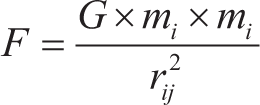
where F is the gravitational force acting between two objects. G is the gravitational constant. mi and mj are the masses of objects. r is the distance between the centres of their masses.
The above model can be used to estimate and account for geographic and additional country characteristics, both observable and unobservable, allowing the researcher to concentrate on bilateral trade in the African continent. Further, these studies have employed the same model to identify the variables that influence bilateral trade (Geda & Seid, 2015). It is always possible, nevertheless, to enlarge the model to incorporate more pertinent trade-related factors. In this study, the effects of the AfCFTA on intra- African trade are examined using the standard gravity model.
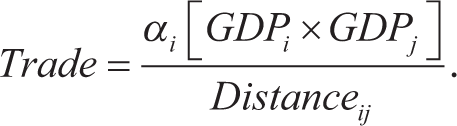
Equation (1) can be rewritten as follows: Gravitational model of international economics
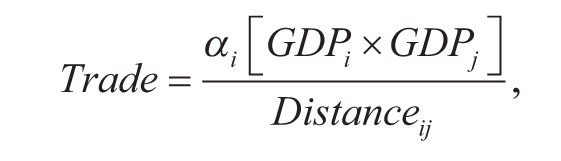
where Trade is the bilateral trade. α is the gravitational constant. GDPI and GDPJ are the gross domestic product of trading countries, GDPI for exporting country and GDPJ for the importing country. Distanceij is the distance between two trading countries Rearranging equation (2):

Including other variables:
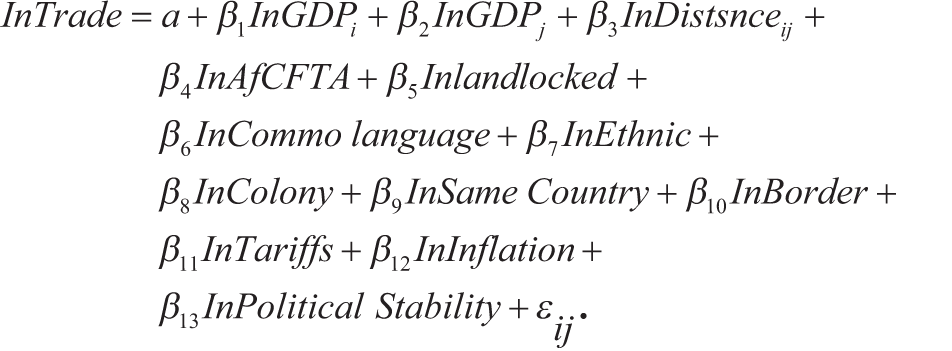
The positive relationship between GDPi and GDPj is predicted because, regardless of whether a country imports more, as the economies get greater, the trade levels rise proportionately.
Data Description
To empirically examine how the AfCFTA affects intra-Africa trade, the study uses the gravity model of international trade with a quantitative approach. It relies on secondary data obtained from different data sources for the time span from 1991 to 2022. Macroeconomic variables: GDP and inflation are sourced from the World Development Indicators.
Bilateral trade and inflation data are derived from the IMF and Direction of Trade Statistics (DOTS). The DOTS show the value of merchandise exports and imports broken down by the country’s key partners in trade. The data on AfCFTA, distance, landlocked, common language, ethnic, colony and same country and border are sourced from the CEPII gravity database. The data on tariffs are sourced from the World Integrated Trade Solution (WITS). Finally, political stability data are from the Worldwide Governance Indicators (WGI).
The scope of the study began in 1991 because of data unavailability for some countries for the chosen variables that could have affected the volume of foreign trade in that time frame. Since 2022 is the most recent observation of annual frequency obtained shortly after the COVID-19 pandemic, additional dummy factors have been added to the gravity data. To allow us to observe various trends, these panel data cover the years 1991 to 2022. Twenty-two African nations, Algeria, Angola, Cote d’Ivoire, Democratic Republic of the Congo, Ghana, Kenya, the Kingdom of Lesotho, Madagascar, Malawi, Mali, Morocco, Niger, Nigeria, Rwanda, Senegal, Seychelles, South Africa, Sierra Leone, Swaziland, Uganda, Zambia and Zimbabwe, are included in the panel data.
To ensure that every region is represented, the data set consists of 22 African nations. Amongst these, three, four, four, five and six are from Central Africa (Angola, Democratic Republic of Congo); North (Algeria, Morocco, Niger, Senegal); East (Kenya, Rwanda, Uganda, Seychelles); West (Cote d’Ivoire, Nigeria, Sierra Leona, Ghana, Mali); and Southern Africa (South Africa, Zambia, the Kingdom of Lesotho, Swaziland, Zimbabwe, Malawi) respectively. The nations with the greatest GDPs are selected from each region since they best reflect the level of regional development. The study has excluded 32 nations, including Botswana, Tanzania, Ethiopia, Libya, Burundi, Chad and Cameroon, because of their data unavailability for the dummy variables.
An explanation of the independent and dependent variables is provided below.
Dependent Variable
Bilateral Trade (BT): The volume of goods and services exchanged between the countries, and it is frequently used to examine the factors that influence trade flows. It is estimated by net exports. They calculate the total trade of a country. The value of a nation’s total exports less than the value of its total imports is known as net exports.
Independent Variables
Gross domestic product (GDP): A country’s GDP in US dollars is a monetary indicator of the market worth of all the finished goods and services it produces over a certain time. Governments often utilize it to assess the economic health of a nation. The GDP is calculated as the total market value of all the finished goods and services produced inside a country’s borders for a given time, such as a year or a quarter. It is an in-depth evaluation of the nation’s economic well-being that indicates the size and growth rate of an economy. The production technique, which measures the output produced inside the nation’s borders, or the income approach, which measures income received, can be used to compute GDP.
Distance (Dst): This is the geographical distance in kilometres between two countries, and it is used to capture the impact of distance on trade flows. Typically, a logarithmic form is used to estimate this variable, based on the assumption that the effect of distance on trade decreases with increasing distance. This is because trade barriers and transportation expenses rise with distance, making trade with distant countries more challenging and costlier. The elasticity of trade with respect to distance or the distance variable indicates that the changes in distance will impact trade flows proportionately.
AfCFTA: A trade negotiation between multiple countries within a certain region is referred to as a free trade agreement or a regional trade agreement. The gravity model incorporates the FTA variable as an independent variable to account for the influence of trade agreements and regional integration on bilateral trade flows amongst and between the members. The influence of FTAs on trade flows with the non-member countries and the evaluation of the agreements’ effects on trade creation and diversion are made possible by the inclusion of FTAs in the gravity model. These effects of FTAs on trade flows can be estimated by comparing trade flows between member and non-member countries. To analyse and estimate bilateral trade flows based on regional integration and trade agreements, the FTAs are crucial. In this study, the value 1 represents two trading countries under the AfCFTA that share the same regional agreement and zero otherwise.
Border (contig): Border is a dummy variable that, with country pairs sharing a border, equals 1 and 0 otherwise. The effect of proximity or having a common border on the bilateral trade flows between nations is captured by this variable. Because of factors like proximity, ease of transportation and trade facilitation policies, having a common border can have a significant impact on how much trade occurs between two countries.
Landlocked (landlocked): When a nation is landlocked, it means that it is encircled by land and lacks direct access to the ocean. The nation’s trade may be significantly impacted by being landlocked, since it may be faced with more logistical issues and more transportation expenses than coastal nations. Therefore, the landlocked variable is used to represent the trade disadvantage that the landlocked nations have because of their physical location. This variable is dichotomous, and it takes the value 1 if the trading country is landlocked and zero otherwise.
Common Language: This is a dummy variable that takes the value 1 if the trading countries share a language and zero otherwise.
Ethnic: This dummy variable takes the value 1 if the trading countries share ethnicity groups and zero otherwise.
Colony: A dummy variable takes the value 1 if the trading countries share a colonizer and zero otherwise.
Same Country: The dummy variable takes the value 1 when the trading countries were once one country and zero otherwise.
Tariffs: A tax is imposed by the government of a country on imports or exports of goods. Besides being a source of income for the government, tariffs are the regulation of foreign trade and policy that supports domestic firms.
Inflation: A sustained increase in the general price levels of goods and services in an economy over time. It shows a decrease in purchasing power.
Political Stability: This is a situation characterized by the preservation of an intact and smoothly functioning government, avoiding significant disruptions over an extended duration. Political stability measures the opinions of possibilities of political unrest, as well as politically driven violence, including terrorist attacks, social dynamics, religious tension and environmental factors.
Model Specification
The gravity model primarily considers the GDP and proximity of the two economies to estimate bilateral trade flows (Anderson, 1979; Bacchetta et al., n.d.; Bergstrand, 1985; Feenstra et al., 1999). It is used to estimate the volumes of trade within Africa amongst those countries that are the members of the AfCFTA, as shown in (4).
Rearranging the equation gives the following:
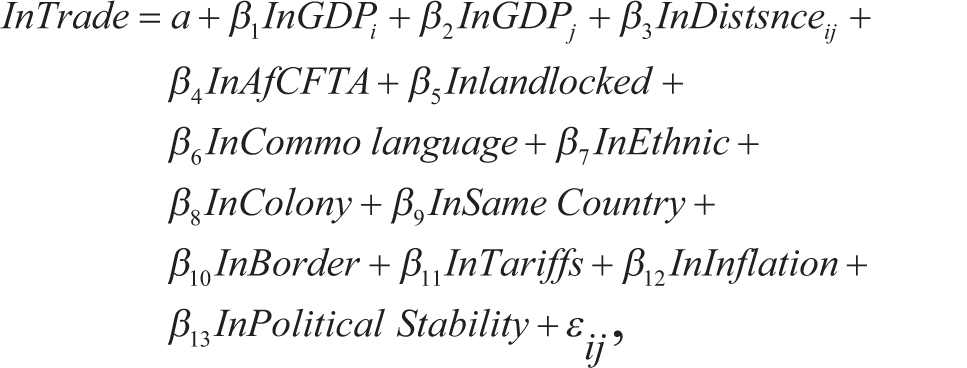
where InTrade is bilateral trade. α is the constant. β1 and β2 are the GDP coefficients of each country. β3 shows the distance coefficient between trading countries. β4 to β10 are the dummy variable coefficients, which take the value 1, and 0 otherwise. β11 are tariff coefficients. β12 is the inflation coefficient. β13 is the political stability coefficient. εij is the error term.
From above, the researcher expects that the variables, like the AfCFTA and GDP, have a positive relationship with trade, while the distance variable has a negative relationship with international trade. The closer countries are to each other, the more they trade. For instance, when a country is landlocked, it is likely to trade.
When the nation grows, it means that it can import and export more goods from other nations, and the opposite is true. Conversely, if there is a short distance separating the countries, trade between them can be easier. Because of the multiplicative nature of the gravity model of trade, trade is equivalent to the product of other variables (De Benedictis & Taglioni, 2011). The natural logarithmic operators of the multiplicative type are used across both sides to break the products into sums to estimate the model.
Trade is hypothesized to increase with the country’s GDP and decrease with the geographic distance between trading nations based on the gravity model. The estimations in this model account for both observable and unobservable country features, as well as geographical factors. The presence of a high number of zeros trade observations is the problem with trade data accuracy, even though the gravity model has been empirically successful in accurately predicting trade flows (Santos Silva & Tenreyro, 2006; Solleder, n.d.). Certain estimation techniques have also been the subject of debate and criticism. The essential estimate of the gravity model concerns how bilateral trade zero values are handled and strategies for handling heteroscedasticity problems are examined (Mnasri & Nechi, 2019).
A logarithm of zero is undefined, and estimating the model without considering the zero data observations may result in a sample selection bias in the coefficients that are estimated when they are dropped. Since the gravity equation is usually log-linearized, taking the logarithm of zero bilateral trade values leads to an estimation problem associated with biased and inefficient estimators (Mnasri & Nechi, 2019). Therefore, all these will be applied in this study to avoid biasness.
Estimation Strategy
First, to examine the impact of the AfCFTA on intra-Africa trade, OLS regression was employed using the statistical software STATA. This is a regression analysis method that minimizes the sum of squared residuals to estimate the parameters in a linear regression model (Lakshmi et al., 2021). For linear regression models, it is thought to be the most effective optimization technique since it can help in locating a straight line that is as near to the data points as feasible. If the analysis fits a model of relationship, the OLS regression model defines an error as a difference between the result variable’s actual and anticipated values.
Using the cross-sectional gravity model is essential since it incorporates a variety of explanatory variables. However, according to Doumbe and Belinga (2015) and Pöyhönen (1963), this is the conventional gravity model. As a result, the researcher will continue and conduct robustness checks and estimate the model using the current panel techniques. Panel methods are the best to curb the problem of endogeneity (Baltagi et al., 2017). The researcher will employ either random or fixed effects after running the Hausman test. The panel fixed effects will be employed to control for unobserved heterogeneity that could bias estimates. By including entity-specific fixed effects, these methods account for time-invariant characteristics of the entities involved, thus reducing the omitted variable bias and improving the consistency of parameter estimates in the presence of an endogenous regressor.
Macro time-series data possess considerable cross-sectional correlation among nations in the panel (Baltagi, 2005). Panel procedure is computationally feasible for macro-panel with a small N and large T; hence, this study suffers from cross-sectional dependence. According to Baltagi (2005), cross-sectional dependence is an issue in macro panels with spanned time series (over 20–30 years), and this is corrected by fixed effects estimation by eliminating the effects of time-invariant unobserved heterogeneity by including individual-specific fixed effects. Also, fixed effects can address cross-sectional dependence when it is driven by unobserved country-specific characteristics. Moreover, the study will employ instrumental variable (IV) analysis for controlling endogeneity and variance inflation factor to control any level of multicollinearity. For robustness checks, the study carried out fixed effects and PPML. According to Baldwin and Taglioni (2006) and Baltagi et al. (2003), a generalized gravity model specification with time-varying country-fixed effects and time-invariant country-pair fixed effects must be promoted in a panel setting. Time-invariant nation-pair fixed effects allow for the endogeneity of trade policy variables originating from unobserved bilateral heterogeneity, whereas time-varying country-fixed effects account for the changes in multilateral resistance over time (Baier et al., 2014).
Gravity estimations based on positive bilateral trade flows containing zero values may produce misleading conclusions (Helpman et al., 2008). This is because the logarithm of zero is undefined, so it is difficult to estimate the gravity equation as a log-linear model, suggesting that the zero trade flows are dropped. When analysing trade between underdeveloped countries, where the quantity of zeros tends to be non-negligible, dropping the zero observations is less desirable but has minor effects on the industrialized economies (Longo & Sekkat 2004).
Several strategies must be employed to address the problem of zeros: the Poisson estimator (Haq et al., 2013; Heckman, 1979), two-stage sample selection strategy that accounts for potential bias and Tobit regression with zero observations censored. Therefore, this study employs several strategies to address the issue of zeros. The latter of them, according to Santos Silva and Tenreyro (2006), should be employed since the Poisson pseudo-maximum likelihood (PPML) estimator produces unbiased and reliable gravity model parameter values.
Presentation and Discussion of Results
The section provides a censorious presentation of the empirical findings and their discussions. The opening section of this chapter provides a summary statistic of variables. This succeeding section provides the correlation analysis of the variables used to evaluate the potential effect of the AfCFTA on intra-Africa trade. The study variables’ descriptive statistics are given in the first section of the results. Considering this and to ensure consistency, the pair-wise correlation matrix comes after the summary statistics. The statistics for every variable utilized in this study are compiled in Table 1, and 3.79 million dollars is the average score for bilateral trade in Africa.
Table 1, shows all variables used in the study. The central tendency is represented by the mean value of the variables. High means indicate greater power in the central tendency. The standard deviation for every variable shows the extent to which the estimates differ from the variable’s average value. A smaller standard deviation number indicates that the estimates are less volatile and approach their average values, whereas a larger standard deviation value indicates that the estimates are more volatile and farther from their mean values. The number of observations for the variables in the analysis is the same for each indicator.
Descriptive Statistics of Variables in the Analysis or Research Study.
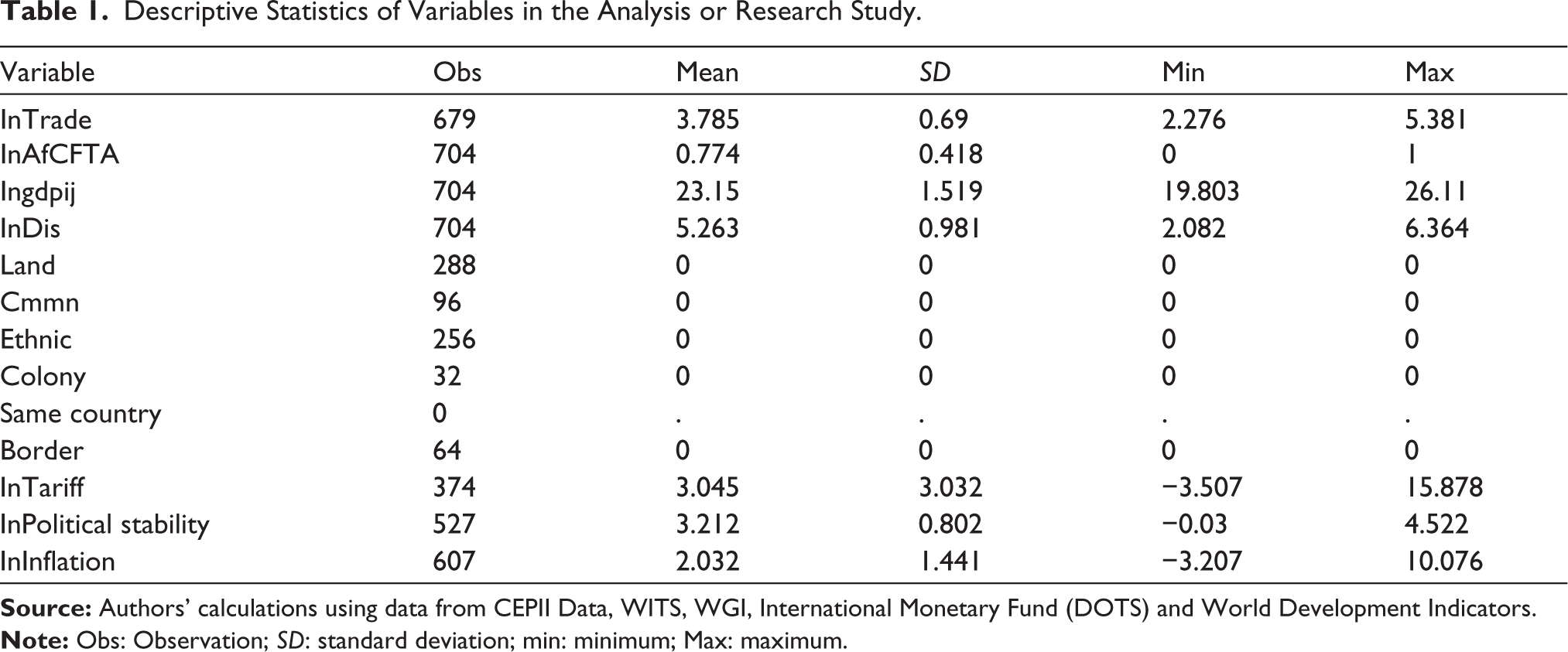
The statistics show that intra-African trade averaged 379%. The minimum trade within the African countries is just 2.3%, although the continent has the potential for a maximum intra-trade of over 5.4%. The AfCFTA has an average of 0.8% and has the potential to increase trade by 0% to 1%. The African continent has a total GDP per capita of around 23.15% if all else remains constant. Africa’s minimum GDP per capita is 19.80% while the greatest GDP per capita is 26.11%. The figure is incredibly low for a continent, this is because it is not even half.
Distance is an important consideration in international trade. As a result, countries separated by an average of 5.2 km are more likely to do trade. The countries can only trade if they are separated by at least 2.08 km and no more than 6.4 km. The countries that are landlocked have the same official language, have at least 9% of the population speaking the same language and share a border with the same colonizer; all have an average of 0%. Aside from that, the countries that were formerly the same have little influence on intra-African trade.
This is because of the difficulties that these nations have with trade and transportation, especially in Sub-Saharan Africa. These difficulties include worsening connectivity, more expensive entry to international markets and higher trade expenses because of landlocked countries. Landlocked nations deal with a mix of physical, infrastructure and economic difficulties. These nations are landlocked, which means that they do not have direct access to the sea, which increases the difficulty, expense and volatility of trading. Because of their lack of coasts, they cannot conduct direct international trade through ports, which makes delivering goods to and from other markets more complicated and expensive.
Trade facilitation is aided by infrastructure, and the landlocked nations frequently suffer from poor transit systems, unfriendly borders and protracted import approval processes. These difficulties make it even more difficult for them to conduct effective international trade. Further, because of their landlocked condition, they face high transportation and logistical costs, which can significantly impede trade and reduce their competitiveness in the global market. The literature has extensively shown the negative economic effects of landlocked countries, demonstrating that these nations’ GDP growth rates are lower than those of their coastal equivalents. Furthermore, on average, Africa has three types of tariffs, and they can decrease the African trade by 3.5% and boost it by at least 15.9%. On average, political stability in Africa is 3.2%. Because of this, trade can reach only a maximum of 4.5% and can decrease by 3%. On average and ceteris paribus, inflation in Africa is 2.03%. The results show that the continent experiences a maximum inflation of 10.1% and a minimum inflation of only 3.21%.
The relationships between the variables about intra-African trade and economic growth are displayed in the correlation matrix table provided in Table 2. The correlation coefficients between the variables are displayed in the table; values nearer 1 or −1 suggest greater correlation. Table 2 shows the relationship between the variables. There is a positive relationship between the AfCFTA trade and intra-Africa trade; that is, regional trade agreements increase trade between African countries. Being landlocked decreases trade between the countries, and this is as expected from the literature. However, this is statistically significant. The country’s GDP per capita has a significant effect on its trade.
Correlation Matrix.
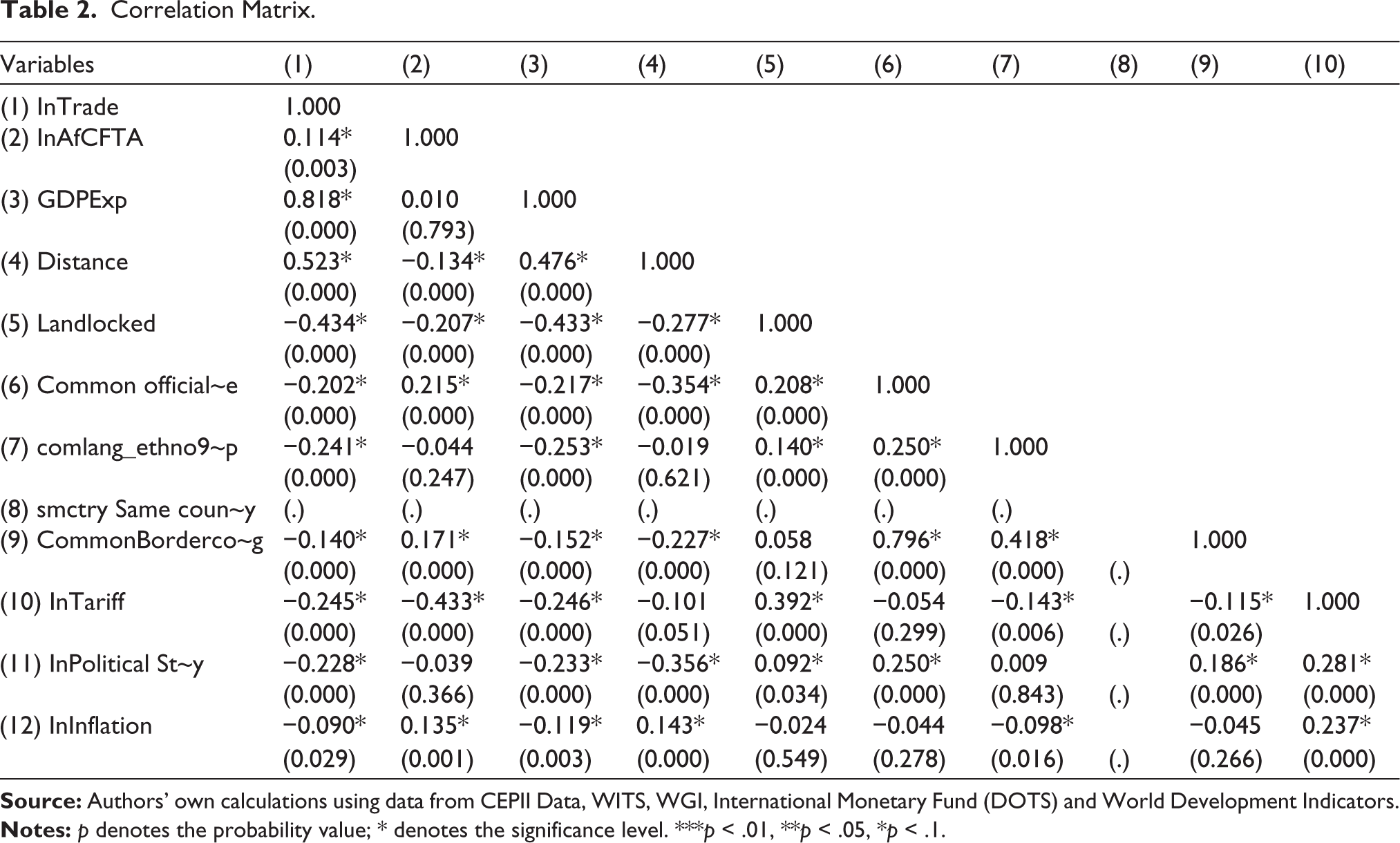
The economic implications of the relationship between the AfCFTA, the impact of being landlocked on trade and the significance of the country’s GDP per capita on trade are multifaceted and interconnected. First, by doing away with tariffs, opening trade in services and removing non-tariff obstacles, regional trade agreements, like the AfCFTA, significantly increase trade between the African nations. Increased trade flows, economic integration and the development of a bigger market with economies of scale are the results of this. The objectives of the AfCFTA are to create a single market and customs union, boost industrialization, boost competitiveness and improve intra-African trade in products and services. These goals have the potential to improve the structure of the economy, productivity and economic growth throughout the continent.
Second, the landlocked nations face substantial trade barriers because of increased transportation costs, restricted access to international markets and logistical issues. These elements may make it more difficult for the landlocked nation to conduct effective foreign trade. Compared to the coastal countries, the landlocked nations, like Lesotho and Uganda, experience greater trade transaction costs, lower trade volumes and restricted market access. The related results were found in the study (Borchert & Yotov, 2016). It was found that geographical remoteness, being landlocked and oil prices, hurt trade while income had a positive impact. These obstacles may prevent economic expansion, progress and the fulfilment of their trading potential.
The nation’s trading success is influenced by its GDP per capita. Greater economic development, infrastructure and market competitiveness are frequently associated with higher GDP per capita levels, and these factors can have a favourable impact on trade volumes and trade diversification. Stronger export portfolio diversification, more trade openness and stronger trade relations are typically found in the nations with higher GDP per capita. Improved economic development, stability and resilience to shocks to the world economy can result from this.
Then, because of the increasing GDP in the African countries, contributing to an increase in overall African GDP relative to its counterparts, there will be a significant impact on intra-African trade. These variables are particularly important in determining the dynamics of intra-African commerce because nations with greater GDP per capita tend to trade more, diversify their trade and add to the GDP growth of the continent. Higher GDP per capita levels can have a substantial impact on intra-African trade and support the economic development of African countries by fostering an environment that is favourable to trade, promoting economic stability and stimulating economic growth.
Finally, tariffs, political stability and inflation are negatively correlated with trade at 24.5%, 22.8% and 9%, respectively. This shows that lower tariffs can increase the amount of tax that a country collects from imports and exports because the countries will be trading more. The findings indicate that tariffs have a beneficial impact on import revenue up to a certain point; however, there is also a negative impact. Import revenue increases with real GDP growth, inflation, trade liberalization and regulatory quality improvements. Again, a country that faces wars and has political instability is restricted from the importation and exportation of goods, which reduces trade. Both variables are significant at 1%. This shows that inflation is a critical factor in determining trade. The countries with high inflation rates trade less, hence decreasing trade in Africa.
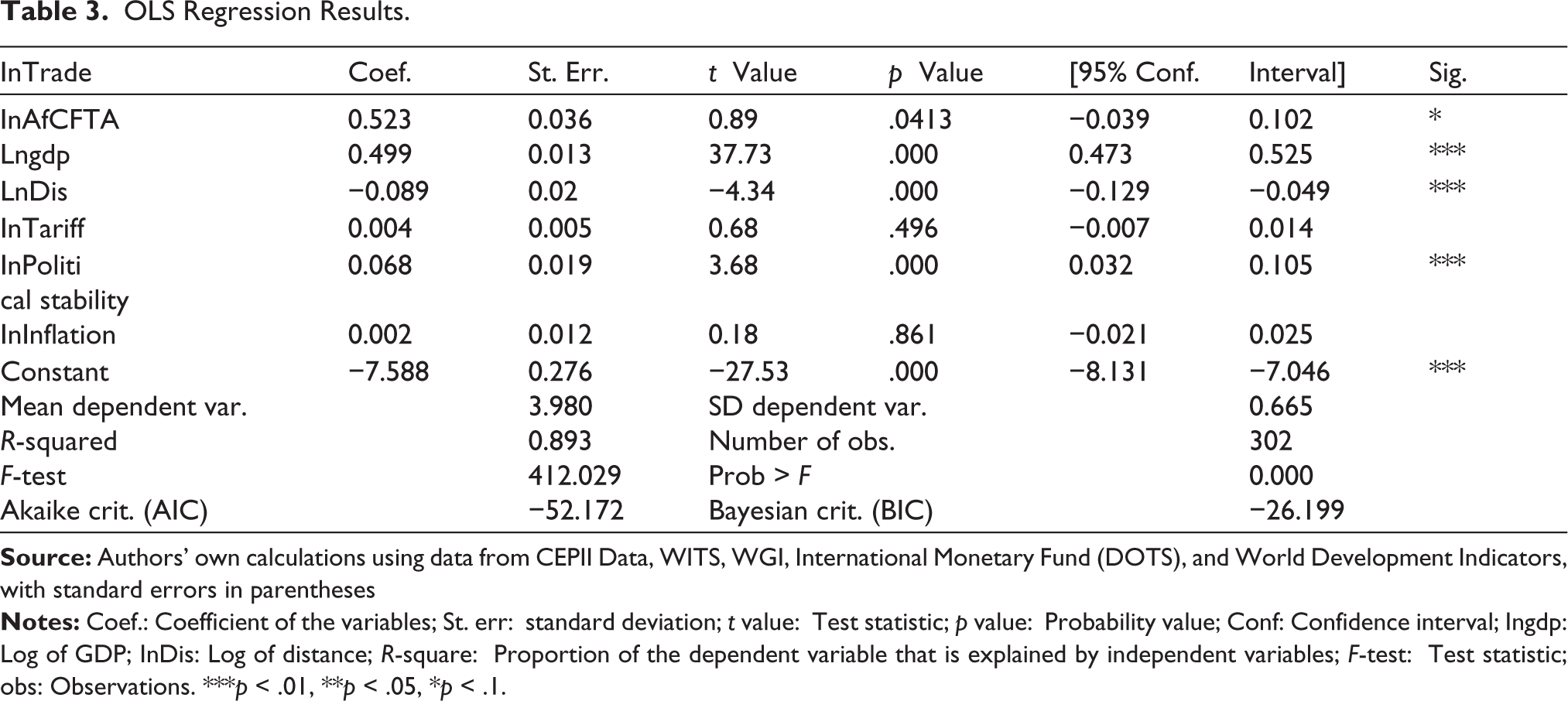
The relationship between explanatory and dependent variables is displayed in Table 3. It provides the main results from the OLS regression. This model contains all statistically relevant variables that could increase intra-African trade. With the independent variables accounting for 89.3% of the dependent variable’s explanation, the model fits the data well.
OLS Regression Results.
The fitted model is as follows:
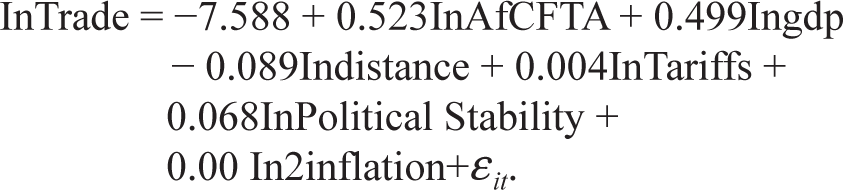
From the above fitted model, on average and ceteris paribus, the AfCFTA increases trade by 52.3%. This variable is statistically significant at 10%. Also, a unit increase in GDP increases intra-bilateral trade by $0.499. The results on GDP comply with the literature obtained while investigating the potential effects of the FDI on bilateral trade between emerging states in East and South Asia and their trading partners (Sohail et al., 2021). They discovered a strong and significant correlation between GDP per capita and trade flows. Numerous elements, including the economies of scale, learning, competition and innovation, may contribute to this growth potential. Exporting nations can operate on larger scales and meet greater demand. Open trade nations receive more experience and are exposed to opportunities for development and progress. Finally, a unit increase in distance (km) decreases trade by 0.089.
Trade agreements at the regional level have the potential to boost trade between the nations. This is because the nations that are parties to trade agreements find it easier to work together than those that are not. Considering all other factors, we can conclude that the AfCFTA has a 52.3% chance to boost intra-African trade on average. In addition, the GDP is important since it can support the nation’s economic expansion. This is because the nations with higher levels of production also export more, improving their trade relations. Consequently, there is a 50% chance that a country’s GDP will boost intra-African trade. Commodity exports to other nations are expensive.
The proximity of the countries determines how far apart trading countries are from each other. To reduce trading costs, the countries that are closer to one another trade more than those that are farther apart. This variable has a negative relationship with trade despite being statistically significant in explaining trade. According to the findings, intra-African trade declines by 8.9% on average and ceteris paribus for every percentage increase in distance. Berthelon et al. (2008) and Borchert and Yotov (2016) have conducted a study on distance and international trade. Their results align with the results found in the current study, which show a negative correlation between distance and trade.
However, the results also reveal that homogenous products are more sensitive to distance than differentiated goods, and that changes in the composition of trade have no effect on how distance influences trade. The distance coefficients have fallen most steeply in nations that are in the middle of the distribution of income per capita. Again, for many low-income nations, distance remains a barrier to trade, which might hinder their ability to integrate into international markets.
Table 3 has a few implications for intra-Africa trade. First, by increasing trade between the African nations, regional cooperation is essential for promoting sustainable economic development. Second, the fact that GDP growth and intra-African trade are positively correlated highlights how crucial strong economic performance is to fostering trade within the continent. Further, the enhancement of intra-African trade and the removal of trade restrictions rely heavily on the influence of increased logistical connections. Taken together, these variables imply that the African nations might fully realize the promise of intra-African trade, resulting in the greater economic prosperity and integration throughout the continent. This is done by fortifying regional alliances, encouraging economic expansion and investing in infrastructure.
In addition, on average and ceteris paribus, tariffs and political stability reduce trade in Africa. A unit increase in tariffs reduces trade by 0.004, and this variable is statistically insignificant and vice versa. On the other hand, the more a country is politically unstable, trade reduces by 0.068, and this variable is statistically significant at all levels. This shows how crucial the country’s political stability plays an important role in boosting its trade. The results correspond with those of Qadri et al. (2020). They examined how political turmoil affected foreign investment and trade in Pakistan and observed that, over time, political instability significantly hinders trade. High levels of economic instability and terrorism lead to discord and poor resource management, which drives away investors, hence businesses. Lastly, the countries that have a stable inflation rate can increase trade by 0.2%. This shows that inflation is a crucial factor in determining trade. Overall, all these variables are statistically significant.
Table 4 shows the findings of a regression analysis that looked at how the AfCFTA would have affected intra- African trade in the COVID-19 shock. On average and ceteris paribus, a one-unit increase in the AfCFTA increases intra-Africa trade by 0.011. This variable is statistically insignificant, meaning that, during the COVID-19 shock, whether a country was a member of the AfCFTA or not, its rate of trade remained the same. The main conclusions imply that intra-African trade may benefit from the adoption of the AfCFTA. The coefficient for GDP is positive and statistically significant at the 5% level, meaning that a country’s intra-African trade performance increases by 0.293% for every 1% increase in GDP. This result emphasizes how crucial economic size and diversification were to survive the COVID-19 shock, even more so than the conventional trade advantages.
COVID-19 Regression Results.
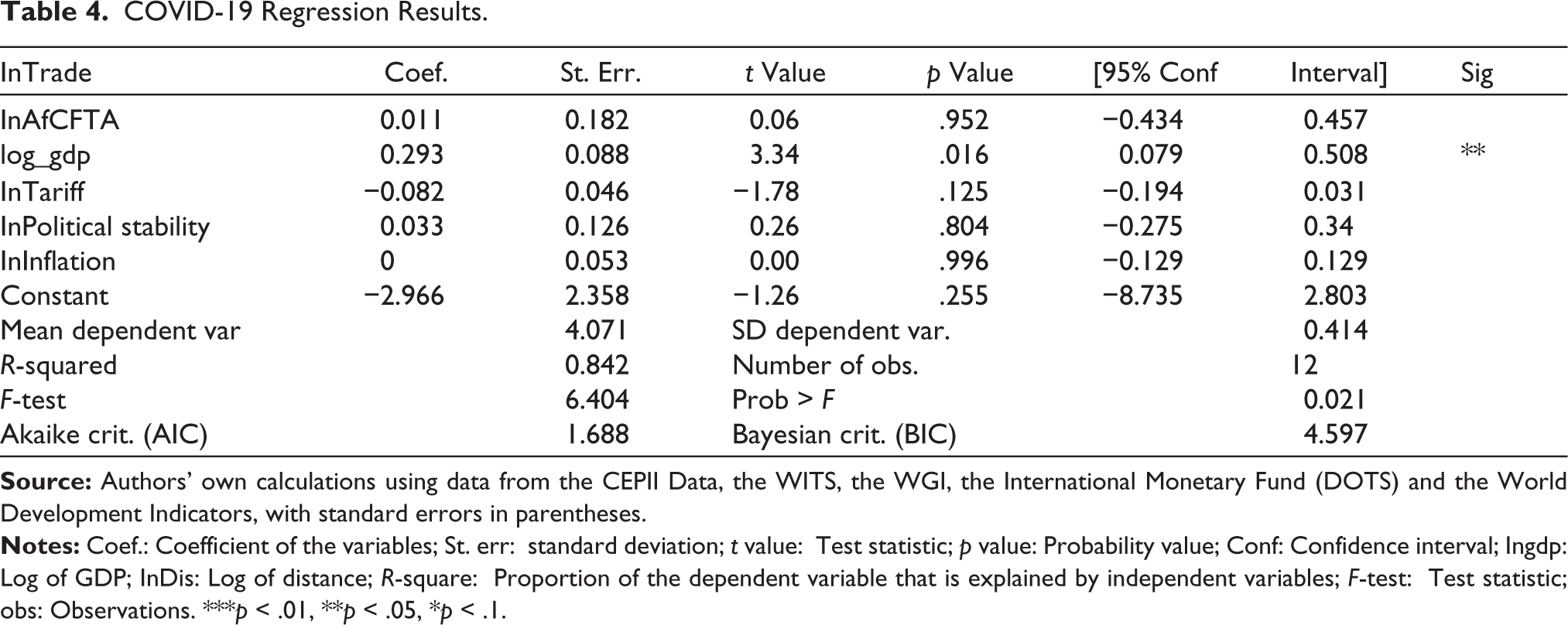
In contrast, the AfCFTA coefficient is not statistically significant, indicating that the variations in the nation’s relative trade advantage did not exert an important impact on its trade performance throughout the pandemic. This result emphasizes how crucial economic size and diversification are to surviving the COVID-19 shock, even more so than conventional trade advantages.
The geographical distance of African nations did not significantly affect their trade performance during the epidemic, according to the negative, but statistically negligible coefficient for distance. This can be because of the crisis upending international trade and supply systems, which may have obscured the conventional significance of geographic closeness. The fact that the constant term is negative indicates that the trade performance of the African countries in the sample is significantly harmed by other unobserved factors that are not accounted for in the model. However, the variables fit the data well, and the independent variables explain the dependent variable to the tune of 84.2%.
Above is the fixed effects regression, which enhances the analysis by controlling for time-invariant factors and providing insights into how the factors, like GDP, distance and inflation, influence intra-African trade dynamics over time. The high R-squared values of 0.883 demonstrate that the model fits the data well, explaining that the independent variables also explain the dependent variable to the tune of 88.3%. The analysis incorporates fixed effects to account for the time-invariant factors that influence trade between the pairs of countries, providing a more nuanced understanding of the relationship between intra-African trade and the independent variables. The coefficient for the AfCFTA is positive, which is still the same for the pooled OLS, and it is statistically significant at a 10% significance level, indicating a weak relationship with intra-African trade by 35.2%. The fixed effects regression results shown in Table 5 indicate that AfCFTA membership has a statistically significant positive effect on intra-African trade.
Fixed Effects Regression Results.
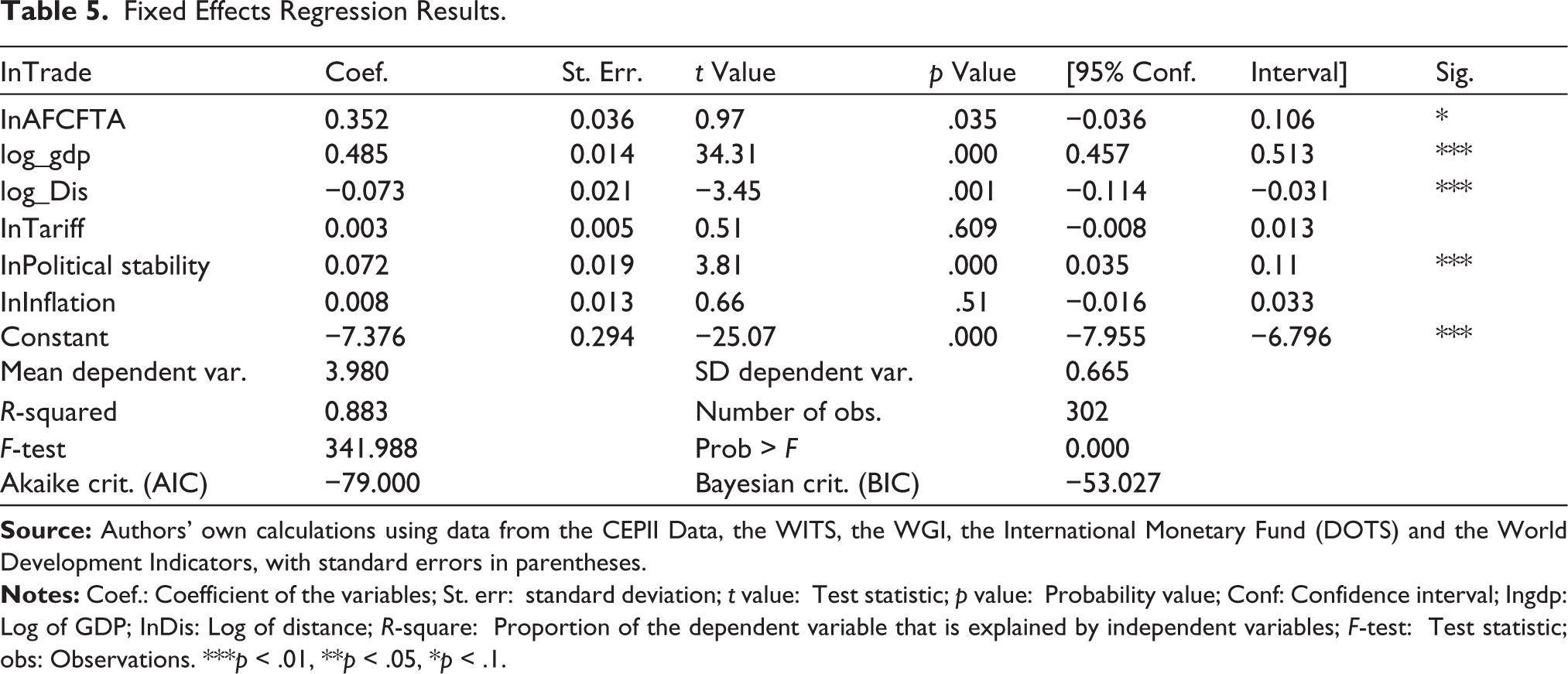
Contradictorily, GDP is both positive and highly significant at all significance levels, indicating a robust positive correlation between GDP and trade within the African continent. Intra-African trade rises by $48.5 for every percentage increase in GDP. This demonstrates that GDP does have a significant impact on increasing trade within Africa. An additional kilometre also decreases intra-African trade by 7.3%. Distance is negative and statistically significant at all the levels, highlighting the closer countries’ trade more, emphasizing the impact of geographical proximity on the trade patterns.
On average, tariffs exert a negative effect on trade, quantified at −0.003. However, this relationship is statistically insignificant, indicating that, while tariffs may influence the volume of trade, they do not play a decisive role in determining trade flows. This suggests that the countries engage in trade regardless of whether tariffs are high or low; the volume of trade is merely affected by the level of these barriers. The implication is that trade persists as a fundamental economic activity, driven by the factors be yond tariff levels alone. In contrast, political stability emerges as a more critical determinant of trade, with a negative effect quantified at 0.072 and statistically significant across all levels of analysis. Political instability characterized by civil unrest, regime changes or governance issues creates an environment of uncertainty that can deter investment and reduce production capacity. Consequently, when a country experiences political instability, it often leads to diminished output of goods and services, thereby adversely affecting the trade volumes. Finally, on average and ceteris paribus, the countries with stable inflation rates trade more at 0.008. However, this is not significant in determining trade amongst the countries.
To deepen the empirical analysis and address potential endogeneity between AfCFTA and intra-African trade, an IV regression was employed. The need for IV estimation arises from the plausible concern that countries with higher intra-regional trade volumes may be more inclined to enter or deepen participation in FTAs, leading to simultaneity bias in standard fixed effects models. Moreover, unobserved factors such as political alignment, infrastructure quality or institutional efficiency could be correlated with both trade volumes and AfCFTA membership, thus confounding the true relationship. As shown in Table 6, the IV estimation confirms the positive and statistically significant effect of AfCFTA on trade flows.
Instrumental Variable (IV) Estimation: Accounting for Endogeneity in Regional Trade Analysis.
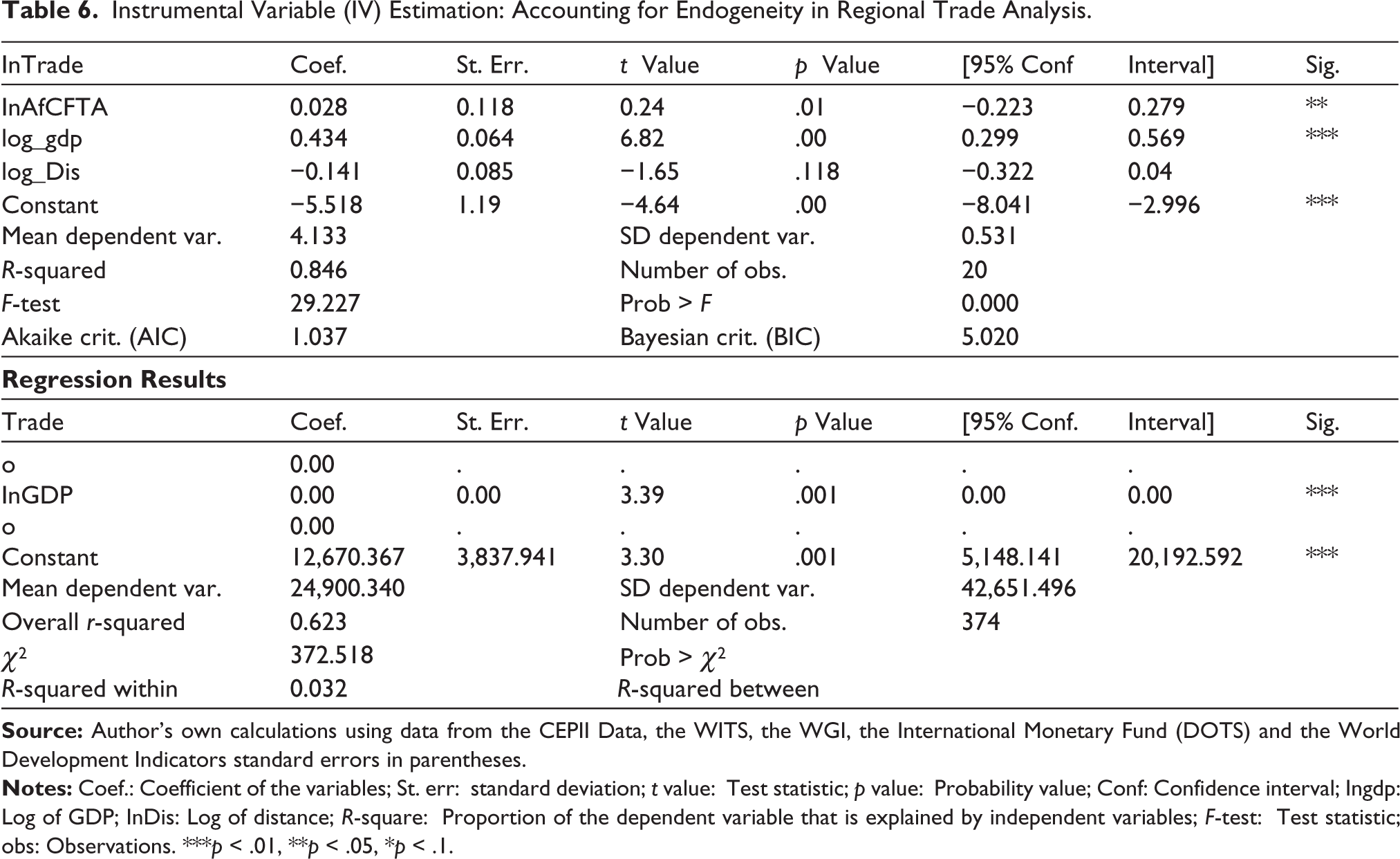
The IV results provide clear empirical support for the hypothesis that AfCFTA positively influences intra- African trade. The coefficient on the instrumented AfCFTA variable (InAfCFTA) is positive (0.028) and statistically significant at the 1% level, indicating a robust causal relationship. This reinforces the assertion that when endogeneity is properly controlled for, the beneficial effect of regional integration mechanisms becomes more evident. While the magnitude of the coefficient may appear modest, the strong statistical significance suggests that AfCFTA does facilitate trade beyond what would be predicted solely by macroeconomic fundamentals or geography.
Further validating the model, lngdp enters the regression with a substantial and highly significant coefficient (0.434, p < .01), indicating that larger economies are significantly more likely to engage in intra-African trade. This finding reflects well-established theoretical expectations, higher GDP signals greater productive capacity, market size and economic diversity, all of which support higher bilateral trade flows. By contrast, distance, which proxies transport costs and logistical barriers, is negative (−0.141) but statistically insignificant (p = .118). While the negative sign aligns with the gravity model’s expectations that distance hampers trade, the lack of significance may reflect Africa’s unique geography, where proximity does not always translate into connectivity due to underdeveloped infrastructure and non-tariff barriers.
The regression also produces a high R-squared value of 0.846, indicating that the model explains a large proportion of the variance in intra-African trade. This is particularly noteworthy in the context of cross-country data, where unobserved heterogeneity is typically high. Moreover, the F-statistic of 29.227 ( p < .01) confirms the joint significance of the explanatory variables, suggesting that the model is well-specified and the instruments used are strong.
In a complementary IV specification focused on GDP expectations, the coefficient remains highly significant ( p = .001), reinforcing the notion that future economic performance is a powerful driver of current trade flows. This version of the model yields an overall χ2 statistic of 372.518 ( p < .000), which robustly rejects the null hypothesis that the instruments are weak or irrelevant. The extremely high χ2 value not only underscores the statistical power of the model but also confirms that the chosen instruments (e.g., InGDP) are valid predictors of the endogenous explanatory variables.
Taken together, these results present a compelling case for the positive and causal role of FTAs in promoting trade across the African continent. They challenge the conventional scepticism found in parts of the literature that African FTAs are largely symbolic or ineffective. Instead, they suggest that when endogeneity is addressed through robust econometric techniques, the empirical effect of regional integration is both measurable and significant. Furthermore, the IV estimates refine and strengthen the insights previously observed in the fixed effects model, suggesting that the earlier significance of AfCFTA was not spurious but rather reflective of a real economic impact.
What is particularly striking is that the persistence of AfCFTA and GDP’s influence across all model specifications is consistent with Frankel and Romer (1999), who emphasize the fundamental role of economic size in trade, while the ambiguous role of distance reinforces the need for further investigation into the infrastructural and policy-based determinants of connectivity in Africa.
Following the IV estimation, a variance inflation factor (VIF) test was conducted to assess potential multicollinearity among the explanatory variables. This was a necessary step, as the study included several dichotomous and policy-driven variables such as AfCFTA and tariff measures that may exhibit interdependence. Furthermore, preliminary diagnostics such as the correlation matrix revealed a number of statistically significant and relatively high correlations between predictors, thereby justifying a closer examination through VIF. Table 7 reports the variance inflation factors, confirming that multicollinearity is not a concern among the explanatory variables.
Variance Inflation Factor.
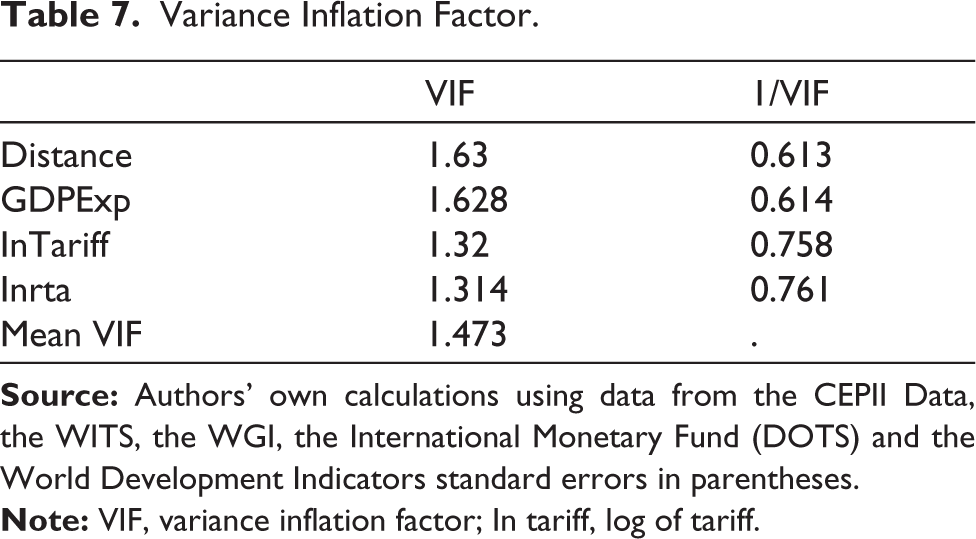
The VIF results indicate that all included variables fall well below the commonly accepted multicollinearity threshold of 10, and even the more conservative cut-off of 5. Specifically, the VIF values are 1.63 for InDistance, 1.628 for InGDP, 1.32 for InTariff, and 1.314 for InAfCFTA, with a mean VIF of 1.473. These figures clearly suggest that multicollinearity is not a severe issue in the model. Each predictor contributes independently to the explanation of intra-African trade, and no variable is significantly inflated by linear dependence on other regressors.
Following the IV estimation, a VIF test was conducted to assess potential multicollinearity among the explanatory variables. This was a necessary step, as the study included several dichotomous and policy-driven variables such as AfCFTA and tariff measures that may exhibit interdependence. Furthermore, preliminary diagnostics such as the correlation matrix revealed a number of statistically significant and relatively high correlations between predictors, thereby justifying a closer examination through VIF.
The VIF results indicate that all included variables fall well below the commonly accepted multicollinearity threshold of 10, and even the more conservative cut-off of 5. Specifically, the VIF values are 1.63 for InDistance, 1.628 for InGDP, 1.32 for InTariff, and 1.314 for InAfCFTA, with a mean VIF of 1.473. These figures clearly suggest that multicollinearity is not a severe issue in the model. Each predictor contributes independently to the explanation of intra-African trade, and no variable is significantly inflated by linear dependence on other regressors.
This outcome is particularly significant in light of concerns regarding the use of binary variables, which are prevalent in this study. In the context of African trade policy analysis, dichotomous variables such as AfCFTA membership and tariff status are often necessary to capture institutional dynamics. However, they can raise statistical issues when used in combination with macroeconomic indicators. The acceptable VIF levels in this analysis confirm that such combinations have not compromised the integrity of the regression estimates.
From a theoretical standpoint, this result reinforces the structural robustness of the model and validates the empirical strategy adopted. It supports the view that while African trade determinants are often institutionally intertwined, they can be disentangled statistically to provide clean and interpretable results. This observation is consistent with earlier literature that warns against over-reliance on policy dummies without proper econometric validation. For instance, previous empirical studies have emphasized the need to control for multicollinearity when examining the effects of regional trade agreements and tariffs in Africa (Geda & Seid, 2015; Longo & Sekkat, 2004), noting that their simultaneous inclusion can sometimes inflate standard errors and distort inference.
Moreover, the acceptable VIF values give further credence to the IV results discussed previously. Since the explanatory variables are not excessively correlated, the precision and reliability of the estimated coefficients, especially the now strongly significant effect of InAfCFTA can be confidently interpreted as true causal impacts rather than facts of multicollinearity.
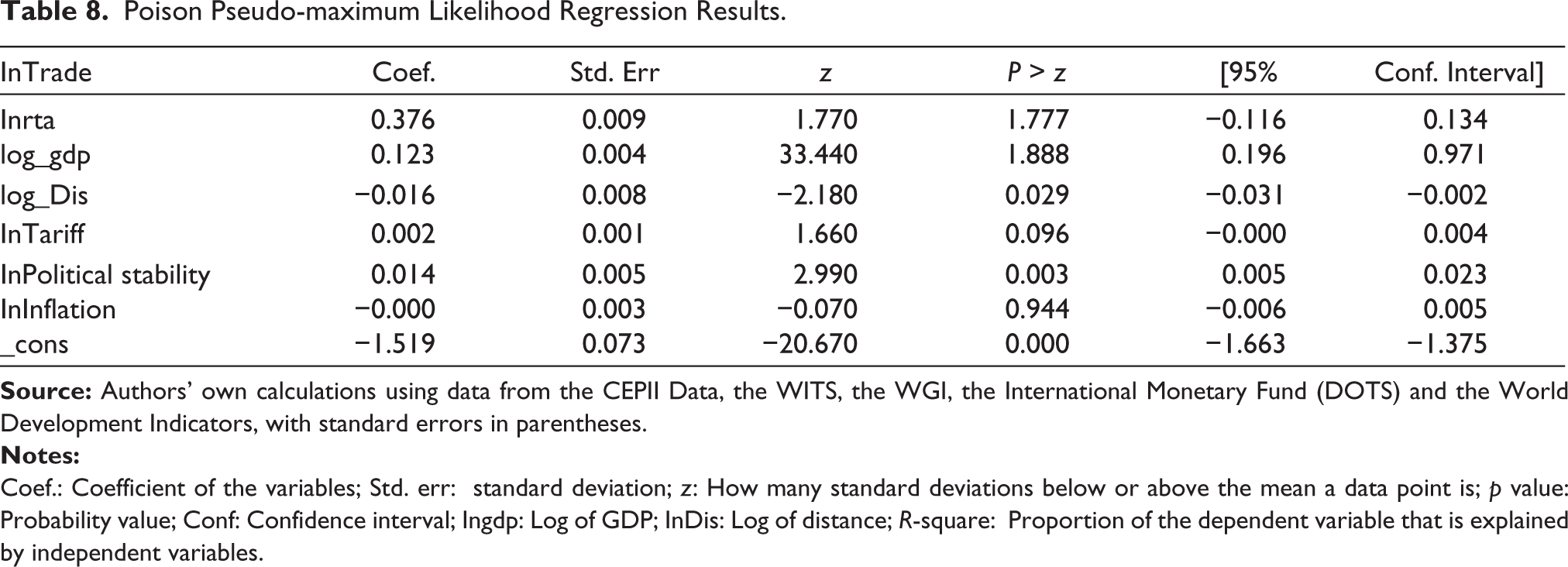
Table 8 shows the results for PPML high-dimensional fixed effects for three estimations of the model specified from the previous regressions. This estimation utilized the command PPML regression with multiple levels of fixed effects (PPMLHDFE), which is used when there are several fixed effects, and is more effective. The results show the consistent effects of different regressors on bilateral trade. The interpretations are given below.
Poison Pseudo-maximum Likelihood Regression Results.
Coef.: Coefficient of the variables; Std. err: standard deviation; z: How many standard deviations below or above the mean a data point is; p value: Probability value; Conf: Confidence interval; Ingdp: Log of GDP; InDis: Log of distance; R-square: Proportion of the dependent variable that is explained by independent variables.
The procedures of the log-linearized gravity model have been criticized for not being able to take care of zero trade values and heteroskedasticity. For robustness, the PPML approach, which naturally includes zero observations, was, therefore, employed to provide efficient and consistent estimates with robust standard errors. The findings show an R-squared of 0.904, meaning that the independent variables included in the research account for 90.4% of the variation in bilateral trade.
As seen above, trade in Africa improves by 0.375 units for every unit increase in the AfCFTA, a statistically significant result. For the nations that participate in the AfCFTA and share regional trade agreements, this is a favourable outcome. These findings are consistent with those of Feenstra and Hong (2007), Kurihara (2011), Liu (2016), Fusacchia et al. (2022) and Vujanović (2023), which demonstrate that regional trade agreements, like the AfCFTA, indeed, can increase trade. They reveal that the continental agreement leads to more extensive benefits across the sectors when income created inside each sector is considered, rather than solely considering gross exports. Economic growth is subsequently positively affected by this.
Once more, an increase in GDP as a percentage boosts trade by 0.123 on average. This is statistically significant at all significant levels. The results are like those of Chang et al. (2022). This shows that there is a positive correlation between bilateral trade flow and the total gross domestic product of the trading nations, as well as the similarity in their GDP sizes.
However, distance reduces trade by 0.016 and is not statistically significant. This shows that the farther apart nations are from one another, the less they are likely to trade, which hinders global trade. The results align with the empirical literature (Masunda, 2020). The findings indicate that trade is negatively impacted by distance. As a result, by lowering trade barriers and encouraging domestic production and trade liberalization, the excessive costs of transportation between most international markets (Frankel & Romer, 1999), say that, in international macroeconomics, distance is inversely proportionate to international trade.
Further, there are important economic implications regarding trade, political stability and tariffs in Africa. Tariffs enhance trade on average by 0.002, while political stability accounts for a larger, statistically significant rise of 0.1660. Comprehending these processes is crucial for policymakers seeking to improve trade capacity throughout the continent. The positive coefficient of 0.002 for tariffs indicates that trade can be stimulated by even small decreases in tariffs. This suggests that the nations might gain from enacting more liberal trade laws since the reduced tariffs could improve market accessibility and promote exports and imports.
On the one hand, the effect is very small, suggesting that, although tariffs facilitate trade, their influence on trade dynamics is restricted when compared to other factors (Eugster et al., 2022). On the other hand, the political stability’s stronger impact of 0.014 emphasizes how crucial it is to create an atmosphere that is favourable to trade. Political stability boosts production capacity promotes investment and lessens uncertainty. According to Gyimah-Brempong et al. (1999), politically stable nations are better equipped to participate in international trade, which can spur economic growth and development. This emphasizes how important it is for governments to incorporate political stability and governance into their economic plans. Again, inflation is insignificant in determining trade between countries and, for a unit increase in inflation, trade reduces by nothing.
Conclusion, Recommendations and Limitations of the Study
The previous sections focused on the presentation and discussion of the results. This section, in contrast, provides conclusions and recommendations. First, it presents the conclusions drawn from the results; it then details the limitations of the study. It finally shares the recommendations.
Conclusions
The AfCFTA and its effects on intra-African trade are examined in this study’s analysis. This study emphasizes the value of regional trade agreements, specifically the AfCFTA in fostering trade amongst the African nations, the beneficial effects of GDP on trade ties and the impact of geographic proximity on trading patterns. The model fits the data well, as evidenced by the high R-squared values, which account for 89.3% of the variance in the dependent variable.
Several important conclusions about the effects of the AfCFTA on intra-African commerce can be made considering the thorough analysis provided in the research study. The analysis shows that intra-African trade benefits from the AfCFTA. The participating nations typically see the increases in trade volumes, underscoring the significance of regional collaboration in promoting economic development. According to the summary statistics, the average bilateral trade score in Africa is nearly $3.79 million, with a minimum trade of 2.276% and a potential intra-trade maximum exceeding 5.4%. The average value of regional trade agreements in Africa is 0.8%, and they can boost trade by 0% to 1%. With a 52.3% average, the AfCFTA has a possibility of increasing intra-African trade.
The study emphasizes how important GDP is in determining the dynamics of trade within Africa. Trade between the African countries is positively correlated with the GDP levels, suggesting that economic performance and intra-African trade are positively correlated. With a total GDP per capita of about 23.15%, Africa is a continent where trade is more likely to occur between the nations that are on average 5.2 km apart. For every USD increase in GDP, there is a 50% possibility of increasing intra-African trade, showing that GDP is crucial in boosting trade.
The analysis highlights a negative correlation between trade and distance. Geographically, closer nations typically engage in more trade, whereas farther away nations impede trade. For every percentage increase in distance, intra- African trade decreases by 8.9% on average. This emphasizes how crucial geographic closeness is in determining trading patterns. The landlocked nations trade less with one another, and trade is heavily influenced by each nation’s GDP per capita. Further, on average, Africa has three types of tariffs, and they can decrease the African trade by 3.5% and boost it by at least 15.9%. On average, political stability in Africa is 3.2%. Because of this, trade can reach only a maximum of 4.5% and can decrease by 3%. On average, inflation boosts trade by 2.03 points.
The study encountered multicollinearity issues due to the presence of several dichotomous variables. This was addressed using VIF diagnostics, which indicated elevated VIF levels requiring the exclusion of certain variables to preserve the integrity of the model. IVs techniques were also employed to correct for potential endogeneity, particularly with GDP and distance, confirming the reliability and robustness of the estimated coefficients.
Recommendations
Based on the empirical evidence presented, it is imperative that policymakers across the continent strengthen the implementation and operational frameworks of the AfCFTA to maximize its trade-enhancing effects. Efforts should be made to harmonize trade regulations, streamline cross- border administrative procedures and improve infrastructure, particularly in customs and logistics, to facilitate smoother and more efficient trade flows. In addition, the positive relationship between GDP and trade underscores the need for economic policies that stimulate domestic production, encourage investment in strategic sectors and support industrialization. Such measures will not only bolster national economies but also create surplus capacities that can be directed towards regional markets.
Addressing the adverse effect of geographic distance on trade will require significant investment in transport infrastructure, including road, rail and digital connectivity. Facilitating trade across long distances, especially for landlocked countries, will be essential in bridging the divide between regions and ensuring more inclusive benefits from the AfCFTA. Furthermore, the findings on political stability point to the necessity of promoting good governance, strengthening institutions and maintaining peace and security as core components of trade policy. Without political stability, the gains from economic integration will remain uneven and fragile.
Tariff reform is also essential. The study reveals a wide range of tariff effects, with the potential to both impede and boost trade. As such, a coordinated and strategic approach to tariff adjustments, one that balances revenue needs with trade facilitation goals, is critical for optimizing intra- African trade outcomes. Finally, the use of advanced econometric techniques such as IV estimation and VIF diagnostics should be institutionalized in policy evaluation frameworks. As the AfCFTA continues to evolve, ongoing empirical assessment will be vital in refining policies, responding to dynamic market conditions, and ensuring that the agreement delivers sustained and inclusive growth across Africa.
Limitations of the Study
The study does, however, admit several shortcomings. First, because of limitations in data availability, the analysis is restricted to a panel of 22 African countries, leaving out 32 other African countries. This could restrict how broadly the results can be applied to the whole African continent. The research study also emphasizes the need for more research in this field by noting that earlier studies on the effects of free trade agreements in Africa have produced contradictory results. Finally, the study’s historical data and run simulation may prevent it from fully capturing the AfCFTA’s long-term effects on intra-African trade.
Footnotes
Declaration of Conflicting Interests
The authors declared no potential conflicts of interest with respect to the research, authorship and/or publication of this article.
Funding
The authors received no financial support for the research, authorship and/or publication of this article.