



Abstract
The study examines the purchase intentions of Ghanaian consumers towards locally manufactured automobiles with the moderating role of patriotism. It investigates four factors in the literature discussed as influencing the purchase intentions of consumers: perceived quality, perceived risk, perceived price and subjective norms. The study adopted quantitative analysis on a sample of 205 respondents from the Greater Accra region of Ghana. The respondents were drawn from Ghanaian consumers of automobiles through convenient sampling. Structural equation modelling (SEM) (Amos version, 21) and Andrew Hayes’s process model software were adopted to aid in the analysis. The findings reveal four correlations: (a) perceived quality negatively predicts the purchase intentions of Ghanaian consumers of locally manufactured automobiles; (b) perceived risk significantly predicts purchase intention; (c) perceived price fails to significantly predict purchase intention; and (d) subjective norms significantly predict purchase intentions. The findings also suggest a mixed moderation effect of patriotism on the independent constructs and purchase intentions. These findings underscore the complex interplay of factors shaping consumer behaviour in the automobile market in Ghana. Addressing perceived quality, perceived risk and subjective norms is crucial for manufacturers and marketers to enhance consumer purchase intentions to penetrate the Ghanaian automotive market.
Introduction
Ghana has witnessed a surge in the production and consumption of locally made vehicles (Ackaah et al., 2022), driven by government policies, foreign investments and the emergence of domestic automakers like Kantanka and partnerships with global manufacturers such as Toyota, Volkswagen and Mahindra. This has prompted research into the dynamics shaping consumer attitudes and behaviours in this context (Chinedu et al., 2021). Studies suggest that consumers’ perceptions of the quality of locally manufactured automobiles significantly impact their willingness to purchase these vehicles (Ackaah et al., 2022; Agrawal & Kamakura, 2019). However, the relationship between perceived quality and purchase intentions may not be straightforward, as perceived risk and ethnocentrism may also affect this relationship. Perceived risk represents the potential negative outcomes that may result from purchase decisions (Kamalul et al., 2018). Perceive risks relate to product reliability, safety and durability. These can influence purchase intentions to buy locally made vehicles. Ethnocentrism reflects that consumers’ preference for domestically produced goods may significantly influence purchase intentions towards locally manufactured automobiles (Bashir et al., 2019). Ethnocentrism is closely related to patriotism which takes pride in supporting the local economy, which could amplify their inclination to purchase locally made vehicles, despite perceived risks or higher prices compared. Additionally, subjective norm, the perceived social pressure from others in making a purchase decision (Beneke & Blampied, 2019), may exert influence on Ghanaian consumers’ intentions to purchase locally manufactured automobiles. Social factors, such as peer influence, family expectations and cultural norms, can shape individuals’ attitudes regarding domestically produced goods (Jain, 2020). Moreover, the role of perceived price in influencing purchase intentions cannot be overlooked. While perceived quality may be a primary consideration for consumers, the perceived price also plays a crucial role in shaping their willingness to purchase locally manufactured automobiles (Srivastava et al., 2023). Ghanaian consumers may weigh the perceived value of locally made vehicles against their affordability. Exploring the interplay between the perceived price and other factors, such as perceived quality and patriotism (Agrawal & Kamakura, 2019), can provide valuable insights into consumer decision-making processes and preferences in the Ghanaian automotive market.
Despite the prominence of locally made vehicles in the Ghanaian automotive market, there is a lack of comprehensive understanding regarding the factors influencing consumers’ purchase intentions (Ackaah et al., 2022). Perceived quality, perceived risk, ethnocentrism, subjective norm and perceived price have been identified as potential determinants of purchase intentions, their interrelationships and the moderating role of patriotism remain understudied (Ackaah et al., 2022; Calvo-Porral & Lévy-Mangin, 2017). This study aims to analyse the purchase intentions of Ghanaian consumers towards locally manufactured automobiles, specifically the moderating role of patriotism (Novixoxo et al., 2019). This research seeks to examine the complex interplay of factors shaping consumer behaviour in the automotive sector in Ghana.
Literature Review
Theory Planned Behaviour
The theory of planned behaviour (TPB) (Ajzen, 1991) provides a robust framework for understanding the factors influencing consumer purchase intentions towards locally manufactured automobiles in Ghana. According to TPB, individuals’ behavioural intentions are influenced by their attitudes towards the behaviour, subjective norms and perceived behavioural control. In the context of purchasing locally made vehicles, perceived quality and perceived risk play a crucial role in shaping their intentions (Kassim et al., 2017). Perceived quality and perceived risk impact consumer attitudes towards locally made automobiles, with positive perceptions enhancing purchase intentions while concerns about risks may deter them (Goudar & Samantaray, 2019). Similarly, perceived price influences attitudes, with higher prices potentially decreasing purchase intentions. Ethnocentrism and patriotism, intertwined with subjective norms, contribute to consumers’ inclination to support domestic industries, positively influencing attitudes and intentions towards locally manufactured products (Chinedu et al., 2021).
Hypotheses Development
Perceived Quality and Purchase Intention
Perceived quality is defined as consumer perception of a product’s or service’s reliability and dependability according to Cham et al. (2018), Lim et al. (2019) and Nikhashemi et al. (2017), and further research has proven that perceived quality is an important indicator that helps consumers differentiate products among competing firms while providing them with a reason to buy (Konuk, 2018). Aaker (2008) distinguished two types of dimensions that influence perceived quality. These include quality perception categories, such as performance, characteristics, suitability, fairness, resilience, service and final results, as well as service quality categories such as physical form, reliability, competence, responsibility and empathy. In both product and service contexts, perceived quality holds significant sway over consumer decision-making processes. Muskat et al. (2019) and Khan and Fatma (2019) underscore the pivotal role of perceived quality in reinforcing a brand’s perceived superiority, enabling it to stand out amidst competition. While existing research highlights how perceived quality significantly influences consumer decisions in both product and service contexts, several areas still warrant exploration. Additional studies could investigate the factors that contribute to consumers’ perceptions of quality, considering diverse cultural, social and economic contexts. Hence, this study seeks to hypothesize that:
H1: Perceived quality has a positive influence on the intention of Ghanaians to purchase locally manufactured automobiles.
Perceived Risk and Purchase Intentions
Perceived risk is a crucial aspect of consumer decision-making, representing the uncertainty and potential for loss associated with a purchase (Ventre & Kolbe, 2020). While risk has traditionally been viewed as a deterrent to purchase intention, contemporary research underscores its significance in shaping consumer behaviour (Ashoer & Said, 2016; Marriott & Williams, 2018). Numerous studies have explored the relationship between perceived risk and purchase intention across various industries and contexts, highlighting its profound impact on consumer decision-making processes (Lăzăroiu et al., 2020). By identifying and addressing consumers’ perceived risks associated with a product or service, companies can enhance consumer confidence and alleviate concerns that may hinder purchase decisions (Ventre & Kolbe, 2020). While existing literature has made strides in quantifying perceived risk across various dimensions, including financial, performance, product, time and social risks, gaps persist (Kamalul et al., 2018; Jayadi & Ariyanti, 2019; Silaban et al., 2020). The study thus hypothesizes:
H2: Perceived risk has a negative influence on the intention of Ghanaians to purchase locally manufactured automobiles.
Perceived Price and Purchase Intention
As elucidated by Tresa-Sebastian et al. (2021), perceived price encompasses the sacrifices individuals anticipate making to acquire a product, juxtaposed with the expected quality or benefit level. It represents a subjective assessment of the monetary value of the product. Price serves as a pivotal variable employed by firms to allure consumers into making purchasing decisions, as asserted by Büyükdağ et al. (2020). This assertion underscores the significance of perceived favourable pricing, which substantially influences purchase intention. Moreover, Stefano (2019) adds to the discourse by uncovering the positive impact of perceived price on purchase intention. Therefore, the hypothesis drawn is as follows:
H3: Perceived price has a positive influence on the intention of Ghanaians to purchase locally manufactured automobiles.
Subjective Norms and Purchase Intention
Subjective norms play a crucial role in shaping consumer behaviour by exerting pressure on individuals to conform to social expectations and norms (Ajzen, 1991). Numerous studies found a significant influence of subjective norms on consumers’ intentions to purchase or abstain from certain products and services (Ali et al., 2018; Bashir et al., 2019). The social structure, encompassing factors such as peer influence, societal norms and cultural values, is regarded as a key determinant shaping consumers’ purchase intentions (Gopi & Ramayah, 2007; Jayaraman et al., 2015; Lim et al., 2019). Gaining insights into the specific social structures and reference groups that exert the most significant influence on consumer decision-making can inform targeted marketing campaigns and enhance the effectiveness of communication strategies (Yadav & Pathak, 2016). The hypothesis formed under this instance is as follows:
H4: Subjective norms have a positive influence on the intention of Ghanaians to purchase locally manufactured automobiles.
Moderating Role of Patriotism
Consumer patriotism occurs when individuals prefer domestically produced goods and services over foreign ones (Wel et al., 2018). Čvirik (2021) noted that patriotic consumption substantially influenced the decision to purchase domestic products over imported products and that it often resulted in favourable evaluations about the quality and usefulness of those products. Patriotism has a significant and positive relationship with a consumer’s purchase intention, suggesting that more patriotic consumers tend to make purchases to support local automobile brands (Wel et al., 2018). Research suggests that patriotic consumers are more likely to prefer products that are produced domestically, even if these products are of lower quality (Koschate-Fischer et al., 2012). Kang et al. (2016) found that patriotism moderated the relationship between subjective norms and purchase intention for locally made products. Similarly, Choe et al. (2020) found that patriotism can enhance purchase intention by reducing the perceived risk associated with a product. The study found that consumers who have a high level of patriotism are more likely to trust domestic products, even if they perceive them to be risky. Thus, the hypotheses formed are:
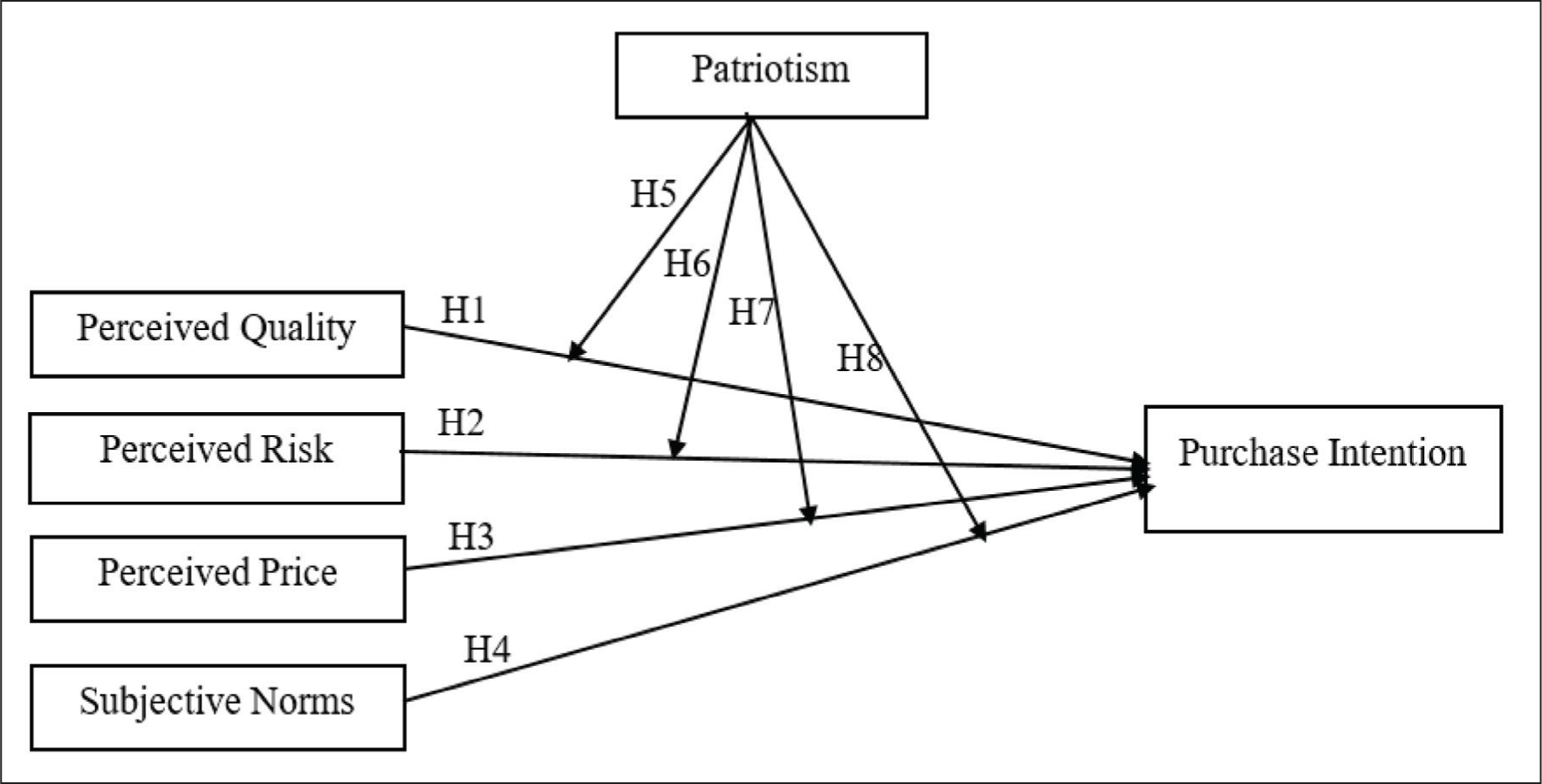
H5: Ghanaian level of patriotism will moderate the relationship between perceived quality and purchase intention of Ghanaian consumers to buy locally manufactured automobiles. H6: Ghanaian level of patriotism will moderate the relationship between perceived risk and purchase intention of Ghanaian consumers to buy locally manufactured automobiles. H7: Ghanaian level of patriotism will moderate the relationship between perceived price and purchase intention of Ghanaian consumers to buy locally manufactured automobiles. H8: Ghanaian level of patriotism will moderate the relationship between subjective norms and purchase intention of Ghanaian consumers to buy locally manufactured automobiles.
Research Model
The research model (Figure 1) elucidates the direct relationships between several factors known to influence consumers’ intention to purchase locally manufactured automobiles. It highlights that perceived quality, perceived risk, perceived price, and subjective norms directly predict consumers’ purchase intention towards these vehicles. The model acknowledges the moderating influence of patriotism on these relationships. This suggests that consumers’ patriotic sentiments towards locally manufactured automobiles may amplify or mitigate the effects of perceived quality, risk, price and subjective norms on their purchase intention.
Research Model.
Methodology
Research Design
The study adopted a quantitative approach with a cross-sectional design. The target population was individuals who resided in the Greater Accra region of Ghana. The structural equation model (SEM) was adopted to aid the analysis. This analysis was made possible by using the analysis of moment structures (AMOS version 21) and Andrew Hayes’s process model software. The analysis includes confirmatory factor analysis (CFA) and path analysis to measure the extent of the influence of latent variables in the research, which helped in answering the research questions formed and aided in meeting the objectives of the research. In other words, SEM allowed for the use of several indicator variables per construct simultaneously, which led to more valid conclusions on the construct level, since using other methods of analysis would have often resulted in less clear conclusions and might have required several separate analyses (Mustafa et al., 2020).
Sampling Design
The study utilized a sample size of 205 respondents, consisting of Ghanaian consumers who voluntarily agreed to participate in the research. This sample size was determined to be statistically adequate based on the guidelines provided by Hair et al. (2011), who recommend a minimum of 200 respondents for SEM analysis. A sample of this size ensures stable and reliable results, as it enhances statistical power and improves the robustness of model fit indices (Hu & Bentler, 2020; Kim & Yoon, 2017). The sample size was considered to increase the generalizability of its findings, making the conclusions more credible and applicable to the broader population of Ghanaian banking consumers. In selecting participants, the study employed a combination of purposive and convenience sampling techniques. Purposive sampling ensured that respondents met specific criteria, such as being active customers of CalBank or having recent interactions with the bank, thereby maintaining relevance to the research objectives. Convenience sampling, on the other hand, allowed for efficient data collection by targeting individuals who were readily accessible and willing to participate, such as customers visiting bank branches or engaging with online banking platforms.
Instrumentation
Data were obtained through a questionnaire derived from relevant literature within the study. The questionnaire comprised closed-ended questions administered to the sample population, employing a 5-point Likert scale ranging from 1 (strongly disagree) to 5 (strongly agree). Additionally, the questionnaire included structured sections aimed at eliciting information from respondents regarding the influence of the independent variables on their intention to purchase locally manufactured automobiles.
Independent Variables
The independent variables in this study included perceived quality, perceived risk, perceived price and subjective norm. Drawing on the foundational work of Sweeney et al. (1999), perceived quality is regarded as an integral component of consumer behaviour research. It represents consumers’ subjective assessment of a product’s excellence or superiority, encompassing factors such as durability, reliability and overall satisfaction. This construct reflects the extent to which consumers perceive a product to meet or exceed their expectations, influencing their purchase decisions and brand loyalty. This construct had three items with an internal consistency value of 0.92. Second, the measurement units for perceived risk draw upon the seminal work of Jacoby and Kaplan (1972), who pioneered the conceptualization and operationalization of perceived risk in consumer behaviour research. Perceived risk encompasses consumers’ subjective evaluations of the uncertainties and potential negative consequences associated with a purchasing decision. This construct includes four items reflecting financial risk, performance risk, psychological risk and social risk, reflecting consumers’ concerns about the possibility of loss or harm resulting from their choices. The internal consistency of the scale was 0.82. Third, the items (4) used to measure perceived price were adopted from the research of Mir et al. (2012), which provided a validated framework for assessing consumers’ perceptions of price in the context of purchasing decisions. Perceived price refers to individuals’ subjective evaluations of the monetary value associated with a product or service, taking into account factors such as affordability, fairness and perceived quality–price ratio. Finally, the construct of a subjective norm was adopted from Rachbini (2018), with special focus on the social pressures and expectations exerted by peers, family and society on an individual’s behaviour. These norms shape consumers’ perceptions of what is socially acceptable or desirable, guiding their purchase intentions and consumption patterns. The construct has five items with an internal consistency of .89.
Moderator: Patriotism
Patriotism, encapsulating a deep-seated allegiance and admiration for one’s nation, extends its influence across diverse aspects of consumer behaviour, particularly in shaping purchasing choices. The measurement items for patriotism, totalling five (5), were drawn from the works of Sharma and Shimp (2017) and Shimp and Shindo (2020), exhibiting a commendable internal consistency of 0.87. These items serve as essential tools for gauging the extent of patriotic sentiment among consumers, providing valuable insights into how national pride impacts their attitudes and preferences in the realm of consumption. Again, the items (two) for ethnocentrism adopted from Agrawal and Kamakura (2019) were merged with patriotism’s items due to their similarity for this study. Ethnocentrism measures individuals’ tendency to favour products or services produced domestically over those from foreign countries, often driven by cultural or nationalistic considerations.
Dependent Variable
The dependent variable ‘purchase intention’, a critical aspect of consumer behaviour, was evaluated using three items sourced from the seminal work of Venkatesh and Davis (2000) with an internal consistency of 0.95. These items, meticulously crafted to capture the propensity of individuals to engage in purchasing activities, offer a robust framework for assessing the inclination of consumers towards acquiring locally manufactured automobiles. With a foundation rooted in established research, these measurement items provide a reliable means of understanding and analysing the determinants driving consumers’ intentions to make purchase decisions within the context of the study.
Data Analysis and Results
Demographic Analysis
The IBM SPSS software version 26 was used to conduct a demographic analysis of the participants who willingly took part in the study. This was used to obtain knowledge on the profile of all respondents (see Table 1).
Demographic Profile of Respondents.
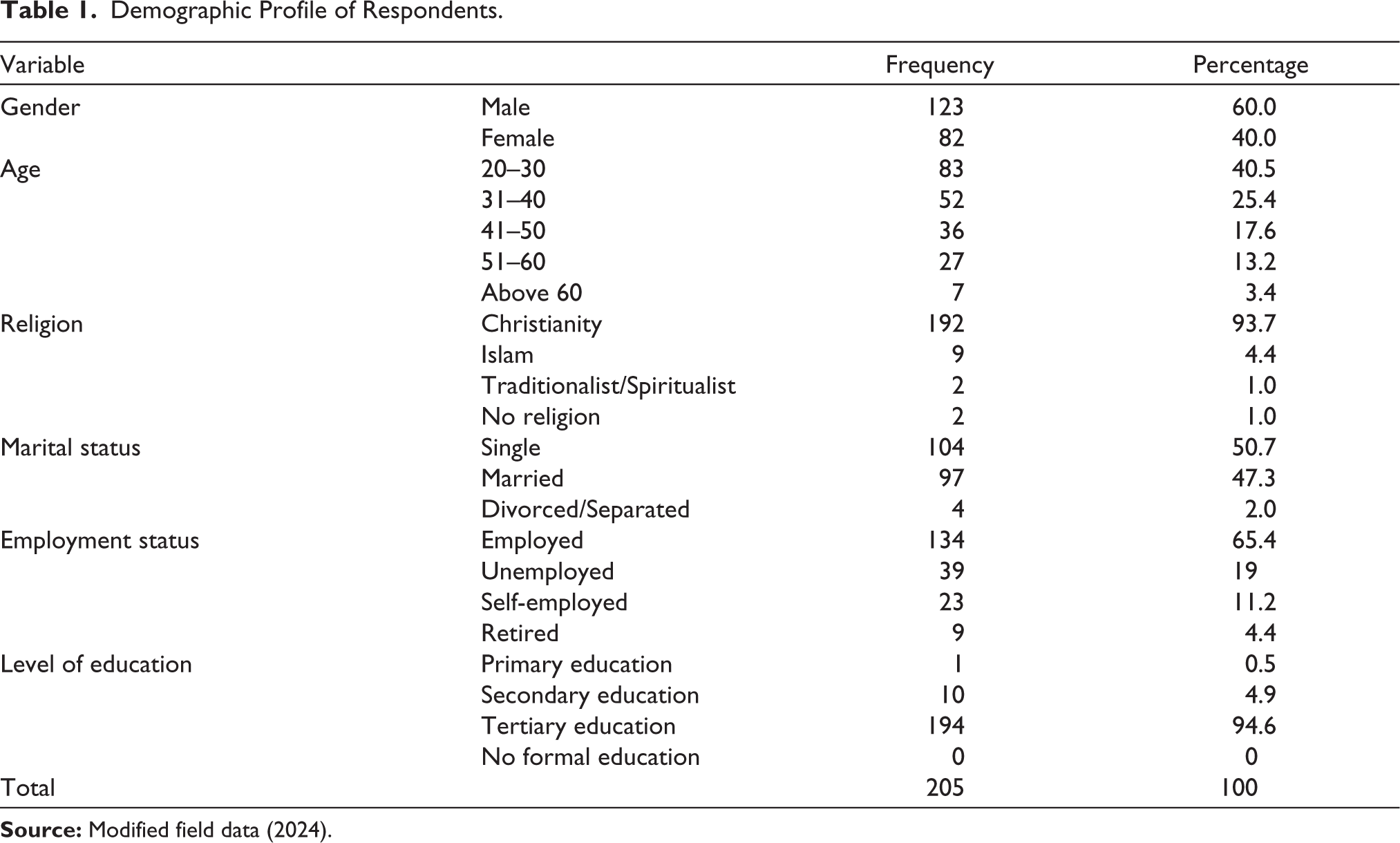
The data revealed a predominant presence of male respondents, comprising 60% of the total sample, compared to the 40% of the respondents who were female. These findings suggest that men in Ghana may be more inclined to purchase cars due to cultural expectations, financial capabilities and societal perceptions shaped by marketing campaigns. Furthermore, the age distribution among respondents highlights varying preferences and needs across different life stages. Younger individuals, particularly those aged 20–30, represented the largest cohort, comprising 40.5% of the sample, followed by individuals aged 31–40, accounting for 25.4%. This distribution reflects the influence of age-related lifestyle changes, income levels, technological advancements and social status on car purchasing behaviour. Additionally, the overwhelming majority of respondents identified as Christians, constituting 93.7% of the sample, indicating the pervasive influence of Christianity in Ghanaian society. The alignment of Christian teachings with values such as hard work, prosperity and success may contribute to the propensity of some Christians to prioritize car ownership as a symbol of economic prosperity and social mobility. Overall, these demographic insights shed light on the complex interplay of cultural, economic and religious factors shaping consumer behaviour in the Ghanaian context.
Marital status among respondents reveals a diverse distribution, with single individuals comprising 50.7% of the total population, followed closely by married individuals at 47.3%. This distribution reflects societal norms and perceptions in Ghana, where car ownership is often associated with stability and success, particularly among married individuals. In terms of employment status, the majority of respondents (65.4%) were employed, highlighting the significance of stable income streams in inclining purchase intentions towards cars. Employed individuals in Ghana are more likely to view car ownership as a symbol of social status and success. Additionally, the level of education among respondents skews heavily towards tertiary education (94.6%), indicating a potential correlation between higher education levels and increased intentions to purchase cars. Individuals with tertiary education are more likely to have higher income levels, greater social status and a better understanding of the benefits of car ownership, contributing to their heightened purchase intentions compared to those with primary or secondary education levels.
Confirmatory Factor Analysis
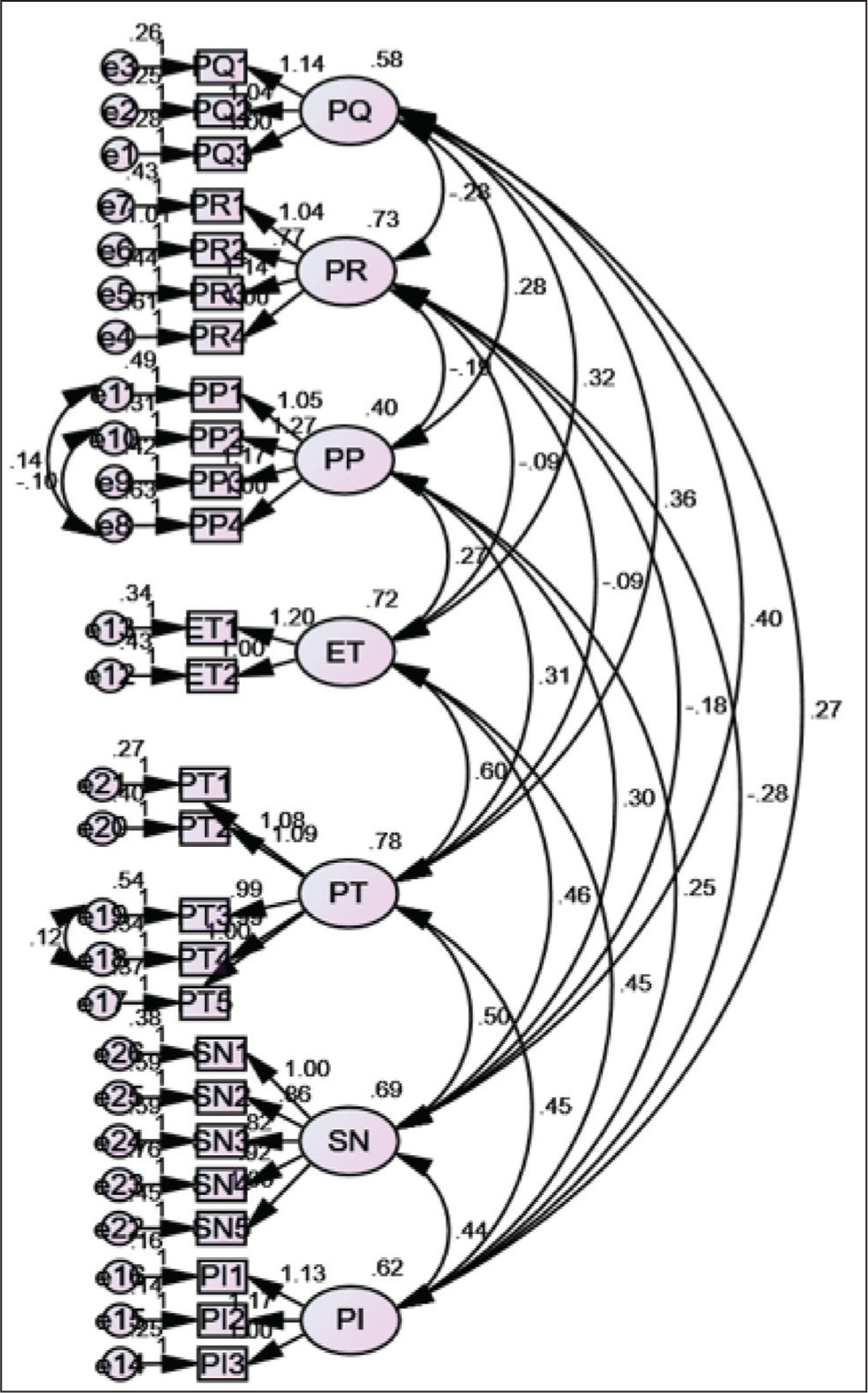
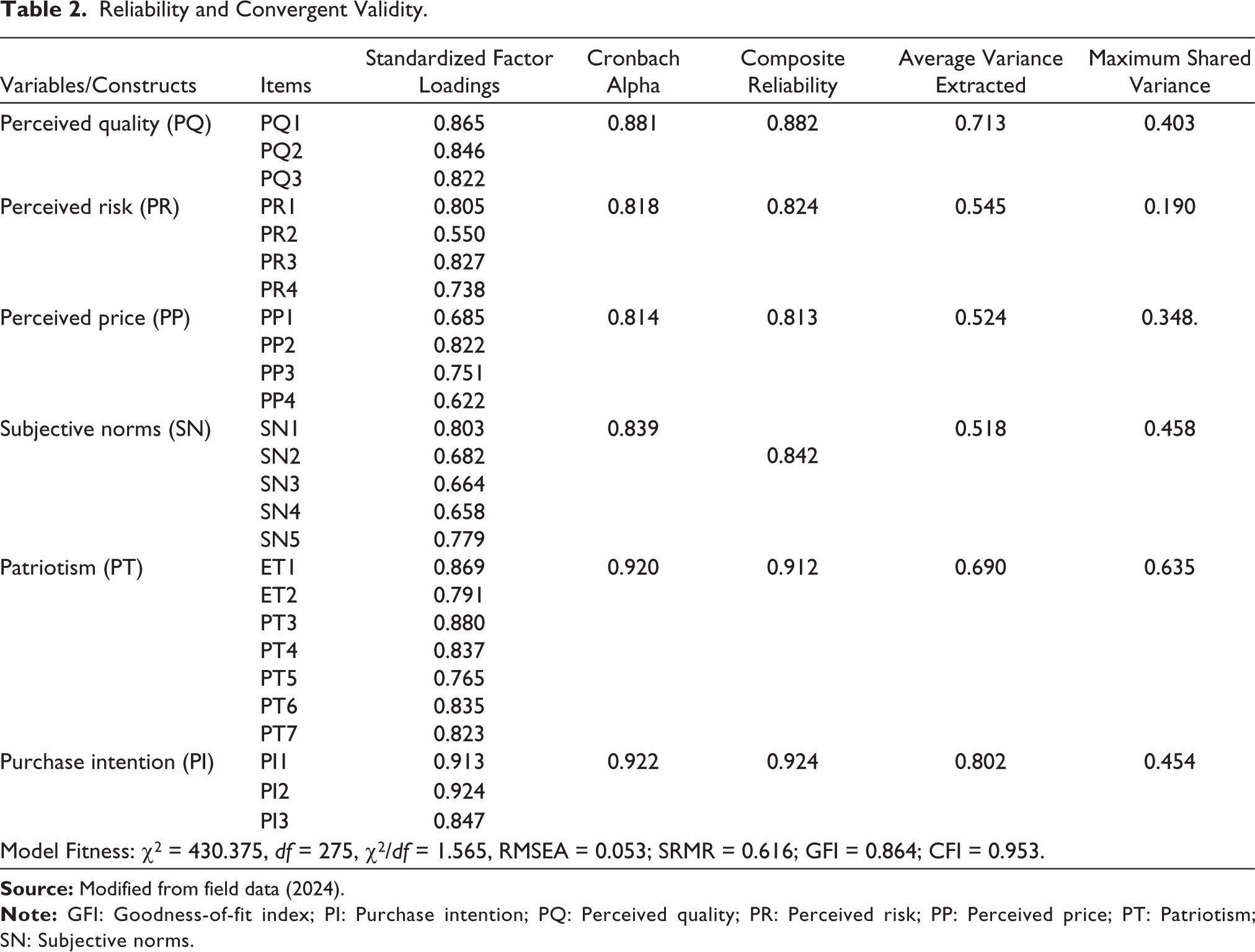
The analysis was conducted using AMOS version 21 to perform CFA (see Figure 2), a robust method for evaluating the reliability, convergent validity and discriminant validity of the research model. Initially, the CFA model was developed and refined iteratively to ensure optimal fit with the data. The final calculated model, along with the initial graphical representation, was subjected to rigorous assessment, and the results were summarized in Table 2. The outcomes of the CFA indicated favourable fit statistics for the model, with key indicators such as χ2/df, root mean square error of approximation (RMSEA), square root mean residual (SRMR) and comparative fit index (CFI) meeting or approaching recommended thresholds. Although the SRMR value slightly exceeded the ideal threshold, it remained within an acceptable range, indicating an adequate fit for the model. Moreover, the standardized factor loadings for all items were above 0.60, signifying strong relationships between the observed variables and their respective constructs. Additionally, the average variance extracted (AVE) values exceeded 0.50 for each construct, providing further evidence of convergent validity. Notably, the maximum shared variance was found to be less than the AVE for all variables, reinforcing the distinctiveness of each construct in the model. Furthermore, both Cronbach’s alpha and composite reliability values surpassed the recommended threshold of 0.70, indicating high internal consistency and reliability of the measurement items. Overall, the CFA results provided robust support for the reliability, convergent validity and overall goodness-of-fit of the research model, bolstering confidence in the validity of the study findings.
Proposed Measurement Model Results.
Reliability and Convergent Validity.
Correlation Analysis
The correlation analysis (see Table 3) conducted served as a crucial preliminary step to gauge the relationships between key variables and pave the way for subsequent testing of the research model. Notably, the analysis unveiled significant associations between several factors and purchase intention towards locally manufactured automobiles. Perceived quality emerged as a strong predictor, exhibiting a positive correlation (r = 0.49, p < .01) with purchase intention. This finding underscores the importance of perceived product quality in shaping consumers’ intentions to purchase locally manufactured automobiles, highlighting the pivotal role of product perception in driving consumer behaviour. Conversely, perceived risk demonstrated a significant negative association (r = −0.46, p < .01) with purchase intention, indicating that higher perceived risks are associated with lower purchase intentions. This underscores the impact of risk perceptions on consumer decision-making processes and emphasizes the need for businesses to mitigate perceived risks to enhance purchase intentions. Furthermore, perceived price, subjective norm and patriotism were found to significantly influence intentions to purchase locally manufactured automobiles. Perceived price exhibited a strong positive correlation (r = 0.56, p < .01) with purchase intention, underscoring the significance of pricing strategies in shaping consumer perceptions and purchase behaviours. Additionally, subjective norm and patriotism demonstrated robust positive correlations (r = 0.73, p < .01; r = 0.69, p < .01, respectively) with purchase intention, highlighting the multifaceted sociocultural factors that influence consumers’ intentions to support locally manufactured products.
Bivariate Correlation Analysis.
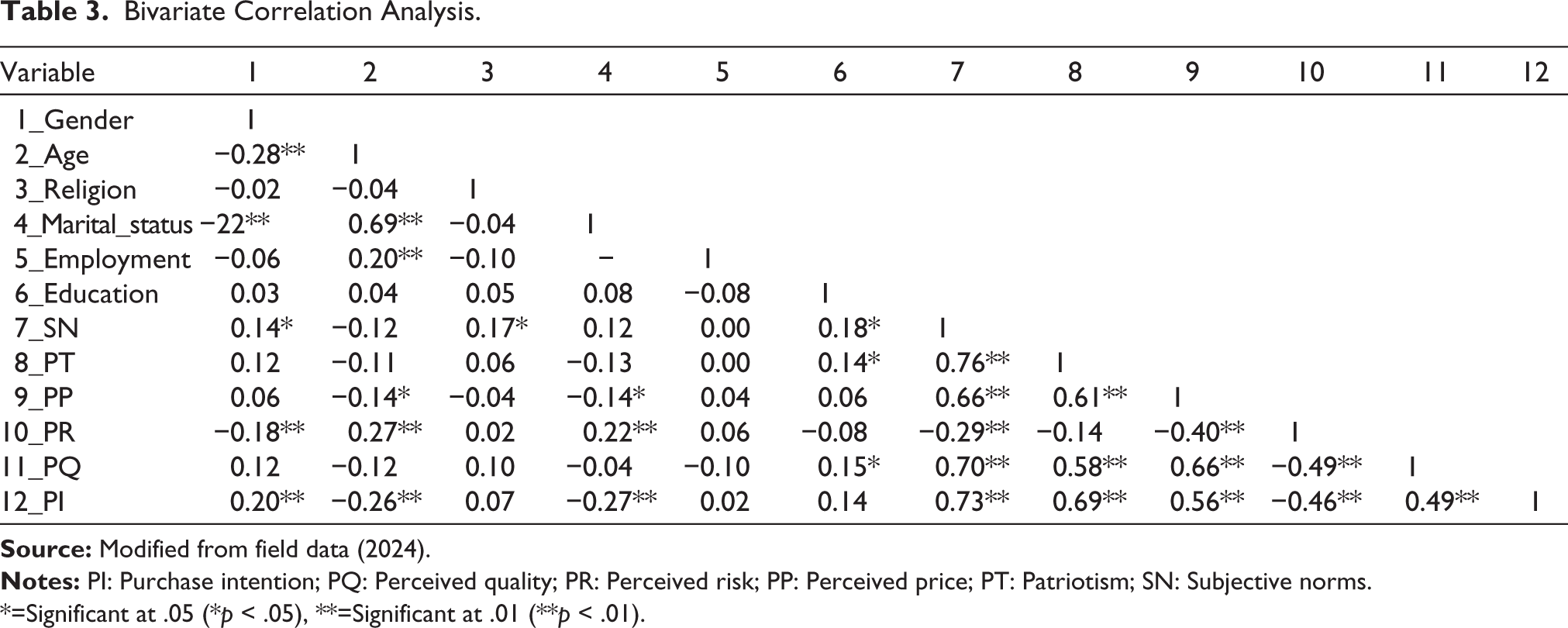
*=Significant at .05 (*p < .05), **=Significant at .01 (**p < .01).
Discriminant Validity
To ensure discriminant validity, the Fornell and Larcker (1981) criteria were rigorously applied to the analysis. This criterion stipulates that the square root of the AVE for each construct should exceed its correlations with other constructs. Examining the results led to the observation that the diagonal bold values representing the square root of AVE were indeed higher than the correlations between constructs (see Table 4). This finding provided strong evidence to support the discriminant validity of the variables under study. Essentially, it affirmed that each construct was sufficiently distinct from others in the model, reinforcing confidence in the reliability of the measurement model and the distinctiveness of the constructs being examined. The variance inflated factor (VIF) of the various constructs was cross-checked and revealed no issue of multi-collinearity as no single measure exceeded 10, considering the threshold recommended by Gaskin and Lim (2016).
Discriminant Validity.
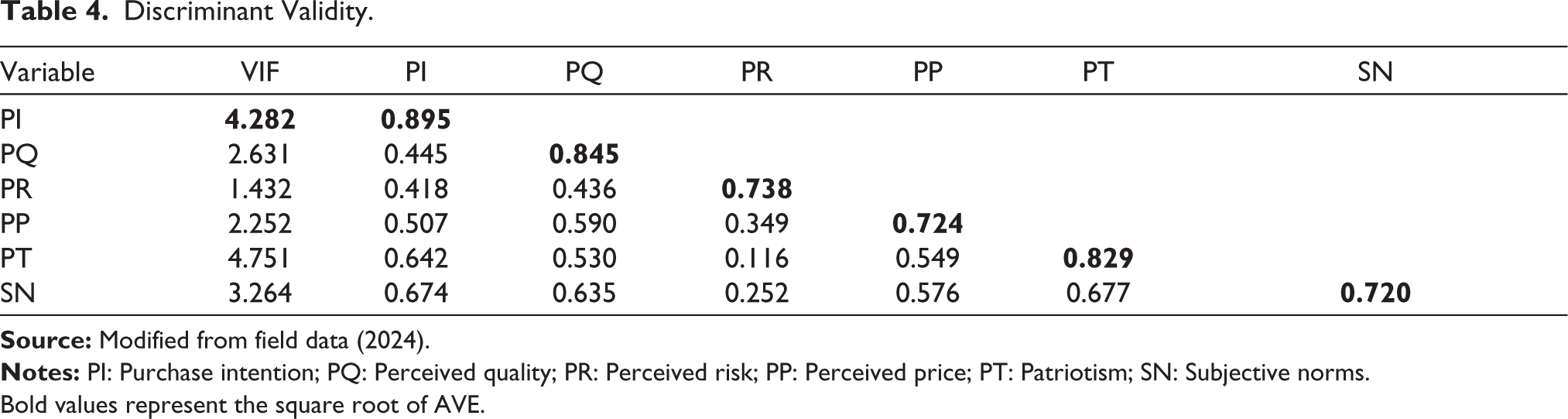
Bold values represent the square root of AVE.
Hypotheses Testing (Structural Model)
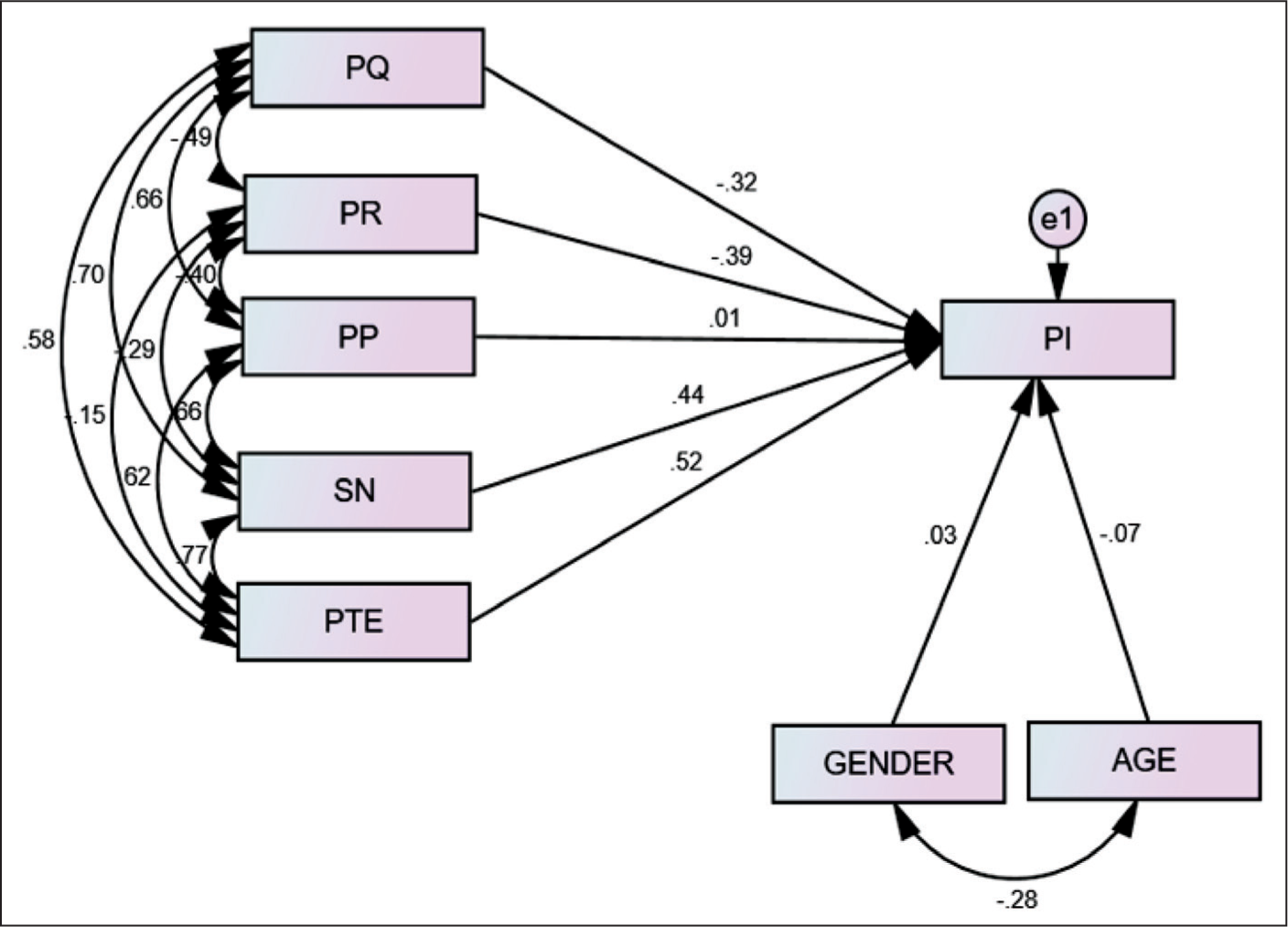
The relationship between all independent and dependent variables in the study was examined using SEM via AMOS path analysis, with Factor scores derived from the CFA serving as inputs. Hypothesis testing included the assessment of Patriotism as a moderator within the model. The structural model was visually represented in Figure 3 and accompanied by detailed results in Table 5. Overall, the results indicated a satisfactory fit for the model, as evidenced by an SRMR of 0.098, which fell below the threshold of 0.08 but was acceptable based on the recommendations of Gaskin and Lim (2016). A goodness-of-fit index (GFI) of 0.973 and a CFI of 0.983 were deemed excellent. However, the RMSEA did not meet the desired threshold, as it exceeded the recommended value of 0.075 for model fitness. Despite this limitation, the model demonstrated robustness in capturing the relationships between the variables under investigation, thereby providing valuable insights into the proposed hypotheses.
Regression Weights.
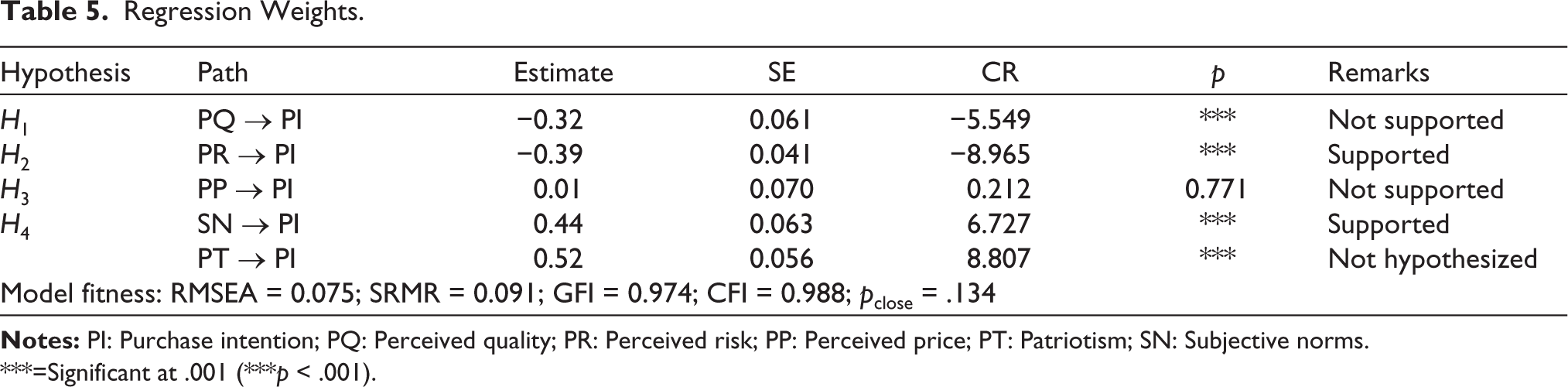
***=Significant at .001 (***p < .001).
From these findings, H2 and H4 were validated, as indicated by the outcomes derived from path analysis, which demonstrated a significant negative correlation between perceived risk and purchase intention (β = −0.387, p < .05). This suggests that the majority of Ghanaian consumers exhibit minimal interest in acquiring locally manufactured automobiles when harbouring significant uncertainties about ownership. Such uncertainties may encompass apprehensions regarding the financial implications and potential adverse social repercussions if the purchase is unfavourably perceived by others, doubts concerning the quality of domestically produced vehicles and their consequent impact on personal reputation, or concerns about the potential emotional ramifications of dissatisfaction with the purchase. Additionally, the results indicated a positive and significant association between subjective norms and purchase intention (β = 0.439, p < .05), suggesting that Ghanaians are more inclined to opt for locally manufactured automobiles when they perceive that their peers or reference groups endorse such behaviour.
On the other hand, the findings refuted H1 as the significant p-value for perceived quality revealed a negative relationship (β = −0.339, p < .05), contrary to the hypothesized positive relationship between the variables. One potential explanation for this unexpected finding is that many Ghanaians may perceive high-quality domestically manufactured automobiles as excessively expensive or lacking sufficient value for their cost. Consequently, such perceptions could prompt individuals to question and reassess their intentions to purchase locally manufactured automobiles perceived to be of high quality. Similarly, the results rejected H3 as the p-value for the variable was insignificant (β = 0.011, p > .05), indicating that although there was a positive relationship between perceived price and purchase intention, it did not significantly influence the dependent variable. This suggests that the perceived price of locally manufactured automobiles among Ghanaian consumers had minimal impact on their purchase intentions. One possible rationale for this outcome is that Ghanaian consumers who harbour a positive attitude towards domestically manufactured automobiles may prioritize their desire for these vehicles over price considerations.
Moderation Testing of Patriotism
The moderation analyses were conducted by treating perceived quality, perceived price, perceived risk and subjective norms as independent variables, purchase intention as a dependent variable and patriotism as a moderator variable. The results (Table 6) were calculated by creating interaction terms from the standardized scores of variables using SPSS.
Test of Moderation.

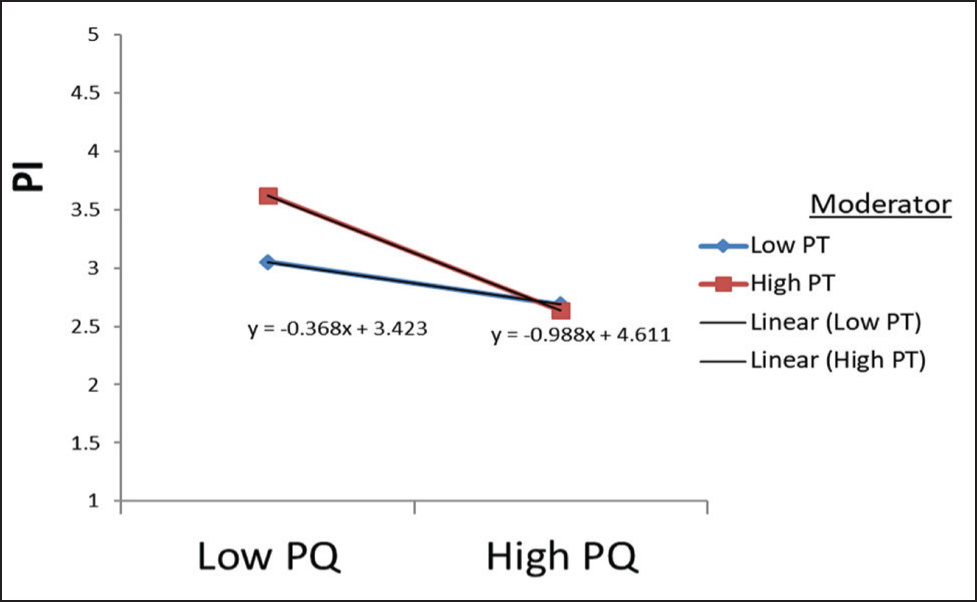
In this context, the moderation analysis (Figure 4) reveals that patriotism plays a significant role in influencing the relationship between perceived quality and purchase intention. Specifically, patriotism acts as a reinforcing factor, intensifying the negative impact of perceived quality on purchase intention. This suggests that individuals who exhibit higher levels of patriotism are more sensitive to the perceived quality of locally manufactured automobiles when making purchase decisions. Essentially, patriotic consumers may place greater emphasis on the quality of locally produced goods, viewing them as symbolic representations of national pride and identity. Therefore, if the perceived quality of these goods falls short of expectations, patriotic consumers are more likely to reconsider their purchase intentions, leading to a stronger negative association between perceived quality and purchase intention.
Patriotism as a Moderator Between Perceived Quality and Purchase Intention.
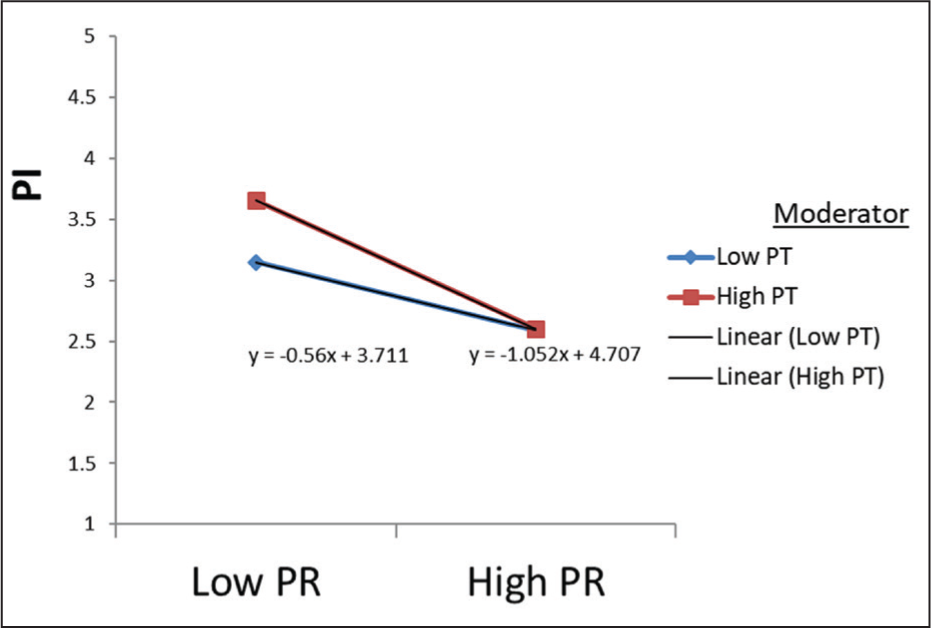
In this scenario, the moderation analysis (Figure 5) reveals that patriotism serves to amplify the negative relationship between perceived risk and purchase intention. This implies that individuals who possess a stronger sense of patriotism exhibit a heightened sensitivity to perceived risk when considering purchasing locally manufactured automobiles. Consequently, patriotic consumers may perceive risks associated with locally made products more acutely. They may view potential risks, such as uncertainties regarding quality or performance, as more significant deterrents to their purchase intentions. Therefore, patriotism exacerbates the impact of perceived risk, leading to a stronger negative correlation with purchase intention.
Patriotism as a Moderator Between Perceived Risk and Purchase Intention.
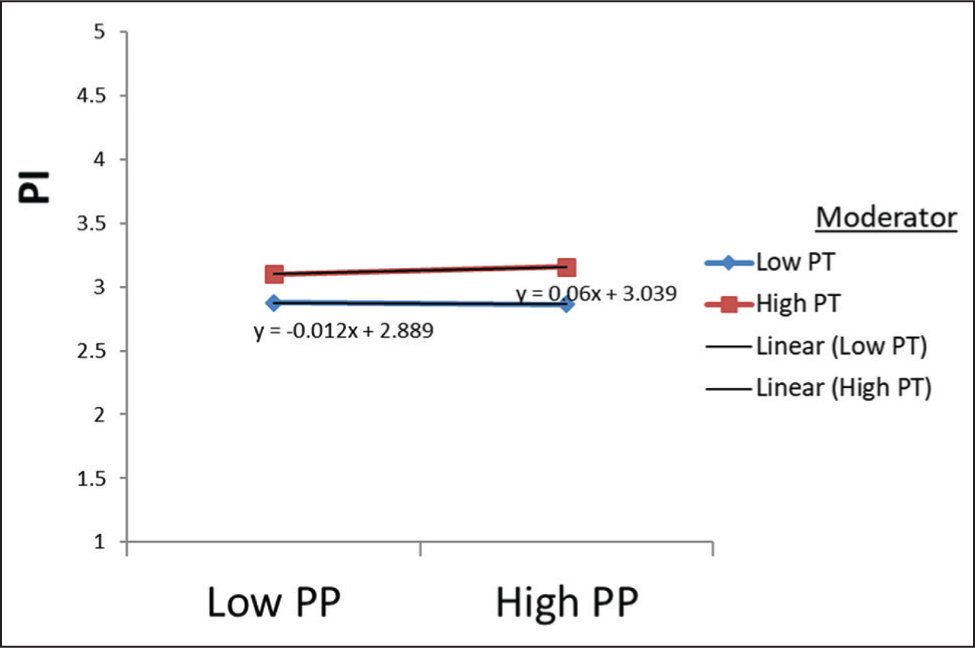
In this context, the moderation analysis (Figure 6) indicates that patriotism amplifies the positive relationship between perceived price and purchase intention. This suggests that individuals with a stronger sense of patriotism are more inclined to prioritize their national identity and values when making purchasing decisions. Consumers with strong patriotic sentiments may be more willing to overlook concerns about price and place greater importance on supporting their local economy and promoting national industries. As a result, patriotism enhances the positive association between perceived price and purchase intention, indicating a greater willingness among patriotic consumers to invest in locally manufactured automobiles.
Patriotism as a Moderator Between Perceived Price and Purchase Intention.
In this context, patriotism acts as a reinforcing factor, amplifying the positive relationship between subjective norms and purchase intention (Figure 7). This implies that individuals who perceive strong social approval or endorsement from their reference groups regarding the purchase of locally manufactured automobiles are further inclined to act in accordance with these norms when their sense of patriotism is heightened. Thus, patriotism enhances the impact of subjective norms on purchase intention by fostering a stronger sense of community and solidarity among consumers, leading to a greater propensity to support domestic industries and products.
Patriotism as a Moderator Between Subjective Norms and Purchase Intention.
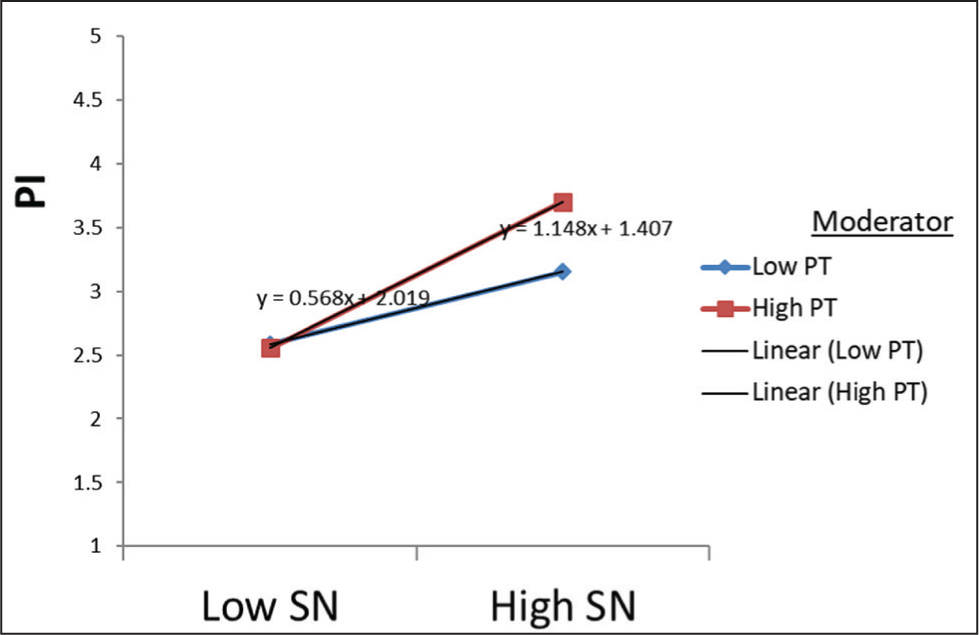
Following the moderation analysis involving patriotism, the results revealed that the interaction effect of perceived quality and patriotism negatively influenced purchase intention (β = −0.155, p < .05), thereby supporting H6. This suggests that patriotism strengthens the relationship between perceived quality and purchase intention, indicating that individuals with a strong sense of patriotism may exhibit a heightened emotional connection to locally manufactured automobiles, leading to a more favourable evaluation of their quality. However, contrary to the hypothesized direction of the relationship, the findings suggest that patriotic consumers may demonstrate lower purchase intentions toward locally manufactured automobiles with higher perceived quality. Similarly, the interaction effect of perceived risk and patriotism on purchase intention was also negative but significant (β = −0.123, p < .05), supporting H7. This implies that patriotic Ghanaians may maintain positive attitudes towards locally manufactured automobiles, thereby mitigating the negative impact of perceived risk associated with the purchase of such vehicles on their intentions to buy them. Furthermore, the interaction effect of subjective norms and patriotism on purchase intention yielded a positive and significant outcome (β = 0.145, p < .05), leading to the acceptance of H10. This indicates that patriotism reinforces the relationship between subjective norms and purchase intention. It suggests that Ghanaian consumers who exhibit high levels of patriotism and perceive strong social pressure to purchase locally manufactured automobiles are more inclined to do so compared to consumers who lack patriotism or do not experience significant social pressure. This finding provides statistical backing for the moderating role of patriotism in our data, aligning with the hypothesized nature of the relationship. However, no statistical support was found for the moderating role of patriotism in the instances of H8 and H9. The interaction effect of perceived price and patriotism on purchase intention was positive but insignificant (β = 0.018, p > .05), suggesting that while patriotic Ghanaian consumers may be willing to pay a premium for locally manufactured automobiles due to their sense of patriotism, the price of the vehicle still remains an important factor in their decision-making process.
Discussions of Findings
The findings (see summarized in Table 7) demonstrate that perceived quality and perceived risk have a negative relationship with purchase intention. Furthermore, the study shows a positive yet insignificant relationship between perceived price and purchase intention. The data also suggest that purchase intentions have a positive relationship with subjective norms. Furthermore, the research also indicates a number of noteworthy conclusions regarding patriotism: (a) it moderates the relationship between perceived quality and purchase intention, between perceived risk and purchase intention as well as the relationship between subjective norms and purchase intention; and (b) it insignificantly moderates the relationship between perceived price and purchase intention.
Summary of Hypotheses.
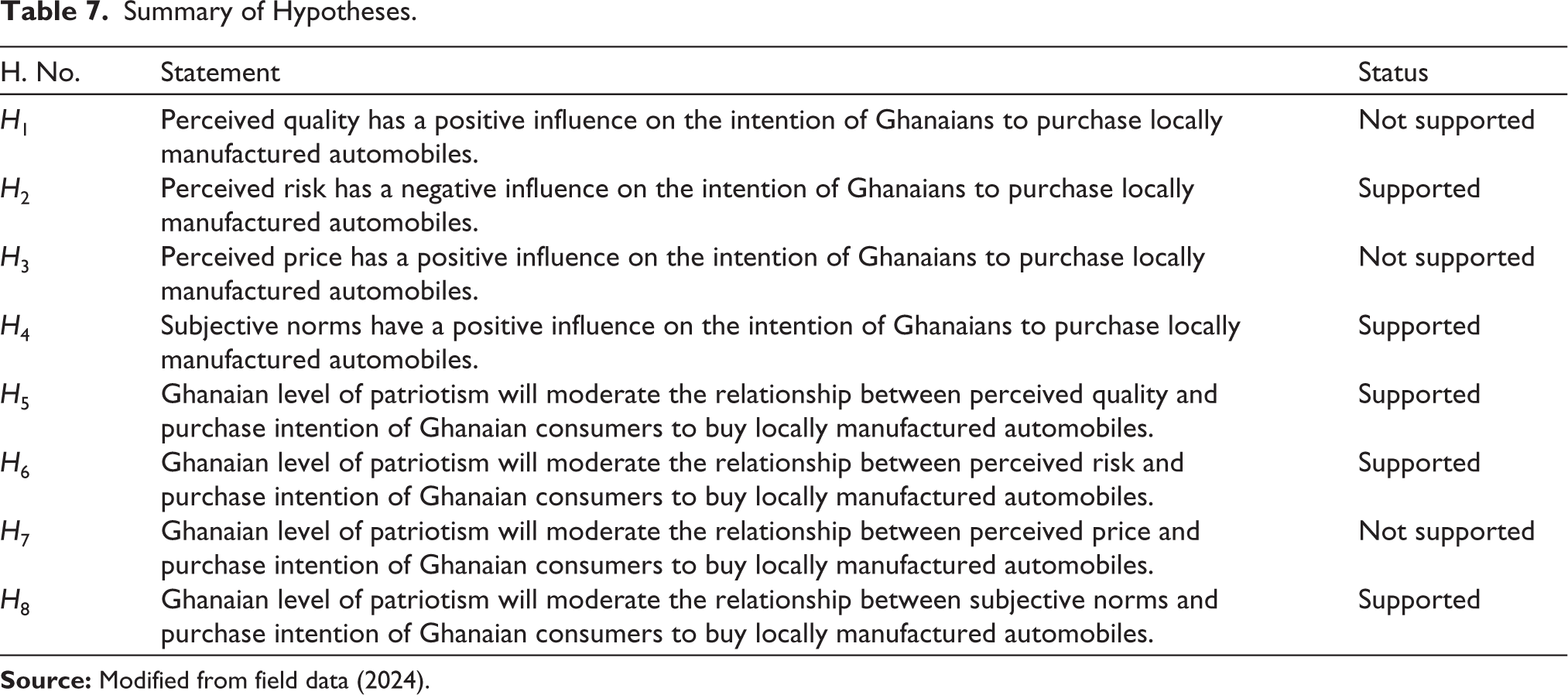
The findings of the study contradicted H1 as they revealed a negative association between perceived quality and purchase intention towards locally manufactured automobiles, which diverges from the assertions of prior research by Sumarwan et al. (2009), Indarsin and Ali (2017) and Sivaram et al. (2020), who posited that an increase in perceived quality would correspondingly enhance purchase intention. One potential explanation for these unexpected outcomes could be attributed to the tendency of Ghanaian consumers to view luxury goods, such as locally manufactured automobiles, as excessively costly or failing to provide commensurate value for their price. This aligns with Konuk’s (2018) observation that in emerging economies, consumers often perceive luxury goods as impractical, especially when domestic alternatives lack strong brand equity. Additionally, historical perceptions of inferior local manufacturing quality, as noted in Ghana’s ‘Buy Made-in-Ghana’ campaigns, may persist, causing consumers to distrust claims of improved quality. To address this, manufacturers must transparently communicate quality enhancements (e.g., durability benchmarks, third-party certifications) while aligning pricing with local purchasing power, as seen in successful store–brand strategies where quality parity with national brands boosted acceptance (Konuk, 2018). Additionally, a prevailing sentiment among consumers may be that purchasing high-quality luxury items is unnecessary or impractical, leading to a negative correlation between perceived quality and purchase intention. Moreover, the findings indicated a negative correlation between perceived risk and Ghanaian consumers’ intention to purchase locally manufactured automobiles, corroborating hypothesis H2. This suggests that Ghanaian consumers may exhibit a diminished inclination to purchase locally manufactured automobiles if they perceive a heightened level of risk associated with the purchase. This finding aligns with prior research by Courage et al. (2019), Jayadi and Ariyanti (2019) and Silaban et al. (2020).
The study findings indicate that perceived price exhibited a positive but insignificant correlation with Ghanaian purchase intention towards locally manufactured automobiles, which contrasted with the literature suggesting that higher perceived prices correspond to increased customer purchase intention (Stefano, 2019). However, a potential explanation for the failure to support H3 may lie in the fact that most Ghanaian consumers prioritize the quality and value of locally manufactured automobiles. Previous research has noted that for consumers highly engaged with luxury brands like automobiles, perceived value and product quality outweigh price as predictors of purchase intention (Konuk, 2018). For instance, the EXIM Bank’s ‘Made-in-Ghana’ campaign emphasizes prosperity through local purchasing (PROSPER), leveraging national pride over price sensitivity. Similarly, neuro-marketing studies reveal that price-consciousness diminishes when emotional or social values (e.g., brand credibility and peer influence) dominate decision-making. Similarly, the results imply a positive relationship between subjective norms and Ghanaian purchase intention towards locally manufactured automobiles, suggesting that Ghanaians are more inclined to purchase these automobiles when they perceive approval from their peers or reference groups, in line with existing research (Jayaraman et al., 2015; Lim et al., 2019). The positive role of subjective norms and patriotism aligns with the TPB, where social influence amplifies intention formation. However, the study’s emphasis on peer endorsements (e.g., influencer collaborations) requires nuanced execution. For example, Ghana’s digital innovators have successfully used social media to promote local goods, but credibility gaps persist when consumers perceive a disconnect between marketed quality and actual product performance.
The study findings reveal that patriotism serves to enhance the relationship between perceived quality and purchase intention, indicating that patriotic Ghanaians may develop a deeper emotional connection with locally manufactured automobiles, leading to a more positive evaluation of their quality. The finding suggests that patriotism reinforces the association between perceived quality and purchase intention, consistent with prior research by Verlegh & Steenkamp (2005). Moreover, the results support H7, indicating that patriotic Ghanaians may favourably view locally produced cars, mitigating the negative impact of their perceived risk associated with purchasing such vehicles on their intention to do so, as indicated in previous studies (Kim et al., 2017). Additionally, the study demonstrates a significant positive effect of subjective norms and patriotism on purchase intention. Similarly, H10 was upheld, indicating that patriotism strengthens the relationship between subjective norms and purchase intention, aligning with previous research findings (Kang et al., 2016). This suggests that Ghanaian individuals who both possess a strong sense of patriotism and perceive significant social pressure to buy locally manufactured cars are more inclined to express a heightened intention to do so compared to those who lack these influences. The moderation of patriotism between perceived price and purchase intention was observed to be positive but not statistically significant, indicating that patriotism did not exert a substantial influence on the relationship between these variables. One plausible explanation for this outcome aligns with a study conducted by Li et al. (2018), suggesting that while patriotic Ghanaian consumers may exhibit a willingness to pay a premium for local automobiles due to their sense of patriotism, the price of the vehicle remains a significant factor in their decision-making process..
Theoretical Implications
The findings of this study offer significant theoretical implications for the TPB, particularly in understanding consumer purchase intentions towards locally manufactured automobiles in Ghana. First, the study extends TPB by incorporating perceived quality, perceived risk, perceived price and patriotism as additional constructs that influence behavioural intentions. While TPB traditionally emphasizes attitude, subjective norms and perceived behavioural control as primary determinants of intention (Kassim et al., 2017), this research reveals that perceived quality and perceived risk exert a negative influence on purchase intention, contradicting conventional TPB expectations. This suggests that in developing economies like Ghana, consumers may prioritize risk aversion and scepticism over perceived quality, particularly for high-involvement purchases like automobiles. The negative relationship between perceived quality and purchase intention challenges the assumption that superior quality always enhances intention, indicating that contextual factors such as economic constraints or cultural perceptions of luxury goods may override traditional TPB mechanisms. Additionally, the insignificant effect of perceived price aligns with TPB’s focus on non-monetary psychological factors, reinforcing that subjective norms and patriotism may play a more decisive role than cost in shaping purchase decisions (Goudar & Samantaray, 2019). Furthermore, the study underscores the moderating role of patriotism, which strengthens the relationship between subjective norms and purchase intention, aligning with TPB’s assertion that social influences significantly drive behaviour (Kassim et al., 2017). However, the finding that patriotism does not significantly moderate the perceived price–intention relationship suggests that economic rationality may still prevail over nationalistic sentiments in high-cost purchases, refining TPB’s applicability in price-sensitive markets. These insights contribute to TPB by highlighting the context-dependent nature of behavioural antecedents, particularly in emerging economies where cultural identity (patriotism) and social pressures (subjective norms) may outweigh individual cost–benefit assessments. The study thus calls for a revised TPB framework that integrates emotional and sociocultural moderators to better predict purchase intentions in non-Western contexts, where collective values and national pride may significantly alter conventional decision-making pathways (Chinedu et al., 2021).
Recommendations
Recommendations for Practices and Policy
The findings of the study carry several implications for practices. First, it is imperative for automobile manufacturers and marketers to prioritize strategies that bolster perceived quality while addressing concerns related to price. The negative relationship between perceived quality and purchase intention could be mitigated through effective communication of the value proposition offered by locally manufactured vehicles. Features such as durability, performance and after-sales service could enhance perceived quality perceptions among consumers. Additionally, efforts to optimize pricing strategies as competitive pricing or value-added services may alleviate price-related apprehensions and stimulate purchase intentions. Second, given the significant impact of perceived risk on purchase intention, stakeholders in the automotive industry should address and mitigate perceived risks associated with buying locally manufactured automobiles. Practitioners should implement quality assurance measures to enhance product reliability and safety standards, providing transparent information regarding warranties and return policies. Fourth, the significance of subjective norms in shaping purchase intentions is clear from the study. Efforts should be directed towards leveraging social influence and peer endorsements to promote locally manufactured automobiles. Collaborations with influencers, celebrities and opinion leaders who advocate for domestic products to shape attitudes. Finally, the moderating role of patriotism underscores the importance of tapping into national pride and patriotism as a driver of purchase intentions. Manufacturers should capitalize on this sentiment by highlighting the benefits of supporting local industries like job creation, economic growth and national development. Initiatives such as ‘Buy Made in Ghana’ campaigns and incentives for domestic vehicle ownership could further drive consumers to prioritize locally made products, ultimately boosting the purchase intentions of Ghanaian automotive consumers.
Recommendation for Further Studies
Future researchers can explore the impact of specific attributes of perceived quality, such as safety features, design aesthetics and technological advancements, on consumer attitudes and behaviours towards locally manufactured automobiles could help identify areas for product improvement and innovation. Again, dimensions of perceived risk, ranging from financial and performance to social and time and their relative importance to consumers could shed light on effective risk mitigation strategies. Moreover, future studies should consider a qualitative or mixed-methods approach to examining the relationship between the variables in this study. In addition, there is a need for longitudinal studies to examine the dynamic nature of consumer attitudes and behaviours towards domestically manufactured automobiles in Ghana over time.
Conclusion
In conclusion, the findings of the study shed light on the complex interplay of factors influencing Ghanaian consumers’ purchase intentions towards locally manufactured automobiles. While perceived quality emerged as a significant predictor of purchase intention, the negative relationship observed suggests the need for a nuanced understanding of consumer preferences and perceptions in the automotive market. The study also highlighted the role of perceived risk, subjective norms and patriotism in shaping consumer attitudes and behaviours, underscoring the importance of considering sociocultural factors in marketing strategies and policy interventions. Additionally, the moderation analysis revealed the amplifying effect of patriotism on the relationships between perceived quality, perceived risk and subjective norms, emphasizing the need to account for patriotic sentiments in designing effective marketing campaigns and policy initiatives aimed at promoting domestic automotive manufacturing. Moving forward, policymakers and industry stakeholders should leverage these insights to devise strategies that enhance the perceived quality, mitigate perceived risk and foster a sense of national pride among consumers towards locally manufactured automobiles. This may involve initiatives such as quality assurance programmes, consumer education campaigns and targeted promotional activities that highlight the technological advancements, safety features and environmental benefits of domestic vehicles.
Footnotes
Declaration of Conflicting Interests
The authors declared no potential conflicts of interest with respect to the research, authorship and/or publication of this article.
Funding
The authors received no financial support for the research, authorship and/or publication of this article.