



Abstract
This study empirically investigates the influence of revenue mobilization channels and strategies (RMCS) on local government’s performance (LGP), focusing on the North Tongu District Assembly (NTDA), a para-urban Ghanaian community. This study is motivated by the need to enhance fiscal sustainability and improve LGP through effective RMCS. Using a mixed-methods approach and sequential explanatory design, the study examines the effectiveness of these strategies (ERMCS) and the challenges (CRM) associated with revenue collection. Primary data were collected through self-administered questionnaires and face-to-face interviews, with a 90% response rate from 270 respondents. Findings reveal that RMCS and ERMCS significantly and positively impact LGP, while CRM and ineffective strategies (ERM) significantly and negatively affect LGP. Recommendations include capacity building, technological integration, public awareness campaigns, policy reforms, stakeholder engagement and best practices adoption. This study contributes to the literature by offering detailed, context-specific insights into revenue mobilization and LGP. It also introduces new constructs/methodologies that enrich the resource mobilization theory (RMT). Its novel focus on local government dynamics and stakeholder engagement offers valuable contributions to academics and policy makers. The study’s framework, while specific to Ghana, can be replicated in other emerging economies, thus contributing methodologically/conceptually/theoretically to the broader discourse on revenue mobilization and fiscal policy.
Keywords
Introduction
The foundation of Ghana’s local government system is based on the principle that development should address the people’s needs and reflect their goals and priorities. Development responsibility is shared among various stakeholders, including the central and local governments, parastatals, NGOs and the beneficiaries of development initiatives. The financial framework for Ghana’s local government system is outlined in various legislative documents, including the Local Government Act of 1993 (Act 462) as amended by the Local Governance Act of 2016 (Act 936), PNDC Law 207 and relevant sections of the 1992 constitution.
Revenue sources for decentralized government agencies like metropolitan, municipal and district assemblies (MMDAs) are categorized into internally generated funds (IGFs) and external funding. IGFs include property rates, taxes, permit charges, rents, fines, business licences and other local revenues. External funding comprises grants, subventions, donor funding and central government transfers. The Local Governance Act, 2016 (Act 936), empowers MMDAs to generate local revenue, enhancing their financial sustainability and reducing reliance on external sources.
Local administrative structures, such as MMDAs, are established worldwide to involve residents in governance, improve their well-being and alleviate financial pressures on central governments. In Ghana, MMDAs are authorized to generate income within their jurisdictions to drive development initiatives. The revenues collected are used for public goods, amenities and infrastructure, which are crucial for local development.
However, generating sufficient tax revenue remains challenging, especially since a significant portion of employed Ghanaians work in the informal sector, leading to high levels of tax evasion.
Many informal businesses are unregistered and do not comply with tax regulations, complicating revenue collection. Despite these challenges, local government revenue mobilization is increasingly recognized for its potential to accelerate development projects.
Investigating the revenue mobilization channels and strategies (RMCS) of district assemblies (DAs) is crucial for funding public services, infrastructure and social programmes. Understanding the effectiveness of these strategies (ERMCS) is essential for sustainable development and improving residents’ quality of life. Local governments, including the North Tongu District Assembly (NTDA), face challenges such as low tax compliance, inadequate collection mechanisms, limited fiscal autonomy and dependence on external funding.
The NTDA, located in the Volta Region, faces unique socio-economic and institutional dynamics affecting its revenue mobilization. Factors like population size, economic activities, administrative capacity and governance structures influence the assembly’s revenue generation. This study aims to assess the RMCS employed by the NTDA, examining its revenue sources, collection mechanisms, challenges and opportunities. The goal is to provide insights into improving revenue mobilization for sustainable development, better service delivery and improved livelihoods for residents.
Despite the importance of revenue mobilization for local governments in Ghana, empirical evidence on its effectiveness, especially at the district level, is limited (Akorsu, 2015). The NTDA faces significant fiscal challenges, including inadequate revenue generation and reliance on central government transfers (Dzansi et al., 2018). Kokor (2003) noted that local governments struggle to generate substantial revenue due to central government’s policies and internal inefficiencies. Despite having potential resources, DAs heavily depend on the central government for development projects. Established as decentralized bodies, DAs combine supervisory responsibilities with revenue capabilities (Abdul-Wahab et al., 2018).
Aryee (2003) observed that DAs struggle to generate adequate local revenue despite statutory grants and donor funding, relying mainly on the Government of Ghana District Assembly Common Fund (DACF). The revenue shortfalls hinder development, prompting DAs to implement various strategies to enhance revenue mobilization, such as reassessing property valuations, adjusting rate payment thresholds, and establishing revenue enforcement task forces (Agyepong, 2012). Although legislation authorizes local revenue generation, DAs still face challenges in devising efficient approaches. Given their crucial role in development, periodic examination of DAs’ financial capabilities is essential (Agyepong, 2012). A study assessing RMCS for DAs, especially during a period when the DAs require substantial investment funding to alleviate poverty and ensure decent livelihoods for their populace, is a commendable undertaking. This present inquiry, therefore, assesses RMCS in NTDA so as to gain detailed and context-specific insights into revenue generation mechanisms at the local level for evidence-based policy interventions, fiscal sustainability and local development within the NTDA in Ghana.
The purpose of this study is to analyse the existing RMCS in DAs in Ghana and their impact on local government’s performance (LGP), focusing specifically on the NTDA. The study’s specific research objectives are specified as follows:
To analyse the effectiveness of prevailing RMCS employed by the NTDA in Ghana. To analyse the challenges and barriers (CRM) encountered by the NTDA in implementing revenue mobilization strategies. To assess the effect of inefficient revenue mobilization channels and strategies (ERM) in NTDA.
Following the research objectives outlined above, the study’s research questions are formulated and enumerated as follows:
What is the effectiveness of the current RMCS employed by the NTDA in Ghana? What CRM does the NTDA encounter in implementing revenue mobilization strategies? What are the effects of inefficient revenue mobilization channels and strategies (ERM) on the performance of the NTDA?
This study advances the understanding of LGP and revenue mobilization in Ghana, focusing on the NTDA. Unlike previous research that often generalizes findings across broader regions, this study provides a detailed, context-specific analysis of RMCS and their direct impact on LGP. By introducing and empirically validating new constructs such as the ERMCS and CRM, the study enriches the RMT and offers a nuanced framework for understanding local revenue complexities. The novel focus on local government dynamics, stakeholder engagement and technological integration provides valuable contributions to academic research and policy-making. The study demonstrates that optimizing RMCS and ERMCS is crucial for enhancing LGP and addresses the importance of overcoming CRM and ineffective strategies (ERM). By aligning findings with RMT, the research underscores the critical role of strategic resource management in public administration. The empirical evidence supports the RMT’s assertion that resource availability and strategic mobilization are fundamental to organizational success. This study enriches the extant literature with a theory-driven analysis of revenue mobilization and its impact on LGP, offering novel constructs and methodologies for future research and practical applications.
The study’s conceptual framework, while specific to Ghana, can be replicated in other emerging market economies, thus contributing methodologically, conceptually and theoretically to the broader discourse on revenue mobilization and fiscal policy.
The remainder of the study is organized into five sections. The second section presents the theoretical framework and reviews relevant empirical literature related to the phenomenon under investigation. The third section outlines the research methodology employed. The fourth section focuses on the presentation and discussion of the study’s results and findings. Finally, the fifth section concludes with policy implications, limitations and suggestions for further research.
Literature Review
Theoretical Review/Framework
Underpinning Theory: Resource Mobilization Theory (RMT)
Choosing a suitable framework to support a study is crucial, chiefly because it moulds and delineates the outcomes of the scientific inquiry. RMT is a sociological theory that emerged in the 1970s, primarily developed by scholars such as Mayer Zald, John D. McCarthy and Aldon Morris. It provides a framework for understanding how social movements mobilize resources, such as money, people and political support, to achieve their goals (McCarthy & Zald, 2001). RMT challenges the earlier collective behaviour theories, which focused on psychological or structural factors, by emphasizing the strategic, organizational and political aspects of social movements.
The theory posits that the effectiveness of a movement lies in its members’ ability to gather resources and rally support to accomplish its objectives.
It suggests that a dedicated cadre of professionals within the movement concentrates on channelling dissenting energies, fundraising, recruiting supporters, garnering media attention, forging alliances with influential figures and establishing organizational frameworks (Kendell, 2006). The theory asserts that social movements must possess resources to effectively fulfil their duties, as mere dissent and grievances are insufficient for driving societal change alone (Kendell, 2006). It argues that the acquisition and effective utilization of resources, facilitated by various forms of governance, are essential for attaining society’s desired objectives. Resources are viewed as essential inputs that organizations must transform into goods, services or enhanced capabilities (Axin, 1978).
These resources cannot be viewed in isolation from other factors of production; hence, they require coordination to yield outcomes. Organizations play a pivotal role in coordinating available resources to efficiently produce desired outputs and achieve stated goals (Shrestha, 2009). According to Shrestha (2009), both the size and quality of resources significantly impact an organization’s effectiveness. Therefore, there is a necessity to mobilize resources, involving the acquisition of funds to finance socio-economic development plans for the country. Shrestha (2009) further suggests that resource mobilization is a dynamic concept, involving the allocation of resources and determining who receives what and how much, often influenced by the governance system and implementing institutions.
In the context of the present inquiry, RMT serves as an underpinning framework for understanding how local governments mobilize resources to fund development initiatives and deliver public services. By adopting RMT, researchers can analyse the mechanisms, processes and dynamics involved in revenue mobilization efforts within the DA.
RMT posits that social movements, including government institutions like DAs, mobilize resources through various channels and strategies, which are influenced by factors such as organizational capacity, political opportunities and external support. In the case of the NTDA, RMT can help identify the sources of revenue, such as taxes, grants and fees, as well as the tactics employed to generate and allocate these resources effectively.
Furthermore, RMT emphasizes the role of social networks, organizational structures and leadership in resource mobilization processes. Researchers examining revenue mobilization in the NTDA can explore how institutional arrangements, bureaucratic capacities and stakeholder engagements facilitate or hinder resource mobilization efforts. Overall, RMT offers a valuable theoretical lens for investigating the dynamics of revenue mobilization in local government contexts. By applying RMT principles, researchers can uncover the strategies, challenges and opportunities associated with resource mobilization in the NTDA of Ghana, ultimately contributing to a deeper understanding of public finance management and local governance. Hypotheses based on RMT will be tested in the study.
H1: The current RMCS implemented by the NTDA in Ghana are effective in generating sufficient revenue.
H2: The NTDA encounters momentous challenges and barriers (CRM) in implementing revenue mobilization strategies.
H3: Inefficient revenue mobilization channels and strategies (ERM) have a substantial negative effect on the performance of the NTDA.
Conceptual and Empirical Review
Revenue Mobilization Channels (RMC)
Revenue mobilization is vital for local governance, enabling the financing of essential services and development projects.
In the NTDA of Ghana, recent studies have analysed various RMCs and their effectiveness. Adaletey et al. (2018) highlighted property taxes as a significant revenue source but noted challenges like tax evasion and underassessment. The study emphasized enhancing enforcement mechanisms to improve revenue collection from business permits and market fees. Akudugu and Oppong-Peprah (2013) found that property rates and market fees were primary revenue sources in the Asante Akim South DA, with taxpayer compliance, administrative capacity and economic activities influencing their effectiveness. Abdul-Wahab et al. (2018) compared RMCs across multiple districts, finding that population size, economic base and governance structures affected revenue performance. Adu et al. (2020) explored digital technologies in revenue mobilization, revealing that digital platforms could enhance efficiency, transparency and compliance, though challenges like digital literacy and infrastructure constraints needed addressing. Overall, these studies underscore the importance of property rates, business permits, market fees and digital technologies in revenue collection, while highlighting ongoing challenges such as tax evasion, enforcement mechanisms and contextual factors impacting revenue mobilization efforts.
Revenue Mobilization Strategies
Effective revenue mobilization strategies (RMS) are crucial for sustainable local government financing and development initiatives. Recent empirical studies in Ghana have explored various strategies to enhance revenue generation and collection. Adu-Gyamfi (2014) found that administrative reforms, such as digitizing tax administration, streamlining collection processes and building revenue officers’ capacity, significantly improved revenue performance in the Upper Denkyira East Municipality in Ghana. Opoku et al. (2014) highlighted the effectiveness of public awareness campaigns in promoting tax compliance and revenue growth in the Abura-Asebu-Kwamankese District in Ghana, emphasizing the role of communication and engagement.
Puopiel and Chimsi (2015) evaluated tax incentives in the Northern region of Ghana, noting mixed effects: while incentives attracted investment and stimulated economic activity, they also resulted in revenue losses and potential tax evasion loopholes. ActionAid Ghana (2002) examined public–private partnerships (PPPs) for infrastructure development in five districts, finding that PPPs could leverage private sector expertise and resources, though challenges like regulatory frameworks and stakeholder coordination needed addressing. Overall, these studies underscore the importance of administrative reforms, public awareness, tax incentives and PPPs in revenue mobilization, while also highlighting ongoing challenges such as regulatory barriers, coordination issues and sustainability concerns.
Financial Sustainability (FS)
FS is crucial for the long-term viability and effectiveness of local governance and development initiatives. Recent empirical studies in Ghana have examined various factors influencing FS and its implications for local governance. Bandie (2003) analysed the financial health of the Gomoa West District in Ghana, using indicators such as the revenue-to-expenditure ratio, debt levels and budgetary reserves. The study found moderate FS but highlighted risks due to reliance on central government transfers and limited revenue diversification. Agbevade (2018) investigated the impact of expenditure management practices on FS in Accra Metropolitan, Keta Municipal and Shai-Osudoku DAs all in Ghana. Effective budgetary planning, expenditure prioritization and monitoring were found essential for FS, but challenges like budget overruns and resource misallocation undermined efforts. Mensah et al. (2017) conducted a comparative analysis of FS in various Das in Ghana, revealing differences in revenue performance, expenditure patterns and debt levels. Factors such as population size, economic base, governance capacity and external shocks influenced financial resilience.
Mensah et al. (2013) examined financial management capacity in enhancing FS in local governments, including the NTDA. Investments in financial management systems, staff training and institutional capacity building were critical for improving financial performance and resilience, though limited resources and technical expertise posed challenges. Overall, these studies underscore the importance of fiscal performance, expenditure management, revenue diversification and financial management capacity in achieving FS, while highlighting ongoing risks from external funding reliance, budget constraints and governance weaknesses.
Development Outcomes (DO)
DO represent the tangible impacts and results of local governance and development initiatives on the socio-economic well-being of communities. In Ghana, recent empirical studies have examined various factors influencing DO and their implications for local development.
Akudugu and Laube (2013) assessed infrastructure projects in DAs, including roads, schools, health facilities and water supply systems. They found that while significant investments were made, challenges such as project delays, cost overruns and quality issues hindered desired outcomes. Effective project management and community engagement were emphasized for sustainable infrastructure development.
Ofei-Aboagye (2009) surveyed the impact of service delivery on community development in five selected DAs in Ghana. The study revealed disparities in access to education, healthcare, sanitation, and social services, indicating the need for targeted interventions to address inequalities and improve DOs.
Mensah et al. (2013) conducted a comparative analysis of socio-economic DOs in DAs, including the NTDA.
They evaluated indicators like poverty rates, employment levels, income distribution and human development indices. Governance capacity, resource allocation and external investments were found to influence DOs.
Oduro-Ofori (2016) examined the role of participatory governance in enhancing DOs in southern Ghana. The study highlighted the importance of community participation, transparency and accountability for inclusive and sustainable development. However, limited civic engagement, bureaucratic hurdles and power dynamics posed challenges.
Overall, these studies underscore the importance of infrastructure development, service delivery, socio-economic indicators and participatory governance in achieving sustainable development in Ghana. However, governance capacity, resource constraints and community engagement continue to impact DOs.
Challenges and Barriers (CB)
CBs play a significant role in influencing the effectiveness of revenue mobilization efforts in local governments. In Ghana, recent empirical studies have identified various CBs hindering revenue mobilization and local development. Danquah and Osei-Assibey (2018) found that widespread tax evasion by businesses and individuals, along with administrative challenges in assessing property values, undermined revenue collection efforts. They emphasized the need for improved enforcement mechanisms and capacity building to address these issues.
Agyepong (2012) identified governance and institutional weaknesses as significant barriers to effective revenue mobilization in Ghana’s local governance. Issues such as corruption, political interference, bureaucratic inefficiencies and weak regulatory frameworks were highlighted as major impediments to revenue generation and utilization. Addressing these governance challenges was deemed crucial for enhancing revenue mobilization and local development.
Scott (2018) explored the impact of economic factors on revenue performance across multiple districts in Ghana. The study identified external shocks such as commodity price fluctuations, market volatility and economic downturns as key challenges affecting revenue mobilization efforts. Mitigating the impact of these economic challenges was essential for sustaining revenue generation and financing local development projects.
Mahama et al. (2024) investigated the role of technological barriers in hindering revenue mobilization in the NTDA. The researchers found that limited access to digital technologies, outdated information systems and cybersecurity risks posed challenges to implementing e-government solutions for revenue administration. Overcoming these technological barriers required investments in infrastructure, capacity building and cybersecurity measures.
Overall, recent empirical studies have highlighted various CB facing revenue mobilization efforts in Ghana. Addressing issues such as tax evasion, governance weaknesses, economic shocks and technological barriers is crucial for enhancing revenue generation and local DOs.
Stakeholder Engagements (SE)
SE plays a crucial role in shaping revenue mobilization efforts and ensuring the effectiveness of local governance initiatives in Ghana. Recent empirical studies have explored various aspects of SE and their implications for revenue mobilization.
Odoom (2023) investigated the role of community participation in revenue mobilization efforts in Ghana. The study found that involving local communities in decision-making processes, revenue planning and budget allocation improved transparency, accountability and trust in local governance. Inclusive stakeholder engagement was emphasized as essential for sustainable revenue generation and utilization.
Adaletey et al. (2018) conducted a survey examining the impact of stakeholder collaboration on revenue mobilization outcomes in Northern Ghana. The study revealed that partnerships between DAs, businesses, civil society organizations and community groups facilitated information sharing, resource mobilization and joint initiatives for revenue generation. These collaborative efforts enhanced revenue diversification, compliance and sustainability.
Alhassan and Acquah (2020) conducted a comparative analysis exploring the influence of political stakeholders on RMS across multiple districts in Ghana, including the NTDA. The study identified political dynamics, power relations and electoral considerations as significant factors shaping revenue policies and decision-making processes. Balancing competing interests and managing stakeholder expectations were crucial for achieving consensus and effective revenue mobilization.
Nunoo (2021) examined the role of institutional stakeholders, such as traditional authorities, religious leaders and professional associations, in supporting revenue mobilization initiatives in Ghana. The study found that leveraging the influence and networks of institutional stakeholders enhanced public awareness, compliance and support for revenue policies. Building strategic partnerships with diverse stakeholders was essential for overcoming resistance, fostering cooperation and achieving shared development goals.
Overall, recent empirical studies have highlighted the importance of stakeholder engagement in revenue mobilization efforts in Ghana’s DAs. These studies emphasized the need for inclusive participation, collaborative partnerships and effective management of political and institutional dynamics to enhance revenue generation, utilization and local DOs.
Conceptual Framework
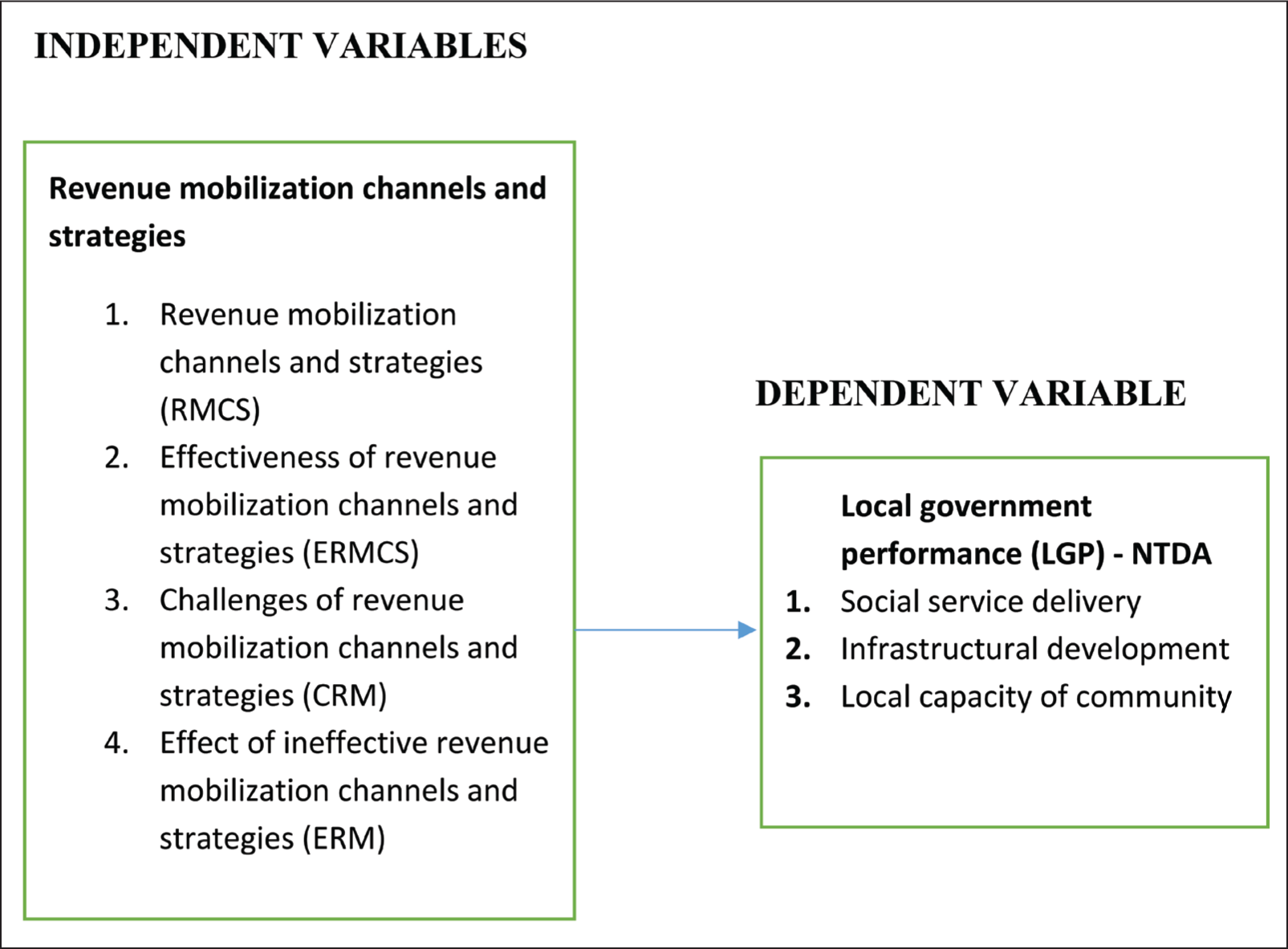
The study’s conceptual configuration was grounded on the RMT and four key thematic areas, namely, RMCS, ERMCS, CRM and ERM. The theoretic configuration was then utilized to analyse the findings from the empirical investigations.
The theoretic/conceptual configuration/framework of this current study was built upon the connections between dimensions in previous scientific enquiries endorsed by the RMT, with adjustments tailored to suit the Ghanaian situation. Figure 1 delineates the conceptual framework of this present investigation.
Conceptual Framework.
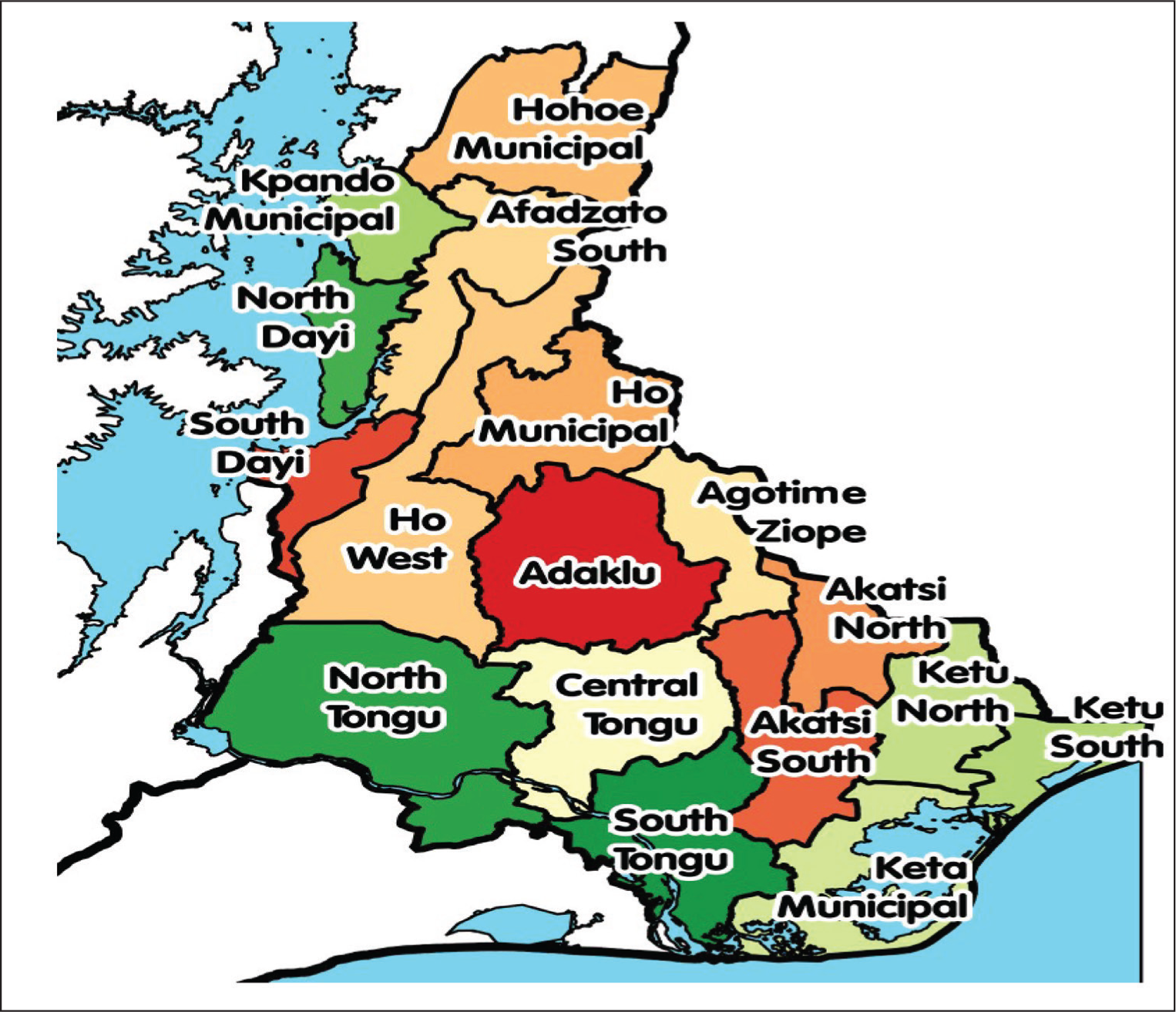
The Map of the Volta Region of Ghana.
Research Design/Approach/Philosophy
The inquiry espoused a sequential explanatory research design (research design), employing a mixed-method research approach (research approach) to analyse and address the research objectives/questions/hypotheses, taking its guided roots from the pragmatism philosophical paradigm (research philosophy), that make use of both quantitative [principal component analysis (PCA), exploratory factor analysis (EFA), first-order confirmatory factor analysis (CFA), partial least square-structural equation modelling (PLS-SEM)] and qualitative (case study) methodological techniques.
Sequential explanatory research design involves first collecting and analysing quantitative data, followed by qualitative data to provide additional insights or context to the quantitative findings. This approach aims to complement and elaborate on quantitative results by exploring the underlying meanings, experiences or processes associated with the phenomena under investigation. It is particularly useful when quantitative data alone cannot fully explain complex phenomena.
By combining quantitative and qualitative methods sequentially, researchers can leverage the strengths of both approaches to generate more robust and nuanced findings. This enhances the validity, depth and richness of the research, contributing to a more comprehensive understanding of the topic. Given the objectives of the present inquiry on the effect of RMCS on LGP within the NTDA, a sequential explanatory research design using both quantitative and qualitative techniques was deemed appropriate.
Study Area
This study was carried out in the NTDA, one of the 18 districts in the Volta Region of Ghana. Originally, it was a constituent part of the larger North Tongu District, established on 10 March 1989, with Adidome serving as its capital. The North Tongu District was formed from the former Tongu District Council. However, on 28 June 2012, the western portion of the district was separated to form a new North Tongu District, with Battor Dugame designated as its capital under Legislative Instrument (LI) 2081.
Consequently, the remaining area was renamed the Central Tongu District, with Adidome retained as its capital under LI 2077. The district assembly is situated in Adidome, near Adidome Senior High School (Adisec), in the southwest region of the Volta Region, with Battor Dugame serving as its capital town. From a geographical standpoint, the NTDA is adjacent to several other districts. It borders South Tongu to the southeast, Dangbe East and West Districts to the southwest, and Asuogyaman District to the west. In the north, it is bordered by Ho Municipal, while its eastern boundary is shared with Akatsi District.
The population of the municipality according to the 2021 population and housing census (PHC) stands at 110,891, with 52,996 males and 57,895 females (Ghana Statistical Service, PHC, 2021). The NTDA was chosen as it is a para-urban DA possessing both rural and urban characteristics.
Study Population
This research’s target population is made up of all persons living within the NTDA. Nonetheless, an accessible or available population, so far as this scientific inquiry is concerned, encompasses all workers as well as all eligible taxpayers living in the NTDA, available and prepared to partake in the investigation by means of face-to-face (on-the-spot data collection methodology) self-answering survey questionnaire and interview.
Sampling Procedure and Sample Size
The study employed a non-probabilistic/non-random sampling method, specifically convenience sampling, to determine a sample size of 300 survey participants, made up of all individuals, workers as well as all eligible taxpayers living in the NTDA. The sample size of 300 was selected based on the mathematical expression of the standard error of the mean (Malhotra, 2008) as follows:

where n represents sample size; σ denotes standard deviation (roughly = 0.4418); Z is standardized error associated with a 95% confidence level aligned with 1.96 on the standard normal z-table and D is the degree of accuracy (0.05).
A final number of 270 surfaced as the resulting sample size following the exclusion of inappropriate surveys containing lost information and logical mistakes, resulting in a respondent response rate of 90%, an indication that the investigation does not suffer from non-response bias.
The convenience sampling technique was used because the researcher’s interest was to investigate the influence of RMCS on LGP, focusing on individuals living within the NTDA. However, the researcher does not have access to the study’s sampling frame, that is, a list of all individuals living and working or undertaking economic business activity within the NTDA, from which the sample size could be drawn probabilistically or randomly. This was the reason why a non-random/non-probabilistic sampling technique was espoused for the study. Convenience sampling is the method frequently employed in studies of this nature (Essel, 2020, 2021, 2022), as it involves selecting individuals who are readily accessible and willing to participate in the research during data collection (the sample for the study was determined based on favourable circumstances).
Data Collection Instruments
The present research utilized firsthand sources of information to collect data from participants. A self-administered, researcher-guided survey questionnaire with a structured, close-ended format was distributed to a study sample size of 300 participants through on-the-spot, face-to-face, real-time (immediate) data collection methodology. Additionally, semi-structured interviews were conducted with key informant interviewees (KII).
The survey questionnaire consisted of two segments. Segment one collected respondents’ personal (biographical) data, including sex, highest educational qualification, age and marital status. Segment two gathered data on theorized factors/dimensions/constructs, specifically:
RMCS with three questions Effectiveness of RMCS (ERMCS) with five questions Challenges of RMCS (CRM) with five questions Effect of inefficient RMCS (ERM) with four questions Local government performance (LGM) with three questions
The first explanatory variable, that is, -RMCS, questioned survey respondents on questions such as:
‘I am aware of the various revenue mobilization channels/strategies utilized by North Tongu District Assembly’. ‘The revenue mobilization channels utilized include, property rates, property transfer taxes, permit charges, market rents/tolls, penalty fines, business operating license, entertainment taxes, environmental/sanitation levies, advertisement and signage fees, drivers parking fees, investment incomes, revenues from economic activities, district assembly common fund, grants, subventions and donor funding, district development facility’. ‘The revenue mobilization strategies utilized include implementing a computerized revenue collection system, conducting regular property valuation exercises, enforcing the sending of property rate bills to eligible property owners to pay property rates, strengthening tax enforcement and compliance measures, enhancing taxpayers education and awareness programmes, resourcing revenue mobilization tax force logistically, conducting regular audits and risk assessments of revenue collection processes, introducing incentives for early tax payment’.
The second explanatory variable, that is, ERMCS, questioned survey respondents on questions such as:
‘The North Tongu District Assembly effectively communicates information about taxation and revenue collection to the communities’. ‘The various channels for paying taxes, levies, fees, fines, rates, rents etc. in the North Tongu District are convenient and accessible’. ‘The North Tongu District Assembly effectively and efficiently identifies and addresses tax evasion & avoidance issues’. ‘The level of collaboration and cooperation between the North Tongu District Assembly and local businesses or stakeholders regarding revenue generation and management is high and good’. ‘Public awareness campaigns conducted by the North Tongu District Assembly to promote tax compliance and revenue mobilization are effective’. ‘The main factors hindering revenue mobilization efforts in the North Tongu District is the presence of a huge informal economy’. ‘The main factors hindering revenue mobilization efforts in the North Tongu District is tax evasion and corruption’. ‘The main factor hindering revenue mobilization efforts in the North Tongu District is the presence of weak institutional capacity’. ‘The main factors hindering revenue mobilization efforts in the North Tongu District are poverty, unemployment, and income inequality can impact the ability of individuals and businesses to pay taxes, thereby reducing the revenue potential of the district’.
The fourth explanatory variable, that is, effect of inefficient revenue mobilization channels and strategies on the development of the North Tongu District Assembly (ERM), interrogated survey participants on queries such as
‘Inefficient revenue mobilization can result in limited fiscal capacity for infrastructural development in North Tongu District Assembly’. ‘Inefficient revenue mobilization can result in low quality of life, aggravated poverty, low human capital development and hampers the attractiveness of the district for investment and tourism’. ‘Without adequate revenue, the District Assembly may struggle to implement economic development initiatives such as promoting entrepreneurship, supporting local businesses, and attracting investments’. ‘Persistent underdevelopment due to inefficient revenue mobilization channels and strategies can lead to social unrest, dissatisfaction among residents, and a loss of trust in local government institutions. This can further erode governance effectiveness and hinder development efforts’.
The fifth and final item, that is, LGP, utilized as the dependent variable, interrogated survey respondents on questions such as
‘The revenue mobilization channels and strategies are linked/synched with the social service delivery needs of the local community members’. ‘The revenue mobilization channels and strategies are linked/synched with the infrastructural needs of the local community members’. ‘The revenue mobilization channels and strategies are linked/synched with the local capacity of community members’.
In total, there were 20 question items designed on a five-point Likert scale, ranging from one (strongly disagree) to five (strongly agree). Using an average mark approach, all questions were consolidated into single scores based on identified constructs. The questionnaire items were developed based on proposals from existing literature, with modifications to suit the context of the NTDA of Ghana (Abdul-Wahab et al., 2018; Opoku et al., 2014; Puopiel & Chimsi, 2015; Scott, 2018).
Additionally, two local governance experts/scholars reviewed the questions, and their feedbacks were incorporated into the final refinement of the questionnaire before full-scale administration.
Data Collection Procedure
The study’s questionnaires underwent preliminary testing with a small sample of 10 participants to ensure high internal consistency, reliability and face validity. Pre-testing identified issues with the questionnaire instruments, such as unclear questions, and allowed the investigator to refine the test questions and correct typographical errors, irregularities and discrepancies.
The primary objective of preliminary testing was to establish the validity and reliability of the test, ensure accurate feedback and verify the relevance and suitability of the test items. This process also helped check the clarity and appropriateness of the phrasing. After addressing any concerns, 300 questionnaires were administered to willing participants under strict confidentiality and anonymity protocols.
In-depth informal interviews were conducted using semi-structured interview guides at the offices and homes of the respondents. This approach allowed respondents to freely express their views, opinions and experiences. Completing the questionnaire took an average of 10 minutes, while each interview lasted between 15 and 20 minutes. The questionnaires were administered by the investigator and three trained research assistants during work periods in January 2024. Participants provided written or verbal informed consent where applicable. The questionnaire is included as an appendix to the study.
Data Processing and Analysis
The collected field data were reviewed and revised to ensure accuracy and coherence. Quantitative data were coded and input into SmartPLS version 3.3.3 for analysis.
PCA reduced dimensionality and identified dominant features, while EFA categorized questionnaire items into identifiable groups and examined structural identification.
Data analysis was conducted using PLS-SEM, an advanced multivariate statistical technique for testing hypothesized associations. PLS-SEM, also known as the ‘soft modelling technique’, is used to represent hypotheses about covariances, variances and means of empirical data based on a theoretical framework. This method allows for simultaneous testing of correlational and causal relationships between unobservable dimensions estimated as latent variables, providing construct validity and methodological soundness for complex social science phenomena.
PLS-SEM offers robust quantitative processes for handling sophisticated simulations, providing more statistical power to reject false null hypotheses. It also measures concepts and theories that were previously confined to theoretical disciplines. The soft modelling approach involves a two-step verification process: CFA validates the calibration scale, and PLS-SEM structural path analysis verifies the configuration scale. Conclusions and recommendations were drawn from these steps based on the research findings.
Interview responses from the 10 KIIs were recorded, transcribed and edited, then categorized into themes corresponding to the research questions. The data were analysed using a combination of qualitative explanatory and interpretative approaches, allowing the data to largely speak for itself with minimal researcher interjection. Proper ethical considerations were observed, including obtaining informed written and/or verbal consent, where applicable, and ensuring participant confidentiality and anonymity. Conclusions and recommendations were drawn from the research findings, adhering to ethical research principles.
Results
Respondent’s Background Information
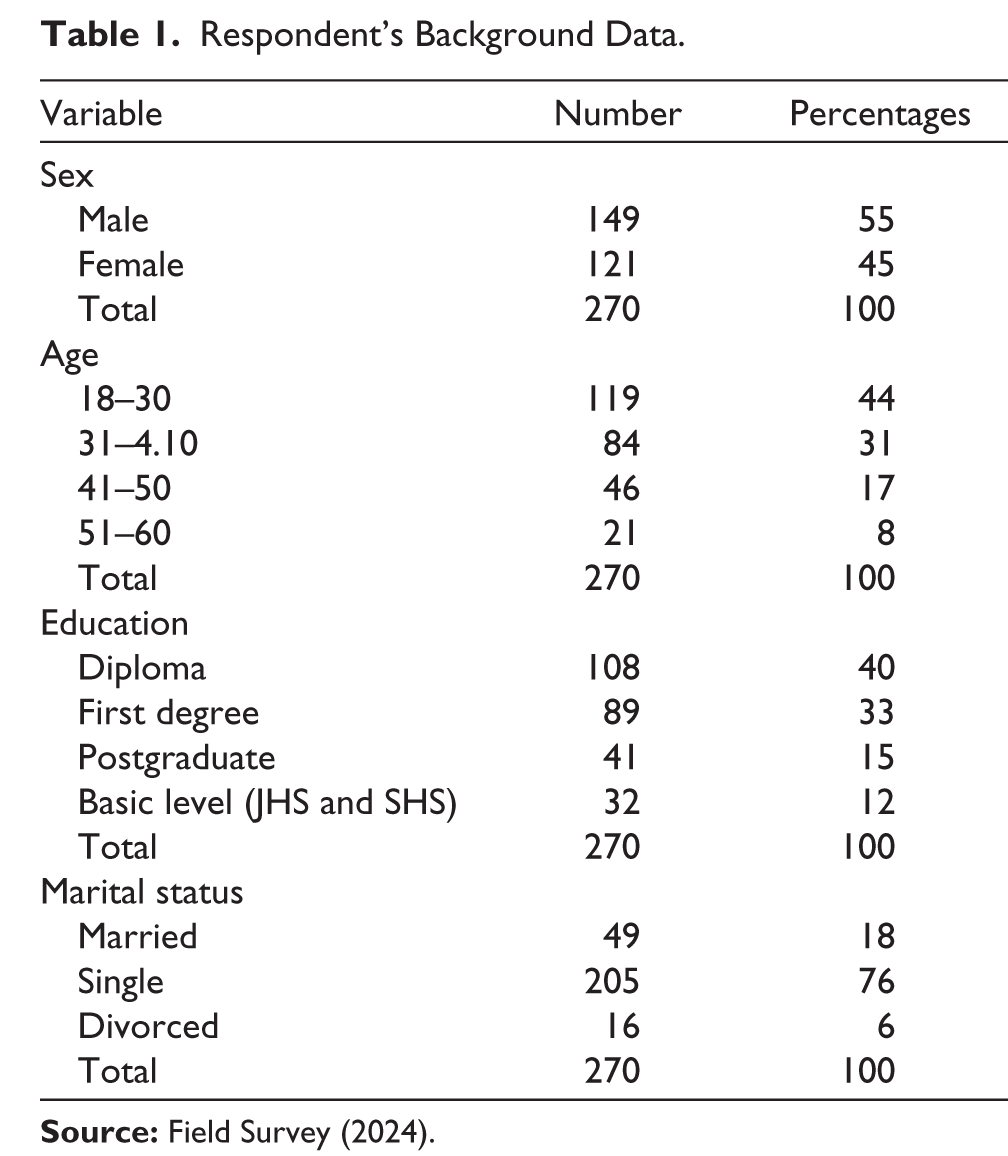
A total of 300 survey forms were disseminated among the participants, and out of them, 270 forms, constituting 90%, were appropriately completed, returned and examined. The proportion of responses received was deemed satisfactory to attain the research goal. One hundred and forty-nine respondents were males, and the rest (121) were females. One hundred and nineteen respondents fit in the 18–30 years age lag; 84 respondents fit in the 31–40 years age lag; 46 respondents fit in the 41–50 years age lag; and 21 respondents fit in the 51–60 years age lag. One hundred and eight respondents held diploma qualifications; 89 participants held first degrees, 41 held second-degree qualifications; 32 were JHS certificate holders. Forty-nine participants were married, while 205 were bachelors, and 16 were divorced. The heterogeneity in the respondents’ profiles did not generate any discrepancies in the research’s outcomes; hence, the study’s results are deemed dependable. The respondent’s background information is shown in Table 1.
Respondent’s Background Data.
Reliability and Validity
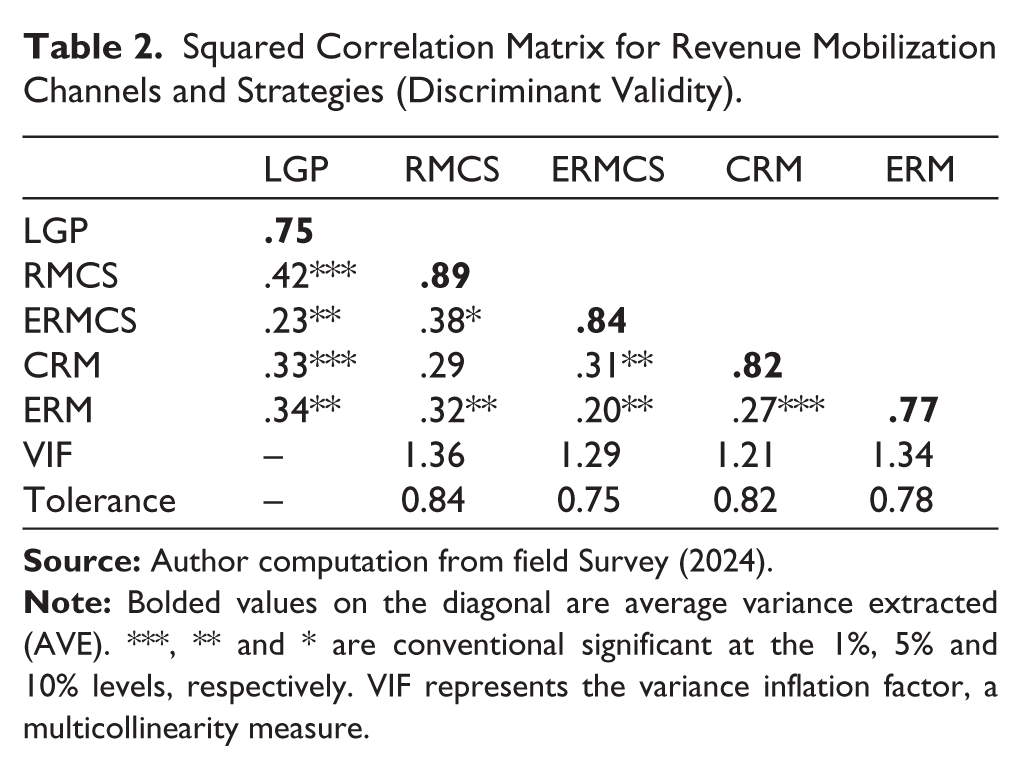
According to Guilford (1946), questionnaire reliability refers to the degree that questionnaire item marks remain consistent over time. Validity and reliability ensure enhanced uncomplicatedness and accuracy of the questionnaires and also guarantee the research’s steadiness and uni-dimensionality. The study’s explanatory constructs recorded Cronbach’s α values higher than Hair et al.’s (2016) endorsed threshold, that is, .7 and as such deemed acceptable. The study recorded Cronbach’s α values of .87, .88, .94, .96 and .93 for RMCS, ERMCS, CRM, ERM and LGP, respectively, with a combined value for all four factors of .91.
The study also recorded composite reliabilities (CR) figures higher than Hair et al. (2016) recommended criteria, that is, above .7, and as such the study is deemed to have sufficient internal consistency. The research also attained convergent validity as it registered substantial (greater than .5) and numerically substantial factor loadings. The study also accomplished discriminant validity since the created average variance extracted (AVE) for all proven explanatory constructs was juxtaposed with the squared correlation concerning those constructs and the other constructs. The study also secured discriminant validity since the square root of the AVE value calculated for all proven constructs displayed on the slanting/transverse or diagonal figures surpassed their correlations with other dimensions, that is, the off-crosswise figures. The research generated AVE square root figures over and above the inter-dimension correlational figures, as illustrated in Table 2. In addition, since all the variance inflation factor (VIF) values fell below the standard criterion of 10, the extracted factors/constructs/dimensions utilized as explanatory variables did not have any issues of multicollinearity (Essel & Addo, 2021; Essel & Brobbey, 2021; Kennedy, 1998).
Squared Correlation Matrix for Revenue Mobilization Channels and Strategies (Discriminant Validity).
RMCS Dimension’s Effects on LGP via EFA: Tests of Structural Detection
The study conducted EFA on 20 questionnaire items to examine the underlying structure within the RMCS value chain points. Prior to this, PCA with varimax rotation and Kaiser normalization was applied as a technique for condensing the dataset (dataset purification and questionnaire items relationship maximization as well as orthogonal rotation via varimax methodology for simplicity and improved interpretations). PCA was also undertaken to assess the dataset’s dimensionality reduction, ensuring that all the prerequisites, both statistical and conceptual axioms, for performing EFA were met. The PCA results are depicted in Table 3.
PCA Results with Varimax Rotation and Kaiser Normalization: Dataset Purification.
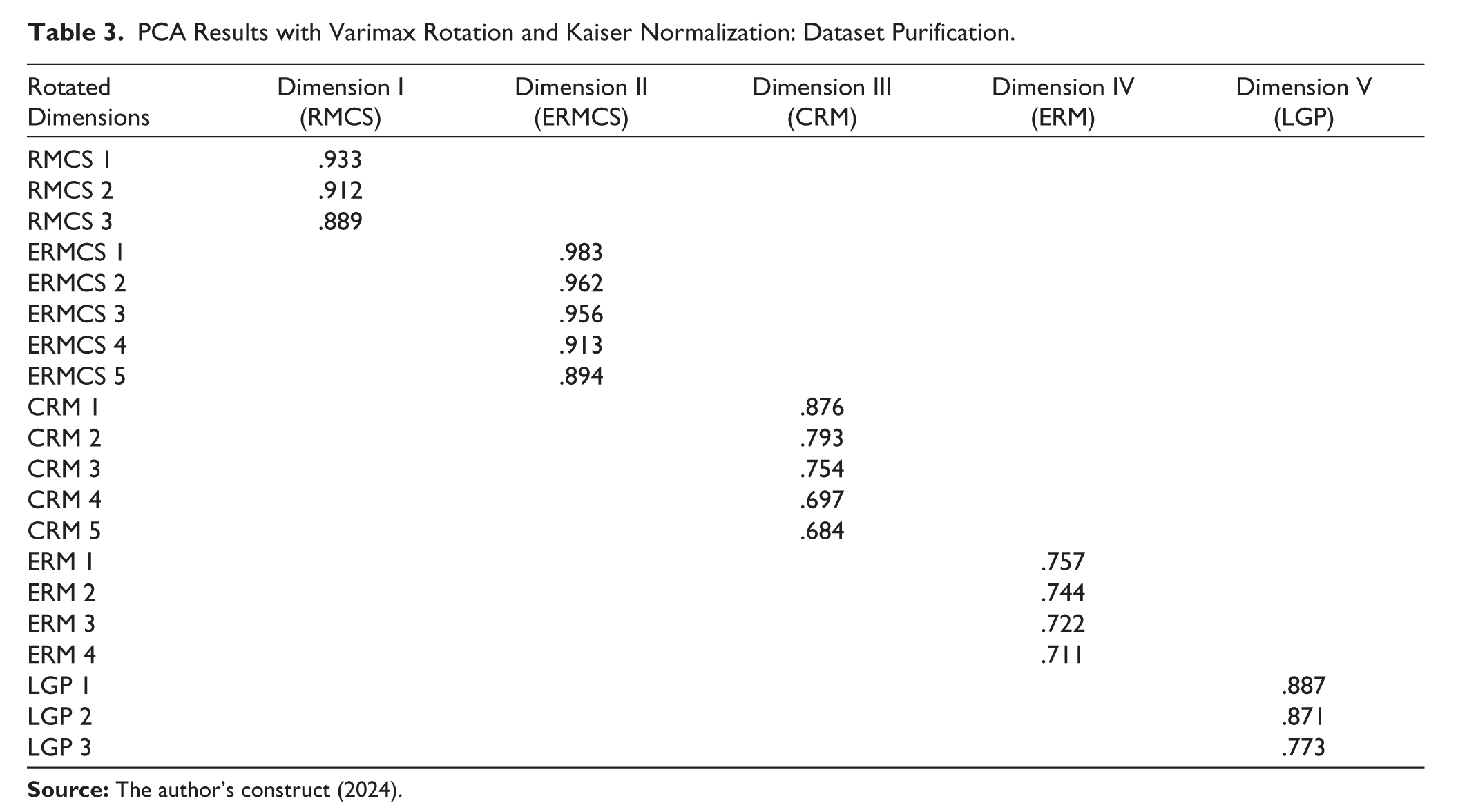
The dataset was scrutinized for factorability and sampling adequacy via the execution of Bartlett’s test of sphericity and the KMO test. The investigation yielded a highly significant Bartlett’s test of sphericity (p = 0.000), a confirmation that the correlation matrix of the dataset was a unity/identity matrix and hence very suitable for PCA and EFA (Byrne, 2013). The study also attained a KMO value of 0.945, corroborating the dataset’s appropriateness and suitability (sample size sufficiency/adequacy) for PCA and EFA (Civelek, 2018).
Every factor/dimension having a greater than 1 eigenvalue and variables/items having construct loadings exceeding 0.4 (demonstrating highly correlated items/variables which necessitated their combined groupings, forming single constructs/factors for them) and items/variables with cross-loading below 0.4 relative to other constructs (demonstrating absence of multicollinearity) were utilized for the analysis as recommended by Hair et al. (2016).
RMCS items/variables were captured on four constructs that support the entire revenue mobilization channels’ and strategies’ effect on LGP within the NTDA and all four constructs collectively explained 72.68% of the RMCS total variance. The first construct/factor, namely, RMCS, contained three items; the second construct/factor, namely, ERMCS, contained five items; the third construct/factor, namely, CRM, contained five items, and the fourth and final construct/factor, namely, ERM, contained four items; all of the four used as explanatory/independent variables, with the fifth construct/factor, namely, LGP, used as a dependent variable having three items.
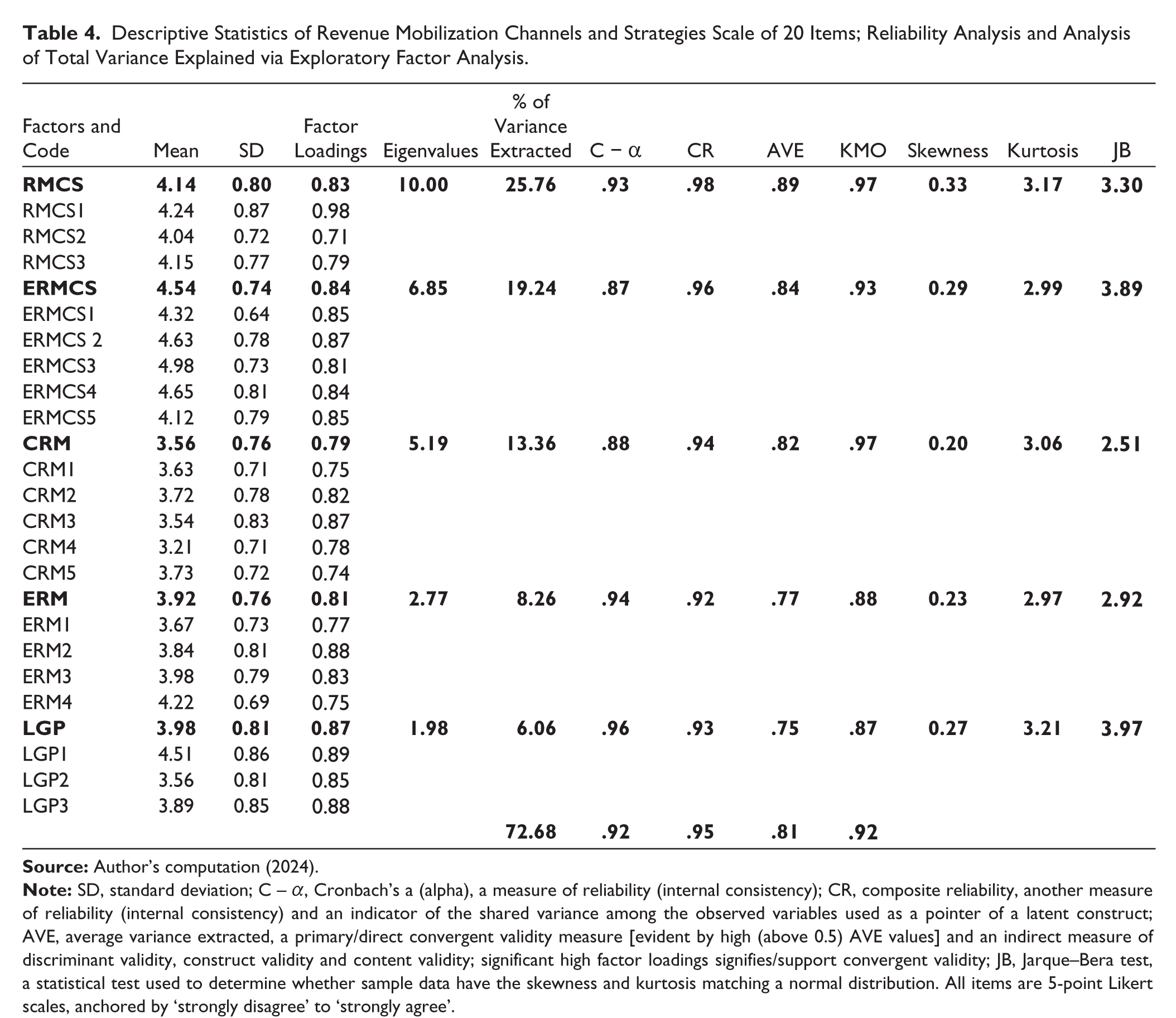
RMCS, the first construct/factor, captured the most variation, as indicated by an eigenvalue of 10.00, accounting for 25.76% of the overall variance. The second construct/factor, ERMCS, exhibited an eigenvalue of 6.85 representing 19.24% of the total variance. Factor III, named CRM, accounted for a 5.19 eigenvalue, representing 13.36% of the variance.
ERM, the fourth factor, had an eigenvalue of 2.77, contributing to 8.26% of the total variance. The fifth and final factor, that is, LGP, recorded a 1.98 eigenvalue, explaining 6.06% of the total variance.
With the extraction threshold set at 1.00 eigenvalue (Hair et al., 2016), there were only five extracted constructs, as detailed in Table 4. This indicated that with an accumulated percentage variance of 72.68, the variability in the 20 items was accounted for by the five constructs extracted (RMCS, ERMCS, CRM, ERM and LGP). The implication is that the complexity of this dataset could be reduced by solely utilizing these five aforementioned constructs, resulting in only 27.32% information loss. The results from the skewness, kurtosis and Jarque–Bera (JB) test statistics indicate that the dataset follows a normal distribution. All computed JB test statistics (ranging from 2.51 to 3.97) were not sufficiently large to reject the null hypothesis of normality. Typically, critical values from the chi-square distribution with 2 degrees of freedom at conventional significance levels (usually 5%) are higher than 3.97, further supporting the conclusion that the dataset exhibits characteristics consistent with a normal distribution. The results of the EFA, reliability analysis via Cronbach’s alpha and composite reliability (CR) are depicted in Table 4.
Descriptive Statistics of Revenue Mobilization Channels and Strategies Scale of 20 Items; Reliability Analysis and Analysis of Total Variance Explained via Exploratory Factor Analysis.
Measurement Model Estimation
The study’s questionnaire scale (Appendix) was evaluated through first-order CFA using maximum likelihood estimation methodology. This necessitated that the variables under study be continuous variables and they should exhibit the characteristics of normally distributed continuous variables so as to ensure the validity and reliability of the survey scale items. The study recorded large and substantial standardized factor loadings that surpassed Hair et al. (2016) standard of .70.
All conventional constructs demonstrated internal consistency recording Cronbach’s α and CR values higher than Hair et al. (2016) criterion of .7. Furthermore, the AVE generated figures higher than Hair et al. (2016) threshold of .5 as presented in Table 4, indicating that a larger portion of the difference is elucidated.
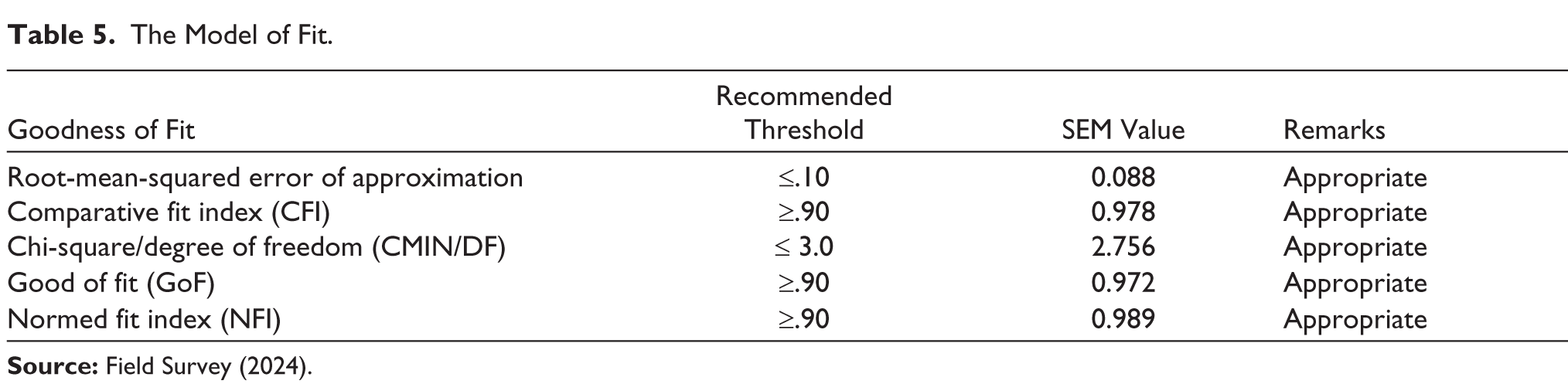
Model Goodness of Fit
This study deployed some fit indices to evaluate the study’s general ideal fit. The model fitting metrics as depicted in Table 5 were all satisfied (Hoyle & Panter, 1995).
The Model of Fit.
Inferential Statistics Hypotheses Testing: PLS-SEM via Structural Path Analysis
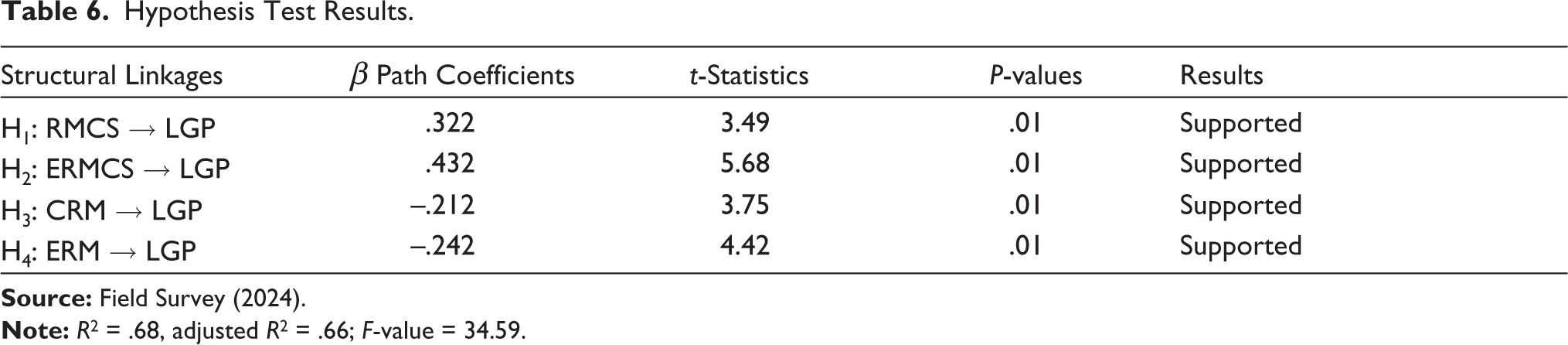
SEM was utilized to examine the postulated connections among the RMCS value chain analysis model, encompassing RMCS, ERMCS, CRM, and ERM, and the subsequent impact on LGP, within the NTDA of Ghana. As shown in Table 6, all five theorized whole structural paths were validated, as the four predictive dimensions—RMCS (beta of .22, t = 3.49, p < .01), ERMCS (beta of .432, t = 5.68, p < .01), CRM (beta of –.212, t = 3.75, p < .01), ERM (beta of –.242, t = 4.42, p < .01)—all demonstrated a substantial direct influence on LGP within the NTDA of Ghana.
Hypothesis Test Results.
Discussion of Results
The study aimed at assessing the influence of RMCS on LGP within the NTDA in Ghana yielded insightful findings. The study’s independent variables—RMCS, ERMCS, CRM and ERM—were evaluated to understand their impact on the dependent variable LGP. The results offer a nuanced understanding of how these factors interact to shape local governance outcomes.
Table 6 demonstrates that RMCS had a significant and direct association with LGP within the NTDA of Ghana.
This suggests that when local governments implement robust and well-structured revenue mobilization channels and strategies, they experience enhanced performance. A well-structured RMCS can provide the necessary financial resources to fund local projects, improve public services and maintain infrastructure. This positive relationship underscores the importance of innovative and diversified revenue streams in bolstering the operational capacity of local governments as well as reducing the dependency on central government transfers and enhancing financial autonomy. Therefore, local governments should continually seek to improve and adapt their revenue collection mechanisms to local economic conditions and opportunities. This finding further suggests that, RMCs such as property rates, property transfer taxes, permit charges, market rents/tolls, penalty fines, business operating licence, entertainment taxes, environmental/sanitation levies, advertisement and signage fees, drivers parking fees, investment incomes, revenues from economic activities, DACF, grants, subventions and donor funding, district development facility in addition to RMS like implementing a computerized revenue collection system, conducting regular property valuation exercises, enforcing the sending of property rate bills to eligible property owners to pay property rates, strengthening tax enforcement and compliance measures, enhancing taxpayers education and awareness programmes, resourcing revenue mobilization tax force logistically, conducting regular audits and risk assessments of revenue collection processes, introducing incentives for early tax payment are very much essential and highly imperative so far as development at the local government (district assembly) level is concern.
Similarly, Table 6 shows that ERMCS construct/factor/dimension had a significantly positive influence on LGP.
This suggests that as officials and duty-bearers charged with the responsibility of ensuring efficient and effective revenue mobilization deploy the right channels and utilizes the appropriate strategies, revenue mobilization activities resulted in positive impacts on LGP, reflecting in diverse assembly and community developmental projects. This further indicates that not only the presence of RMCS but also their effectiveness (ERMCS) plays a crucial role in determining the performance of local government. Effective RMS lead to higher revenue yields via maximizing local government revenue potential, minimizing leakages, reducing evasion, optimizing resource allocation and increasing taxpayer compliance. This, in turn, translates to better financial health for local governments, enabling them to allocate resources efficiently, invest in community development and improve public service delivery. It highlights the need for local governments to invest in capacity building, modern technology and transparent systems to enhance the effectiveness of their revenue mobilization efforts. This result also highlights the need for continuous assessment and improvement of revenue collection mechanisms to ensure they are efficient and effective.
On the contrary, the CRM factor/dimension/construct had a significantly negative impact on LGP. The challenges associated with revenue mobilization such as inadequate administrative capacity, lack of transparency, lack of trained personnel, inadequate infrastructure, corruption, complex tax laws and resistance from the local populace can hinder the local government’s ability to generate sufficient revenue. These challenges create bottlenecks in the revenue collection process, leading to revenue leakages, reduced collections and, ultimately, poor LGP. Addressing these challenges is crucial for improving LGP. Local governments need to identify and mitigate these barriers through policy reforms, anti-corruption measures, capacity building, enhancing transparency, fostering community engagement and improving administrative efficiency.
Finally, the study found that ERM had a significantly negative impact on LGP. Inefficiencies in revenue mobilization channels and strategies can stem from various factors, including outdated technology and systems, lack of accountability, inadequate enforcement of tax laws, poor taxpayer education, cumbersome processes and lack of skilled personnel. These inefficiencies can lead to reduced revenue collection, increased operational costs and, ultimately, poorer service delivery. This inefficiency can also undermine the ability of local governments to perform their functions effectively, resulting in poor service delivery, inadequate infrastructure maintenance and general dissatisfaction among the populace. The negative correlation between ERM and LGP emphasizes the importance of streamlining revenue mobilization processes, adopting modern technologies and training personnel to ensure efficient revenue collection. It is thus highly imperative for local governments to continuously evaluate and improve their revenue mobilization channels to ensure they are efficient, transparent and capable of maximizing revenue collection.
In conclusion, the study underscores the critical role that effective and efficient revenue mobilization channels and strategies play in enhancing LGP. The positive impacts of well-implemented and effective RMCS highlight the potential for local governments to achieve financial autonomy and improved service delivery through innovative and diversified revenue collection mechanisms. Conversely, the negative impacts of challenges and inefficiencies in revenue mobilization stress the need for continuous improvement, capacity building and policy reforms to address these issues. For local governments in the NTDA of Ghana, and similar contexts, prioritizing the optimization of RMS is essential for achieving sustainable development and better governance.
Qualitative Findings from KIIs
As part of investigating the three objectives of this current study and to guarantee methodological triangulation via the utilization of both quantitative (descriptive statistics, PCA, EFA, CFA and PLS-SEM) and qualitative (case study, interview with KIIs) research methodologies, robustness and increase the accuracy, credibility, reliability and validity of the research findings, as well as minimize bias and deal with common method variance (CMV), 10 additional respondents made up of two Assembly Members, two local government officials, two community leaders, one business owner, one market trader and two private individuals within the NTDA of Ghana were randomly selected and interviewed using a semi-structured interview guide. The views of these respondents shed light on the practical challenges and successes of the NTDA’s revenue mobilization efforts. Information harnessed from these respondents is categorized with respect to the study’s three specific objectives and is presented below:
Objective 1: Analysing the Effectiveness of Prevailing RMCS (ERMCS) Employed by the NTDA
Property owners had mixed views on property tax collection. Some noted improvements due to Ghana’s digital address system enhancing property databases, while others pointed out inconsistencies in property valuations and billing delays.
Market traders appreciated the convenience of designated collection points and mobile payment options but mentioned occasional conflicts with fee collectors and resistance from some traders.
Respondents emphasized the importance of linking taxes, levies and fees to tangible public service improvements. Some residents were frustrated by paying for services like waste management when service delivery was perceived as inadequate. Several respondents praised the NTDA’s efforts to integrate technology into revenue collection, such as digital databases and mobile payment systems, noting improved efficiency and reduced corruption.
Overall, the diverse responses indicate that while the NTDA has made progress in revenue mobilization, there is still significant room for improvement in the effectiveness of these efforts.
Objective 2: Analysing the CB Encountered by the NTDA in Implementing RMS
Objective 3: Analysing the Effect of Inefficient RMCS on the NTDA
Interviews with additional respondents highlighted the effectiveness, challenges, and inefficiencies of the ERMCS employed by the NTDA. Despite notable improvements, persistent CB affect the overall efficiency and effectiveness of revenue mobilization efforts. Addressing these issues through technological integration, anti-corruption measures, capacity building and enhanced public engagement can significantly improve the NTDA’s RMS, thereby enhancing LGP and service delivery.
Conclusions
This study investigated the influence of RMCS on LGP in Ghana, focusing on the NTDA. Using a mixed-method approach, the research employed quantitative techniques like descriptive statistics (mean, standard deviation, skewness, kurtosis, Jarque–Bera test) and inferential statistics (PLS-SEM structural path analysis), along with qualitative techniques such as case studies and KII interviews. The study concluded that RMCS and their effectiveness (ERMCS) positively impact LGP, emphasizing the importance of well-structured revenue strategies for local government operations and service delivery. Conversely, challenges (CRM) and ineffective strategies (ERM) negatively impact LGP, indicating that obstacles in revenue collection hinder LGP. The findings highlight that RMCSs are crucial for the financial foundations of the Ghanaian economy as they provide significant government inflow for local development.
Recommendations
This present study makes the following recommendations based on the study’s findings:
Local government authorities in general and NTDA in particular should strive to enhance RMS. Enhancing RMS can be achieved through several key approaches. First, the government should focus on capacity building by investing in continuous training for local government officials to enhance their skills in revenue collection and management. Additionally, integrating modern technology solutions for revenue collection, such as electronic payment systems and automated billing, can significantly increase efficiency and reduce leakages. Public awareness campaigns are also essential; educating citizens about the importance of paying taxes and other revenues for local development can boost compliance and improve revenue inflows. Local government authorities in general and NTDA in particular should strive to address challenges in revenue mobilization. Addressing challenges in revenue mobilization requires careful policy reforms. The government needs to review and reform existing policies to tackle specific challenges, which may involve simplifying tax codes and reducing bureaucratic hurdles. Engaging with key stakeholders, including local businesses and community leaders, is crucial for identifying and resolving barriers to effective revenue mobilization. Introducing incentive programmes, such as discounts or recognition for compliant taxpayers, can further encourage prompt payment of taxes and other revenues. Local government authorities in general and NTDA in particular should strive to improve effectiveness in revenue mobilization. Improving effectiveness in revenue mobilization involves establishing robust performance monitoring and evaluation mechanisms. This allows for regular assessments of the strategies in place, enabling data-driven adjustments to enhance their effectiveness in changing economic conditions. Additionally, adopting best practices from other districts or countries that have successfully improved their revenue mobilization efforts can provide valuable insights. Collaborating with private sector entities to explore innovative revenue-generation methods can also be beneficial. Lastly, policy and legislative support. The government should advocate for supportive policies and legislation at the national level to empower local governments with greater autonomy and resources for effective revenue mobilization. Ensuring that local government policies align with national development goals and promote sustainable revenue generation is essential for comprehensive progress.
Economic Implications
Improved revenue mobilization within the NTDA can lead to several positive economic outcomes.
One significant effect is the increase in local government revenue. By implementing effective RMS, the local government can generate more funds to invest in vital areas such as infrastructure, healthcare and education, ultimately stimulating local economic growth.
Additionally, better-funded local governments have the capacity to enhance public services, making the area more attractive to both businesses and residents, which further boosts the local economy. This improved performance can also draw in more investments, stimulate economic activity and create employment opportunities within the district.
Moreover, an increase in revenue contributes to greater fiscal autonomy for the NTDA.
This independence reduces reliance on central government transfers and provides the local government with the flexibility needed to address specific local needs and priorities effectively.
Other Implications
The implementation of effective RMS within the NTDA can have significant social, political, administrative, policy and environmental implications.
On a social level, improved revenue collection can lead to better public services, ultimately enhancing the overall quality of life for residents in the NTDA.
This can also foster trust and cooperation between the local government and the community, leading to a more harmonious relationship.
Politically, effective revenue strategies can strengthen the local government’s stability by demonstrating their ability to efficiently manage resources and meet the needs of their constituents, thereby enhancing their credibility and reputation.
Administratively, enhanced RMS require effective administration and governance, leading to improvements in local government efficiency, transparency and accountability. This, in turn, enables the local government to make informed decisions and implement policies more effectively.
Informed by the findings of this study, policy decisions at both the local and national levels can be made, encouraging the adoption of proven RMS and addressing the challenges identified. This informed approach can contribute to better policy outcomes and more effective resource allocation.
Finally, the additional revenue generated through effective RMS can support environmental protection initiatives and sustainable development projects, contributing to the long-term well-being of the community and ensuring a better future for generations to come.
Ultimately, by implementing these recommendations and addressing the various economic and social implications, the NTDA can significantly improve its performance and make a substantial contribution to the overall development of the region.
Suggestions for Future Research
The study collected data from respondents regarding RMCS within the NTDA. However, there is a strong possibility that some participants might present information that portrays them as good corporate citizens, a phenomenon known as ‘social desirability’, which could impact the reliability of the results and undermine the study.
Future investigations should consider expanding the dataset by incorporating additional study areas across the country to gain a more comprehensive understanding of the situation in Ghana.
Comparative studies between different districts can help understand variations in RMS and their impacts on LGP, aiding in the identification of best practices and tailoring strategies to specific regional contexts.
This study relied on cross-sectional data collected at one point in time. Future research should perform longitudinal studies to track changes in revenue mobilization effectiveness and LGP over time, providing insights into the long-term impacts of different strategies and policies.
Footnotes
Data Availability
The author declare that there is perfect data transparency and that data will always be available at any time upon request.
Declarations Conflict of Interest
The author hereby confirm that there is no actual or potential conflict of interest including any financial, personal, or other relationships with other people or organizations within three years of beginning the submitted work that could inappropriately influence, or be perceived to influence, the work.
Funding
The author received no financial support for the research, authorship and/or publication of this article.
Appendix.
Dear Respondent,
I am conducting an academic research to investigate the revenue mobilization channels and strategies within the North Tongu District Assembly in Ghana. I humbly implore your good self to dedicate a few minutes of your precious time [maximum 10 minutes] to respond to these questionnaire items as you share your thoughts on the various statements. The information you provide will enable me assess the revenue mobilization channels and strategies within the North Tongu District Assembly in Ghana so I can advise the authorities concerned for any improvement thereof to be made. You are highly assured that your identity is totally held anonymous and every response you provide is considered as highly confidential. I sincerely thank you for your anticipated cooperation.