




Abstract
This study investigates subscription commerce (SC) in the business-to-business (B2B) marketplace, focusing on transforming legacy incumbents’ relationships from one-time transactions to long-term associations. It aims to identify SC drivers and their role in the digital era’s production and consumption ecosystem. The research follows a three-part approach. First, it distinguishes SC from electronic commerce and subscription billing. Second, it explores the digital ecosystem (DE), emphasizing the production and consumption ecosystem. Third, it proposes a fuzzy cognitive mapping (FCM) framework to analyse SC drivers, specifically emphasizing value derivation from data in the DE transition. This study pioneers the analysis of SC drivers within B2B contexts, showcasing SC’s substantial role in unlocking value for legacy incumbents, particularly through the innovative FCM framework. It stands out as the first comprehensive analysis of SC drivers in B2B settings, showcasing its contribution to the digital transformation of legacy incumbents using FCM. This research offers crucial insights for legacy firm managers, aiding in digital transformation strategies, whether through in-house development or SC procurement. Additionally, consultants can leverage these drivers to support firms in their digitization efforts.
Keywords
Introduction
For many years, how businesses produced and advertised their goods and services within their particular industries gave them a competitive edge. With the advent of digital platforms and the exponential growth of digital connections, organizations have begun to view their environment as ecosystems rather than industries. The Internet of Things (IoT) and sensors are now pervasive in the industrial sector. Most businesses have information on their products, markets, and operations. Nonetheless, the analysis of such data is restricted to insights and decision-making that contribute primarily to the operational effectiveness of the organization. The great majority of legacy businesses have not yet fully realized the potential economic value that data has (Subramaniam, 2022). Modern digital technology can help companies boost the global GDP by USD 13 trillion by 2030 (Bughin et al., 2019).
Nowadays, interactive data are more important than episodic data (Subramaniam, 2022). Discrete events like the delivery of a supplier’s component, the creation or sale of a product, and others result in episodic data. By continuously monitoring asset performance and customer interactions with items using sensors and the IoT, interactive data, on the other hand, is broadcast. To collect interactive data, legacy businesses may also use web- or mobile-based sensors. Businesses are now able to learn many types of information from interactive data, which suggests a change in the traditional function of commodities. Products are no longer only created to serve a purpose, establish a brand, or make money. On the other hand, products are crucial in the gathering of information that serves as the foundation for fresh consumer experiences. Up until recently, data was mostly used to support product development. But because of modern digital technology, more and more products serve as conduits for innovative types of user–product interaction data. This role reversal means that products are no longer the main source of revenue for legacy enterprises. Data is another expanding source of revenue.
A business must exchange data with a network of data recipients in order to realize the new possibilities of data. Some of these recipients are included in the organization’s internal value chain. Other recipients of sensor data are independent of a company’s value chains. The digital ecosystem (DE) of a company consists of a network of data producers and consumers. For legacy enterprises, such a network consists of two parts: the production ecosystems on the inside of their value chains and the consumption ecosystems on the outside of their value chains.
Legacy incumbents, which are traditional enterprises that have not yet made a substantial digital transition, risk becoming uncompetitive. These companies, which account for over two-thirds of the Standard & Poor 1200, are under severe attack from digital adversaries (Patrick, 2022). Many of these businesses have attempted to accomplish digital transformation but have not yet succeeded. Change fatigue causes some to prematurely declare success. If legacy companies want to unlock the value of data, they must comprehend the relevance of application programming interfaces (APIs). Many traditional organizations viewed APIs solely as enterprise resource planning (ERP) system-buried technology tools. Legacy companies have begun to recognize the strategic implications of APIs on a broader scale. They can view APIs as the key that unlocks a new universe of DEs. Additionally, they understand that APIs can define the foundations of their DE approach. APIs provide a standardized method for digital services to communicate over the internet using a standardized language. APIs can work as data conduits and enhance the functionality of digital services. There is considerable capital expenditure, and a committed team of expertise in various digital domains is required for legacy incumbents to implement APIs utilizing in-house talent. This void is filled by business-to-business (B2B) subscription commerce (SC). In this scenario, a digitally native third-party vendor provides a recurring service to integrate the core solutions of a legacy incumbent with the DE of producers and consumers via curated and customized APIs.
Our article contributes to the extant literature by classifying the various drivers of B2B SC and its impact on legacy incumbents for adapting to the DE. This study develops a fuzzy cognitive mapping (FCM) framework to understand the impact using various scenarios. This study fills in the gap of SC literature by exploring the following research questions (RQ) with the justification in Table 1.
Research Gap with Justification.
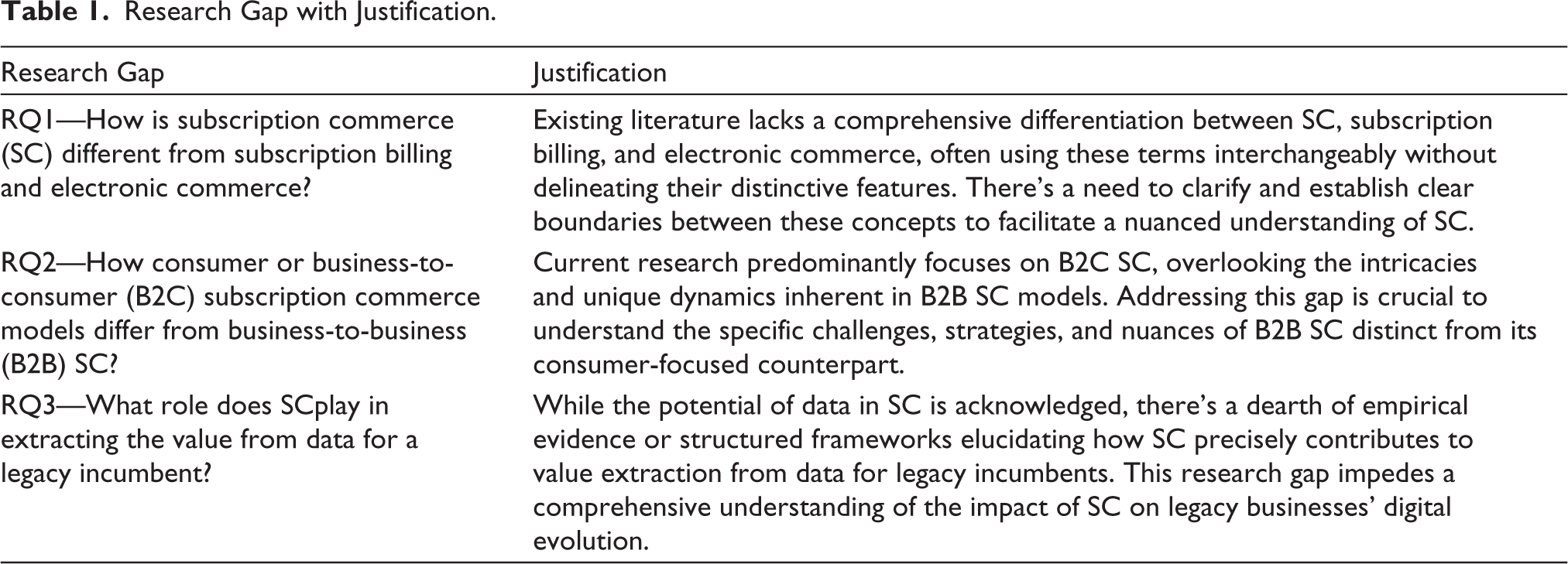
RQ1: How is SC different from subscription billing and electronic commerce?
RQ2: How consumer or B2C SC models differ from B2B SC?
RQ3: What role does SC play in extracting the value from data for a legacy incumbent?
Three sections make up the study’s structure. The literature review section discusses the concepts of SC, DE, and FCM. This section covers pointers for RQ1 and RQ2. The methodology section postulates an FCM framework that accounts for the effect of B2B SC on key participants in the digital ecosphere. This section covers the pointers for RQ3. The result and discussion part concludes with limits and a research agenda for the future after providing theoretical contributions and management implications of this work.
Literature Review
Ecosystem in the Digital Landscape
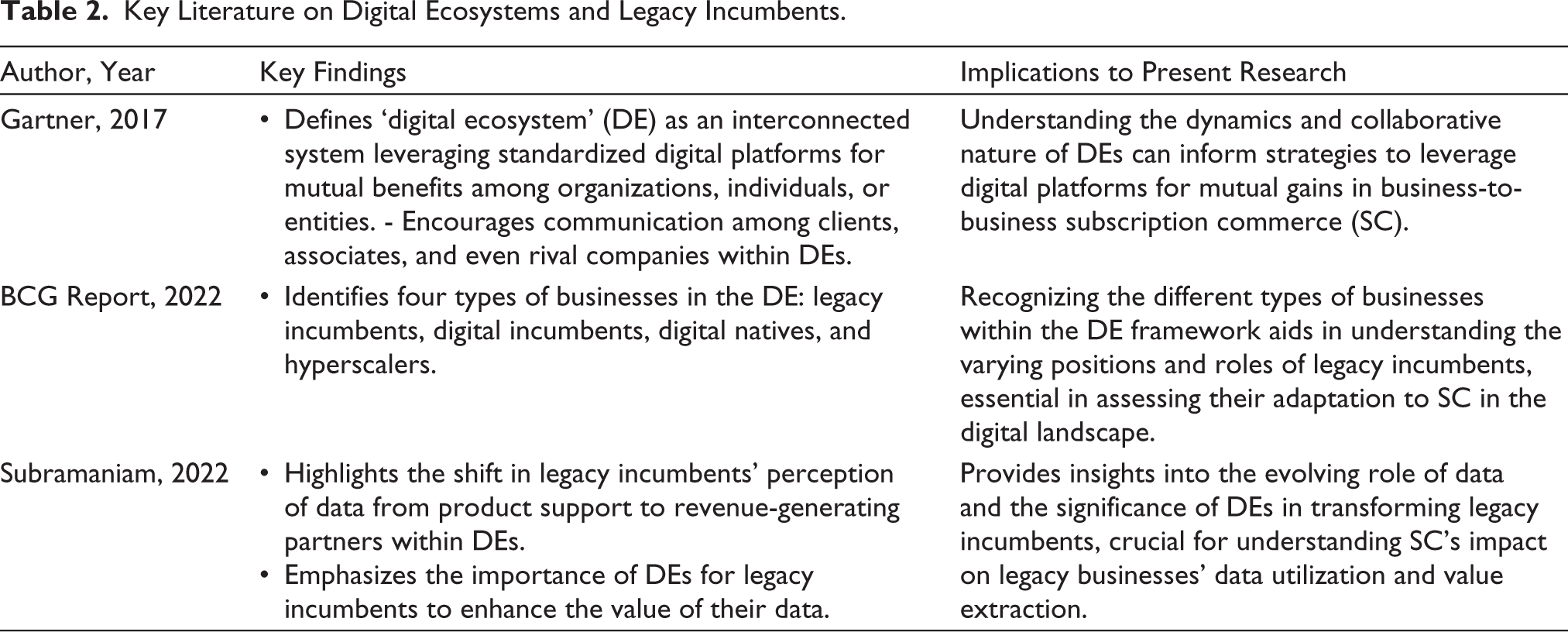
An interconnected system of organizations, individuals, and/or objects known as a DE makes use of standardized digital platforms for objectives that are mutually advantageous to all parties involved, such as profit, innovation, or common interest (Gartner, 2017). DEs encourage communication between clients, associates, and even rival companies. In the DE, there are four different types of businesses: legacy incumbents, digital incumbents, digital natives, and hyperscalers (BCG Report, 2022). This study’s main goal is to explain how existing market leaders could create additional value from the data they collect and use it to their advantage (refer Table 2).
Key Literature on Digital Ecosystems and Legacy Incumbents.
Production and consumption ecosystems are two related elements of the DE. An internal data-generating and data-sharing network built on the value chains of a legacy business is known as a production ecosystem. In addition to product-generated sensor data, a consumption ecosystem is a network of third-party entities that create and share data from the outside. Legacy firms have a variety of options for releasing fresh value from their data while maintaining their core strengths thanks to production ecosystems and consumption ecosystems working together.
Networks of data consumers and producers make up DEs. When data is traded inside the ecosystem’s network, these ecosystems have the singular ability to increase the value of that data. Digital platforms are the main means of operation for hyperscalers and digital natives. The collection and interchange of data is a component of their business models, which are dependent on digital platforms (Subramaniam, 2022).
Legacy incumbents, however, do not use the same strategy. DEs may not appear important at all to many people because businesses only compete with their own products, not with data. Legacy businesses derive their competitive advantages from the markets in which they operate since their products drive their core value propositions. This dynamic changes when a legacy company considers incorporating data into its competitive toolkit. A traditional corporation needs DEs to raise the value of data. Additionally, when businesses move from being part of industries to being part of DEs, the data they collect begins to generate value independent of the company’s goods. In DEs, data’s function changes from one of product support to one of revenue-generating partners on par with products.
The DE of a legacy company has a variety of components that are unique to the needs of the organization because it is based on the firm’s existing industrial structures. DEs’ primary goal is to improve data value through cooperation. Similar to this, several interconnected entities, activities, and assets make up industries. An industry network’s main objective is to raise the value of its products, not to improve the value of data. For a legacy firm, the combination of these two networks—the industry network and the network embodied by DEs—can be quite beneficial. Providers of SC are essential in the process of mixing, which transforms traditional incumbents into digital incumbents.
SC
The subscription model has existed since the seventeenth century, when publishers relied on it to generate consistent income from book sales (Clapp, 1931). Typically, two business-to-consumer (B2C) product categories are related with SC. One involves receiving regular deliveries of consumer goods, such as subscription boxes, in which customers sign up for a wide range of things, and the other involves receiving regular deliveries of media streaming services, like Netflix and Audible.
A third key item that falls under SC is the ‘everything as a service’ (XaaS) options that rule the public cloud. B2B subscription business is unique from other subscription types due to its intricacy. Selling simple consumer subscriptions is considerably different from establishing and managing recurring B2B digital solutions.
Subscription billing, commonly referred to as recurring billing, is one of the driving forces behind SC. Even if a company has a great subscription billing system, its SC activities will fail in the absence of a well-rounded strategy and platform. The ability to forecast future cash flows and budget is made simple with SC. It also lowers administrative costs related to time tracking and billing. Finally, it helps sellers achieve higher valuations because capital markets value subscription revenue more than other forms of revenue. Buyers, on the other hand, are given a predictable, ongoing cost, allowing them to reduce risk when integrating new technology and better plan and budget for the solutions they need. By 2024, the global XaaS subscription market is projected to reach USD 334.3 billion, expanding at a CAGR of 24% (IMARC, 2020).
DEs are perfect for B2B SC because of the fact that many clients who subscribe to one product are also interested in additional services. A growing number of companies are making their technologies available to independent vendors, creating ecosystems of related apps. Subscription-based ecosystems offer advantages such as making the main product of legacy incumbents more appealing to digital consumers, fostering customer loyalty, reducing R&D startup costs, and accelerating revenue development.
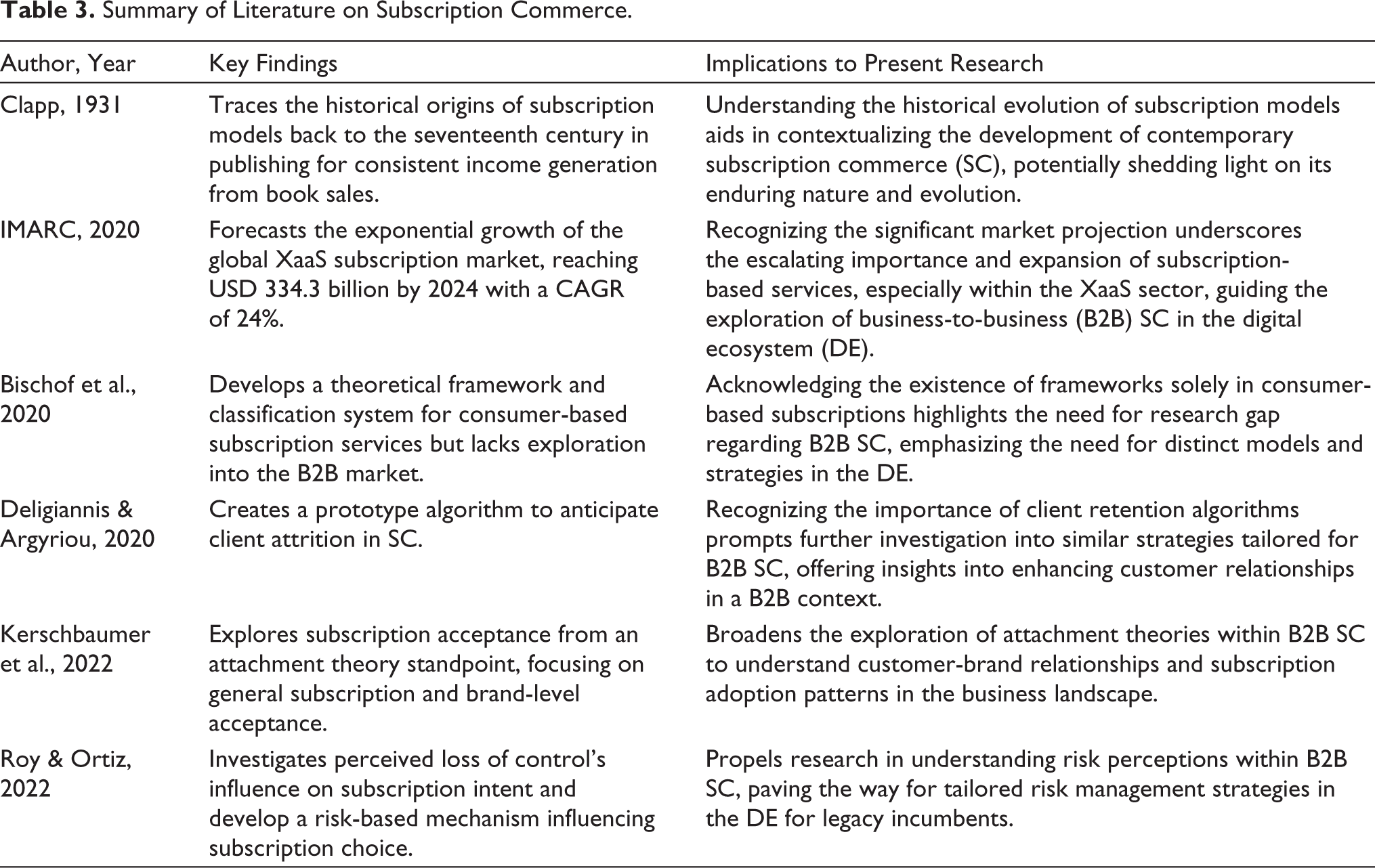
Contrary to consumer preference, researchers have paid little attention to subscriptions, particularly B2B subscriptions. Despite the sizable body of consumer-based subscription research, academia has not yet significantly influenced the development of B2B subscription expertise in the DE (refer Table 3). Bischof et al. (2020) created a theoretical framework for the curated subscription of surprise goods to consumers. This research also presented a classification system for subscription services and its administrative consequences. This study did not, however, expand into the B2B market scenario, even in the direction of future research. In order to anticipate client attrition in SC, Deligiannis and Argyriou (2020) created a prototype algorithm. Kerschbaumer et al. (2022) addressed general subscription and brand level acceptance from an attachment theory standpoint. Roy and Ortiz (2022) investigated how perceived loss of control affected subscription intent and developed a unique risk-based mechanism that influences subscription choice.
Summary of Literature on Subscription Commerce.
FCM
According to Webster, a scenario is a summary of potential occurrences, acts, or possibilities. Scenario planning assists in integrating disparate and complex parts into a clear, methodical, exhaustive, and plausible narrative (Coates, 2000). It is helpful to outline potential future circumstances. There are two categories of scenarios (Porter, 1991). Normative scenarios focus on planning and attaining objectives, whereas descriptive scenarios present a variety of possible future outcomes. The basic goal of scenario planning (Coates, 2000; Porter, 1991) is to create a tale about a future event, explain the repercussions of a particular action, and provide a platform for further research.
Cognitive maps are useful for scenario development because they record a number of mental models that might assist us in determining the nature of the problem and potential solutions (Jetter & Schweinfort, 2011). Cognitive maps are directed networks consisting of ‘nodes’, or concepts, and ‘edges’, or positive or negative associations (Kosko, 1986). These linkages illustrate how ideas are interdependent and form a relationship between them.
FCM are additions to cognitive maps that help with the analysis of causal maps that change over time and have fuzzy relationship weights (Kosko, 1986). Fuzzy concept models are based on the idea that they can describe complex interactions between concepts by giving each edge the right amount of weight (FCMs). The fact that FCM and neural networks are both made up of similar parts makes it easier to model complex systems (Kandasamy & Smarandache, 2003). Also, the use of fuzzy logic makes it easier for causal cognitive maps (Jetter, 2003) to understand the decision-maker’s point of view in a more realistic way. FCM lets users see all of the important parts of a choice situation and compare the different options (Jetter, 2006). Using FCMs, a person in charge of making decisions can do a more accurate analysis of inference patterns (Dickerson & Kosko, 1994).
FCM is a method of analytics that is well-known and used in a variety of settings. Information systems (IS) strategic planning has been done with FCM since 1999 (Kardaras & Karakostas, 1999). Salmeron (2012) used FCM to find and predict artificial emotions. FCM is used to look at the qualities of energy development (Alipour et al., 2019). FCM was used to look into how to make food more sustainable (Morone et al., 2019). FCM has also been used with value-focused thinking (VFT) to look at the leverage effects of ecommerce channels (Shukla et al., 2018) and blockchain adoption (Shukla & Shyam, 2023) in sustainable additive manufacturing.
The adoption of FCM in our proposed research aligns seamlessly with our investigation’s objectives and methodology. FCM offers a structured approach to comprehend the intricate causal relationships and evolving scenarios pertinent to SC in the DE.
Methodology
This study proposes the following main approach as a way to study and evaluate the factors that lead SC vendors to work with legacy incumbents in leveraging their DE:
Determining the present offerings and strategy characteristics of B2B SC suppliers. Exploring the effect of attributes to the position of B2B SC vendors in the marketplace. Constructing FCM to postulate the impact on various segments of the DE.
In academia, researchers often rely on secondary sources to develop insights into behavioural or cognitive models. For instance, Lee (2015) utilized Accenture’s study reports to understand why consumers return products as part of their post-purchase decision-making process. Similarly, in our study, we used the Forrester New Wave 2021 report to analyse the attributes of B2B SC providers. This comprehensive report surveyed and interviewed 14 vendors from the emerging technology sector, identifying 10 key attributes critical to these providers. These attributes were categorized based on the current offerings of the providers and the strategic approaches they employ.
The Forrester report also classified these providers into four categories: leaders, strong performers, contenders, and challengers. This classification was based on their current offerings, strategic direction, and market size. The report used a scale to assess the maturity of the 10 key attributes, which were distributed across a four-part spectrum: differentiated, on par, needs improvement, and no capability. This scale helped in understanding how each provider stood in terms of their capabilities and strategic positioning in the market.
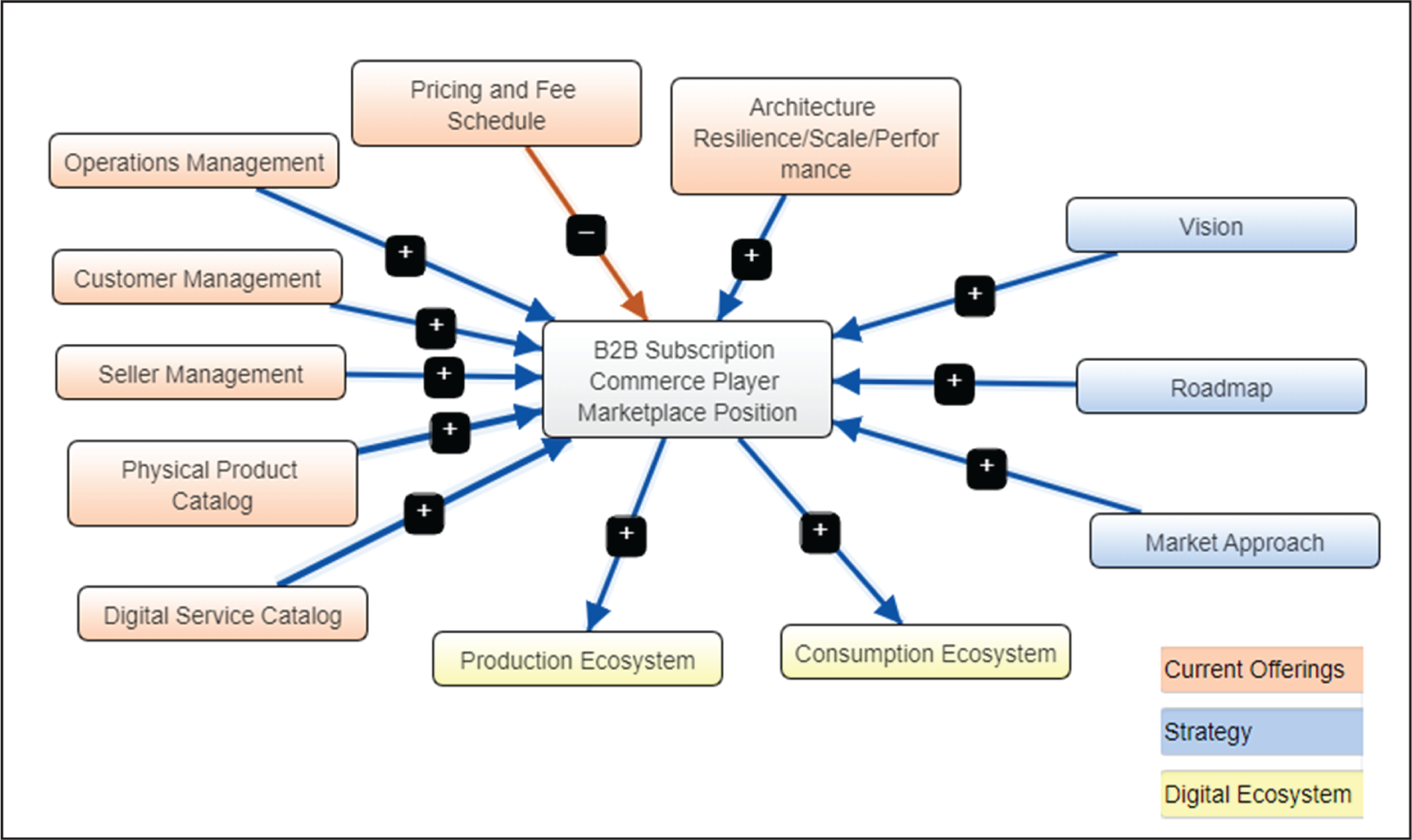
To visualize these insights, Figure 1 in our paper highlights seven key attributes related to current offerings in pink and three attributes related to strategy in blue. Additionally, it includes a yellow group to denote the DEs that are influenced by these attributes. The black signs in the figure represent the proposed positive or negative correlations between these attributes and the components they affect.
Fuzzy Cognitive Mapping Framework Based on 10 Key B2B SC Attributes.
In refining our study, we recognized the importance of a more detailed execution of the FCM approach. As such, we substantially revised the methodology section to provide a thorough and nuanced description of the FCM process. This revised methodology includes a step-by-step explanation and justification of our approach, detailing how we improved upon the previous version. The FCM approach’s execution is critical for understanding how legacy incumbents can leverage SC providers to stay competitive in a rapidly evolving digital landscape. This improved methodology enhances the clarity and depth of our research, making it more accessible and valuable for both academics and practitioners in the field.
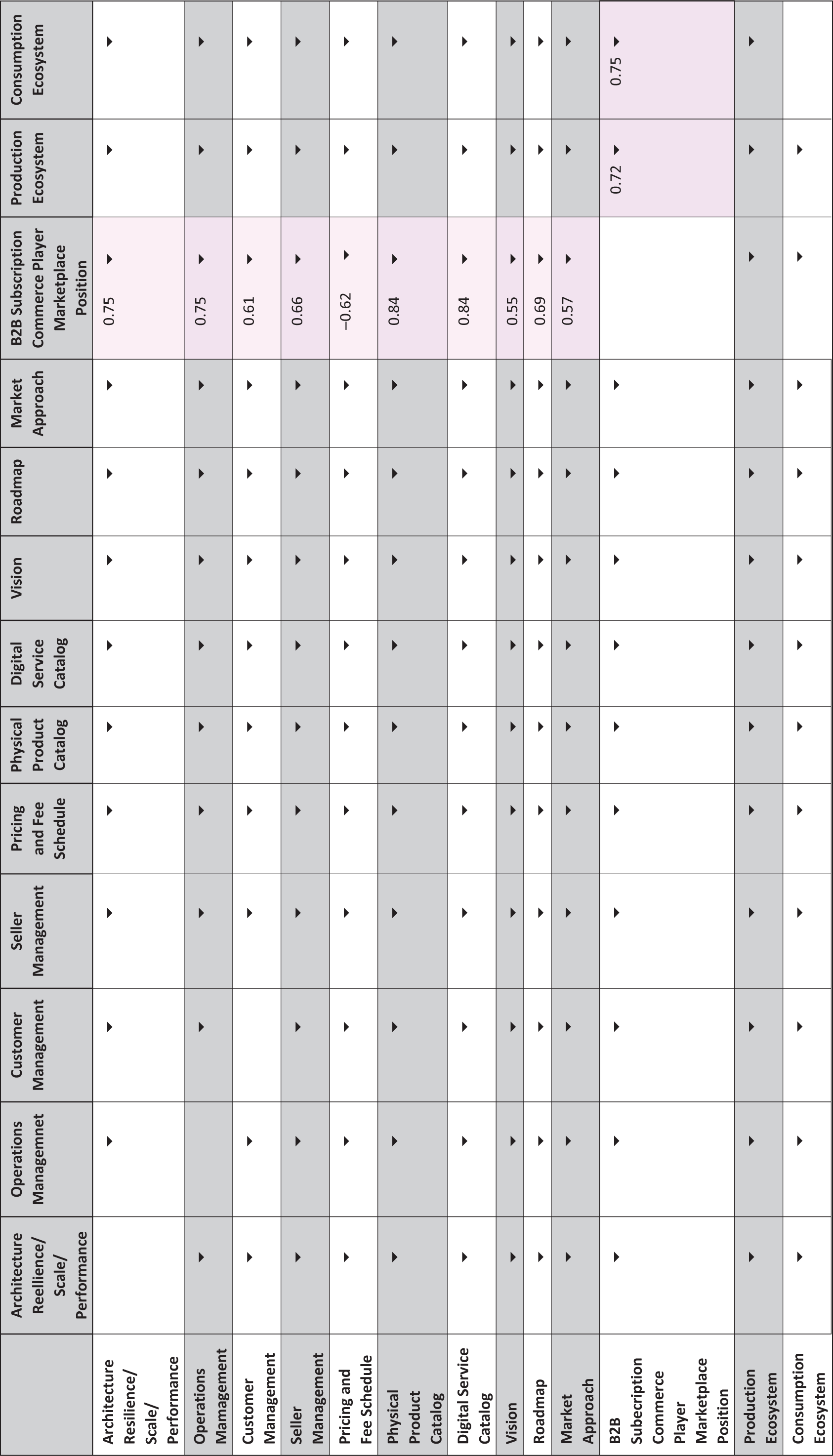
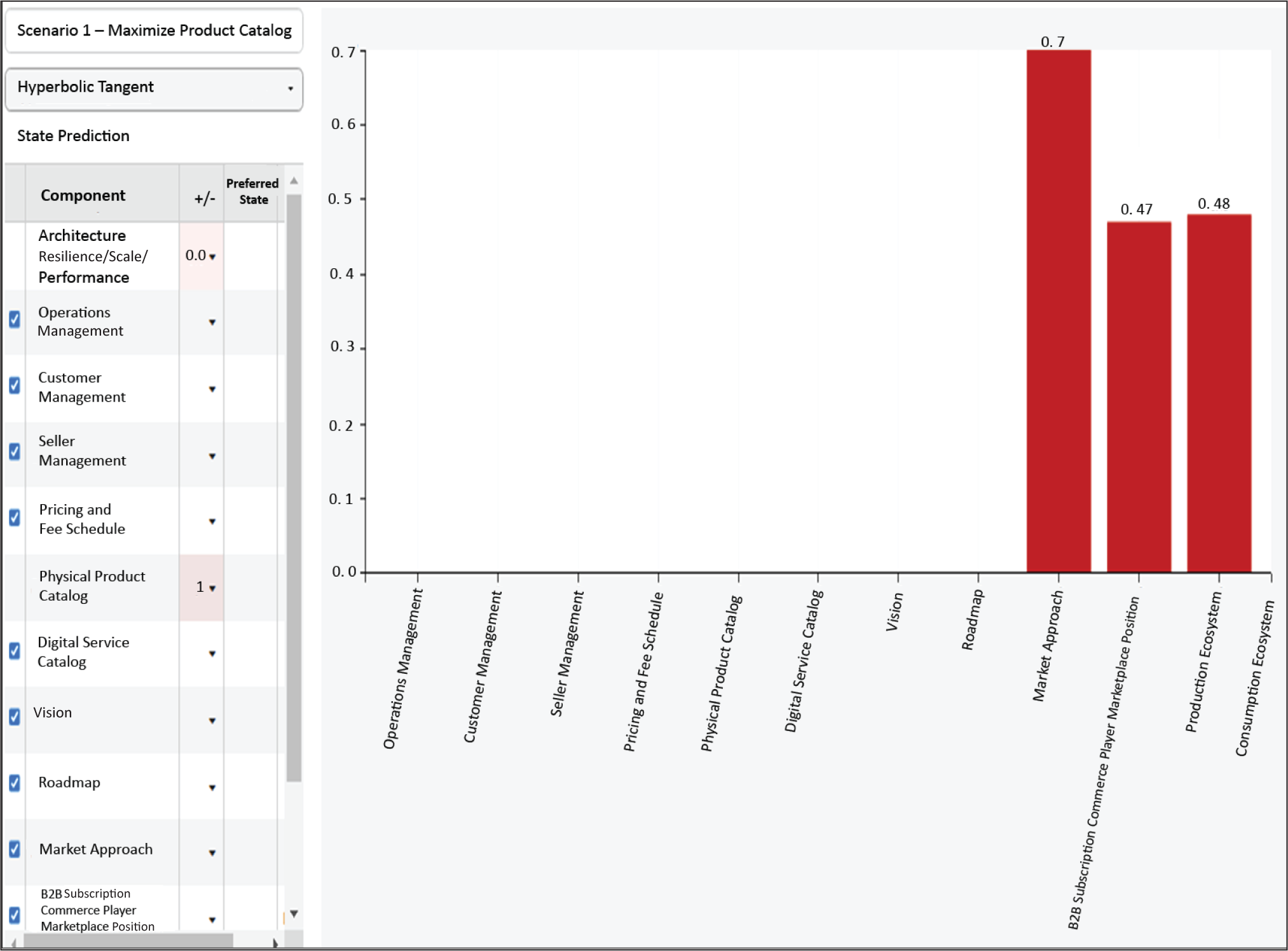
Figures 2 and 3 represent the matrix form and preferred states of the components from Figure 1, respectively, that can be tweaked and executed to have various scenarios. Figure 4 represents one such scenario where we maximize the physical product catalogue and check this scenario’s impact to B2B SC vendor position, and subsequently the production and consumption ecosystem.
Matrix Representation of Static FCM.
Preferred State and Type of Driver of the FCM Components.
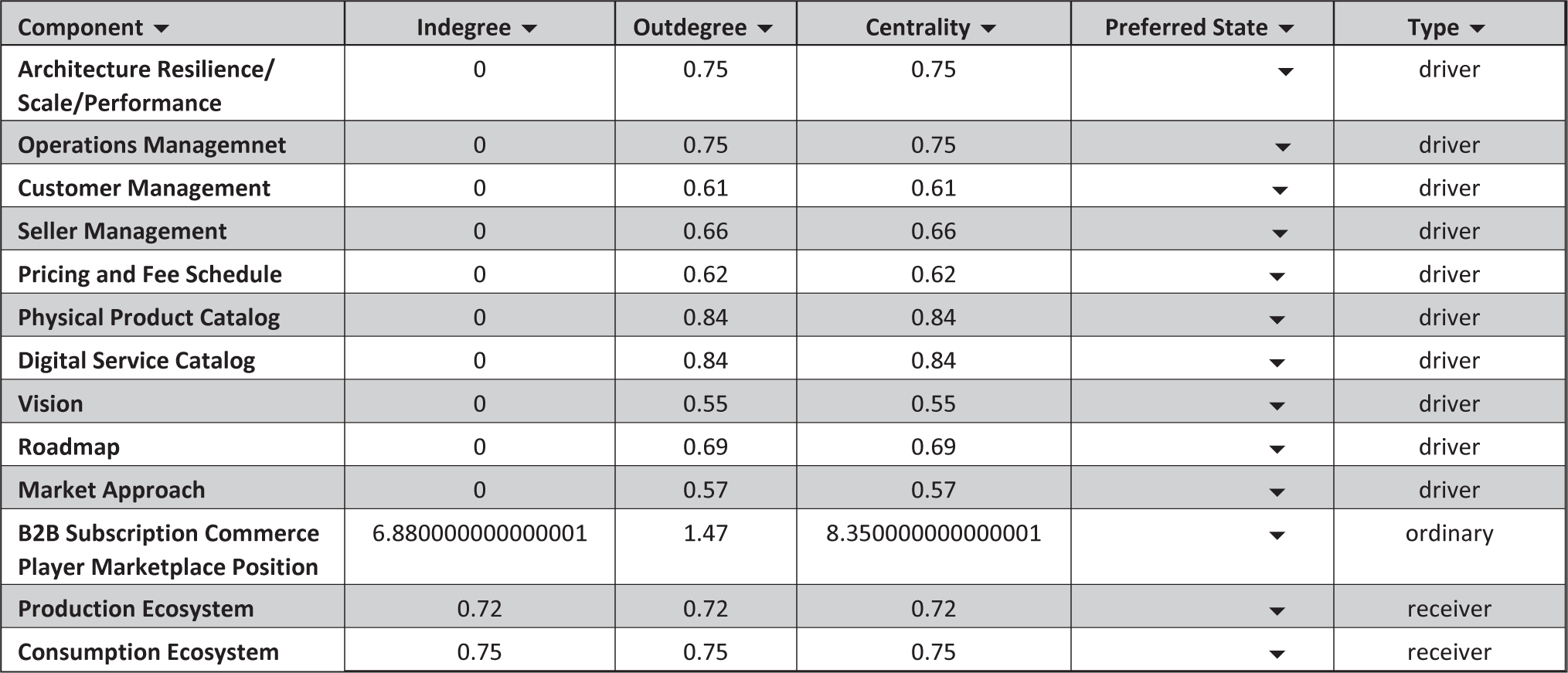
Figure 4 illustrates a mature scenario planning approach aimed at maximizing the product catalogue for a company. The left panel lists various components such as operations management and physical product catalogue, with preferences indicated by checked boxes. The right panel shows a bar graph representing the impact of these components under the ‘maximize product catalogue’ scenario. The bars highlight significant factors like B2B SC, physical product catalogue, and customer management. This figure employs a staged approach with varying parameters and compares scenarios under different regulatory conditions, enhancing the depth and clarity of the scenario planning process. Figure 4 also shows how we used the hyperbolic tangent function (HTF) to describe the changes we made to the fuzzy membership of attributes that was already in our framework. The HTF guarantees that concept-variation values hover between −1 and 1 to precisely characterize the nature and degree of their relationship (Alipour et al., 2019; Bueno & Salmeron, 2009; Shukla et al., 2018; Shukla & Shyam, 2023). To develop a robust and comprehensive scenario analysis, it is crucial to move beyond single-event simulations like the one depicted in Figure 4. A multi-step approach for a single scenario, along with a framework to explore multiple scenarios, will add depth to the analysis and improve decision-making. The following plan outlines the steps necessary for implementing a comprehensive scenario analysis.
Scenario of Understanding Impact When Physical Product Catalogue is Maximized.
Strategic Benefits of Subscription Commerce for Legacy Incumbents.
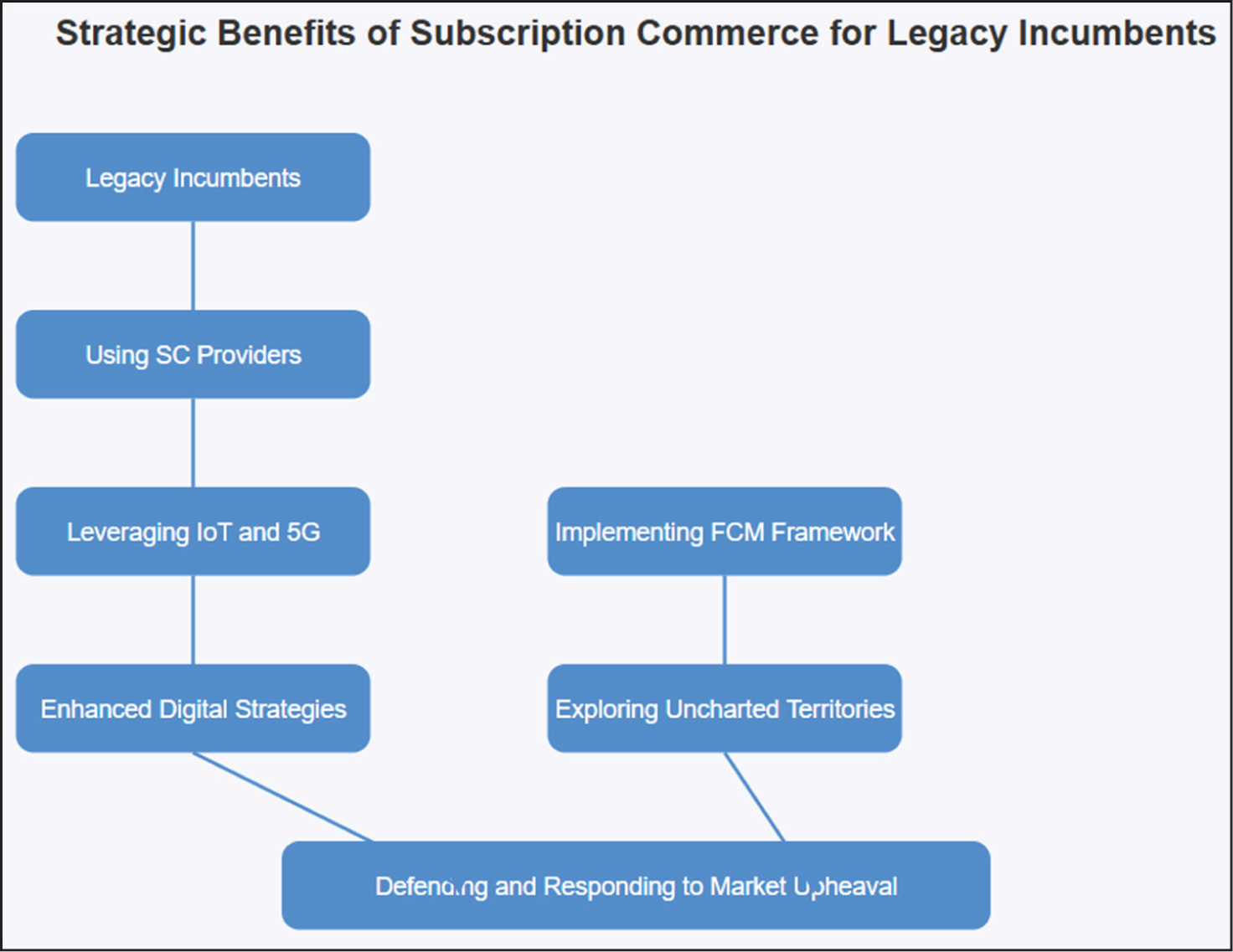
Table 4 depicts both these approaches. These structured approaches will not only strengthen the analysis but also provide a systematic method for evaluating various strategic options in a dynamic business environment.
Summary of Steps and Scenarios.

Results and Discussion
In our study, we utilized the Forrester New Wave 2021 report to analyse 14 vendors from the emerging technology space, specifically focusing on B2B SC providers. We identified 10 key attributes that define these providers, categorizing them into current offerings and strategic aspects. Based on these attributes, we classified the providers into four groups: leaders, strong performers, contenders, and challengers. This classification was determined by evaluating their market size, the strength of their current offerings, and the robustness of their strategies. Each attribute was assessed on a maturity scale ranging from differentiated to no capability.
Key Findings
Our study stands out in the existing body of research by applying the FCM approach to the DE, a method traditionally used in environmental studies. Previous works, such as Ozesmi and Ozesmi (2004) and Morone et al. (2019), have used FCM to study consumption patterns and environmental players. However, our research pioneers its application in analysing the impacts within the DE, particularly in the context of emerging B2B SC technologies. This makes our study a unique contribution to both the FCM literature and the understanding of SC in the B2B marketplace.
Theoretical Contributions
The use of FCM in our study breaks new ground. Traditionally, FCM has been applied in environmental and consumption studies. For instance, Ozesmi and Ozesmi (2004) and Morone et al. (2019) have utilized FCM to explore complex interactions in environmental ecosystems. Our research is the first to employ FCM to understand the dynamics of the DE, specifically focusing on B2B SC. This innovation provides a fresh perspective and enriches the literature on FCM and digital transformation in business contexts.
Managerial Implications
The transition to SC represents a shift from one-time sales to long-term customer engagement. Our study offers valuable insights for managers at legacy organizations who are navigating this digital transformation. We provide guidance on whether companies should build their digital capabilities internally or acquire them through SC models. This information is crucial for managers planning their digital strategies. Additionally, our findings are beneficial for consultants working with traditional companies, offering them relevant insights into the digital readiness of their clients.
Research Limitations
While our research provides significant insights, it has some limitations. First, our framework is primarily based on secondary data from industry reports. To enhance its accuracy, future research could include in-depth interviews with B2B SC companies to validate these attributes. Second, while the FCM model allows us to transform a static framework into a quasi-dynamic scenario, it does not enable us to conduct a temporal analysis of how these scenarios evolve over time. Last, our focus is on helping legacy companies transition to digital incumbents. However, we do not explore how digital incumbents can evolve into hyperscalers or fully digital-native companies. This is an area for future exploration.
Future Agendas
Future research could expand on our work by using the proposed FCM framework to analyse different scenarios and provide strategic recommendations. Another promising direction for future research is to incorporate VFT to develop initial concepts that could serve as inputs for the FCM framework analysis, as suggested by Shukla et al. (2018) and Shukla and Shyam (2023). This would deepen our understanding of the DE and further refine the strategic planning process for companies navigating digital transformation.
Conclusion
Using third-party SC providers, legacy incumbents can apply their data expertise to develop a framework for pursuing a digital competitive strategy. With IoT and 5G, the possibilities can accelerate further and venture into uncharted territory. Figure 5 visually summarizes how legacy incumbents can leverage third-party SC providers to enhance their digital strategies. By integrating advanced technologies like IoT and 5G and adopting the FCM framework, incumbents can explore new market opportunities and respond effectively to disruptions. This strategic approach enables them to fortify their market position and navigate the complexities of modern DEs.
A strong scenario planning and corporate foresight will enable such legacy incumbents to defend and respond to such market upheaval. If data is the new oil, then SC providers will function as the DE’s modern oil rigs.
Footnotes
Acknowledgements
The author is thankful that the Mental Modeler team made the tool free for everyone to use. Fuzzy cognitive mapping, which was described in the study, was done with this software (Gray et al., 2013). The author is also thankful to AppDirect to provide researcher access to the Forrester New Wave 2021 report.
Declaration of Conflicting Interests
The author declared no potential conflicts of interest with respect to the research, authorship and/or publication of this article.
Funding
The author received no financial support for the research, authorship and/or publication of this article.