



Abstract
The 2024 Sri Lankan presidential election marked a transformative juncture in the country’s political trajectory. Conducted peacefully with high voter turnout, the election demonstrated robust civic engagement and a collective desire for change. The unexpected victory of the Janatha Vimukthi Peramuna (JVP), in alliance with the National People’s Power (NPP), signified a major shift in political alignments, as voters rejected traditional parties in favor of a new governance model. This article examines the core factors that shaped voter behavior, focusing on the ethnic, socioeconomic, and political dimensions that influenced the electoral outcome. While the NPP–JVP coalition secured overwhelming support from the Sinhala-majority population, it faced resistance from Tamil and Muslim voters in the Northern and Eastern provinces. This divergence highlights underlying ethnic and regional complexities that continue to shape national politics. Furthermore, the coalition’s success in attracting former supporters of the Rajapaksa regime reveals a broader realignment of voter loyalties amid economic hardship and governance fatigue. By analyzing the 2024 results through the lenses of political behavior, institutional integrity, and social sentiment, this study provides critical insights into Sri Lanka’s evolving democratic landscape and the prospects for inclusive governance and political reform.
Introduction
On September 21, 2024, Sri Lanka conducted its ninth presidential election, an event that marked a defining moment in the nation’s political evolution. The election process was smooth and free from significant disruptions or irregularities, underscoring the strength and resilience of Sri Lanka’s democratic institutions (The Commonwealth Observer Group, 2024). Voter turnout was exceptionally high across the island, reflecting not only strong civic engagement but also a shared desire among the electorate to play an active role in determining the future direction of the country. This high participation in the electoral process was emblematic of the public’s growing sense of responsibility and its expectation for a change in governance.
In a dramatic shift from past elections, the Marxist Janatha Vimukthi Peramuna (JVP), in alliance with the National People’s Power (NPP), emerged victorious in the second round of the presidential race (Election Commission of Sri Lanka, 2024). The success of the NPP–JVP coalition marked a watershed moment in Sri Lanka’s political landscape, as the alliance’s candidate triumphed, signaling a powerful desire for change among the electorate. This outcome is significant not only for the JVP’s rise to prominence but also for the broader trend of growing political movements that challenge the entrenched power structures. The 2024 election reflects a deep-seated dissatisfaction with Sri Lanka’s long-standing political systems and a widespread desire for new governance approaches. Voters expressed a longing for leadership that could better address the nation’s pressing socioeconomic issues, including inflation, unemployment, and corruption. As Sri Lanka grapples with economic recovery and stability, the electorate has shown a clear inclination toward fresh political leadership and new policy frameworks. The victory of the NPP–JVP coalition, therefore, suggests a potential transformation in Sri Lanka’s political landscape—one that could redefine the country’s future trajectory and reshape its governance for years to come.
However, while the NPP–JVP coalition secured widespread support from the Sinhala-majority population, the election results also revealed a significant division within the Tamil community. The majority of Tamils and Muslims in the Northern and Eastern provinces rejected the JVP-led alliance, which raises important questions about the factors that influenced this voting behavior. This trend is particularly significant given the growing political shift in the rest of the country. Why did Tamils and Muslims in these regions choose to oppose the JVP–NPP alliance despite its widespread success elsewhere? Understanding this key divergence is crucial to comprehending the full scope of the 2024 election results.
Moreover, the NPP’s ability to capture the voter base that previously supported Gotabaya Rajapaksa in the 2019 presidential elections is another important aspect of this electoral outcome. How did the JVP-led alliance manage to attract the supporters of Rajapaksa, a figure who was deeply associated with the political establishment and who enjoyed significant backing in the previous election? The ability of the NPP to attract such a wide range of voters, including those who had supported Rajapaksa in 2019, is a testament to the changing political dynamics and shifting allegiances within the electorate. This raises critical questions about the evolving political landscape and the factors driving voter realignment.
This article seeks to analyze the major factors that influenced voter behavior in the 2024 Sri Lankan presidential election. The central aim is to understand why the JVP-led NPP was able to secure the majority of votes from the Sinhalese—the country’s majority ethnic group—while failing to gain substantial support from Tamil and Muslim voters. The analysis is structured around three core dimensions of electoral change: political alignments, voter behavior, and institutional frameworks. It explores the implications of the 2024 election outcome for Sri Lanka’s democratic governance and political stability. By examining historical trends, the role of key political actors, and the effectiveness of electoral institutions, the article offers a clear analytical framework to assess the country’s evolving electoral landscape.
General Review of Theories of Voting Behavior
The study of voting behavior has been a central topic in political science for decades. Numerous scholars have developed theories to explain how voters make their choices, contributing to a complex body of literature. Among these, Campbell et al. (1960), Pretocik and Nye (1970), Downs (1957), Lewis-Beck (1988) and Harakan et al. (2023) have all offered distinct perspectives on the factors influencing electoral outcomes. These theories explore the role of party identification, issue voting, economic conditions, policy proximity, and traditional cultural beliefs in shaping voter behavior. Given the breadth of theoretical approaches, it is crucial to examine how these ideas fare in non-Western contexts, particularly in a country like Sri Lanka, where social, political, and economic dynamics differ significantly from those observed in Western democracies.
The sociological model of voting behavior, a cornerstone in the study of electoral politics, is primarily grounded in three foundational works: The People’s Choice (Lazarsfeld et al., 1944), Voting (Berelson et al., 1954), and Personal Influence (Katz & Lazarsfeld, 1955). These studies collectively established a framework for analyzing how social context and interpersonal networks influence political attitudes and behavior.
The earliest of these, The People’s Choice, was based on empirical research conducted by Lazarsfeld and his colleagues during the 1940 US presidential election between Franklin D. Roosevelt and Wendell Willkie. Conducted in Erie County, Ohio, this study was groundbreaking in its use of the survey questionnaire as a primary research instrument—marking a methodological departure from earlier studies of voting behavior, which were largely speculative or descriptive in nature (Barnes & Kaase, 1979).
Paul Lazarsfeld, whose prior research focused on the psychological mechanisms of choice and the influence of mass media on consumer behavior, aimed to explore two key dimensions through this study. First, he sought to understand the effects of media exposure on voter decision-making—specifically, how individuals arrived at their electoral choices. Second, he intended to assess an innovative methodological approach involving a series of successive panel interviews, which included both experimental subjects and a control group (Rossi, 1964).
The People’s Choice employed a longitudinal design, interviewing a panel of 600 participants seven times over the 7-month campaign period. The research initially sought to identify the core social characteristics of supporters of the two major political parties. It then focused on tracking shifts in voter preferences throughout the campaign. The analysis divided voters into three distinct groups: those who made their decisions prior to the campaign, those influenced during the national conventions, and those who arrived at their decisions only in the final stages of the election cycle.
Through this empirical and theoretically grounded inquiry, Lazarsfeld and his team laid the groundwork for what would become a dominant paradigm in the study of political behavior. Their findings underscored the role of social networks, opinion leaders, and media exposure in shaping voter attitudes—insights that continue to inform contemporary research on political communication and electoral decision-making.
In Sri Lanka, for instance, religion and ethnicity have been strategically utilized by politicians from various groups to maximize their electoral support (Imtiyaz, 2010). Since independence, the majority Sinhalese population has often found itself in opposition to minority groups, particularly the Tamils, who had previously held prominent administrative positions during the British colonial era (Jayasuriya, 2001). In the postcolonial period, Sinhalese politicians capitalized on these ethnic divisions, exploiting sentiments of ethnic identity and resentment to galvanize Sinhalese support. This approach enabled them to capture and maintain political power, often by invoking ethnic emotions to consolidate their voter base (Perera, 1992).
In contrast, the vote of opinions is based more on individual judgment and political preferences at a given moment. Voters casting this type of vote tend to base their decision on the political party or candidate that most closely aligns with their current views on issues such as economic policy, social justice, or foreign affairs. This vote reflects a more rational, issue-based approach to voting, where voters assess the effectiveness and credibility of the political programs offered by different parties. The theory of voter opinions, particularly as it pertains to Sri Lanka’s elections, provides valuable insights into the complex dynamics that influence electoral behavior in the country. In Sri Lanka, voter opinions are often shaped by a combination of ethnic, religious, and regional identities, which play a significant role in determining political preferences (De Votta, 2004; Imtiyaz & Stavis, 2008). The country’s history of ethnic conflict, particularly between the Sinhalese majority and Tamil minority, has deeply influenced voter behavior, where party allegiance and support are often tied to ethnic solidarity and religious affiliations. Voter opinions are thus not only a reflection of individual political ideologies but also heavily influenced by social identity factors, which political parties often leverage to mobilize support.
In addition to ethnicity and religion, voter opinions in Sri Lanka are influenced by the broader political context, including issues of economic development, security, and governance. Political campaigns often focus on issues that resonate with voters’ immediate concerns, such as access to resources, job creation, and the management of national security, especially given the country’s history of civil conflict. However, despite these issue-based appeals, the emotional weight of ethnic identity remains a powerful force in shaping voter opinions. This is evident in the way political parties frequently frame their platforms through the lens of ethnic protection and representation, often overshadowing policy debates with appeals to historical grievances or fears of marginalization. A survey conducted in August 2024 indicated that NPP/JVP leader Anura Kumara Dissanayake and Samagi Jana Balawegaya (SJB) leader Sajith Premadasa were leading in voting preferences, each receiving 37% and 36% support, respectively. However, neither garnered more than 40% of the electorate, highlighting the fragmented political landscape.
The concept of the vote of exchange refers to a form of electoral behavior in which voters support a particular candidate or party in return for specific material or personal benefits. This form of voting is deeply rooted in clientelism, a system where politicians provide targeted benefits, such as government contracts, welfare programs, or public services, to gain and maintain electoral support. In the context of Sri Lanka, the vote of exchange plays a significant role in shaping the country’s political landscape, particularly in rural areas and among marginalized communities. Political parties often engage in clientelistic practices, offering various forms of patronage in exchange for votes, thus creating a system of reciprocal obligations between voters and politicians (Arudpragasam, 2023; Oberst, 2003).
The presence and diffusion of traditional beliefs significantly shape voters’ choices in a changing and increasingly fragmented political system, particularly in emerging democracies like Sri Lanka. Traditional beliefs, including those rooted in ethnicity, religion, and cultural identity, continue to influence electoral behavior, even as new political dynamics such as party polarization and economic issues come to the forefront. These traditional beliefs often serve as deeply ingrained markers of group identity and political allegiance, which can become especially pronounced in a society undergoing democratization, where new political freedoms and movements may reinforce or challenge established cultural and social norms (Harakan et al., 2023).
In Sri Lanka, traditional beliefs tied to ethnicity and religion are central to electoral decisions. The country’s political landscape is deeply influenced by the ethnic divisions between the Sinhalese majority and Tamil and Muslim minorities. Politicians in Sri Lanka have historically utilized these divisions to rally support, often appealing to religious or ethnic sentiments to secure votes. For instance, Sinhala-Buddhist nationalism has been a powerful force in shaping the electoral choices of many voters, particularly in rural areas where religious and cultural values are more tightly intertwined with political decisions (Perera, 1992).
Moreover, the increasing diffusion of new political ideologies and party platforms, often focusing on modern issues like economic reform or social justice, can either complement or clash with traditional values. In the case of Sri Lanka, the rise of more secular and reform-oriented political figures, such as those who campaigned for anti-corruption or pro-democracy reforms in the 2015 and 2019 elections, shows a tension between modern political ideologies and traditional beliefs. Despite the growing appeal of these innovative ideas, voters in rural regions, particularly among the older generations, continue to lean heavily on their religious and cultural values when making electoral decisions. This is reflected in the dedicated support for candidates who align with Sinhala-Buddhist nationalism or who promise to protect the cultural and religious heritage of the majority community (Mainuddin & Aicher, 1997).
According to Downs (1957), voters are rational, meaning they will make decisions that they believe will benefit them the most. In the case of proximity voting, this translates to choosing the candidate whose policies reflect the voter’s most preferred outcomes. The core of proximity voting is the idea of policy proximity—the closeness between a voter’s ideal policy position and a candidate’s platform. Voters are assumed to evaluate candidates based on a single-dimensional ideological spectrum (e.g., left–right, liberal–conservative), where they compare each candidate’s stance on various issues (e.g., taxes, healthcare, national security) to their own positions. Voters are expected to make strategic choices, aiming to select a candidate whose policies are closest to their ideal point, within the constraints of the options available. If a voter’s most preferred candidate is not viable or is unlikely to win, proximity voting might also lead to tactical voting—where a voter chooses the candidate, they dislike the least, based on policy alignment, to prevent an undesirable outcome. Downs’s model assumes that candidates present distinct and clear policy options and that voters can easily identify the differences between candidates. Voters then cast their ballots in favor of the candidate who offers policies closest to their preferences, whether on the economy, social issues, or other matters.
Historical processes often give rise to tensions and conflicts between difficult ethnic groups, but politicians provide the sparks that ignite the violence. They often do so deliberately because they believe they can strengthen their personal political positions. They work with two tools: raw violence and votes. These dynamics are clear from a review of Sri Lanka’s ethnic violence. The politicization of ethnic differences began in the 1950s. Successive Sinhalese political parties formulated policies such as the Sinhala Only Language Act in 1956, which made Sinhala the only official language in state and public affairs and sharply discriminated against Tamil speakers. Then, an educational standardization policy in 1972 allowed Sinhalese students to enter science and medicine schools with lower scores than the Tamil students. The Constitution of 1972 conferred a special status on Buddhism in both state and public sectors. The reason for all these policies was, in Downs’s language, “to win elections” (Downs, 1957). In Sri Lanka, of course, this meant to satisfy the Sinhalese voters (Dharmadasa, 1992).
Presidential Elections in Sri Lanka
Sri Lanka employs a majoritarian two-round system (also known as an absolute majority system) for presidential elections, not a proportional representation or first-past-the-post system. In this model, a candidate must receive more than 50% of valid votes to be elected in the first round; if no candidate achieves this threshold, a runoff is held between the two leading candidates.
This system has significant implications for both voter behavior and party strategy. It incentivizes broad-based coalition-building and appeals to cross-ethnic constituencies, as securing a simple plurality is insufficient. In this context, the JVP-led NPP in 2024—as well as the United National Party (UNP), Sri Lanka Freedom Party (SLFP), and Sri Lanka Podujana Peramuna (SLPP) in previous presidential elections—were generally successful in mobilizing a majority of Sinhalese voters (except for the UNP in certain instances). However, their inability to garner comparable support from Tamil and Muslim communities limited their capacity to secure an outright majority. This pattern underscores the enduring challenges of ethnic polarization within Sri Lanka’s majoritarian electoral framework. The system influences not only how parties’ campaign but also how voters calculate the impact of their ballots—particularly in regions where ethnic minority interests are underrepresented in national politics.
The presidential elections in Sri Lanka have played a significant role in shaping the country’s political landscape since the introduction of the executive presidential system in 1978. This shift to an executive presidency, instituted under the leadership of J. R. Jayewardene, significantly altered the political framework, concentrating power in the hands of the president and transforming the electoral process. Prior to 1978, Sri Lanka followed a parliamentary system where the prime minister was the head of government. The introduction of a directly elected president aimed to provide strong leadership and centralize authority, but it also created a dynamic where presidential elections became highly polarized, with candidates often using ethnic, religious, and economic issues to garner support (Perera, 1992).
In the early years, the Sri Lankan presidential elections were marked by significant competition between the two main political parties: the SLFP, traditionally associated with the Sinhala-Buddhist majority, and the UNP, which had a more urban, economically liberal base. The first presidential election in 1982, held under the new system, was won by J. R. Jayewardene of the UNP, who was reelected in 1988. This set a precedent for the powerful role of the presidency in Sri Lankan politics. Over time, the role of ethnicity and religion began to play an increasing part in the electoral strategy. During the 1990s and 2000s, Sri Lankan politics became increasingly fragmented, with the rise of new political parties and regional leaders catering to specific ethnic and religious communities, particularly in Tamil-majority areas in the North and East.
The most significant shift in Sri Lankan presidential elections occurred in 2005, when Mahinda Rajapaksa, representing the SLFP, was elected president. Rajapaksa’s victory, during a time of escalating civil war between the government and Tamil separatists, marked the beginning of a more nationalistic, pro-Sinhala-Buddhist approach to politics. His government focused heavily on military victory over the Tamil Tigers and emphasized the importance of Sinhala-Buddhist identity, which resonated strongly with the majority ethnic group in Sri Lanka. Rajapaksa’s tenure saw a heavy centralization of power and the increasing use of patronage, which played a significant role in securing his reelection in 2010.
Throughout Sri Lanka’s history of presidential elections, the contest for power has been deeply intertwined with ethnic and religious considerations, particularly in the context of the Sinhalese–Tamil conflict and the role of the Tamil minority. Voter behavior has often been shaped by these ethnic divisions, with political parties appealing to either the Sinhalese majority or the Tamil minority through promises of protection of cultural identity, economic development, and national security (Korf et al., 2024). The complex interplay between economic issues, national security, and ethnic identity continues to shape the electoral process, making presidential elections in Sri Lanka not just contests for leadership but also critical moments for negotiating the country’s ethnic and cultural future.
Sri Lanka Presidential Elections 2024: Background
On July 9, 2022, tens of thousands of protesters in Sri Lanka’s commercial capital, Colombo, stormed and occupied the presidential office and the official residences of both the president and the prime minister. Social media and global news outlets captured striking footage of protesters swimming in the president’s pool, lounging on his bed, using his gym, and cooking in his kitchen—having overcome barricades, tear gas, and police violence (De Votta, 2022). This wave of protest, which directly challenged the state and its institutions, was primarily driven by economic grievances rather than the Sinhala or Tamil nationalism that had characterized some previous demonstrations and violence against the state (Imtiyaz, 2023).
The COVID-19 pandemic severely impacted the tourism industry and disrupted remittances from the over one million Sri Lankans working abroad. As De Votta (2022) explains, while the pandemic significantly exacerbated the economic situation, it was not the root cause of the crisis. The unsustainable, corruption-fueled debt that Sri Lanka had been accumulating predated the pandemic and would have led to a fiscal disaster eventually, regardless of any major disease outbreak. The mismanagement of the economy has been a major contributor to the ongoing dollar crisis. Sri Lanka’s nominal gross domestic product is approximately $85b, yet its foreign debt stands at around $51b. The country faces approximately $31b in obligations over the next 5 years, with $7b due by the end of 2022 alone. This includes critical payments of $500m due in April, another $500m in June, and a $1b international sovereign bond maturing in July. The resulting dollar crisis has led to severe shortages of essential goods, including fuel, cooking gas, and medicines, compounding the hardships faced by the population (De Votta, 2022).
This crisis can be traced back to the economic mismanagement under the previous Rajapaksa and Sirisena regimes. Their policies, characterized by heavy international borrowing, excessive spending on large-scale infrastructure projects, populist tax reforms, and misguided agricultural strategies, collectively undermined the country’s economic stability. Though the overarching issues of economic mismanagement and the ruling politicians’ inability to create sustainable economic opportunities affected Sri Lankans across the board, the impact was particularly severe on the already vulnerable populations in Southern Sri Lanka. This region, home to many impoverished farmers, workers, and youth, experienced significant hardships because of the fiscal crisis. The economic policies enacted by the Rajapaksa administration, which were often aimed at consolidating power within their Sinhala-Buddhist nationalist base, disproportionately affected these communities. For instance, agricultural mismanagement—including abrupt shifts to organic farming—led to crop failures and diminished incomes for farmers who relied on traditional methods and established markets (Imtiyaz, 2025a). According to a report by the International Crisis Group (2022), these policies contributed to widespread food insecurity and heightened poverty levels in rural areas, exacerbating the struggles of local populations. The Rajapaksa government’s failure to address the needs of these constituencies not only alienated a sizable portion of the population but also led to growing discontent that fueled protests and calls for change. As noted by scholars, the disconnect between the government’s priorities and the realities faced by its citizens has highlighted the urgent need for inclusive economic policies that genuinely address the needs of all Sri Lankans, particularly the most marginalized (De Votta, 2022; Imtiyaz, 2023).
These factors played a crucial role in Sri Lanka’s inability to withstand the economic fallout from the pandemic. Heavy borrowing from international lenders left the country vulnerable to external shocks, while lavish infrastructure investments, often poorly planned and executed, failed to yield sustainable economic growth. The populist tax reforms, aimed at gaining political favor, significantly reduced government revenue, limiting the state’s ability to respond to fiscal challenges. Furthermore, misguided agricultural policies, including a sudden shift to organic farming, disrupted local food production, leading to shortages and increased reliance on imports.
The crisis in Sri Lanka culminated in widespread demands for the ouster of President Gotabaya Rajapaksa and his brother, Prime Minister Mahinda Rajapaksa. As the situation intensified, Mahinda Rajapaksa resigned from the prime minister’s position, unable to quell the unrest that had engulfed his administration. In the wake of Mahinda’s resignation, Gotabaya Rajapaksa appointed Ranil Wickremesinghe of the UNP as prime minister. Wickremesinghe, who had previously served as prime minister four times, had seen his party’s influence wane significantly after the August 2020 parliamentary elections, where the UNP suffered a historic defeat, securing only a single seat. Despite this decline, Gotabaya’s choice to appoint him was influenced by a desire to maintain some continuity in governance amidst a chaotic political landscape. However, as protests escalated and public pressure mounted, Gotabaya Rajapaksa himself fled the country, prompting the Parliament to convene to select a new president. In a surprising turn of events, the legislature voted to elect Wickremesinghe as president, a decision that was met with skepticism by many citizens who viewed him as a symbol of the old political guard (De Votta, 2022). His appointment sparked further protests, as large segments of the population demanded not just the removal of the Rajapaksa family from power but also a fundamental overhaul of the political system itself (Imtiyaz, 2023). Former President Ranil Wickremesinghe’s government was notably supported by the Rajapaksa-led SLPP. This alliance was marked by a quid pro quo arrangement: the SLPP provided legislative backing to Wickremesinghe’s administration in exchange for a commitment not to hold SLPP officials, particularly members of the influential Rajapaksa family, accountable for past allegations of corruption. As a result, Wickremesinghe’s government became derisively known as the “Ranil-Rajapaksa” regime, reflecting widespread public sentiment that the administration was merely an extension of the discredited Rajapaksa rule (De Silva, 1999).
This arrangement not only allowed the Rajapaksa family to maintain considerable influence in Sri Lankan politics but also fueled speculation about Mahinda Rajapaksa’s ambitions to establish a family dynasty. Mahinda is intent on positioning his eldest son, Namal Rajapaksa, as a future presidential candidate. This ambition came to the forefront when Namal Rajapaksa announced his intention to run for office, a move interpreted as part of a broader strategy to consolidate power within the family and to retain a foothold in Sri Lankan politics (Imtiyaz, 2023). The perception of the “Ranil-Rajapaksa” regime has been detrimental to Wickremesinghe’s administration, as many citizens viewed it as a continuation of the very governance they had revolted against. Critics argue that this alliance undermined any potential for genuine reform and accountability in a country still reeling from the consequences of economic mismanagement and corruption (Korf et al., 2024).
On July 9, 2024, President Ranil Wickremesinghe called for presidential elections. This announcement came in the wake of widespread protests and civil unrest demanding the resignation of then-President Gotabaya Rajapaksa, who fled the country amid escalating public anger over the economic crisis. By proposing elections, Wickremesinghe aimed to stabilize the political situation and restore public confidence in the government, although his administration faced significant skepticism due to its ties with the Rajapaksa regime.
On July 26, the Commission officially issued a gazette notification confirming that the election would take place on September 21, 2024. Forty candidates announced their candidacies for the presidential election in Sri Lanka; however, the primary race had emerged as a contest between four key figures, each representing distinct political ideologies and constituencies. Former President Ranil Wickremesinghe sought reelection, positioning himself as a stabilizing force in a tumultuous political climate marked by economic instability and public unrest. Wickremesinghe’s administration aimed to restore confidence in governance and address the pressing economic challenges facing the country, including soaring inflation and shortages of essential goods.
The Major Candidates
Anura Kumara Dissanayake
Anura Kumara Dissanayake’s election campaign for the 2024 presidential election was centered on a platform of progressive reform, economic justice, and social equity. As the leader of the JVP, Dissanayake aims to challenge the established political order and offer a viable alternative to the incumbent government. Dissanayake, the leader of Marxist JVP, did not put forward any economic solution to address sources that pained ordinary people. But Dissanayake emphasized the need for comprehensive economic reforms to address the ongoing crisis in Sri Lanka. His campaign focused on promoting policies that prioritize the welfare of the working class, such as increasing wages, improving labor rights, and investing in social services. He advocated for a shift away from neoliberal policies that have contributed to inequality and economic instability.
Also, Mr. Dissanayake promised not to seek solutions to ethnic conflict through power-sharing. Mr. Dissanayake’s opposition to power-sharing was not a new development in Sri Lanka politics since the JVP has consistently been rejecting any solution beyond the current unitary state structure (Imtiyaz, 2025b).
Sajith Premadasa
Sajith Premadasa, leader of the SJB, positioned himself as a champion of economic recovery and social justice. With the country grappling with severe economic challenges, his campaign emphasized a comprehensive vision aimed at revitalizing the nation. Focusing on job creation and support for small and medium enterprises, he pledged that he would introduce policies that stimulate growth, attract investment, and improve living standards for all citizens. Amidst global concerns about climate change, Premadasa’s campaign also prioritized environmental sustainability. He advocated for policies that promote renewable energy, conservation efforts, and sustainable agriculture for long-term prosperity.
Namal Rajapakshe
The campaign of Namal Rajapaksa, a prominent political figure and member of the ruling SLPP, focused on national unity, economic revitalization, and social progress. Drawing on his family legacy and political experience, Rajapaksa appealed to the Southern voters who are Sinhala nationalists, but it is important to note that Mr. Rajapaksa did not use any Sinhala-Buddhist rhetoric to outbid his political opponents. Central to Rajapaksa’s campaign was commitment to economic recovery, especially considering the recent financial crises that have impacted the nation. His campaign promised to introduce policies aimed at stimulating growth, attracting foreign investment, and supporting local businesses. By focusing on infrastructure development and tourism, he envisioned a robust economic framework that can create jobs and improve livelihoods. Understanding the significance of the youth vote from Southern Sri Lanka, Rajapaksa’s campaigned prioritized initiatives that empower young people through education and vocational training.
Packiyaselvam Ariyanethiran
Packiyaselvam Ariyanethiran’s election campaign reflected the Tamil aspirations. His campaign was rooted in the principles of Tamil nationalism, advocating for greater political autonomy from the Sinhala-dominated ruling elites. Ariyanethiran emphasized that the specific issues concerning the Sri Lankan Tamils, particularly those in the Northern and Eastern provinces, have been ignored or overlooked by successive governments.
Ariyanethiran argued that for too long, the grievances and aspirations of the Tamil community have been sidelined in national discourse. Tamils moderates who supported the common Tamil candidate argued that the election of a common Tamil candidate was essential for highlighting these concerns and advocating effectively for Tamil rights, and thus, his campaign sought to mobilize the Tamil electorate by emphasizing the importance of having a candidate to speak their problem and to pass the message to Sinhala politicians that aspirations of Tamils of the North and East should be met to build united Sri Lanka. Historically, Tamils have often cast their votes for moderate Sinhala presidential candidates.
Results and Trends
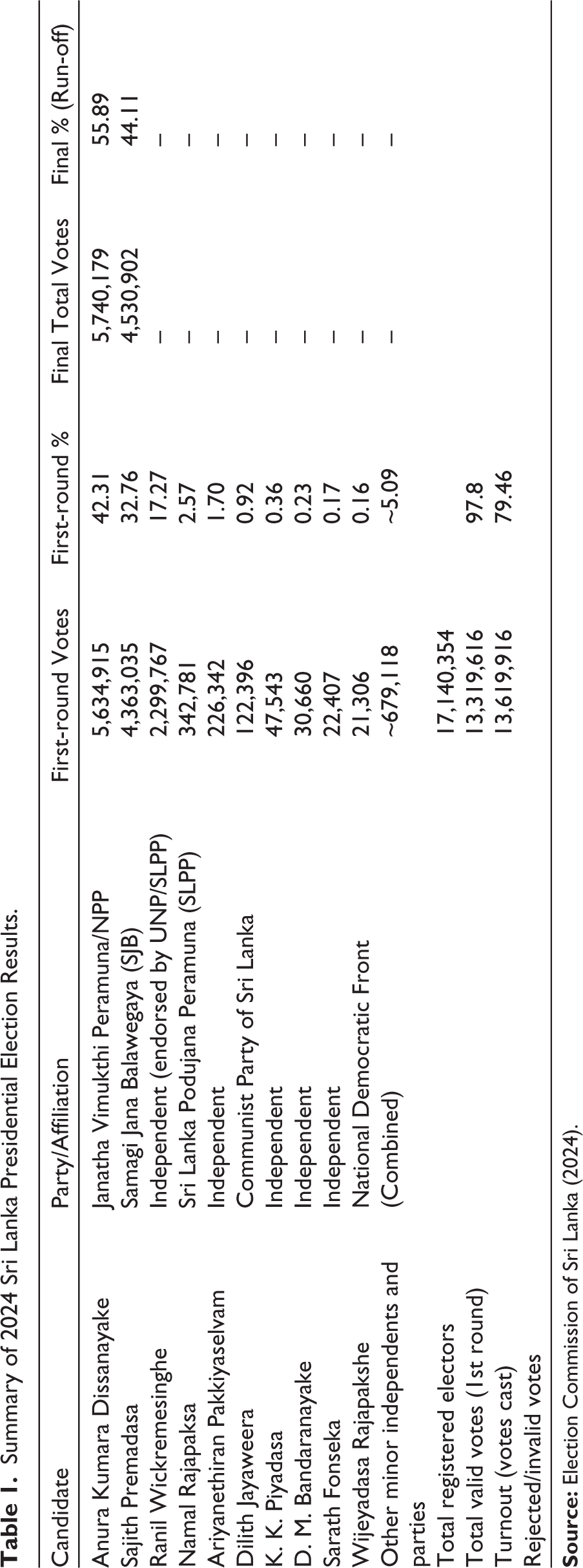
Elections were held on September 21, 2024, and as anticipated, Anura Kumara Dissanayake, the candidate from JVP and leader of NPP, emerged victorious (see Table 1). His win marked a significant shift in the political landscape of Sri Lanka, reflecting the electorate’s desire for progressive reform and a break from traditional power structures. According to the Election Commission (2024), approximately 75% of the 17 million eligible voters participated in the election, indicating robust engagement from the public. This high voter turnout is a testament to the importance of the election in the eyes of the citizens, who were keen to express their preferences amid ongoing economic challenges and calls for political accountability. The active participation of voters was seen as a positive sign for democracy in Sri Lanka, especially following the tumultuous political climate of the previous years, characterized by mass protests and calls for change. Dissanayake’s campaign resonated with many young and first-time voters who were disillusioned with the status quo and sought a leader committed to addressing pressing issues such as economic inequality, corruption, and social justice.
Summary of 2024 Sri Lanka Presidential Election Results.
Why Was the JVP Rejected by Tamils and Muslims in the North and East?
The electoral landscape of presidential elections in 2024 reveals a complex interplay of ethnic identities and political affiliations. A sizable portion of the Sinhala population, particularly from Southern Sri Lanka, demonstrated overwhelming support for Mr. Dissanayake, who opposed the power-sharing through a comprehensive devolution settlement. Mr. Dissanayake’s JVP has consistently been opposing any power-sharing that would jeopardize the current unitary state structure (Imtiyaz, 2025a, 2025b). This strong backing reflects both regional loyalties and the influence of sociopolitical dynamics that have shaped voting patterns among the Southern Sinhalese over time. In contrast, the majority of Tamil and Muslim voters aligned with Sajith Premadasa and Ranil Wickramasinghe. This coalition of Tamil and Muslim support for Sajith Premadasa and Ranil Wickramasinghe indicates that Tamils and Muslims of the North and East favor Southern politicians who are willing to support greater devolution and/or would not abolish the current provincial council system (see Figure 1).
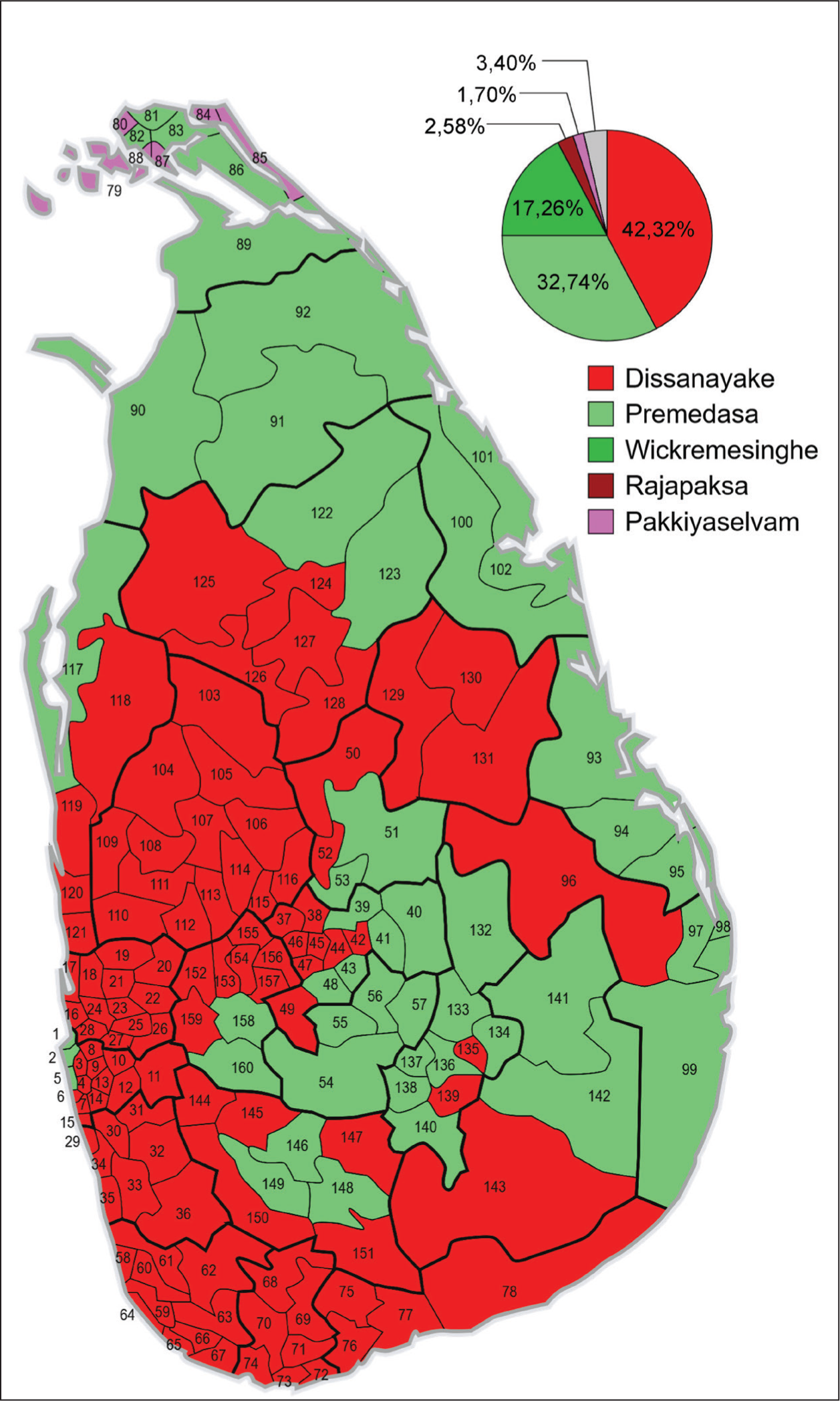
Notably, despite its Southern base, both Mr. Premadasa and Mr. Wickramasinghe have advocated for greater autonomy for Tamils and Muslims. This commitment is exemplified by the Indo-Lanka Accord of 1987, which aimed to establish provincial councils and devolve power to the peripheries, a move seen as crucial for addressing the aspirations of minority groups. However, the JVP vehemently opposed the Indo-Lanka Accord, resorting to violent tactics to intimidate Southern politicians who supported it. The JVP’s campaign of terror included the assassination of left-leaning politicians, such as the charismatic leader Vijaya Kumaratunga, sending a chilling message to proponents of the Accord (Seneviratne, 2012).
The JVP’s enduring stance against the Accord is evident in their declarations, as seen in a 2024 statement from the party: “As a political party we strongly opposed the Indo-Lanka Accord decades ago and dedicated our initiatives to safeguarding Sri Lanka’s sovereignty, at the cost of many lives … This stance has not changed and will not change” (Tamil Guardian, 2024).
Furthermore, both Tamils and Muslims from these regions rejected candidates like Anura Kumara Dissanayake, whose party supports devolution of power but has connections to the Sri Lanka Army, which participated in the conflict against the Liberation Tigers of Tamil Eelam (LTTE). They also distanced themselves from Namal Rajapaksa, the son of former President Mahinda Rajapaksa, who is credited with defeating the LTTE in May 2009 but is associated with the legacy of strong central governance that marginalized minority rights.
Though the LTTE’s military machine was collapsed on May 9, 2009, Tamils believe that underlying causes that gave birth to the LTTE were not addressed by the state. The major demand of Tamils is greater power-sharing if Sri Lanka would not settle the Tamil question through partition. Sri Lanka’s President Mr. Dissanayake already rejected any power-sharing solution with Tamils or Muslims. Tamils of the North and East are aware of the JVP’s position. For JVP, there is not any ethnic conflict (Hoole, 2014).
Why Did the JVP Succeed in Capturing Rajapaksa’s Voter Base?
The election results indicate that the JVP has made significant inroads into the voter base of former President Mahinda Rajapaksa, primarily composed of Sinhala-Buddhists (Election Commission of Sri Lanka, 2024).
This demographic has historically aligned with Sinhala nationalists and supported Rajapaksa for his efforts to defeat the LTTE. In general, southern Sinhalese have rejected any form of power sharing with Tamils beyond Sri Lanka’s unitary state structure—a central pillar of Sinhala-Buddhist nationalism. The JVP historically recruited thousands of youths from the Southern provinces to support its movements, including a failed violent campaign against the state in the late twentieth century. These Southern villages, particularly in underdeveloped areas such as Matara, Galle, and Kalutara, have been fertile ground for ethnic nationalist sentiments and trade union movements since the independence of the island in 1948. The SLFP has long consolidated its voter base to challenge the UNP since Sri Lanka’s independence. In 2016, Mahinda Rajapaksa, a former member of the SLFP, formed the SLPP to further consolidate his support. Rajapaksa’s electoral victory demonstrated his ability to capture Sinhala-nationalist voters, including those who had previously supported trade union movements led by traditional left-wing parties such as the Sri Lanka Communist Party and the Lanka Sama Samaja Party.
Though the JVP primarily attracted Sinhalese youth, it also championed workers’ demands, such as strengthening the welfare state. This strategy helped the JVP mobilize Sinhalese voters with relatively little resistance. However, the JVP’s initial attempts to outbid the SLPP were met with limited success. The Rajapaksa family spoke the same political language and employed slogans that resonate with their Southern Sinhalese constituencies, undermining the JVP’s messaging. Many middle-aged Sinhalese in the Southern provinces recalled the SLFP’s past contributions to their communities, fostering loyalty to the Rajapaksa family. Southern Sinhalese expected economic development and prosperity from the government led by the Rajapaksas. However, the Southern Sinhalese population has faced severe economic challenges, leading to growing criticism of the Rajapaksa family’s governance and economic management. This discontent culminated in the Aragalaya movement of 2022, which successfully ousted the Rajapaksa family from power. The JVP capitalized on the grievances of Southerners, although it did not publicly identify with the Aragalaya movement. Nevertheless, JVP grassroots members played critical roles in mobilizing protesters.
Although the nonviolent protests succeeded in achieving a major objective—the ousting of the Rajapaksa family—public opinion afterward has been divided. According to an August 2023 survey by the local think tank Verité Research, 60% of respondents believed that the Aragalaya movement failed to meet the expectations of the people (Daily Mirror, 2023).
All these developments convinced many Southerners to rally for the JVP in the presidential elections. The combination of economic hardship, political repression, and the government’s failure to address pressing issues resonated deeply with the electorate. As frustrations mounted over the postponement of local government elections and the perceived authoritarian tactics employed by President Wickremesinghe, the JVP capitalized on this discontent by positioning itself as a voice for change and a champion of democracy.
In the Southern Sinhalese heartland, the JVP has long been seen as a political force that offers a voice to the disenfranchised, especially the youth and working-class populations who feel excluded from the benefits of the political establishment. Many Sinhalese voters in these areas, particularly younger generations, and students, have grown increasingly frustrated with the two dominant political parties—the SLPP and the UNP—which they believe have failed to address their concerns, particularly in terms of economic opportunities, social mobility, and national unity. These frustrations were articulated in an interview conducted by the author on July 15, 2024, in which a Southern Sinhalese youth expressed their disillusionment with the traditional political parties, stating: “Both major parties did not help Sinhalese in general, so the JVP is only our hope” (personal communication, 2024, via Zoom). 1
This sentiment of frustration and disillusionment is not just an isolated view, but reflects a broader shift in political allegiance within the Sinhalese community. For many, the JVP represented a viable alternative that promises change and addresses the failings of the traditional political elite. The perception that the major political parties have ignored the needs of the ordinary Sinhalese population has fueled a growing support base for the JVP, particularly among those who feel the establishment has betrayed them over the years. JVP’s appeal to the youth demographic is especially significant, as younger generations are more likely to be critical of the political status quo and open to new leadership that promises reform and inclusivity.
Furthermore, the JVP’s platform of anti-corruption, social justice, and economic reform resonated with many Sinhalese voters who were disillusioned by the entrenched corruption within the government. The JVP’s message of accountability and transparency, coupled with their calls for policies that focus on the needs of the working class, provided a stark contrast to the established political elite, whose failure to deliver on key promises of economic prosperity and social equity had become increasingly evident.
Why Does the 2024 Presidential Election in Sri Lanka Differ from Previous Contests?
The 2024 presidential election in Sri Lanka differs from previous elections in several key aspects, reflecting both domestic challenges and shifts in the broader political environment. One of the most significant factors is the ongoing economic crisis that has deeply affected Sri Lanka. Following the severe economic downturn in 2022, which was marked by a collapse of foreign reserves, inflation, and widespread protests, the electorate is more focused on economic recovery and stability than in past elections. The economic meltdown, which was exacerbated by the COVID-19 pandemic and exacerbated by mismanagement and debt crises, has led to a broader distrust in the political establishment (Wickremasinghe, 2015). This crisis has shifted the conversation from traditional ethnic and religious issues to a more urgent discussion about national economic recovery, governance, and accountability.
Another key difference in the 2024 election is the increasingly polarized political landscape. With the Rajapaksa family’s influence significantly reduced after the 2019 presidential election of Gotabaya Rajapaksa and his subsequent resignation amid public unrest, the 2024 election is seen as a critical turning point. The contest is likely to be between candidates who represent a continuation of the established political structures and those advocating reform and change. The post-Rajapaksa political climate in Sri Lanka has led to the rise of new political figures, such as those from the opposition or civil society groups, who promise a departure from the dynastic politics that have dominated Sri Lanka for decades (Biyanwila, 2023). This has created a fragmented political environment, with voters questioning whether the future lies in maintaining the status quo or embracing new, reform-driven leadership.
Furthermore, the 2024 election differs from previous elections in its emphasis on the role of youth and the urban electorate. In previous elections, rural voters, particularly those from the Sinhala-Buddhist majority, played a decisive role in shaping the outcome. However, the 2022 protests, largely driven by youth and urban populations, signaled a shift in political engagement, particularly among younger voters who are disillusioned with the political elites. This demographic is more vocal in demanding accountability and is looking for candidates who can bring fresh ideas to address issues such as corruption, governance, and sustainable development. The increasing influence of the youth vote may play a pivotal role in determining the outcome of the 2024 election, making it more competitive and unpredictable than previous contests.
Implications for Democratic Governance in the Global South
The 2024 Sri Lankan presidential elections hold significant implications for democratic governance in the Global South, particularly in terms of electoral reform, political representation, and the growing demand for accountable leadership. Sri Lanka’s elections have traditionally been marked by a strong reliance on dynastic political parties and entrenched power structures, which often result in limited political plurality and inclusivity. However, the success of the JVP and its NPP coalition signals a shift in voter expectations, reflecting a broader desire for political and economic change. The election outcome underscores a wider regional trend in which voters across the Global South are increasingly rejecting traditional political elites in favor of new, often populist, movements that promise to challenge existing governance structures (Almeida, 2007). As many Global South nations struggle with corruption, economic inequality, and weak democratic institutions, Sri Lanka’s 2024 elections offer a case study in how emerging political forces can reshape electoral landscapes and spark conversations on democratic reform.
Furthermore, the 2024 election in Sri Lanka highlights the importance of inclusive governance in addressing the needs of marginalized communities, particularly in the North and East, where ethnic minorities such as Tamils and Muslims have long been politically and economically disenfranchised. The challenges faced by President Anura Kumara Dissanayake in gaining the trust of these communities illustrate the tensions between regional autonomy and national unity in many Global South countries. For instance, in Sri Lanka, the Tamil and Muslim populations have historically felt sidelined by the central government’s policies, particularly in terms of political representation and economic development (Rajasingham, 2024). This dynamic is mirrored in other Global South countries, where ethnic and religious minorities often struggle to have their voices heard within national political systems dominated by majority parties. The 2024 elections suggest that achieving long-term democratic stability in such contexts may require more than just electoral reforms, but a fundamental restructuring of how political power is distributed across different social groups.
Finally, the outcome of Sri Lanka’s 2024 elections can be viewed as part of a broader trend of growing dissatisfaction with neoliberal economic policies, particularly those recommended by international institutions like the International Monetary Fund (IMF, see Wolf, 1966). As countries in the Global South continue to grapple with the consequences of austerity measures, rising inequality, and stagnant economic growth, the Sri Lankan elections reflect a rising demand for alternative economic models that prioritize social justice and sustainable development over market-driven reforms (Fernando, 2024). This is evident in the success of the NPP’s message of radical reform and economic independence, which resonates with voters who have grown weary of the status quo. If this trend continues, it could signal a shift away from the dominance of neoliberal ideologies in the Global South, with a growing number of citizens calling for policies that place greater emphasis on equity, human development, and environmental sustainability.
Conclusion and Recommendations for Future Research
In a democracy, people express their frustrations through the ballot box, electing or removing politicians from power, which underscores the essential beauty of democratic governance. However, for the JVP and its leader, President Dissanayake, a crucial challenge lies in building alliances with the Tamil and Muslim communities in the North and East. The Tamils and Muslims of the North and East again rejected the JVP-led NPP in the local government elections that took place in May 2025. Engaging these groups is vital for the JVP to expand its base and enhance its political influence. The party’s commitment to safeguarding Sri Lanka’s unitary state structure, introduced during British colonial rule, is the primary difficult for the JVP-led alliance. While many Southern Sinhalese support the idea of decolonization, historical context suggests that they might resist sacrificing the unitary framework in favor of pre-British regional autonomy. To address this challenge, the JVP must find ways to effectively communicate its vision and policies to these communities, emphasizing inclusivity and unity. Building trust and demonstrating a commitment to addressing the unique concerns of Tamil and Muslim citizens will be essential for the JVP’s long-term success and the stability of its alliances. Mr. Dissanayake and his comrades should know that moderate Tamil nationalists seek a comprehensive solution that does not compromise the unity of Sri Lanka.
The 2024 Sri Lankan presidential election reflects significant shifts in the country’s political landscape, particularly in terms of voter behavior, ethnic polarization, and party strategies. However, the implications of this election extend beyond domestic politics. Future research could explore the impact of the 2024 election on Sri Lanka’s foreign policy, particularly in the context of balancing relationships with global powers such as India, China, and the United States. Given the changing dynamics of Sri Lanka’s political scene, it would be valuable to investigate how new leadership, and political alignments might influence the country’s stance on regional security and economic cooperation, particularly with neighboring countries in the South Asian region.
Further research could also delve into the socioeconomic consequences of the election, examining how the shift in political power affects Sri Lanka’s efforts to address pressing challenges such as poverty, youth unemployment, and regional disparities in development. Additionally, exploring the role of digital campaigning and social media influence on voter behavior in the 2024 election could offer insights into how technology is reshaping electoral dynamics in Sri Lanka and beyond.
Lastly, an analysis of ethnic politics and the evolving relationship between Sinhalese, Tamil, and Muslim communities in Sri Lanka could offer important lessons for other multi-ethnic societies navigating similar challenges. Understanding how the 2024 election results might influence long-term political stability and social cohesion in Sri Lanka could be crucial for future research on democratic governance in post-conflict societies.
Footnotes
Declaration of Conflicting Interests
The author declared no potential conflicts of interest with respect to the research, authorship, and/or publication of this article.
Funding
The author received no financial support for the research, authorship, and/or publication of this article.