



Abstract

Introduction
In the 2023 report titled ‘New UNESCO report shows insufficient progress on including migrants and refugees in national education systems’, (UNESCO, 2023), underlining the importance of refugee education, the 11th Director General of UNESCO Audrey Azoulay said, “Everyone loses when the education of migrants and refugees is ignored.” Without education, refugee children are forced to face a troubled future, languishing in a cycle of poverty, discrimination, and uncertainty. Education is a fundamental human right enshrined in the 1989 Convention on the Rights of the Child and the 1951 Refugee Convention of the United Nations. In the report Access to Education for Refugees (2019), UNHCR has consistently stated that access to education could mean a brighter future for refugee children, empowering them with the “knowledge and skills to live productive, fulfilling, and independent lives (2019).” However, the chances of them receiving such opportunities are getting bleaker each day, especially in low and middle-income countries (LMIC), which shelter the highest number of refugees in the world.
This commentary focuses on India, which despite being a lower-middle-income country has provided refuge and asylum to refugees from its neighboring nations since its independence. But in the absence of a legalized framework for recognizing refugees in India, the chances of accessing fundamental rights, such as education, become alarmingly low. This commentary emphasizes that an inclusive and egalitarian future for both refugees and Indian society depends on carving pathways for refugee children to acquire quality education while simultaneously educating the host communities on the complexities and realities associated with forced displacement. Through an analysis of existing literature, structured observations in the refugee camps of New Delhi, and informal conversations with the refugees and asylum seekers in the National Capital Region, this commentary posits that through reformed educational initiatives, it is possible to create a more inclusive environment for refugees within Indian society.
The Importance of Educating Refugees
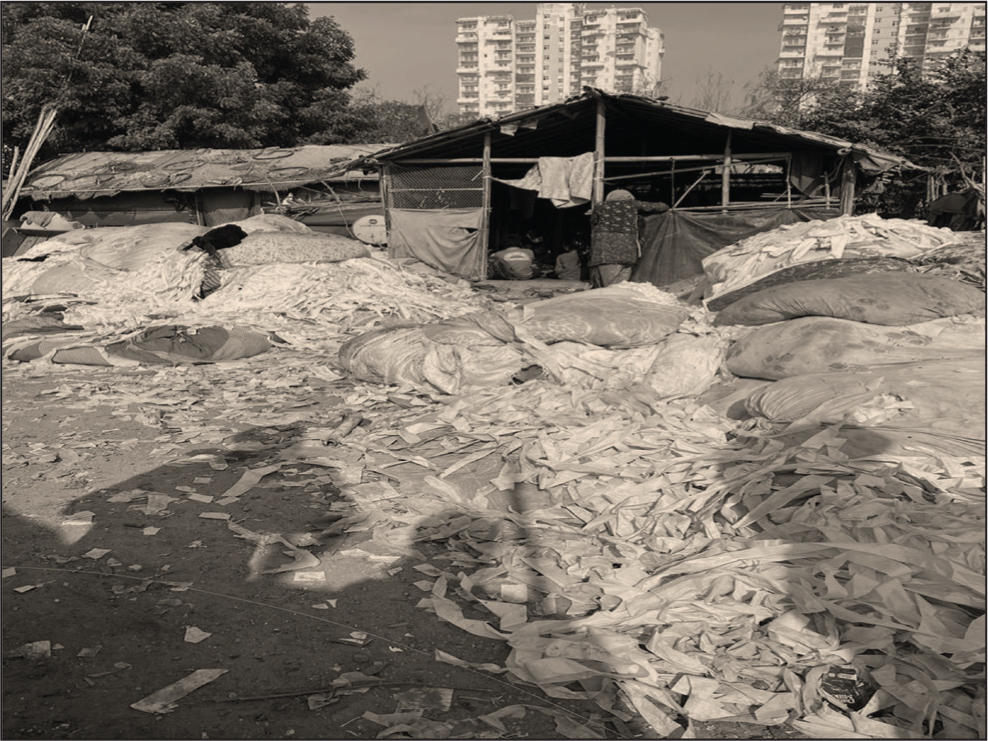
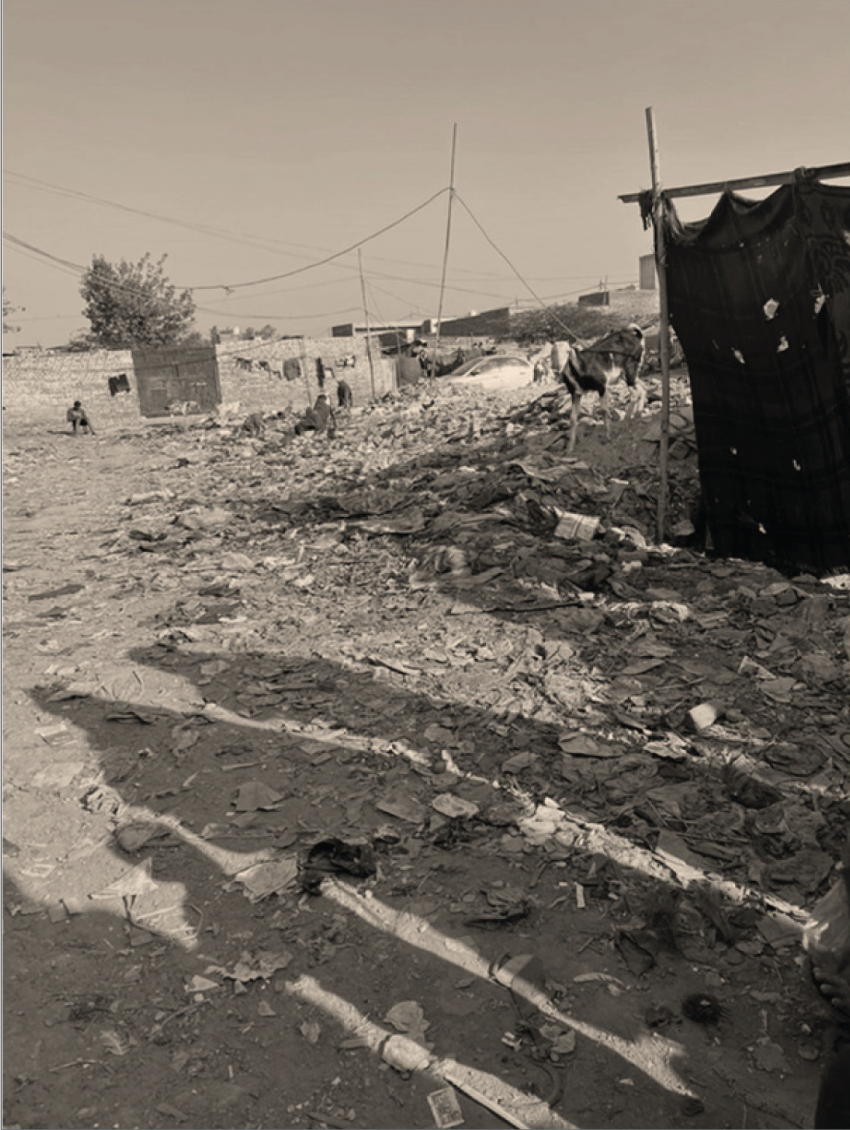
Refugee youth aspire to a better future even when the odds are stacked against them. Having been forcibly displaced, they have not only lost their homes, relatives, and friends but also find themselves in an adverse and alien environment, struggling to integrate and survive. The hostile attitude of the host community and the lack of support from the government add to their existing trauma of displacement, hinder their prospects of naturalization, affect long-term employability, and prolong poverty and instability. Oftentimes, refugees live in miserable conditions in camps, located in unsanitary conditions such as garbage dumps, and perform menial tasks such as rag picking and daily wage labor to fulfill their basic needs. Figure 1 and 2 shows the poor conditions of the refugee camps which are often within or near the premises of garbage dumps. The location of their camps, their jobs, and their status as refugees further disconnect them from the host communities.
An Informal School Within a Refugee Camp in the NCR Region.
The Entryway Toward a Refugee Camp in New Delhi.
The refugees, being economically weak and belonging to religious minority communities, also become entangled in India’s existing class and caste hierarchies. In India, caste-based discrimination affects the young more drastically, with 62% of Other Backward Class children and 61% of Scheduled Caste children reporting violence by teachers (Bharadwaj, 2024). There have been instances in schools where the lower-class and lower-caste children have been made to use separate toilet facilities, beaten up mercilessly, and even killed for drinking from the same pot meant for the upper castes (Zaffar 2022). These incidents of violence, however, are not any different from those experienced by refugee children from minority communities who have attempted to study in local schools.
During my visit to the Rohingya refugee camps in New Delhi, 1 refugee parents recalled that the locals refused to allow their children to study alongside or socialize with refugee children at the local school. They believed that their identity as immigrants from a religious minority and the associated stereotypes made the locals biased against them and their children. As a result, the school authorities were pressured to place refugee children in separate classrooms. This segregation exposed refugee children to discrimination and alienation from local students and teachers and resulted in them being singled out for corporal punishment by the teachers. Thereafter, the refugee parents had no option but to take their children out of local schools and opt for informal education provided by fellow refugees in makeshift schools within the camp. Figure 1 shows a makeshift refugee school in a refugee camp in the NCR region. These schools could only accommodate a few students and ran on minimal resources supported by local NGOs. Most children in the refugee camps opted out of formal or informal education due to a lack of an organized schooling structure, encouragement, and adequate facilities.
The absence of a dedicated refugee policy in the country further compounds the refugees’ challenges. Although India has historically provided asylum to refugees from its neighboring nations, it is a non-signatory to the 1951 UN Refugee Convention, and thus, assisting refugees becomes a gesture of goodwill rather than a legal obligation. Furthermore, the existing laws also do not distinguish between a refugee—those who have fled their countries due to well-founded fears of persecution—and an illegal immigrant—those who have crossed the borders illegally. Thus, refugees do not receive immediate support from the government, which should ideally be granted to people fleeing their countries under dire circumstances.
Discriminatory policies further impair the refugees’ prospects of safe asylum and successful assimilation. For instance, the Citizenship Amendment Act (2019) enforced a religion-based difference between refugees and illegal immigrants, providing a pathway for citizenship to only non-Muslim refugees. As a result, Muslim refugees, who comprise the largest share of refugees in India, such as the Rohingyas, Afghans, etc., primarily depend on UNHCR, which issues them identity cards (or blue cards) that serve as proof of their refugee status, making their welfare the responsibility of UNHCR and other humanitarian aid organizations. India’s refusal to recognize refugees, combined with an anti-immigrant narrative, fosters xenophobia and deprives them of their fundamental human rights, including the Right to Education, which should be accessible to everyone living in India, regardless of their citizenship. Refugees shared that their children were denied admission to local schools on multiple occasions due to the unavailability of documentation and proof of citizenship. They recalled how they had to reach out to various local NGOs and humanitarian organizations for letters of support, which then helped them enroll their children in schools. However, without Aadhaar, 2 refugee children are not able to appear for their high school exams, which are a basic requirement for any decent-paying job. Moreover, local governments have been actively discouraging education for refugee children by creating stricter policies. For example, in 2024, the Education Department of the Delhi Government passed a strict order that no ‘illegal’ Bangladeshi migrants should be admitted to Delhi’s government schools (Paliath and IndiaSpend, 2025).
UNESCO’s 2019 Global Education Monitoring Report shows that the number of migrant and refugee children around the world has grown by 26% since 2000—children who could ideally fill half a million classrooms around the world and have missed out on nearly 1.5 billion days of school. The report highlights how education becomes a tool that could provide freedom and agency to displaced children and their families, helping them to build a better future, simultaneously improving their chances of onward migration, assimilation, and citizenship.
Therefore, to reduce the aid dependency of refugees in the long term and foster social integration, it is crucial for India, which has a substantial refugee population, to urgently address the critical issue of refugee education. As a start, the government should implement policy reforms that guarantee refugees an equal right to primary education. The next step could be ensuring that refugee children study in the same schools as other Indian children. Segregating refugee children and their families from the cultural and social spaces of host communities is discriminatory and results in enmity and distrust between the two groups.
For a broader perspective, India could turn to refugee education initiatives run by other LMICs. Neighboring countries of India, such as Bangladesh and Pakistan, do not allow refugees access to national curricula and local schools, but instead run separate, non-formal, and community-based schools—a system that does not equip the refugees with the necessary linguistic and social skills. Kenya, on the other hand, allows refugees to access its educational curriculum, but within the camp spaces, limiting interaction with citizens. Germany’s refugee transit centers (AnKER), which also provide education to refugee children, have been criticized for isolating them from the host community, thereby hindering social and cultural integration. India could learn from such gaps in policies and adopt a more inclusive approach. Countries such as Rwanda and the Islamic Republic of Iran have ensured that refugees attend school side by side with nationals. Turkey currently provides access to education to all refugees on its soil, which includes teaching them the Turkish language and providing scholarships for refugee youth to pursue higher education in Turkish universities. These measures improve refugees’ ability to assimilate into the society and feel included in the country of their asylum.
Educating the Host Community
Policy reforms for refugees are bound to fail if they do not include provisions for educating the host community about forced displacement and refugees. If the host community is not informed about why, how, and when people are forced to migrate, xenophobic attitudes are likely to persist for generations, and no amount of policy reform can ensure a secure and inclusive future for refugees in the country. Educating the host communities, therefore, becomes a necessity for an inclusive classroom that does not isolate refugee children.
To achieve this, the government should incorporate the topic of forced displacement in school curricula. This would not only raise awareness within the host community but also help refugee children see their experiences reflected in what they learn, fostering a sense of belonging in the host country. So far, the Indian education system has discussed the issue of forced displacement only cursorily. For instance, the NCERT 3 10th standard social science textbook discusses refugees only in the context of India’s Partition (1947) and citizenship rules, overlooking the legal aspects, definitions, and distinctions between the various terms, such as “refugee,” “forcibly displaced persons,” “migrants,” and “illegal immigrants.” Ignoring the distinctions and using the terms interchangeably is not only problematic politically, but also often creates confusion among the young students who are getting introduced to the realities of migration and mobility. The curriculum also fails to foreground the harsh realities faced by the refugees and the causes of their migration from their origin countries in contemporary times. The dissemination of incomplete and selective information results in a lack of awareness and sensitivity in the host community, often causing international migrants, forcibly displaced persons, and refugees to be viewed as illegal immigrants, leading to stigmatization and discrimination.
Currently, India’s primary education system does not adequately reflect the complexities of refugee experiences, and a swift policy response is required to correct this omission. A good beginning would be to include the topic of forced displacement and migration as a separate reading (or a chapter) with historical examples from around the world in social sciences textbooks for ages 6–14, for whom education is free and compulsory in India. This would ensure that young minds understand the basics of human migration. Literature textbooks in English and native languages should also include fictional and non-fictional accounts on forced displacement and migration to foster an affective understanding of these topics. Teaching about refugees to host communities from an early age would help dispel misconceptions and stereotypes and would also inculcate the values of sympathy and compassion toward marginalized groups, effectively leading to an empathetic generation of sensitized individuals.
However, these policies are unlikely to be successful without responsible, receptive, and sensitized teachers. UNHCR’s guidebook titled UNHCR teaching about refugees 2021: Guide for teachers underscores the importance of including the topic of forced displacement in schools saying that teachers “can teach young people to separate facts from fiction and opinion.” If teachers remain ignorant about forced displacement, their classrooms, too, may remain indifferent to the plight of refugees, even after following an inclusive curriculum. Uninformed teaching techniques and an unsympathetic classroom could also result in refugee children dropping out of school. Therefore, teacher training regarding forced displacement is an essential policy reform to support refugee education in India.
To educate teachers and host communities on harmonious coexistence, several universities around the world offer teacher-training modules, such as the Refugee Education program by the University of British Columbia (Canada) and a summer workshop for K–12 teachers on forced displacement by the Centre of Forced Displacement at Boston University (USA). UNHCR also provides several resources for teachers on this topic. Indian teacher-training modules should include the fundamentals of forced displacement in the Indian and South Asian context. The government should also train and recruit teachers from refugee communities, which would improve the standard of education received in camp schools, create an inspiring example, and encourage refugee children to join local schools. Sensitizing teachers about the realities of forced displacement, migration, and refugees could help in building inclusive classrooms that produce leaders who can build a future that is secure, considerate, and accepting of everyone, especially those who have been forced to leave their lives and roots behind.
Conclusion
Education is a powerful tool to ensure that we “leave no one behind”—the promise of the 2030 Agenda for Sustainable Development. Granting access to a formal school environment could potentially cater to the psychological and social needs of refugee children and promote social integration. It might not be immediately possible for a geopolitically complex country like India to satisfy the rehabilitation and assimilation needs of refugees by creating a dedicated refugee policy or modifying its citizenship rules, however, reforms to educational policy could potentially help refugees in onward migration, positive repatriation, and assimilation. This becomes especially important as India tries to establish itself as a global power. Furthermore, as the world grows increasingly xenophobic and intolerant, it is imperative that we, as a society, inspire the leaders of tomorrow to be inclusive and welcoming toward those persecuted, displaced, and marginalized—something that is achievable through sensitized education and educators. By fostering understanding, empathy, and critical knowledge about forced displacement among host communities, we can teach our younger generations to separate fact from fiction, dispel stereotypes, and build an egalitarian society where diversity is embraced, and human rights are valued over borders.
Footnotes
Declaration of Conflicting Interests
The author declared no potential conflicts of interest with respect to the research, authorship, and/or publication of this article.
Funding
The author received no financial support for the research, authorship, and/or publication of this article.