



Abstract
Urban digital development plays a pivotal role in achieving carbon mitigation and advancing environmental sustainability. While existing studies have begun to examine the relationship between digitalization and carbon dioxide emissions, discussions regarding how urban digitalization influences carbon dioxide emissions under multi-dimensional conditions remain limited. In particular, there is a need for further exploration of specific dimensions such as digital governance, digital innovation, digital industrialization, digital infrastructure, and digital finance. Therefore, this study employs the Spatial Durbin Model (SDM) and Geographically Weighted Regression (GWR) to investigate the spatial effects of urban digitalization on carbon dioxide emissions. The analysis utilizes cross-sectional data from 245 prefecture-level cities in China for the years 2015 and 2020. The results indicate the following: (1) In comparison to 2015, the influence of urban digitalization on carbon dioxide emission reduction weakened by 2020 and exhibited a diffusion effect toward surrounding regions, demonstrating a spatial distribution trend that decreases from north to south; (2) The internal dimensions of urban digitalization, such as digital governance, innovation, infrastructure, industrialization, and finance, exhibit geographical spatial heterogeneity in their impact on carbon dioxide emissions. (3) Digital governance has exhibited a transformative impact on carbon dioxide emissions. In 2015, digital governance was associated with an increase in local carbon dioxide emissions, yet its spatial spillover effects were limited. By contrast, in 2020, while its influence on local emissions became statistically insignificant, it demonstrated a substantial carbon reduction effect in neighboring regions. (4) Digital innovation has consistently played a critical role in reducing carbon dioxide emissions. However, compared to 2015, the overall effectiveness of digital innovation in mitigating carbon dioxide emissions has shown signs of weakening, both locally and in adjacent areas. The results emphasize the pivotal role of digital transformation in mitigating carbon dioxide emissions, thereby providing a robust empirical foundation for the development of low-carbon cities.
Keywords
Introduction
In the process of achieving sustainable development, it is imperative to effectively reduce carbon dioxide emissions while simultaneously promoting economic growth and technological innovation (Chen and Maharjan, 2024; Huang, 2024; Maumoh and Onoja, 2024; Xue and Poon, 2024). This objective has emerged as a top priority for the global community. China’s carbon dioxide emissions constitute over one-quarter of the global total (Friedlingstein et al., 2023). Accordingly, China has pledged to endeavor to reach peak carbon dioxide emissions before 2030 and to achieve carbon neutrality by 2060 (Chen et al., 2022; Liu et al., 2022b; Wang and Wang, 2017). According to statistics presented by the China Academy of Information and Communications Technology, China’s digital economy burgeoned to 50.2 trillion yuan in 2022, with a growth rate of 10.3%. Previous studies have extensively explored the impacts of China’s digital development on carbon dioxide emissions from multiple perspectives, such as the sharing economy, technological innovation, digital transformation, and digital technology (Chen et al., 2023; Gu, 2022; Li et al., 2024b; Ren and Yin, 2025; Shang et al., 2023; Shen et al., 2023; Xia et al., 2024; Zhang et al., 2024a). However, these studies fail to provide a multidimensional and comprehensive assessment of urban digitalization levels and predominantly rely on one or a limited set of indicators to evaluate the digital development of cities. This study investigates the spatial effects of urban digitalization on carbon dioxide emissions in Chinese cities, addressing the gap in understanding the nuanced impacts of digital governance and innovation.
Considering the complex and multifaceted nature of digital development, relying solely on isolated indicators may inadvertently distort perceptions. Given the potential variations in spatial effects resulting from resource allocation disparities and distinct urban characteristics, it is crucial to conduct an in-depth analysis of the spatial implications of these indices across diverse urban contexts, thereby promoting a more comprehensive understanding of the relationship between urban digitization and carbon dioxide emissions. In addition, previous investigations predominantly centered on the association between urban digitization and carbon dioxide emissions. Most studies have neglected a systematic investigation into the micro-spatial impacts of specific indicators used to measure urban digitization levels on urban carbon dioxide emissions, particularly the underexplored area of carbon reduction effects associated with urban digital governance and urban digital innovation. There is a notable deficiency in the comprehensive understanding of how digital governance and innovation influence emissions in local cities and their surrounding regions. Furthermore, there is a scarcity of time-series comparative studies examining the spatial effects of urban digitalization on carbon dioxide emissions, particularly regarding the spatial impacts of digital governance and innovation. By comparing the results across two time-period cross-sections, this research can identify the differentiated spatial carbon mitigation effects driven by both the comprehensive index of urban digitalization and the specific effects of digital governance and innovation. This contributes to a more systematic and in-depth understanding of the spatial mechanism of urban digitalization in achieving carbon mitigation.
To address the aforementioned research gaps, this study developed a multidimensional comprehensive index for measuring urban digitalization levels. The index incorporates dimensions such as digital governance, innovation, infrastructure, industrialization, and finance. This study aims to elucidate the extent of multi-dimensional urban digitization and its spatial impacts on specific dimensions, particularly in the areas of digital governance, innovation, and carbon dioxide emissions. Additionally, this study investigates both the direct and indirect spatial effects between urban digitalization and carbon dioxide emissions. This study investigates the spatial heterogeneities and spillover effects by employing the Spatial Durbin Model (SDM) and Geographically Weighted Regression (GWR). In practice, spatial processes frequently exhibit both overarching patterns and localized variations. SDM offers a comprehensive understanding of the general spatial interaction mechanisms across the entire research area, while GWR enables the identification of how these mechanisms differ across specific geographic locations. The SDM enables the identification of inter-city influences, while the GWR provides a localized quantitative assessment of relationships specific to individual cities, thereby elucidating the impact of urban digitalization on carbon dioxide emissions across various regions. These insights into spatial spillover effects and regional heterogeneity are essential for the development of targeted and context-sensitive regional policies. Furthermore, this study seeks to provide policymakers with empirical evidence to support the development of low-carbon cities through digital transformation and upgrading.
The remainder of this research is structured as follows. Section 2 Literature review and research hypotheses offers an in-depth review of the existing academic literature and formulates the research hypotheses. Section 3 Methods outlines the methodological approach and specifies the data sources. Section 4 Results presents the empirical findings and offers a detailed discussion. Section 5 Conclusions and discussions summarizes the conclusions, highlights its policy implications, underscores the limitations and suggests potential directions for future investigation.
Literature review and research hypotheses
In recent decades, extensive research has addressed spatial patterns and temporal trends in carbon dioxide emissions in China (Li et al., 2022, 2024a; Su et al., 2020, 2022; Yang et al., 2019; You et al., 2024; Zhang et al., 2024b; Zhou et al., 2021, 2022). These studies aimed to gain insights into the distribution of carbon dioxide emissions, shedding light on the influence of urbanization and economic development (Su et al., 2022; Sun et al., 2016, 2020; Wang et al., 2020b; Zhang et al., 2022b) and identifying spatiotemporal disparities in carbon dioxide emission intensity (Ali et al., 2022; Cheng and Yao, 2021; Ke et al., 2023; Wang et al., 2020a). The culmination of these scholarly endeavors has revealed distinct spatial disparities and uneven allocation of carbon dioxide emissions across China. Major urban centers and economically prosperous regions have been found to exhibit elevated levels of carbon dioxide emissions, whereas smaller cities and less-developed areas manifest comparably lower levels (Qin et al., 2019). Moreover, the geographical distribution of carbon dioxide emissions within specific regions is influenced by a variety of factors, including natural conditions, industrial structure, and energy consumption patterns (Fang et al., 2015; Feng et al., 2013; Liu et al., 2015; Wang et al., 2017). Investigations into the factors influencing carbon dioxide emissions have garnered substantial attention, with previous studies exploring the driving forces behind carbon dioxide emissions and providing policy recommendations pertaining to energy conservation and emission reduction. For instance, (Wang et al., 2012) discovered a positive correlation between carbon dioxide emissions and levels of urbanization, economic development, and industrial structure and a negative impact of tertiary industry proportion, energy intensity, and R&D output in Beijing, China. Xu et al. (2016) considered potential influencing factors, including energy consumption per unit of GDP, total population, and the ratio of value-added in the industrial sector to GDP. Guan et al. (2017) incorporated variables such as net income per capita of farmers, population density, urban employment, and the ratio of value-added in the tertiary industry to GDP as plausible influencing factors. Additionally, the pollution reduction effect associated with digital economic development exhibits characteristics of increasing marginal returns; however, the marginal impact of its carbon reduction effect remains relatively inconspicuous (Hu, 2023).
Recent research has investigated the environmental implications of urban digitalization, signifying growing interest in this domain (Dwivedi et al., 2022; Guo and Ma, 2023; Zhang et al., 2023). Digitalization is a promising avenue for attaining carbon neutrality by the mid-21st century (Dwivedi et al., 2022). Research demonstrates that digitalization significantly impacts the reduction of carbon dioxide emissions across provinces. Additionally, research and development investments, along with technological innovation, exhibit modulatory effects within the nexus between digitalization and carbon dioxide emissions (Ma et al., 2022). Another investigation identified the potential of digital finance in reducing carbon dioxide emissions, although its impact on emissions reduction was less significant than that of energy infrastructure (Shahbaz et al., 2022a). Specifically, digital inclusive finance exhibits a pronounced direct association with carbon dioxide emissions in cities located in the eastern, western, and northeastern regions, which is amplified by its potential to stimulate economic growth, leading to increased carbon dioxide emissions (Wang et al., 2022b).
Nonetheless, some scholars argue that the impact of the digital economy on carbon dioxide emissions exhibits an inverted U-shaped pattern, suggesting that as China’s digital economy develops, it may initially contribute to an increase in carbon dioxide emissions but later result in a significant reduction (Li and Wang, 2022; Wang et al., 2023). Previous study investigated Internet user data as a proxy to assess the digitalization level of BRICS countries and revealed favorable environmental effects of digitalization on carbon dioxide emissions in China, South Africa, Russia, and Brazil. However, a relatively lower impact was observed in India (Chen, 2022). Furthermore, previous investigation in China revealed that the eastern region experienced a more pronounced influence of digitalization on carbon dioxide emissions, whereas the effect was not significant in the central and western regions (Li et al., 2021). These findings explain the geospatial disparities in the impact of digital transformation on carbon dioxide emissions, underscoring the need for a more comprehensive understanding of this phenomenon. Thus, evidence suggests that urban digitalization could be a pivotal avenue for curtailing carbon dioxide emissions. Incorporating the impact of spatial effects, this study posed the following hypothesis:
Digital governance enhances the efficiency and transparency of urban management. Supported by data-driven decision-making, it provides precise and comprehensive strategic recommendations for environmental conservation and the low-carbon, sustainable development of cities. Previous research suggests that government control negatively affects carbon dioxide emissions, particularly in the BRICS countries (Danish et al., 2019). These insights underscore the paramount importance of governance in achieving clean environmental objectives and bolstering efforts for sustainable development and carbon mitigation. In a panel data analysis of 72 countries between 2003 and 2019, government control was a mediating agent between the digital economy and energy transition, and the digital economy advanced renewable energy transitions by fortifying governance capacities (Shahbaz et al., 2022b). Therefore, we posed the following hypothesis:
Digital innovation refers to the use of a series of digital technologies to promote various forms of technological innovation, and to carry out different directions such as new product development, production process optimization, organizational model transformation, and business model innovation. In addition, digital innovation plays a crucial role in urban development by promoting sustainable economic, social, and environmental development, thereby impacting carbon dioxide emissions in cities. Previous study suggests that the synergistic effect of digital finance and green technology innovation may significantly improve local carbon dioxide emission efficiency while limiting the efficiency of surrounding cities, and this effect varies depending on the carbon dioxide emission efficiency of the city (Ding et al., 2023). Another study shows that although technological innovation in the information industry may initially increase carbon dioxide emission intensity, cross industry technology spillovers will effectively reduce domestic carbon dioxide emission intensity in the long run, proving the important role of technological innovation in promoting green development and reducing carbon dioxide emissions (Liu et al., 2022a). Another investigation revealed that the refinement of industrial structures coupled with the continuous innovation in green technology progressively emerged as the central impetus behind carbon dioxide emission regulation (Li and Wang, 2022). Therefore, the following hypothesis is proposed:
Digital infrastructure is the pivotal element driving the digital economy and fortifying urban management and is the cornerstone of urban digital transformation. Digital infrastructure furnishes consistent support for the sustained growth of the digital economy and is crucial for urban low-carbon development. However, although digital infrastructure offers tools for urban low-carbon transition, its implementation and promotion across cities and nations should consider the local technological application environment and specific challenges. One study revealed that contributions of information infrastructure to emission reductions are pronounced in large-size, digitally advanced, and economically leading cities, whereas the effects are limited in other cities (Dong et al., 2022). The establishment of digital infrastructure, such as 5G networks and smart grids, created opportunities to realize efficient resource management and energy consumption. However, the construction and upkeep of these infrastructures lead to carbon dioxide emissions. Recent analyses of provincial carbon dioxide emissions in China indicated that the construction of digital infrastructure and widespread adoption of innovative technologies spurred economic and employment growth; however, they were associated with an upsurge in carbon dioxide emissions (Wang et al., 2022a). Thus, the following hypothesis was postulated:
Digital industrialization denotes the profound integration of digital technology with traditional industries, targeting the augmentation of production efficiency and innovation and imbuing China’s economic transformation and industrial structure optimization with renewed vigor. Previous study demonstrated that while inclusive digital finance increased consumption-related carbon dioxide emissions, these were curtailed by the transition of industries from inefficient, high-emission operations to clean and efficient ones, resulting in emission reduction in certain instances (Zhang and Du, 2025). Thus, the following hypothesis was posited:
Digital finance has optimized the ubiquity and efficiency of financial services in cities, forging novel trajectories for green and sustainable economic activities. Digital financial platforms have unlocked unprecedented funding avenues for green initiatives. Studies have found that the proliferation of digital finance has positively catalyzed economic growth in nations involved in the “One Belt, One Road” initiative. However, the initiative elicited a marked surge in carbon dioxide emissions, consequently impairing environmental quality (Ozturk and Ullah, 2022). Thus, the following hypothesis was postulated:
In summary, the primary driving forces behind carbon dioxide emissions include industrial development, environmental quality, urbanization progress, and urban scale. These findings establish a theoretical basis for investigating the factors that influence carbon dioxide emissions (as shown in Figure 1). Therefore, it is essential to incorporate other relevant influencing factors as control variables in the theoretical model to conduct a more in-depth exploration and analysis of the impact of digitalization levels on carbon dioxide emissions.
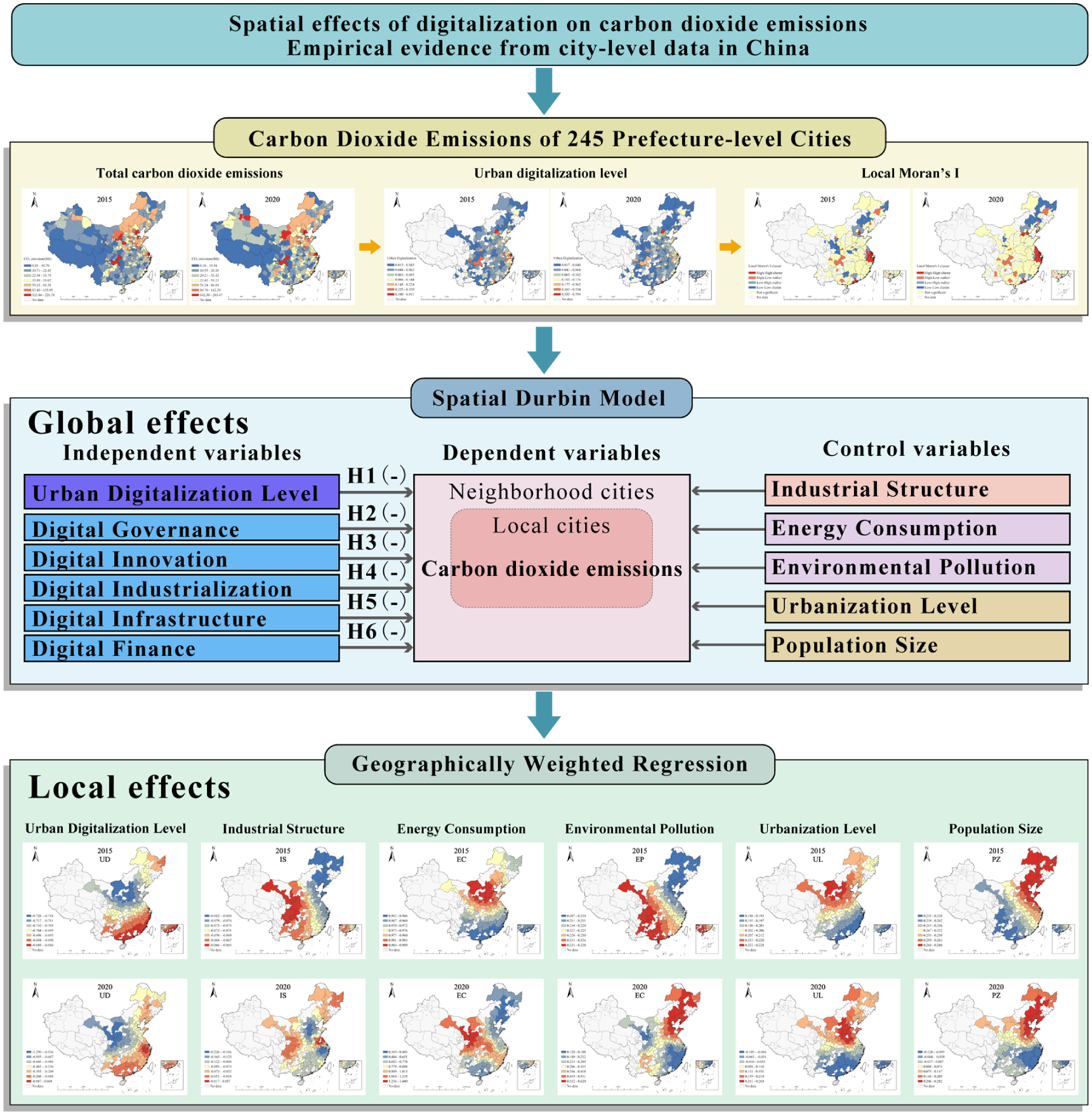
Theoretical framework of this study.
Methods
Measurement of urban digitalization
To comprehensively measure the level of urban digitalization, based on existing research (Che et al., 2024; Cheng et al., 2023; Ding et al., 2023; Li and Wang, 2022; Li et al., 2024b; Liao and Liu, 2024; Liu et al., 2022a, 2024; Meng et al., 2024; Ozturk and Ullah, 2022; Shahbaz et al., 2022b; Wang and Guo, 2022; Wang et al., 2022b; Zhang and Du, 2025), this study assessed urban digital development in five dimensions: digital governance (Meng et al., 2024; Zhang and Du, 2025), digital innovation (Cheng et al., 2023), digital industrialization (Li and Wang, 2022; Li et al., 2022), digital infrastructure (Che et al., 2024; Dong et al., 2022; Liao and Liu, 2024), and digital finance (Ding et al., 2023). The detailed indicator system is presented in Table 1.
Evaluation indicators for measuring urban digital development.
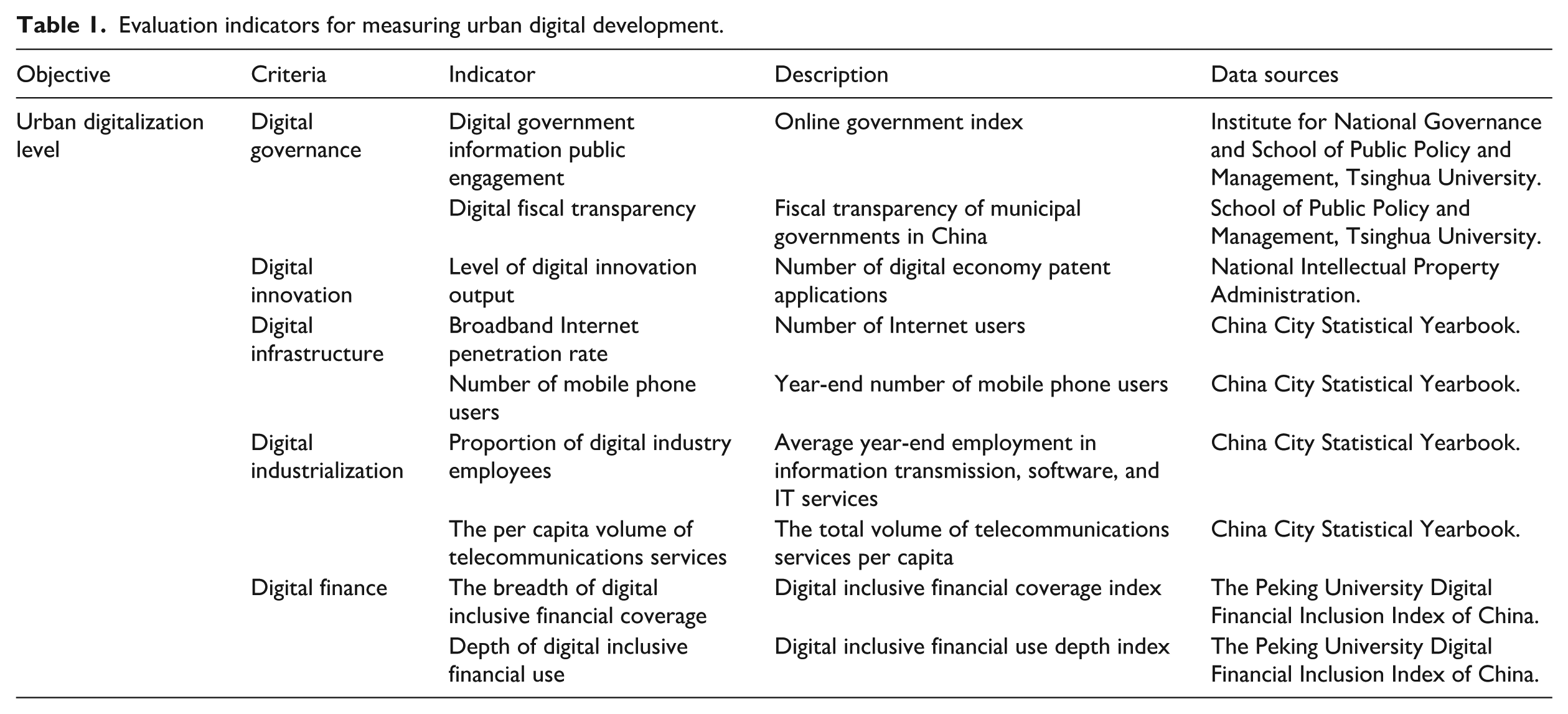
In probing the methodologies for gauging urban digitalization levels, this study employed factor analysis to dimensionally reduce and integrate four observation indicators closely related to urban digitalization. This study used the Kaiser-Meyer-Olkin (KMO) test and Bartlett’s test of sphericity to ensure the data set was appropriate for factor analysis. Grounded in the criterion of eigenvalues exceeding one and corroborated by the Scree plot, this study identified the required number of factors and verified their contribution to the total variance in the data. After conducting the Varimax orthogonal rotation, this study clarified the weights of each factor in urban digital progression based on the entropy method (Lu et al., 2019). The composite evaluation, derived from these factor loadings, culminated in an encompassing urban digitalization scoring system.
Materials
This study analyzed 245 prefecture-level cities in China with distinct economic compositions, industrial structures, and resource endowments. These cities were chosen for their representativeness in terms of digital development and carbon dioxide emissions, offering a comprehensive understanding of the interplay between technological advancement and environmental impact across varying urban landscapes. A critical determinant for the selection of these cities was the availability, completeness, and accessibility of relevant data, ensuring these findings were grounded in solid evidence and bolstering the overall validity and reliability of conclusions.
The primary data consisted of carbon dioxide emission and indicators related to digitalization sourced from Chinese government investigations. The carbon dioxide emission data for the years 2015 and 2020 were obtained from the China City Carbon Dioxide Emissions Dataset, sourced from the China City Greenhouse Gas Working Group (CCG). The China City Statistical Yearbook served as the primary compendium for indicators pertinent to urban digitalization, furnishing a comprehensive suite of socioeconomic metrics for China. Data on digital inclusive finance were derived from the China Digital Inclusive Finance Index, a collaborative metric designed by the Digital Finance Research Centre of Peking University in partnership with Ant Financial Services Group. Online government index data were extracted from the Performance Evaluation of Chinese Government Websites issued by Tsinghua University. Our investigation focused on carbon dioxide emission data for the years 2015 and 2020. The spatial patterns of carbon dioxide emissions in China are shown in Figure 2.
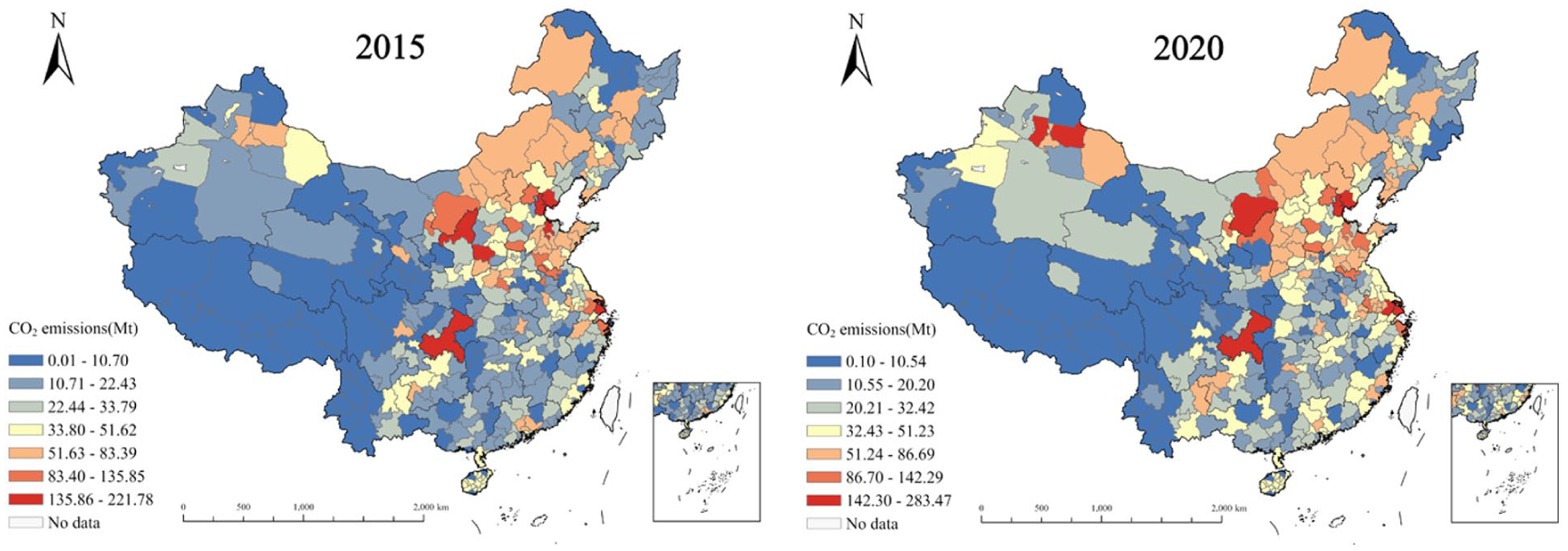
The spatial distribution of total carbon dioxide emissions in Chinese cities.
In line with the theoretical framework of this study, the definitions and data sources for all indicators are delineated in Table 2.
Variables description.
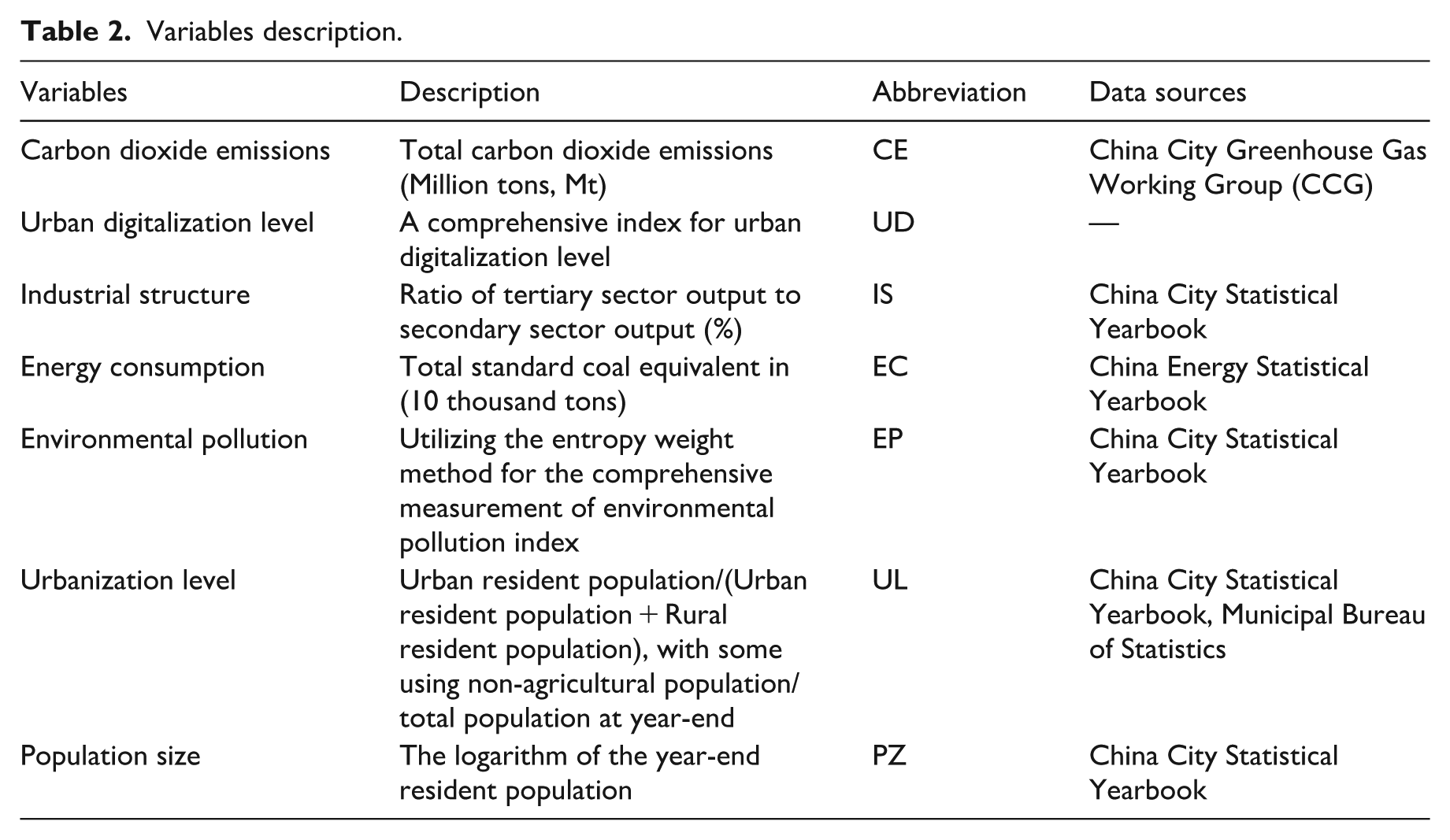
Guided by the theoretical framework delineated above, this study used urban digitalization, industrial structure, energy consumption, environmental pollution, urbanization level, and population size as indicators. The data description is shown in Table 3.
Descriptive statistics of selected variables for 2015 and 2020.
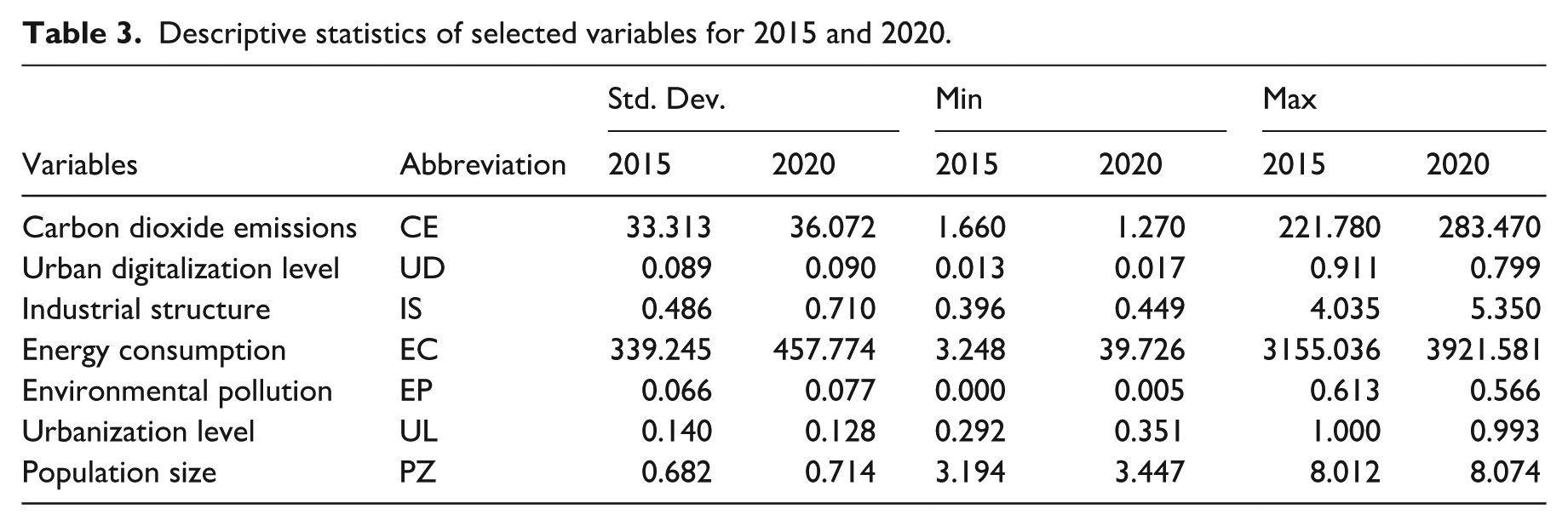
This study used the ratio of tertiary sector output to secondary sector output as the indicator of the city’s industrial structure. In the meantime, the environmental pollution index was used to represent the environmental pollution of the city. It is evident that the interplay among industrial structure, energy consumption, environmental pollution, and digitalization profoundly shapes urban carbon dioxide emissions. These elements interact synergistically and yield varying effects under diverse economic and technological contexts. Previous study spanning the past 40 years on China’s industrial structure, economic growth, and carbon dioxide emissions discerned that the evolution in industrial structure directly curtailed carbon dioxide emissions (Dong et al., 2020). Another investigation pinpointing the factors behind carbon dioxide emissions due to China’s fossil energy consumption found that energy structure considerably affects carbon outflows. Furthermore, energy consumption intensity performed carbon mitigation effect (Xu et al., 2014). On the digital front, a separate study centered on China elucidated the ramifications of digitalization on CO2 emissions, and the research highlighted that while digitalization augmented CO2 emissions by intensifying energy consumption, it concurrently facilitated a reduction in emissions by advancing energy consumption structure and diminishing energy consumption intensity (Liao et al., 2023). Another panel data study covering 280 cities in China showed that the promotion of digital finance significantly enhanced the effect of collaborative reduction of environmental pollution and carbon dioxide emissions (Liu et al., 2023). This study assessed urbanization level by computing the proportion of the urban permanent population to the total population. In addition, the logarithm of the year-end permanent resident count provided insights into population size. To shed light on the interlinked effects of population size and urbanization on carbon dioxide emissions, this study reviewed empirical studies spanning diverse countries and regions. Previous empirical study between 1990 and 2014 across 28 European countries, investigated the short-term and long-term repercussions of population growth and urbanization on environmental degradation (Pham et al., 2020). From a myriad of global data sets, it is evident that population size markedly affect carbon dioxide emissions and environmental degradation. Previous research indicated that while accelerating urbanization initially amplifies local carbon dioxide emissions, this impact eventually reverses. Nonetheless, this adverse effect gradually wanes over time. Intriguingly, a pronounced spatial spillover effect in carbon dioxide emissions was observed among provinces (Liu and Liu, 2019).
Detecting spatial auto-correlation
To explore the nexus between carbon dioxide emissions and urban digitalization level and characterize their linear interrelation, we employed the ordinary least squares (OLS) analysis using the R programming environment. Furthermore, we used the Global Moran’s I statistic to assess the spatial auto-correlation of residuals derived from the OLS analysis, conducted using ArcGIS. Using the Global Moran’s I enabled us to discern potential clustering patterns within the study area, highlighting spatial dependencies. The Global Moran’s I was calculated using equation (1):

Where
Subsequently, we employed the Local Moran’s I index to assess local hotspots of carbon dioxide emissions and identify spatial heterogeneity within the dataset (Anselin, 1995). The Local Moran’s I value was calculated using equation (2):

Where
Spatial Durbin model
Global Moran’s I analysis indicated a significant spatial auto-correlation between the distribution of carbon dioxide emissions and urban digitalization level. To further examine the effects of the digitalization on the distribution of carbon dioxide emissions while considering spatial autocorrelation, we employed the SDM. The SDM was implemented using the R package for computational analysis.
The SDM model, which is a comprehensive approach, integrates spatially lagged dependent and independent variables into the regression (Wu et al., 2021; Zhang et al., 2022a). Unlike simpler spatial lag models, this configuration enables the SDM to capture potential spillover effects, thereby considering the influence of both types of spatially lagged variables. The SDM for carbon dioxide emission intensity was represented as:

Where
Geographically weighted regression
This study used the GWR to examine the relationship between the urban digitalization level and carbon dioxide emissions to further explore the intensity of the local spatial clustering effects. This approach allowed for a detailed analysis of localized variations in spatial clustering effects (Brunsdon et al., 1996, 1998; Fotheringham et al., 1998, 2017). The GWR analysis was conducted using the R packages spgwr (Gollini et al., 2015).
The GWR model is a spatial analysis technique that enables the modeling of spatially varying relationships in linear regression. By conducting separate regressions for each local area and assigning different weights to different regions, the GWR model captures parameters non-stationary across space, allowing for varying relationships between variables based on their spatial location. Thus, the GWR model provides realistic and accurate results (Gollini et al., 2015). The GWR model was formulated as follows:

Where is carbon dioxide emissions;
Results
Spatial patterns of digitalization in Chinese cities
Using the natural break-point method in ArcGIS, the comprehensive index of urban digitalization was classified into five categories (Figure 3). This spatial representation highlights significant spatial disparities in urban digitalization. Specifically, the spatial pattern of urban digitalization in China shows a higher concentration in the eastern regions and relatively lower levels in the western areas. Coastal cities in the east, including Beijing, Shanghai, Guangzhou, and Shenzhen, have taken the lead in digital development. These cities have demonstrated exceptional performance in policy support, industrial foundation, technological innovation, and the development of data element markets. As a “global benchmark city for the digital economy,” Beijing boasts the highest proportion of digital economy within its GDP among all cities in China. It ranks first globally in terms of authorized digital technology invention patents, leads the nation in digital governance index, and remains at the forefront in public data openness and government digitalization efficiency. Meanwhile, Shanghai and Guangzhou excel in the integration of data elements with industry sectors. Notably, some cities in the central region, such as Chengdu and Chongqing, also exhibit strong performance in digitalization. In contrast, the western region generally lags behind. These disparities reflect differences in regional digital development strategies, policy support, and industrial structures, which in turn influence urban digitalization levels.
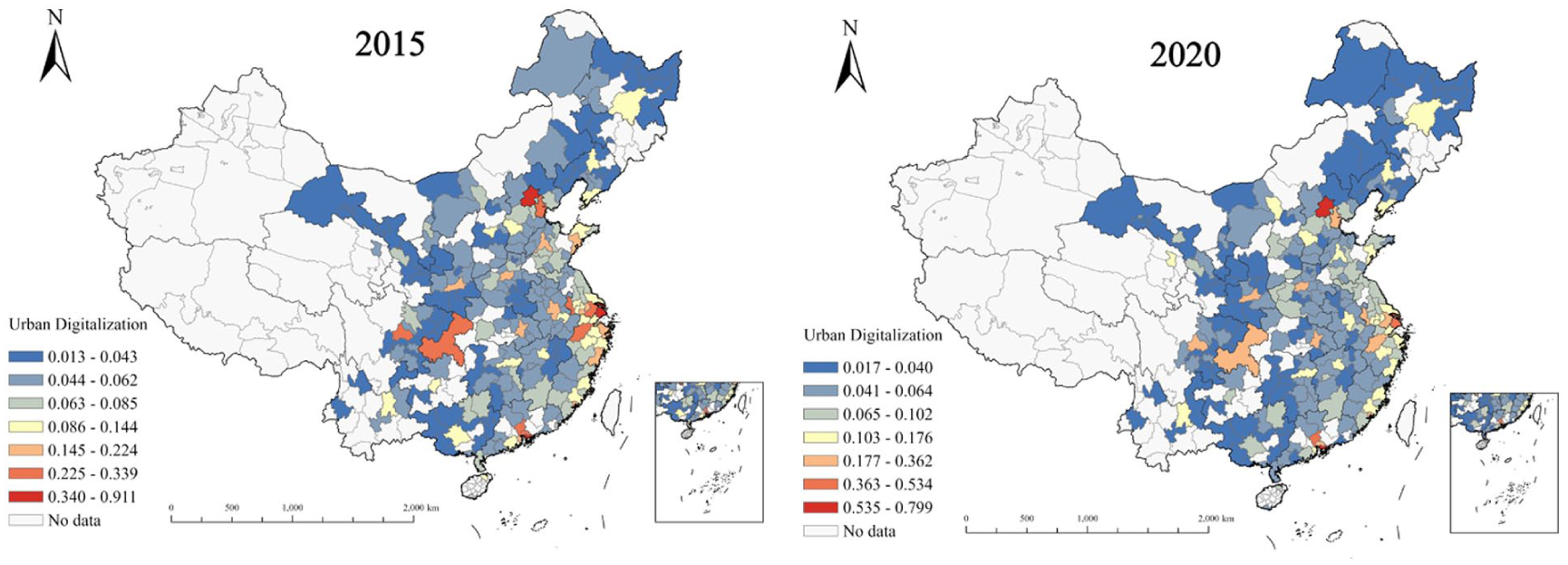
The spatial distribution of urban digitalization in Chinese cities.
The Local Moran’s I analysis revealed varying spatial agglomeration phenomena of urban digitalization. As shown in Figure 4, cities exhibiting high-high (H-H) clustering characteristics were primarily in the Pearl River Delta and Yangtze River Delta, Beijing-Tianjin-Hebei Urban Agglomeration. These regions, located along the coast, benefit from advanced economies, and dense populations, and are strategically positioned to establish ties with international markets, granting them a competitive edge in the digital economy and industrial digitalization. The strategic support from local governments further augmented the adoption and innovative promotion of digital technologies. Although Beijing led domestically in digitalization, its spatial agglomeration effect remained subtle. This could be attributed to Beijing’s extensive investment, avant-garde infrastructure, and rich technical talent pool, propelling its digital industry and technology development at an unprecedented rate compared to neighboring regions and crafting a unique spatial “island” agglomeration phenomenon. Surrounding these highly concentrated areas emerged cities reflecting low-high (L-H) outliers, such as Chengde, and Zhangjiakou in Hebei, as well as Shanwei in Guangdong. Although these cities are nested within economically vibrant provinces, their remote geographical positioning, combined with the uneven distribution of resources and policies and comparatively outdated digital infrastructure within the region, decelerated their progress in the digital economy and industry. Cities with prominent low-low (L-L) clustering are predominantly located in regions such as Ningxia, Inner Mongolia, and Heilongjiang. These regions have confronted multifaceted challenges, encompassing geographical, economic, and policy factors, and causing delays in their digital evolution. On a policy dimension, these regions consistently face deficits in finance, technology, and talent, impeding their digital progression. Conversely, certain cities in the central and southwestern regions, such as Xi’an, Guiyang, and Chongqing, displayed high-low (H-L) outliers, marking their digital development as more pronounced compared to adjacent cities. Due to China’s diverse regional resource endowments, the eastern coastal region, benefiting from its logistical and international advantages, accelerated in digital evolution. Conversely, inland and mountainous regions, hindered by geographical constraints, displayed relatively slow progress. Prolonged human resource migrations, such as the labor movement from the west to the east, influenced the regional distribution of digital resources and skills. The digital developmental patterns could be more intricate on a finer spatial scale, such as at the provincial or county level.
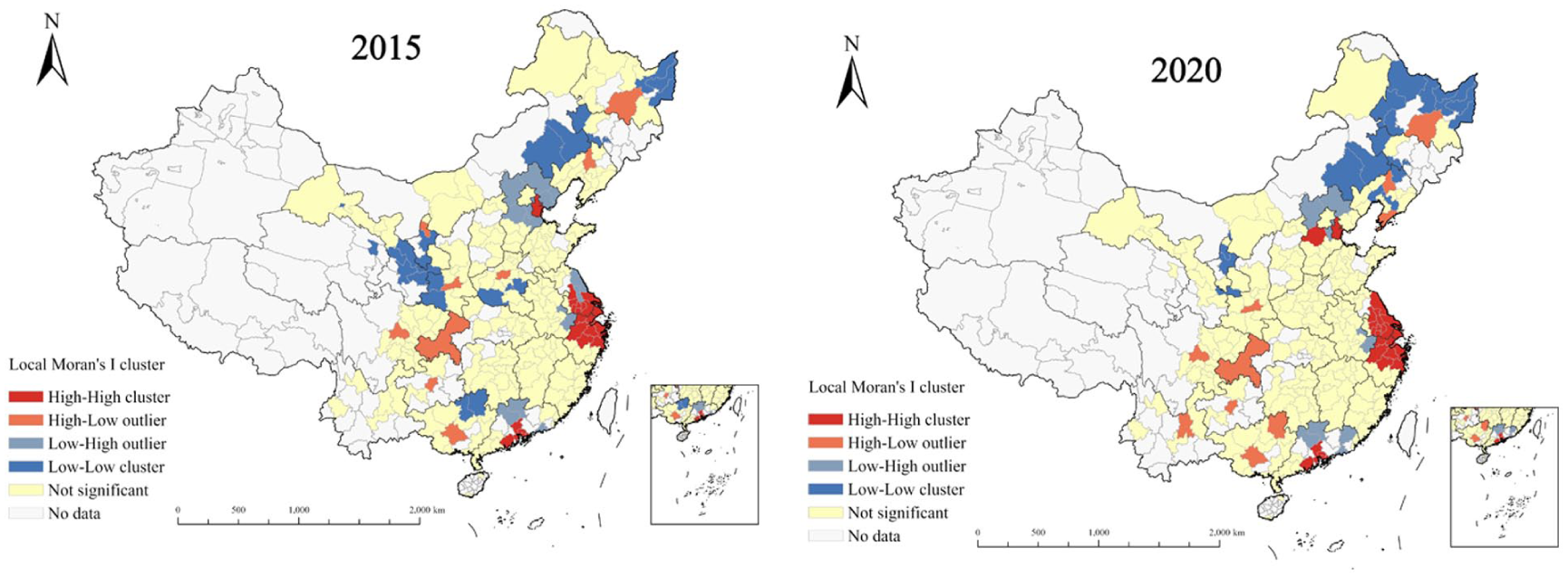
Spatial auto-correlation of urban digitalization in Chinese cities.
Impacts of urban digitalization on emissions based on SDM
The Global Moran’s I analysis elucidated a conspicuous spatial auto-correlation between total carbon dioxide emissions and urban digitalization levels across Chinese cities. The results indicated that cities’ carbon dioxide emissions were correlated with the level of digitalization and that this relationship may persist among neighboring cities. The preliminary regression analysis employed the conventional OLS model to estimate the impact of explanatory variables on the dependent variable. Although the OLS offers a straightforward estimation of effects, it may overlook the inherent spatial dependencies present within the data. To delve deeper into the influence of urban digitalization development on carbon dioxide emissions across Chinese cities, we transitioned to spatial econometric models.
In determining the apt spatial model, a comprehensive assessment was executed. The results demonstrated that, compared to the traditional OLS model, the SDM had superior performance in explicating the spatial dependencies within the data, which was bolstered by Moran’s I analysis. The SDM identified direct and indirect spatial effects, providing a comprehensive perspective of spatial dependencies. Consequently, we used the SDM as the definitive analytical instrument.
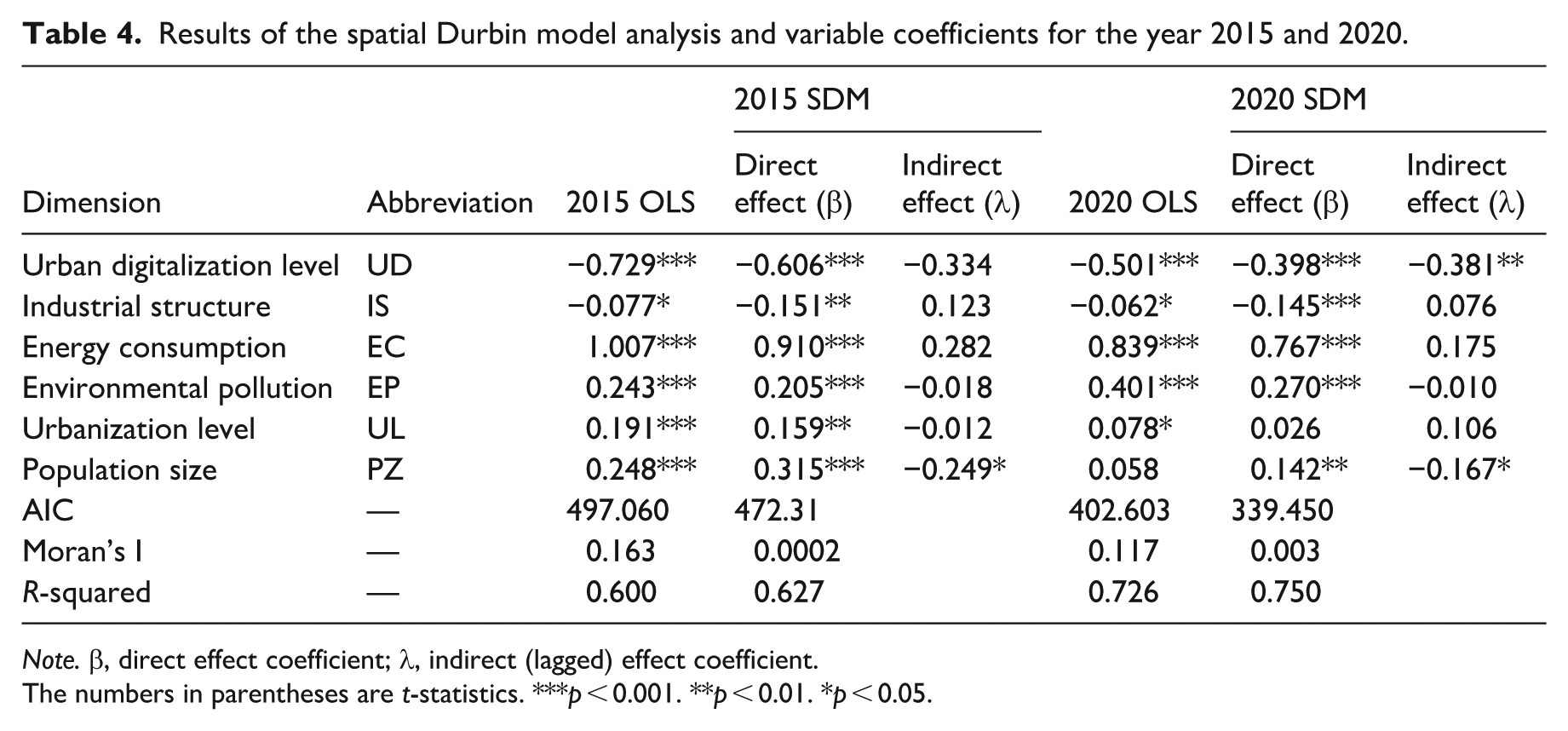
As shown in Table 4, urban digitalization levels exhibited a pronounced negative correlation with local carbon dioxide emissions, with a direct effect coefficient of −0.606 in 2015 and −0.398 in 2020, Among the determinants of carbon dioxide emission reduction, it plays a key role in the effect of carbon dioxide emission reduction compared with the second industrial structure transformation. This underscored the pivotal role of urban digital progression in mitigating local carbon dioxide emissions. The repressive impact of urban digitalization on local carbon dioxide emissions could be attributed to the advancements in digital infrastructure, widespread implementation of digital technologies, digital innovation and financial practices, etc. These factors can continuously optimize energy consumption mode and improve production efficiency, thereby reducing carbon dioxide emissions. At the same time, compared with 2015, the effect on carbon dioxide emission reduction in 2020 is weakened, which may be due to the fact that in the early stage of digital transformation, cities can rapidly reduce energy consumption and carbon dioxide emissions by improving energy efficiency and optimizing resource allocation. However, with the maturity of digital transformation and the popularity of applications, relative marginal benefits will gradually reduce, and the effect of carbon dioxide emission reduction will be weakened.
Results of the spatial Durbin model analysis and variable coefficients for the year 2015 and 2020.
Note. β, direct effect coefficient; λ, indirect (lagged) effect coefficient.
The numbers in parentheses are t-statistics. ***p < 0.001. **p < 0.01. *p < 0.05.
In addition, the urban digitalization level in 2020 will extend its impact on carbon dioxide emission reduction to adjacent regions, with an indirect effect of −0.381. This may be due to the popularity and application of digital technology, whose influence is no longer limited to a single city, but extended to adjacent areas. For example, digital transportation infrastructure not only reduces local transportation and related carbon dioxide emissions, but also affects neighboring cities, and promotes regional carbon dioxide emission reduction by optimizing the transportation network. Therefore, the improvement of digital level not only produces direct environmental benefits in the region, but also has a positive indirect effect on adjacent regions through regional networks and economic ties, thus significantly reducing overall carbon dioxide emissions.
The optimization of industrial structure has played a central role in reducing local carbon dioxide emissions. In this process, the transformation from high carbon dioxide emission industries to low-carbon industries not only reduces the carbon intensity of economic activities, but also promotes the reduction of energy consumption. From 2015 to 2020, the impact of energy consumption on local carbon dioxide emissions showed a significant downward trend, and its regression coefficient decreased from 0.910 in 2015 to 0.767 in 2020, reflecting the improvement of energy efficiency and the optimization of energy consumption structure. It is worth noting that the promotion effect of the environmental pollution index on carbon dioxide emissions increased during this period, which may be attributed to the increase of the environmental burden caused by the long-term accumulation of pollutants. This cumulative effect strengthens the role of the environmental pollution index in promoting carbon dioxide emissions.
Furthermore, the level of urbanization and population size play an important role in promoting the effect of carbon dioxide emissions. With the relentless propulsion of urbanization and continuous surge in population, energy consumption, and carbon dioxide emissions are likely to increase. Thus, it is crucial to prioritize environmental conservation and carbon reduction targets throughout the urbanization and population growth trajectory.
Moreover, an increase in population size exhibits a mitigating effect on the emissions of these adjacent areas. This suggests that the dynamics of population growth can serve as a potential counterbalance, at least in neighboring areas. This may be due to the short-term increase in carbon dioxide emissions due to the increase in resource demand due to the growth of the local population, but this growth also gave birth to technological innovation and more environmentally friendly production and consumption patterns, which in turn had a positive impact on emission reduction in adjacent areas. The diffusion of these technologies and practices may improve the overall efficiency of carbon dioxide emissions in adjacent areas, leading to the reduction of carbon dioxide emissions. Compared with 2015, the direct and indirect effects of population size on carbon dioxide emissions in 2020 are weakened, which may be due to the rapid spread of technology and policies with the development of urban regional integration, reducing the differences in carbon dioxide emissions among regions.
Analysis for spatial heterogeneity of factors driving emission
The above spatial correlation analysis revealed that the distribution of carbon dioxide emissions at the city level in China did not occur randomly but exhibited substantial spatial clustering. The SDM analysis demonstrated that the spatial auto-correlation of carbon dioxide emissions was geographically uneven. However, this method failed to reflect the impact of local spatial autocorrelation. To gain a deeper understanding of the magnitude and spatial nonstationary of carbon dioxide emission distributions at the local level, this study adopted the GWR technique. It enables the assignment of different weights to variables based on their spatial distribution characteristics, thereby effectively capturing local relationships within the spatial data. By incorporating spatially varying relationships, the GWR provides valuable insights into the localized dynamics of carbon dioxide emissions and their influencing factors, thereby enhancing our understanding of the spatial patterns and drivers of carbon dioxide emissions (Table 5).
Descriptive statistical analysis of regression coefficients.
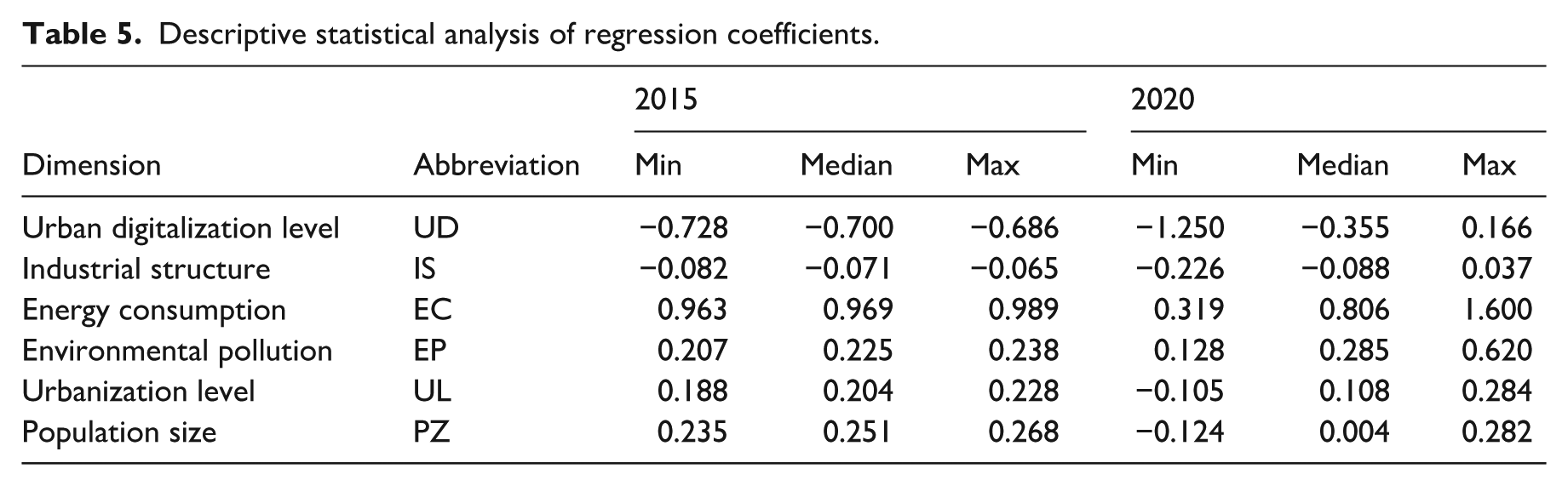
The regression results obtained from the GWR model demonstrated a high R-squared value of 0.82, 0.83 indicating spatial non-stationary in the relationship between carbon dioxide emissions and urban digitalization level. To further explore the spatial relationships between carbon dioxide emissions and the selected explanatory variables, we incorporated the six variables identified in the Spatial Durbin Model into the GWR model. By analyzing the GWR regression results, we examined the spatial heterogeneity of the influence of these variables on urban carbon dioxide emissions.
As shown in Figure 5, the urban digitalization significantly influenced carbon dioxide emissions. This vast fluctuation underscored not only the spatial heterogeneity between urban digital evolution and carbon dioxide emissions but also the distinct interplay and association across varying regional contexts. Specifically, we observed a spatial pattern of carbon reduction that manifested in a decreasing trend from north to south. Over time, in the coastal areas of the Yangtze River Delta, the initial process of urban digitalization has produced a significant reduction in carbon dioxide emissions, which is mainly due to the significant improvement of energy efficiency and the transformation to a low-carbon development model. However, the latter triggered the increase of carbon dioxide emissions. This can be attributed to the ongoing advancement of technology, which has enhanced energy efficiency and decreased associated costs. However, this transformation has given rise to a “rebound effect”: the reduction in costs has spurred the rapid expansion of economic activities and infrastructure development, leading to an increase in overall energy demand and, ultimately, to a rise in carbon dioxide emissions.
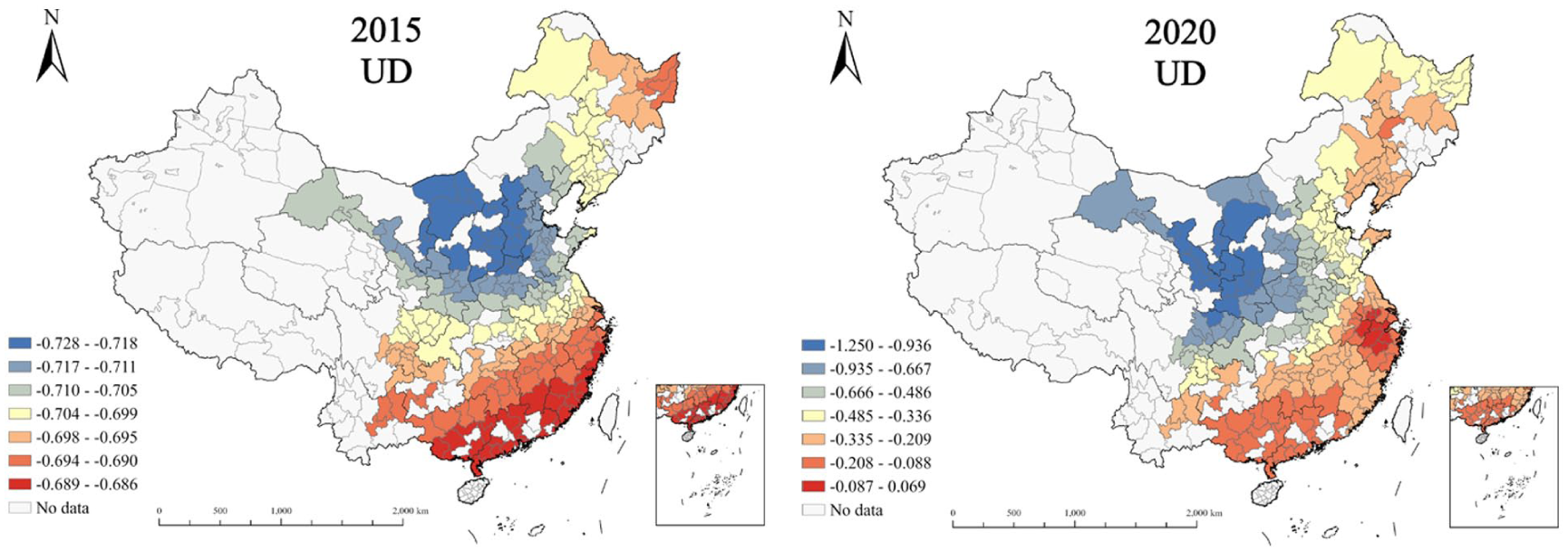
The spatial coefficient distribution for the factor UD based on GWR model.
With the transformation and upgrading of the industrial structure, we have observed an obvious carbon dioxide emission reduction effect, which not only increases with the evolution of time, but also shows significant differences in spatial distribution. In particular, in the Pearl River Delta and Yangtze River Delta, due to the high level of industrial agglomeration and economic development, we have found different carbon dioxide emissions from other regions. This shows that the transformation of industrial structure does not always lead to carbon dioxide emission reduction, and its effect is affected by multiple factors such as the level of regional economic development, industrial policy, and technological innovation (Figure 6). The effects of energy consumption, environmental pollution, urbanization rate, and population size on carbon dioxide emissions at different stages and regions are also significantly different. In the early stage, the promotion effect of these factors on carbon dioxide emissions was relatively stable. With the advance of time, especially in the southeast coastal areas, we noticed that with the expansion of urbanization speed and population size, there was a certain effect of carbon dioxide emission reduction. This may be closely related to the high level of economic development in the region. Efficient environmental policies have successfully attracted many innovative talents through “siphon effect.” These talents have effectively promoted the reduction of regional carbon dioxide emissions through the promotion of green technology and the use of renewable energy (Figure 6).
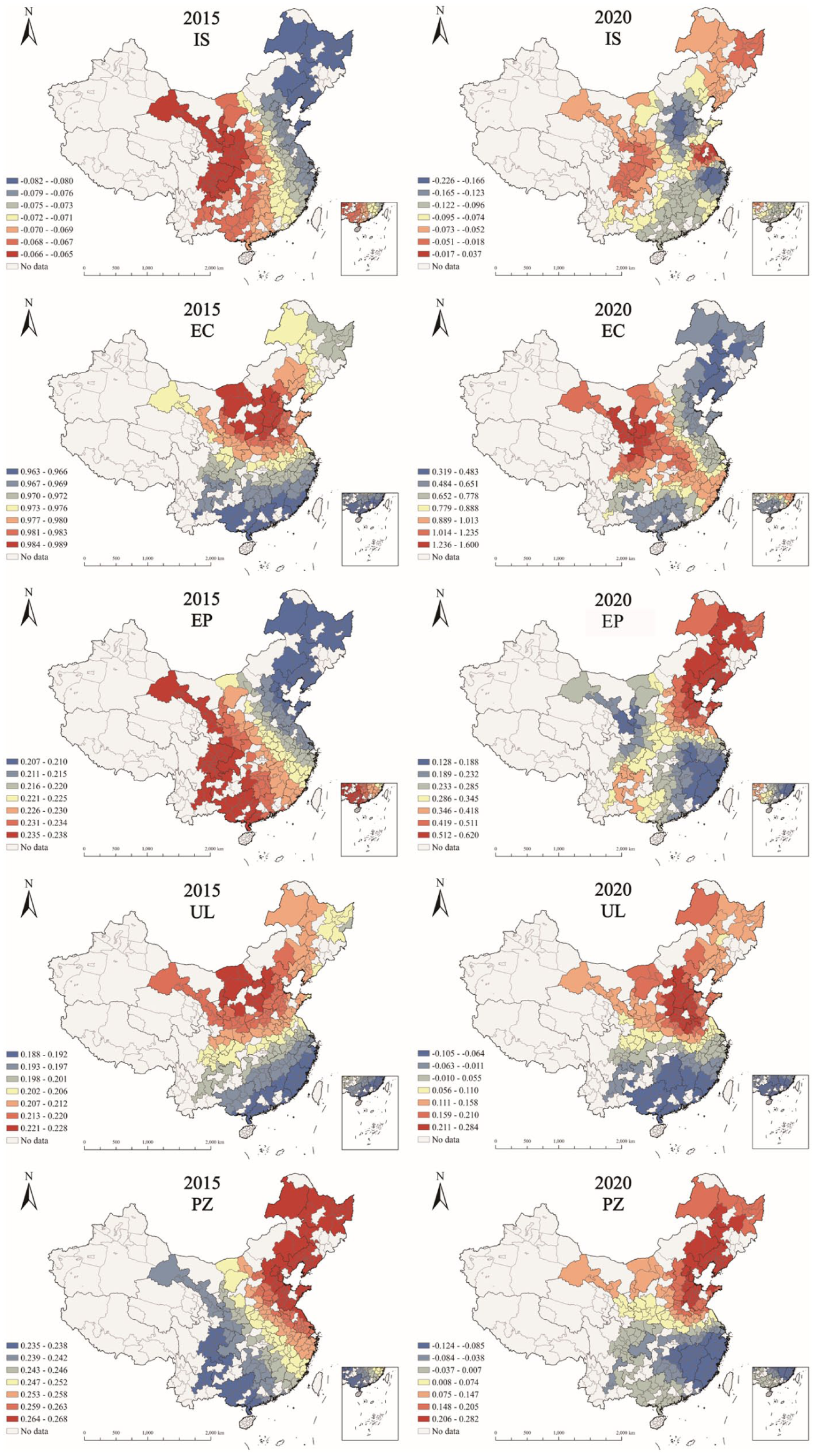
The spatial coefficient distribution for factors based on the GWR model.
Impact of urban digitalization factors on carbon dioxide emissions
To gain a nuanced understanding of elements within the urban digitalization trajectory that impacted urban carbon dioxide emissions, we employed the SDM to delineate the roles of five pivotal dimensions: digital governance, innovation, finance, industrialization, and infrastructure. As shown in Table 6, distinct indicators of digitalization exhibited marked regional disparities in their influence on carbon dioxide emissions.
SDM analysis of digitalization factors and related variables.
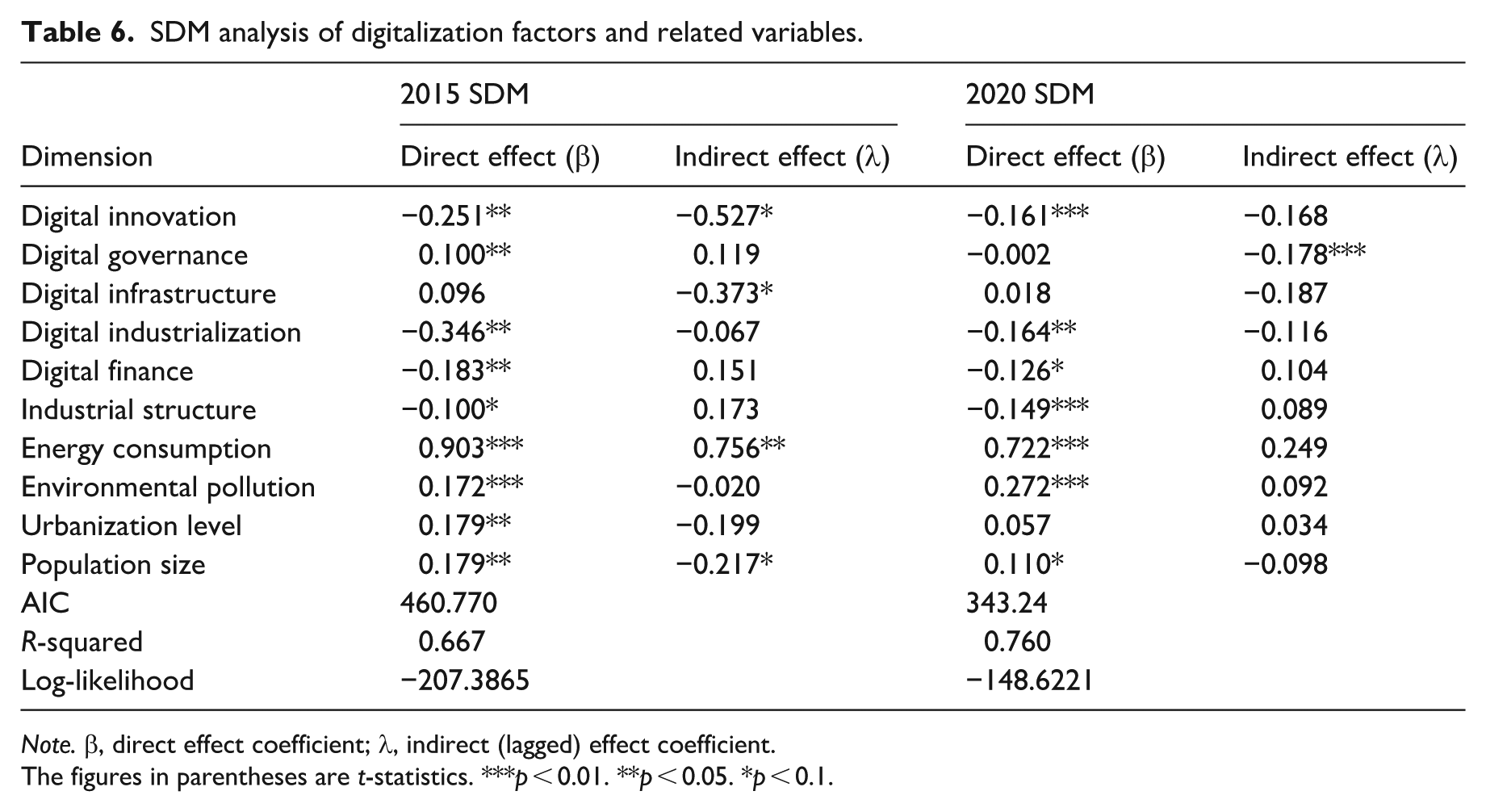
Note. β, direct effect coefficient; λ, indirect (lagged) effect coefficient.
The figures in parentheses are t-statistics. ***p < 0.01. **p < 0.05. *p < 0.1.
First, digital governance may aggravate local carbon dioxide emissions in the initial stage, and its promotion effect on local carbon dioxide emissions mainly stems from the increased energy demand caused by the construction and implementation of digital infrastructure, which may further lead to a significant increase in energy consumption and carbon dioxide emissions. The increase in energy demand at this stage reflects the negative impact that digital transformation may have on the environment in the early stage. However, with the further promotion of digital governance, it has a significant carbon dioxide emission reduction effect on adjacent areas. This positive change is partly due to the so-called “siphon effect” triggered by digital development, which has effectively promoted the suppression of carbon dioxide emissions in adjacent areas. This may be due to the ability of digital governance in improving information sharing and cooperation among cities, thus promoting the regional diffusion of practice and successful experience. For example, the environmental monitoring and policy evaluation mechanism realized through digital governance may be used for reference by neighboring cities, to improve the environmental management efficiency and carbon dioxide emission reduction capacity of the whole region.
Digital innovation, at the initial stage of its development, has obvious carbon dioxide emission reduction effects on the local and surrounding areas, mainly due to the ability of technology to optimize energy use and production processes. However, in the later stage, the effect of carbon dioxide emission reduction began to show regional differentiation. The local carbon dioxide emission reduction showed no significant impact on the adjacent areas, which may be due to the continuous technological innovation in the region to promote the continuous realization of carbon dioxide emission reduction, while the emission reduction effect in the surrounding areas was gradually not significant due to the slow speed of technology diffusion and the growth of energy demand caused by increases in economic activities. Overall, the effect of digital innovation on carbon dioxide reduction has exhibited a weakening trend, which may be attributed to the combined influence of multiple factors, including technological saturation, the rebound effect of energy consumption, and economic expansion. This observation also suggests that during the promotion of urban digital transformation, it is essential to holistically consider the interplay between economic development and environmental sustainability in order to ensure the realization of long-term carbon reduction objectives.
Digital infrastructure significantly inhibited the carbon dioxide emissions of local cities in 2015 and 2020, with coefficients of −0.226 and −0.135 respectively; This effect is mainly because the digital infrastructure optimizes energy distribution and consumption through efficient power and transportation technologies, thereby improving energy efficiency and promoting carbon dioxide emission reduction. On the contrary, digital industrialization has no obvious effect on local carbon dioxide emissions, but has a carbon dioxide emission reduction effect on adjacent areas, with coefficients of −0.331 and −0.222, respectively. Neighboring regions may indirectly obtain resources and technologies for carbon dioxide emission reduction due to digital industrialization, to achieve emission reduction. During the process of digital industrialization, although local cities have experienced improvements in production technology efficiency, the actual effectiveness of carbon dioxide reduction may remain limited due to factors such as infrastructure expansion, rebound effects, and intensified economic activities. However, over time, the inhibitory effect of digital infrastructure and industrialization on carbon emissions tends to diminish. This weakening trend may be attributed to a combination of factors, including increased energy consumption by digital facilities, a slowing pace in the adoption of digital technologies, and enhanced energy utilization efficiency associated with these technologies, which together partially offset the initial emission reduction benefits.
Digital finance has significantly reduced local carbon dioxide emissions by optimizing the process of economic activities and guiding the transformation of consumption patterns. Digital finance has reduced transaction costs, expanded the scope of economic participation, optimized resource allocation, and laid a solid financial foundation for the development of the digital economy by building an efficient and inclusive payment network. This progress is reflected not only in the optimization of energy use, but also in the more sustainable production and consumption patterns promoted by digital finance. However, for neighboring regions, the expansion of digital finance may be accompanied by the increase of industrial transfer and economic activities, which in some cases increases the energy demand and carbon dioxide emissions in these regions. In this process, the transfer of high-energy consumption industries in the region to neighboring areas with lower energy costs may improve the economic growth and employment of neighboring areas in the short term, but it may also bring greater environmental pressure and carbon dioxide emission challenges.
Conclusions and discussions
Conclusions
This study offered a new research perspective on the spatial relationship between urban digitalization and carbon dioxide emissions, delving deep into the spatial effect between various digital activities and carbon dioxide emissions. Findings offer insights for policy-making and support for low-carbon strategies. The empirical findings are as follows.
Chinese cities demonstrate a notable spatial agglomeration pattern in the relationship between digitalization levels and carbon dioxide emissions. Owing to variations in resource endowments, urban areas in the eastern and central regions typically exhibit more advanced digital development compared to those in the western region. The Beijing-Tianjin-Hebei urban cluster, the Pearl River Delta, and the Yangtze River Delta have emerged as key centers of digital innovation and growth. These cities have demonstrated exceptional performance in policy support, industrial foundation, technological innovation, and the development of data element markets.
Urban digitalization significantly reduced local carbon dioxide emissions. This observation partially supports Hypothesis 1, suggesting a negative correlation between the enhancement of urban digitalization and local carbon dioxide emissions. Over time, the carbon mitigation effect has diminished, with some of the emission reduction impacts gradually diffusing to surrounding regions. The spillover effect in major urban regions, such as the Beijing-Tianjin-Hebei, the Yangtze River Delta, and the Pearl River Delta, has significantly contributed to carbon emission reductions in adjacent cities. This progress has been facilitated through interregional collaboration, the greening of industrial chains, dissemination of technical standards, and replication of effective policy frameworks, thereby promoting emission reductions beyond these core regions.
This study identified five key driving factors that jointly facilitated the digital transformation of cities and significantly influenced carbon dioxide emission: digital governance, digital innovation, digital industrialization, digital infrastructure, and digital finance. Notably, the role of digital governance in relation to carbon emissions exhibited a dynamic evolutionary pattern over time. In 2015, digital governance intensified local carbon emissions, yet its spatial spillover effect was limited. By 2020, its direct impact on local emissions became less pronounced, while a clear emission-reduction effect emerged in neighboring regions. Therefore, Hypothesis 2 was partially verified. On the contrary, digital innovation generally contributes to the reduction of carbon dioxide emissions. However, compared to 2015, the overall inhibitory effect of digital innovation on carbon dioxide emissions—both in local and neighboring regions—has weakened by 2020. This trend provides partial support for Hypothesis 3. Overall, the effect of digital innovation on carbon dioxide reduction has exhibited a weakening trend, which may be attributed to the combined influence of multiple factors, including technological saturation, the rebound effect of energy consumption, and economic expansion. Through the exploration of Hypotheses 4 and 5, digital infrastructure significantly inhibited carbon dioxide emissions in local cities, digital industrialization has carbon dioxide emission reduction effect on adjacent areas. Over time, the role of digital finance on carbon dioxide emissions has gradually become less obvious, which partly supports Hypothesis 6, but also violates the assumption that digital finance is continuously negatively correlated with emissions in neighboring regions. The transfer of high-energy consumption industries in the region to neighboring areas with lower energy costs may improve the economic growth and employment of neighboring areas in the short term, but it may also bring greater environmental pressure and carbon dioxide emission challenges.
Based on the aforementioned research findings, it is recommended that each city formulate targeted digital development strategies aligned with its regional advantages to advance the realization of carbon neutrality goals. To fully harness the potential of digitalization in the process of achieving carbon neutrality, cities should design customized digital transformation pathways based on their local resource endowments and prevailing challenges. Cities in the eastern and central regions have already established relatively mature digital capabilities and should further explore and maximize the utilization of existing digital resources. Leveraging current digital infrastructure, these cities should focus on increasing the number of authorized digital technology invention patents, attracting leading digital enterprises in key sectors such as artificial intelligence, 5G chips, blockchain, and semiconductors, continuously drawing in high-tech talent, and making sustained progress in areas including policy support, industrial foundation building, technological innovation, infrastructure development, and data element governance. For cities in the western region, priority should be placed on strengthening digital infrastructure, particularly in critical areas such as cloud computing platforms and data centers. The development of the digital economy in these cities should center around the integration of national strategy and local endowments, consolidating the foundation for digital economic growth through precise policy implementation, infrastructure investment, cost competitiveness, and the cultivation of distinctive industrial clusters. Looking ahead, further efforts are needed to explore the marketization of data elements, the emergence of future industries, and collaborative initiatives across multiple regions, ultimately transitioning from a phase of “catching up” to one of “taking the lead.” In the core areas of cities, the synergy between digital technology and carbon emission reduction is becoming increasingly pronounced, underscoring the critical role of technological innovation and interregional knowledge exchange. By instituting financial incentive mechanisms to support green initiatives and fostering collaboration between regions with advanced and less developed digital infrastructures, overall promotion efficiency can be significantly enhanced. The implementation of localized digital governance strategies—tailored to address specific regional digital capabilities and emission challenges—can effectively guide Chinese cities toward the integration of digital transformation and sustainable development.
Discussions
This study investigates both the direct and indirect spatial effects between urban digitalization and carbon dioxide emissions by employing the SDM and GWR. SDM offers a comprehensive understanding of the general spatial interaction mechanisms across the entire research area, while GWR enables the identification of how these mechanisms differ across specific geographic locations. These insights into spatial spillover effects and regional heterogeneity are essential for the development of targeted and context-sensitive regional policies.
This study aims to explore the spatial effects of urban digitalization on carbon dioxide emissions. However, the selected indicator variables may not comprehensively capture all key dimensions of urban digitalization. Although the GWR model effectively reveals the spatial nonlinear relationship between digitalization and carbon dioxide emissions, certain underlying mechanisms and their interrelationships remain to be further elucidated. Due to limitations in data availability and completeness, measuring the extent of urban digitalization continues to pose challenges. Current measurement approaches may not fully reflect the complexity and diversity inherent in urban digitalization. Moreover, considering the profound impact of the COVID-19 pandemic on global economic and social structures, the data used in this study may not fully represent the post-pandemic socioeconomic context, potentially affecting the timeliness and generalizability of the findings. Particularly, the acquisition of certain critical indicators—such as digital governance—remains challenging, which restricts the temporal scope of the study to the period from 2015 to 2020. This limited temporal scope makes it difficult to assess the longer-term impacts of digitalization and to account for potential time lags in the effects of digitalization policies. Future studies should adopt a more comprehensive and refined index system, including the integration of multiple data sources, such as satellite remote sensing data and social media analysis, and the application of advanced analysis technology, to more accurately measure the urban digitization. In view of the impact of the new crown epidemic on the global social economy, future studies also need to use longer time series data and more flexible analysis methods to better understand and predict the impact of these external factors on the urban environment and social economy, further exploring the spatial correlation and micro mechanism between urban digitalization and carbon dioxide emissions, which will provide constructive suggestions for urban planning and environmental policy-making in the digital era. A longer time series would allow for a more robust analysis of the trends and the dynamic relationships between digitalization and emissions. The temporal scope of future study by including data from more years should be expanding. Long-term series analysis method such as panel data techniques should be considering in the future research to control for unobserved heterogeneity and to address potential endogeneity issues.
Addressing the endogeneity of variables in the SDM is a complex but essential endeavor, as endogeneity may result in biased and inconsistent estimators, thereby undermining the validity of empirical findings. Proper treatment of endogeneity is critical to ensuring the robustness and reliability of research outcomes. Resolving endogeneity within the SDM framework necessitates the integrated application of econometric and spatial econometric techniques. Although identifying truly exogenous instrumental variables that satisfy the required exogeneity conditions remains a significant challenge, this study systematically reviews existing literature and draws upon established indicators. It further compares estimation results across various methodological approaches, instrumental variable specifications, and spatial weight matrices.
Footnotes
Funding
The authors disclosed receipt of the following financial support for the research, authorship, and/or publication of this article: This research was funded by the National Natural Science Foundation of China (42571266, 42101166, 42201322, and 42371317), the Guangdong Basic and Applied Basic Research Foundation (2021A1515012247, 2023A1515030098), the Strategic Research and Consulting Project of the Chinese Academy Engineering (2022-GD-13), the Guangzhou Science and Technology Plan Project (SL2022A04J01724), the Project of Guangzhou Xinhua University (2024KYZDZK01), the Higher Education Teaching Reform Project of Guangdong Province (2024J039-2), and the GDAS Special Project of Science and Technology Development (2020GDASYL-20200102002).
Declaration of conflicting interests
The authors declared no potential conflicts of interest with respect to the research, authorship, and/or publication of this article.
Data availability statement
All data are available from the first author upon reasonable request.