




Abstract
Higher education levels improve income and career opportunities and foster environmental awareness, impacting household energy consumption. To explore the relationship between education, income, energy-saving awareness, and household energy consumption, we chose four Chinese cities—Beijing, Guangzhou, Xining, and Liaocheng—ranked by per capita GDP. These cities provide a cross-sectional view of energy consumption patterns across China’s geographical regions. Specifically, we analyzed survey data from 5772 households to assess household energy consumption in the focal cities. Then, we integrated income levels and subjective energy-saving awareness and behavior into our analysis framework, examining the impact of different education attainments on household energy consumption and the underlying mechanisms. Our findings show that average household energy consumption is highest in Xining, followed by Beijing, Liaocheng, and lowest in Guangzhou. Income and energy-saving awareness and behavior moderate the relationship between education and household energy consumption. Thus, we demonstrate that the income variable has a substitution effect for education level on household energy consumption in all areas and the four representative cities. Moreover, subjective energy-saving awareness and behavior moderate the function of education, reducing household energy consumption.
Keywords
Introduction
Educational level is a characteristic of individuals and populations and plays a crucial role in aspects of well-being, such as health and income. Improving education is an essential component of SDG 4, and many national and international policies aim to improve education in countries with low education levels. The SDGs are clear: by 2030, all children should be able to obtain complete primary and secondary education (approximately 12 years of education; SDG target 4.1). Achieving this goal would substantially improve the educational attainment composition of the global adult population.
Accordingly, it is necessary to identify the synergies and trade-offs between the 17 Sustainable Development Goals and their 169 related targets to inform policies targeting them collectively rather than individually. SDG 7 aims to ensure access to affordable, reliable, sustainable, and modern energy for all, while the declaration linked to the SDGs calls for accelerated reductions in greenhouse gas emissions. Although some analyses have identified certain links between energy and other SDGs, none have directly investigated how higher levels of education may affect household energy consumption. Nevertheless, household energy consumption is second only to the industrial sector due to accelerated post industrialization and new urbanization growth. In 2020, household energy consumption accounted for 22% of global energy consumption (IEA, 2022). Since 2012, household energy consumption in China has also significantly outpaced industrial energy consumption, constituting approximately 12.9% of the total energy consumption amid continuous growth. It is therefore crucial to establish the relationship between education and household energy consumption (Griggs et al., 2017; McCollum et al., 2018; Pradhan et al., 2017; United Nations, 2015).
Education fulfills a dual function in influencing residential energy consumption. On the one hand, higher levels of education lead to increased household income and energy consumption. On the other hand, more educated individuals tend to have higher levels of awareness of energy conservation and environmental protection, which in turn leads to a reduction in household energy consumption. Given the substantial effect of education level on household energy consumption, education has become a central concern for governments and international organizations worldwide.
Hence, understanding the mechanisms by which demand for household energy services is growing according to different education levels is critical for advancing the SDGs. To this end, this study utilizes social household energy consumption surveys in fieldwork and semi structured interviews. Does energy switching and purchasing energy-efficient appliances dampen the growth in demand resulting from increased education? Does education-level change affect access to and demand for household energy services? We address and elaborate on these issues in this study.
Accordingly, the principal, novel contributions of this study are as follows: First, the field research data are drawn from four representative cities in China—Beijing, Guangzhou, Liaocheng, and Xining—ranked according to their order of GDP per capita. Moreover, empirical analysis methods are applied. To better understand the role of education level in household energy consumption, this study also discusses the relationship between education and household energy consumption in terms of regional differences.
Literature and expectations
The relation between education and saving behavior. Education is essential in this literature—albeit without any consensus on whether or how it affects energy-saving behavior. Many scholars have long centered on the disparate impact of education level on household energy consumption, mainly focusing on (1) education and household energy consumption transition and (2) education and energy-saving behavior.
Education and household energy transition
The current research on education and household energy consumption makes several contributions to the literature, including in two aspects (Moran et al., 2022; O’Neill et al., 2018; Oswald et al., 2020; Wang, Fan, et al., 2023). On the one hand, households with higher levels of education use energy more consciously and efficiently, thereby reducing household energy consumption (Cagno et al., 2013; Li and Lin, 2016; Zou et al., 2016). Specifically, Shahbaz et al. (2019) have shown that increased education levels positively impact reduced energy consumption in the United States. Salim et al. (2017) found a negative relationship between education level and energy consumption in China. Ma et al. (2021) revealed that better-educated rural residents use less energy in China. However, other authors did not find a positive effect on energy efficiency and even identifies a negative effect (Broadstock et al., 2016; Nachreiner and Matthies, 2016). Wang et al. (2011) found that education does not affect the willingness to reduce electricity consumption.
On the other hand, several studies have also indicated that education level increases the share of renewable energy in household energy end use. Existing research focuses on education and clean or renewable energy in less developed areas. For instance, Apergis et al. (2022) examined the impact of education on household use of clean energy in 30 developing economies. They found that households with low levels of education had limited access to clean energy and mostly used traditional energy with high carbon emissions (e.g. biomass fuels and fossil fuels). Similarly, in Bhutan, better-educated, higher-income, and urban households were more likely to transition to clean energy. At the same time, poor and lower-educated households have limited access to modern energy (Das et al., 2014). In addition, Li et al. (2021) found that households with lower income, lower educational attainment, and smaller floor space were less willing to use gas in rural China. Han and Wu (2018) proved that per capita income, child dependency ratio, and education level significantly impact clean energy consumption. Meanwhile, in rural Ethiopia, Guta (2020) found that high levels of education of household heads increase the likelihood of renewable energy adoption. Conversely, Yoo and Kwak (2009) revealed no positive relationship between education and the willingness to pay (WTP) for green electricity in Korea.
Education and energy-saving behavior
Other work has focused on how education encourages households to conserve energy. Umit et al. (2019) examined samples from 22 European nations. However, educational attainment is found to be negatively associated with diminished energy consumption but positively associated with energy efficiency measures. Hori et al. (2013) found that education significantly promotes energy-saving behavior in Dalian, China, and Bangkok, Thailand. Zou and Mishra (2020) used a household-level dataset of 1472 rural Chinese households in 2015. They discovered that households with higher and lower levels of education are more likely to choose energy-efficient appliances. Sardianou and Genoudi (2013) analyzed 200 Greek households and found that those with a higher level of education are more likely to choose renewable energy. In addition, Liao et al. (2021) discovered that increasing the education level of residents in low- and middle-income countries can encourage the use of renewable energy. Various studies have examined the relationship between education and household energy consumption (Sarkar and Jana, 2023; Xu et al., 2021). However, the link between education and household energy may involve synergies and trade-offs, and the balance of these effects remains ambiguous.
Significant regional differences
An increasing number of scholars have realized the importance of analyzing education’s impact on energy-saving behavior in terms of regional differences (Al-Shemmeri and Naylor, 2017). Recently, scholars have shed light on this influence by employing survey data collected in specific cities or regions, and some have found that education level influences pro-energy-saving behavior (Varela-Candamio et al., 2018; Vicente-Molina et al., 2013; Zhang et al., 2018).
Nonetheless, in developed countries, some studies revealed a negative correlation between educational level and household energy consumption (Mills and Schleich, 2012; Murray and Mills, 2011; Poortinga et al., 2004), for example, highly educated individuals tend to have higher income and energy saving levels. Additionally, educated city-center apartment residents in Australia have lower energy requirements for domestic energy consumption (Lenzen et al., 2006). Compared to those with a lower level of education, well-educated idealistic energy conservationists in Switzerland engage in the most energy-saving behaviors (Sütterlin et al., 2011).
Regarding countries such as China, Xia et al. (2019) discovered that higher education levels are associated with more significant energy saving among Guangzhou residents. Zhao et al. (2019) found that farmer households in the loess hilly region save more energy the more educated their household members are, particularly in women-led households. However, in southern urban China, households with less-educated heads used less electricity, particularly at night (Wang, Yu, et al., 2023; Zhu et al., 2023). In Jiangsu, China, residents with a bachelor’s degree or higher are more likely to exhibit behaviors that promotes efficiency but not utilization reduction, according to Yue et al. (2013). In India, Indonesia, and Myanmar, residents with a higher education engage in energy curtailment behaviors to reduce household energy consumption (Han and Cudjoe, 2020; Piao and Managi, 2023). In contrast, Nie et al. (2019) found that Changchun residents with a high education level, who usually have a high-income level, can afford greater energy expenditure; thus, they do not care about the benefits of energy saving. In addition, when husbands with higher education are the predominant decision makers, energy consumption in the household was higher in Bandung City, Indonesia, than when women are the predominant decision makers (Permana et al., 2015).
Increasing educational attainment is a sustainable development priority considered beneficial to other social and environmental issues, including energy consumption. However, the link between education and household energy may involve synergies and trade-offs, and the proper balance of these effects remains ambiguous.
Theoretical framework
We present a theoretical framework that examines the interactions between educational level, income, energy-saving awareness, and household energy consumption. Educational level is identified as a key independent variable that indirectly affects household energy consumption (Zou and Mishra, 2020). Specifically, both income and energy-saving awareness serve as moderators in this relationship. Income influences the pathway through which educational level impacts household energy consumption, indicating that the effect of education on energy use varies based on income levels (Li et al., 2021). Similarly, energy-saving awareness acts as a moderator, shaping the indirect connection between educational attainment and household energy consumption (Sardianou and Genoudi, 2013). This framework suggests that educational level does not directly determine household energy consumption; instead, it interacts with both income and energy-saving awareness—both of which serve as moderating factors—to clarify the patterns of household energy consumption. The framework is illustrated in Figure 1.
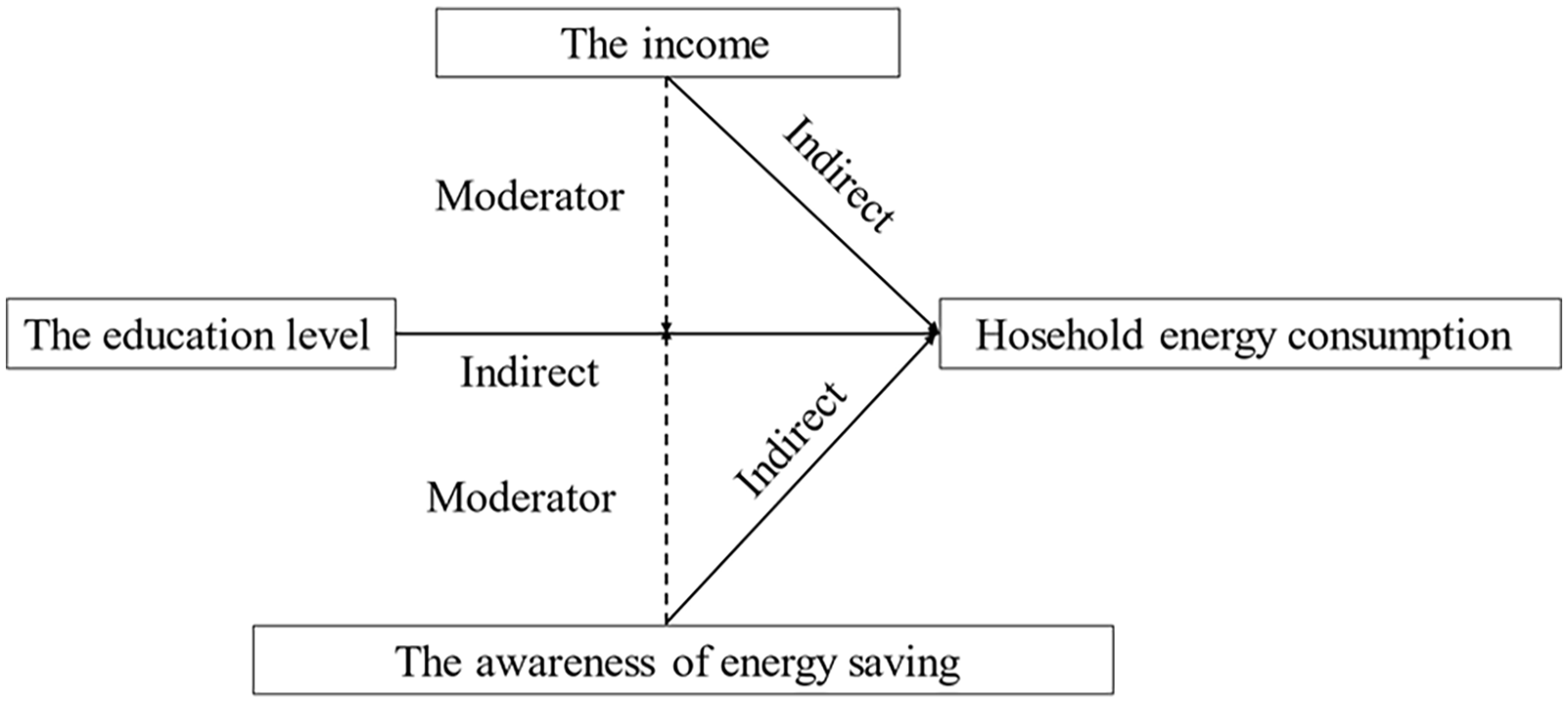
The framework of the study.
Method and data
Overview of the four cities
We investigate energy consumption patterns in four Chinese cities, Beijing, Guangzhou, Xining, and Liaocheng, representing the diverse climatic regions of North China, South China, Northwest China, and the North China coastal region, respectively. These cities have been strategically chosen due to their contrasting weather conditions and geographical locations, making them ideal samples for understanding the impact of climate on energy demand and consumption in various regions of China. Understanding the variations in energy demand arising from diverse weather conditions will enable policymakers and researchers to develop targeted strategies for sustainable energy usage and environmental conservation. The spatial distribution of the four cities is shown in Figure 2. Apart from their differences due to weather conditions and geographical locations, the four cities exhibit distinct economic development levels, production methods, and lifestyles, leading to the variations in household energy consumption depicted in Table 1. The cities of Beijing and Guangzhou are classified as mega-large cities, while Liaocheng and Xining are categorized as large cities. Additionally, energy availability across the four cities is also quite different.
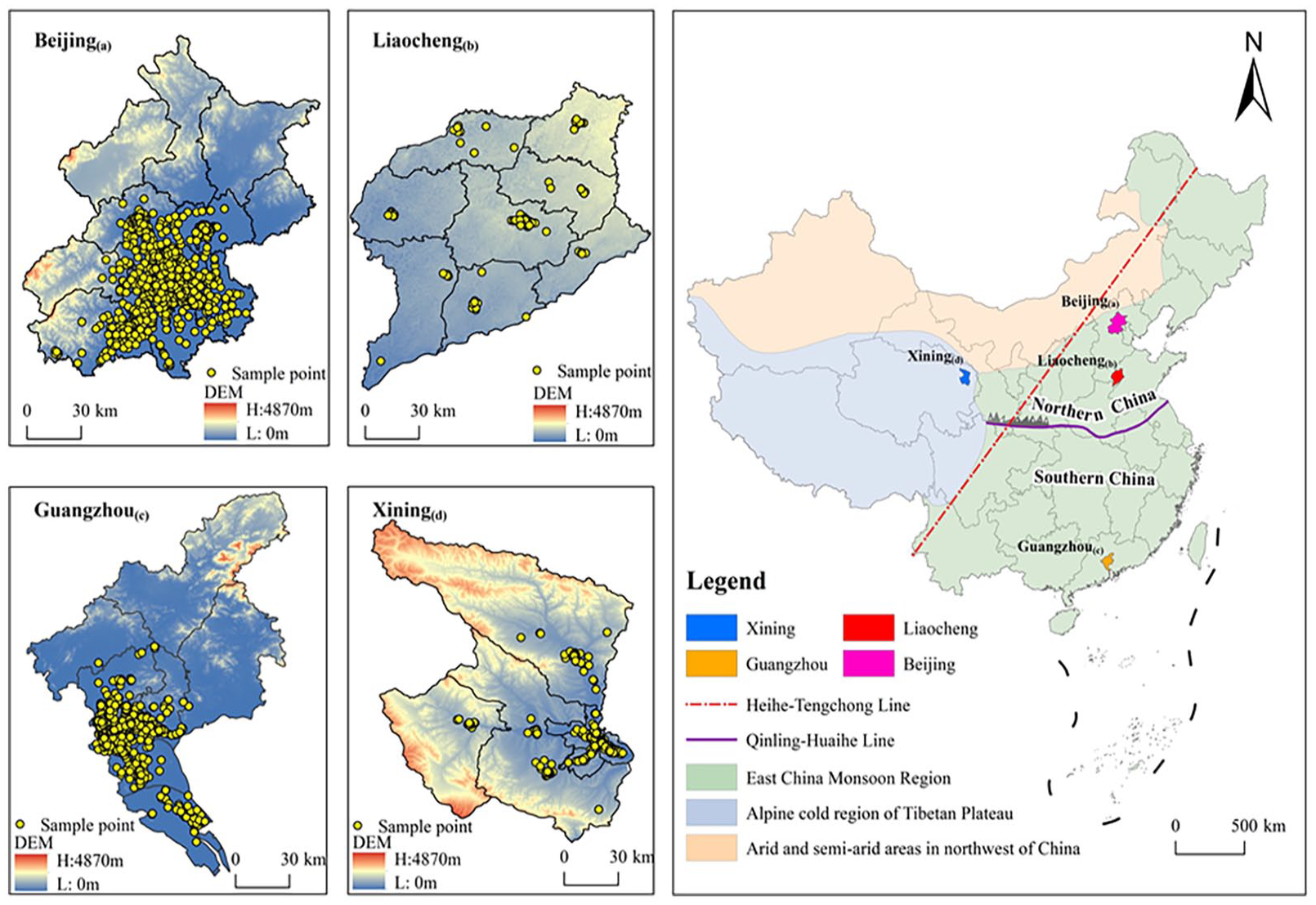
Location map and survey points of the four cities.
The state of GDP per capita and permanent resident population in the four cities.
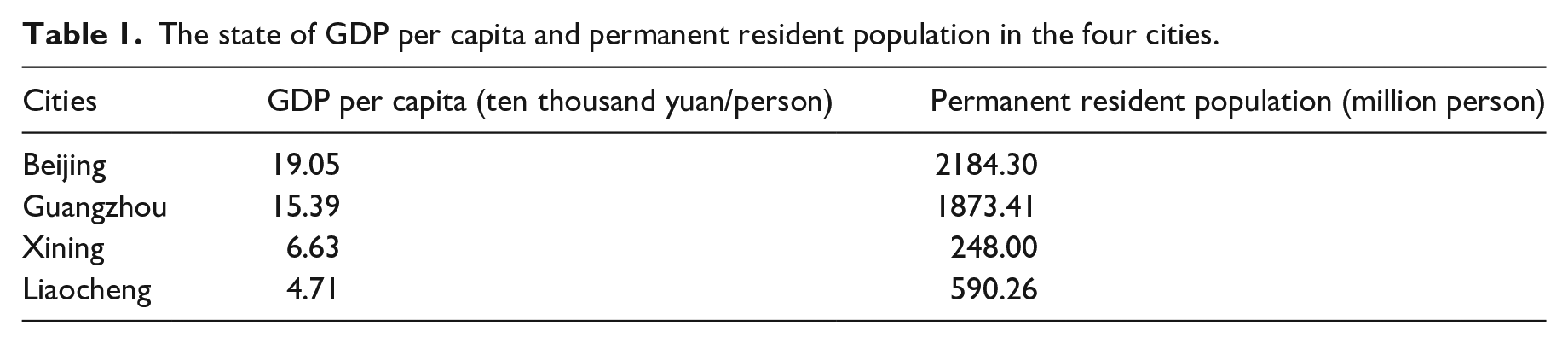
These four cities span four major geographical regions of China—northern, southern, northwestern, and northern coastal areas—and exhibit a gradient in per capita GDP (See Table 1), representing a spectrum from first-tier metropolises to smaller industrial cities. Their distinct energy infrastructures, lifestyles, and policy orientations—such as Beijing’s aggressive natural gas pipeline expansion and Xining’s ecological-driven clean energy adoption—collectively capture the complexity and regional heterogeneity of urban energy consumption patterns during China’s rapid urbanization.
Data collection and sample
In 2022, we conducted a field study in 4 Chinese cities: Beijing (12 districts), Guangzhou (8 districts), Xining (7 districts), and Liaocheng (8 districts). Our questionnaire design followed the steps of “designing the first draft of the questionnaire-preinvestigation-finalization.” To identify the actual preferences of the respondents, we avoided inappropriate induction due to the heterogeneity and uncertain information thereof. As a result, our questionnaire used mainly subjective, close-ended questions (Parfitt, 2013). After assembling the first draft of the questionnaire, two rounds of fieldwork were conducted in the study focus areas. Semi-structured interviews were conducted mainly with energy managers, resource field experts and typical respondents, with each interview lasting 15 to 30 minutes for a single person. Their feedback and modifications were solicited. Based on the feedback and modifications solicited, necessary adjustments were made to the questionnaire’s question order and wording to finalize the questionnaire used for data collection.
We used the stratified sampling method to determine the size of the final sample, which was calculated using equation (1). The sample size fell within the 95% confidence interval, ensuring that the maximum error in the sample data representing the population was +2.83%, within the acceptable error range of +5% (Hazlett, 2013). Thus, we obtained a total of 5772 samples. Among them, 2058 samples were from Beijing, 2194 samples from Guangzhou, 968 samples from Xining, and 552 samples from Liaocheng.

Note: Z = 1.96 (95% confidence interval), p = 0.5, θ is the sampling error.
The questionnaire mainly included two major themes: (1) it gathered basic information about the respondent’s family, for example, home address, family members, occupation, and annual family income, and (2) it focused on the characteristics of household energy consumption activities, including the type of household energy consumption, the methods of obtaining energy, and whether the respondents possessed energy saving awareness and behaviors, among other relevant factors.
The outcome variable in our analysis, household energy consumption, is measured by total energy consumption for cooking equipment, large household appliances, air conditioners, electric fans, water heaters and lighting. We used the various education qualifications obtained by the respondents to measure their level of education, which is our main variable of interest. These qualifications have been categorized into six groups: primary school and below, junior high school, senior high school, junior college, undergraduate, and masters and above. In the context of China, these categories typically correspond to 6 or fewer, 9, 12, 15, 16, and 18 or more years of education, respectively. In the US, the terms “junior college” and “university” are distinguished by the scope and level of educational programs offered. A junior college in the US typically refers to an institution that offers undergraduate education, granting associate’s degrees (2-year programs) and bachelor’s degrees (4-year programs). Junior colleges may focus on specific fields of study, such as liberal arts, sciences, business, or technology. A university is thus a higher education institution that offers a broader range of academic programs, including undergraduate, graduate, and doctoral programs. UK junior colleges deliver academic or vocational courses to students aged 16 to 18 years to prepare them for university or employment, a type known as the “sixth form.” Additionally, UK junior colleges provide adult education to those seeking to reskill or to enhance their qualifications, as well as foundation degrees for those planning to progress to a university. These distinctions highlight the nuanced variations in higher education institutions between these two countries (Kelly and Anayat, 2023). In this paper, the word “junior college” refers to a level of higher education that is typically below a bachelor’s degree but higher than a high school diploma. This usually takes 3 years to complete and involves specialized vocational or technical training and education.
As household energy consumption varies with the education level of the respondents, we conducted an in-depth analysis of the level of education in various typical urban case cities. Our findings revealed distinct patterns among the respondents in Guangzhou, Beijing, Xining, and Liaocheng regarding their educational attainment. As shown in Figure 3, in Guangzhou, approximately half of the respondents have completed senior high school or junior college as their highest level of education. In contrast, less than 20% hold an undergraduate degree. In contrast, in Beijing, Liaocheng, and Xining, the proportion of respondents with a bachelor’s degree is relatively higher, with percentages of 34.21%, 31.88%, and 25.41%, respectively.
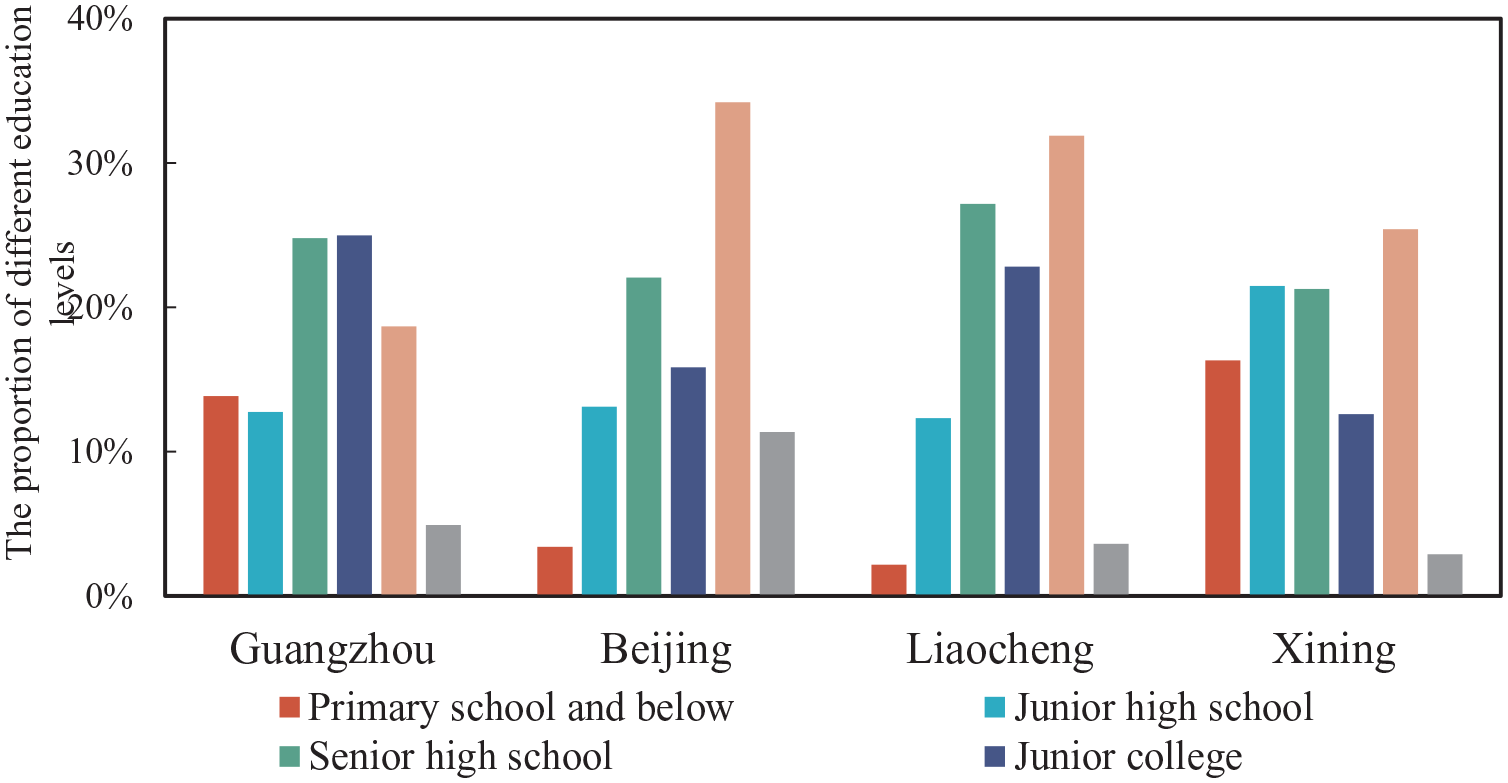
The proportions of the population by education level in Guangzhou, Beijing, Liaocheng, and Xining.
Methodology
Energy consumption by various equipment in the home
In our study, we calculate the energy consumption of different kinds of equipment and the standard coal coefficients for various types of energy primarily based on the methodology of Jiang et al. (2022). These details are shown in Appendix Tables A.1 and A.2.
Empirical model
We constructed the following regression model to investigate the impact of residents’ education levels on household energy consumption. The model utilizes survey data for its analysis.

where ECi is household energy consumption per household (kgce/year). Edi represents “level of education,” a significant explanatory variable. In addition, Xi is a control variable, including personal characteristics, economic characteristics in the household, climate characteristics, and subjective energy saving awareness and behavior variables. Regarding personal characteristics, we use household resident population, sex, age, and the squared term of age (Yu et al., 2018). The control variables for economic characteristics at the household level are the logarithm of per capita annual household income and housing area. The climate characteristic variables are the maximum temperature and minimum temperature in 2022. Finally, the subjective characteristic variable is whether there is a subjective energy-saving awareness and behaviors, constructed by several survey questions relevant to energy-saving behavior.
We conducted factor analysis using SPSS on each region’s subjective energy-saving awareness and behavior variables to assess how well the questions measure energy-saving awareness and behavior. According to these results, we obtained Cronbach’s alpha values of 0.801, 0.853, 0.803, and 0.853 for the subjective energy-saving awareness and behavior variables in Guangzhou, Beijing, Liaocheng, and Xining, respectively. These coefficients indicate high levels of reliability for the variables, suggesting that the questions effectively measure energy-saving awareness and behavior in each region. We obtained the subjective energy-saving awareness and behavior variables for all samples by accounting for this factor. Finally, to account for any unexplained variance or factors not captured in the analysis, we defined εi as the random error.
To understand the mechanism of income level and subjective energy-saving awareness and behavior in the relationship between education level and household energy consumption, we constructed an interaction item between income level and education level and between subjective energy-saving awareness/behavior and education level. This model is expressed as follows.


where Inci represents the total household income at the end of the year, expressed in logarithmic form, and Awai denotes subjective energy-saving awareness and behavior. Edi × Inci represents the interaction term between different education levels and income levels. Edi × Awai represents the interaction between education level and subjective energy-saving awareness and behavior. If the coefficients α3 and α5 are statistically significant, this indicates a moderating effect.
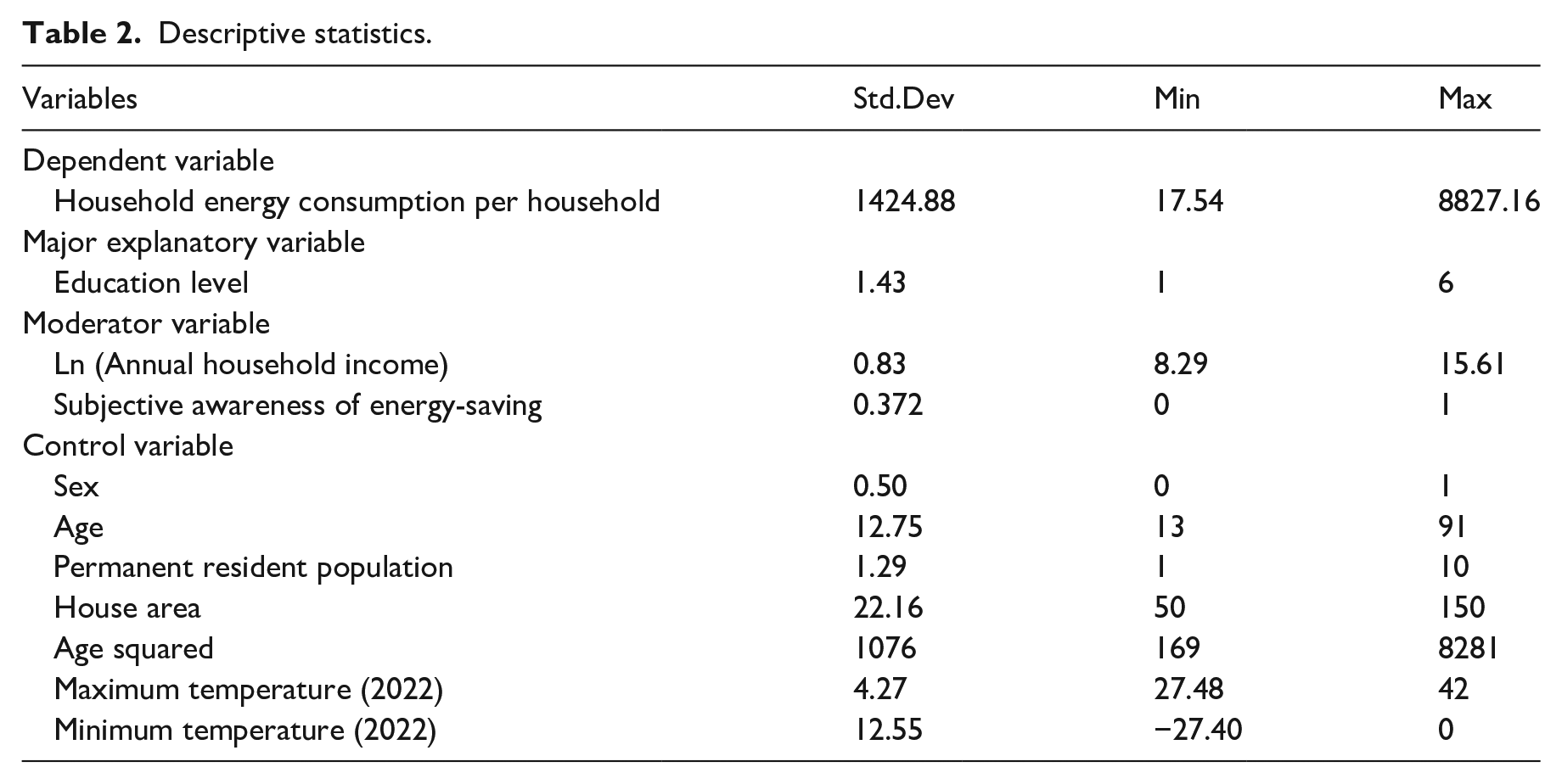
We performed basic descriptive statistics on these data to show the relationship between the explained and explanatory variables. Below, Table 2 presents the detailed descriptive statistical analysis results.
Descriptive statistics.
Results
Household energy consumption in four cities
Quantity of household energy consumption
We found that the average annual household energy consumption of urban households in the four cities ranked from high to low is 2095.88 kgce/year in Xining, 1957.92 kgce/year in Beijing, 1441.37 kgce/year in Liaocheng, and 722.82 kgce/year in Guangzhou. Regarding GDP per capita, Liaocheng and Xining, two cities with lower GDP per capita, show nearly identical household energy consumption per household. However, in Beijing and Guangzhou, which rank higher in GDP per capita, their energy consumption per household varies significantly. Household energy consumption in Beijing is approximately 2.71 times higher than that in Guangzhou.
Household energy type
Regarding energy consumption type, there was a distinction in household energy consumption between Liaocheng and Xining. In Liaocheng, coal is the predominant energy source, while Xining primarily relies on natural gas. This divergence is attributed to Xining’s abundant natural gas resources and favorable policy environment, which has facilitated the steady increase in natural gas in the energy consumption of urban households. On the other hand, Liaocheng’s economy is mainly driven by traditional industries, and it possesses well-established supporting facilities for coal, making coal a significant component of its residents’ household energy consumption. Overall, the difference in household energy consumption structure in these two cities is thus influenced by local energy resources and policy support.
Household energy consumption in Guangzhou is primarily dominated by liquefied petroleum gas (LPG), accounting for 37.99% of total energy consumption. Electricity and natural gas are also utilized, constituting 32.57% and 27.12% of household energy consumption, respectively. In Beijing, natural gas is people’s primary energy source, constituting 62.45% of household energy consumption. The reason for this disparity in energy usage between the two cities lies in the different energy policies and infrastructure development levels. Beijing has vigorously promoted the construction of natural gas pipeline facilities, leading to significant adjustments in its energy structure. Consequently, Beijing has made remarkable breakthroughs in energy structure improvements and enhancing facility supply guarantees while simultaneously focusing on increasing its scale and quality of renewable energy utilization. In the 14th five-year plan period, the municipal government in Beijing will continue to promote energy policies aimed at reducing coal consumption, stabilizing the natural gas supply, reducing oil reserves, increasing electricity usage, and promoting sustainable energy. In contrast, residents in Guangzhou have limited access to natural gas due to lower natural gas energy production in Guangdong Province. Consequently, they are more inclined to use electricity and liquefied petroleum gas to meet their cooling needs, as they are affected by both climate factors and living habits. In summary, the types of household energy consumption in Guangzhou and Beijing differ significantly. Guangzhou relies heavily on LPG, while Beijing primarily depends on natural gas. Local energy policies, infrastructure development levels, and regional energy availability drive these differences. The situation is shown in Figure 4.
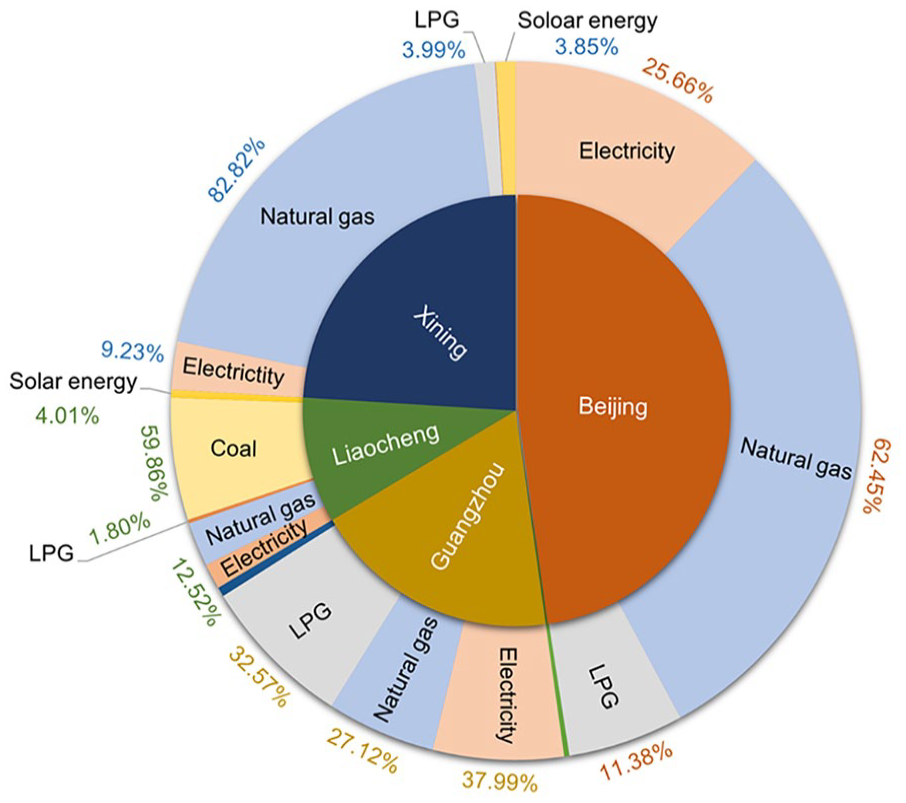
Structure of household energy consumption in the four cities.
Household energy end purpose
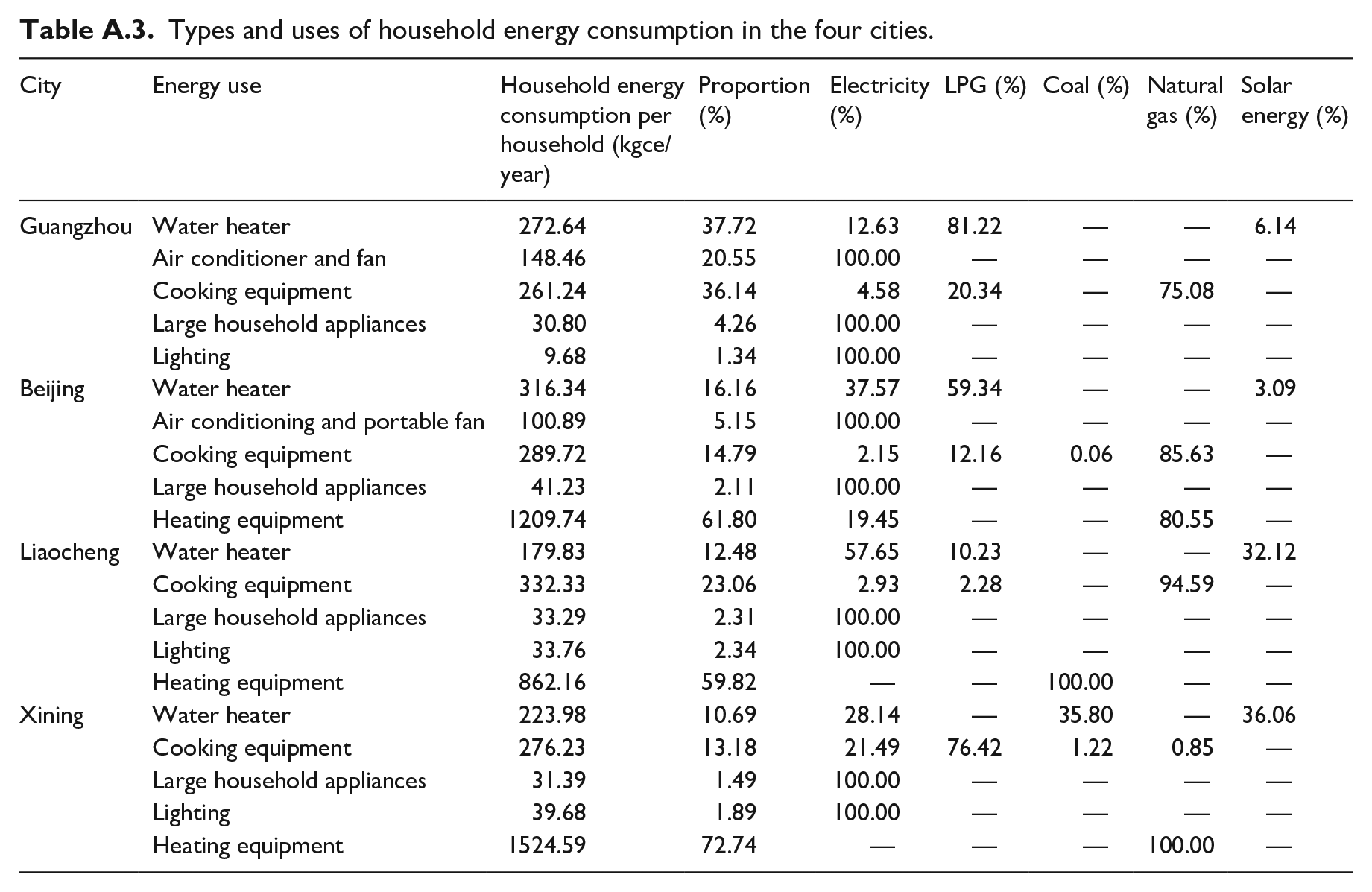
In Liaocheng, Xining, and Beijing, energy consumption for heating constitutes an integral part of household energy consumption. Specifically, the energy consumption required for heating in these three cities is 862.16 kgce/year in Liaocheng, 1524.59 kgce/year in Xining, and 1209.74 kgce/year in Beijing. Notably, in Liaocheng, coal is predominantly used for heating purposes, whereas in Xining and Beijing, natural gas is the primary energy source for heating. On the other hand, in Guangzhou, energy consumption for water heaters and cooking equipment constitutes a dominant portion of household energy consumption. The average annual household consumption is 272.64 kgce/year and 260.24 kgce/year, respectively. The energy types used are LPG and natural gas. There is shown in Appendix Table A.3.
The effect of education level on household energy consumption
Benchmark regression
The results of baseline estimates of household energy consumption for residents with different education levels in the whole region are shown in Table 3. Compared to those with a junior college education, residents with higher education levels show a significant increase in household energy consumption, which is statistically significant at the 1% level. This estimate is represented in column (1) of the same table. After incorporating the control variables, the positive relationship between education level and household energy consumption remains positive. However, the magnitude of this relationship considerably decreases significantly from 323 to less than 30 in the final specification. Additionally, this relationship is no longer statistically significant among residents with higher education levels compared to those with junior college education. These results are reflected in columns (2) and (3). Column (3) indicates that as residents’ income levels increase, their household energy consumption decreases, consistent with the literature (Campagnolo and De Cian, 2022). Furthermore, residents with subjective energy-saving awareness and behaviors can reduce their household energy consumption. The main reason for this is that as residents’ energy-saving awareness and behaviors and environmental protection increase, they become more willing to adopt various energy conservation measures. For instance, they may reduce unnecessary electricity consumption and choose more energy-efficient home appliances. As a result, these energy-saving behaviors decrease household energy consumption (Ferreira et al., 2023; Wong-Parodi and Rubin, 2022). In light of these findings, we further investigated the mechanism of the difference in education level across disparate regions concerning household energy consumption.
Benchmark regression.
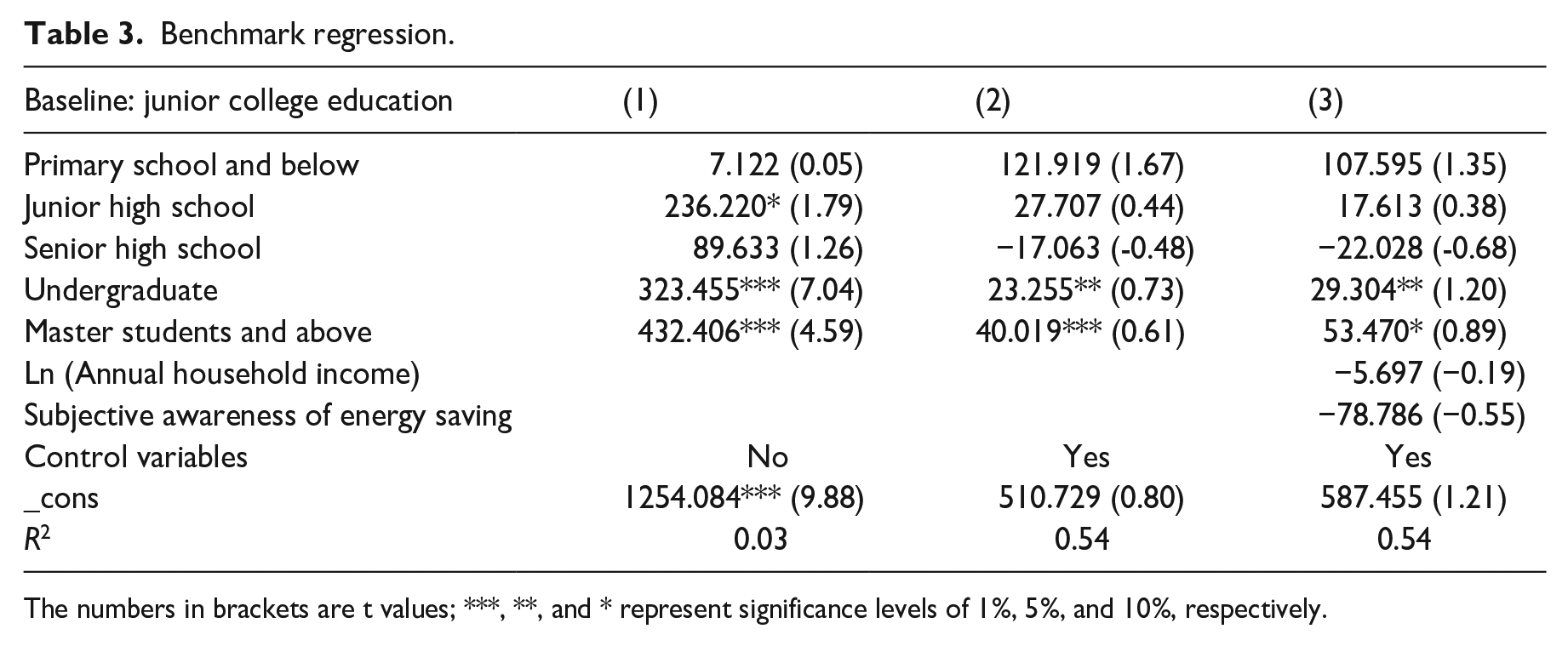
The numbers in brackets are t values; ***, **, and * represent significance levels of 1%, 5%, and 10%, respectively.
Regional heterogeneity test
The results of regional heterogeneous regression analysis of the impact of differences in education level on household energy consumption show that similar to those with a junior college education, residents with a higher education also consume more energy in the four focal cities.
Regarding income, household energy consumption increases as residents’ incomes increase in Guangzhou and Liaocheng. As their annual household income level rises, people in Guangzhou and Liaocheng have more opportunities to improve their living standards, increasing their demand for household energy. As a result, household energy consumption also increases in these cities.
However, the relationship between income level and household energy consumption in Beijing and Xining shows a different pattern. In Beijing, as people’s income increases, they tend to pursue a higher quality of life, leading to their purchase of higher-quality household equipment. This, in turn, improves energy efficiency and indirectly reduces household energy consumption. Moreover, Beijing residents with different income levels demonstrate varying preferences for clean energy. Despite its higher energy conversion efficiency, clean energy often comes with a higher cost. During our interviews with residents, we found that those with higher incomes are more inclined to prioritize energy-saving practices to contribute to sustainable development and conserve resources. On the other hand, lower-income residents tend to focus on limiting personal expenses to manage their household expenditures more effectively.
In Xining, located on the ecologically fragile Qinghai-Tibet Plateau, there is a greater emphasis on environmental protection and energy conservation. As a result, household energy consumption decreases as people’s income increases. The city’s urgent demands for environmental preservation drive residents, especially those with higher incomes, to adopt energy-saving measures to reduce their ecological footprint.
In terms of subjective energy-saving awareness and behavior, our findings also reveal interesting patterns across the four cities. In Guangzhou, residents who pay attention to energy-saving labels on washing machines and energy-efficiency labels on master-bedroom air conditioners have less household energy consumption, significant at 5% and 1%, respectively. This indicates that people with good energy-saving awareness and behaviors in Guangzhou are more likely to adopt energy-saving measures, leading to reduced household energy consumption. Similarly, in Beijing, residents who can self-regulate their home’s temperature tend to have lower household energy consumption, which is significant at the 1% level. Nevertheless, in Liaocheng and Xining, our analysis does not show any statistically significant relationships between energy-saving awareness/behavior and household energy consumption. While interviewees expressed concern about the energy efficiency labels of TV sets and washing machines, these factors do not significantly impact household energy consumption in these cities.
Across the four focal cities, households with subjective energy-saving awareness and behaviors tend to reduce household energy consumption effectively. This result aligns with previous studies (Ferreira et al., 2023; Wong-Parodi and Rubin, 2022). Our analysis also highlights that resident with a higher education, income level, and energy-saving awareness and behaviors significantly impact household energy consumption. However, these relationships vary across the four cities, indicating the importance of considering local context and factors in energy consumption patterns. The detailed results are presented in Tables 3 and 4, providing a comprehensive understanding of the interplay between subjective energy-saving awareness and behaviors and household energy consumption in these four cities.
Regional heterogeneity test.
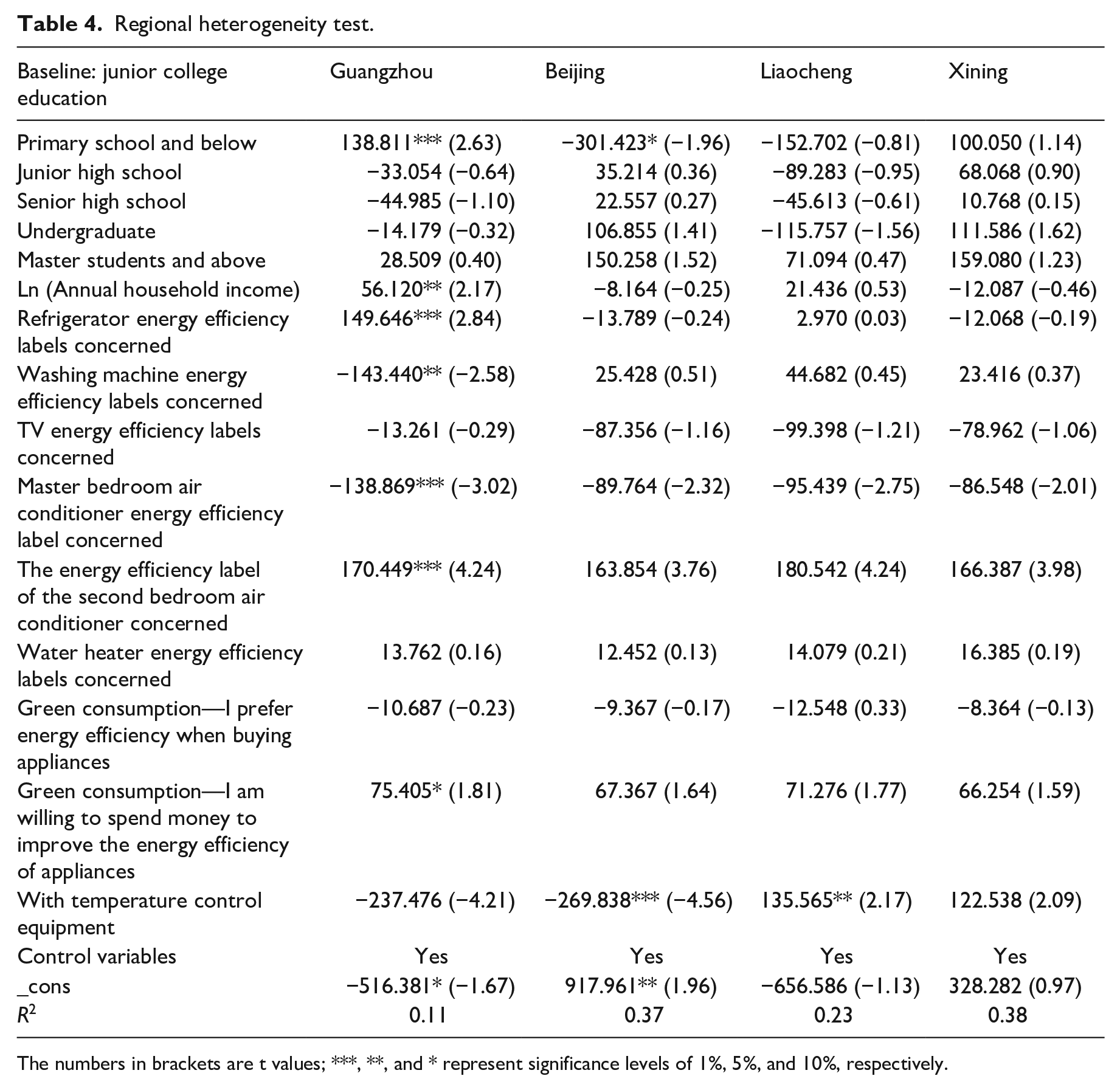
The numbers in brackets are t values; ***, **, and * represent significance levels of 1%, 5%, and 10%, respectively.
Mechanism analysis
In this subsection, we analyze how income level and subjective energy-saving awareness and behavior affect the relationship between education level and household energy consumption.
Below, Table 5 presents the regression results of the moderating effect of income level and subjective energy-saving awareness and behaviors of residents with different education and household energy consumption levels. Specifically, residents with higher education show an increase in household energy consumption compared to those with a junior college education, as indicated in column (1). The regression coefficient of income level is positive. In contrast, the regression coefficient of the interaction term between education level and income level is negative, and both are significant at the 1% level. This implies a trade-off relationship between residents’ income and education levels in reducing household energy consumption. Compared to those with a lower income level, residents with a higher income and higher education are more inclined to purchase energy-efficient appliances to reduce household energy consumption. In addition, residents with higher quality of life requirements are more inclined to choose a well-equipped infrastructure, resulting in a reduction in household energy consumption. Although residents with a higher education and low-income level are aware of the advantages of high-energy-efficiency products, they are often unable to afford these products due to economic constraints, leading them to choose less energy-efficient home appliances, which inadvertently increases household energy consumption. Furthermore, the availability of clean energy infrastructure in communities may influence energy consumption patterns; residents may have limited access to renewable energy sources, leading them to resort to conventional energy sources, further increasing household energy consumption.
Mechanism analysis (income).
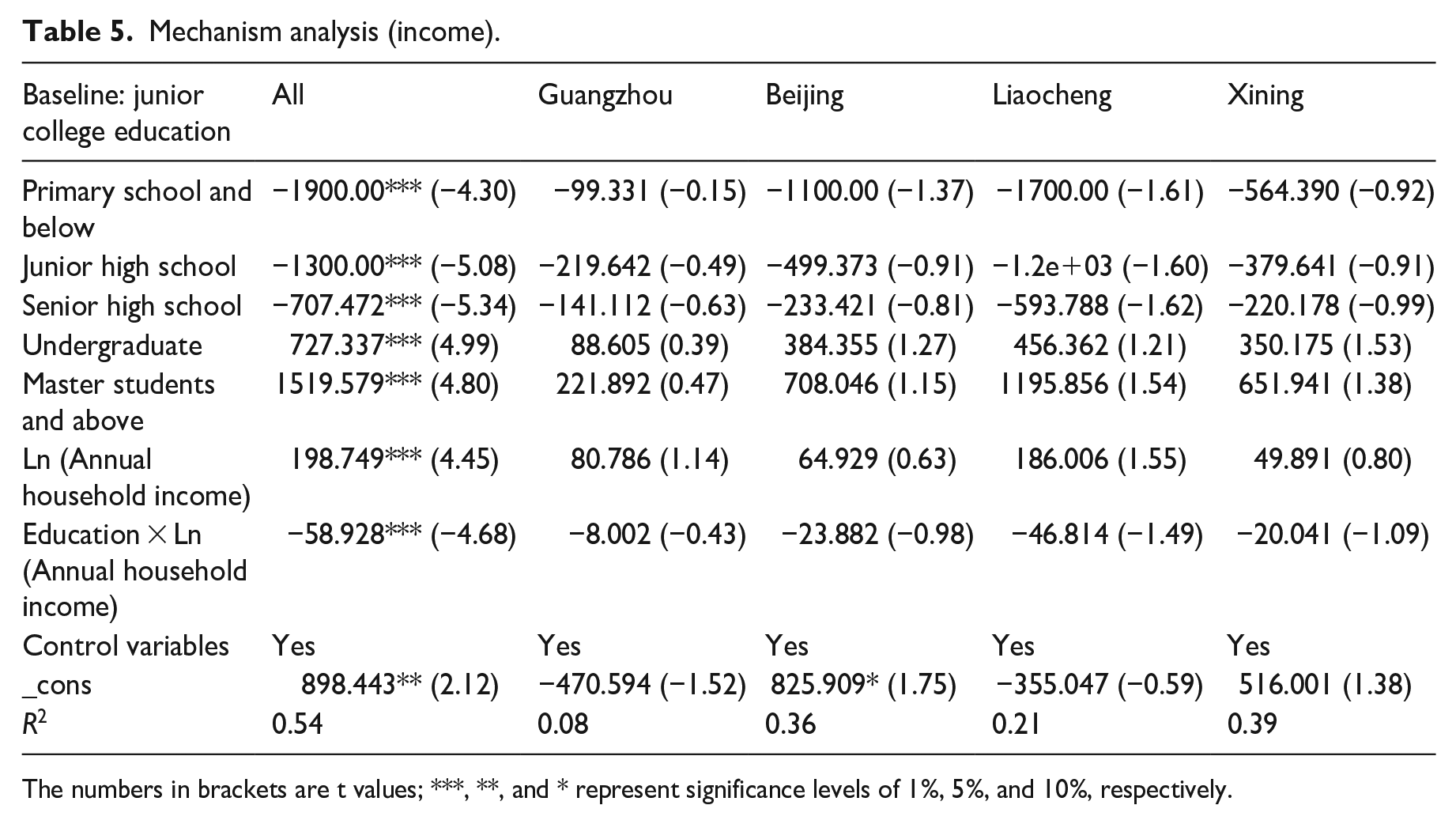
The numbers in brackets are t values; ***, **, and * represent significance levels of 1%, 5%, and 10%, respectively.
Moreover, our results reveal a negative relationship between the interaction term of subjective energy-saving awareness/behavior and education level. This indicates that subjective energy-saving awareness and behavior can mitigate the impact of higher education on household energy consumption. Specifically, residents with a higher education and greater subjective energy-saving awareness and behaviors are more effective in reducing household energy consumption. The main reason for this is that their subjective energy-saving awareness and behaviors prompt them to take more energy-saving measures daily. For example, they may opt to use high-efficiency appliances to minimize wasted electricity and regulate the use of their home equipment.
In our analysis of regional heterogeneity, we evaluated how income affects the relationship between respondents’ higher education levels and household energy consumption. Presented in Table 5, these results show that the interaction terms of education level and income level are negative across the four cities. In contrast, the regression coefficient of income level is positive. These findings thus highlight that income is a key factor that affects the impact of higher-educated respondents on urban household energy consumption. Specifically, residents with a higher income and higher education are more likely to reduce household energy consumption than residents with a lower income level. In Guangzhou, where a subtropical humid climate prevails, residents with a higher education and incomes are more likely to opt for greener and more energy-efficient energy sources, such as natural gas and electricity. Additionally, they are more inclined to adopt a low-carbon lifestyle, for example, by purchasing energy-saving appliances or implementing eco-friendly home decor. These choices collectively contribute to a reduction in household energy consumption in that city.
Furthermore, combining the interview data and modeling results from the four cities, we find that residents with the same level of education (e.g. undergraduate) but different levels of income exhibit different patterns of energy use. For instance, lower-income residents may prefer to cook at home to reduce expenses, leading them to choose natural gas as their most frequently used energy type. This preference consequently affects the energy mix in their households. On the other hand, higher-income residents tend to cook less frequently, especially in the summer when high temperatures drive them to opt for takeaway food. As a result, their usage of natural gas decreases. Economic factors and lifestyle choices influence these differences in energy consumption patterns. Compared to Guangzhou and Beijing, Liaocheng has lower economic and education levels. These factors likely contribute to the differences in energy consumption patterns among these cities.
However, given an improvement in education level and increase in income, the residents of Liaocheng are likely to change their household energy consumption pattern, consequently affecting overall household energy consumption. In addition, due to the unique geographical location and distinct climatic conditions of Xining, its residents’ energy consumption patterns are different from those of other urban residents. This city experiences cold and long winters, making heating a significant contributor to household energy consumption (Jiang et al., 2020). However, amid an improvement in education level and an increase in income, residents of Xining may opt for more energy-saving and environmentally friendly heating methods. This shift in preferences could effectively reduce household energy consumption, mitigating the impact of harsh weather conditions on energy use.
Regarding regional heterogeneity, we analyzed how subjective energy-saving awareness and behavior affect the relationship between respondents’ educational levels and household energy consumption. These results, presented in Table 6, offer exciting insights. In Liaocheng, the interaction term between education level and attention to refrigerator and washing machine energy efficiency labels is negative. This finding indicates that subjective energy-saving awareness and behavior can substitute for the impact of education level on household energy consumption. In other words, residents with a higher education and subjective solid energy saving awareness and behaviors can reduce their household energy consumption. Based on interview data from residents, it was found that those who have experienced harsh living conditions since childhood are more likely to exhibit strong energy-saving awareness and behaviors. Additionally, being well educated provides them with a deeper understanding of energy consumption and energy-saving measures. Combining these two factors significantly lowers the household energy consumption of these residents compared to that of others.
Mechanism analysis (the awareness of energy saving).
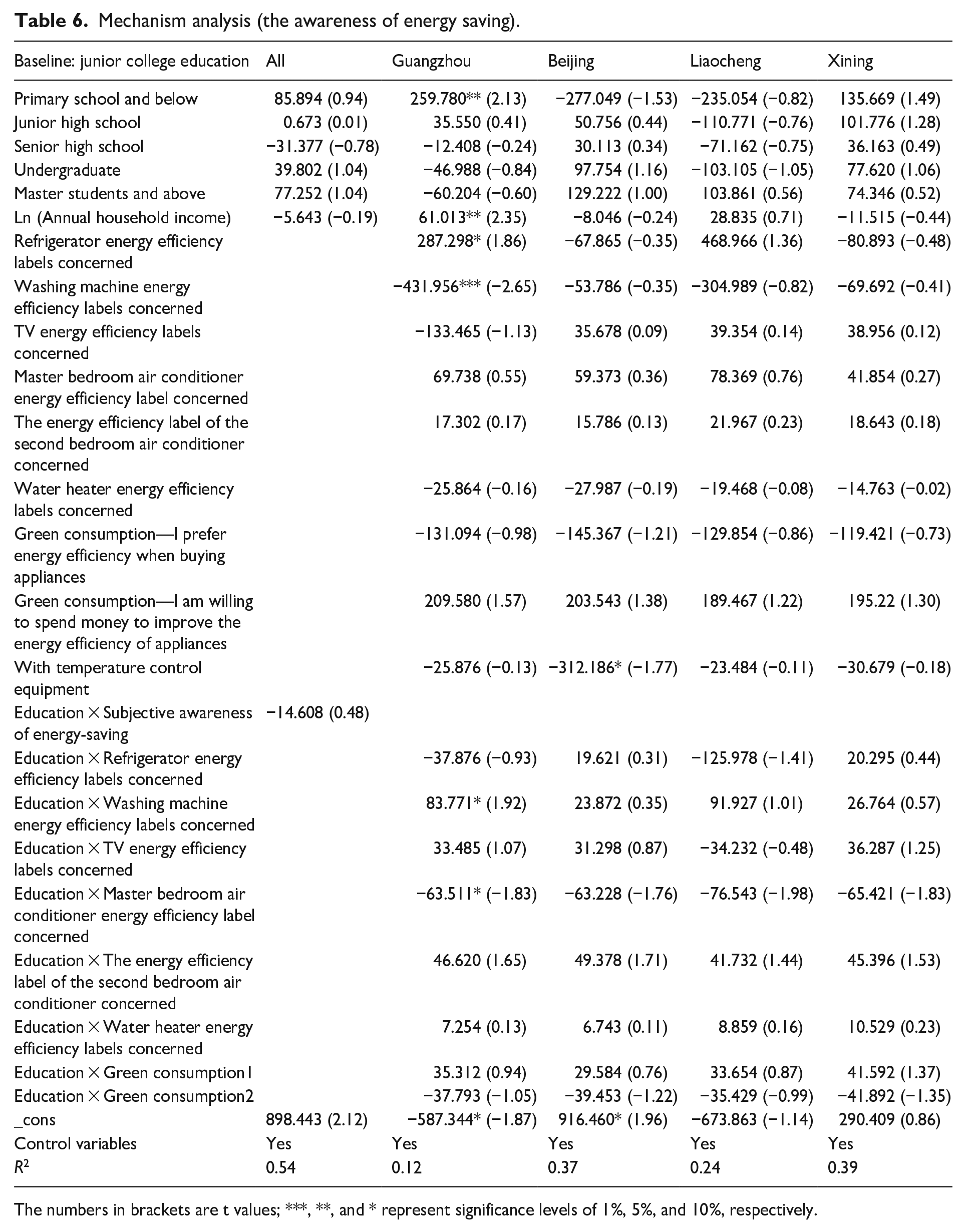
The numbers in brackets are t values; ***, **, and * represent significance levels of 1%, 5%, and 10%, respectively.
In Xining and Guangzhou, the results regarding the interaction term between education level and subjective energy-saving awareness and behavior follow exciting patterns. In some cases, subjective energy-saving awareness and behavior can compensate for the impact of education level on household energy consumption. However, there are instances where residents with a higher level of education and strong subject energy-saving awareness and behaviors exhibit increased household energy consumption. Specifically, when subjective energy-saving awareness and behavior compensate for the influence of education level, residents with a high level of energy-saving awareness and behaviors tend to exhibit energy-saving behaviors regardless of their education levels. This suggests that a strong energy-saving awareness and behavior can prompt individuals to adopt energy-saving measures, reducing household energy consumption. However, when residents with higher education levels and intense energy-saving awareness and behaviors still show increased household energy consumption, their use of technological devices is the main driver of this. Highly educated individuals often use more technological devices, and the simultaneous use of multiple devices can increase energy consumption within a household. Despite their individuals’ energy saving awareness and behaviors, this can therefore result in their higher energy consumption if they do not implement correct energy conservation behaviors and practice reasonable energy usage.
Conclusions and policy implications
Conclusions
We use household survey data from four major cities at different levels of development in China, namely, Beijing, Guangzhou, Xining, and Liaocheng. The study explores how education levels affect household energy consumption. To reveal the mechanism of these variables in regulating household energy consumption, we have analyzed how income level and subjective energy-saving awareness and behavior influence the relationship between level of education and household energy consumption. Our analysis therefore contributes to the literature community by identifying the central role of income level and energy-saving awareness and behavior in the impact of higher-educated residents on household energy consumption. Furthermore, our analysis offers new insight into the complex patterns of how education affects household energy consumption. Thus, this study draws the following vital conclusions.
This study investigates the quantity of household energy consumption in four cities in China. Beijing and Guangzhou, known for their high per capita GDP, exhibit differing per capita energy consumption levels among their residents. Household energy consumption in Beijing is 1957.92 kgce/year, while Guangzhou records a lower figure of 722.82 kgce/year. In addition, Beijing has a higher household energy consumption than Guangzhou, as well as a higher GDP per capita. The per capita GDP in Beijing is 190,500 yuan/person, whereas Guangzhou reports a slightly lower value of 153,900 yuan/person. Compared to the per capita GDPs in these two larger cities, Xining, despite having a lower per capita GDP of 66,300 yuan/person, demonstrates a higher per household energy consumption of 2095.88 kgce/year. Moreover, Liaocheng, which has a per capita GDP of 47,100 yuan, has an even lower per-household energy consumption level of 1441.37 kgce/year. In Beijing and Xining, residents use natural gas; in Guangzhou and Xining, they use LPG and coal. For energy use, the majority of household energy consumption in Liaocheng, Xining, and Beijing originates from heating equipment. Natural gas is utilized by Beijing and Xining residents. Liaocheng residents use more coal because the city is rich in coal resources. In addition, Guangzhou residents use water heaters more frequently, and the energy source is LPG.
Concerning the impact mechanism, our study finds that residents with a higher level of education increase household energy consumption. This is exemplified in the above analysis, which shows that the interaction items of education level and income level significantly and negatively affect household energy consumption. In particular, residents with higher levels of education and income consume less energy. Moreover, residents with higher education levels and more vital subjective energy-saving awareness and behaviors exhibit lower household energy consumption. Regarding the impact mechanism, income and energy-saving awareness and behavior moderate the relationship between education and household energy consumption. Higher-educated residents use more energy in their homes in Guangzhou, Beijing, Liaocheng, and Xining. Moreover, residents with higher education levels and intense subjective energy-saving awareness and behaviors can help reduce household energy consumption in Liaocheng. Nevertheless, in Guangzhou and Xining, we obtained the opposite result.
This research contributes to our understanding of household energy consumption patterns in urban China in three significant ways. First, it highlights that both income levels and awareness of energy-saving practices play crucial roles in moderating the relationship between education and household energy usage. This finding challenges the idea of a straightforward causal link, suggesting instead that education influences energy consumption through various socioeconomic and behavioral channels. By merging human capital and behavioral theories, the results provide a more detailed perspective on how energy consumption dynamics operate. Second, the study explores cities at different stages of development—specifically Beijing, Guangzhou, Xining, and Liaocheng—to illustrate how income inequality and regional socioeconomic conditions affect the education-energy consumption connection. It proposes that educational initiatives aimed at enhancing energy efficiency should be customized to fit the local economic landscape, ensuring fair and effective outcomes. Finally, this research broadens the scope of behavioral energy studies by investigating subjective energy-saving awareness as a mediating factor. In contrast to previous studies that primarily focus on objective measures, such as the adoption of energy-efficient appliances, this work underscores the importance of cognitive elements in translating education into energy-saving behaviors. These insights can be used to craft targeted communication strategies designed to boost energy literacy among educated individuals.
Policy implications
Based on our findings, we suggest that policymakers enhance higher education quality and coverage nationwide, focusing on sustainable development content. Higher education often leads to greater financial prosperity, allowing individuals to afford energy-efficient technologies. This not only aligns with a sustainable lifestyle but typically poses no significant challenge to quality of life. High-income earners tend to invest in energy-efficient technologies and report energy saving. However, they might paradoxically consume more energy. Therefore, demand reduction policies based on efficiency measures could be highly effective within this group. Conversely, low-income earners often resort to saving energy by reducing usage rather than investing in efficient technologies. Making energy-efficient appliances more affordable or addressing the perception that they are unaffordable may boost adoption among these households.
Furthermore, our findings suggest the need for differentiated policy approaches targeting highly educated populations across cities with varying development levels. For high-GDP cities like Beijing, policies should prioritize developing clean energy infrastructure while providing tax incentives for energy-efficient appliances. For highly educated but lower-income groups, governments should establish tiered subsidy systems to bridge the affordability gap for energy-efficient products. To enhance energy-saving awareness among educated populations, authorities should leverage new media platforms for energy conservation campaigns and organize community-level education programs. Cities with significant heating demands, such as Xining, should focus on upgrading heating systems with energy-efficient technologies while providing technical support for residential energy-saving retrofits. Additionally, policymakers should integrate environmental education into various educational levels and develop detailed energy efficiency labeling systems that align with educated populations’ tendency to make informed consumption decisions.
In addition, given urban differences, it is advisable to set flexible targets rather than prescribing uniform measures across countries. This approach empowers cities to design their energy policies in line with their unique conditions and constraints, arguably leading to more cost-effective achievement of carbon peaking and neutrality goals. On the one hand, in regions characterized by a high GDP per capita yet a limited availability of clean energy resources, strategies may include importing clean energy from areas abundant in renewable resources. This can be facilitated through mechanisms such as cross-regional power grids, along with investment in and support for research and development of emerging clean energy technologies, including but not limited to ocean energy and geothermal energy. Furthermore, policymakers should consider implementing subsidies for clean energy products and services, thereby reducing the associated financial burden on consumers. On the other hand, in regions characterized by a low per capita GDP and an abundance of clean energy resources, a suitable infrastructure should be established. For example, clean energy facilities suited to regional characteristics (e.g. hydropower, wind energy, solar energy) should be developed and constructed, and power transmission and distribution networks should be improved to ensure that clean energy can effectively reach end users.
Notably, regardless of whether a city has high per capita GDP due to limited energy resources or has abundant clean energy because of low per capita GDP, in response to climate change, well-known news media should uphold the principle of “conveying” and disseminating scientific and rigorous energy-saving information. Thus, these efforts can catalyze behavioral and lifestyle changes that prompt people to quickly recognize and adapt to the challenges of profound shifts in social norms.
However, our study does have some limitations. First, our conclusions are based on household energy consumption in four major cities; we did not consider the situations in other regions. The metrics used to assess subjective energy conservation awareness differ across cities, which could lead to inconsistencies in interpretation. Moreover, as this study included only the highest level of education among respondents, it is unknown whether it was the highest level of education in these cities. Therefore, further research should examine how education levels impact household energy consumption in other regions and standardize the metrics for subjective energy-saving awareness and behavior across cities.
In addition, while our analysis identifies a significant association between education level and household energy consumption, we acknowledge the possibility of bidirectional causality. Higher education may lead to increased energy consumption via income-mediated lifestyle changes or reduced consumption through energy-saving awareness. Conversely, households with greater energy demands (e.g. due to technology-intensive lifestyles) might prioritize educational attainment to afford such consumption. Endogeneity has the potential to bias regression estimates when unobserved confounding variables influence both of the variables under consideration. It is important to recognize this issue to ensure the accuracy and reliability of the analysis. To partially address this, our models control for income, energy-saving awareness, and regional characteristics, which are key mediators. However, residual confounding may persist. Future studies could employ instrumental variables (IVs) to disentangle causality—for example, exploiting exogenous variations in education policies or compulsory schooling laws as instruments. Longitudinal or panel data tracking households over time would also help mitigate reverse causality by capturing temporal dynamics. Additionally, natural experiments, such as policy-driven expansions of educational access, could isolate the causal effect of education on energy behavior.
Footnotes
Appendix
Types and uses of household energy consumption in the four cities.
| City | Energy use | Household energy consumption per household (kgce/year) | Proportion (%) | Electricity (%) | LPG (%) | Coal (%) | Natural gas (%) | Solar energy (%) |
|---|---|---|---|---|---|---|---|---|
| Guangzhou | Water heater | 272.64 | 37.72 | 12.63 | 81.22 | — | — | 6.14 |
| Air conditioner and fan | 148.46 | 20.55 | 100.00 | — | — | — | — | |
| Cooking equipment | 261.24 | 36.14 | 4.58 | 20.34 | — | 75.08 | — | |
| Large household appliances | 30.80 | 4.26 | 100.00 | — | — | — | — | |
| Lighting | 9.68 | 1.34 | 100.00 | — | — | — | — | |
| Beijing | Water heater | 316.34 | 16.16 | 37.57 | 59.34 | — | — | 3.09 |
| Air conditioning and portable fan | 100.89 | 5.15 | 100.00 | — | — | — | — | |
| Cooking equipment | 289.72 | 14.79 | 2.15 | 12.16 | 0.06 | 85.63 | — | |
| Large household appliances | 41.23 | 2.11 | 100.00 | — | — | — | — | |
| Heating equipment | 1209.74 | 61.80 | 19.45 | — | — | 80.55 | — | |
| Liaocheng | Water heater | 179.83 | 12.48 | 57.65 | 10.23 | — | — | 32.12 |
| Cooking equipment | 332.33 | 23.06 | 2.93 | 2.28 | — | 94.59 | — | |
| Large household appliances | 33.29 | 2.31 | 100.00 | — | — | — | — | |
| Lighting | 33.76 | 2.34 | 100.00 | — | — | — | — | |
| Heating equipment | 862.16 | 59.82 | — | — | 100.00 | — | — | |
| Xining | Water heater | 223.98 | 10.69 | 28.14 | — | 35.80 | — | 36.06 |
| Cooking equipment | 276.23 | 13.18 | 21.49 | 76.42 | 1.22 | 0.85 | — | |
| Large household appliances | 31.39 | 1.49 | 100.00 | — | — | — | — | |
| Lighting | 39.68 | 1.89 | 100.00 | — | — | — | — | |
| Heating equipment | 1524.59 | 72.74 | — | — | — | 100.00 | — |
Data availability
The data is protected by intellectual property rights and is available to readers by contacting the author of this article.
Declaration of conflicting interests
The authors declared no potential conflicts of interest with respect to the research, authorship, and/or publication of this article.
Funding
The authors disclosed receipt of the following financial support for the research, authorship, and/or publication of this article: This research was funded by the National Natural Science Foundation of China (42001130) and the Second Tibetan Plateau Scientific Expedition and Research Program (Grant No. 2019QZKK0606).