




Abstract
With the growing threats of global warming, efforts towards climate justice globally and in Southern and Eastern African governments are gaining momentum in line with the UN Sustainable Development Goal 13 (take climate action). However, in Eastern and Southern Africa regions, there are some hurdles. This study therefore seeks to understand how relevant carbon pricing and markets are in the region’s economic growth and environmental outcomes. It documents regional progress made in carbon emission pricing and markets in line with the Paris Agreement 2015 and the Green Climate Fund (GCF) replenishment and reviews some climate policy designs and pitfalls against effective carbon pricing systems in Sub-Sahara Africa. The study used an in-depth review of relevant literature especially sourced from the NDC sub-sector 2021 database. Data were classified and quantified quantitatively for analysis. The results indicate reasonable progress in the regions to advance Carbon Pricing with magnitudes surpassing the West African regions. South Africa leads in terms of implementing initiatives that will establish carbon pricing. There was inverse negative significance in carbon trading in some West African sub-regions. However, political uncertainty persists and threatens reversals of gains from efforts to attain green economic growth. Carbon pricing and marketing in the region are indicated by carbon taxes, levies, and taxes, the establishment of trading platforms to sell carbon credits, and research funding to deepen knowledge and awareness of carbon trading status among others. However, carbon pricing and legislation progress in the region are threatened by unstable political certainty, lack of political goodwill and institutional frameworks on climate change mitigation; poor capacity of policymakers and countries experts to conceptualize and implement carbon pricing policies, and a general lack of financial systems and financial support to promote climate change mitigation. Five relevant recommendations were made based on the study findings.
Introduction
There is a growing awareness about the changing climate based on facts and observations from scientists across the world. The Intergovernmental Panel on Climate Change (IPCC) (2021) affirms the magnitude of these changes. The changes are observed in flooding, desertification, extreme winds, snow and ice melting, changes in coastal areas and oceans as well as extreme heat waves. All these exert negative impacts on human lives, livelihoods, and economies across the globe and call for urgent actions in line with the United Nation’s Sustainable Development Goal 13 (take climate action) otherwise Climate change policy in Africa is an important problem that requires immediate attention and effective approaches. Due to its high natural resource and agricultural reliance, poverty, poor infrastructure, policy issues, and limited access to relevant and dependable agricultural inputs, Africa is especially susceptible to the effects of climate change and policy uncertainty (Porter and Osei-Hwedie, 2015). Uncertainty around carbon emissions is one of the major issues in African climate change policy. IPCC notes, however, that through continuous control and abatement of greenhouse gas emissions (GHE) (including carbon dioxide, CO2) it is possible to mitigate climate change with policy certainty. Thus an urgent intervention in global socio-economic and stable political certainty fronts change in climate (temperature) by 3°C if it means to avert Africa’s GDP reduction estimated at 8.6% per year beyond 2100 (Ojeme, 2017). However, if climate change is restricted to the agreed level of 1.5°C as agreed in the Paris Agreement, decreasing economic growth (GDP growth) will grow more slowly with an expected relatively more dismal growth of about 3.8% per annum beyond 2100 (IMF, 2022).
The lack of predictability or clarity on the way governments act and make regulations and enforce them related to climate change is what is referred to as climate change policy uncertainty. This phenomenon arises mainly due to delayed implementation, political debates, inconsistent policies, and ever-changing government priorities which in turn harm the way policymakers, businesses, and investors conduct their activities. Climate policy uncertainty is responsible for and considered according to UNEP (2022), East African countries, particularly parts of northern Kenya, Somalia, Ethiopia, and Djibouti are staring at very harsh conditions of drought, in fact, one of the driest and hottest conditions to ever be experienced in the region. Climate change mitigation and adaptation methods face considerable obstacles in Africa due to policy and political uncertainties around carbon emissions. Recognizing carbon emissions, predominantly carbon dioxide, is a significant contribution to global GHE, accounting for roughly 75% of total emissions (Yang et al., 2014). Addressing carbon emissions is critical to avoiding climate change consequences and attaining sustainable development objectives (Smucker et al., 2015). In South Africa, research carried out shows that climate change will interfere with the ecosystem and therefore affect the water resources, and supply and the agricultural sector (Citaristi, 2022). Various effects as recorded related to climate change include soil erosion, drought, and depletion of water resources among others. South Africa has been reported as the number 14, among the world’s highest CO2 emitters. This is above the global average, where it had 9.5 tons of Carbon dioxide emissions per capita as recorded in 2015.
Although Africa as a continent has very minimal contributions to the global emissions that are believed to cause climate change and global warming, it is the most affected. Projections by scientists place Africa in a bad state and state that this situation will only get worse if no political certainty is realized. There is little knowledge of climate change effects in the unforeseeable future repercussions. Human activities brought about by the intensive industrial activities and other activities such as agricultural practices have come with the increase of GHG. Carbon dioxide is classified as one of the greenhouse gases and is the most common of all of them there have been efforts internationally to reduce its emission and avoid dangerous effects posed by this gas and reduce its emission to net zero by 2050 (Livingston et al., 2018). The emission of these GHGs leads to global warming and environmental degradation, health issues, and environmental challenges. This is one of the most serious problems facing mankind in the 21st century, the problem of environmental pollution and climate change (Mosnier et al 2014). Africa as any other continent is facing a serious pollution threat coupled with adverse environmental and climatic challenges. In the year 2020, South Africa had the highest levels of Carbon dioxide emission at 452 metric tonnes (Danish et al., 2020). This shows how much of these gases end up in our environment at a particular time. Global emissions of carbon from fossil fuels have ballooned since the 1900s. The carbon dioxide emissions in the environment have increased by approximately 90%, with 78% being brought about by the combustion of fossil fuels. Cement manufacturing is another common source of these emissions, which contributes greatly to this. Carbon is a very essential building block of life, yet when it is excessively available becomes a very serious danger to the environment and the plant and animal life (Arrigoni et al., 2017a, 2017b).
Despite the inherent opportunities associated with carbon pricing, African countries have not capitalized on the benefits that other continents have reaped from carbon pricing. This argument is supported by a research paper (Collaborative instruments for ambitious climate action (CI-ACA), 2019), which states that carbon pricing is substantially underutilized on the African continent. In light of the foregoing, this study is being conducted to address the following objectives: (i) (opportunities inherent in carbon pricing, particularly for African countries; (ii) document some recent initiatives directly or indirectly linked to carbon pricing in the East and Southern African regions; and (iii) review the challenges impeding the successful implementation of carbon pricing in the East and Southern African regions, to provide policy recommendations that will help to address these challenges. Generally, the study aims to provide knowledge of the progress and opportunities of CO2 emission trading and challenges evidenced by policies at mitigating climate change promoting adaptation, and entrenching climate justice in Africa.
Theoretical framework
This work adopts the capability approach as the basic theory we can use as a framework for understanding climate justice. Alves and Mariano (2018) reviewed the relevant theory that best describes the approach toward the achievement of climate justice in academic discourse. They note that among the existing approaches to the theme of climate justice, Mayne et al. (2017)’s emphasis on the capabilities approach resonates as a possible guiding light for the United Nations (UN) Climate Convention discussions. According to them, the capabilities approach, formulated by Amartya Sen, an Indian economist, remains the framework for the human development concept, whose key focus is to secure the necessary freedoms for enabling man to live in an adequate way (Schlosberg, 2009). Alves and Mariano (2018) observe that the capabilities approach supports the UN concept of human development (Peters et al., 2013 as cited in Alves and Mariano, 2018) thus making it an unequivocal theory to adequately contextualize or shape the definition of climate justice. It is therefore quite safe and proper to define climate justice as “the guarantee of restoring the individual freedoms (or capability) after climate changes or any extreme climatic event (has occurred) through mitigation or adaptation actions” (Lyster, 2019). Following this approach, we, therefore, start the narrative by first exploring the opportunities and challenges in the attainment of a green economy or climate justice through carbon pricing; after this, we assess the efforts otherwise referred to in our theory above as capabilities of the human system or the regions (Sub-Saharan Africa and the Eastern and Southern Africa).
This research focuses on sub-Saharan African countries. In Southern Africa, the countries generally include South Africa, Namibia, Botswana, Zimbabwe, Zambia, Lesotho, Eswatini (Swaziland), Mozambique, and Angola. In East Africa, the most significant countries are Kenya, Tanzania, Uganda, Ethiopia, Rwanda, Burundi, Somalia, and Djibouti. Since these countries vary significantly in terms of their economies, populations, and energy use, it is crucial to provide detailed information about their specific circumstances.
South Africa has one of the highest carbon emissions on the continent, with coal being the country’s largest carbon emitter. Its economy is worth around $400 billion, and with a population of 60 million, South Africa is one of Africa’s largest energy consumers and a major contributor to regional carbon emissions. In contrast, Mozambique and Angola have smaller economies but are significant exporters of natural resources, especially Angolan oil and gas. Both countries are highly vulnerable to climate change due to their reliance on agriculture and energy exports. Mozambique has a population of around 30 million, and Angola has around 35 million, making them medium-sized in terms of population but highly exposed to climate risks.
Kenya has one of the world’s largest shares of renewable energy in its energy mix, primarily hydropower, but its carbon emissions are rising due to rapid industrialization and urbanization. Ethiopia, with over 120 million people, is also growing quickly but faces considerable challenges in balancing its economic growth with environmental sustainability. Similarly, Tanzania and Uganda are smaller economies, yet their energy consumption and carbon emissions are increasing as they focus on economic development.
Literature on the economic relevance of carbon pricing globally
Pricing instruments on carbon, whether carbon taxes or cap-and-trade schemes, are already in use across the globe for example in areas such as the European Union (EU ETS), China, and the Americas, and these unique case studies offer evidence that carbon pricing can reduce greenhouse gas emissions significantly, while simultaneously allowing for economies to grow. William Nordhaus, a Nobel Laureate, suggests (2019), “Perhaps the most cost-effective guide to reducing greenhouse gas emissions to confront climate change is to put a price on carbon a price that remains for time, place, and form.” Further, the mountains of evidence in The Stern Review (2006) suggest that there are long-run economic costs without implementing carbon pricing in the climate crisis are infinitely greater than carbon pricing impacts.
The OECD (2023) provides further conceived evidence of the broader economic benefits a carbon price can provide on measurement that uses Soviet-style collected-developed economies to illustrate how carbon pricing brings about environmental benefits, generates government revenue, encourages innovation, and spurs investments in clean energy technologies leading to jobs, and consequentially more sustainable development.
Furthermore, the IMF (2019) and others reaffirm the distributive effects of carbon pricing and the need to incorporate a revenue recycling mechanism to mitigate any negative low-income households. The fuller literature on carbon pricing provides compelling relevant empirical evidence to inform economic case studies and coupled with the case studies themselves will begin to realize considerably more depth about the economic benefits of carbon pricing and carbon taxes.
Literature gaps
Most of the existing literature on climate change and carbon emissions, as well as carbon pricing, has a strong focus on emerging economies, particularly in Europe, North America, and parts of Asia. These areas have implemented comprehensive carbon pricing and security regulations that provide valuable insights and analysis. However, there is very little research specifically focusing on Sub-Saharan Africa, Eastern, and Southern Africa in particular, where the economic, social, and environmental contexts are different from the more developed European, Asian, and American countries. Particularly in sub-Saharan Africa, there are so many disadvantaged areas, such as agricultural dependency, poor infrastructure, and social unrest, that have not yet been fully explored in terms of carbon emissions and security policy.
While much of the current research focuses on the environmental impacts of climate change, some studies explore the uncertainty that climate projections create for policy and the large impact these have on regional economies. This study aims to fill this gap by examining how these uncertainties affect sectors such as agriculture, water, health, and energy that are negatively affected by climate change in Africa in different ways. Most of the literature on security policy is based on more qualitative analysis and focuses on case studies and theoretical frameworks. However, there is very little analysis that includes the social structure of climate control, emissions, and socioeconomics in African countries.
This study helps to fill this gap by using various classification and statistical methods to analyze climate-related data from the sub-sectoral database of the National Climate Change, Agriculture, and Food Security Data Center (CCAFS). This approach allows for a more accurate analysis of how current policy addresses the negative aspects of the region. Economic flexibility is lower and resilience is more pronounced.
While international literature demonstrates the economic benefits of carbon pricing in reducing emissions, there are few studies investigating its impact and feasibility in the African context. By investigating how current policies in Africa address carbon emissions and climate change, this research contributes to filling important gaps in the literature by providing insights into how carbon pricing mechanisms can be adapted to the economic environment.
Research questions
What uncertainties abound in the climate change policy formulation in East and Southern Africa?
In what ways do climate change policies affect various population groups, especially disadvantaged populations, in East and Southern Africa?
How, if at all, do international climate agreements and regional cooperation influence the formulation of climate-related policies in eastern and southern Africa?
What role do international climate agreements and regional cooperation play in shaping climate change policies in East and Southern Africa?
What are the non-linear effects of climate change on critical sectors like agriculture, energy, and water resources in the East and Southern African regions?
How can policy uncertainty in climate change be minimized to ensure sustainable development in the region, particularly in agriculture and food security?
Methodology of the study
Recognizing uncertainties in regional climate forecasts and the possible nonlinear effects of climate change on agriculture and other sectors is critical in resolving climate change policy uncertainty (Bichet et al., 2020). The adopted literature and secondary data have explored the climate change and carbon emissions uncertainty is exacerbated by the fact that the policy decisions that will help decide future emissions increase are methodologically reactive to forecasts of future climate change (Ogalleh et al., 2012). Furthermore, the effects of climate change on African socio-economic growth and the policy options accessible to the continent for adaptation deserve further study and consideration. This study utilizes secondary data sources obtained from reputable sources such as the Climate Change, Agriculture, and Food Security (CCAFS) NDC subsector database from the year 2021. This database source articulates very important and detailed forecasts for the topic of carbon emissions and the important indicators of socio-economically that are relevant to the climate policy. The data in the database lays the foundation for the region’s climate policies. This data is analyzed by a methodological tool referred to as the quantitative classification with a focus on climate-related data. The analysis evaluates the relationship between the current policy frameworks, projected emissions socioeconomic vulnerabilities using statistical modeling. Inferentially, resolving climate change policy uncertainties and carbon emission concerns in Sub-Saharan Africa requires a thorough grasp of the region’s environmental, economic, and social characteristics. It demands a focus on sustainable farming methods, food security, water resources, health, and energy while taking into account the vulnerabilities and repercussions on various population groups. In this study, the utilization of quantitative data and inferential analysis is used to make proposals on policy recommendations. Furthermore, it requires strong policy responses that take into consideration the uncertainties inherent in climate change as well as its possible socioeconomic consequences.
Results and discussion
Results
The study on climate change policy uncertainty and carbon emission challenges in East and Southern Africa elicits key issues regarding the climate actions of the region and what hinders effective climate mitigation and adaptation efforts. This research is based on the utilization of secondary data sources obtained from reputable sources such as the Climate Change, Agriculture, and Food Security (CCAFS) NDC subsector database from the year it is observed that many countries in this particular region have several of their climate policies poorly coordinated. The lack of coherence is, in most cases, due to the low capacity of both human resources and technical capabilities plus different levels of political will. Consequently, much of the policy formulation is likely to be reactive rather than proactive in addressing long-term challenges since these weather forecasts do not provide precise predictions. This worsens the reactive approach adopted by countries due to uncertainties associated with climate scenarios that do not allow for proper planning based on specific details.
This research analyses some of the ongoing CDM projects in key countries across Eastern and Southern Africa, such as South Africa, Kenya, Uganda, Tanzania, Rwanda, and Ethiopia. The projects in wind energy, biomass, and landfill gas capture are essential for carbon mitigation. However, the research also indicates that while these may be good sources of emission reduction technologies, they are not widespread because they face several barriers and challenges for full implementation and overall success. The expansion and replicability of such initiatives are often constrained by financial and technological imitations. For example, both Kenya and Ethiopia have made remarkable strides in developing their renewable energy sectors geothermal and wind energy but further scaling these programs would require continued support in terms of finances and technology.
Climate impacts have devastated crop production from unpredictable rainfall patterns to rising temperatures, seasonal droughts, and frequent natural hazards. Research from the sources shows how these elements can shape entire ecosystems, affecting everything from soil moisture to forest regeneration. Decentralized renewable energy has the potential to help meet both pivotal and mutually reinforcing climate and development imperatives. Another major set of findings from the programs focuses on the need for “climate-smart” agriculture to increase production and help poor farmers adapt to various shocks from a changing climate. Many rural areas in the region still face an acute energy ‘deficit’, where access to clean and affordable energy remains far from sight. Thus, decentralized renewable energy has the potential to help meet both pivotal and mutually reinforcing climate and development imperatives.
Challenges and opportunities in carbon pricing
The UNFCCC Executive Secretary insisted that the proper market signals can bring about a rise in, and faster accessibility to, renewable energy. This necessitated a call for implementation of negotiations on Paris Agreement Article 6 (dubbed: cooperative mechanisms) which was established during the 25th session of the Conference of the Parties (COP 25) to the UNFCCC held in the city of Santiago Chile. According to a World Bank report in 2019, there are about 20% of global carbon emissions attributed to different regions, nations, and sub-national carbon pricing initiatives whereas only less than 5% of the same are priced with a view of achieving global temperatures at a consistent level. UNEP explains that the way the carbon revenues are utilized is a very important step in stakeholders accepting the carbon pricing initiatives. East and Southern African countries lack stable regulatory measures put in place about carbon pricing and when traditional methods are used in carbon pricing it may lead to economic difficulties and this is also due to lack of financial muscle to implement these measures without external support. Carbon pricing measures are important as they have a very special function, they carry out in climate change interventions. Such measures can both stimulate the growth of the economy of a country and at the same time protect the environment against emissions. East Africa and their counterparts in the Southern region have taken the initiative and are implementing the expansion options in the Tokyo Emissions Trading Scheme (ETS). The main purposes of this alliance are the promotion of a unified regional carbon market and a vision for climate finance. Carbon markets can be a very important mechanism to help in utilizing the investments into energy security in Africa.
In Kenya, there are strengths of carbon pricing and trading such as it provides a profitable and flexible way for reducing the challenges of climate and boosts developing countries to reach their set out sustainable goals while at the same time reducing the financial burden to these countries. Carbon pricing is an opportunity for Kenya and other developing countries in the region to gather some funds to boost their development (Mulugetta, 2011). Corporations are active in carbon pricing in East African nations such as Kenya, and there are usually collaborations with numerous non-governmental organizations that are also involved in the development and implementation of carbon pricing. They go about building relationships with governments and businesses to achieve an incremental and pragmatic reduction in the consequences of carbon emissions while also accomplishing the necessary structural change. In most situations, supporters of this ascribe the effectiveness of carbon pricing to the establishment of a commodity, which then prices emissions and aids in pollution reduction. According to the World study, developing countries such as the East and Southern African areas rely heavily on carbon revenues generated by carbon pricing as a major source of finance for supporting climate change mitigation and promoting industrialization initiatives. This can make them more economically competitive, narrowing the economic gap with developed economies. These particular revenues can assist these countries in supporting development projects and mitigating the harmful effects of carbon emissions. The proceeds from carbon pricing can be used to recompense individuals and communities harmed by carbon emissions.
According to studies, a fragmented architecture in which multiple areas try to meet their emission reduction objectives independently has a worse chance of driving down mitigation costs by encouraging partial or even full (in the case of direct connection) convergence in carbon pricing. Factors such as population growth, energy use, economic growth, and demand for goods and services each contributed to an increase in carbon dioxide emissions in Sub-Saharan Africa. (Chang et al., 2023), and it should be noted that energy use for economic growth has resulted in massive GHE which has led to climate change and an increase in respiratory diseases and asthma. Carbon emissions are rising in Sub-Saharan Africa, according to experts (Ssali et al., 2018). In Sub-Saharan Africa, there is a rise in the use of fossil energy, which has advanced poor economic development; despite the use of renewable energies, their wastes are capable of contaminating the environment and risking millions of biological species policies (Ssali et al., 2018). Air pollution is predicted to have a greater impact on less developed countries if initiatives to reduce emissions are poorly managed or uncertainty exists. According to the current global burden of disease modeling, the consequences will be greater in low-income nations, the majority of which are in Sub-Saharan Africa (SSA), than in other areas of the globe (Osakede and Ajayi, 2019).
A neglected area in African countries needs to deepen their participation in carbon trading given the rising impact of climate change on the economies of the continent and the fragility of the countries. According to the IMF (2022), weak countries in Sub-Saharan Africa (SSA) are finding it difficult to cope with the effects of climatic shocks and rising temperatures. “Structural problems, government failure, and a lack of institutional fundamental functions” aggravate their vulnerability. For example, CI-ACA (2019) states that legal and policy analysis data show that Eastern and Southern African countries have a diverse set of existing regulatory and policy potentials. There are a number of them, ranging from a complete lack of regulatory and policy potential (at one end of the spectrum) to the existence of specific mechanisms that can be utilized to achieve these goals in appropriate situations (in the relevant legal and policy regimes). According to Ali (2019) in the Sub-Saharan African return series, there is no volatility clustering, and all slope coefficients are 0. The non-negativity constraints, as well as the Ljung-Box Q statistic and the ARCH-LM test, were used to assess the robustness of the GRACH-diagnosed model (Engle and Patton, 2001). considering all factors displays descriptive information for the monthly All-share index for Sub-Saharan Africa stock markets’ level and return series.
To address the issues of climate change policy uncertainties in Africa and carbon emission challenges in Sub-Saharan Africa, Adedoyin et al. (2020) Emphasize the need to consider the nexus between environmental sustainability and agro-economic performance in Sub-Saharan African nations. The region’s growing concern for environmental degradation and the effects of climate change on agricultural-based operations is becoming more obvious, owing to the pressing need to satisfy food, healthy diet, and economic demands. Vulnerability will be exacerbated further by rising food demand from increasingly wealthy populations and rural population decline, both of which will hurt agricultural production, food security, water resources, health, energy, and ecosystem services (Ribeiro and Rodriguez, 2020). They mentioned developed regions in Europe and the United States as effective instances of successful air pollution reductions that have resulted in a cleaner environment, albeit this does not apply to all types of pollutants, and Africa is at a disadvantage. Even though most African inhabitants have tiny carbon footprints, the negative effects of climate change are expected to be stronger in Sub-Saharan Africa than in other areas (Ramin and McMichael, 2009; Roberts et al., 2023). Due to current environmental and socioeconomic difficulties, the continent is especially susceptible to climate change (Mikhaylov et al., 2020). Because Africa’s GDP is heavily reliant on agriculture, its economic growth is vulnerable to climate change (Animashaun and Ajibade, 2020). Furthermore, climate change-related consequences in Africa disproportionately affect women and the poor, underscoring the need to include climate justice in policy responses (Mugambiwa, 2021).
This work makes a significant carbon pricing has two categories; Carbon taxes and emissions trading systems. Each nation uses different types depending on the economic circumstances of that nation. Carbon taxes use a mode of setting a price directly by defining a tax rate to a greenhouse tax emission and on the content of carbon on the fossil fuels. Emissions trading systems typically set a cap on the total permitted gas emissions and allow industries with gas emissions below the cap to sell extra permits to bigger firms or organizations with higher carbon emission levels. By generating a supply and demand for the emission allowances, the emission trading system also provides a market price for greenhouse gas emissions. The established limit guarantees and helps businesses carry out emissions and reductions within the budgeted carbon budget. Other indirect methods for correctly implementing carbon pricing in many nations include the use of fuel taxes, the elimination of fossil subsidiary companies, and legislation that may take into account what is known as the “social cost of carbon.” The difficulty is that the project has not included the authorities. Even though 30 Sub-Saharan African countries have agreed to include carbon pricing in their individual Nationally Determined Contributions for implementing the Paris Agreement still uncertain. More than half of carbon emissions, or roughly 13% of annual global greenhouse gas emissions, are covered by programs unique to this country.
Sub-Sahara Africa (SSA) towards implementation of carbon pricing
This work aims to broaden/contribute to our knowledge of new insights into promising and encouraging strides that are being made regarding the implementation of carbon pricing. While practically every African country is progressing in some way, there are a few notable exceptions Duho and Senan Charlie Carine (2021). South Africa continues to be the giant pioneer and leader in Africa on this front. The nation introduced the Carbon Tax Act (No. 15 of 2019), which intends to establish a tax on the carbon dioxide equivalent of GHG emissions and to address related issues. With the profits flowing to underserved regions, this tax will put a price on carbon emissions, increase awareness of the issue, and promote reporting on climate pollution. Although the tax is set at a low rate of $0.42 per ton, there are hints that it will be raised in the future. The country intends to implement the “polluter pays principle,” which is a key premise of environmental law. According to Duho and Senan Charlie Carine (2021), other African nations lack the breadth and scope of South Africa’s carbon pricing scheme. Nevertheless, there is evidence that progress is being made in a favorable direction, although slowly. For instance, just 18 African nations are involved in the REDD+ initiative, which aims to increase forest carbon stocks in developing nations, conserve forest carbon stores, manage forests sustainably, and reduce emissions from deforestation and forest degradation. Other nations, like Ghana, the DRC, and Mozambique, have agreements in place with the World Bank to reduce carbon emissions. Duho and Senan Charlie Carine (2021) adds that a review of the Nationally Determined Contributions (NDCs) reveals that just two nations—Côte d’Ivoire and Egypt—mentioned “emission trading,” while only two nations—South Africa and Côte d’Ivoire—mentioned “carbon tax.” Additionally, only seven nations mentioned “reform of fossil fuel subsidies,” but 34 countries said “international market processes.” The omission of “hydrogen energy” and “electric cars” in Africa’s Agenda 2063: The Africa We Want is another indicator. Figure 1 indicates the level of the mitigation curve is lower, compared to adaptation. The global adaptation measures cut across SSA, although, it shows negligible soil, livestock, and rice adaptation measures. Figure 1, explicit reference shows out of 199 countries only 22 were soil organic mitigated. With SSA falling behind in terms of government policy initiatives.
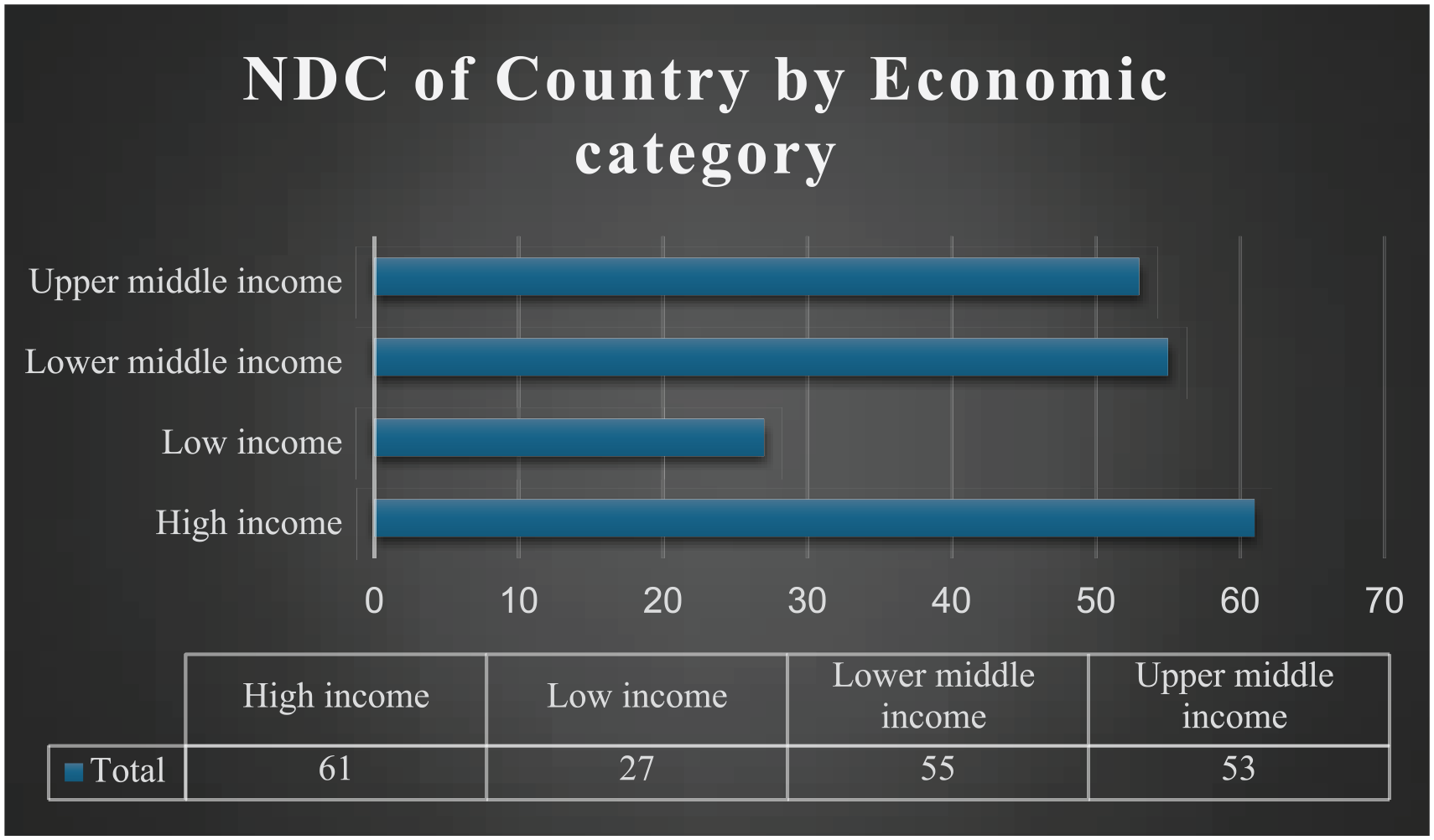
NDC countries’ categorization of economic strength (high/low).
For instance, according to sources (Citaristi, 2022), South Africa passed legislation enacting a carbon price, which was first suggested in a National Treasury discussion paper from 2010. The government proposed a carbon tax that would go into effect in 2019 and cover emissions from the burning of fossil fuels, industrial processes, emissions from product consumption, and fugitive emissions from mining. It may result in price increases for gasoline and diesel of up to 23 and 29 cents per liter (about 1%−2%), respectively. The mining and steel industries have deemed the tax unaffordable. The tax would be levied at a rate of $8 or 120 rand per ton of CO2. The first phase, which continues through 2022, may, however, result in over 95% of emissions being exempt due to a baseline tax-free level of 60% of emissions plus extra allowances. The actual tax rate would be in the range of $0.4–$3 per ton. In February 2019, South Africa’s parliament adopted the protracted carbon pricing proposal. The new law permits a tax rate of $8.48 per ton of CO2 equivalent. Additionally, it demonstrates that the total amount of tax-free allowances during the initial period may reach 95%. A carbon emissions tax was also imposed on new passenger vehicles, which went into effect on September 1, 2010. It charges a flat penalty of about $7 per gram per kilometer above 120 g/km, which is included in the pricing of new cars (Citaristi, 2022). East and Southern African nations filed reasonable NDCs, indicating their readiness to take part in climate change activities under the multilateral framework, according to Promethium Carbon’s synthesis study on Carbon Pricing Approaches in Eastern and Southern Africa. Even though some initial progress has been recorded in these regions regarding the implementation of Carbon Pricing in the regions, there has been no explicit mention of Carbon Pricing in any of the NDCs. Regardless of this apparent negligence, there have been a series of actions and initiatives that have been taken, recently in the region as reported by the CI-ACA (2019) project in the region. These include:
❖ The World Bank and the Ethiopian Development Study Institute have established a research team to examine the effects of carbon taxes on GDP growth and income inequality in these areas’ economies.
❖ In a news release, Kenya described its plans to create an emissions trading system that would enable companies to sell their carbon credits to foreign buyers. Rwanda also plans to undergo industrial transformation through a program called the Green Growth and Climate Resilience National Strategy for Climate Change and Low Carbon. To increase the nation’s private sector’s capability for carbon trading. To position Mauritius as a global model for sustainable development and to boost the use of renewable energy, Mauritius created the Maurice Ile Durable (MID) concept. The MID Fund was established by MID to fund projects promoting renewable energy. The Clean Development Mechanism (CDM) and voluntary carbon markets, which enable it to take advantage of innovative financial options, are further sources of support for it. Taxes on fossil fuels are another source of income. However, this was not meant to be used to set a price on carbon.
❖ According to the study (CI-ACA, 2019), the German Ministry of the Environment has sponsored the development of economic and carbon-pricing systems that would enable East African countries to execute their NDCs through the GIZ Global Carbon Markets Program in Uganda.
Table 1 of this study indicated some initiated projects from some parts of the African continent for policy and implementation schemes of the NDC and adaptable mitigating GHG.
NDC projection of countries’ ongoing projects.

Note: There are about 71 CDM projects in South Africa, 24 in Kenya, 14 in Uganda, 9 in Tanzania, 4 in Rwanda, and 2 in Ethiopia. The most common CDM in Africa are wind, landfill gas, and biomass energy.
Source: A summary report for COP27 December 2022, from Africa NDC hub.
The table above shows the NDC projections for these countries’ ongoing projects show that commitments rely significantly on the expansion of renewable energy, carbon capture, and sustainable land-use practices. The achievements related to these projects would require overcoming financial, technical, and governance-related barriers for the full realization of their commitments. The contribution and scaling up of international support in cooperation will be instrumental toward fully realizing these initiatives to meet the NDC targets by 2030.
Effective carbon pricing in eastern and southern African regions
The lack of regulatory frameworks and financial means is a key impediment to the successful implementation of carbon trading in Eastern and Southern African regions. According to Climate Policy, and Environmental Economists, traditional carbon pricing systems could exacerbate economic challenges in Eastern and Southern African countries since governments lack the administrative structures and financial means to implement such approaches without outside support (Department for Business Innovation and Skills, 2011). Scholars have canvassed for successful environmental management especially bordering on carbon emission reduction using active local-level support. A study by Hyle (2016) holds the view that there must be room for action for if the society intends to attain a sustainable development whose process can be improved through “responsive environmental governance.” While they acknowledge that residents may not, and frequently do not, offer solutions to their environmental problems, they believe that the potential of grassroots environmental action and local participation has been unfairly pushed to the back burner of the debate over sustainable environmental management. Because of the Projected value of Countries’ low emissions and the time, it takes to complete the standards for Article 6 of the Paris Agreement, adopting explicit forms of carbon pricing is now difficult. However, when a broader definition of carbon pricing is examined and accepted, it becomes clear that many active policies and instruments, such as Ethiopia’s tax on older autos, indirectly price carbon. Many of these take the form of taxes and other subsidies in the transportation, energy, and manufacturing industries. It would be difficult to implement explicit forms of carbon pricing in the Project Counties, but such programs could be feasible in the future. Carbon price signals can be given by activities like energy efficiency labels, green building regulations, and the elimination of fossil fuel subsidies, all of which can prepare the way for the implementation of explicit carbon pricing. Given that several Project Countries are taking initiatives to promote energy efficiency and renewable energy, there is plenty of room to evaluate how carbon pricing could aid and accelerate these efforts (see Table 1). Such research would demand solid data sets and trustworthy MRV systems, neither of which are currently available in any of the Project Countries. Some of these studies demonstrate the frameworks’ distinctive ability to capture highly important climate change challenges considering the NDCs. Furthermore, while some sub-regional institutions in Africa are taking action, some obstacles impede their efforts. For example, in West Africa, issues such as a lack of a national governance framework for transparency, a lack of private sector involvement, a lack of expertise for project creation, and the need to amend NDCs continue. These issues afflict the entire African continent. Figure 1 shows NDC countries by economic categories, lower or low middle income countries are mostly the African continent. Placing them at a risk of achieving the needed carbon pricing and avoiding climate change effects. In Africa, there are no legal structures in place to drive carbon prices. Currently, most countries’ climate change frameworks are executive in nature, with only a handful having legislation. Where there are legal mechanisms, there is insufficient coverage of climate financing challenges, and execution is also insufficient. NDCs going forward expected proper monitoring regulatory instruments for CO2 and other GHG mitigations. About 83 countries out of 199 are yet to update their NDCs (see Figure 1).
World Bank or International Monetary Fund categorizes countries as either low, middle, or high income based on their developed criteria, and this classification of these countries is used to group countries for various purposes which include the NDCs under the Paris Agreement. The categories are based on the country’s economic strength, the ability to finance climate change and adaptation measures as well as their development levels. The criteria include; Gross National income per capita, which is the primary indicator for classification. Countries are classified as low income if their GNI per capita is $1145 or less, low middle if between $1146 and $4465, upper middle income if their GNI per capita is between $4466 and $13,865, and high income if their GNI per capita is $13,846 or more. Other parameters for classification are Economic growth and stability which are determined by inflation levels, the growth rate of the economy, macroeconomic stability, and fiscal policies. Capacity for climate action, Human development indicators, income distribution debt sustainability are the other factors considered for classification.
There are insufficient financial structures and resources to support climate change mitigation efforts. If policymakers and duty-bearers have the political will, fiscal policy can address the explicit carbon taxes. However, the effectiveness of such initiatives will be determined by the ability of the capital and money markets to accept the instruments, particularly in the case of ETS and hybrid mechanisms. The ETS, which is a type of “cap and trade” scheme that has been shown to reduce CO2, entails the sale of permits to discharge specified pollutants in exchange for a fee equivalent to the amount of pollution emitted. Trading climate-related financial derivatives could be hindered in Africa due to its underdeveloped capital market. There is a lack of political and social will to reduce climate change. Although businesses and their executives must be at the forefront of climate change mitigation, Africa’s political and societal will cannot be disregarded. The Collaborative Instruments for Ambitious Climate Action (CI-ACA) (2019) in its project carried out in Eastern and Southern Africa identified some challenges constraining the effective implementation of Carbon Pricing and possibilities the challenges identified for the two regions of Africa are as follows:
❖ Paucity of funds to implement emissions reduction projects with the potential of stimulating national Carbon Markets.
❖ Poor demand and supply for emissions reduction is also a major barrier identified in implementing Carbon Pricing and its functioning.
❖ Weak domestic legal frameworks begging for amendments are evident and this must be addressed to enhance the implementation and administration of Carbon Pricing mechanisms.
❖ A key stumbling block is a lack of ability and competence in developing and implementing carbon pricing.
Policy implications on revenues obtained from implementing carbon pricing
This study provides an important direction for Sub-Saharan African countries’ use of revenues differently, and the use differs between excise duties, emission trading systems, and carbon taxes. Climate change mitigation and adaptation activities must be prioritized by African governments (Yoro and Daramola, 2020). Africa can alleviate the harmful effects of climate change and protect its populace’s socioeconomic well-being by resolving policy uncertainties and implementing effective policies. Climate change complexity of environmental and social interdependence contribute to this uncertainty (Dunbar et al., 2023). To create successful climate change policies, governments must identify and resolve these uncertainties with a stable political environment. Climate change policy uncertainty in Africa makes carbon emissions reduction and adaptation difficult. African nations are vulnerable to climate change due to their economic, development, and institutional weaknesses. Climate change consequences might undercut and erase gains achieved in enhancing Africans’ socio-economic well-being, notably East Africa’s (Dunbar et al., 2023). Carbon tax revenues are normally associated with tax reforms about the environment which involves reductions in personal or corporate exercise taxes have fewer restrictions, but they generate more income. The decision on what to invest in is also heavily influenced by the quantity of revenue produced. Carbon pricing revenues have been historically low in South Africa. Utilized to fund projects that give the underprivileged access to clean and safer energy alternatives (Gerlagh et al., 2022). Furthermore, the proceeds are utilized to aid low-income households and energy-intensive businesses, and the funds are recycled to allow electricity generators to credit their current electricity charge payment against their carbon liability during the first phase of the tax. The most Recent Achievement concerning the replenishment of the Green Climate Fund was the adoption of The Green Climate Fund by 194 countries as a mechanism for financial stability of the United Nations Framework Convention on Climate Change (UNFCCC) (Agan and Balcilar, 2023).
Furthermore, carbon emission pricing and associated government policies are being implemented throughout Africa, notably in Sub-Saharan Africa. In an investigation of the relationships between globalization, carbon dioxide emissions, and governance in Sub-Saharan Africa, emphasizing the significance of governance in reducing carbon emissions. This research sheds light on the role of governance in establishing environmental policies and their influence on regional carbon emissions. Also, Choi and Lee (2016) performed research on emissions trading policies in the Korean petrochemical sector, which provides vital insights into the long-term viability of emissions trading policies. While the research focuses on Korea, the results might be useful for African nations, particularly in assessing the efficiency and sustainability of emissions trading programs in the context of carbon emission reduction.
Due to a lack of clear and consistent regulations on carbon emissions, African nations are finding it difficult to take substantial action to reduce their GHE hence, climate change challenges. South Africa’s adoption of numerous policies, such as the Renewable Energy Policy of 2004 and the Climate Change Response Strategy of 2004, is a step in the right direction (Roberts et al., 2023). However, to successfully manage carbon emissions and minimize the effects of climate change, these measures must be regularly supported and extended throughout the continent similar to the forestry in an emissions trading scheme as well as the Ramsey climate policy model and carbon emission trading market in China (Carver et al., 2022; von zur Muehlen, 2022; Xiao et al., 2022). A regulatory framework on carbon emissions in Africa is critical for avoiding climate change consequences and attaining SDGs. Policy uncertainty about carbon emissions complicates Africa’s capacity to address climate change and achieve SDGs (von zur Muehlen, 2022). Climate change mitigation and adaptation in SSA face considerable obstacles due to policy uncertainties around carbon emissions, separating such regulations from government politics and policy implementations. The issues of carbon emission policy uncertainty in Africa impede progress toward successfully addressing SDGs and taxes on carbon emission development objectives (Xiao et al., 2022). Matthew et al. (2020) conducted research on carbon emissions, agricultural production, and life expectancy in West Africa, which offers insight into the interconnection between carbon emissions, agricultural productivity, and public health consequences (Wang et al., 2022). This study emphasizes the significance of developing environmental policies to limit the negative effect of carbon dioxide emissions on agriculture and enhance healthcare delivery in West Africa to decrease death rates and raise life expectancy. As well, the Co2Risk, a Carbon Dioxide Risk exposure metric, investigates the co-movement between carbon pricing fluctuations, as a short-term indication of global warming, and U.S. stock returns over the whole conditional distribution of sector portfolios (Garcia-Jorcano et al., 2022). Findings indicated various quantiles the uncertainty around carbon risk seems to have decreased. Conditional distributions in the sector have an uneven influence. During bad markets, carbon prices (positive increases in CO2 emissions) minimize risk exposure. However, it should be increased under bullish conditions. We also discovered that significant polluter industries had higher levels of pollution (Garcia-Jorcano et al., 2022).
These sources give useful insights into the complexity of carbon emission pricing, the long-term viability of emissions trading regimes, and the relationship between carbon emissions and agricultural production and public health consequences in the African environment. They highlight the need for strong government policies and governance structures in addressing carbon emissions and promoting sustainable development in the area.
Conclusion
The study couched on capability theory in explaining climate justice and adopts an in-depth content assessment of relevant literature to examine the opportunities, advances, and obstacles inherent in carbon pricing in Eastern and Southern Africa in light of the global wave of climate change, which has both good and negative effects for Sub-Saharan Africa. The capability of the various regions of interest in Sub-Saharan Africa especially Eastern and Southern regions of Africa were analyzed concerning their efforts in achieving climate justice or just transition towards carbon neutrality. It was discovered that reasonable progress is being made in the Eastern and Southern African regions to advance Carbon Pricing, with magnitudes exceeding those made in other African regions. South Africa remains the leader in the Southern African region in terms of executing steps to promote carbon pricing in Africa. The study observes significant prospects for carbon trading in Africa that are not being fully utilized. It was noted, however, that several initiatives exist in the study region aimed at ensuring green economic growth that can be linked to carbon prices, and they mostly include incentives such as carbon taxes, levies, and taxes, the establishment of trading platforms to sell carbon credits, research funding to deepen knowledge and awareness on carbon trading status, and other legislative initiatives. Poor political will and frameworks on climate change mitigation are evidenced in a low number of legislations addressing the issue; poor governance and capacity of policymakers and country experts to conceptualize and implement carbon pricing policies; and a general lack of funds and financial systems to promote carbon pricing activities are among the challenges impeding growth and development of carbon pricing in the regions.
Based on the study’s findings, it was proposed that new and innovative carbon pricing methods be implemented in collaboration with host countries to transfer mitigation costs to external collaborators. To fully promote carbon pricing in the host countries in Eastern and South African countries, there must be a new and innovative way that the mechanisms in place can be developed, that is, carbon taxes, cap-and-trade systems, and hybrid approaches. The problem related to financing can be solved by sharing the financial burned between the international collaborators and local governments of the host countries. In doing so, foreign partners will be incentivized to invest in the African carbon market. There is also a need to investigate the use of high-level research to simulate the effects of carbon pricing implementation in the East and Southern African areas. In utilizing advanced research and modeling methods, the potential effects of carbon pricing on the economy, environment, and social outcomes are easily predicted. This offers valuable insights to policymakers, investors, and stakeholders on the effect of the same and will help in identifying the risks and unintended consequences which will then inform decision-making. To solve the issue of low emission demand and supply, there is a need to increase local and worldwide supply and demand for emission reduction. The biggest challenge to carbon pricing success in Africa is the low demand for carbon credits in the continent. When awareness is created and expanded in both global and local markets, the problem of low demand can be dealt with by the governments. Incentives for businesses and industries must be provided by the governments to industries implementing the use of clean energy sources. The local governments should take into consideration the idea of joining international carbon trading platforms to improve the buyer’s pool for their carbon credits. To address the issue of inadequate funding and ineffective financial management systems for carbon pricing projects, it is suggested that carbon pricing projects be funded based on their performance ratings. It is wise that the funding be linked with the projects of carbon pricing to enable tackling the issue of lack of financial resources and poor management systems. This will ensure that resources are allocated in a manner that gives fairness to the high-performance projects and improves them to achieve maximum potential. This will ensure the limited resources available are perfectly utilized successful projects scaled up and nonperforming ones terminated. There is also a need to support carbon pricing capacity building at both the local and regional levels in Africa. Capacity building is critical to the successful implementation of carbon pricing at both local and international stages. The policymakers, stakeholders, as well as local experts, must be trained to understand the topic and its importance. The local governments must also work to ensure that they do legal harmonization with their regulatory frameworks to create a more successful cohesive and efficient carbon market to attract investments across the world. Despite the difficulty of the undertaking, regional institutions in Africa must harmonize their legal frameworks to support carbon pricing plans across the continent.
Footnotes
Declaration of conflicting interests
The author(s) declared no potential conflicts of interest with respect to the research, authorship, and/or publication of this article.
Funding
The author(s) received no financial support for the research, authorship, and/or publication of this article.