




Abstract
This article explores the dynamics of digital platforms for food delivery in Latin America, with a focus on empirical research conducted in Mexico City. The impact of gig and platform labour reveals significant divergences between the Global North and South, particularly in how these platforms disrupt social labour relations and subjective working conditions, suggesting to analyse in the frame of ‘differential uberisation’ of labour. Through interviews, the study examines the structural heterogeneity of labour realities in Latin America, while also highlighting key contributions from critical Latin American thought on labour. Furthermore, it discusses how conditions typical of peripheral economies, such as the super-exploitation of labour, are increasingly prevalent within the platform economy. These conditions are globalised through the worldwide operation of digital platforms. This article seeks to critically analyse this phenomenon from a Latin American perspective, drawing on long-term ethnographic research.
Introduction
The term ‘uberisation’ reflects the transformation of labour relations into platform-based management models and runs parallel to the increasing dependence of workers on digital platforms to carry out their activities – ‘platformisation’ (Abílio et al., 2021). The operation of digital platforms, which is grounded in and interacts with social structures, drives a differential uberisation of labour. While in the Global North, uberisation leads to the erosion of standard labour protections, in the Global South, it is more closely tied to the formalisation of pre-existing precarious working conditions and form of surplus value production, including the super-exploitation of labour. This raises three research questions: How does the ‘uberisation’ of labour, particularly in the food delivery sector in Latin America, interact with the pre-existing super-exploitation of labour? And what specific mechanisms of super-exploitation are observed in the labour processes of food delivery platforms? How can digital platforms and their mechanisms for extracting surplus value be conceived within the capital valorisation cycle?
This article answers these questions through an ethnography of food delivery platform workers in Mexico City, conducted between 2018 and 2023. In 2018, literature on digital platform work focused primarily on the Global North but later expanded to include the Global South. Initially, the phenomenon was seen as a disruptive force challenging labour relations. However, interviews with Mexican workers revealed that many appreciated digital platform work, finding it preferable to previous jobs. This challenged the assumption that these platforms were inherently disruptive from workers’ perspectives. When digital food delivery platforms began operating in Latin America, early research highlighted the continuity between the social reproduction of heterogeneous societies and the platform model (Abílio, 2017; Bensusán, 2020). It was not a return to the past, as described in the Global North (Acquier, 2017), because the past never really became the past for the marginal pole and the informal sector (Quijano, 1990). In a world context where power relations favour capital, this raises the question of whether, in light of differential uberisation, the future of labour can emerge from peripheries (Abílio, 2020), where ‘standard’ labour relations have never been hegemonic.
Aníbal Quijano, a foundational figure in Latin American critical thought, incisively critiques the tendency of Western thought to equate ‘labour’ with ‘waged labour’ (Quijano, 2014). By extension, ‘labour’ comes to signify ‘standard labour’, characterised by full-time employment and the guarantees of the Fordist-Keynesian labour period (Mezzadra, 2021). This has had the effect of homogenising and hiding the forms of work that persist worldwide in peripheral economies but also in the depths of central ones. An excellent example is the cold reception in Latin America of the ‘precariat’, by Standing (2016), and the critiques expressed towards a concept that ‘assumed [the North] as the centre and the norm’ and has ‘little cognisance that the type of work described by the term “precarity” has always been the norm in the global South’ (Munck, 2013, p. 752). Reassessing work complexity globally requires moving beyond the North-South divide to acknowledge the heterogeneity of the working class. This article aims to balance digital platform employment conceptualisation by highlighting Latin American developments, supported by in-depth interviews with Mexican riders.
Throughout the article, we propose the operational application of the concept of super-exploitation to digital platforms. Taking from world systems theories and Marxist Dependency Theory (MDT), we propose an application to explain the form of exploitation known by platforms. In this sense, the concept speaks of a peculiar way of extracting value from the labour process, centred on the remuneration of labour below its value and the consumption of means of subsistence in the valorisation cycle.
The ‘differential uberisation’ frame is introduced to analyse uberisation by focusing on the differential impact of the digital platform model on production relations in different contexts. This concept is presented as a proposal for further research and its full development would require a comparative or multi-sided investigation. Nevertheless, we argue that in this context, ‘differential uberisation’ can independently address aspects of the North-South relationship, particularly the subsumption of specific traits of Latin American labour and their global dissemination.
‘Differential uberisation’ is a framing concept that describes the uneven incorporation of labour into platform capitalism on a global scale. Although platforms operate according to a precise model (Mezzadra and Neilson, 2024), they adapt to, subsume and transform existing labour practices. In the Global North, digital platforms precarise work and weaken labour protections, contributing to the deconstruction of conventional labour relations. In the Global South, they tend to formalise informal work, often intensifying super-exploitation, yet also creating new forms of inclusion, framed as self-employment or, in some cases, self-entrepreneurship. However, this process is not unidirectional: platforms impact on local labour dynamics, which can adapt but also resist. More intensely in the Global South, informal economy networks and self-managed economic activities – subsistence strategies common among lower-strata workers – can challenge platform disciplining, fostering hybrid practices of self-organisation and renegotiation (Peterlongo, 2023; De Stavola 2025).
Uberisation thus blurs the boundaries between formal and informal, subordination and autonomy, creating contested spaces in which workers exercise forms of agency. Beyond these different levels of hybridisation, ‘differential’ means above all that, on a global scale, uberisation affects labour in different ways. In this sense, the concept is sensitive to structural-historical developments (Quijano, 2014) and the framework of ‘variegated capitalism’ (Peck and Theodore, 2007).
This must be understood within a fluid North-South distinction, where borders function as methods for producing differential inclusion (Mezzadra and Neilson, 2013). These dynamics make ‘Southern’ labour practices operative in the ‘North’ (e.g., super-exploitation of migrant labour in Western cities) and vice versa (e.g., advanced operations like AI training in Southern slums).
Methodological note and presentation
This study employs MDT as a framework to analyse capital-labour relations in digital platforms within the Latin American context, focusing on super-exploitation as a structural dynamic. Super-exploitation is a strategy of value extraction that structures capital-labour relations, including those in uberised work. By applying this concept ethnographically and comparing it with the subjective experiences of workers, this study treats super-exploitation not as a static category but as a dynamic concept that evolves in the context of the uberisation of labour and reveals further possible extensions. In this sense, it serves as an analytical bridge between the platform model, the Latin American structural context and the subjective workers’ experiences.
This perspective requires a methodological approach capable of capturing both the structural dynamics shaping platform labour process and the lived experiences of workers. To this end, the study adopts a modified approach of ‘slow comparativism’, which allows for an in-depth, long-term and cross-national examination of labour dynamics (Almond and Connolly, 2020). To adapt this approach to practical constraints, including disruptions caused by the pandemic, the study prioritised fieldwork in Mexico City, complemented by secondary fieldwork in Buenos Aires and Bologna as contrastive data points (see Figure 1). Drawing on the metaphor of medical contrast imaging, these additional sites highlight the Mexican case's specificity rather than serving as comparative cases. Buenos Aires enhanced the analysis of regional dynamics, while Bologna, as a non-Global South site, illustrated how platform economies adapt to different structural conditions.

Analytical flow of contrastive imaging within a slow comparative framework.
Following Almond and Connolly's (2020) discussion of Peck's (2013) work, this study recognises the importance of substantively engaging with real economies, acknowledging socio-economic variegation and adopting a reflexive comparative approach that situates local practices within broader spatial relations. In agreement with the author, a comparative research program should avoid assuming strong cross-national divergences or singular national logics. Through the contrastive imaging method, this study moves beyond traditional comparativism, leveraging the richness of each field site not to establish patterns of divergence or rigid logics but to use each case's uniqueness to refine Mexico City's data analysis and enhance the final diagnosis. This aligns with Burawoy's reflexive science perspective, which aims to ‘extract the general from the unique’ (1998, p. 5), making this process more robust by employing contrastive data from other uniques that are particularly eloquent at different scales (regional and global). Findings from Mexico can contribute to a broader understanding of platform dynamics across Latin America and potentially other Global South regions, where informal labour markets and limited protections shape platform economies.
Data was collected through ethnographic fieldwork conducted during doctoral studies (2018–2022) at the Universidad Nacional Autónoma de México, with follow-up research carried out at the University of Bergamo (2023–2024). The research used multiple methods. Initial fieldwork involved covert participant observation as a Rappi rider in Mexico City (February-March 2018), completing 43 shifts varying from 1.5 to 8 h. Data collection included field diary entries, informal conversations (Spradley, 1979) and informal interview (Swain and King, 2022) noted in a smartphone app, not recorded due to ethical concerns. This was followed by 15 in-depth interviews with riders in Buenos Aires and a focus group with a riders’ union. During Covid-19, fieldwork was interrupted, and contextual data was gathered working with a food delivery platform in Bologna, Italy.
In the second phase, fieldwork resumed in Mexico City with 24 in-depth interviews (30 min to 2 h) and editing a second fieldwork diary on Mexican riders. The majority of those interviewed were men, with only three women participating. The average age of the respondents was 37. The age distribution is as follows: 9 are in the 20–30 age group, 11 in the 31–40 group, 4 in the 41–50 group and 2 are over 50. All respondents were Mexican, with only two being internal migrants. Of the participants, 17 reported working full time for the platforms, while 7 used them as supplementary employment. On average, they worked just over 6 days a week and 9.72 h per day. Fifteen said they work 10 h or more daily, with 10 working seven days a week and five working at least six. Transport methods included motorbikes (14), bicycles (9) and cars (1). The sample was constructed using purposive sampling, with a predominance of convenience sampling. When further investigation was required, snowball sampling or targeted selection of individuals was employed to explore specific situations (Palinkas et al., 2015). For example, riders who exhibit a strong internalisation of the normative values of the gig economy represent important extreme cases for in-depth analysis. Although purposive and convenience sampling was favoured, participant selection aimed to reflect Colégio de México's quantitative diagnosis of riders in Mexico City (Alba Vega et al., 2021), considering age, gender, origin, transport means and other reproductive/labour activities. As a result, the sampling tended towards a balanced representation.
The study was conducted in two distinct phases, with a gap in between that allowed for the study of changes in the digital architecture of the platform and the composition of the workforce. However, high employee turnover made follow-up interviews impossible.
Online ethnography (Tunçalp and Lê, 2014) complemented field research, including observation of WhatsApp and Facebook groups, and corporate communications. All data was analysed using QDA software.
Dependency, marginal pole and informality
In this section, we will examine the Latin American context in which digital platform operations are investigated. To do so, we will engage with Latin American Critical Thought, a heterodox corpus that examines the region's structural development (Svampa, 2016), challenging Eurocentric interpretations of the region's economic dynamics. This includes descriptive terms used in a negative sense implying a deviation from the norm (such as underdevelopment, precapitalistic and archaic).
Over 50 years, from debates on colonialism to post-colonial thought, Dependency Theory became central, redefining development and underdevelopment as interdependent aspects of global capitalism and emphasising the centre-periphery dynamic (Marini, 1981).
For Marini, one of the main exponents of MDT, ‘the history of Latin American underdevelopment is the history of the development of the world capitalist system’ (1974, p. 30). Similarly, Oliveira critiques dualistic reasoning, stressing that there is ‘a symbiosis and organicity, a unity of opposites, in which the so-called “modern” grows and feeds on the existence of the “backward”, if one wants to keep the terminology’ (2003, p. 32). Quijano's concept of ‘historical-structural heterogeneity’ describes ‘the characteristic way of constituting [Latin American] society, a combination and juxtaposition of structural patterns whose origins and nature were very different’ (1990, p. 10). The ‘logic’ of capital was dominant, ‘but it was itself traversed and influenced by the others’ (p. 8), configuring itself as a central axis of articulation (Laclau, 1973).
Increased productivity in the 1970s displaced small producers, fostering urban migration, amidst an ever-growing rural population and informal settlements such as favelas, villas miserias and peripheral barrios. The ‘marginality debate’ predates discussions on informality, introducing terms like Quijano's ‘marginal pole’ (1972, 1988). This concept describes the marginal economy and social relations that sustain marginal populations, characterised by highly embedded social and communal structures (Granovetter, 1985). Like for centre and peripheric, core pole and marginal pole are interconnected and maintaining ‘a domain relationship between two levels of activity and economic relations’ (Quijano, 1972, p. 2). Stavenhagen (1975) argues that survival structures in the marginal sector support labour power and expand proletarian and middle-class consumption by providing economic goods and services.
In contrast, Marini's notion aligns with Nun's ‘marginal mass’, describing a population exceeding the industrial reserve army and enabling labour super-exploitation (Marini, 1974; Nun, 1969). In any case, work conditions in the marginal pole are unstable, irregular and precarious and remuneration is irregular and does not include acquired rights such as the 40-h day, nor indirect remuneration such as holidays or social security (Quijano, 1988).
This historical, structural and social development is central to our analysis, as these conditions shape the subjectivity of the working class and its lower strata, forming the pool of surplus and disposable workers upon which platforms draw.
Another key moment in shaping the socio-economic reality in which digital platforms would later install themselves is Latin America's ‘lost decade’ of the 1980s. Deregulation during this period gave rise to the phenomenon of informality, which Quijano describes as resembling core pole activities but lacking institutional protections. During this period, Latin American reality was characterised by the universalisation of capitalist social relations, with marginality and its survival structures becoming central to the livelihoods of informal sector workers and their economic activity (Gago, 2014). This development further permeates and diversifies the Latin American context, increasing its heterogeneity (Quijano, 1990).
Across all economic phases, forms of labour deemed obsolete persist in the subcontinent, such as piece-work, wage-free labour (e.g., work compensated solely by tips), informal and highly marginal self-employment and unfree labour. More broadly, a wide array of heterogeneous forms of ‘making do’ enable the working population to survive for decades and organise a viable economic existence. Including informality can be conceived as a survival strategy to escape from poverty (Neffa, 2023).
Digital platforms impact this economic context by formalising pre-existing conditions while simultaneously subsuming and transforming ‘making do’ into gig economy practices (Abílio, 2017; Casilli et al., 2023; Franco, 2021). This dual process – continuity and reconfiguration – finds resonance in empirical studies. For instance, Filipetto et al. (2024), studied in Argentina how, in socio-economic contexts with high levels of informality, the impact of digital platforms on employment is ambiguous and does not demonstrate a particularly disruptive character. At once, Borghi and Peterlongo (2023, p. 238) recognise how the impact of platforms on employment leads to a ‘hybridisation of work around the dichotomy between formal and informal dimensions of work’.
Super-exploitation of labour
The concept of super-exploitation was coined in Latin America within the MDT in order to explain the transfer of value from the South to the North, within the capitalist mode of production. This concept has since been applied to the African context (Amīn, 2018) and has also been used in studies of imperialism (Smith, 2016). Setting aside the world-system implications of this concept, which more nuanced critiques of economic globalisation and value transfer to economic centres have complexified – such as the financialisation of everyday life or the data extraction strategies of digital platforms (Gago and Mezzadra, 2015) – we focus on the microdimension of super-exploitation within the labour-capital relationship.
The concept is gaining renewed attention in Global North literature due to two key factors (Burns, 2023; Higginbottom, 2012; Portes Virginio et al., 2023), that can be framed within ‘differential uberisation’. First, the decline of ‘standard’ labour relations highlights alternative surplus value appropriation forms, previously obscured within Fordist-Keynesian systems. Post-1970s crises and neoliberal shifts intensified expulsions, informalisation and broader dynamics of extraction, circulation and finance (Mezzadra and Neilson, 2019). In this context, while Beck's ‘Brazilianisation of the West’ describes globalisation's role in normalising labour precariousness and informality worldwide (Beck, 2000), Arantes (2021) critiques this view for reproducing Western centrism by opposing two poles, one destined to homogenise the other, even if in reverse. Instead, it has been well demonstrated that capital's frontier reproduces the ‘periphery’ as a productive strategy (Mezzadra and Neilson, 2013). This historical transformation suggests super-exploitation is expanding beyond the periphery (Valencia, 2012) with post-Fordist shifts driving a ‘return to super-exploitation’ (Felix, 2023).
Secondly, the emergence of digital platforms and the gig economy highlights the need to evaluate other mechanisms of surplus value extraction (Cini, 2023), in addition to shedding light on various alternative forms of exploitation were already in operation, mainly, but not exclusively, in ‘grey zones’ (Pulignano and Morgan, 2023). Felix (2023) suggested that the concept of labour super-exploitation can be applied to the study of platforms, insofar as work remains unpaid for extended periods within the sphere of circulation, particularly during waiting times between services.
Super-exploitation, first theorised by Ruy Mauro Marini in the MDT, extends Marx's analysis of the capitalist mode of production. Marx identifies two strategies for extracting surplus value: absolute and relative surplus value. Absolute surplus value can be increased by extending working hours beyond those needed to reproduce labour power, or by intensifying labour. In the latter case, the pace of work is increased so that workers produce more labour power in the same amount of time without lengthening the working day. In both cases, labour is over-consumed.
Relative surplus value involves increasing productivity through technological advances in the means of production, often driven to overcome workers’ resistance. The new technology reduces the socially necessary working time for the reproduction of labour power, thereby reducing the value of the consumer goods needed for this reproduction. As a result, the time devoted to the reproduction of labour power decreases relative to the surplus value appropriated by the capitalists.
Marx theorises absolute and relative surplus value under the liberal economic assumption that in the long run commodities are sold at their value and labour is not sold below its value – although in the short term a capitalist may secure extra profit. His critique focuses on fully developed market dynamics.
Marini introduces a third strategy of surplus value extraction, which he identifies as characteristic of dependent economies. This strategy is termed ‘super-exploitation of labour’ by Marini. This involves systematically compensating workers below the value of their labour power, denying them the means to adequately reproduce their labour power. This strategy emerges from the condition of dependency in peripheral economies, where the dependent bourgeoisie applies it to compete in national and international markets, given their limited capacity to increase technological productivity. It is thus stated a ‘mode of production based exclusively on the greater exploitation of the worker, and not on the development of his productive capacity’ (Marini, 1981, p. 40). In other words, to compensate for the disadvantage of being in a condition of dependence the peripheral bourgeoisie aims to transform part of the reproduction value into accumulation input. For Marx ‘forcible reduction of the wage of labour beneath its value plays too important a role in the practical movement of affairs’ since it ‘transforms the worker's necessary fund for consumption, within certain limits, into a fund for the accumulation of capital’ (1990, pp. 747–748). Wage compression is achieved in the periphery due to political and military power that forces retribution lower than the ‘normal’ value in the market, which implies the ‘problem of low wages, lack of employment opportunities, illiteracy, malnutrition’ (Marini, 1974, p. 37). This argument can resonate with the unbalanced power relationship between capital and labour since the 2018 crisis and since the 1980s in general. The combination of extended working hours, intensified labour and wages below the value of labour power results in a greater wear of labour power and inadequate reproduction of the worker's capacity to labour. This leads to what Marx termed the ‘stunted’ reproduction of labour power. Crucially, this process of super-exploitation involves the exclusion of masses from consumption and the remuneration of labour power below its value. It is important to fix that this amounts to an appropriation of a portion of the value necessary for workers’ reproduction, which is then redirected into the cycle of capital accumulation and valorisation. This creates a cycle where underconsumption by workers fuels further capital accumulation, exacerbating inequality. Unlike in advanced capitalist economies where workers’ consumption is crucial for realising value, in dependent economies, a significant portion of the working class is excluded from the consumer market. This is because the main market for goods produced in these economies is often external or limited to a small domestic elite.
Marini's theory has been criticised for its structural relevance, deemed unsustainable ‘in fully developed wage labour conditions’, but more applicable to ‘colonial and transitional capitalist periods’ (Manigat, 2022, p. 184). Other authors offer solid criticisms of Marini's concept of super-exploitation (de Grammont, 1985; Katz, 2019), including from a gender and racial perspective (Antunes de Oliveira, 2021; Latimer, 2021; Portes Virginio et al., 2023). Avoiding access this intricate and complex debate, remain the problem of the intensive exploitation of the marginal pole and lower strata of working class.
Giovanni Alves differentiates between ‘constituent super-exploitation’ and ‘operative super-exploitation’ (2019, p. 250). Constituent super-exploitation defines the entire accumulation cycle, subordinating relative surplus value and serving as a systemic framework for the reproduction of dependent capital. Operative super-exploitation, by contrast, supplements the dominant production of relative surplus value, functioning as one among various strategies of surplus value extraction. It highlights its role in engaging the working population and informal sector as a distinct surplus extraction mode, functioning at the level of aggregate capital. This implies that the value generated within the popular economy for social reproduction can be composed through various forms of labour: small employments by various capitals, independent market participation under conditions of financial subsumption, engagement with digital platforms, performance of reproductive labour or a combination of these modes.
Another necessary assumption is that the reproduction of labour power extends beyond the biological domain of the ‘natural needs, such as food, clothing, fuel and housing vary according to the climatic and other physical peculiarities of his country’ (Marx, 1990, p. 275). The value of labour power is also determined by ‘necessary requirements’, which take on greater centrality in late capitalist societies (Bakker and Gill, 2008). These requirements are ‘products of history, and depend […] on the conditions in which, and consequently on the habits and expectations with which, the class of free workers has been formed’ (Marx, 1990, p. 275). The ‘stunted’ reproduction of the labour power can mean not only malnutrition or material deprivation, always to be considered with reference to a ‘normal’ national average, but also in the context of a world history of the working class, but also lack of access to culture, illiteracy, access to medical care and a culture of prevention, access to adequate nutrition, transport and consumption of quality goods (Bakker and Silvey, 2008). This perspective counters Manigat's critics, who argue that super-exploitation and stunted reproduction will ultimately lead to the exhaustion and extinction of the wage-earning class (2022, p. 182). The answer comes directly from the broader sphere of labour, which is not considered value-producing by orthodox Marxism, whether it is dedicated to informal or marginal capital – capital is a relationship – or reproductive labour. The same Manigat admits that ‘the hypothesis of super-exploitation requires that a part of the necessary labour be carried out outside the wage relationship’ (2022, p. 182). Precisely within what Quijano describes as the ‘survival structure’, activities such as communal work, the unpaid care work of women, the work of retirees and solidarity economies support marginal groups and the lower working classes. These unpaid efforts transfer the value of labour to the labour force, which sells itself on the formal capitalist market. Informal jobs, small businesses – legal or otherwise – and fragmented survival strategies often exceed capitalist working hours, extending the working day beyond legal limits. This amplifies the extraction of absolute surplus value by aggregate capital, often through debt and financial mechanisms (Gago, 2015), or the payment of wages below the value of labour.
The operations of digital platforms fit into this context by compensating work below its value, taking into account both low wages and the absence of indirect wages. They offer gigs that are integrated into the survival activities of marginal pole and lower strata of the working class, leading to an extension of working hours. Indeed, Mezzadra and Neilson have noted that digital platforms are ‘reshaping labour relations writ large as well as the boundaries between labour and life, production and reproduction’ and ‘the logistical rationality of just-in-time and to-the-point that shapes the supply of labour power fractures temporality and tends to explode the unity of the working day’ (2024, pp. 21–24).
Examining the super-exploitation of labour on digital platforms through the framework of differential uberisation, as described by Brazilian researcher Ludmila Abílio, entails considering ‘a tendency to generalise certain characteristics found in southern labour markets, which have recently become more visible after spreading to central countries’ (2020, p. 3). To further investigate this, in the light of ‘differential uberisation’, we turn to the ethnographic field, exploring labour conditions long familiar to peripheral workers to better explore ‘uberisation of the South’.
Platform in Mexican context: compliance at platform labour, ‘making do’ and broken biographies
Entering the fieldwork with theoretical preconceptions, a predominantly critical stance towards digital platform work was expected to be found among the riders. However, alongside criticism, widespread compliance and appreciation for work in food-delivery platforms were recorded. Martín, during the interview, revealed that: What happens is that I don’t like being confined or spending a lot of time in one place. The truth is that I couldn’t last in companies. I felt bored, I didn’t feel comfortable spending a lot of time in the same place. […] Meanwhile, here on the platforms, I don’t deal with bosses who are corrupted or who feel superior to you. Here I am free. If it's bad, maybe it's because you don’t have insurance and they don’t give you anything. If you have an accident, you manage as best you can. [Martín] The idea of not having a boss has always been very appealing. Since I was a kid, I used to say, ‘I don’t want to be like my dad, who is at work all day, and I never see him’. Personally, I never wanted a boss and I never wanted to be a ‘godín’. [Roque] I started working on this because I also realised the wages… when I first began with this, formal jobs still paid good salaries, but now it's impossible to find a good salary. I used to work a lot in call centres and customer service, so at that time I had a good job, with a salary that was at least as good as, if not better than, what I earn at Rappi. Recently, however, wages have dropped significantly, and with inflation, it has become impossible. So, I decided to go full-time with this because, despite not having social security, at least I earn enough to support myself, more than in another job. [Roberto] I earned roughly the same amount. I didn’t have insurance or labour rights either. Once I had a job with insurance and a formal contract. Well, Rappi is basically like a regular trading job where you go day by day, like those selling sweets, peanuts or fruit. I get money daily, and that's what I earn. [Regina]
However, it is also true that people with low social status who have experience of working in the formal sector experience exploitative regimes just as harsh as those described by Emiliano. All these people [the rider] come from working-class backgrounds. In factories, there are tough shifts–12 h, even up to 24-h shifts […] There are some serious injustices. If you want to work, you have to endure it, just like in factories. They work 12 × 24 in factories, but it ends up being 24 × 24. In theory, it's 12 h of work and 24 h of rest, but it turns out to be continuous work, and if you want to work, you have to put up with it. […] They come from this culture, where they’ll exploit you and pay you very little, compensating [overtime] with [rest] time. [Emiliano] I used to be a merchant before. It was a family stall. I helped my grandmother. She sold French fries. But before that, I had my own clothing stall. Women's stuff. […] It was cool too, but you had to pay off the district, the police, the Unión [narcos group]. […] So I switched to Rappi. […] I also worked in companies: I worked in a glass company that makes windows. I’ve done it all, but I couldn’t take it anymore. If you start with a mess, I don’t like it. [Martín] [The petrol station] is just as bad or worse. […] They don’t have a union and they don’t have a salary, no insurance, no legal benefits. You earn purely from tips and they even charge you to work there. [laughs] It's very similar to the platforms. […] We suffer a lot from this kind of abuse, with the boss charging 50 pesos daily per attendant. […] Plus, you have to sell their products and if you don’t, you have to pay for them. You had to buy four products and the cheapest was 25 pesos, a battery water. [laughs] Just like the platforms. [Adrián]
A final aspect to consider in the daily lives of the working population and lower strata of the working class is self-activation through gig work, where digital platforms represent just one opportunity among many.
In Mexico City slang, the verb ‘generar’ (to generate) is used to express a generic form of earning: from small sales in neighbourhoods, waged and temporary jobs, gig work or anything else that makes possible the composition of the amount of value necessary for the reproduction of labour power. The necessary propensity to make do within the marginal habitus is a historical and therefore generational feature. In Mexico, there has always been this kind of mindset […] whether there was work or not, people always found a way to make a living. When the apps arrived, they offered a new tool, and people use and adapt them as best they can. It's as if this reality has become more visible today, but in truth, it has always existed. My mother used to wash clothes for people who had more money, and my grandmother cooked for wealthier families. My mother, from the age of 15, looked after eight-year-old children. There were people who had money and sought the services of those who did not. Today, it's similar, but it happens through a platform: someone says, ‘I need someone to do my shopping for me’. […] the app charges you without you even realising it. But this dynamic has always existed. [Adrián]
Data was also collected from workers displaced from stable jobs with full benefits, who tend to be more critical of digital platform work. However, in general, uberisation is not seen as a radical rupture, both in terms of subjective work biographies and within the marginal and lower strata of the working-class labour market. But platforms offer one valued feature, which is not having a boss, even if the sense of freedom contradicts the organisational control that is lean but pervasive in platforms (De Stavola, 2020; Purcell and Brook, 2022), but which is not the subject of this article.
These interviews provide a perspective on impact of digital platform operations on individual biographies and the formation of labour subjectivity.
Exploitation of labour in food delivery digital platforms
The exploitation regime in digital platforms combines absolute value extraction, relative value extraction and super-exploitation of labour. Working days for Mexican workers can be very long. Digital platforms offering a ‘voluntary’ determination of working day duration aim to obscure part of the surplus value extraction. This is achieved in two ways: first, by compensating labour not hourly but in a just-in-time scheme, only when activated for the principal task, and second, by denying the existence of a labour relationship. Cini demonstrates how, during so-called unproductive time, workers often perform unpaid tasks that represent significant value extraction for platforms. This extensification of working time is based on a ‘positive correlation between the time that workers spend at work – whatever form it takes – and companies’ value augmentation’ (2023, p. 900).
The duration of a typical workday on a digital platform is highly variable. It depends on hours of connection and the day's demand. Many riders establish a minimum income goal and remain connected until they reach it. ‘Alright, I need to make 2500 [pesos] this week’, so you do your mental calculations and think, ‘I’ll work from Monday to Tuesday and then from Friday to Sunday to make that amount’. There are lots of people who work just to see how much they can make… also for the challenges, like those who work 14 h… they do it to see the maximum they can earn. [Roque] We seek to work many hours because if you don’t work these hours, you won’t reach a more or less decent salary. […] but it's not in your head because you’re so caught up in thinking that you earn more due to your own effort, ‘I earned it because I worked a lot of hours’. […] It's hard because there are people who are there for 14, 15 h, just standing around and available for the app. Okay, I understand why you want to earn more… obviously, who doesn’t want to earn more. But that's not the point. You are exploiting yourself… How far are you going to go? [Roque]
Long working hours frequently coincide with an intensification of work, which is characterised by the need for faster delivery. This results in a significant consumption of labour. Two interviews will be analysed in order to illustrate this point. I have to be quick. The bike is very good for working downtown. […] I go against traffic… whatever it takes to be fast. I try not to take long. I don’t know, the longest I can take is 10 min. […] My specific problem as a cyclist is that I cover between 100 km and 120 km daily. In a week, I cover 600 km. […] So, I’m not Superman either and I get tired, so I can’t work 7–8 days and rest 1, 2 or 3 days. […] If you work well and push yourself to work 12 h, 15 h, you can generate more. […] The point is, I end up tired, so I sleep, get up and go to work. Well, I have to take a few days for myself, like living alone, I have to do my things: wash, cook, bathe and those kinds of things. [Santiago] I bring my hoodie and a sandwich, and at each traffic light, I take a bite because if I want to earn enough […] when I’m going to give that extra, my sandwich, my peanuts, my water, to be able to be connect all day, and when I finish with the hours in Uber, I jump to Didi or Rappi. [Zacarías]
Uberisation of super-exploitation
Exploitation in digital food delivery platforms combines absolute value extraction (through the extension of the working day and the intensification of labour), relative value extraction (to a lesser extent, via increased technical productivity) and a drive to reduce variable capital costs to boost profit rates, disregarding indirect wages. In addition, platform invisibilises surplus value extraction not recognising as work activity necessary inside working day and in labour process (Cini, 2023). There exists another mechanism through which platforms extract surplus value, revealing a trend towards an ‘uberisation’ of super-exploitation.
How says Natalia Radetich in her ethnography on Uber driver in Mexico City, in platform economy ‘informal workers with few resources finance large multinational companies, subsidise them by contributing part of their means of labour’ (2022, p. 130). In Mexico City, food delivery platforms such as Rappi require riders to buy all the equipment they need to work: a thermal backpack, a means of transport (bike or motorbike), a smartphone and data plan, a power bank to extend working hours and a waterproof suit for the rainy season. All this equipment can be bought on used market, in informal market (like backpack that are produced counterfeit), but still represent a cost for workers, often obtained by credit: We’re running with motorcycle maintenance expenses… Right now, I got this motorbike on weekly instalments, paying 400 pesos each week. To have something better and not struggle, because I have a very old moto, really old. It's still okay and all, but it doesn’t perform like you need it to anymore. That's why we’re considering getting a new one. It happened because we have a card with Banco Azteca, and since all my earnings go there, they saw my account and everything, and that's how they opened a line of credit for me. [Fernando] I don’t pay maintenance because I do everything myself. I know how to do it all, thank God I learned. I maintain my kids’ motos, mine and sometimes even my friends’ motorbikes, doing their services or fixing them up. It's how I earn a little extra. It's really tough and laborious […] [Fernando] I had to change my mobile phone because what happens is that we ruin it quickly, because obviously if the battery goes out you have to plug it in. If you go down to deliver your order, you unplug it, get on the bike and plug it in again, obviously the battery wears out. There comes a time when your phone will turn off if you don’t have it plugged in. [Ana] if you want to buy good equipment to protect you it's expensive. My protectors and everything I bring on my motorbike have cost me. Both the backpack and the mackintoshes, my boots, my gloves, my helmets, [the phone protectors], have been based on my work but also these expenses I had never seen coming, I never thought I would need all this. [Raúl]
Discussion and algebraical formulation
Callum Cant (2020) analyses the issue by conceptualising that platforms contribute to a regressive redefinition of the means of subsistence. His analysis of food delivery rests on two premises: first, that ‘a bicycle or a moped is only fixed capital if it is part of the sum of value that valorises itself through the addition of surplus-value’ (p. 143); second, that workers owning the means of production would become ‘self-employed mini-capitalists’, deriving profit from their own labour and altering capitalist social relations. Thus, bicycles, smartphones and similar tools are not means of production or constant capital but rather thus an erosion of the means of subsistence. While my analysis aligns with his on the transfer of value from the reproduction to accumulation fund, I do not see the necessity to deny the integration of workers’ goods into the circuit of capital as means of production.
Our argument rests on three key points: i) the dual character of commodities, ii) the nature of fixed capital and iii) the formal subsumption of labour under capital.
First, commodities, like capital, assume different material forms of appearance. Raw materials are commodities within the sphere of circulation and means of production once they enter the production process. Similarly, machinery is both a commodity and, through its productive use-value, becomes constant capital when integrated into production.
Second, means of labour are fixed capital, that ‘gives up value to the product in proportion to the exchange-value that it loses together with its use-value’ (Marx, 1992, p. 237). If bicycles are means of labour, they need not be ‘part of the sum of value’ but instead transfer their value to the commodity (or better ‘change of location’) 3 until ‘is completely used up, is dead, and has to be replaced or reproduced by a new item of the same kind’ (Marx, 1992, p. 237). For Marx (1992b, p. 135), as with other commodity production processes, the formula for the transport industry is M — C < LMP … P — M’ with the key difference that the change of location is not a separable product. Bicycles, although part of the reproduction fund, also function as means of production (MP) when integrated into the production process, transferring their value to the peculiar commodity being produced.
At the same time, since capital is a social relation, constant capital always stands in opposition to the worker (Marx, 2020). Thus, in line with Cant, these same means of production do not constitute capital but rather a deduction from it. In other words, a theft of value occurs: what workers bear as costs, subtracted from their consumption fund, saves capitalists the need to advance part of constant capital.
In the formal subsumption of labour, capital brings workers under its control without fully determining the form of labour. Capital is ‘distinguished only formally from the earlier modes of production on the basis of which it directly originates (is introduced), modes in which either the producers are self-employing or the direct producers have to provide surplus labour for others’ (Marx, 2020, p. 121). Moreover, Marx observes that in the modern domestic system (putting-out system) ‘certain hybrid forms are reproduced here and there against the background of large-scale industry, though their physiognomy is totally changed’ (Marx, 1990, p. 645). The framework of differential uberisation invites an examination of the shadows of industrial capitalism to trace the historical evolution of the platform model.
Digital platforms operate within a framework of formal subsumption, exercising control via digital infrastructure and monopolised market access. Though workers own some means of labour, platforms’ digital assets constitute the objective conditions of labour, subordinating workers to capital. This suggests a coexistence of formal and real subsumption, as digital infrastructure deepens and redefine labour commodification (Tomba, 2022).
Tools owned by platform workers serve both as means of subsistence (purchased with wages) and means of labour (integrated into the capital relation). This incorporation into capital's valorisation cycle neither transforms workers into ‘mini-capitalists’ nor diminishes the capitalist nature of the relationship. Rather, it shows how capital subsumes labour and appropriates socially necessary reproductive time, including through the consumption of workers’ means of labour. The change reflects altered power relations between classes, not a systemic transformation brought by platforms.
To represent super-exploitation algebraically, Marx's formula for the rate of profit (r), also referred to as the rate of exploitation, can be utilised. In this formula, PL denotes surplus labour, which is equivalent to surplus value, while C represents the cost of constant capital (means of production and raw materials), and V signifies the costs of variable capital (labour power purchased by the capitalist):
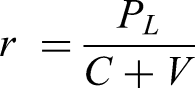
The rate of profit inversely relates to the denominator: as the denominator rises, the profit rate falls and vice versa. Setting aside the debate on the falling profit rate tendency, we focus on how capital increases surplus value extraction. Platforms illustrate this by reducing wages below their value and shifting production costs to workers.
In our analysis,

When wages are reduced by 25%, the formula becomes:

To transition to the ‘uberised’ form of super-exploitation, we incorporate an additional mechanism: reducing the cost of constant capital (C) by transferring part of the means of subsistence to the production process, where they are used as means of production

This mechanism of a 25% wage reduction and 10% cost transfer increases the profit rate by 22% (from 50% to 61%). This ‘double reduction effect’ represents an evolution in surplus value extraction, with workers operating at just 65% of their reproduction value while platforms gain significantly higher profits. Algorithmic management and the illusion of entrepreneurial independence obscure these dynamics – this camouflage, not the technology itself, is the real innovation in capital-labour relations.
This dynamic can be graphically represented in the context of the working day and the production of value. Marx's standard formulation for the working day and the production of value is: Working day = a—————–b—c Where: Working day = a———————-c Necessary labour = a—————–b Surplus-labour = b—c
Expanding on Marx's formulation, the working day can be illustrated as: Working day = a———-a’-a’’-b—c
where a–a’’ represents the compensation of labour power below its value, acknowledging the reduction of wages below their value; a’–a’’ represents the ulterior discount produced by transformation of personal workers goods in capital means of production; a–a’ represents the wages paid to the worker, at net of reduction of wages and transformation of personal workers goods in capital means of production; a’–c represents the extraordinary extraction and appropriation of value by platforms.
Concluding remarks
This article advances sociological understanding of digital platforms by highlighting two pivotal dynamics of their impact. First, it examines digital platforms’ labour exploitation in Latin America through the lens of differential uberisation, analysing how workers’ experiences reveal the formalisation of pre-existing marginal labour relations in the Global South. This framework demonstrates how platform innovations reshape labour relations by interacting with diverse local socioeconomic and subjective contexts, creating heterogeneous forms of work organisation. Second, it reconceptualises super-exploitation for the platform economy, revealing how, beyond the traditional method of remunerating labour below its value, food delivery platforms revive and reconfigure surplus value extraction by transferring value from workers’ personal and reproductive spheres to capital. This principle offers a broader understanding of how digital technologies intensify and enable new forms of value extraction. By uncovering these mechanisms, we contribute to the theoretical body of knowledge, clarifying forms of value that must be contested in the face of platform capital's attempts to legitimise extreme forms of exploitation.
Footnotes
Funding
The authors disclosed receipt of the following financial support for the research, authorship, and/or publication of this article: It was carried out as part of the author's PhD programme and subsequent postdoctoral work.
Declaration of conflicting interests
The author declared no potential conflicts of interest with respect to the research, authorship, and/or publication of this article.