



Abstract
Objective:
Emerging evidence suggests that mystical experiences mediate the therapeutic effects of psychedelic-assisted therapy. The current study examines associations between mystical experiences and components of “set” (positive mindset, participant intentions, and spirituality) and “setting” (perceived positivity of the dosing environment) in the context of psilocybin-assisted therapy for alcohol use disorder (AUD).
Methods:
Twenty adults with moderate-to-severe AUD participated in a 10-week psilocybin-assisted therapy protocol including two open-label 25 mg psilocybin sessions (Session 1 at week 3; Session 2 at week 7) and weekly counseling. Mystical experiences were assessed via the Mystical Experience Questionnaire (MEQ). Precursor variables—participant spirituality, spiritual intentions, clarity of intentions, mindset, and perceptions of the treatment setting—were measured using validated self-report scales. Spearman correlations were used to evaluate associations between precursor variables and MEQ scores and between spirituality and spiritual intentions. Changes across sessions were examined using Wilcoxon signed-rank tests.
Results:
Intensity of mystical experiences was significantly associated with spirituality (Session 1: rs = 0.76, p < 0.0001), spiritual intentions (Session 1: rs = 0.71, p < 0.001; Session 2: rs = 0.66, p < 0.001), positive mindset (Session 2: rs = 0.52, p = 0.024), and positive perceptions of setting (Session 2: rs = 0.46, p = 0.046). Spirituality was significantly correlated with spiritual intentions at both sessions (Session 1: rs = 0.77, p < 0.0001; Session 2: rs = 0.63, p < 0.005). Mystical experience intensity significantly increased from Session 1 to Session 2 (Wilcoxon S = 48.5, p = 0.033), while no significant changes were observed in precursor variables across sessions (Wilcoxon S = [−8, 33], p = [0.192, 0.953]). Change in MEQ scores was not significantly associated with changes in any of the precursor variables across sessions (rs = [−0.28, 0.18], p = [0.268, 0.804]).
Conclusion:
Findings suggest that multiple aspects of set and setting—particularly, spiritual intentions, spirituality, mindset, and perceptions of the treatment setting—may be important predictors of mystical experience intensity during psychedelic-assisted therapy. While spirituality was more strongly associated with mystical experiences during the initial dosing session, mindset and setting became more strongly associated in the subsequent session. Future research should evaluate strategies for optimizing environmental and psychological factors—including structured intention-setting exercises—to enhance therapeutic outcomes.
Psychedelics have historically been integral to spiritual and religious healing practices 1 due to their capacity to reliably induce profound mystical experiences. 2 Experiences elicited by psychedelic substances are consistently described as more mystical—and associated with a greater sense of purpose, less fear of death, and enhanced spirituality—compared with naturally occurring or meditation-induced mystical experiences. 2 Research indicates that mystical experiences are associated with the therapeutic benefits observed in psychedelic-assisted therapies, including improvements in anxiety, depression, and substance use,3,4 and accumulating evidence suggests that mystical experiences mediate these effects.5–8 Indeed, some experts argue that these subjective effects are essential to achieving enduring therapeutic outcomes. 9 The intensity of mystical experiences during a psychedelic session has been linked to increased trait openness 10 and increased psychological flexibility, 11 a key process underlying therapeutic change in acceptance-based interventions.12–14 Experiential acceptance, or the ability and willingness to experience unpleasant thoughts, emotions, and sensations without trying to control, avoid, or suppress them, is a core component of psychological flexibility. It is hypothesized that this shift from experiential avoidance to acceptance is a central therapeutic mechanism through which psychedelics (and perhaps, mystical experiences in particular) exert beneficial effects. 15
While psychedelic dose influences the occurrence of mystical experiences, 5 regression analyses suggest that it is the intensity of mystical experiences, rather than the general intensity of drug effects, that predicts lasting personal meaning and spiritual significance of the psychedelic session. 16 In addition to mystical experiences, “set and setting” have been established as crucial determinants of outcomes in psychedelic-assisted therapies,17,18 and several studies have identified a link between these factors and mystical experiences. “Set” refers to internal psychological factors, including mindset, personality, intentions, expectations, suggestibility, and emotional state, while “setting” encompasses external environmental and interpersonal factors during the psychedelic session.17,18
Previous research has identified a relationship between participants’ intentions (i.e., guiding purpose or motivation) for taking a psychedelic and the intensity of mystical experiences. For example, a study of 35 healthy and experienced dimethyltryptamine (DMT) users found a significant positive association between having clear intentions for the upcoming DMT experience and subsequent “mystical” factor scores on the Mystical Experience Questionnaire (MEQ). 19 Similarly, a longitudinal study of 654 adults planning self-initiated psychedelic use found that having clear intentions was significantly associated with the intensity of subsequent mystical experiences. 20 In addition, intentions related to spirituality and personal growth (hereafter referred to as “spiritual intentions”) significantly predicted more intense mystical experiences. Another large-scale cross-sectional study of 6,877 ayahuasca drinkers found significant associations between intentions related to enhancing “self-knowledge” and the intensity of mystical experiences. 18 These findings align with those of retrospective survey studies finding that individuals who took psychedelics explicitly for religious or spiritual purposes reported stronger mystical experiences compared to those who did not.21,22 This effect remained significant after controlling for the effect of participant religiosity, which was independently associated with higher intensity mystical experiences. 22
More broadly, having a positive mindset, including scoring high on the traits of absorption, openness, and acceptance, as well as a state of surrender, has been significantly associated with both more positive and more mystical experiences. 23 Participant evaluations of the psychedelic setting have also been shown to significantly predict mystical experiences. For instance, the aforementioned ayahuasca study found that participant ratings of support, safety, and preparation activities significantly correlated with mystical experiences—effects that were highly significant. 18
Prior psychedelic experience is another factor that has been linked to mystical experience intensity. Although psychedelic-naïve participants sometimes report more intense experiences overall,23,24 research to date does not support the hypothesis that first-time psychedelic experiences are more mystical. In fact, a large cross-sectional study of 6,877 ayahuasca drinkers found a positive correlation between total number of lifetime ayahuasca uses and intensity of mystical experiences—an effect that was highly statistically significant. 18 Similarly, a cross-sectional survey study of 119 adults recruited from psychedelic-related websites found that more frequent psychedelic use was positively associated with mystical experiences. 22 In that study, the average intensity of mystical experiences consistently increased as frequency of use increased from less than yearly to yearly, bimonthly, monthly, and weekly. However, due to the cross-sectional nature of existing research, the directionality of this relationship remains unclear. It is possible that individuals who have more mystical experiences tend to engage in more subsequent psychedelic use, that more frequent psychedelic use facilitates more mystical experiences, or that some third factor, such as participant spirituality, leads to both more frequent use and more mystical experiences. The current study further examines this question by comparing mystical experience intensity between the first and second psilocybin sessions.
The current report presents secondary analyses from a pilot study of a 10-week psilocybin-assisted therapy protocol for alcohol use disorder (AUD; N = 20). The parent study demonstrated significant reductions in alcohol use among participants from baseline to posttreatment and follow-up. 25 Here, we explore associations between participant spirituality, mindset, intentions, ratings of setting, and session number (Session 1 vs. Session 2) with intensity of mystical experiences. We also investigate whether participant spirituality is correlated with spiritual intentions at either session. Lastly, we investigate whether there were significant changes in mystical experience intensity from Session 1 to Session 2, and if so, whether these changes correlate with changes in participant intentions, spirituality, mindset, and ratings of setting across sessions.
Methods
Twenty participants with moderate-to-severe AUD participated in a 10-week psilocybin-assisted therapy protocol. Individuals were excluded from study participation if they reported taking a psychedelic either a) within the last 12 months or b) more than 25 times in their lifetime. Enrolled participants completed weekly counseling sessions as well as two open-label 25 milligram psilocybin sessions (at Weeks 3 and 7; henceforth referred to as Sessions 1 and 2, respectively) in a controlled clinical setting. Additional details regarding the protocol are provided elsewhere. 25
Measures
The following demographic variables were collected: age, sex, race and ethnicity, religion, spirituality, employment status, and years of education.
Spirituality
Spirituality was assessed using the Spirituality Scale, a 23-item validated self-report questionnaire designed to measure spiritual beliefs, values, and experiences. Participants were asked to rate their agreement with each statement on a 6-point Likert scale ranging from 1 (strongly disagree) to 6 (strongly agree). The measure has demonstrated good content validity, internal reliability, and test-retest reliability. 26 Total scores were calculated by summing the responses to all items, yielding a maximum possible score of 138, with higher scores indicating greater levels of spirituality.
Mystical experiences
Mystical experiences were assessed using the MEQ-30. The MEQ27 is a 30-item validated self-report questionnaire of mystical experiences. After each psychedelic session, participants were asked to rate the extent to which they experienced each of 30 phenomena on a 6-point scale from 0 (none; not at all) to 5 (extreme; more than any other time in my life). The measure has been shown to have good reliability, internal and external validity, and convergent validity. 27 Total scores were generated by summing the scores of individual items, resulting in a total maximum score of 150, with higher scores indicating a higher degree of mystical experiences.
Spiritual intentions
The nature of participants’ intentions was assessed using a scale comprised of a list of 10 intentions which had been previously designed to assess intentions among individuals who planned to take a psychedelic on their own initiative. 20 This scale was administered to participants prior to dosing at each of the two sessions. Participants rated the extent to which they endorsed having each intention for their upcoming psilocybin session using a Likert scale from 1 (“not at all”) to 4 (“very much”). For the current report, we focused on the degree to which participants endorsed spiritual intentions (termed intentions of “spiritual connection” by Haijen and colleagues 20 ). Loadings from the factor analysis previously conducted by Haijen et al. 20 with a larger sample of 654 participants were used to create a “spiritual intentions” factor. Individual intentions that loaded most strongly on this factor were “spiritual experience”; “religious experience”; “connection with nature”; and “therapeutic/personal growth.”
Set and setting questionnaire
The three remaining variables were derived from participant responses to a 12-item questionnaire developed by Haijen and colleagues, which included items related to set and setting. 20 This questionnaire was also administered to participants on the psilocybin dosing days prior to dosing. Participants rated the extent to which they agreed with a series of statements using a visual analogue scale from “strongly disagree” to “strongly agree.” Loadings from the original principal component analysis conducted with a larger sample 20 were used to create the following factors:
Clear intentions
Items with the strongest positive loadings on this factor were “I have a clear intention for the upcoming experience” and “I have strong expectations for the upcoming experience.”
Positive mindset
Items with the strongest positive loadings on this factor were, “I feel comfortable about the upcoming experience”; “I feel open to the upcoming experience”; “I feel well prepared for the upcoming experience”; “I am in a good mood”; and “I feel ready to surrender to whatever will be.”
Positive setting
This factor represents the extent to which participants felt positive about the setting in which their session was about to take place. The three items with the strongest positive loadings on this factor were “I have a good feeling about my relationship with the group/people who will be with me during my experience”; “I have a good relationship with the main person/people who will look after me during the upcoming experience”; “the environment/setting feels good for my upcoming experience”.
Statistical analyses
Nonparametric Spearman correlation tests were conducted to determine the degree to which MEQ score was correlated with the following precursor variables at each of the two dosing sessions: 1) spirituality, 2) spiritual intentions, 3) clarity of intentions, 4) positive mindset, and 5) positive setting. Nonparametric Spearman correlation tests were also used to examine whether there were significant associations between participant spirituality and spiritual intentions. Next, Wilcoxon signed-rank tests were performed to explore whether there were significant changes in mean MEQ scores or any of the precursor variables from Session 1 to Session 2. Finally, we estimated nonparametric Spearman correlation coefficients to determine whether changes in MEQ scores were correlated with changes in any of the precursor variables from Sessions 1 to 2. Associations were estimated with Spearman rank correlations because several key variables (e.g., spirituality, intentions, and MEQ scores) were ordinal or quasi-ordinal and not normally distributed, and further, with N = 20, Spearman is more robust to non-normality and outliers than Pearson while still capturing monotonic relations. A two-tailed significance threshold of p < 0.05 was used for all inferential tests. Given the exploratory nature of the study, no corrections for multiple comparisons were applied. Effect sizes were interpreted according to Cohen’s 28 guidelines: small = (|rs |≥ 0.10), medium = (|rs |≥ 0.30), and large = (|rs |≥ 0.50).
Results
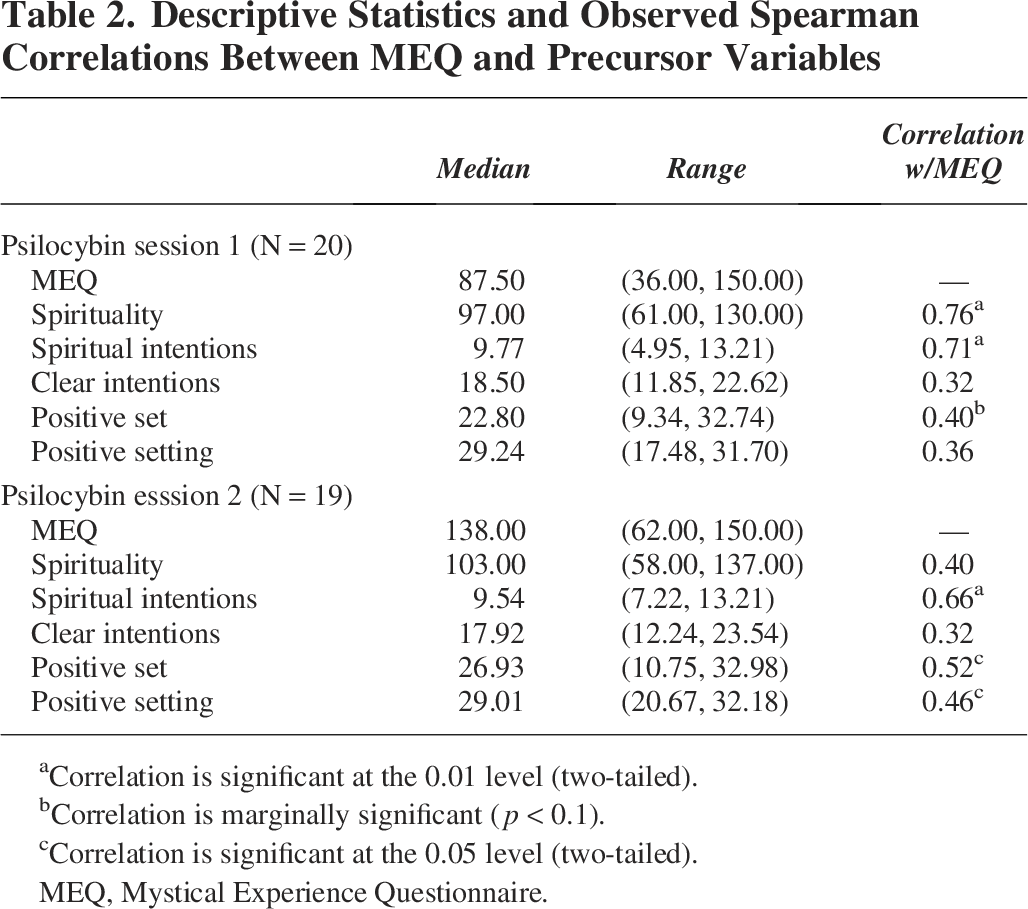
The final analytic sample included 20 participants (60% female, between the ages of 22 and 68, with the largest proportion [35%] in the 41–50-year range). Most participants identified as White (95%), non-Hispanic (90%), were employed full time (75%), had completed at least a college degree (85%), and reported no formal religious affiliation (80%). Additional details of the sample are provided in Table 1. Data for 19 participants are available at Session 2. Descriptive statistics and correlation coefficients between MEQ scores and each precursor variable are provided in Table 2.
Demographic Characteristics of the Sample (N = 20)
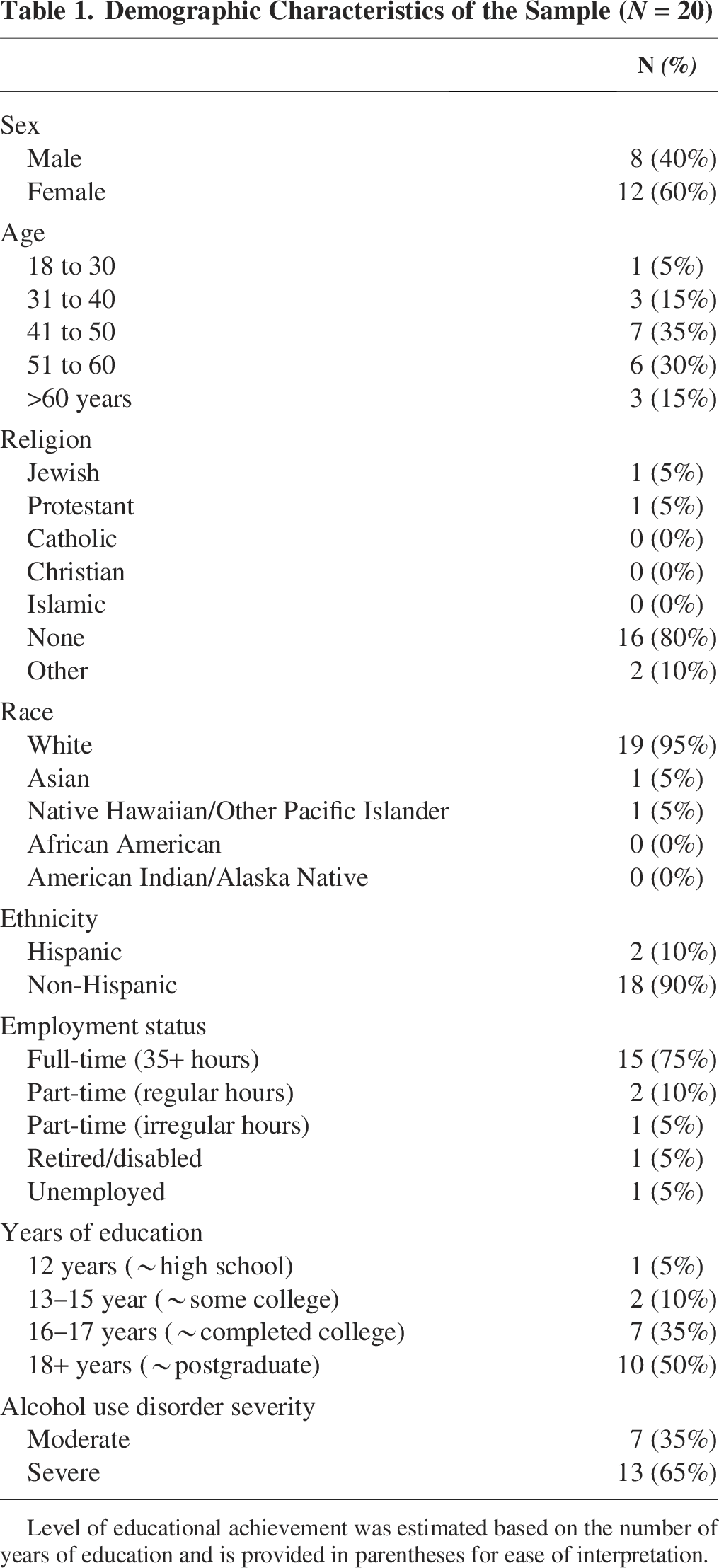
Level of educational achievement was estimated based on the number of years of education and is provided in parentheses for ease of interpretation.
Descriptive Statistics and Observed Spearman Correlations Between MEQ and Precursor Variables
Correlation is significant at the 0.01 level (two-tailed).
Correlation is marginally significant (p < 0.1).
Correlation is significant at the 0.05 level (two-tailed).
MEQ, Mystical Experience Questionnaire.
Associations between precursor variables and MEQ
Spirituality
Participant spirituality was significantly associated with MEQ at Session 1 (rs = 0.76, p < 0.0001), considered a large effect. The correlation between spirituality and MEQ at Session 2 was not statistically significant (rs = 0.40, p = 0.104).
Spiritual intentions
Having spiritual intentions was positively correlated with MEQ; this effect was large and highly significant at both Session 1 (rs = 0.71, p < 0.001) and Session 2 (rs = 0.66, p < 0.001).
Clear intentions
The correlation between having clear intentions and MEQ was not statistically significant at either session (Session 1 rs = 0.32, p < 0.164; Session 2 rs = 0.32, p = 0.188).
Positive mindset
Positive mindset was positively correlated with MEQ; this effect was medium in magnitude and marginally significant at Session 1 (rs = 0.40, p = 0.078) and large in magnitude and statistically significant at Session 2 (rs = 0.52, p = 0.024).
Positive setting
Positive setting was positively correlated with MEQ; this effect was not statistically significant at Session 1 (rs = 0.36, p = 0.120) and was statistically significant and medium in magnitude at Session 2 (rs = 0.46, p = 0.046).
Association between spirituality and spiritual intentions
Participant spirituality was significantly associated with spiritual intentions at both Session 1 (rs = 0.77, p < 0.0001) and Session 2 (rs = 0.63, p < 0.005), both considered large effects.
Changes from Session 1 to Session 2
MEQ
Mystical experience scores were significantly higher for Session 2 (median MEQ score = 138.0) compared to Session 1 (median MEQ score = 87.5; Wilcoxon S = 48.5; p = 0.033; Cohen’s d = 0.54).
Precursor variables
There were no statistically significant changes in median scores in any of the precursor variables from Session 1 to Session 2 (Wilcoxon S range = [−8, 33], p range = [0.192, 0.953]). Furthermore, change in MEQ was not significantly associated with changes in any of the precursor variables from Session 1 to Session 2 (rs range = [−0.28, 0.18], p range = [0.268, 0.804]).
Discussion
Consistent with previous research, endorsing spiritual intentions for an upcoming psilocybin session was strongly associated with the intensity of mystical experiences among our sample of adults with AUD. Given the lack of random assignment, however, a causal relationship between spiritual intentions and mystical experiences cannot be confirmed. An alternative explanation is that individuals higher in baseline spirituality are predisposed to both setting spiritual intentions and reporting stronger mystical experiences. Supporting this interpretation, we observed a large, statistically significant correlation between participant spirituality and mystical experiences at Session 1. We also found a large, statistically significant correlation between participant spirituality and having spiritual intentions at both dosing sessions. This interpretation aligns with prior findings indicating that religious individuals both more frequently endorse spiritual intentions 22 and report stronger mystical experiences during a psychedelic session compared with nonreligious individuals. 22 Unfortunately, our study lacked sufficient statistical power to examine differences between religious and nonreligious participants, particularly as the majority of our sample (16 out of 20 participants) reported no religious affiliation.
Alternatively, or in addition, possessing, reflecting on, and/or explicitly expressing spiritual intentions may causally influence mystical experiences. Prior research demonstrates that spiritual intentions predicted mystical experiences independently of religiosity. 22 Several psychological processes might explain such effects, including expectancy, attentional processes, and cognitive framing. Participant expectations have been shown to modulate subjective drug experiences, suggesting that preexisting beliefs and intentions can shape the intensity and nature of psychedelic effects. In this case, participants who endorse spiritual intentions may have stronger expectations of having a mystical experience, thereby shaping their experiences during the session. Participants with spiritual intentions might selectively direct attention toward experiences aligned with their expectations, such as feelings of unity, transcendence, or sacredness, thereby amplifying the intensity of these experiences. Additionally, setting spiritual intentions may predispose individuals to interpret ambiguous or profound psychedelic-induced phenomena through a mystical lens both during and after the session, increasing the likelihood of endorsing mystical experience items on post-session assessments.
Contrary to some previous findings, we found no statistically significant association between clarity of intentions and mystical experiences in either psilocybin session. However, the observed association was in the expected (positive) direction, despite failing to reach statistical significance. Given our small sample size and limited statistical power, these nonsignificant results should be interpreted with caution.
Across sessions, mystical experiences were significantly more intense in Session 2 compared with Session 1, aligning with previous research demonstrating greater mystical experience intensity with more frequent psychedelic use. 22 This finding also corroborates results from a large-scale cross-sectional study reporting a highly significant correlation between the total number of lifetime ayahuasca uses and mystical experience intensity. 18 However, it is also possible that prior exposure to the MEQ at Session 1 may have inadvertently increased participants’ expectations or the salience of mystical experiences, thereby contributing to greater reported or perceived mystical intensity at Session 2. This possible priming effect might also help to explain why spirituality was significantly associated with MEQ scores at Session 1 but not Session 2. This potential measurement reactivity should be considered when interpreting session-related differences.
Despite observing increased mystical experiences, we found no significant changes in spirituality, intentions, mindset, or setting from Session 1 to Session 2. Additionally, changes in mystical experience intensity between sessions were not significantly correlated with changes in any of these precursor variables. While these findings suggest that the observed increase in mystical experience intensity was not directly attributable to measured shifts in spirituality, intentions, set, or setting, the study’s limited statistical power precludes definitive conclusions. Nevertheless, we observed that the strength of associations between mystical experiences and precursor variables varied across sessions.
Having a positive mindset—including feeling comfortable, open, well-prepared, and ready to surrender to the upcoming psychedelic experience—was marginally associated with mystical experiences at Session 1 and significantly correlated at Session 2. Similarly, perceptions of positive setting—including feeling good about the people and the environment in which the psychedelic session was about to occur—became significantly associated with mystical experiences by Session 2, although nonsignificant at Session 1. Meanwhile, the correlation between MEQ and spirituality went from a large, statistically significant effect at Session 1 to a nonsignificant effect at Session 2. These results indicate that positive set and setting accounted for a larger portion—and spirituality accounted for a smaller portion—of the variance in mystical experiences as participants gained more psychedelic experience. Notably, the majority of participants were nonreligious and reported relatively lower baseline levels of spirituality compared with other samples. 29 If the relation between participant spirituality and mystical experiences is causal, it would make sense that mystical experience intensity would increase from Session 1 to Session 2 as the role of spirituality in predicting mystical experiences diminished.
Interestingly, although there was a nonsignificant increase in positive mindset from Session 1 to Session 2, participant ratings of the setting remained virtually unchanged across sessions. This stability in setting ratings may reflect participants’ familiarity with the therapeutic environment and prior interactions with their clinicians, including two counseling sessions before Session 1. It is also possible that participants completed these items with regard to how they expected to feel about the setting, given that it was their first or second psychedelic session (and their third or seventh week of counseling sessions, respectively). Clinically, increased familiarity with study therapists, the clinical environment, and the psychedelic experience would be expected to enhance trust, comfort, and relaxation. If participants were anchoring their responses to how they believed they should feel about the environment, given their increased familiarity, rather than to their actual level of comfort, genuine improvements may have gone undetected.
It is also possible that the 12-item Set and Setting Questionnaire (of which only 3 of the 12 items loaded most strongly on the “setting” factor in the original principal component analysis) was an insufficient assessment of all of the important aspects of setting that could have improved over time. Future research should explore additional ways of assessing comfort with the psychedelic session environment and assess a more comprehensive range of factors that may affect participants’ experience of the setting. In addition, future work should investigate how different preparation approaches influence mindset and, in turn, affect mystical experiences and outcomes.
Limitations and Future Directions
This study has several limitations. The small and relatively homogenous (predominantly White and non-religious) sample may limit the generalizability of our findings. In addition, the modest sample size and restricted variability in clinical outcomes (previously reported in Heinzerling et al. 25 ) constrained the scope of the analyses. Consequently, we focused on psychological and contextual predictors of mystical-type experiences rather than on associations between mystical experiences and clinical outcomes. For the same reason, mediation analyses could not be conducted to test whether mystical experiences mediated the effects of set, setting, intentions, or spirituality on treatment outcomes. Although outcome data were beyond the scope of the present report, the current findings may inform future research examining whether set and setting variables influence treatment efficacy indirectly through their effects on mystical experiences. Larger, more diverse samples—including participants with higher levels of spirituality and stronger religious affiliations—will be critical for testing these hypotheses and evaluating the generalizability of these relationships across populations.
Given that intentions are internally generated and do not lend themselves well to random assignment, assessing the causal effects of intentions remains challenging. Future research could partially address this limitation by randomly assigning participants to conditions in which they receive versus do not receive information on the potential benefits of intention setting, or are given more versus less time to explore their intentions prior to their psychedelic session. In addition, future research might explore the effects of specific intention-setting interventions (e.g., experiential activities, guided visualizations, worksheets, and/or journal prompts) on mystical experiences and outcomes.
Some readers may wonder whether attempting to elicit spiritual intention
A final limitation of the study arises from the fact that prior psychedelic experience was not formally assessed. Although the eligibility criteria required that participants had not used a psychedelic in the last year and had a maximum of 25 experiences in their lifetime, we did not collect detailed data on prior experiences. Future studies should explore how past psychedelic exposure influences mystical experiences and the extent to which prior experience interacts with set, setting, and intentions to predict mystical experiences and outcomes.
Conclusion
This study highlights the importance of intentions, mindset, and setting as they relate to mystical experiences during psychedelic-assisted therapy. While spirituality was more strongly associated with mystical experience intensity in the first session, mindset and setting became more strongly associated with mystical experiences in the second session. These findings support the utility of structured preparation protocols that help individuals clarify their intentions and cultivate a positive mindset within the context of an optimized therapeutic environment. Future research should examine how these factors interact with other aspects of set and setting to shape mystical experiences and enhance therapeutic outcomes in psychedelic-assisted therapy.
Authors’ Contributions
K.T.L. wrote the first draft of the article. P.S. performed data analyses. K.T.L., P.S., and K.G.H. reviewed and edited the article. K.T.L., P.S., A.R., and B.Y. conceptualized and designed the current report. P.S., K.G.H., A.R., B.Y., L.S., and D.F.K. conceptualized and designed the original pilot study. K.G.H. wrote the protocol and oversaw all aspects of the study. K.G.H., K.S., and M.L. contributed to the study therapy protocol and administered therapy sessions. A.R., R.R., B.Y., G.M.S., K.S., M.L., and K.G.H. contributed to data collection. L.S. created the nature video used in the study (analyzed in the parent study only). All authors reviewed and approved the submitted version of the article.
Footnotes
Acknowledgment
The authors thank Usona Institute for supplying the psilocybin and technical support for this trial.
Author Disclosure Statement
K.G.H., K.S., M.L., and D.F.K. received clinical trial support from Usona Institute. D.F.K. has stock in MindMed, Numinus, and Noetic Fund. K.G.H. is a consultant for MindMed. K.S. is a consultant for Field Trip Health and has stock in Compass Pathways, Field Trip Health, and MindMed. Author L.S. was employed by the company Moving Art. The remaining authors deny any commercial or financial relationships that could be construed as potential conflicts of interest.
Funding Information
This study was supported by Saint John’s Health Center Foundation, Pacific Neuroscience Institute Foundation, and Annenberg Foundation.
Institutional Review Board Approval
This study was reviewed and approved by Providence IRB. All participants provided written informed consent to participate in the study. This trial was conducted in accordance with local regulations and institutional requirements.
Data Sharing
The raw data supporting the results of this article will be made available by the authors.