




Abstract
Understanding the impact of legal professionals on sentencing outcomes is currently limited. This study uses the social psychology theory of in-group favoritism, the courtroom workgroup theory, and the experience/skill of legal professionals to analyze how the roles of lawyers, prosecutors, and judges affect plea and sentencing outcomes. It goes beyond existing literature, which mainly distinguishes between privately retained lawyers and legal aid lawyers, by also including public prosecutors and prosecutors on fiat (defense lawyers working as prosecutors on an ad-hoc basis) and full-time and deputy judges. By examining court sentencing data from Hong Kong, it was found that legal aid lawyers significantly correlated with more lenient sentences, whereas public prosecutors significantly correlated with more severe sentences. However, upon examining plea cases exclusively, it was discovered that only public prosecutors demonstrated a significant association with a higher number of guilty pleas and more severe sentences. The findings partially support in-group favoritism and courtroom workgroup theories, suggesting that legal professionals viewed as “insiders” in the court system achieve more favorable sentencing outcomes aligned with their professional goals. The differences highlighted in this research may stem from Hong Kong’s unique plea bargaining environment, which varies from that in other Western jurisdictions.
Keywords
1. Introduction
When sentencing, although judges typically have the final say in what sentence to impose, other legal professionals play essential roles in determining that outcome. Defense lawyers raise mitigating factors across different common law jurisdictions in hopes of reducing the sentence (Belton & Dhami, 2024; Cheng, 2017; Jacobson & Hough, 2007; Roberts, 2011a). While the prosecutor’s role may not be to seek a more severe sentence per se, they bring judges’ attention to aggravating factors that may enhance the sentence (Demleitner, 2021). Legal professionals who often engage with each other in court, including during sentencing, form what is commonly referred to as the courtroom workgroup (Eisenstein et al., 1988; Eisenstein & Jacob, 1977; Haynes et al., 2010). The courtroom workgroup is an informal network of legal professionals who foster shared norms and goals (Eisenstein & Jacob, 1977). This may lead to more favorable outcomes for members of the courtroom workgroup, which is related to the social-psychological theory of in-group favoritism. This theory posits that members of the in-group behave more favorably towards each other compared to those outside the group (Everett et al., 2015; Tajfel, 1974). Conversely, one might contend that the frequent presence of the “insiders” within the courtroom workgroup provides these legal professionals with greater experience, consequently enabling them to secure more favorable sentencing results (Abrams & Yoon, 2007; Reed, 2020).
The extant literature focuses on how the type of defense lawyer affects sentence outcomes, specifically the difference between privately retained lawyers and publicly funded, or legal aid, lawyers (e.g., Cohen, 2014; Kutateladze & Leimberg, 2019; Sharma et al., 2022). Legal aid lawyers have been considered “insiders” who appear in court more frequently and maintain a familiar working relationship with other legal actors. This study extends the current literature by investigating the “insider” and “outsider” statuses of prosecutors and judges concerning sentence outcomes. It includes full-time prosecutors and prosecutors on fiat, that is, defense lawyers instructed to act as prosecutors on a case-by-case basis. Likewise, full-time judges will be compared with deputy (part-time) judges concerning sentence outcomes. This study also investigates mitigating and aggravating factors, which, despite their vital role in daily sentencing practices, remain an under-researched area (Cheng, 2017; Roberts, 2011a).
The context of the current study is the common law jurisdiction of Hong Kong, a densely populated city where legal actors - defense lawyers, prosecutors, and judges - often act as “insiders” and “outsiders” during the sentencing process, depending on the circumstances. In Hong Kong, defense lawyers fall into two groups: privately retained lawyers and legal aid lawyers. Prosecutors can also be either full-time public prosecutors or part-time prosecutors. Similarly, judges can be full-time judges or deputy judges. This provides a useful context for testing the influence of different legal professionals on sentence outcomes.
Guilty pleas are intricately associated with the outcomes of sentencing. In alignment with other common law jurisdictions, the majority of criminal cases in Hong Kong are resolved through guilty pleas. Furthermore, consistent with practices observed in other common law jurisdictions, a reduction in sentence is accorded to defendants who enter a guilty plea in a timely manner (Cheng, 2023). Members of the courtroom workgroup are anticipated to possess knowledge of the prevailing sentencing standards and are more inclined to engage in the negotiation of plea agreements with their colleagues within the workgroup (Eisenstein et al., 1988).
The present study aims to explore whether legal professionals considered “insiders”, as part of the courtroom workgroup, can achieve more favorable sentencing outcomes. Two primary outcomes are examined, specifically guilty pleas and sentencing. It is anticipated that lawyers classified as “insiders”, namely legal aid lawyers, are more likely to persuade their clients to plead guilty and to attain more lenient sentences. Likewise, the individuals referred to as “insiders” within the prosecutorial system, specifically the public prosecutors, are also anticipated to exhibit a positive correlation with defendants who plead guilty and subsequently face more severe sentencing outcomes. Regarding judges, it is anticipated that the “insiders”, referring to full-time judges, will likewise be positively associated with defendants pleading guilty. However, it is expected that there will be no differences in sentencing outcomes based on the types of judges involved.
1.1. Theoretical Frameworks
In social psychology, a social group is defined as “a collection of individuals who perceive themselves to be members of the same social category, and therefore share a social identity” (Everett et al., 2015, p. 1). This leads to in-group favoritism, where more favorable treatment is provided to in-group members (Tajfel, 1974). Identification with a group fosters in-group favoritism because the individual’s self-interest aligns with the interests of the group, through a process referred to as depersonalization (Brewer, 1999; Brewer et al., 1993).
Others suggest that in-group favoritism arises from positive reciprocity, which refers to the greater likelihood of in-group members rewarding each other’s good behaviors than similar good behavior from individuals outside the group (Balliet et al., 2014; Chen & Li, 2009). At the same time, in-group members face less severe punishment for violating group norms compared to outsiders (Bernhard et al., 2006; Liu et al., 2018; Schiller et al., 2014). Consequently, in the context of legal professionals, clients of outsiders are expected to receive harsher punishment than those of insiders. In-group members treat each other favorably not necessarily due to a stronger affinity, but because they anticipate future favorable treatment through direct and indirect reciprocity (Yamagishi & Kiyonari, 2000).
The question, then, is who constitutes the in-group during sentencing? The courtroom workgroup theory provides a plausible answer, suggesting that the legal professionals—lawyers, prosecutors, and judges—who routinely participate in the court process, including sentencing, develop relationships over time to achieve common goals. Shared norms develop and become ingrained among this group (Eisenstein & Jacob, 1977), while familiarity among legal professionals fosters greater cooperation (Metcalfe, 2016). The familiarity of the courtroom workgroup is said to lead to more efficient and effective sentences, as the actors are well-acquainted with the “going rates” of sentences (Castellano, 2009; Eisenstein et al., 1988; Kim et al., 2015).
Legal aid, unlike privately retained lawyers, is regarded as part of the in-group because they more often appear in criminal cases and have developed a higher level of familiarity with other members. Similarly, public prosecutors are also included in the in-group, as they too possess more familiarity with their colleagues than prosecutors on fiat, who are defense lawyers acting as prosecutors on a case-by-case (part-time) basis (Metcalfe, 2016). However, there are concerns that such familiarity among legal professionals could undermine the adversarial nature of the court process (Blumberg, 1967; Heumann et al., 2021).
It is essential to acknowledge that alternative theories may exist that elucidate the disparities in sentencing outcomes for different types of legal professionals. Certain legal professionals may attain more favorable sentencing results due to their heightened experience and skill (Abrams & Yoon, 2007; Reed, 2020). Given that legal aid lawyers appear more frequently in court for criminal trials compared to privately retained attorneys, they tend to achieve superior results, not necessarily because of in-group favoritism, but because they possess greater experience and proficiency in their roles. Legal aid lawyers are adept at identifying pertinent mitigating factors, enabling their clients to potentially receive more lenient sentences. The same presumption holds for public prosecutors; their exclusive focus is on the role of prosecutor, in contrast to prosecutors operating on a fiat basis who oscillate between the roles of prosecutor and defense lawyer. Moreover, public prosecutors tend to have extensive experience in prosecuting cases, allowing them to present more relevant aggravating factors deemed significant by judges. This study further explores this alternative explanation by assessing whether discrepancies arise between legal aid and privately retained lawyers regarding the number of mitigating factors judges consider. Similarly, it investigates whether distinctions exist between public prosecutors and fiat prosecutors in the number of aggravating factors acknowledged by judges.
1.2. Literature Review
The difference between the types of defense lawyers, specifically between privately retained lawyers and legal aid lawyers, regarding sentence outcomes, has faced considerable scrutiny in the existing literature. However, the results are quite mixed (Sharma et al., 2022). For example, Hartley and colleagues (2010) tested the “you get what you pay for” thesis by comparing sentence outcomes of defendants represented by privately retained lawyers versus public defenders in a Midwestern jurisdiction (Illinois) in the United States. They found that the type of legal representation did not affect the judges’ decisions to impose incarceration or the length of sentences. Conversely, in a meta-analysis of studies comparing types of lawyers and outcomes in the criminal justice process, Duhart Clarke et al. (2024) found that indigent defendants were more likely to be incarcerated than their counterparts with privately retained lawyers. This meta-analysis, however, did not consider sentence length as an outcome. In a study that included sentence length, Hoffman et al. (2005) found that defendants with public defenders received longer imprisonment terms than those with privately retained lawyers.
In a nationwide public survey conducted in the United States, Suiter and Metcalfe (2024) discovered that respondents who assessed their defense lawyer as more experienced and empathetic demonstrated a greater likelihood of accepting a guilty plea offer. Guilty pleas are correlated with a reduction in sentence length compared to sentences imposed following a trial (Abrams, 2011; Cheng, 2023; Johnson, 2019). Defense lawyers who received higher ratings concerning their quality were predominantly privately retained lawyers (Suiter & Metcalfe, 2024). This aligns with findings from other studies indicating that, at least conceptually, privately retained lawyers are perceived to possess superior quality compared to legal aid lawyers, leading clients to place greater trust in them (Boccaccini et al., 2004; Campbell et al., 2015; Chui & Cheng, 2017). However, concerning sentencing matters, Cheng et al. (2015) identified that defendants held a favorable perception of publicly funded lawyers, as they believed these lawyers would be, at a minimum, somewhat effective in assisting them in obtaining a reduced sentence through their expertise in plea mitigation. Conversely, if defendants aimed to contest their case during a trial, they exhibited a strong preference for retaining a private lawyer; nevertheless, if their primary objective was to seek leniency in sentencing, publicly funded lawyers would be considered adequate.
The key role of defense lawyers during sentencing is to present mitigating factors in pursuit of a more lenient sentence for their clients (Ashworth & Kelly, 2021). This is referred to as plea mitigation, and it applies to both privately retained lawyers and legal aid lawyers. For instance, the sentencing guidelines from England and Wales, which are available for most common offenses, provide a non-exhaustive list of mitigating factors for each offense (Roberts, 2011b). In other common law jurisdictions, such as Hong Kong and Australia, defense lawyers can introduce various mitigating factors during plea mitigation. These factors may relate to the offense itself or address the personal circumstances of the defendant (Jacobson & Hough, 2007; Shapland, 2011). Regardless, across different common law jurisdictions, little guidance is provided concerning the weight of each mitigating factor (Dhami, 2013).
While the role of prosecutors is not to directly oppose the defense lawyer’s mitigation, they do present aggravating factors for the court’s consideration. Indeed, the prosecutorial role has ideally been characterized as that of a “minister of justice,” whose responsibility is not to achieve victory or defeat in legal proceedings but to represent the interests of the public in the pursuit of a just outcome (Medwed, 2009, p. 39). However, empirical observations suggest that a prevailing culture among prosecutors is to pursue the most severe sentences (Medwed, 2009). Like mitigating factors, the sentencing guidelines in jurisdictions such as England and Wales provide a non-exhaustive enumeration of aggravating factors for judges to consider (Roberts, 2011b). In other common law jurisdictions, such as Hong Kong, there is a less structured approach to guidance on aggravating factors. Similarly, aggravating factors may pertain either to the severity of the offense or to the personal circumstances of the defendant (Cross & Cheung, 2024).
In the current empirical literature, insufficient attention has been dedicated to the role of prosecutors concerning sentencing outcomes. This lack of emphasis is particularly significant, given that, in numerous legal jurisdictions, prosecutors wield considerable authority (Tonry, 2012). Prosecutors are responsible for determining whom to charge, deciding on the nature of the charges to be filed, engaging in plea negotiations, and may even propose sentences (Tonry, 2012). Among the studies that have been conducted, many focus on the characteristics of prosecutors, including race, level of experience, and political orientation, in relation to case outcomes (Kutateladze & Lawson, 2018; Meldrum et al., 2021; Wright & Levine, 2014). Additional research has explored the organizational constraints that affect prosecutorial decision-making (Frederick & Stemen, 2012). However, an unexamined area is the classification of prosecutors, particularly regarding whether they are full-time or part-time practitioners.
This phenomenon is similarly observed in the literature pertaining to judges. Research typically investigates the effects that demographic characteristics of judges, such as race and gender, have on sentencing outcomes (e.g., Franklin & Fearn, 2008; Spohn, 1990; 1991; Steffensmeier & Britt, 2001). Additional studies have explored the correlation between the length of judicial tenure and the severity of sentences imposed by judges (e.g., Johnson, 2014; Muhlhausen, 2004). Furthermore, some research has compared the previous working experiences of judges to ascertain whether those who served as prosecutors tend to impose harsher sentences (Steffensmeier & Hebert, 1999) or if judges with prior experience as defense lawyers adopt a more lenient approach towards defendants (Anderson & Spohn, 2010; Cheng et al., 2023).
1.3. Research Context – Hong Kong
Since the resumption of sovereignty by the People’s Republic of China (PRC) over Hong Kong from the United Kingdom in 1997, Hong Kong has been designated as a special administrative region under the PRC, operating under the framework of ‘one country, two systems.’ This designation implies that Hong Kong functions under a distinct legal system while remaining an integral part of the PRC. The Hong Kong Special Administrative Region (HKSAR) has been granted the authority to exercise a considerable degree of autonomy in its own affairs and has largely retained its pre-existing legal system, including its court system, which was established during British colonial rule. As a result, legal professionals, including defense lawyers, prosecutors, and judges, continue to function in a way similar to practices before 1997, thereby closely mirroring their English counterparts.
This study examines the Hong Kong District Court and the Hong Kong High Court. The Hong Kong District Court serves as the intermediate criminal court in Hong Kong, responsible for adjudicating cases that are classified as more serious and subsequently transferred from the lower magistrates’ courts. Notably, the court’s sentencing jurisdiction is limited to a maximum of seven years’ imprisonment, with cases being presided over by a single judge without a jury. The subsequent level of the judicial hierarchy in Hong Kong is the High Court, which adjudicates the most serious cases in the presence of a judge and a jury. The High Court possesses no limitations on its sentencing authority, as it is capable of issuing sentences up to life imprisonment, subject to statutory constraints, following the abolition of the death penalty (Lo et al., 2020). Cases from both courts were selected to provide a comprehensive perspective on street-level drug dealers in contrast to large-scale international drug trafficking cases occurring within Hong Kong.
The present study examines the relationship and interactions among various courtroom actors, making it essential to discuss the distinctions within each role. Public prosecutors in Hong Kong are employed by the Department of Justice, a governmental entity overseen by the Secretary for Justice. However, due to the significant workload and the specific requirements associated with different trials, defense lawyers practicing on a fiat basis are appointed to manage a limited number of cases. These lawyers must meet a stringent set of criteria prior to being considered as candidates. Public prosecutors are classified as “insiders,” whereas the prosecutors operating on a fiat basis, who are defense lawyers assigned cases, are regarded as “outsiders.”
Recognizing that legal fees can be significantly burdensome for defendants, legal aid defense lawyers are allocated to individuals whose financial status falls below a predetermined eligibility threshold. The Criminal Legal Aid system operates under the auspices of the Legal Aid Department, which is part of the Hong Kong Government. Defendants seeking to apply for legal aid representation must undergo both a merits and a means test. The merits test stipulates that it must be deemed beneficial to the interests of justice, a determination made by the Legal Aid Department. The means test is met if the defendant’s financial resources do not surpass the established eligibility limit. In this study, all legal aid lawyers serve as practicing defense lawyers assigned by the Legal Aid Department to represent defendants. Private practicing defense lawyers may apply to the Legal Aid Department to participate in the Legal Aid Panel, thereby qualifying to serve as legal aid lawyers and receive compensation from public funds. As of the present writing, there are approximately 3500 defense lawyers on the panel (Legal Aid Department, 2024). Legal aid lawyers are regarded as “insiders” within the criminal justice system due to their frequent representation of defendants compared to privately retained defense lawyers. Full-time judges in Hong Kong, similar to judicial systems elsewhere, face demanding schedules, and deputy judges are appointed individually to alleviate the overall workload. This is particularly pertinent given the ongoing concern regarding a shortage of judges in Hong Kong (Reyes, 2014). These appointed individuals, often comprising experienced defense lawyers or judges from lower courts, are temporarily assigned for a minimum duration of three months to effectively manage the workload. Under certain circumstances, particularly in light of the case’s sensitivity and significance, specific judges are designated to ensure that a knowledgeable expert oversees the trial. Due to the part-time nature of deputy judges, they are classified as “outsiders” within the courtroom workgroup, while full-time judges are considered “insiders.”
2. Methodology
The data from this study includes drug trafficking cases from the Hong Kong District and High Court between 2018 and 2020. 1 For this study, each case was thoroughly recorded and then coded from the Hong Kong Judiciary’s Legal Reference System, specifically under the “Reasons for Sentence.” The “Reasons for Sentence” are provided by sentencing judges (or, in some instances, an audio transcript of their sentencing remarks), which include information about the defendant’s background, the number of prior convictions, sentencing factors raised by both the prosecution and defense lawyers, the same factors considered by the judge, and the final sentencing outcome imposed on the defendant. 2 Additionally, the type of prosecutor (public or fiat), defense lawyer (legal aid or not), and judge (full-time or deputy) were also coded to distinguish the type of courtroom actor. The qualitative data from cases were then input into a spreadsheet, which used individual columns to separate variables present or absent in each case. As each case provided definitive numerical values, linear regressions were chosen as the method of analysis. 3
The current study aims to investigate the guilty plea outcomes and sentence lengths of drug trafficking cases 4 concerning differences between legal professionals. As drug trafficking cases constitute the majority of serious cases in Hong Kong, we believe that selecting these cases should reflect a wider understanding of the overall trend in District and High Court cases.
2.1. Variables
2.1.1. Guilty Pleas
The outcome variable for this study is guilty pleas, specifically whether the defendant pleaded guilty or not guilty. Defendants who pleaded not guilty would proceed to trial. Similar to other common law jurisdictions, most criminal cases in Hong Kong conclude with defendants pleading guilty in court. Although the presumption of innocence for criminal defendants in Hong Kong imposes the burden of proof on the prosecutor to establish the defendant’s guilt beyond a reasonable doubt, a trial is unnecessary to evaluate the prosecution’s case when a defendant enters a guilty plea for the offense. In Hong Kong, an established practice exists of offering a sentence discount to defendants who plead guilty, akin to the practices in England and Wales. If a defendant pleads guilty to the charge in court at the earliest available opportunity, it is highly probable that they will receive a one-third sentence discount. This practice serves as an incentive or reward for defendants who plead guilty, as it conserves the time and resources of the courts (Cheng, 2023).
Plea bargaining between defense lawyers and prosecutors is more restricted in Hong Kong than in other jurisdictions like the United States. Defense lawyers and prosecutors in Hong Kong can engage in what is commonly known as charge bargaining; that is, the prosecutor agreeing to reduce the number of charges or alternate to a less serious charge, in return for the defendant pleading guilty. Nevertheless, prosecutors in Hong Kong cannot guarantee sentences. In other words, prosecutors and defense lawyers in Hong Kong cannot engage in sentence bargaining. Sentencing in Hong Kong is the sole decision of judges, and they cannot engage in any form of plea bargaining (Cheng, 2014). Moreover, prosecutors in Hong Kong are not permitted to advocate for any particular sentence or type of sentence to the judge, whether the case is resolved by way of guilty plea or trial (Cross & Cheung, 2024).
2.1.2. Sentence Length
The second outcome variable for this study is sentence length (measured in months). As drug trafficking is considered a rather serious crime in Hong Kong, most cases would attract an imprisonment sentence. Therefore, sentence length serves as the outcome of this study to measure sentence severity.
2.1.3. Number of Mitigating and Aggravating Factors
To investigate whether experience and skill in sentencing are related to in-group favoritism and being part of the courtroom workgroup, two outcome variables have been established. The first variable pertains to the number of mitigating factors considered by judges during the sentencing process. The second variable relates to the number of aggravating factors evaluated by judges in sentencing. This study aims to ascertain whether variations exist among different types of defense lawyers in relation to the number of mitigating factors, as well as whether disparities are present among various types of prosecutors regarding the number of aggravating factors. Should experience be a crucial factor, it is anticipated that legal aid lawyers will be able to present a greater number of mitigating factors for judges’ consideration when compared to privately retained lawyers. Similarly, public prosecutors are expected to successfully introduce a higher number of aggravating factors for judges’ consideration, in contrast to prosecutors operating on a fiat basis.
2.1.4. Legal Professionals
This study aims to test the differences between the types of legal professionals. Specifically, we are interested in investigating the disparities between privately retained lawyers and legal aid lawyers, public prosecutors and prosecutors on fiat, and full-time judges and deputy judges. Each type of legal professional was coded separately.
2.1.5. Type and Weight of Drugs
The primary type of drug involved in each case was specifically noted. These include cocaine, heroin, ice/methamphetamines, and ketamine. Due to low numbers, cases that involved cannabis (both herbal and resin), GBL, and MDMA were grouped under “other drugs.” The total narcotic weight of the drugs in every case was also coded and included in the analyses.
2.1.6. Number of Charges
The number of charges that the defendant faced in the case was distinctly included.
2.1.7. Aggravating and Mitigating Factors
As previously discussed, the primary function of defense lawyers is to present mitigating factors with the objective of securing the most lenient sentence for their clients, irrespective of whether they were privately retained or appointed through legal aid. Similarly, prosecutors strive to highlight pertinent aggravating factors for the judges’ consideration, a practice that remains consistent for both public prosecutors and those acting on fiat. Conversely, both full-time judges and deputy judges are required to assess both aggravating and mitigating factors prior to arriving at a conclusive sentence. Considering that each category of crime encompasses distinct sentencing considerations, the relevant factors pertaining to drug trafficking cases in Hong Kong will be examined. This study encompasses the aggravating and mitigating factors identified as most prevalent during the coding of the “Reasons for Sentence”, mirroring the considerations indicated by sentencing judges when determining the final penalty to be imposed.
2.1.7.1. Aggravating Factors
2.1.7.1.1. Recidivist
Like other legal jurisdictions, a defendant who is a recidivist may increase the severity of the subsequent sentence (Ri & Cheng, 2024), as persistent offending demonstrates the failure of deterrence in previous sentences (Hester, 2019). Among all aggravating factors, the prosecution is most surely to bring forth the defendant’s criminal record for the judge’s consideration (Roberts & Harrendorf, 2020).
2.1.7.1.2. Multiple Drugs
Although the primary drug involved in the case was coded, the presence of multiple drugs in drug trafficking cases is often viewed as an aggravating factor that increases the sentence. The Hong Kong courts have stated that the multiplicity of drugs enables the drug trafficker to appeal to a broader market compared to a single type of drug; therefore, it is justifiable to enhance the sentence when multiple drugs are involved (Cross & Cheung, 2024). 5
2.1.7.1.3. International Element or Cross-Border Element
The aggravating factor of “international element” means that there was the importation or exportation of drugs as a feature of the offense. This could imply either the facilitation or actual importation or exportation of drugs into and out of Hong Kong. The presence of this factor could also involve foreign drug traffickers or members of an international drug syndicate. The courts have long considered the importation of drugs to be more serious than the local trafficking of drugs, as the importation of drugs fuels the local drug market and has a profound negative effect on the community (Cross & Cheung, 2024). 6
2.1.7.1.4. Form 8 Holder
Form No. 8 refers to the recognizance form in Hong Kong issued for non-refoulement claims under the Immigration Ordinance (Cap. 115). This document is issued to individuals who would otherwise be detained pending resolution of a claim by them to be allowed to remain in Hong Kong after entering or remaining illegally. The Hong Kong courts have stated that the involvement in crimes by Form 8 recognizance holders is regarded as a defendant’s betrayal of the trust placed upon them by the people of Hong Kong. It may take years for non-refoulement claimants to have their applications processed. Failure to deter crimes, in particular drug trafficking, by Form 8 recognizance holders risks damaging the international reputation of Hong Kong and may indirectly encourage foreign drug traffickers to enter Hong Kong under the guise of non-refoulment claims. 7
2.1.7.2. Mitigating Factors
2.1.7.2.1. Self-Consumption
The courts have recognized that if a defendant is convicted of importing drugs into Hong Kong and the drugs involved were proven to be intended for their own self-consumption instead of being resold, then it must be considered as a mitigating factor (Cross & Cheung, 2024). This does not mean that the offense of drug trafficking will be changed, but that the sentence may be reduced to reflect that at least a significant proportion of the drugs in question were intended for self-consumption. The Hong Kong courts have defined the meaning of “significant proportion” as connoting a quantity of drugs that would make a difference in sentence (Cross & Cheung, 2024).
2.1.7.2.2. Clear/Good Record
A defendant with a clear/good criminal record who has been found guilty of a crime may be viewed as having acted out of character. This refers to an absence of prior criminal convictions, instances where previous convictions occurred long ago, or those that are unrelated to the current offense, thus allowing for leniency in sentencing for such defendants (Cheng & Chan, 2025). However, a reduced sentence for defendants with a clear/good record is not assured; the courts have indicated that they will prioritize the nature of the offense and the defendant first (Cross & Cheung, 2024).
2.1.7.2.3. Young Age
A case involving a young defendant may be treated as having a mitigating factor. In Hong Kong, the age of criminal responsibility is 10 years. Although an adult is legally defined as 18 years of age in Hong Kong, adolescent defendants aged 16 to 17 who are charged with criminal offenses are processed in the adult courts, although they may be referred to the Juvenile Court for sentencing. However, being young as a mitigating factor does not necessarily define a cut-off age. Sentencing judges will consider the maturity of the defendant when evaluating age as a mitigating factor. While the sentencing objective for young defendants focuses on rehabilitation, serious offenses such as drug trafficking will still result in a custodial sentence (Cross & Cheung, 2024).
2.1.7.2.4. Assistance to Authorities
Assistance to authorities refers to defendants providing information about other defendants and even testifying in support of the prosecution’s case. However, there must be an incentive for defendants to assist, which is often a reduced sentence; this justification, however, is based on public interest. Sentencing judges must balance the need for the defendant to receive appropriate punishment with the necessity of detecting and prosecuting crimes committed by others. The prospect of a reduced sentence fosters distrust among criminals and encourages them to turn on each other (Cross & Cheung, 2024). Additionally, there is a pragmatic aspect to providing reduced sentences to defendants who assist authorities, as law enforcement relies on informants to detect criminal activity to some extent.
3. Results
Descriptive Statistics.
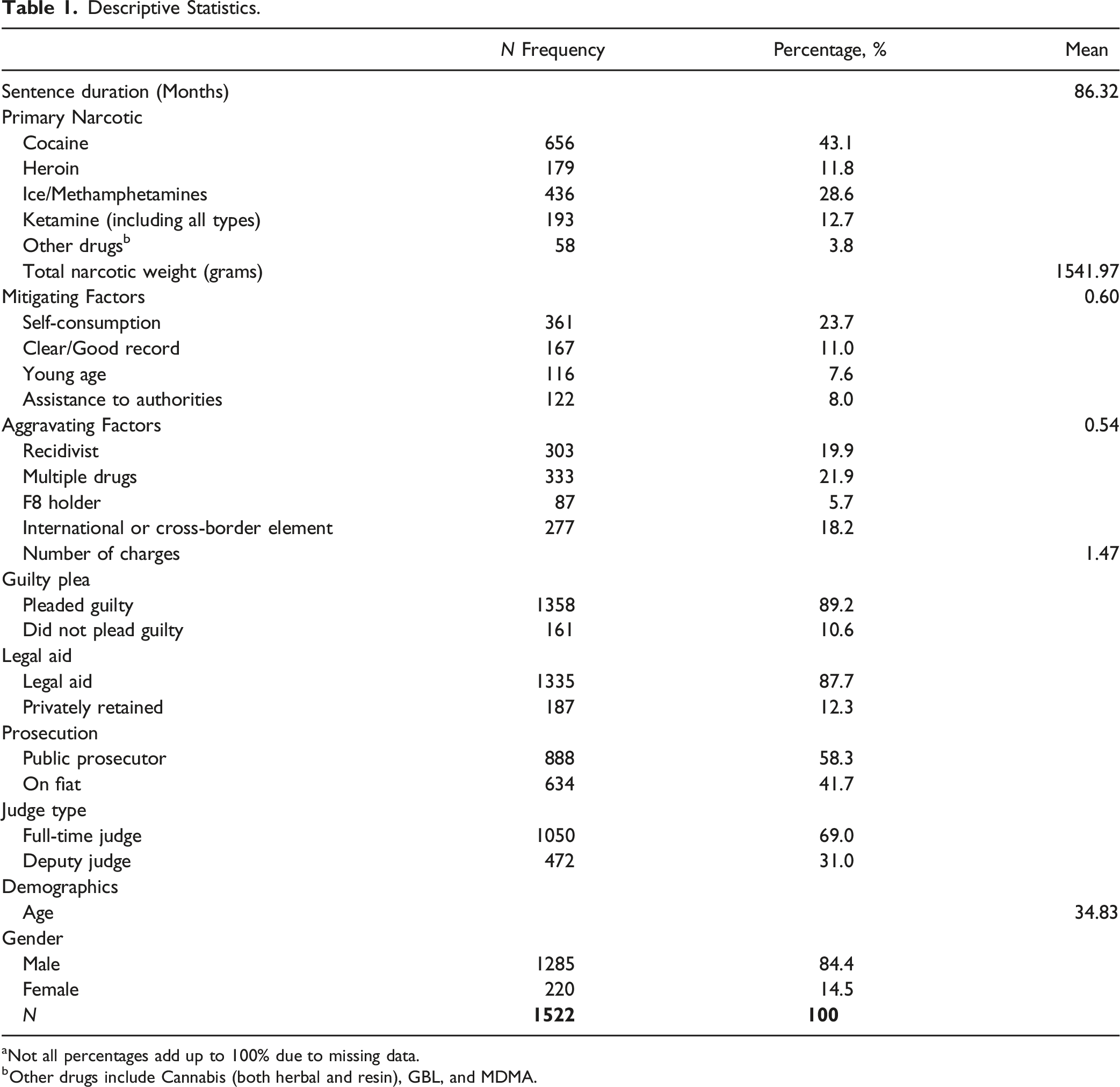
aNot all percentages add up to 100% due to missing data.
bOther drugs include Cannabis (both herbal and resin), GBL, and MDMA.
Sentence Severity (Months) by Legal Professional Type.

Distribution of Cases by Drug Type.
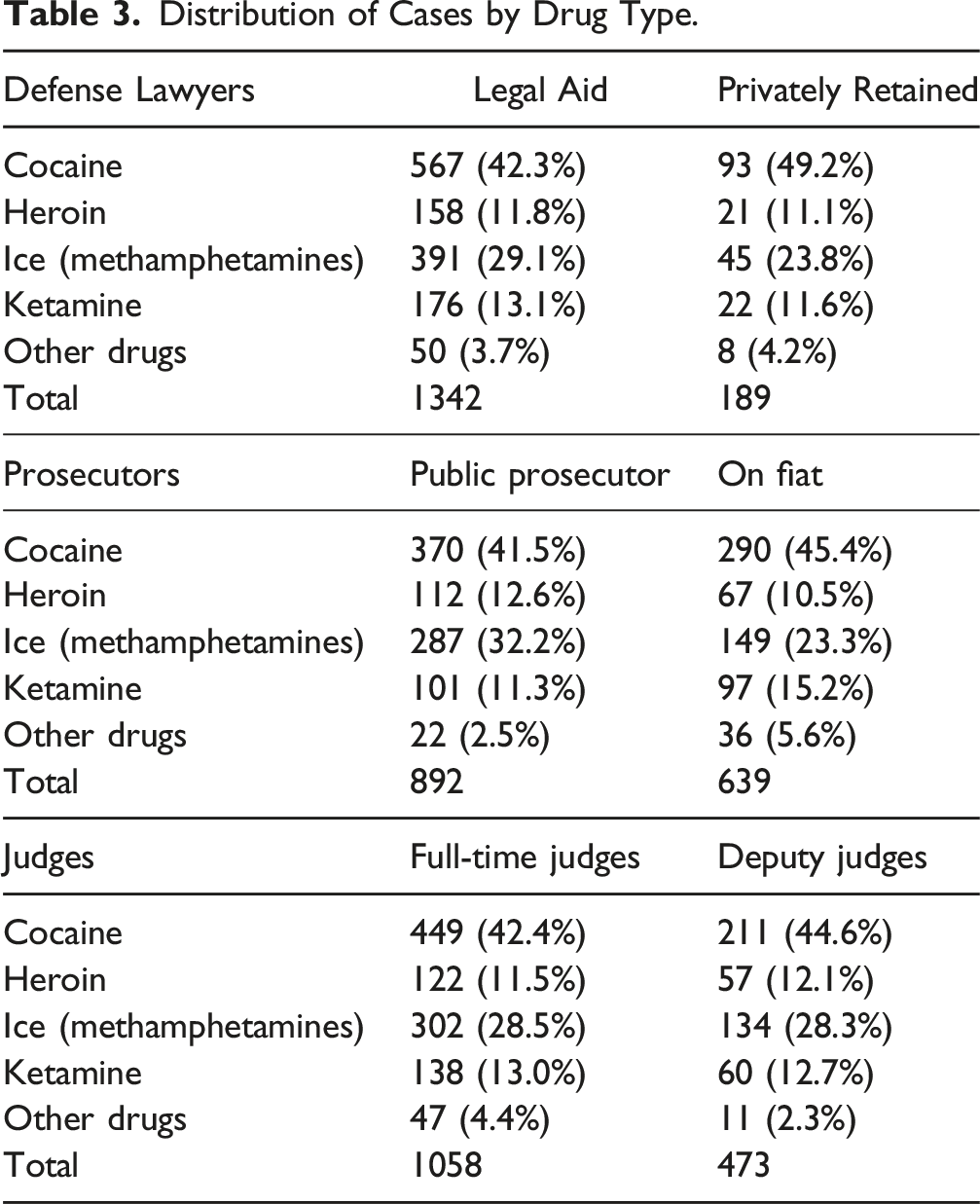
A similar observation is evident among prosecutors; the majority of cases managed predominantly involve cocaine, with both public prosecutors and prosecutors on fiat overseeing 41–45% of these cases within their respective categories. Furthermore, this pattern is analogous for other types of illicit substances, including heroin, ice, and ketamine. The distribution of drug types addressed remains consistent across both full-time judges and deputy judges. This phenomenon indicates that legal practitioners, regardless of their specific professional role, tend to manage similar categories of cases. Consequently, this challenges any presupposition that legal professionals are allocated distinct types of drug-related cases according to their professional identity or relative experience, such as the notion that public prosecutors are assigned more serious drug offenses, while comparatively less severe drug cases are designated for prosecutors on fiat.
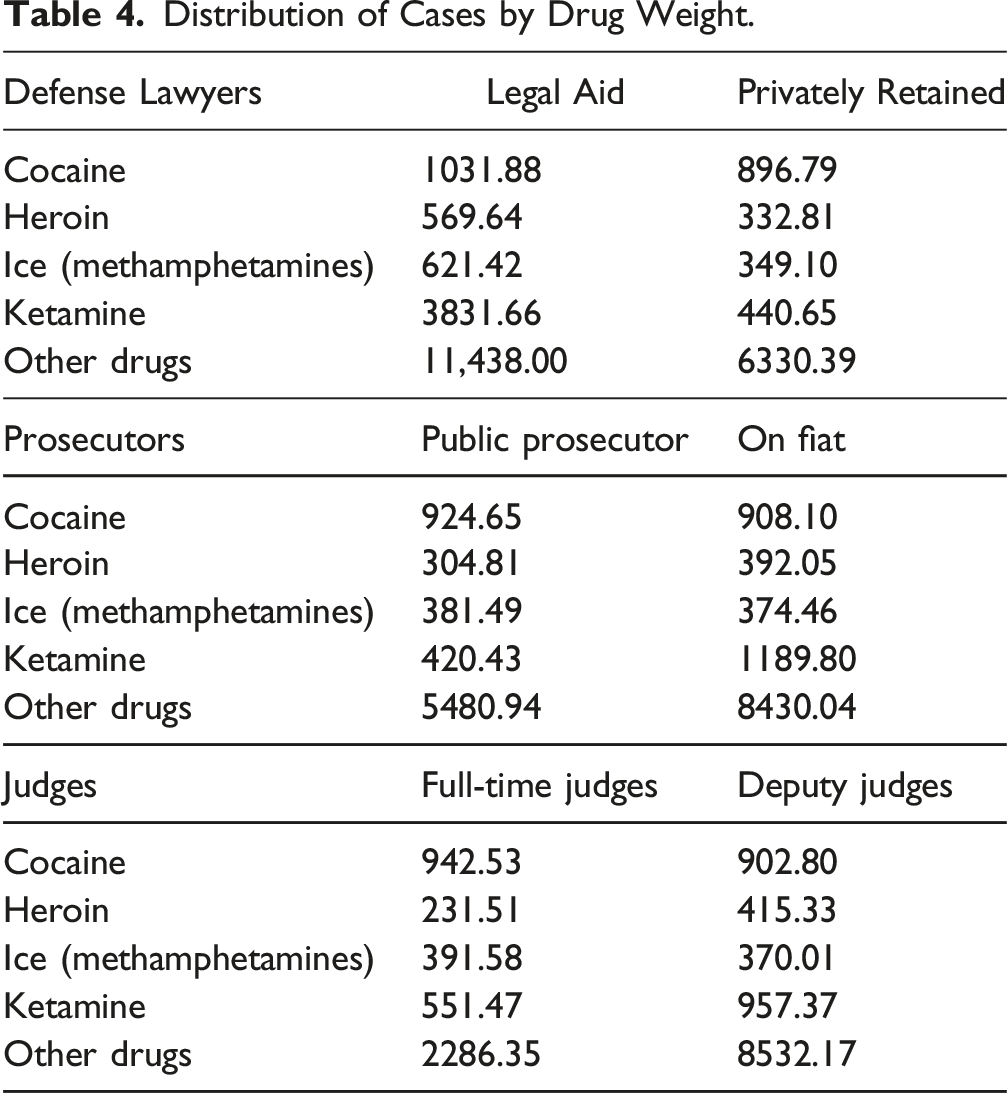
Distribution of Cases by Drug Weight.
To investigate the differences in plea outcomes, correlations were conducted to ascertain whether any differences existed between the types of lawyers and the types of prosecutors involved. There was no significant association between the type of defence lawyer and the presence of a guilty plea, X2 (1, N = 1519) = 1.124, p = .289. However, there is a significant relationship between the type of prosecutor and the presence of a guilty plea. Public prosecutors were more likely to handle cases that resulted in a guilty plea, X2 (1, N = 1519) = 164.163, p < .001. There was no significant association between the type of judge and the presence of a guilty plea, X2 (1, N = 1519) = 1.157, p = .282.
Regression for Defence Lawyers by Guilty Plea (Logged Sentence Length).
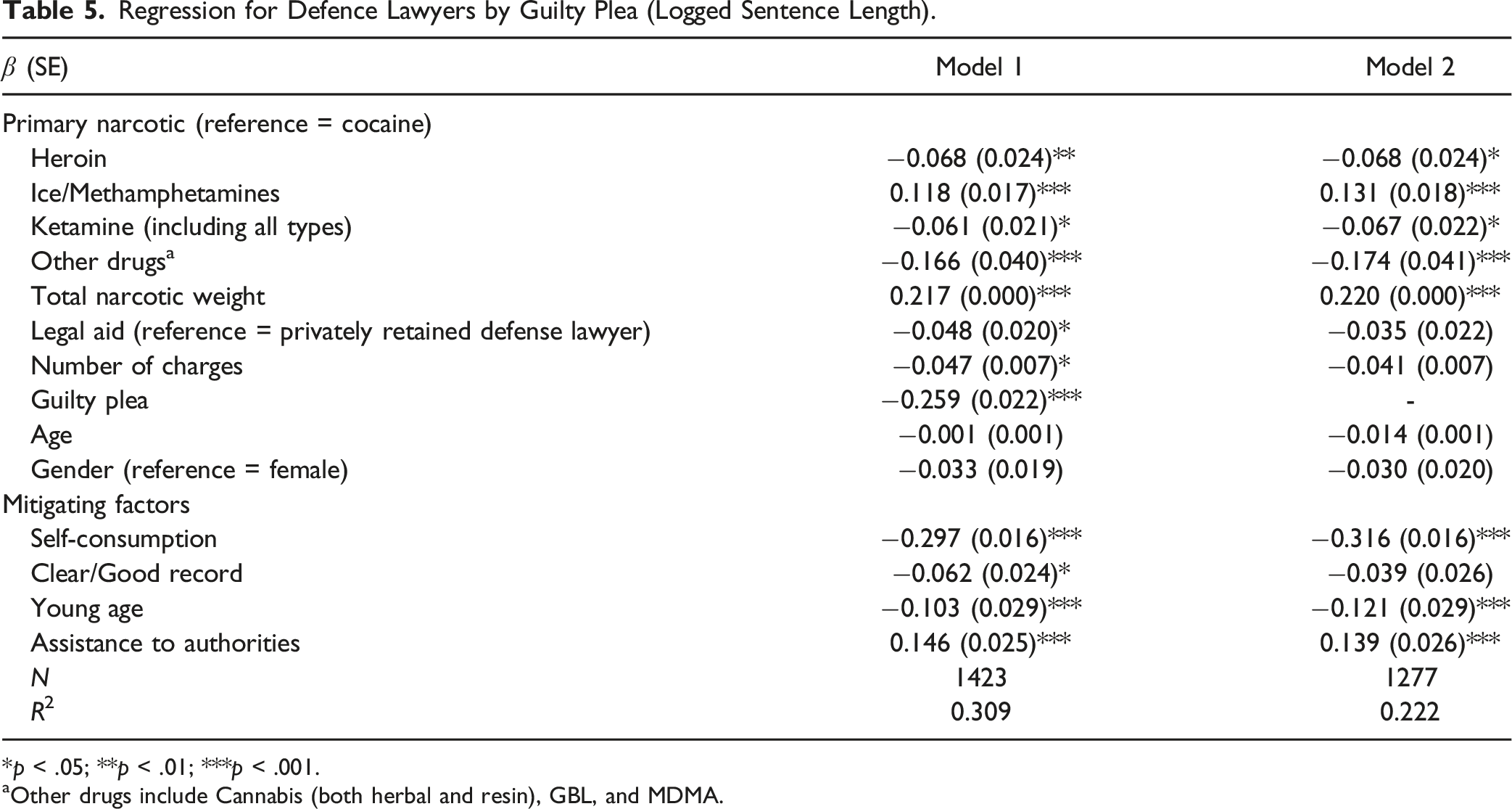
*p < .05; **p < .01; ***p < .001.
aOther drugs include Cannabis (both herbal and resin), GBL, and MDMA.
Considering the importance of guilty pleas in determining sentences, the sample for this study was categorized into guilty plea cases. Model 2 includes only cases where the defendant entered a guilty plea. Notably, there was no statistical difference in sentence length between legal aid and privately retained lawyers when controlling for the same variables in Model 1.
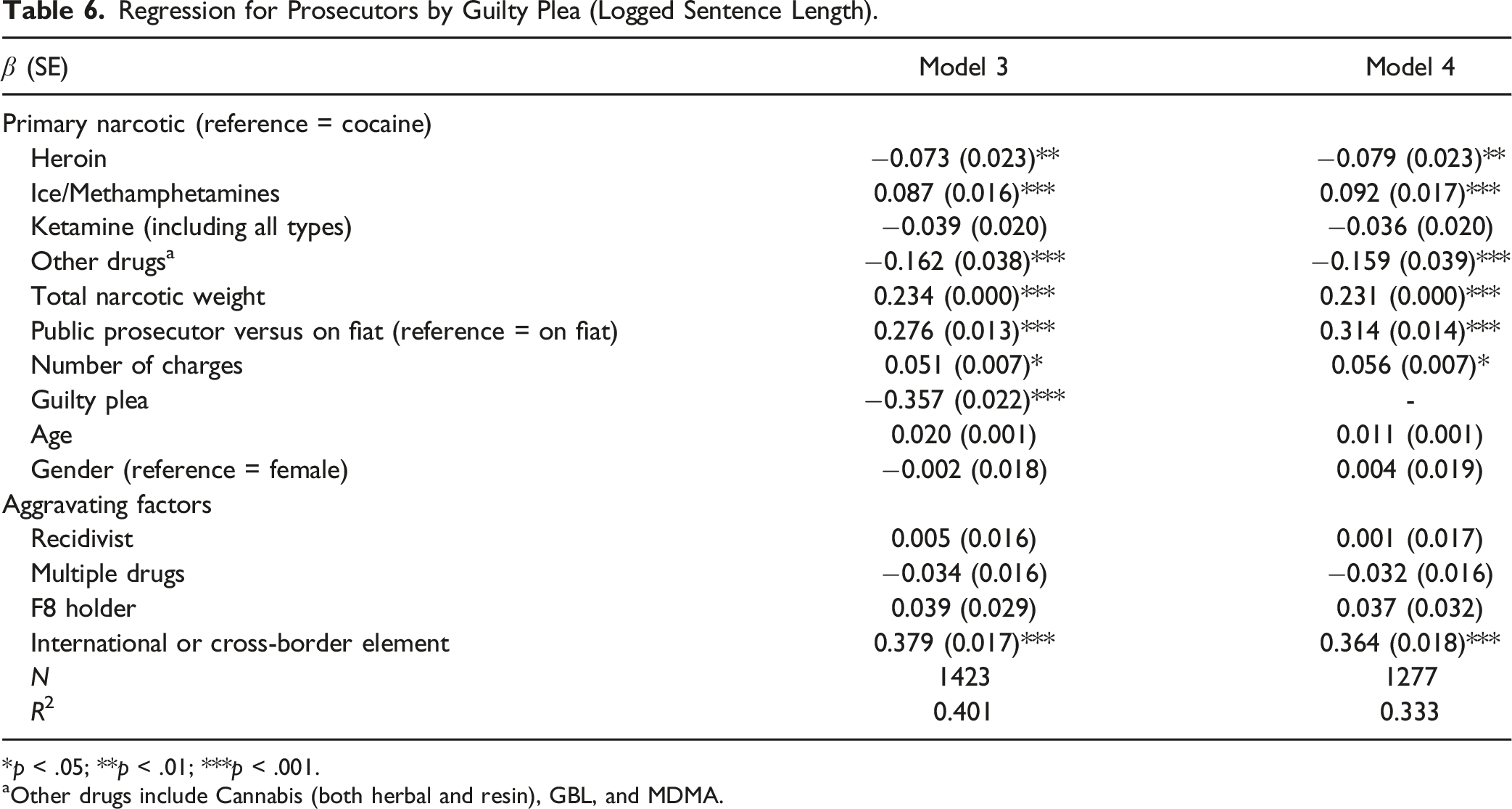
Regression for Prosecutors by Guilty Plea (Logged Sentence Length).
*p < .05; **p < .01; ***p < .001.
aOther drugs include Cannabis (both herbal and resin), GBL, and MDMA.
Considering the re-emergence of guilty pleas as one of the most significant variables, the sample was again specifically limited to guilty plea cases only. In Model 4, which exclusively encompassed guilty plea cases, the results paralleled those of Model 3. Public prosecutors exhibited a significantly greater propensity than prosecutors on fiat to be associated with more severe sentencing outcomes.
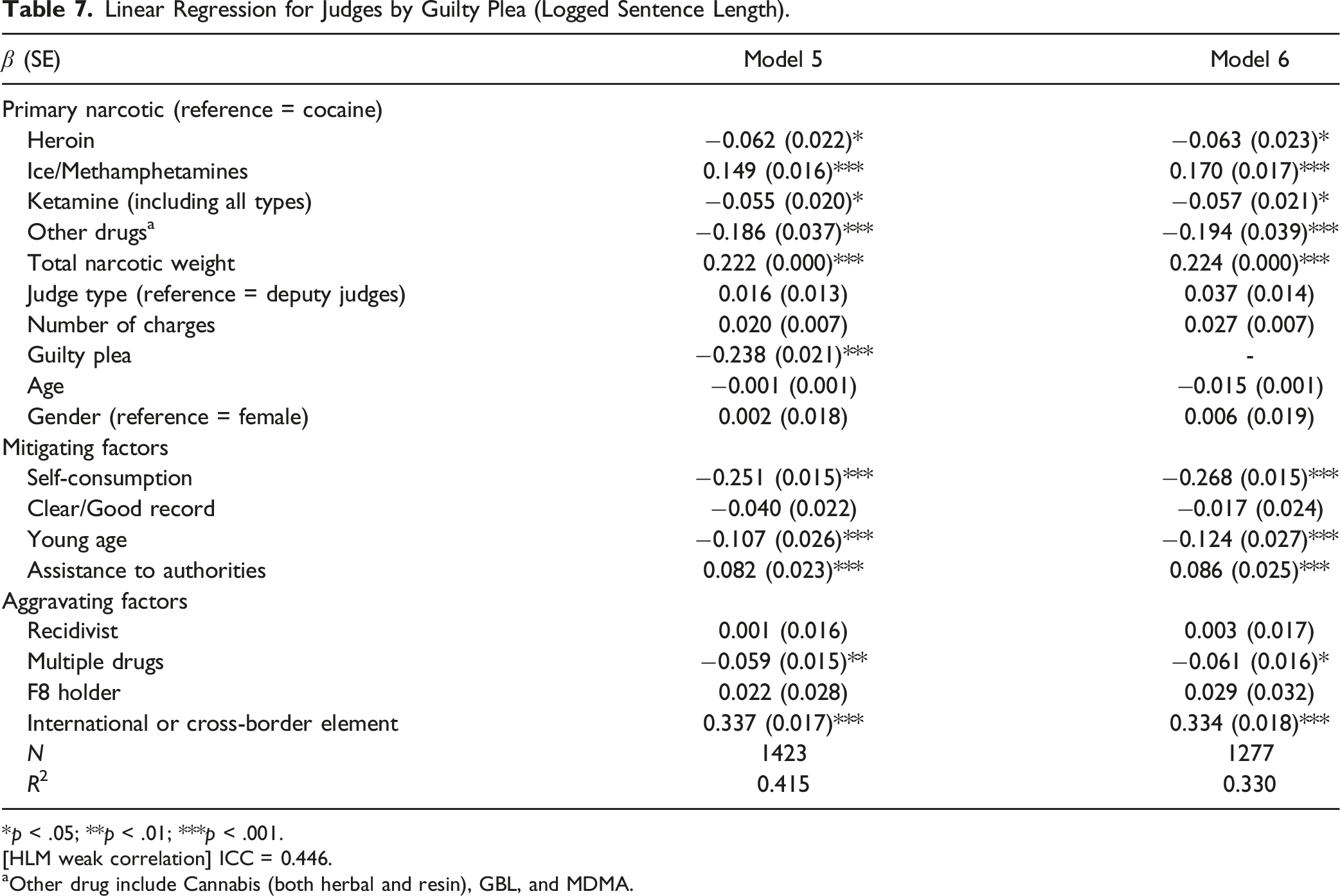
Linear Regression for Judges by Guilty Plea (Logged Sentence Length).
*p < .05; **p < .01; ***p < .001.
[HLM weak correlation] ICC = 0.446.
aOther drug include Cannabis (both herbal and resin), GBL, and MDMA.
The sample was once again limited to just guilty plea cases. Model 6 comprises cases of guilty pleas exclusively. No differences were identified between the types of judges in either of these models.
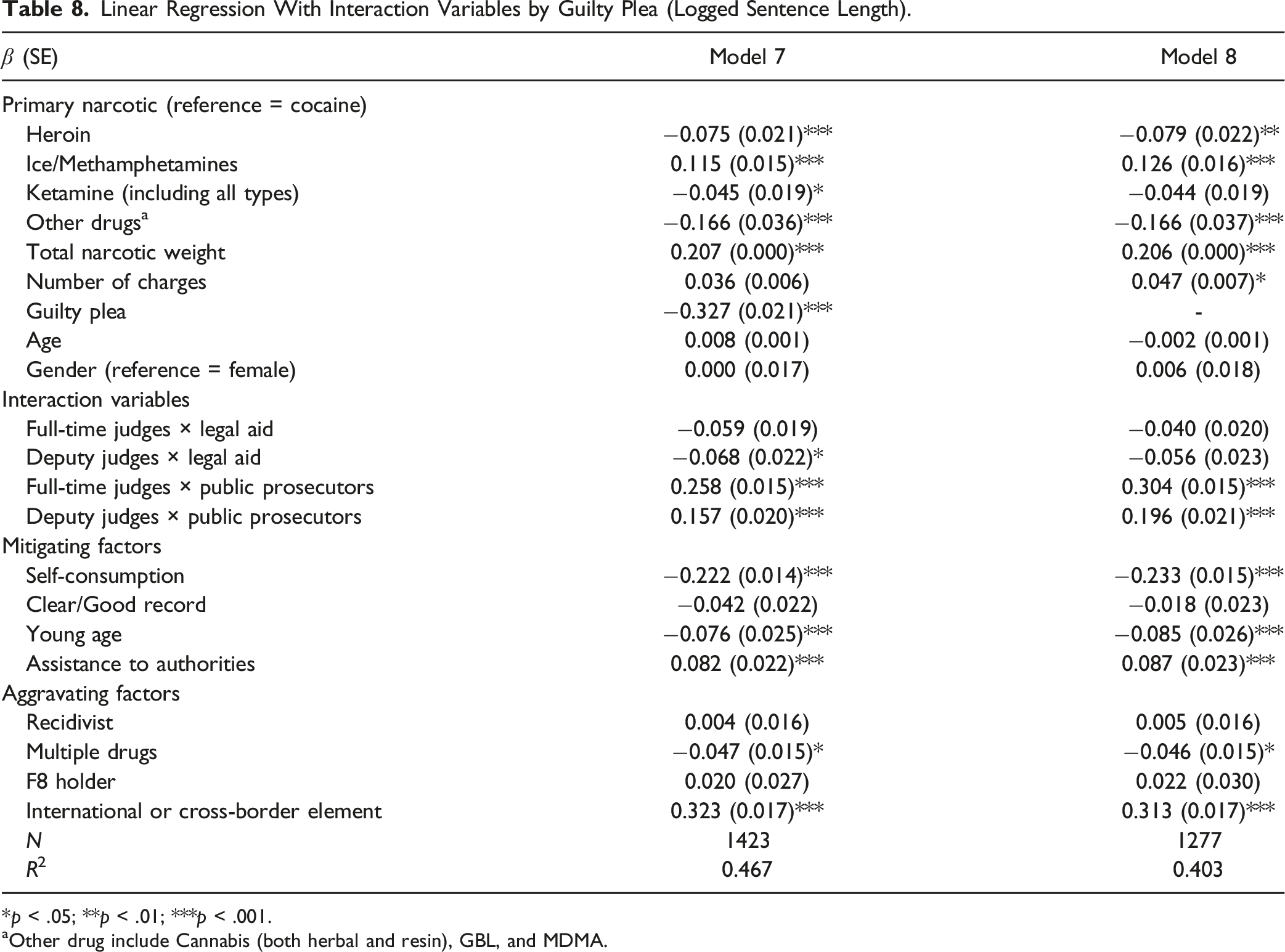
Linear Regression With Interaction Variables by Guilty Plea (Logged Sentence Length).
*p < .05; **p < .01; ***p < .001.
aOther drug include Cannabis (both herbal and resin), GBL, and MDMA.
Comparable results were observed when the sample was exclusively partitioned into guilty plea cases (Model 8), with the notable exception that the interactions between deputy judges and legal aid lawyers no longer yielded any statistically significant results. Notwithstanding the type of judges, the interactions between judges and public prosecutors consistently exhibited an association with more severe sentencing outcomes.
Two distinct outcome variables were established to examine the significance of experience in determining sentence outcomes for legal professionals: the number of mitigating factors and the number of aggravating factors. It is asserted that if a particular type of legal professional possesses greater experience in the sentencing process, likely due to their more frequent court appearances, they would present more sentencing factors for judicial consideration. Such professionals would display the requisite experience and skill to identify the most pertinent sentencing factors to be accounted for during sentencing. In the case of defense lawyers, this implies that legal aid lawyers would exhibit a markedly higher number of mitigating factors recognized by judges in comparison to privately retained lawyers. Similarly, public prosecutors would be expected to identify a greater number of aggravating factors than prosecutors on fiat.
There was no statistically significant effect for defense lawyers, t (1519) = 1.723, p = .065, despite legal aid lawyers (M = 0.59, SD = 0.87) being shown to have fewer mitigating factors considered than privately retained defense lawyers (M = 0.72, SD = 0.86), as indicated by judges. There was likewise no significant effect observed for prosecutors, t (1520) = −0.529, p = .597, despite public prosecutors (M = 0.55, SD = 0.71) having more considered aggravating factors than prosecutors on fiat (M = 0.53, SD = 0.68).
4. Discussion
The classification of legal professionals as either “insiders” or “outsiders” concerning sentencing outcomes has garnered limited attention within the existing literature. This study investigates the preferential treatment that legal professionals designated as “insiders” may encounter during the sentencing process. The findings reveal that, indeed, such insiders - specifically legal aid lawyers and public prosecutors - were more likely to receive more lenient and more severe sentences when analyzing all cases in aggregate respectively. These findings lend support to both the courtroom workgroup theory and the social psychological theory of in-group favoritism, indicating that individuals classified as part of the in-group are afforded more favorable treatment. The results exhibit increased complexity when cases are categorized as guilty plea cases. In instances of guilty pleas, public prosecutors are associated with more advantageous sentencing outcomes, which are characterized by harsher sentences. Consequently, in-group favoritism and courtroom workgroup theories are upheld only to a limited degree. Moreover, concerning the outcomes related to guilty pleas, a disparity has been noted exclusively among prosecutors, explicitly indicating that only public prosecutors are linked to an increased likelihood of defendants entering guilty pleas compared to prosecutors on fiat.
A potential reason for these findings may be attributed to the context of plea bargaining in Hong Kong. Unlike other jurisdictions such as the United States, plea bargaining is not officially recognized within the criminal justice system. In Hong Kong, defense lawyers typically correspond with prosecutors when they seek to obtain reduced charges for their clients. Authorization must be solicited from the Department of Justice (Cheng, 2014). Therefore, prosecutors appointed on an ad hoc basis may not be able to participate in plea bargaining with the defense to the same extent that public prosecutors can. This clarifies the strong association between public prosecutors and cases involving guilty pleas compared to prosecutors appointed on an ad hoc basis. Additionally, this elucidates the correlation between public prosecutors and the imposition of harsher sentences into guilty plea cases, given their ability to dominate the guilty plea process, which prosecutors on an ad hoc basis are unable to do; in other words, public prosecutors are the “insiders” in guilty plea cases (Ball, 2006).
What is the rationale for the preferential treatment of “insiders” in terms of sentencing outcomes? Is it an issue of favoritism, or could it be attributed to the fact that legal professionals who appear in court with greater frequency possess more experience and skill in matters pertaining to sentencing? While it is acknowledged that quantitatively measuring favoritism is inherently challenging, given that it is seldom overtly exhibited, this study employs the concept of in-group favoritism as a theoretical framework to interpret the results only. This study attempts to test the notion of experience on sentencing outcomes by utilizing the quantity of mitigating and aggravating factors as proxies for experience. It is crucial to consider aggravating and mitigating factors when assessing sentencing outcomes, particularly in differentiating the influence of various legal professionals. The primary function of a defense lawyer in sentencing is to minimize or mitigate sentences by introducing such factors. In contrast, the prosecutor’s role is not solely to advocate for the most severe sentence but also to highlight relevant aggravating factors associated with the defendant for the judges’ consideration. Nonetheless, the results of this study indicated that no significant differences were detected between the types of legal professionals regarding the number of mitigating and aggravating factors considered by judges during sentencing.
The interaction variable of full-time judges with public prosecutors was observed to correlate with more severe sentences. However, the favorable outcomes were not restricted solely to full-time judges but also encompassed deputy judges. This could be because deputy judges in Hong Kong can also come from members of the judiciary in a lower court, such as the magistrates’ courts. Deputy judges are not all “outsiders” of the court system per se, but serve as judges temporarily in a higher court.
The results of the current study hold implications. Firstly, the assumptions and perceptions of legal aid lawyers may require reassessment. Legal aid lawyers historically suffer from negative perceptions; due to their public funding, they are often perceived as less competent than their privately retained counterparts. Prior studies have indicated that legal aid lawyers frequently exhibit more punitive views towards crime and indifference towards the defendants assigned to them (Mulcahy, 1994; Newman, 2013). However, this is not the case in the current sentencing context; in fact, legal aid lawyers demonstrated an ability to secure more lenient sentences for their clients. This assertion does not imply that legal aid lawyers are superior, nor that defendants are unwise in opting for privately practicing lawyers. There are established merits and means tests for legal aid in Hong Kong. Thus, it is not the case where a defendant would hire a privately retained lawyer simply because their case is more serious. A defendant’s choice to retain a private lawyer or to pursue legal aid is influenced by their financial situation. If a defendant possesses substantial means, they are ineligible for legal aid, whereas those lacking the means may find private legal representation impractical. Nonetheless, results such as these help to dispel any notion that legal aid lawyers would be inferior. Perhaps privately retained lawyers are better at securing acquittals compared with legal aid lawyers. This warrants further investigation.
Another implication is for prosecutors, who are supposed to be “ministers of justice” who do not seek the most severe sentences (Department of Justice, 2013). Prosecutors in Hong Kong are not allowed to advise on sentences besides drawing the judge’s attention to relevant guideline cases, as sentencing is solely in the power of judges (Cross & Cheung, 2024). However, public prosecutors were more likely to secure more severe sentences, even though there should supposedly be no difference between public prosecutors and prosecutors on fiat, as both are there to draw relevant sentencing factors to the judge’s attention. More should be done to dispel the notion that public prosecutors receive in-group favorable treatment, and sentencing judges may also have to be reminded of this when making their sentence decisions. A general way to reduce the prospect of in-group favoritism and the familiarity of the courtroom workgroup is to increase the number of different legal professionals that participate in the sentencing process. This is not a simple task, especially in a small jurisdiction such as Hong Kong. It would be beneficial to have more rotations of roles and reduce the number of public prosecutors with more prosecutors on fiat. This is one counteracting method to have different viewpoints presented to judges, while minimizing the prospects and perceptions of any in-group favoritism.
This study acknowledges several limitations that warrant consideration. Primarily, it utilized in-group favoritism and the courtroom workgroup theory to shed light on the effects of the type of legal professional on sentencing outcomes. These theoretical frameworks facilitated understanding the distinction between “insiders” and “outsiders” within the courtroom workgroup. The findings are partially corroborated by both in-group favoritism and the courtroom workgroup theory, indicating that the “favorable” treatment is contingent upon the mode of conviction. Additionally, the type of judges did not significantly influence outcomes. It is acknowledged that this study could not measure affinity or expectations of future reciprocity, as indicated by the theory of in-group favoritism. This study aims to utilize this theory to elucidate the results and evaluate the alternative theory of experience in relation to sentence outcomes. The alternative explanation concerning the experience of legal professionals was not substantiated. A notable limitation of this study lies in the reliance on the number of mitigating and aggravating factors as proxies for the experience or skill of the legal professional in relation to sentencing. The dataset lacked any quantifiable measures of years of experience.
It is plausible that other explanations exist, which are particularly relevant to each category of legal professionals. For instance, an untested hypothesis suggests that prosecutors on fiat, who also serve as defense lawyers, may exhibit increased sympathy towards defendants, reinforcing the findings discussed herein. Legal professionals may exhibit biases that differ from those of laypersons or judges; however, previous studies have not identified significant differences between prosecutors and defense lawyers (Teichman et al., 2023). Another potential explanation posits that judges may impose harsher sentences on affluent defendants, thereby rendering the type of legal representation merely a proxy for socioeconomic status. However, this explanation is less likely, given that no significant differences emerged in plea cases between the type of legal representation. Nonetheless, this study reveals that a definitive explanation regarding the effects of the type of legal professional on sentencing outcomes remains elusive. These effects may hinge upon the mode of conviction and the relevant jurisdictional context. Therefore, future research investigating the impact of the type of legal professional on sentencing outcomes should diligently consider contextual factors, modes of conviction, and the inclusion of mitigating and aggravating circumstances.
Footnotes
Author Contributions
Kevin Kwok-yin Cheng: Conceptualization (lead), Funding Acquisition (lead), Investigation (equal), Methodology (equal), Project Administration (lead), Resources (lead), Supervision (lead), Visualization (equal), Writing – Original Draft Preparation (lead), Writing – Review & Editing (lead).
Zachary Bok-hin Chan: Data Curation (lead), Formal Analysis (lead), Investigation (equal), Methodology (equal), Software (lead), Validation (lead), Visualization (equal), Writing – Original Draft Preparation (supporting), Writing – Review & Editing (supporting).
Declaration of Conflicting Interests
The authors declared no potential conflicts of interest with respect to the research, authorship, and/or publication of this article.
Funding
The authors disclosed receipt of the following financial support for the research, authorship, and/or publication of this article: This work was supported by a General Research Fund (GRF) from the Research Grants Council, University Grants Committee of Hong Kong (Project No. 14607322).
