




Abstract
Introduction:
Persistent racial and gender disparities are prevalent within the higher education and medical training system, notably seen in the underrepresentation of Hispanic or Latinos, Black Americans, and female surgeons compared to their respective population proportions. This study aims to quantify publications addressing ethnic or gender diversity across various surgical specialties, analyze publication trends, and explore specific topics within medical literature.
Database:
The Database includes PubMed, Google Scholar, and Scopus
Methods:
Employing the Preferred Reporting Items for Systematic Reviews and Meta-Analyses (PRISMA), we conducted a systematic literature review utilizing the PubMed, Google Scholar, and Scopus databases. A broad inclusion criterion for both ethnic and gender diversity of plastic surgery, neurosurgery, otolaryngology, dermatology, orthopedic surgery, and gender surgery was utilized. The literature was selected between 2014 and 2024. In the content of our study, diversity in articles was defined as any article that focused on addressing gender or racial/ethnicity in the subspecialty.
Results:
Of 1529 initially screened articles, 346 were included. Orthopedic surgery had the most diversity publications (n = 86), followed by general surgery (n = 67) and plastic surgery (n = 51). Significant increases in diversity publications were observed across all specialties. Orthopedic surgery showed the highest growth (+0.17 publications/year, p < 0.001), followed by plastic surgery (+0.12, p = 0.002) and general surgery (+0.11, p = 0.003). Race/ethnicity was the primary focus (51.4%), with fewer articles on gender (19.7%) or both (28.9%). Diversity topics included demographics, pipeline/recruitment, application process, training experience, leadership, and workplace treatment.
Conclusion:
These insights underscore the importance of continued efforts to promote diversity within surgical specialties to enhance patient care and outcomes. Further research and initiatives are needed to ensure equitable representation in surgical fields. Addressing diversity issues in surgical specialties is essential for improving healthcare outcomes and reducing disparities.
Plain Language Summary
Diversity in the medical community, particularly among physicians, plays a crucial role in improving patient outcomes and access to care for minority communities. However, there is a significant lack of diversity in surgical subspecialties like general surgery, neurosurgery, plastic surgery, orthopedic surgery, otolaryngology, and dermatology. This gap is evident when comparing the general US population demographics to the makeup of surgeons. For example, while 13.6% of the US population are Black and 19.1% are Hispanic, only 2.25% of surgeons are Black and 5.3% are Hispanic. A review of published journal articles from 2014 to 2024 aimed to understand the focus of diversity within these subspecialties. It found that orthopedic surgery had the highest number of publications on diversity (86 articles), followed by general surgery (67 articles) and plastic surgery (51 articles). There was a significant increase in diversity-related publications over time. The study categorized these articles into six main topics: demographics, pipeline/recruitment, application process, training experience, leadership, and workplace treatment. Most articles (51.4%) focused on race/ethnicity diversity, 19.7% on gender diversity, and 28.9% on both. Orthopedic surgery and general surgery had the most articles on race/ethnicity, while general surgery and orthopedics led to gender diversity publications. Plastic surgery had the highest number of articles addressing both race/ethnicity and gender. Despite these efforts, neurosurgery lagged in diversity publications, reflecting the low representation of women and minorities in this field. Initiatives like Nth Dimensions and the American Society of Plastic Surgery’s diversity efforts have shown promise in increasing diversity among applicants and practitioners. To address healthcare disparities, a diverse physician workforce is essential. Increased representation can improve patient trust, adherence to treatment, and overall health outcomes, particularly in underserved areas.
Introduction
Diversity in the medical community often addresses the need for varied attributes such as race and ethnicity among healthcare professionals including trainees, physicians, and patients. 1 The diversity of physicians in terms of ethnicity and gender is closely connected to the outcomes of patients and the accessibility of care for underrepresented communities, with some studies emphasizing enhanced patient communication with providers from their own culture.1 –3 However, ethnicity, race, and gender continue to be an imbalance within physician specialties, potentially contributing to the healthcare disparities in the American healthcare system.4 –6 This imbalance is prevalent in surgical subspecialties, with a lack of diversity among residents, applicants, faculty, and trainees.7 –10 The lack of diversity is particularly evident in surgical subspecialties such as neurosurgery, plastic surgery, orthopedic surgery, otolaryngology, and dermatology.11 –20
The US Census Bureau reports that 58.9% of the population are White, 13.6% are Black, 19.1% are Hispanic or Latino, 1.3% are American Indian/Alaska Native, and 0.3% are Native Hawaiian and Pacific Islander. 21 However, only 5.3% of surgeons are Hispanic or Latino and only 2.25% are Black. 22 Furthermore, there is a disproportion of women in surgical fields with only 17.5% representing women. 22 The disproportion between ethnicity, race, and gender further differs based on the specific surgical subspecialty. 17 Currently, the racial, gender, and ethnic populations in medical schools have increased each year; however, the disparities in surgical specialties still exist.18,19 The clinical, systemic, and educational implications of diversity are evident. Yet a study in 2016 found that only 37% of surgeons acknowledged that a racial disparity exists in surgical care. 20
Neurosurgery, plastic surgery, orthopedic surgery, otolaryngology, and dermatology are known to be some of the most competitive surgical subspecialties to match. 23 However, only 1.8%, 1.6%, 1.4%, 1.1%, and 4.6% make up African Americans in each subspeciality, respectfully.11,17,19,24 –26 In addition, Latinos represent only 5%, 4.9%, 2%, 1.1%, and 6.6% in each subspecialties, respectfully.19,24 –27 In addition to racial disparity, a similar trend of low representation is present with women compared to their male counterparts in each of these surgical subspecialties.28,29 As awareness of the disparities is evidenced within the healthcare system, there has been a heightened focus on implementing diversity initiatives among specialties at various training stages.21 –23 However, it remains unclear if the increased efforts in diversity and inclusion in surgical specialties have been translated into research. Numerous initiatives have been suggested; however, the results remain insufficient to keep up with the rapidly increasing diversity of the US population. 15
Our team wanted to examine diversity and inclusion research through a systematic literature review across a variety of specialties. This study’s objectives are (1) to investigate the comparative volume of publications concerning ethnic or gender diversity across various surgical specialties; (2) examine the trend in the number of diversity-related publications from 2014 to 2024 within each surgical subspecialty; and (3) analyze the specific themes focus of the research articles addressing ethnic and gender diversity within surgical specialties. The authors hypothesized that general surgical literature would exhibit the highest volume of publications on ethnic or gender diversity because of it being the subspecialty with most women and non-White minorities. 12 In addition, the authors hypothesized that there has been an increase in the number of diversity publications across all surgical subspecialties in recent years, due to increased awareness of diversity in surgical workplaces.
Methods
Search strategy
Inquiries of the PubMed, Google Scholar, and Scopus database were performed in February 2024. The reporting of this study conforms to the PRISMA (Preferred Reporting Items for Systematic Reviews and Meta-Analyses) guidelines to ensure comprehensive and transparent reporting. This search encompassed controlled keywords related to surgical subspecialties, residency and fellow training, and diversity across PubMed databases up to 1 February 2024. The identification of all surgical subspecialties was collected from the Fellowship and Residency Electronic Interactive Database (FREIDA) and the Accreditation Council for Graduate Medical Education (ACGME). Keywords and Medical Subject Headings (MeSH) terms were used to identify relevant studies. The search strategy was iteratively refined through preliminary searches and consultation with a librarian at our institution, who specializes in systematic reviews. The search process is outlined in Table 1.
List of keywords for identifying articles.

The PubMed MeSH utilized for inclusion comprised “Specialties, Surgical” in conjunction with each specific specialty name: “orthopedic,” “orthopedic surgery,” “orthopedic OR orthopedic surgery,” “neurosurgery,” “plastic surgery,” “otolaryngology/ENT/head and neck surgery,” “head and neck surgery,” “dermatology,” and “general surgery.” These terms were searched within the (Title/Abstract) field.
The PubMed MeSH terms “Education, Medical, Graduate” and “Internship and Residency” were combined with “residency OR resident OR trainee” and “fellow OR fellowship.” All terms were explored within the (Title/Abstract) field.
Diversity-related terms were searched through the following search strategy: ((“race OR racial OR gender OR ethnicity OR ethnicities OR minority OR minorities OR underrepresented”) AND (“disparity OR disparities OR diverse OR diversity OR diversification OR diverseness”)) OR diverse (Title/Abstract) OR diversity (Title/Abstract) within the (Title/Abstract) field, aiming to encompass various aspects of gender and ethnic diversity.
Inclusion and exclusion criteria
Original research articles, systematic reviews, and reviewers were included. Letters to editors, case reports, and opinions were excluded.
Data synthesis
The following data from all included articles were recorded in the review, including the surgical subspecialty, the type of diversity discussed (gender, ethnic, or both), the level of training (medical student, resident, or fellow), the journal name, the publication date, and the authors. In instances where an article addressed diversity across multiple surgical subspecialties, it was categorized separately under “multiple subspecialties.” This categorization process involved independent assessments by two authors (J.E.L. and I.M.W.), with any disagreements resolved through consultation with a third reviewer (L.C.P.).
Data analysis
Upon initial assessment of the articles included, each title and abstract underwent a concise evaluation to extract their primary aims and conclusions. Subsequently, two independent reviewers analyzed these summaries and categorized them into predefined topics, namely demographics, pipeline/recruitment, application process, training experience, leadership, and workplace treatment. In instances of disagreement, a third reviewer served to address the disagreement. Although standardized methods for categorizing orthopedic surgery diversity literature are currently lacking, the authors determined that the included articles aligned well with these major topics. Articles designated under the “demographics” topic focused on program/applicant gender or ethnic diversity at specific points or intervals. Those categorized under “pipeline/recruitment” discussed initiatives aimed at recruiting trainees from diverse backgrounds into surgical specialties, alongside factors influencing trainee program selection. “Application process” articles explored facets of the residency or fellowship application process, such as letters of recommendation, examinations, interviews, or match statistics. “Training experience” articles examined the influence of diversity on the medical student, resident, or fellow training experience, including exposure, mentorship, autonomy, and competency. “Leadership” articles delved into the diversity of program leadership, including program directors and department chairs, and its impact on trainee recruitment. Articles labeled under “workplace treatment” investigated how diversity affected workplace experiences, encompassing issues such as harassment, bias, parental leave, or mental health. Descriptive statistics were employed to summarize counts and percentages and to analyze publication trends over time. Data on each article’s surgical specialty, year of publication, topic, and type of diversity were recorded in Microsoft Excel, and percentages for each topic were calculated.
The articles were further categorized based on the type of journal in which they were published. These classifications encompassed specialty-specific journals, education journals, generic surgical journals, and others. Specialty-specific journals were those associated with a particular surgical subspecialty. Education journals included any publication primarily dedicated to disseminating research on medical education across various training levels. Generic surgical journals comprised publications that did not specialize in a particular field and where education was not the primary focus. Other journals encompassed general medical publications or those that did not fit into the aforementioned categories.
Finally, the authors wanted to assess the number of articles per specialty per year. To compare the number of publications per year across different subspecialties, the Kruskal–Wallis test, a non-parametric method, was utilized due to its ability to handle data that do not necessarily follow a normal distribution. The total number of articles per specialty per year was based on existing bibliometric analysis for all specialties.30 –35 Each of these existing bibliometric analyses has analyzed the article trends over the course of 2014–2024. Bibliometric analysis was used to measure specific activity in each subspecialty. Articles were extracted that focused on bibliometric analysis in each subspecialty. 36
Data were recorded and organized using Microsoft Excel, allowing for the calculation of percentages and the stratification of articles by various factors, including the type of diversity discussed, the level of medical training, and the type of journal in which the articles were published.
Results
Description of included studies
The initial screening resulted in 1529 total articles. A total of 402 articles were deemed duplicates and were removed. Of the remaining 1126 articles screened, 780 were excluded based on their title and abstract. A total of 346 articles were included in the review (Figure 1).

Flow chart detailing study selection process.
Number of articles per subspecialties
The Kruskal–Wallis analysis determined that orthopedic surgery had significantly more publications per year than neurosurgery, otolaryngology, general surgery, plastic surgery, and dermatology (p < 0.001). Every specialty showed a significant increase in publications about diversity over time (p < 0.05), with the most interest increase in orthopedic surgery (+0.17 publications/year, p < 0.001), plastic surgery (+0.12 publications/year, p = 0.002), and general surgery (+0.11 publications/year, p = 0.003). Neurosurgery showed the least growth over time regarding publications per year (Table 2).
Stratification of literature focus on ethnic or gender diversity by subspecialties.
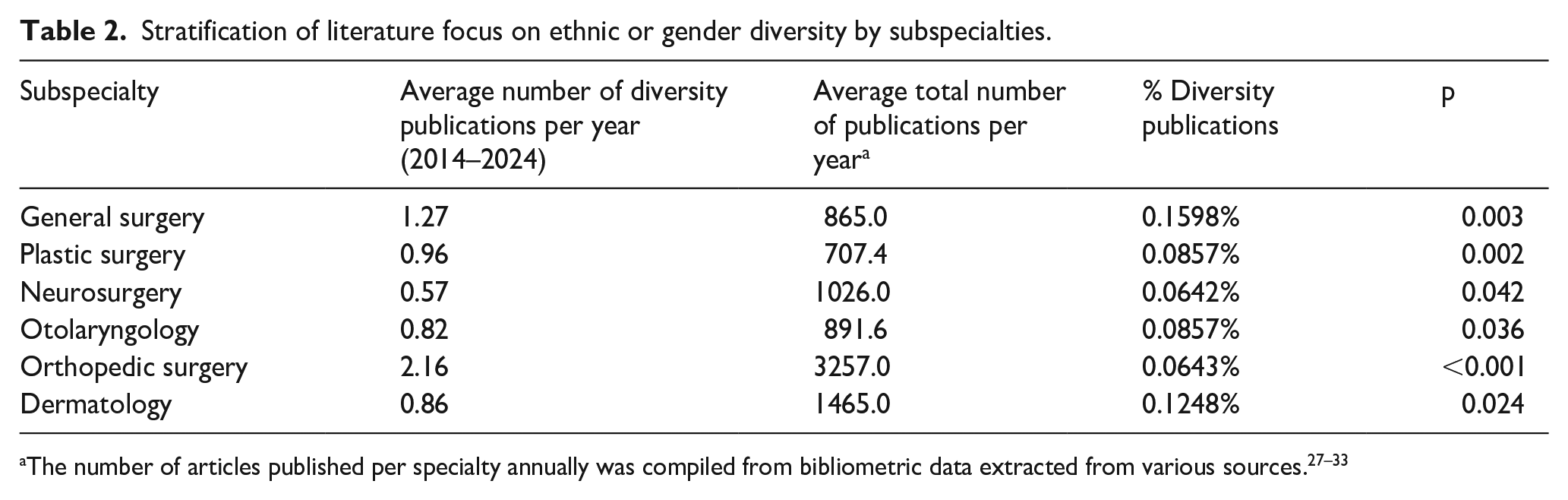
Figure 2 shows that after organizing the specialties, orthopedic surgery was the subspecialty with the largest diversity (n = 86), followed by general surgery (n = 67), plastic surgery (n = 51), and dermatology (n = 44). In addition, 41 articles discussed ethnic and gender diversity within multiple specialties.
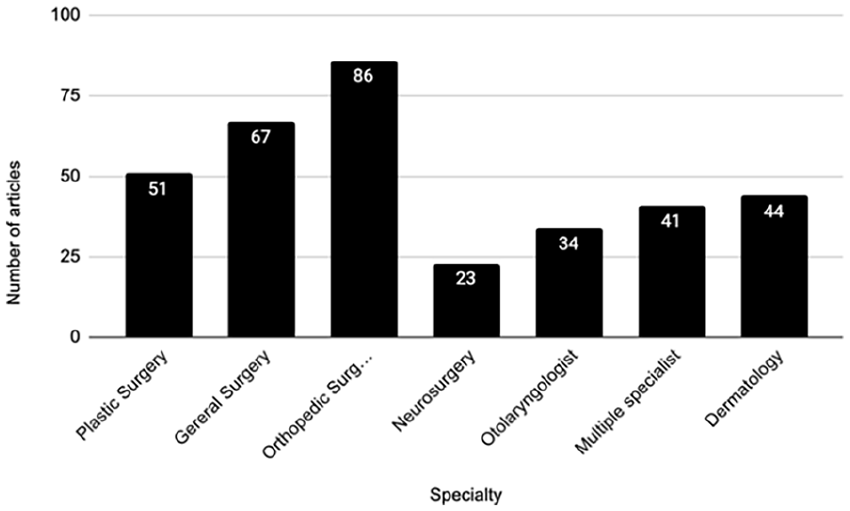
Number of articles discussing ethnic and/or gender diversity by subspecialties.
The yearly breakdown of the 346 articles in all of the specialties collected from 2014 to 2024 is outlined in Figure 3. 2023 has the most diversity articles. In addition, it cannot be determined if there has been an increase or decrease in diversity publications for 2024 since it is the beginning of the year.
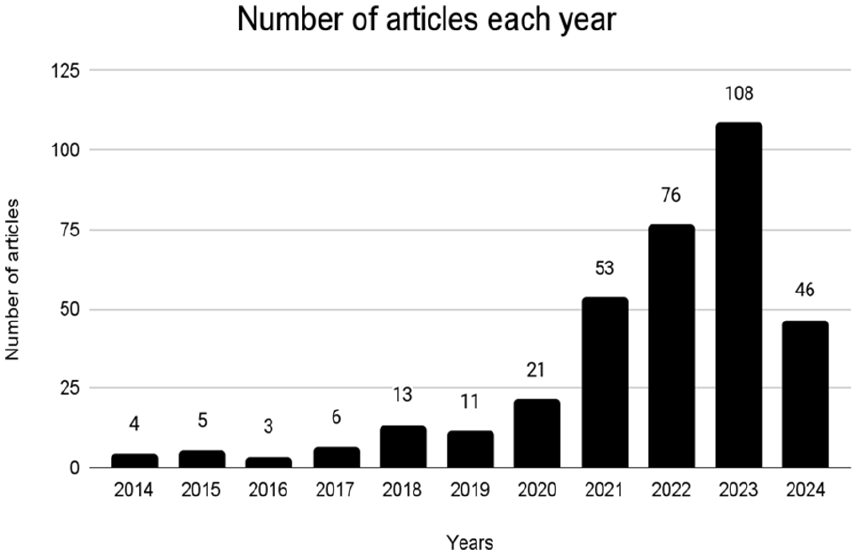
Number of articles regarding diversity in ethnic or gender by year.
The majority of diversity articles were related to race/ethnicity compared to sex/gender (Figure 4). Orthopedics had the most race/ethnicity diversity articles (n = 49), followed by general surgery (n = 35). General surgery has the most gender diversity articles (n = 20), followed by orthopedics (n = 12). Finally, plastic surgery had the most articles that addressed both ethnicity/race and gender (n = 32), followed by orthopedic surgery (n = 25).

Publications for each specialty by diversity topic.
Articles categorized by topics
Most of the literature articles focused on race/ethnicity diversity accounting for 51.4% (n = 178) of the articles. However, a smaller proportion of articles, 19.7% (n = 68), solely addressed gender only. In addition, 28.9% (n = 100) explored both ethnic and gender diversity (Figure 5). In terms of the level of medical training, 265 articles discussed diversity issues at the resident level, 37 at the fellow level, and 44 at the medical student level (Figure 5). Following the stratification of articles addressing ethnic or gender diversity across all surgical subspecialties based on their topic, 77 were categorized by “application process,” 70 in “pipeline/recruitment,” 59 in “training experience,” 100 in “demographics,” 25 in “workplace treatment,” and 15 in “leadership” (Figure 5).

Number of articles categorized by different topics discussing diversity in all surgical subspecialties.
Figure 6 further illustrates the number of articles by topics for each specialty. After stratifying articles in general surgery by topic, 10 were categorized in the category of “demographics,” 15 in “pipeline/recruitment,” 20 in “application process,” eight in “leadership,” six in “training experience,” and eight in “workplace treatment.” After stratifying articles in dermatology, eight were categorized in the category of “demographics,” 10 in “pipeline/recruitment,” six in “application process,” seven in “leadership,” five in “training experience,” and eight in “workplace treatment.” After stratifying articles in orthopedic surgery, 20 were categorized in the category of “demographics,” 15 in “pipeline/recruitment,” 12 in “application process,” 10 in “leadership,” 10 in “training experience,” and 19 in “workplace treatment.” After stratifying articles in neurosurgery, five were categorized in the category of “demographics,” seven in “pipeline/recruitment,” two in “application process,” three in “leadership,” four in “training experience,” and two in “workplace treatment.” After stratifying articles in ENT, five were categorized in the category of “demographics,” eight in “pipeline/recruitment,” six in “application process,” seven in “leadership,” three in “training experience,” and five in “workplace treatment.” After stratifying articles in plastic surgery, 10 were categorized in the category of “demographics,” eight in “pipeline/recruitment,” 12 in “application process,” six in “leadership,” seven in “training experience,” and eight in “workplace treatment.” After stratifying articles that contained multiple specialties, five were categorized in the category of “demographics,” eight in “pipeline/recruitment,” seven in “application process,” six in “leadership,” nine in “training experience,” and six in “workplace treatment.”

Number of articles categorized by different topics discussing diversity in each surgical subspecialties.
Finally, Table 3 identified which journals in each subspeciality published the most diversity-related articles on gender and/or race/ethnicity. Plastic and Reconstructive Surgery and Journal of the American Academy of Orthopedic Surgeons published the majority of the diversity articles for plastic surgery and orthopedic surgery, respectively.
Diversity publication by journal.

Discussion
In this study, we conducted a systematic literature review examining multiple surgical subspecialties and diversity as it relates to each specialty. Ensuring a diverse representation in both race and ethnicity and genders among subspecialties is crucial for enhancing patient outcomes, expanding access to healthcare, and stimulating an inclusive environment.3,34,35 Initiatives aimed at promoting diversity in each of these subspecialties have increased as the significance of diversity has grown within the medical profession.10,12
Number of publications regarding ethnic or gender diversity
In analyzing data regarding which subspecialties produced research in relation to diversity, orthopedic surgery was the subspecialty with the greatest number of publications and neurosurgery with the least number of publications. In addition, orthopedic surgery had the largest average number of diversity publications per year (2.16), followed by plastic surgery (0.96). Despite these variations in numbers, each subspeciality did show an increase in the overall number of publications it released each year, with 2023 having the greatest number of publications of about 108 articles. Moreover, the authors were unable to ascertain definitively whether there has been an increase or decrease in the volume of publications for 2024, as the current year has yet to conclude. Orthopedic surgery and general surgery were the two subspecialties to produce the most publications addressing either race/ethnicity or gender only. However, plastic surgery was the subspeciality with the most publications addressing both gender and race/ethnicity concurrently in one article (n = 32), followed by orthopedic surgery (n = 25).
Previous studies have analyzed the presence of diversity and inclusion in the literature for various surgical subspecialties. Laubach et al. analyzed articles in all surgical subspecialties, noting that orthopedic surgery and general surgery had the highest number of ethnic or gender diversity articles. 37 In addition, their study noted the increase of diversity articles each year. Our results varied regarding the other specialties: dermatology, otolaryngologist, neurosurgery, and plastic surgery. It is noted in our study that plastic surgery is the subspecialty with the third highest number of diversity articles.
Number of publications in recent years
Orthopedic residency programs have taken proactive steps to increase gender and racial diversity by implementing outreach programs and providing exposure opportunities for medical school students, such as Nth dimensions and the Perry Initiative.38,39 Nth dimensions came into founding in 2004 with the initiative of diversifying the physician workforce and providing resources to create competitive orthopedic residency applicants. Since the implementation of Nth dimensions, more URiM applicants have matched into historically underrepresented specialties such as orthopedic surgery and dermatology. Our study highlighted that plastic surgery had the third most diversity articles. Plastic surgery has brought attention to the critical importance of diversity and inclusion, with the American Society of Plastic Surgery playing a pivotal role in highlighting this imperative. The society has spearheaded efforts to create opportunities and furnish resources aimed at bolstering diversity and representation, particularly for historically underrepresented in medicine (URiM) students aspiring to pursue careers in plastic surgery. 40 These initiatives are designed to enhance representation within the field, transcending barriers of race, ethnicity, and gender. This proactive approach could elucidate why plastic surgery emerges as the specialty, with the most articles focused on both race/ethnicity and gender in our study.
The number of publications related to diversity remains low within neurological surgery, possibly due to the low prevalence of gender and racial/ethnicity diversity in the subspecialty. Each year women represent more than half of the graduating medical class in the United States, but only 6% are American Board of Neurological Surgery (ABNS)-certified practicing neurosurgeons and only 4% of all neurosurgeons are Black/African American. 41 Reduced representation in the workforce diminishes opportunities for marginalized groups in this subspecialty, underscoring the imperative for more publications addressing diversity within the field.
In our study, orthopedic surgery, general surgery, and plastic surgery had the largest number of publications submitted to journals. General Surgery, ENT, and dermatology had the highest impact factor journals. The impact factor of a journal is a measure reflecting the average number of citations to recent articles published in that journal. It is a metric often used to assess the relative importance or prestige of a journal within its field. 42 The number of publications within each of these high-impact factor journals creates the potential for more studies focusing on ethnic or gender diversity to develop. In addition, it creates the potential of both ENT and dermatology to highlight diversity in these two subspecialties.
Exploring broader societal biases versus specific medical community issues
The patterns observed in diversity across surgical subspecialties may be indicative of wider societal prejudices, such as systemic racism and sexism, which affect numerous fields, including medicine.10,38 These overarching societal factors can impact how race/ethnicity and gender are represented within the medical profession. 39 For instance, societal biases and structural disadvantages frequently influence the opportunities available to individuals from marginalized groups and can affect their career development in healthcare.38,40,41 In addition, specific challenges within the medical field itself can contribute to these diversity trends. Factors like biases in recruitment and promotion, along with insufficient support for underrepresented trainees and professionals, can worsen existing disparities.42,43 It is vital to address these internal challenges to create a more inclusive and fairer environment within medical specialties.
Balancing emphasis on race/ethnicity and gender diversity
Focusing on race and ethnicity is crucial for tackling healthcare disparities, but it should not detract from the equally important need for gender diversity, especially in leadership positions. Women continue to be underrepresented in many high-level roles within the medical field, which can affect decision-making, policy formation, and the inclusivity of healthcare practices.44,45 To address this imbalance, it is essential to implement specific strategies aimed at increasing gender diversity in leadership. This includes developing mentorship programs, adopting policies that support work-life balance, and ensuring equal opportunities for career advancement.46 –48 By addressing both racial/ethnic and gender diversity, the medical field can progress toward a more inclusive and equitable environment that serves everyone effectively.
Call to action and next steps
The overall health of patients in the United States has seen notable improvements thanks to advancements in medicine and increased awareness of healthcare disparities. 43 However, these improvements are not uniformly distributed, particularly among minority communities. Various factors contribute to this inequality, with evidence suggesting biases, stereotypes, racism, discrimination, and mistrust of healthcare providers play significant roles. 12 Studies consistently highlight that enhanced patient outcomes often correlate with greater accessibility and diversity within healthcare teams and among physicians. 44 This may be attributed to efforts in overcoming language barriers, fostering patient trust, ensuring adherence to treatment plans, and recognizing external factors impacting patient well-being.
Addressing issues such as physician shortages and healthcare disparities necessitates a racially and culturally diverse physician workforce. 45 Underserved and vulnerable populations with poor access to healthcare are most vulnerable to these discrepancies, and many students who decide to work within these communities are usually among those of minority backgrounds. Promoting diversity, particularly within certain specialties, holds promise for improving healthcare access, as studies indicate that racial and ethnic minority medical students express a strong intention to practice in underserved areas. 41
Many institutions are now prioritizing strategies to enhance diversity within their medical schools, residency programs, and faculty.46,47 Some medical subspecialties must expand initiatives to cultivate mentorship, provide exposure to opportunities like shadowing and research, and offer scholarships. Diversifying faculty not only provides opportunities for minority individuals to advance professionally and serve as mentors but also facilitates increased matriculation of underrepresented minorities and drives necessary systemic changes.48,49 A culturally and racially diverse healthcare workforce fosters innovation and collaboration, encourages crucial conversations addressing diversity and systemic issues such as racism, and ultimately propels the advancement of medicine as a whole. 3
Limitations and potential biases
The study presents several limitations that warrant acknowledgment. While the study reported the number of studies on race/ethnic or gender diversity, it did not implement internal controls to assess the quality of these studies. Consequently, the study refrains from making judgments regarding the validity of the articles due to the considerable variability in methodology and evidence levels. Potential biases in this study include publication bias, where journals may be more inclined to publish studies highlighting positive trends or successful initiatives in diversity, rather than studies pointing out ongoing issues or failures. In addition, ethnic and gender diversity are often intertwined, yet they represent distinct and separate topics. Some healthcare disparities are specific to either ethnic and racial minority groups or gender minority groups.39,49 However, for the purpose of our study—demonstrating publication trends and subspecialty-specific patterns—we opted to calculate the total number of articles addressing both topics. This categorization process presents a potential limitation. Another limitation was that there are no established and validated methods for categorization of articles related to diversity. As a result, the selection of articles and the criteria for categorizing them could introduce subjective bias, influencing the outcomes reported.
In addition to the inherent challenges of addressing diversity in surgical subspecialties, a significant obstacle lies within the publication process itself. Research focused on diversity, particularly regarding race and ethnicity, often encounters difficulties in being accepted by high-impact journals. Several factors contribute to this, such as the perception that these studies have a narrower focus, potential biases during the peer-review process, and a preference for topics traditionally seen as having broader appeal in the scientific community. High-impact journals may also prioritize research with immediate clinical implications or groundbreaking discoveries, potentially sidelining studies that address systemic issues like diversity. This could lead to the underrepresentation of diversity-focused research in prominent publications, despite the essential role these studies play in advancing healthcare equity. Overcoming these systemic barriers requires a concerted effort to enhance the visibility and perceived importance of diversity research within the academic community, urging journals to prioritize and promote studies that further our understanding and improvement of diversity in medicine. Despite these limitations, this study stands as an important systematic review addressing ethnic and gender diversity among surgical subspecialties that have a low prevalence of gender and ethnic diversity.
Conclusion
This systematic literature review emphasizes the importance of diversity and inclusion in surgical subspecialties, revealing both progress and persistent disparities. Orthopedic surgery leads in diversity-related publications, while neurosurgery significantly lags. The increase in diversity publications from 2014 to 2024 reflects growing awareness and initiatives to address these disparities. Orthopedic, general, and plastic surgery show notable advances due to proactive outreach programs, whereas neurosurgery requires targeted efforts to improve diversity and inclusivity for gender and race/ethnicity. High-impact journals in ENT and dermatology indicate potential for further promoting diversity discussions. Despite these advancements, there is a need for more comprehensive and quality-focused research on diversity. Addressing disparities in surgeon representation necessitates sustained, multifaceted approaches. Enhancing diversity in surgical fields can improve patient outcomes, care accessibility, foster innovation, and tackle systemic biases affecting minorities and women disproportionately. Future efforts should focus on expanding mentorship, exposure opportunities, and systematic changes to promote a diverse healthcare workforce.
Supplemental Material
sj-docx-1-map-10.1177_27550834241293022 – Supplemental material for Aligning our actions with our words: A systematic review of gender and racial diversity in surgical subspecialties
Supplemental material, sj-docx-1-map-10.1177_27550834241293022 for Aligning our actions with our words: A systematic review of gender and racial diversity in surgical subspecialties by Joshua E Lewis, Lornee C Pride, Hannah G Luk, Kafayat Oyejide, Isha M Wilson, Winston E Tawiah, Cale M Watkins and Wei-Chen Lee in The Journal of Medicine Access
Footnotes
Acknowledgements
The authors thank Sarah T. Smith, PhD, for her assistance with editing the manuscript in preparation for submission. In addition, the authors thank Dr. Norma Perez and the Center of Excellence for Professional Advancement and Research with their guidance and support. Finally, the authors thank Cale Watkins for his contributions with making graphs and tables for the paper. The authors also thank BioRender.com for creating Figure 4 and  for our manuscript.
Declarations
Supplemental material
Supplemental material for this article is available online.
References
Supplementary Material
Please find the following supplemental material available below.
For Open Access articles published under a Creative Commons License, all supplemental material carries the same license as the article it is associated with.
For non-Open Access articles published, all supplemental material carries a non-exclusive license, and permission requests for re-use of supplemental material or any part of supplemental material shall be sent directly to the copyright owner as specified in the copyright notice associated with the article.
