



Abstract
Research shows that idle time at work is a widespread phenomenon that may have detrimental consequences for individuals and organizations. However, the antecedents of idle time have so far been neglected. Based on a theoretical model of idle time, the aim of this study was to investigate antecedents and consequences of idle time, as well as moderators of these relations. We analyzed data provided by n = 1428 employees at 19 measurement points over 2 years. We identified three distinct dimensions of work constraints, each of which was associated with idle time. Job context constraints (e.g., missing information, technical breakdowns, or organizational rules) and market constraints (i.e., a lack of customers or a lack of demand for products or services) were both positively related to idle time, which, in turn, was positively associated with boredom and fatigue. In contrast, interpersonal constraints (e.g., interruptions by others) were negatively related to idle time and indirectly negatively related to boredom and fatigue. The relation between interpersonal constraints and idle time was moderated by proactive behavior in that higher levels of proactive behavior strengthened the negative association. Overall, this study provides preliminary empirical support for the conceptual model of idle time.
Keywords
In recent years, there has been increased attention paid to different non-work phases at work, including breaks, procrastination, or withdrawal behavior. What these constructs have in common is their voluntary or internally evoked nature (Schubert et al., 2023). One phenomenon, idle time at work, has so far been neglected in this strand of research. Idle time is a phenomenon defined as “involuntary downtime during which in-role tasks cannot be done” (Brodsky & Amabile, 2018, p. 3). The sparse research on idle time has yielded two important findings: First, idle time is experienced by employees in a wide range of occupations. In a representative sample of US employees, idle time periods were experienced by 78% of employees, and 22% even experienced them on a daily basis (Brodsky & Amabile, 2018). Second, idle time can have negative consequences for individuals and organizations as it reduces well-being and performance (Lei et al., 2019; Zeschke & Zacher, 2023). These key findings suggest that it is important to investigate the antecedents of idle time, such as work constraints; its consequences, such as occupational well-being; and potential boundary conditions of these relations.
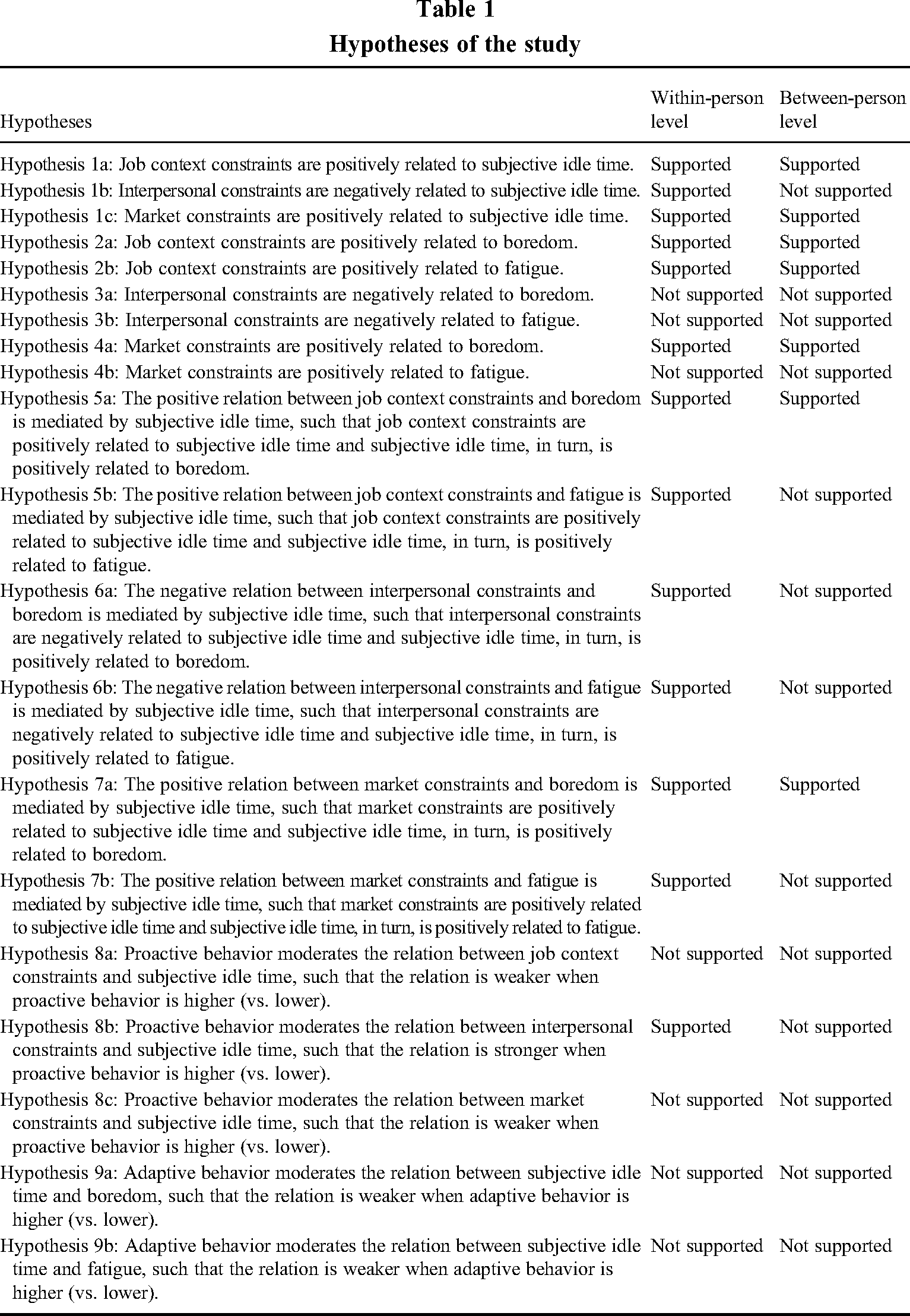
A first step in addressing these issue was taken by Schubert et al. (2023), who developed a conceptual model of idle time at work, including causes, consequences, and moderators (see Figure 1 and Table 1). Their propositions have so far not been tested empirically. The few existing studies on idle time at work focused on how it predicts consequences such as performance, health, and occupational well-being (Brodsky & Amabile, 2018; Lei et al., 2019; Zeschke & Zacher, 2023; Zeschke et al., 2024). The most extensive investigation was conducted by Lei et al. (2019), who published results of two studies—one including qualitative interviews and one daily diary study over five workdays. The researchers found that idle time is an aversive experience and that relaxation activities during idle time could buffer potential negative effects on well-being. This finding was supported by Zeschke et al. (2024), who found that the aversive experience of idle time is negatively related to affective states, but not to task satisfaction.
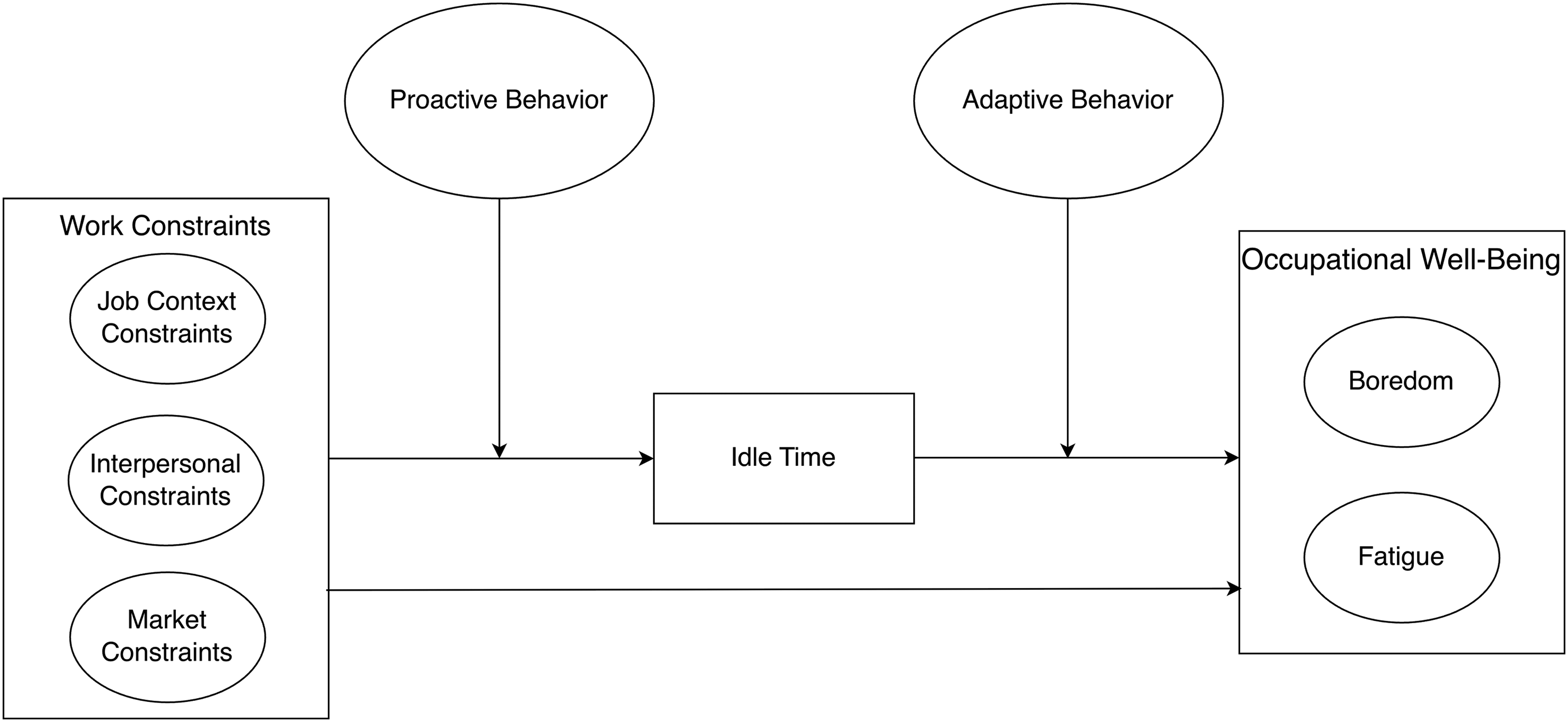
Hypothesized model of idle time antecedents, consequences, and moderating variables (adapted from Schubert et al., 2023).
Hypotheses of the study
Thus, we already have insights on how idle time is related to individual outcome variables. However, none of the studies focused on antecedents of idle time that are proposed in the conceptual model (i.e., work constraints; Schubert et al., 2023) and that represent an important starting point for preventing idle time and its negative consequences. Additionally, idle time is proposed as a mediating variable between work constraints and work-related outcomes (e.g., occupational well-being). This proposition has also not been investigated. With respect to moderator variables, studies have focused on specific activities, such as relaxation or competence-related activities, that individuals engage in during idle time (Lei et al., 2019; Zeschke et al., 2024), rather than on proactive and adaptive strategies in general, as suggested in the conceptual model. Knowledge of these moderators has implications for our understanding of what individuals and organizations can do to influence the occurrence and consequences of idle time. Moreover, there is no clear understanding of how idle time may act at the within-person and between-person levels. In the conceptual model of idle time (Schubert et al., 2023), there is no separation into within- and between-person effects. However, this differentiation is important as it has different implications for future research and managerial practices. Specifically, idle time might occur at the within-person level, such that idle time changes dynamically over time. Furthermore, it might occur at the between-person level, suggesting that idle time is experienced differently by individuals or strongly connected to specific job types.
Therefore, the aim of this study is to empirically test and refine the conceptual model of idle time with data from 19 measurement waves from a longitudinal study (March 2020–December 2021), using linear mixed-effect models. We focus on both antecedents, including different kinds of work constraints, and consequences of idle time, including different kinds of occupational well-being. We acknowledge that previous studies have already found negative relations between idle time and occupational well-being, such as boredom and fatigue. However, the conceptual model proposes relations between work constraints and well-being, mediated by idle time, which has not yet been investigated. Moreover, moderators proposed by the conceptual model, including proactive and adaptive behaviors, have not been tested so far.
The present study contributes to the literature on idle time at work and addresses questions unanswered in previous research in several ways. First, we empirically test the conceptual model of idle time by Schubert et al. (2023). We show that it is worthwhile not only to investigate the consequences of idle time (as has been done in other empirical studies, e.g., Brodsky & Amabile, 2018; Lei et al., 2019; Zeschke & Zacher, 2023; Zeschke et al., 2024), but also its antecedents and moderators of its relations with other variables. This provides a starting point for preventing idle time and its negative consequences for individuals and organizations.
Second, we refine the model by suggesting a distinction between different kinds of work constraints (i.e., job context, interpersonal, and market constraints). Previously, work constraints have been considered as a homogeneous construct. However, distinguishing work constraint dimensions offers the opportunity to specifically influence unfavorable working conditions and their consequences, depending on their characteristics (Liu et al., 2010).
Third, we expand the conceptual model of idle time by incorporating effects across levels. This not only contributes to a conceptual understanding of idle time but also facilitates the development of recommendations for managerial practice and work design. To illustrate, idle time at the within-person level may be temporary and approached by strategic work design, such as flexible work schedules or the use of individual strategies. In contrast, idle time at the between-person level would indicate a more stable or chronic phenomenon, suggesting that idle time is either job-related or dependent on an overall individual appraisal of these periods.
Theoretical Background
The Conceptual Model of Idle Time
Idle time is defined as a work situation during which employees are unable to perform work-related tasks due to factors beyond their control (Brodsky & Amabile, 2018). For example, a service hotline employee is unable to process services in the absence of calls. Idle time has been described as an unfavorable experience at work that should be prevented if possible (Lei et al., 2019). Schubert et al. (2023) postulated that idle time is a period at work when goal-directed behavior is thwarted. They emphasized that objective and subjective idle time need to be differentiated. According to these researchers, objective idle time is a work situation in which goal-directed work behavior is hindered and employees are unable to continue their work, regardless of how they experience this situation. In contrast, subjective idle time refers to the individual experience of being hindered in performing work-related tasks.
In their conceptual paper, Schubert et al. (2023) outlined propositions that help understand how subjective idle time at work occurs, how it influences work-related outcomes, and how these relations are moderated by individual behaviors (see Figure 1). Their first proposition suggested positive relations between work constraints and subjective idle time (Proposition 1).
Second, Schubert et al. (2023) suggested that work constraints will diminish occupational well-being and that these relations will be mediated by the subjective experience of idle time (Propositions 2 and 3). A few studies investigated how idle time is related to work-related outcomes (Brodsky & Amabile, 2018; Lei et al., 2019; Zeschke & Zacher, 2023; Zeschke et al., 2024, 2025). However, none of these studies focused on the mediating role of subjective idle time in the relations between work constraints and occupational outcomes.
Third, the conceptual model proposes proactive and adaptive behaviors as moderators of the links between subjective idle time and its causes and consequences (Propositions 4 and 5; Schubert et al., 2023). A few studies investigated recovery experiences during idle time (Lei et al., 2019; Zeschke et al., 2025), but none focused on proactive behavior as a moderator of the relations between work constraints and subjective idle time or adaptive behavior as a moderator of the relation between subjective idle time and well-being as proposed by Schubert et al. (2023).
Overall, none of the above-described propositions has been tested empirically. This study is the first to empirically test the conceptual model of idle time, including antecedents of idle time, its mediating role for well-being, and moderators of these relations at different points (see Figure 1 and Table 1). Finally, Schubert et al. (2023) did not make any propositions on how these relations will differ across levels. Thus, we further broaden the conceptual model of idle time by examining differential effects at the within-person and the between-person levels.
Work Constraints and Subjective Idle Time
In the conceptual model, idle time has been described as a consequence of an interrupted action regulation process, for instance, by the occurrence of regulation problems (Schubert et al., 2023). Regulation problems, as defined by action regulation theory, refer to work characteristics that interfere with action regulation (i.e., the achievement of work-related goals; Frese & Zapf, 1994; Zacher & Frese, 2018)—more commonly referred to as work constraints, which represent a frequent job stressor that inhibits goal-directed behavior (Pindek & Spector, 2016).
In the conceptual model of idle time, all kinds of work constraints are posited to lead to idle time. Indeed, in most research, work constraints have been conceptualized as unidimensional (Peters & O'Connor, 1980). However, there is some evidence suggesting that work constraints can be disaggregated into several broader dimensions (Brown & Mitchell, 1993; Liu et al., 2010). Work constraints were originally conceptualized as eight distinct variables (Pindek et al., 2019). Liu et al. (2010) proposed a distinction between job context constraints (i.e., physical hindrances in the environment of the workplace) and interpersonal constraints (i.e., constraints caused by other people in the workplace). They noted that outcomes of work constraints may differ depending on the types of constraints and that an aggregated score may blur these effects (Liu et al., 2010). Job context constraints include obstacles that impede the action regulation process, such as missing information, organizational rules, or a lack of material. What these examples have in common is that employees are unable to fulfil work tasks. This is in line with the overall work constraints construct expected by Schubert et al. (2023), which would be positively related to subjective idle time. We agree with this proposition, while refining it by adding further dimensions of constraints: interpersonal and market constraints.
Interpersonal constraints are those that occur because of other people, including interruptions by others or inadequate help from others (Jett & George, 2003; Liu et al., 2010). Research suggests that interpersonal constraints are associated with higher levels (instead of lower levels) of workload as expected during idle time (Baethge et al., 2015; Spector & Jex, 1998). For example, interruptions by others can lead to an increase in workload, as employees must manage both their primary task and the interrupting task, often switching between the two (Baethge & Rigotti, 2013; Brixey et al., 2007). Similarly, inadequate help from others may result in employees having to take responsibility for both their own tasks and those of others. Thus, in contrast to the conceptual model of idle time, we hypothesize that interpersonal constraints are negatively related to subjective idle time as they do not hinder task fulfillment.
Finally, qualitative interviews have shown that idle time may be caused by a lack of customers or a lack of demand for products or services (Schubert et al., 2023). It is possible that some of these constraints may be included in one of the other two categories of work constraints (Liu et al., 2010). For instance, a shortage of clients may be considered an external circumstance in the working environment or an interpersonal constraint because it is caused by others (e.g., missing clients). However, we consider these constraints especially relevant in the context of idle time. Therefore, we add a third category of constraints—market constraints. We suggest that market constraints are antecedents of idle time as they inevitably reduce the availability of work tasks. We base our hypotheses on the conceptual model of idle time but refine it by hypothesizing differential effects for job context, interpersonal, and market constraints.
Work Constraints and Well-Being Outcomes
Schubert et al. (2023) proposed that work constraints are negatively related to well-being and performance and that these relations are mediated by the subjective experience of idle time. They explained the negative relations of work constraints and well-being through an incomplete action regulation process, a lack of goals, and a decrease in resources due to the occurrence of work constraints (Baethge et al., 2015; Zacher & Frese, 2018). In a meta-analysis investigating the relations between constraints and strain/well-being, it was found that work constraints were most strongly associated with negative emotions, such as boredom, frustration, and exhaustion (Pindek & Spector, 2016). These assumptions received preliminary support from the results of a series of qualitative interviews in the context of idle time, which suggest that fatigue, feelings of frustration, and boredom are common consequences of work constraints and follow idle time (Schubert et al., 2023). Fatigue is defined as a state of depleted energy resources (Grech et al., 2009), whereas boredom refers to a negative, low-arousal state resulting from insufficiently stimulating work conditions (Harju et al., 2014). Both boredom and fatigue are suggested to occur due to quantitative work underload (Fisher, 1993; Grech et al., 2009), which can occur due to job context and market constraints as they disrupt the work flow and hinder the achievement of work-related goals (Frese & Zapf, 1994). Consequently, such disruptions are associated with increased levels of negative affect (i.e., boredom) and exhaustion (i.e., fatigue), as employees struggle to maintain engagement and productivity in the absence of meaningful tasks. Following the second proposition of Schubert et al. (2023), we suggest that job context and market constraints are both positively associated with boredom and fatigue. Although some evidence already supports this proposition, the role of subjective idle time in this relation has not yet been examined. Building on the framework proposed by Schubert et al. (2023), we interpret the suggested effects as total rather than direct effects, as they account for the mediating role of subjective idle time. Specifically, job context and market constraints are positively associated with subjective idle time, which, in turn, is positively linked to boredom and fatigue.
In contrast, interpersonal constraints, classified as constraints caused by others, appear to have distinct theoretical and empirical implications. For example, research on interruptions suggests that these constraints are more likely to increase fatigue but not boredom (Baethge & Rigotti, 2013; Baethge et al., 2015; Zacher & Frese, 2018). We argue that interpersonal constraints contribute to an increase in work tasks, thereby keeping employees engaged and reducing the likelihood of boredom. Conversely, increased workload is associated with heightened fatigue (Baethge & Rigotti, 2013; Baethge et al., 2015; Zijlstra et al., 1999). However, when considering total effects, we propose that interpersonal constraints are negatively associated with both boredom and fatigue due to their impact on subjective idle time. Specifically, interpersonal constraints increase task availability, which reduces subjective idle time. Lower levels of subjective idle time are subsequently linked to decreased boredom and fatigue, resulting in a negative total effect between interpersonal constraints and these outcomes.
Building on the second proposition of Schubert et al. (2023), we hypothesize differential effects of work constraints on boredom and fatigue, while accounting for subjective idle time.
Subjective Idle Time as a Mediator Between Work Constraints and Well-Being Outcomes
Finally, one of the propositions in the conceptual model of idle time is that subjective idle time mediates the relations between work constraints and boredom and fatigue (Schubert et al., 2023). Results of qualitative interviews with employees on the consequences of perceived idle time showed that boredom and fatigue are common outcomes of idle time (Lei et al., 2019; Schubert et al., 2023). Some researchers support the idea of a direct relation, whereas others suggest that negative reactions occur only when work situations are perceived as unpleasant (Pindek & Spector, 2016; Westgate & Wilson, 2018). For instance, Zeschke et al. (2024) examined idle time through the lens of affective events theory (AET; Weiss & Cropanzano, 1996) and argued that negative work events do not always lead to negative emotions. They found no total effects of objective idle time (classified as work event) on their hypothesized outcomes (affect and task satisfaction), whereas the mediation via subjective idle time (classified as situational appraisal) was significant. Further, research on boredom suggests that this negative affective state arises not only from external work characteristics, such as work constraints, but also from subjective components, such as feelings of idleness (Harju & Hakanen, 2016).
In the conceptual model of idle time, Schubert et al. (2023) argued that well-being is especially influenced by work constraints when individuals experience subjective idle time. Accordingly, we expect that the relations between work constraints and well-being outcomes are mediated by subjective idle time. More specifically, job context and market constraints should be positively associated with boredom and fatigue through subjective idle time, as these constraints increase subjective idle time, which in turn increases boredom and fatigue (Schubert et al., 2023). In contrast, interpersonal constraints should have negative relations with boredom and fatigue, as they reduce subjective idle time, which is positively linked to boredom and fatigue.
Proactive and Adaptive Behavior as Moderators
Schubert et al. (2023) proposed proactive and adaptive behavioral strategies to influence the indirect effects around subjective idle time. Proactive behavior refers to the initiation of change and is directed to the future, whereas adaptive behavior “reflects the degree to which individuals cope with, respond to, and/or support changes” (Griffin et al., 2007, p. 331) and helps to deal with uncertain work situations (i.e., idle time; Johnson, 2003; Pulakos et al., 2000). Both behaviors can be categorized as work performance behaviors, such that proactive behavioral strategies involve reorganizing tasks to enhance efficiency and adaptive behavioral strategies refer to an individual's adjustment to changing conditions (Griffin et al., 2007). Regarding idle time, proactive behavior might manifest as creating a to-do list for future tasks, and adaptive behavior could involve engaging in relaxation activities to use the time available for recovery. In the conceptual model of idle time, proactive behavior is expected to moderate the relations between work constraints and subjective idle time, whereas adaptive behavior is expected to influence the relations between subjective idle time and well-being outcomes.
According to action regulation theory, people actively react to anticipated changes in their work environments, such as subjective idle time (Zacher & Frese, 2018). In general, employees are motivated to shape their work environments and avoid the negative experience of idle time, even by performing tasks beyond their formal job duties (Lei et al., 2019; Zacher & Frese, 2018). Moreover, research shows that work constraints are positively related to proactive behavior by highlighting opportunities for improvement (Spychala & Sonnentag, 2011). Thus, we expect that proactive behavior moderates the relations between job context and market constraints and idle time, such that when proactive behavior is higher, the relations between work constraints and subjective idle time are weaker (less positive). This is in line with Schubert et al. (2023), who suggested that individuals actively shape their environment and engage in proactive behavior to buffer the relations between work constraints and subjective idle time.
In contrast, we expect proactive behavior to moderate the relation between interpersonal constraints and idle time, such that when proactive behavior is high, the relation between interpersonal constraints and subjective idle time is stronger (i.e., more negative). We argue that interpersonal constraints are associated with greater task availability, which can be further increased when individuals engage in proactive behavior (Griffin et al., 2007). For instance, employees who receive inadequate support from coworkers may act proactively and take on both their own tasks and those left incomplete by others. Thus, through their proactive behavior, employees may further expand their responsibilities, thereby increasing their overall workload (and reducing subjective idle time). Accordingly, higher levels of proactive behavior should strengthen the negative relation between interpersonal constraints and subjective idle time.
Schubert et al. (2023) further proposed that adaptive behavioral strategies can be employed to deal with subjective idle time if employees fail to engage in proactive strategies. Unlike proactive strategies, which aim to actively change the work environment, adaptive strategies involve adjusting one's behavior in response to environmental changes (Fay & Sonnentag, 2002; Kooij et al., 2020). Work constraints, and subsequently subjective idle time, can be considered such environmental changes. Instead of proactively trying to shape their environment, employees might try to cope with the negative experience of idle time (Zacher & Frese, 2018). Research suggests that individuals would rather engage in any activity instead of experiencing idle time (Lei et al., 2019; Wilson et al., 2014). For example, Wilson et al. (2014) found that people preferred to give themselves electric shocks while confronted with involuntary waiting time. In a diary study, Lei et al. (2019) found that relaxation activities during idle time were beneficial for well-being, whereas the effects of other downtime activities were more ambiguous. In a longitudinal study, this result was replicated as relaxation during idle time was found to be associated with decreased exhaustion and increased work engagement (Zeschke et al., 2025).
Based on Schubert et al.'s proposition, we suggest that adaptive behavior buffers the negative relation between subjective idle time and well-being.
Idle Time Across Within- and Between-Person Levels
In the conceptual model of idle time, Schubert et al. (2023) did not address theoretically how the proposed processes might differ across the within- and between-person levels. Although there are findings on how idle time functions across multiple levels, these have not yet been consistently integrated empirically. Zeschke and Zacher (2023) found no differential effects across levels. Results were the same for both levels: Idle time was positively related to boredom at work, and boredom was associated with lower levels of job satisfaction, higher levels of counterproductive work behavior, and higher turnover intentions. They interpreted effects at the within-person level as temporary idle time and effects at the between-person level as chronic idle time. In contrast, Zeschke et al. (2025) found and discussed differential effects. Results showed that chronic idle time had stronger negative effects on well-being, whereas temporary idle time left more possibilities to engage in recovery strategies. This supports the idea that differential effects have various implications for managerial practice and future research on idle time. However, we still need to learn how idle time occurs across levels (i.e., antecedents) and acts as a mediator between work constraints and well-being outcomes. Effects on both levels are plausible: At the within-person level, periods of higher-than-usual work constraints are likely to produce higher levels of idle time and lower levels of well-being, whereas higher-than-usual levels of individual strategy use may moderate these effects. In addition, individuals experiencing higher levels of work constraints than others may also be confronted with higher levels of idle time than others and lower levels of well-being than others and so on. Moreover, effects at each level can have different implications. For example, work constraints that predict idle time at the between-person level might imply that idle time is something inherent to the job or reflecting overall bad work design, whereas at the within-person level, it might mean that idle time fluctuates from time to time and can be influenced by dynamic work design and strategies.
Method
Transparency and Openness
All data, R code to replicate the analyses, and complete results are available in the online supplemental materials: https://osf.io/tnxk7/. The data used were collected as part of a larger longitudinal data collection effort. Several articles based on the same dataset have been published (see Transparency Table S1 in the online supplemental materials). Each of these articles addresses different research questions and includes mostly different, non-overlapping substantive variables than the current study. However, fatigue has previously been used in two studies with completely different research questions and hypotheses and fewer waves (see Table S2 for a comparison of hypotheses), and proactive and adaptive behavior have previously been used in two studies as outcomes based on completely different research questions (see Table S2).
Study Design, Procedure, and Participants
All procedures performed in this study, which involved human participants, were in accordance with the ethical standards of the 1964 Helsinki Declaration and its later amendments. Approval was granted by the ethics board of Leipzig University (Protocol#: 2019.06.27_eb_17). We conducted a longitudinal study over the course of 2 years. The first wave of data was collected at the beginning of December 2019 (time [T]1). We had originally planned to collect data every 3 months. However, starting with the second measurement wave, we adjusted the time lag between each measurement point to 1 month, resulting in measurements at the beginning of each month starting in March 2020 (T2) and ending in December 2021 (T23). 1 A professional panel company, which is ISO 20252:2019 certified, was contracted to recruit and compensate participants. A full-panel design was used, with work constraints, idle time, boredom, fatigue, and proactive and adaptive behavior each measured at all time points.
Participation in the study was voluntary and anonymous, and all participants indicated their informed consent for participation in the study and the publication of results. To be included in the sample, participants had to be at least 18 years old and employed full time at each measurement wave. Data were collected in Germany. Participants’ age ranged from 18 to 69 years with a mean age of 45.27 years (SD = 10.84), and 43.7% were female. In terms of educational level, the majority held intermediate secondary school (43.6%), upper secondary school (24.3%), or college/university or technical college diplomas (31.4%).
We included all participants who had provided responses to our focal variables on at least one measurement occasions (n = 1428). We identified three outliers, but removing them did not substantially change means, variances, or principal component analysis structure, indicating they were not influential on the data. Accordingly, we chose to retain these cases in the final dataset. Because we lagged the mediator by 1 month and the outcome variables by 2 months, the latest measurement occasion without missing values was T21. Moreover, we had to exclude all data from T1 and T2 because of the different time frame (3 months instead of 1 month). Our final dataset for hypotheses testing included data from T3 to T21, resulting in a sample of 1428 employees with a total of 14,146 observations over 19 waves. To test for systematic patterns of attrition over time, we compared the panel of complete cases until T21 (n = 234) with the panel of incomplete cases (n = 2089) on key demographic and substantive variables (see Tables S3 and S4 in the online supplemental materials). We conducted t-tests and chi-square tests on both demographic and substantive variables and found that only gender differed significantly between stayers and leavers (χ2= 6.48, p < .05). We also conducted a binary logistic regression model to predict respondent status (coded as 0 = leaver, 1 = stayer) from demographic and substantive variables. Results showed that only R2Tjur = .018, or 1.8%, of the variance is explained by attrition over time. Moreover, we calculated individual propensity scores, which reflect each participant's estimated probability of providing complete data based on their baseline characteristics. These scores were obtained from the logistic regression model predicting study completion and were used to assess potential attrition bias. The mean propensity score was M = 0.16, with a median of 0.15. There was a high overlap in propensity scores between stayers and leavers (see Figure S1 in the online supplemental materials), indicating that the two groups are comparable (Hashimoto & Yasunaga, 2022). Thus, we are comfortable stating that attrition was not of great concern in this study.
Measures
As no German-language versions of most of the measures of our focal constructs existed when the study was conducted (exceptions are mentioned below), we translated the English-language original items into German and subsequently back-translated the German items into English with the help of an English native speaker highly proficient in the German language, as well as a German native speaker highly proficient in English. By using the established translation–backtranslation procedure (Brislin, 1970), we obtained German items, which can be found in the online supplemental materials (https://osf.io/tnxk7/), that correspond closely to the original English items.
Work constraints
Work constraints were measured using the validated German version of the 11-item organizational constraints scale 2 by Spector and Jex (1998) and two self-developed items. The items in the Spector and Jex (1998) scale cover several types of constraints, such as missing information, technical breakdowns, or lack of materials and supplies. As the scale does not include items relating to a lack of customers or demand for products or services, we added these two items because we considered them to be particularly important in the context of idle time (Lei et al., 2019; Schubert et al., 2023). Participants were asked to rate the extent to which they experienced each constraint in the last month (T3–T23). The 7-point scale ranged from 1 = never to 7 = always. As we expected the constraint scale to be multidimensional, we assumed three distinct factors in our analyses: two according to Liu et al. (2010; job context constraints measured with seven items, and interpersonal constraints measured with four items) and one factor measured with two items referring to market constraints. We tested this multidimensionality by conducting multilevel confirmatory factor analyses (see Results section). McDonald's omega for the subscales ranged from ω = .79 to ω = .96 at the within-person level and from ω = .53 to ω = .84 at the between-person level.
Subjective idle time
We measured subjective idle time with a single-item measure based on research by Brodsky and Amabile (2018). We provided participants with a brief definition of idle time as involuntary periods at work of at least 15 min, during which it is impossible to work for the organization (i.e., fulfilling work-related tasks) for reasons beyond personal control. We explicitly pointed out that idle time is not a break. Next, participants were asked to rate the extent to which they experienced periods of idle time in the last month (T3–T23; Item 2). The 7-point scale ranged from 1 = never to 7 = always. The average test–retest reliability for this item was r = .58. Additionally, we measured subjective idle time with a single item referring to the average duration of idle time per week. We asked participants to report the number of hours and minutes they experienced idle time on average in the last month per week. We decided to include only the single item measuring idle time frequency due to the low test–retest reliability of r = .33 of the duration item. Reliability values between .40 and .75 are defined as good, which is why we decided to use idle time frequency as a single item measure with a good reliability (Matheson, 2019).
Boredom
To measure boredom, we used four items from the job boredom scale by Lee (1986). Example items are “I got bored with my work” and “There were long periods of boredom on the job.” Participants were asked to provide their answers on a 7-point scale ranging from 1 = never to 7 = always in the past month (T3–T23). McDonald's omega was ω = .88 at the within-person level (ω = .84 at the between-person level).
Fatigue
Fatigue was measured with nine items from the work fatigue inventory (Frone & Tidwell, 2015). We used the three highest loading items from each of the physical, mental, and emotional work fatigue subscales. Participants were asked how often they felt, for example, “physically exhausted,” “mentally drained,” or “emotionally worn out” in the past month (T3–T23) on a 7-point scale ranging from 1 = never to 7 = always. We built a mean fatigue score from these items. McDonald's omega was ω = .93 at the within-person level and ω = .89 on the between-person level.
Proactive and adaptive behavior
To measure proactive and adaptive behaviors, we used the proactive and adaptive task performance subscales from Griffin et al. (2007), which are representative for proactive and adaptive behaviors proposed by Schubert et al. (2023). Proactive performance encompasses items reflecting employees’ initiation of action towards an improvement of the working environment, for instance, “I initiated better ways of doing my core tasks.” Adaptive performance reflects individuals’ adaptation to a changing working environment, for instance, “I adapted well to changes in my core tasks.” Participants were asked how often they showed each of the listed behaviors in the past month (T3–T23) on a 7-point scale ranging from 1 = never to 7 = always. For proactive behavior, McDonald's omega was ω = .85 at the within-person level and ω = .97 on the between-person level. For adaptive behavior, McDonald's omega was ω = .77 at the within-person level and ω = .85 between persons.
Results
Descriptive statistics, intercorrelations, and factor analyses
Descriptive statistics and intercorrelations among the study variables are presented in Table 2. A first step in our modelling process was to separate the different dimensions of work constraints via confirmatory factor analysis (CFA). We expected to distinguish three different work constraints factors: two according to Liu et al. (2010) and one factor for the two items we added (market constraints). Additionally, we wanted to ensure the factor structure of the other multiple-item scales, including boredom, fatigue, proactive behavior, and adaptive behavior. We compared three factor structures with a multilevel CFA framework using the {lavaan} package for R with a robust maximum likelihood estimator and reported robust variants of fit indices in support of model fit (Rosseel, 2012). Accordingly, we tested one model with one factor for each construct (i.e., work constraints, boredom, fatigue, proactive behavior, and adaptive behavior). We then used a stepwise approach, gradually increasing the number of work constraints factors. The third model included the expected seven-factor solution (job context constraints, interpersonal constraints, market constraints., boredom, fatigue, proactive behavior, and adaptive behavior). The market constraint factor consisted of two items for which we restricted the factor loadings to equality to allow for model identification (Kenny & Milan, 2012). Fit measures of this solution showed generally satisfactory fit (χ2 = 50,145.95, df = 889, p < .001, comparative fit index [CFI]Robust = .837, Tucker–Lewis index [TLI]Robust = .818, root mean square error of approximation [RMSEA]Robust = .062, standardized root mean square residual [SRMR]Within = .042, SRMRBetween = .083); however, the CFI and TLI were somewhat low by conventional “rule-of-thumb” standards (Hu & Bentler, 1999). Comparison of the models suggested a significant better fit for the seven-factor solution compared to the other two models (see Table S5 for factor loadings and Table S6 for model comparison in the online supplemental materials). Thus, we continued our hypothesis tests with three different work constraints factors.
Within- and between-person descriptive statistics and correlations between variables
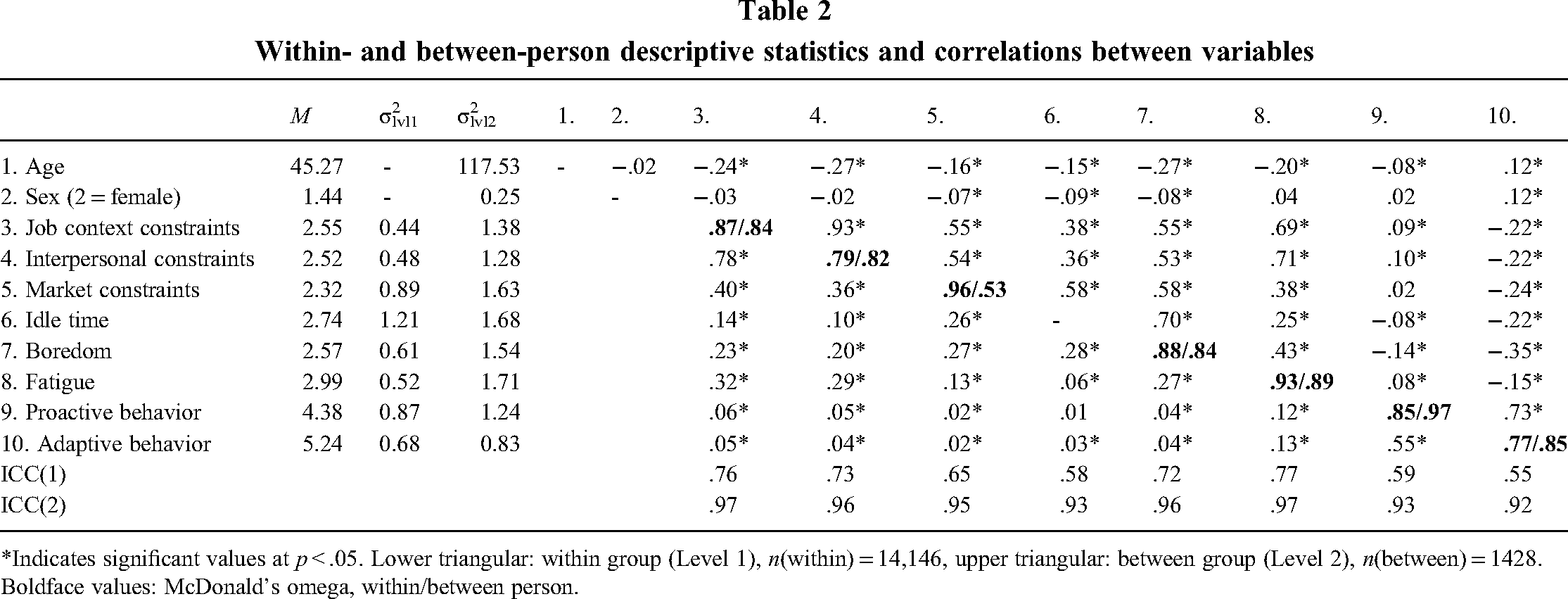
*Indicates significant values at p < .05. Lower triangular: within group (Level 1), n(within) = 14,146, upper triangular: between group (Level 2), n(between) = 1428. Boldface values: McDonald's omega, within/between person.
Measurement invariance
A second step in modeling longitudinal relations is to establish measurement invariance or “equivalence” over time. To do so, we specified configural (free factor loadings) and metric (invariant factor loadings) equivalence for each of the work constraints factors (i.e., job context constraints, interpersonal constraints, market constraints), boredom, fatigue, proactive behavior, and adaptive behavior. It is necessary to establish the equivalence of measurement models and factor loadings so that we can ensure that comparisons on the variables are valid over time (van de Schoot et al., 2012). The results are shown in Table S7 in the online supplemental materials. There was no significant change of the fit for most latent variables, when factor loadings were constrained to be equal over time, p(Constraints) = .001, p(Boredom) = .145, p(Fatigue) = .302, p(Proactive/Adaptive) = .490. Additionally, changes in CFI, TLI, RMSEA, and SRMR were below the recommended cutoff values: ΔCFI of greater than −0.010, ΔRMSEA of smaller than 0.015, and ΔSRMR of smaller than 0.030 (Chen, 2007; Cheung & Rensvold, 2002). In summary, the results show that metric invariance (i.e., equivalent factor loadings) was upheld.
Linear mixed-effect mediation models
To test our hypotheses, we specified linear mixed models using the {lme4} package and the mediation models with the {mediation} package 3 for the R statistical environment (Bates et al., 2015; Tingley et al., 2014). We specified random-intercept and fixed-slope models because of convergence issues when simultaneously freeing random intercepts and random slopes. We centered the predictors and the mediator using person mean centering and grand mean person centering. We lagged the mediator by 1 month and the outcome variables by 2 months.
Linear mixed-effect model results
Results are shown in Table 3 and Figures 2 and 3. We report unstandardized estimates in the Results section. For the linear mixed-effect models, we calculated marginal and conditional R2 values following the method of Nakagawa and Schielzeth (2013) and Nakagawa et al. (2017). The boredom model explained 59.3% of the variance in idle time and 73.4% of the variance in boredom; of these, 20.3% of the variance is attributed to the fixed effects of idle time and 44.3% to the fixed effects of boredom. The fatigue model explained 59.3% of the variance in idle time and 79.1% of the variance in fatigue; of these, 20.3% of the variance is attributed to the fixed effects of idle time and 39.2% to the fixed effects of fatigue. The hypothesis tests and results will be reported in more detail below.
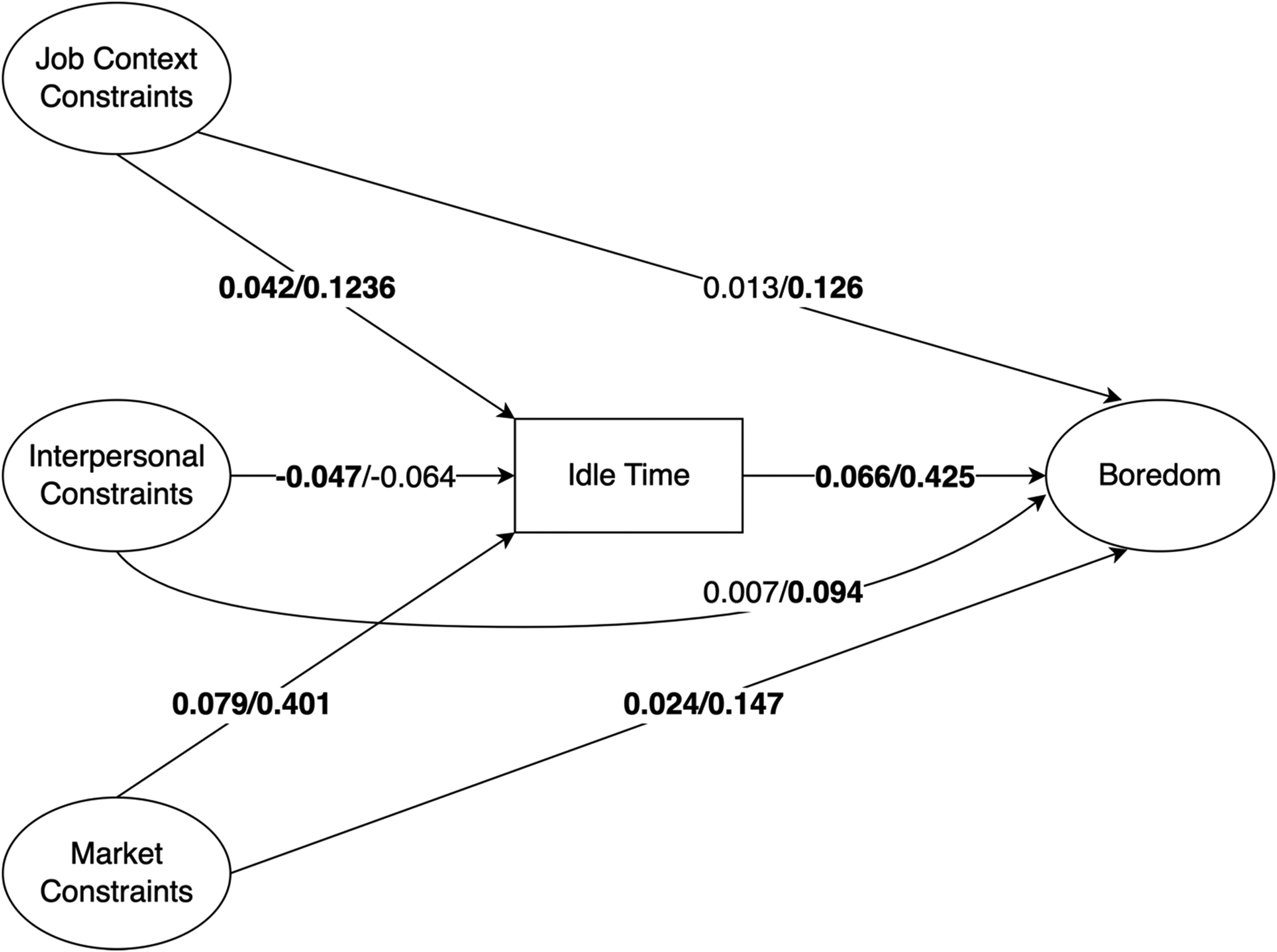
Results of the mediation model for boredom.
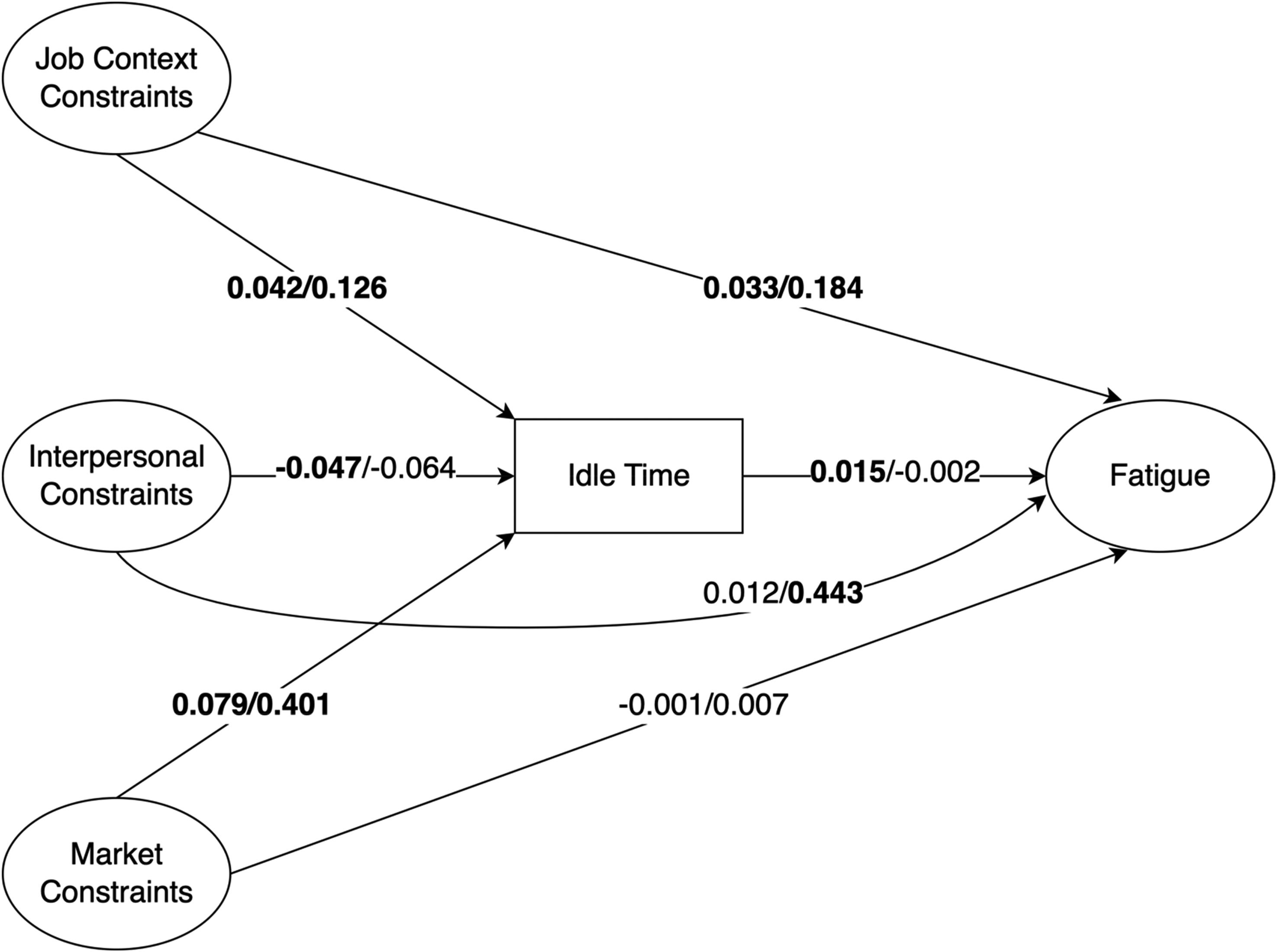
Results of the mediation model for fatigue.
Unstandardized coefficients and quasi-Bayesian confidence intervals of LMM for testing main and mediation effects
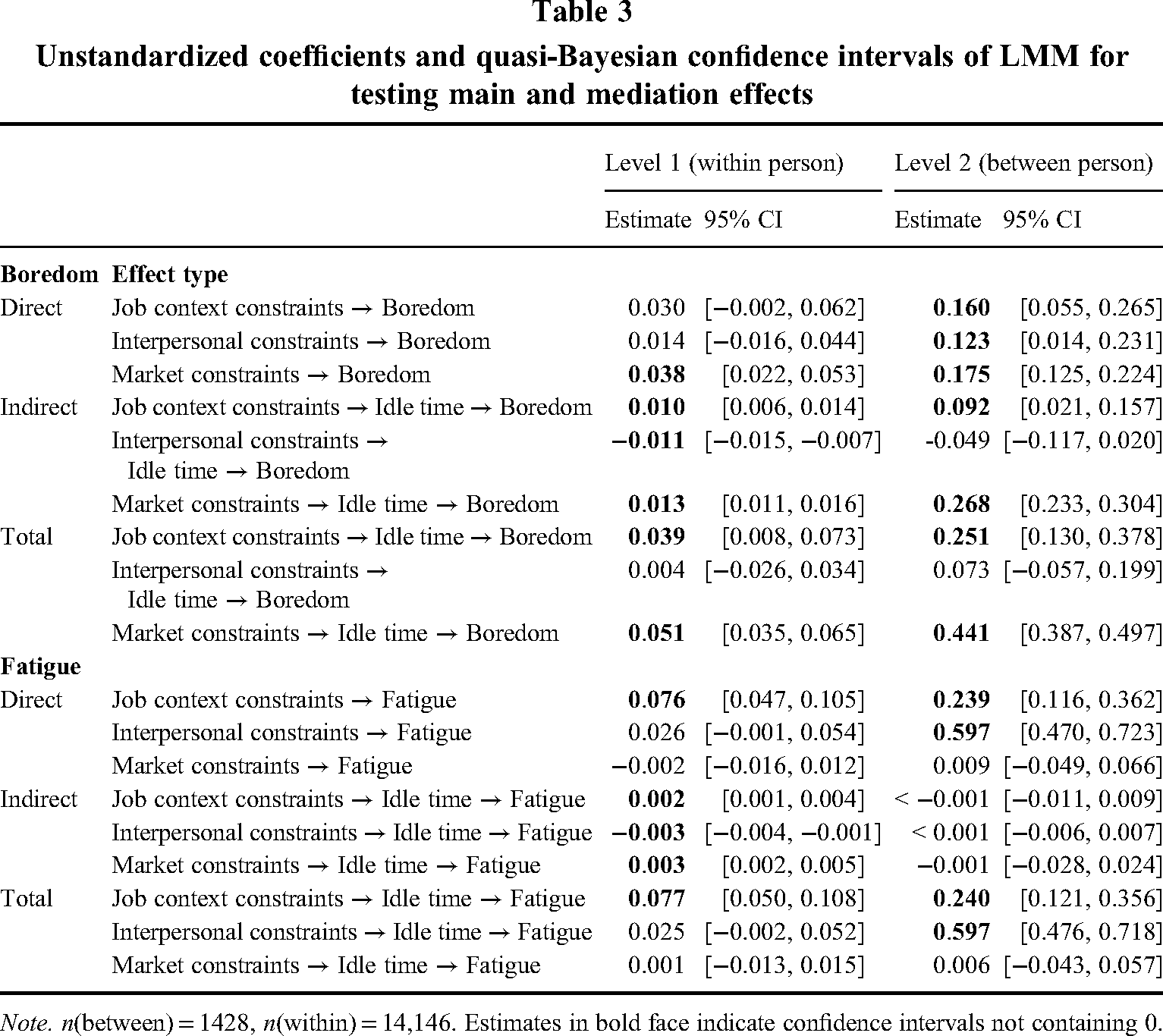
Note. n(between) = 1428, n(within) = 14,146. Estimates in bold face indicate confidence intervals not containing 0.
Job context constraints → idle time → boredom and fatigue
Within-person effects
We found a positive effect of job context constraints on idle time (b = 0.108, p < .001, CI = [0.064, 0.153]) at the within-person level. This is consistent with Hypothesis 1a, which suggested a positive relation between job context constraints and idle time. There was no significant direct effect of job context constraints on boredom at the within-person level (b = 0.030, p = .065, CI = [−0.002, 0.062]). The total effect of job context constraints on boredom was significant at the within-person level (b = 0.039, p = .014 CI = [0.008, 0.073]), which is in line with Hypothesis 2a. The indirect effect of job context constraints on boredom through idle time was significant at the within-person level (b = 0.010, p < .001, CI = [0.006, 0.014]). This finding suggests that job context constraints are positively related to boredom via idle time, which is consistent with Hypothesis 5a.
For fatigue, there was a direct effect of job context constraints on fatigue at the within-person level (b = 0.076, p < .001, CI = [0.047, 0.105]). The total effect of job context constraints on fatigue was significant at the within-person level (b = 0.077, p < .001, CI = [0.050, 0.108]), which supports Hypothesis 2b. The indirect effect of job context constraints on fatigue through idle time was significant at the within-person level (b = 0.002 p < .001, CI = [0.001, 0.004]). This finding suggests that job context constraints are positively related to fatigue via idle time, which is consistent with Hypothesis 5b.
Between-person effects 4
We found a significant effect of job context constraints on idle time at the between-person level (b = 0.181, p = .008, CI = [0.049, 0.329]). This is consistent with Hypothesis 1a, which suggests a positive relation between job context constraints and idle time. There was a direct effect of job context constraints on boredom at the between-person level (b = 0.160, p = .003, CI = [0.055, 0.265]). The total effect of job context constraints on boredom was significant (b = 0.252, p < .001, CI = [0.130, 0.378]), which is in line with Hypothesis 2a. The indirect effect of job context constraints on boredom through idle time was significant (b = 0.092, p = .012, CI = [0.021, 0.157]). This finding suggests that job context constraints are positively related to boredom via idle time, which is consistent with Hypothesis 5a.
For fatigue, there was a direct effect of job context constraints on fatigue at the between-person level (b = 0.239, p < .001, CI = [0.116, 0.362]). The total effect of job context constraints on fatigue was significant (b = 0.240, p < .001, CI = [0.121, 0.356]), which supports Hypothesis 2b. The indirect effect of job context constraints on fatigue through idle time was not significant (b < −0.001, p = .980, CI = [−0.011, 0.009]). This finding is inconsistent with Hypothesis 5b, which suggested that job context constraints are indirectly related to fatigue via idle time.
Interpersonal Constraints → Idle Time → Boredom and Fatigue
Within-person effects
We found a negative relation between interpersonal constraints and idle time at the within-person level (b = −0.115, p < .001, CI = [−0.158, −0.073]). This is consistent with Hypothesis 1b, which suggested a negative relation between interpersonal constraints and idle time. There was no direct effect of interpersonal constraints on boredom at the within-person level (b = 0.014, p = .359, CI = [−0.016, 0.044]). The total effect of interpersonal constraints on boredom was not significant at the within-person level (b = 0.004, p = .780, CI = [−0.026, 0.034]), which is inconsistent with Hypothesis 3a. The indirect effect of interpersonal constraints on boredom through idle time was significant (b = −0.011, p < .001, CI = [−0.015, −0.007]), which supports Hypothesis 6a.
For fatigue, there was no direct effect of interpersonal constraints on fatigue at the within-person level (b = 0.026, p = .058, CI = [−0.001, 0.054]). The total effect of interpersonal constraints on fatigue was not significant (b = 0.025, p = .076, CI = [−0.002, 0.052]), which is inconsistent with Hypothesis 3b. The indirect effect of interpersonal constraints on fatigue through idle time was significant (b = −0.003, p < .001, CI = [−0.004, −0.001]), which supports Hypothesis 6b.
Between-person effects 5
We found no significant relation between interpersonal constraints and idle time at the between-person level (b = −0.095, p = .200, CI = [−0.240, 0.050]). This is inconsistent with Hypothesis 1b, which suggests a negative relation between interpersonal constraints and idle time. There was a direct effect of interpersonal constraints on boredom at the between-person level (b = 0.123, p = .027, CI = [0.014, 0.231]). The total effect of interpersonal constraints on boredom was not significant (b = 0.073, p = .252, CI = [−0.057, 0.199]), which is inconsistent with Hypothesis 3a. The indirect effect of interpersonal constraints on boredom through idle time was not significant (b = −0.049, p = .160, CI = [−0.117, 0.020]), which is inconsistent with Hypothesis 6a.
For fatigue, there was a direct effect of interpersonal constraints on fatigue at the between-person level (b = 0.597, p < .001, CI = [0.470, 0.723]). The total effect of interpersonal constraints on fatigue was significant (b = 0.597, p < .001, CI = [0.476, 0.718]) but positive, contradicting Hypothesis 3b, which proposes a negative relation between interpersonal constraints and fatigue. The indirect effect of interpersonal constraints on fatigue through idle time was not significant (b < 0.001, p = .972, CI = [−0.006, 0.007]), which is inconsistent with Hypothesis 6b.
Market Constraints → Idle Time → Boredom and Fatigue
Within-person effects
We found a positive relation between market constraints and idle time at the within-person level (b = 0.141, p < .001, CI = [0.120, 0.162]). This is consistent with Hypothesis 1c, which suggests a positive relation between market constraints and idle time. There was a direct effect of market constraints on boredom at the within-person level (b = 0.038, p < .001, CI = [0.022, 0.053]). The total effect of market constraints on boredom was significant (b = 0.051, p < .001, CI = [0.035, 0.065]), which supports Hypothesis 4a. The indirect effect of market constraints on boredom through idle time was significant (b = 0.013, p < .001, CI = [0.011, 0.016]). This result indicates that market constraints are positively related to boredom via idle time, which is in line with Hypothesis 7a.
In contrast, there was no direct effect of market constraints on fatigue (b = −0.002, p = .795, CI = [−0.016, 0.012]). The total effect of market constraints on fatigue was not significant (b = 0.001, p = .846, CI = [−0.013, 0.015]), which is inconsistent with Hypothesis 4b. The indirect effect of market constraints on fatigue through idle time was significant (b = 0.003, p < .001, CI = [0.002, 0.005]), which is in line with Hypothesis 7b.
Between-person effects
We found a positive relation between market constraints and idle time at the between-person level (b = 0.540, p < .001, CI = [0.482, 0.599]). This is consistent with Hypothesis 1c, which suggests a positive relation between market constraints and idle time. There was a direct effect of market constraints on boredom at the between-person level (b = 0.175, p < .001, CI = [0.125, 0.224]). The total effect of market constraints on boredom was significant (b = 0.441, p < .001, CI = [0.387, 0.497]), which supports Hypothesis 4a. The indirect effect of market constraints on boredom through idle time was significant (b = 0.268, p < .001, CI = [0.233, 0.304]). This result indicates that market constraints are positively related to boredom via idle time, which is in line with Hypothesis 7a.
In contrast, there was no direct effect of market constraints on fatigue at the between-person level (b = 0.009, p = .772, CI = [−0.049, 0.066]). The total effect of market constraints on fatigue was not significant (b = 0.006, p = .816, CI = [−0.043, 0.057]), which is inconsistent with Hypothesis 4b. The indirect effect of market constraints on fatigue through idle time was not significant (b = −0.001, p = .976, CI = [−0.028, 0.024]), which is inconsistent with Hypothesis 7b.
Moderation Models
To test our moderation hypotheses, proactive behavior was treated as a moderator of the relation between constraints and idle time, while adaptive behavior was treated as a moderator of the relations between idle time and boredom and between idle time and fatigue. Results are shown in Table 4 and Figure 4. There were no significant moderation effects with one exception. There was a significant interaction effect between interpersonal constraints and proactive behavior at the within-person level (b = −0.059, p = .012, CI = [−0.105, −0.013]). Higher values in proactive behavior were associated with a stronger negative relation between interpersonal constraints and idle time (blow = −0.068, p = .038: bmedium = −0.117, p < .001; bhigh = −0.166, p < .001). This is in line with Hypothesis 8b, which suggested that higher levels of proactive behavior strengthen the negative relation between interpersonal constraints and idle time. The Johnson–Neyman technique showed that for proactive behavior values (person mean centered) of −0.80 and higher, the slope of interpersonal constraints on idle time is significant (p < .05; see Figure 5).
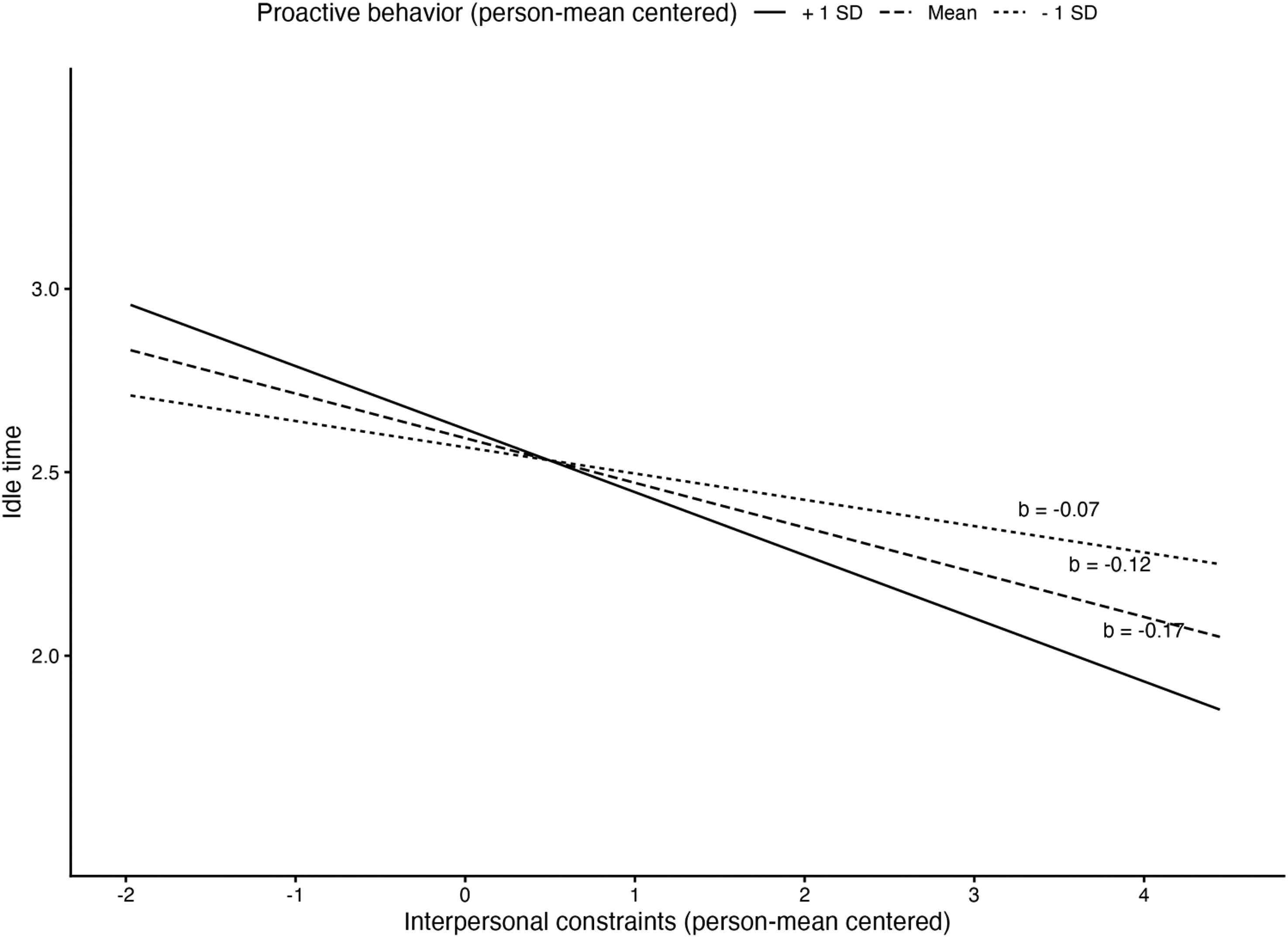
Relation between interpersonal constraints and idle time moderated by proactive behavior.
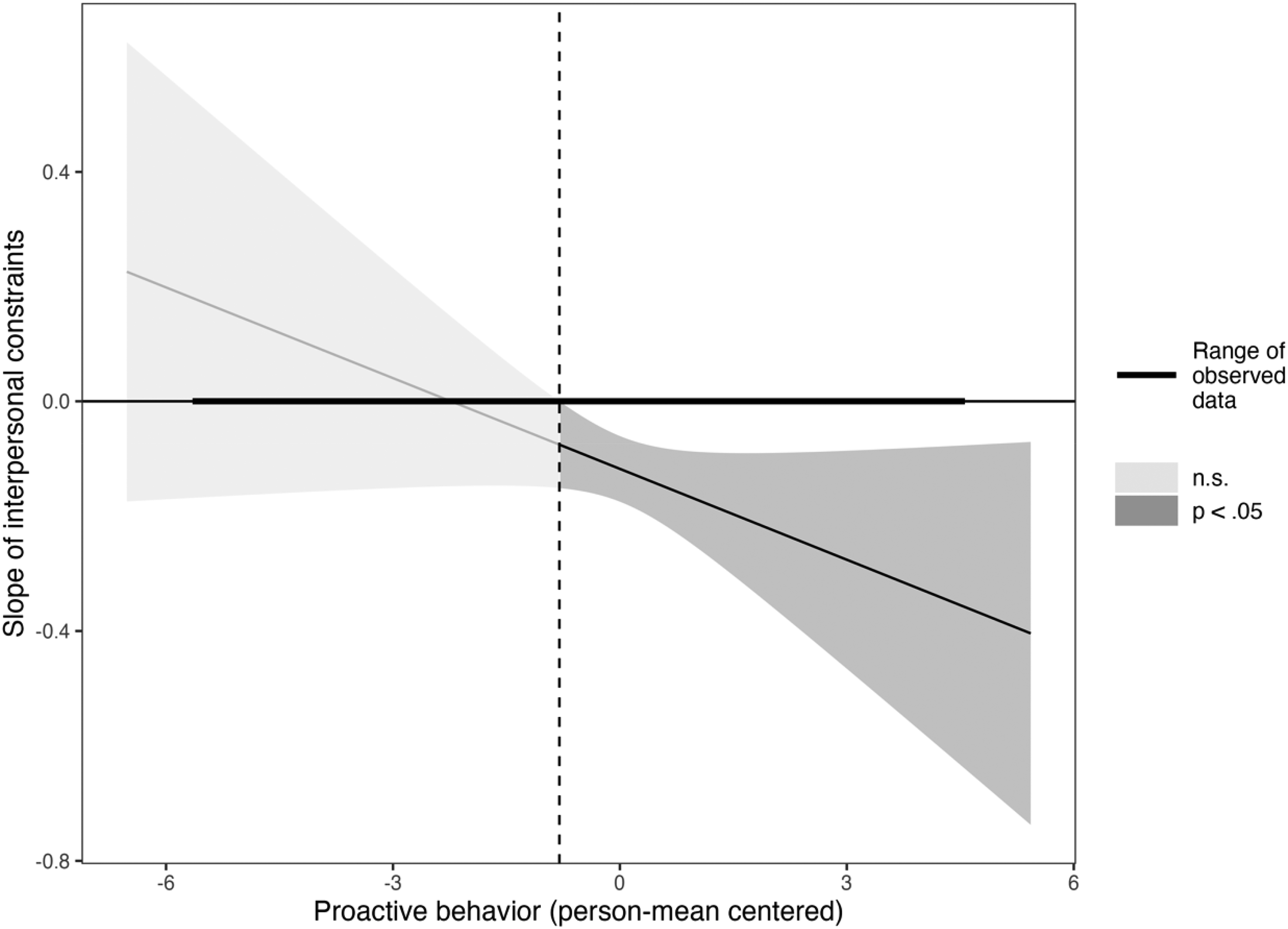
Johnson–Neyman plot of the significance of interpersonal constraints on subjective idle time in relation to proactive behavior
Results of the moderated linear mixed models
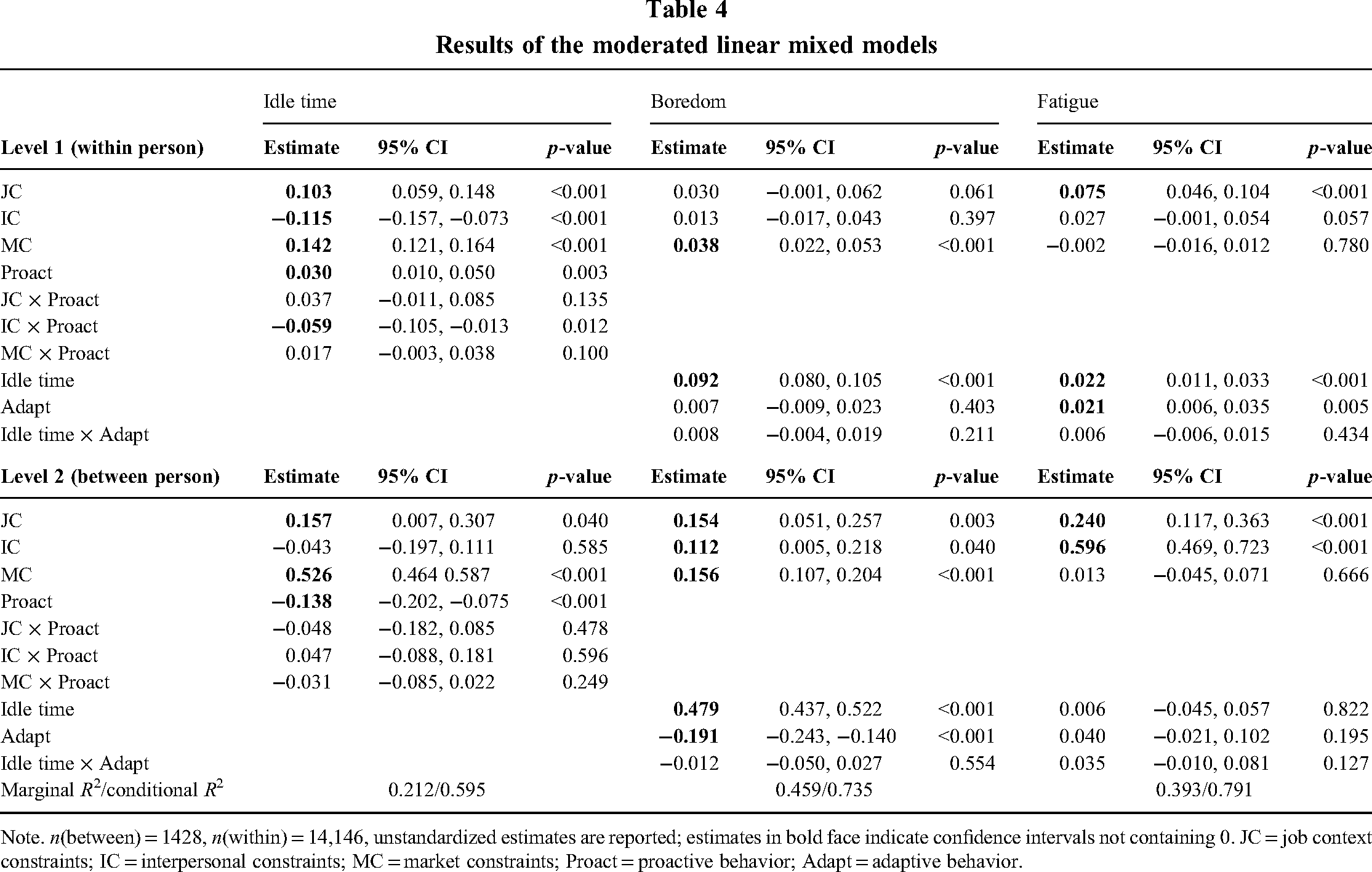
Note. n(between) = 1428, n(within) = 14,146, unstandardized estimates are reported; estimates in bold face indicate confidence intervals not containing 0. JC = job context constraints; IC = interpersonal constraints; MC = market constraints; Proact = proactive behavior; Adapt = adaptive behavior.
Supplementary Analyses
We conducted supplementary analyses testing linear mixed models including autoregressions. They can be found in the online supplemental materials (https://osf.io/tnxk7/). In general, results were similar to the results reported above. Notably, all results remained largely consistent, with two exceptions: At the within-person level, all indirect effects on fatigue via idle time were no longer significant, and the total effect of job context constraints on boredom was not supported.
Discussion
Based on a recently developed conceptual model by Schubert et al. (2023), the aim of this study was to empirically investigate antecedents and consequences of idle time, as well as moderators of these relations. Over a period of 2 years, we collected data from full-time employees. Refining the conceptual model, we distinguished three forms of work constraints (job context, interpersonal, and market constraints; Liu et al., 2010). We found positive relations between job context and market constraints and idle time (Hypotheses 1a and 1c) across levels and a negative relation between interpersonal constraints and idle time at the within-person level (Hypothesis 1b). Moreover, we found positive total effects of job context constraints and boredom and fatigue and of market constraints and boredom across levels (Hypotheses 2a, 2b, and 4a). Contrary to our assumptions, there was a total positive effect of interpersonal constraints on fatigue at the between-person level (Hypothesis 3b). Overall, we found positive relations between job context constraints and boredom and fatigue, mediated by idle time (Hypotheses 5a and 5b), and positive relations between market constraints and boredom and fatigue, mediated by idle time (Hypotheses 7a and 7b). We found indirect effects for interpersonal constraints on boredom and fatigue via subjective idle time at the within-person level (Hypotheses 6a and 6b). Finally, we found that proactive behavior moderated the relation between interpersonal constraints and idle time (Hypothesis 8a). We will discuss how these findings refined the model of idle time (Schubert et al., 2023) in different ways: the differentiation of work constraints, differential effects on well-being outcomes, and the differentiation of within- and between-person effects.
Differential Effects of Work Constraints
The conceptual model of idle time suggests that various work constraints are positively associated with subjective idle time and boredom and fatigue via subjective idle time. In our study, we found that three dimensions of work constraints can be distinguished: job context constraints, interpersonal constraints, and market constraints. We found the most consistent support for the conceptual model for job context constraints, which were positively related to subjective idle time, boredom, and fatigue at both levels. Moreover, subjective idle time mediated the relation between job context constraints and boredom at both levels and the relation between job context constraints and fatigue at the within-person level.
The relations between interpersonal constraints and idle time, boredom, and fatigue revealed some interesting patterns. Notably, interpersonal constraints were associated only with the outcome variables at the between-person level. Specifically, we found a positive direct effect of interpersonal constraints on boredom and fatigue and a positive total effect on fatigue. This is particularly interesting, as we initially hypothesized a negative total effect. The positive direct effect of interpersonal constraints on boredom appears counterintuitive, as interpersonal constraints were initially assumed to increase task availability, thereby reducing boredom. Moreover, we expected interpersonal constraints to be negatively associated with subjective idle time, which, in turn, would be positively related to fatigue, resulting in a negative total effect. Contrary to our initial reasoning, interpersonal constraints may also disrupt employee workflow and hinder their goal achievement. For instance, receiving inadequate help from colleagues can cause delays or even bring work tasks to a standstill. Similarly, interruptions or constraints imposed by others in the workplace may disrupt concentration and task completion and, thus, increase boredom. This may explain the positive relation between interpersonal constraints and subjective idle time and the positive total effect of interpersonal constraints on fatigue via idle time. Thus, interpersonal constraints may operate in a similar manner as job context and market constraints, consistent with the theoretical framework of idle time (Schubert et al., 2023).
For market constraints, we found support for the conceptual model only in relation to boredom. This may seem self-evident as market constraints represent a lack of customers or lack of demand for products or services and, therefore, a clear absence of work tasks. The absence of work tasks, in turn, is representative for periods of idle time (i.e., periods where no work can be done) and is the most common cause of boredom (Brodsky & Amabile, 2018; Fisher, 1993). This connection may have been treated as obvious, and market constraints may have been less investigated in prior research. However, knowledge, service, and emotion work have increased due to changes in the nature of work (Baukrowitz et al., 2000; Johnson et al., 2017), resulting in market constraints becoming increasingly prevalent in everyday working life. These findings align with the passive job profile described in the job demand–control model (Karasek, 1979). Passive jobs are characterized by low demands and low control. Market constraints, such as a lack of customers, closely resemble low job demands. Additionally, because employees have little control over these shortages, their job control is low. The job demands–resources model (Demerouti et al., 2001) suggests that a combination of low demands and low resources is related to feelings of idleness and boredom (Harju et al., 2016; Reijseger et al., 2013).
Finally, we found only one significant moderation effect of proactive behavior on the relation between interpersonal constraints and subjective idle time. One explanation for the missing moderation for the relations between job context and market constraints and idle time might be that job context constraints are more strongly tied to work design. Thus, environmental factors might have stronger effects on idle time than individual strategies. This is in line with the findings of Efrat-Treister et al. (2020), who stated that waiting time in organizational contexts is sometimes inevitable due to bad work design.
Overall, our findings suggest that distinguishing between different forms of work constraints is both theoretically and empirically valuable, as they show distinct effects on the subjective experience of idle time and its consequences for well-being. The separation refines the conceptual model by highlighting that not all proposed pathways hold equally. Future research should consider that some types of work constraints are more strongly associated with idle time, boredom, or fatigue than others. Separating these dimensions offers a clearer understanding of how specific work constraints contribute to idle time and how this impacts boredom and fatigue.
Differential Effects on Boredom and Fatigue
The conceptual model of idle time (Schubert et al., 2023) suggests that work constraints and idle time are negatively associated with well-being outcomes. Therefore, we focused on two unpleasant outcomes: boredom and fatigue. We found support for the predicted effects of work constraints on well-being via subjective idle time, but only for boredom and not fatigue. One possible explanation for these findings is that boredom is more closely tied to idle time, whereas fatigue may be more directly influenced by work constraints themselves. Work constraints are considered the most common work stressors and found to be influential on negative emotions, well-being, and physical symptoms (Liang & Park, 2021; Pindek & Spector, 2016).
Regarding boredom, we found direct effects of work constraints and full or partial mediations via the subjective experience of idle time. This is in line with the meaning and attentional components (MAC) model of boredom (Westgate & Wilson, 2018), which proposes different theoretical approaches to explain the emergence of boredom. The model states that boredom occurs due to environmental factors (i.e., constraints), due to attentional failure, or due to functional mismatches (i.e., a lack of sense or meaning). Our results support the idea of environmental causes for boredom but add a subjective perspective. With our findings, we suggest not only that external circumstances evoke boredom but also that an individual's perception of such circumstances is equally important. In line with AET, we argue that negative affective states arise not only from negative events but also from a person’s negative perception of this situation (Weiss & Cropanzano, 1996; Zeschke et al., 2024).
In conclusion, differentiating between various states of well-being is essential. Our findings did not support the conceptual model of idle time across different well-being outcomes. We suggest broadening the range of outcomes to offer deeper insights into the effects of work constraints and subjective idle time. Although we focused exclusively on boredom and fatigue as indicators of unpleasant emotional states, future research may benefit from examining additional outcomes, such as work performance, affect, and work engagement. These variables are not only central to improving employee experiences but are also critical for enhancing organizational effectiveness. Additionally, we found no evidence that adaptive behavior moderates the relation between subjective idle time and well-being. Given the limited support for the moderation in our data, the proposed moderation effects should be reconsidered. For example, both proactive and adaptive behaviors might be considered forms of work role performance (Griffin et al., 2007). They could influence the relations between work constraints, subjective idle time, and well-being in a different way than assumed by the conceptual model of idle time (Schubert et al., 2023).
Differential Effects at the Within-Person and the Between-Person Levels
One goal of our study was to gain a clearer understanding of how the conceptual model of idle time manifests across different levels, which was not addressed in the initial model. Overall, we found stronger support for our hypotheses at the within-person level, suggesting that work constraints and idle time fluctuate dynamically over time rather than being stable differences between individuals. The proposed mediation effects especially were found at the within-person level. This supports the idea of the conceptual model of idle time, which suggests that work constraints are indirectly related to well-being outcomes in that work constraints are associated with subjective idle time and subjective idle time, in turn, is related to well-being outcomes (Schubert et al., 2023). In contrast, at the between-person level, the indirect effects were largely absent. Instead, we found direct effects of work constraints on both boredom and fatigue. These findings suggest that work constraints can be considered a more stable work characteristic, whereas idle time appears to occur more situationally. In other words, inter-individually, subjective idle time does not explain the relations between work constraints and well-being. This makes sense considering that subjective idle time can be categorized as a situational appraisal (Weiss & Cropanzano, 1996; Zeschke et al., 2024). We encourage future research to examine idle time at both the within-person and between-person levels to gain deeper insights into how it manifests across levels. In particular, we recommend using daily diary studies conducted over several workweeks and across diverse occupations. This approach would allow researchers to identify which aspects of the model vary across time rather than across individuals. Finally, such research helps clarify whether idle time should be viewed primarily as an organizational or work design issue or as an intra-individual challenge like most job stressors.
Implications for Managerial Practice
In addition to the theoretical implications, our findings may have several practical implications. We found that the subjective experience of idle time explains intra-individual effects of work constraints on well-being. This suggests that, in the short term, avoiding idle time is key, which can be achieved primarily through a more flexible work organization. Management should ensure that employees have as many different possibilities to design their tasks as possible. For example, employees could be provided with enough autonomy to use idle time in a meaningful way. However, addressing the subjective experience of idle time alone may not be sufficient to enhance occupational well-being. Specifically, the relations between job context and market constraints and well-being outcomes were only partially explained by subjective idle time. This suggests that work constraints themselves contribute to boredom and fatigue. Therefore, work should be designed to minimize constraints. Management should critically assess internal processes, job characteristics, and resource management to identify areas for improvement.
Finally, inter-individually, interpersonal constraints were positively associated with boredom and fatigue, suggesting that, in the long term, they may negatively impact well-being. This implies that, overall, work constraints by others should be minimized. For example, management could implement designated deep work phases where social interactions between coworkers are limited to enhance focus and productivity.
Limitations and Future Research Directions
We focus here on three major study limitations. First, our study was conducted over a period of 2 years with 1-month time lags to investigate the relations between work constraints, idle time, boredom, and fatigue. To date, there is no established theory on optimal time lags for examining the predictors and consequences of idle time. However, the time lag of 1 month may be too long to reveal how these constructs are related in employees’ everyday lives. It is likely that work constraints differ from day to day and that individuals do not respond to them to the same extent each day (Pindek et al., 2019). Future research should use daily diary studies or event sampling methods to investigate how idle time occurs and is managed across or within working days. Importantly, we still found support for our model in showing that work constraints are related to subjective idle time, which is, in turn, related to boredom and fatigue.
A second limitation relates to the measurement and conceptualization of idle time and work constraints. The definition of idle time we employed in our study encompasses downtimes at work characterized by work underload (Brodsky & Amabile, 2018). Even if this definition is used in a similar way in the literature, there is no broad empirical validation of the construct of idle time or its measurement (Lei et al., 2019; Schubert et al., 2023). It has not been investigated empirically how idle time differs from other non-work phases at work. Therefore, future research should focus on an examination of the nomological network of idle time to ensure that it is not only theoretically but also empirically distinct from similar constructs and thereby improve empirical research on idle time. Additionally, the measurement of work constraints was based on prior research (Liu et al., 2010; Spector & Jex, 1998). However, we found signs of multicollinearity for job context and interpersonal constraints at the between-person level. Moreover, market constraints were assessed using only two items that have not yet been sufficiently validated in this form. Future research should focus on developing a more precise and reliable measure for market constraints and the tripartition of work constraints. Further, we emphasize that other work constraints or stressors, such as interpersonal conflict, may also play a relevant role in the occurrence of idle time and should be considered in future research.
Third, in our study, we examined only rather general measures of proactive and adaptive behaviors. We decided to do this to get a more general picture of how proactive or adaptive behaviors moderate the relations around idle time. However, the use of a more general measure of proactive and adaptive behaviors may have been inappropriate. Both behaviors were conceptualized by Griffin et al. (2007) as work role behaviors and measured accordingly. As a result, the two dimensions may be too closely related to each other to reliably capture the distinct moderation effects assumed. We suggest that, as found in the qualitative study by Lei et al. (2019), behavioral strategies should be examined in more detail (e.g., by asking for specific activities). Schubert et al. (2023) proposed to focus on job crafting and work stretching as proactive behavior and cyberloafing or recovery experiences as adaptive behavior.
Conclusion
This study contributes to the literature by empirically investigating a process model of idle time. We found that three types of work constraints are differently related to idle time and, in turn, boredom and fatigue. More specifically, job context and market constraints were positively associated with idle time, boredom, and fatigue, whereas interpersonal constraints were negatively related to idle time and indirectly negative related to boredom and fatigue. Proactive behavior moderated the relation between interpersonal constraints and idle time in that it strengthened the negative association between interpersonal constraints and idle time when proactive behavior was higher.
Supplemental Material
sj-docx-1-msr-10.1177_27550311251392489 - Supplemental material for Antecedents and consequences of idle time at work
Supplemental material, sj-docx-1-msr-10.1177_27550311251392489 for Antecedents and consequences of idle time at work by Karoline Schubert, Cort W. Rudolph and Hannes Zacher in Journal of Management Scientific Reports
Footnotes
Acknowledgements
The study reported in this article is funded by the Volkswagen Foundation (Az. 96 849-1, “Work and Health in the Time of COVID-19: A Longitudinal Study”). The authors have no known conflict of interest to disclose. We would like to acknowledge Martin Zeschke, Richard Janzen, and Melina Posch for their support and feedback on previous versions of this manuscript.
Data availability statement

Declaration of conflicting interests
The authors declared no potential conflicts of interest with respect to the research, authorship, and/or publication of this article.
Funding
The authors disclosed receipt of the following financial support for the research, authorship, and/or publication of this article: This study was supported by the Volkswagen Foundation (grant number Az. 96 849-1). Karoline Schubert was supported by a Ph.D. scholarship from the European Social Fund (project number:100338880).
Supplemental material
Supplemental material for this article is available online.
Notes
References
Supplementary Material
Please find the following supplemental material available below.
For Open Access articles published under a Creative Commons License, all supplemental material carries the same license as the article it is associated with.
For non-Open Access articles published, all supplemental material carries a non-exclusive license, and permission requests for re-use of supplemental material or any part of supplemental material shall be sent directly to the copyright owner as specified in the copyright notice associated with the article.
