



Abstract
Based on 329 empirical studies, this systematic review synthesizes three decades of research on protected area (PA) sustainability assessment, tracing its evolution from fragmented, ecology-focused case studies to a global, practice-driven field. Conceptually, four cumulative definitional paradigms are identified: ecocentric, multi-dimensional balance, social-ecological system, and governance process-oriented, evolving from static carrying capacity to dynamic adaptability and procedural justice. Methodologically, this review reconstructs a three-tier hierarchy, including conceptual frameworks, four core methodological paradigms, and supporting technologies, resolving terminological confusion. Despite progress, three core gaps persist: decoupling between concepts and operationalization, unclear multi-dimensional trade-off assessment, and the lack of feedback loops between assessment and adaptive management. To address these gaps, future research should develop integrated frameworks, advance trade-off decision-support tools, shift from a static description toward a dynamic assessment, and promote translation of assessment outputs to management actions. This review provides a structured foundation for optimizing PA sustainability assessment and bridging the gap between scientific research and practical management.
Introduction
The International Union for Conservation of Nature (IUCN) defines a protected area (PA) as a clearly defined geographical space, recognized, dedicated, and managed through legal or other effective means, to achieve the long-term conservation of nature with associated ecosystem services and cultural values. These areas are categorized into strict nature reserves, wilderness areas, national parks, natural monuments, habitat/species management areas, protected landscapes/seascapes, and managed resource protected areas (Day et al., 2012). PAs serve a dual purpose. They act as critical sanctuaries for biodiversity, effectively mitigating habitat loss, maintaining species populations, and safeguarding ecosystem integrity. Simultaneously, they provide essential support for human well-being by securing clean water, food, and carbon storage, supporting community livelihoods, driving tourism economies, and playing an irreplaceable role in climate change mitigation and adaptation (Arbieu et al., 2018; Duncanson et al., 2023; Watson et al., 2014). Global PAs have achieved significant success in protecting terrestrial habitats, cementing the consensus goal of expanding protected areas to synergistically limit climate change and reduce extinction risk (Hannah et al., 2020). However, they continue to face complex sustainability challenges. These include insufficient evidence for species protection outcomes, unclear causality between management interventions and conservation success, spatial heterogeneity in funding, imbalances in resource allocation, and a lack of synergy between climate and conservation policies (Geldmann et al., 2013; McCarthy et al., 2012).
A substantial body of literature has examined PAs from various angles, producing many reviews that generally fall into four categories: (1) effectiveness assessments focusing on ecological outcomes such as curbing habitat loss (Geldmann et al., 2013); (2) management effectiveness evaluations examining governance processes and institutional capacity (Leverington et al., 2010); (3) socio-economic impact studies analyzing consequences for local communities, including livelihoods and benefit distribution (Oldekop et al., 2016); and (4) context-specific reviews targeting particular PA types or geographic regions (Coad et al., 2019; Gill et al., 2017; Naidoo et al., 2019). While these reviews have made valuable contributions, they predominantly adopt a single-dimension perspective, treating ecological outcomes, management processes, and socio-economic impacts as separate domains of inquiry. Protected area sustainability assessment differs fundamentally from these approaches. Rather than evaluating an isolated dimension, it conceptualizes PAs as complex social-ecological systems wherein ecological integrity, economic viability, social equity, and governance quality are dynamically intertwined (Mallick et al., 2024; Kurniawan et al., 2019; Strickland-Munro et al., 2010; Zagarkhorloo et al., 2021). Sustainability assessment therefore pursues three distinctive contributions. First, it is inherently multi-dimensional, systematically examining interactions and trade-offs across ecological, social, economic, and governance domains rather than privileging any single dimension (Kashef et al., 2025; Pei et al., 2024; Yang et al., 2025a). Second, it embraces dynamic complexity, focusing not merely on static states but on system resilience and adaptive capacity under changing conditions such as climate change or policy reforms (Ciftcioglu, 2025; Doyen et al., 2007; Strickland-Munro et al., 2010; Yang et al., 2022). Third, it adopts a process-oriented lens that interrogates not only what outcomes are achieved but also how decisions are made, whose voices are included, and whether governance arrangements are procedurally just and institutionally robust (Aydin and Öztürk, 2023; George and Reed, 2017; Oduor, 2020; Ward et al., 2018). These features enable sustainability assessment to connect local PA management with global policy frameworks including the Sustainable Development Goals and the Kunming-Montreal Global Biodiversity Framework, positioning PAs within broader sustainability transitions (Alves et al., 2025; Campos et al., 2025; Liu et al., 2023; Zhao et al., 2025).
Sustainability assessment (SA) as a broader field aims to systematically measure and diagnose the long-term viability of complex systems. Its scope ranges from macro-level global and regional systems to local social-ecological systems (such as cities or watersheds) and specific industries or products (Singh et al., 2012). Methodologically, SA generally falls into three categories: indicator-based systems (e.g., ecological footprint) that quantify system states; life cycle assessments (LCA) that focus on product or technology chains; and integrated assessment models (e.g., system dynamics) that simulate the complex interactions and future scenarios of social-ecological systems (Ness et al., 2007). These methods share a common focus on the dynamic interactions between environmental, economic, and social dimensions. When applied to protected areas, this sustainability lens is particularly salient. Against the backdrop of the urgent global biodiversity crisis, both the Intergovernmental Science-Policy Platform on Biodiversity and Ecosystem Services (IPBES) assessments and the Kunming-Montreal Global Biodiversity Framework identify the effective management of PAs as a core strategy for achieving long-term conservation goals (Hui et al., 2025). Yet, as emphasized above, PAs are not merely biological refuges; they are complex social-ecological systems that integrate ecological protection with community development and sustainable use (Naughton-Treves et al., 2005). Therefore, scientifically assessing their sustainability is crucial for balancing multiple objectives, optimizing management decisions, and ultimately fulfilling global conservation commitments.
To address the lack of systematic literature reviews that integrate multiple dimensions of protected area sustainability (ecological, social, economic, and governance) to conduct a holistic assessment, this study aims to conduct a systematic synthesis of empirical research on the sustainability assessment of protected areas, focusing on the following core questions: (1) What are the spatiotemporal trends and publication characteristics of existing research? (2) What conceptual frameworks and assessment methods define the current field, and what opportunities and challenges lie ahead? By systematically screening and synthesizing empirical studies, we aim to identify limitations in the current knowledge system and provide theoretical references and methodological guidance for building a robust, actionable framework for PA sustainability assessment.
Methods
This study employed a systematic review methodology to ensure a rigorous and replicable analysis of the research landscape. To maximize transparency and minimize the selection biases often associated with traditional reviews, we followed the protocols established by the Preferred Reporting Items for Systematic Reviews and Meta-Analyses (PRISMA) guidelines.
Search strategy and data collection
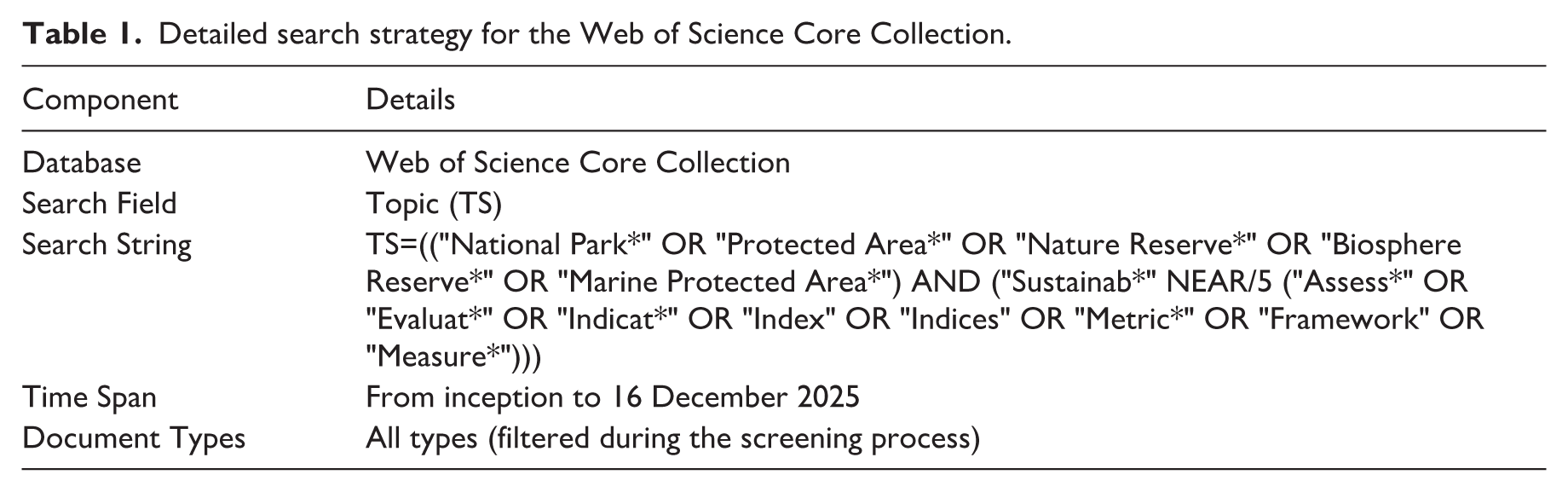
Data collection was conducted on 16 December 2025 using the Web of Science Core Collection. A comprehensive and structured search string was developed to capture the intersection between protected areas and sustainability assessment. The search combined two core conceptual blocks using the Boolean operator AND; Protected Area Terms: A set of synonyms and common designations for protected areas, combined with the Boolean operator OR; Sustainability Assessment Terms: A set of terms related to sustainability and evaluation, where the root “Sustainab*” was linked to assessment-related keywords using the proximity operator NEAR/5.
The complete search strategy, including the database, field code, and the exact query string with all Boolean operators, is detailed in Table 1. The initial search generated a total of 980 records.
Detailed search strategy for the Web of Science Core Collection.
Literature screening and selection
During the initial screening phase, we removed non-research document types, including editorials, news items, meeting abstracts, and correction notices. This step excluded two records, leaving 978 articles for further screening. We first reviewed titles and abstracts, which led to the exclusion of 39 articles that were irrelevant to the subject area of this study.
The remaining 939 articles underwent a full-text eligibility assessment based on three explicit exclusion criteria.
First, we excluded studies with inappropriate scope or scale, such as those strictly limited to a single species, specific natural resources, or macro-regional analyses (n = 137). Although protecting specific species is a core objective of many protected areas, studies focusing solely on a single species typically assess population trends, habitat suitability, or the effectiveness of individual conservation interventions (e.g., anti-poaching). Such studies often do not encompass the multi-dimensional (ecological, social, economic, governance) and systemic analytical framework required for a holistic sustainability assessment of a protected area as a coupled social-ecological system. This review aims to synthesize research that evaluates protected areas as integrated units balancing multiple objectives. Therefore, studies assessing only one species without linking it to broader ecosystem integrity, livelihood impacts, or institutional governance were considered outside the scope of this study.
Second, we excluded non-empirical evaluation literature, such as theoretical reviews, planning proposals, or policy descriptions (n = 193). This approach aligns with the primary objective of our systematic review: to synthesize findings from direct empirical assessments of protected area sustainability. Although narrative or systematic review papers are valuable for identifying seminal works, constructing conceptual frameworks, and providing research context (as adopted in the Introduction and Discussion sections of this paper), including them in the formal analysis would introduce evidence of a different level and could lead to double-counting of primary research results. To leverage their contextual value without compromising the consistency of the empirical synthesis, key review papers identified during the search or from prior knowledge were cited separately to define the research problem and contextualize the findings, but they were not included in the final sample of 329 papers subjected to data extraction and quantitative/qualitative analysis.
Finally, to ensure a holistic perspective, we omitted articles that focused on only a single dimension of sustainability—whether purely ecological, social, or economic (n = 280). After applying the above filters, 329 articles met all inclusion criteria and were incorporated into the systematic analysis of this study (Figure 1).
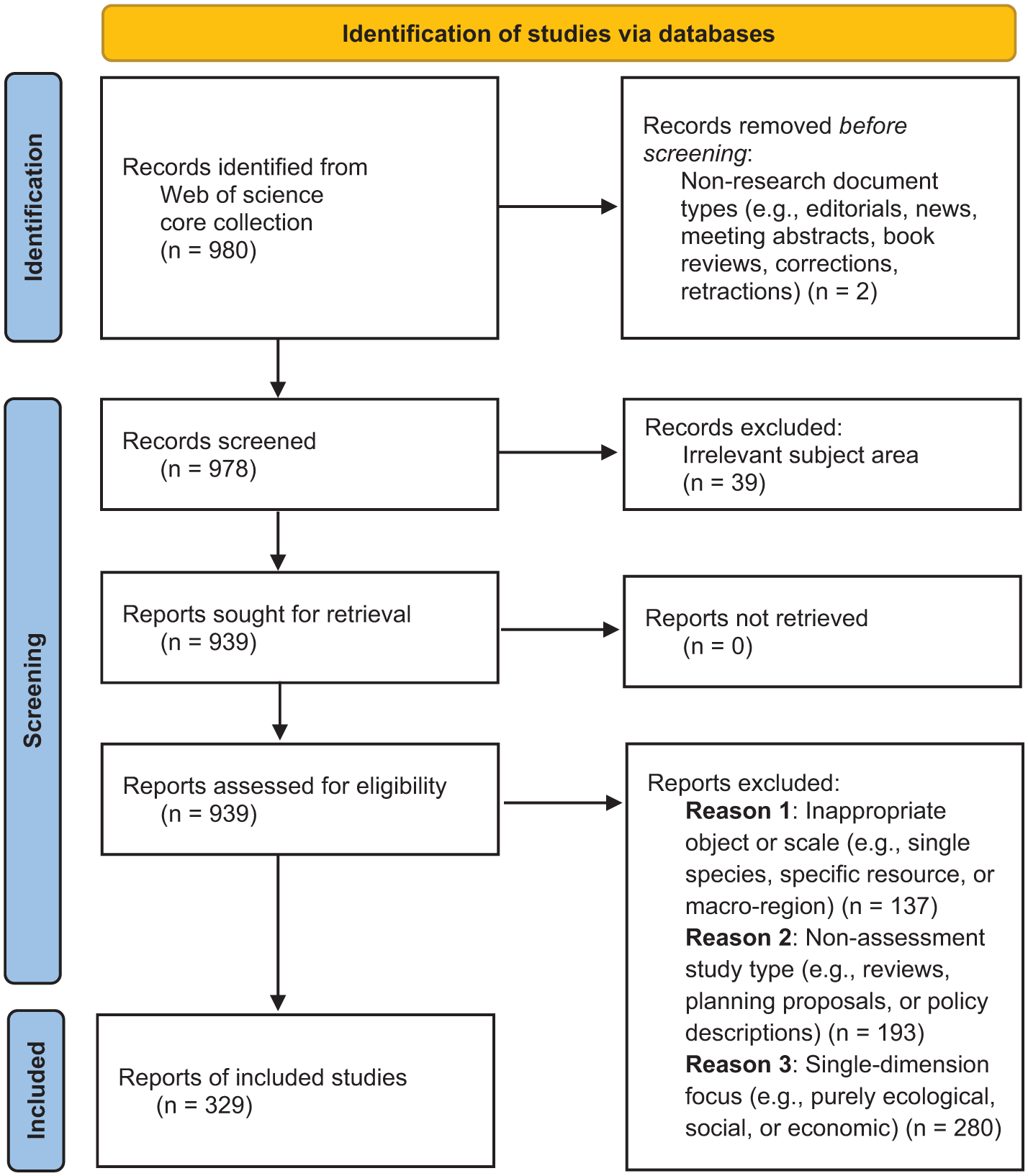
PRISMA flow diagram of the literature selection process.
Following the literature screening, we conducted a systematic data extraction and comprehensive analysis of the 329 included studies. Using a pre-designed data extraction form, two researchers independently extracted core information from each article, covering study areas, conceptual frameworks, assessment methods, key dimensions, and conclusions. Consistency was ensured through cross-verification.
Results
Spatiotemporal evolution and the knowledge landscape of research
An analysis of the 329 included empirical studies reveals a distinct spatiotemporal pattern and knowledge structure within the field of PA sustainability assessment, characterized by rapid growth aligned with global agendas, significant geographical concentration, and a practice-driven research focus.
Temporally, publication trends closely mirror key milestones in global sustainability governance. Research evolved through four phases: a nascent stage (pre-2004) with minimal output; a period of gradual growth (2005-2015) following the Millennium Ecosystem Assessment and the Aichi Biodiversity Targets; and a phase of rapid expansion post-2016, coinciding with the UN Sustainable Development Goals and the post-2020 biodiversity framework negotiations (Figure 2a). Notably, while the total volume of literature continues to rise, the annual number of studies meeting our rigorous, multi-dimensional integration criteria has stabilized at around 25 papers since 2021 (Figure 2b). This plateau suggests the field may be facing conceptual and methodological bottlenecks in achieving truly holistic assessments, signaling a need for paradigmatic innovation beyond incremental growth.
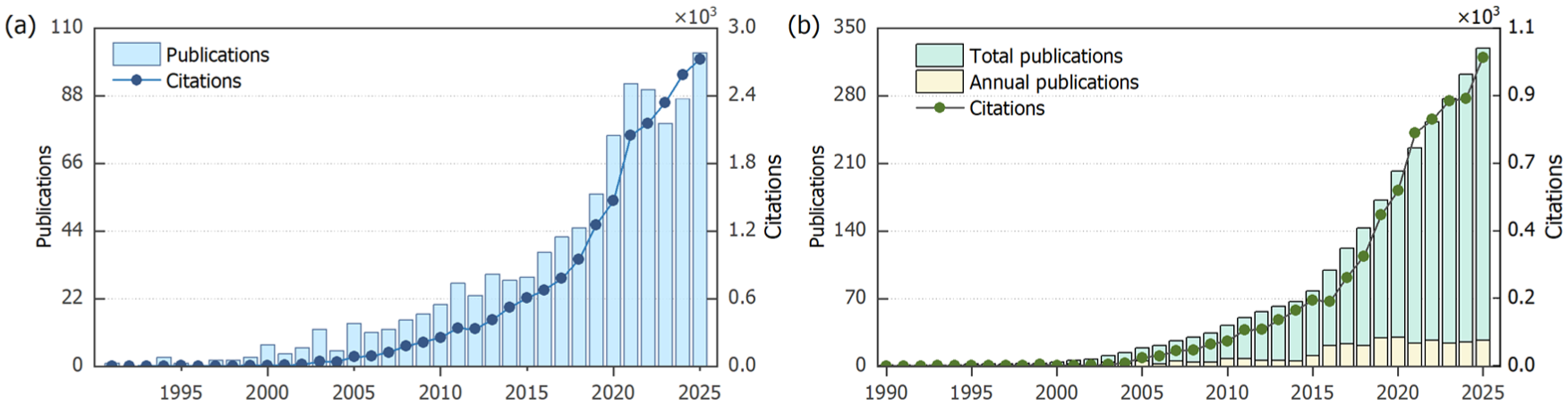
Publication and citation statistics. (a) Annual and cumulative volume for all screened literature. (b) Annual and cumulative volume for included literature.
Spatially, case study distribution is highly uneven, forming a pattern of “one core, multiple poles, and a long-tail distribution” (Figure 3). Asia, led by China (60 cases), dominates the research landscape, directly reflecting the region's massive investments in protected area systems and national park pilots. Europe shows clustered activity in countries like Italy and Spain, focusing on Mediterranean ecosystems and cultural landscapes. Research in the Americas centers on community-based management in tropical regions (e.g., Mexico, Brazil) and management of the North American park system. In contrast, Africa and Oceania are underrepresented, with case studies sparse outside major biodiversity hotspots (Figure 4). This geography of knowledge production highlights how research priorities are powerfully shaped by regional conservation challenges, national policy agendas, and available scientific capacity, leaving critical gaps in understudied regions.
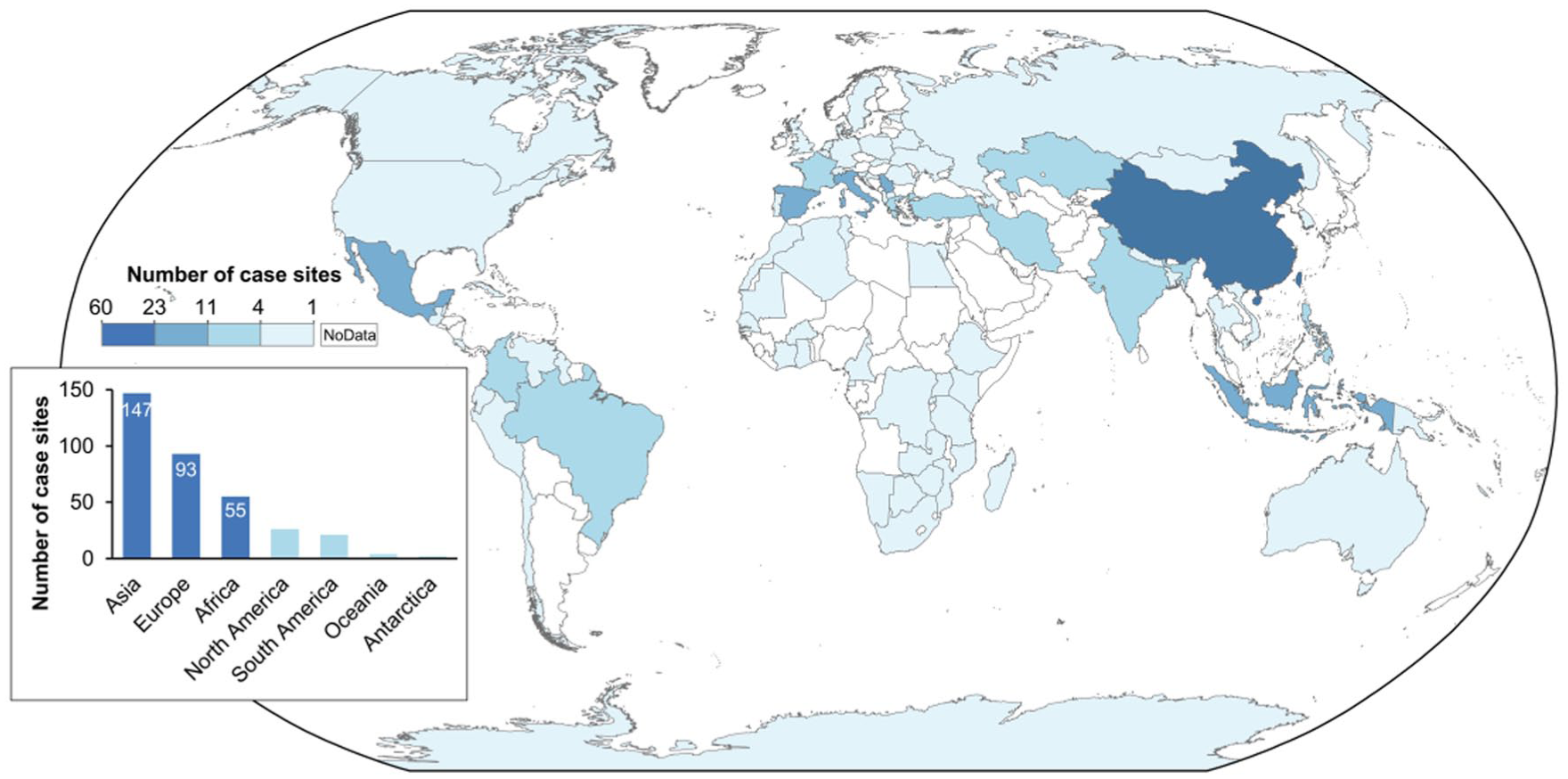
Global distribution of case study sites for PA sustainability assessment.
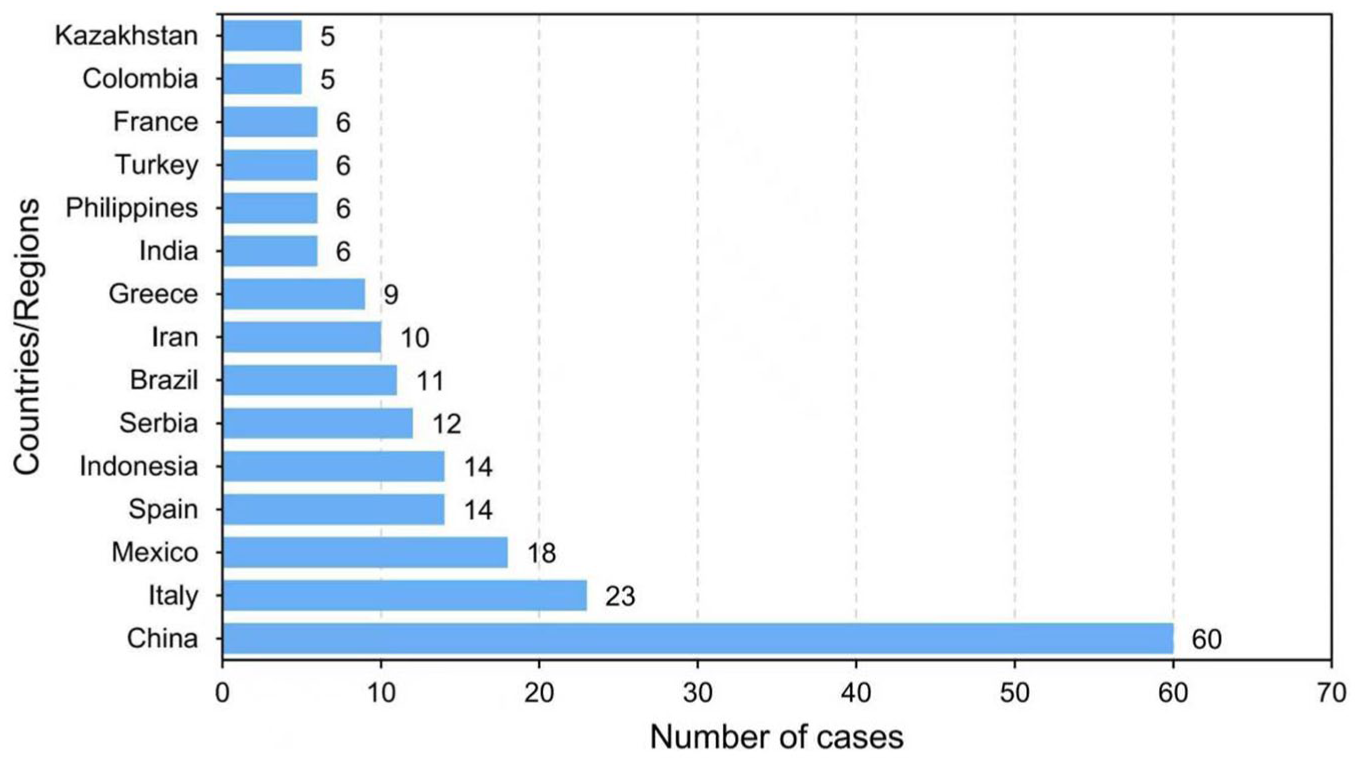
Statistics of top 15 countries for case study locations.
The publication landscape demonstrates convergence around interdisciplinary and practice-oriented outlets. The journal Sustainability (42 papers) is the dominant platform, underscoring the field's cross-cutting nature. Specialized journals like the Journal of Environmental Management, Ocean & Coastal Management, and Ecological Indicators form crucial pillars, catering to specific methodological (indicator-based) and thematic (marine/terrestrial governance) niches (Figure 5). This reflects the dual need for broad interdisciplinary dialogue and deep, sector-specific expertise.
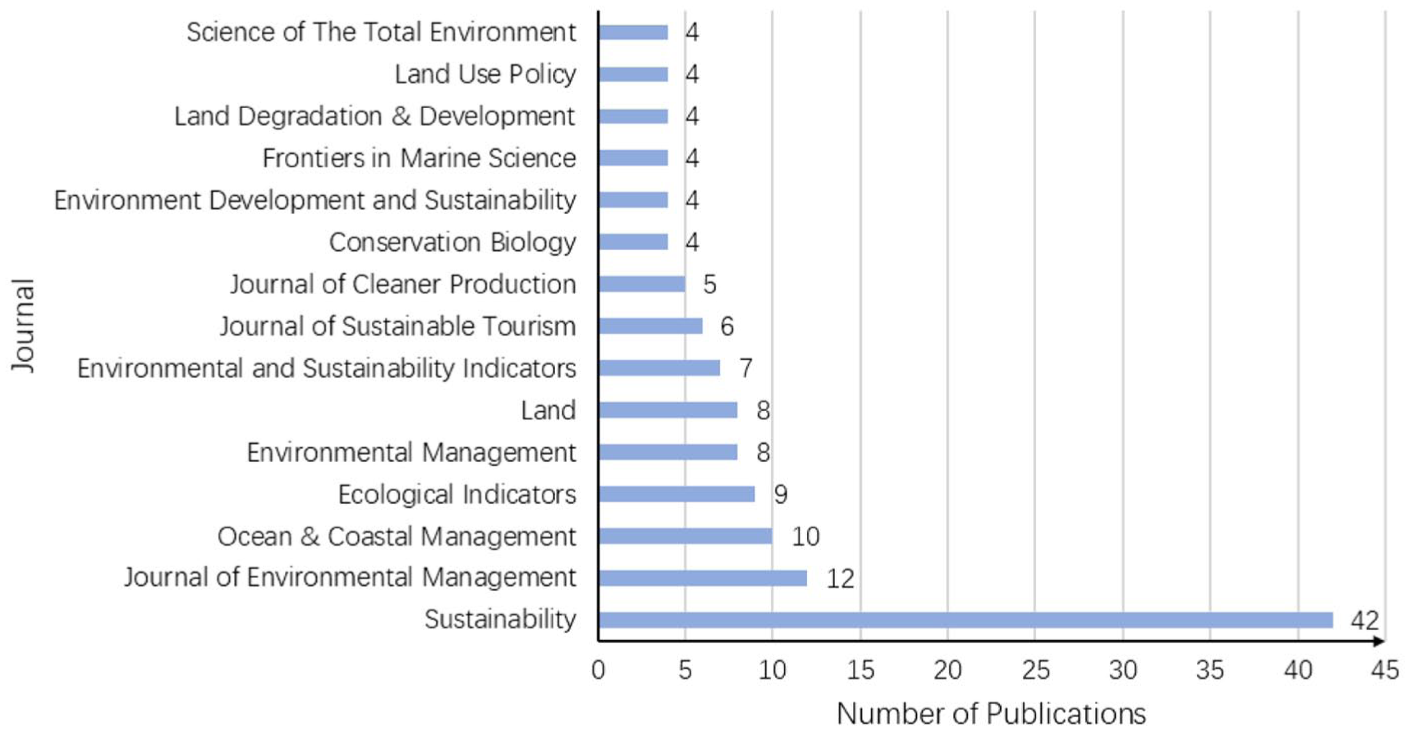
Publication volume statistics for the top 15 journals.
Research leadership is concentrated in a few core nations and institutions, reinforcing the link between major policy initiatives and scientific output. China leads in national publication count (63 papers), followed by the US and Italy. Institutionally, the Chinese Academy of Sciences is the most prolific, with other leading institutions acting as regional hubs (Figure 6). This pattern confirms the field's strong “practice-driven” attribute, where large-scale conservation programs stimulate and focus assessment research.
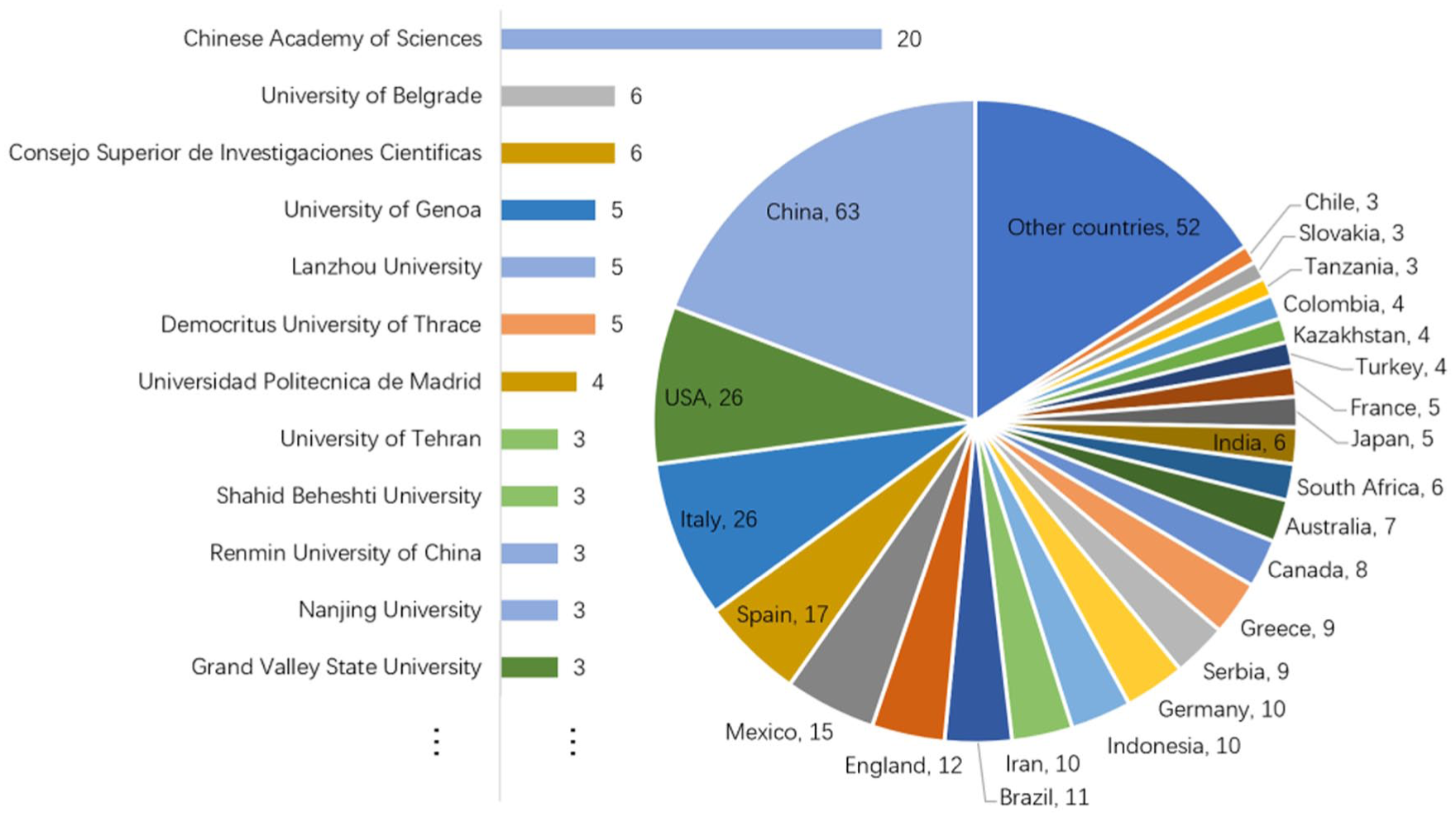
Publication statistics by country and for the top 12 institutions.
Keyword analysis crystallizes the field's core intellectual focus (Figure 7). The high frequency of “management” and “conservation” underscores the ultimate applied goal of improving governance. “Indicators” and “framework” are central methodological concerns. The prominence of “ecosystem services” illustrates a key analytical pathway for linking ecological health to human well-being. Together, these elements paint a picture of a field dedicated to developing measurable, framework-guided tools for managing protected areas to achieve synergistic conservation and sustainability outcomes.
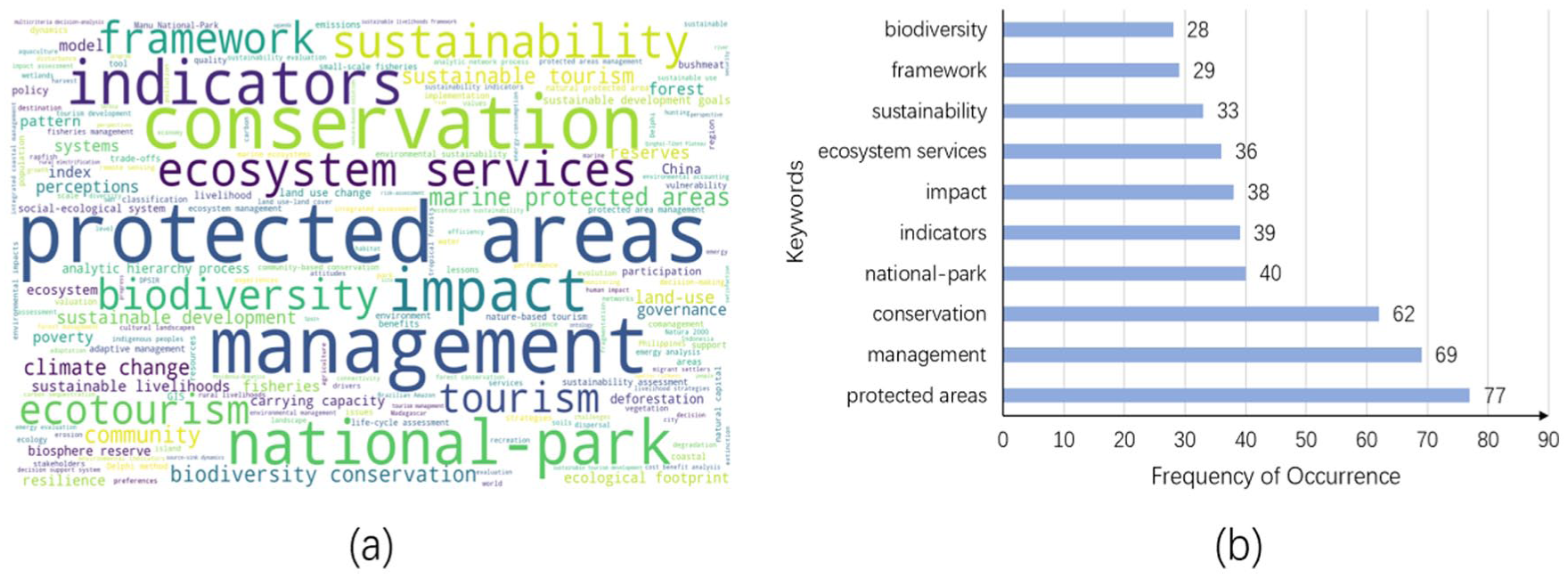
Keyword frequency statistics. (a) Word cloud. (b) Top 10 high-frequency keywords.
In summary, research on PA sustainability assessment has solidified into a vibrant, policy-responsive domain. However, its growth is geographically skewed and may be reaching a plateau in integrative methodological development. This landscape sets the stage for a deeper examination of the conceptual definitions, operational indicators, and methodological paradigms that constitute the substance of the field, moving beyond descriptive bibliometrics to analyze its conceptual and analytical core.
Definitions of protected area sustainability
The concept of sustainability for protected areas is not a static, universal definition, but a dynamic idea that has been continuously enriched and deepened alongside the evolution of global sustainable development discourse. Synthesizing the literature, this study defines Protected Area Sustainability as the comprehensive systemic state and dynamic evolutionary process of synergistically achieving long-term biodiversity conservation, sustained provision of ecosystem services, equitable improvement of local community livelihoods and well-being, and the positive transmission of associated cultural values, under dynamically changing internal and external environmental pressures, through just, effective, and adaptive governance processes (Liu et al., 2023; Orenstein and Shach-Pinsley Orenstein, 2017). This definition emphasizes that sustainability is not merely an ideal endpoint balancing ecological, social, and economic goals, but an ongoing journey of governance and learning that prioritizes procedural justice, systemic adaptability, and global responsibility.
Tracing the intellectual trajectory of this concept reveals four cumulative definitional paradigms that emerged successively, each building upon and responding to the limitations of its predecessors while introducing distinctive conceptual breakthroughs (Figure 8).
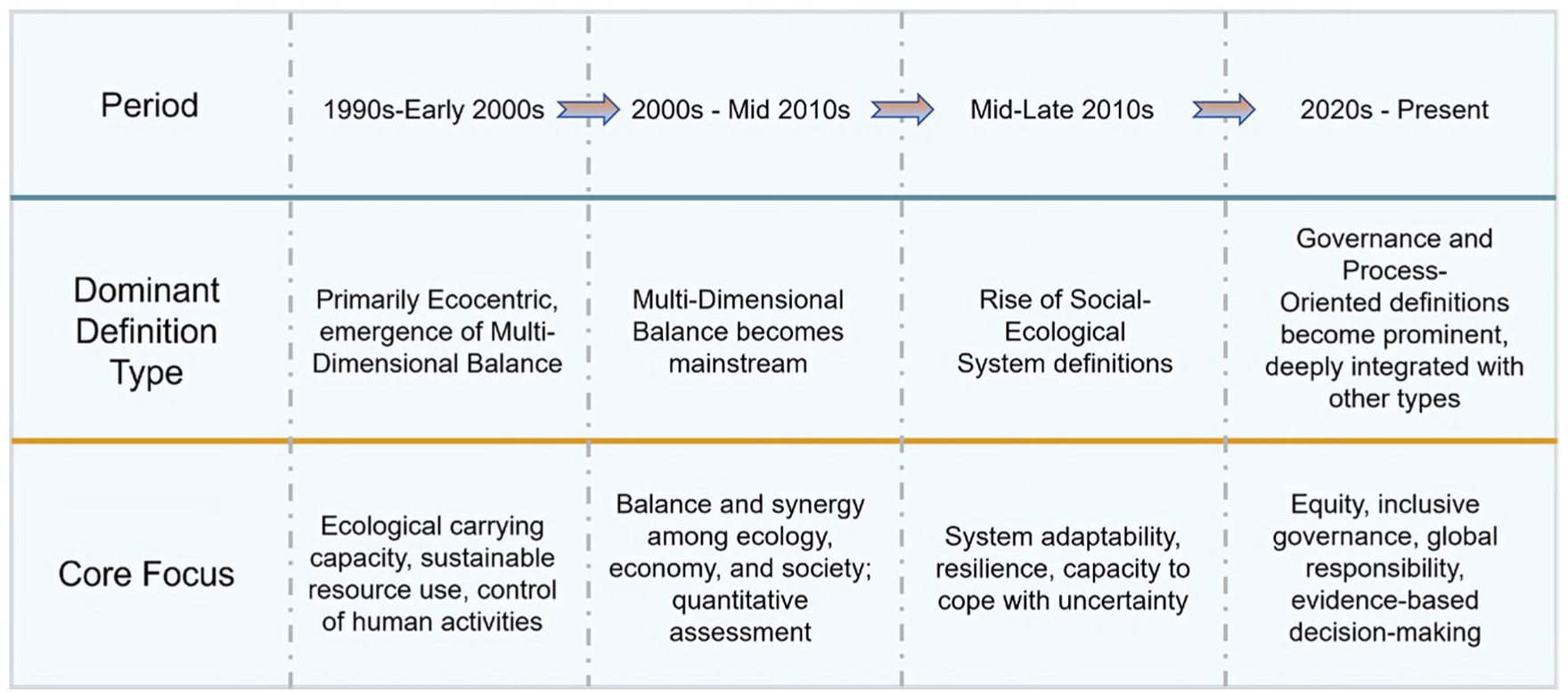
The evolutionary trajectory of protected area sustainability conceptual definitions.
The earliest conceptualizations, emerging in the 1990s and early 2000s, adopted an ecocentric lens that anchored sustainability in the integrity and stability of ecosystems. This paradigm focused on whether the intensity of human activities—such as resource harvesting or tourism—exceeded the self-regeneration and carrying capacity of the ecosystem, with the central aim of maintaining the long-term productivity of the natural resource base (Alvard, 2000; Blicharska et al., 2020). The fundamental contribution of this perspective was to establish ecological limits as the non-negotiable foundation for any sustainability discourse, shifting attention from unrestricted utilization toward scientifically informed restraint.
By the mid-2000s, scholars increasingly recognized that ecological sustainability could not be pursued in isolation from human dimensions, giving rise to the multi-dimensional balance definition. This paradigm explicitly constructed sustainability as the synergistic balance among ecological, economic, and social (or socio-cultural) dimensions, stressing that success in any single dimension does not constitute true sustainability (Armitage, 1995; Cottrell et al., 2005). The key breakthrough here was the systematic incorporation of human welfare and economic development into the sustainability calculus, transforming the concept from a purely biophysical constraint into a multi-objective balancing problem. This framework catalyzed the widespread application of multi-criteria evaluation systems and represented the concretization of the Brundtland definition within the protected area context.
The late 2010s witnessed a further paradigm shift influenced by complexity science and resilience theory, producing the social-ecological system definition. This perspective reconceptualized protected areas as complex adaptive systems in which human and natural components are not merely interacting but are fundamentally intertwined through feedback loops and co-evolutionary dynamics. Sustainability, under this view, is understood as the system's capacity to maintain core functions, learn, and adapt in the face of disturbances such as climate change or market fluctuations (Strickland-Munro et al., 2010; van Vliet et al., 2015). The transformative contribution of this paradigm was to replace static equilibrium thinking with dynamic adaptability, foregrounding uncertainty, non-linear dynamics, and the need for adaptive management pathways.
Most recently, the governance and process-oriented definition has gained prominence, shifting analytical attention from system states to the quality of decision-making processes themselves. This emerging paradigm argues that sustainability is fundamentally an outcome of specific governance arrangements, emphasizing inclusive participation, equitable benefit-sharing, accountable institutional arrangements, and explicit alignment with global sustainable development goals (Okafor-Yarwood et al., 2020; Ward et al., 2018; Zhao et al., 2025). The distinctive breakthrough here lies in centering procedural justice, power relations, and global responsibility within the sustainability concept, recognizing that how decisions are made is as consequential as what outcomes are achieved.
Several cross-cutting evolutionary characteristics emerge from this trajectory. The connotation of protected area sustainability has progressively broadened from a singular focus on ecological integrity to an integrated perspective encompassing economic viability, social equity, and governance quality, eventually connecting with supranational policy frameworks such as the Kunming-Montreal Global Biodiversity Framework (Liu et al., 2023; Zhao et al., 2025). The philosophical foundation has shifted from isolationist protection rooted in steady-state ecology, through adaptive co-management informed by systems thinking, toward a just transition framework that foregrounds environmental justice and global ethics (Okafor-Yarwood et al., 2020; van Vliet et al., 2015). Research attention has correspondingly migrated from describing ideal systemic states toward interrogating the legitimacy, fairness, and effectiveness of the dynamic processes through which such states are pursued and sustained (George and Reed, 2017; Ward et al., 2018). Methodologically, this conceptual evolution has been paralleled by a co-evolution of assessment approaches: from population dynamics models and carrying capacity calculations aligned with the ecocentric paradigm, to multi-criteria decision analysis and sustainable livelihoods frameworks serving the multi-dimensional balance definition, then to resilience assessments and network analysis supporting the social-ecological system perspective, and most recently to counterfactual impact evaluation, natural capital accounting, and Sustainable Development Goal (SDG) contribution assessments that match the governance-oriented definition (Pavlikakis and Tsihrintzis, 2003; Salemi et al., 2019).
In summary, the conceptual definition of protected area sustainability has evolved into a composite theoretical framework that integrates systemic state, multidimensional balance, dynamic capacity, and just processes. This evolutionary path reveals that contemporary protected area sustainability is no longer simply a technical or managerial question but a comprehensive governance challenge involving ecological security, social equity, and global responsibility (Orenstein and Shach-Pinsley, 2017).
Assessment dimensions and indicator systems
The conceptual evolution of protected area sustainability has been accompanied by a parallel expansion of its assessment dimensions and indicator systems, with each definitional paradigm generating its own operational logic, measurement priorities, and methodological toolkit.
The ecocentric dimension anchors sustainability in the integrity and stability of ecosystems, focusing assessment on whether human activities remain within the regenerative capacity and environmental thresholds of natural systems. Core attributes include population dynamics of harvested species, habitat extent and connectivity, regeneration rates of renewable resources, and environmental carrying capacity. Representative indicators such as Maximum Sustainable Yield and Catch Per Unit Effort have been widely applied to assess hunting and fishing sustainability (Alvard, 2000; Creel et al., 2016), while Ecological Footprint analysis tracks human demand against biocapacity (Gössling et al., 2002; Liu et al., 2016). Species richness indices and habitat suitability models provide direct measures of ecological integrity (Jones et al., 2005; Shaffer et al., 2018), complemented by various carrying capacity estimates that establish use limits (Chen, 2015; Salemi et al., 2019).
The multi-dimensional balance dimension operationalizes sustainability as the synergistic balance among ecological integrity, economic viability, and social equity. Assessment encompasses ecosystem service valuation, economic benefits and employment, livelihood sustainability, and social equity alongside community satisfaction. Ecosystem service values—including water yield, carbon storage, and soil conservation—have been systematically quantified across protected areas (Liu et al., 2009; Ma et al., 2021), while socio-economic indicators track tourism revenue, employment rates, and household income (Spenceley, 2008; Weng et al., 2019). Social dimensions capture resident satisfaction, community participation, and perceived benefits (Cottrell et al., 2005; Poudel et al., 2016), often aggregated into composite sustainability indices (Ng and Sun, 2024; Wang et al., 2011).
Drawing on resilience theory and complexity science, the social-ecological system dimension redefines sustainability as the capacity to absorb disturbances, reorganize, and maintain essential functions. Assessment prioritizes ecological resilience measured through recovery time and functional redundancy, alongside social adaptive capacity reflected in livelihood diversity and knowledge networks. Landscape connectivity and network robustness indicators capture cross-scale ecological dynamics (Pang et al., 2017; Zhou et al., 2024), while sustainable livelihoods frameworks track household asset portfolios encompassing human, social, financial, physical and natural capital (Pour et al., 2018; Su et al., 2016). Critically, when this dimension addresses stakeholder involvement, it does so through the lens of social network structure and information flows—mapping how actors are connected, how knowledge circulates, and how collective learning occurs—rather than evaluating the quality of decision-making processes per se (Ernst et al., 2013; Kurniawan et al., 2019). Governance diversity and institutional memory indicators assess adaptive capacity by examining the variety of actors and the persistence of knowledge across time, while co-viability kernels evaluate system robustness under uncertainty (Doyen et al., 2007; Levi et al., 2009). Here, participation is conceptualized as a systemic property that shapes adaptive capacity, not as a normative criterion for procedural legitimacy.
The governance and process-oriented dimension conceives sustainability as the product of legitimate, inclusive, and accountable governance processes, shifting assessment focus from outcomes to procedural quality. Core attributes include transparency and procedural fairness in decision-making, depth and quality of stakeholder participation in governance, institutional enforcement and rule compliance, and equity of benefit distribution. Co-management effectiveness indices and collaborative governance scores evaluate institutional arrangements (Ward et al., 2018; Whitehouse and Fowler, 2018), while benefit distribution metrics capture equity concerns (Forje and Tchamba, 2022; Oduor, 2020). Unlike the social-ecological system dimension's treatment of participation as network connectivity, this dimension examines who participates in decision-making, on what terms, with what influence, and whether processes are perceived as fair (Agyare et al., 2015; George and Reed, 2017). Stakeholder participation rates, procedural justice perceptions, and compliance with Ostrom's design principles provide direct measures of governance quality (Ernst et al., 2013; Milupi et al., 2020). The focus here is on the normative quality of decision processes themselves—whether they are inclusive, transparent, and accountable—rather than on the structural properties of social networks.
Contemporary integrated frameworks synthesize these four dimensions, recognizing that ecocentric carrying capacity provides the ecological foundation, the multi-dimensional balance framework offers classical architecture, resilience thinking introduces dynamic adaptability, and governance orientation embeds procedural legitimacy. This cumulative layering has progressively expanded evaluative scope—from biological yield to triple bottom line performance, systemic resilience, governance quality, and global accountability linkages. Causal inference has deepened from descriptive indicators toward diagnostic metrics and counterfactual estimates, while spatial and temporal resolution has refined from coarse static snapshots to dynamic long-term monitoring. Stakeholder integration has shifted from expert-driven selection toward participatory co-construction, and policy alignment now connects local indicators to international frameworks including the Sustainable Development Goals and Global Biodiversity Framework. Representative integrated assessment tools include the Sustainability Evaluation of Marine Protected Areas Index (Avelino et al., 2019), the Protected Area Landscape Sustainability Index (Lu et al., 2024), and the System for Assessment of the Sustainability of Municipalities (Martínez-Vega et al., 2020).
Assessment method paradigms and their applications
The development of protected area sustainability assessment methods is intrinsically isomorphic with the evolution of its conceptual definitions and assessment dimensions. Each definitional paradigm not only prescribes "what to assess" but also profoundly influences the methodological choices of "how to assess." However, the classification of assessment methods has often been obscured by the indiscriminate use of technical tools, leading to confusion of methodological hierarchies and blurred functional boundaries. Based on a systematic review of 329 publications, this section reconstructs the classification logic of protected area sustainability assessment methods, delineates the theoretical origins, core concerns, correspondence with definitional types, and representative applications of different methodological paradigms, and elucidates the logical boundaries and complementary structures among them.
Classification logic and hierarchical structure of assessment method paradigms
Protected area sustainability assessment methods do not constitute a single technological lineage but rather a nested system composed of three hierarchical levels: the conceptual framework layer, the core method layer, and the supporting technology layer (Figure 9). This classification logic aims to clarify the long-standing hierarchical confusion in the literature—where frameworks such as Drivers-Pressures-State-Impact-Response (DPSIR) are often mistakenly classified as "assessment methods," while technologies like remote sensing and Geographic Information Systems (GIS) are accorded independent methodological status. In fact, the former provide the logical architecture for indicator system construction, while the latter serve as technical support shared across multiple methods.
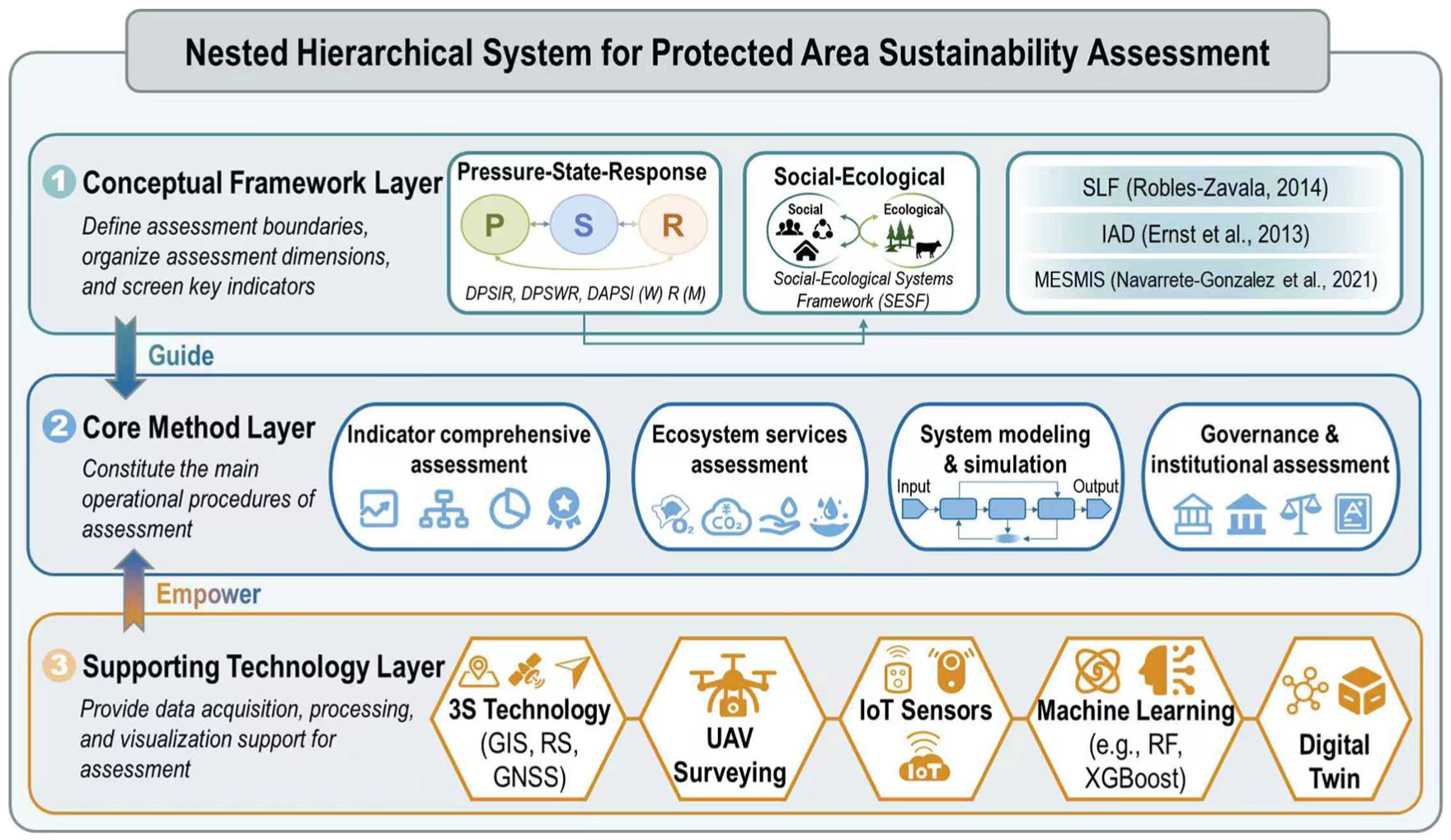
A three-tier hierarchy organizing protected area sustainability assessment methods into conceptual framework, core method, and supporting technology.
The conceptual framework layer acts as the logical starting point and analytical architecture for assessment. It is primarily used to define assessment boundaries, organize assessment dimensions, and screen key indicators. A number of well-recognized frameworks have been widely applied in relevant studies. The Pressure-State-Response (PSR) framework and its derivatives including Drivers-Pressures-State-Impact-Response (DPSIR), Drivers-Pressures-State-Welfare-Response (DPSWR), and Drivers-Activities-Pressures-State-Impacts-(Welfare)-Response-(Measures) (DAPSI(W)R(M)) are among the most commonly adopted (Huong et al., 2022; Semeraro et al., 2024; Xu et al., 2015). The Sustainable Livelihoods Framework (SLF) supports the assessment of livelihood-related sustainability (Albasri and Sammut, 2022; Munanura et al., 2016; Robles-Zavala, 2014). The Social-Ecological Systems Framework (SESF) promotes integrated analysis of coupled human and natural systems (Kurniawan et al., 2019; Strickland-Munro et al., 2010; Zagarkhorloo et al., 2021). Ostrom's Institutional Analysis and Development framework (IAD) provides a solid basis for research on institutional arrangements (Ernst et al., 2013; Milupi et al., 2020). The Framework for the Evaluation of Natural Resource Management Systems Incorporating Sustainability Indicators (MESMIS) supports comprehensive evaluation in natural resource governance (Navarrete-Gonzalez et al., 2021; Ramírez et al., 2024). These frameworks are not themselves independent assessment methods but rather the theoretical foundation for indicator system construction and assessment design. Their outputs provide structured inputs for subsequent quantitative assessment, which means conceptual frameworks should not be juxtaposed with core methods.
The core method layer consists of the main operational procedures of assessment. Methods in this layer present relatively independent methodological systems, clear mathematical foundations, and standardized application processes. According to their assessment objectives and logical cores, they can be divided into four core methodological paradigms: Indicator Assessment Methods, Ecosystem Services Assessment Methods, System Modeling and Simulation Methods, and Governance and Institutional Assessment Methods.
The supporting technology layer delivers critical support for data acquisition, processing, and visualization throughout the assessment process, though it does not form independent methodological paradigms. Various advanced technical tools have been widely used in practical assessment. Remote sensing and GIS are widely applied in spatial data processing and mapping (Ristic et al., 2018; Rodríguez-Rodríguez et al., 2019; Rudke et al., 2020). Other typical technologies include global navigation satellite systems, unmanned aerial vehicle surveying, and Internet of Things sensors. Machine learning algorithms such as Random Forest and XGBoost-SHAP have also been increasingly adopted to improve analytical performance (Wang et al., 2025; Yang et al., 2025a, 2025b). Digital twin platforms represent another emerging supportive tool. These technologies are extensively embedded within the aforementioned core methods and significantly enhance the spatiotemporal resolution, causal inference capabilities, and decision support efficacy of assessments. Supporting technologies should therefore not be classified as independent method categories, but regarded as shared technical infrastructure across different methods.
This section focuses on the systematic exposition of the second level, namely the core methodological paradigms. It aims to reveal their intrinsic relationship with conceptual definitions and assessment dimensions, and to trace their evolutionary trajectory and integration trends.
Indicator assessment methods: From single-dimensional diagnosis to multi-dimensional aggregation
Indicator assessment methods emerge from the fundamental pursuit of "measurability" in sustainability science. Their core logic involves decomposing the abstract concept of sustainability into observable, quantifiable indicators, which are then standardized, weighted, and aggregated to produce an overall judgment of system state. These methods exhibit the strongest affinity with the multi-dimensional balance definition, serving as the primary operational pathway for assessing ecological, economic, and social dimensions in an integrated manner.
The most prominent family within this paradigm is multi-criteria decision analysis (MCDA), which provides the computational engine for determining indicator weights and synthesizing composite indices. Methods such as the Analytic Hierarchy Process (AHP), Analytic Network Process (ANP), Technique for Order Preference by Similarity to Ideal Solution (TOPSIS), and fuzzy comprehensive evaluation have been widely applied to rank management alternatives and construct sustainability indices including the Sustainability Evaluation of Marine Protected Areas Index (SEMPAI) and the Protected Area Landscape Sustainability Index (PA-LS) (Asadpourian et al., 2020; Avelino et al., 2019; Lu et al., 2024; García-Melón et al., 2010).
Beyond MCDA, several specialized indicator approaches address particular dimensions of sustainability. Ecological Footprint Analysis converts human consumption into biologically productive land area, comparing this measure with biocapacity to derive ecological surplus or deficit (Gössling et al., 2002; Liu et al., 2016). This method bridges the ecocentric and multi-dimensional balance perspectives by characterizing resource consumption pressure while extending to socio-economic domains such as tourism and carbon footprints. Emergy Analysis uses solar emergy joules as a unified measurement unit to account for natural capital stocks and ecosystem service flows, offering a biophysical valuation approach particularly suited to ecological carrying capacity assessment (Berrios et al., 2021; Zuo et al., 2004).
Quantitative assessments within the Sustainable Livelihoods Framework (SLF) diagnose community vulnerability and adaptive capacity by indicatorizing and indexing the five capital assets—human, social, natural, physical, and financial (Islam et al., 2019; Munanura et al., 2016). This approach maintains strong connections to both the social-ecological system dimension and the governance-oriented dimension, revealing how livelihood assets mediate household responses to protected area policies.
Finally, composite index construction synthesizes multi-dimensional indicators through weighted or geometric aggregation to produce single values that facilitate policy communication and cross-context comparison. Representative examples include the Watershed Sustainability Index (WSI) (Chaves et al., 2021), the Sustainable Agriculture Livelihood Security Index (SALSI) (Das et al., 2024), and the aforementioned SEMPAI and PA-LS. These tools exemplify the field's ongoing effort to balance analytical comprehensiveness with communicative simplicity.
Ecosystem services assessment methods: From value accounting to trade-off analysis
The rise of ecosystem services assessment methods marks a shift in protected area sustainability assessment from an "ecological structure orientation" to a "human well-being orientation." Their core logic is to transform ecosystem processes and functions into contributions to human well-being and to achieve comparable value expression through monetization, emergy-based, or participatory assessment pathways. This methodological paradigm is profoundly connected to both the multi-dimensional balance definition and the social-ecological system definition, serving as a core tool for ecological-economic co-assessment and a key medium for revealing social-ecological feedback.
Among the major approaches in this field, ecosystem services valuation has been widely adopted. It mainly includes direct market pricing, replacement cost methods, travel cost methods, and contingent valuation methods (Castillo-Eguskitza et al., 2019; Doli et al., 2021; Nicola et al., 2017). These methods are widely applied to the monetization of services such as water yield, carbon storage, soil conservation, and habitat quality, providing a basis for protected area ecological compensation and green GDP accounting (Kitaibekova et al., 2023; Ma et al., 2021).
In addition to valuation techniques, a series of practical ecosystem services modeling tools have been developed and applied. Represented by InVEST (Kantharajan et al., 2023; Pei et al., 2024; Xiang et al., 2020), ARIES, SolVES, and LUCI, these spatially explicit models quantify service supply, demand, and flow. These tools are deeply embedded in the multi-dimensional balance dimension and the social-ecological system dimension and can output carbon sequestration and biodiversity indicators serving global agenda-embedded assessments (Ma et al., 2023; Wu et al., 2025).
Beyond quantification and mapping, ecosystem services trade-off and synergy analysis has become an important analytical perspective. Utilizing correlation analysis, bivariate Moran's I (Pei et al., 2024; Yang et al., 2025a), production possibility frontiers, and multi-objective optimization models, this approach identifies conflicts and synergies among different services. This method directly corresponds to the social-ecological system resilience dimension, providing decision support for protected area spatial planning and adaptive management (Ramírez et al., 2024; Zhou et al., 2024).
At the macro accounting level, the Revised System of Environmental-Economic Accounting (rSEEA) further integrates the above achievements into a systematic framework. This approach integrates ecosystem service values into national economic accounting systems, linking physical and monetary accounts (Campos et al., 2025)..
System modeling and simulation methods: From static description to dynamic simulation
System modeling and simulation methods are rooted in complexity science and resilience theory. Their core logic is to conceptualize protected areas as complex adaptive systems composed of multiple agents, multiple elements, and multiple scales, revealing non-linear dynamics, feedback structures, and threshold behaviors through mathematical equations, computational models, and scenario projections. This methodological paradigm is intrinsically isomorphic with the social-ecological system definition and constitutes the methodological core of resilience assessment and adaptive management research.
A foundational approach within this paradigm is system dynamics, which simulates the evolutionary trajectory of social-ecological systems over time through stock-flow diagrams and causal loop diagrams (Nugroho et al., 2019). This method is particularly applicable to long-term simulations spanning both the ecological carrying capacity dimension—such as population dynamics and resource consumption—and the governance effectiveness dimension, including the assessment of policy intervention effects.
Building upon this systemic perspective, agent-based modeling offers a complementary bottom-up approach that characterizes the behavioral rules and interaction patterns of heterogeneous agents, including residents, tourists, managers, and enterprises. By simulating how macro-level system states emerge from micro-level decisions (Levi et al., 2009; Yang et al., 2022), this method demonstrates strong coupling with both the social-ecological system dimension and the governance and process-oriented dimension. It proves especially valuable for examining complex issues such as co-management governance arrangements, tourism carrying capacity conflicts, and land use competition.
Complementing these dynamic simulations, network analysis provides a structural lens for understanding system resilience. This approach abstracts landscape patches, stakeholders, and institutional rules into nodes and edges, measuring systemic structural resilience through metrics including centrality, connectivity, and robustness. It has been widely applied to the dual assessment of ecological networks—encompassing ecological corridors, source identification, and circuit theory applications (Pang et al., 2017; Zhao et al., 2025; Zhou et al., 2024)—and social networks, including collaborative governance structures and knowledge flow dynamics (Bhushan et al., 2024; Candino et al., 2024; Zagarkhorloo et al., 2021).
Moving from general system properties to more targeted ecological applications, viability models and spatially explicit population models address species-level dynamics under multiple constraints. Viability models, grounded in dynamic game theory and constraint satisfaction theory, identify the "viability kernel" within which systems maintain essential functions (Doyen et al., 2007). Spatially explicit population models, based on individual and population dynamics, simulate long-term species responses to disturbances such as hunting pressure and climate change (Oedin et al., 2022; Shaffer et al., 2018; Swanepoel et al., 2014). These methods directly correspond to both the ecocentric dimension and the social-ecological system dimension, bridging population ecology with broader system dynamics.
The methodological repertoire further extends to land use/land cover change simulation models, including CA-Markov, PLUS, and LandSim, which project future land use scenarios and their cascading impacts on ecosystem services and ecological risks (Lotze-Campen et al., 2018; Tulloch et al., 2016; Ulisse et al., 2024). Finally, species distribution models combine environmental variables with species occurrence data to predict habitat suitability and spatial distribution patterns, providing critical evidence for protected area planning and design (Li et al., 2021; Rufener et al., 2023).
Governance and institutional assessment methods: From performance measurement to causal inference
Governance and institutional assessment methods recognize that sustainability outcomes are shaped not only by biophysical conditions or economic incentives but fundamentally by the quality of decision-making processes themselves (George and Reed, 2017; Ward et al., 2018). Three conceptually distinct concepts must be distinguished. Governance quality refers to procedural attributes of decision-making—transparency, participation, accountability, and fairness (Agyare et al., 2015; Oduor, 2020). Management effectiveness concerns the efficiency and adequacy of planning, resource allocation, and implementation activities. Sustainability denotes the long-term capacity of a social-ecological system to maintain ecological integrity, social equity, and economic viability. Governance and institutional assessment methods primarily target the first two concepts, illuminating process pathways through which sustainability may be pursued, while recognizing that high-quality governance and effective management are necessary but not sufficient conditions for achieving sustainability outcomes.
A foundational framework within this tradition is Ostrom's Institutional Analysis and Development (IAD) framework, which diagnoses conditions under which common-pool resource governance succeeds or fails. Analyzing interactions among action situations, actors, and rule systems, this approach identifies institutional design principles—clearly defined boundaries, collective-choice arrangements, and graduated sanctions—that enhance the likelihood of sustainable resource management (Ernst et al., 2013; Milupi et al., 2020). The IAD framework assesses governance quality by examining whether institutional arrangements align with theoretically grounded success conditions, providing systematic diagnostic criteria for understanding governance outcomes.
Extending this diagnostic logic to relational structures, social network analysis characterizes power relations, information flows, and collaborative configurations among stakeholders. By quantifying network properties such as centrality, density, and connectivity, this approach reveals how social capital and trust shape collective action and institutional performance (Bhushan et al., 2024; Candino et al., 2024; Zagarkhorloo et al., 2021). Here, governance quality is assessed through structural indicators—who is connected to whom, how information circulates, where bottlenecks occur—providing insights into the relational foundations of adaptive capacity.
While the IAD framework and social network analysis excel at describing governance structures, they do not definitively establish whether observed governance arrangements actually produce desired sustainability outcomes. Addressing this gap, counterfactual impact evaluation methods—including propensity score matching (PSM), difference-in-differences (DID), regression discontinuity, and instrumental variables—identify the net effects of protected area interventions on social and ecological outcomes (Mawa et al., 2022; Morgans et al., 2024; Shaffer et al., 2018; Whitehouse and Fowler, 2018). These quasi-experimental approaches construct control groups to isolate treatment effects, moving from "correlational description" to "causal inference" and providing robust evidence on whether specific governance interventions contribute to sustainability.
Complementing these analytical approaches, management effectiveness assessment tools—such as the Management Effectiveness Tracking Tool (METT), the Rapid Assessment and Prioritization of Protected Area Management (RAPPAM), and IMPASEA—provide standardized frameworks for evaluating protected area planning, inputs, processes, and outputs (Rodríguez-Rodríguez et al., 2015; Leverington et al., 2010). Importantly, these tools differ from sustainability assessment proper: while METT and RAPPAM evaluate the efficiency and adequacy of management processes (e.g., staff sufficiency, planning documents, enforcement implementation), they do not directly measure whether these processes produce lasting ecological integrity, social equity, or economic viability. Rather, they assess procedural conditions that enable effective management.
Finally, participatory assessment methods embed local knowledge and diverse value preferences into the evaluation process. Encompassing participatory mapping (Jones et al., 2005), community scorecards, the Delphi method (Aydin and Öztürk, 2023; Weng et al., 2019), focus groups (Oduor, 2020; Vezina et al., 2020), and semi-structured interviews (Lunn and Dearden, 2006; Wang et al., 2018), these techniques capture perspectives that standardized indicators may overlook. By centering stakeholder voices, participatory approaches operationalize procedural justice principles and ensure that governance assessments reflect the values of those most directly affected by protected area decisions (Levrel and Bouamrane, 2008; Marques et al., 2013).
In summary, governance and institutional assessment methods contribute to sustainability science by illuminating the institutional and procedural pathways through which sustainable outcomes may be pursued. They assess governance quality (through IAD and social network analysis), identify causal effects of governance interventions (through counterfactual methods), evaluate management effectiveness (through METT, RAPPAM, and similar tools), and incorporate stakeholder perspectives (through participatory approaches). Together, these methods provide a comprehensive toolkit for diagnosing the process dimensions of protected area management. Whether high-quality governance and effective management translate into long-term sustainability remains an empirical question—one requiring integration with the ecological, economic, and social assessment methods discussed in previous sections.
Discussion
Based on 329 empirical studies, this systematic review reveals a clear evolutionary trajectory of protected area sustainability assessment across three interrelated dimensions: conceptual connotation, assessment dimensions, and methodological paradigms. However, this evolution is characterized by conceptual pluralism, parallel development of dimensions, and fragmented methodological systems, rather than linear integration. Building on the analysis presented earlier, this paper identifies logical ruptures at both the conceptual and methodological levels, summarizes core research gaps, and proposes future research directions.
Conceptual ruptures
The definition of protected area sustainability has evolved cumulatively from ecocentrism and multi-dimensional balance social-ecological system and governance process-oriented approaches, anchored respectively in carrying capacity thresholds, multi-dimensional balance, system resilience, and procedural justice. Nevertheless, conceptual pluralism has not been translated into integrated assessment practices.
First, decoupling between definition and assessment objectives: most studies claim to adopt social-ecological system or resilience perspectives in their introductions(Yang et al., 2025a), yet empirically continue to use a multi-dimensional balance indicator framework centered on biodiversity, tourism revenue, and resident satisfaction (Zhang et al., 2022), leading to assessment results that cannot be traced back to their theoretical concepts and diluting their connotation. Second, the temporal dimension is rendered virtual: although the definition has shifted toward emphasizing processes, empirical assessments mostly rely on cross-sectional data to construct composite indices, using single-year scores to represent sustainability levels (Yang et al., 2025b), which obscures the dynamic response characteristics of the system and contradicts the requirements of adaptive management.
Dilemmas in methodological integration
Current assessment methods have crystallized into four core paradigms: Indicator Assessment, Ecosystem Services Assessment, System Modeling and Simulation, and Governance and Institutional Assessment. This categorization has led to three interrelated integration dilemmas.
First, decoupling between conceptual frameworks and methods: frameworks such as DPSIR, SLF, and SESF are mostly used as indicator classification templates (Semeraro et al., 2024), and the causal chains and feedback loops embedded within them have not been operationalized by subsequent quantitative models, resulting in a disconnect between qualitative diagnosis and quantitative analysis. Second, rigid boundaries between paradigms: each paradigm has its own strengths and limitations, yet there is a lack of research on interfaces and translation protocols between paradigms. Third, supporting technologies have not achieved logical reconstruction: remote sensing, GIS, and machine learning only improve efficiency without changing the linear logic of "indicator-weighting-aggregation” (Wang et al., 2025), making it difficult to meet assessment needs under climate change and multiple crises.
Core research gaps
Synthesizing the above analysis, there are three core research gaps: (1) The absence of a logical chain linking "concept-dimension-indicator-method," with widespread decoupling between definition and assessment, and mismatch between dimensions and methods; (2) The "trade-off" assessment of multi-dimensional objectives remains a black box: the existing "separate-then-aggregate" approach cannot address decision priority issues under multi-value conflicts, and relevant decision-analytic tools are lacking; (3) The absence of a feedback loop between assessment and management: most assessments are retrospective, and prospective assessments required for adaptive management are extremely scarce, making it difficult to translate research results into the optimization of management systems.
Future research directions
To address the above gaps, future research needs to make breakthroughs in four aspects: (1) Develop an integrated assessment framework unifying "concept-dimension-method," establish a "context-objective-method" matching matrix, and improve the operationalization of the SESF framework and its interface with models; (2) Advance decision-support methods for trade-off analysis and value integration, introduce Multi-Objective Decision Analysis (MODA) and Structured Decision Making (SDM) frameworks, and integrate participatory modeling with coupled ecological-social models; (3) Reconstruct the temporal logic of assessment around dynamic adaptability, establish monitoring-assessment coupling mechanisms, develop hybrid simulation models, and embed adaptive management experiments; (4) Promote research on the translation mechanisms from assessment outputs to management actions, and combine science-policy interface theory to improve the "policy conversion rate" of assessments.
Conclusions
This systematic review of 329 empirical studies synthesizes three decades of research on protected area sustainability assessment, revealing a field that has evolved from fragmented, ecologically oriented case studies into a globally engaged, practice-driven domain. Our analysis yields two principal contributions. Conceptually, we identify four definitional paradigms—ecocentric, multi-dimensional balance, social-ecological system, and governance process-oriented—which trace a clear trajectory from static carrying capacity thresholds toward dynamic adaptability, procedural legitimacy, and multidimensional balance. Methodologically, we reconstruct a coherent three-tier hierarchy of assessment system, including conceptual frameworks, core methodological paradigms (indicator-based assessment, ecosystem services modeling, system simulation, and governance evaluation), and supporting technologies, resolving long-standing terminological confusion and providing a structured system for method selection.
Despite this progress, the field remains hampered by three interrelated gaps: logical decoupling between sustainability concepts and their empirical operationalization; black-box treatment of trade-offs among ecological, economic, and social objectives; and absence of feedback loops between retrospective assessment and prospective adaptive management. Addressing these deficits requires a paradigmatic shift toward an integrated, dynamic, and context-configured framework. Future research should prioritize decision-analytic tools that visualize trade-offs and incorporate stakeholder preferences, embed adaptive management experiments into assessment design, and elucidate the institutional pathways through which scientific evidence translates into management action. Ultimately, protected area sustainability assessment is not reducible to any single index; it is a multidimensional practice demanding pragmatic integration of rigorous science, inclusive governance, and iterative learning.
Footnotes

Funding
The authors disclosed receipt of the following financial support for the research, authorship, and/or publication of this article: This research was supported by the National Natural Science Foundation of China (NSFC) (Grant No. 42361144859, and No. 42571333).
Declaration of conflicting interests
The authors declared no potential conflicts of interest with respect to the research, authorship, and/or publication of this article.
Data Availability Statement
The data used in this study are all openly available.