




Abstract
Urban green spaces are key areas where residents interact with and experience the natural environment. These spaces provide a broad range of ecosystem services, including non-material benefits, specifically the cultural ecosystem services (UG-CES), that contribute to human well-being. Ecosystem services are important for human well-being, particularly in promoting health and overall welfare. CES, as a critical category of ecosystem services, is closely linked to human health. Through a systematic review of the expanding body of literature on UG-CES, three primary areas were identified: UG-CES valuation; supply and demand dynamics; and the relationship between UG-CES and human well-being. The research progress and limitations of these three domains are summarized. Finally, a framework highlighting four topics are proposed, i.e.: enhancing UG-CES research associated with design & planning and management practices; spatial (explicitly optimizing the supply-demand match of UG-CES); exploring the human well-being promoting mechanism of UG-CES; and conducting scenario-based simulations to understand the dynamics of UG-CES. This framework forms the context into which future UG-CES research for human well-being could be placed. It is hoped that it would be helpful for better understanding the importance of UG-CES and the necessity of incorporating UG-CES into urban greenspace planning and management practices for promoting human well-being.
Introduction
With the global rapid urbanization, more than two-thirds of the population will live in urban areas by 2050 (United Nations [UN], 2022). As an important multifunctional landscape and green infrastructure in urban areas (Cheng et al., 2021; Cohen et al., 2014; Reyes-Riveros et al., 2021), urban green space (UG) provides a wide range of ecosystem services. It plays a crucial role in maintaining urban ecosystem sustainability (Niemelä et al., 2010) and supplying places for urban residents to experience the natural environment (Dallimer et al., 2014; Yang et al., 2021). With increasing amounts of research focusing on UG, abundant topics have been widely discussed including early-focused spatial patterns (Qiu et al., 2013), ecological benefits (Gratani et al., 2016), accessibility and equity (Artmann et al., 2019; Stessens et al., 2017), as well as a more recent focus on landscape multifunctionality (Wang et al., 2021c; Wang et al., 2021a) and ecosystem services related to human well-being (Chen and Huang, 2020; Jabbar et al., 2022; Li et al., 2020; Wang et al., 2024b).
The concept of ecosystem services integrated interdisciplinary knowledge and provided new opportunities for the sustainable development of urban landscapes. According to the Millennium Ecosystem Assessment (MA, 2005), ecosystem services involve supporting, provisioning, regulating and cultural dimensions. Cultural ecosystem services (CES) refer to the non-material benefits that human derive from ecosystems, which include spiritual enrichment, cognitive development, recreation and ecotourism, aesthetic experiences, et al. Varied CES closely associate nature and people via perception and interaction. CES has been the key hub in the cascade framework of ecosystem services and human well-being (Haines-Young and Potschin-Young, 2010). The CES provided by urban green spaces, here called UG-CES, is regarded as one way for urban ecosystem management practice to establish multidimensional connections between urban residents and the natural environment (Langemeyer et al., 2015). Recently, the theoretical framework, assessment approaches, influencing factors, and practical applications of UG-CES have been widely focused upon and studied (Dickinson and Hobbs, 2017; Havinga et al., 2020; Wang et al., 2021b). The findings of these studies provide scientific evidence for understanding the relationship between UG-CES and human well-being, improving urban living conditions, and promoting sustainable development. With high rates of urbanization and accompanying health risks, increasing the quantity and quality of urban green spaces has been considered a nature-based solution by managers and decision-makers to optimize urban residential settlements. Although many previous studies have synthesized existing knowledge on cultural ecosystem services from different perspectives (Cheng et al., 2019; Kosanic and Petzold, 2020; Romanazzi et al., 2023), the issues associated with UG-CES and planning and management practices for human well-being are still not reviewed.
Therefore, based on bibliometrics and knowledge mapping analysis, this study aims to provide a systematic quantitative literature review on UG-CES and its potential associations with human well-being. This paper is designed to update the recognition of the research frontiers of UG-CES, and to discuss the challenges and prospects for UG-CES research. This systemical review might form the basis for the future UG-CES research incorporated into UG planning and management practices for promoting human well-being.
Synthesis of literature analysis
We used the Web of Science Core Collection database to conduct a systematic literature review in December 2023. All UG-CES related literatures were comprehensively searched based on the search terms: “(“urban green space*” OR “urban park*” OR “green infrastructure” OR “public garden*”) AND (“cultural ecosystem service*” OR “cultural service*”) AND (“urban” OR “city”)”. During the literature retrieval process, a total of 356 relevant articles were initially identified. After removing five duplicate records, 351 articles remained for screening. Of these, 19 articles were excluded as they did not align with the research focus. The remaining 332 articles underwent further evaluation, during which 16 articles were excluded based on abstract review and an additional 20 articles were excluded after full-text review. A total of 296 publications were selected for further analysis (Figure 1).
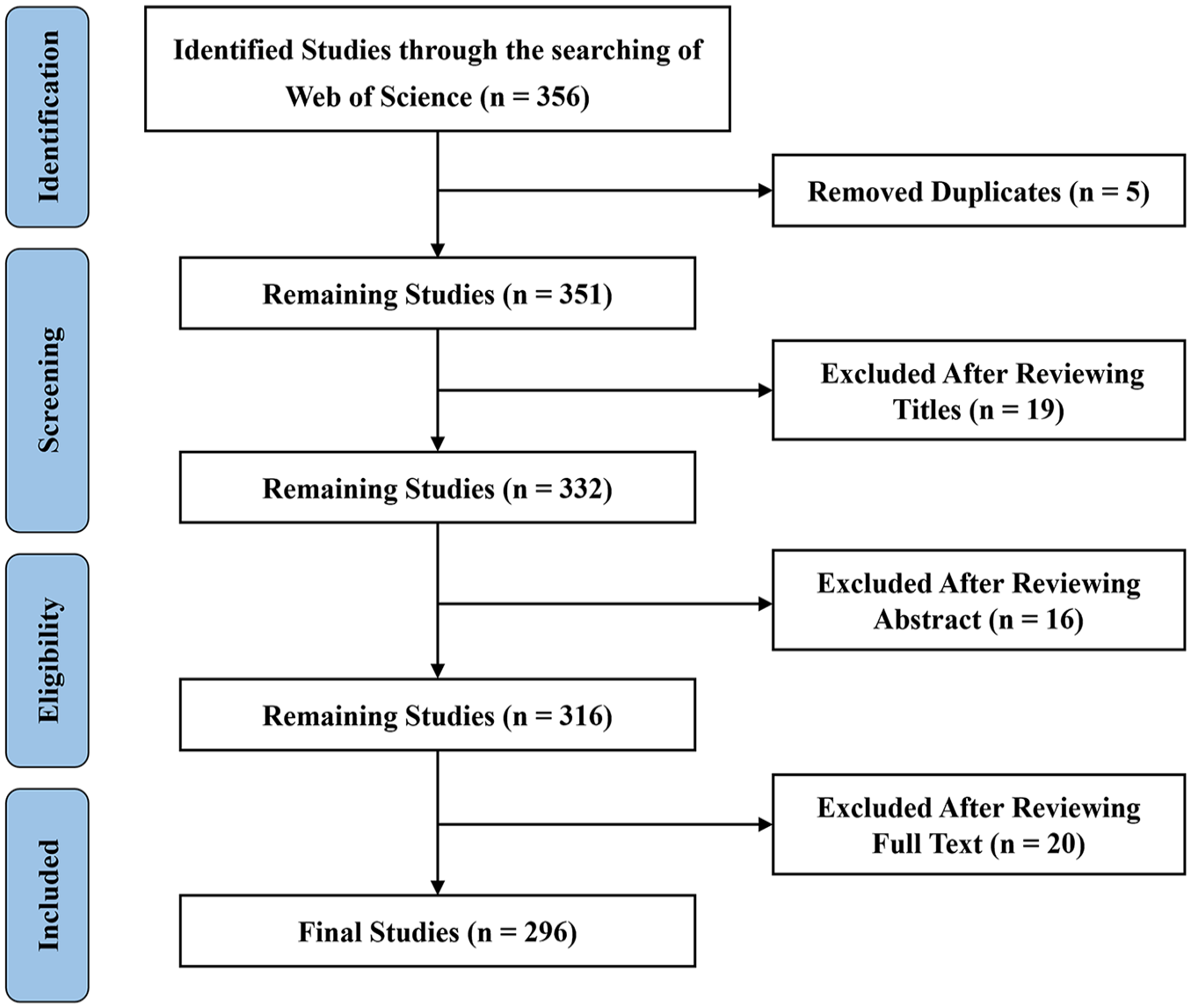
Selection process of the studies for the review.
Publication characteristics
The publications and features on UG-CES are shown in Figure 2a. Since 2010, relevant research has emerged, with its volume continuing to grow, particularly between 2017 and 2023. From the perspective of research disciplines (Figure 2b), UG-CES research is primarily concentrated in Environmental Sciences and Ecology (37%), Urban Studies (13%), Forestry (8%), Science and Technology (7%), and Plant Sciences (7%), demonstrating the multidisciplinary nature of UG-CES studies. A statistical analysis of author affiliations revealed that UG-CES research was conducted in 55 countries or regions. Figure 2c presents the distribution of publications by country or region, providing an indication of the global research activity in UG-CES. Overall, UG-CES research is predominantly concentrated in China, Europe, and the United States, with China leading in terms of publication volume (51 papers). Germany (29 papers) and the United States (25 papers) are also demonstrated significant research output.
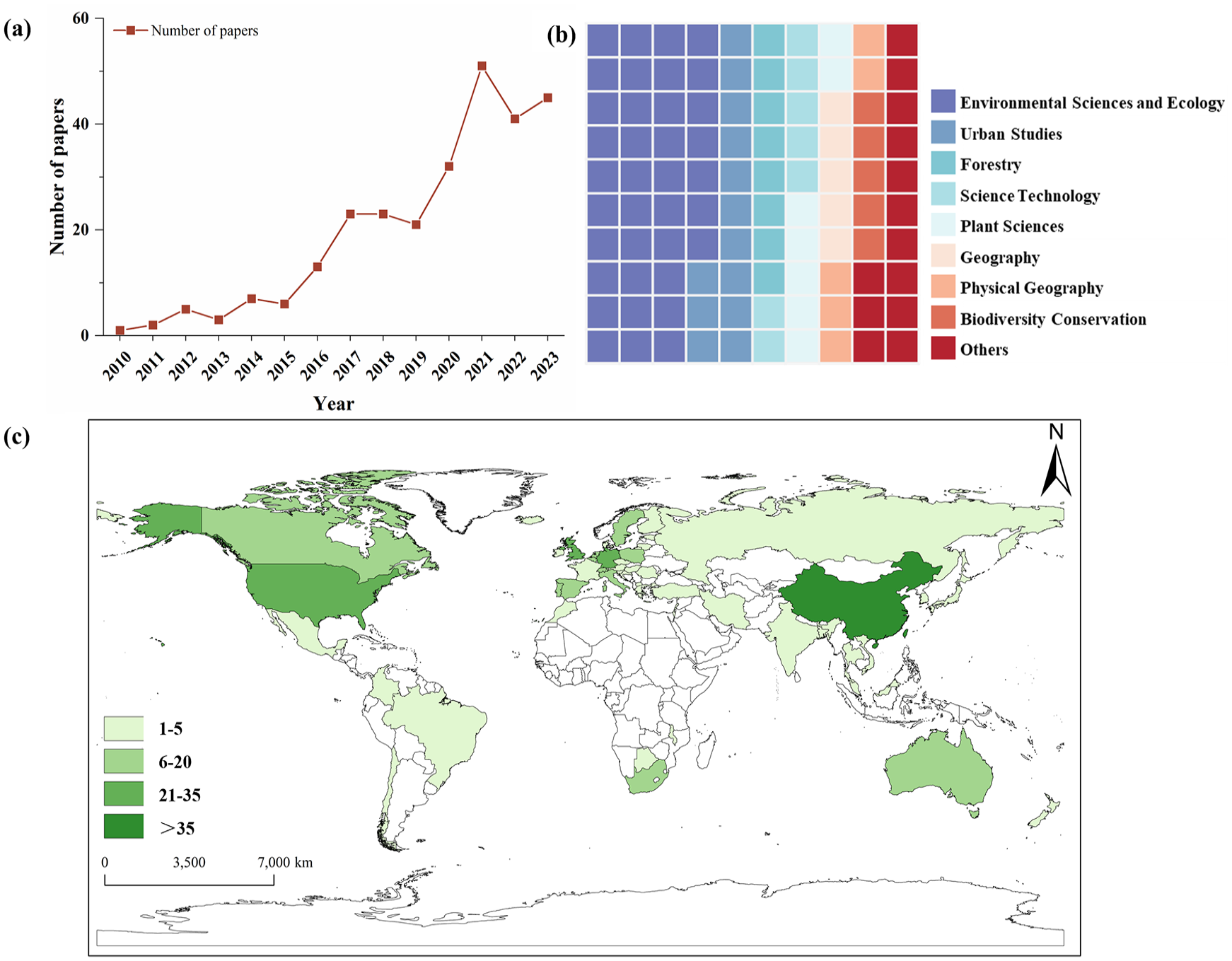
UG-CES research publication amount, direction and regional distribution.
Knowledge mapping the keywords
The literature keywords were further analyzed and generated as a keyword map in CiteSpace.Figure 3 shows the co-occurrence of keywords, each node represents a keyword. Here, terms such as “cultural ecosystem services”, “ecosystem services”, “green infrastructure”, “city”, “biodiversity”, “physical activities”, “perceptions”, “benefits”, and “health” appeared most frequently, establishing them as core terms within the field. From a temporal perspective, early research primarily focused on areas such as diversity, associations, valuation, physical activity, green infrastructure, and management. In recent years, however, topics such as perceptions, benefits, health, demand, and accessibility have gradually emerged as key research hotspots. This reflects, to some extent, the shift from an early focus on the fundamental and quantitative assessment of UG-CES to a growing emphasis on non-material benefits associated with human well-being. These keywords exhibit strong potential for further exploration, highlighting key research directions and emerging trends in this area.
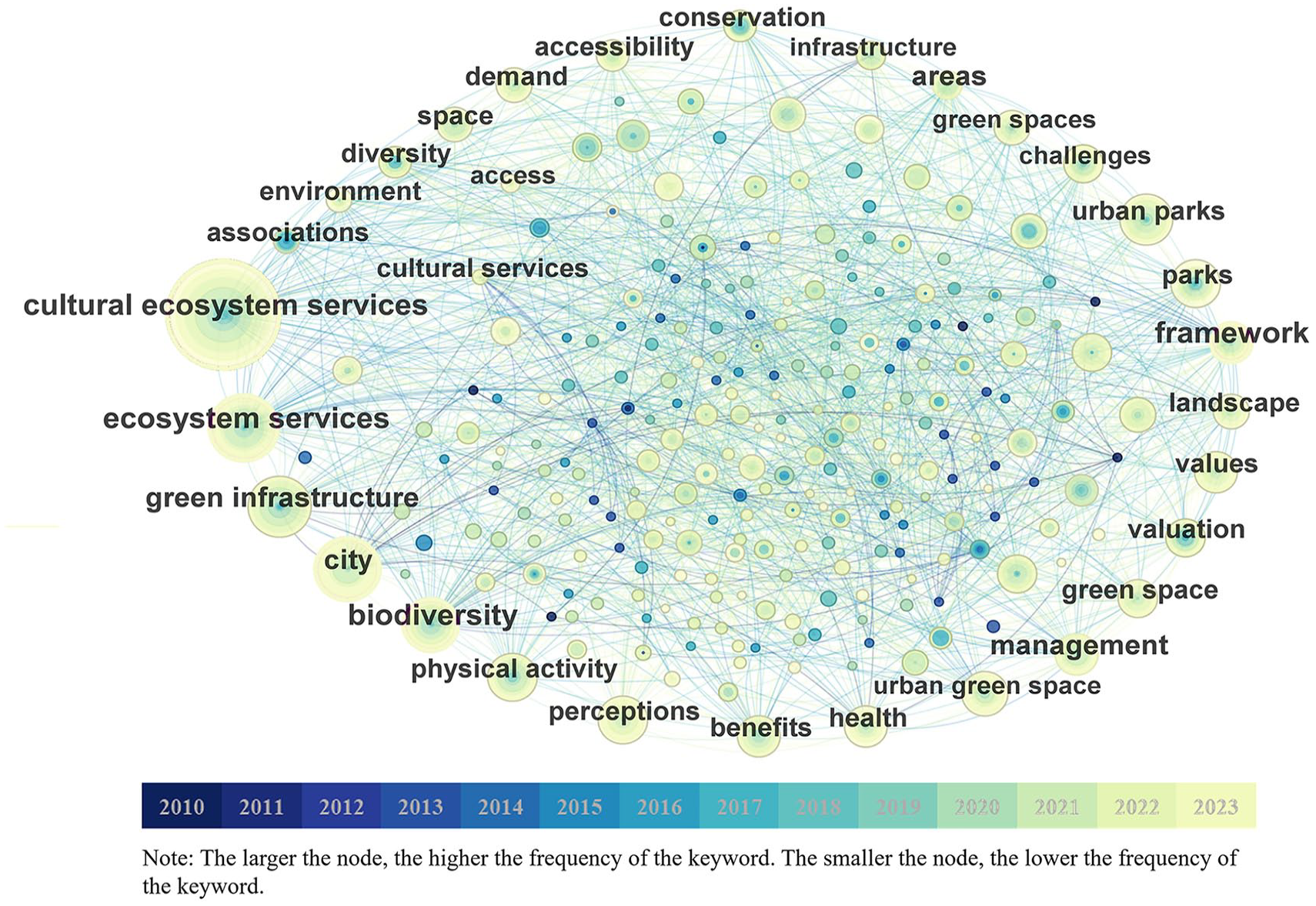
Co-occurrence of UG-CES keywords.
Keyword clustering is an algorithmic process that groups closely related keywords, with the most prominent keyword representing each cluster. By identifying turning points, key markers, and highly neutral points within the graph, the development trajectory of a field and its representative knowledge clusters can be revealed (Chen, 2021). Figure 4 presents the keyword clustering map of UG-CES-related research, which identifies 11 distinct clusters labeled as follows: #0 environmental justice, #1 climate change, #2 cultural services, #3 social media, #4 urban green space, #5 public health, #6 urban planning, #7 cultural ecosystem services, #8 environmental psychology, #9 provisioning services, and #10 big data.
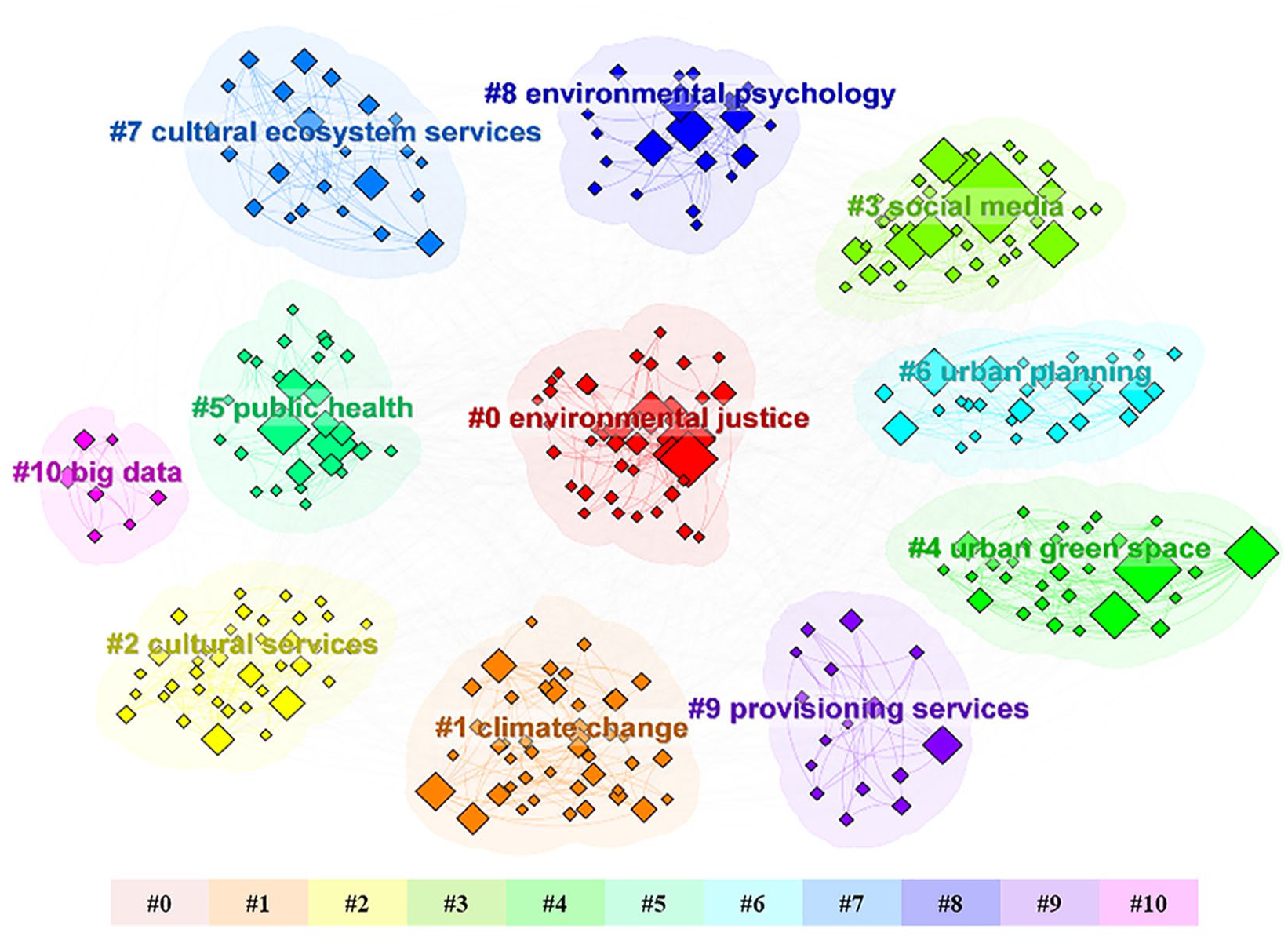
Cluster map of UG-CES keywords.
Through the analysis of keyword co-occurrence and clustering maps, the research theme hotspots within the UG-CES field are systematically organized and predominantly centered around three key aspects: the UG-CES value assessment, supply-demand dynamics of UG-CES, and UG-CES and human well-being. In the realm of UG-CES value assessment, the primary keywords and clusters identified include “green infrastructure”, “biodiversity”, “management”, #0 environmental justice, and #10 big data. The supply-demand dynamics of UG-CES are characterized by keywords such as “perceptions”, #3 social media, #6 urban planning, and #9 provisioning services. Finally, research on UG-CES and human well-being is marked by clusters related to “health”, “benefits”, “physical activities”, “perceptions”, #1 climate change, #5 public health, and #8 environmental psychology.
Progress and trends of research hotspots
UG-CES value assessment
Assessment approaches of UG-CES
Evaluation methods in UG-CES research can be broadly categorized into three types: monetized quantitative evaluation, non-monetized quantitative evaluation, and comprehensive evaluation. Early assessments primarily employed monetization techniques. However, due to the intangible, non-consumptive, localized, and interdisciplinary nature of UG-CES (Chan et al., 2012; Daniel et al., 2012), exclusive reliance on economic approaches, monetized quantitative evaluation such as willingness-to-pay models, have certain limitations and remain a topic of debate (Wei et al., 2023). Non-monetized evaluation methods, which integrate multidisciplinary and multi-perspective approaches, gained considerable attention and application after 2013. These methods include quantitative tools from environmental psychology, cultural geography, and sociology, such as surveys, expert consultations, behavioral observation, and social media data analysis. Non-monetized evaluations offer a more comprehensive understanding of UG-CES by capturing the complexity of cultural services, addressing the limitations of earlier studies.
In monetized quantitative evaluations, three main categories are commonly used (Table 1): direct market methods, indirect market methods, and contingent valuation methods (Dai et al., 2019). Among these, the hedonic pricing method, a form of indirect market evaluation, is the most frequently applied. This approach estimates the economic value of UG-CES by analyzing changes in property values surrounding green spaces (Park et al., 2017). Contingent valuation methods are also widely utilized, assessing urban residents' willingness to pay for specific UG-CES and the corresponding payment amounts (Shackleton et al., 2018).
UG-CES evaluation methods.
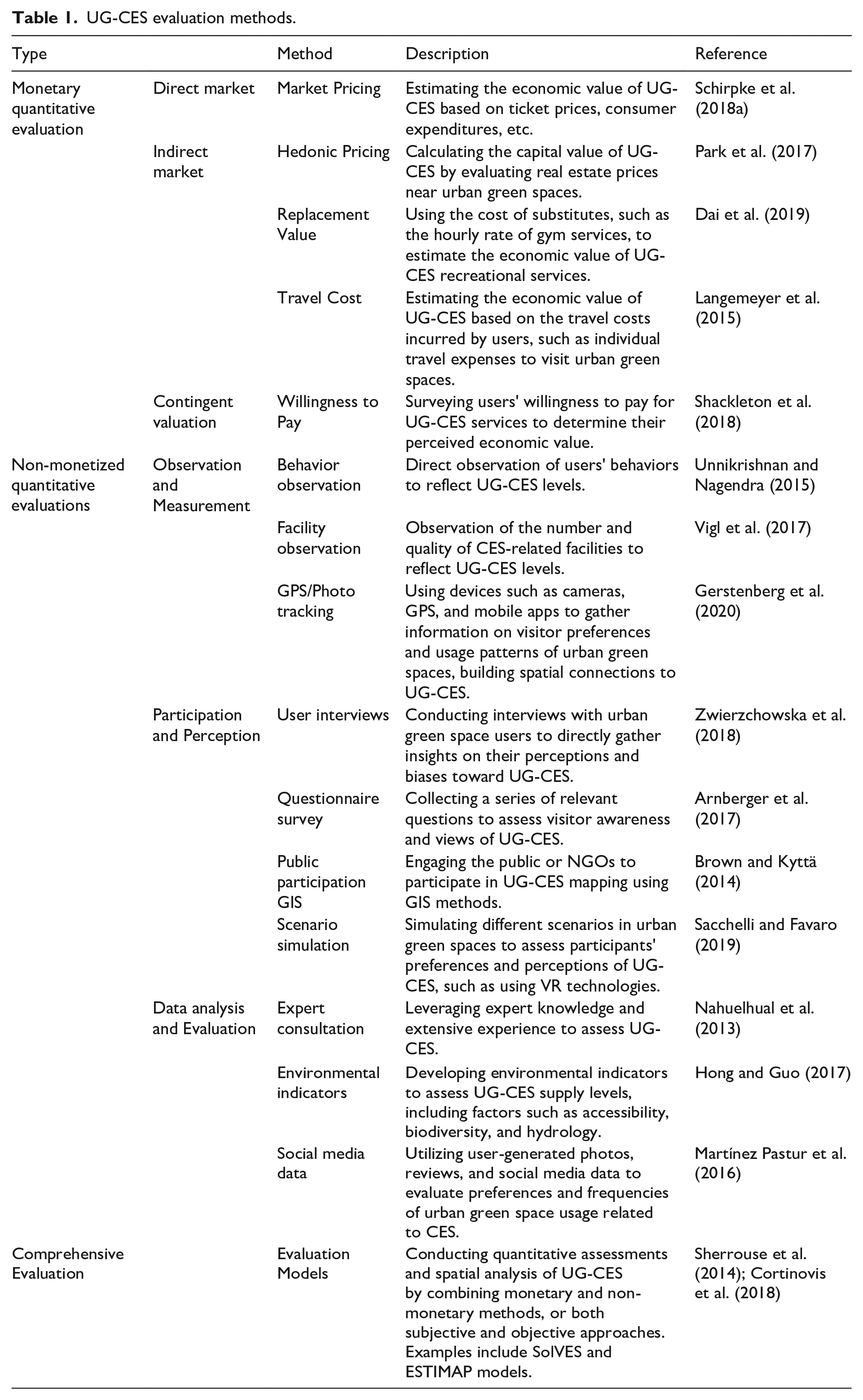
In non-monetized quantitative evaluations, three main approaches are commonly employed: observation and measurement, participation and perception, and data analysis and simulation (Table 1). The observation and measurement approach emphasizes collecting objective data through field observations and technical tools, directly reflecting the actual supply and usage of UG-CES. The participation and perception approach focuses on subjective experiences and cognition, gathering in-depth information through interaction, making it suitable for assessing the perceived value, social significance, and public demand for UG-CES. Data analysis and simulation leverage professional expertise and existing datasets to provide comprehensive evaluations of UG-CES from a macro and technical perspective. Resident interviews and surveys are frequently used to capture users' perceptions and preferences regarding UG-CES. In recent years, methods such as participatory mapping and tourist photo-tracking have been employed to visualize intangible CES, enhancing the understanding of UG-CES spatial dynamics (Nahuelhual et al., 2016). In data analysis and simulation, environmental indicators are often used to construct UG-CES evaluation frameworks, typically based on relevant research and datasets (Hong and Guo, 2017). The application of big data has also become a focal point in interdisciplinary UG-CES research. Social media data, including photos and reviews, provide insights into the usage frequency and preferences for urban green spaces, offering a public perspective on residents' perceptions and interactions with CES (Martínez Pastur et al., 2016). This data-driven approach introduces new insights and directions for UG-CES research.
Characteristics of UG-CES value
Many studies have assessed the economic value of UG-CES using monetization methods. For example, park entrance fees and local ecotourism revenues were used to calculate to estimate the monetary value of UG-CES, and found that annual value of CES in five parks in Indonesia ranged from €1960 to €631,050 (Sumarga et al., 2015). Using the travel cost method, New York’s Riverside Park was estimated to provide approximately $7500 to $25,500 annually in educational value for the local student population (Hutcheson et al., 2018). Additionally, some researchers applied the replacement cost method to estimate the value of sports services in urban parks by calculating visitors' exercise time and comparing it to the average hourly fee at local gyms. For example, Dai et al. (2019) found that parks in the study area generated an annual sports service value of approximately 7.23 billion RMB. Monetized valuation methods not only enhance decision-makers' understanding of the economic benefits and risks associated with UG-CES but also raise public awareness (Cheng et al., 2019). Furthermore, these methods provide a practical means of integrating CES evaluations into the broader ecosystem services research framework.
A comprehensive comparison of UG-CES economic valuation studies reveals significant disparities in economic value due to variations in study regions, evaluation methods, and assessment standards. Additionally, monetization efforts often prioritize easily quantifiable services such as aesthetics and recreation (Van Berkel and Verberg, 2014), while overlooking other CES, thereby marginalizing their diverse value attributes (Dong et al., 2014). Non-monetized evaluation methods can help bridge this gap by fostering stronger connections between the public and the value of UG-CES (Arnberger et al., 2017; Nahuelhual et al., 2013; Zwierzchowska et al., 2018). For instance, Pietrzyk-Kaszyńska et al. (2017) used participatory mapping to compare CES values between public and non-public urban green spaces, finding that public green spaces exhibited higher aesthetic, recreational, and ecotourism values. Peng et al. (2019) found through questionnaires and structured interviews that, in Shanghai's Gongqing Forest Park, social interactions are most prevalent in grasslands, while forests exhibit the highest frequency of educational services, and riverside areas are characterized by a high value for inspirational services. Objective evaluation results from Tu et al. (2023) on parks and green spaces in Beijing's three-hills and five-gardens area showed that sites such as Old Summer Palace, the Summer Palace, and the Beijing Botanical Garden of Chinese Academy of Sciences, which feature numerous educational resources, including exhibition halls, audiovisual media, and frequent educational activities, hold significant cultural and educational value. The findings of Cheng et al. (2022) revealed that in urban parks, social relationships are strongly correlated with spiritual and religious values, as well as inspiration. In contrast, a negative correlation was observed between aesthetic values and educational values.
Non-monetary methods also enable differentiation of CES values based on landscape composition and vegetation types within urban green spaces. Sacchelli and Favaro (2019) combined virtual reality and acoustic parameters to assess visitors' experiences in urban parks, discovering that areas with appropriate tree density and natural soundscapes held higher CES values. Similarly, Rathmann et al. (2020) found that preserved deadwood in urban forest parks contributed significantly to aesthetic and recreational value. In terms of integrated methods, the SolVES model has emerged as a widely used tool for ecosystem service assessment (Márquez et al., 2023). For example, Sherrouse et al. (2011) applied the SolVES model to generate social value maps, quantitatively assessing aesthetic and recreational values in the San Isabel National Forest. Additionally, Huo et al. (2018) combined the SolVES model with expert surveys to map non-monetary value indices and evaluate CES values in South Wuyi Ecological Park, Zhejiang Province.
UG-CES value assessment with planning, design and management
UG-CES is closely connected to urban sustainability and management and is influenced by land use and planning policies (Langemeyer et al., 2015; Riechers et al., 2016). Enhancing the potential of UG-CES through effective urban green space planning and management has become a key area of research. By understanding users' preferences and diverse needs, researchers have proposed targeted strategies for optimizing green space functions. For instance, studies have identified patterns in residents' use of cultural services in green spaces by analyzing recreational activities and expenditures, with the aim of improving planning and management (Schirpke et al., 2018b. Arnberger et al. (2017), through surveys, found that visitors prefer areas with dense shrubbery and recommended that green space design consider visual effects. Similarly, Campbell et al. (2016) integrated observation and interviews to develop a method for incorporating CES into park management and for resilient planning.
In recent years, advancements in spatial mapping techniques for UG-CES have provided valuable spatial data to inform green space management. Participatory GIS/ Public Participation GIS (PGIS/PPGIS), for example, has improved the understanding of spatial dynamics, facilitating the identification of green spaces that hold significance for urban residents (Bijker and Sijtsma, 2017; Brown et al., 2018; Heikinheimo et al., 2020). Nahuelhual et al. (2013) applied participatory mapping combined with expert validation to map the spatial distribution of recreational and ecotourism services, offering insights for tourism planning. Additionally, Rall et al. (2017) highlighted the uneven distribution of UG-CES from central Berlin to its outskirts, prompting discussions on environmental justice.
As CES is inherently tied to specific locations, the public's emotional connection to these areas enhances their awareness of urban green space management. Research indicates that the public's willingness to engage in environmental activities is closely linked to their perception of CES, with recreational and aesthetic values serving as key motivations for residents to protect urban forests (Nielsen et al., 2018). Zwierzchowska et al. (2018) suggested translating residents' needs into CES evaluation indicators, encouraging visitors to actively participate as stakeholders in park management. Consequently, UG-CES serves as a medium that strengthens interactions between the public, planners, and managers, promoting active public involvement in urban planning and management decisions (Tidball and Stedman, 2013).
Supply and demand analysis of UG-CES
Factors influencing the supply of UG-CES
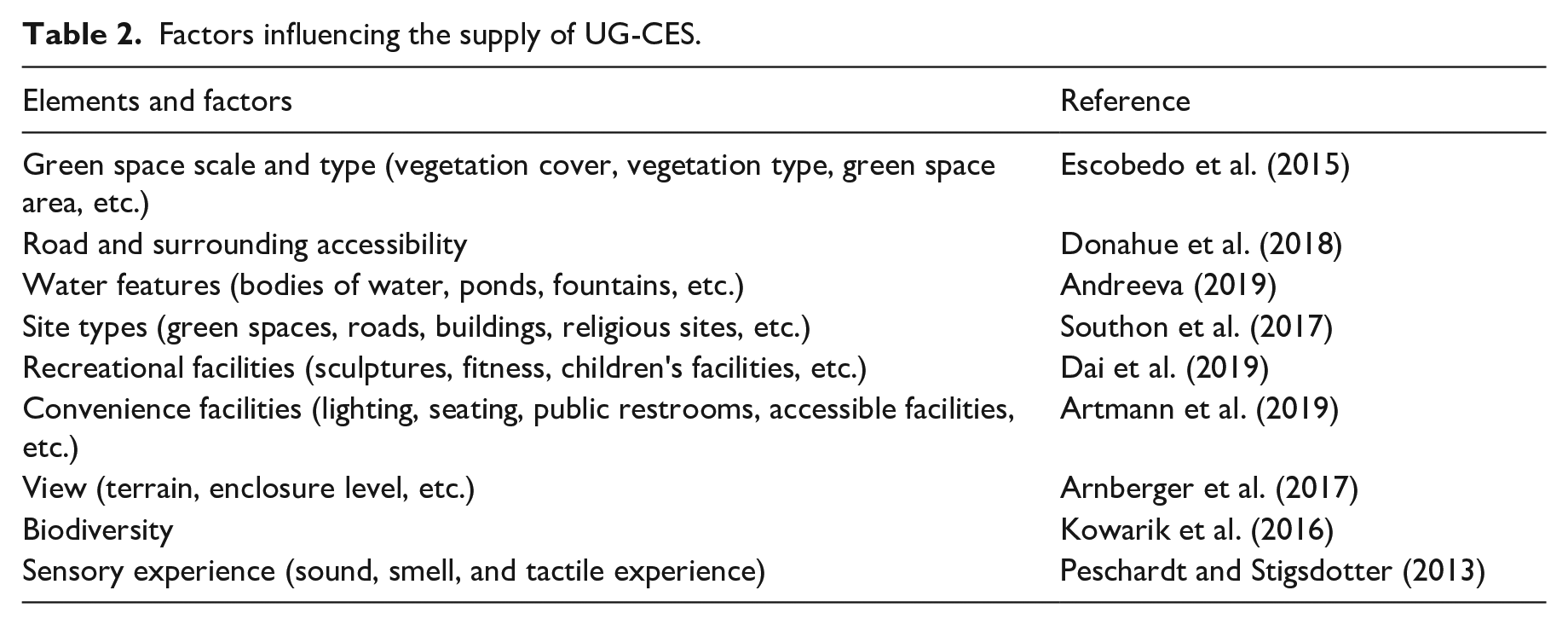
Users' perceptions of UG-CES are influenced by personal experiences, socio-cultural backgrounds, and the characteristics of urban green spaces. Variations in composition, spatial layout, and external environments of green spaces directly impact their capacity to provide CES. As shown in Table 2, studies frequently use indicators such as green space size, morphology, and facilities to assess CES supply potential. Within green spaces, vegetation cover, types and area, as well as the quantity and density of facilities, are commonly employed to represent UG-CES supply capacity. For example, Arnberger et al. (2017) found that dense roadside shrubbery possesses high aesthetic value, while Vigl et al. (2017) showed that natural parks with more accommodation and recreational facilities offer greater recreational and ecotourism value. Externally, green space accessibility is a critical indicator of CES supply. Fan et al. (2017) developed a composite index of green space quality and accessibility to evaluate the evolution of recreational services. Sensory experiences, such as natural sounds and tactile interactions, were also used to characterize UG-CES supply (Sotomayor et al., 2014). Some studies have applied noise testing to assess environmental impacts on CES (Peschardt et al., 2016), while factors such as weather conditions and seasonal changes were also considered important for CES supply (Nielsen et al., 2012), though specific research in this area remains limited.
Factors influencing the supply of UG-CES.
Factors influencing the demand of UG-CES
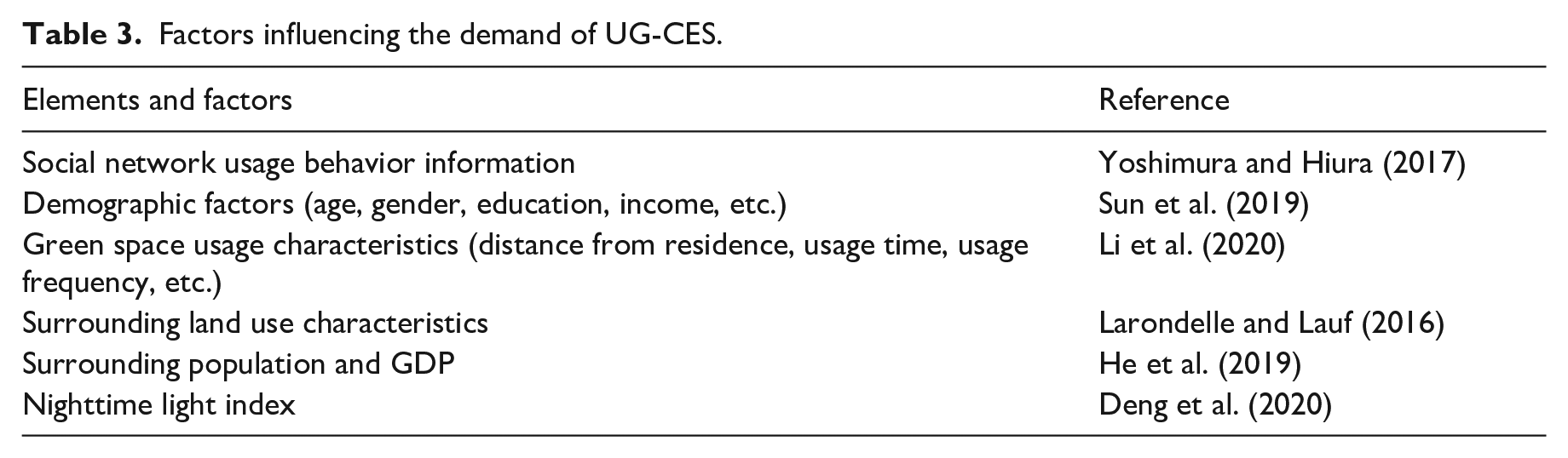
The intangible nature of UG-CES makes its actual use challenging to measure directly. As a result, existing research often analyzes demand from the perspective of users’ preferences or socio-economic characteristics. Surveys and interviews are commonly employed to investigate the subjective preferences of urban green space users and assess how different demographic factors influence UG-CES preferences (Table 3). For instance, studies showed that younger individuals tend to favor UG-CES in city centers (Boll et al., 2014), while older adults prioritized spiritual and religious values (Zhao, 2020). Additionally, some researchers used socioeconomic data, such as population density, per capita GDP, and built environment indicators like nighttime light indices, to reflect the objective demand for UG-CES (Zhu et al., 2020). Chen et al. (2019), for example, identified areas with high population density and insufficient per capita green space as regions with greater UG-CES demand, while Deng et al. (2020) suggested that areas with high nighttime light indices exhibit stronger demand for UG-CES. In recent years, social media data has also been widely applied to reflect UG-CES demand. Metrics such as photo density and check-in data are used to indicate that green spaces with higher actual usage correspond to greater demand (Richards and Tunçer, 2018; Zhu et al., 2020). This approach offers a novel pathway for assessing the heterogeneity of objective UG-CES demand.
Factors influencing the demand of UG-CES.
Supply-demand relationship of UG-CES
Research on the supply-demand relationships of ecosystem services provides critical references for urban green space planning and optimization (Buchel and Frantzeskaki, 2015; Fischer and Eastwood, 2016). In recent years, numerous studies have focused on the supply-demand dynamics of UG-CES, primarily addressing the relationships between green space and population size, green space and environmental characteristics, as well as supply-demand matching based on user perceptions. To assess the matching between green space and population size, researchers employed indicator systems such as the green space-to-population ratio and commuting distance. For example, Grunewald et al. (2017) developed a supply-demand matching index, while Chen et al. (2019) revealed an imbalance in recreational service supply and demand in central Shanghai using the ecological supply-demand ratio (ESDR). In the context of matching green space with environmental characteristics, studies compare regional UG-CES supply with economic levels to illustrate supply-demand relationships (Deng et al., 2020). Supply-demand research based on user perceptions involves interviews and surveys to explore residents' satisfaction and actual experiences with UG-CES (Zwierzchowska et al., 2018). Findings indicate that many cities face mismatches between UG-CES supply and demand, and identifying these areas of conflict can help optimize green space planning. For instance, Zwierzchowska et al. (2018) identified a mismatch in the supply and demand for educational value in parks, highlighting critical directions for future urban green space planning and management.
UG-CES and human well-being and public health
Changes in ecosystem conditions lead to shifts in ecosystem service flows, which subsequently impact human well-being across various spatial scales (Liu, 2018). Urban green spaces, as landscape units characterized by high spatiotemporal heterogeneity and complexity within urban ecosystems, are closely intertwined with human activities (Wang et al., 2019). The historical and cultural value of urban green spaces, as key providers of biodiversity and ecosystem services-particularly cultural services plays a vital role in enhancing human well-being (Reyes-Riveros et al., 2021), making the enhancement of UG-CES functions essential for promoting resident well-being (An et al., 2020; Qureshi et al., 2013; Yang et al., 2021). Using the UK National Ecosystem Assessment framework, Bryce et al. (2016) employed well-being indicators to assess the CES benefits provided by urban green spaces, concluding that cultural services such as nature perception, sense of place, and environmental therapeutic value significantly contribute to human well-being.
Spaces where urban residents engage with nature and recreation in their daily lives, urban green spaces, through the provision of CES, significantly increase both the opportunities and frequency of residents' access to these areas. Serving as key sites for human-nature interactions, these spaces significantly influence mental well-being by addressing material, safety, and spiritual needs (Huber et al., 2011; Mao et al., 2015; Millennium Ecosystem Assessment [MA], 2005). They form a crucial foundation for promoting human well-being (Johnson et al., 2019; Mao et al., 2015; Peng and Tan, 2018). Soga et al. (2016) conducted a linear correlation analysis after surveying students' perceptions and interaction frequency with nearby green space CES and found a strong connection between the frequency of contact with green spaces and their perception of cultural services. According to Tzoulas et al. (2007), well-designed urban green spaces can positively affect residents' physical, emotional, and cognitive states, enabling them to improve and regulate their health through engagement with diverse green environments. Irvine et al. (2013) found that most users experience positive emotions in urban green spaces, with some reporting a strong connection between their emotional well-being and the quality of these areas. Southon et al. (2018) revealed that frequent users of urban green spaces tend to rate their mental health more positively. O’Brien et al. (2014) further identified, through visitor experiences and interviews, that the sensory benefits of urban green spaces help alleviate stress and anxiety. A study involving nearly 410,000 UK residents indicated that living in areas with abundant green spaces positively impacts mental health, with residents in greener areas showing a lower risk of depression and anxiety compared to those in less vegetated areas (Wang et al., 2024a). The research also emphasized that urban green spaces not only improve air quality but significantly enhance mental well-being. Exposure to nature is regarded as the way to alleviate symptoms of attention deficit and hyperactivity disorder (ADHD) in children and reduce the risk of chronic diseases such as cardiovascular conditions (Kabisch et al., 2017). Many residents believed that contact with nature is essential for maintaining health (Riechers et al., 2016). During the COVID-19 pandemic, Spotswood et al. (2021) found that urban green spaces played a crucial role in relieving distress, particularly in the hardest-hit communities that often lack access to such environments, underscoring the importance of these spaces in public health crises. Data from Lee et al. (2023) during the COVID-19 lockdown in London revealed that residents living near green spaces experience significantly less psychological distress than those living farther away, suggesting that enhancing green space accessibility could help mitigate the effects of future epidemics and movement restrictions.
UG-CES research prospects for enhancing human well-being
Many studies have demonstrated that a deeper understanding of urban ecosystem services and their impact on human well-being is crucial for the more effective formulation and implementation of strategies for urban green space protection and sustainable planning and management (Kosanic and Petzold, 2020). UG-CES reflects the demand and active engagement of urban residents with the natural environment and represents one of the most significant ecosystem services influencing human well-being (Kremer et al., 2016). Although notable progress has been made in the evaluation and analysis of UG-CES supply and demand characteristics, which has advanced the practical application of urban green space planning and management, the relationship between UG-CES supply and demand, as well as its mechanisms of influence on human well-being (Reyes-Riveros et al., 2021), remains unclear and is lacking in robust quantitative data. Future UG-CES research aimed at enhancing human well-being can be pursued through the following four areas (Figure 5).
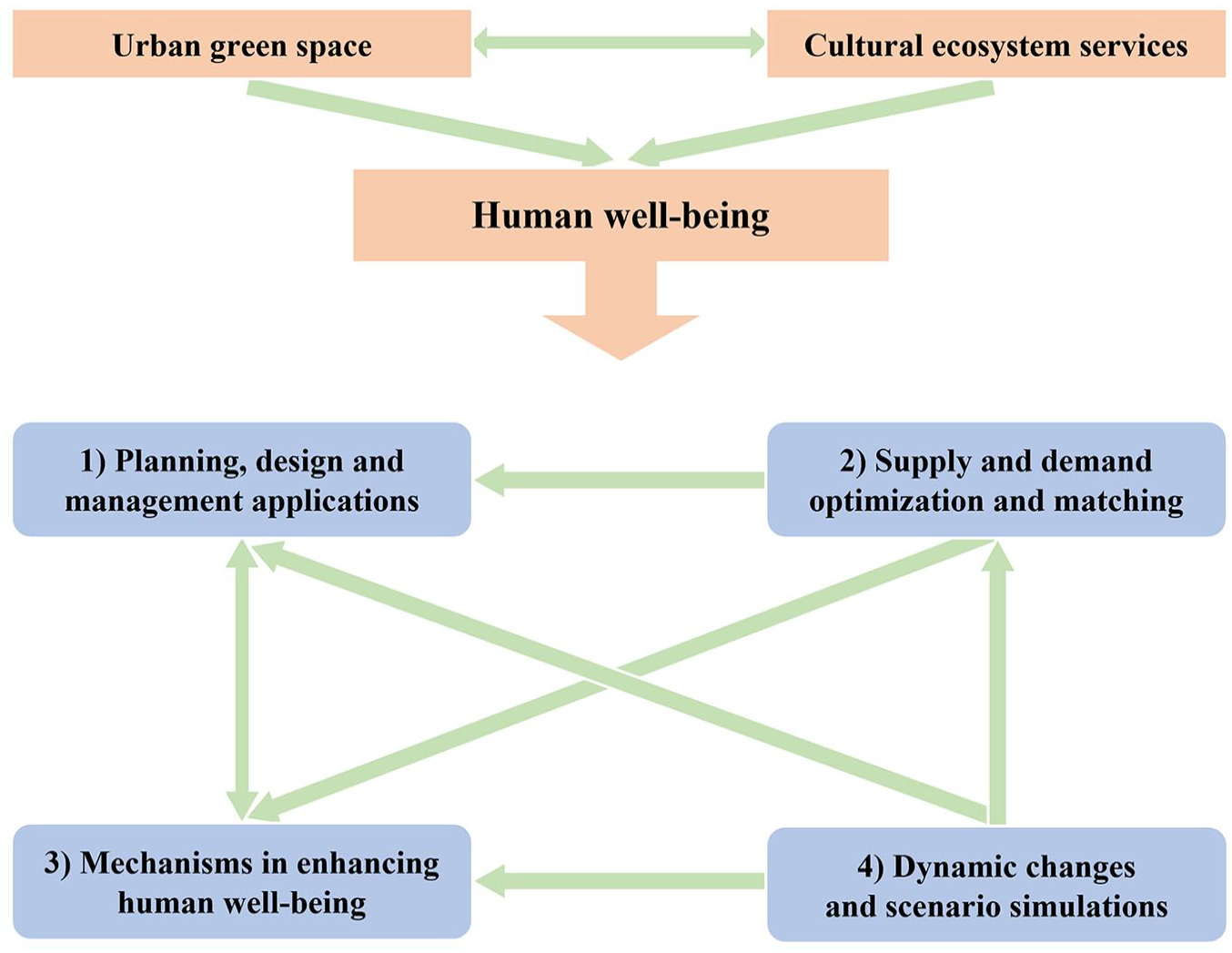
UG-CES research directions for enhancing human well-being.
In UG-CES research aimed at enhancing human well-being, the study of evaluation methods based on the supply-demand relationship of UG-CES is a crucial step in achieving supply-demand alignment. This research supports the exploration of mechanisms that enhance human well-being and health and informs planning and management applications. Spatiotemporal dynamics and scenario simulations are key areas of future UG-CES research, reflecting the characteristics of urban green space supply and demand for sustainable urban development and adaptation to environmental, economic, and social changes. Research into the mechanisms by which UG-CES enhances human well-being and health is the central objective of future UG-CES studies. By elucidating the pathways through which urban green spaces promote well-being, valuable insights will be provided for the practical application of UG-CES in urban green space planning, design, and management.
UG-CES research embedded into planning & design and management practices
In recent years, research on the perceived benefits of UG-CES and the preference variations among residents has increased. By evaluating the perceptions and needs of different population groups regarding urban green space CES, these studies provide valuable insights for urban green space management and planning. Understanding how to design, plan, and manage urban green spaces to ensure the provision of ecosystem services and meet societal demands is essential for enhancing human well-being (Krasny et al., 2014). It is also a critical factor in improving the scientific rigor of urban green space planning. Incorporating public perceptions of UG-CES into planning and management decisions, while encouraging public participation in research and decision-making, can contribute to improving human well-being, promoting sustainable urban development, and strengthening the adaptability of urban ecosystems (Krasny et al., 2014).
Current applications of UG-CES in planning and management predominantly focus on large-scale analyses, exploring the spatial distribution of CES and addressing supply-demand imbalances, thereby guiding the overall layout of future urban green spaces. However, there is still a lack of refined research methods and indicators at the level of detailed landscape design within green spaces (Sacchelli and Favaro, 2019). Future research should aim to enhance human well-being by conducting multi-scale UG-CES studies (Jabbar et al., 2022). Establishing a collaborative mechanism between ecosystem services and urban green space planning and design can provide clear guidance for large-scale spatial layout and planning, while small-scale studies can offer scientific support for decisions on plant selection, planting design, and facility layout.
Incorporating public perceptions of UG-CES into policymaking for planning and management, along with encouraging public participation in research and decision-making, will enhance human well-being, promote sustainable development, and strengthen the adaptability of urban ecosystems (Raymond et al., 2013). However, this process faces several challenges. Multi-scale and multi-perspective public participation research requires the integration of insights from the humanities, social sciences, and environmental sciences (Chan et al., 2012) to develop targeted strategies for urban green space planning and management. This approach fosters the interdisciplinary growth of urban ecosystem services and planning disciplines.
Optimization of UG-CES supply-demand quantification and matching
CES integrate human social systems with natural ecosystems, with supply and demand exhibiting significant spatial heterogeneity. The spatial distribution and quantity of CES directly or indirectly influence the efficiency of ecosystem service delivery (Wei et al., 2023). As both users and producers of UG-CES, humans may underestimate the value of cultural services if supply-demand dynamics are not adequately considered in evaluations, potentially hindering effective planning and management (Albert et al., 2016). Research on UG-CES supply-demand dynamics provides valuable decision-making support for planners, contributing to enhanced human well-being and promoting sustainable development (Clemente et al., 2019).
With the increased use of multi-source data recently, UG-CES supply assessments and spatial mapping have become increasingly refined. However, evaluating UG-CES demand remains challenging due to its reliance on subjective preferences, value judgments, and personal experiences, which are difficult to quantify (Tratalos et al., 2016). He et al. (2019) emphasized the crucial role of ecosystem service flows in CES supply-demand assessments, proposing an integrated framework that improves matching accuracy by incorporating supply, demand, and flow dynamics. Their findings highlight that considering service flows in UG-CES evaluations allows for better identification of spatial mismatches and enhances the efficiency of service accessibility.
Most existing studies on UG-CES demand relied on socio-economic data, making it difficult to establish meaningful connections between supply-demand relationships, scales, and indicators. With advancements in spatial technology and social process data, big data is now widely applied in landscape architecture planning and design (Gliozzo et al., 2016; Wang et al., 2021a), enabling precise characterization of user behavior and activity patterns (Liu and Fu, 2019). For example, Meng et al. (2020) integrated social media data with survey-driven models to evaluate cultural ecosystem services in rapidly urbanizing watersheds, revealing spatial mismatches critical for landscape planning. Similarly, Zhang et al. (2022) leveraged geolocated social media data to map the spatiotemporal dynamics of user preferences, significantly improving supply-demand matching accuracy. Furthermore, Zhang et al. (2024) introduced a framework for assessing virtual CES flows, demonstrating that UG-CES supply-demand relationships are not solely influenced by local factors but are also regulated by cross-scale interactions. Their findings provide insights into optimizing UG-CES supply-demand matching by incorporating non-local service exchanges and improving the scientific basis for policy formulation. Chen et al. (2024) further refined demand-side assessments by combining machine learning and street-view imagery to quantify residents' perceptions of ecosystem service benefits. Their approach addresses the subjectivity of preferences through visual data analysis and spatial autocorrelation models, offering a novel pathway to link demand quantification with urban street environments. Therefore, refining current evaluation methods and developing multi-scale assessments of supply-demand characteristics are essential. By integrating CES flow models and big data-driven virtual flow analyses, researchers can establish spatially coordinated research frameworks that enhance UG-CES supply-demand matching accuracy and policy applicability.
An increasing number of studies are employing a combination of multiple methods, where one approach effectively compensates for the limitations of another (Cheng et al., 2019). With the gradual refinement of evaluation systems, the optimization of UG-CES supply-demand matching has entered a new phase of development. However, challenges related to data collection and integration remain significant. The advent of the information age, particularly the application of big data technologies, presents new opportunities to address these challenges. Future research can further integrate CES flow analyses (He et al., 2019) and trade-based virtual flow approaches (Zhang et al., 2024) to optimize UG-CES matching, enhance predictive accuracy, and strengthen its scientific basis for policymaking. Additionally, by integrating multi-source big data from social media, mobile communications, and the Internet of Things, it becomes possible to capture user preferences and behavioral characteristics with greater precision, enabling refined and dynamic monitoring of UG-CES demand. Simultaneously, utilizing remote sensing and GIS technologies to assess UG-CES supply, combined with multi-source data to construct high-precision supply-demand matching models, will further optimize urban green space planning and management, enhancing its role in promoting sustainable urban development.
Mechanisms of UG-CES in enhancing human well-being
In urban areas, green spaces are often among the few or only places where people can experience nature (Dallimer et al., 2014; Fuller and Gaston, 2009; Maller et al., 2008). As urbanization accelerates, the role of UG-CES in enhancing residents' well-being has become increasingly prominent. However, the complex relationship between UG-CES and human activities has led current research to focus primarily on the subjective impacts of UG-CES on mental or psychological health. While a growing body of research has highlighted the positive effects of UG-CES on physical health, the overall understanding of the relationship between UG-CES and human well-being remains underdeveloped and at a preliminary stage. The intricate interactions between UG-CES and well-being have yet to be fully quantified, and the causal relationships and trade-offs require further investigation (Pett et al., 2016).
The complexity of the relationship between human well-being and landscape features necessitates extensive scientific knowledge for accurate analysis and interpretation (Kumar and Kumar, 2008). This relationship is not a simple one-to-one correspondence; a single CES can provide multiple benefits, and UG-CES is not the sole contributor to well-being. Individual characteristics and life experiences across different social groups and stakeholders further influence subjective perceptions and experiences (Zhou et al., 2024). A comprehensive understanding of the specific impacts of UG-CES on well-being is essential for developing effective urban green space planning and sustainable environmental management strategies. Future research should thus expand UG-CES studies through interdisciplinary collaboration, integrating natural sciences, economics, psychology, political science, and sociology to deeply explore the pathways and mechanisms by which different UG-CES types enhance well-being. This will allow for the identification of UG-CES types and features that have the greatest impact on various social groups and stakeholders, ultimately enabling coordinated and optimized UG-CES management aimed at improving well-being.
Dynamic changes and scenario simulations of UG-CES
Most research on UG-CES is conducted under specific temporal and environmental conditions, often neglecting the dynamic changes in both the environment and human perceptions (Pröpper and Haupts, 2014). Consequently, there is a lack of in-depth analysis regarding the dynamic evolution of UG-CES and its driving mechanisms. The dynamic changes in UG-CES are reflected in two key aspects. First, variations in urban green space and its surrounding environmental characteristics lead to fluctuations in UG-CES supply. For instance, vegetation in urban green spaces exhibits different landscape features due to seasonal changes (Andersson et al., 2015), while socio-economic development or land use changes can also influence the characteristics and quality of these spaces (Hunter and Luck, 2015). Second, the demand for UG-CES may shift as socio-economic conditions or individual experiences evolve (Dickinson and Hobbs, 2017).
UG-CES scenario simulations has limited attention about its spatiotemporal dynamics. These simulations are intended to help decision-makers and the public understand potential future scenarios, allowing them to make informed steps toward achieving sustainable development goals (Peng et al., 2015). However, existing UG-CES scenario simulations primarily address short-term, specific environmental issues. For example, Alvarez et al. (2019) simulated the impact of harmful algal blooms on coastal recreational boating, while Arnberger et al. (2017) explored the threat of invasive pests to urban forests, comparing visitor perceptions and landscape preferences under varying degrees of impact on UG-CES. Although such studies underscore the importance of urban environmental management for UG-CES, there remains insufficient focus on long-term social and environmental challenges relevant to urban sustainability. Dickinson and Hobbs (2017) emphasized the need for building long-term UG-CES research frameworks. Future research should prioritize long-term investigations that comprehensively address the dynamic driving forces of UG-CES from social, economic, and natural dimensions. This approach will enable a thorough analysis of UG-CES scenario evolution in the context of socio-economic development and environmental challenges, such as urbanization, population aging, public health, and climate change.
Conclusions
Research on the cultural services of urban green space ecosystems has developed into a relatively comprehensive system. The research hotspots of UG-CES primarily focus on three key areas: the value assessment, the supply-demand relationship, and its relationship with human well-being. In terms of value assessment, a relatively complete methodological framework has been developed, encompassing monetary quantitative evaluation, non-monetary quantitative evaluation, and comprehensive evaluation. Regarding the supply-demand relationship, studies typically explore three dimensions: the alignment of green space with population size, the matching of green space with environmental characteristics, and the supply-demand balance based on user perceptions. In the context of human well-being, the positive role of UG-CES in alleviating stress and promoting both the physical and mental health of residents has garnered widespread attention.
However, the supply-demand relationship of UG-CES and its underlying mechanisms in promoting human well-being remain unclear, and there is a lack of sufficient quantitative data to support these findings. Future research on UG-CES can focus on the following four aspects to enhance its role in promoting human well-being, namely: enhancing UG-CES research associated with design & planning and management practices; spatial-explicitly optimizing the supply-demand match of UG-CES; exploring the human well-being promoting mechanism of UG-CES; and conducting scenario-based simulations to understand the dynamics of UG-CES.
Footnotes
Author contributions
Jinke Bai: Writing - original draft, conceptualization, formal analysis, investigation, methodology, data curation, visualization.
Yanan Wang: Writing - original draft, investigation, visualization, conceptualization.
Qing Chang: Writing - review & editing, supervision, resources, project administration, funding acquisition, conceptualization.
Declaration of conflicting interests
The author(s) declared no potential conflicts of interest with respect to the research, authorship, and/or publication of this article.
Funding
The author(s) disclosed receipt of the following financial support for the research, authorship, and/or publication of this article: This study is financially supported by the National Natural Science Foundation of China (No. 42171097)

Data availability
The datasets generated during and/or analyzed during the current study are available from the corresponding author on reasonable request.