




Abstract
Despite significant research on rural livelihood diversification, the complex interactions among shock experience, climatic conditions, and geographic location, as well as their impacts on rural livelihood diversification are still not fully understood, particularly in China’s contiguous poverty-stricken areas (CPSAs) from a comparative perspective. Utilizing a dataset of 1509 household samples from CPSAs, the study seeks to address this gap by introducing a new theoretical framework that connects these factors and empirically testing it through Partial Least Squares-Structural Equation Modeling and multi-group analysis. The findings reveal that shock experience and climate conditions primarily act as “push” factors, motivating households to diversify both on-farm and off-farm activities. Livelihood capitals, including physical, natural, human, and social capital, play significant roles in supporting diversification activities, while financial capital does not exert a significant impact on livelihood diversification. Geographic location influences livelihood diversification through both direct and indirect pathways, mediated by factors such as shock experience, and physical and natural capitals. Regional variations in livelihood diversification patterns further highlight the diversity of responses across CPSAs, with the Yunnan-Guangxi-Guizhou Stone Desertification Area showing the broadest range of livelihood sources, while the Yanshan-Taihang region exhibits the lowest levels of diversification. The research contributes a theoretical framework and crucial empirical findings on determinants of livelihood diversification for rural households in different CPSAs, offering significant implications for enhancing livelihood resilience in CPSAs and other vulnerable regions.
Keywords
Introduction
Investigating pathways to diversified livelihoods for rural households is crucial for fostering resilience and long-term sustainability (Hegazi and Seyuba, 2024). Rural households, especially in vulnerable or marginalized regions, often rely on a limited range of income sources, such as subsistence farming or seasonal labor (Wang et al., 2021b). This dependency makes them highly susceptible to shocks, risks, seasonality, and stresses, including both external sources such as climate-related disruptions, socio-economic fluctuations, public health crises, and political instability; and internal sources such as health shocks among family members, major life events, and failed investments (Wang and Wang, 2024). By diversifying livelihood strategies, households can better manage various risks and recover more effectively from the negative impacts that shocks may bring. Diversification of livelihoods empowers vulnerable groups by enabling them to capitalize on local opportunities and build financial stability through multiple income sources, such as value-added agricultural activities, off-farm paid work, and small-scale entrepreneurship (Wang et al., 2020). This strengthens their capacity to invest in education, healthcare, and improve their standard of living (Gautam and Andersen, 2016). Previous studies have shown that increasing livelihood diversification optimizes the livelihood structure of rural households and improves livelihood stability (Sharma, 2010; Zhang et al., 2019). Rural households with low poverty rates usually have high social involvement and many income-generating opportunities, and possess diverse livelihoods (Singh et al., 2020). Understanding the pathways to diversification at the household level is therefore essential for designing interventions that not only lift families out of poverty but also ensure they remain resilient in an increasingly uncertain global environment, which is key to achieving multiple United Nations Sustainable Development Goals (SDG), especially SDG 1 (no poverty), SDG 2 (zero hunger), SDG 8 (decent work and economic growth), and SDG 10 (reduced inequalities).
Livelihood diversification refers to maintaining and adapting a broad range of livelihood activities over time to secure survival and enhance welfare (Ellis, 2000). Livelihood diversification has long been a topic of interest in poverty reduction and rural development studies (Hussein and Nelson, 1998), and in recent years it has gained increasing interest as shocks to rural livelihoods have become more frequent and intensive (Fujimoto and Suzuki, 2025; Mondal et al., 2023). Recent global challenges, particularly the COVID-19 pandemic (Wang et al., 2024) and climate change (Cheng et al., 2024), have underscored the urgency of exploring diversified livelihoods as a pathway to building resilience. Specifically, climate change has significantly amplified the frequency and intensity of extreme weather events, with disasters such as floods, droughts, heatwaves, and storms increasing in terms of both frequency and severity (Newman and Noy, 2023). According to the World Meteorological Organization and the United Nations Office for Disaster Risk Reduction, between 1970 and 2019, these natural hazards accounted for 50 percent of all global disasters, 45 percent of reported fatalities, and 74 percent of reported economic losses. Over 11,000 disasters linked to these hazards were recorded, resulting in over two million deaths and economic losses totaling $3.64 trillion. Notably, more than 91 percent of these fatalities occurred in developing countries. In the long term, such natural hazards can undermine productive capacity and disrupt income stability, having lasting effects on vulnerable regions (Fan et al., 2022). These challenges highlight the urgency of exploring diversified livelihoods as a pathway to build resilience. Research on livelihood diversification has evolved significantly, with earlier studies on rural livelihoods concentrated primarily on agricultural income diversification (Paavola, 2008), mainly the extraction of raw crops, livestock, poultry, forestry, or aquaculture products directly from natural resources (Pingali and Rosegrant, 1995), expanded to include non-agricultural income sources (either self-employment or paid-work) as well as migrant remittances, recognizing that rural households increasingly relied on a combination of farm and non-farm activities for sustenance (Alobo Loison, 2015). Recent research on livelihood diversification has established connections between this practice and resilience, food security, sustainable livelihoods, and human well-being (Atuoye et al., 2019; Mohammed et al., 2021; Peng et al., 2022). Furthermore, scholars have also delved into the varying patterns of livelihood diversification across different regions and gender groups, revealing significant heterogeneity in these practices (Alobo Loison, 2019).
Investigating the factors influencing livelihood diversification continues to be a central focus of research in the domain of rural development and agricultural economics. These determinants are complex and context-specific, which can be grouped into environmental, socio-economic, institutional, and demographic dimensions (Avila-Foucat and Rodríguez-Robayo, 2018; Qiu et al., 2022). Environmental factors such as the availability of natural resources, soil fertility, climatic conditions and the frequency of natural disasters have a direct impact on the rural livelihood diversification (Gezie, 2019). For example, in coastal Bangladesh, where resource scarcity and climate risks are high, local farmers are more likely to diversify their livelihoods to withstand the effects of natural disasters (Bernzen et al., 2023). Socio-economic factors include income level, market accessibility, and geographic location. Households with high incomes and education levels are generally more able to participate in high-yield non-farm activities (Abdulai and Delgado, 2018). Farmers far from cities or markets are more likely to rely on agricultural income due to limited access to employment opportunities and sales information (Tadesse and Ahmed, 2023). Institutional factors include land use systems, environmental protection systems, etc., and the implementation of these systems have a significant impact on rural livelihood activities. For example, the implementation of the plan of returning farmland to forest has a certain role in promoting non-agricultural employment (Giefer and An, 2022). Demographic factors such as family size, age structure, gender division of labor and experience in resilience to external shocks also play an important role in livelihood diversification (Kassegn and Abdinasir, 2023). Farmers who have experienced natural disasters or market volatility are often more inclined to diversify their livelihoods to cope with risks (Kanwal et al., 2022). Large households, on the other hand, are able to balance agricultural and non-agricultural activities due to their abundant labor force, while households with insufficient labor or predominantly elderly people are more dependent on a single source of livelihood (Ho et al., 2024). Among the various factors that shape these strategies, shock experience, climatic condition and geographic location, play particularly important roles. Regarding shock experience, households previous exposure to different sources of shocks, risks, seasonality, and stresses can significantly influence their risk perception, coping and adaptive capacities, and attitudes and preferences for specific livelihood activities (Makate et al., 2022; Sanusi and Dries, 2024). Climatic conditions, such as light, heat, water, wind, and the seasonal variations have crucial impacts on agricultural-related livelihood activities (Baffour-Ata et al., 2024). Moreover, geographic location determines households’ access to resources, markets, and opportunities, which directly shape their livelihood strategies (Wang and Wang, 2024). In addition to their direct effects on livelihood diversification, these factors may also have indirect consequences by influencing the accumulation of households’ livelihood capital (Wang et al., 2020). More significantly, these factors can interact to exert either reinforcing or trade-off effects on household livelihood strategies. For instance, households located in geographically disadvantaged regions, such as those at high altitudes may be more susceptible to environmental stressors such as soil erosion, deforestation, and water scarcity, and have limited access to resources and infrastructure, both can exacerbate shock experience (Cui et al., 2024). Therefore, it is essential to investigate the influence of geographic location, exposure to shocks, and climatic conditions on households’ decisions regarding livelihood diversification. Identifying both direct and indirect pathways can yield crucial insights that help shape policies and interventions to support sustainable livelihood development.
As a densely populated nation within the developing world, China has effectively lifted 98.99 million impoverished rural residents out of poverty over the past four decades of reform and opening up, representing over 70% of the global total of people lifted out of poverty during the same period (World Bank and the Development Research Center of the State Council, the People’s Republic of China, 2022). However, the risk of poverty return persists. By the end of September 2021, around 5 million individuals were under dynamic monitoring for the potential of reverting to poverty, particularly in China’s 14 contiguous poverty-stricken areas (CPSAs) listed in the Outline of Poverty Alleviation and Development in Rural China (2011-2020). These regions are characterized by unfavorable geographic location, fragile ecosystems, restricted access to resources and markets, and vulnerable to external shocks, with local households heavily reliant on natural ecosystems, thereby easily falling into the poverty-environment trap (Tang et al., 2023). To boost livelihood resilience and mitigate the risk of poverty return, it is crucial to promote the diversification of livelihood strategies in CPSAs. The first step involves evaluating the current distribution of livelihood activities, followed by identifying the factors that “pull” or “push” rural households in these areas to diversify their livelihoods. Nevertheless, there is a noteworthy lack of empirical study that systematically examines rural livelihood diversification in the specific context of CPSA, nor has there been a comparative analysis across different CPSAs. Different CPSA may experience different geographic, climatic, and infrastructural conditions that influence the livelihood strategies of rural households. Heterogeneity analysis from a comparative perspective provides insights into how local environmental risks and region-specific resources shape households’ decisions to diversify their revenue streams, which is particularly important for designing targeted policies that address local vulnerabilities and promote sustainable livelihoods, which are core goals of China’s rural revitalization strategy.
To fill the knowledge gaps, this study aims to adopt a Partial Least Squares-Structural Equation Model (PLS-SEM) to examine the casual pathways of geographic location, shock experience, climatic condition on household livelihood diversification, using a dataset of 1509 household samples collected across nine CPSAs in 2018. The specific questions are: (1) What is the prevalent status of livelihood diversification among rural households within CPSAs? (2) How do various factors influence rural livelihood diversification in CPSAs, and what are the underlying causal pathways that govern these influences? (3) How do the livelihood diversification pattern and their determinants vary across distinct CPSA regions?
This study offers two main contributions: First, it offers a novel theoretical framework by integrating geographic location, shock experience, and climatic condition to examine their direct and indirect effects on household livelihood diversification. The causal pathway analysis, leveraging PLS-SEM’s advantages for exploratory research, theory development and comparative studies, deepens theoretical insights into the mechanisms driving livelihood diversification. Focusing on CPSAs in China, this study fills a critical empirical gap by investigating livelihood diversification in these marginalized, under-studied regions from a comparative perspective. The research provides valuable evidence on how households in economically disadvantaged areas diversify their livelihoods in response to environmental and socio-economic challenges, offering insights that are applicable to poverty-stricken regions worldwide. The study’s comparison of different CPSAs highlights regional variations in the impacts of geographic location, shock experience, and climatic conditions on livelihood diversification. This comparative approach is empirically significant, as it provides nuanced evidence for tailoring policy interventions to specific regional contexts, both within China and in other countries facing similar challenges.
Theoretical analysis and research hypothesis
Analysis of the direct impact pathways
Impact of shock experience on livelihood diversification
Previous shock experiences can have profound impacts on livelihood diversification. First, prior shock experiences like natural disasters, economic downturns, or health crises can raise households’ risk awareness and preparedness, “pushing” them to reallocate their resources, including labor, capital, and land, towards more diversified livelihood activities as a risk-spreading strategy. This diversification aims to establish a portfolio of income-generating activities with varying risk profiles, enabling proactive risk management and facilitating easier recovery post-event, and serves as a response to diminishing or seasonally fluctuating returns from labor or land (Paavola, 2008). An empirical study in CPSA found that prior shock experience has a positive impact on livelihood resilience of rural households as it raises households’ risk awareness, and enhances their coping and adaptation capabilities (Tang et al., 2023). Moreover, experiencing shocks can drive households to acquire new skills, making households more adaptable and capable of engaging in a range of livelihood activities (Nguyen et al., 2017). During shocks, households often turn to social networks for support, whether formal or informal, which can facilitate access to new livelihood opportunities (Wossen et al., 2016). However, shocks often deplete household assets, such as savings or livestock, which negatively impacts their ability to sustain primary income sources, particularly for those vulnerable groups. For example, Le Dé et al. (2018) found that rural households that have experienced substantial shock events, such as natural disasters, might face challenges in broadening their income streams, which highlights the importance of a comprehensive strategy that combines top-down and bottom-up disaster responses. Thus, it is essential to reveal the influence of shock experience on livelihood diversification decisions of rural households in CPSA. Therefore, we hypothesize that:
Impact of climatic condition on livelihood diversification
Climatic conditions exert a pivotal role in shaping the livelihoods of rural households, particularly in agrarian societies where dependence on natural resources is high. Agricultural-related activities, e.g., grain and cash crop cultivation, livestock and poultry husbandry, forest resources collection, are primarily livelihood sources of most rural households in developing countries. Climatic conditions, such as light, heat, water, wind, and the seasonal variations determine the yield of agricultural products by affecting crop growth cycles, pest prevalence, and water availability (Baig et al., 2023). Favorable climatic conditions tend to promote livelihood diversification by enhancing agricultural productivity, thereby supporting food security and economic resilience throughout the year. In contrast, households in regions with less favorable climatic conditions are likely to experience negative impacts on agricultural productivity, prompting them to diversify their livelihoods by adopting alternative income source. This shift not only stabilizes income but also reduces dependence on a single income source vulnerable to climatic variability. Furthermore, climatic pressures often lead to the adoption of innovative practices and technologies, such as precision farming and integrated pest management (Gutiérrez Illán et al., 2020). This study aims to examine how climatic conditions in different CPSA regions shape the livelihood diversification strategies of rural households, with a focus on understanding the positive and negative effects of these conditions. Thus, the research hypothesis is put forward:
Impact of geographic location on livelihood diversification
Geographic location plays a significant role in shaping livelihood diversification by influencing access to resources, markets, infrastructure, and opportunities. The spatial concentration of poverty worldwide demonstrates the negative influence of geographical disadvantages on rural livelihoods (Andrianarison, 2024; Deng et al., 2023). Households in less affluent geographic areas, such as those situated at higher elevations, in more isolated regions, or at greater distances from commercial hubs and public services, face significant challenges in securing off-farm employment and marketing their agricultural products, and thus are reliant on subsistence farming (Benevenuto and Caulfield, 2020; Wang et al., 2020). In contrast, households located near urban centers or transport hubs generally have easier access to markets, allowing them to engage in a wider range of economic activities, such as trade, services, or employment in industries. However, in some more isolated rural areas, the lack of stringent environmental regulations can offer households greater flexibility to pursue farming and animal husbandry without as many regulatory constraints, which can also contribute to livelihood diversification in specific contexts (Tang et al., 2023; Xiong et al., 2023). Thus, geographic location has both positive and negative effects on livelihood diversification, and this study aims to examine how these geographic factors influence diversification patterns in different CPSA regions. Therefore, we hypothesize that:
Impact of livelihood capital on livelihood diversification
The UK Department for International Development proposed the Sustainable Livelihoods Framework and identified five types of capital assets upon which livelihoods are built, including human, natural, physical, financial, and social capitals (DFID, 2007). These capital assets influence households’ capacity to adapt and transition among various livelihood strategies to ensure their livelihoods. Human capital, which encompasses education and skills, enhances the ability to pursue high-return activities and diversify income sources (Habib et al., 2022; Xu et al., 2018). Physical capital, including basic infrastructure and producer goods, facilitates market integration, making it easier to access employment and other economic opportunities (DFID, 1999). Natural capital—land, water, forest resources—also influences diversification, as resource-rich households may have a higher potential for agricultural intensification but may face fewer incentives to diversify away from agriculture unless resource shocks occur (Martins and Shackleton, 2022). Social capital, through networks and relationships, can positively impact diversification by providing access to information, financial resources, and market contacts (Goulden et al., 2013). Financial capital, including both stocks (e.g., cash, bank deposits or liquid assets) and flows (e.g., pensions, government transfers, and remittances) can be directly invested in livelihood diversification and be converted into other forms of livelihood capital to affect livelihood activities (Atta-Ankomah et al., 2024; Ghazali et al., 2023). Many studies have pointed out that diverse types of livelihood capital can influence decision-making in agriculture and other livelihood choices (Manlosa et al., 2019; Pour et al., 2018). For example, an increase in human, financial and social capital positively affects the non-agricultural livelihoods of rural households, while a rise in natural and physical capital negatively influences this choice (He et al., 2022; Li et al., 2022). With the abundance of natural and physical capital, rural households are more likely to engage in mechanized and large-scale agricultural cultivation and farming. From the analysis above, we propose this hypothesis:
Analysis of the indirect impact pathways
In addition to direct impact pathways, geographic location may also exert indirect impacts on rural households’ livelihood diversification through affecting shock experience and livelihood capital.
The mediating role of shock experience
Geographic location is a major determinant of a household’s exposure to different types of shocks, including natural disasters, economic fluctuations, which in turn shape livelihood strategies and diversification capacity. The location of a household largely determines its exposure to climate-related natural disasters, such as floods, hurricanes, droughts, and extreme heat waves. Coastal regions, for example, may frequently experience hurricanes and flooding, while arid regions face drought. Coastal areas are particularly susceptible to hurricanes, storm surges, and sea-level rise, while river valleys or low-lying plains face a higher risk of flooding (Ferrol-Schulte et al., 2015). Similarly, arid and semi-arid regions may experience frequent droughts, affecting water availability and agricultural production (Ifejika Speranza et al., 2008). Moreover, certain regions are more prone to seismic activity and geological disasters like earthquakes and landslides. These recurring natural shocks can disrupt primary livelihood activities, compelling households to diversify as a risk mitigation strategy. Conversely, in stable areas with fewer natural disasters, households might not feel the same urgency to diversify, as their primary livelihoods remain relatively secure. Additionally, geographic location has a profound influence on households’ experiences with shocks related to agroforestry pests and diseases. Households located near natural forests or conservation areas may face a higher risk of pest and disease transmission from wild plants to agroforestry crops, as these areas often serve as reservoirs for pests and pathogens (Ayalew et al., 2022). Geographically isolated areas may have limited access to agricultural extension services, pest control resources, or technical guidance, making it challenging for households to effectively manage agroforestry pests and diseases. Therefore, geographic location has a dual impact: it can either constrain or facilitate livelihood diversification depending on the household’s exposure to natural and agroforestry-related shocks. From the analysis above, we propose this hypothesis:
The mediating role of livelihood capital
Geographic location might indirectly affect rural livelihood diversification through the mediating factor of livelihood capital. First, geographic location determines natural resource availability and affect the natural capital of rural households. For example, households in fertile river valleys or coastal areas are more likely to engage in farming, fishing, and aquaculture (Mondal et al., 2023), while those in arid or mountainous regions might focus on livestock rearing or forestry (Yan et al., 2010). Geographic location also influences physical capital (Guo et al., 2019); households in well-connected geographic areas, such as those near highways or in urban or peri-urban regions, typically benefit from better transportation infrastructure, which facilitates livelihood diversification into trade, commuting for employment, or establishing small businesses. Moreover, geographic location also affect livelihood diversification through shaping financial capital (Guo et al., 2019), as it affects both households’ proximity to and the availability of formal financial services, e.g., banks, credit unions, microfinance institutions, etc. Yet, households located in disadvantaged regions are more likely to be prioritized by development policies and benefit from targeted financial assistance that enables investment in new livelihood activities. Additionally, geographic location significantly shapes social capital by influencing the types and strengths of social networks, the sense of place attachment, and social norms, which impact livelihood choices and diversification (Foster et al., 2019; Wu et al., 2019). In small, isolated rural communities, households may rely on strong kinship networks for mutual support, knowledge exchange, and labor-sharing, which can facilitate diversification into agriculture, animal husbandry, or community-based enterprises (Wang et al., 2021b). Conversely, in more urbanized or peri-urban areas, social networks may be broader but less personal, often based on professional or interest groups, which can facilitate access to employment or entrepreneurial opportunities beyond the immediate community (Sørensen, 2016; Ziersch et al., 2009). Therefore, geographic location has a multifaceted impact on livelihood diversification by shaping the availability and quality of different types of livelihood capital. From the analysis above, we propose this hypothesis:
To explore the direct and indirect impact pathways of multiple factors on rural households’ livelihood diversification, we designed a conceptual framework (Figure 1), which consists of several interrelated components: a dependent variable, i.e., households’ livelihood diversification, geographic location, shock experience, climatic conditions, and five types of livelihood capital. The linkages between factors show the impact pathways.
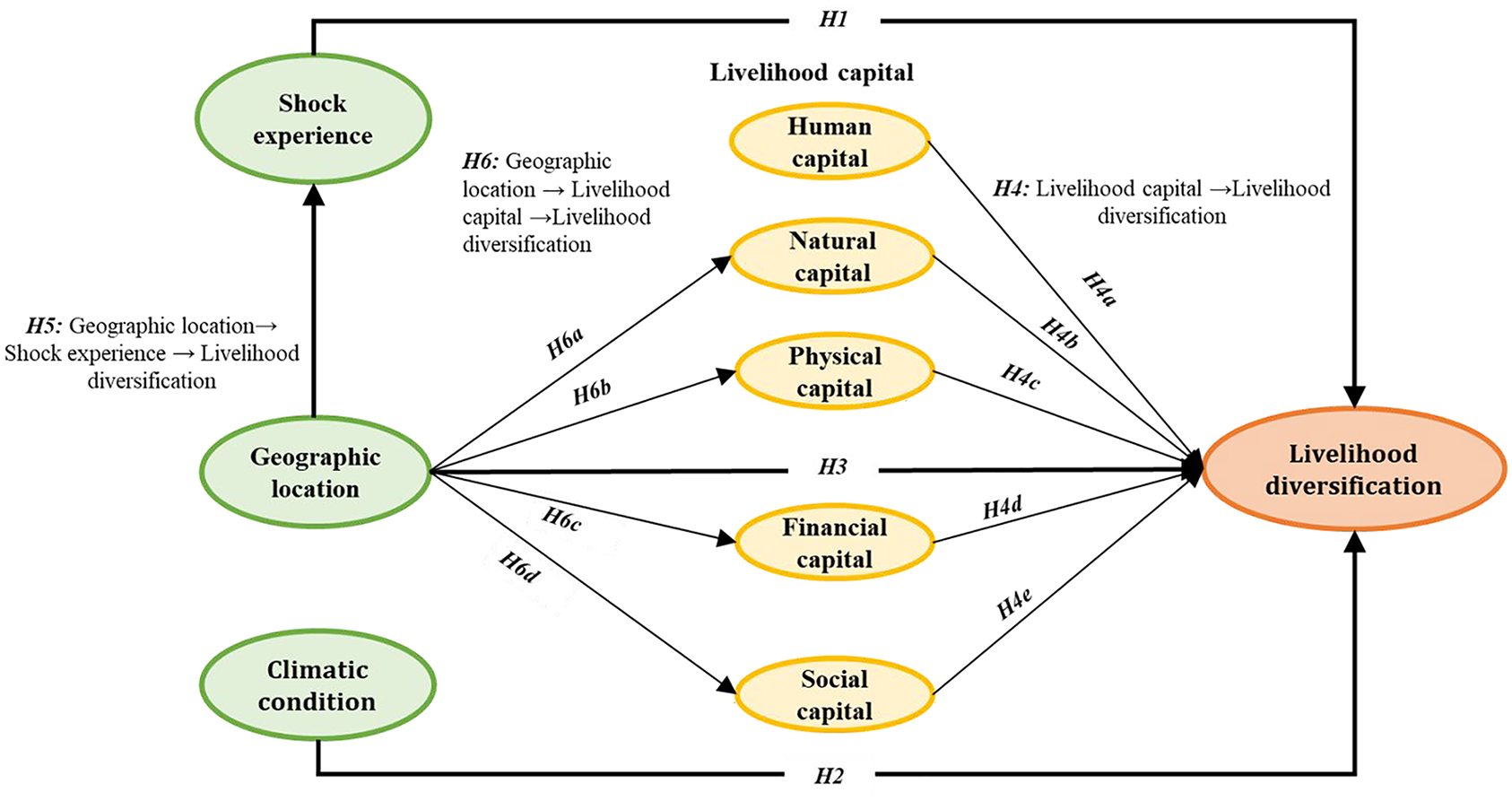
Hypothesized pathways of geographic location, shock experience, climatic conditions, capitals, and livelihood diversification.
Specification of key variables
Dependent variables
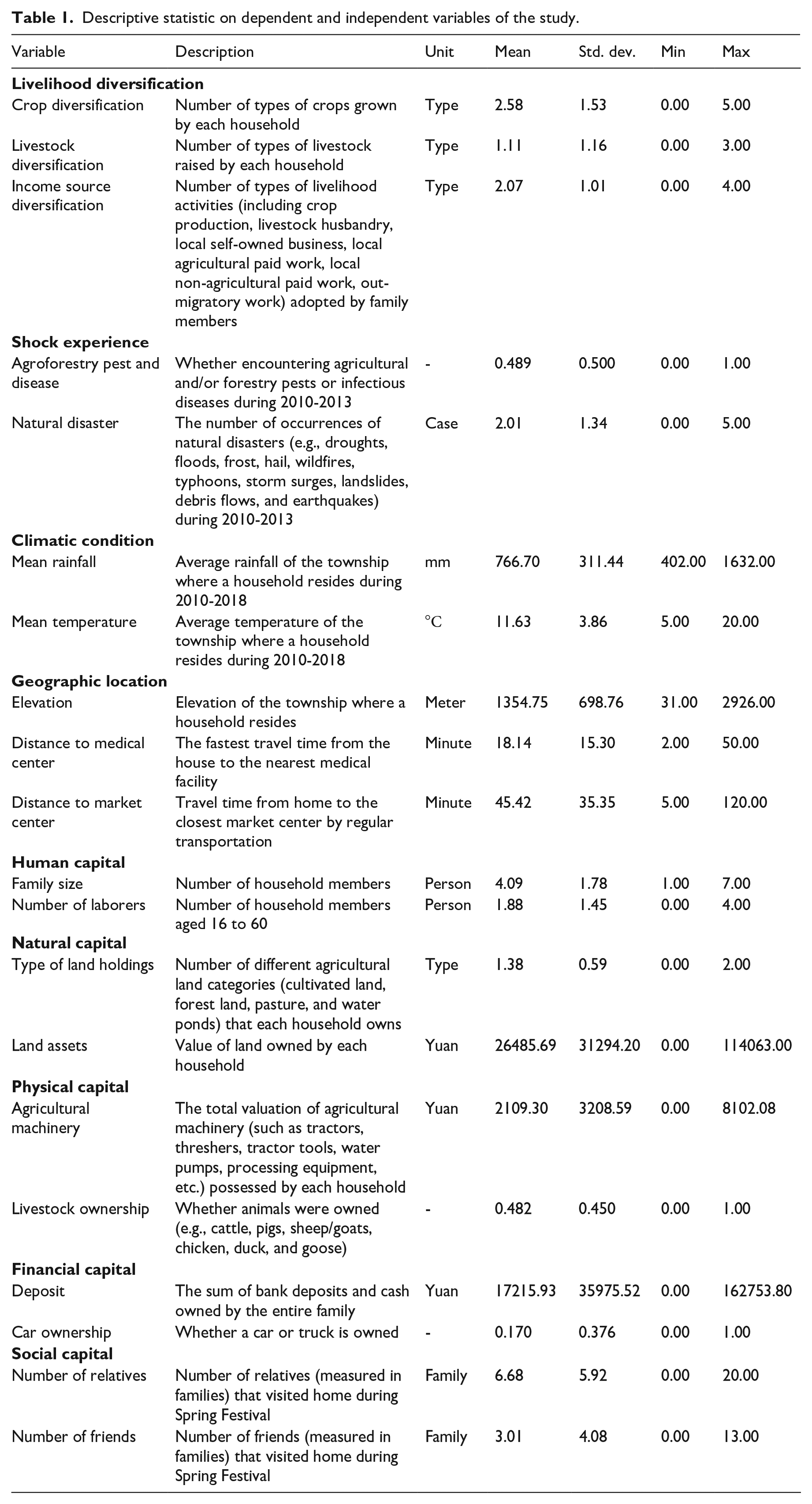
Livelihood diversification involves the development of a portfolio of farm and non-farm livelihoods (Paavola, 2008). Thus, we employ three key indicators to assess rural livelihood diversification: crop diversification, livestock diversification, and income source diversification (Table 1).
Descriptive statistic on dependent and independent variables of the study.
Crop diversification: refers to the variety of crop species cultivated by each household, including rice, maize, sugar beets, chestnuts and other crops. Different crop species have different growth cycles, market values, and risks. By cultivating a variety of crop species, households can spread their risks and increase their resilience to factors such as weather variability, market fluctuations, pests, and diseases (Schmitt et al., 2024).
Livestock diversification: refers to the variety of livestock species raised by each household, which includes pig, goat, cattle, and chickens, ducks, geese, and other animals. Diversifying the number of types of livestock offers benefits such as income stabilization, risk reduction, and resource utilization efficiency, but also presents higher requirement for technical expertise (e.g., disease management) and capital investment (e.g., land, labor, money).
Income source diversification: refers to the variety of strategies employed by households to sustain their livelihoods. These strategies include crop production, livestock husbandry, local self-owned businesses, local agricultural paid work, local non-agricultural paid work, and out-migratory work by household labor (Wang et al., 2020). Expanding livelihood strategies to encompass both agricultural and non-agricultural pursuits can optimize the utilization of households’ human and natural resources, thereby enhancing economic resilience.
Independent variables
Based on relevant theories and existing literature, this study takes geographic location, shock experience, climatic condition, and five types of livelihood capital as independent variables.
Geographic location: this study selects three key variables to measure the geographic location of rural households. The first indicator is elevation, specifically the altitude of the township to which each household is affiliated. Households in higher elevations often face limited agricultural productivity due to less fertile soils, shorter growing seasons, or greater vulnerability to drought and animal crop raiding. In contrast, households at lower elevations with more accessible land may be more reliant on agriculture but still diversify into local services or trade if they are near urban centers or transportation routes. The second indicator is distance to commercial centers, measured by the time taken to access the nearest market center in the township by the daily means of transportation. The theory of spatial economics suggests that the economic viability of rural households is significantly influenced by their geographic proximity to markets (Walsh et al., 2008). Studies on rural development consistently find that access to markets is a strong predictor of household diversification, as it enables households to earn income from non-farm activities and access inputs for agricultural production (Felkner et al., 2022). The third indicator is distance to medical facilities, defined as the time required to reach the nearest hospital or medical center from the residence. Studies have shown that rural residents with easy access to medical services tend to be resilient to health shocks, enabling them to recover quickly and continue pursuing diverse income sources (Ahamad et al., 2021).
Shock experience: this study focuses on two types of shocks encountered by rural households, agroforestry pests and disease and natural disasters. Specifically, rural households’ previous experience with pests and diseases in agroforestry systems significantly impacts their agricultural practices and livestock breeding (Scudder et al., 2022), which subsequently influences their decisions regarding alternative livelihoods. Research indicates that pests and diseases affecting crops and livestock diminish both the quality and quantity of agricultural output (Liliane and Charles, 2020). A rise in the prevalence of agroforestry pests and diseases correlates with reduced agricultural returns, prompting rural households to either implement optimization strategies in their agricultural practices to mitigate losses or to pursue non-agricultural activities that offer higher returns and are less susceptible to agricultural risks (Hanif et al., 2018). Furthermore, the number of natural disasters encountered by households—such as droughts, floods, frost, hail, wildfires, typhoons, storm surges, landslides, debris flows, and earthquakes—is chosen to measure households’ exposure to natural disasters.
Climatic conditions: rainfall and temperature are two critical climatic variables that profoundly impact the overall environmental conditions (e.g., water availability, soil fertility), causing rural households to use different adaptation and coping mechanisms to overcome the effects of this variability (Omi et al., 2025). Rainfall is a fundamental climatic factor affecting agricultural productivity and the availability of water for both crops and livestock. The amount and seasonality of rainfall directly influence crop yields, water resources, and soil fertility, all of which are crucial for rural livelihoods (Weyori and Liebenehm, 2024). Regions with insufficient rainfall are often more vulnerable to droughts, floods, or water shortages, which can threaten agricultural outputs and increase the need for alternative livelihood strategies (Sissoko et al., 2010). Temperature is another fundamental climatic variable that influences the varieties of crops that can be grown, the length of the growing season, and overall agricultural productivity (Song et al., 2022). Understanding temperature provides insights into the overall thermal conditions in a region, which are critical for assessing agricultural viability and long-term sustainability, particularly in the context of climate change.
Livelihood capital: central to the Sustainable Livelihoods Framework, it serves as both the foundation for household livelihood strategies and a protective mechanism against risk and vulnerability (Ellis, 1998). Livelihood capital is often classified into five distinct types: human, natural, physical, financial, and social. Human capital encompasses both the quantity and quality of human resources within a household, with family size and the number of working age members serving as the indicators. Indicators for natural capital in this study includes the type of land holdings as well as the value of land (Wang et al., 2021a), which is extremely important to agricultural households as the basis of agricultural production. Physical capital represents the equipment and tools that rural households can utilize in their production activities (DFID, 1999); in this study, agricultural machinery is chosen, while livestock ownership also contributes to production capabilities and thus represent a form of capital for rural households (Bhandari, 2013). Financial capital is measured by cash deposit and car ownership here. Social capital is evaluated based on the number of relatives and friends, as these connections can enhance information flow within the household, enabling rural households to access useful information that supports their livelihoods (Bebbington, 1999).
Materials and methods
Study area and data sources
This research utilizes data from the China Family Panel Studies (CFPS), a nationwide, longitudinal survey of Chinese society conducted by Peking University (Institute of Social Science Survey PU, 2015). It gathers data on economic activities and demographic characteristics, such as education, family dynamics, migration, employment, health, and other topics across individual, family, and community levels. The baseline survey was launched in 2010 in 25 provinces, municipalities, or autonomous regions in China, finalizing interviews with 14,960 households and 42,590 individuals. All household members involved in the baseline survey and their new born biological/adopted children are defined as CFPS genetic members and are permanently tracked by the CFPS survey and visited every two years.
As shown in Figure 2, CPSAs are mainly distributed in areas with complex topography, fragile ecology and relatively lagging economic development, including the Yanshan-Taihang Mountain area in the east, the Luoxiao Mountain area in the middle, the Dabie Mountain area and the southern foothills of the Daxing’anling Mountain area, as well as most of the poverty-stricken areas in the west. The Yanshan-Taihang Mountain area in the east is adjacent to the Beijing-Tianjin region, but due to the mountainous terrain, agricultural production is limited, the ecological environment is fragile, and there is a significant gap between its economic development and that of the surrounding cities . The Luoxiao Mountain area and Dabie Mountain area in the central region are mostly hilly and low mountains, with limited resources and dense population, while the mountainous areas at the southern foothills of the Daxing’anling Mountain area have harsh natural conditions and fragile ecosystems. The western region has the largest number of extremely poor areas, including the Wuling Mountain area, the Wumeng Mountain area, the rocky desertification areas of Yunnan, Guizhou and Guizhou, the Mountains areas along the western Yunnan border, Tibetan, the Yunnan-Sichuan-Gansu-Qinghai Tibetan areas, the three regions in southern Xinjiang, and the Liupan Mountain area, Qinba Mountain area and Lvliang Mountain area. These areas are mainly characterized by the concentration of ethnic minorities, high altitude or rocky desertification, harsh natural conditions, and significant restrictions on agriculture and economic development, which are the key areas of targeted poverty alleviation by the country. In Figure 2 the red line area indicates the five CPSAs analyzed in this paper, and the blue line area is the other nine CPSAs.
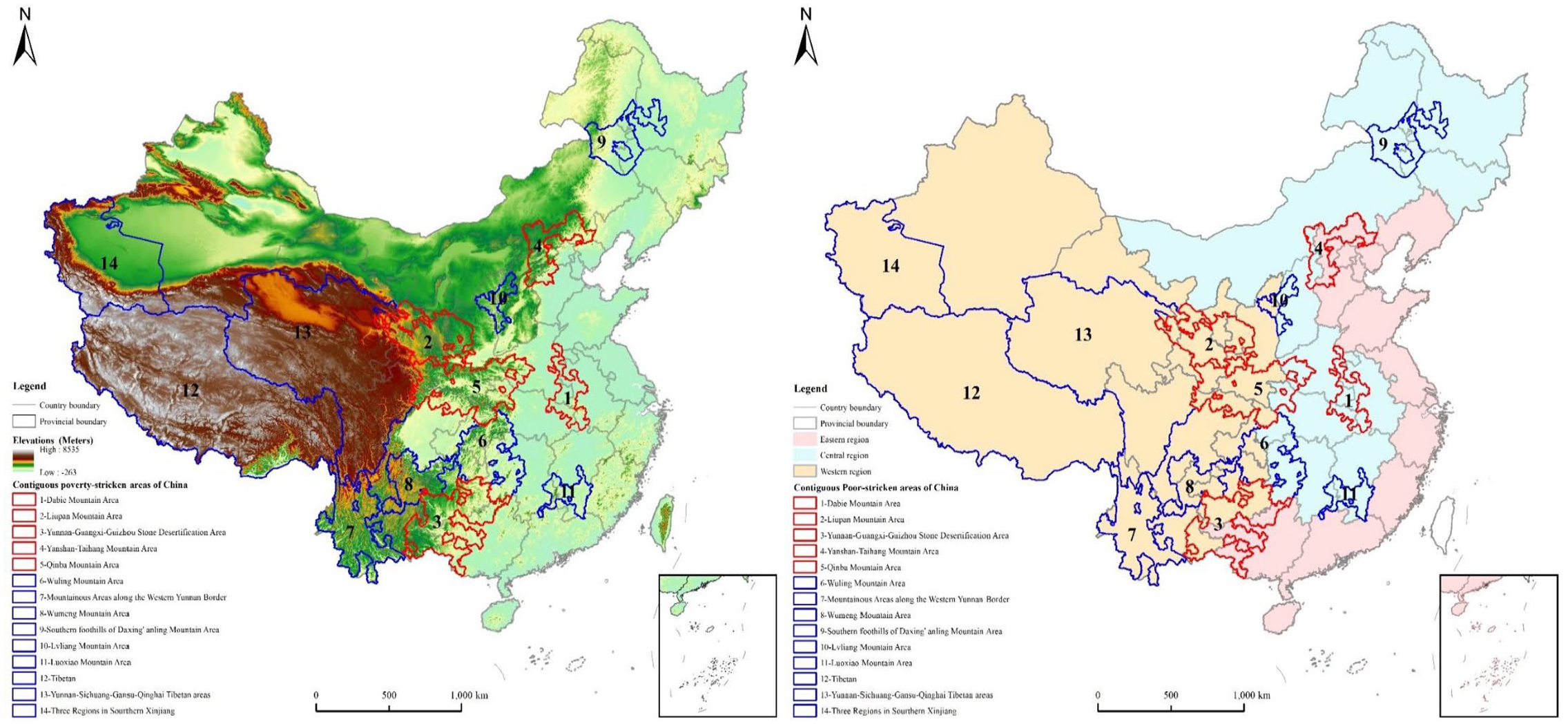
Spatial distribution of China’s 14 contiguous poverty-stricken areas (CPSAs). The red line area indicates the five CPSAs analyzed in this paper, and the blue line area is the other nine CPSAs.
Given that this research centers on rural households within China’s CPSAs, a total of 1509 households from nine CPSAs in the CFPS 2018 dataset were selected as our sample (Figure 2). This includes the Liupan Mountain Area (529 samples), Qinba Mountain Area (326 samples), Dabie Mountain Area (204 samples), Yunnan-Guangxi-Guizhou Stone Desertification Area (122 samples), Yanshan-Taihang Mountain Area (102 samples), Mountainous Areas along the Western Yunnan Border (89 samples), Wumeng Mountain Area (64 samples), Lvliang Mountain Area (37 samples), and Wuling Mountain Area (36 samples). The five CPSAs with more than 100 sampled households were chosen for multi-group analysis. In this study, geographic location and livelihood capital data was sourced from the CFPS 2018 dataset, while information regarding shock experiences was obtained from CFPS 2014 due to data availability constraints. Climatic data, including mean rainfall and temperature, as well as elevation, were obtained from the Resource and Environment Science and Data Center (https://www.resdc.cn/) and integrated with the CPFS dataset at the township level. Logarithmic transformations were used for economic variables with ‘long-tail’ distributions, including land asset value, agricultural machinery value, and deposits. Additionally, for other variables with outliers, we employed winsorization to confine the data within the [5%, 95%] percentiles.
Partial Least Squares-Structural Equation Model (PLS-SEM)
In this study, the PLS-SEM was adopted to understand the direct and indirect impact pathways of shock experience, climatic conditions, geographic location and livelihood capital on rural household’s livelihood diversification strategies. Typically, SEM comprises of measurement models and structural models. The structural model represents the associations among latent variables (also called ‘construct’) and is utilized to quantify the hypothesized pathways, while the measurement model specifies the associations between each construct and its observable indicators (Hair et al., 2017). As a special type of SEM, PLS-SEM has several advantages. It excels in exploratory research aimed at theory development and demonstrates a strong fit for complex structural models that encompass numerous constructs, indicators, and relationships. Moreover, it imposes minimal requirements regarding data distribution and sample size. The PLS-SEM was applied to empirically examine hypothesized relationships specified in the theoretical analysis through SmartPLS 3.2.9 package (Ringle et al., 2015). There are two major steps in the PLS-SEM development (Hair et al., 2016a; Henseler et al., 2016), i.e., specify structural and measurement models, then parameterize and evaluate each specific model.
Model specification
The variables chosen for the PLS-SEM in this research are grounded in the hypothesized pathways established in “Theoretical analysis and research hypothesis” section. Specifically, we identify nine constructs, including livelihood diversification, risk exposure, climatic conditions, geographic location, and five categories of livelihood capital. The corresponding observable indicators for each construct are presented in Table 1 and Table 2.
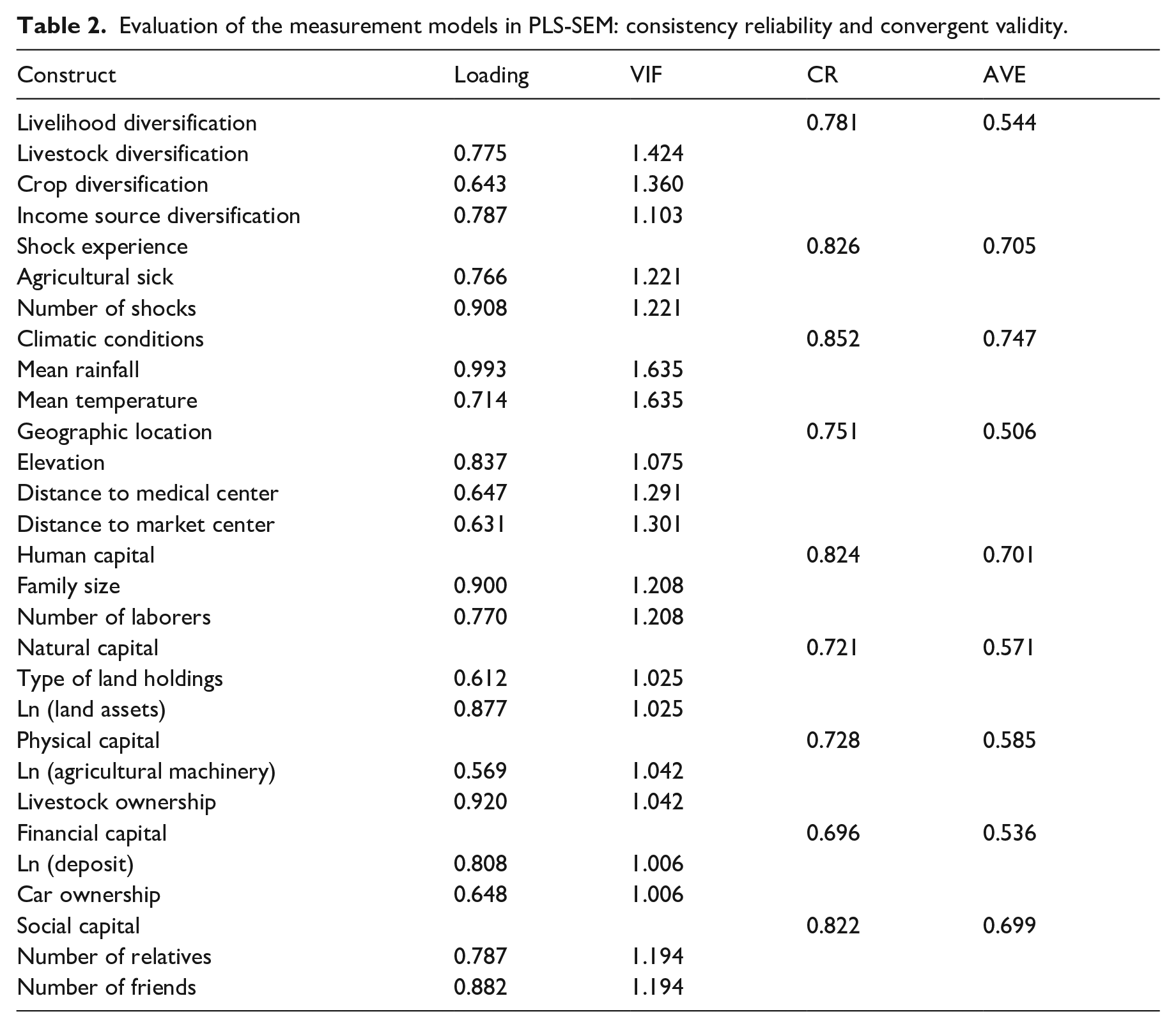
Evaluation of the measurement models in PLS-SEM: consistency reliability and convergent validity.
Measurement model assessment
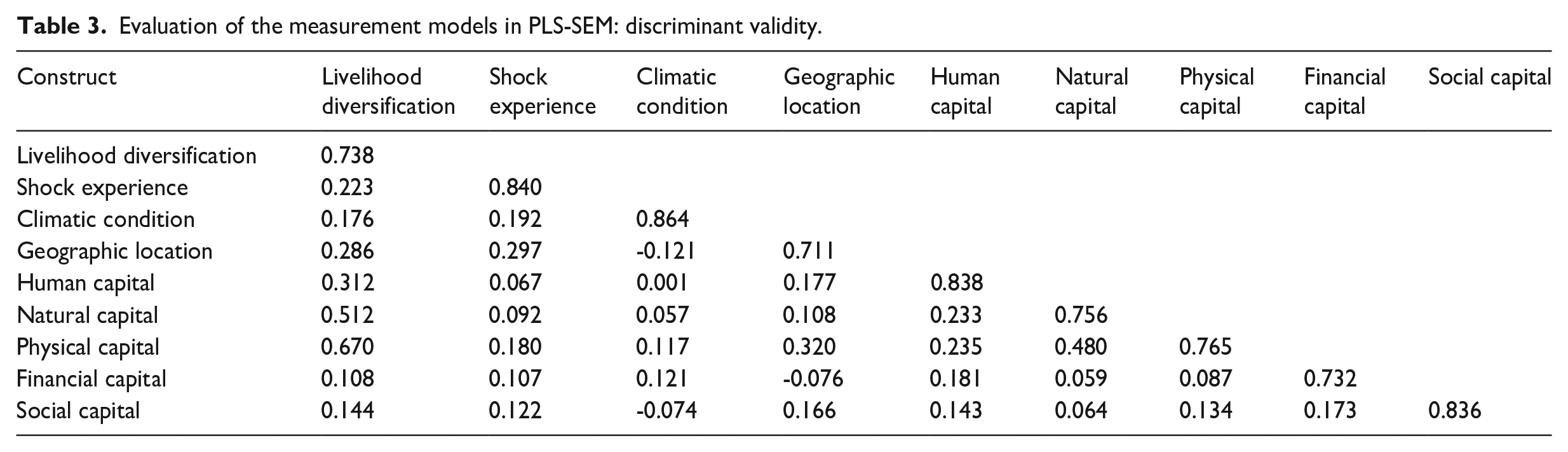
The PLS-SEM method differentiates between reflective and formative models, and all measurement models here are defined as reflective based on the relationship between each construct and its observable indicators. Evaluation of the reflective measurement model involves three criteria: internal consistency reliability, convergent validity, and discriminant validity. The composite reliability (CR) is used to evaluate internal consistency reliability, which is required to be greater than 0.7 and no less than 0.6 (Wang et al., 2022). The CR values of the constructs ranged between [0.696, 0.852], which was acceptable (Table 2). Convergent validity is assessed through the average variance extracted (AVE). The AVE values were between 0.536 and 0.747, which all exceeded the threshold of 0.50, indicating that the construct can explain over half of the variance of its indicators (Hair et al., 2016b). According to Fornell and Larcker (1981), the square root of AVE serves as a tool for assessing the discriminant validity of each indicator. From Table 3, the values of the square root of AVE of each construct (0.732 ≤
Evaluation of the measurement models in PLS-SEM: discriminant validity.
Structural model assessment
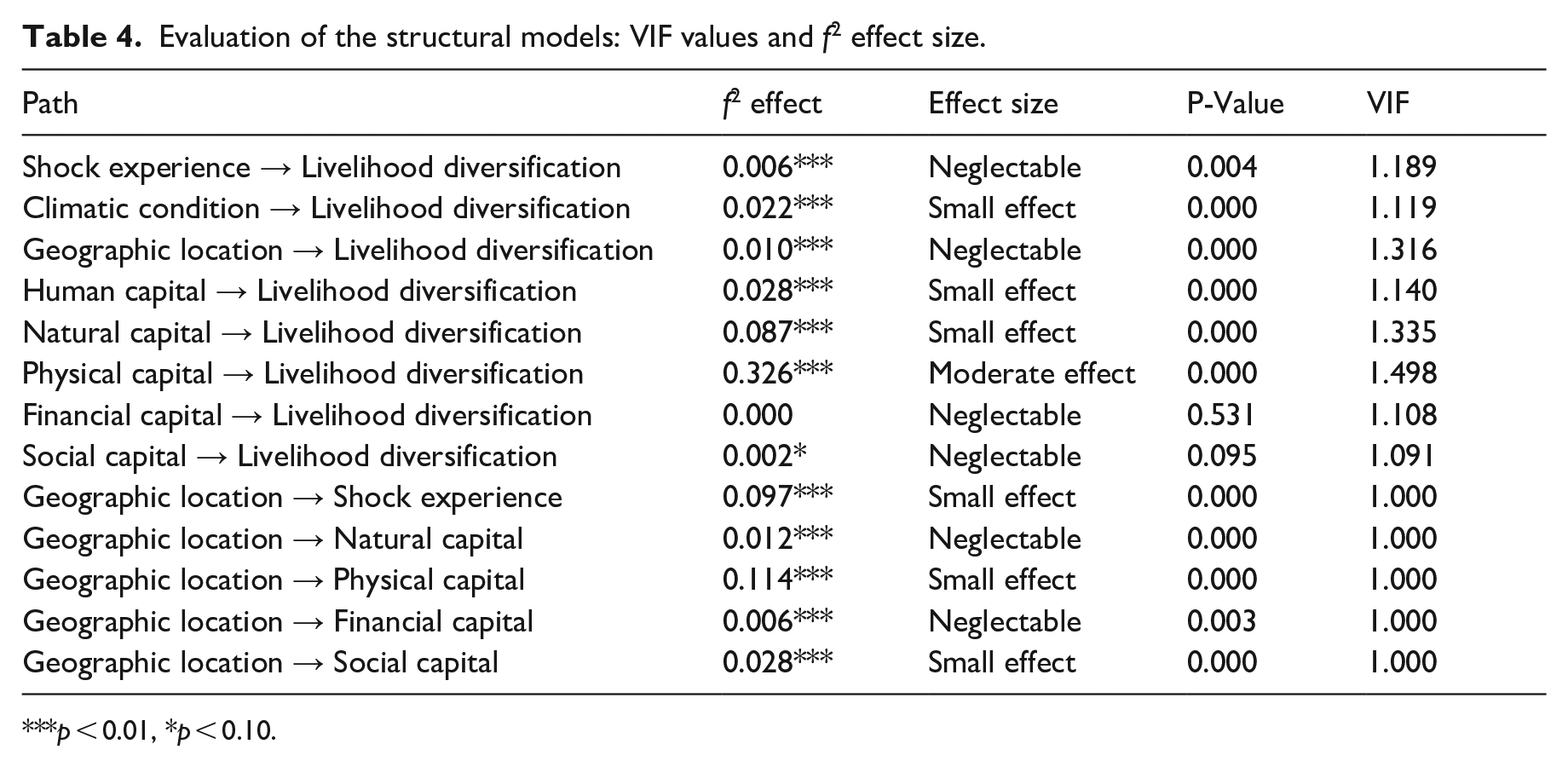
Assessment of the structural model involves examining collinearity, the overall R2, the effect size (f2), and the statistical significance of path coefficients (β) (Wang et al., 2020). To identify collinearity among the observable indicators, the variance inflation factor (VIF) was employed, revealing that the VIF values ranged from 1.006 to 1.635 (Table 4), suggesting no significant covariance (Urbach and Ahlemann, 2010).
Evaluation of the structural models: VIF values and f2 effect size.
p < 0.01, *p < 0.10.
The R2 value represents the explanatory power of each equation in the structural model. R2 = 0.536 suggests that 53.6% of the variation in rural households’ livelihood diversification was affected by their five dimensions of livelihood capitals and climatic condition, shock experience, and geographic location. Recent studies on PLS-SEM also suggest assessing the f2 effect size (Hair et al., 2021). Effect size f2 shows the change in R2 when one construct is removed from the model, and thereby evaluates whether the removed construct has an adequate impact on the target construct. Table 4 shows the f2 effect size for all the structural model relationships. The values of ⩾0.35, [0.15,0.35), [0.02, 0.15), and <0.02 represent large effect, moderate effect, small effect and no effect, respectively (Hair et al., 2019). Hence, the effect size of physical capital on livelihood diversification was moderate (f2 = 0.326). The effects of climatic conditions, human capital, and natural capital on livelihood diversification, and the effects of geographic location on shock experience, physical capital, and social capital were small, while the other path effects were neglectable.
SmartPLS 3.2.9 software was utilized to assist in building our theoretical model, estimating parameters, assessing causal pathways, and examining hypotheses. SmartPLS uses a nonparametric bootstrapping technique to determine the statistical significance of path coefficients (β), drawing 5000 subsamples as suggested from the sample to assess the estimated bootstrap errors (Hair et al., 2021).
Results
Descriptive statistics
Table 1 provides the descriptive statistics for both the dependent and independent variables of this research. Figure 3 and Appendix Table A1 illustrates the comparisons of these variables across various CPSAs.
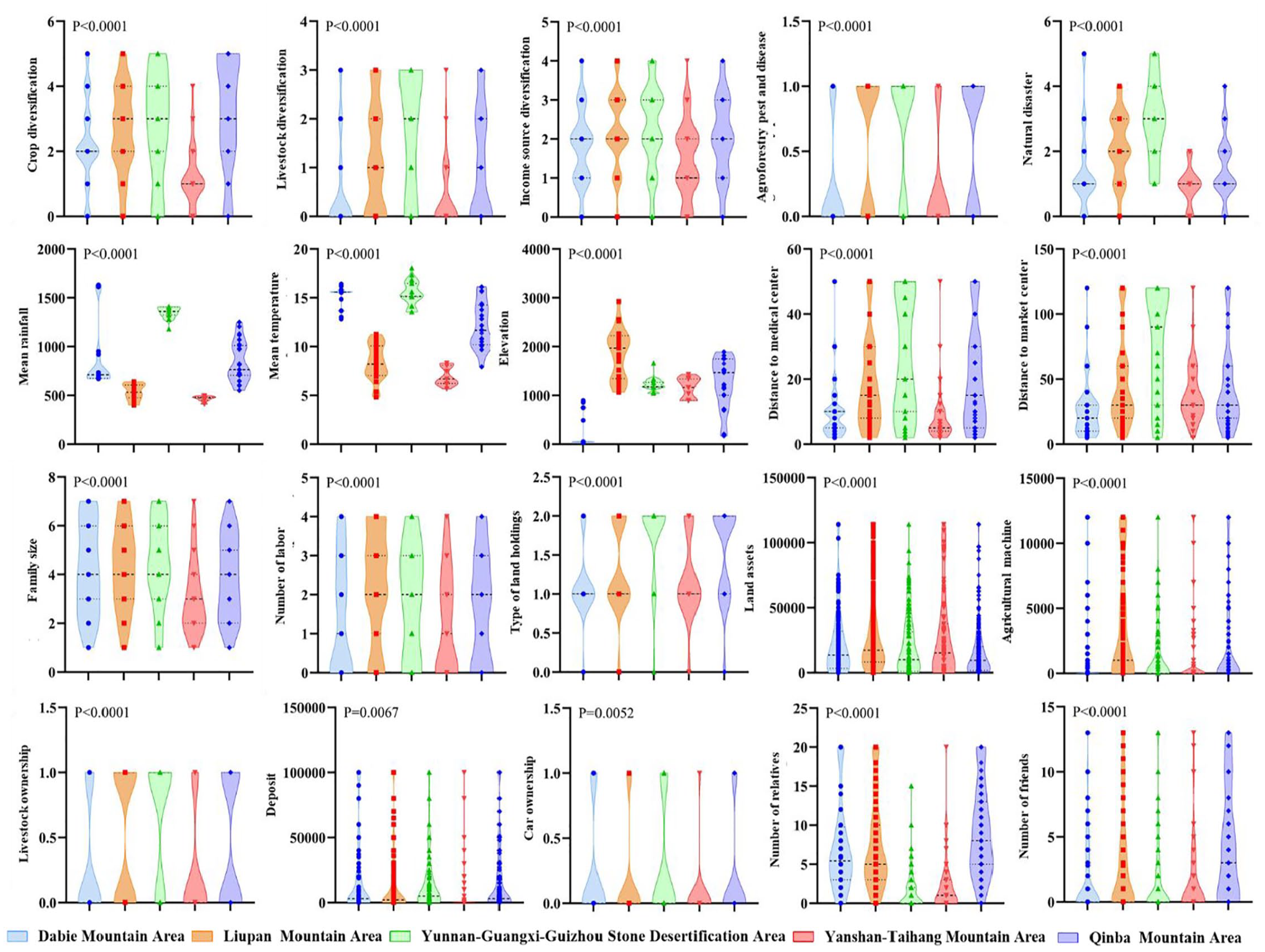
Descriptive statistics for dependent and independent variables in five CPSAs.
Analysis of rural livelihood diversification
The dependent variable of livelihood diversification is assessed through three dimensions: crop diversification, livestock diversification, and income source diversification. On average, each household cultivates more than two varieties of crops, raises one type of livestock, and participates in two distinct livelihood activities. Various CPSAs exhibit markedly different patterns in their choices for livelihood diversification. In terms of crop diversification, households in Qinba, Yunnan-Guangxi-Guizhou, and Liupan grow an average of three crops, while those in Dabie average two, and Yanshan-Taihang households typically cultivate only a single crop. Livestock diversification is notably low in Yanshan-Taihang (mean = 0.314) and Dabie (mean = 0.495), with fewer than one species per household. Conversely, the other three regions demonstrate a more balanced distribution of livestock diversification, ranging from zero to three species. Regarding income source diversification, with the exception of Yanshan-Taihang—where the average rural household relies on a single livelihood option (mean = 1.392)—households in the remaining four areas engage in an average of two livelihood activities, with relatively few households having either one or three types of livelihood activities.
Descriptive statistical analysis of shock experience, climatic conditions, geographic location, and livelihood capital
Shock experience: approximately 48.91% of the household samples have reported experiencing agroforestry pests and diseases. Households in Dabie (mean = 0.216) and Yanshan-Taihang (mean = 0.206) display similar distribution patterns, experiencing a significant lower incidence of agroforestry pests and diseases exposure, compared to those in the Yunnan-Guangxi-Guizhou, Liupan, and Qinba regions, which also exhibit comparable distribution trends but have mean values of 0.721, 0.616, and 0.607, respectively. When examining the frequency of natural disasters, on average, each household has experienced two natural disasters during 2010-2013. Also, notable disparities emerge among various CPSAs; households in Yunnan-Guangxi-Guizhou are subjected to the widest range of natural disasters (mean = 2.959), followed by those in Liupan (mean = 2.174), while Yanshan-Taihang experiences the fewest natural disasters (mean = 0.931).
Climatic conditions: the mean rainfall in full sample is recorded at 766.7 mm, while the mean temperature stands at 11.62°C. The climatic conditions exhibit notable regional variations. In terms of mean rainfall, Yunnan-Guangxi-Guizhou experiences the highest levels, approximately 1355 mm, followed by Dabie (mean = 885 mm) and Qinba (mean = 843 mm), which displays significant internal variability in precipitation. Conversely, Yanshan-Taihang receives the least rainfall, measuring less than 500 mm. Regarding temperature, the mean values are elevated in Dabie (15.578°C) and Yunnan-Guangxi-Guizhou (15.336°C), whereas they are comparatively lower in Liupan (8.302°C) and Yanshan-Taihang (6.892°C), and there is considerable temperature fluctuation within Liupan and Qinba.
Geographic location: the mean elevation of the household samples is approximately 1355 meters, with the average travel time to the nearest medical facilities via the fastest mode of transportation being under 20 minutes. In contrast, the typical duration for daily transportation to the nearest market center is 45 minutes. In terms of regional variation, Liupan is situated at elevations ranging from 1000 to 3000 meters, predominantly around 2000 meters, making it the highest among the five CPSAs. Qinba exhibits a broader elevation range of approximately 0 to 2000 meters, with a mean elevation of 1253 meters. Conversely, Yunnan-Guangxi-Guizhou and Yanshan-Taihang demonstrate a pronounced concentration in elevation distribution, centered around 1100 to 1200 meters, respectively. The samples from Dabie are located at a relatively low elevation of 178 meters. Households in Yanshan-Taihang and Dabie enjoy favorable access to medical facilities, with average travel times of 7.7 and 9.4 minutes, respectively. In contrast, the travel times in Liupan, Qinba, and Yunnan-Guangxi-Guizhou are more variable, averaging 18.5, 20.4, and 26.9 minutes, respectively. The time required to reach the market center also differs across the various CPSAs, with Dabie averaging 25 minutes. The average travel time in Yanshan-Taihang, Qinba, and Liupan ranges from 35 to 45 minutes, while it extends to approximately 80 minutes in Yunnan-Guangxi-Guizhou.
Human capital: the average household across the entire sample consists of approximately four members, typically including two working members. The distribution of family sizes across five regions exhibits similarities, with Yunnan-Guangxi-Guizhou having a slightly larger average family size of 4.48 members, followed by Liupan, Dabie, and Qinba, which have average sizes of 4.25, 4.19, and 3.82 members, respectively. Conversely, Yanshan-Taihang has the smallest average family size at 2.98 members. The number of laborers per household is relatively consistent across the five CPSAs, with households in Liupan, Yunnan-Guangxi-Guizhou, and Qinba averaging two laborers, while Dabie and Yanshan-Taihang average one laborer each.
Natural capital: on average, each household possesses approximately 1.38 distinct types of agricultural land, with the land’s value nearing 26,500 yuan per family. In Dabie, Liupan, and Yanshan-Taihang, households typically hold one type of land, predominantly cultivated land. Conversely, most households in the Yunnan-Guangxi-Guizhou and Qinba regions own two types of land, including forest land as well. The valuation of land assets is highest in Liupan at 29,621 yuan, followed by Yanshan-Taihang at 27,308 yuan, while Qinba records the lowest valuation at 15,351 yuan.
Physical capital: the valuation of agricultural machinery stands at approximately 2100 yuan per household, with 48.18% of households possessing livestock. In the Dabie and Yanshan-Taihang regions, the average value of agricultural machinery owned by households is relatively low, at 1150 yuan and 1212 yuan respectively. Conversely, households in Liupan exhibit the highest average value of agricultural machinery ownership, reaching 3228 yuan. Furthermore, a relatively low proportion of rural households in Yanshan-Taihang (22.5%) and Dabie (27.5%) raise livestock, whereas a majority of households in Yunnan-Guangxi-Guizhou (68.9%) and Liupan (50.9%) engage in livestock farming.
Financial capital: on average, each household possesses approximately 17,216 yuan in cash or bank deposits, with around 17% of households owning a car. Households in the Dabie region report the highest average deposits at 23,709 yuan, whereas those in Yanshan-Taihang exhibit the lowest, with only 8504 yuan; the remaining three CPSAs show averages ranging from 16,000 to 19,000 yuan. Notably, over 20% of households in Yunnan-Guangxi-Guizhou and Dabie own a car, in contrast to the mere 5.9% of households sampled in Yanshan-Taihang that have vehicle ownership.
Social capital: the average number of relatives and friends visiting homes during the Spring Festival is 6.68 and 3.01, respectively. The distribution of relative visits in the Yunnan-Guangxi-Guizhou and Yanshan-Taihang regions exhibits a similar pattern, with low average of less than two. In contrast, the distribution of relatives per household in the Dabie and Liupan regions shows a comparable mean of approximately seven. However, the distribution of relatives per household in the Qinba region is more varied and exceeds that of the other four regions, with a range of 0-25 being evenly distributed, resulting in an average of nine visits per household. In terms of friend visitation during important festivals, Qinba averages four per household, followed by Liupan with an average of three. The remaining three groups have fewer than two on average.
Analysis of influencing factors of rural livelihood diversification
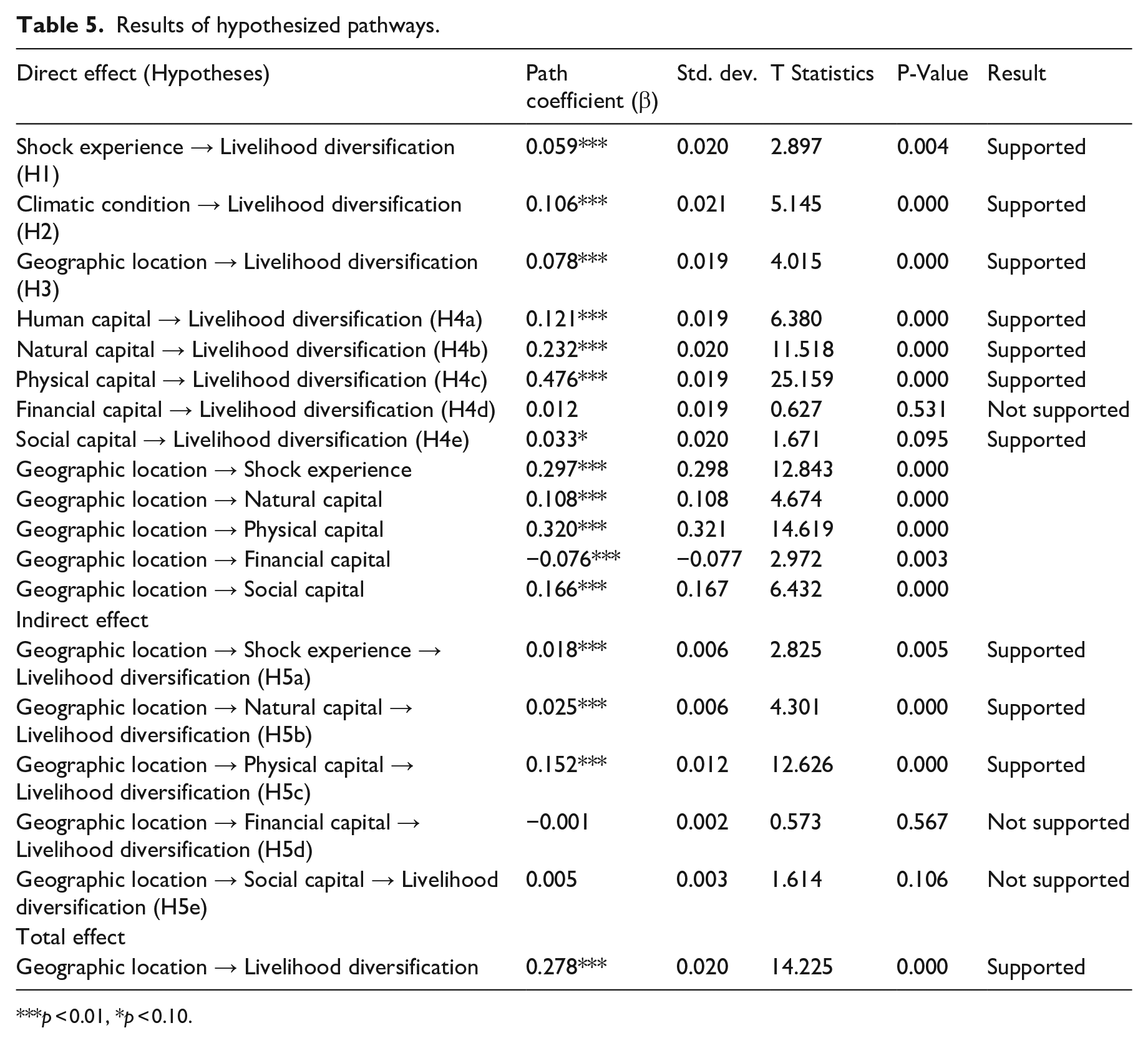
This study employed PLS-SEM to reveal the impact mechanisms between rural households’ livelihood diversification and various influencing factors, including shock experience, climatic conditions, geographic location and livelihood capital, focusing on the sign of each standardized path coefficient (β) in the structural equations, the standard variance of magnitude, the t-test statistic (T Statistics), and the significance level (p-value). Table 5 presents the direct, indirect, and total impacts of the independent variables on the livelihood diversification of households across different pathways. The total effect for each pathway is the aggregation of direct and indirect impacts, which may either amplify or negate one another.
Results of hypothesized pathways.
p < 0.01, *p < 0.10.
Direct impact analysis
Table 5 and Figure 4 show that shock experience has a significant and positive impact on rural households’ livelihood diversification (β = 0.059, p < 0.01). A positive correlation is also present between shock experience and its observable indicators of agroforestry-related pests and diseases, as well as natural disasters, with a stronger association observed with the latter. This indicates that increased exposure to natural disasters and agroforestry pests and diseases among rural households “pushes” them to seek a broader range of livelihood strategies, thereby supporting Hypothesis 1.
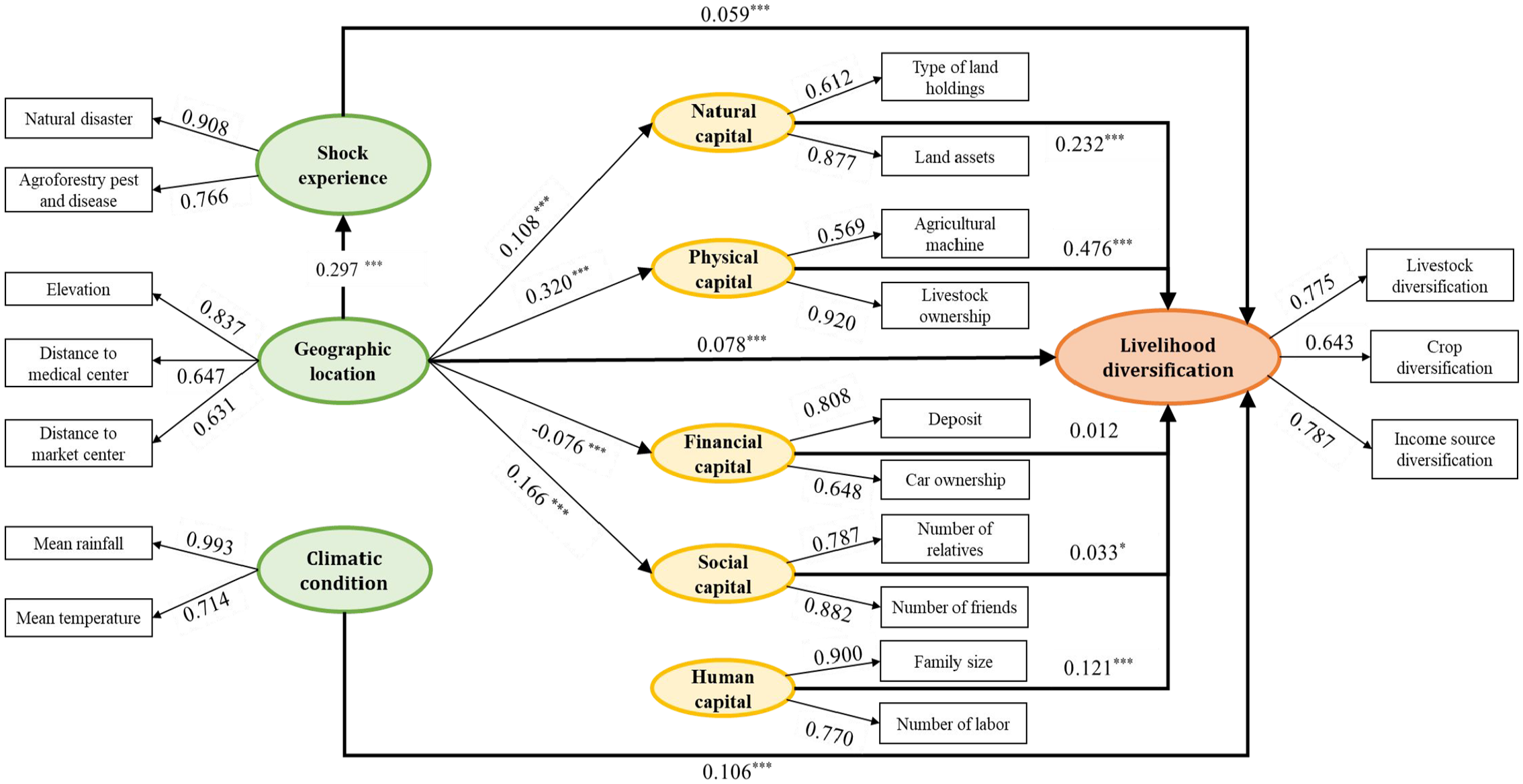
PLS path analysis of the relationships between shock exposure, climatic conditions, geographic location, livelihood capital, and livelihood diversification of rural households.
Climatic conditions exert a significant positive influence on rural livelihood diversification (β = 0.106, p < 0.01), verifying Hypothesis 2. The positive correlation observed in the measurement model between climatic conditions, mean rainfall, and mean temperature indicates that as rainfall and temperature increase, households are likely to broaden their livelihood strategies to mitigate the effects of negative climate impacts on a singular type of crop, livestock or income.
Geographic location exerts a significant positive influence (β = 0.078, p < 0.01) on rural livelihood diversification. Households situated at higher elevations and those located further from market and healthcare facilities often engage in expanding their income-generating activities. Thus, our Hypothesis 3 is also supported.
In terms of livelihood capital, all five categories of capital assets exhibit positive direct influences on rural livelihood diversification, although the effect of financial capital is insignificant. Specifically, the most substantial direct effect on livelihood diversification is attributed to physical capital (β = 0.476, p < 0.01), followed by natural capital (β = 0.232, p < 0.01) and human capital (β = 0.121, p < 0.01). Conversely, the impact of social capital is the least significant (β = 0.033, p < 0.10) among the significant pathways, thereby confirming Hypotheses 4a, 4b, 4c, and 4e. The synthesis of the measurement models for livelihood capital constructs suggests that households with greater access to agricultural machinery, livestock, more agricultural land holdings, higher-value land, larger household sizes, increased labor availability, and a broader network of relatives and friends are more inclined to pursue livelihood diversification.
Indirect impact analysis
We also examined the indirect influence of geographic location on rural livelihood diversification, identifying three significant pathways. Firstly, the indirect influence mediated by shock experience is both positive and statistically significant (β = 0.018, p < 0.01), thereby confirming Hypothesis 5. This suggests that households situated in more isolated areas, characterized by higher elevations and limited access to markets and healthcare facilities, are more susceptible to natural disasters and agroforestry diseases, which exaggerates the need to diversify their livelihood strategies. Furthermore, geographic location also influences livelihood diversification indirectly through the mediating roles of physical capital (β = 0.152, p < 0.01) and natural capital (β = 0.025, p < 0.01), thereby validating Hypotheses 6a and 6b. The findings indicate that households in distant areas with poorer geographic access tend to increase their investments in agricultural-related capital assets, such as machinery, livestock, and land holdings, which can enhance agricultural diversification. Conversely, the indirect effects of financial capital and social capital were found to be statistically insignificant.
Total impact analysis
The direct and indirect influences of geographic location on rural livelihood diversification are both significant and of the same direction, leading to an overall greater impact (β = 0.278, p < 0.01). Combining findings of measurement models suggest that as elevation climbs and the travel time to markets and healthcare facilities increases, households have a greater tendency to diversify their crop varieties, livestock types, and income sources.
Heterogeneity analysis of different CPSAs
Direct impact analysis
We conducted multi-group analyses to evaluate the impact pathways across various CPSAs (Table 6 and Appendix Table A2). Initially, it is evident that the only significant effect of shock experience on livelihood diversification is found in the Qinba Mountain Area (β = 0.167, p < 0.05). There is no significant influence of climatic conditions on livelihood diversification. Geographic location demonstrates significant positive direct effects on livelihood diversification in the Yunnan-Guangxi-Guizhou region (β = 0.227, p < 0.01) and in Qinba (β = 0.128, p < 0.01). Among the five types of capital affecting livelihood diversification, human capital shows a significant positive impact in Dabie (β = 0.251, p < 0.01), Liupan (β = 0.150, p < 0.01), and Qinba (β = 0.089, p < 0.01). Both natural and physical capital exert significant positive direct effects on livelihood diversification across all five CPSAs. The influence of natural capital is most pronounced in Yanshan-Taihang (β = 0.495, p < 0.01) and least significant in Dabie (β = 0.154, p < 0.10). The direct effect of physical capital is more substantial in Liupan, Qinba, and Dabie, exhibiting comparable magnitudes, while it is smaller in the other two CPSAs. Additionally, the direct effect of financial capital on livelihood diversification is significantly positive in Qinba (β = 0.100, p < 0.05).
Results of multi-group analyses.
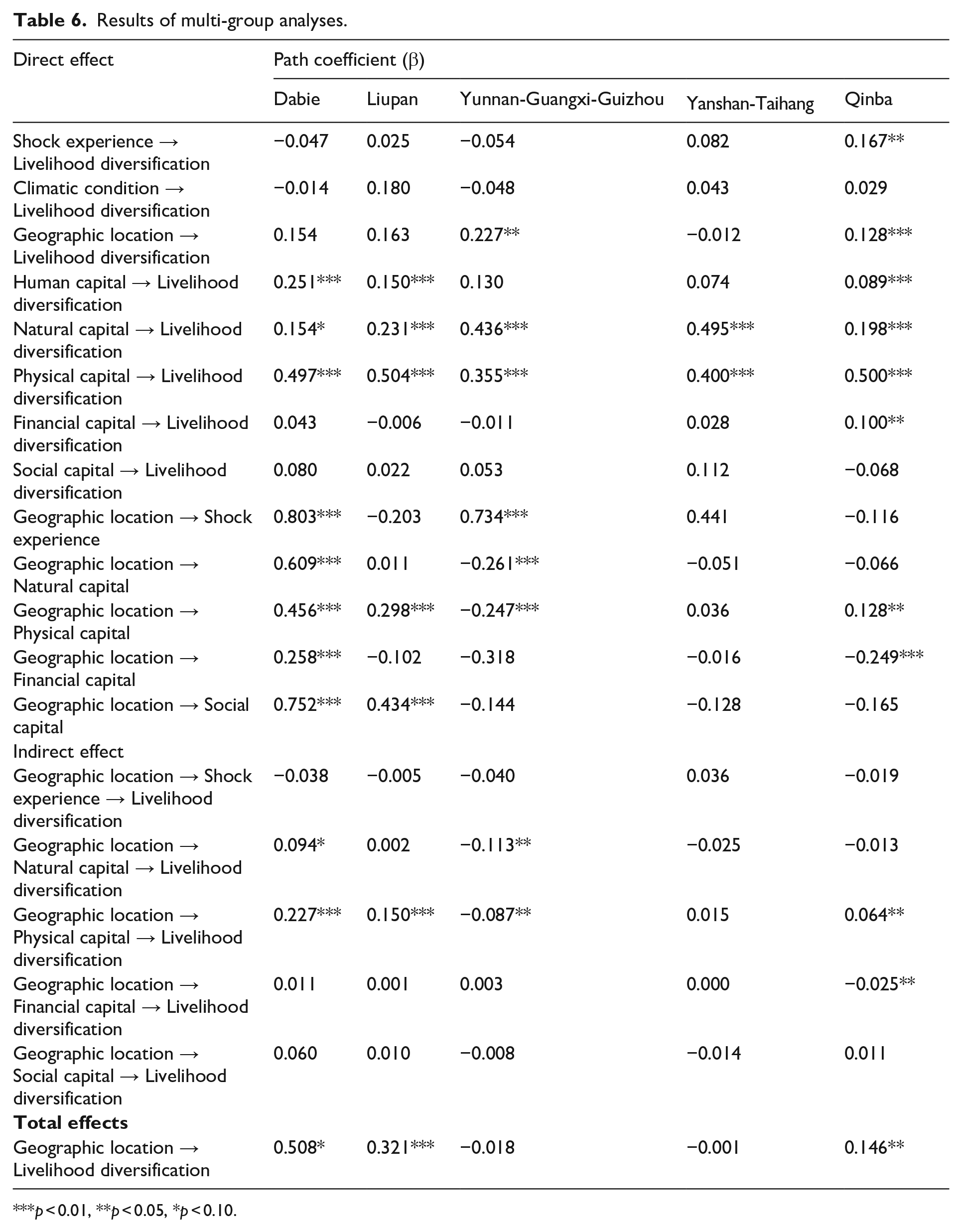
p < 0.01, **p < 0.05, *p < 0.10.
Indirect impact analysis
The indirect effects of geographic location on livelihood diversification, mediated by shock experience, are found to be insignificant. The indirect effects of geographic location through physical capital are significant across all regions, with the exception of Yanshan-Taihang. Specifically, the indirect impacts are positive in Dabie (β = 0.227, p < 0.01), Liupan (β = 0.150, p < 0.01), and Qinba (β = 0.064, p < 0.05), exhibiting a decreasing magnitude of impact. Notably, a negative indirect impact pathway through physical capital is identified in Yunnan-Guangxi-Guizhou (β = -0.087, p < 0.05). Regarding the mediating role of natural capital, a significant positive indirect impact is recorded in Dabie (β = 0.094, p < 0.10), while a significant negative impact is noted in Yunnan-Guangxi-Guizhou (β = -0.113, p < 0.05). Additionally, a significant negative indirect impact of geographic location on livelihood diversification, mediated by financial capital, is observed in Qinba (β = −0.025, p < 0.05). The indirect influence of social capital on livelihood diversification remains insignificant across all regions.
Total impact analysis
As a result of the reinforcement or trade-offs between direct and indirect effects, we can identify three significant total impact pathways from geographic location and livelihood diversification. The most substantial total impact is recorded in Dabie (β = 0.508, p < 0.10), primarily driven by its indirect effects through physical and natural capitals, as the direct impact is not statistically significant. This is followed by Liupan (β = 0.321, p < 0.01), which also derives its contributions from indirect effects via physical capital. Furthermore, the total impact of geographic location in Qinba is both positive and statistically significant (β = 0.146, p < 0.05), predominantly influenced by its direct impact (β = 0.167, p < 0.05), while the indirect pathways through physical and financial capital exhibit opposing effects that offset each other. It is also important to highlight that both the direct and indirect influences of geographic location on livelihood diversification are significant in the Yunnan-Guangxi-Guizhou region; however, they operate in opposing directions, leading to an overall insignificant total impact.
Figures 5 and 6 further depict the spatial distribution of the total impact (path coefficient (β)) of different influencing factors and their corresponding significance levels. These figures reveal significant spatial variations and provide additional insights into the regional differences in the effects of the influencing factors.
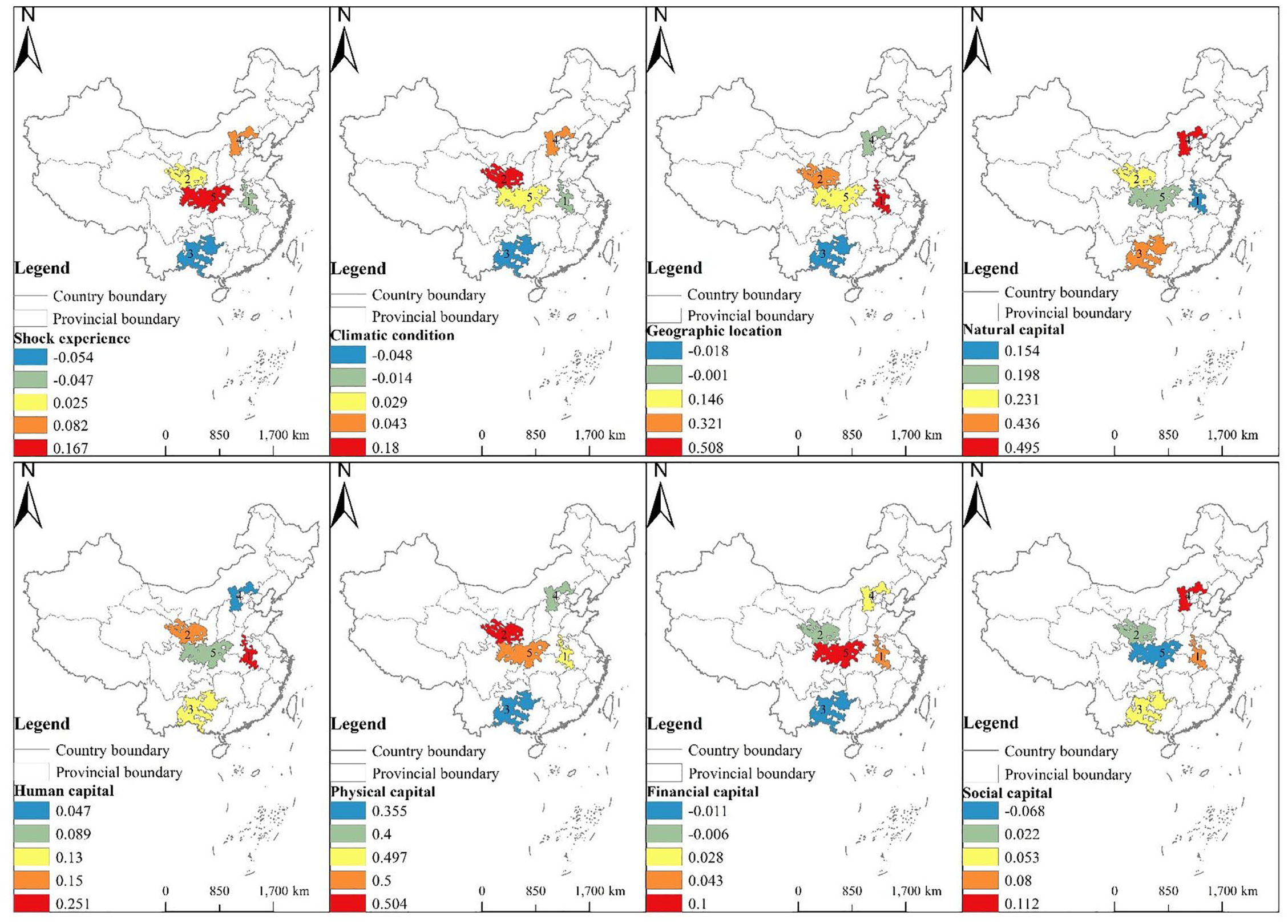
Spatial distribution of the total impact (path coefficient (β)) of different influencing factors.
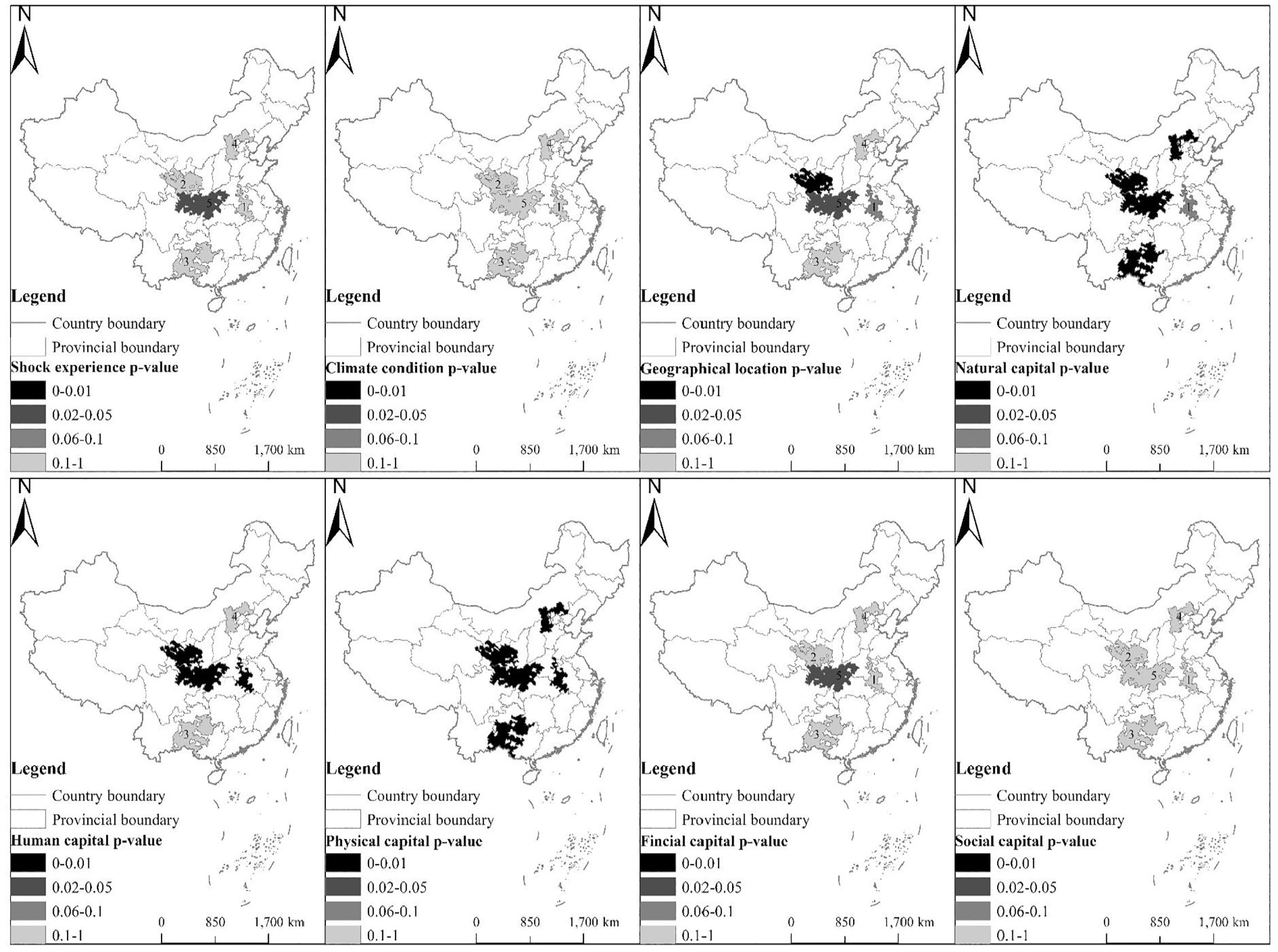
Spatial distribution of the significant levels of the total impact (path coefficient (β)) of different influencing factors.
Discussion and policy implications
The push effect of shock experiences on rural livelihood diversification
In this study, our empirical findings indicate that previous shock experiences, particularly pests and diseases related to agroforestry, as well as natural disasters, significantly enhance rural livelihood diversification in CPSAs. The finding aligns with extensive literature that underscores the role of environmental and economic shocks in prompting rural households to diversify livelihoods as a coping mechanism (Sanusi and Dries, 2024; Wang et al., 2024). Households that have encountered agroforestry-related pests, diseases, and natural disasters tend to be more motivated to cultivate a wider array of crops and livestock (Hufnagel et al., 2020), and to participate in a greater number of livelihood activities. The positive relationship between shock experiences, such as agroforestry-related pests, diseases, and natural disasters, and livelihood diversification can be contextualized within both risk management theory and adaptive capacity frameworks. From a theoretical perspective, shocks act as external stressors that challenge the stability of rural households’ existing livelihood strategies. In line with Ellis’s framework of livelihood diversification (Ellis, 2000), shocks often serve as a “push factor,” driving households to adopt broader livelihood strategies as a means to reduce vulnerability and enhance resilience. Diversification becomes a rational response to mitigate risk and stabilize income streams in the face of recurrent threats (Ahmad and Afzal, 2024). Agroforestry pests and diseases, for instance, directly threaten crop yields, prompting households to explore alternative activities such as animal husbandry, off-farm employment, or cultivating pest-resistant crop varieties (Akter et al., 2022). Similarly, the recurrent threat of natural disasters, e.g., floods or droughts, can diminish the productivity of existing farming systems and compel households to involve themselves in a broader spectrum of income-generating activities. By diversifying livelihoods, households aim to build resilience against future shocks, ensuring that losses in one domain are offset by gains elsewhere. However, another study by Musumba et al. (2022) found that drought had a negative effect on livelihood diversity. Thus, the impact of shock on livelihood diversification appears to be context-dependent. This suggests that while drought may act as a push factor in some contexts, driving households to diversify their livelihoods, in other cases it may exacerbate resource scarcity, limiting the opportunities for diversification.
These findings underscore the importance of policy interventions that both mitigate the impacts of shocks and enhance the adaptive capacity of rural households. First, agricultural support programs focused on integrated pest and disease management, drought-resistant crops, and climate-smart agricultural practices can reduce the immediate impacts of agroforestry-related shocks, allowing households to pursue diversification more proactively rather than reactively. To mitigate the negative impacts of natural disasters, it is necessary to provide early warning services, disaster risk management training, and access to emergency relief resources for rural farm households.
Climatic drivers of livelihood adaptation: The role of temperature and rainfall
Drawing on household samples from CPSAs in China, we found that climatic conditions—such as rainfall and temperature—exert a significant positive role in households’ livelihood diversification. This result underscores the important role of climatic factors in shaping the livelihood strategies adopted by households in these vulnerable regions. This result is consistent with Tofu (2024), who found that higher temperatures are negatively associated with crop yields in Ethiopia, leading to greater reliance on non-agricultural livelihoods. Eder et al. (2024) also found that in Austria, warmer temperatures and higher rainfall levels in growing seasons could reduce agricultural outputs, while crop diversification cannot attenuate temperature induced productivity declines. Based on households samples collected in India, Nepal and Bangladesh, Bhatta et al. (2015) found that rainfall affects rural livelihood diversification in a nonlinear way, showing more on-farm diversification in regions with high rainfall (1500–2100 mm) than in regions with medium (900–1500 mm) or extremely high rainfall (>2100 mm). CPSAs are often situated in areas with challenging ecological conditions, including mountainous terrains, which are highly sensitive to climate variations. In these areas, where agricultural activities are typically the primary source of income, variations in rainfall and temperature can have a profound impact on agricultural productivity, influencing crop yields, livestock health, and overall income stability. The positive effect of climatic conditions on diversification suggests that households may respond to environmental uncertainties by adopting a broader range of crop varieties, livestock breeds, and supplementary income-generating activities, all of which serve as risk management strategies to buffer against the unpredictable and often negative impacts of climate variability on agricultural yield.
Given that these regions are often characterized by fragile ecological systems and limited access to resources, policies should focus on enhancing climate resilience by fostering sustainable livelihoods development. For instance, promoting climate-smart agriculture, such as the use of drought-resistant crops and efficient irrigation technologies, can support farmers in adapting to evolving climate conditions. Additionally, supporting livelihood diversification through vocational training, access to non-farm employment opportunities, and the development of small-scale enterprises can reduce households’ dependence on climate-sensitive agriculture. Furthermore, policies that strengthen social safety nets—such as weather-indexed insurance, food security programs, and access to affordable credit—are critical to protecting vulnerable populations from the financial impacts of climate shocks. Strengthening local institutions and improving access to climate information are essential for empowering communities to make knowledgeable choices regarding agricultural practices and livelihood strategies.
Geographic constraints and their role in shaping livelihood diversification
Our study examined both direct and indirect influences of geographic location on rural livelihood diversification in CPSAs. The findings indicate that geographic location plays a crucial role in the livelihood diversification of rural residents. Specifically, households situated at higher elevations and those farther from market and healthcare facilities are more likely to seek diverse sources of income. This is because households located at higher elevations often face harsher environmental conditions, such as limited arable land and extreme weather; geographic isolation from market centers can limit access to both inputs and markets for agricultural products, reducing the profitability and sustainability of farming as the sole livelihood source; and poorer access to health and other essential services can affect the social and physical well-being of rural residents. These geographic constraints can make traditional agricultural practices less viable, leading households to diversify income sources as a coping mechanism to offset challenges posed by their geographic isolation. In CPSAs, the remote positioning of rural households, inadequate transportation infrastructure, and the absence of a developed industrial sector to provide employment opportunities compel families to seek additional income sources.
Geographic location also indirectly influences the livelihood diversification of rural households in CPSAs, primarily through mediating factors of shock experiences, natural capital, and physical capital. First, geographic location positively affects shock experiences, suggesting that higher elevations and geographic isolation in CPSAs heighten households’ exposure to natural disasters and agroforestry pests and diseases. This increased exposure to multiple shocks indirectly fosters livelihood diversification. Secondly, geographic location is positively correlated with natural capital, indicating that households in remote mountainous regions generally have better access to abundant natural resources, including forests, arable land, and water systems. This aligns with the findings of Cui et al. (2024), which posits that abundant natural capital provides rural households with a foundation for developing diversified agriculture. Furthermore, geographic location also positively influences physical capital. The challenging terrain and limited accessibility of high-altitude areas lead to increased transportation and maintenance costs for agricultural machinery. To mitigate this challenge, rural households may opt for lighter or smaller agricultural equipment more suited to mountainous operations or may develop traditional farming tools and practices tailored to local conditions, as highlighted in the study of Franco et al. (2020). This adaptation of physical capital effectively promotes the diversification of rural households’ livelihoods. The government has implemented agricultural support programs, including subsidies for agricultural machinery and the provision of poultry seedlings, to enhance physical capital, which aids rural households in boosting productivity. Overall, in response to various challenges and opportunities linked to geographic location, rural households have been “pull” or “push” to diversify their livelihoods to manage risks and optimize capital utilization.
Our empirical evidence underscores the need for precise policy interventions in geographically isolated areas, such as CPSAs, to continue investing in infrastructure development and strengthening road construction and maintenance to reduce transportation costs for agricultural products and shorten the distance to markets and service facilities. It is also crucial to improve healthcare, education, and utilities in CPSAs to enhance the living conditions and reduce the pressures associated with geographic remoteness. In addition, it is necessary to promote livelihood diversification to leverage geographic capital potential, such as developing ecological agriculture, agro-tourism, and under-forest economy (e.g., medicinal plants, mountain tourism, or ecological livestock farming), to maximize the economic value of geographic capital; or provide vocational training programs to equip households with skills for non-agricultural jobs, such as e-commerce, handicrafts, and rural tourism services. Furthermore, given the positive association between adverse geographic condition with shock experience, it is also crucial to strengthen disaster risk reduction infrastructure, to promote resilient agricultural practices, to build community-based disaster management, and to enhance rural governance to reduce negative impacts of shock events on rural households in geographically disadvantaged areas.
The contribution of livelihood capitals to livelihood diversification
The findings reveal the critical role of various forms of livelihood capital—physical, natural, human, and social—in shaping rural households’ decisions to diversify their livelihoods. This result is consistent with empirical evidence from developing countries such as Ethiopia, India and Nigeria, which demonstrates that enhanced livelihood diversification, facilitated by improved access to and availability of various types of livelihood assets, is crucial for reducing rural poverty (Habib et al., 2023) . Access to physical capital, such as agricultural machinery and livestock, reduces the labor intensity and increases productivity, enabling households to allocate resources to additional income-generating activities. Similarly, natural capital, including land holdings and high-value land, provides a foundation for agricultural and non-agricultural diversification. Human capital, reflected in household size and labor availability, enhances a household’s capacity to engage in multiple economic pursuits, as larger labor pools allow for the distribution of tasks across diverse activities. Social capital, represented by networks of relatives and friends, facilitates access to information, financial resources, and market opportunities, further promoting diversification. These results underscore the interconnectedness of livelihood capitals in enabling households to adopt strategies that reduce dependency on a single source of income and enhance their resilience to economic and environmental risks.
The findings also align with the goals of China’s Rural Revitalization Strategy and the priorities outlined in Central No. 1 Documents, which emphasize enhancing rural livelihoods and promoting sustainable agricultural development. To promote physical capital, the government should increase subsidies and financial support to assist rural households in purchasing agricultural machinery and livestock. Land consolidation and improvement projects should be implemented to increase the productivity and value of agricultural land, ensuring its efficient use. As for human capital development, expanding vocational training programs can equip rural households with the skills necessary for employment in non-agricultural sectors, supporting income diversification. Greater investments in rural education and healthcare are necessary to improve the overall quality of labor and enable households to diversify their income sources more effectively. To facilitate social capital development, the establishment of rural cooperatives and professional associations should be encouraged to facilitate information sharing, and collective action among households. Promoting e-commerce platforms and digital networks can connect rural households to larger markets, enabling them to have more avenues for income diversification.
Comparisons among different CPSAs
The findings from the comparison of different CPSAs reveal significant regional variations in the influence of geographic location on livelihood diversification. Dabie Mountain Area in central China exhibits the greatest total impact from geographic location on livelihood diversification. Geographic location affects household livelihood diversification through both direct and indirect channels, and these effects are reinforced. The indirect effects, especially through physical capital, are particularly important. The Dabie region, with its relatively low elevation and better accessibility to markets and healthcare, benefits from infrastructure improvements and supportive government policies aimed at rural revitalization in central China. Specifically, the “Central China Rising Strategy” has played a significant role in enhancing the region’s economic growth and social development. This strategy focuses on improving infrastructure, encouraging industrial development, and promoting balanced regional growth. As a result, the Dabie Mountain Area has seen improvements in transportation, rural industrialization, and access to markets, which have created a more favorable environment for livelihood diversification.
Regions like Liupan Mountain in western China face greater challenges due to higher elevations and geographic isolation. These areas have longer travel times to essential services and markets, which limits opportunities for livelihood diversification. Despite these disadvantages, households in Liupan also exhibit significant livelihood diversification, which highlights the importance of physical capital in this region. The region’s higher elevation may limit agricultural productivity, but the availability of physical capital (such as better land for certain crops or livestock) and the ability to invest in non-agricultural activities such as small trade, or tourism, help to mitigate these geographic constraints. The reinforcing effect of geographic location and physical capital in Liupan underscores how even geographically isolated regions can diversify their livelihoods when physical resources and infrastructure are adequate.
The Yunnan-Guangxi-Guizhou and Qinba regions, also in western China, show a more complex interaction between geographic location and livelihood capital. In these regions, direct and indirect influences of geographic location are in opposite directions, leading to an overall neutral or insignificant total impact on livelihood diversification. The geographic isolation and high elevation in the Yunnan-Guangxi-Guizhou region contribute to long travel times and limited access to markets, services, and financial resources. These constraints, compounded by limited physical capital, hinder the ability of households to engage in diversified livelihood activities. However, the isolation pushes households to seek alternatives, fostering a degree of diversification driven by necessity. In the Qinba region, the direct effect of geographic isolation tends to encourage diversification by creating a need for alternative income sources. However, the indirect impact of isolation in terms of its negative effect on financial capital suggests that households in this region face challenges in accumulating the financial resources needed for investing in diversification strategies. The geographic isolation limits access to credit, financial services, and market opportunities, which hinders the ability of households to generate the capital necessary for livelihood diversification. The “Western Development Strategy” that aims to reduce poverty and improve basic services has provided some support, but it is not sufficient to overcome the region’s geographic and economic barriers.
The differences between different CPSAs highlight how geographic location, combined with local infrastructure and accessibility and households’ livelihood capital, shapes livelihood strategies in rural areas. These results highlight the complexity of geographic location’s role in shaping livelihood diversification. While geographic isolation can act as a motivating factor for diversification, the lack of infrastructure, public services and capital assets create significant barriers that counterbalance this push effect. The findings support the need for targeted policies in different CPSAs. For regions with lower elevation and better accessibility like the Dabie Mountain Area, the government should support agriculture modernization programs, establish local agro-processing units to add value to agricultural products, develop e-commerce platforms to create more local off-farm employment, and invest in eco-tourism and cultural tourism that leverage the region’s natural beauty and unique cultural heritage. For areas with high elevations or poor accessibility, such as Liupan Mountain Area and Yunnan-Guangxi-Guizhou Stone Desertification Area, it is urgent to invest in developing better transport networks (especially roads and rural public transportation) and provide more public services to reduce the barriers posed by geographic isolation. Developing digital platforms for e-commerce and setting up more local markets are also crucial ways to overcome geographic constraints.
In addition, the findings regarding the Yanshan-Taihang Mountain Area are particularly noteworthy. The results show that this region exhibits the smallest values for all three livelihood diversification indicators—crop variety, livestock variety, and income sources. Additionally, households in this area have the lowest levels of most livelihood capital assets, which further highlights the vulnerability of rural livelihoods in this region. Households in this region are highly dependent on a narrow set of livelihood strategies, which exposes households to higher risks. The low levels of livelihood capital assets in Yanshan-Taihang Mountain Area, particularly financial capital, indicate that households in this region are constrained in their ability to invest in diversification strategies. Moreover, Yanshan-Taihang has relatively favorable geographical and accessibility conditions compared to the other CPSAs, yet exhibits the lowest mean rainfall and temperature, demonstrating the negative influence of climatic conditions on agriculture. Thus, it is crucial to promote climate-smart agricultural practices that help households adapt to low temperatures and limited rainfall. Given the climatic constraints on agriculture, households should be provided with opportunities for vocational training in non-farm sectors, such as small-scale manufacturing, or eco-tourism.
Conclusions
This study developed a theoretical model to examine the direct and indirect effects of shock exposure, climatic conditions, geographic location, and five categories of capital on rural household livelihood diversification in contiguous poverty-stricken areas (CPSAs) of China. The hypothesized relationships were tested and validated using Partial Least Squares-Structural Equation Modeling (PLS-SEM). Then a multi-group analysis was conducted to compare differences across five CPSA regions. Our main findings are: (1) Shock experiences and climatic conditions primarily serve as a “push” factor, motivating households to diversify their livelihood strategies both on-farm and off-farm. (2) Livelihood capital, including physical, natural, human, and social capital, play a key role in facilitating rural livelihood diversification. (3) Geographic location exerts both direct and indirect influences on the livelihood diversification of rural households, with these influences aligning to produce a compounded effect. The indirect influences are mainly mediated through shock experiences, as well as natural and physical capital. (4) Household livelihood diversification patterns vary across different CPSAs. The Yunnan-Guangxi-Guizhou Stone Desertification Area exhibits the widest array of livelihood sources, whereas households in the Yanshan-Taihang region present the lowest levels of both on-farm and off-farm activities. (5) The impact of various factors on rural livelihood diversification also differs across CPSAs. Shock experience has a notably positive influence on households in the Qinba Mountain Area. In the Dabie and Liupan Mountain Areas, the direct and indirect impacts of geographic location reinforce each other, while in the Yunnan-Guangxi-Guizhou and Qinba areas, they offset one another.
These findings provide valuable implications for these vulnerable regions to diversify livelihoods and enhance the livelihood resilience of rural households. Nonetheless, there are certain limitations to this study. First, due to data constraints, the available data on shock experiences and social ties were drawn from the CFPS 2014 and CFPS 2010 datasets, respectively. Although shock experiences and social connections are generally considered less time-sensitive, the use of non-contemporaneous data may still influence the results to some extent. Second, this study primarily offers cross-sectional insights, as it does not examine the dynamic processes underlying rural household livelihood diversification over time. The use of cross-sectional data in this study also limits the ability to address the potential endogeneity between rural households’ livelihood capital and their livelihood diversification decisions. As such, the study’s findings are somewhat retrospective and may not fully capture the evolving effects of the independent variables on livelihood diversification. Future research should incorporate longitudinal data to explore the temporal dynamics in rural livelihood diversification. Additionally, while the study emphasizes the indirect pathways centered on geographic location, it does not fully explore the complex interactions between shock experiences, climate factors, and livelihood capitals, and the interrelationships among the five types of livelihood capital. Future work could investigate these complex relationships to gain a more nuanced understanding of their influence on livelihood diversification.
Footnotes
Appendix
Results of multi-group comparisons with Dabie as a reference group.
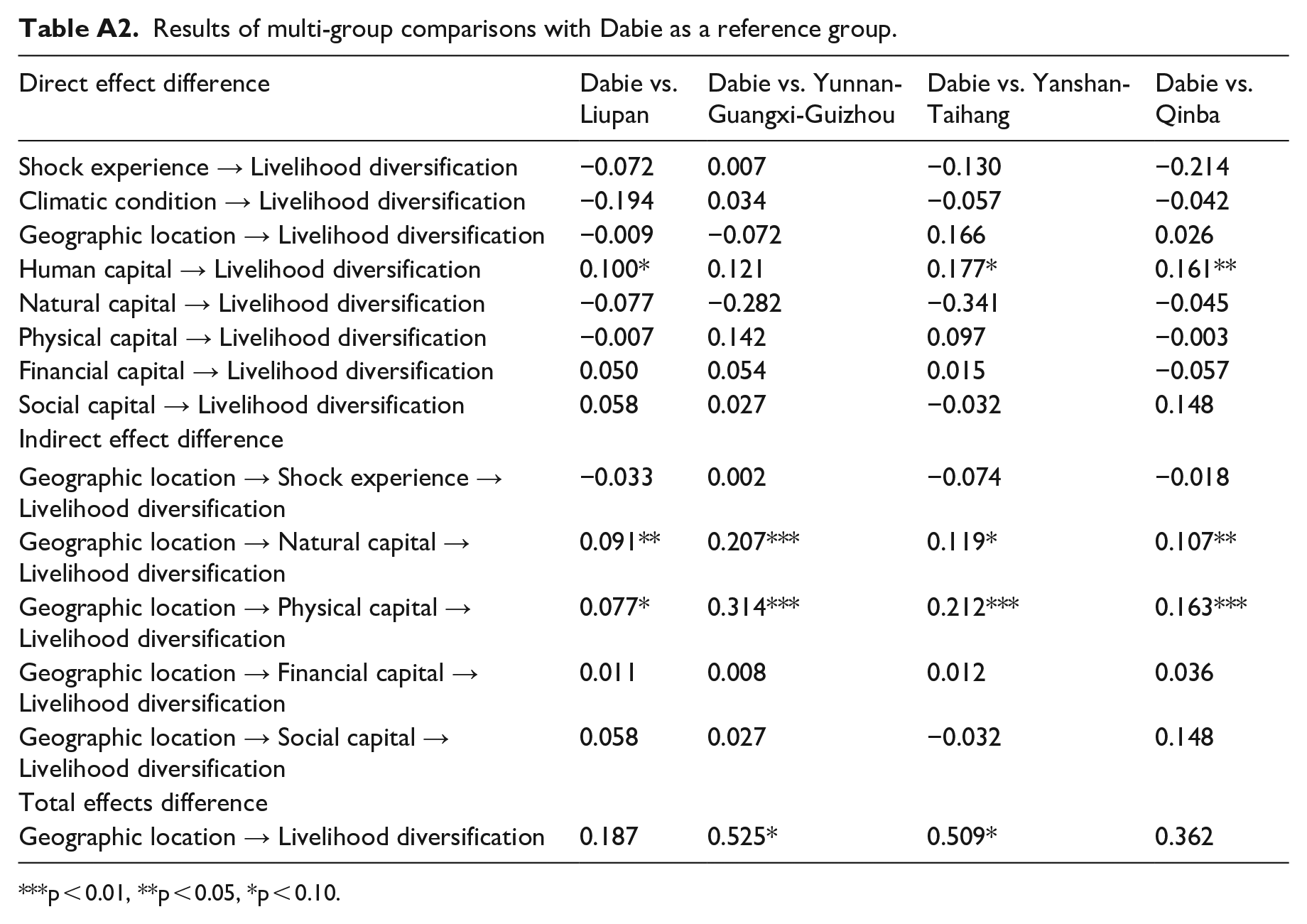
| Direct effect difference | Dabie vs. Liupan | Dabie vs. Yunnan-Guangxi-Guizhou | Dabie vs. Yanshan-Taihang | Dabie vs. Qinba |
|---|---|---|---|---|
| Shock experience → Livelihood diversification | −0.072 | 0.007 | −0.130 | −0.214 |
| Climatic condition → Livelihood diversification | −0.194 | 0.034 | −0.057 | −0.042 |
| Geographic location → Livelihood diversification | −0.009 | −0.072 | 0.166 | 0.026 |
| Human capital → Livelihood diversification | 0.100* | 0.121 | 0.177* | 0.161** |
| Natural capital → Livelihood diversification | −0.077 | −0.282 | −0.341 | −0.045 |
| Physical capital → Livelihood diversification | −0.007 | 0.142 | 0.097 | −0.003 |
| Financial capital → Livelihood diversification | 0.050 | 0.054 | 0.015 | −0.057 |
| Social capital → Livelihood diversification | 0.058 | 0.027 | −0.032 | 0.148 |
| Indirect effect difference | ||||
| Geographic location → Shock experience → Livelihood diversification | −0.033 | 0.002 | −0.074 | −0.018 |
| Geographic location → Natural capital → Livelihood diversification | 0.091** | 0.207*** | 0.119* | 0.107** |
| Geographic location → Physical capital → Livelihood diversification | 0.077* | 0.314*** | 0.212*** | 0.163*** |
| Geographic location → Financial capital → Livelihood diversification | 0.011 | 0.008 | 0.012 | 0.036 |
| Geographic location → Social capital → Livelihood diversification | 0.058 | 0.027 | −0.032 | 0.148 |
| Total effects difference | ||||
| Geographic location → Livelihood diversification | 0.187 | 0.525* | 0.509* | 0.362 |
p < 0.01, **p < 0.05, *p < 0.10.
Author contribution statements
Ying Wang: Conceptualization, Methodology, Software, Writing - Original Draft, Writing - Review & Editing, Funding acquisition
Hongping Cui: Writing - Original Draft, Visualization
Chunmao Wang: Writing - Original Draft, Visualization
Weiwen Wang: Writing - Review & Editing, Funding acquisition
Declaration of conflicting interests
The author(s) declared no potential conflicts of interest with respect to the research, authorship, and/or publication of this article.
Funding
The author(s) disclosed receipt of the following financial support for the research, authorship, and/or publication of this article: This research was supported by the National Natural Science Foundation of China (Grant No. 42371315, 41901213) and the Humanities and Social Science Research Youth Fund Project of Ministry of Education (Grant No. 23YJC790141).
Availability of data

Author biographies
Over the past five years, Dr. Wang has led two National Natural Science Foundation of China (NSFC) projects and four provincial-level research projects. Her research outcomes have been widely published in leading international journals, such as Journal of Rural Studies, Land Use Policy, and Applied Geography. Dr. Wang has also served as a guest editor for several special issues in international journals and regularly reviews manuscripts for over 50 academic journals. Her recent work explores the resilience of rural households under ecological compensation programs, the role of social networks in shaping livelihood transitions, and the spatial impact of landscape fragmentation on ecosystem services.