




Abstract
Since the beginning of the 21st century, recognizing the need for sustainable development and the protection of ecosystems, the United Nations and international agencies have been actively promoting the protection of the natural environment. The construction of ecological networks (EN), as one of these efforts, emphasizes the connectivity between natural patches and their ability to support ecosystem services (ES). Currently, constructing ecological networks using ecosystem services as a comprehensive evaluation criterion has become one of the important ways to maintain sustainable ecosystems. Karst regions have received much attention due to their fragile ecosystems, and this paper reviews articles from around the world that have studied ecosystem services and ecological networks in these regions. It found that this research is gradually maturing, although the number of published articles on research related to ecological networks is relatively small, with the largest number of papers taking the Chinese Karst region as a study area. Indicator factors for the construction of ecological networks in this region are usually based on ecosystem services, but they are usually not considered comprehensive enough, e.g., the trade-offs and synergies among ecosystem services are rarely considered. At the same time, the construction of ecological networks requires dynamic monitoring and optimization on a larger scale in order to provide assistance for longer-term environmental protection.
Introduction
With the rapid development of human society in the last century, we have begun to face the problems of resource scarcity, ecological damage, and the gradual decline of the Earth’s carrying capacity (Shen et al., 2021). The growing population further exacerbates the demand for food and other vital resources, while also impacting the environment (Steffen et al., 2011). Karst regions have intricate and fragile ecosystems due to their unique topographic and geomorphic conditions (Brinkmann and Parise, 2012). Here, anthropogenic disturbances and natural disasters (such as rock desertification and soil erosion) occur frequently (Gabrovšek et al., 2011), and the fragile ecosystems find it very difficult to recover quickly once they are damaged (Cao et al., 2004), which affects the natural environment as well as human life in the region.
Governments around the world are striving to protect ecosystems from destruction by implementing various ecological conservation strategies. The European Union, through its Biodiversity Strategy 2030, has advocated the establishment of a comprehensive network of nature reserves to protect nature and biodiversity and restore degraded ecosystems (Staccione et al., 2023). China has carried out ecological conservation programs targeting a range of ecologically fragile areas. For example, the wind and sand control program and the rocky desertification prevention and control project have made significant progress in recent years (Ying et al., 2023). The core of these programs is to protect ecosystems and enhance ecosystem services (ES) (Lv et al., 2023). Currently, Scientific research on ecosystems in karst areas has made significant progress in various aspects, including: studies of ecosystem structure and processes (Adams and West, 2022; Wu et al., 2023); quantitative studies and mapping of ecosystem services at different scales (Munajati et al., 2021; Prodanova, 2021; Zhang et al., 2014; Zhao et al., 2022); and how to protect ecosystem services in ecologically fragile areas, etc. (Chen et al., 2023; Duan et al., 2013). Scientific and objective observation of ecosystem changes in Karst areas helps decision-making managers formulate ecological development programs for the site (Zhang et al., 2020).
Linking different protected areas into networks can increase the capacity for ecosystem services, especially when compared to ecologically isolated areas (Hermoso et al., 2020; Staccione et al., 2023). This approach is consistent with the island biogeography theory of landscape ecology, which recognizes that small, fragmented parcels of land cannot sustainably support species and ecosystems (Beier, 1993; O’Grady et al., 2006). Thus, ensuring that regions form networks with a high degree of connectivity can yield significant conservation benefits. Early ecological networks (EN) focused primarily on biodiversity conservation, aiming to increase population persistence and halt biodiversity loss in the landscape (Niemelä et al., 2010; Xiao et al., 2002). As researchers have deepened their knowledge of ecosystems, it has been found that factors such as climate change, habitat loss, land use change, introduction of non-native species, and pollution can have profound effects on ecosystems and their functions (Huang et al., 2018; Zhang et al., 2017). Therefore, scholars pay more attention to the structure, function and services of ecosystems in the process of constructing ecological networks at a later stage. This includes activities such as regulating stormwater management to protect cities from flooding and waterlogging (Yu et al., 2009), mitigating geohazard risks (Gao et al., 2021), and protecting and restoring the integrity of cultural landscapes. These ecological networks play a crucial role in ensuring the sustainable provision of ecosystem services (Canedoli et al., 2022; Shen and Wang, 2020). The slow formation of soils and the presence of large outcrops of rock in the karst region result in a highly fragmented landscape patch where soils and vegetation are not connected over large areas (Wang et al., 2019), therefore, ecological networks at different scales can be constructed to provide some assistance in ecological protection and restoration of the site by connecting the fragmented patches.
Southwest China has the largest concentration of karst landscapes in the world (Wang et al., 2019). Unlike other karst regions, it possesses special geological features, climatic conditions, rich vegetation conditions, higher population density, and diverse minority cultures (Wang et al., 2019). Considering the local conditions, the protection and restoration of ecosystems in South China is a long-term concern for government managers and researchers. In the past decades, much literature has been published on ecosystem services and ecological networks in karst areas, but few reviews have combined ES and EN together, especially in karst areas. Therefore, this paper aims to synthesize the articles studying ecosystem services and ecological networks in karst regions around the world, and summarize the three parts of karst ecosystem service research, karst ecological network construction and the coupling mechanism of the two, as well as to explore the future research topics and difficulties in this field with the example of China’s karst region, with the aim of providing valuable insights into the ecological landscape planning of karst regions.
Methods
Literature search
In landscape ecology, ecological networks are primarily designed to connect and protect increasingly fragmented ecosystems. In related research fields in global regions, other terms are conceptualized similar to ecological networks, such as ecological infrastructure (EI) and green infrastructure (GI) (Louis-Lucas et al., 2022; MacKinnon et al., 2022; Thomas et al., 2022). These concepts used by landscape ecologists and planners refer to a natural life-support system that connects fragmented landscapes in cities and sustains natural ecological processes (Benedict and McMahon, 2002; Bryant, 2006). In foreign studies, planning for ecological infrastructure usually focuses on protecting the habitats of specific species, such as creating new nature reserves (Chauvenet, 2023; Isola et al., 2022; Loch et al., 2023). In China, the focus is more on the Ecological Security Pattern (ESP). Researcher Yu (1996) argues that certain ‘points’ or ‘lines’ in the landscape are more crucial than others in safeguarding ecological processes. These specific ‘points’ and ‘lines’, along with their spatial relationships, form security patterns that are akin to the concept of ecological networks and are therefore included as well. Consequently, to comprehensively screen literature related to the evaluation of constructing ecological security patterns, this paper searches for ecological infrastructure, green infrastructure, ecological network, protected area network, and ecological security pattern as equivalent search terms.
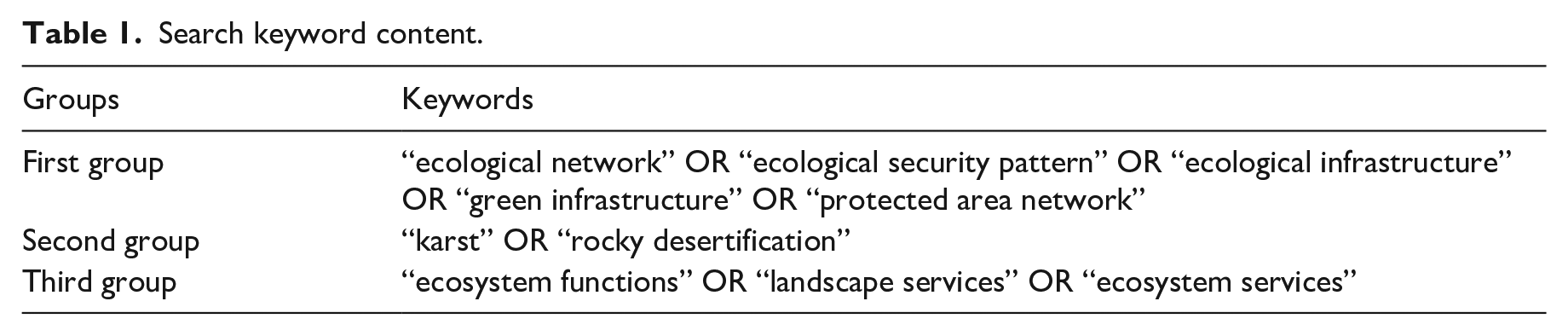
In this paper, Scopus was used as the database, the search scope was “title, keywords, abstract”, and three searches were conducted (Tables 1 and 2).
Search keyword content.
Two searches.
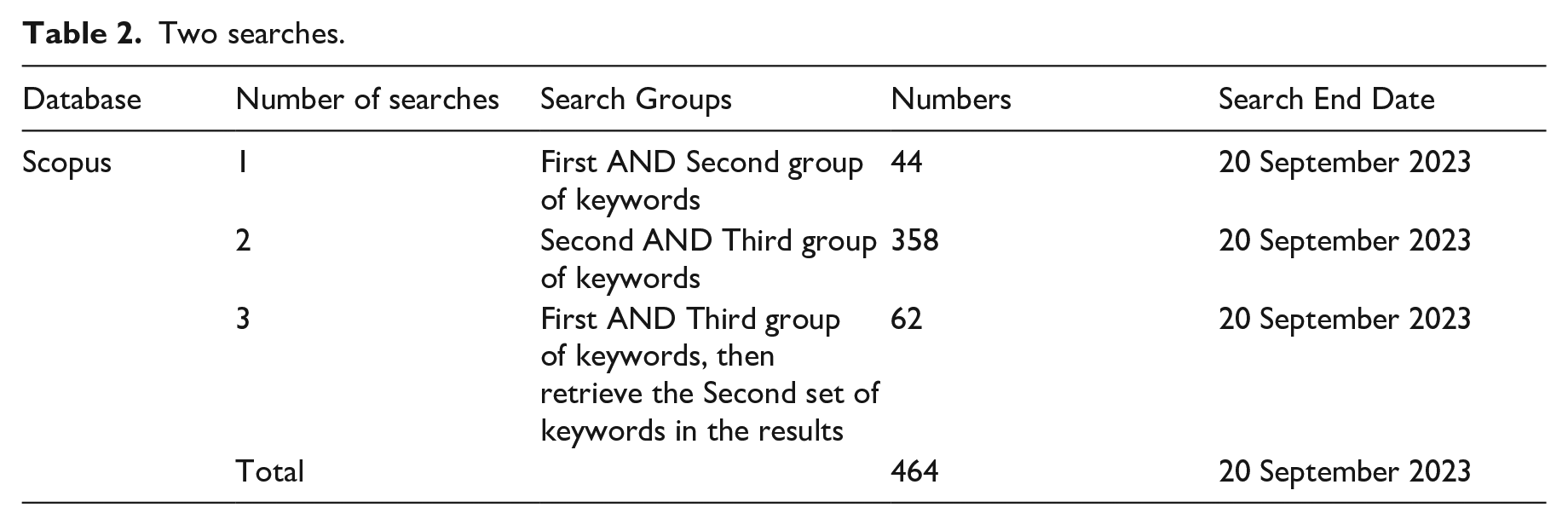
The first group of keywords includes “ecological network”, “ecological security pattern”, “ecological infrastructure”, “green infrastructure”, these keywords are connected with “OR”. The second group of search keywords is “karst” OR “rocky desertification”, it was connected with the operator “AND” to the first group of keywords. By 20 September 2023, the first search was conducted, and a total of 44 search results were obtained.
In the second search, we used “ecosystem functions” OR “landscape services” OR “ecosystem services” as the third group of keywords. The AND search character was then used to search for “karst” or “rocky desertification” with the third set of keywords, which as of 20 September 2023, yielded 358 documents.
For the third search, we connected the first and third sets of terms with “AND” and searched for the second set of keywords in the results, which yielded a total of 62 documents as of 20 September 2023.
The initial screening volume for this sample was taken from the results of the first search, which yielded a total of 464 search results.
Literature screening
According to the bibliometric method for the initial screening of 464 papers for further determination, in order to determine that the literature is comprehensive, scientific and transparent, screening needs to be based on “identification, screening and inclusion” operation, then the final determination of the literature (Figure 1). The process was as follows:
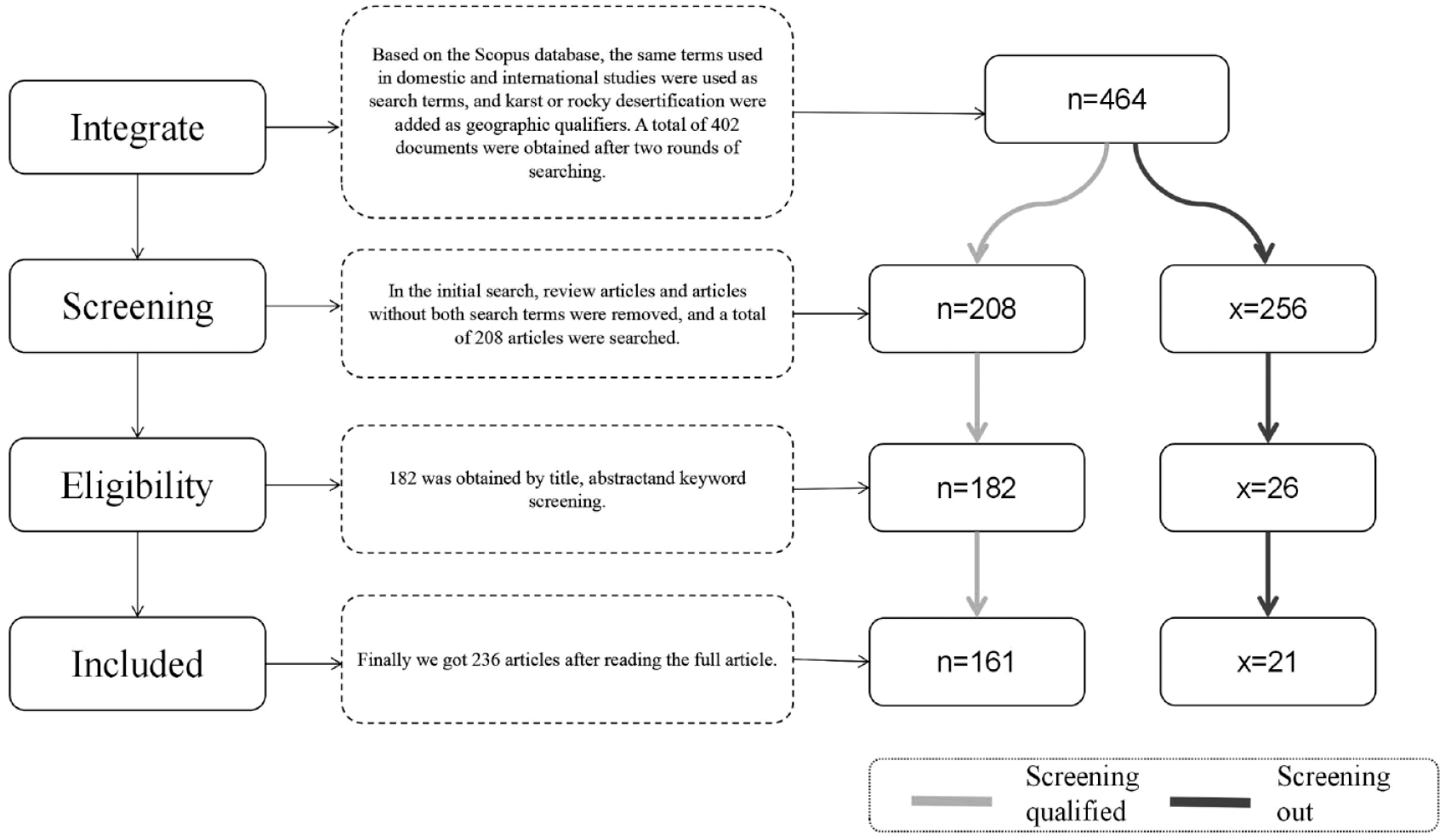
Technical roadmap for the four steps of comprehensive inclusion, retrieval, screening and inclusion of research literature (n = included literature, x = deleted literature).
Initially, we excluded review articles and articles that did not have both search terms in the title, abstract, and keywords, and 208 articles were screened at this stage.
Next, duplicate articles and those with little relevance to the research content of this paper were identified and excluded based on their titles and abstracts. This screening process led to a reduction to 182 articles.
Subsequently, a thorough reading of these 182 articles was conducted. Articles that were deemed to have low relevance to the research content of this paper were eliminated. For instance, an article titled “Biochar application improves karstic lime soil physicochemical properties and enzymes activity and enhances sweet tea seedlings physiological performance” was removed as it primarily focused mainly on the application of specific engineering techniques of biochar, a specific green infrastructure, to plant growth.
After three rounds of screening, a final sample of 161 articles was determined for the purpose of this paper. These articles were considered to be the most suitable and relevant for further analysis and inclusion in the research (Supplementary material).
Results and Analysis
Annual publication
Global research addressing ES in karst regions began in 2008, and the number of publications in the literature has fluctuated steadily from 2008 to 2019 (Figure 2). It is worth noting that after 2019, the number of articles published in English in the field of karst ES increased steadily year by year, while the number of articles in Chinese had ups and downs. This indicates that the study of ecosystem services in karst areas is receiving more and more international attention, and the importance of ES in environmental protection and management is increasingly recognized.
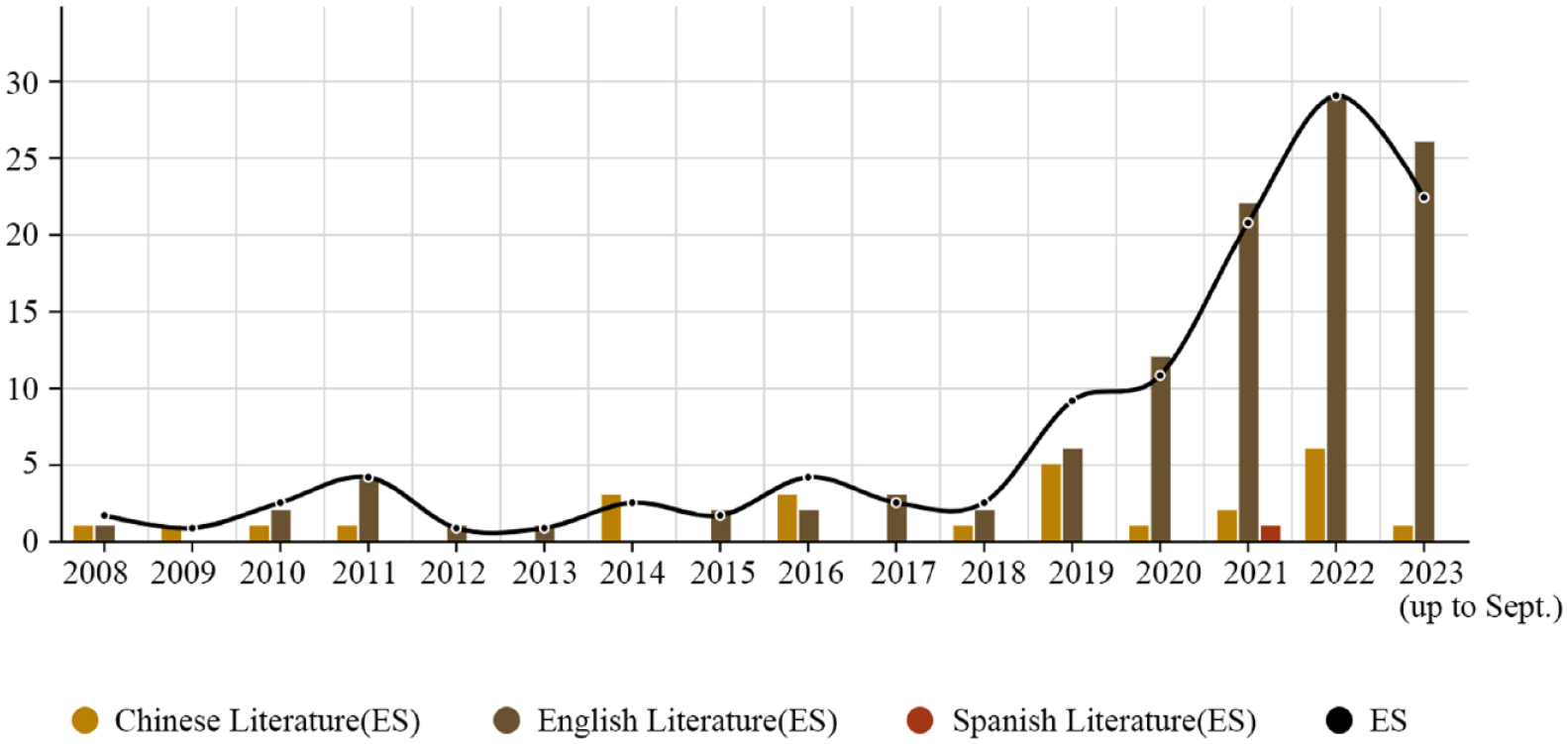
Global literature annual publication in the field of karst and ES (as of 20 September 2023).
Global scholars noticed that the study of ecological network in rocky desertification area was first proposed by Chinese scholars in 2011, which delineated different ecological function areas and constructed corridors (Xie et al., 2011). Then there were no scholars conducting research until 2019, when the number of Chinese and English literature published increased year by year (Figure 3). However, there is still a lack of attention and research in this area. As more and more scholars and policymakers recognize the critical role of ecological networks in maintaining ecological balance and promoting sustainable development, future construction and planning regarding EN in karst areas will continue.
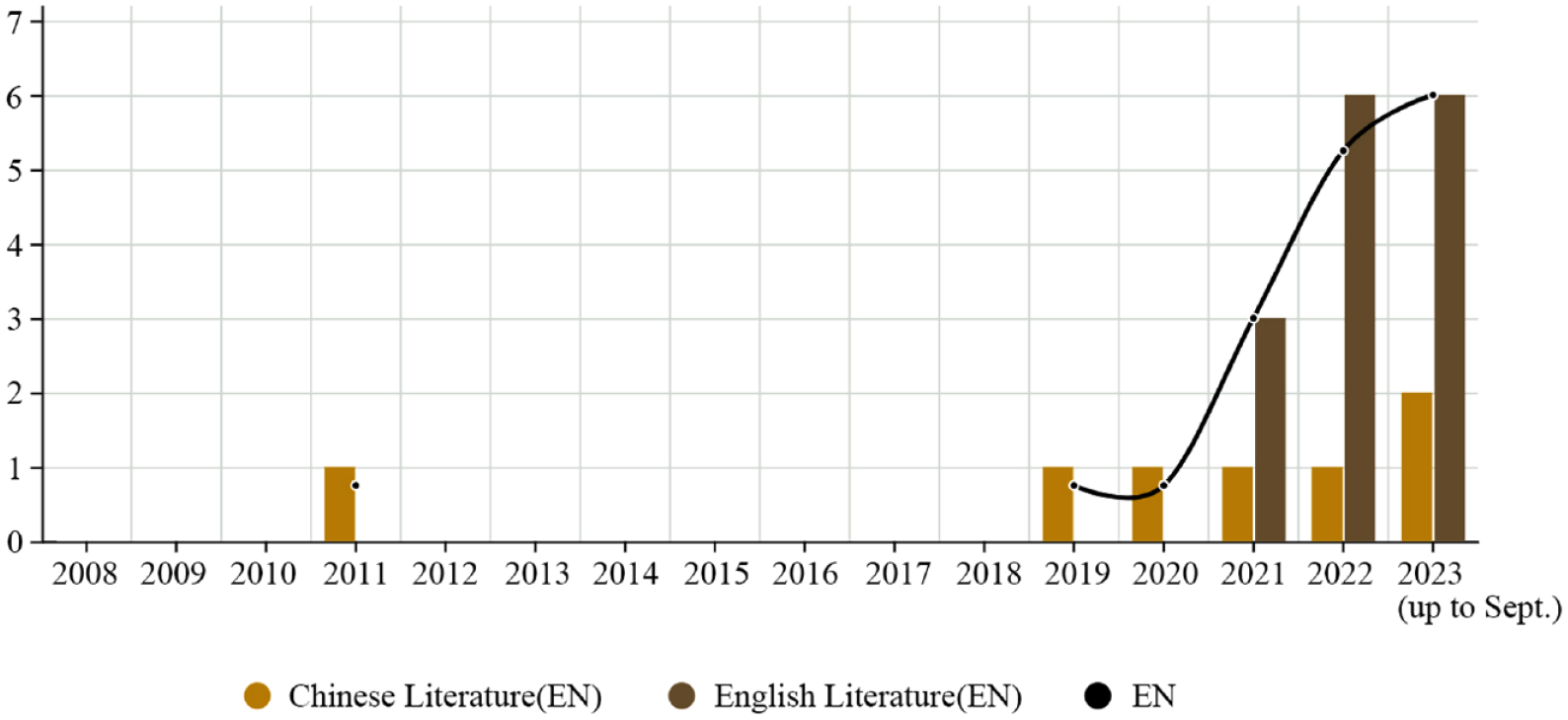
Global literature annual publication in the field of karst and EN (as of 20 September 2023).
Topic trends
In order to gain insight into the key themes and topics in the selected articles dealing with ES and EN in karst regions, we used a word frequency statistics program to generate word cloud visualizations. This method visualizes the most frequently occurring words in article titles, abstracts, and keywords. We excluded certain search terms, such as “ecological network,” “ecological security pattern,” “ecological infrastructure,” “green infrastructure,” “protected area network,” and “ecosystem service” to focus on other relevant terms.
After analyzing the results (Figure 4), we found that the words “soil”, “land”, “use”, “water”, “China”, “change” and “forest” appear more frequently. Among them, soil, water and forest are the hotspots of ecosystem research within the field, while the hotspot words such as “land”, “use” and “change” indicate that anthropogenic disturbance factors are one of the important influences in studying the coupling of ES and EN in karst areas. Most of the research areas in the field are chosen in China, which indicates that many scholars in China are studying the ecosystem services and ecological networks in the karst region, emphasizing the importance of research in this field.
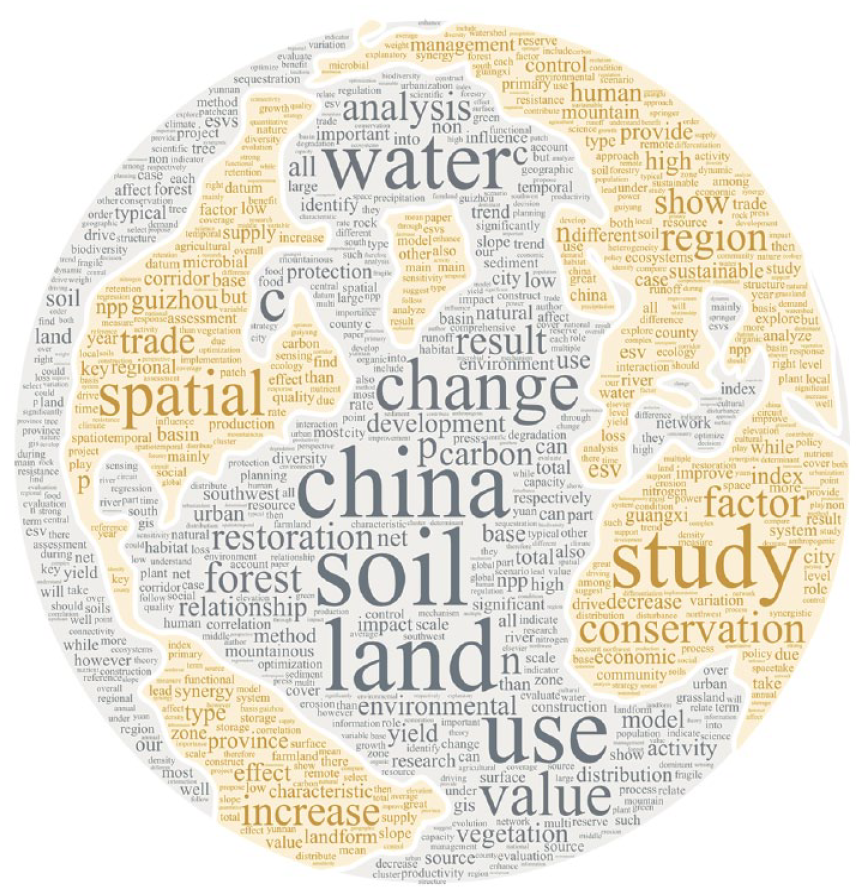
Visualization of the word cloud counted according to title, abstract and keywords.
Scope of the study area
Globally, the development of research on ecological networks and ecosystem services in karst regions has been uneven, with China being the research region with the highest number of published papers (Figure 5). This may be due to two reasons, one is that southwest China’s karst region spans eight provinces and the total area of rock outcrops accounts for nearly half of the regional land area (Fan et al., 2011), and on the other hand, the Chinese government adopted the ecological security pattern (its related studies are similar to ecological network studies) as a national development strategy as early as 2012. Therefore, a large number of scholars have studied it.
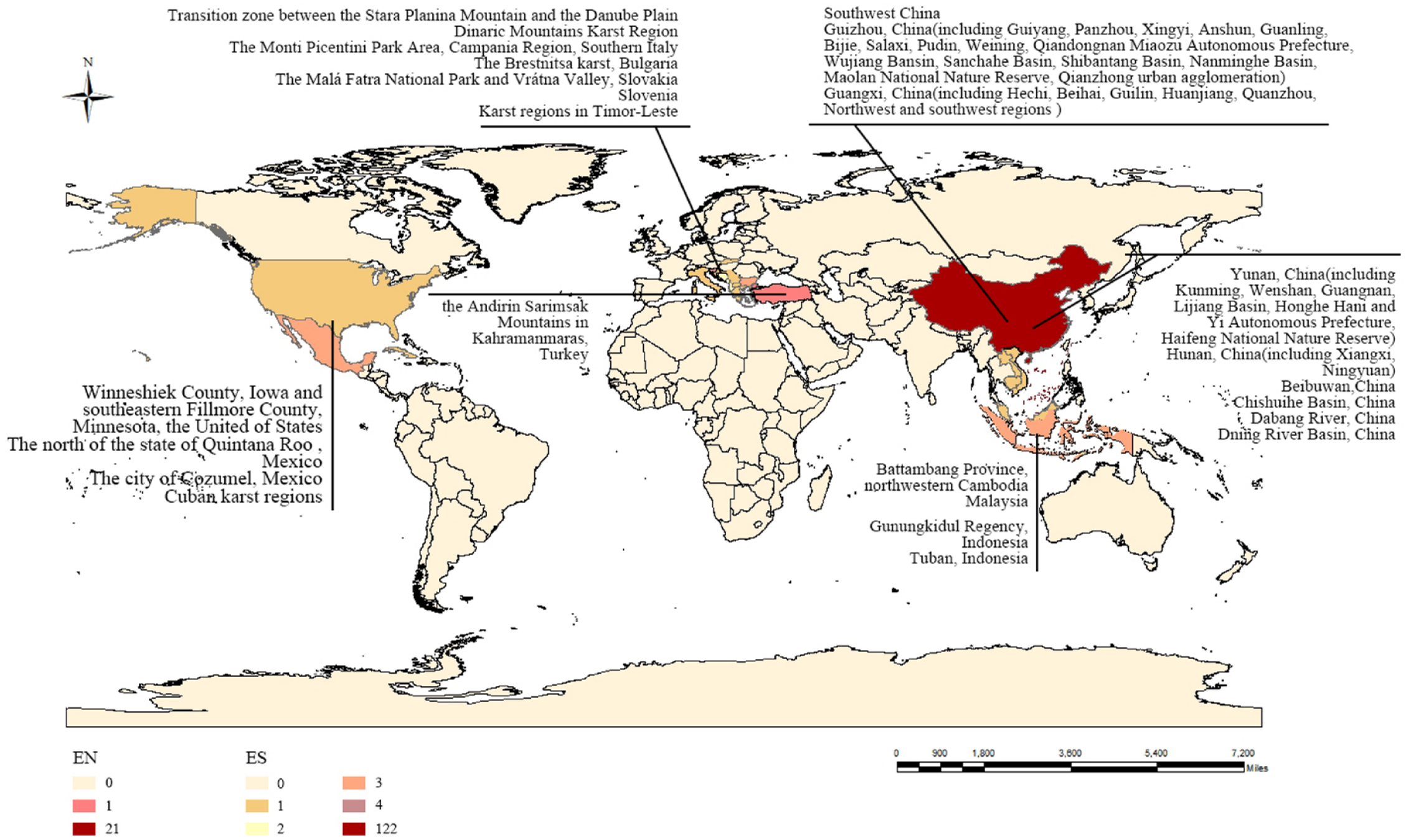
Regional distribution of studies in the global literature.
Main research progress and achievements
The literature review explores research advances and themes related to ecosystem services (ES) and ecological networks (EN) in karst areas globally. It describes the current research results through the three areas of “quantitative assessment and conservation of ecosystem services”, “ecological networks”, and “coupling mechanisms”, and identifies potential future research directions in this area.
Ecosystem services assessment and conservation
Biodiversity
There are a number of well-defined indicators and methods for measuring ecosystem services (Bennett et al., 2009; Ouyang and Luo, 2022). Among these, biodiversity is a particularly important indicator in measuring ecosystem services (Steffen et al., 2011), and the signing of the United Nations Convention on Biological Diversity (CBD) in 1992 has made biodiversity a fundamental value in measuring ecosystems (Weiss, 1992), with more diverse ecosystems being more adaptive and resilient to change. To determine whether biodiversity is still within safety targets, Kougioumoutzis et al. (2021) assessed all endemic flora in Greece, analyzed their extinction risk, and identified areas where these endangered populations are located for priority conservation. Qian et al. (2023) then measured the biological value of biodiversity, using the MaxEnt model combined with species environmental data of habitats to predict potential species distributions. Biodiversity, as a type of ES, is also measured using ecosystem service value equivalents (Xie et al., 2008).
Forests and wetlands play a crucial role in supporting and maintaining biodiversity, often serving as steppingstones for species (Panitsa et al., 2021). In agricultural landscapes, semi-natural habitats are important areas that promote agrobiodiversity and provide refuge and food resources for species (Šálek et al., 2022). However, these habitats are progressively disappearing due to intensive agricultural practices (Brückmann et al., 2010; Stoate et al., 2009). Reestablishing and connecting fragmented semi-natural habitats is an effective approach to enhance ecosystem services in agricultural landscapes (Shi et al., 2020; Tscharntke et al., 2021).
Ecosystem services assessment
The ability of ecosystem services to provide good value depends on their structure, processes and functions. Soils, vegetation dynamics, and hydrological processes are major concerns in ecological studies of karst regions (Quine et al., 2017). The spatial distribution of soils is mainly influenced by topography, slope, elevation, and anthropogenic disturbances, with better and thicker soil nutrients usually found in more gentle areas (e.g., plains) due to erosion dynamics (Wang et al., 2019). Dynamic reduction of surface vegetation can also result in significant soil loss (Wang et al., 2004), conversely, vegetation restoration can provide an important biological source of nitrogen, reduce soil nutrient limitation by rock weathering (Tang et al., 2021), and improve soil quality (Wang et al., 2007). Surface/subsurface runoff generation is an important component of water conservation (Hou and Gao, 2019). The special karst geomorphology of karst region forms a dualistic hydrological structure, bedrock fissures, caves, etc. to make the surface highly permeable (Fu et al., 2016). The total and subsurface runoff volume increases with elevation and slope (Hou and Gao, 2019). In addition, the distribution and type of vegetation has a strong influence on surface runoff, with forested lands having the highest total runoff values due to the high soil and water conservation capacity of forest ecosystems (Hou and Gao, 2019).
In order to scientifically study the situation of ecosystems in karst areas, the capacity of ecosystem functions to provide services needs to be objectively quantified. Usually, there are two quantification methods: physical quantity and value quantity. Researchers will choose net primary productivity (Li et al., 2014), carbon storage (Li and Geng, 2023; Zhang et al., 2015), soil retention (Zhang et al., 2021), water production ( Zhao et al., 2022) and sediment yield (Yuan et al., 2022) as ecosystem services to be assessed using models. For instance, the InVEST model has been used to measure water conservation, carbon sequestration, soil retention, habitat quality, and more (Zhang et al., 2022; Zhou et al., 2010). The RUSLE model is employed to assess soil erodibility and rainfall erodibility (Zhang et al., 2019). Valuation methods, on the other hand, are mainly valued in monetary terms (Bastian et al., 2013), correlating ecosystem services with economic development. The value of different services is influenced by different factors, with natural factors mainly related to the functioning of the ecosystem itself, such as annual rainfall, slope, etc. (Zhang et al., 2011). Human factors, on the other hand, include land use and ecological restoration projects (Xiong et al., 2008). Land use change is one of the main reasons for the change of ecosystem service value in recent years, and the reason for the significant change of land use is a series of ecological restoration projects such as “ecological restoration program (ERP)” and “Grain for Green Program (GFGP)”. The increase or decrease in the total value of ecosystem services requires accounting for from the unit value of individual ES. Land use conversion transforms the land area, ecological products and management patterns of the site, which simultaneously affects changes in the value of ecosystem services in the region (Hu et al., 2020; Wang et al., 2022). Therefore, it is important to consider future trade-offs and synergies between ecosystem services in the region during land use conversion to provide optimal development options (Wang et al., 2022).
Ecosystem services conservation
Yue et al. (2020) studied land use change in a reforestation program in karst areas of China and found that some agroforestry land away from settlements was converted to hillside forests. Slope land has low crop yields due to topographical factors. Therefore, there is a need to weigh the benefits of carbon sequestration, timber production and other services provided by the site after land use conversion against crop losses and local food security (Yue et al., 2020). However, anthropogenic interventions need to be quantified on a scientific basis, and excessive revegetation tends to ignore economic costs and the livelihoods of residents. Jiang et al. (2022) identified population density and individual landscape metrics as their main spatial determinants, and examined the spillover effects of local ecosystem services in order to trade-off and reconcile ecosystem preservation with the developmental needs of the local population.
In ecological restoration projects, local stakeholders have different perceptions of the preferences and social value aspects of the same ecosystem service. Scholars have found in research surveys that farmers prefer ecosystem services that they can directly benefit from, such as provisioning services, while there are differences in the demand for other ecosystem services, such as recreation and water purification, due to limitations in education level and household income from agriculture (Xun et al., 2017). Government managers and experts prefer cultural and regulating services and place more value on local climate change regulation (Zhang et al., 2020). These surveys provide opportunities for local people to actively participate in the decision-making process of environmental management. When local communities are involved in data collection and analysis, their sense of ownership and capacity is enhanced, thus fostering a sense of responsibility for the environment. Valuable socio-ecological information is also collected, which includes local knowledge, perceptions and preferences about the environment and ecosystem services. This information is essential for understanding the different perspectives and values of different stakeholders, including Aboriginal communities, farmers and other local residents. Incorporating these perspectives into management plans can help mitigate conflicts between different interests by promoting inclusive and participatory approaches.
Ecological networks
Habitat fragmentation often reduces the ecosystem services provided by a patch by affecting its supply. One response to address fragmentation is to increase the establishment of ecological corridors and enhance connectivity between landscapes (Hilty et al., 2006). Connected patches and corridors form ecological networks that link different habitat patches, such as forests, grasslands, wetlands, and agricultural lands, with the aim of integrating and connecting diverse landscapes within a region. This approach helps to increase connectivity across landscapes and reduce habitat fragmentation, thereby benefiting ecosystem services impacted by fragmentation (Sheate et al., 2012).
In the context of constructing ecological networks, a commonly adopted framework consists of three main steps: source identification, resistance surface construction, and corridor extraction (Qian et al., 2023). ES is often used as a metric when selecting appropriate indicator factors for the three components of EN. The identification of source areas focuses on areas with strong ecological functions and frequent species activities, so indicator species selection, ecosystem service function importance assessment, etc. are usually used as selection criteria. In the selection of resistance surfaces, land use type and habitat quality are utilized as quantitative criteria to quantify the barriers posed by anthropogenic disturbances and natural factors during species migration (Xue et al., 2023). In addition to land use type and habitat quality, resistance surfaces were constructed with other factors (Chen et al., 2019; Wang and Liu., 2020), such as nighttime lighting data (Gao et al., 2021; Ni et al., 2022). In karst areas, ecological sensitivity is also usually added as an indicator factor (Wang and Zhou, 2019; Yang et al., 2022), and rocky desertification indices are incorporated into ecosystem services and ecological sensitivity analysis (Gao et al., 2021), e.g., indicators such as soil erosion sensitivity and rocky desertification sensitivity are corrected as corrective indicators when constructing resistance surfaces (Gou et al., 2022). Indeed, some scholars have also identified connectivity as a key function in selecting ecological source areas and constructing ecological networks. They use methods such as morphospatial pattern analysis (MSPA) and landscape connectivity to build these networks. For example, in karst regions, mountain patches may be fragmented, and building ecological networks by connecting these residual patches can help reduce the formation of ecological silos (Fan et al., 2022).
Coupling mechanisms
Indeed, at the heart of ecological networks (EN) is biodiversity conservation, although definitions and interpretations vary at different scales (Boitani et al., 2007). At the landscape scale, EN provide a structural perspective mainly as “nature reserves and their interconnected systems” (Jongman, 2004), which are tools for connecting fragmented landscape patches together, essentially linking the flow of biomass information between patches (Mitchell et al., 2015), facilitating the occurrence of diverse ecological processes, thereby increasing biodiversity (Steffen et al., 2011) and improving ecosystem adaptation and resilience in response to change.
Ecosystem structure and processes are the underlying principles of ecological networks (Figure 6). Ecosystems are characterized by a web of trophic hierarchies between communities of organisms that drive the cycling of matter and energy flow through the ecosystem. These functions act in different ecosystems and provide value to human society, generating ecosystem services. Because ecosystems are distinctly differentiated in time and geography, the assessment and mapping of ES at regular intervals and in regular areas is necessary (Munajati et al., 2021; Prodanova, 2021). In areas with poorly functioning or homogenous ecosystems, measures are taken to protect the environment. In this case, the ecological network concept is an ecological restoration program (Boitani et al., 2007).
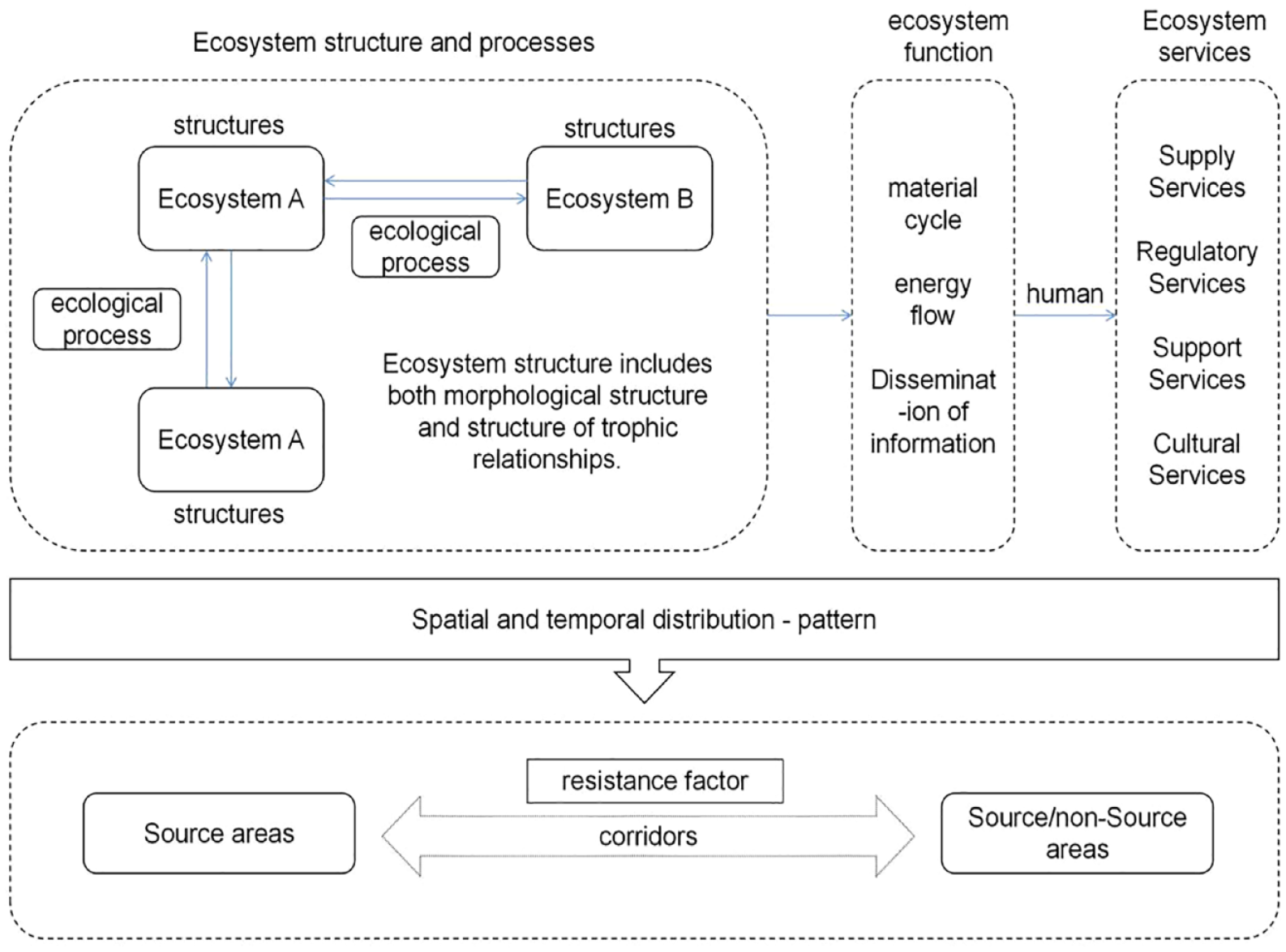
Relationships between ecosystem structure, processes, functions, services, patterns and ecological networks.
In the current study, ecosystem services can be quantified from the beginning of the construction of ecological networks to the evaluation of the benefits of the completed construction. Due to the “source” function of an ecological source, an area with good ES usually acts as a source from which biological information is diffused to the surrounding area. Such diffusion paths are called corridors, and barriers to ES provision on the way are called resistance surfaces. Thus, the high or low level of ecosystem services affects the construction of ecological networks, while the connectivity characteristics of EN influence ES provision (Staccione et al., 2023). The topology of EN allows for the analysis of the route characteristics (Huang et al., 2023), and such an analysis can help us to understand the connectivity and efficiency of the network in supporting ecological processes.
Discussion and outlook
China has one of the largest contiguous karst areas in the world, with unique geomorphic landscapes and rich biodiversity (Wang et al., 2019), but the ecological sensitivity and vulnerability of karst regions are higher than that of ordinary environments, and it is extremely difficult to recover from damages once suffered. Soil erosion and rocky desertification are typical ecological problems in the region, and this feature can easily lead to disconnection between habitats. Establishing ecological networks to protect and restore the continuity of habitats is important for maintaining ecosystem services and biodiversity in karst regions. This paper summarizes the research on ecosystem services and ecological networks in karst regions around the world, with a view to providing future research directions for the planning and construction of ecological networks in China’s karst regions in the future.
Special characteristics of China’s karst region
China’s karst landscapes have undergone millions of years of erosion and deposition and possess harder rocks than elsewhere (Wang et al., 2004). Different carbonate rock assemblages exist in different areas, and these assemblages influence the formation of the landscape and varying degrees of soil erosion (Wang et al., 2004). The high proportion of rock outcrops and the high variability of slopes have led to discontinuous soils in many areas, and the vegetation is also very fragmented and poorly resistant to disturbance. It takes a long time to restore forests by natural succession after degradation (Cao et al., 2004). Meanwhile, the Southwest region has experienced engineered water scarcity (Song et al., 2014), and although it has high annual rainfall, due to the presence of geomorphologic features such as bedrock cracks, rainfall usually flows into the ground and less water is retained on the surface (Cao et al., 2004). Soil and water conservation, water yield and other services are highly challenging here. However, at the same time, the site is also extremely rich in biodiversity with many listed endangered and protected species (Zhu, 2007), and the flora is far richer than non-karstic habitats in the same region.
In early 2014, Chinese governments implemented various ecological restoration projects, such as returning farmland to forests and relocation projects for poverty alleviation, with the aim of addressing the ecological security challenges arising from environmental degradation (Wang et al., 2019). Cultivation activities are one of the reasons for the degradation of plant communities, and the reduction of population has reduced the pressure on agriculture here, together with land use changes such as returning farmland to forests, which has led to the improvement of the karst environment. At the same time, there are also settlements of ethnic minorities in southern China, and the diverse ethnic cultures coupled with the unique geomorphic landscapes are potential high quality resources for tourism, which is a unique cultural service in China’s karst region.
Consideration of ecological networks at larger scales
Spatial scale is a key factor in ensuring the effectiveness of ecological network planning. China’s contiguous karst landscapes span eight southwestern provinces, and the current scale of karst-related ecological network research is mainly focused on provincial and sub-provincial administrative areas, with a lack of cross-provincial ecological network construction research. This is because geographic and administrative constraints as well as data availability can make it difficult to access source data and establish coordinated network planning when collaborating across provincial boundaries. However, there are examples, such as the network of protected areas established by the European Union (Jones-Walters, 2007; Staccione et al., 2023), that demonstrate the potential for transboundary ecological networks. These large networks can integrate regional ecosystems and enable human managers to better plan and manage ecosystems. In summary, the effectiveness of ecological network planning depends on consideration of spatial scales, solutions to local and neighboring ecological problems, and long-term adjustments to the network. Collaboration across regions can be challenging, but is achievable to build ecological networks across regions with proper coordination and integration of data.
Considering the construction of ecological networks from multiple perspectives and in a comprehensive manner
Ecological networks usually select a number of ecosystem services as constructed indicator factors identifying source areas, resistance surfaces and corridors (Gao et al., 2021, 2022). These ES indicators need to consider the trade-offs and synergistic effects among each other when mapping in order to achieve an optimal solution. For example, Chen et al. (2023) found that a single increase in forest area does not lead to a sustainable development of ES, and therefore a single service should not be considered only when selecting source sites. The high population density in the karst region of China emphasizes the significance of anthropogenic disturbance factors. Factors such as urbanization, industrial activities, and agricultural practices have substantial impacts on the karst ecosystem and its ecosystem services. Therefore, it is necessary to include anthropogenic disturbance factors when considering the original ES indicators.
The unique geomorphic landscape and folk culture of the site can be valuable for providing cultural services. In the current network research, few scholars have utilized cultural services for network construction. Indeed, combining local traditional agriculture, ecotourism and other ecosystem services in ecological networks can bring multiple benefits. By integrating these activities, a synergistic relationship between ecological conservation and community development can be created, leading to sustainable development.
Evaluation of effectiveness and dynamic optimization
Existing research on assessing the effectiveness of ecological networks (EN) has primarily focused on network structure and landscape ecological function. Network structure assessment typically involves evaluating network connectivity (Wang et al., 2021) and stability (Huang et al., 2022; Yu et al., 2018). In karst areas, assessment of ecological functions is more challenging than assessment of network structure and requires longer-term monitoring and data collection. Some scholars have focused on identifying target indicator species, tracking their migratory corridors, and comparing them to theoretically constructed ecological corridors (Qian et al., 2023). This approach allows researchers to evaluate the effectiveness of the EN in facilitating species movements and maintaining ecological processes. Ecological networks in the karst region should not only focus on biodiversity conservation but also take into account the needs of human social development. Given the natural conditions that limit crop production and economic development in the region, human intervention in land use becomes a crucial factor affecting ecosystem services. After the initial establishment of the ecological network, it is essential to carry out continuous monitoring and dynamic optimization based on the specific situation. This process involves assessing the trade-offs and synergistic relationships between different ecosystem services. For example, while agricultural activities may be limited in the karst region, the ecological network could be designed to promote agroforestry systems that provide both ecosystem services and economic benefits.
Limitations of the study
It is understandable that exploring the similarities and differences between terms such as ecological networks, ecological security patterns, green infrastructure, ecological infrastructure, and protected area networks can be challenging due to the subjective nature of literature search and inclusion. Differences in search engines, screening mechanisms, and individual interpretation can lead to possible omissions in the literature. For example, there is a portion of research in green infrastructure or ecological infrastructure that focuses on specific engineering techniques rather than macro-networked ones. We acknowledge the limitations of the literature search and inclusion process used in this paper. The subjectivity of methods, variations in search engines, and screening mechanisms can indeed introduce biases and potentially result in omissions in the included literature.
Conclusion
In this paper, we conducted a literature search using the Scopus database to explore research progress on ecosystem services and ecological network construction based on ecosystem services. By synthesizing and analyzing the 161 documents obtained, we draw the following conclusions: (1) On the one hand, we found that the number of articles published on research on ecosystem services in karst region has been steadily increasing and gradually becoming more mature. For ecological networks, on the other hand, the study of which only began in the last few years, the number of articles has risen sharply, making it an emerging and popular topic. (2) China is the most researched region by scholars, with 122 articles within the field of ecosystem services and 21 articles within the field of ecological networks all related to the Chinese karst region. (3) We note that ecosystem service research in karst region usually focuses on water, soil, forest vegetation, etc., while ecological networks mainly use ES as an indicator factor for the identification of ecological sources-resistance surfaces-corridors. (4) We believe that the core of the construction of ecological network is the ecosystem process and function, therefore, in Karst region, rocky desertification is the most commonly used resistance factor in the construction of ecological network, and at the same time, ecological sensitivity is one of the commonly used indicators of ecological source area. (5) Ecological networks can be limited by geography and administrative divisions, and as southwest China’s karst spans eight administrative provinces, we need larger scales as well as more perspectives for ecological network construction to plan future conservation behaviors. (6) Finally, we emphasize that the ecological network is a long-term dynamic tool that needs to be dynamically tested and optimized according to different situations at different times, in order to promote the improvement and treatment of rocky desertification problems in a more scientific and sustainable way.
Supplemental Material
sj-docx-1-tee-10.1177_2754124X231209885 – Supplemental material for Implications of ecosystem services and ecological network coupling for ecological planning in karst regions of China
Supplemental material, sj-docx-1-tee-10.1177_2754124X231209885 for Implications of ecosystem services and ecological network coupling for ecological planning in karst regions of China by Yurong Han, Dayun Zhu, Zhigao Wu, Linjing Fu and Huanhuan Chang in Transactions in Earth, Environment, and Sustainability
Footnotes
Declaration of conflicting interests
The author(s) declared no potential conflicts of interest with respect to the research, authorship, and/or publication of this article.
Funding
The author(s) disclosed receipt of the following financial support for the research, authorship, and/or publication of this article: This work was supported by the Guiding Fund Project of Governmengt’s Science and Technology (No. Qian Ke He Zhong Yin Di [2023]005); the National Natural Science Foudation of China (No. 42361010); and the Academic Talent Plan of Guizhou Normal University (No. Qian Shi Xin Miao[2022]B31).
Supplemental Material
Supplemental material for this article is available online.
Author biographies
References
Supplementary Material
Please find the following supplemental material available below.
For Open Access articles published under a Creative Commons License, all supplemental material carries the same license as the article it is associated with.
For non-Open Access articles published, all supplemental material carries a non-exclusive license, and permission requests for re-use of supplemental material or any part of supplemental material shall be sent directly to the copyright owner as specified in the copyright notice associated with the article.
