




Abstract
Vegetation restoration is an important way to improve karst ecosystems. Currently, research on the hydrological effects of vegetation restoration in karst areas has made great progress. However, the results obtained from the relevant studies have some limitations and uncertainties. Thus, this paper summarizes the research progress on the effects of karst vegetation restoration on five aspects: soil moisture, evapotranspiration, surface and subsurface runoff, water use efficiency and utilization strategies, and runoff generation and sink processes. The research showed that the existing studies’ evidence of the influence of vegetation restoration on runoff is still contradictory, with some suggesting that vegetation restoration can reduce soil moisture and runoff value, and others saying it can increase it. Furthermore, the ability of different types of vegetation to recover from water deficits varies across time scales, so focusing on spatial and temporal variations in evapotranspiration in karst regions is important. This article investigates water use efficiency in karst areas, as it is mainly controlled by vegetation types, climatic conditions, human activities and geological conditions, meaning the hydrogeological structure of karst has a very fundamental influence on water use efficiency in that region, we also investigate the effects of subsurface conditions in karst areas on the runoff generation and sink process as well as the type and stage of vegetation restoration, and geological factors affect vegetation restoration. Studies on the hydrological effects of vegetation restoration, however, are based on the relationship with a single element, describing its spatial and temporal variability, and they do not sufficiently quantify the reaction principles. This article also analyzes the problems and challenges in current studies, and proposes a combination of geophysical detection, establishing a dynamic model of the co-evolution of karst ecohydrology and surface karst zone mean with fieldwork to further verify the scientific validity of the results.
Introduction
Vegetation, as an important component of terrestrial ecosystems, plays a crucial role in hydrological processes and water yield (Chen et al., 2021; Hoek van Dijke et al., 2022). Vegetation influences water transport, and thus runoff processes, mainly through canopy and apoplastic retention and storage of rainfall, as well as vegetation transpiration (Fu et al., 2016a). Currently, more than one-third of the world’s vegetation cover is turning “green”, and vegetation restoration is one of the main driving forces (Chen et al., 2019). Vegetation restoration will increase evapotranspiration and water consumption (Wang et al., 2022), but with the enhanced atmosphere-water cycle brought about by vegetation restoration, precipitation will increase, which can offset the impacts of vegetation restoration’s increased water consumption (Ma et al., 2023), which may lead to more complex hydrological processes in the region.
The hydrological effects of vegetation restoration vary widely in different regions. Results of increasing, decreasing or keeping the same amount of water after vegetation restoration compared with before restoration have been reported (Hoek van Dijke et al., 2022; Ma et al., 2023; Zeng et al., 2020). In the karst region, its ecological fragility, coupled with the great spatial heterogeneity of the natural environment, leads to the sensitivity of its hydrological processes in response to vegetation changes (Chen et al., 2013; Li et al., 2002). The source of water required for vegetation growth in karst areas is the dynamic combination of fissure water and soil water in the surface karst zone. The shallow soil layer with high infiltration rate and the presence of a large number of underground fissures and pipes make the surface runoff in karst areas much lower than in other regions, and the path of groundwater flow is unknown (Li et al., 2011; Peng and Wang, 2012a). Vegetation restoration is an important way to improve the degraded ecological environment in karst areas, and planted forests and naturally restored vegetation have made significant contributions to the hydrological function of degraded karst ecosystems while increasing vegetation cover (Li et al., 2022a). Two of the most important processes for absorbing carbon dioxide on Earth are the photosynthesis of plants (biological action) and the chemical dissolution of rocks (silicate and carbonate rocks) (geological action)(Chen and Liu, 2017; Liu, 2012; Wu and Wu, 2022). Bicarbonate utilization by plants is a driver of karstification–photosynthesis coupling, which depends on plant species and the environment (Gaillardet and Galy, 2008; Yuan, 1999). Carbonic anhydrase, as a pivot of karstification–photosynthesis coupling, can promote inorganic carbon assimilation in plants and the dissolution of carbonate rocks (Liu, 2012; Oelkers et al., 2018). Karst-adaptable plants can efficiently promote root-derived bicarbonate and atmospheric carbon dioxide use by plants, finally achieving the conjugate promotion of karstic carbon sinks and photosynthetic carbon sinks (Larson, 2011; Yuan, 1999). Theoretically, the carbon sink capacity of an eight-year-old woody plant with karstification–photosynthesis coupling of 10% will be twice that without karstification–photosynthesis coupling (Chen and Liu, 2017; Liu, 2011). Wu and Wu (2022) have reported that the carbon sink capacity of a 10-year woody plant with a karstification photosynthesis coupling of 10% is 1.6 times that with a karstification–photosynthesis coupling of 5% (1.1010/1.0510); thus, the karst carbon sink capacity is 3.2 times that of the latter. Strengthening karstification–photosynthesis coupling and developing karst-adaptable plants will greatly improve the capacity of carbon sinks in karst ecosystems and better serve the “Carbon peak and Carbon neutralization” goals of China. Therefore, the complex surface media and hydrological change processes in the karst region itself bring more uncertainty to our understanding of the hydrological effects of vegetation restoration in the region. The mechanisms by which vegetation restoration in karst areas affect the hydrological effects in the region are obvious and complex. Although many studies have paid attention to the hydrological effects of vegetation restoration in karst areas, there is a lack of systematic summary reports on the research progress and challenges in this field. Based on the description of karst ecosystems and their hydrological conditions, this paper analyzes the main areas of concern in the current research on the hydrological effects of vegetation restoration, and proposes the issues and directions that should be emphasized and prioritized in the future. This paper aims to deepen the understanding of the interaction mechanism between karst vegetation restoration and its hydrological effects, and to provide reference for the restoration and reconstruction of karst vegetation and the rational utilization of water resources in karst areas.
Characterization of karst ecosystems and hydrological conditions
Vulnerability of karst ecosystems
The word “karst” evolved from the name of the Slovenian plateau of Kras. In the 1890s, Cvijic (1893) started to study the area and used the term “Karst” to identify a series of processes and products of dissolution in the limestone area (Ford and Williams, 2007). In addition, Chinese karst researchers refer to “Kras” as “karst”, which was a general term for the landscape, phenomena and processes formed by the chemical dissolution of soluble rocks by water, including the mechanical erosion of water, sedimentation, and the gravitational collapse of the rock mass (Sweeting, 1995; Yuan and Liu, 1998; Yuan et al., 1991).
Globally, carbonate rocks are widely distributed, and karst areas account for about 12% of the global land area (Goldscheider et al., 2020). China’s karst landscapes are widely distributed, covering a large area (Sun et al., 2020), and are mainly distributed in the carbonate rock outcrops of Southwest China, with an area of 91~130 × 104 km2. Of this, the areas occupied by Guangxi, Guizhou, and Yunnan are the largest, and it is one of the largest concentrated and most continuous karst areas in the world (Three Provinces [Regions] with the Most Concentrated Distribution of Karst in Southwest China, hereinafter referred to as the karst in southwestern China; Figure 1), thus making the development of the karst in this region more typical, and its ecosystem is fragile.
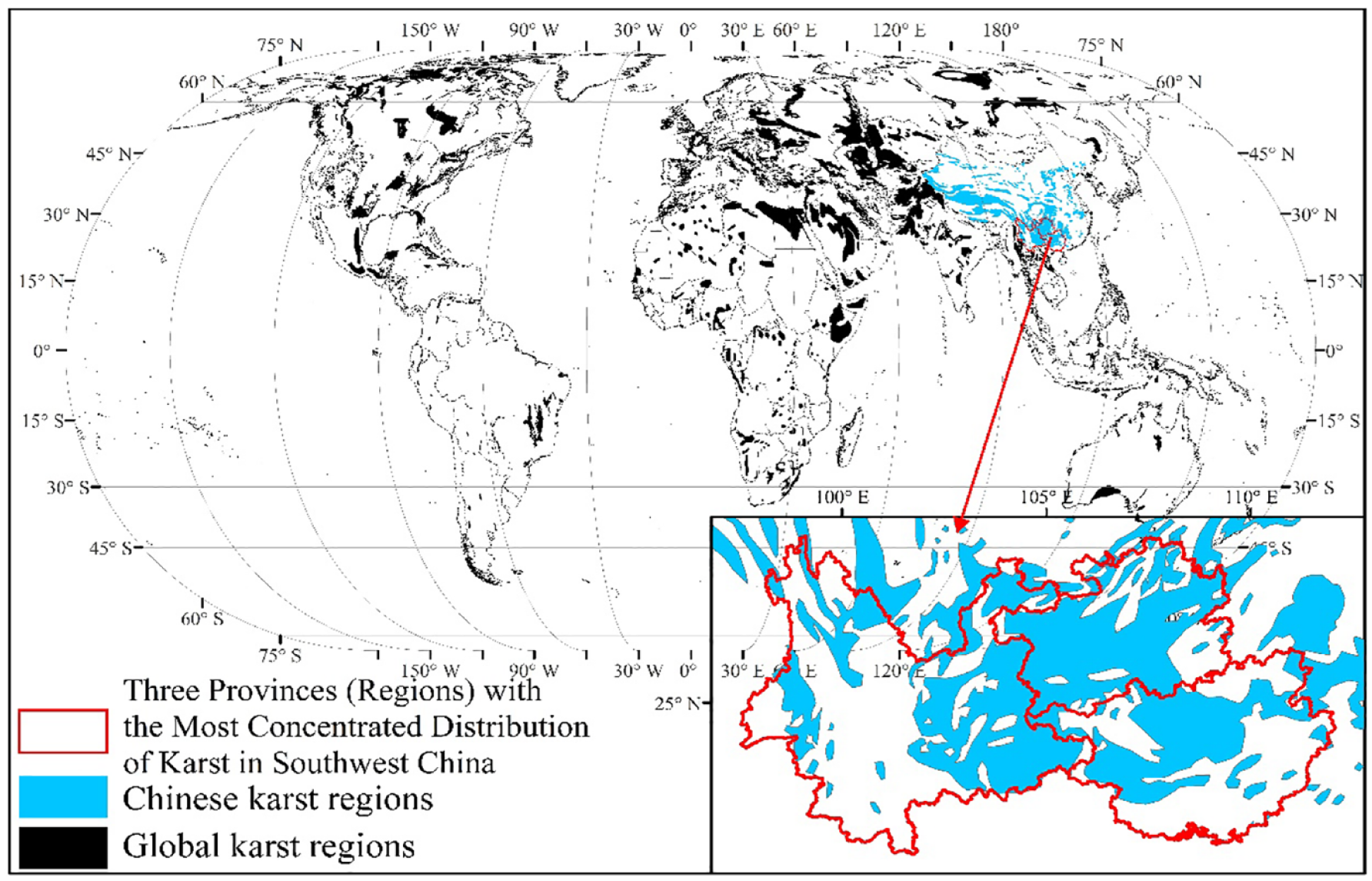
Global distribution of major outcrops of karst.
The high sensitivity to variation, low environmental capacity and low elasticity of the threshold of disaster tolerance are the most essential characteristics of karst environmental vulnerability (Chen and Wang, 2008; Liu et al., 2018b; Yang, 1990). The fragility of karst ecosystems is directly manifested in the structure and type of vegetation, the most obvious feature is the relatively sparse distribution of vegetation, single community structure and low biomass (Yu et al., 2010; Zhu, 1997), which can easily lead to rock desertification once damaged by human interference.
Firstly, the vulnerability of karst ecosystems is reflected in their high sensitivity to variation in environmental factors, as exemplified by karst vegetation and soils. This is because the karst environment in the territory of the plant community is the first producer, and to feed on its animals, microorganisms form an ecosystem together and, thus, ecological material. Energy conversion via the food chain or food web to soil is the medium to achieve (Zhang and Zhang, 2023), but the energy conversion pathways of ecosystems in karst environments are fragile and sensitive. Studies have shown that the rate of soil formation in karst areas is slow (Kazem et al., 2016). Yang (1990) According to the analysis and calculation of 132 points of data in Guizhou, the rate of rock weathering and denudation was 23.7–118.7 mm/year, with an average of 61.68 mm/1000 years, while the weathering residue was only 2.47 mm in 1000 years, and there was only a weathered soil layer of 2.47 cm thick created over 10,000 years. Ran et al. (2023) studied the contribution of soil formation rates to karst ecosystem health and found that soil formation rates pose a threat to the health of 28% of the world’s karst ecosystems. Therefore, once the soil-vegetation cover is damaged, the exchange of materials and energy in the karst ecosystem will be temporarily interrupted, and the ecological balance will be changed abruptly, forming rocky desertification, which is the peak of the reverse environmental deterioration and succession.
Secondly, the vulnerability of ecosystems in karst areas is reflected in its low environmental capacity (Jiang et al., 2023; Yang, 1990). Karst is strictly plant-selective, and the fragility and sensitivity of karst environment ecosystems to damage is also due to the strong plant selectivity and the generally slow growth of trees. The reason is that only those plant species which physiologically show calcareous, drought-tolerant and lithic characteristics and whose root systems are adapted to climbing rocks and surviving in cracks to draw nutrients can grow and develop on thin, highly calcareous and drought-prone calcareous soils (Huang et al., 1988). Therefore, when the ecological environment changes under the influence of external factors, it will be difficult for humidity-loving and acid-loving plants, or even pervasive plants which require high habitat conditions, to survive. On the contrary, drought-tolerant, barren and alkaline-tolerant thorny scrub can take the lead in growth, and the rate of reverse succession is rapidly strengthened. In addition, the karst region has a small area of arable land and less arable land per capita, and the slope of the arable land is large. According to the Guizhou Province Third National Land Survey Main Data Bulletin (28 December 2021), Guizhou Province has 3,472,600 hectares (52,089,300 mu) of arable land, with arable land accounting for only 10% of the province’s land area, and per capita arable land amounting to only 0.8 mu, with 70% of the land being on slopes. Of these, 883,900 hectares (25.45%) are paddy land, 0.45 million hectares (0.13%) are watered land, and 2,584,200 hectares (74.42%) are dry land. In addition, 61.01% of the cultivated land in Guizhou Province had slopes of more than 25°, 16.91% had slopes of 15–25°, 15.98% had slopes of 6–15°, 4.07% had slopes of 2–6°, and 2.03% had slopes of less than 2°. Finally, the karst region has low grain production. According to the Announcement of the National Bureau of Statistics on Grain Production Data in 2021, it was found that the national grain unit mu yield in 2021 was 2902.5 (ha/kg), whereas the grain unit mu yields in the southwestern karst regions of Guizhou Province, Guangxi Zhuang Autonomous Region, and Yunnan Province were 1963.75 (ha/kg), 2455.85 (ha/kg), and 2302.7 (ha/kg), respectively, which were lower than the national average. Therefore, the environmental capacity of the ecosystems in karst is low in terms of the karst’s selection of plants, arable land situation and food production.
Lastly, the vulnerability of ecosystems in karst regions is also reflected in the low elasticity of its disaster tolerance threshold. On the one hand, there is usually an obvious hard-soft interface between the carbonate parent rock and the soil in the karst area, which makes the affinity and adhesion between the rock and soil poor, and makes it very easy for soil erosion and block slippage to occur in case of heavy rainfall. Therefore, once the vegetation in karst areas is damaged, the interface is most prone to sudden changes, leading to the generation and rapid progress of soil erosion, causing the environment and ecology to deteriorate quickly and evolve in the direction of rocky desertification (Pang and Wang, 2012). Liu et al. (2020) studied the Guanling-Huajiang Plateau Canyon rocky desertification area and found, through field surveys and hydrochemical and isotopic analyses of sampled water, that the process of rainfall-surface water-groundwater cycling controls the direction and trend of surface erosion and subsurface seepage in the karstic rocky desertification area. Secondly, most of the karst has existed in a tropical and subtropical hot and humid climate for a long time, causing a strong chemical leaching effect that makes higher viscous grains (<0.001 mm) in the weathered material, vertically downward movement occurs, forming the upper loose (the upper layer of the texture is light, the porosity is high and can reach up to 50%, so the water seeps down easily), and the lower viscous (sticky and heavy texture, the porosity is low, and the permeability is small), and this in turn creates an interface with different physical traits (Ford and Williams, 2007), it also leads to susceptibility to erosion. For example, the average rate of karst erosion in the Mengpu River basin in Puding County, Guizhou Province, is 3.32 mm/year, and the rate of rocky desertification reaches 7.5mu/km2year-1, which indicates that it takes 24,000 years to form a 1-cm-thick layer of soil, and only 200 years or even less to reach rocky desertification (Yang, 1985), meaning it has a high rate of ecological deterioration and sensitivity. On the other hand, the karst environment is easy to pollute and difficult to manage and is an all-round polluter of the binary three-dimensional spatial body of surface, underground, atmosphere, water and soil. In the exposed karst area, vegetation cover is poor, the permeable soil layer is thin, the surface funnels, depressions, drop holes, vertical shafts, crevices, etc. develop, and are often connected with underground caves, dark rivers and pipeline systems, with strong alternation of surface and underground water circulation (Gao et al., 2019; Yuan, 1997a). Sewage, waste liquids and lost soil and water lack both the buffer space of a certain volume and sufficient time to be purified by filtration, adsorption and ion exchange, and are even discharged from the surface into the subsurface system in almost pristine concentrations (Thiago et al., 2020; Yang et al., 2011). In addition, the karst groundwater has little dissolved oxygen, no sunlight, and the microorganisms reproduce slowly and in small quantities, which makes the relevant elements in the water not easily absorbed, decomposed or oxidized. Li et al. (2022b) confirmed that the non-carcinogenic health risk of karst groundwater was mainly attributed to NO3-, which had a high contribution (66.55%) to the hazard index value. Due to the surface-underground dichotomous hydrogeological structure of the karst region, this has resulted in a large concentration of pollution and the rapid diffusion of pollution sources that reach a wider range. Furthermore, the diffusion mode is also unique, running from the ground to the underground. Lu et al. (2022) According to the long-term monitoring dataset (1981–2002) of the Muzhu Reservoir in the Houzhai watershed and the water quality data analyzed in the last few years, the dynamics of the water quality in the karst area will be more pronounced, with a faster exchange of water and pollutants between the underground and surface rivers. Therefore, once the karst environment suffers from pollution, it is far more difficult to treat than the non-karst environment area (Cao et al., 2005; Li et al., 2006; Yuan, 1997b).
In conclusion, an analysis of the issue of karst environmental vulnerability from the perspective of the structure, function and characteristics of the karst environment and the factors influencing them shows that the vulnerability of the karst environment is reflected in the high sensitivity to variation, low environmental capacity and low elasticity of the threshold of disaster tolerance.
The karst hydrological system has a binary three-dimensional structure
The karst hydrological system is influenced by the high variability of the surface environment and has a binary three-dimensional spatial structure (Yang, 1988). It is also an open system with complex material-energy exchanges, and its territoriality and dynamics are remarkable. The surface runoff coefficient of karst slopes is small (Chen et al., 2012), and is dominated by subsurface hydrological processes (Fu et al., 2016b; Wang et al., 2020). The most significant difference between hydrological processes in karstic regions and non-karstic regions may be firstly reflected in the rapid subsurface seepage processes (Fu et al., 2015) (Figure 2). Since atmospheric precipitation often seeps rapidly and directly into the subsurface karst space through surface karst fissures, funnels, fallout holes, depressions, etc. it results in a poor capacity for surface water storage (Li et al., 2006). In addition to the vertical migration process of water, the soil occurrence layer and soil-rock interface are highly susceptible to lateral loamy mesocosmic flow due to differences in water conductivity and water-holding properties (Wang et al., 2019). Vegetation growth and development as well as water utilization mainly occur at the surface. The shallow soil and low water storage capacity in the karst region, coupled with the complex surface media superimposed on the complex structure of the hydrological system, together determine the complexity of water uptake and depletion by vegetation in the karst region.
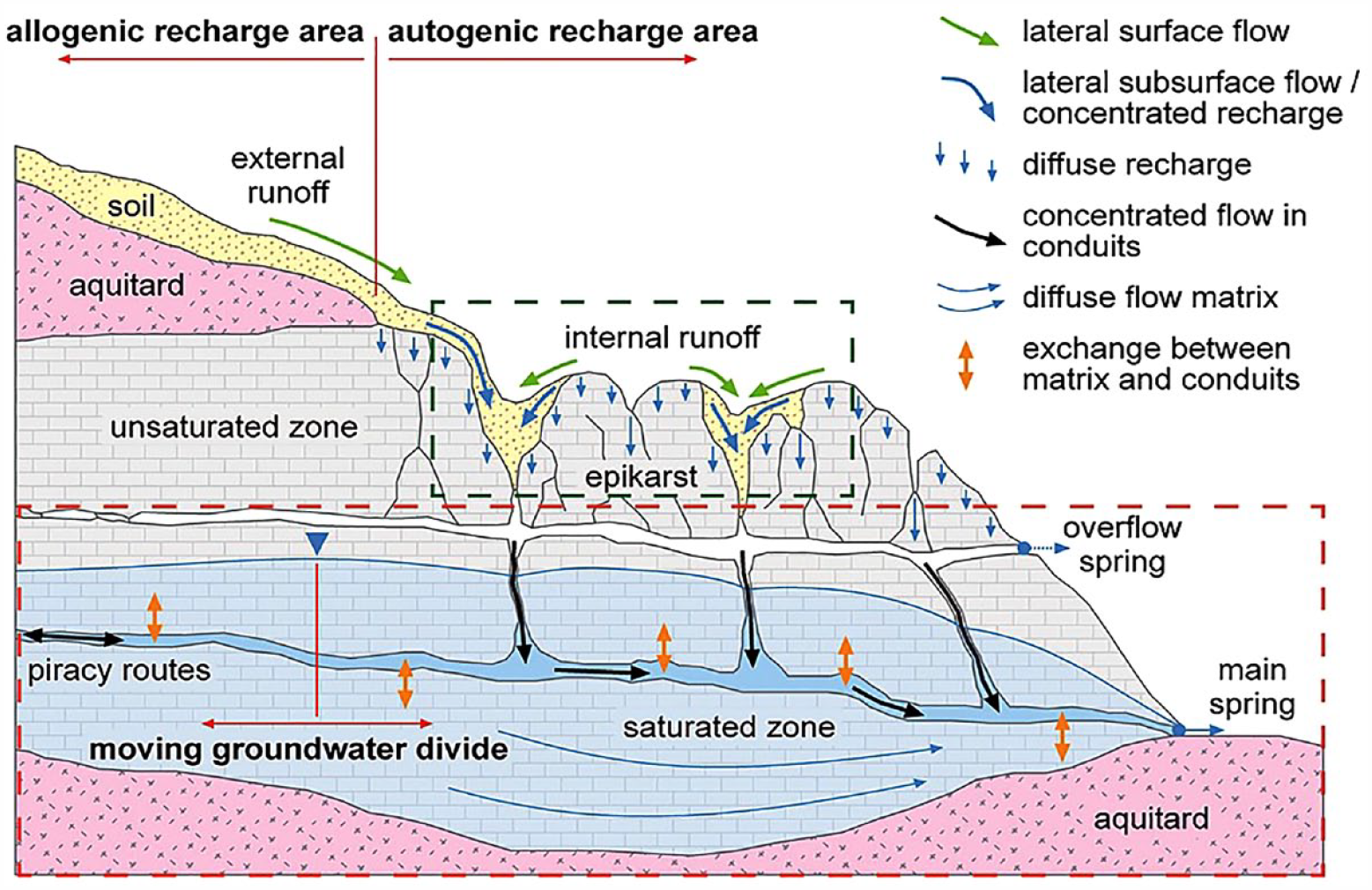
Conceptual model of a karst system including all characteristic karst processes; dark green and red dashed lines represent the soil/epikarst and the groundwater subsystems (Hartmann et al., 2015).
Karst rocky desertification and vegetation restoration
Karst rocky desertification is the result of the degradation of karst ecosystems rather than an inevitable manifestation of the vulnerability of karst ecosystems (Li et al., 2006). At present, the management of karst rocky desertification is mainly based on the core principle of ecological restoration, with the restoration of surface vegetation as the basic principle (Zhu et al., 2000). Both ecological and economic benefits should be considered, which is an important goal of rocky desertification management. With the joint efforts of many researchers, governments, and local farmers, a variety of mature governance models for rocky desertification have been formed, which focus on vegetation restoration while simultaneously addressing the survival and development of local residents (Chen et al., 2018). For example, the “Dingtan model” of Huajiang Canyon in Guizhou fully utilizes the advantages of karst resources and environment as well as suitable plant resources (Figure 2) and establishes the “pig-biogas-prickly ash (economic forest)”. The “pig-biogas-prickly ash” model adjusts the industrial structure on the premise of restoring the ecological environment and realizes the synchronous development of rocky desertification control and economy (Li et al., 2006). The “Guohua model” of Pingguo County in Guangxi, has established a composite three-dimensional eco-agriculture, with the sealing of mountains and forests on steep slopes, the development of plants with strong soil and water retention functions on passes, the development of economic fruits and forests (pitaya) on foothills, and the development of dry-farming food and grass-farming in depressions, all of which improves the ecological environment of the region and at the same time improves the local economy (Jiang et al., 2008).
Many areas have adopted forest and grass vegetation restoration for rocky desertification control, and the effectiveness of management is remarkable (Sun et al., 2002; Yang et al., 2017a). Zeng et al. (2021) found that the water consumption of secondary forests in karst areas is significantly higher than that of sparse shrubs as well as shrubs and grasses. Zhou (1987) showed that undamaged karst forests have an excellent function of retaining water and soil. The dichotomous structure composed of forest stagnant water and karst water greatly improves the cyclic alternation of groundwater and surface water, and the hydrological effect of karst forests is highlighted. Wen et al. (2015) argued that the vegetation succession in karst areas is the result of the interaction between biological drivers and environmental resistance, and that vegetation restoration is a key step in the management of rocky desertification in southwestern karsts and in the reconstruction of ecological systems. Wang et al. (2008) proposed to establish a combination of artificial and natural vegetation restoration pathways for different land types in land with superior land conditions, land with better land conditions, land with poorer land conditions, and land with rocky desertification landscapes, respectively.
Since 2000, in the context of ecological restoration (ER) implementation (Green for Grain program and mountain closures), vegetation indices, productivity and biomass have increased significantly in the karst areas of Southwest China (Chen et al., 2019; Qiu et al., 2022; Wang et al., 2017). Mo et al. (2022) found that the ecological quality level of vegetation in the karst region of Guangxi generally improved from 2000 to 2019, and showed a fluctuating upward trend. Among them, 96.25%, 92.92%, 97.14% and 99.07% of the total area showed good vegetation ecological quality in 2000–2004, 2005–2009, 2010–2014 and 2015–2019, respectively. In addition, 97.95% of the area showed restoration of vegetation ecological quality with 79.73%, 18.09% and 0.13% of maintained growth, slow growth and fast growth areas, respectively, while the rate of degradation of vegetation ecological quality was only 2.04%.
Furthermore, net primary productivity (NPP) is an essential indicator of vegetation growth status and density distribution (Xu et al., 2020). As a result, Yan et al. (2021) have shown that the average of NPP was 889.42 gC m-2a-1 from 1982 to 2019 in Yunnan, showing a fluctuating growth trend on the whole. Its growth rate was 0.48 gC m-2a-1 (P = 0.157). So NPP is an important indicator of vegetation restoration, with the increase of NPP indicating that vegetation restoration has improved karst areas. Huang et al. (2022) showed that the areas with improved vegetation coverage were substantially larger than the degraded areas in Guizhou Province in 2005–2018. The improved and degraded areas accounted for 77.77% and 14.28% of the total area, respectively. The remaining 7.95% was stable. Xue et al. (2023) displayed the interannual variation of the regional mean NDVI (normalized difference vegetation index) for the Guizhou Province and the different vegetation types. Specifically, the regional mean NDVI displayed a significant upward trend (0.056/10a), and it showed prominent interannual variations with a notable decreasing (improving) trend during 2000, 2005, 2010–2012, 2014, and 2020 (2001–2004, 2007–2009, 2013, 2015–2017, and 2021), respectively, and the spatial pattern of the average annual NDVI in Guizhou Province during 2000–2021 was displayed. The overall vegetation distribution of NDVI in Guizhou Province featured a prominent spatial heterogeneity, decreasing from the southeast to the northwest. Pei et al. (2022) revealed widespread vegetation recovery in the South China karst area (74.80%) during the past three decades (1987–2018). Notably, the area of vegetation recovery tripled following the implementation of ecological engineering compared with the reference period (1987–1999). Meanwhile, the vegetation restoration trend was strongly sustainable beyond 2018 as demonstrated by the Hurst exponent. Furthermore, climate change contributed only one-fifth to vegetation restoration, the major vegetation recovery was mainly attributed to afforestation projects, implying that anthropogenic influences have accelerated vegetation greenness gains in karst areas since the start of the new millennium during which ecological engineering was continually established.
In general, there has been an implementation of a series of ecological construction projects, such as returning farmland to forests, protecting natural forests, ecological poverty alleviation, and comprehensive management of rocky desertification, and the effective restoration of vegetation in karst areas, with the exception of inappropriate agricultural practices and over-exploitation on sloping lands which were common in the last half of the 20th century and contributed to the rapid decrease in karst forests in southwest China (Stokes et al., 2010; Wen et al., 2011). Beginning in the 1990s, several ecological projects, such as the Green for Grain program and mountain closures (providing living allowances and banning logging), were implemented to restore vegetation cover in this area (Chen et al., 2023; Qi et al., 2013). It can be seen in recent years, after the implementation of a series of ecological restoration projects, the recovery of vegetation in karst areas has made great progress. The research on vegetation restoration in karst areas has changed from focusing only on one or two key components to comprehensively considering the relationship between the key components of natural and human elements (lithology, topography, soil and human activities). More importantly, some studies have emphasized the environmental effects of vegetation restoration, especially its hydrological effects.
Hydrological effects of vegetation restoration in karst areas
The hydrological effects of karst vegetation restoration involve several aspects, including precipitation, evapotranspiration, runoff generation, and sink processes. This part analyzes the effects of vegetation restoration on individual elements of the hydrological cycle and the overall hydrological cycle in the karst region. Specifically, current studies on the hydrological effects of karst vegetation restoration have focused on the response of soil moisture, evapotranspiration, runoff (surface-subsurface runoff), water use efficiency, flow production and catchment processes to them (Deng et al., 2020; Li et al., 2022c; Liu et al., 2022; Luo et al., 2023; Peng et al., 2022; Wang et al., 2004, 2023; Xiao et al., 2023; Yan et al., 2023; Zhou et al., 2022). Studies have explored the role of vegetation restoration in regulating river flow in karst areas, put forward the significance of karst vegetation restoration on water conservation and storage, and revealed the differences in hydrological effects of vegetation restoration in karst areas (Cheng et al., 2013; Hoek van Dijke et al., 2022; Hou and Gao, 2019; Sterling et al.,2013).
Effects of vegetation restoration on soil moisture
The shallow soil layer and high permeability of the bedrock in karst areas (Ding et al., 2021; Hartmann et al., 2015), combined with the effects of vegetation restoration duration, vegetation type, plant species, and other factors, lead to differences in the direction and extent of soil moisture changes caused by vegetation restoration (Figure 3). Vegetation type affects soil moisture, and there are significant differences in soil water storage among vegetation types (Liu et al., 2021c). For example, forest revegetation changes the state of soil water storage and depletion, leading to changes in soil water content. As the process of forest vegetation restoration progresses, soil water content decreases (Deng et al., 2019). The duration of vegetation restoration affects soil water content, for example, the duration of woodland vegetation restoration is significantly negatively correlated with soil water content (Spearman correlation coefficient between the two was −0.621, P < 0.01). Moreover, it showed the above negative correlation characteristics at different soil depths and different seasons (Zhou et al., 2022). As for the seasonal scale, Peng et al. (2022) showed that vegetation restoration resulted in an increase in mean soil moisture in spring and winter, and a decrease in mean soil moisture in summer and autumn. In particular, the largest increase in mean soil moisture content (0.019 m/mouth) was caused by vegetation change in spring, while the largest decrease in mean soil moisture content (0.010 m/mouth) was observed in summer. Plant species affect soil moisture, Liu et al. (2021c) found that planting prickly ash increased soil water holding capacity and these changes increased with time since planting, and soil water storage and stability improved. The amount of soil water recharged by pepper (19.79 mm) and the effective recharge efficiency (49.81%) were higher than that of maize (8.36 mm, 24.6%) and acacia (15.83 mm, 42.84%), whereas the average soil water storage capacity was the highest for maize (75.25 mm), second for acacia (70.09 mm), and smallest for pepper (43.85 mm). Peng et al. (2020) showed that the soil structure of cracks with grasses was better and had higher water content compared to cracks with other shrubs, grasses and forests. This is explained by the fact that the percentage of surface fissures in karst land with a mixture of shrubs, grasses and trees was 70%, whereas the percentage of fissures with only weeds was 8%, and the average soil moisture content of grassland (47.67%–55.06%) was higher than that of scrubland (25.03%–33.90%) and woodland (10.29%–22.73%) (Guo et al., 2020; Peng et al., 2020). In addition, vegetation restoration causes litter accumulation, which causes more precipitation to remain in the surface litter and soil, and litter water storage is enhanced, which has a complementary effect on soil moisture. For example, Wei et al. (2007) found that the litter layer plays an important regulatory role in soil water retention and water holding capacity. Zhou et al. (2018) found that the effective water-holding capacity of the litter layer was relatively high in mixed (26.6 t/ha) and coniferous (23.1 t/ha) forests in karst areas, but significantly lower in broadleaf forests (11.2 t/ha). Yuan and Cai (1988) found that 667 m2 of forested land could retain 20 m3 more water than unforested land, and that forest-covered areas could reduce annual surface runoff by 50%, and relative humidity by 15–25% compared to unforested land. Although the hydrological effects of karst vegetation litter layer vary depending on the type of vegetation, its ability to retain soil moisture cannot be ignored. In conclusion, as far as the response of soil moisture to vegetation restoration is concerned, on the one hand, vegetation restoration in karst areas changes the soil water storage and consumption status, which can increase the water holding capacity of the soil and reduce water evaporation and runoff losses. On the other hand, the presence of vegetation root system can enhance soil structure, improve soil quality, and promote soil water infiltration and storage. In addition, vegetation restoration can control soil erosion. Vegetation cover can effectively reduce the scouring of soil by water flow, stabilize soil particles and stop slope failure and landslides, thus reducing the risk of soil erosion (Li et al., 2022c; Wang et al., 2004). Therefore, it has been shown that the hydrological effect of vegetation restoration on soil water in karst areas is mainly in the form of its ability to increase soil water conservation capacity, which will also change soil properties and vegetation characteristics.
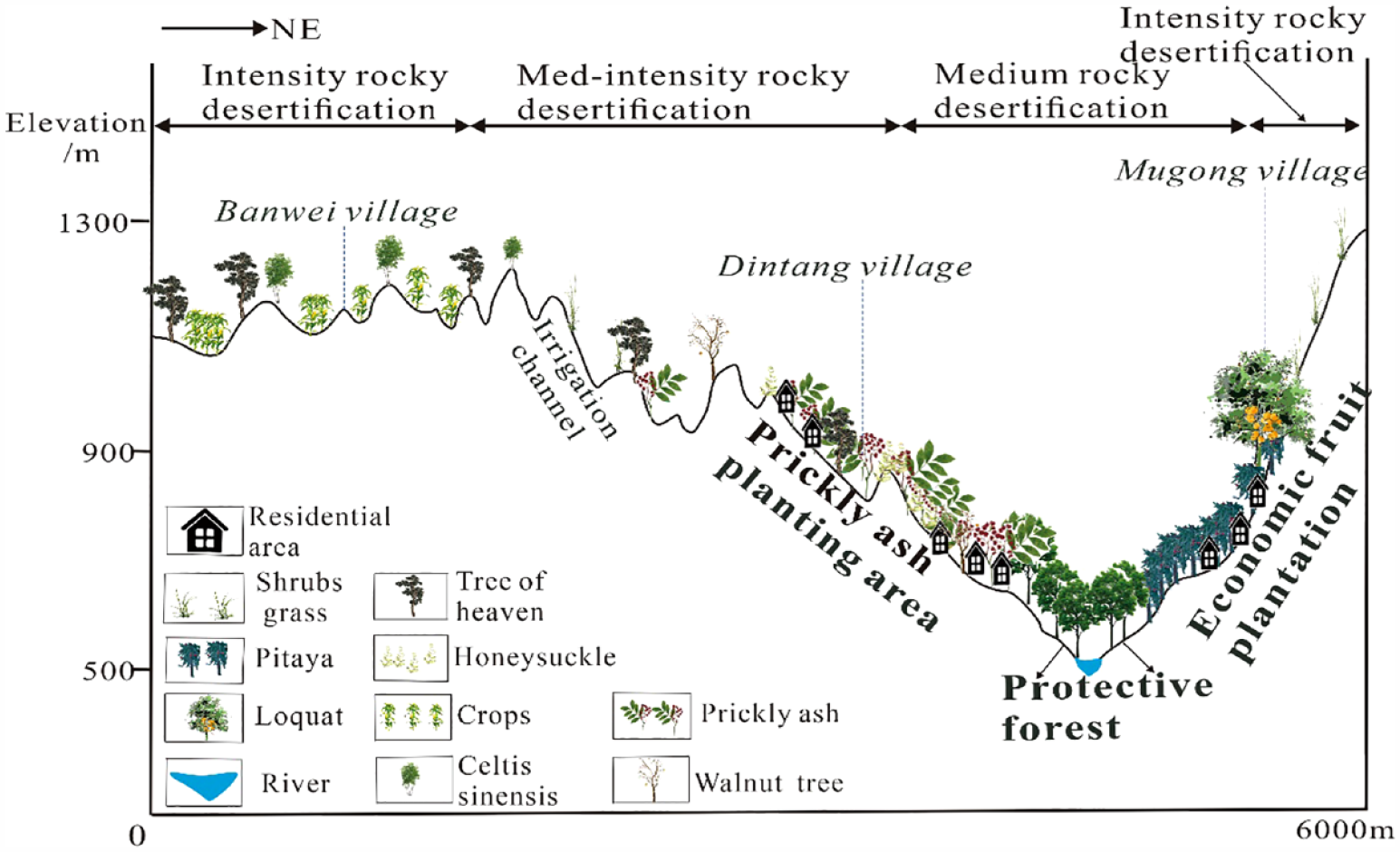
Karst peaks from the canyons-intensity of rocky desertification ecological restoration and ecological industry cycle business model.
It can be seen that the effect of vegetation restoration on soil moisture in karst areas is bidirectional (Figure 4). On the one hand, in the process of vegetation restoration, higher aboveground biomass will cause a significant increase in vegetation transpiration and reduce soil moisture content, but increase the efficiency of soil moisture use. On the other hand, vegetation restoration inhibits the rate of soil moisture transport, reduces surface evapotranspiration understory vegetation transpiration, and reduces surface moisture loss. Existing studies mainly focus on one-way explanation of the effect of vegetation restoration on soil moisture in karst areas, while the coupling relationship between the two has not been scientifically quantified. Therefore, the influence mechanism between vegetation restoration and soil moisture in karst areas, where vegetation restoration is the main ecological restoration measure, urgently needs to be investigated to promote the sustainable development of karst ecosystems.
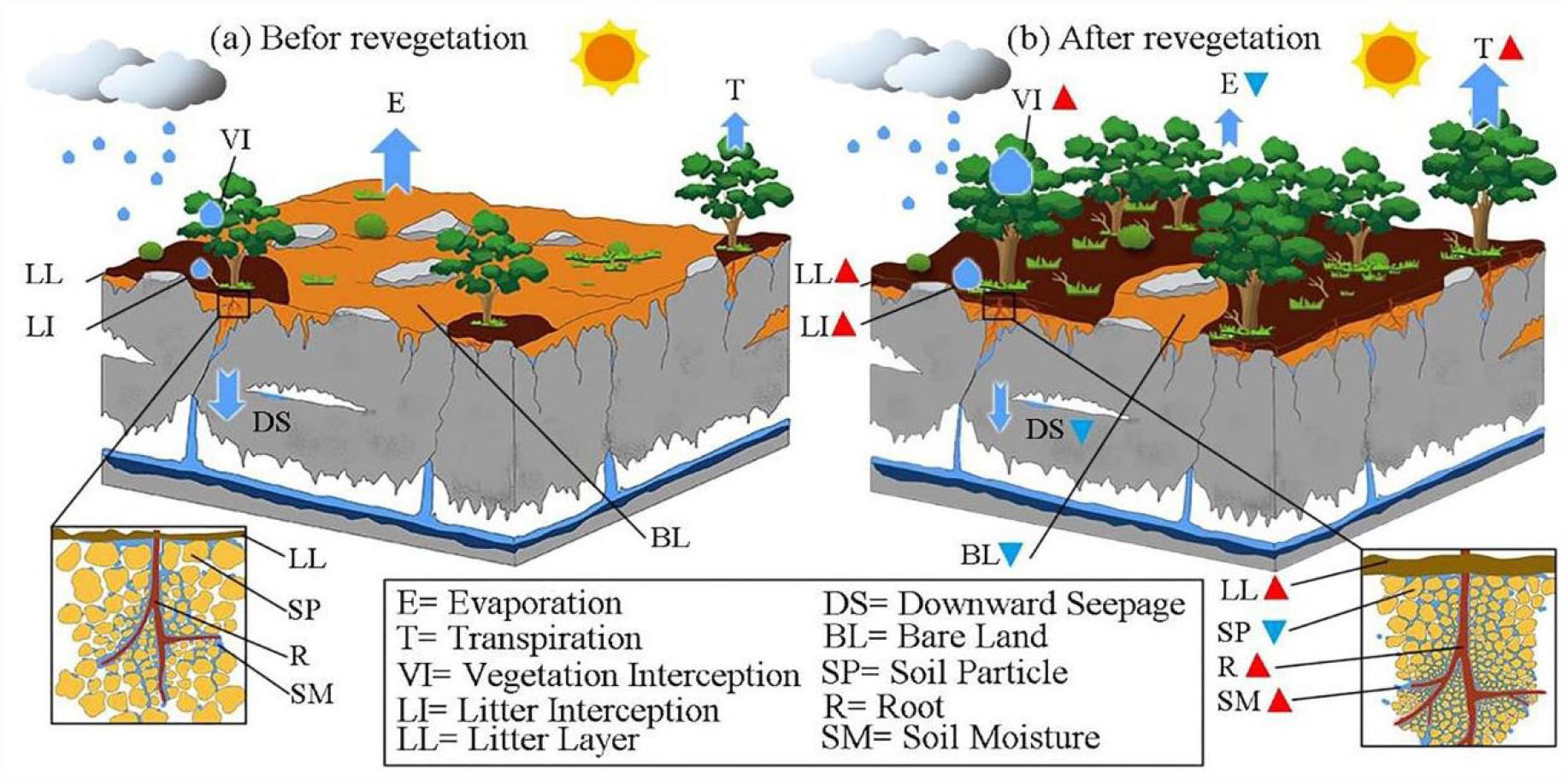
Effects of changes in environmental elements caused by vegetation restoration on SM stability in subtropical humid karst regions (Peng et al., 2022). (a) Before revegetation. (b) After revegetation.
Effects of vegetation restoration on evapotranspiration
Vegetation restoration has been shown to increase evapotration and transpiration (Bai et al., 2018; Lian et al., 2020). Currently, studies on the spatial and temporal changes of evaporation and transpiration of vegetation restoration in karst areas are dominated by potential evaporation and actual evaporation studies (Dai et al., 2016; Gao et al., 2016; Wu et al., 2020). Liu et al. (2022) showed that vegetation restoration increased evaporation and transpiration. Evapotranspiration (ET), transpiration (T) and transpiration/evapotranspiration (T/ET) hairs increased by 2.30 mm yr−1, 2.21 mm yr−1 and 0.0006, respectively, in the Longjiang Basin, China, between 1987 and 2018, with significant increases concentrated in areas with increased woodland; while in areas with increased woodland and grassland, there was a high positive correlation between NDVI and ET, T and ETa/ETp. However, the rate of increase in evaporation was greater than the rate of increase in transpiration, and transpiration tended to decrease after vegetation restoration. Because the increase in ET therein is primarily caused by vegetation trapping evaporation. In addition, several studies have modeled the spatial pattern of evapotranspiration in karst regions. In terms of actual evapotranspiration (ET) studies, Li et al. (2018a) used the CRU4.0 and GLDAS Noha2.1 datasets to estimate ET in the southwestern region using the random forest algorithm, and found that ET increases overall with decreasing latitude, and that ET south of the Hengduan Mountain. Range is mainly driven by the combination of percent cloud cover, daily air temperature difference, and daily maximum air temperature, while the region north of the range is mainly driven by the combination of percent cloud cover, frost day frequency, and water vapor pressure. Zhang et al. (2022) reported that individual models exhibited seasonal uncertainties. For example, simulated ETa by the PM (Penman-Monteith) and PT (Priestley and Taylor) model was lower than ETo (observed ETa) during November-March but higher than during April-October for forest-grass mixed and grass ecosystems. Yu et al. (2019) estimated ET based on an improved hybrid linear two-source remote sensing evapotranspiration model, and found that ET in southwest China showed a significant increasing trend in the past 20 years, with ET decreasing from southeast to northwest in spring, and ET decreasing from west to east in summer; ET in fall and winter showed a decreasing pattern from south to north. Zhong et al. (2018) used the optimized Penman Monteith Leuning (PML) model to estimate ET using vegetation. The results showed that the modeled ET fit well with the observations, with the determination coefficient, Nash efficiency coefficient and root mean square error (RMSE) being 0.85, 0.75 and 1.56 mm·d−1, respectively. The ET exhibited clear seasonality and reached its maximum in summer, coinciding with vegetation phenology. From the above studies it is clear that the current research not only considers the effects of vegetation restoration on the characteristics and synergistic evolution mechanism of evapotranspiration (ET), transpiration (T), and transpiration/evapotranspiration (T/ET), but also that the remote sensing evapotranspiration model is gradually changing from monolayer to complexity, and the types of model are also evolving from single-layer to bi-layer or even multi-layer. The remote sensing evapotranspiration dynamics model is also gradually being established to increase the accuracy of the estimation and to try to integrate the multi-model approach to reduce the uncertainty of the model through the weakening of the bias of the individual models.
With respect to the ET of different vegetation types and land use types in karst areas, different vegetation species have different physiological conditions and different ground surface cover, which will result in differences in vegetation transpiration characteristics and soil evaporation characteristics. Zhang et al. (2018) used modified ventilation chambers, heat dissipation probes, and micro ET osmometers to compare the ET characteristics of three agroforestry composite ecosystems of grasses, forested grasses, forbs, and crops. They found that the actual ET of mixed forest-grassland ecosystems (7.64 ± 5.75 mm day−1) was significantly higher than that of crop (4.24 ± 3.35 mm·day−1 and grassland ecosystems (5.78 ± 3.53 mm·day−1). The actual ET of mixed forest-grassland ecosystems was more sensitive to deep soil moisture (>30 cm), whereas grassland and crop ecosystems were more sensitive to shallow soil moisture (10 cm and 20 cm). ET characteristics were compared, and their controlling roles were analyzed. The results showed that soil moisture content was not an important limiting factor for actual ET in humid karst landscapes. However, leaf area index, which can be controlled by land management, heavily influenced ETa rates and E/ETa (E, evaporation) ratio through changing water demand. Swaffer et al. (2013) found that Mediterranean pine invasion increased actual ET by comparing Mediterranean pine before and after it was removed from a eucalyptus forest stand. In addition, ET rates for Cyathea multifolia (E. diversifolia) and Eucalyptus verticillata (A. verticillata) showed significant convergence regardless of differences in vegetation distribution and morphology, suggesting that these co-occurring species are able to maximize the use of available precipitation, thus avoiding the requirement to distinguish between these species when estimating ET at the landscape scale, as karst systems. The water-holding capacity of porous geological substrates (e.g. those associated with karst systems) will play an important role in balancing the variability of annual rainfall (Swaffer et al., 2014), thus influencing the properties of ET. Therefore, geological properties cannot be ignored when assessing the ecohydrological effects of vegetation restoration with karst on evapotranspiration (ET), transpiration (T) and transpiration/evapotranspiration (T/ET). The above studies show that the differences in transpiration characteristics of vegetation in karst areas are not only related to vegetation types, human activities and meteorological and climatic conditions, but are also controlled by the geological characteristics of the karst base.
Differences exist regarding the hydrologic effects of different levels of vegetation restoration on ET. The general natural successional stages in karst region are grass, grass–shrub, shrub, tree–shrub, and forest (Li et al., 2004; Peng et al., 2012b; Qi et al., 2013), and grass is an early successional stage (Wen et al., 2011; Yu et al., 2002). Yi et al. (2023) found that ET in secondary forest (680 ± 7mm yr−1) > shrub (564 ± 16mm yr−1) > grassland (546 ± 12mm yr−1) > cropland (513 ± 8 mm yr−1) at different successional stages during natural restoration (p < 0.05), but there was no significant relationship between ET and soil moisture (p > 0.05), which is in agreement with the findings of Swaffer et al. (2014). Instead, solar radiation and vapor pressure deficit were the two main factors affecting ET (p < 0.01). Therefore, ET will increase in the later stages of vegetation restoration succession, whereas in the early stages of succession its ET is less. Wan et al. (2016) used the modified Bagrov model to simulate the change of actual evapotranspiration (ETa) with the increase of NDVI. The results showed that after the completion of the rocky desertification management project, the vegetation cover changed significantly, which increased the ecological water consumption of vegetation (approximately equal to the actual evapotranspiration). The ETa, evapotranspiration efficiency (ETa/ETp) (potential evapotranspiration, ETp) and potential humidity (P/ETp) (precipitation, P), generally increased with the increasing NDVI. The sensitivity of the ETa response to vegetation coverage changes varied due to different precipitation conditions and different rocky desertification severities. The ETa was more sensitive under drought conditions. When a drought occurred, the ETa exhibited an average increase of 40~60mm with the NDVI increasing by 0.1 in the rocky desertification areas. The above study also showed that the actual ET was more sensitive under drought conditions, and the response to the change in NDVI was less sensitive in areas of severe rocky desertification and more sensitive in areas of extreme and potential rocky desertification. For example, with the NDVI increasing of 0.025, 0.05, 0.075, and 0.1, the corresponding actual evapotranspiration (ETa) changes increased by an average of 2.64 mm, 10.62 mm, 19.19 mm, and 27.58 mm, respectively, in severe rocky desertification areas but by 4.94 mm, 14.99 mm, 26.80 mm, and 37.13 mm, respectively, in extremely severe rocky desertification areas. Many studies showed that the ET was mainly determined by the precipitation, vegetation coverage (nature of the underlayment) and reference evapotranspiration (meteorological and climatic factors), and improvements in model accuracy helped to reveal the hydrologic effects of vegetation restoration on ET.
In addition, the resilience of different vegetation is also different in response to water deficit on different time scales. Liu et al. (2018b) found that the vegetation is transient at short time scales. Their study found a linear relationship at monthly scale (R2 > 0.7), reflecting the interactions among energy, water availability and vegetation This relationship means that under a given PET (long term annual potential evapotranspiration), the higher NDVI (better vegetation) is, the higher the ET, which is highly related to the vegetation growth and production (Chong et al., 1993; Schimel et al., 1997). This is because that the dynamic vegetation (including phenology) should affect water partitioning a lot (Donohue et al., 2007; Ning et al., 2017). However, Liu et al. (2018b) also found that this relationship was poor at annual or longer time scales, mainly due to the linearly aggregated (e.g., average and sum) ETP, P and NDVI missing their seasonality information. Jiang et al. (2019) showed that the multi-year average ETa and ETp in Guizhou Province were 850.36 mm and 1,473.58 mm, respectively, with the largest ETa in the forested land and the smallest ETp in the forested land. Secondly, on the annual scale, the interannual variability of ETp was 3.88 mm/a, showing a weak increasing trend, while the interannual variability of ETa was 0.39 mm/a, which was basically stable; and on the monthly scale, ETa was largest in July, ETp was largest in June, and both of them were smallest in December. The difference between the two was largest in March-June, the difference between ETa was large in the growing season of vegetation, the growth rate of forest land was fastest, and the difference between PET was largest in the maturation period of vegetation. Finally, ETa and ETp had strong seasonality. The spatial difference in ETa seasonality was very significant, in that vegetation transpiration in the woodland contributed more to ETa throughout the year. The studies Jiang et al. (2019) stated that the resilience of different vegetation is also different in response to water deficit on different time scales. This indicates the complexity of the mechanisms linking vegetation restoration and evapotranspiration in karst regions.
In summary, most authors only analyzed the impact mechanism of vegetation restoration on hydrology in different aspects, and the impact of each was not reflected. Existing studies mainly explained the hydrological effects of karst vegetation restoration on ET in terms of vegetation type, vegetation composition and vegetation succession stage, and also consider the driving factors such as soil water, ecological engineering measures, meteorological and climatic factors (solar radiation, temperature and precipitation), geological conditions of karst and nature of the subsurface, and set up relevant models for this purpose, but most of the studies focus on the spatial and temporal variations of ET in karst areas and simply describe the correlation between single factors, which need to be further quantitatively revealed. However, most of the studies mainly focus on the temporal and spatial changes of ET in karst region, and only describe the correlation between single factors, leaving the deeper mechanisms between various geo-environmental factors still needing to be further quantitatively explored. In addition, research on the mechanism of synergistic evolution of karst vegetation, hydrology and surface karst zones, as well as the establishment of a dynamic model for the synergistic evolution of karst ecohydrology and surface karst zones, is still in the early stages.
Impact of vegetation restoration on surface and subsurface runoff
Vegetation restoration in karst areas facilitates water storage in the litter and soil layers, but also results in a reduction of water leakage to the groundwater system through fractures. However, the extent of the impact of vegetation restoration on groundwater and runoff systems in karst areas is still unclear. At present, related studies mainly analyze the contribution of climate change and human activity factors to runoff changes (Lian et al., 2020), but human activities include more factors, in addition to vegetation restoration, there are land use changes, human water use, reservoir storage and so on. The results showed that annual NDVI improved after the implementation of ecological restoration projects, with change rates negatively related to the proportions of karst landscapes value. Moreover, these studies are mostly on single watersheds, but in fact there are obvious spatial differences in karst environment in terms of lithology, topography, climate, soil, etc. and these differences will lead to obvious differences in the effects of vegetation restoration on runoff in different watersheds (Lian et al., 2020; Liu et al., 2018a). Therefore, a small number of case studies cannot fully illustrate the effects of vegetation restoration on runoff in karst areas (Dai et al., 2017; Mahler et al., 2021). Although there are some studies that have selected a number of different watersheds, these watersheds are concentrated in a small area with little difference in climate and subsurface conditions (Hou and Gao, 2019; Liu et al., 2021a), and therefore still do not illustrate the extent to which vegetation restoration affects groundwater and runoff systems in karst areas.
Regarding the influence of different vegetation types on runoff in karst areas, studies have shown that in a rocky desert environment, the flow of karst springs fluctuates considerably and there is no water in the dry season. In contrast, in forested environments, the flow of surface karst springs is constant, the dynamics are relatively stable, and droughts and floods are rare (Jiang et al., 2001; McCulloch and Robinson, 1993). Soil and water conservation programs (SWCPs) in the humid Karst Plateau reduced sediment yield substantially, and the runoff remained stable (Jiang et al., 2021). Surface karst springs in shrubland are more vulnerable to changes in the surface environment than those in secondary forest (Zhang and Cao, 2003). Through continuous observation of the Maolan karst forest for more than one year, it was found that of the total annual rainfall of 1593.2 mm, 207.4 mm was intercepted by the forest canopy, accounting for 13%; 119.1 mm was the trunk runoff, accounting for 7.5%; the forest penetration rainfall was 1,266.7 mm, accounting for 79.5%, and the maximum water-holding rate of the withered leaves could reach was 235.67%, the maximum water-absorption rate of the rocky moss could reach was 650.35%, the maximum water-holding rate of humus was 64.43%, and the maximum water-holding rate of calcareous soil was only 45.25%. The maximum water holding rate of dead leaves can be up to 235.67%, the maximum water holding rate of rock surface moss can be up to 650.35%, the maximum water holding rate of humus soil is 64.43%, and the maximum water holding rate of calcareous soil is only 45.25%; at the same time, non-forested karst areas are more likely to form surface runoff than the forested areas, and the surface runoff in the non-forested area has a large amount of sand, while the sand content in the forested area is only 5.57%–13.74% of that of the non-forested area (Ran et al., 2002). This study showed that in addition to the abundance of precipitation in the region, karst forests have a strong ability to protect soil and water and reduce runoff flows. However, Kang (2012) found that in 2010, the measured precipitation at Banzhai Station in the primary forest area (1710.0 mm) was much higher than that at Yao Pai Station in the peripheral forest area (1066.5 mm), and the runoff flow increased. This is because the forest stimulates precipitation mainly from the water vapor produced by evaporation and transpiration of karst water in the surface zone. In addition, under the influence of climate change, Cheng et al. (2023) showed that vegetation dynamics had a negative effect on hydrological characteristics, with a path coefficient of runoff of −0.12. The above study suggests that the hydrological effect of karst forests in the process of vegetation restoration is mainly expressed by stimulating precipitation and vegetation interception to achieve the control of runoff.
In addition, several studies have analyzed runoff generation under different vegetation cover types in karst areas (Yang et al., 2020; Zhou et al., 2020). Ding et al. (2018) showed that the evergreen or semi-deciduous species Didu, Pito, Rasi and Steu had groundwater uptake proportions between 30% and 58%, and the deciduous species Cebi, Pahe and Pllo and Saro had proportions between 14% and 62%. The two species with highest groundwater use were taller, deciduous or semi-deciduous trees with lower wood densities. Thus, leaf and wood characteristics may be better indicators of groundwater use, as they signal adaptation to consistently high water-availability. In karst regions especially it is also quite likely that root access to groundwater varies from site to site and from tree to tree, since the degree and pattern of rock fracturing can vary greatly across space (Hu et al., 2015; Tokumoto et al., 2014; Yang et al., 2016) and root development through fractured rock could be highly individualistic. The above research showed that regardless of the degree of diversity in groundwater use by vegetation, in general vegetation restoration increases groundwater consumption and reduces groundwater runoff. However, another view is that vegetation restoration can increase runoff. Koirala et al. (2017) found that in more than two-thirds of vegetation cover worldwide, the spatial patterns of total ecosystem primary productivity and depth to water table for at least one season were correlated, and groundwater-vegetation interactions were mainly related to differences in vegetation cover. This is due to the fact that forested soils in karst areas are loose, porous and highly permeable, and 50–80% of precipitation can infiltrate into the ground. Hou and Gao (2019) indicated that the groundwater runoff was rich, about 2–3 times the surface runoff. The distribution characteristics of vegetation have great effects on surface runoff, in turn the surface runoff presented a turning point due to the influence of vegetation. Moreover, the results of spatial overlay analysis showed that the highest value of total and groundwater runoff was distributed in the forest land (Hou and Gao, 2019). Huang (1993) showed that one acre of forested land stores at least 20m3 more water than unforested land, and that 50,000 acres of forest contain the equivalent of a small reservoir of one million cubic meters of water. This is because surface karst fissures in karst areas are the main hydrological channels and groundwater loss channels, and one of the most important habitats for vegetation roots. Vegetation restoration can change the type of vegetation in the fissure, which can change the soil properties and reduce erosion. Yan et al. (2023) showed that vegetation restoration can change the characteristics of fissure-soil-plant systems (FSPS), which can degrade and then improve the physical and chemical properties of soil and increase the capacity of soil conservation; at the same time, vegetation restoration can significantly improve the physical and chemical properties of soil in the fissure zone, and increase the capacity of soil conservation. Furthermore, vegetation restoration can significantly improve the erosion resistance of the 10–20 cm soil layer in the fissure zone, which is stronger than that in the non-fissure zone, thus reducing the risk of underground seepage on slopes. These studies show that the restoration of karst vegetation increases the amount of subsurface runoff flow, depending on its soil and water conservation effect.
The results of the above studies show that the current research on the impact of karst vegetation restoration on runoff is mainly controlled by the surface-subsurface “dual” hydrological system of karst, so it focuses on the response of surface runoff and subsurface runoff to vegetation restoration. The results of the study are still controversial, and there are two views as follows. The first view is that vegetation restoration can reduce runoff (Ding et al., 2018; Hu et al., 2015; Lian et al., 2020; Tokumoto et al., 2014; Yang et al., 2016, 2020; Zhou et al., 2020; ), and the second view is that vegetation restoration can increase runoff (Ding et al., 2018; Lian et al., 2020; Hou and Gao, 2019; Huang, 1993; Koirala et al., 2017; Yan et al., 2023; Yang et al., 2020; Zhou et al., 2020). The reason for this controversy, besides the characteristics of karst ecosystem itself, is also related to the fact that the current study did not fully consider the hydrological effects of the various stages of vegetation restoration and succession and their synergistic evolutionary mechanisms.
In conclusion, although there have been a large number of studies on the effects of vegetation restoration on surface and subsurface runoff in karst areas, the hydrological structure of karst environments has a dual structure, and the subsurface hydrological systems are complex, diverse, and difficult to observe directly. In addition, surface and subsurface runoff in karst areas are also affected by a combination of geological factors, climate, human activities, and other geographical factors. However, few studies have been conducted on the effects of vegetation restoration on surface and subsurface runoff to the exclusion of other factors, which cannot scientifically explain the mechanism of vegetation restoration on the water cycle. Therefore, improved monitoring of the structure of the karst groundwater hydrological system will reveal the extent of the impact of vegetation restoration on surface and subsurface runoff in a more scientific manner. At the same time, the redundancy of other factors should also be controlled to fully understand the magnitude of the effect of vegetation restoration on surface and subsurface runoff.
Effects of vegetation restoration on water use efficiency and utilization strategies
Ecosystem water use efficiency (WUE) is a key indicator of the coupling between vegetation CO2 fluxes and water fluxes, and variability in WUE reflects the responses of vegetation photosynthesis to the water availability (Ding et al., 2021; Lu et al., 2007). At the ecosystem scale, WUE is the ratio of carbon gain (gross primary production; GPP) to total water use (Beer et al., 2009; Hu et al., 2008). Its variability reflects the coupling of terrestrial carbon and water cycles (Tong et al., 2014; Yu et al., 2008) and the response of terrestrial vegetation to water availability (Lin et al., 2016; Liu et al., 2019b; Tong et al., 2014). Ecosystem water use efficiency (WUE) by karst vegetation in China is controlled by vegetation type, solar radiation, climate change and human activities. Xiao et al. (2023) reported that the average value of ecosystem water use efficiency (WUE) by karst vegetation in China was 1.237 g Ckg−1H2O from 2000 to 2018, whereas the WUE value of grassland was far lower than that of forest land (1.415 gCkg−1H2O); and 78.32% of the decrease in WUE was attributed to the effects of solar radiation and precipitation. Additionally, Ding et al. (2021) also reported that the relative contribution rates of climate change and human activities to the change trend in WUE were 15% and 85%, respectively. In addition, in the karst area, the increase in the annual ecosystem WUE change rate of ecological restorations is slightly lower but the multiyear accumulative effect is larger during the period of 2001–2015, and in terms of spatial characteristics, areas with a higher WUE were concentrated in central northeastern Yunnan (Ding et al., 2021). Another study by Du et al. (2023) showed that both the GPP and ET showed exponential relationships to Ta (air temperature, P < 0.05), but linear relationships to net radiation (R² = 0.38 (GPP) and 0.78 (ET), P < 0.05) and VPD (water vapor pressure deficit, R² = 0.36 (GPP) and 0.28 (ET), P < 0.05), being quite different from those in other ecosystems. The reasons would be the different habits of the karstic plants, and the fact that the root zone water availability rarely dropped to low levels due to frequent precipitation. The WUE, with the mean of 8.0 ± 4.8mgCO2g−1H2O, exhibited negative relationships to VPD (R² = 0.23, P < 0.05), net radiation (R² = 0.28, P < 0.05), and air temperature (R² = 0.42, P < 0.05), and a positive linear relationship to the Bowen ratio (R² = 0.17, P < 0.05). Besides this, the results also showed that the effects of a specific driver (e.g., VPD) on WUE was obviously affected by other factors (e.g., air temperature, net radiation), indicating that whether a driver is important or not to WUE, depends strongly on the environmental conditions. Furthermore, mild water deficit promotes an increase in ecosystem water use efficiency and a decrease in stomatal conductance to adapt to water stress (Law et al., 2002; Reichstein et al., 2002). Wang et al. (2023) also showed that the relationship between (WUE) and the drought stress index (DSI) varied depending on vegetation type and drought severity. At the monthly scale, forests had the highest WUE (2.88 gCmm−1H2O), followed by shrubs (2.49 gCmm−1H2O), farmland (2.32 gCmm−1H2O) and grassland (1.93 gCmm−1H2O). This is why 79.68% of the vegetation WUE was negatively correlated with precipitation, and the vegetation WUE of 70.66% in this area was positively correlated with temperature (Shi et al., 2022). For instance, with the effect of solar radiation leading to a decrease in WUE (−1.5 × 10⁻³ gCkg−1H2Oyr−1), with the greatest decrease in shrublands (−8.4 × 10⁻³gCkg−1H2Oyr−1) (Xiao et al., 2023). However, severe water deficits may decrease ecosystem water use efficiency (Huang et al., 2017; Liu et al., 2015). Although the karst regions in southwest China are mainly wet areas, theoretically, these regions have lower water use efficiency but, even more, the WUE of different karst landform areas obtained in this study were quite different, indicating that the geological and landform features of the karst area are complex (Shi et al., 2022). This is because a large amount of precipitation in this region quickly infiltrates into the ground (Luo et al., 2023) through conduits such as fractures in the rocks, leaving less effective water available for vegetation growth. However, Nie et al. (2012) found that the water use efficiency of plants in fractured soils was higher than that of surface soils. This is because in bare rock karst environments, vegetation water uptake is mainly dependent on soil moisture in rock fissures (Deng et al., 2020; Ding et al., 2020). In addition, Liu et al. (2019a) found that the degree of development of surface karst fissures determines the cover of woody and herbaceous plants, and well-developed fissure structures are more suitable for the growth of deep-rooted trees. Meanwhile, vegetation restoration led to changes in surface vegetation type, cover and biomass, and corresponding changes in soil and rock systems, and their water use efficiency would also change accordingly. Shi et al. (2022) showed that the annual average WUE of each vegetation type decreased in the following order: evergreen coniferous forest > evergreen broad-leaved forest > mixed forest > deciduous broad-leaved forest > cultivated land > deciduous coniferous forest > grassland > cultivated land and natural vegetation > shrub forest. Ding et al. (2021) showed that the annual average ecosystem water use efficiency of karst areas in southwest China was significantly lower than that of non-karst areas, but it has increased faster than that of non-karst areas since the vegetation restoration. In conclusion, climate, vegetation, and geological background make the spatiotemporal distributions of soil moisture differ within the karst region.
The above shows that the unique hydrogeological structure of the karst environment diverts surface runoff to underground transport channels, reducing the efficiency of surface water use. At the same time, enhanced root penetration (Figure 5) caused by vegetation restoration will create underground water transport channels, such as fractures and pores, which will also exacerbate the loss of surface water. As a result, even in humid karst areas, there is still continuous drought with extremely low water use efficiency. On the other hand, the water retained in fractures during the dry season can alleviate the drought stress to some extent, but it is difficult to analyze quantitatively due to the limited observation conditions at present. In conclusion, the hydrological effect of vegetation restoration in karst areas is controlled by the structure of the underground hydrological system, and the observation of the underground hydrological structure can be improved in the future, which will help to improve the water use efficiency in karst areas.
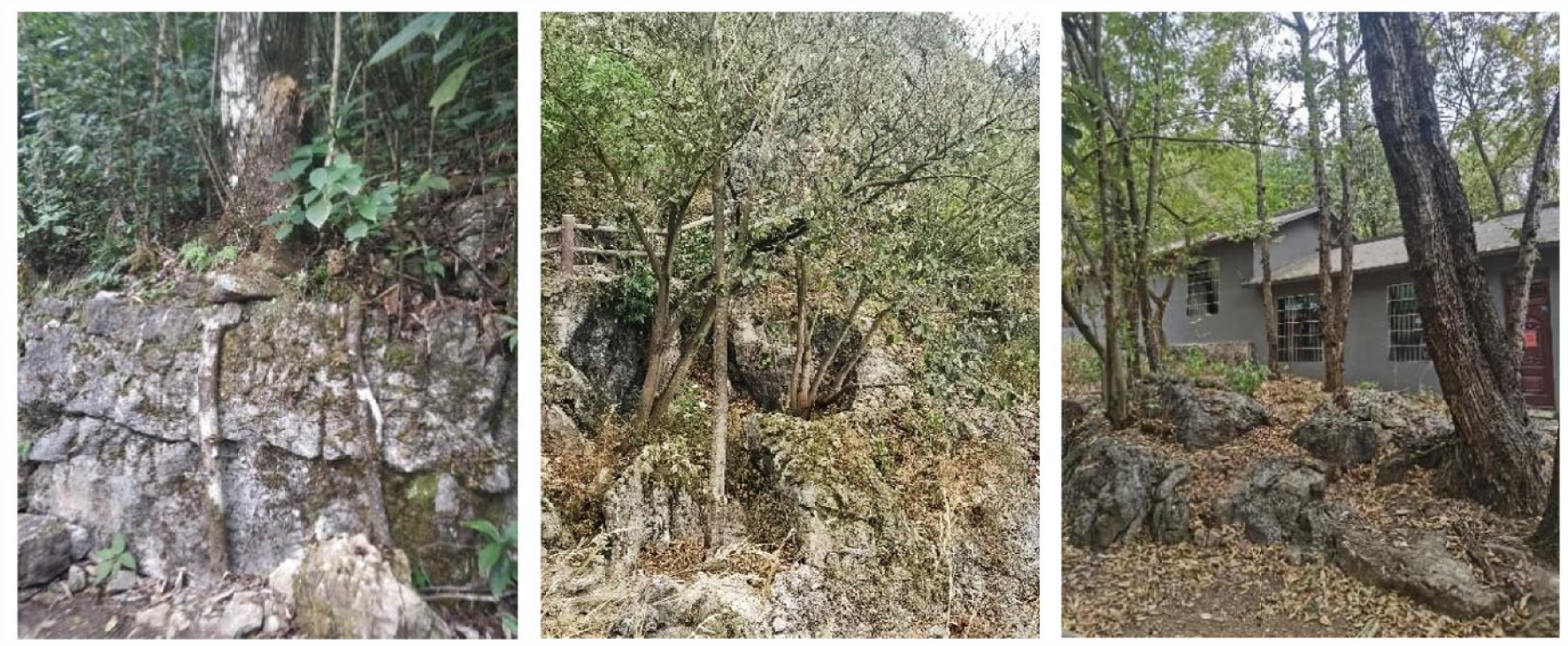
Penetration of bedrock by vegetation roots in karst areas.
Impacts of vegetation restoration on runoff generation and sink processes
Large-scale vegetation restoration alters runoff generation and sink processes, and is bound to have a significant impact on runoff (Huang et al., 2001; Zhao et al., 2014). Under different watershed subsurface conditions, the way and degree of vegetation restoration alters runoff generation and sink processes are different, so the direction and degree of vegetation restoration impact on runoff are also significantly different. As one of the important environmental characteristics of the watershed, the degree of weathering of rocks under different lithological conditions varies, and the thickness and type of weathered crusts developed are different, which affects the soil structure and vegetation type, and then affects the infiltration and flow generation in the watershed (Zhong et al., 2022). In karst areas, lithology controls soil development and the degree and size of bedrock fractures and pipes, resulting in different water storage capacity, permeability, and drainage channels (Lian and Wang, 1998; Luo et al., 2023) (Figure 6). Vegetation restoration, on the other hand, affects runoff generation and sink processes by influencing rock weathering and the structural characteristics of surface karst zones. At the watershed scale, the combination of different lithologies will complicate this problem.
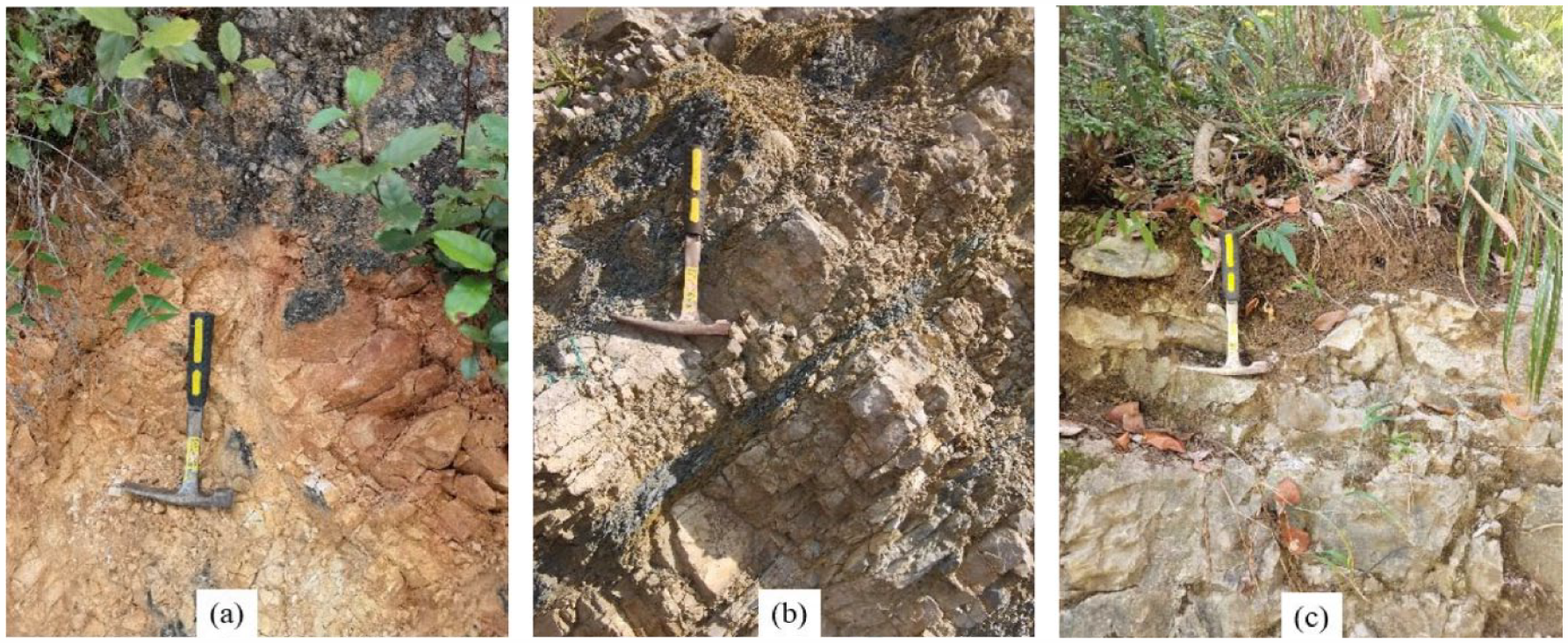
Semi-weathered dolomite (a), interbedded dolomite and muddy limestone (b), and limestone (c) show differences as water storage media.
At present, most of the existing studies focus on the influence of subsurface conditions in karst areas on the flow generation process, especially the type and stage of vegetation restoration, and the geological factors affecting the vegetation restoration itself. However, different vegetation restoration types and restoration situations have more complicated flow generation and subsidence process due to the difference in plant composition and lithology, and it is necessary to conduct research on the influence of geological conditions on vegetation. In addition, the influence of different vegetation types and stages on the runoff generation and subsidence process varies, so it is necessary to study the comparison between multiple vegetation types. At present, there are few studies on the relationship between geological factors and vegetation restoration, and even some studies on vegetation restoration ignore geological factors as the basic driving factor.
The differences in geological factors lead to different vegetation restoration, and different limiting factors for hydrological effects of vegetation restoration. Luo et al. (2023) revealed that geological factors explain 27%–56% of the variation in runoff characteristics values, and each geological factor not only directly but also indirectly affected them. In turn, bedrock can control aboveground vegetation from bottom to top through weathering of bedrock and the bedrock lithology (Hahm et al., 2014; Rempe and Dietrich, 2014). For example, limestone has more fissures than dolomite, this is because of differences in the rocks geological structures (e.g., porosity, crevices) and bedrock geochemistry between limestone and dolomite can affect vegetation growth in karst, which can affect runoff, thereby affecting vegetation water consumption via transpiration, and vegetation growth (Jiang et al., 2020; Li et al., 2017; Liu et al., 2021b; Wang et al., 2018). There was a clear correlation between desertification and lithology, and the carbonate lithological basement has a clear role in controlling the spatial and temporal evolution of land desertification (Bai et al., 2010; Li et al., 2003a). These studies showed that there are differences in vegetation restoration under the influence of different lithologies and geological structures, to the extent that the role of vegetation restoration on runoff was diverse.
This suggests that differences in geological factors also lead to variability in the hydrological impacts of vegetation restoration in different karst areas, so in order to improve the co-evolution of vegetation and runoff, and promote sustainable restoration in karst areas, it is necessary to reveal the complex relationships between geological factors, runoff and vegetation.
Gaps and challenges in research on the hydrological effects of vegetation restoration in karst areas
Lack of studies that synthesize the hydrological effects of vegetation restoration from the perspective of the terrestrial water cycle
The karst landscape of southwest China is one of the largest continuous karst landscapes in the world, characterized by shallow topsoil and high permeability of epikarst zones (Wang et al., 2020; Williams, 2008). Even with abundant precipitation, “engineered water scarcity” (Tan et al., 2021) can easily occur. Vegetation restoration facilitates water storage in the litter and soil layers, but also reduces water loss to the groundwater system through erosional fractures. However, the extent to which vegetation restoration affects groundwater and runoff systems in karst areas is still unclear. At present, related studies mainly analyze the contribution of climate change and human activity factors to runoff changes, but human activities include multiple factors, in addition to vegetation restoration, such as land use changes, human water use, reservoir storage and so on. Moreover, these studies are mostly on single watersheds, but in fact there are obvious spatial differences in the karst environment in terms of lithology, topography, climate, soil, etc, and these differences will lead to obvious differences in the effects of vegetation restoration on runoff in different watersheds. Therefore, a small number of case studies cannot fully illustrate the effects of vegetation restoration on runoff in karst areas. Although there are also some studies that have selected several different watersheds, these watersheds are concentrated in a smaller area with little difference in both climate and subsurface conditions. Therefore, it is not yet possible to say how much impact vegetation restoration has on groundwater and runoff systems in karst areas.
In addition, the increase in vegetation cover caused by vegetation restoration will shade the soil layer and reduce evaporation of soil moisture, on the one hand, and increase soil moisture consumption and reduce soil moisture, on the other hand. In karst areas, the slow rate of soil development and the shallow soil layer led to limited water storage in the soil, and although these areas belong to the humid zone, the soil is still often in a dry state (Li et al., 2018a). The accumulation of litter in karst areas also causes more precipitation to remain in the surface litter and soil, slowing down the loss of soil moisture. This is because vegetation restoration causes the accumulation of deadfall, which increases water storage and has a complementary effect on soil moisture. In addition, the shallow soil layer also causes low soil moisture storage and rapid evaporation, while the canopy shading effect formed by vegetation restoration is more favorable for maintaining soil moisture in karst areas (He et al., 2019). In addition to the above factors causing a soil moisture increase, the karst region in southwest China is subtropical, with rapid vegetation growth and large biomass. The increase in aboveground biomass due to vegetation restoration will lead to a significant increase in vegetation transpiration, which will result in a large depletion of soil moisture (Li et al., 2021). Therefore, the conclusion of the current study on the effect of vegetation restoration on the dynamic balance of soil water is controversial.
The accuracy of monitoring the hydrological effects of vegetation restoration is still a problem
In terms of accurate monitoring of water cycle processes, progress in linking groundwater and vegetation patterns on a large scale has been hampered by the dual surface-subsurface hydrological structure of karst hydrological systems and the lack of higher resolution datasets and models that account for both groundwater and vegetation processes (Bierkens et al., 2015). The collection of field observations is impractical for large regional studies due to the small number of observation sites, making it difficult to identify groundwater-dependent ecosystems (Eamus et al., 2015; Pérez Hoyos et al., 2016). Coupled with the fact that karst areas with significant vegetation recovery are mainly located in humid subtropical climates with high temperatures and rain clouds, the acquisition of high-resolution datasets is challenging. Therefore, there is still a long way to go to improve the accuracy of monitoring the hydrological cycle in karst regions and thus to accurately analyze the hydrological effects of vegetation restoration.
Vegetation restoration and water mutual feedback mechanisms are controversial
Regarding the mutual feedback mechanism between vegetation restoration and water, Liu et al. (2023) showed that water resources can be categorized into precipitation, soil water, groundwater, and surface runoff according to their contribution to vegetation. Among them, soil moisture and groundwater contributed 38.66% to forests and 31.66% and 21.67% to grasslands and croplands, respectively, indicating that forests have greater demand for soil moisture and groundwater than grasslands and croplands. In addition, during the drought period (2009–2010), soil moisture was more important than precipitation, runoff, and groundwater in forests, grasslands, and croplands with 48.67%, 57%, and 41%, respectively, indicating that soil moisture was the most important water resource for vegetation to cope with the drought. Yan et al. (2023) showed that vegetation restoration could significantly increase the water resistance of the 10–20 cm soil layer in the fissured zone, making it more resistant to erosion than the non-fissured zone, thus maintaining soil moisture. On the other hand, the shallow soil layer in karst landscapes has a low water-holding capacity (Butscher and Huggenberger, 2009). Ecological restoration greatly increases vegetation cover and greenness (Delang and Yuan, 2015; Tong et al., 2018; Zhang et al., 2017). At the same time, tree afforestation can increase water consumption and vegetation transpiration, a cascade effect that can affect precipitation. Thus, the mutual feedback between vegetation restoration and water in karst areas is a complex issue that has not been fully resolved.
In conclusion, as one of the largest contiguous distributions of ecologically fragile karst areas in the world (Wang et al., 2003), southwest China has been selected as a major target area for vegetation restoration (Tong et al., 2018). However, there are few studies on how to harmonize the balance between vegetation restoration and water resources, and it is still a challenge to see whether vegetation restoration can have a positive impact on the effective use of water resources.
Carbon sinks and water depletion affected by vegetation restoration need to be studied in depth in terms of spatial scale and precision
In terms of the relationship between carbon sinks and consumption of water resources affected by vegetation restoration, Tong et al. (2018) demonstrated that the implementation of ecological projects increased vegetation growth and carbon storage in the karst region of southwest China. The study analyzed the effects of ecological projects at the county level, and the results showed that the vast majority of counties in the karst region increased vegetation cover and carbon storage due to the implementation of ecological projects. Lou et al. (2023) showed that the enhanced carbon sinks will consume more water, but on the premise of similar climatic and geographical conditions, the significant negative correlation between carbon sink and water resources will gradually weaken and become insignificant as the vegetation restoration improve from approximately 35% to more than 80%. However, the serious drought event had a large influence on the water yield and carbon sink, and the basin with the highest forest coverage resisted extreme drought by consuming more runoff to retain more carbon. Although the use of satellite data allows monitoring of continuous changes in leaf area index and aboveground biomass carbon, it does not reflect information on community species composition and biodiversity. Complementary studies at smaller spatial scales are therefore needed to use temporal snapshots of high-resolution satellite imagery in conjunction with field surveys to accurately assess the benefits of conservation projects and to distinguish between potential threats to carbon sinks at local, regional and national scales from anthropogenic (overuse and conservation) and climate change factors.
Prospects
It is still difficult to conduct a very accurate and comprehensive study on the hydrological effects of vegetation restoration due to the influence of the heterogeneity and vulnerability of karst environments. Currently, the studies on the hydrological effects of vegetation restoration only use PM (Penman-Monteith) and PT (Priestley and Taylor) individual models to show seasonal uncertainty, PML, Bagrov and Budyko, etc., which are of low accuracy and unstable adaptability, only consider static and single factors, and the establishment of dynamic models for the synergistic evolution mechanism of the elements is not yet mature. Zhang et al. (2022) used PML, PM (Penman-Monteith) and PT (Priestley and Taylor) to reveal the dynamic characteristics of the ET and found that the individual models showed seasonal uncertainty. Though the Bagrov model can easily simulate the ETa for the region and has the advantage of less data needs, it is an empirical model (Wan et al., 2016). The model combined with MODIS NDVI cannot simulate the delicate processes for the energy balance and is difficult for finding the mechanism of the ETa response to the vegetation coverage changes. Clarifying the relationship between MODIS NDVI and the ETa needs more controlled experiments in the karst area. Liu et al. (2018c) showed that the runoff exhibited insensitivity to some parameters. Though the optimizing procedure could constrain their ranges, there also exist some differences between the true and the optimized. These slight differences would affect the optimized results of other parameters. So future researchers can combine the evidence obtained by geophysical methods with the results of fieldwork to not only obtain scientific subsurface data, but also improve the accuracy of surface environmental element data and validate their scientific validity. Future studies can use geophysical methods such as seismic wave refraction (Sheriff and Geldart, 1995) and resistivity tomography (Cardareli et al., 2010) as complementary techniques. These techniques are well suited to detect the contrast in physical properties between dissolved rocks and bedrock (Pardo-Iguzquiza et al., 2018) and can provide useful subsurface data and validate the results obtained by remote sensing for subsequent related studies, which will contribute to the understanding of spatial heterogeneity of the karst environmental elements. Finally, it is necessary to strengthen the research on the co-evolution mechanism of karst vegetation, hydrology and surface karst zone, and to establish a dynamic model for the co-evolution of karst ecohydrology and surface karst zone in the study on the hydrological effect of karst vegetation restoration.
Footnotes
Declaration of conflicting interests
The author(s) declared no potential conflicts of interest with respect to the research, authorship, and/or publication of this article.
Funding
The author(s) disclosed receipt of the following financial support for the research, authorship, and/or publication of this article: This work was supported by the Joint Fund of the National Natural Science Foundation of China and the Karst Science Research Center of Guizhou province [grant number U1812401].