




Abstract
Many Chinese cities have implemented the station-based public bike-sharing systems (PBSs). However, the recent spread of the dockless bike-sharing systems (DBSs) has significantly impacted PBSs, which has not been thoroughly investigated in previous research. This study bridges this research gap by examining the spatiotemporal evolution of China’s PBSs, with a particular focus on the changes brought by the entry of DBSs, by analyzing data on the start and end dates of PBSs and DBSs across the country. We utilized logistic regression to identify factors that may influence the decision to discontinue PBS operations, and examined selected representative cities to uncover the underlying structural and political factors affecting PBSs’ persistency. Findings reveal that the entry of DBSs disrupts PBS operations in many cities. PBSs are less likely to cease operation in cities with subways and in coastal areas, but more likely to do so in densely populated cities. Furthermore, technical advancements, operational consistency, adherence to government guidelines, and a well-planned station layout contribute to the continued viability of PBSs amidst the challenges posed by DBSs. Based on these results, we suggest that cities should improve the competitiveness of PBSs through better integration with public transit and optimization of PBS operations.
Introduction
In the past few years, bike-sharing systems have developed rapidly worldwide. As a sustainable and healthy transportation mode, bike-sharing systems have the potentials to release traffic congestion, mitigate air pollution, and improve public health (Ricci, 2015; Yang et al., 2016; Zhang et al., 2015). Currently, there are two major types of bike-sharing systems: (1) the public bike-sharing system (PBS) is a station-based bike-sharing system, which requires users to pick up and return bikes at designed docking stations; (2) the dockless bike-sharing system (DBS), on the other hand, allows users to return bikes at any anywhere, which is more flexible than PBSs (Ma et al., 2020a; Raviv et al., 2013). In China, PBSs are mostly operated by governments or public agencies, and have been operated in most cities for over a decade. DBSs were not operated in Chinese cities until 2016, but rapidly spread to almost all cities in two years (Han, 2020). As a result, the PBSs have been significantly impacted by the emergence of DBSs (Chen et al., 2020a), and many cities even ceased the operation of PBSs after DBSs entered (e.g., Wuhan, Guangzhou, Xiamen, etc.).
China has the world’s largest PBSs and DBSs market. With the popularity of DBSs, many studies have examined the relationship between PBSs and DBSs (e.g., Ji et al., 2020; Lazarus et al., 2020; McKenzie, 2019; Wang et al., 2019, etc.). However, most of them have identified the similarities and differences between both systems in terms of user usage and operations. There is a lack of research examining the spatial-temporal evolution of PBSs upon the entry of DBSs in China at the prefecture city level. In addition, some studies have investigated the impact of DBSs on PBSs by using the historical trip data of both systems, but most studies focus on one specific city, such as Delft (Ma et al., 2020b), London (Li et al., 2019a), Beijing (Chen et al., 2020b), Nanjing (Li et al., 2019b; Ma et al., 2020a), and Hangzhou (Chen et al., 2020c). The evolution of PBSs in different cities are rarely discussed.
To address this gap, this study examines the disruptions caused by DBSs on PBSs in Chinese cities. It aims to answer the following three research questions: (1) How many cities terminated PBS operations after the entry of DBSs, and what are the spatial patterns of these cities? (2) What factors are associated with the cessation of PBS operations upon the introduction of DBSs? (3) What are the underlying structural and political reasons that influence PBSs against DBSs?
To answer these research questions, data were collected on the dates when DBSs entered each city and when PBSs ceased operations. The spatiotemporal pattern of PBSs that discontinued operations upon the entry of DBSs was analyzed. Additionally, a binary logistic regression (BLR) model was employed to examine the factors associated with the termination of PBS operations. In-depth investigations of representative cities were conducted to compare and contrast their PBS operation characteristics, providing insights into the factors influencing the competitiveness of PBSs.
This paper contributes to the existing literature in the following aspects. Firstly, to our knowledge, this is the first study to systematically investigate the evolution of PBSs after DBSs were introduced. The purpose of this study is to examine the impact of DBSs on PBS operations in order to reveal theoretical speculations about whether DBSs pose threats to PBS sustainability. Secondly, in addition to analyzing the number and types of cities that discontinued PBS operations after the entry of DBSs, this study goes beyond descriptive analysis. It used both regression analysis and in-depth case studies to explore potential factors that may affect the persistence of PBS operations. By considering these factors, this study offers theoretical insights and implications for governments’ development strategy on how to enhance the competitiveness and resilience of PBSs in the face of growing DBSs’ popularity.
The rest of this article is organized as follows. The next section is a literature review of the development of PBSs and DBSs in China is described. The following section introduces the data collection, research method and data analytics. The section after that discusses the spatiotemporal evolution of PBSs after DBSs entered in China, analyzes the results of the BLR model, and compares representative cities. The final section summarizes the conclusions.
Literature review
The evolution of PBSs and DBSs in China
Figure 1 plots the timeline of PBS and DBS evolution in China. PBSs have a relatively long history in China since its first launch in Beijing in 2007. Subsequently, Hangzhou and Wuhan started to operate PBSs (Fishman et al., 2013; Zhang et al., 2015), and it is worth mentioning that Hangzhou’s PBSs have grown to 86,800 bicycles and 3,478 stations at the end of 2015, making it the largest PBSs city in China (Chen et al., 2017). In 2012, all tier-1 cities (please refer to Appendix A and Table S1 in Supplemental Materials for the Chinese City Tier Systems) in China and 9 cities in sub-Tier-1 launched PBSs (Zhang et al., 2014). By the end of 2016, China has become the largest country operating PBSs, operating in over 400 cities with 890,000 bikes, 32,000 stations, and around 20,000,000 users (Ma et al., 2019a, 2019b).
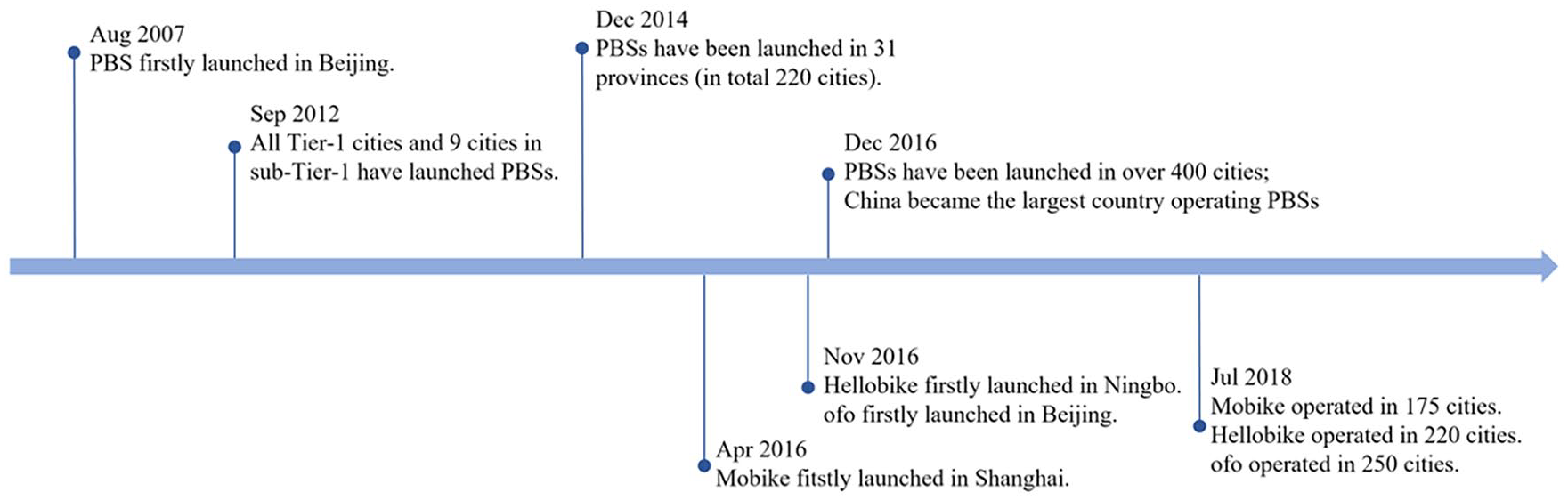
The development of bike-sharing systems timeline in China.a
Compared with PBSs, DBSs have a relatively short history in China but they spread rapidly since their existence. Three of the largest DBSs brands in China are Mobike, ofo, and Hellobike. Ofo was launched in 2014, but it only operated in the Peking University campus and did not operate in cities until 2016 (Gu et al., 2019b). In April 2016, Mobike started operation in Shanghai and was the first DBSs in China that operate in a city (Figure 1). In November 2016, the third DBS company in China, Hellobike, started its operation in Ningbo (Han, 2020). All three companies grew rapidly and entered almost all Chinese cities in two years after their existence. At the end of 2017, there were approximately 16 million DBS bikes in China and more than 106 million users (Du and Cheng, 2018). In July 2018, Mobike, Ofo and Hellobike each have been operated in about 200 Chinese cities.
The relationship between PBSs and DBSs
The emergence and widespread of DBSs brings about significant disruptions to the PBSs, as DBSs provide convenience to users and increase their satisfaction with the service (Gu et al., 2019b). As the market for PBSs have been affected by the rapid expansion of DBSs, a growing number of studies started to compare and contrast the characteristics of PBSs and DBSs. For example, Du and Cheng (2018) summarized four differences between DBSs and PBSs: (1) DBSs enable users to rent and return the bicycle from anywhere; (2) DBSs usually are used through mobile internet, while PBSs require a public bike card; (3) DBSs are invested by private companies, while PBSs are mainly invested by the government; and (4) DBSs are equipped with GPS device, which is more convenient for monitoring and management. Based on the difference between the two systems, Du and Cheng (2018) stated that the convenience and flexibility of DBSs make them more attractive than PBSs. Chen et al. (2020c) compared the user pattern and usage frequency of PBSs and DBSs in Hangzhou, and found that PBSs and DBSs have similar user structure, but different factors are associated with their usage frequency, as PBSs have the advantage of providing good quality at a low cost while DBSs offer a greater degree of flexibility. Ma et al. (2020a) used a geographically and temporally weighted regression model to explore the determinants of user demand for both PBSs and DBSs, and found that PBSs are used more frequently in areas with a low density of recreational points of interest and a high proportion of elderly people. Ji et al. (2020) analyzed the usage regularity between PBSs and DBSs in Nanjing, and found a positive association between “trips during peak morning and afternoon hours” and the regularity of PBSs and DBSs usage, and a negative correlation between “riding distance” and the regularity of both usages.
As evident from the literature presented above, most previous studies either compared and contrasted the characteristics of PBSs and DBSs, or examined factors that affected the usage of both systems. Very few studies focus on the evolution of PBSs, especially concerning whether the popularity of DBSs influences PBSs’ operation. To the best of our knowledge, two recent studies focused on the disruption of DBSs on PBSs. Li et al. (2019a) estimated the effects of DBSs on the PBS in London by a propensity score matching method. They found that the average weekly usage of the PBS was reduced after DBSs entered, and DBSs replaced a part of docking station trips including short duration (0–15 mins) and middle distance (1–3 km). Li et al. (2019b) explored the changes of PBS’s usage in Nanjing after the popularity of DBSs at both the user level and the station level. However, both studies focused on one single city, and did not examine all Chinese cities to explore the universal effect of DBSs on PBSs in China.
To address this gap, this paper aims to explore the spatial and temporal evolution of PBSs after the entry of DBSs. This article takes a more macroscopic view of the evolution of PBSs in mainland China, which helps to understand the impact of DBSs on PBSs and whether the relationship between PBSs and DBSs is one of competition or coexistence.
Factors that influence PBSs and DBSs’ usage
As part of the public transportation system, PBSs play a crucial role and have a significant impact on the travel behaviour of users. Previous studies have examined various factors that affect PBSs’ demand and usage. For example, based on a systematic review of literature, Eren and Uz (2020) identified a variety of factors that may influence the trip demand of PBSs, such as weather, built environment and land use, public transportation, station level, socio-demographic effects, temporal factors, and safety. Via a case study in Hangzhou, Chen et al. (2017) concluded with six factors that are associated with PBSs’ usage frequency, including car ownership, bike ownership, the purpose of trip, familiarity or unfamiliarity with the rental process, satisfaction with the PBS, and familiarity with the distribution of docking stations. Gu et al. (2019a)’s study conducted in Suzhou, China revealed that the usage of the PBS is affected by the metro ridership around bike stations and the distance between bike stations and metro stations. The distribution of stations should be determined by the size and configuration of cities (García-Palomares et al., 2012). By analyzing the dynamics of travel patterns of the PBS in a medium-sized city (Cork), Caulfield et al. (2017) found that in small, compact cities, the average travel time of PBSs was short, and residents have more fixed travel routes. Wu et al. (2021) analyzed the spatial variation relationship between the built environment and the demand for PBSs in Suzhou, and found that the built environment has a positive impact on bike usage in some areas surrounding the urban center.
Regarding DBSs, Xing et al. (2020) used K-means++ clustering to investigate the spatial distribution of DBSs’ usage patterns of trip purposes, and found that on weekdays, users mainly used bikes for five activities, including dining, transportation, shopping, work, and residential places. With GPS-based bike origin-destination data collected in Shanghai, China, Li et al. (2020) examined DBSs’ utilization pattern from the perspective of bikes, and concluded that bikes are serviced exclusively in their own areas rather than being shared within the whole study area. Guo and He (2020) investigated the built environment factors that influenced the integrated use of DBSs and the metro in Shenzhen. Their findings indicated that the construction of transport facilities such as bus stops and dedicated bike lanes would promote integration of DBSs and the metro, whereas densely populated areas and main streets with many intersections would decrease integration (Guo and He, 2020). Chen et al. (2020b) used the binary logistic regression to analyze the group using DBSs in Beijing and found that the preference for DBSs was not related to gender, but to age, education level, and income. Ma et al. (2020b) used the binary logit models to explore various variables that influence modal shift patterns of different bike-sharing systems in Delft, the Netherlands, and found that factors such as no theft or damage problems, good quality of bicycles, as well as the lower cost as compared to other modes of transportation, contributed to the use of PBSs and DBSs.
Although there are many studies examining the factors associated with PBSs and DBSs systems, there is a lack of investigation into factors that influence whether PBSs are more likely to stop operation under the impact of DBSs. Therefore, this study contributes to the existing literature by conducting a regression to examine the factors that might influence whether PBSs stopped operation after DBSs entered, and investigated into some representative cities to uncover potential structural and political mechanisms that make PBSs more persistent under the disruption of DBSs.
Data and methodology
Data collection and cleaning
To understand the spatial-temporal evolution of PBSs under the DBSs disruption in China, we collected PBSs operation data, DBSs launch date, and data that describes the characteristics of each city in 337 Chinese cities. Furthermore, PBS station location in Nanjing and Wuhan was collected for a detailed investigation into these two representative cities.
PBSs operation data and DBSs launch date
PBSs operation data included the dates when PBSs start and stop operations, operational companies, and deposit information. DBSs launch date refers to the earliest entry of one of the three DBSs companies (i.e., Ofo, Mobike, and HelloBike) into each city. The data were collected from multiple sources, including:
(1) ITDP (Institute for Transportation & Development Policy) website: 1 this website reports some information regarding PBSs, including the dates when PBSs start operation, business models, number of stations, deposits, and operating companies. However, not all Chinese cities are reported.
(2) The Bike-sharing World Map: 2 this website lists both PBSs and DBSs information, such as the launch date, terminated time and operational companies.
(3) For the cities not covered in the three above-mentioned sources, we conducted a thorough website search to collect the launch/terminated date of PBSs and the launch date of DBSs, using the keywords “PBSs” + city name or the DBSs companies and city name in Chinese.
Demographics
We further collected data that describe demographic characteristics of each city to examine their association with the likelihood of PBSs ceasing operations, including:
(1) Population density: calculated from total population and area data, both obtained from the CEIC Data. 3
(2) Whether the city has subway systems in operation: the data was obtained from the website. 4
(3) Whether the city is a coastal city: the data was obtained from Baidu Baike, 5 the Wikipedia in China.
(4) The classification of cities (city level): we clarify the city into different classes based on the city-tier classification proposed by the Sub-First Tier Cities Research Institute 6 (please refer to Appendix A in Supplemental Material for more information).
PBS station locations in Wuhan and Nanjing
We collected station locations of PBSs in Nanjing and Wuhan. Due to data limitations, we were only able to collect data for a two-year period in each city. Specifically, PBS station locations in Wuhan for the year 2015 were obtained from the Google Map, 7 and for the year 2017 were collected from the open data source provided by the government. 8 In Nanjing, the station locations data in 2015 were acquired from the SOHU website, 9 while the 2021 data were obtained from the Google Map. 10 Considering the validity of these data, this study focuses on the central urban areas of two cities for analysis.
Methods
Spatiotemporal analysis
This study analyzed the temporal trend of PBS evolution in China by comparing the number of cities with PBSs to the number of cities with DBSs from 2007 to 2022. The spatial pattern is analyzed through visualizing the location of cities that discontinued PBS operations after the introduction of DBSs. The spatiotemporal analysis was conducted in ArcGIS.
Binary logistic regression analysis
We applied the binary logistic regression (BLR) model to investigate factors that influence whether PBSs stop operation after DBSs entered. The dependent variable is a binary variable measuring whether PBSs in a city are still in operation after DBSs entered, where 1 indicates that PBSs were still in operation, while 0 indicates PBSs stopped operating. The BLR model is formulated as:


where Pi presents the probability of PBSs in operation in city i; m is the total number of variables. bm is the coefficient of the mth variable and xim is the mth variable for the ith case. We include five exploratory variables in BLR, including Pdensity (population density), Level_of_c (classification of the city), Subway (whether the city has subway or not), Operator (whether the operator is the government/public agency, or private companies), Deposits (the amount of deposit that users are required to pay in order to use PBSs), and Coastal_c (whether the city is a coastal city or an inland city).
Case studies
To investigate the longevity of PBSs following the entry of DBSs, we selected representative cities and conducted in-depth case studies to analyze the structural and political factors that impact the persistence of PBSs amidst the disruption caused by DBSs. Firstly, we conducted a comparative analysis between PBSs that ceased operations within two years of DBS entry and those that remained operational for a minimum of four years after DBS introduction. Secondly, we examined the spatial distribution of the PBSs stations before and after DBSs entered.
Exploratory data analytics
Spatial patterns of the PBSs and DBSs entry year
Up till November 2022, in total 205 out of 337 Chinese cities have operated PBSs, and most of them are located in the eastern China (Figure 2a). Among them, 100 cities operated PBSs before 2015, and the pioneer cities that launched PBSs including Beijing (launched in 2007), Wuhan, Changzhou, Shanghai, and Hangzhou (all four cities launched PBSs in 2008). All Tier-1 and sub-Tier-1 cities except Hefei have implemented PBSs before 2015. Regarding the spatial pattern of PBSs that stopped operation, in total 75 cities have announced the suspension of PBSs operation by the end of November 2022 (Figure 2b). These cities distributed sparsely across the entire country, and nearly every province has a city that has announced a suspension of the operation.
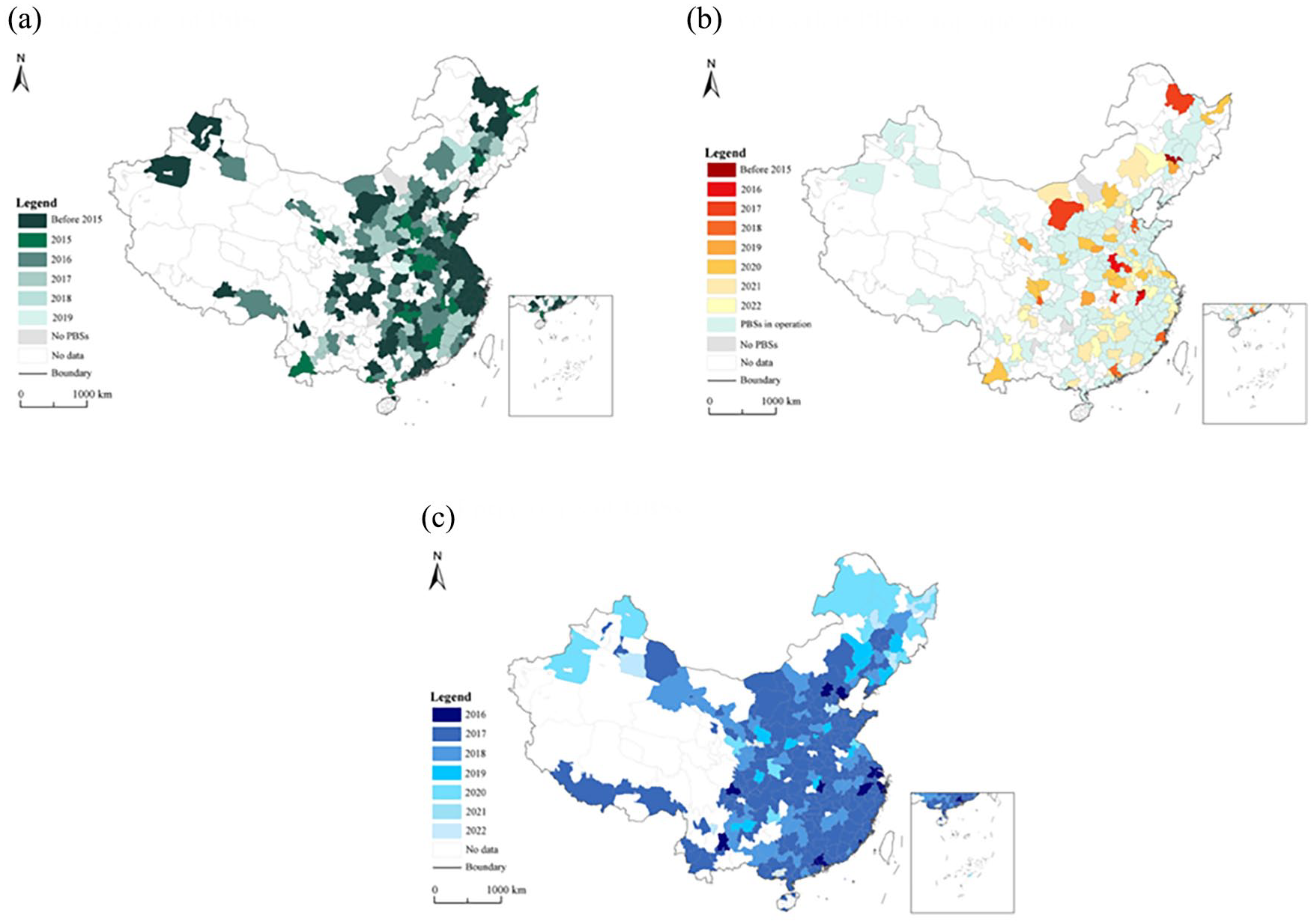
Spatial pattern of the (a) entry years of PBSs, (b) years that PBSs stop operation, and (c) entry years of DBSs.
DBSs have entered all the provinces in Mainland China (Figure 2c), and in total 290 out of the 337 cities have DBSs in operation. Several pioneer Tier-1 cities (e.g., Beijing, Guangzhou, Shenzhen) and sub-Tier-1 cities (e.g., Wuhan, Suzhou, Chengdu, Hangzhou, Ningbo) introduced DBSs in 2016, and after that, DBSs expanded rapidly in 2017 to operate in 187 cities. As the DBSs started to operate in the northeast China (including Heilongjiang, Jilin, and Liaoning provinces) and the northwest China (including Xinjiang Uyghur Autonomous Region) in 2020 and 2021, DBSs have entered most areas of China.
Descriptive statistics of the regression data
The data of the 202 cities with PBSs operation were used for BLR. After removing the cities with empty values, in total 182 cities were used for the regression. Firstly, the correlation matrix (Table S2 in Supplemental Material) is generated to examine the correlation between the independent variables. Results indicate that there is a significantly high correlation between Level_of_c and Subway, so we exclude Level_of_c from the regression analysis in order to avoid collinearity. Table 1 represents all variables used in the BLR model and their descriptive statistics.
Descriptive statistics.
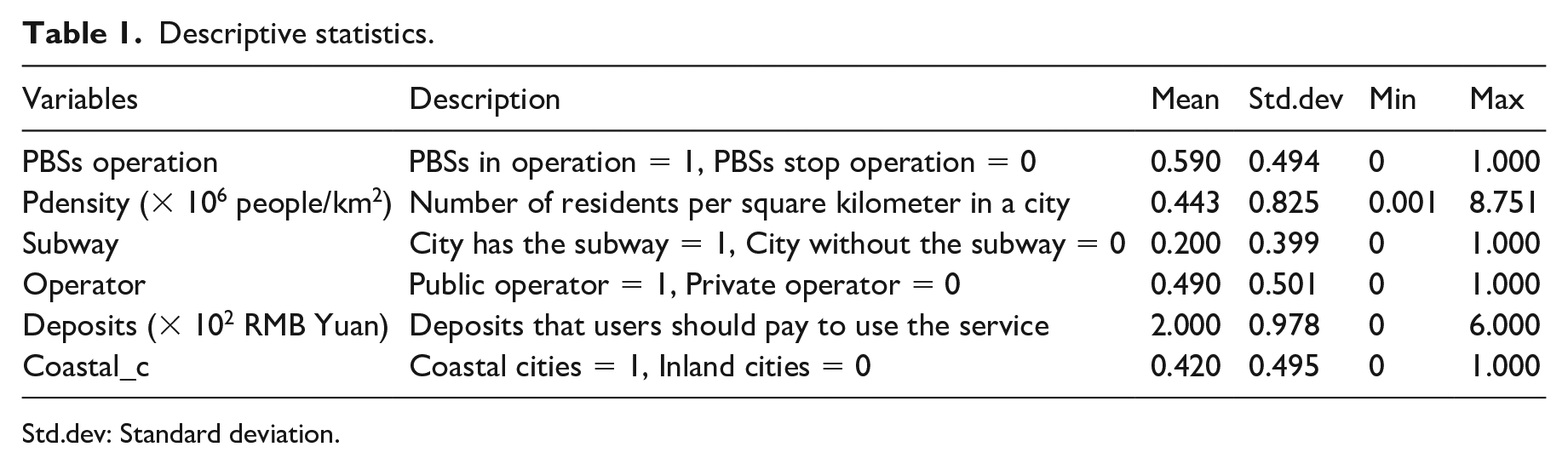
Std.dev: Standard deviation.
Results and discussions
The evolution of PBSs after the entry of DBSs
This research first explored the temporal trend of the number of Chinese cities operating PBSs and DBSs each year between 2007 and 2022 (Figure 3). We found that the number of cities operating PBSs has been growing steadily during 2007 and 2017. In the year 2017, there were 191 cities operating PBSs, indicating that more than half of Chinese cities have supported and operated PBSs as a mode of transportation. Generally, PBSs stations were located around bus stops or metro stations to solve the first- and last-mile problem (Guo and He, 2020). The development of PBSs as a hub for linking alternative modes of transport can help improve the transport system and contribute to the sustainable development of cities (Zhang et al., 2014).
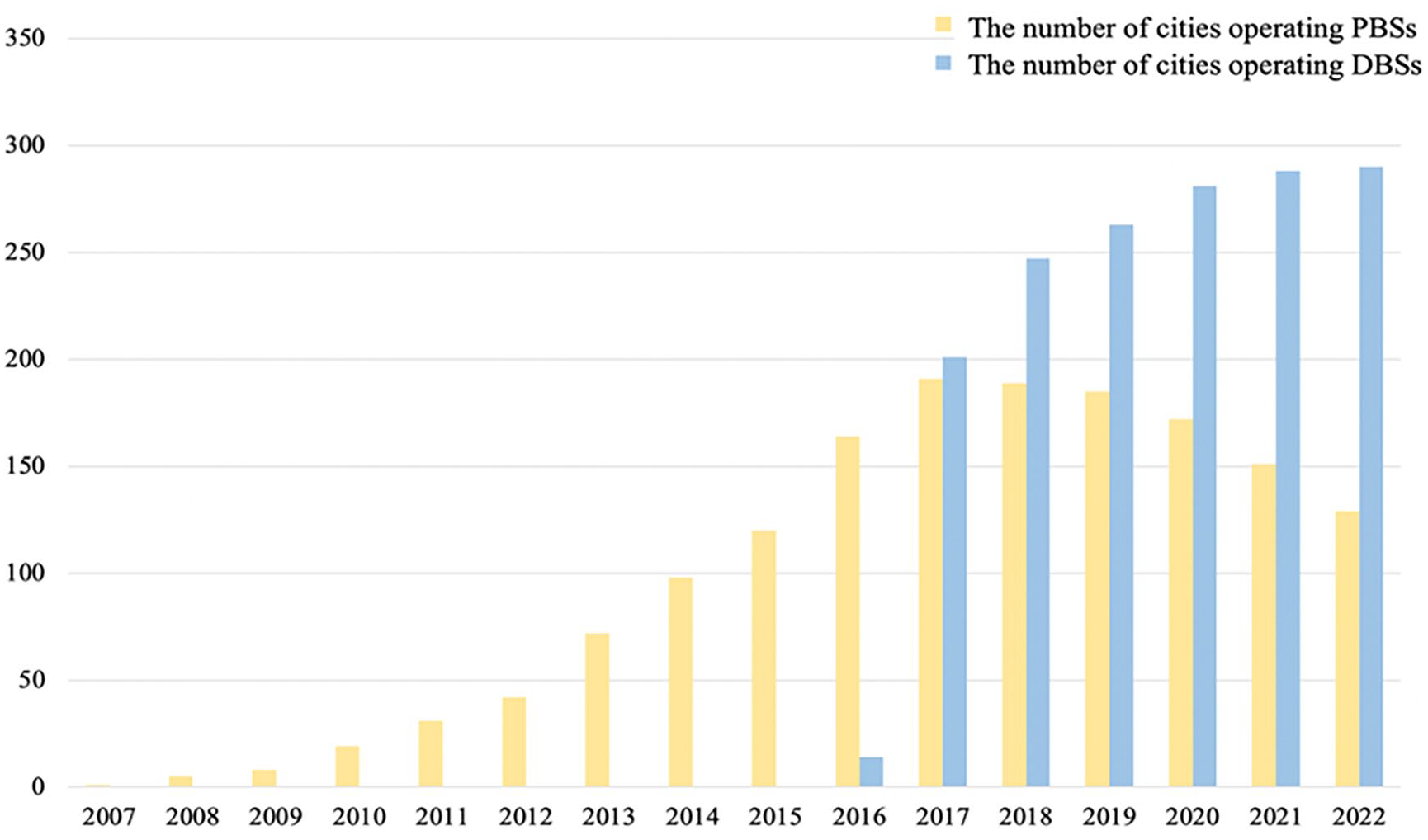
The number of cities operating PBSs and DBSs in China, 2007–2022.
In contrast to the long history of PBSs development in China, we found that DBSs appeared late, but it took only one year to rapidly spread across the country. In 2017, only one year after DBSs entered China, the number of cities operating DBSs has grew from 14 to 201, exceeding that of cities operating PBSs. After that, the number of cities operating DBSs has steadily increased, whereas the number of cities operating PBSs has gradually decreased. It appears that the development of DBSs influences PBSs market operation. These indications are consistent with the existing study conducted by Gu et al. (2019b), which stated that the advantages of DBSs, such as easy access via smartphones, the convenience of pickup and parking, and low costs, enabled them to expand rapidly. Similarly, Li et al. (2019b) found that the station dynamics of PBSs over the days of the week and the number of active days are reduced, which could be explained by the fact that people are more interested in the convenience of DBSs and thus turned away from PBSs.
In order to examine the spatial pattern of PBSs disruption caused by DBSs, we conducted a comparative analysis of the entry time of DBSs and the cessation time of PBS operations. We calculated the number of years after the entry of DBSs that each city discontinued PBS operation (Figure 4). It is found that most cities stop PBS operations 3–5 years after DBSs’ entry, indicating that cities might implement certain strategies to protect PBSs or restrict the sprawl of DBSs in the first 1–2 years after the introduction of DBSs (Gu et al., 2019b; Wang et al., 2019), but the significant disruption of DBSs still result in the shutdown of PBSs in some cities. There are more inland cities that halted PBSs operation after the entry of DBSs compared to coastal cities, indicating that inland cities are more affected by DBSs. Given that DBSs grow faster in coastal cities and thus must have more impacts on the PBSs (Wang et al., 2019), our findings that fewer coastal cities stopped PBSs operation compared to inland cities suggest that coastal cities might have more sustained PBSs, making them exist for more years after the DBSs entered.
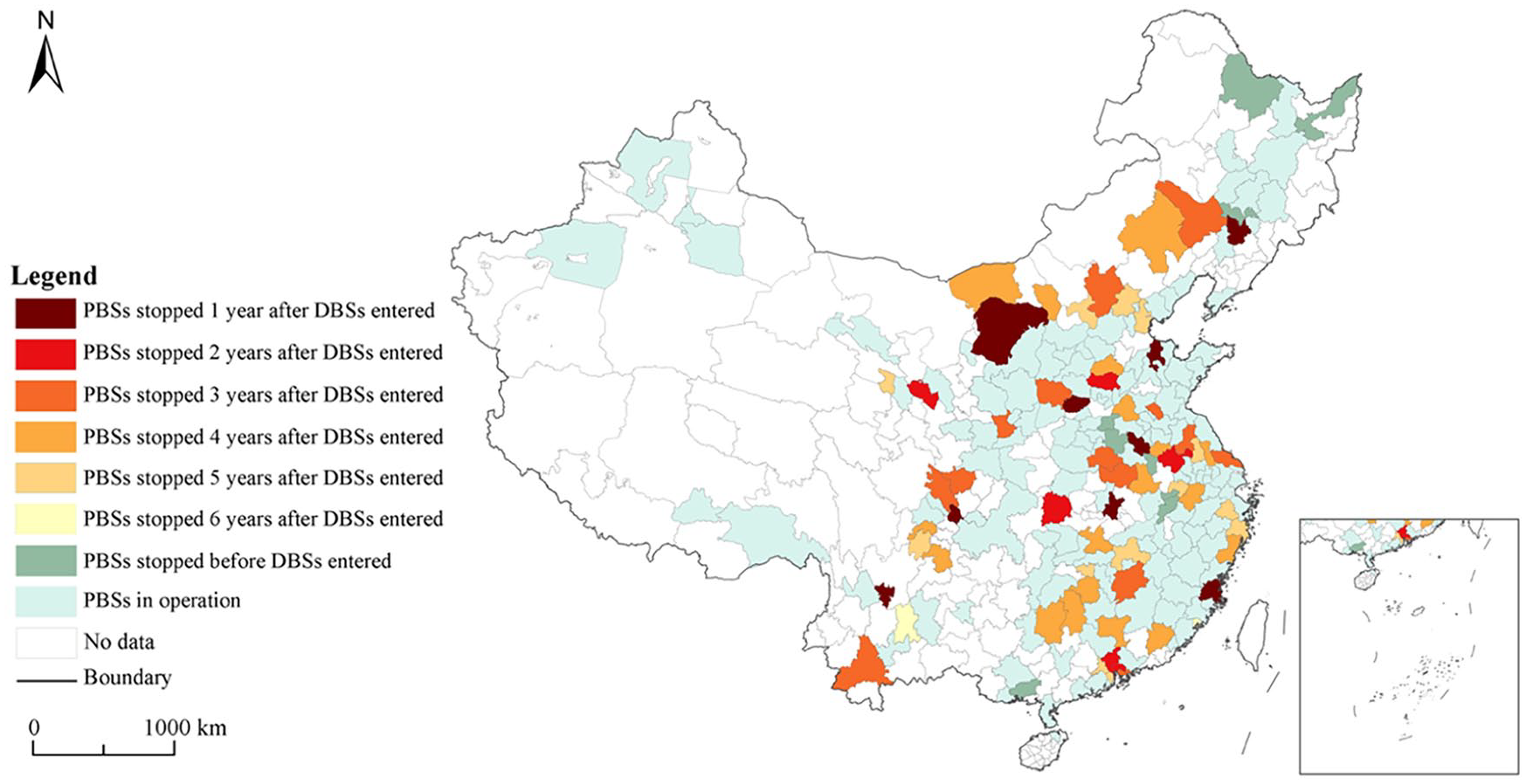
Impacts of DBSs entry on PBSs in Chinese cities.
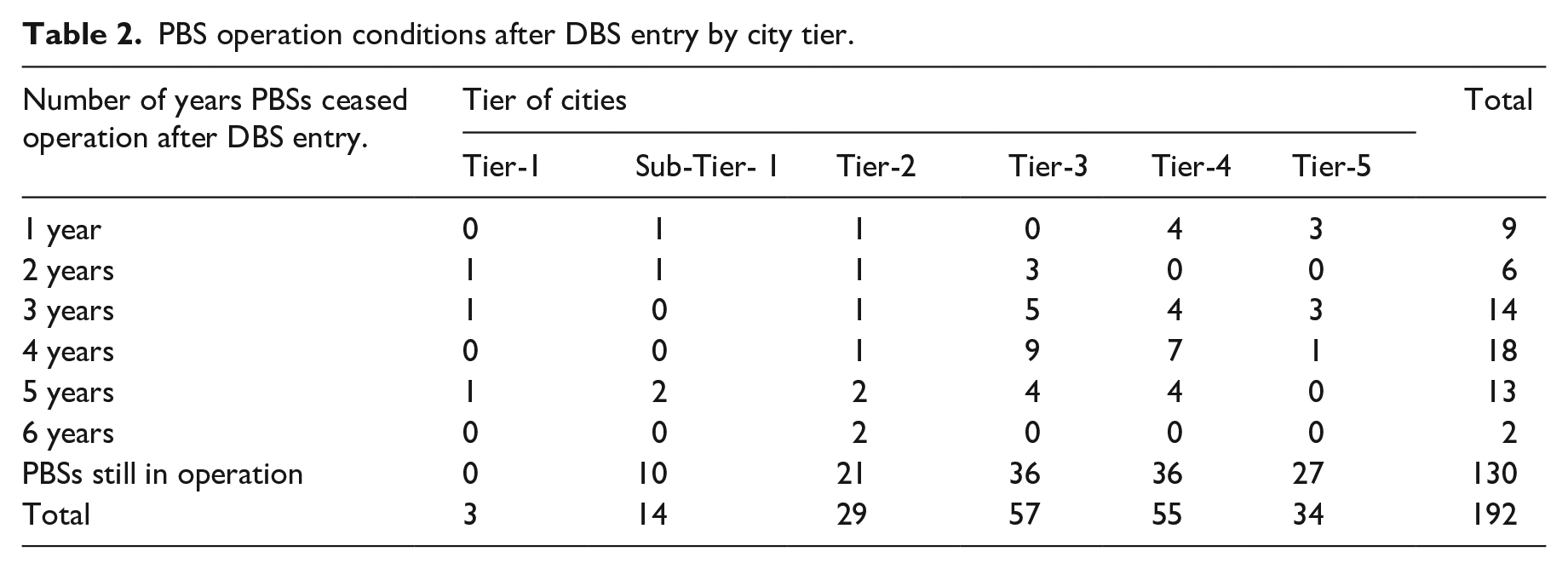
To further investigate how the cities with different urban development levels might behave differently regarding PBSs’ persistency, we examined cities in different levels (Table 2). Among the 62 cities that stopped PBSs after DBSs entered, most of them are from Tier-3 and Tier-4 classes. Moreover, we found that 8 cities have stopped PBSs before DBSs entered, including 2 cities (Kaifeng and Zhoukou) in Tier-3, 1 city (Tongling) in Tier-4 and 5 cities (Heihe, Siping, Chizhou, Qinzhou, and Jiamusi) in Tier-5. These findings indicate that large, more dense cities might have a more competitive PBS. However, we also need to admit that some cities in Tier-1 and Tier-2 also stop PBSs’ operation. For example, Guangdong (Tier-1), Dongguan, and Wuhan (both sub-Tier-1) are among the earlier groups to operate and also to stop PBSs; Shenzhen (Tier-1), Wenzhou, and Nantong (both Tier-2) stopped PBSs 3–4 years after DBSs entered. The possible reason could be that the operation of PBSs may be influenced by various factors, such as weather condition, built environment and land use, and public transportation and station level (Caulfield et al., 2017; Chen et al., 2017; Eren and Uz, 2020; Wu et al., 2021). More in-depth analysis should be conducted to reveal factors that might be associated with the PBSs evolution after DBSs entered.
PBS operation conditions after DBS entry by city tier.
These findings have significant implications for the future development of China’s bike-sharing systems in terms of the coexistence between PBSs and DBSs. Firstly, on one hand, the proliferation of DBSs is itself a public transport strategy to promote sustainable urban development. The high flexibility and convenience of DBSs compensate for the limited range of services offered by PBSs and also increase the efficiency of use in China’s bike-sharing market (Chen et al., 2020a; Gu et al., 2019b). Our findings also suggest that the trend of DBSs development is unavoidable. On the other hand, our analysis reveals that many cities keep operating PBSs even under the threat of the DBSs. Many previous studies also confirmed the advantages of PBSs regarding the good quality at a low cost, higher levels of government support, and important connections between public transport stations and dense employment areas (Chen et al., 2020c; Lazarus et al., 2020; Ma et al., 2020a; Zhang et al., 2014). Considering that both PBSs and DBSs have their own advantages (Du and Cheng, 2018), the future development of bike-sharing systems in China should consider the synergistic development of PBSs and DBSs. Secondly, according to a comparative analysis of the spatial pattern of bike-sharing systems, the entry of DBSs has influenced the operation of PBSs in many cities, particularly in inland cities. Therefore, it is necessary to incorporate policies or strategies to promote the competitiveness of PBSs and encourage the potential collaboration between PBSs and DBSs, especially in inland cities. For example, given that PBSs are used more frequently in low-density areas (Ma et al., 2020a), an equity spatial distribution strategy is necessary that establishes more PBS stations in low-density areas to improve urban equity and both systems have complementary advantages.
Factors that influence PBSs after the entry of DBSs
The BLR model is then applied to examine different factors that may affect the persistence of PBSs under DBSs disruption. The dependent variable is whether PBSs in a city are still in operation after DBSs entered. According to the Hosmer–Lemeshow Test (P = 0.636 > 0.05), the model is an effective method to represent the relationships between variables and makes a good interpretation of the data.
As indicated by the regression results (Table 3), Pdensity, Subway, and Coastal_c have significant correlations to the dependent variable at least 0.1 significance level. Firstly, the association between the population density and PBSs in operation is negative (B = −1.051, OR = 0.350) and significant (P = 0.013 < 0.05), indicating that an increase of one unit in population density is associated with a 65% reduction in the probability that PBSs will continue to operate. The evidence reveals that cities with a high population density are more likely to terminate PBSs than those with a low population density. The reason might be that when the population density is high, there is a greater demand for bike-sharing, but the number of docked bikes is limited in a city’s PBS, and therefore PBSs cannot meet the demand for bikes in large-sized cities with high population density (Wang et al., 2019). Secondly, the model results present that the likelihood of PBSs operating in cities with subways is 2.453 times greater than the likelihood of PBSs operating in cities without subways (OR = 2.453). It means that PBSs are more persistent in cities with subways and better urban transportation systems. This result is consistent with the reality that most cities have set up docking stations around bus stops or metro stations to improve the multi-modal transportation and the sustainable transportation development (Gu et al., 2019a; Ma et al., 2020b; Shaheen et al., 2012). Last but not least, cities in coastal areas are 1.841 times more likely to keep the operation of PBSs than inland areas (OR = 1.841). This result is consistent with the findings from Figure 4.
Results of the BLR model.
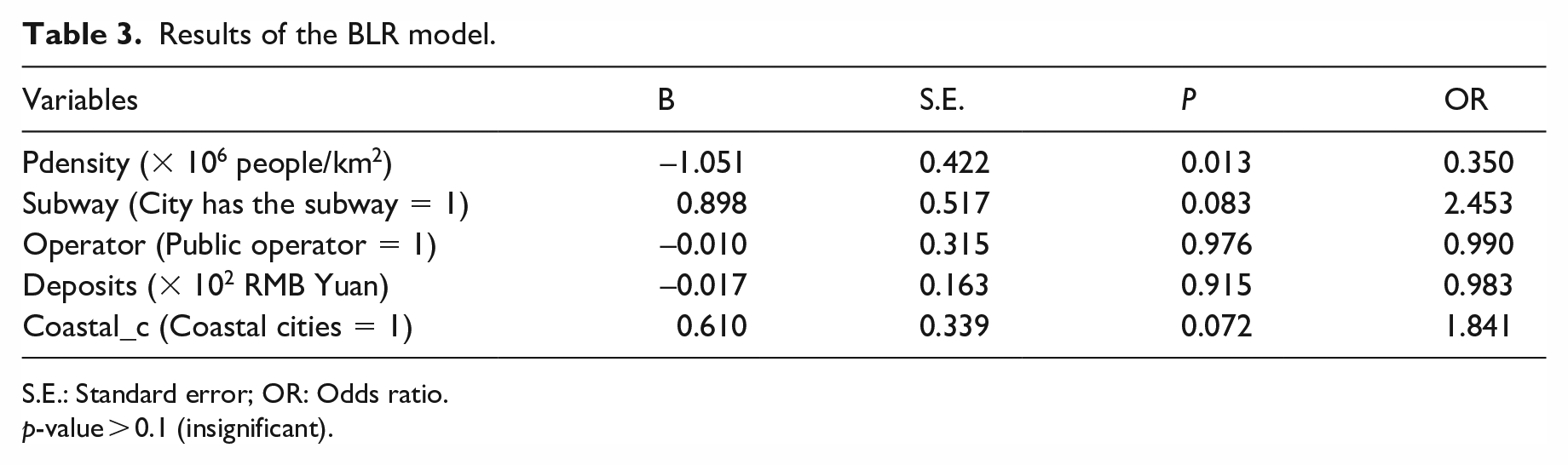
E.: Standard error; OR: Odds ratio.
p-value > 0.1 (insignificant).
Detailed investigation into four representative cities
This section provides an overview of the characteristics and timelines of PBSs in Chizhou, Wuhan, Xiamen, and Nanjing. We delve into the structural and political factors that potentially influence the persistence of PBSs within these cities. Furthermore, we compare the spatial diffusion of docking stations in Wuhan and Nanjing to investigate how the spatial layout of PBS stations may impact their long-term viability.
Structural and political factors
To investigate the underlying structural and political reasons that may affect the operation of PBSs within cities, we selected four representative cities that exemplify different scenarios of PBS evolution. Chizhou and Wuhan were chosen as cities where PBSs ceased operations before and within one year of DBS entry, respectively, representing instances of less sustained PBSs. Conversely, Xiamen and Nanjing were selected as cities where PBSs remained operational for six years after DBS entry and are still in operation, respectively, representing cases of more persistent PBSs. The timelines illustrating PBSs and DBSs evolution of the four cities (Figure 5) reveal a long-standing presence of sufficient support from local governments and significant demand from citizens. Through a comparative analysis of city characteristics and the temporal evolution of their PBS operations (Table 4), we identified three key factors that can impact the continued success of PBSs. These factors include technical advancements, operational consistency, and adherence to government guidelines.
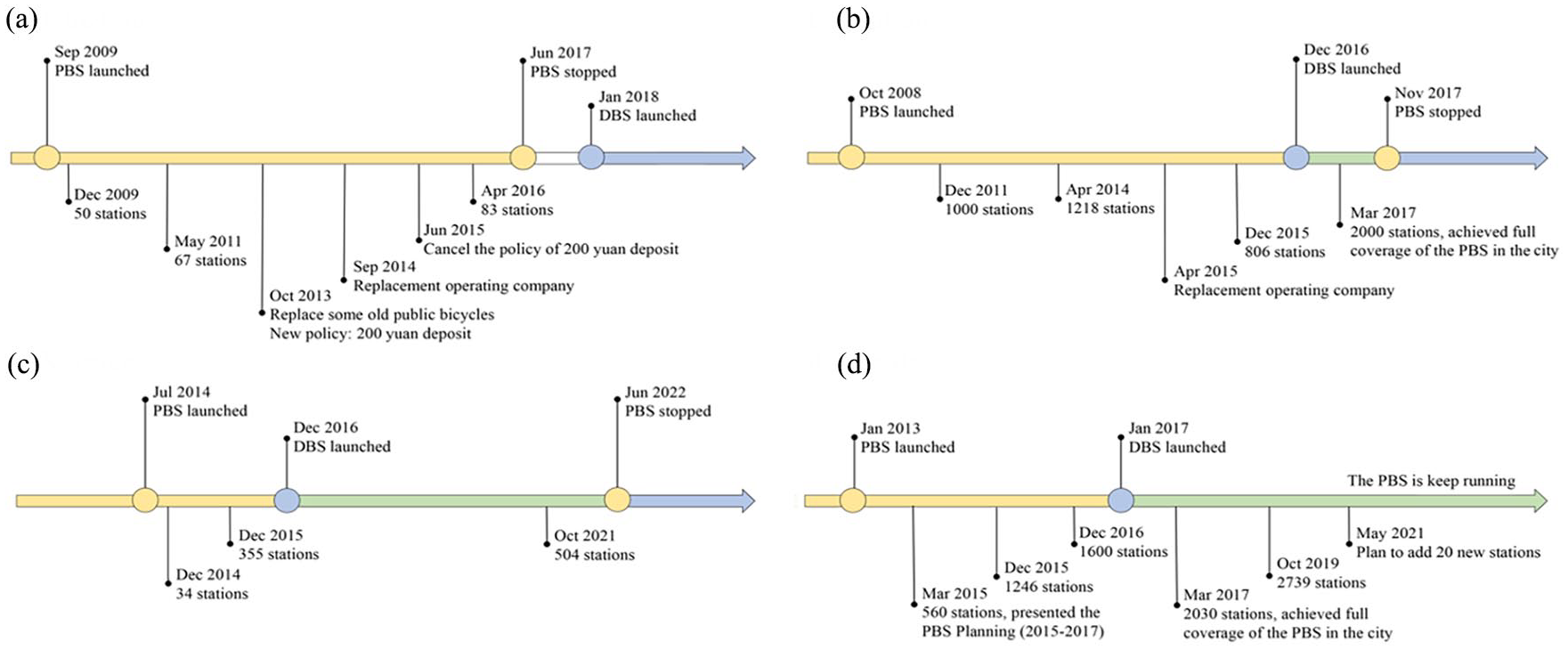
Timelines of PBSs and DBSs evolution in four cities: (a) Chizhou, (b) Wuhan, (c) Xiamen, (d) Nanjing.
Demographics and characteristics of PBSs of the four representative cities.
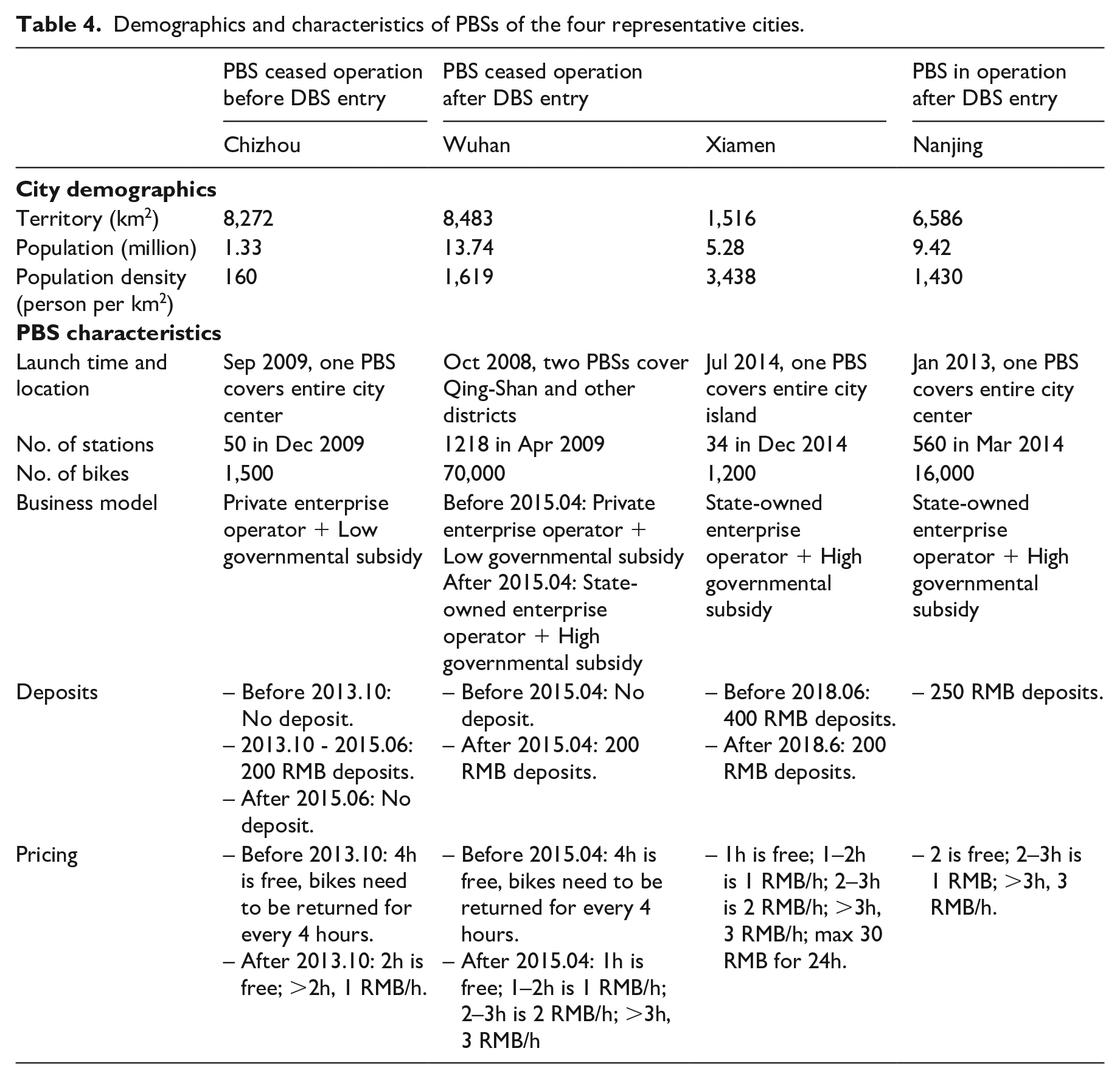
Firstly, lack of technical advancement is one potential reason that Chizhou stopped the PBS early, even before DBSs entered. PBS facilities in Chizhou are of poor quality. There is neither automated self-service nor radio-frequency identification (RFID) equipment at most stations, and as a result, users cannot use smart cards or smartphone payments. Since these facilities have become old and unmaintained, most residents were unwilling to rent bicycles, and therefore, the PBS was terminated in 2017. By contrast, PBSs both in Xiamen and Nanjing have developed technical upgrades and equipment maintenance for docking stations and bikes. For example, PBSs in both cities have installed a smart system that people can rent bikes via an app by scanning a code, eliminating the need to use the smartcards. These advanced technologies support PBSs in Xiamen and Nanjing to operate longer after DBSs entered.
Regarding operational consistency, Xiamen and Nanjing are more consistent in their operations, as both PBSs are operated by a state-owned enterprise (Table 4). However, the operators of the PBS in Wuhan have undergone several changes. At first, Wuhan’s PBS was managed by two private companies in 2008, including XINFEIDA and LONGQI, and their systems were not interoperable, which means that the members of one system cannot use the other. Thus, people must rent and return bikes from stations belonging to the same company, which also reduces the efficiency of bicycle use. Then, XINFEIDA became the dominant operator and monopolized the entire PBS market in Wuhan in 2013. However, due to a lack of funding for the PBS in operation, this project faced abandonment and then was eventually taken over by a state-owned enterprise (Wuhan HUANTOU company) with high-level governmental subsidies in 2015. The new operator developed PBSs and increased the number of stations to 2,000 within three years, but the PBS was significantly affected by DBSs and stopped operation in November 2017.
For government guidelines, Nanjing is represented as one of the successful cities currently operating PBSs in China. After DBSs entered in January 2017, the usage of the PBS in Nanjing decreased, but the government and the operator have implemented a number of approaches to improve the competitiveness of the PBS. For example, (1) reducing the cost for users: the operator has introduced a swipe code no-deposit usage model on the Alipay app; (2) increasing operating funds: the government opens up paid operation and maintenance services and leases out advertising space at bike stations through auctions and tenders; (3) rebalancing operations: staff work to restore the number of bikes to target values at each station based on route arrangements, thereby increasing the efficiency of bike use.
Three typical patterns are observed among the four representative cities, such as technical advancements, operational consistency, and government guidelines. We found that Chizhou’s PBS stopped before DBSs entered due to the lack of facilities and technology. After DBSs entered, despite the PBS in Wuhan having high quality facilities and technical support, it ceased operations within a year under inconsistent operators. On the other hand, both PBSs in Xiamen and Nanjing have technical advancements and operational consistency under DBSs disruption. Therefore, their PBS operations are more persistent and have continued to operate for six years and are still in operation respectively. Additionally, the effective government guidelines have helped the PBS in Nanjing become one of the successful cities currently operating PBSs in China.
Spatial layout
To further explore how the spatial layout of the PBSs stations might possibly influence their persistency, we compared the docking station allocations before and after the popularity of DBSs in Wuhan (PBSs stopped 1 year after DBSs entered) and Nanjing (PBSs remain in operation) respectively. Under the PBSs planning support (2015–2017) by governments, both cities have established more than 2,000 docking stations by the end of 2017, which have basically covered the entire city. Figure 6 shows the distribution of station dynamics in 7 main districts of Wuhan (covering 955 km²) and 6 main districts of Nanjing (covering 787.45 km2). It is obvious that the docking stations in Wuhan distributed concentrated than in Nanjing, as in total 85 docking stations in 2015 were distributed in the Wuchang district and Jianghan district (Figure 6c), and additional docking stations were built around the original stations until 2017 when the PBS has stopped with a total of 1,736 stations (Figure 6e). In Nanjing, the docking stations (Figure 6d and 6f) were widely distributed across the main urban districts from 619 stations in 2015 to 1,003 stations in 2021.
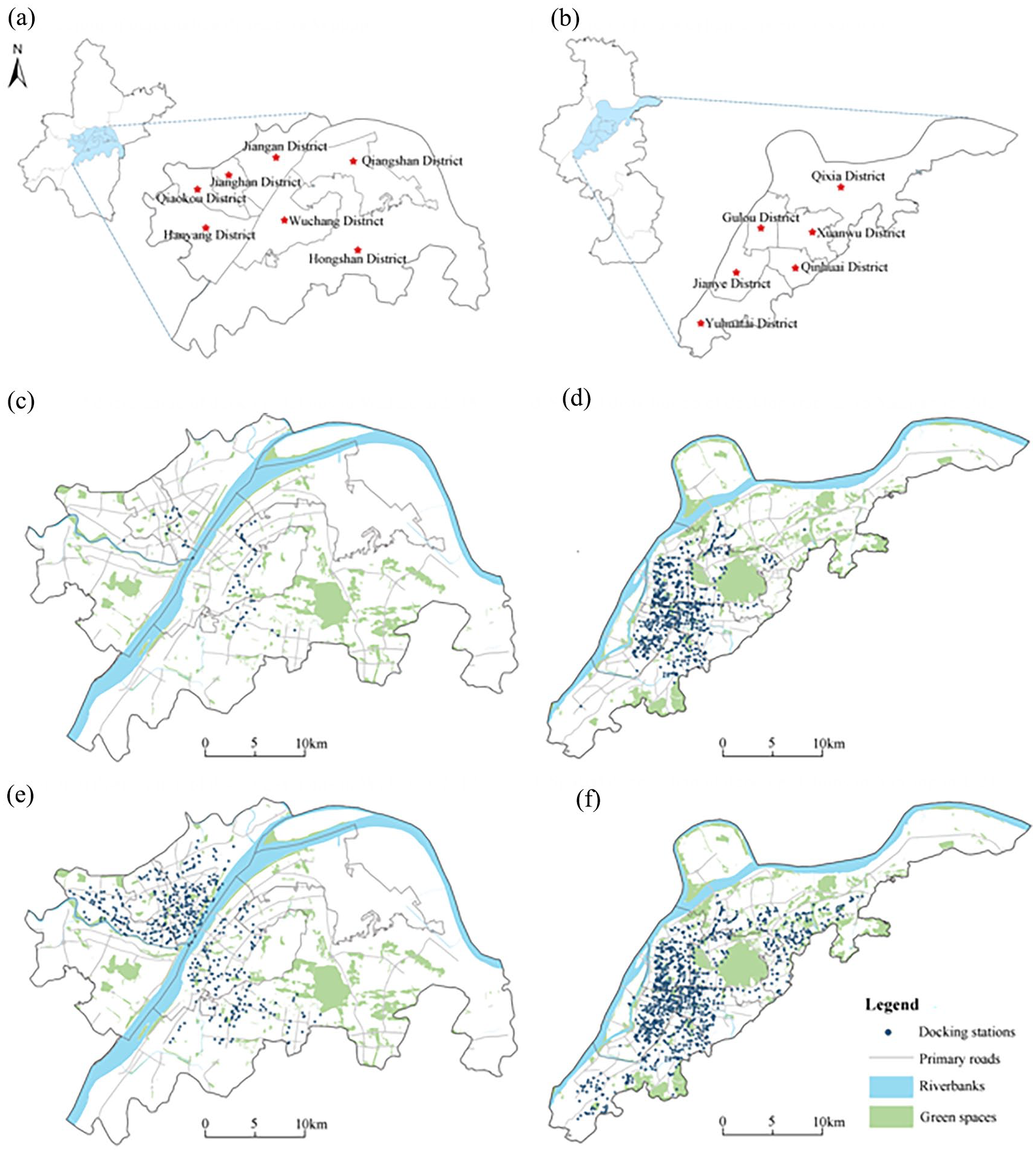
Spatial distribution of docking stations in Wuhan and Nanjing before and after DBSs entered. (a) Location of main urban districts in Wuhan. (b) Location of main urban districts in Nanjing. (c) Spatial distribution of docking stations in Wuhan in 2015. (d) Spatial distribution of docking stations in Nanjing in 2015. (e) Spatial distribution of docking stations in Wuhan in 2017. (f) Spatial distribution of docking stations in Nanjing in 2021.
From the case of the operation of PBS in Nanjing, we concluded that the reasonable allocation of docking stations can improve the competitiveness of PBSs under the DBSs disruption, which could be explained by two findings from the previous studies: (1) the number of PBSs stations and the scope services of PBSs are smaller than that of DBSs because PBSs require a lot of funds for their construction and maintenance (Gu et al., 2019b); and (2) the popularity of DBSs brings the issue of parking, which blocks public space and hinders the flow of users (Chen et al., 2020a; Su et al., 2020), thereby reducing the operational efficiency of PBSs. Regarding the docking station allocations, bike redistribution is critical to customer satisfaction and is an essential strategy to promote public transport integration (Zhang et al., 2014). In the future, bike-sharing systems will take actual urban situations into account and distribute stations rationally, thus improving the equitable development of urban transport networks.
Conclusion
This study provides valuable insights into the spatiotemporal evolution of PBSs in China and the impact of the emergence of DBSs on PBS operations, through examining the temporal trends, spatial patterns, and factors influencing the persistence of PBSs. Our findings indicate that 62 out of 205 cities terminated PBS operations after the entry of DBSs. The disruption to PBS operations caused by the popularity of DBSs is inevitable, but the coexistence of PBSs and DBSs can improve the equity of urban public transport by combining their strengths. Interestingly, cities with subway systems and those located in coastal areas exhibit a lower probability of PBS cessation. On the other hand, cities with higher population density are more likely to experience a discontinuation of PBS operations. The synergistic development of PBS and DBS is the main trend for the future development of bike-sharing systems. Furthermore, our analysis reveals that factors such as advanced technical support, operational consistency, adherence to government guidelines, and a reasonable allocation of docking stations contribute to the competitiveness and continued operation of PBSs.
The findings of this study provide valuable implications for the planning and management of PBSs and DBSs. Firstly, our findings reveal that PBSs in many Chinese cities have been negatively affected by the increasing popularity of DBSs, which could cause a waste of existing PBS infrastructure. Even though PBSs are not as flexible as DBSs, the station-based operation model has its own advantages. For instance, through placing docking stations in historically underserved areas, PBSs could contribute to a more equitable transportation system. In addition, the existence of docking stations could also provide more reliable services and better bicycle parking management. City governments should leverage the advantages of PBSs to improve the equality and equity of urban transportation network. Secondly, considering the positive association between the presence of subway systems and the persistence of PBSs, cities should focus on optimizing the spatial distribution of docking stations to ensure better integration with existing public transit networks. By strategically locating docking stations in proximity to subway stations and key transit hubs, cities can enhance the convenience and accessibility of PBSs for commuters, thereby promoting their long-term viability and integration into the broader urban transportation ecosystem. Lastly, careful adjustment of the operations of PBSs is necessary. Technical upgrades, system maintenance, stable operators, adherence to government guidelines, and the rational allocation of docking stations are key considerations in ensuring the long-term success of PBSs.
It is worth mentioning that, although the study focused on the Chinese context, the methods and policy implications can be applied to other study areas as well. Admittedly, this paper has some limitations that imply future research. First, the data for some cities are incomplete due to the fact that some of the websites were invalid. The incompleteness of data limits the scope of the analysis to some extent, but since we were able to collect the data for most cities of the entire country, our findings are robust and reliant. Secondly, this study focuses on the description of PBSs evolution and the explanation of factors that influence that, rather than the prediction of the future development of PBSs. Future research could leverage models like machine learning to make forward-looking judgments on future developments by reviewing the past development of the systems. Finally, the COVID-19 pandemic was not considered as an influencing factor in this study as it is out of the scope of this paper, but future research could explore the different effects of the pandemic on DBSs and PBSs.
Supplemental Material
sj-docx-1-tus-10.1177_27541231231196221 – Supplemental material for The spatial-temporal evolution of public bike-sharing systems in China: The disruption of dockless bike-sharing emergence
Supplemental material, sj-docx-1-tus-10.1177_27541231231196221 for The spatial-temporal evolution of public bike-sharing systems in China: The disruption of dockless bike-sharing emergence by Ziyu Zhou, Scarlett Ting Jin, Jinzheng Jiang and Hui Kong in Transactions in Urban Data, Science, and Technology
Footnotes
Declaration of conflicting interests
The author(s) declared no potential conflicts of interest with respect to the research, authorship, and/or publication of this article.
Funding
The author(s) disclosed receipt of the following financial support for the research, authorship, and/or publication of this article: This study is supported by Science, Technology and Innovation Commission of Shenzhen Municipality (Grant KCXFZ20201221173613035) and the National Natural Science Foundation of China (Grant 42071367).
Supplemental material
Supplemental material for this article is available online.
Notes
References
Supplementary Material
Please find the following supplemental material available below.
For Open Access articles published under a Creative Commons License, all supplemental material carries the same license as the article it is associated with.
For non-Open Access articles published, all supplemental material carries a non-exclusive license, and permission requests for re-use of supplemental material or any part of supplemental material shall be sent directly to the copyright owner as specified in the copyright notice associated with the article.
