



Abstract
In recent years, with the development of information technology and the promotion of low-carbon concept, bike-sharing has gradually emerged in Chinese cities and become one of the daily travel modes for residents. Meanwhile, the research on bike-sharing travel behavior has become a hot topic in the field of urban transportation planning. However, due to the language barrier, relevant Chinese language literature is often neglected in the existing studies. To fill this gap, this paper provided a review of the Chinese literature that examines bike-sharing travel behaviors. Through bibliometric analysis, we found that recent papers in this area focused on the spatiotemporal characteristics, influencing factors and demand forecasting of bike-sharing trips. Further, we summarized the new data and methods adopted and the main findings obtained in these researches. In response to the current status of relevant studies, we concluded our insights on planning for a low-carbon cycling environment. Finally, we suggest that future directions should include the mining of socio-economic attributes of individual bike-sharing users, the influence of humanistic perception factors on bike-sharing trips, and the bike-sharing travel behavior in the post-pandemic era in China.
Introduction
Global climate change has become a major challenge facing mankind in the 21st century (Mortiz and Agudo, 2013). In recent decades, the greenhouse gas emissions have increased rapidly, which poses a threat to the Earth’s life system. Therefore, tackling climate change has become an international consensus. In December 2015, countries around the world signed The Paris Agreement issued by the Intergovernmental Panel on Climate Change (IPCC). The protocol proposed that the global temperature rise should not exceed 2°C and should be kept below 1.5°C. Eventually, the world will achieve carbon neutrality by 2050 (Wang et al., 2021; Zeng et al., 2022). In this context, China has put forward a major strategy of “emission peak and carbon neutrality”. According to the data of the International Energy Organization (IEA, 2018), nearly a quarter of carbon dioxide (CO2) emissions in 2016 came from the transportation sector. Although the share of CO2 emitted by China’s transportation sector is currently not too high compared to the world average, its growth rate is much higher than that of other sectors. In recent years, due to the rapid increase in the number of motor vehicles and the unreasonable structure of transportation modes, carbon emission in the transportation sector has been increasing at an annual rate of 5% in China (Liu et al., 2021c), which poses severe challenges to the emission reduction in China’s transport field (Wang et al., 2018).
In 2020, the State Council of China issued the Action Plan for Carbon Dioxide Peaking Before 2030, which clearly proposed the action for promoting green and low-carbon transportation. In addition to expanding the application of new and clean energy (e.g. electricity, hydrogen power, bio-liquid fuels, etc.) in transportation, this action plan also specifies accelerating the construction of green transport infrastructure and improving the services of urban public transport, thus optimizing the urban travel structure and increasing the proportion of low-carbon and sustainable travel.
According to Chris Bradshaw’s prioritization of green tools, bicycle is the second most green vehicle after walking (Ding et al., 2003), which has been widely considered as a flexible, healthy and low-carbon transportation mode (Ellison and Greaves, 2011; Fishman et al., 2014; Rixey, 2013). Over the past decade, with the support of the sharing economy concept and the technologies such as GPS, Internet and mobile payments, bike-sharing services have gradually spread worldwide and become an essential component of public transport systems in many megacities (Fishman, 2016; Li et al., 2021). The advantages of low cost and convenience in bike-sharing systems provide an alternative mode for short-distance trips, thus facilitating the last-kilometer connection to the metro or bus and enhancing urban transport resilience (Chen et al., 2019; Cheng et al., 2022; Si et al., 2019). Many empirical research have showed that bike-sharing systems in China have played an important role in promoting sustainable and low-carbon travel (Li et al., 2021; Luan et al., 2020; Zhou et al., 2018b). However, the development of bike-sharing in China still has lots of challenges. For instance, the fleet size of shared bikes exceeds the urban capacity, the untimely scheduling of bikes leads to blocked sidewalks, and the damaged or abandoned bicycles affect the cityscape (Gu et al., 2019). Moreover, the incomplete construction of cycling-friendly environments inhibit the willingness of residents to cycle, resulting in a relatively low proportion of bicycle travel compared to other modes of travel (Shu et al., 2019). Hence, an in-depth understanding of bike-sharing travel pattern and the influence mechanisms in China is essential to optimize the management and operation of bike-sharing and improve the benefits of green transportation infrastructure construction, thus supporting the goal of carbon peaking in the transport sector.
Although several studies have conducted systematic reviews of the current status and evolution of bike-sharing systems (DeMaio, 2009; Fishman, 2016; Gu et al., 2019; Shaheen et al., 2010), the relevant Chinese literature is often neglected by researches from other countries due to language barriers. To fill this gap, this study organizes and reviews the Chinese language literature on bike-sharing travel behaviors, highlighting the new data and new methods adopted, as well as the new findings on low-carbon city planning in Chinese context. The remainder of the paper is composed as follows. The next section provides an overview of the evolution of bicycle in China, followed by a section conducting a bibliometric analysis of bike-sharing travel studies in the Chinese literature. Based on the results of bibliometric analysis, we next present the new data and methods applied in the relevant papers. The following sections summarize the main findings obtained from the two main research areas: the spatiotemporal patterns and influencing factors of bike-sharing travel. The next section discusses the insights for low-carbon cycling environment planning. The final section concludes the current research gaps and future research directions.
The evolution of bicycle in China
From the emergence of the first bicycle to the present, the evolution of bicycle in China can be divided into the following stages (Table 1):
1) Initial growth stage (the 1860s–1960s): Since bicycle was first introduced into China, it was only used as a means of transportation by high-income people and had low popularity among the general public. After the founding of People’s Republic of China, bicycle ownership began to grow slowly.
2) Rapid growth stage (the 1970s–1995): Following the introduction of China’s reform and opening-up policy, socio-economic improvements were made and the average national income increased. During this period, bicycles became one of the important household consumer goods, and the number of bicycles continuously grew. The bicycle ownership reached a historical peak in 1995, with an average of 170.64 bicycles per 100 households (Figure 1a).
3) Decline stage (1996–the 2000s): After entry into the 21st century, China’s motor vehicles developed rapidly and bicycles were hit by the “motorization wave”. On the one hand, the growth of national economy made residents pay more attention to the quality and speed of their travel. This prompted the popularity of motor vehicles among the public (Figure 1b) and the decrease in the share of bicycle travel. In addition, the increase in the number of motorized cars had affected the cycling experience, such as the encroachment of bicycle lanes by cars, which threats to cycling safety (Liu and Yang, 2016). These reasons have squeezed the development space of bicycles, and the traditional bicycles were declining.
4) Bicycle sharing development stage (the 2010s–present): with the promotion of sharing economy and the advocacy of green commuting, bicycles have begun to show a trend of return and revival. In general, bike-sharing systems in China have evolved successively from docked bike-sharing to dockless bike-sharing. Nowadays, both kinds of bike-sharing systems still operate in many Chinese cities and profoundly influence the daily travel activities of residents, for example by providing an alternative to motor vehicles for short-distance trips and facilitating last-mile connections to metro or bus (Lin et al., 2019).
The key events in the evolution of the bicycle in China.
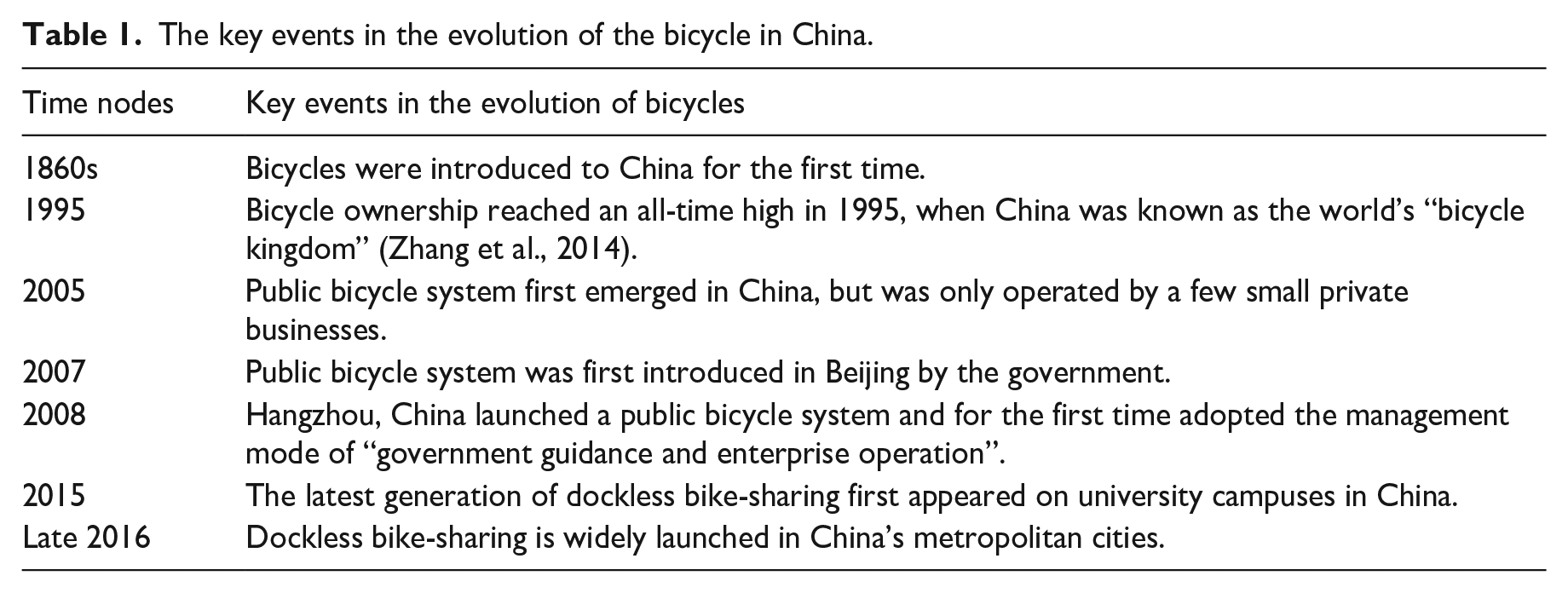
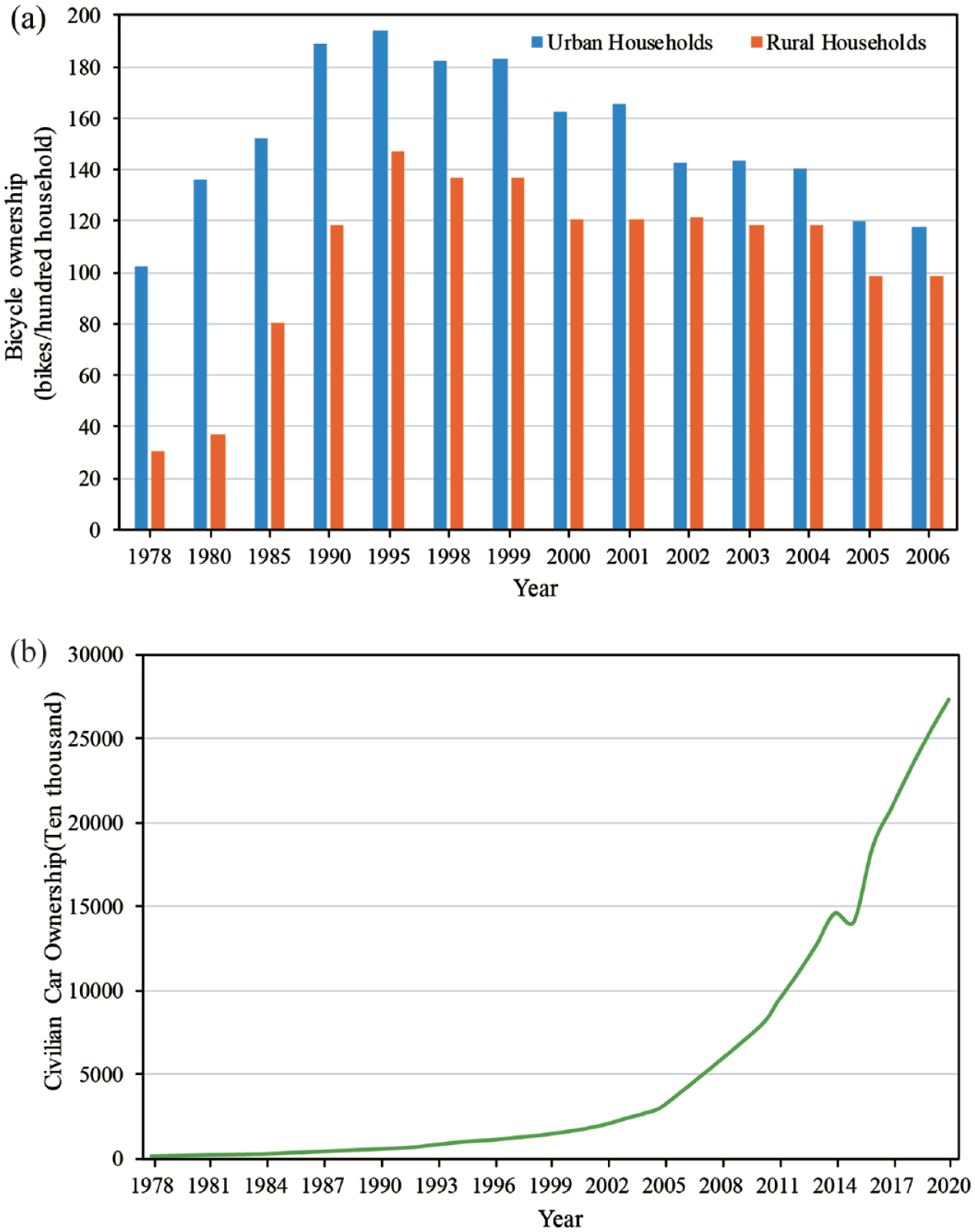
(a) Change in bicycle ownership per 100 urban and rural households in China. (b) Change in civilian car ownership in China.
The public bike program was first introduced in China in 2005. At that time, it was only managed by a few small private enterprises, and did not cause much social response (Zhou, 2012). In 2007, the Beijing municipal government took the lead in introducing a public bicycle system in preparation for the 2008 Beijing Olympics. However, after the Olympics, this system stopped operating due to low usage (Gong and Zhu, 2008). In 2008, Hangzhou, China launched a public bicycle rental system and first put forward the management mode of “government guidance and enterprise operation”. Since then, public bicycle systems have been incorporated into the urban public transportation system (Zhou, 2012). Later, public bike systems were successively put into operation in Beijing, Shanghai, Guangzhou, Wuhan and other cities, which means that the public bicycle systems in China have entered a new development stage.
In 2015, with the development of Internet technology and sharing economy, dockless bike-sharing first appeared on Chinese university campuses. After one year, dockless bike-sharing services were initially launched by two start-up enterprises – OFO and Mobike – and became popular nationwide (Shen et al., 2018; Yin et al., 2017). Compared with the docked bike-sharing, dockless bike-sharing have the advantages of high accessibility, station-less parking and mobile payment (Li et al., 2021; Lin et al., 2019; Yin et al., 2017). Hence, the Internet-based dockless shared bikes were quickly taken over the majority of the public bicycle market share upon introduction and become a new generation of bicycle transportation in China (Li et al., 2021; Lin et al., 2019). According to the 2017 White Paper of bike-sharing and Urban Development, the emergence of dockless bike-sharing has reduced the proportion of the motorized travel from 29.8% to 26.6%. It shows that bike-sharing trips have contributed to the promotion of low-carbon travel, reducing energy consumption, and alleviating traffic congestion (Li et al., 2021; Lin et al., 2019; Fishman, 2016; Zhang et al., 2014). Afterwards, due to some problems arising from the management and operation of dockless bike-sharing (e.g., operators defaulting on user deposits, untimely dispatching of bicycles blocking traffic etc.), the total fleet size of bike-sharing was strictly regulated by the governments in China. However, according to data released by the Ministry of Transport, the number of shared bikes in China still increased from 16 million in 2017 to 19.45 million in 2020, indicating that shared bicycles have become one of the important modes of travel in many cities. Figure 2 shows the number of docked and dockless bike-sharing in some Chinese cities, most of which have hundreds of thousands of shared bikes. The top five cities are Shanghai, Wuhan, Beijing, Chengdu and Nanjing.
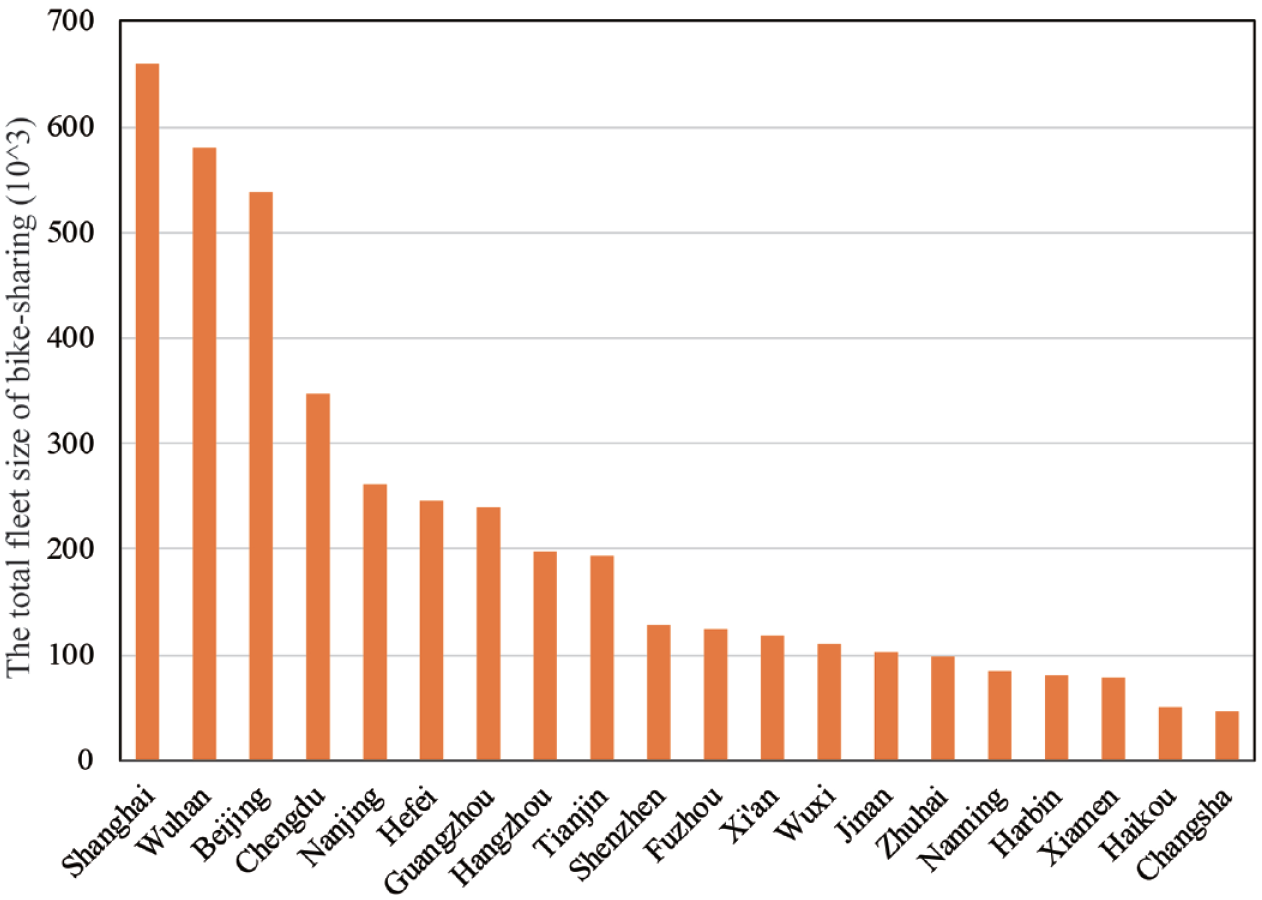
The number of dock and dockless bike-sharing in major Chinese cities.
Trend of bike-sharing research in Chinese literature
Literature retrieval
To systematically review the trends of bike-sharing research in Chinese literature, we collected relevant papers published from 2005 to 2021 from the China National Knowledge Infrastructure (CKNI). CNKI is the world’s largest continuously and dynamically updated full-text database of Chinese academic journals, which includes more than 7400 important academic journals in China. We selected the journal indexed by SCI, SSCI, CSCD and CSSCI from the CKNI datasets as the sources for information retrieval. Given that researchers have used various terms for bicycles in different periods, we used bicycle-related words as keywords and travel behavior related words as qualifiers for joint retrieval. The retrieval condition was set to “KY” (i.e., keywords) and “TKA” (i.e., title, keywords and abstract), and the matching method of search terms was set as fuzzy search (see Appendix 1 for details). After removing the literature that did not fit the theme and duplicates, a total of 240 papers were collected, 162 of which were related to bike-sharing travel.
Bibliometric analysis
Figure 3 shows the amount of bicycle-related publications from 2005 to 2021. Before 2017, the number of literature tends to increase slowly. Afterward, with the launch of dockless shared bikes in China’s megacities, bicycle travel received widespread attention and the number of related papers increased sharply. After 2020, due to the impact of COVID-19 and the stabilization of bike-sharing services, the number of relevant publications declined. In general, the research on shared bikes occupied almost a large part of the bicycle field, especially during the period when dockless bike-sharing were popular. In recent years, the number of bike-sharing-related literature accounts for nearly 80%, indicating that bike-sharing has become an important direction of bicycle research.
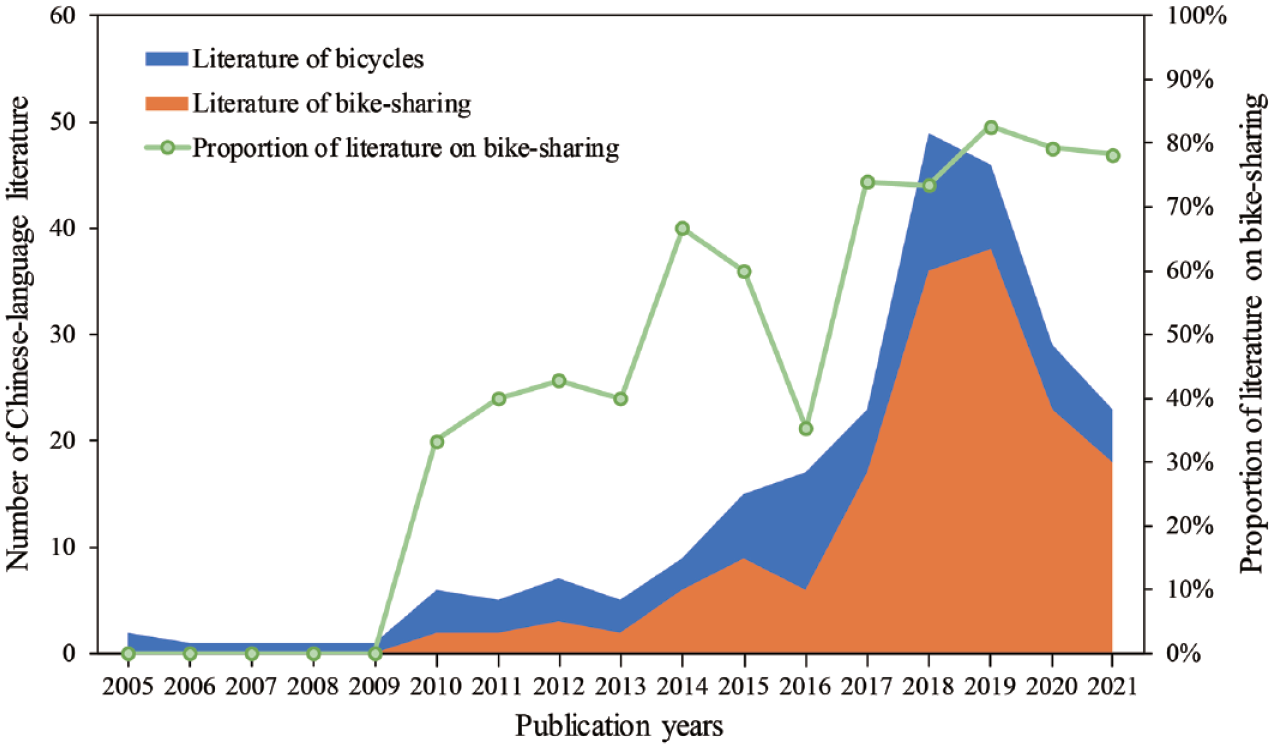
The number of core Chinese language literature related to bicycle travel from 2005 to 2021.
To further explore the research themes and frontiers in the field of bike-sharing travel, this paper conducted keyword co-occurrence analysis and cluster analysis using CiteSpace, a widely used software for the visual exploration of scientific literature.
Keyword co-occurrence analysis
Table 2 shows the top 12 keywords with the highest frequency and highest centrality in the studies of bike-sharing travel in China from 2005 to 2021, respectively. In regards to high-frequency keywords, it can be seen that in addition to the terms highly tied to bike-sharing travel (e.g., “bike-sharing”, “urban traffic” etc.), “influencing factors” (including “usage intentions” and “built environment”), “demand forecast” and “low carbon” are the main focus of relevant research in China. These papers often employed “big data” generated by bike-sharing users as the dataset source for their studies. Moreover, “Hangzhou”, one of the early successful implementers of public bicycles in China, is frequently used as a case study in these studies.
The top 12 keywords with the highest frequency and centrality in Chinese papers related to bike-sharing travel from 2005 to 2021.
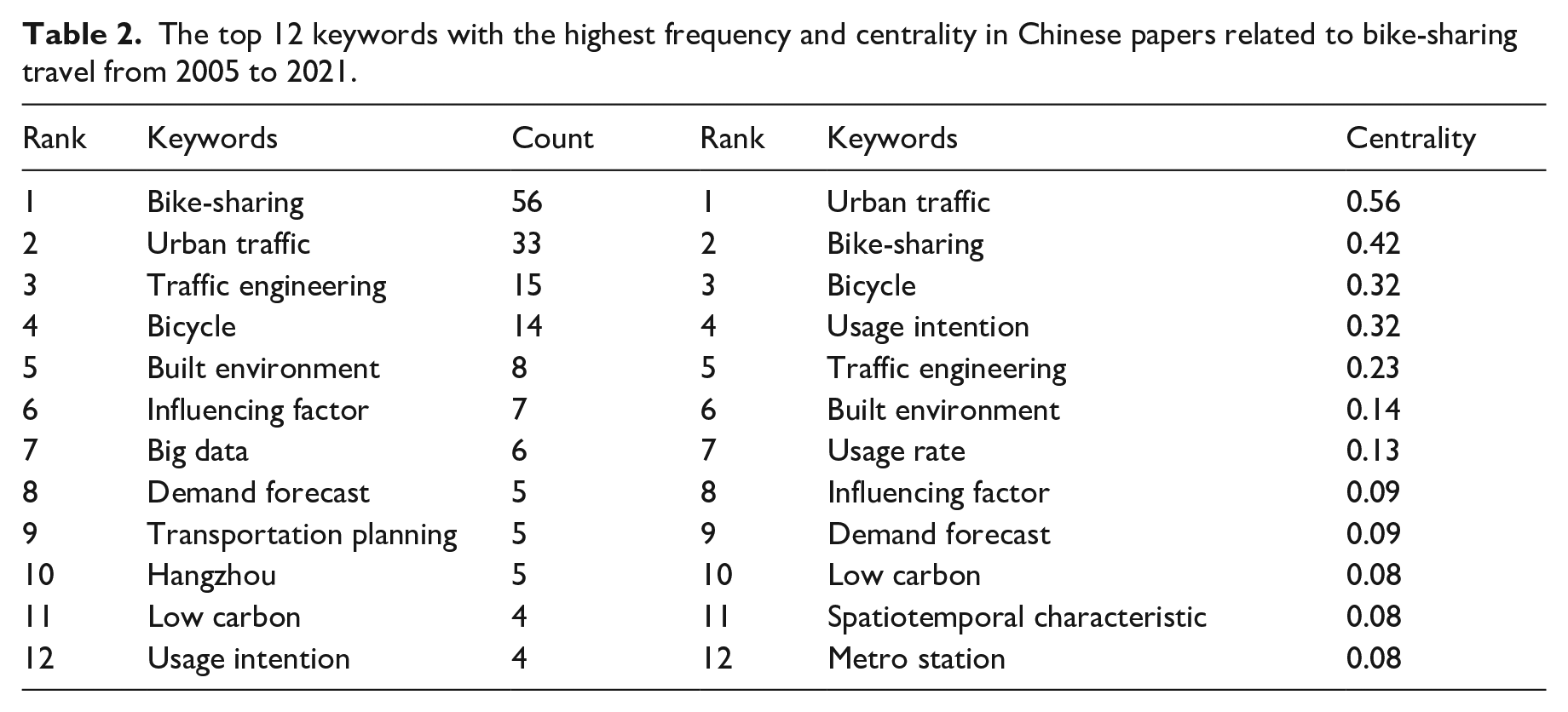
In the result of the co-occurrence analysis in CiteSpace, keywords with high centrality indicate that they tend to appear in papers on different topics (Chen, 2016). As observed in Table 2, related researches often discussed together the subjective (e.g., “usage intention”) and objective (e.g., “built environment” and “metro station”) factors that influence bike-sharing cycling behavior. Also, “usage rate” is a common indicator used to quantify bike-sharing trips in these studies. Additionally, the analysis of “spatiotemporal characteristics”, “influencing factor” and “demand forecast” are the main direction of relevant studies.
Keyword cluster analysis
The basic principle of keyword cluster analysis is to divide the input research literature into different manageable units, analyze the relationship between different members, and objectively infer important topics about each group to understand the prevailing trends in research (Tang, 2010). The CiteSpace software provides three algorithms for keyword clustering: latent semantic indexing, log likelihood ratio (LLR) and mutual information. In this paper, LLR was selected for classification statistics, because it can generate high-quality clusters reflecting a unique research aspect (Chen et al., 2010). Modularity (Q) and Weighted Mean Silhouette (S) can be used to measure the effectiveness of clustering mapping. Q > 0.3 means that the results have a significant clustering structure. S > 0.7 represents that that the cluster members have certain similarity and homogeneity. In this study, Q = 0.8224, S = 0.9625, indicating that the clustering result is convincing.
Table 3 shows the seven main keyword clusters with group sizes more than 10. The silhouette scores for each cluster are greater than 0.5, indicating that the alternative labels for each cluster have good intra-class similarities. Among them, the largest keyword clusters, #0 (bike-sharing), contains alternative label “spatial characteristics”, which suggests that exploring the spatial distribution of bike-sharing trips is a hot topic of research in this field. Cluster #1 (microscopic behavior), Cluster#2 (built environment) and Cluster #3 (low carbon) are related to the factors influencing bike-sharing trips. Cluster #1 focuses more on subjective choices and intentions (e.g., alternative label “hybrid choice model” is widely used to explore individual travel behavior), while Cluster #2 and #3 pays more attention to the objective built environment. Cluster #4 (non-motor vehicle revival) are associated with the optimization of non-motorized transportation systems. Cluster #5 (influence factors) can be regarded as the intersection and expansion of Clusters #0, #1, #2 and #3, which explore the spatial and temporal variation in the impact of different factors on bike-sharing trips. The minimal cluster, #6 (supply-demand relationship), is relevant to the modeling and forecasting of supply and demand for bike-sharing usage. Notably, although the alternative labels “green travel” (in Cluster #0) and “low carbon” (in Cluster #3) have similar semantics, they are classified in different clusters, implying that these themes frequently serve as a motivating factor for studies on bike-sharing trips. Meanwhile, these labels are also strongly related to the purpose of the related research, namely to increase the proportion of non-motorized transport trips to promote sustainable urban mobility.
Main keyword clusters in the bike-sharing field.
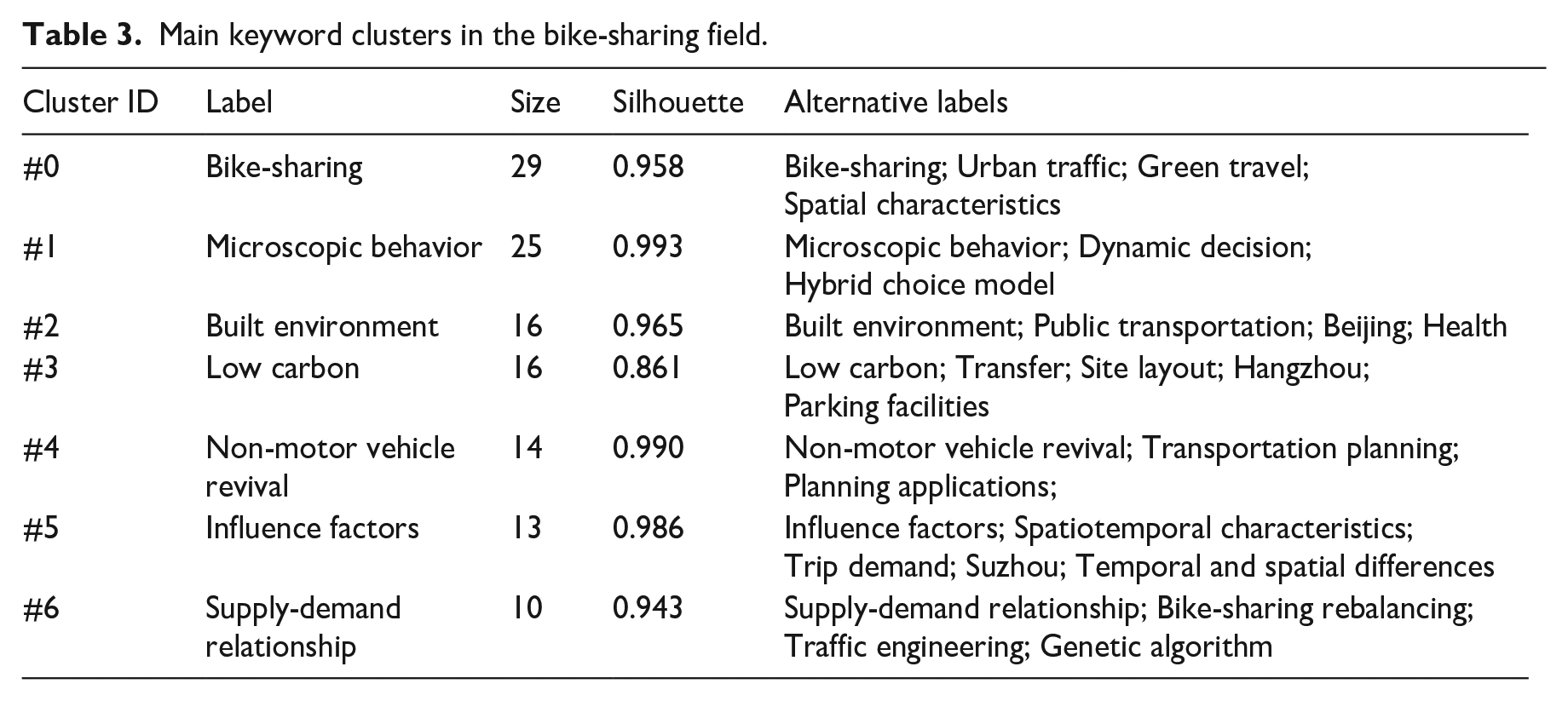
Based on the results of keyword co-occurrence and cluster analysis, we found that the existing studies mainly focus on the spatiotemporal characteristics, influencing factors and demand forecast of bike-sharing trips. Therefore, the new data and methods applied in relevant studies in these three directions are summarized in “Spatiotemporal patterns of bike-sharing trips”. In addition, given that more literature concentrates on the spatial and temporal characteristics of bike-sharing trips and the analysis of their influencing factors, we concluded the primary findings obtained from these studies in the sections following that.
New data and methods adopted in China’s bike-sharing travel research
In this paper, new data refers to the massive data with geospatial information (e.g., bike-sharing trip records, cell phone location data, street view images) obtained based on GPS, LBS (location base service) and other technical means, which have the advantages of high objectivity, large sample volume and high spatiotemporal resolution compared with traditional survey data. Although the emergence of these massive data provides new perspectives and opportunities to explore the daily cycling behaviors patterns of residents, we cannot deny the potential for personal privacy leakage. As for the privacy issue in massive spatiotemporal data, numerous scholars have conducted research on balancing privacy protection and data availability (Chen et al., 2013; Eom et al., 2020; Yin et al., 2015). New methods in this study are defined as analytical methods that are first proposed by scholars, or improve on existing methods, or are transferred from other fields, or have become popular in recent years (e.g., machine learning methods). Though these new methods still inevitably have some limitations (e.g., biased results in demand prediction for bike-sharing), the iterative development of new methods is crucial to our deeper and more microscopic understanding of bike-sharing travel behavior. Based on the results of the bibliometric analysis under “Analysis of the influencing factors of bike-sharing travel”, the new data and methods adopted in recent Chinese bike-sharing researches have primarily focused on the following three areas: (1) exploration of bike-sharing travel characteristics and patterns; (2) analysis of the influencing factors of bike-sharing travel; and (3) prediction of bike-sharing travel demand.
Exploration of bike-sharing travel characteristics and patterns
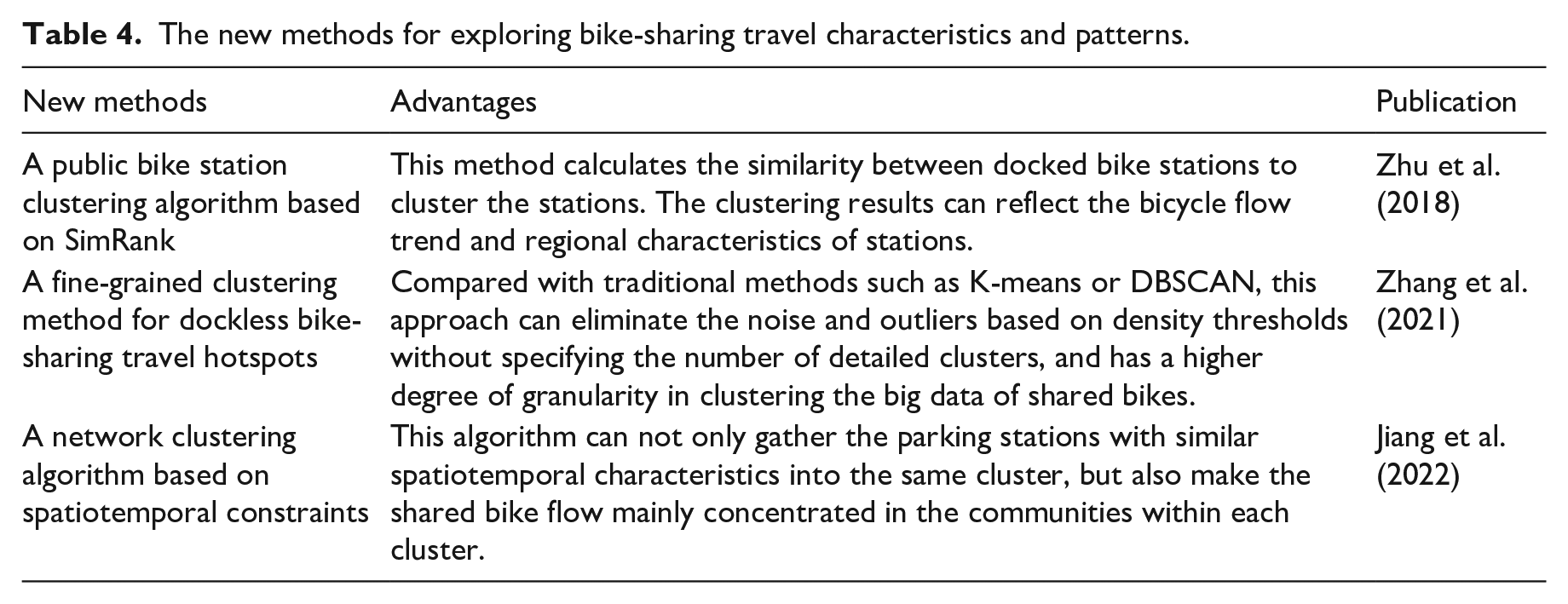
In most related studies, scholars usually explored the characteristics and patterns of shared bike travel by aggregating and visualizing relevant cycling indicators (e.g., trip usage, usage rate, cycling duration and cycling distance) from bike-sharing trip datasets. Recently, some researchers have proposed new methods for clustering the docked stations of the public bicycle or the hotspot areas of dockless shared bike usage (Jiang et al., 2022; Zhang et al., 2021; Zhu et al., 2018). These approaches can be used to explore fine-grained or localized characteristics and patterns of bike-sharing travel, such as revealing spatiotemporal differences in the tidal characteristics of bicycles. The results can provide insights into bicycle scheduling strategy and electronic fence planning for shared bikes. More detailed information is summarized in Table 4.
The new methods for exploring bike-sharing travel characteristics and patterns.
Analysis of the influencing factors of bike-sharing travel (Table 5)
In studies related to the influence of bike-sharing travel, the built environment has received extensive attention from scholars in transportation. To quantify the factors associated with the built environment, they commonly used the POI (point of interest) data to extract various indicators, such as land use diversity and POI density (Gao et al., 2018a, 2019; Mo et al., 2019; Zhang et al., 2019b). In addition, some scholars in China have tried to employ street view images to extract street quality indicators (e.g., green view index) through semantic segmentation methods to explore its impact on bike-sharing travel (Gu et al., 2022).
The new data and models for investigating the influences of bike-sharing travel.
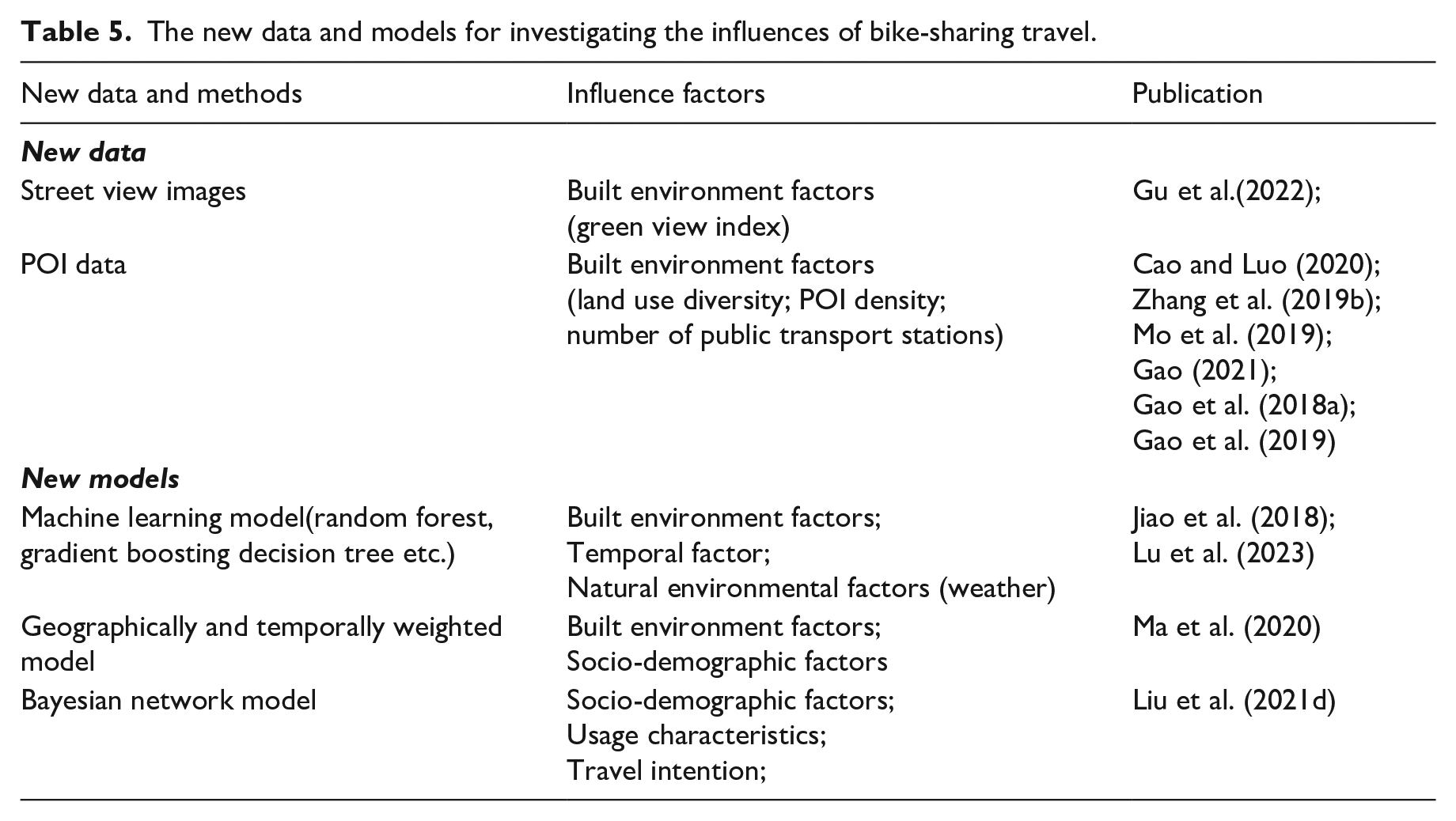
To investigate the link between bike-sharing travel and the influencing factors, early relevant studies usually applied multiple linear regression methods (e.g., ordinary least squares regression) for modeling. However, these global models cannot consider the impact of spatial heterogeneity and spatial non-stationarity. Therefore, some researchers employed geographically weighted regression, geographical detector and other techniques to solve this issue (Gao et al., 2019; Ma et al., 2020). Recently, some scholars have tried to apply machine learning methods to explore the influence mechanism of bike-sharing travel behavior (Jiao et al., 2018; Liu et al., 2021d). Compared with traditional linear statistical methods, these emerging models can escape from the pre-determined hypothesis, thus revealing potential nonlinear and threshold effects (Liu et al., 2021b). These results can provide decision-making basis for the building of cycling-friendly environment.
Prediction of bike-sharing travel demand (Table 6)
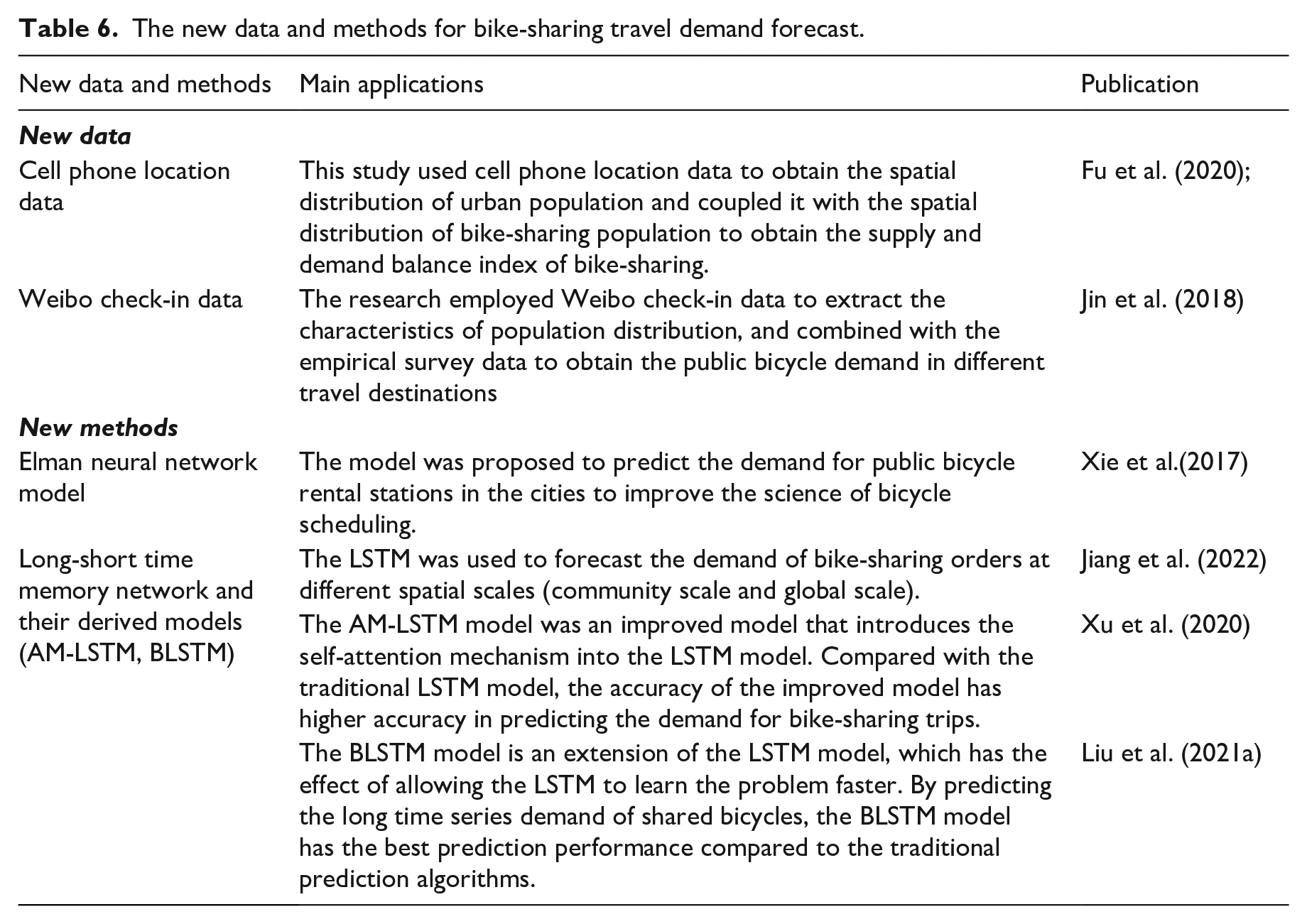
In the papers relevant to bike-sharing travel forecasting, some scholars innovatively use cell phone location data and Weibo check-in data to obtain the population distribution and combine the trips characteristics of shared bikes to reveal the spatial cold and hot spots of bicycle supply and demand (Fu et al., 2020; Jin et al., 2018). Although their results can provide references for the layout optimization of bicycle stations, these studies cannot further uncover the temporal variation of the demand for bicycle sharing. To address this limitation, several studies have employed deep learning models (e.g., long-short time memory network, etc.) to predict the spatial and temporal variation of bike-sharing demand over a longer period (Jiang et al., 2022; Liu et al., 2021a; Xie et al., 2017; Xu et al., 2020). Compared with traditional prediction methods, deep learning models have become the mainstream and hot spot of research due to their high accuracy of prediction results. The prediction results of these models contribute to optimizing the scheduling of bike-sharing to improve the utilization of public transportation resources.
The new data and methods for bike-sharing travel demand forecast.
Spatiotemporal patterns of bike-sharing trips
As for the temporal pattern, existing studies have observed that bike-sharing trips in most cities show remarkable morning and evening peaks (Cao et al., 2019; Gao et al., 2019; Zhang et al., 2019a). In a few cities, such as Nanjing, the use of shared bikes presents triple-peak characteristics: morning, midday and evening, with the morning peak usage much larger than the evening peak (Zhou et al., 2018a). In addition, scholars have found that bike-sharing usage is generally lower on weekends than on weekdays (Gao et al., 2018b; Mei et al., 2019). Gao et al. (2018b) indicated that the utility of bicycles as commuting tools tends to decline on weekends, while the utility as leisure transportation tools increases. Accordingly, the average travel distance and travel duration of public bicycles are longer on weekends than on weekdays (Mei et al., 2019). Overall, the average travel duration of shared bicycles in China’s cities is around 15 minutes (Gao et al., 2019; Mei et al., 2019). After the outbreak of the COVID-19 epidemic, Hua et al. (2020) found that the average travel duration and travel distance of shared bikes had increased in Nanjing, which was attributed to people using bicycles as an alternative to public transport trips to reduce the risk of being infected.
With regard to the spatial pattern, scholars have used numerous indicators to discover that the demand for bike-sharing trips exhibits a distribution trend of “more in the primary urban area and less in the suburban area” (Gao et al., 2018b; Liu et al., 2016). More specifically, Liu et al. (2016) and Mei et al. (2019) found higher usage rates and more balanced supply and demand ratios for public bicycles in the central city. In contrast, low usage and imbalanced supply and demand were more prominent in the urban fringe and suburbs. Within the main urban areas, Gao et al. (2018b) identified the intensive “source” and intensive “sink” points of sharing bicycles in Beijing and observed that the inflow and outflow of bicycles are denser in residential land and commercial land, while sparser in green space, etc. In addition, Gao et al. (2019) further revealed that the purpose of bike-sharing trips in Guangzhou is more dispersed around the office and industrial land during the morning peak hours of weekdays, while more concentrated in residential land and the public transport stations around workplaces during the evening peak.
Noteworthy, in most cities in China, bike-sharing trips have a significant feature of connecting the first or last kilometer. Hence, numerous studies in China focused on the spatial and temporal characteristics of bike-sharing transfers to public transportation. The research by Gao et al. (2019) in Guangzhou indicated that the distance to the metro entrance and the distance to the BRT (bus rapid transit) have a stronger effect on the distribution of destinations for bike-sharing trips than for regular public transportation. Zhou et al. (2015) discovered that in Suzhou, the public bicycle stations around metro stations have a shorter usage duration. A study in Xiamen (Kuang and Wu, 2022) found that metro stations in the central city have a stronger spatial and temporal balance in attracting bike-sharing feeder trips compared to the suburbs. Moreover, Gao et al. (2021) revealed that the number of residential POIs is the most influential factor affecting bike-sharing connections to the metro in Beijing.
Factors that affect bike-sharing usages
Similar to other transportation modes, bicycle sharing trips are influenced by various factors. Existing Chinese literature discusses the influence of bicycle sharing trips focusing on four factors: social-demographics, natural and built environment, and subjective intention. In this section, we present the impact of these factors on bike-sharing usage.
Socio-demographics factors
To explore the relationship between bike-sharing cycling behavior and socio-demographic factors, scholars have conducted modeling analysis based mainly on travel surveys. Such data have the limitations of small sample size and subjectivity. Although the emerging big data from GPS to a certain extent compensates for the lack of traditional travel survey data (Lu, 2021; Xie et al., 2022), these data usually filter out the individual attribute information to protect personal privacy. The Chinese literature exploring socio-demographic factors focuses on the following areas: gender, age, occupation, income and education level.
In terms of gender, most studies concluded that men more than women choose to travel by bicycle in China (Hou, 2017; Huang, 2010; Li et al., 2020; Xu et al., 2021; Zhu et al., 2012), which is due to psychological and physical gender differences (Jiang, 2016; Li et al., 2020). However, recently, scholars have put forward different opinions. For example, some researches revealed that there are more female cycling users than male cycling users (Lu, 2021; Ran and Li, 2017; Zhang, 2019), because that females personality are more gentle than males, while males are accustomed to faster modes of travel (Ran and Li, 2017). Moreover, women have higher demand for short-distance travel such as shopping, entertainment and commuting (An, 2021; Chang, 2007; Lu, 2021). On the other hand, other studies have mentioned that there is little difference in the number of bike-sharing trips by gender (Lu, 2021) and the proportion of male and female users (Bo et al., 2018; Ran and Li, 2017; Zhang, 2020). Although the conclusions of different studies on gender may vary due to the number of data, collection methods and study area, in general, the differences in the proportion of men and women in China’s bike-sharing user population are relatively small.
With regard to age, the main user group of bike-sharing is people between 20 and 60 years old. During the rapid development of the public bicycle system, the proportion of young people (20–39 years old) using docked bike-sharing was close to that of middle-aged people (40–59 years old) (Zhang, 2020). However, with dockless bike-sharing entered the Chinese market, the proportion of young users of dockless bikes increased rapidly, while middle-aged people became the main group of docked public bicycles. This is because dockless shared bicycles through mobile app rental are more convenient for young people than public bicycles rented with smart cards, but these operations are too complicated for middle-aged people (Lu, 2021; Zhang, 2020).
Empirical studies have found that education level is positively related to the frequency of bike-sharing usage (Ran and Li, 2017; Zhu et al., 2012). Moreover, the higher the education level of people, the more channels they have to obtain information and the stronger their ability to accept new things. university students were the initial group of users who tried dockless bike-sharing and are currently the most active group of dockless bicycles users (Jiang, 2016; Li et al., 2020; Ran and Li, 2017).
Regarding income level, Ran and Li (2017) found that income level does not have a significant impact on bike-sharing trips through online questionnaires in various cities of China. However, studies have shown that the main user of docked and dockless bike-sharing are low- and middle-income groups, while those who own private cars have a lower propensity to use bicycles (Jiang, 2016; Song, 2019). In addition, some scholars have suggested a positive correlation between income and the choice behavior of dockless bike-sharing (Li, 2018; Li et al., 2020), which is due to the fact that higher-income groups are more advanced in their consumption attitudes and are more likely to accept stylish-looking dockless bicycles with higher comfort and convenience than docked public bicycles.
Natural environment factors
As a travel mode that depends on users’ physical strength and exposure to the outdoors, the use of shared bicycle is inevitably affected by the natural environment, although some scholars argue that the natural environment has less impact on cycling than the built environment (Gao et al., 2019; Min, 2018). Existing studies have examined the links between natural environment and bike-sharing usage from four main aspects: topographic, temperature, weather conditions and seasons.
The influence of topographic factors, such as elevation and slope, on bike-sharing travel differs across regions. For example, Guangzhou and Beijing have flat terrain in their urban areas. Hence, topography has a limited impact on bicycle riding (Gao et al., 2019; Jiang, 2016). However, the suburban areas of Beijing have many mountains that make bicycle activities difficult (Jiang, 2016). Except for cities with distinct mountainous characteristics, the influence of topography on cycling behavior is mainly reflected in the slope of urban roads. Zhao (2019) argued that the design of slopes on cycling routes falls under the domain of bicycle infrastructure. Chang (2019) found a negative correlation between road slopes and the frequency of bike-sharing rides, with steeper roads reducing the efficiency and convenience of cycling and increasing physical exertion.
Without considering weather conditions, temperature is the main natural factor that impacts bike-sharing trips (Wang, 2019). Zhao (2019) revealed that the best cycling comfort is 15°C ~ 21°C, followed by 10°C ~ 16°C and 21°C ~ 30°C. Hence, bike-sharing users prefer to ride longer distances between 10°C and 30°C (Wei et al., 2018). When the temperature is below 10°C, the use of shared bicycles decreases with the drop in temperature (Gan, 2021; Wang, 2019; Zhang, 2019). Most scholars have observed that high temperatures (>30°C) also inhibit bike-sharing usage and trip distance (Gan, 2021; Xie et al., 2022). However, by predicting bike-sharing ridership, Yan et al. (2021) found that bicycle use continues to increase when temperatures exceed 30°C and suggested that the reason for this may be that people tend to ride bikes rather than walk in the heat to reduce their exposure to the outdoors.
With regard to weather conditions, existing studies have generally concluded that demand for bike-sharing is highest in sunny and cloudy weather, while precipitation is the main factor affecting bike-sharing trips (Gan, 2021; Wang, 2019; Wei et al., 2018; Xie et al., 2022). More specifically, light rain or showers have little negative impact on bike-sharing use, but moderate rain, heavy rain, snowfall or sleet can significantly reduce the amount and duration of bicycle trips, especially during commuting hours (Gan, 2021; Min, 2018; Wang, 2019). In addition, some research has showed that within the appropriate range, the increase of atmospheric pressure, humidity, wind speed and cloudiness and visibility has a positive impact on users’ riding decisions (Gan, 2021; Xie et al., 2022), whereas it has become a consensus that adverse weather and poor air quality can reduce the intensity of bicycle use (Min, 2018; Wang, 2019; Xie et al., 2022).
The impact of different seasons on the demand for bike-sharing trips is primarily the result of changes in temperature. In general, cold weather typically leads to the lowest bike-sharing usage in winter, and this effect is more pronounced and lasts longer in northern China (Gan, 2021). In contrast, Zhang (2019) discovered that bike-sharing trips are less frequent during midday in summer than in other seasons and indicated that high temperatures inhibit people’s riding activity. Moreover, besides frequency of use, other trip characteristics (e.g., trip distance, trip duration) were not significantly influenced by seasons (Gan, 2021; Zhang, 2019).
Built environment factors
Most research in the relevant Chinese literature has mainly investigated the influence of built environment factors on shared bike usages based on the 5D framework proposed by Ewing and Cervero (2010). The 5D framework, including density, diversity, design, destination accessibility and distance to transit, have been widely applied to characterize the built environment that impact travel modes.
On the dimension of density, existing studies have shown that bike-sharing usage is positively associated with population density (Ma, 2015; Mei et al., 2019; Yu and Zhou, 2021), building density (Zhang et al., 2019b), floor area ratio (Gu et al., 2022) and POIs density (Gu et al., 2022; Yu and Zhou, 2021). This is because high land use density areas tend to be more densely populated and have higher travel demand from potential users (Yu and Zhou, 2021). In addition, there are differences in the impact of different types of service facility density on bike-sharing trips. In general, the density of office facilities has a facilitative effect on bike-sharing trips during weekday commuting peak hours (Gao et al., 2018b; Mei et al., 2019; Yu and Zhou, 2021), while dining, shopping and recreation facilities are positively correlated with bike-sharing use during non-commuting hours (Gao et al., 2019; Luo et al., 2018; Mo et al., 2019). The demand for shared bicycles around residential facilities was commonly higher and less influenced by the temporal factor (Mo et al., 2019; Yin et al., 2018), while Mei et al. (2019) found a significant negative correlation between bike-sharing usage and pedestrian-friendly green space and plaza sites.
With regard to the diversity indicator, scholars focused on the influence of land use mixture (quantified by POI or land use mixture entropy) on bike-sharing travel behavior. Many researches revealed that areas with high land use mixture are prone to generate more short-distance travel demands, thus promoting the usage of public bicycles (Cui et al., 2020; Gao et al., 2019; Shi et al., 2011; Sun et al., 2018; Zhang et al., 2019b). However, Yin et al. (2018) observed that the land use diversity has a threshold effect on promoting bike-sharing travel and too high or too low land use mixture both can hinder riding behavior.
The design dimension is mainly discussed in two aspects: the bicycle infrastructure and the street environment. As for the bicycle infrastructure, studies showed that increasing the number of docks for public bicycle stations or the density of dockless bike-sharing can increase bicycle usage (Gu et al., 2022; Luo et al., 2018; Yu and Zhou, 2021). However, Mei et al. (2019) discovered that in areas with a high density of public bicycle stations (especially in urban areas), the competition was more likely to exist between neighboring stations, which reduced the utilization of rental stations. Hence, some scholars suggested that the layout of shared bicycle stations should take account into the features such as travel demand and population distribution to determine the scale of stations, and the density of bicycle stations should be set further according to the scale of stations (Chang, 2019; Jin et al., 2018; Qian et al., 2014; Shi et al., 2011; Xiang et al., 2011). Regarding the street environment, several studies have revealed that in many Chinese cities, bike-sharing users’ right-of-way is often not guaranteed due to inadequate planning of bicycle lanes (Huang, 2010; Yang and Feng, 2017). Physically separating non-motorized lanes from motorized lanes, as well as increasing the length and expanding the width of bicycle lanes, can enhance cycling comfort and safety, thereby promoting bike-sharing travel behavior (Wang et al., 2016; Zhu et al., 2016). In addition, some measures such as improving the quality of pavement, increasing street greening and extending greenways, installing street lights and reducing private car occupancy are believed to improve the rideability of streets (Chang, 2019; Gu et al., 2022).
In the dimension of destination accessibility, Cui et al. (2020) found that the closer to the city center, the higher the use of shared bicycles. Luo et al. (2018) observed a positive link between the length of secondary road around public bike stations and bicycle use, while Yu and Zhou (2021) revealed a negative correlation between the length of branch roads around stations and bike-sharing trip. Some studies have concluded that higher road network density and higher intersection density tends to have more cycling activity (Cui et al., 2020; Gao et al., 2019; Gu et al., 2022; Sun et al., 2018). On the other hand, some scholars have found the opposite result due to differences in modeling spatial scales (Yin et al., 2018; Yu and Zhou, 2021).
Since bicycle-transit mode extends the services scope of public transportation, improves the operation efficiency of urban transport, and solves the travel problem of “the first or last kilometer”, the distance to transit is an important research dimension. In general, studies have concluded that distance to public transportation stations and bike-sharing demand are negatively correlated (Deng et al., 2017; Liu et al., 2018; Luo et al., 2018; Niu et al., 2012). In large cities with well-developed rail transit (e.g., Shenzhen and Guangzhou), metro stations are more attractive for bicycle travel (Gao et al., 2019; Sun et al., 2018). Vice versa, bus stations have more impact on bike-sharing (Cui et al., 2020). It is worth noting that some studies have found competition between some public bicycle stations and the neighboring bus stations (Luo et al., 2018; Yu and Zhou, 2021). The reason for this is that the surrounding built environment is more conducive to short-distance trips rather than transfer trips.
Subjective intention factors
The choice of individuals to bicycle for travel is a complex decision-making process (Yang et al., 2018). The decision outcome is influenced not only by socio-demographic and environmental factors, but also by the subjective intentions of individuals about cycling (e.g. whether they think it is safe, whether it brings health benefits, etc.). In a recent study, Guo et al. (2020) and Guo and He (2021) found significant inconsistencies between the objective built environment and subjective perceived environment on residents’ use of bike-share connections to the metro, which further emphasizes the need to explore the impact of subjective intention on bike-sharing trips.
In the related Chinese literature, most scholars have employed structural equation model to explore the intention and satisfaction of people towards bike-sharing use based on rational behavior theory and its derivative theories (Qian et al., 2014; Shao et al., 2020; Yan et al., 2017; Yang et al., 2018; Yuan et al., 2019; Zhang, 2017; Zhou, 2017). In studies exploring the cycling experience, the perception that bicycle travel is more time-saving than walking, more flexible than driving, more beneficial to the environment and provides exercise and pleasurable enjoyment is the main motivation for the willingness of people to bicycle (Qian et al., 2014). In addition, compared to private bicycles, shared bicycles are considered more affordable, easier to transfer to bus and metro, and without the fear of theft, which is why more people use them for travel, especially for commuting (Qian et al., 2014; Yang et al., 2018). On the other hand, the problems in operation services can reduce people’s satisfaction to use bike-sharing, such as costly registrations, untimely repair of damaged bicycles, insufficient supply of bicycles or unreasonable distribution of rental stations (Qian et al., 2014; Ran and Li, 2017; Shao et al., 2020; Yuan et al., 2019). Moreover, the cyclists as the vulnerable group in transportation, the safety issues and possible health hazards during cycling also can reduce residents’ intention to use shared bicycle. For example, traffic flow mixed motor vehicles and non-motor vehicles was identified as a major perceived factor that decreased cycling safety (Qian et al., 2014; Zhang, 2017), while air pollution or exhaust emissions from vehicle, especially during peak commuting hours, can negatively impact people’s decision to choose public bicycles for travel (Cao et al., 2019).
Furthermore, numerous studies have suggested that social effects can subconsciously influence an individual’s subjective intention to use bike-sharing (Yan et al., 2017; Yang et al., 2018; Yuan et al., 2019). More specifically, the attitudes or perceptions of cycling by acquaintances or people with social influence can have an impact on individuals. Collective consciousness may incline individual behavioral intentions to align with the collective (Yang et al., 2018). Therefore, increasing social publicity can enhance people’s recognition of bike-sharing in a short period of time. Meanwhile, developing different marketing programs based on differences in usage groups is more conducive to radiating a wider range of people (Yang et al., 2018; Yuan et al., 2019). However, if the service quality of bike-sharing is not improved in a timely manner, the above promotion effect will have a decay effect and be difficult to maintain (Yan et al., 2017).
Implication for low-carbon cycling environment planning
Understanding the factors that affect people’s willingness to travel by bicycle is helpful to advocate green transportation, reduce traffic congestion. This is of great significance to realize the sustainable development of cities in our country. Under the major strategic goal of achieving “emission peak” by 2030 and “carbon neutrality” by 2060, cycling, as an efficient, convenient, healthy and low-carbon way of travel, has received wide attention from society and academia. Pan and Tang (2015) summarized the 5D mode according to the characteristics of China’s traffic structure. According to the priority level, they are POD (mode conducive to walking), BOD (mode conducive to bicycles), TOD (mode conducive to public transport), XOD (mode conducive to improving traffic construction) and COD (mode conducive to cars). This study pointed out that maintaining a high proportion of bicycle travel has a significant role in the construction of low-carbon cities. However, for a long time, the urban traffic planning of China has paid more attention to the demand of motor vehicle travel, which makes the investment in public transport be obviously insufficient (Dai, 2016). To achieve carbon peaking and carbon neutrality goals it is essential to provide cyclists with a bicycle-oriented urban environment. Existing research showed that a good cycling environment will make residents more inclined to choose bicycle travel (Chen, 2018, 2019; Dai et al., 2010). Bornstein and Davis (2014)’s research mentioned that “cycling environment” includes natural environment, social environment and built environment. When the cycling environment is friendly enough, the impact of individual differences on cycling behavior will be minimized. Therefore, the cycling environment in cities should respect the needs of different cycling groups (Zhao, 2019). The natural environment is difficult to be changed by human factors, but its adverse impact on cycling can be compensated by optimizing the built environment, such as designing flat and spacious bike paths to relieve the pressure of riding uphill. In the social environment, cycling behavior can be promoted by improving cycling experience. For example, urban traffic planners should pay attention to the cycling safety of vulnerable groups such as women, the elderly and minors, and guide cyclists to create a good cycling culture among them. In order to optimize the built environment and promote cycling behavior, the safety of cyclists should be guaranteed first, and then the built environment should be aesthetically designed on this basis. Therefore, the design of built environment can be optimized mainly from the following points:
(1) Optimize the street riding environment to improve the quality of bicycle travel. To increase the proportion of bicycle trips, more attention should be paid to the construction of bicycle lanes. The design of many non-motorized lanes in China often has some problems, such as “mixture of motorized lanes and non-motorized lanes”, narrow non-motorized lanes and no isolation facilities between non-motorized lanes and motorized lanes (Dai, 2016; Qian et al., 2010). Therefore, traffic planners need to improve the cycling quality of cyclists by improving the cycling lanes from above aspects. In addition, increasing street vibrancy could attract more travelers to walk or cycle. Existing studies suggested that increasing bicycle network, increasing the number of road intersections and appropriately reducing the road width can create vibrant streets, thus optimizing the traffic microcirculation and bringing opportunities for the bicycle development (Long and Zhou, 2016). At the same time, urban planners should implement the concept of people-oriented road design. Cycling comfort can be improved by considering the safety, aesthetics and greenery of bike paths.
(2) Improve the public transport transfer system. The main mode of transportation in Chinese cities is the public transportation mode with rail transit as the backbone, bus as the main body, other traffic as the supplement and slow traffic as the extension (Zhang et al., 2019b). Developing public transport transfer systems can effectively alleviate the traffic problems in China. In order to form “bicycle with rail transit or city bus” three-level transfer system (Huang, 2013), we need to attach importance to the construction of bike-sharing stations in the buffer of public transport. Reasonable scale of shared bike stations should be set within roughly 3km centered on urban rail transit stations or large bus stations (Gan, 2007), so as to extend urban public transport services, promote bike-sharing usages, and attract car travelers to change the way of travel (Huang, 2016). In the other hand, in order to strengthen the connection between the station and the destination place, bike stations can be added in crowded areas such as residential communities, shopping malls and parks.
(3) Construct a city with more short-distance travel. In the Pre-motor Age, urban streets showed the characteristics of small scale, narrow roads and interwoven network (Xu and Sun, 2016). However, under the influence of motorized traffic, most cities formed the shape of “wide road, big block” (Zhao, 2019), which leads to difficulties in walking and cycling and low coverage of bus service. In 2016, the Central Urban Work Conference proposed to build open residential districts, make roads inside the block public, and construct the road distribution of “narrow roads, dense network”. In addition, the mixed degree of land use inside the block should be improved, so that more kinds of service facilities can be accessible within the reach of bicycles (Zhang et al., 2019b). Urban land use planning should be integrated with multi-mode transportation, and the single-mode transportation should be turned into a multi-green transportation system, so as to realize the planning and construction of sustainable development and low-carbon cities (Pan, 2010).
Future directions
It is of great significance to carry out research on bike share travel mode and the impact mechanism for the construction of low-carbon cities in China. Although important progress has been achieved in relevant research, there are still several research gaps need to be addressed.
First, many scholars have used survey data to investigate the influence of individual socio- demographic factors on bike-sharing usage. However, survey datasets have shortcomings of high cost, small sample size, lack of spatial information, etc. Hence, it is difficult to mine the association between individual socio-economic attributes and bicycle behavior at a fine scale. In contrast, the GPS data generated by bike-sharing has the advantages of large samples and refinement, but for privacy protection, the individual attributes or activity information recorded by such data is very limited (Li et al., 2021). In recent years, a few scholars have inferred the socio-economic attributes of individual residents and explored the differences of travel modes among different groups of people by coupling mobile signaling data with housing prices and other socio-economic data (Guan et al., 2020; Xu et al., 2018). However, limited studies have been done to infer the socio-economic characteristics of cyclists from massive GPS-based bike-sharing trips datasets. In the future, much effort should be put forward to infer individual attributes of bike-sharing users, so as to better understand the travel pattern and travel demand of different groups.
Second, in addition to the above mentioned individual socio-demographic, natural environment and built environment factors, bike-sharing trips are also influenced by the humanistic perception factors (Guo and He, 2021). Although some scholars have explored the influence of subjective intention factors on bike-sharing use from a psychological and sociological perspective, these results are difficult to be implemented in specific urban traffic planning due to the challenge of being quantified (Qian et al., 2014). In recent years, the emergence of social perception technologies has provided a new means for identifying people’s subjective cognition of geographical environment, thus assisting human oriented smart city planning (Chai et al., 2014; Liu, 2016; Long and Zhou, 2017). These methods focus on organizing volunteers to score perception factors (e.g., wealthy, lively, safety and boring, etc.) on small samples of multimedia data (e.g., street view images, audio and video), while extracting high-dimensional information from these perception data through deep learning methods (e.g., semantic segmentation algorithms). Finally, complex mapping relationships between subjective scores and perceptual data are established by reinforcement learning methods (e.g., human-machine adversarial models). These models have proven to be effective in quantifying people’s subjective perceptions of the quality of street space (Yao et al., 2019). Although some studies have tried to use street view images to measure the impact of street green view index on bike-sharing usage (Gu et al., 2022), it is rare to comprehensively explore the impact of humanistic street space quality on bicycle travel. With the diversification and refinement of social perception technology and derived data, exploring the relationship between humanistic perception factors and bicycle travel behavior is an important research direction in the future.
Third, the outbreak and spread of the COVID-19 in the world has brought a huge impact on people’s life. In order to curb the spread of the virus among people, strict travel control measures have been widely implemented in China, and the travel behavior of residents has also been profoundly affected. In terms of bicycle travel, relevant studies in other countries have found that during the epidemic blockade, the proportion and willingness of people to ride have declined. However, after the release of the epidemic, the recovery speed of bicycle travel is faster than that of other travel modes, and the sharing rate of cycling has also been improved (Hu et al., 2021; Wang and Noland, 2021), suggesting that bike-sharing trips plays an essential role in enhancing urban traffic resilience. However, the above studies all take cities outside China as case areas, and the influence mechanism of the COVID-19 on Chinese residents’ riding behavior has rarely been discussed. Hence, exploring urban bicycle travel behavior in China in the post epidemic era is another important direction in the future.
Footnotes
Appendix 1
The retrieval string was set to “KY= (′bike′ + ′public bicycle′ + ′shared bike′ + ′floating bike′ + ′docked bikes′ + ′ docked public bicycle ′ + ′docked share bikes′ + ′dockless shared bike′ + ′dockless bike′ + ′Mobike′ + ′OFO′ + ′public bicycle system′ + ′shared bike system′) and TKA = (′travelers′ + ′residents travel′ + ′rider ′ + ′transportation′ + ′travel choice′ + ′travel demand′ + ′travel behavior′ + ′travel characters′ + ′traffic planning′ + ′urban traffic′ + ′built environment′ + ′infrastructure′ + ′green degree of urban′ + ′green space′ + ′streets form′ + ′traffic jam′ + ′traffic safety′ + ′subway′ + ′bus station′ + ′rental sites′ + ′non-motor vehicles′ + ′perception′ + ′air pollution′ + ′physical activity′ + ′shared economic′ + ′Internet′ + ′circular economy′ + ′intelligence data′ + ′big data′ + ′city′ + ′low-carbon cities′ +′smart city′ + ′blocks′ + ′sharing travel′ + ′traffic transformation′ + ′traffic engineering′ + ′Parking planning′ + ′bicycle dispatching′ + ′parking facilities′ + ′drop′ + ′space scheduling′ + ′site location′ + ′sites′ + ′transfer activity′ + ′source sink′ + ′traffic emissions′ + ′peak carbon dioxide emissions′ + ′slow traffic′ + ′ecological civilization′ + ′green′ + ′low carbon′) ”. The publication time span was set to 1998-2021. The literature type is limited to Chinese literature.
Declaration of conflicting interests
The author(s) declared no potential conflicts of interest with respect to the research, authorship, and/or publication of this article.
Funding
This study was supported by the National Natural Science Foundation of China (Grant No. 42271467).