



Abstract
Improving land use efficiency is a global consensus for sustainable urban transformation, but the powerful role of widely implemented administrative division adjustments remains insufficiently understood. Based on panel data from Chinese cities between 2003 and 2019, this study employs multi-period difference-in-differences and mediating effect models to analyze how county-level administrative division adjustments (cADC) affect urban land use efficiency (ULUE). Theoretically, cADC negatively influences ULUE by redrawing boundaries to enable urban expansion, while simultaneously undermining spatial continuity and functional coherence. The realignment of intergovernmental authority and fiscal relationships further exacerbates interjurisdictional competition for land resources and distorts land use planning, thereby diminishing social equity and cross-regional environmental governance. These institutional changes at the macro level manifest as micro-level inefficiencies in land use through resource allocation mechanisms and market processes. Empirically, cADC reduces ULUE by approximately 12%, with the strongest negative effects observed in county-to-district conversions and medium-sized cities. Although cADC stimulates labor and capital inputs, these fail to improve ULUE. Moreover, cADC significantly depresses land marketization, exacerbating efficiency losses. These findings highlight the need to carefully assess the spatial and institutional consequences of administrative restructuring. Policymakers should strengthen cross-jurisdictional coordination, harmonize public interventions with market forces, and emphasize land use efficiency rather than areal expansion to advance intensive and sustainable urban development.
Keywords
Introduction
Amid accelerating urbanization, climate change pressures, and encroachment on farmland and ecological land, urban land use efficiency (ULUE) becomes a critical frontier for global sustainability (Khan et al., 2025; Schiavina et al., 2022). Cities increasingly face the challenges of accommodating economic growth, population concentration, food security, and ecological resilience within rigid spatial constraints and limited land resources (Radwan et al., 2019; Seto et al., 2012; Zhou et al., 2023). The growing tension between spatial expansion and resource efficiency has elevated land use optimization from a planning aspiration to a governance imperative. As limited land resources and diverse utilization needs generate complex trade-offs and synergies (Wei et al., 2024), improving ULUE is not merely a technical task but a structural challenge central to equitable and sustainable urban transitions.
Numerous studies collectively demonstrate that ULUE varies markedly across regions and is shaped by urban morphological characteristics, geographical gradients, industrial structure upgrading, and socioeconomic conditions (Chakraborty et al., 2022; Gao et al., 2020; He et al., 2020; Jiao et al., 2020; Liu et al., 2021; Masini et al., 2019; Yu et al., 2019). In addition, governance tools such as development zones, land lease policies, and urban-rural integration also play critical roles in influencing ULUE (Jiang et al., 2021; Koroso et al., 2020; Koroso and Zevenbergen, 2024; Song and Tao, 2022; Sun et al., 2020). However, most of these studies presuppose a static urban administrative structure, leaving aside the effects of dynamic territorial restructuring.
Against this backdrop, administrative division conversion (ADC) emerges as a powerful yet underexplored form of institutional transformation. Cities and counties are not fixed territorial entities but administratively constructed and politically negotiated spaces, continually reshaped by state strategies, institutional reorganization, and intergovernmental bargaining (Brenner, 2004; Cartier, 2015; Ma, 2005). By reconfiguring the hierarchy and boundaries of administrative units, ADC alters the spatial scope of governance, factor mobility, and policy implementation (Zhu et al., 2013). Globally, comparable institutional reforms, such as municipal amalgamations in Canada, metropolitan governance reforms in Latin America, inter-municipal cooperation in Europe, and city splitting and district reorganization in Indonesia, have confirmed that territorial restructuring and municipal boundary adjustments can enhance administrative efficiency, spatial planning capacity, fiscal capacity, and service provision, but the outcomes often involve trade-offs between cost savings, democratic participation, local autonomy, and governance complexity (Bel and Warner, 2015; Fitrani et al., 2005; Rodriguez-Acosta and Rosenbaum, 2005; Slack and Bird, 2013). In China, ADC has gradually become a commonly adopted approach for facilitating urban development. Existing research indicates that ADC can stimulate investment, accelerate land development, and drive urban expansion by streamlining land-use approval processes and reshaping political incentives (Feng and Wang, 2021; Li et al., 2015; Liu and Lo, 2022; Yew, 2012; Zhang et al., 2023).
In particular, county-level administrative division conversion (cADC) has emerged as one of the most widely adopted policy instruments for promoting urbanization in China (Cartier, 2015; Zeng et al., 2016). As an institutional strategy, it aims to reduce administrative fragmentation, simplify development approvals, and enhance governance capacity, thereby addressing structural barriers to economic development, spatial planning, and infrastructure provision (Feiock and Carr, 1997). Existing studies on cADC have largely centered on its effects on economic growth, urbanization, and spatial expansion (Guan et al., 2018; Li et al., 2015; Liu and Lo, 2022; Ma, 2005; Zeng et al., 2016). However, its implications for ULUE remain largely underexplored, even though cADC not only reshapes administrative boundaries but also reorients land-use incentives. Although a few studies have acknowledged their correlations (Liu and Lo, 2022; Zeng et al., 2016; Zeng et al., 2017), the net effects and underlying transmission mechanisms through which cADC influences ULUE are still theoretically unclear and empirically unverified.
As the world’s largest developing country, China has experienced extensive and frequent territorial restructuring, providing a unique institutional context to examine the spatial implications of administrative reform. Moreover, its system of public land ownership and state-led allocation means that such reforms exert a profound influence on land use, particularly in an environment where market forces operate within strong institutional constraints. Against this backdrop, clarifying the impact of cADC on ULUE is of paramount importance. It offers critical insights into how government actions shape land use under powerful institutional settings, with broader implications for other developing countries seeking to balance urban growth and socioeconomic transformation amid limited land resources.
Utilizing a panel dataset of Chinese cities from 2003 to 2019, this study employs a multi-period Difference-in-Difference (DID) approach alongside mediating effect models to investigate the impacts of cADC on ULUE and to unravel the underlying mechanism. This research advances the literature on institutional determinants of land use by elucidating the role of state-led administrative restructuring in shaping land use outcomes. Specifically, its contributions are twofold. First, it reveals the heterogeneous effects of cADC across different conversion types and city sizes, thereby providing nuanced evidence on the institutional drivers of land use efficiency. Second, it delineates the critical pathways linking cADC to ULUE, specifically through factor reallocation and market mechanisms. This unpacking of institutional effects on spatial resource efficiency offers practical insights for crafting context-sensitive and efficiency-oriented spatial governance policies.
Theoretical framework and hypotheses
The cADC policy significantly shapes urban land use in China by altering the socioeconomic governance boundaries and resource allocation capacities of local governments (Feng and Wang, 2021). Its most immediate and observable effect is the expansion of urban areas, which in turn reshapes the spatial mobility of key factors such as labor and capital (Zhang et al., 2023). These shifts indicate a potential intrinsic link between cADC and ULUE (Figure 1).
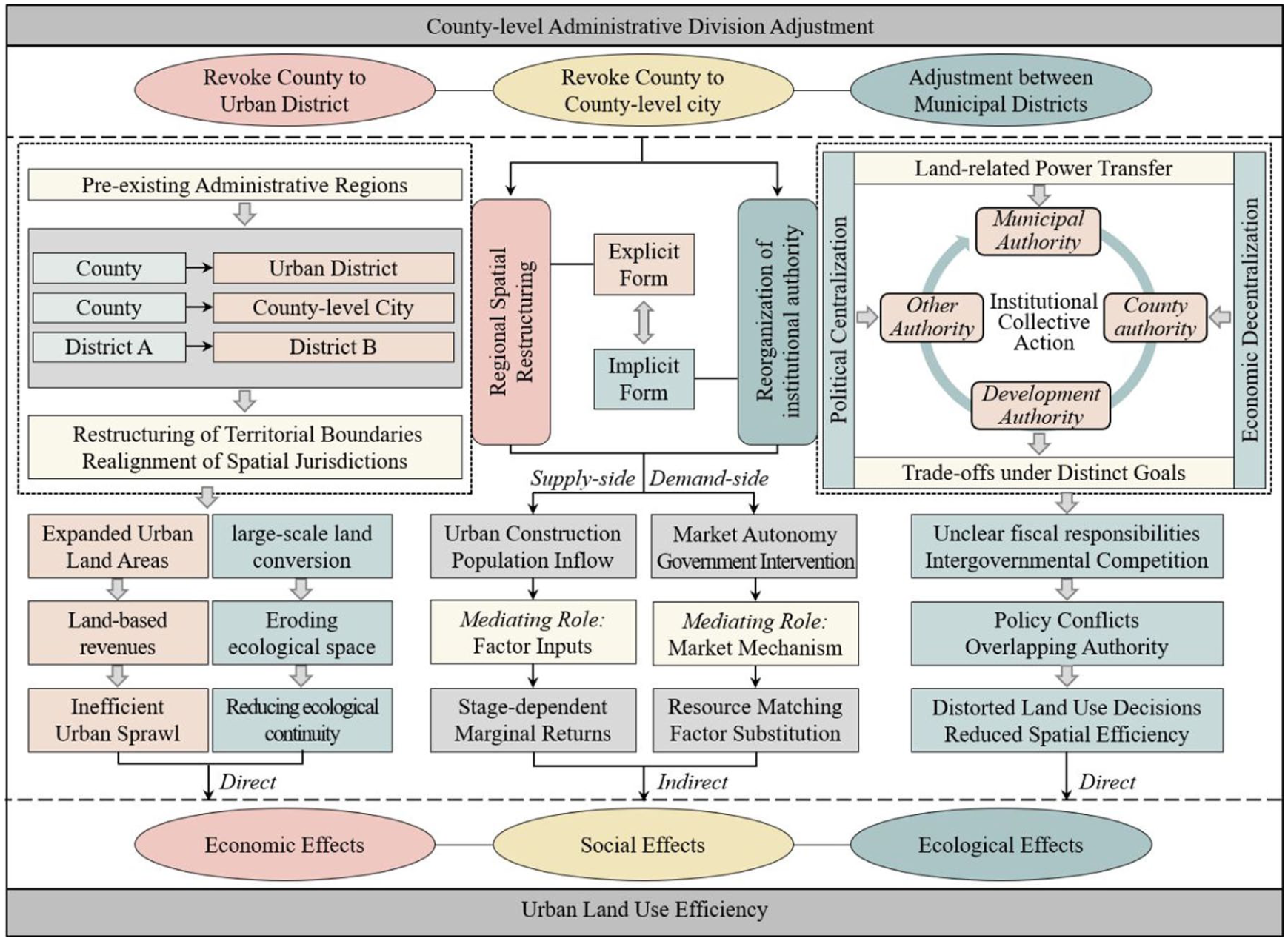
The theoretical framework of the effect of cADC on ULUE.
The possible relationship between cADC and ULUE
The influence of cADC on ULUE is multidimensional rather than unidirectional, reflecting complex interactions among economic incentives, social governance, and ecological constraints.
Regarding economic incentives, the most explicit manifestation of cADC lies in the restructuring of territorial boundaries and the realignment of spatial planning jurisdictions (He and Jaros, 2023). These reforms aim to expand urban land areas and integrate regional factor markets by breaking through preexisting administrative constraints (Liu and Lo, 2022). In theory, boundary restructuring can enhance allocative efficiency by optimizing the spatial distribution of resources and reducing institutional barriers to land and capital flows. In practice, however, intensified land development pressures often lead to excessive expansion of construction land beyond optimal spatial scales (Glaeser and Kahn, 2004). Driven by fiscal incentives and the logic of the “urban growth machine” (Logan and Molotch, 1987), local governments frequently oversupply construction land to boost short-term fiscal revenues (Weber, 2010). Such practices crowd out efficient land use and lower the marginal productivity of land investment. Moreover, administrative restructuring can disrupt the spatial and functional integrity of previously coherent development units (Zhen et al., 2010). The resulting fragmentation undermines scale economies and spatial coordination, thereby reducing overall economic efficiency. Within the institutional framework of political centralization and economic decentralization, local governments hold considerable autonomy in resource allocation but remain constrained by performance evaluations centered on GDP growth (Xu, 2011). Following cADC, newly incorporated districts often become arenas of interjurisdictional competition rather than coordination. Ambiguities in fiscal authority and land quota allocation encourage opportunistic behavior and destructive competition for land-based revenues, distorting land-use decisions and ultimately diminishing the economic efficiency of urban land use.
From the perspective of social governance, cADC reshapes governance structures and institutional authority, thereby altering the equity and inclusiveness of land-use outcomes. In the absence of robust regulatory coordination, boundary restructuring often exacerbates governance fragmentation and weakens oversight of land conversion (Feng et al., 2024). Post-cADC expansionary development typically prioritizes industrial and commercial projects, while the provision of public services and welfare facilities lags behind, increasing fiscal burdens and widening disparities in access to urban amenities (Hortas-Rico and Solé-Ollé, 2010). These imbalances reduce the inclusiveness of urban development and constrain improvements in residents’ well-being. Institutionally, cADC entails a reorganization of intergovernmental relations in which administrative hierarchies renegotiate authority, fiscal interests, and control over land resources (He and Jaros, 2023; Li et al., 2015; Lu and Tsai, 2019; Zhang et al., 2023). In this process, land-related powers, including acquisition, banking, and development approvals, are typically transferred from county to municipal governments (Fan et al., 2012; He and Jaros, 2023; Wang and Yeh, 2020). According to institutional collective action theory (Feiock, 2013), such restructuring generates coordination dilemmas among multiple administrative actors pursuing divergent goals and incentives. Without a unified institutional framework, planning conflicts and overlapping authority frequently arise, increasing transaction costs and weakening spatial governance capacity (Austin, 1999; Guan et al., 2018; He and Jaros, 2023; Zhang and Wu, 2006; Zhang et al., 2023). These governance frictions not only undermine the continuity of public service provision and the equitable distribution of infrastructure, but also erode institutional trust and the efficiency of collective action. Consequently, cADC may reduce the social efficiency of land use by distorting the fairness, accessibility, and inclusiveness of urban spatial allocation.
From the ecological perspective, cADC reshapes the spatial and institutional foundations of environmental governance, thereby influencing the ecological efficiency of land use. Administrative restructuring frequently induces large-scale conversion of farmland and natural habitats into construction land, reducing ecological space and fragmenting urban ecosystems (Liu et al., 2024; Zhang et al., 2022). Such fragmentation disrupts ecological corridors and green buffers, weakens landscape connectivity, and diminishes the capacity of urban systems to provide ecosystem services and mitigate climate risks. Moreover, boundary adjustments often create inconsistencies in environmental planning and management across jurisdictions. Differentiated regulatory standards, uneven enforcement of ecological redlines, and uncoordinated land-use decisions collectively erode the effectiveness of ecological governance. In the absence of an integrated framework for cross-boundary ecological management, local governments may prioritize short-term land development revenues over long-term environmental sustainability. As a result, cADC can lower the ecological efficiency of land use by reducing spatial ecological continuity and weakening interjurisdictional cooperation in environmental regulation.
In sum, cADC affects ULUE through interrelated economic, social, and ecological dimensions that are inherently interconnected and mutually reinforcing. Economic efficiency reflects resource allocation and output performance, social efficiency embodies the equity and inclusiveness of spatial development, and ecological efficiency represents the sustainability and resilience of urban ecosystems. Although the relative significance of each dimension may vary across stages of urbanization and institutional reform, their interactions jointly shape the overall performance of land-use systems. At the current stage, while boundary adjustments may temporarily promote economic expansion or land market integration, the combined effects of fiscal competition, governance fragmentation, and insufficient environmental coordination have led to a decline in the comprehensive efficiency of land use. Consequently, the overall impact of cADC on ULUE remains predominantly negative, highlighting the tension between administrative restructuring and sustainable spatial governance.
Hypothesis 1. The cADC policy has an inhibitory effect on ULUE.
The transmission mechanisms between cADC and ULUE
New Institutional Economics posits that institutional change reshapes property rights and incentive mechanisms, thereby influencing resource allocation and transaction behaviors (North, 1990). In this context, administrative division reform represents a reconfiguration of institutional space, whose effects on land use are transmitted through the reallocation of production factors and the behavioral responses of market participants. Under such reform, the factor input mechanism reflects how land, labor, and capital are redistributed to shape land-use outcomes from a supply-side perspective, while the market mechanism captures how market actors engage in land-use decision-making from a demand-side perspective. Together, these two mechanisms constitute the primary pathways linking macro-level institutional change to micro-level spatial patterns. Although cADC may also influence ULUE through channels such as political bargaining, planning systems, or performance evaluations, these pathways are often difficult to quantify or highly context-specific, limiting their generalizability. Accordingly, this study focuses on the factor input and marketization mechanisms, which allow for cross-regional and longitudinal measurability and thus enable broader sample coverage and more robust empirical analysis.
The perspective of factor inputs
Administrative division reforms reshape the spatial structure of political governance and profoundly affect the allocation and mobility of production factors such as capital and labor. Following cADC, accelerated infrastructure construction and increased project investment become key measures for promoting the equalization of public services between newly adjusted districts and central urban areas, thereby significantly stimulating fixed-asset investment (Li et al., 2015; Zhang et al., 2023). On the one hand, central cities undertake spatial restructuring tasks embedded in the adjustment policy, requiring large-scale urban renewal and infrastructure upgrades (Feng and Wang, 2022). On the other hand, newly incorporated districts, seeking to overcome comparative disadvantages, often invest heavily in public transport, education, healthcare, and cultural facilities to enhance livability and connectivity (Zhao, 2010). These dual dynamics jointly drive a surge in fixed-asset investment across both core and peripheral areas.
Improved investment conditions, better public services, and preferential policies make cADC regions more attractive for transportation and infrastructure projects (Gibbons et al., 2019). The rapid development of the secondary sector generates employment opportunities (Henning, 2020), while enhanced public amenities and lower living costs attract skilled labor. This inflow of human capital, coupled with technological progress, facilitates the growth of the tertiary industry and reinforces a virtuous cycle of population agglomeration and employment expansion (Boschma et al., 2014). Accordingly, cADC may support the expansion of non-agricultural employment.
However, the effects of labor and capital inputs on ULUE are nonlinear and vary across different stages of factor accumulation (Lu et al., 2022). In the early stages, reallocating labor and capital to newly adjusted areas enhances land productivity. As Lewis (1954) posits, surplus labor can be absorbed with minimal wage increases, generating substantial returns and improving land-use efficiency. Yet, as the economy approaches the Lewis turning point, the depletion of surplus labor leads to rising labor costs and a gradual decline in marginal labor productivity, weakening the scale advantages derived from labor-intensive growth. Meanwhile, overinvestment in infrastructure and redundant industrial projects often triggers excessive competition, duplicative construction, and diminishing returns to scale. Under these conditions, continued inflows of labor and capital induced by cADC may no longer yield proportional increases in output. This aligns with the literature on factor misallocation, which argues that once inputs exceed optimal thresholds, capital and labor diverted from their most productive uses generate diminishing returns and resource congestion, thereby reducing ULUE (Lu et al., 2022). In sum, the relationship between factor inputs and ULUE is stage-dependent. Moderate inputs foster intensification and agglomeration effects, while excessive or misallocated inputs diminish efficiency.
Hypothesis 2a. The cADC may affect ULUE through factor inputs.
The perspective of market mechanisms
The cADC restructures governance by reallocating administrative authority across spatial jurisdictions (Cartier, 2015). This institutional shift often entails the expansion of governmental agencies and a partial decentralization of authority. Rather than enhancing market autonomy, however, such restructuring tends to reinforce the dominance of local governments in resource allocation. Specifically, cADC centralizes decision-making within municipal governments, granting them greater control over land use planning, transfer methods, and pricing. Local authorities frequently exploit this expanded control over urban construction land, particularly in areas with high appreciation potential, to pursue fiscal objectives through land revenue maximization (Wang and Yeh, 2020). In these cases, land transfers increasingly rely on negotiated agreements or administrative allocations at below-market prices. From a market economics perspective, clearly defined property rights and effective price mechanisms are fundamental to efficient resource allocation (Coase, 1960). Yet institutional interventions resulting from cADC tend to increase transaction costs and distort market signals, thereby exacerbating land misallocation.
Conversely, well-functioning land marketization enhances ULUE through intersectoral factor reallocation and intersectoral factor substitution (Jiang et al., 2021; Lu and Wang, 2022). First, market-oriented mechanisms such as bidding, auction, and listing enable enterprises to obtain land parcels aligned with their operational scale, technological capacity, and locational preferences (Liu et al., 2016). This facilitates optimal combinations of production factors and promotes more efficient land use. Second, competitive land acquisition raises land costs (Wang and Tan, 2020), encouraging firms to replace extensive expansion with intensive development strategies. This aligns with induced innovation theory (Hicks, 1932), which posits that rising input costs stimulate technological upgrading and input efficiency. Accordingly, land marketization contributes to improved ULUE.
Hypothesis 2b. The cADC policy may affect ULUE through market mechanisms.
Materials and methods
Study object
China’s local administration follows a four-tier hierarchy of “Province-City-County-Village” (Ma, 2005). At the county level, the primary administrative units include counties, county-level cities, and urban districts. Existing literature highlights substantial disparities among these units in socioeconomic planning, land management authority, and urbanization levels (Zhang et al., 2023). Among various forms of administrative division conversion (ADC), those at the county level (cADC) occur most frequently and constitute a key strategy for local governments to expand urban space. These adjustments directly reconfigure governmental authority and reshape patterns of resource allocation and land finance (Wang and Yeh, 2020). This study focuses on three prevalent types of cADC: the conversion of counties to county-level cities (CTC), the conversion of counties or county-level cities to urban districts (CTD), and inter-district adjustments among existing urban districts (DTD). As illustrated in Figure 2, both CTC and CTD involve the transformation of predominantly agricultural counties into entities with a greater share of non-agricultural industries. In contrast, DTD entails boundary re-delineation within already urbanized areas. It is important to note that since county-level cities and urban districts represent different stages of urbanization, CTC and CTD are likely to exert distinct influences on ULUE.
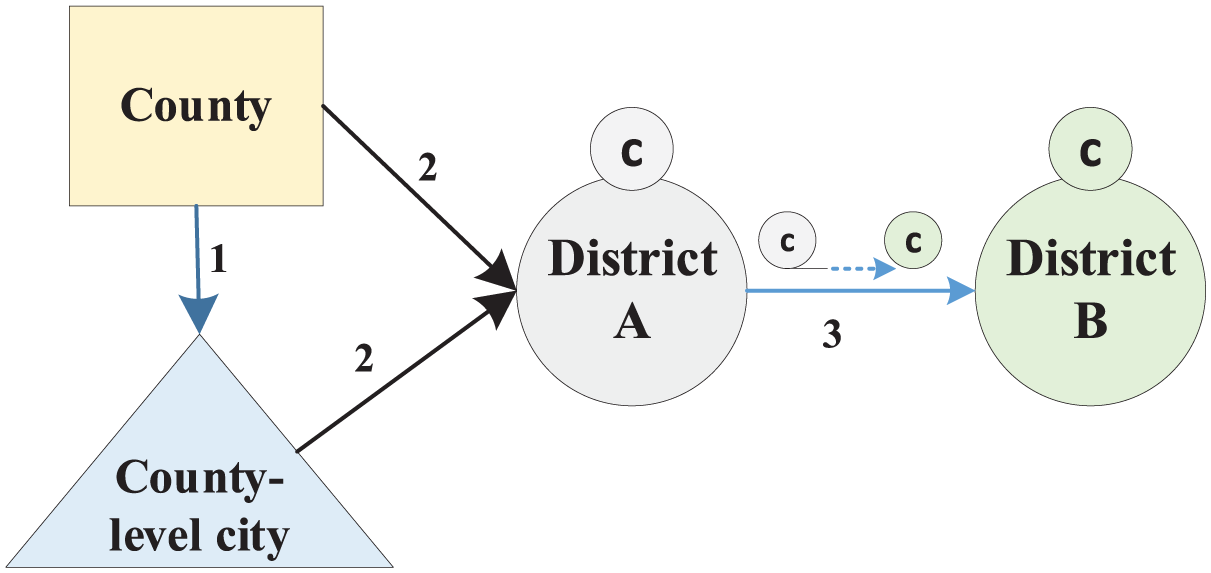
The concept map of three county-level administrative adjustment patterns.
To ensure the accuracy of our findings, several aspects of the research design warrant clarification. First, the analysis uses the prefecture-level city as the unit of observation. This is appropriate because cADC in China is typically initiated by prefecture-level governments, and its impacts extend beyond individual counties to the entire prefectural area, which is validated in prior studies (Chen et al., 2023; Feng and Wang, 2021, 2022). Second, the core study period spans 2003 to 2019. To maintain comparability across cADC types, we focus on 2004–2017, as cADC forms were relatively consistent during this interval, and because the conversion to districts (CTD) was suspended nationally after 2017. Furthermore, to adequately capture pre- and post-adjustment changes in ULUE, we extended the data series to 2019. This also helps mitigate potential distortions from the COVID-19 pandemic, which emerged in late 2019. Third, samples are classified into treatment and control groups. The treatment group includes 68 prefecture-level cities that experienced only one type and one instance of cADC between 2004 and 2017. The control group comprises 140 cities that underwent no administrative adjustments from 2003 to 2019. In total, 208 prefecture-level cities constitute the final sample (Figure 3).
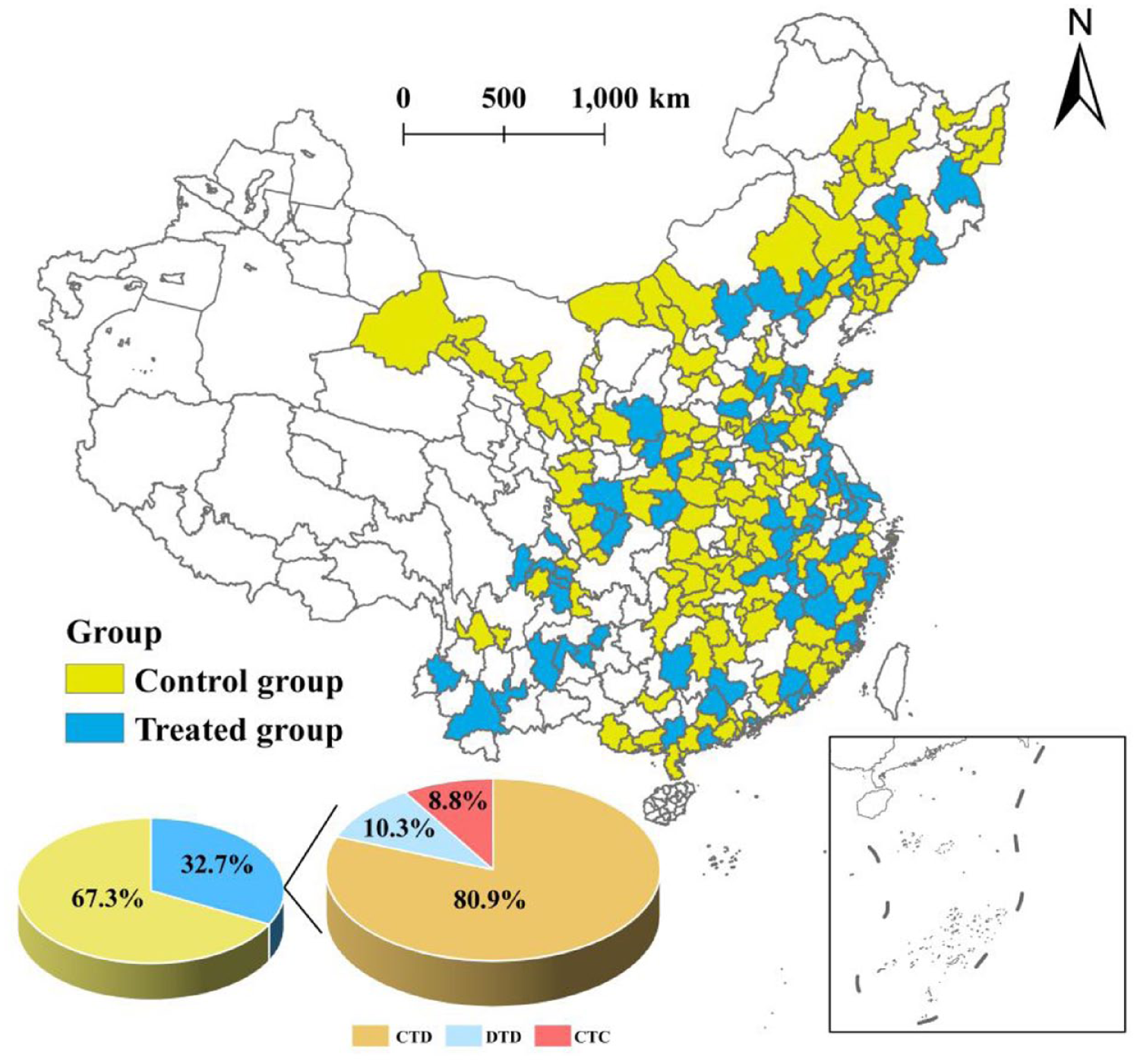
The special distribution and proportion of two group cities.
The measurement of urban land use efficiency
The core dependent variable, Urban Land Use Efficiency (ULUE), captures the input-output relationship in urban land utilization (Wu et al., 2022). Existing ULUE assessments generally fall into single-index and multi-index approaches. The former primarily focuses on economic output (Wu et al., 2017), whereas the latter offers a more holistic evaluation by incorporating social and ecological dimensions. Given its comprehensive nature, this study adopts the multi-index method.
Grounded in the classical production function that identifies land, labor, and capital as primary inputs, this study measures these factors using urban built-up area, the number of non-agricultural employees, and general public budget expenditure, respectively. On the output side, the multifunctionality of land generates diverse benefits. Land dedicated to public services (e.g., hospitals, schools, parks) yields social and ecological value, while commercial and industrial land is primarily geared toward economic returns. Accordingly, outputs are represented by the gross output value of the secondary and tertiary industries (economic), the average wage of urban employees (social), and the area of urban green space (ecological).
The Data Envelopment Analysis (DEA) model, introduced by Charnes et al. (1978), is widely used to evaluate the relative efficiency of decision-making units (DMUs) involving multiple inputs and outputs. A key advantage of this method is that it does not require parametric assumptions, thereby reducing subjectivity, simplifying the estimation process, and minimizing associated errors. However, a limitation of the traditional radial DEA models is their requirement for proportional changes in inputs or outputs, which restricts flexibility in weighting and can lead to biased efficiency measurements. To overcome these drawbacks, Tone (2001) developed a non-radial, non-angular Slack-Based Measure (SBM) model that incorporates slack variables directly into the efficiency assessment. Following this advanced approach, we employ the SBM model to calculate ULUE. The specific formulation is as follows:

where ρ represents the efficiency value; xik and yrk represent input and output factors, respectively; m and q are the numbers of input and output factors, respectively; and
The impact estimation model
This study employs a difference-in-differences (DID) framework to construct a quasi-natural experiment. Cities that implemented cADC form the treatment group, while those without any such adjustments constitute the control group. By comparing the differential changes in ULUE between these two groups before and after the policy implementation, we can identify the net effect of cADC. The following two-way fixed effects regression model is specified to estimate this relationship:


where i represents the city; t stands for the year; ULUEit refers to the urban land use efficiency of city i in year t; λ denotes the coefficients of control variables; and n represents the number of control variables.
To identify the direct and indirect effects of cADC, a mediating effect model is employed to examine the potential pathways through which cADC influences ULUE. The model is specified as follows.


where
Main variables and data sources
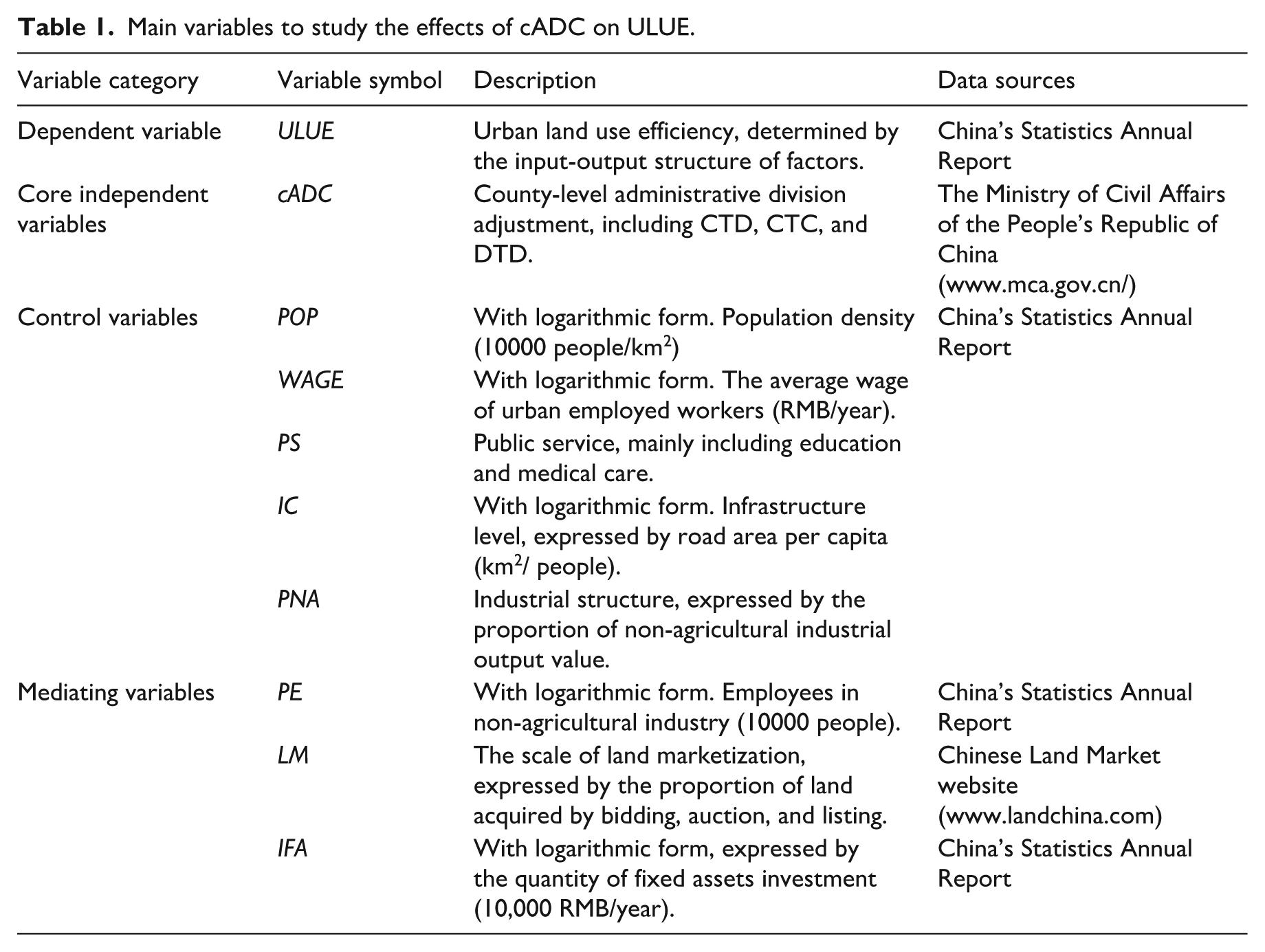
The primary objective of this study is to investigate the impact of county-level administrative division conversion (cADC) on Urban Land Use Efficiency (ULUE). Consequently, ULUE serves as the dependent variable, while the implementation of cADC, classified into three patterns of CTD, CTC, and DTD, is the key independent variable. Following established literature (Jiang et al., 2021), we control for several confounding factors that may influence ULUE, including population dynamics, industrial structure, and urban characteristics. Specifically, the model incorporates five control variables: population density (POP), the proportion of value-added from the tertiary industry in GDP (PNA), the average wage of employees (WAGE), public service capacity (PS), and infrastructure condition (IC).
As postulated in the theoretical framework, cADC may influence ULUE through two primary mechanisms of factor inputs and marketization. First, these administrative adjustments promote population urbanization, thereby increasing the non-agricultural labor force in the affected areas. Concurrently, local governments often recalibrate the scale and orientation of fixed-asset investment to reduce infrastructure disparities between newly incorporated units and existing urban cores. Thus, factor inputs are proxied by non-agricultural employment (PE) and fixed-asset investment (IFA). Second, cADC can reconfigure market size and governmental authority, which in turn affects land transactions. This market mechanism is captured by the land marketization rate (LM), calculated as the proportion of land supplied via market-based methods (e.g., bidding, auction, and listing) to the total land supply. Definitions and data sources for all variables are summarized in Table 1.
Main variables to study the effects of cADC on ULUE.
Results
The effects on ULUE based on benchmark regression
As shown in Figure 4(a), ULUE exhibits a fluctuating upward trend. Moreover, cities that have undergone cADC generally display lower ULUE values than those in the control group. Using the policy implementation year as a dividing point, Figure 4(b) indicates a decline in ULUE following the adjustment. However, further analysis is needed to verify whether these differences can be attributed to cADC.
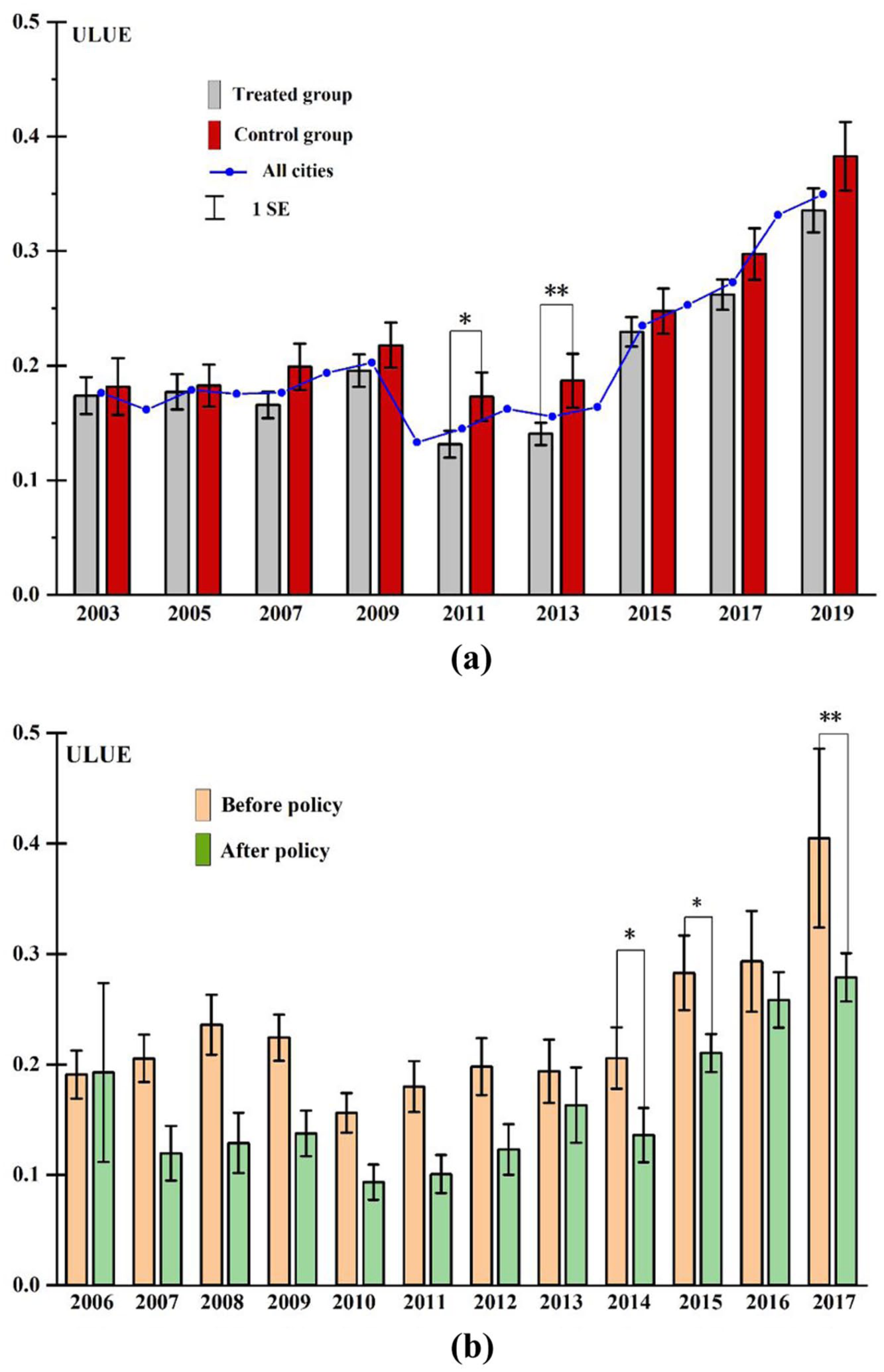
Dissimilarities in ULUE between different cities and time points.
Table 2 reports the regression results on the impact of cADC on ULUE. Model (1) presents the results without control variables, while Models (2)–(4) sequentially incorporate them into the regression analysis. The findings show that, after accounting for controls, cADC exerts a statistically significant negative effect on ULUE. In Model (4), the coefficient of cADC is −0.119, indicating an average 11.9 % reduction in ULUE for the treated group relative to the control group, thereby supporting Hypothesis 1. Among the control variables, all five have significant positive effects on ULUE, with public services exerting the strongest influence.
The overall effects of cADC on ULUE.
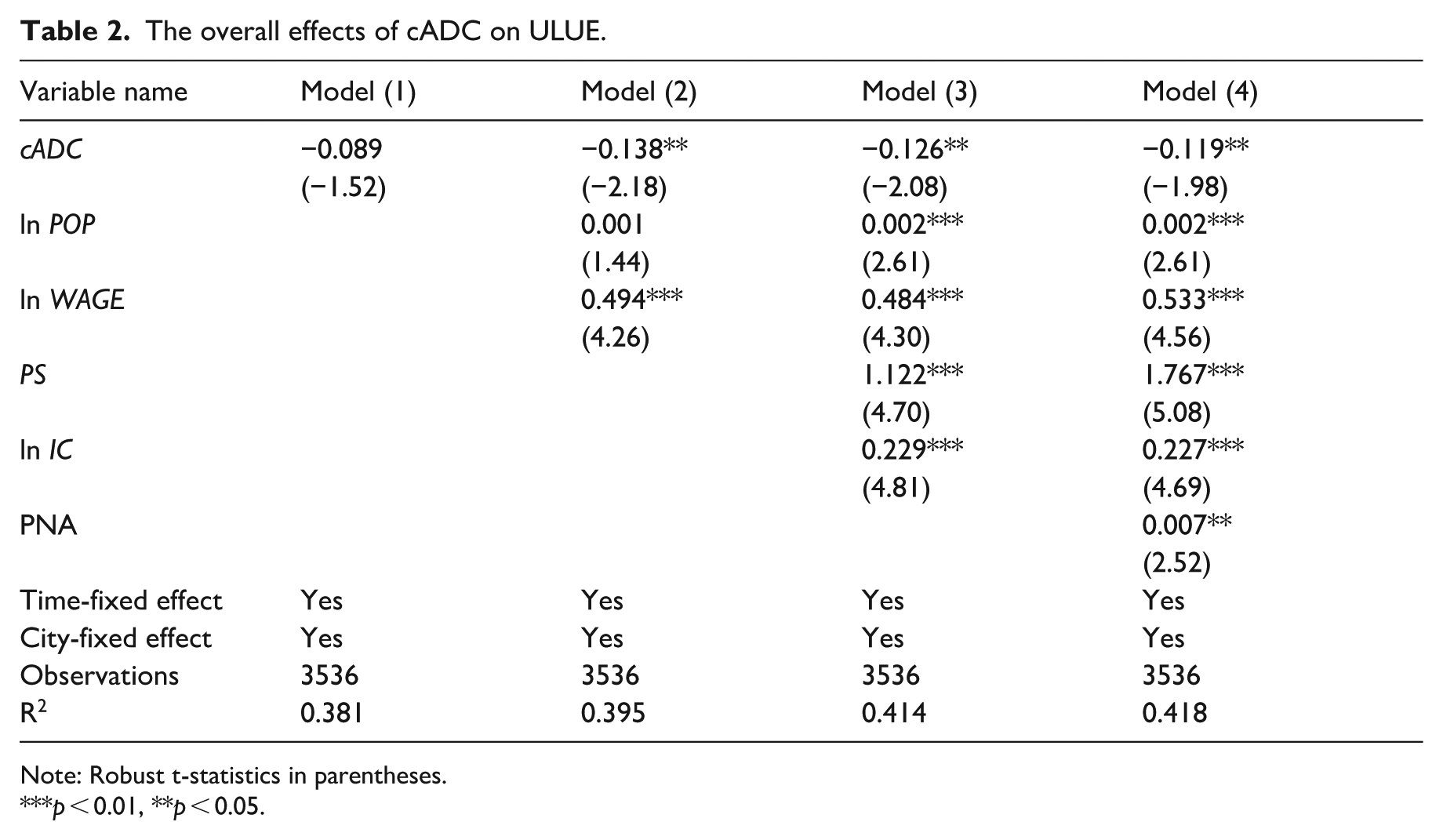
Note: Robust t-statistics in parentheses.
p < 0.01, **p < 0.05.
Heterogeneity and robustness of impact
Differences in land supply-demand relationships across cities of varying sizes may also contribute to the heterogeneity of ULUE. Following China’s official classification, cities are divided into three categories based on permanent population: small cities (City I, fewer than 1 million), medium cities (City II, 1 to 3 million), and large cities (City III, more than 3 million). On this basis, we investigate how the impact of cADC on ULUE varies across city size categories.
Models (5)–(7) in Table 3 show that cADC significantly reduces ULUE in City II but has no significant effect in City I or City III. In City I, the relatively low mismatch in land supply and demand, coupled with limited factor agglomeration, means that spatial restructuring or land expansion caused by cADC does not substantially alter ULUE. In City III, although land demand remains high due to economic expansion, ULUE has already reached a high level, so the marginal impact of cADC is negligible. By contrast, City II maintains a relatively balanced land supply-demand relationship. In this context, the expansion of urban land supply driven by cADC weakens land use intensity, resulting in a significant decline in ULUE.
Results of heterogeneity analysis.
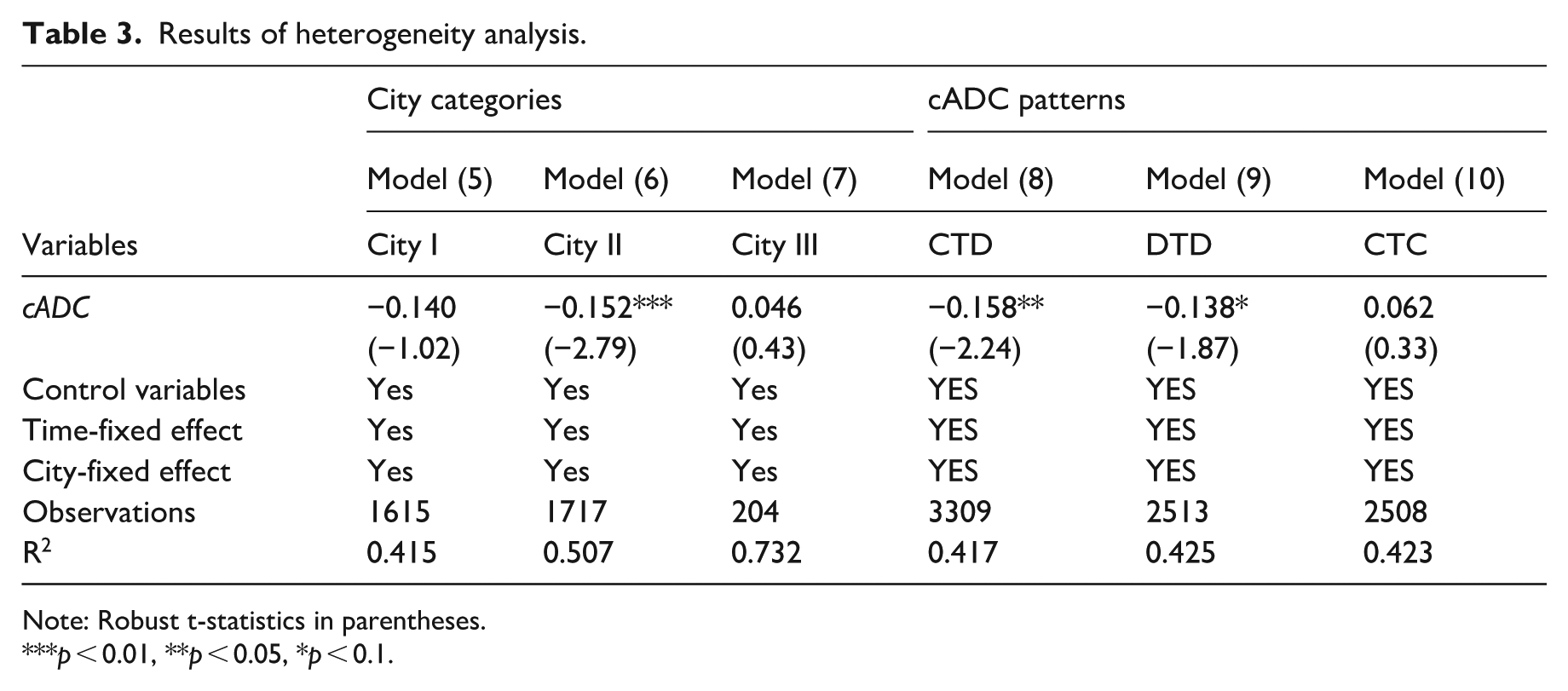
Note: Robust t-statistics in parentheses.
p < 0.01, **p < 0.05, *p < 0.1.
Furthermore, given that administrative scopes as well as the intensity, extent, and direction of regional factor flows affected by cADC may vary, we also examine the heterogeneous effects of the three cADC patterns. Models (8)–(10) in Table 3 indicate that CTD and DTD exert a significant negative impact on ULUE, whereas CTC shows no significant effect. The rationale lies in the underlying objectives of these policies. First, the CTD policy, adopted in most cities to expand urban space, inadvertently weakens land use intensity and leads to a decline in regional ULUE. Second, the DTD policy, usually applied in border areas between adjacent administrative divisions, suffers from incomplete administrative empowerment, delayed power transfer, and unclear ownership of land income, which collectively reduce land development intensity and significantly lower ULUE. Third, the CTC policy, implemented by prefecture-level governments, does not alter the existing administrative boundaries and allows counties to retain local autonomy, thereby avoiding the power centralization pitfalls of CTD and exerting little influence on factor flows (Wang and Yeh, 2020).
To further test the robustness and address potential endogeneity in the relationship between cADC and ULUE, we conduct several robustness checks, including replacing the dependent variable, adjusting the policy implementation year, and altering the sample periods. The results are shown in Table 4. First, since ULUE exhibits strong path dependence, with past ULUE influencing subsequent levels, we use a one-year lag of ULUE as the dependent variable (Model (11)). Second, to rule out interference from other policies implemented in the same year as cADC, we adjust the policy implementation period by advancing it by two years and delaying it by two years, respectively, as shown in Models (12) and (13). Third, to account for the impact of economic development stages, we restrict the sample to the post-crisis period from 2008 to 2015 (Model (14)). According to Table 4, the signs and significance levels of the cADC coefficients in Models (11) and (14) are consistent with those in Model (4). In contrast, the cADC coefficients in Models (12) and (13) are insignificant. These results confirm that changes in ULUE are indeed driven by cADC, supporting the robustness of our findings.
Results of the robustness test.
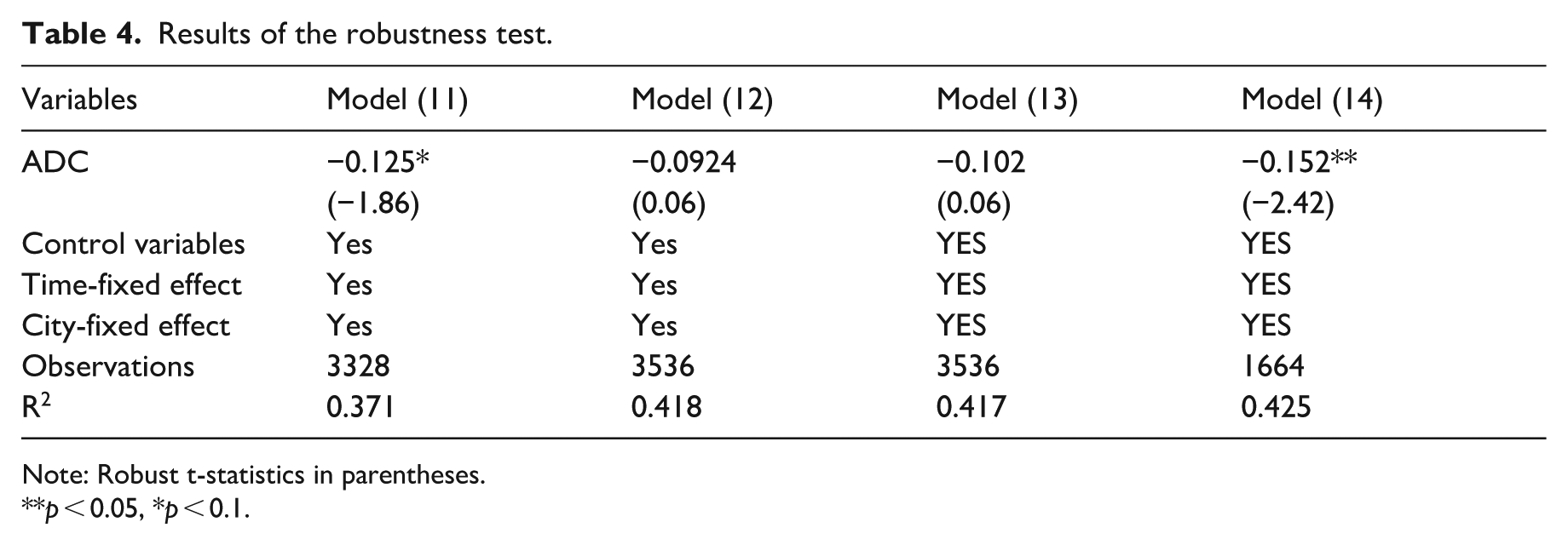
Note: Robust t-statistics in parentheses.
p < 0.05, *p < 0.1.
The influential mechanisms of cADC on ULUE
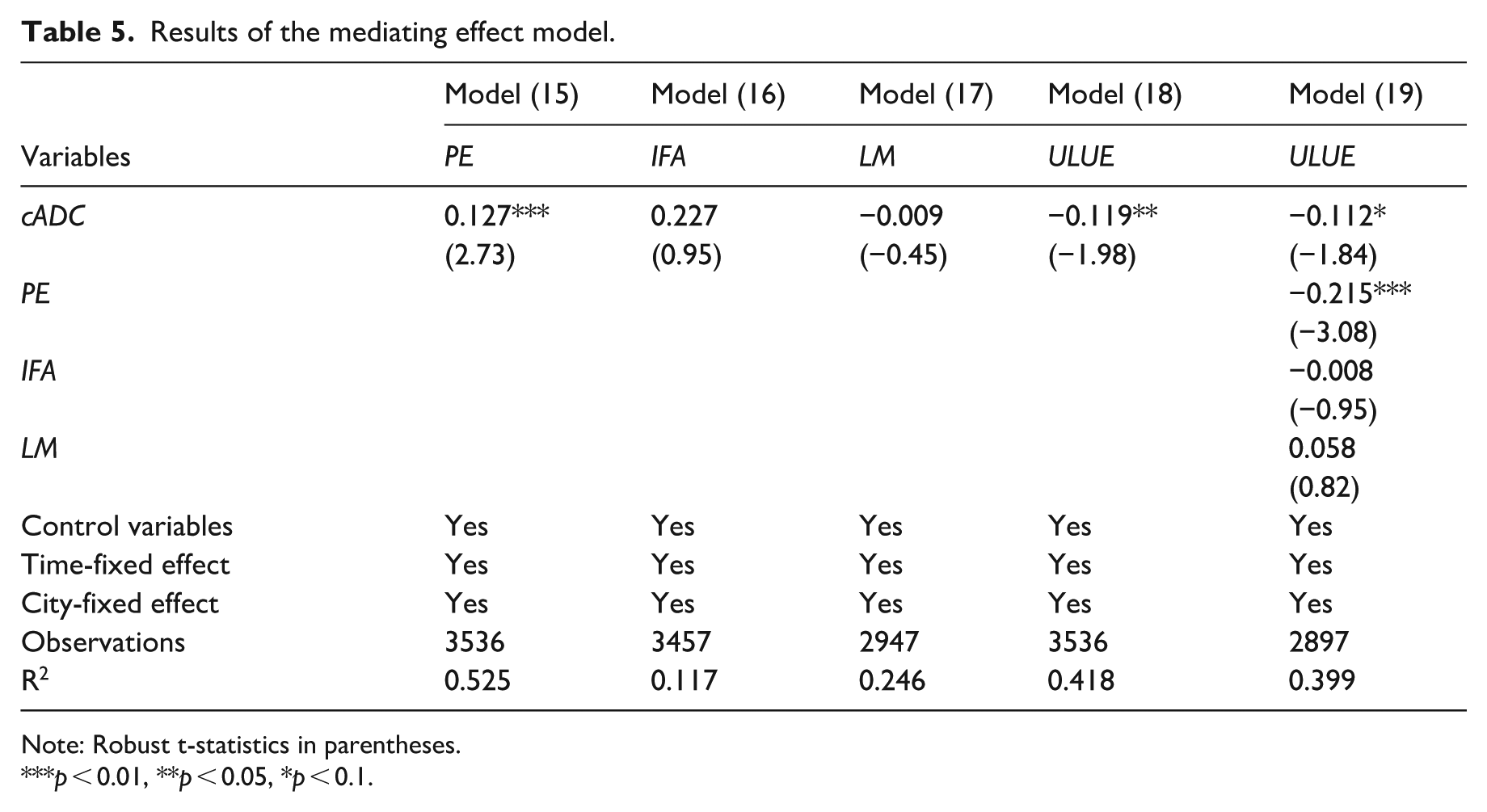
We employ mediating effect models and a bootstrap test to analyze the influential mechanisms of cADC on ULUE, with results presented in Tables 5 and 6. Model (15) shows that cADC significantly promotes PE, suggesting that the policy creates non-agricultural employment opportunities and attracts surplus rural labor to urban areas. However, Model (19) indicates that PE exerts a significant negative effect on ULUE. This finding reflects China’s current stage of redundant factor inputs, where excessive labor inflows do not enhance land output but instead constrain land use efficiency. This mechanism partly explains China’s ongoing transition from extensive to intensive economic development. According to Model (16), cADC has an insignificantly positive influence on IFA, which is consistent with prior studies (Zhuang et al., 2020). In Model (17), cADC has a negative but insignificant effect on LM, which aligns with the practice of local governments leasing industrial land through non-market agreements at low prices to attract investment and promote urbanization following cADC implementation. Since the coefficients of IFA and LM in Model (19) are also insignificant, further verification is needed to determine whether these channels constitute valid pathways.
Results of the mediating effect model.
Note: Robust t-statistics in parentheses.
p < 0.01, **p < 0.05, *p < 0.1.
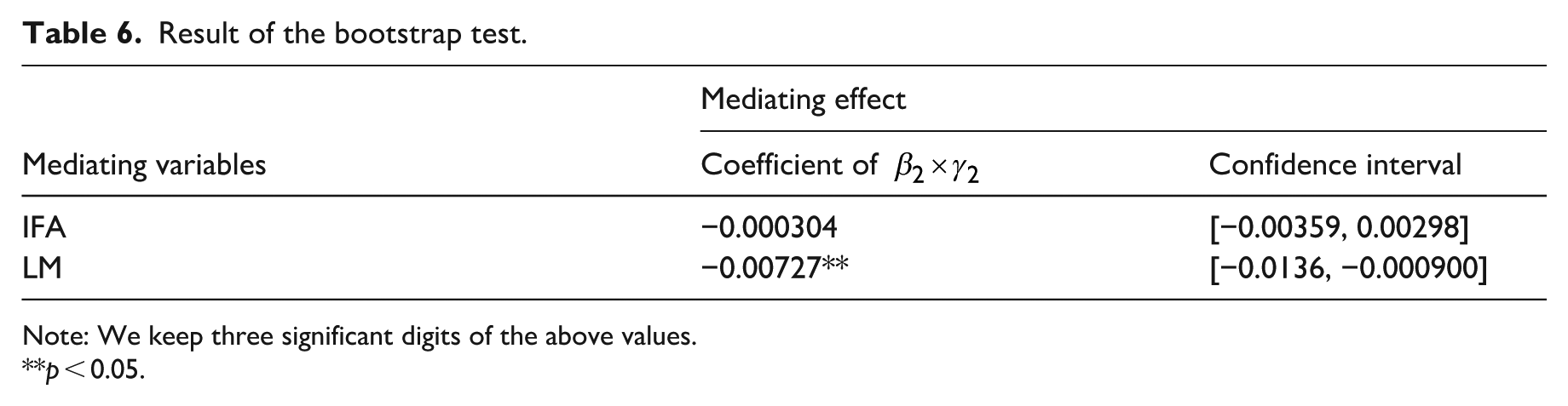
The bootstrap test is widely used to examine mediating effects. According to its procedure, if either coefficient
The
Result of the bootstrap test.
Note: We keep three significant digits of the above values.
p < 0.05.
In summary, the influence of cADC on ULUE through factor inputs and land market mechanisms is validated. Non-agricultural employment is the primary driver within the factor input pathway. Therefore, Hypotheses 2a and 2b are confirmed.
Discussion
Further exploration of the relationship between cADC and ULUE
Our findings suggest that cADC impedes ULUE due to the persistence of traditional extensive growth patterns and incomplete power reorganization. This supports critical perspectives arguing that cADC can negatively influence land use, leading to resource waste, high vacancy rates, and accelerated urban expansion. As emphasized in previous studies, administrative division adjustments profoundly shape urban expansion patterns through transformations in socioeconomic structures (Zhang et al., 2023; Feng and Wang, 2022). In Chinese cities, urban land expansion often outpaces population growth (Liu et al., 2024), resulting in unchecked sprawl despite large areas of underutilized land. These trends contribute to inefficient infrastructure construction, land resource waste, and a substantial decline in ULUE. Moreover, intergovernmental competition in China largely depends on fiscal expenditure and tax incentives, making cADC a key tool for maximizing land-based revenue. Comparative evidence indicates that adjusted areas often sell industrial land at discounted prices to attract investment, such as establishing large industrial parks, while commercial and residential land is sold at higher prices to increase transfer income. Because industrial land is typically used extensively and enterprises have limited incentives to improve land-use efficiency, this strategy of “attracting investment through land” ultimately reduces ULUE. These adverse outcomes are closely linked to the mismatch between administrative division management and urban growth needs (Chen et al., 2023). Even in cities with weaker socioeconomic conditions, local governments may pursue expanded jurisdictional space and authority through cADC (Chao and Lin, 2020), resulting in inefficient resource allocation, sluggish economic activity, and idle land resources (Zhang and Sun, 2019).
In contrast, some studies suggest that cADC can enhance ULUE (Wang and Chen, 2022). These divergent conclusions arise from several factors. First, differences in ULUE measurement approaches lead to varying results. Previous studies have argued that cADC can improve economic land-use efficiency by easing land constraints, promoting scale economies, generating external economic benefits, and facilitating knowledge spillovers (Wang and Chen, 2022). However, the negative effects identified in this study reflect a comprehensive evaluation of ULUE that incorporates economic, social, and ecological dimensions, providing a more accurate and valid measure of overall efficiency. Second, variation in the scope of cADC indicators also matters. Different administrative reforms entail distinct levels of authority and resource allocation capacity, meaning that various types of cADC may exert contrasting effects on urban spatial development and land-use patterns (Feng and Wang, 2021). Unlike earlier studies focusing primarily on CTD policies (Zhang et al., 2023), this study jointly examines CTD, DTD, and CTC reforms, capturing their interlinkages and reducing reliance on a single policy while minimizing institutional frictions. Third, the effects of cADC may differ across mechanisms and stages of reform. Our findings show that cADC negatively affects ULUE by inducing redundant factor inputs and reducing land market transaction efficiency. Nonetheless, indirect evidence suggests that cADC can also facilitate industrial upgrading (Feng and Wang, 2022), reduce institutional mismatches in land allocation (Lu and Wang, 2023), enhance the alignment of public service supply and demand (Feng and Wang, 2022), and promote technological progress and knowledge spillovers, all of which may improve ULUE (Xue et al., 2022). Overall, these contrasting outcomes indicate that cADC should not rely solely on increasing factor inputs but should instead prioritize structural optimization and technological advancement to enhance ULUE.
The policy implications on sustainable use of land
First, while cADC may generate short-term economic gains, particularly in terms of GDP growth and land-based revenues, it also poses long-term risks to spatial efficiency, institutional capacity, and urban sustainability. Policymakers should acknowledge these trade-offs and assess administrative restructuring not only from an economic standpoint but also through environmental and governance perspectives. Higher-level governments should conduct systematic and evidence-based evaluations of local cADC proposals, strictly regulate unnecessary boundary expansions, and establish institutional mechanisms that link land quota allocations to land use efficiency. Cities with higher ULUE should be prioritized for future land expansion rights. Such a performance-based allocation mechanism would encourage efficient land use and incentivize local governments to pursue intensive rather than extensive development strategies. For regions that have already undergone cADC, targeted remedial measures such as tax incentives and infrastructure upgrades should be implemented to attract suitable industries and ensure the efficient utilization of newly adjusted land areas.
Second, cADC often exacerbates fragmented land governance and coordination failures. To mitigate these challenges, interjurisdictional coordination should be strengthened through formalized institutions such as metropolitan planning committees. These bodies can facilitate cross-regional infrastructure development, integrated spatial planning, and harmonized land use regulations, thereby reducing governance fragmentation and improving spatial coherence after administrative restructuring.
Third, the empirical results indicate that continued capital and labor inputs cannot sustainably enhance ULUE. This finding aligns with the broader policy consensus on transitioning from an extensive growth model toward one emphasizing quality, efficiency, and innovation. Local governments should move away from dependence on factor accumulation and instead focus on optimizing input structures and promoting technological innovation. In addition, market mechanisms should be leveraged to allocate land resources more efficiently. By directing land toward higher-productivity sectors, governments can achieve stronger economic returns with lower environmental and social costs.
Possible limitations
This study provides a novel examination of the impacts and underlying mechanisms of cADC on ULUE, thereby expanding the analytical dimensions for assessing the effects of cADC and deepening the understanding of the drivers of ULUE. Nevertheless, two limitations warrant attention. First, although this study investigates the potential pathways linking cADC to ULUE through factor inputs and market mechanisms, these relationships may involve complex synergistic effects among multiple channels. Future research could employ more detailed sub-regional samples to identify and quantify these interrelated mechanisms. Second, the analysis focuses solely on urban land use, while cADC also transforms administrative units from area-based to city-based systems. This transition may gradually shift the dominant industries within the original administrative areas from agriculture to non-agriculture, implying that future studies should further explore whether cADC also affects agricultural land use patterns.
Conclusion
This study theoretically and empirically examines how cADC influences ULUE, using China as a representative case. Within the framework of political centralization and economic decentralization, cADC involves strategic interactions among multiple levels of government and ultimately suppresses ULUE. Economically, cADC can reduce efficiency by promoting excessive land expansion and interjurisdictional competition, which undermines the effective allocation of resources. Socially, it exacerbates governance fragmentation and diminishes equity and inclusiveness in land-use outcomes, limiting the ability of urban development to meet residents’ needs. Ecologically, administrative restructuring often fragments urban ecosystems and weakens coordination across jurisdictions, reducing the capacity of cities to maintain environmental sustainability. Collectively, although cADC may temporarily facilitate urban expansion or market integration, it currently lowers overall ULUE and highlights the tension between administrative restructuring and sustainable spatial governance. Furthermore, factor inputs and market mechanisms serve as key pathways linking macro-level institutional changes to micro-level spatial patterns. The factor input mechanism reflects the redistribution of land, labor, and capital that shapes land use outcomes from the supply side, while the market mechanism captures the influence of market actors on land use decisions from the demand side.
Empirical analysis indicates that cADC policies exert a significant negative effect on ULUE. On average, cities implementing cADC experience an approximately 12% reduction in ULUE compared with cities without such policies. This impact exhibits notable heterogeneity across city sizes, with the strongest effect observed in medium-sized cities. Among the three cADC patterns examined, CTD shows the most pronounced negative impact, likely due to its substantial expansion of urban development space through changes in administrative classification. Moreover, cADC leads to increased labor and capital inputs; however, these continued inputs fail to improve ULUE and instead contribute to its decline, consistent with China’s broader transition from extensive to intensive development. In addition, cADC significantly reduces land market transaction rates, further contributing to the observed decrease in ULUE.
Nonetheless, it is important to recognize the complexity and duality of cADC’s effects. While this study finds a predominantly inhibitory impact, cADC may also enhance ULUE through mechanisms such as industrial upgrading and spatial agglomeration, which can improve productivity and optimize land-use structure. Future research should further investigate these potentially positive pathways to provide a more balanced and nuanced understanding of cADC’s multifaceted role in shaping urban land dynamics.
Footnotes
Acknowledgements
This work was supported by grants from Natural Science Foundation of Shandong Province [Grant Number ZR2024MD071], the National Natural Science Foundation of China [Grant Numbers 42001252, 42271270], the National Social Science Fund of China [Grant Number 24BTJ020], and the Youth Creative Technology Support Program for Higher Education Institutions of Shandong Province [Grant Number 2024KJL016]. The authors appreciate the constructive comments from anonymous reviewers and the editor, which helped improve the manuscript substantially.

Ethical considerations
Not applicable. This study does not involve human or animal subjects and therefore did not require ethical approval.
Consent to participate
Not applicable. This study does not involve human participants.
Consent for publication
Not applicable. No individual person’s data is included in this manuscript.
Informed consent/patient consent
Not applicable. This study does not involve human participants or patient data.
Trial registration number/date
Not applicable. This research does not involve any clinical trials requiring registration.
Author contributions
Yuzhen Zhang: conceptualization, methodology, formal analysis, writing original draft; Xuan Liu: data curation, formal analysis, writing original draft; Miao Zhang: conceptualization, review and editing.
Funding
The authors disclosed receipt of the following financial support for the research, authorship, and/or publication of this article: This work was supported by grants from Natural Science Foundation of Shandong Province [Grant Number ZR2024MD071], the National Natural Science Foundation of China [Grant Numbers 42001252, 42271270], the National Social Science Fund of China [Grant Number 24BTJ020], and the Youth Creative Technology Support Program for Higher Education Institutions of Shandong Province [Grant Number 2024KJL016].
Declaration of conflicting interests
The authors declared no potential conflicts of interest with respect to the research, authorship, and/or publication of this article.
Data availability statement
The data used in this study are available from the first author upon reasonable request.