



Abstract
The concept of publicness in public spaces traditionally refers to physical environments that are accessible, inclusive, and open to all, fostering social interaction, community engagement, and democratic practices. However, in the digital era, especially in the Chinese context, digital platforms have redefined publicness by extending participation and civic interaction beyond physical spaces. This paper examines how digital technologies, accelerated by the Covid-19 pandemic, are reshaping public spaces in China. It explores the role of digital tools in extending the conceptualisation of public space by democratising place-shaping processes, fostering community-led micro-regeneration, and enhancing social cohesion while also addressing challenges such as digital exclusion and platform commercialisation. Through case studies in Shanghai, the research highlights four dimensions of publicness enabled by digital platforms in a process-oriented perspective: foundational, collaborative, experiential, and sustained. By demonstrating how digital platforms integrate with each phase of public space creation, this study underscores the evolving nature of publicness and argues for an integrated approach that blends physical and digital realms. In doing so, it advances theoretical discourse and offers actionable insights, seeking to foster more inclusive and dynamic public spaces in the digital era.
Introduction
The concept of public space in China has evolved through a complex and multifaceted history, often shaped by significant socio-political transitions. Traditionally, the term ‘public space’ in the Chinese context is ambiguous, as it intersects with notions of state ownership and collective values, often diverging from Western interpretations associated with democratic ideals and civic engagement (He and Wu, 2009). Unlike in Western contexts, where public spaces are typically seen as venues for democratic participation and social exchange, public spaces in China have historically been underpinned by top-down state control (Kiang, 2007; Qian, 2014). In recent decades, however, the notion of publicness in China has expanded, where public space practices have evolved with urbanisation and reform policies (Chen, 2010; Hassenpflug, 2004; Gaubatz, 2008). This transformation has been accompanied by challenges such as monotonous designs, limited accessibility, and the commercialisation of spaces, which have diminished the vibrancy and inclusivity of public spaces (Gaubatz, 2008, 2019; Wang and Yang, 2010).
The rise of digital technologies, especially during the Covid-19 pandemic, has further reshaped the role of public space in China. Digital platforms have introduced new forms of engagement, fostering virtual participation and community-driven practices, which challenge traditional spatial boundaries and democratise place-shaping processes (Shu and Wang, 2021; Wang et al., 2021). These platforms not only become essential for communication, advocacy, and the promotion of public space practices, enabling communities to navigate restrictions while fostering social cohesion (Chen, 2024), but also serve as the database that can support understanding of how people value and interact with public spaces (Li et al., 2024). While much has been written about digital platforms facilitating civic participation and public discourse in both Western and Chinese contexts (Schreiber, 2020), the broader implications of these tools in redefining publicness in urban spaces remain underexplored. Specifically, digital platforms blur the lines between physical and digital realms, thereby altering how publicness is conceptualised and experienced.
Recent urban regulations and policies in Shanghai, such as the 15-minute Community-Life Circle and the Shanghai 2035 Master Plan, reflect a growing emphasis on making public spaces more accessible, inclusive, and participatory (Shanghai Municipal People’s Government, 2018; Shanghai Urban Planning and Land Resources Administration Bureau, 2016). These initiatives advocate for the democratisation of space creation through community-driven regeneration efforts and micro-scale interventions, thereby enhancing and expanding the notion of ‘publicness’, even when it is not explicitly named. The integration of digital tools with these policies creates new opportunities for inclusivity, as seen in the rise of micro-regeneration projects and digitally mediated public space practices (Jiang et al., 2020; Kou et al., 2019; Wang and Chen, 2020).
Despite these developments in understanding how digital platforms contribute to the shaping of public space, the broader implications of digital technologies on the concept of publicness remain insufficiently explored. How these platforms reconfigure publicness in urban spaces warrants further investigation, particularly in the context of China’s unique blend of state control, collective cultural values, and rapid technological adoption. This paper does not aim to present a systematic study on publicness of public space; instead, it offers insights into the evolving nature of publicness and its implications for public space in the digital era. It specifically explores two key questions: (1) how digital techniques reshape the publicness of public space, and (2) how publicness is experienced and understood in a Chinese context characterised by state influence and technological innovation.
The following section reviews the literature on the concept of publicness, exploring its philosophical underpinnings in both Western and Chinese contexts. It highlights a gap in the current understanding of publicness, particularly regarding its evolution in the digital age. The next section elaborates on the methodologies and case studies in this study. This is followed by a section examining the interaction between digital technologies and the concept of publicness in the shaping of public spaces, which offers practical suggestions while reflecting on further challenges related to inclusive place-shaping. The final section reflects on limitations of this study and proposes directions for further research.
Literature review
‘Publicness’ is a complex and multi-faceted concept central to understanding public spaces. It serves as a ‘cluster concept’, encompassing various dimensions that reflect how these spaces are perceived and utilised across different contexts. At its foundation, publicness embodies openness, inclusivity, and accessibility, ensuring that spaces are available to all members of a community (Kohn, 2004; Lofland, 1973; Mitchell, 2003). These spaces are not merely physical locations but also socio-political constructs that embody societal values and norms. The theoretical discussion of publicness highlights its dynamic nature. Scholars argue that publicness is not a static attribute but a quality that evolves based on social processes, power dynamics, and contextual factors. Ownership, management, and accessibility significantly influence publicness, affecting who feels welcome and how spaces are utilised (Carmona, 2010b; Magalhaes, 2010; Németh and Schmidt, 2011). The interaction between individuals, communities, and spaces is shaped by cultural and political contexts, determining inclusivity and engagement (Low and Smith, 2005; Madanipour, 2003). The dynamism of publicness also reflects how social processes and power dynamics can either enhance or diminish this quality (Young, 2000).
In Western contexts, publicness is closely tied to democratic ideals, freedom, and civic engagement. Public spaces are often seen as manifestations of the public sphere, where citizens engage in dialogue, protest, and exercise political rights (Habermas, 1989). These spaces are essential for democratic societies, offering venues for diverse opinions and contestation of power (Arendt, 1998; Carmona, 2010a; Kohn, 2004; Lofland, 1973; Mitchell, 2003). Moreover, recent shifts toward privatisation and commercialisation have led to concerns about the erosion of publicness. Neoliberal policies have transformed many public spaces into sites of exclusion, where access is restricted based on economic status or consumer behaviour (Fraser, 1990; Kohn, 2004; Mitchell, 2003). This erosion is evident in barriers that limit access for certain groups, undermining the social cohesion that public spaces are meant to foster (Schiefer and van der Noll, 2017). And therefore, the concept of publicness is also frequently approached through the lens of inclusivity and equity, where scholars argue that a truly public space must be accessible to all, allowing diverse groups to coexist and engage in meaningful ways (Carmona, 2010b; Kohn, 2004; Madanipour, 1999, 2003; Magalhaes, 2010; Young, 2000). Moreover, the proliferation of surveillance technologies in urban environments raises concerns about privacy and freedom of expression in public spaces (Andrejevic, 2013; Lyon, 2007). As public spaces become more regulated and monitored, their role as sites of open engagement is increasingly compromised. These challenges demand a re-evaluation of publicness in light of evolving urban dynamics and technological influences.
In contrast, the understanding of publicness in the Chinese context is less on individual rights but more on collective responsibilities and social engagement (Kou et al., 2019; Li et al., 2022). Unlike Western societies where public spaces often embody democratic ideals, Chinese public spaces are historically tied to top-down control and collective harmony, rooted in Confucian values. These spaces serve as sites for collective activities rather than individual expression, reflecting a focus on social harmony and hierarchical order (Fei et al., 1992). With rapid urbanisation and modernisation, the role of public spaces in China has evolved significantly. Recent urban practices in cities like Shanghai highlight a growing emphasis on micro-regeneration and community-driven initiatives (Chen, 2023; Hua and Zhuang, 2022; Zhu, 2023). These projects blend top-down planning with grassroots participation, reflecting a hybrid model of publicness that accommodates both state priorities and local needs (Zhu, 2023). With increasing proactive informal and DIY dynamics, Chen (2023) argues that community collective responsibilities have that capacity in contributing publicness of community public spaces. Zhu (2023) extends the discussion, elaborating how micro-regeneration initiatives in Shanghai can be leveraged to publicise community space, reflecting the multi-layered nature of publicness. However, publicness remains conditional, mediated by state regulations and governance frameworks (Chen, 2024). In this context, publicness in China represents a dynamic interplay between state control, cultural traditions, and contemporary urban demands.
In sum, publicness has often been analysed through a ‘product’ lens – focusing on the end state of a space’s ownership, control, civility, animation, and physical configuration (Varna and Tiesdell, 2010). While these elements have proven valuable for assessing the ‘degree of publicness’ in diverse urban contexts, it primarily addresses how publicness is manifested in existing spaces rather than how it evolves over time. Recent scholarship suggests that publicness should also be understood as a process, encompassing design, development, and management activities, as well as the final use of the space (Zhu, 2023). In this process-oriented view, the scope of publicness can be broadened from initial idea generation to long-term stewardship, capturing the evolving interactions policy frameworks, community initiatives, and public spaces.
Digital technologies have introduced new layers to the fabric of publicness, shaping both opportunities and challenges for public spaces in the digital age. On the one hand, in both Western and Chinese contexts, technologies like social media and civic apps have expanded access to public discourse, enabled citizens to engage in debates, mobilised collective action, and participated in civic life (Schreiber, 2020). These platforms offer inclusive platforms for interaction (Schreiber, 2020), expanding access and engagement (Knight Foundation and Gehl, 2021), encourage civic participation (Pew Research Center, 2021), build inclusive decision-making environments (Knight Foundation and Gehl, 2021), and generate new forms of hybrid spaces where the digital and physical environments intersected (Knight Foundation and Gehl, 2021). In particular, digital tools such as web-based platforms, mobile apps, and sensors enhance participatory practices in urban planning and design by broadening accessibility, magnifying impacts, and improving activity formats (Hasler et al., 2017; Sæbø et al., 2008). On the other hand, digital technologies also present challenges. The digital divide exacerbates inequalities, excluding populations with limited access to technology (Schreiber, 2020). Privacy concerns and misinformation further complicate the integration of digital tools into public space practices, raising questions about accountability and inclusivity (Andrejevic, 2013; Schreiber, 2020). In China, the intersection of state control and digital platforms introduces additional complexities, as these tools are often employed to reinforce regulatory objectives while simultaneously enabling civic engagement (Chen, 2023).
While existing research has discussed how digital technologies influence participation and engagement in public spaces, their role in redefining the configurations of publicness remains underexplored, particularly within the Chinese context. These platforms create opportunities for civic engagement and inclusivity, but they also challenge established notions of publicness by altering how individuals and communities interact with public spaces. While many studies contribute to a solid basis for assessing key dimensions of publicness, a deeper understanding of how digital platforms intervene in the process of designing, developing, and managing public spaces is still needed. This study aims to address this gap by analysing how digital platforms are redefining publicness in Shanghai, offering a nuanced perspective that integrates both the dimensional and process-oriented understandings of public space. Through an examination of four public space practices in Shanghai, this research provides critical insights into the evolving nature of public spaces in the digital era.
Research design
Rationalisation of case study method
To examine how digital platforms reshape the conceptualisation of publicness, it is crucial to explore the underlying social dynamics and place-shaping processes in public space practices. This research employs a case study approach, utilising methods such as observation, interviews, and the analysis of policies and documents. These methods allow for a comprehensive investigation of the diverse ways in which digital platforms are integrated into public space practices.
The public space practices in Shanghai offer a valuable opportunity for in-depth investigation and testing. The transformation of public spaces in Shanghai reflects the evolution of a typical Chinese city, but with a distinct, organic approach, adopting a society-oriented strategy that centres on community engagement and local needs (Zhu and Chen, 2023). This approach integrates reforms in social governance to encourage public participation and co-governance, aligning with the ‘People’s City’ vision introduced by the 11th Shanghai Committee of the Communist Party of China in 2020 (Jiefang Daily, 2020). This vision prioritises projects that embody the principles of being ‘built-for-people’ and ‘built-by-people’. As a result, since 2015, micro-regeneration programmes have emerged as a novel alternative to conventional public space practices (Cao, 2021; Wang et al., 2022), fostering a variety of public space initiatives. These programmes are characterised by active citizen participation (Kou et al., 2019), which has strengthened the notion of public space ‘publicness’ by involving a diverse range of social actors (Hua and Zhuang, 2022; The Paper, 2020), and promoting the public-isation of community public spaces (Zhu, 2023). These efforts provide valuable insights for this study, especially in the context of ongoing debates about urban landscape development and increasing societal engagement.
Analysing case studies offers the most effective way to empirically investigate the ‘how’ and ‘why’ behind the integration of digital platforms in reshaping public spaces and redefining the configuration of publicness. By examining multiple case studies, this research will incorporate various indicators drawn from a diverse set of data sources – ranging from interviews to policy documents – to provide a comprehensive understanding of the complexities involved in digital platforms’ role in urban public space transformation.
Selection of case studies
This study examines a diverse range of public space practices in Shanghai to explore how digital platforms can be leveraged in different contexts. As highlighted in the literature review, two key dimensions guided the selection of case studies for this research. First, the level of public engagement is central, as existing research has extensively explored how digital technologies can influence participation – either by fostering inclusive platforms and decision-making environments or by raising challenges related to accessibility, accountability, and privacy. Second, state control plays a crucial role in shaping public space dynamics in the Chinese context. The interaction between state regulations and civic engagement introduces additional complexities in discussions of publicness. State control not only serves regulatory purposes but also enables forms of civic participation that influence the shaping of public spaces. To capture the varying degrees of state control and public engagement, this study categorises the selected public space practices into four types: DIY practice, community action, pilot experiment, and conventional project. These categories are not strictly sequential, and in practice these types often co-exist within individual projects, reflecting the fluid and dynamic nature of public space development in Shanghai.
DIY practices gained prominence as Shanghai explored its ‘People’s City’ philosophy, encouraging people-centred approaches to improve community spaces. By leveraging community-driven and often creative interventions to improve public spaces, activities such as community festivals, shared kitchens, and gardens have facilitated community building, especially during the Covid-19 pandemic. One such initiative, the Seeding Plan, launched online in 2020 by Clover Nature School (CNS), 1 encouraged residents to create mini-gardens in private, semi-private, and semi-public spaces. Participants shared seeds, gardening tips, and progress updates via digital platforms, which served as critical connectors for communication and engagement. By early 2021, approximately 800 Seeding Plan gardens were created in Shanghai (Liu, 2020). SP01’s garden (Figure 1) had a significant impact on the city’s practices and was selected as a prime example of DIY practice for this study. Located in Tongji New Village, SP01’s garden is situated in a first-floor front yard, an ambiguous public space that is public-owned but had long been ignored by the community and managed privately for decades. In this DIY initiative, the absence of a predetermined goal and government intervention led to an alternative approach to engaging societal efforts in the public space agenda. Initially self-motivated, SP01 extended her stewardship from this ambiguous space to nearby public spaces, generating more community efforts to regenerate neglected areas in the neighbourhood. This case exemplifies the capacity and desire of individuals and the public to actively participate in upgrading community environments. Digital platforms not only strengthened community bonds during periods of social isolation but also encouraged residents to transform underutilised spaces into vibrant community assets.
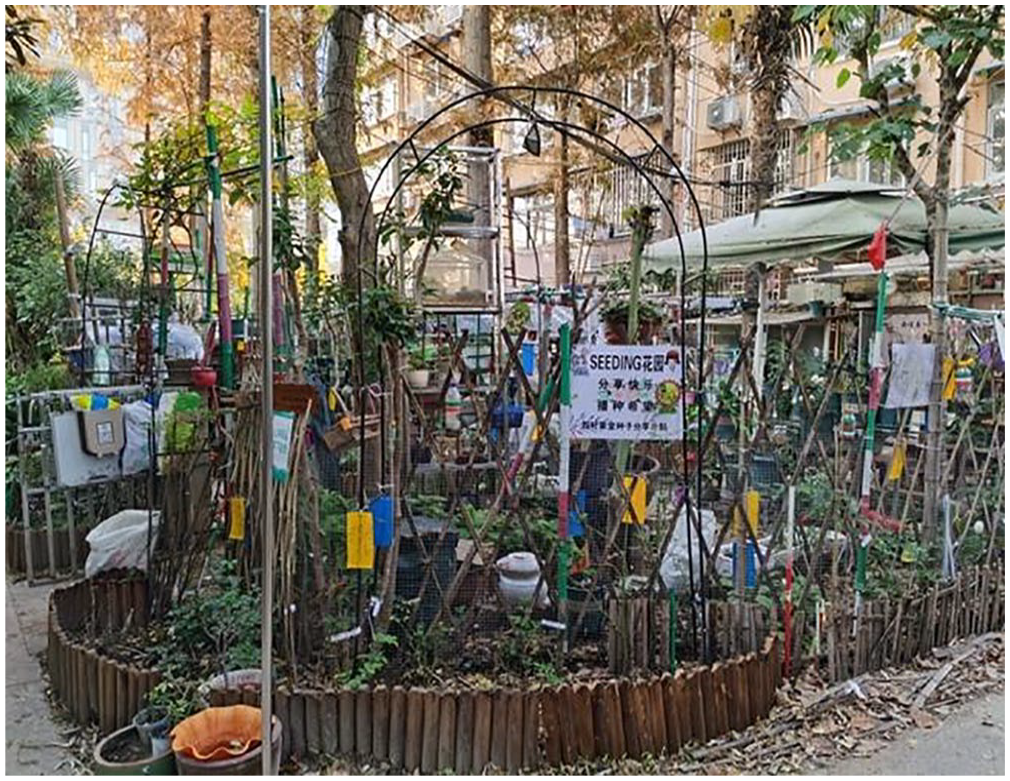
SP01’s garden.
To further advance people-oriented strategies in shaping cities, local governments have increasingly invested in model community action projects that combine environmental improvements with social achievements. One such project, the Xinhua Neighbourhood, was showcased during the 2021 Shanghai Urban Space Art Season. 2 Facilitated by Dayu, a local community organisation, and supported by residents and volunteers, the ‘Living for Life’ project transformed local commercial spaces into community-driven exhibition halls, where local businesses displayed their activities (Figure 2). This study followed the evolution of 11 exhibition spaces in Xinhua, each ranging from 6 to 15 square meters. The design and development process in Xinhua was assessed and approved by the Shanghai Urban Public Space Design Promotion Centre (UPSDPC), a department of MoPNR, with exhibition details approved by District Governments. Although the state played a significant role in ensuring compliance with regulations and standards, the ‘Living for Life’ project also included substantial public resource support. Digital platforms were instrumental in amplifying the project’s impact, generating public awareness, and creating a virtual exhibition space. These tools enabled residents, businesses, and visitors to engage with the neighbourhood’s transformation, fostering a sense of collective achievement and pride.
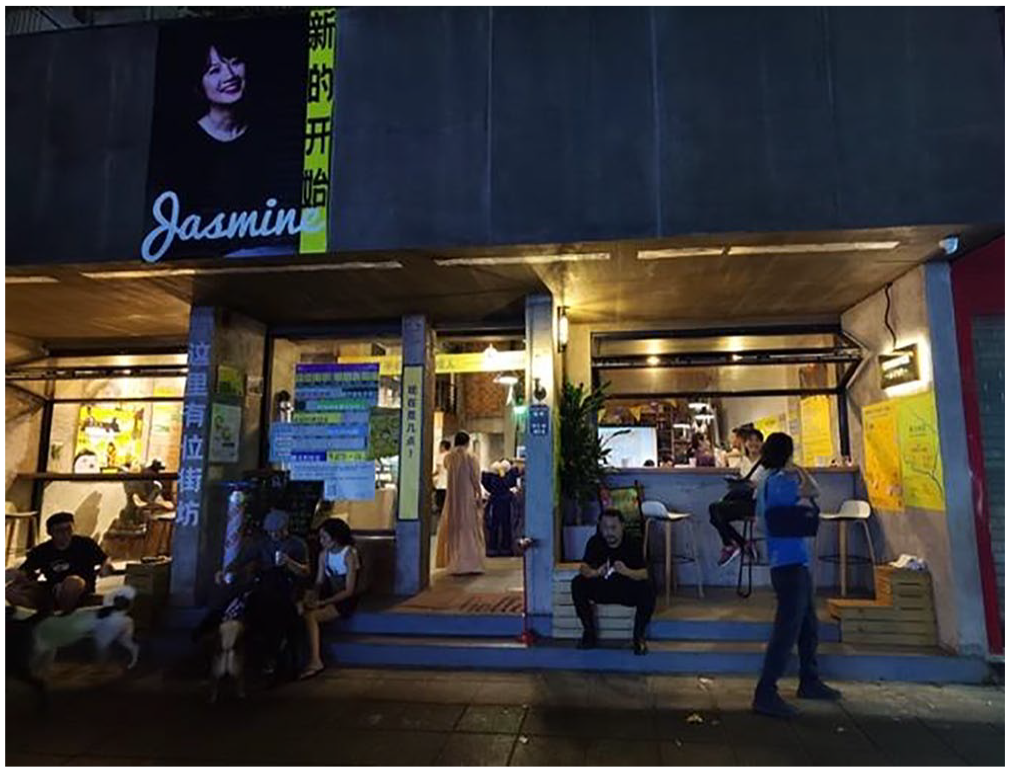
Transformation of a business store into a community space in Xinhua.
The Dongming Garden Initiative exemplifies the pilot experiment approach, which invites national participation in community space regeneration. The 1st National Community Garden Design and Construction Competition in 2021, co-organised by Tongji University and a landscape design magazine, designated Dongming Rd Subdistrict as its testing ground (Figure 3). Over 42 teams from 26 universities contributed to renovating 34 neglected community spaces, each about four square meters. This initiative showcased collaborative efforts among landscape architects, students, residents, and volunteers. Dongming, labelled a ‘forgotten urban district’ in the realm of urban redevelopment (DM01, CNS founder, 2021), faced significant challenges due to limited resources for long-term planning and regeneration. By tapping into these resources and engaging the community, the local government took the initiative to explore alternative approaches for community regeneration (DM22, government official, 2021). In this case, the government did not play as strong a role as in other projects but instead ensured basic requirements while enabling flexibility and creativity for the engaged groups. Digital platforms were integral to the initiative, enabling real-time collaboration, sharing of designs, and broad public engagement. These platforms facilitated coordination across diverse stakeholders, underscoring their role as essential tools for fostering interaction and participation.
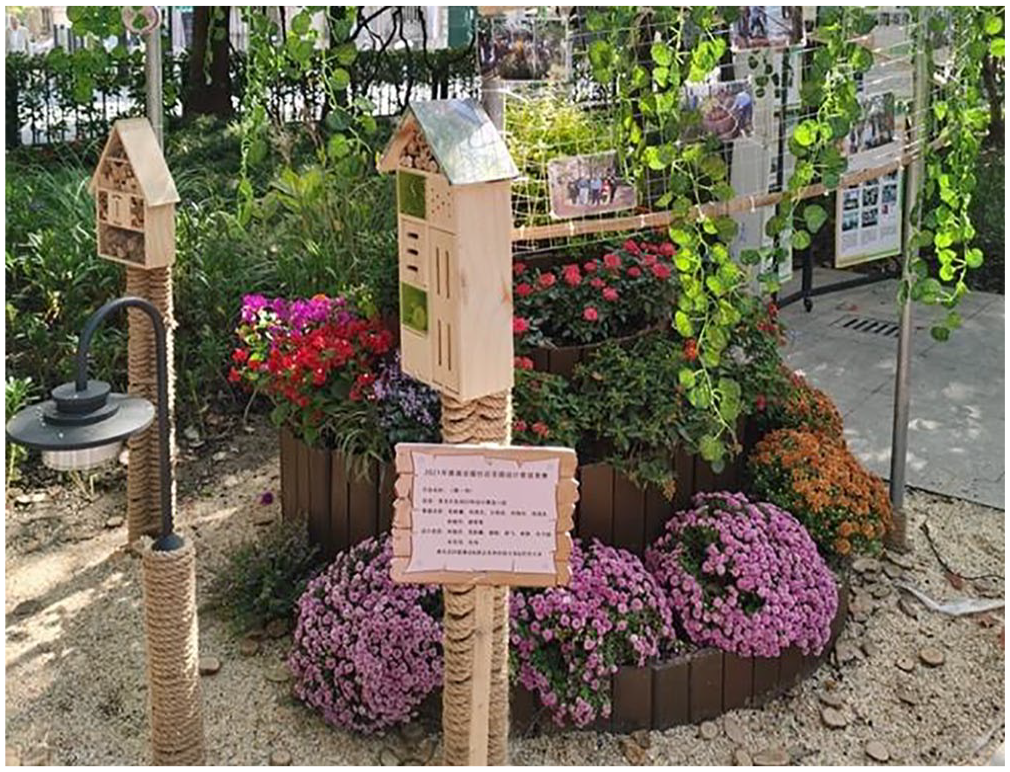
Community mini-gardens in Dongming.
Despite the rise of community-driven practices, conventional top-down approaches remain a dominant model in shaping public space. For instance, the Centennial Park project in Putuo District (Figure 4) transformed a vacant market site into a ‘highline park’ (ALYA, 2021). The typical process of designing and developing Centennial Park followed a top-down approach, with the local government commissioning ALYA, a leading architecture firm, to engage with adjacent sites and integrate additional public spaces to enhance the park’s publicness (CY15, ALYA founder, 2022). However, like many conventional projects, the park’s development incorporated limited community input, focusing instead on creating a landmark intended to ‘capable of catalysing investment and revenue generation’ (CY01, ALYA design team, 2022). Digital platforms, however, served as an amplifier by promoting the park’s visibility, generating public interest, and attracting visitors. While the park’s development followed a more traditional model, the use of digital tools helped broaden its impact and connect the park to a wider audience.
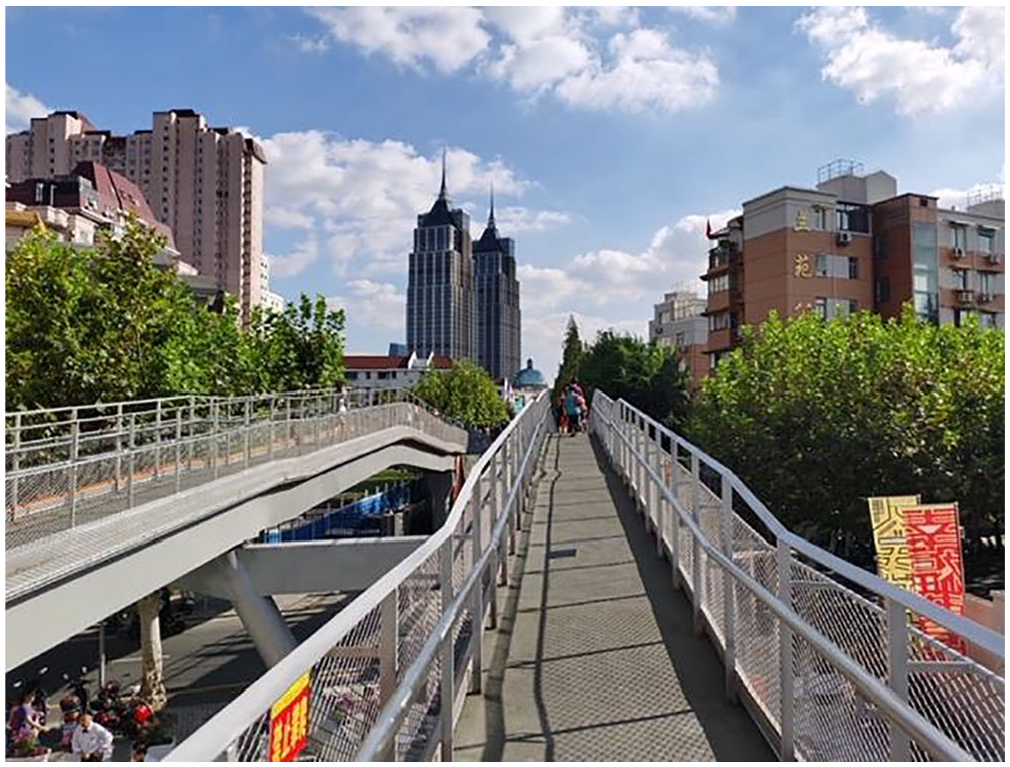
Centennial park in Caoyang.
Data collection and analysis
This research conducts a qualitative analysis based on four case studies in Shanghai, covering the period from August 2021 to December 2022. Rather than employing statistical data analysis, the study seeks to qualitatively capture the evolving roles of digital platforms in public space practices. Four types of data were carefully collected and devoted to the four case studies, including literature and document review, in-depth interview, and direct observation.
The literature and document review encompassed a systematic examination of a diverse range of sources, including but not limited to a comprehensive analysis of reports, news articles, policy documents, government announcements, urban planning reports, and major state-owned media. The analysis of these documents involved categorising information, identifying key themes, and noting patterns.
The study also incorporates primary data from semi-structured interviews. The interviews for this study were carefully designed to provide insights into how digital platforms are reshaping the conceptualisation of publicness in Shanghai’s public spaces. Key informants, such as urban planners, architects, and landscape designers (n = 10), are critical as they offer professional perspectives on the design, planning, and technological integration of public spaces. Their input helps explore how digital tools are incorporated into the shaping processes. Local government officials (n = 6) are essential in understanding the role of state control and policy in facilitating or regulating digital engagement in public spaces. The inclusion of residents (n = 30) and local business owners (n = 5) ensures that the study captures the community’s perspective on how digital platforms impact their interactions with and perceptions of public spaces. Visitors (n = 19), including young scholars and experts, provide an external view on the inclusivity and accessibility of digital platforms in public spaces. Lastly, the involvement of other contributors (n = 10), such as students and volunteers, adds a grassroots dimension, highlighting how digital platforms foster civic engagement and participation at the community level. Information about key informants is collected and summarised in Table 1.
Summary of key informants.
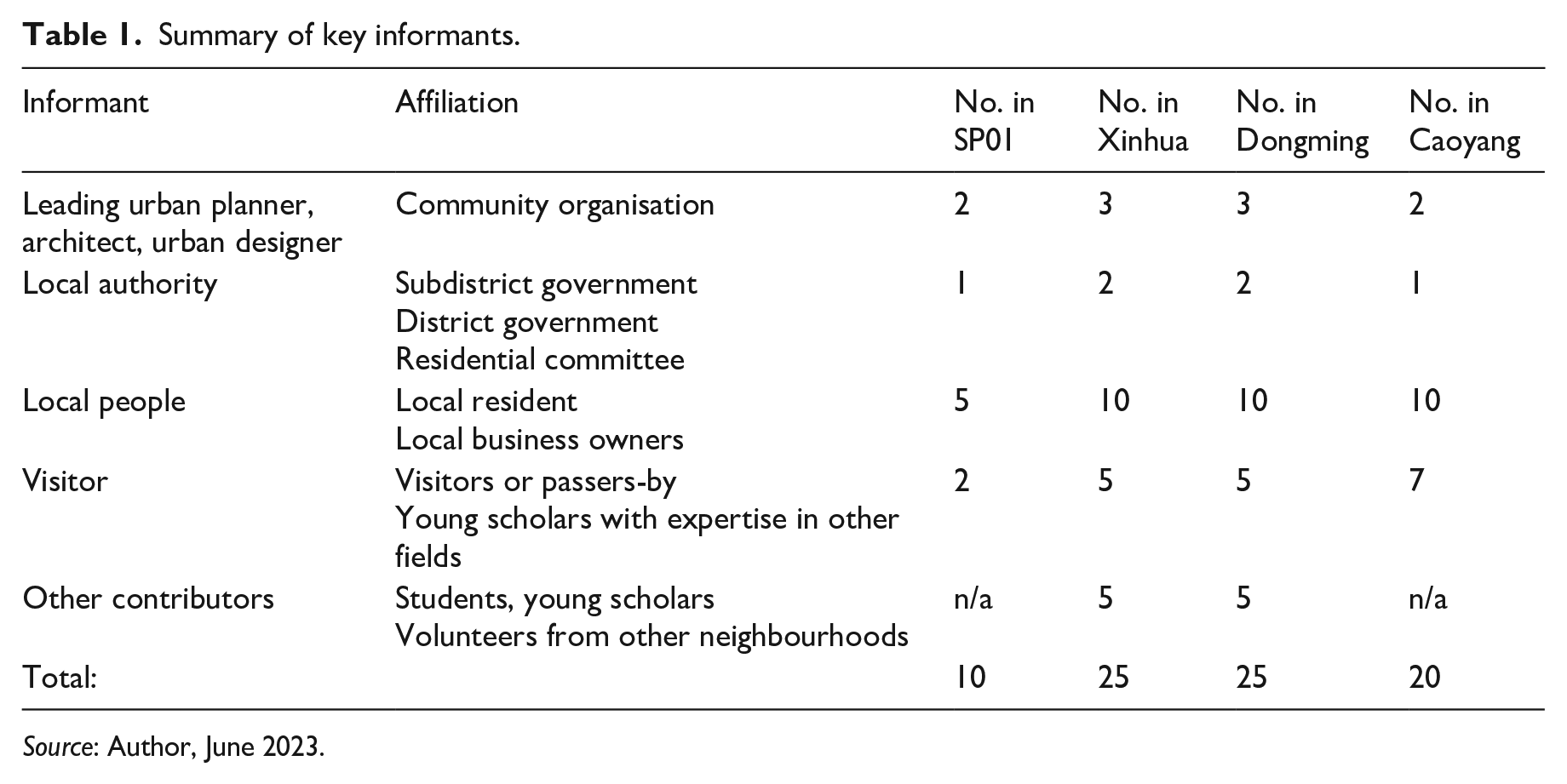
Source: Author, June 2023.
To ensure precise and clear identification of interviewees, a systematic coding framework was employed, incorporating case-specific identifiers, role designations, and interview dates. Each case study was assigned a distinct range of codes to differentiate interviewees within its scope. The Xinhua case study used codes XH01 to XH25, the Dongming case study employed codes DM01 to DM25, the Seeding case study utilised codes SP01 to SP10, and the Caoyang case study assigned codes CY01 to CY20. This approach allowed for seamless referencing, as exemplified by the code ‘DM05, resident, 2022’, which refers to an interviewee identified as DM05, whose role was a local resident, and who participated in the interview in 2022 as part of the Dongming case study.
This study also incorporates direct observations, which was essential for capturing the real-time dynamics of how digital platforms are integrated into public space practices. By observing varying initiatives, the study was able to gather first-hand data on how digital technologies influence interactions, behaviours, and engagement within these spaces. This method allowed for an in-depth understanding of the project initiation, decision-making process, usages of public spaces, and offering a more nuanced view of the social dynamics at play. Observing a range of public spaces helped to contextualise the findings from other data sources, adding layers to the understanding of how digital platforms are reshaping the conceptualisation of publicness.
Publicness and the application of digital platforms
Evidence from the case studies demonstrates that the inclusion of digital platform in influencing the publicness of public space through four interconnected ways: by cultivating widespread engagement and collective identity, sustaining dynamic place-making, activating temporary vibrancy, and amplifying visibility and accessibility. The integration of digital platforms in shaping public spaces introduces distinct layers of publicness, reinforcing the people-oriented ethos of Shanghai’s unique approach to urban development and regeneration. These dynamics highlight the potential for digital tools to bridge broader communities with city-shaping efforts. However, it is essential to remain cautious of persistent power imbalances, as well as issues of digital illiteracy and unequal access, which may undermine inclusivity throughout the process. Figure 5 presents an overview of this study’s logical structure, illustrating how the theoretical insights from the literature review inform the empirical investigation and lead to the key findings on publicness.
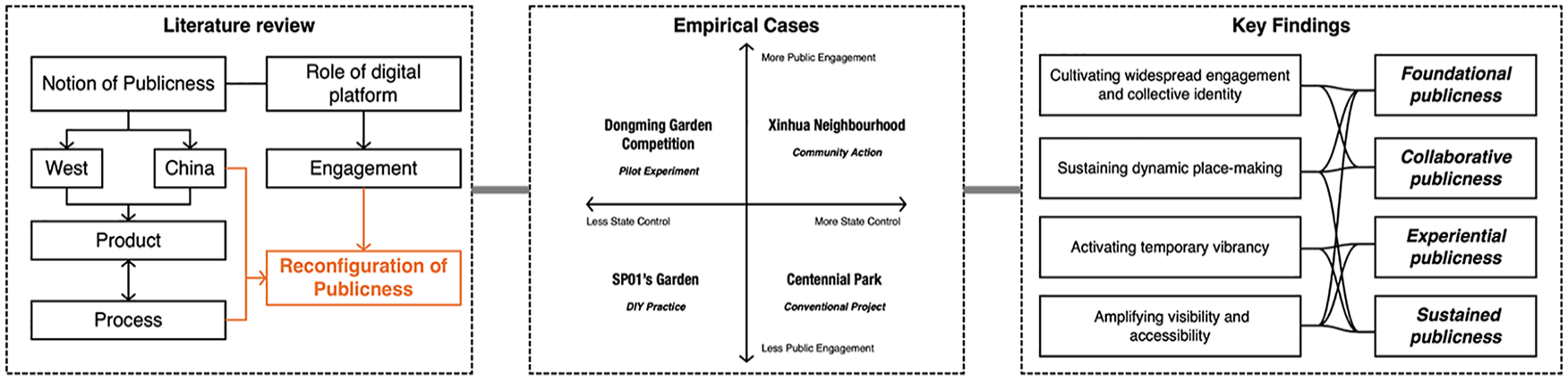
Analytical framework linking theoretical foundations, empirical cases, and key findings on publicness.
Four facets of embracing digital platforms in shaping public spaces
Cultivating widespread engagement and collective identity
Digital platforms have revolutionised public engagement in urban design by stimulating public interest and encouraging participation. Before formal design stages, initiatives like the Seeding Plan leveraged digital tools to spark interest and participation during the Covid-19 lockdown. CNS’s online call to action inspired over 800 seeding gardens in Shanghai by 2021, providing planting kits, guidelines, and encouraging messages to engage participants nationwide (CNS, 2021; Liu, 2020). Similarly, the Dongming Garden Initiative used government and community platforms to gather public input for regenerating neglected spaces, fostering a sense of ownership early on (Dongming Rd Subdistrict Government, 2021). The Xinhua Neighbourhood project also employed digital tools to generate ideas and excitement, making participation open and democratic from the start. These efforts helped build collective identity and broaden public involvement.
Secondly, digital platforms also ensured transparent, ongoing communication, which was key to fostering trust, mutual understanding and collective identity. Regular social media updates during Dongming’s competition phase addressed public inquiries, explained project intentions, and bridged top-down planning with grassroots participation (DM05, resident, 2022). This two-way communication reinforced community trust and strengthened collective identity, making participants feel valued contributors to sustainable neighbourhood development (Polívka and Reicher, 2019; Santos, 2017). Residents felt that their contributions were valued, and the institutional support they received helped reinforce their sense of belonging to a larger community committed to the sustainable development of their neighbourhoods.
Additionally, post-development, digital platforms sustained engagement by fostering long-term stewardship. In the Seeding Plan, participants extended efforts from private spaces to public areas, using online forums to share updates and motivate others. This evolution from personal gardening to collective urban stewardship demonstrates how digital advocacy can transform initial engagement into long-term responsibility (Liu, 2020a). Dongming and Xinhua similarly showcased progress and celebrated community contributions via social media, inspiring hesitant individuals and attracting new social resources (XH15, sociologist, 2022; DM19, CNS team member, 2022). These platforms transformed initial engagement into a lasting community-driven stewardship, enhancing both social cohesion and self-sufficiency.
Sustaining dynamic place-making
Digital platforms played a critical role in collaboration, especially during Covid-19 restrictions. In Dongming, tools like WeChat and Tencent Meeting enabled real-time updates, presentations, and discussions throughout the design process, allowing participants to remain actively involved despite lockdowns (DM04, student, 2021). These platforms became forums where residents’ ideas were integrated into professional plans, ensuring designs reflected community needs. Besides, WeChat official accounts, seen as less formal than government websites, allowed for the dissemination of information to broader and more diverse audiences, often through the sharing of posts across various discussion groups (DM19, CNS team member, 2022; DM22, subdistrict government official, 2021). Similarly, in Xinhua, digital channels facilitated collaboration between residents, businesses, and project teams, keeping the process adaptable to challenges and opportunities.
Digital platforms also sustained discussions about public space needs and issues over time. Online seminars in Xinhua addressed concerns such as rising rents and unclear tenancy agreements, keeping critical conversations alive despite delayed follow-ups (XH12 and XH13, business owners, 2021). In Dongming, long-term digital forums enabled continuous reflection and adaptation, ensuring public spaces evolved with user needs. These platforms supported ongoing engagement from broader societal resources, maintaining the dynamism of place-making by enabling iterative problem-solving and collective action.
Activating temporary vibrancy
Digital platforms effectively publicised events, invited participation, and generated buzz, thereby fostering temporary vibrancy and ensuring that community efforts are visible and appreciated. In Xinhua, platforms like WeChat and TikTok promoted activities such as the Walking Street (Figure 6), Beautiful Community Festival (Figure 7), and Become a Xinhua Resident for a Day, showcasing the neighbourhood’s transformation and engaging a wider audience (Dayu, 2021). In Centennial Park, a variety of programmes were promoted through online platforms, such as professionally guided tours, community fashion shows, LEGO activities, and an international academic forum. Similarly, in Dongming, the completion of the gardens was marked by the 2nd Shanghai Community Garden and Community Planning Conference (Figure 8), held alongside the launch of the 1st Community Garden Festival (Figure 9). Both events were initiated through online calls, drawing visitors to these significant occasions. During the city lockdown, SP01’s Seeding Gardens served as a mental healing space, with the owner opening it to the community and organising various social activities through online invitation (Figure 10). These efforts turned one-time events into celebrated moments of community pride and public engagement, enhancing the area’s visibility and appeal. By facilitating easy access to information and encouraging participation, digital platforms were instrumental in turning these one-time events into moments of communal celebration and public engagement.
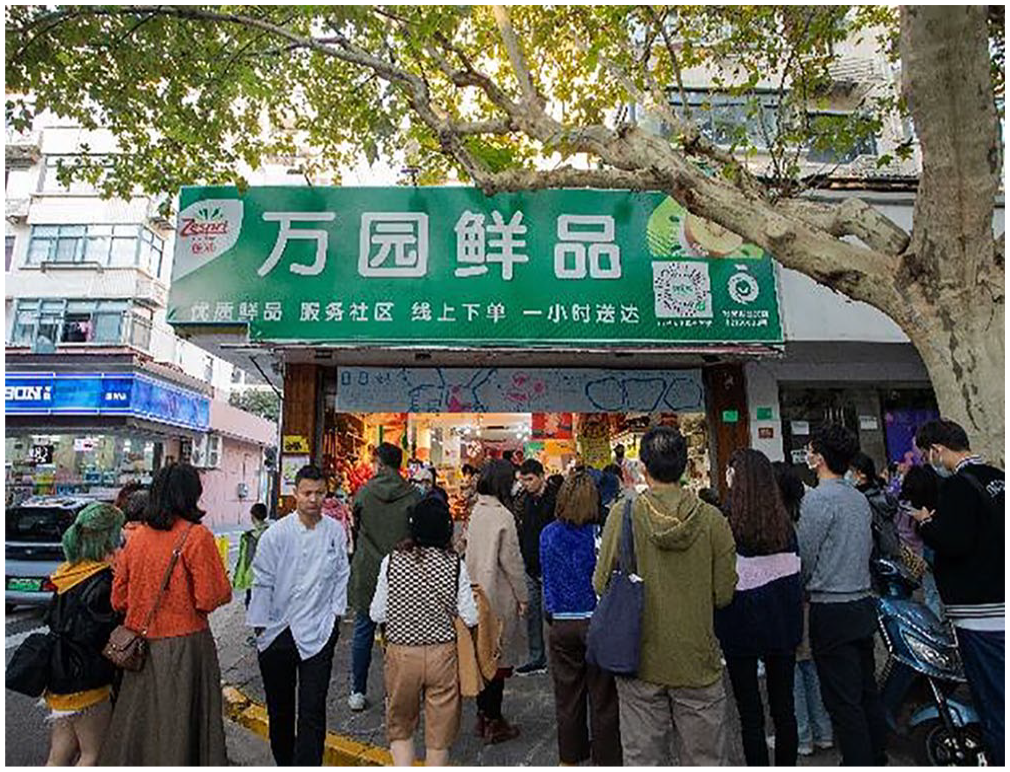
‘Walking Street’ event.
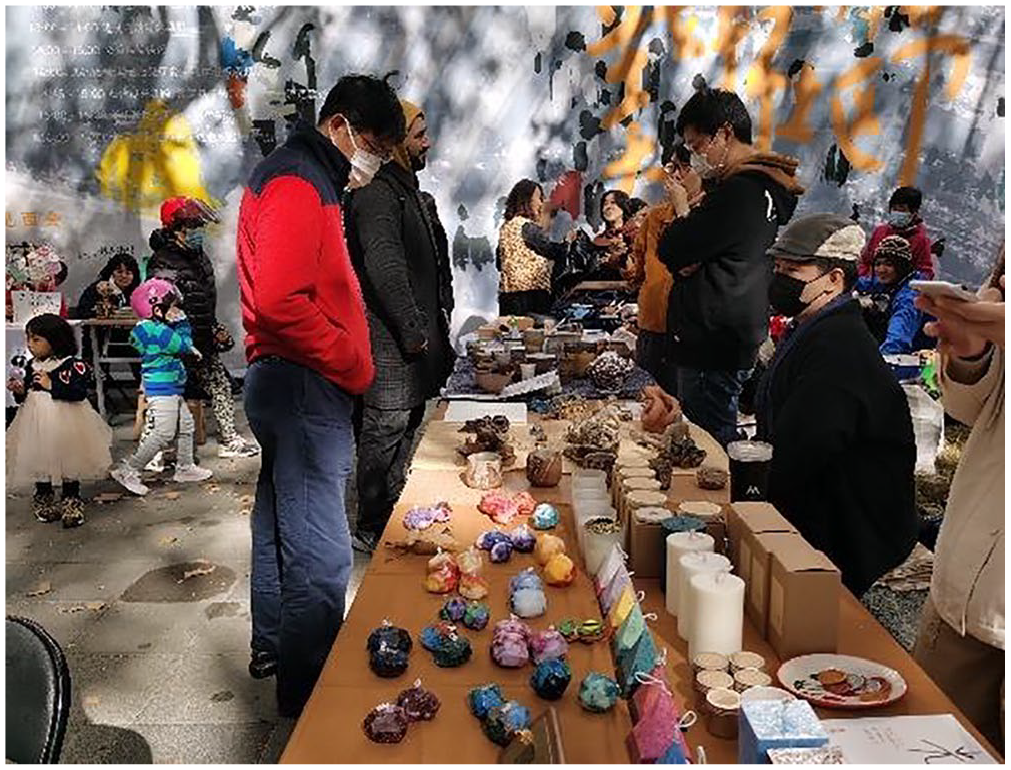
The annual Beautiful Community Festival.
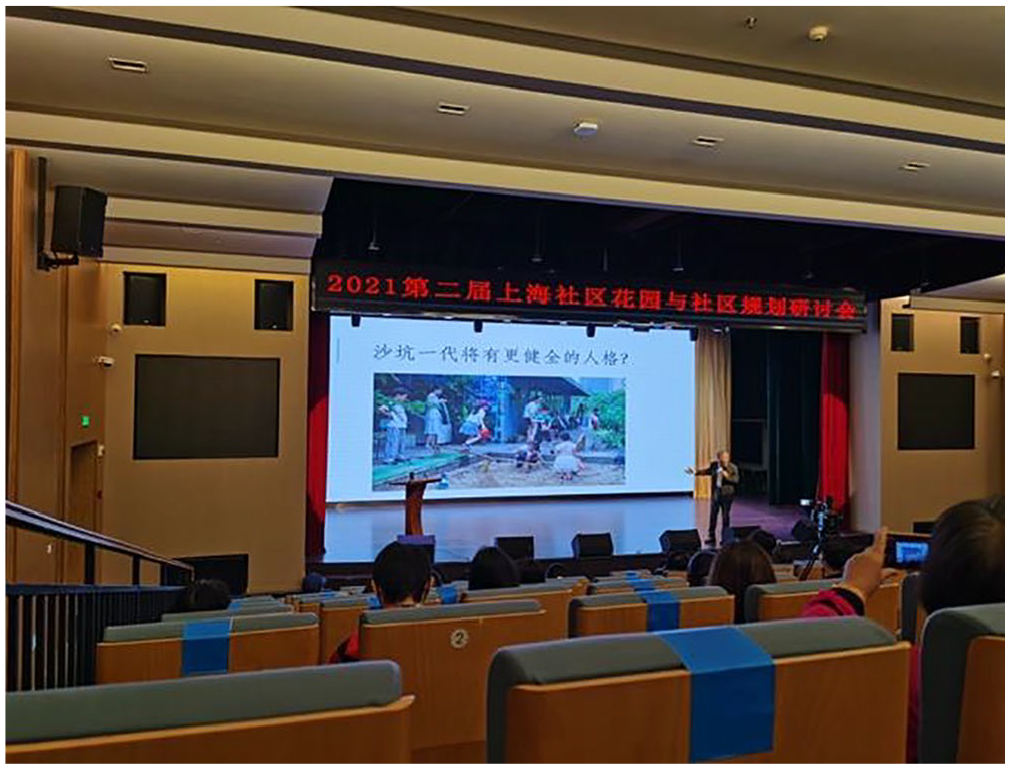
A view of the Shanghai Community Garden and Community Planning Conference.
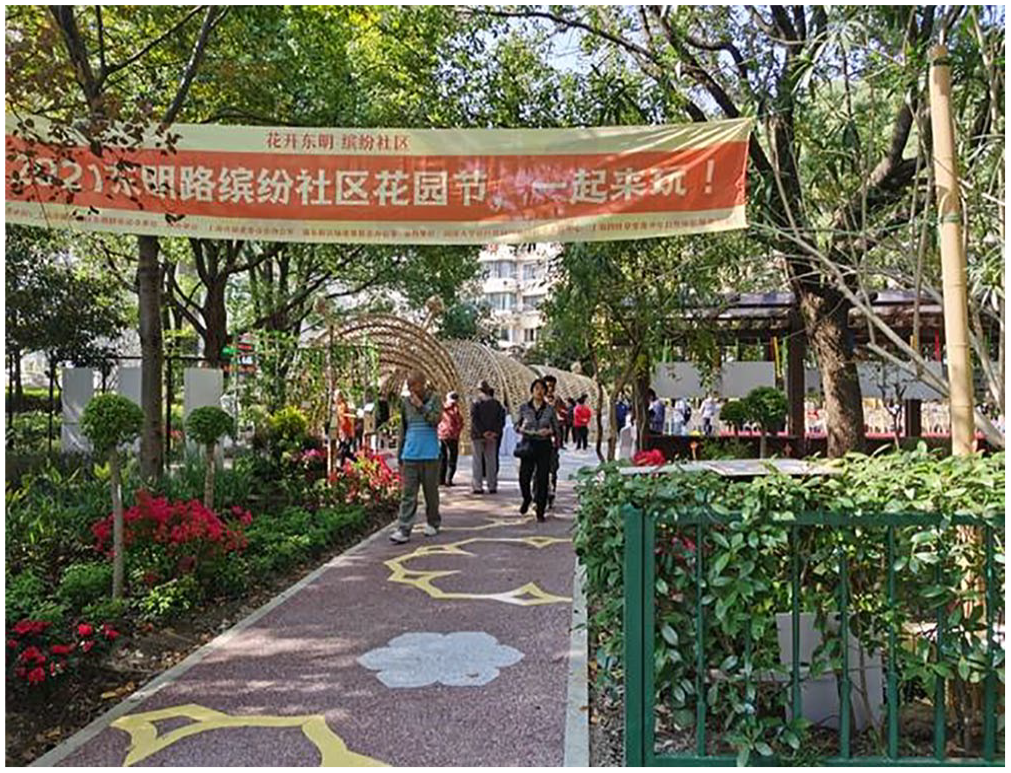
The entrance to the main garden of the Community Garden Festival.
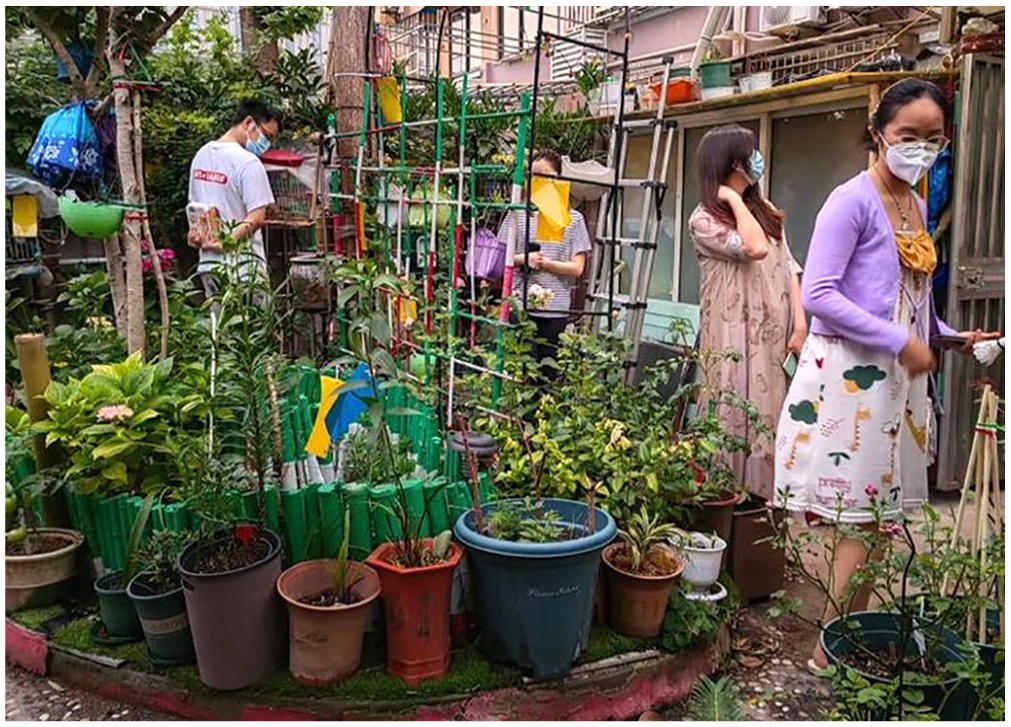
Neighbours visiting the seeding garden.
Digital platforms also play a crucial role in enabling real-time and virtual participation, allowing communities to engage with temporary events beyond the constraints of physical space. This was particularly important during the Covid-19 pandemic when restrictions on physical gatherings posed challenges to traditional place-based activities. For example, SP01 used livestreams to share her Seeding Garden activities, offering virtual tours that connected residents to the space despite lockdowns (Figure 11). Additionally, the activities mentioned above were also livestreamed, encouraging virtual engagement and participation. These livestreams allowed residents, many of whom were confined to their homes, to experience the garden remotely, maintaining a sense of connection to the community despite physical distance (SP01, steward, 2022).

SP01 livestreaming her maintenance activities.
Amplifying visibility and accessibility
Digital platforms, such as blogs, social media posts, and articles, serve as powerful tools to amplifying the visibility of public spaces and supporting continuous accessibility, keeping the public spaces relevant to both residents and visitors. Continuous promotion on Dianping and WeChat official accounts highlighted the design of Centennial Park, effectively attracting visitors to this city landmark. In Xinhua platforms like Xiaohongshu and TikTok widely promoted activities, transforming the neighbourhood into a must-visit destination. Regular updates highlighted the contributions of residents, fostering pride and inspiring further involvement. In Dongming, online updates celebrated community efforts and attracted new participants, sustaining momentum for ongoing development (XH15, sociologist, 2021). This ongoing visibility, enhanced by frequent updates and promotional campaigns, helped build a sense of excitement around the project. The wide dissemination of information through these platforms also allowed for feedback and engagement, providing the community with opportunities to voice their thoughts and suggestions.
Moreover, digital platforms have proven instrumental in strengthening trust between communities and institutions by visualising shared efforts and institutional recognition. By publicising updates and highlighting community contributions, these platforms bridge the gap between top-down governance and grassroots initiatives. SP01’s Seeding Garden, featured in the Shanghai Manual (2020), became a symbol of inclusive urban development, demonstrating the government’s commitment to collaborative regeneration (UN-Habitat et al., 2020). The visibility of the garden and its recognition reinforced the message that ordinary citizens could actively shape their urban spaces, fostering trust in institutional initiatives. Similarly, in Dongming, the government’s acknowledgment of residents’ contributions throughout the regeneration process was consistently shared through digital platforms, further enhancing institutional trust. Documented examples of collaborative urban design illustrated the potential of collective action and strengthened residents’ confidence in the government’s ability to deliver meaningful public spaces (DM01, CNS founder, 2022). By making the shaping processes transparent, digital platforms encouraged trust in both specific projects and broader governance frameworks.
Publicness and the application of digital platforms
The preceding discussion identifies four distinct ways digital platforms, as creative tools and catalysts, contribute to enhancing the publicness of public space and reshaping perceptions of what publicness involves. These methods illustrate how digital platforms foster inclusion, collaboration, vibrancy, and sustained visibility in public space development. First, digital platforms promote foundational publicness by transforming traditional, exclusive processes of shaping public spaces – once dominated by professionals or closed government decision-making – into open, accessible endeavours (Schreiber, 2020). By disseminating information and evoking a collective identity, they enable broader communities to engage the initiation of the process of shaping public spaces (Chen, 2023), fostering the foundational layer of publicness. Second, they enable collaborative publicness by opening up decision-making processes and facilitating discussions and co-production (Knight Foundation and Gehl, 2021). These platforms empower participants to engage in design, development, and management processes, fostering a sense of ownership (Kou et al., 2019; Li et al., 2022). Third, digital platforms support experiential publicness by fostering temporary vibrancy in public spaces through festivals and events. These activities encourage public interaction, experiments, and various forms of interaction, enriching the experiential quality of public spaces and enhancing their vibrancy and accessibility (Zhu, 2023). Furthermore, digital platforms amplify sustained publicness by increasing the visibility of public spaces and ensuring long-term societal acknowledgment and continued support. They connect local practices to citywide agendas, fostering advocacy and aligning public space development with broader urban priorities.
Building on the existing literature that predominantly emphasises how use and management shape publicness (Varna and Tiesdell, 2010), this study adopts a process-oriented perspective to illustrate how digital platforms expand the concept of publicness. As shown in Figure 12, the four newly introduced dimensions – foundational, collaborative, experiential, and sustained – are represented in red arcs, each in lighter or darker shades for visual distinction. Meanwhile, conventional dimensions (e.g., physical configuration, animation, control, ownership, civility) appear in gray arcs with similar shading variations. These color differences do not imply quantitative measures; rather, they highlight each dimension’s conceptual influence across the design, development, use, and management stages of public space creation. The circular arrangement underscores how these dimensions overlap and evolve over time, reflecting the dynamic nature of publicness.
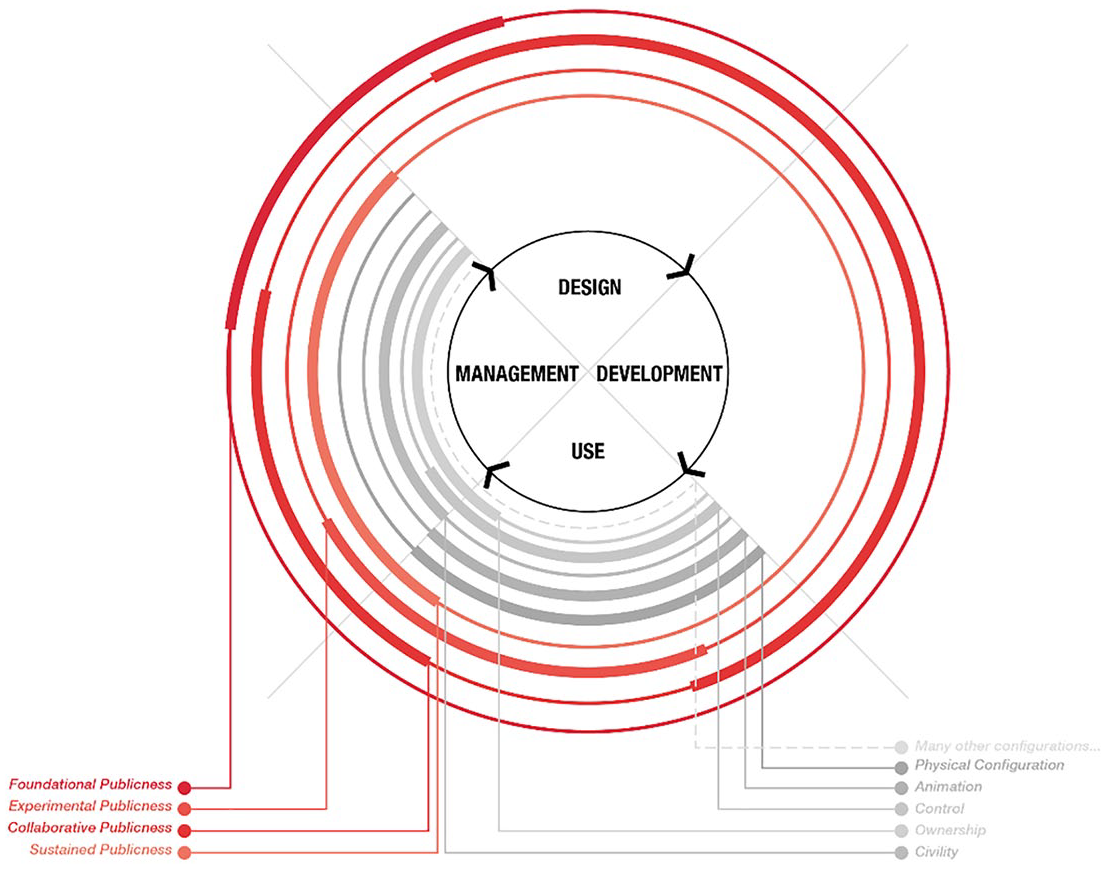
Configurations and dimensions of publicness.
By mapping new layers of publicness alongside established ones, the diagram demonstrates how digital platforms can bridge virtual and physical realms, thereby extending publicness beyond traditional spatial boundaries. Rather than simply gathering people online in ways that might compromise face-to-face interaction (Schreiber, 2020), digital platforms can foster in-person engagement at every stage of shaping public space. In this sense, publicness develops not as a static property tied solely to use or management, but as an evolving construct shaped by both social and technological processes – broadening the boundaries and configurations of publicness in the digital era.
However, these dimensions of publicness are contingent upon their integration within governance frameworks, which are often heavily influenced by state control. Foundational publicness facilitated by digital platforms relies on government approval for disseminating and publishing information. The flow of information remains subject to strict regulations, with authorities controlling the types of content that can circulate, the platforms that can operate, and the scope of permissible community engagement. This dynamic was particularly evident in conventional projects like Centennial Park, where participants expressed frustration over inadequate communication and exclusion from decision-making processes affecting their surroundings (CY-DP91, 2021; CY-DP322, 2022; CY07, CY08, residents, 2021; XH05, volunteer, 2021; XH18, resident, 2021).
Collaborative publicness is similarly constrained by state intervention, realising its potential only when authorities actively permit and support diverse forms of participation. While digital platforms create opportunities for engagement, true collaboration requires an enabling environment fostered by the state. Conventional projects constrained by top-down governance often limit meaningful collaboration, filtering which voices are amplified and prioritising government agendas. Conversely, contexts with limited state control or proactive support, such as DIY practices and pilot experiments, demonstrate better functionality and leverage collaborative publicness more effectively.
The vitality of experiential publicness – the dynamic and temporary vibrancy of public spaces – also depends on state approval for events and activities, typically requiring formal permits. While digital platforms can mobilise interest and support community-driven initiatives, organising such events often involves navigating bureaucratic processes like securing permits, coordinating with authorities, and meeting regulatory requirements. Without governmental support, public activities risk disruption or cancellation. For example, in community actions and conventional projects where the government retained significant decision-making authority, stringent Zero-Covid policies further restricted activity permits, reducing programmes like those in Xinhua to limited entertainment rather than inclusive engagement (XH03, Dayu team member, 2021; XH18, resident, 2021; XH05, volunteer, 2021).
Finally, sustained publicness, which relies on long-term advocacy and visibility, is deeply tied to governmental recognition and prioritisation. While digital platforms maintain awareness and engagement, their lasting impact depends on whether the state integrates these spaces into broader urban agendas. This includes providing resources, institutional recognition, and policy alignment to sustain initiatives. In pilot experiments like Dongming, consistent acknowledgment of community contributions through digital platforms reinforced trust in institutional efforts and strengthened residents’ confidence in the government’s commitment to delivering meaningful public spaces (DM01, CNS founder, 2022).
In sum, while digital platforms significantly expand the layers of publicness, their full potential is mediated by governance frameworks that shape their implementation. In China, the realisation of publicness is shaped by permissions granted by authorities, highlighting the delicate balance between civic agency and state dominance. This interplay raises critical questions about whether digital platforms genuinely publicise public space practices or remain co-opted by state structures that ultimately determine their scope and impact.
Advancing publicness: digital platforms and the path to inclusive place-shaping
The foregoing discussion highlights the potential of digital technologies to unite diverse efforts in enhancing public spaces, offering new pathways for understanding and contextualising the four dimensions of publicness, particularly within the Chinese context. However, realising this potential requires addressing significant challenges, including digital exclusion, privatisation, and commercialisation. These factors not only hinder inclusivity but also threaten to undermine the core principles of equity and participation that public spaces are intended to embody.
‘I really want to join these community garden activities, yet I don’t know when they start or how to engage,’ remarked an elderly neighbor in Dongming.
Digital illiteracy and unequal access to technology (Schreiber, 2020), present substantial barriers to inclusive participation in shaping public spaces. Foundational publicness, which seeks to democratise participation, falters when marginalised groups – such as children, older adults, and rural populations – are unable to engage with digital platforms. Initiatives like the Seeding Plan illustrate this disparity: while these projects successfully mobilised digitally savvy participants, they inadvertently excluded those without technological access or skills. Similarly, collaborative publicness suffers from the digital divide. Online tools for co-design and decision-making, as seen in Dongming, risk creating an echo chamber of digitally proficient participants, sidelining others and skewing project outcomes toward the preferences of more privileged groups. This imbalance undermines the equitable participation that collaborative publicness seeks to promote. The effects of digital exclusion extend to experiential and sustained publicness. Social media-promoted experiential activities often fail to engage digitally excluded populations, limiting their participation in shared community experiences. Likewise, sustained publicness, which relies on platforms for long-term visibility and advocacy, risks neglecting less-connected communities, eroding the inclusive stewardship necessary for the longevity of public spaces.
To address these disparities, policymakers should adopt hybrid engagement strategies that combine digital outreach with accessible physical methods such as flyers, workshops, and neighbourhood ambassadors. Complementary initiatives like digital literacy training and subsidies for technology access can empower marginalised groups, fostering a more inclusive urban ecosystem.
‘The blog post only let us know that the 20-year-old market is illegal and needs to be transformed into a steel bridge garden, yet it lacked transparency or justification,’ expressed a frustrated resident near Centennial Park.
The privatisation and commercialisation of digital platforms exacerbate inequalities in public space initiatives, transforming tools that were meant to foster inclusivity and community engagement into vehicles for symbolic development, profit-driven priorities, or state-centric control. Foundational and collaborative publicness are compromised when government priorities focus on symbolic development over accessibility. For example, in Centennial Park, digital platforms were predominantly used to market the park as a high-end attraction, sidelining community input and marginalising nearby residents. This approach led to luxury-oriented decisions, neglecting impoverished neighbourhoods and excluding diverse voices (CY-DP277, 2021; CY-DP101, 2021). These outcomes eroded the collective identity foundational publicness aims to cultivate and weakened the equitable collaboration envisioned by collaborative publicness. Commercialisation also affects experiential publicness. Events and installations promoted through digital platforms often prioritise attracting affluent visitors or generating revenue, neglecting activities that resonate with local communities. Public spaces risk becoming exclusive arenas for consumption rather than inclusive sites for shared experiences and everyday practices. Sustained publicness is similarly jeopardised when digital platforms prioritise short-term visibility and profit over long-term advocacy and stewardship. In Centennial Park, promotional efforts emphasised aesthetic appeal and revenue generation but failed to cultivate lasting community ties or ensure that the space would meet broader societal needs over time.
To counteract these trends, policymakers should prioritise transparency and public accountability in the governance of digital platforms used for public space initiatives. Publicly regulated or community-governed platforms can help mitigate commercial biases, ensuring that public space projects reflect the needs and aspirations of diverse stakeholders. Furthermore, prioritising community-centred needs, such as preserving markets or creating accessible green spaces, over symbolic or luxury developments can foster trust and engagement. Embedding mechanisms for ongoing community feedback and participation can further align public initiatives with local priorities, enhancing their relevance and impact.
Conclusion
Rooted in the recent paradigm shift in public space practices in Shanghai, this study highlights the transformative potential of digital platform as a lens through which to examine the evolving notion of publicness in China’s urban environments. By analysing four types of public space practices – DIY, community action, pilot experiment, and conventional project – this study demonstrates how digital platforms can expand and reshape publicness across foundational, collaborative, experiential, and sustained dimensions. These cases move beyond conventional dimensions of publicness, such as physical configuration and ownership, to address seemingly localised and mundane challenges. These challenges, however, reflect broader transformations in urban development as cities embrace digital technologies and adapt to the changes they bring. The findings deepen our conceptual understanding of publicness by showing that digital platforms do more than simply aggregate online participants; they actively foster offline engagement, co-production, and long-term stewardship of urban spaces.
Although Shanghai’s approach to urban regeneration and public space production is in many ways unique, the insights derived from this study hold relevance for other rapidly urbanising regions. First, the four-dimensional framework of publicness highlights that the impact of digital platforms is not limited to managing or using public spaces; rather, these tools permeate every stage of shaping urban spaces, including design and development. Second, the interplay between digital technologies and governance structures underscores the importance of supportive institutional frameworks. In contexts where local authorities encourage grassroots initiatives, digital platforms can effectively lower barriers to participation and cultivate a stronger sense of public ownership. Conversely, in environments with restrictive governance or inadequate digital infrastructure, the transformative potential of these tools may be muted.
The findings suggest that cities seeking to harness the benefits of digital platforms for public space development should adopt a process-oriented perspective. Rather than viewing digital platforms merely as instruments for collecting feedback or publicising finished projects, planners and policymakers can integrate them into each stage of the urban development and redevelopment process. In the design phase, digital platforms can generate interest and participation by crowdsourcing ideas, hosting participatory workshops, and gathering real-time feedback on proposed interventions, thereby co-creating solutions with the community. During development, transparent collaboration among residents, professionals, and local government can be facilitated through digital means, ensuring a co-production of solutions that reflect the needs and aspirations of diverse stakeholders. In the use phase, digital platforms can enhance accessibility, vibrancy, and inclusivity by supporting both in-person and virtual participation, broadening the reach and appeal of public space initiatives. Once projects move into the management phase, digital platforms can coordinate maintenance efforts, schedule community events, and sustain stewardship, strengthening collective responsibility for the space.
Despite these contributions, several limitations warrant acknowledgment. First, while the findings are derived from diverse case studies in Shanghai, their generalisability to other urban contexts is constrained by cultural, social, and regulatory differences. The case studies, though prototypical, capture only a snapshot of public space practices at specific stages of their evolution, leaving room for a broader review of shaping mechanisms across varied contexts to enrich the discussion. Second, the reliance on qualitative data introduces potential biases in interpreting community and institutional dynamics, highlighting the need for complementary quantitative analyses to validate these insights. Third, the study does not fully address the long-term sustainability of digital engagement strategies, particularly within the rapidly evolving technological and regulatory environments of contemporary urban development.
Future research could address these limitations by exploring comparative studies across cities and cultural contexts, employing mixed-method approaches, and examining the longitudinal impacts of digital platforms on public space dynamics. By addressing these gaps, scholars and practitioners can deepen their understanding of how digital platforms can advance equitable and inclusive urban development, ensuring that public spaces continue to serve as vital resources for communities in the digital era.
Footnotes
Acknowledgements
The author would like to express her gratitude to her PhD research supervisors, whose stimulating discussions have greatly contributed to the development of this paper. The author also extends her appreciation to all the interviewees who generously shared their time and knowledge, providing valuable insights for the study.
Author contributions
The author, Xuewei Chen, conducted all aspects of this research, including conceptualisation, data collection, analysis, and writing. This paper is solely authored by Xuewei Chen as part of her PhD research.
Declaration of conflicting interests
The author declared no potential conflicts of interest with respect to the research, authorship, and/or publication of this article.
Funding
The author received no financial support for the research, authorship, and/or publication of this article.
Ethical considerations
This study is part of the author’s PhD research project titled ‘Trust, Control, and the Shaping of Public Spaces in Shanghai’. The research protocol was approved by the UCL Research Ethics Committee (Project ID: 21291.001). Ethical guidelines were strictly followed to ensure the protection of all participants involved.
Consent to participate
All participants provided written informed consent prior to their participation in the study. The detailed research protocol was reviewed and approved by the UCL Research Ethics Committee (Project ID: 21291.001).
Consent for publication
Informed consent for publication was obtained from all participants involved in the study, including their agreement to share anonymised data and findings.
Data availability statement
1.
CNS is a professional organisation most known for designing and managing community gardens to engage community environmental improvement, public participation, and education.
2.
The goal of SUSAS was not only to celebrate the achievements of the ‘15-minute Community Life Circle’ but also to showcase Shanghai’s progress in promoting the ‘People’s City’. The community exhibition aimed to demonstrate citizens’ access to services related to living, working, studying, traveling, and elderly care, improving their sense of well-being and security SUSAS (2021) SUSAS 2021. Available at:  .
.