



Abstract
Researchers are increasingly focusing on city networks, but there has been little in-depth research on the spatial heterogeneity of city networks at different scales, which makes it easy to overlook the functional differences of various actors in the network at different scales. To fill this gap, this research employs a case study of the Urban Agglomeration in the Middle Reaches of the Yangtze River, using a combination of quantitative and qualitative methods to supplement multi-scaled data on the subject. This study reveals the emergence of three models of city networks in central China as a result of the automotive industry value chain, which spans from spare parts to automakers and sale/service. The first model is strongly connected city networks centered on the ‘Wuhan–Xiangyang–Shiyan’ economic belt and embeds itself in Hubei province. The second model is city networks centered on the ‘Changsha–Zhuzhou–Xiangtan’ Urban Agglomeration and embeds itself in Hunan province. The third model is flattened city networks that expand on their own in Jiangxi Province. The demand for vehicles fueled the growth of these city networks through spatial division of labor. However, there are still boundaries and distance that hinder expansion, and the fact that some automotive companies are state-owned has made them an essential instrument for the Chinese government to control regional city networks.
Keywords
Introduction
World cities and urban agglomerations have grown into competitive global centers, gaining considerable attention in academia (Jiao et al., 2016), especially in China, where there has been a drastic increase in cities and metropolitan areas (Deng et al., 2018; Duan et al., 2018; Gui et al., 2021; Li, 2014b; Liu, 2020; Ma, 2017; Qiu et al., 2019; Wang and Jing, 2017; Wang et al., 2014; Zhou et al., 2020). These areas are becoming increasingly interconnected due to the impact of globalization and information technology, resulting in the formation of city networks. However, explaining the spatial heterogeneity of city networks across different scales is challenging due to the varying socioeconomic and cultural backgrounds in different regions. On the one hand, cities and regions in the global south participate in global production and Original Equipment Manufacturing (OEM) through the division of labor in the global value chain (GVC), leveraging their labor cost and resource/raw material advantages to form connections with other regions (Gereffi et al., 1994; Gereffi and Lee, 2016). On the other hand, China’s urban agglomerations often span multiple provinces, resulting in complex relationships between urban agglomerations and administrative divisions. Provincial borders can hinder the flow of trade (Bemrose et al., 2021) and disrupt the formation of city networks in China. Administrative divisions at the provincial level can thus divide human geography units and hinder local economic development (Jin, 2003; Jin and Wang, 2006; Liu et al., 1999), causing further delays in the formation of city networks. Thus, a clearer city networks and the functions of actors in networks can be more clearly identified in a multi-scaled analysis to city networks in global south.
However, empirical studies have historically focused too heavily on internal analyses of a region, often neglecting its external relevance (Hoyler et al., 2008). Consequently, Western scholars have shifted their perspective towards multi-scale functional linkage analyses (Hoyler, 2011; Taylor et al., 2008). Some studies have sought to integrate multi-scale urban networks and hierarchies, revealing that various elements can facilitate free flow across scales in reconstructed city networks (Camagni, 1993). As the spatial division of labor continues to deepen, the process of city networking within China is becoming increasingly characterized by multi-scale interweaving and has attracted the attention of the academic community (Gao et al., 2022). Studies have utilized various data to demonstrate the structure of city networks in China across different scales (Hu and Lu, 2020). Nonetheless, research on multi-scale city networks of urban agglomerations from local clusters to the national level remains limited, and there is no standardized analysis framework. Additionally, empirical studies often rely on cross-sectional data, which cannot adequately explain the dynamic evolution processes of urban networks within urban agglomerations.
To address these issues, this study examines the connections within and between cities in urban agglomerations in China’s automotive industry, a core manufacturing industry, and how they are embedded within the national and world city networks based on the automotive industry value chain. Specifically, we utilized an interlocking model to detect the quantitative relationships between enterprises and cities across three scales: intra-city, inter-city, and inter-region. Furthermore, we discuss the ways in which the automotive industry promotes the development of city networks, using local historical context to inform our analysis. By doing so, we aim to provide an in-depth understanding of the dynamics of urban networks in China’s automotive industry and their broader global relevance.
City networks, value chain, and automotive industry in Middle Reaches of the Yangtze River
One major concern addressed in the city networks literature is the intricate organizational structure of city networks, which varies depending on the scale. Cities that are highly concentrated in finance and advanced services have become the core of the world city network (Sassen, 2001), as reflected in the concept of World City Network (WCN). This concept has been utilized to explain how advanced producer services (APS) exert their control over city networks (Castells, 1996; Taylor et al., 2002). In recent years, WCN has faced considerable doubts regarding its ignorance of other non-APS in the city network. Obviously, for some urban agglomeration in global south, it is difficult to explain the formation of their city networks when only APS is considered. As some cities in developing countries without global influence participate in the global value chain in industrial transfer, theories such as Global Commodity Chains (GCC) (Gereffi et al., 1994), Global Value Chain (GVC) (Crestanello and Tattara, 2010; Ivarsson and Alvstam, 2010; Sturgeon et al., 2008), and Global Production Networks (GPNs) (Henderson et al., 2002) have been proposed. These theories emphasize the effects of commodity production on cities’ division of labor and their embedding into multiple scales. Vind and Fold (2007) showed the significance of the electronics industry as a manufacturing industry that helped Singapore connect with other regions. Yeung (2009) further concluded three strategy couplings that enabled South Korea, Hong Kong, and Taiwan province to embed into global networks (Coe et al., 2004; Lee, 2009; Yang, 2009; Yang et al., 2009; Yeung, 2009).
Some recent studies have highlighted the importance of the process of expanding the production network from a single enterprise to a complex production network cluster as a means of achieving industrial upgrading (Gereffi et al., 2014). This implies that the upgrading process of the value chain is also a city networking process. Enterprises can upgrade the value chain through localization (Humphrey and Schmitz, 2002; Li, 2014a; Li et al., 2012), delocalization (Lyberaki, 2010; Pickles and Smith, 2011), relocalization (Yang and He, 2017), and regionalization (Tewari, 2006; Tokatli and Kizilgun, 2009). The connections among cities in the value chain are also changing during the process of division and transfer of enterprises. Therefore, the spatial evolution of production in the value chain still plays a crucial role in the integration and synergy of city networks from the local to the global scale, instead of just focusing on the APS (Sturgeon, 2001). In particular, the complexity of interactions, the nonlinearity of processes, and the diversity of mechanisms between industrial upgrading and spatial upgrading require an analysis of the interactive relationships among different actors in commodity chains or value chains to be fully understood (Brown et al., 2010; Parnreiter, 2010; Zhu et al., 2020).
However, GCC and GVC often overlooks the power dynamics between different actors in the global economy. While these theories emphasize the importance of inter-enterprise relationships, they can sometimes neglect the fact that some actors, including enterprises, cities, and governments, have more power than others in shaping the terms of trade and the distribution of benefits along the commodity and value chain. It implies that the upgrading process of the value chain is multi-scaled in space. This difference of power of actors should be analyzed in different scale. At the global scale, strategic coupling promotes knowledge spillover from the global to the local level (Henderson et al., 2002). The industry can also realize spatial restructuring of networks through decoupling and recoupling (Yang, 2009). At the national scale, the characteristics of institutions and government policies are highlighted. At the regional scale, the regional division of the industry promotes the development of industrial clusters and regional city networks due to contiguity (Abernathy et al., 2006). At the local scale, factors such as industrial development history, social organizational structure, and institutional environment work together to influence the upgrading of enterprises and local industries through mechanisms such as industrial agglomeration, increasing returns, and path dependence (Dicken, 2007; Storper, 1997). Single-scale analysis overlooks the difference in the roles that regions and cities play and the driving force of spatial evolution in the different scales of networks. Some studies have attempted to use connections among enterprises to depict city networks from the perspective of production (Chen et al., 2020; Derudder and Taylor, 2018; Luethi et al., 2010; Ma and Liu, 2012; Zhu et al., 2019). As a result, we propose to apply it not only to APS firms but also to other enterprises in regional scale, especially in those regions in global south.
In China, before the Economic Reform and Open-up, the Chinese government paid much attention to the automotive industry in its centrally planned economy. It provided a basis for the development of the automotive industry in central China, where the location was not superior. After 1978, China’s government tried to turn the planned economy into a socialist market economy. State-owned automotive enterprises had the possibility to take part in global automotive production networks by setting up joint ventures with foreign enterprises and achieved rapid development.
In the past two decades, China’s automotive enterprises have been committed to achieving strategic coupling at the global scale through joint ventures. At the regional scale, the improvement of the industrial chain has driven the restructuring of relevant regional industries, and the industrial spatial pattern has also been constantly adjusted, further helping regional economic development. The development of the automotive industry in central China has mainly been concentrated in the past 20 years. Dongfeng Motor Corporation (DFMC), BYD, and FOTON set up production bases in central China in the 2000s. However, in 2014, the Urban Agglomeration in the Middle Reaches of the Yangtze River was planned as an important urban agglomeration in central China, which included part of Hubei, Hunan, and Jiangxi Province. This resulted in a conflict of scale in the upgrading of the automotive industry value chain. The upgrading of the automotive industry value chain needs to change from the provincial scale to the urban agglomeration scale in regional development planning. This also means that the evolution of city networks in central China promoted by the automotive industry value chain. As a result, the evolution of city networks of the Urban Agglomeration in the Middle Reaches of the Yangtze River based on the automotive industry value must be analyzed by multi-scale networks to explain its complex network structure and formation reason.
Method and data
Region context
One of the key components of China’s new-type urbanization is urban agglomeration, which has allowed provinces to participate in international competition and the division of labor. The Urban Agglomeration in the Middle Reaches of the Yangtze River (UAMRYR) is one of China’s five major urban agglomerations and has been an essential part of implementing the main national policy of the Yangtze River Economic Belt. The development plan for UAMRYR was formally authorized by the State Council in 2014, and it was considered as a crucial step to propel the development of central China, create a modern urbanization model, and promote the development of a two-oriented society in western and middle China.
Located in central China, UAMRYR comprises of 31 cities across the provinces of Hubei, Hunan, and Jiangxi. It includes three metropolitan areas, namely Wuhan Metropolitan Area, Changsha–Zhuzhou–Xiangtan Metropolitan Area, and Poyang Lake City Group. The central urban work conference in 2015 set the primary goal for UAMRYR, which was to encourage people-centered urbanization and urban livability by taking advantage of the benefits of densely populated urban regions.
With over 1.26 billion people living in UAMRYR as of 2018, the region’s GDP was 832 million yuan, and the automotive industry played a vital role in its growth. The Dongfeng Motor Corporation is based in Wuhan and has established production facilities in multiple cities in the region. BYD and JMC also set up production centers in collaboration with other companies like Honda, Nissan, Renault, Citroen, and Ford.
In addition, other 18 urban agglomerations in China are included in this analysis to more accurately measure the relationships between UAMRYR and other metropolitan areas (Fang, 2014), which are displayed in Figure 1.
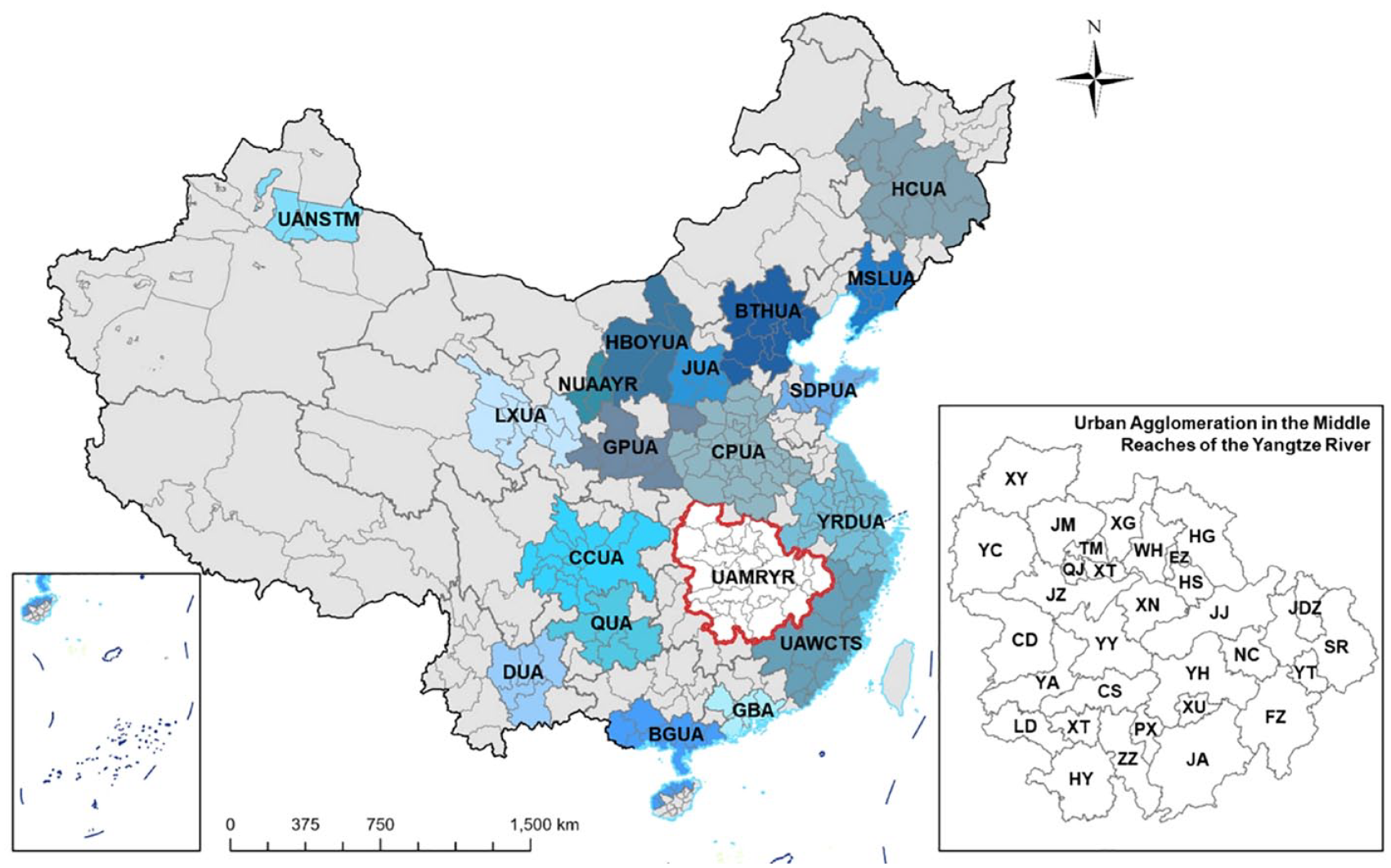
Urban agglomerations in China.
Methodology and data
Figure 2 shows the methodology for this research, which consists two interrelated components.
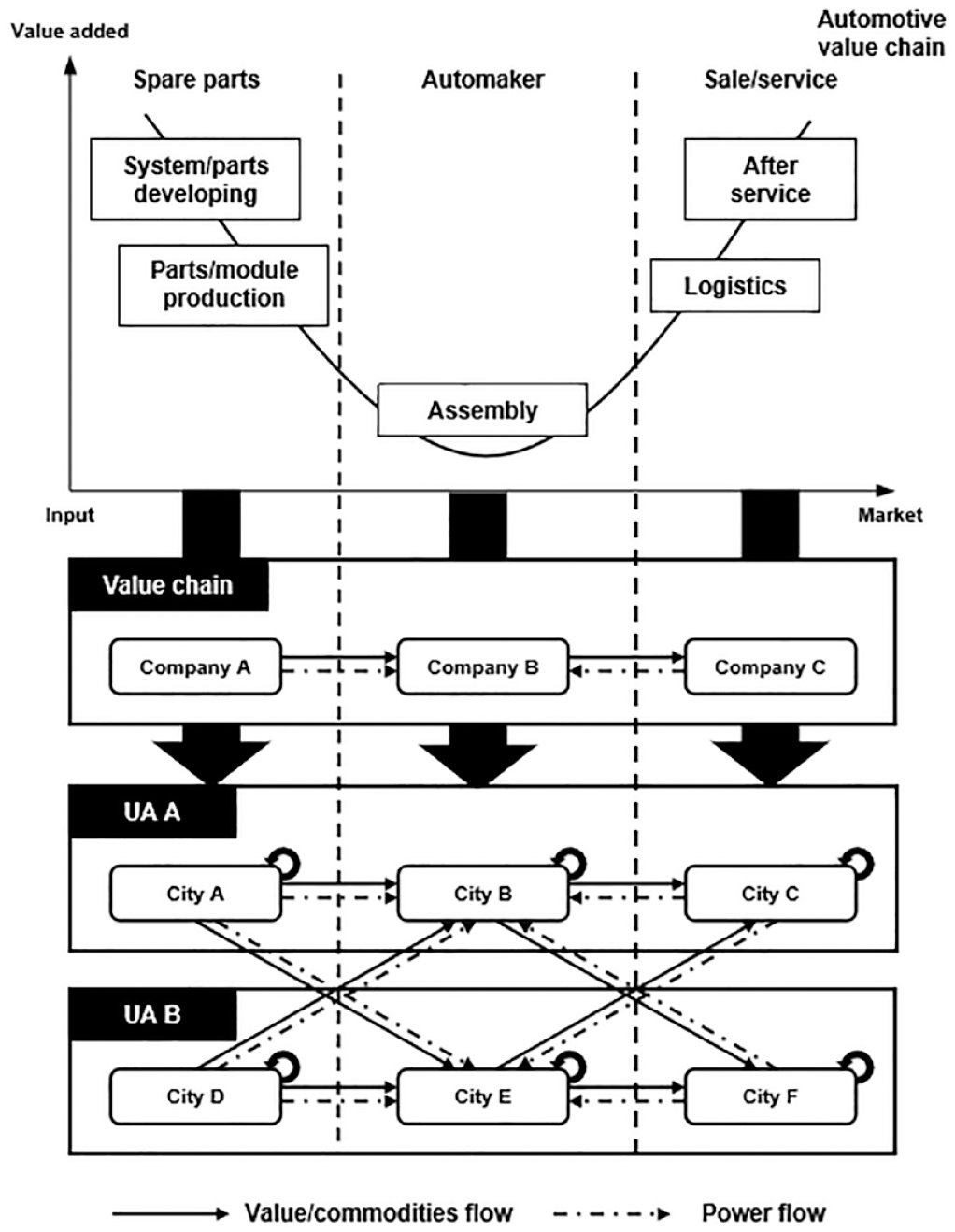
Spatial mapping of automotive industry value chain.
The methodology for this research consists two interrelated components. One is the model for spatial mapping of automotive industry value chain, which is used to identify the location of value and power and their flow among enterprises and cities. The other is interlocking model, which is employed to quantify the strength of connections among cities.
The research methodology used in this study comprises two interrelated components. The first component is a model for spatial mapping of the automotive industry value chain. It is used to identify the location of value and power and their flow among enterprises and cities. The second component is an interlocking model that quantifies the strength of connections among cities.
The China Automotive Industry Yearbook and several studies, including Tao (2019) and Wu (2020), have demonstrated a complete value chain for the automotive industry in China, including R&D, spare parts, assembly, logistics, and after-sales. The value chain is divided into three sections: spare parts (before assembly), automaker (assembly), and sale/service (after assembly). The flow of value and power among enterprises is reflected in cities and urban agglomerations based on their location. In China, as the major automotive enterprises are state-owned and enterprises in other sectors lack sufficient core products to compete, even if the automaker sector has the least value in the value chain, these enterprises still have more power than any others in China. Therefore, the cities with production bases become the power centers, and as the automotive industry grows at various scales, including industrial clusters at the intra-city scale, regional networks at the inter-city scale, and inter-regional networks at the country and global scales, single/multi-center networks are formed.
The interlocking model is used to measure the connections among enterprises and cities. In this study, degree centrality was applied to calculate the possibility and significance among cities in networks.
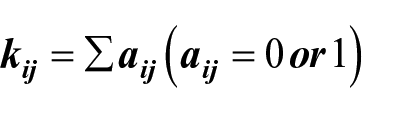
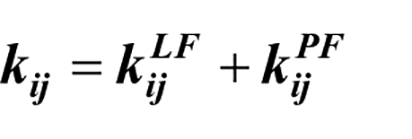
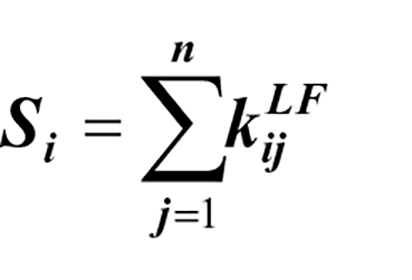
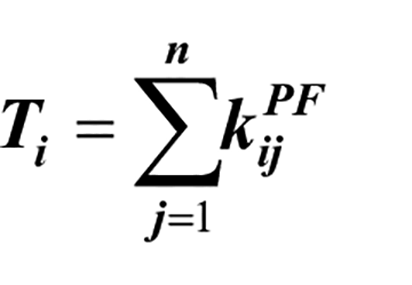
Gasgoo (https://auto.gasgoo.com), the top global e-commerce automotive procurement website, provides the data for the interlocking model. It supplies a supporting enterprise database with information on cooperating automotive enterprises including their names, locations, time of establishment, product types, and cooperating automaker enterprises. The nature of automaker bases is mainly from China Automotive Industry Yearbook. 2338 supporting enterprises, including 2264 enterprises in the section of spare parts and 74 enterprises in the section of sale/service, and 67 automaker bases, out of a total of 55741 supporting enterprises and 493 automaker bases, are located in the urban agglomeration in UAMRYR.
Time-space evolution of city networks of UAMRYR
Intra-city scale
Table 1 illustrates the interconnections among automotive enterprises are growing rapidly in Wuhan, Xiangyang, Changsha, and Nanchang, indicating the formation of automotive industry clusters in these cities. Among these cities, Wuhan has the largest scale of the automotive industry cluster. Additionally, the distribution of connections between spare parts enterprises and automaker enterprises is noticeably different in the three provinces. A developing model has been adopted in Hubei province with Wuhan and Xiangyang as the core cities, while a developing model has been gradually developed in Hunan province with the CZX urban agglomeration as the center. On the other hand, a balanced development model has been followed by Jiangxi province with low contact intensity. However, the connections between sale/service enterprises and automaker enterprises are mainly concentrated in provincial capitals because the development in this sector is relatively backward.
Strength of connection in intra-city scale.
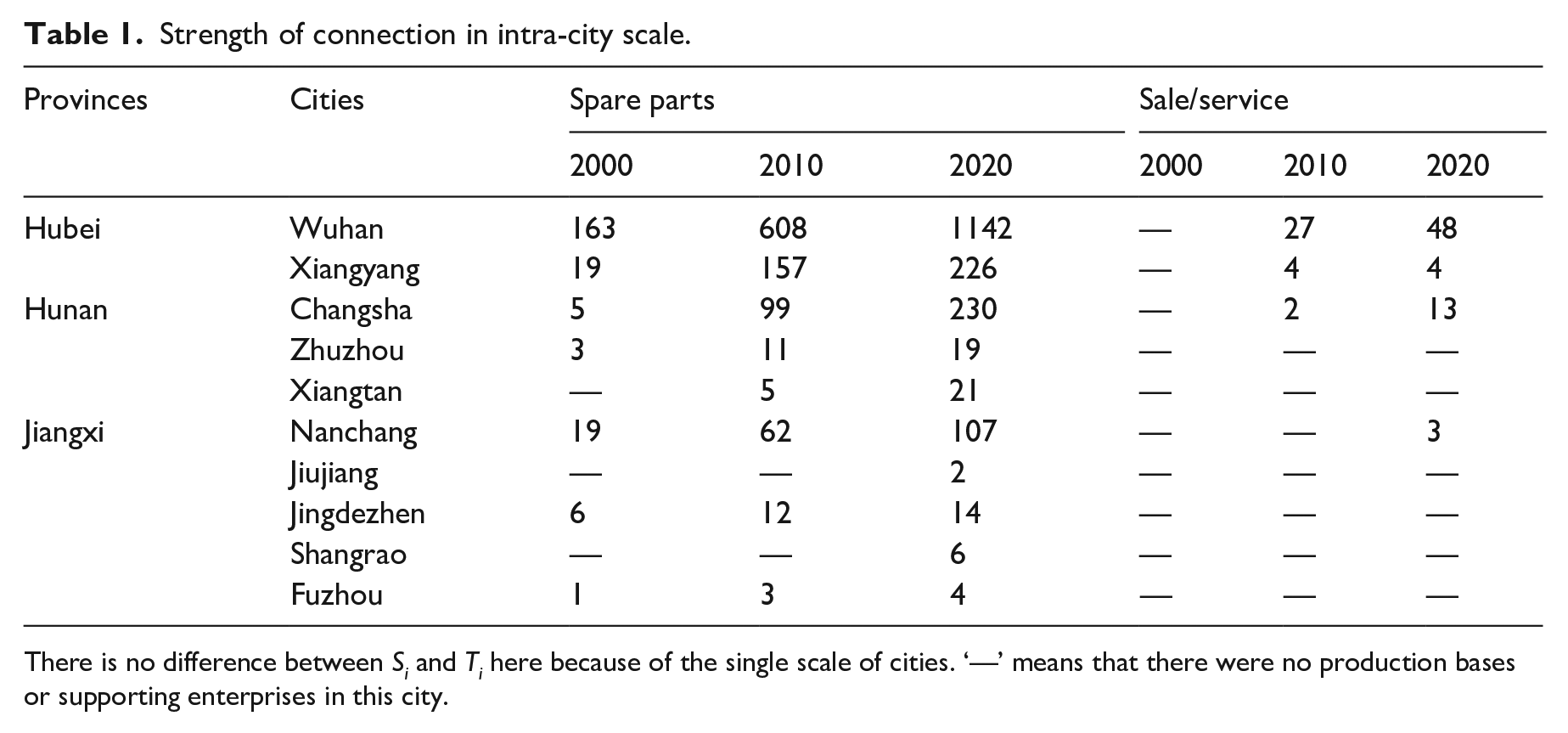
There is no difference between
Inter-city scale
Table 2 showcases the interconnections among automotive enterprises between cities of the UAMRYR. An ‘inverted triangle’ structure of connections has emerged in this scale, with Wuhan, Xiangyang, and Changsha forming the first center, and Nanchang, Xiangtan, Zhuzhou, and Yichang forming the second contact center. The distribution of connections between spare parts enterprises or sale/service enterprises and automaker enterprises is similar in both centers. However, there are also differences between the two. Xiangyang, as one of the cities where automotive production bases are located, has the largest number of spare parts supporting enterprises compared to other cities in UAMRYR. It is followed by Wuhan and Changsha. Changsha attracts the most connections from sale/service enterprises. During the automotive industry’s development, Xiangyang has also become another important center in UAMRYR, followed by Wuhan and Xiangtan. However, when considered as a supporter in both spare parts and sale/service, Wuhan provides the most connections. Moreover, the strength of both connections is much stronger in Wuhan than in any other cities.
Strength of connection in inter-city scale.
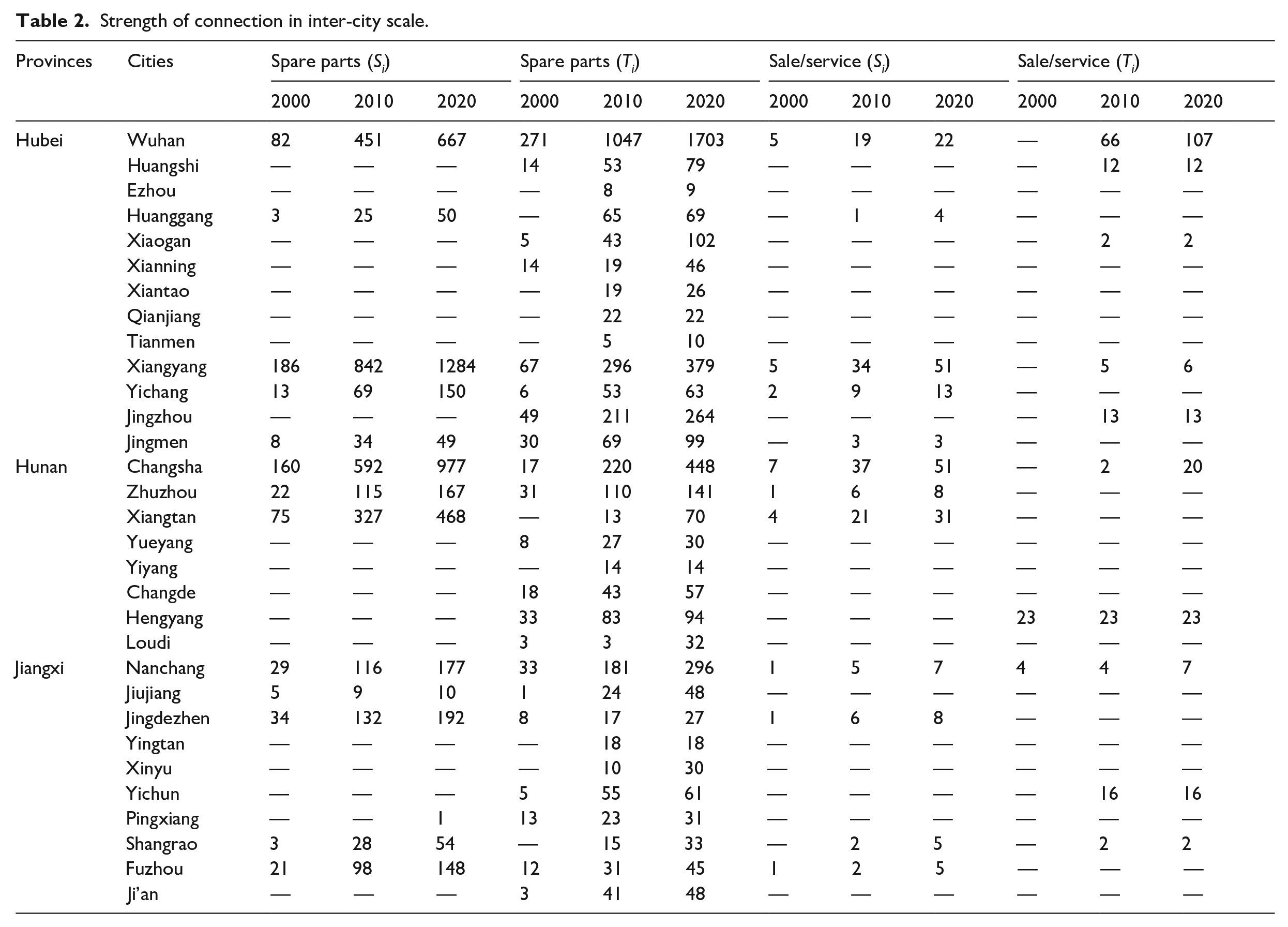
The provincial differences and changes in connectivity are depicted more clearly in Figure 3 and Figure 4. There is a provincial difference in the connections. The primarily connected cities of cities where production bases are located are their provincial capitals. Secondly connected cities are the cities where the supporting automotive enterprises are gathered in other provinces. Regarding the connections between spare parts enterprises and production bases, there is an evident hierarchical difference. As a supporter of spare parts, the first supporting city (excluding Wuhan) is Wuhan, and the secondary cities are typically cities with more spare parts enterprises such as Changsha and Xiangyang.
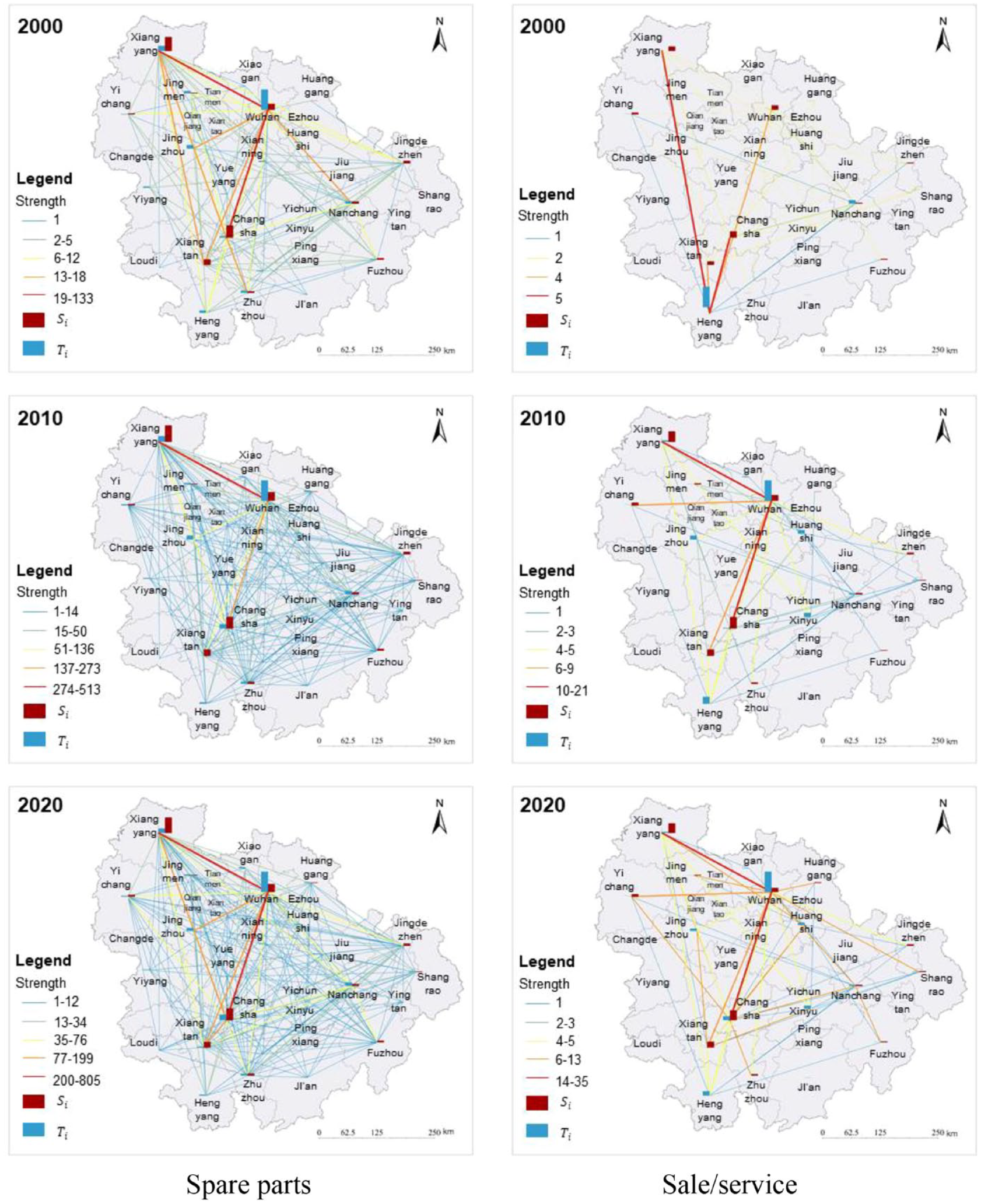
Inter-city networks of UAMRYR based on automotive industry value chain.
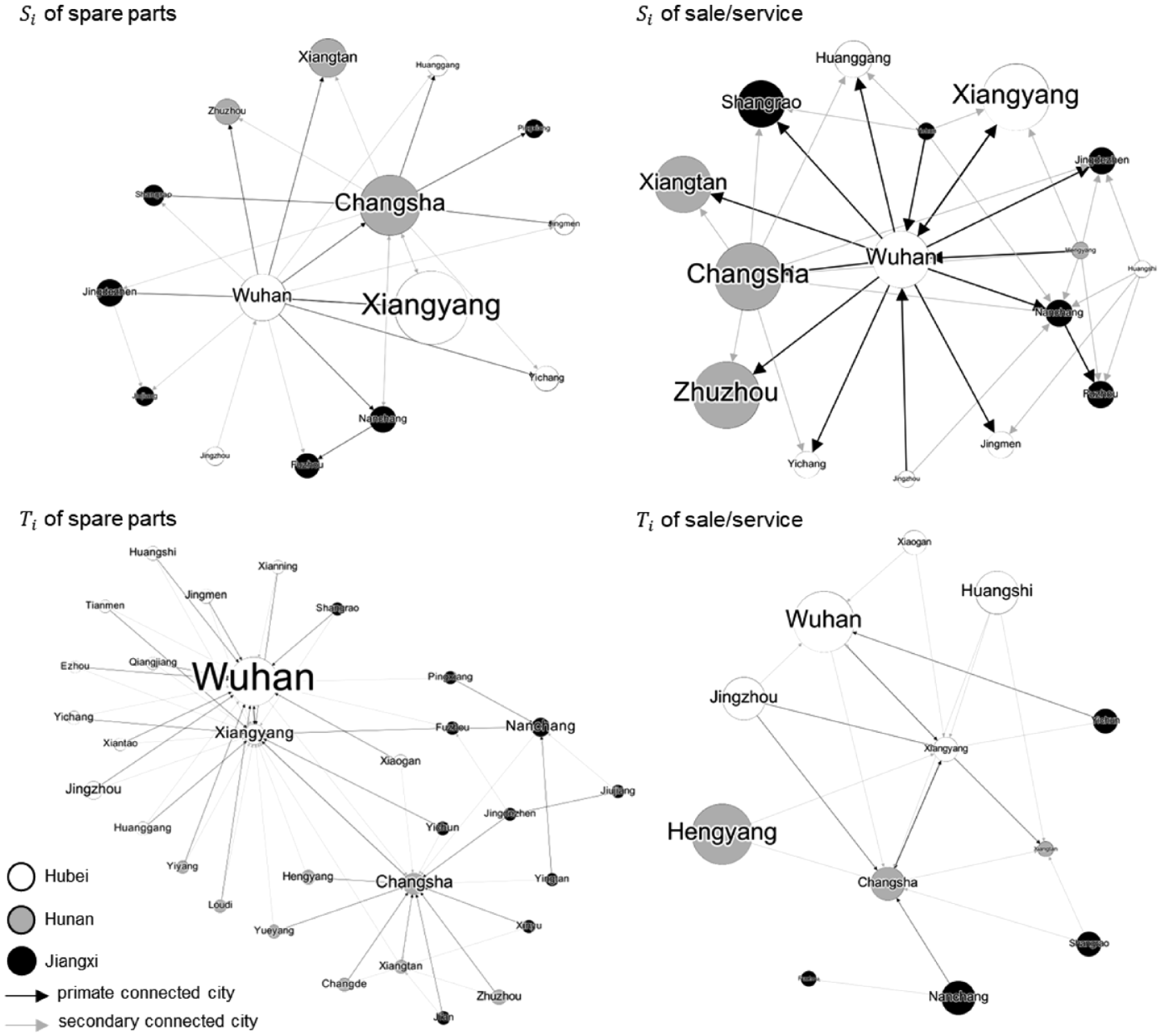
Mainly connected cities in UAMRYR based on automotive industry value chain.
Inter-region scale
In the value chain of the automotive industry, connections have taken shape between UAMRYR and other major urban agglomerations in China. Regarding the spatial distribution, Figure 5 shows that these connections present a horizontal ‘T’ spatial feature with ‘UAMRYR–Yangtze River Delta Urban Agglomeration–Beijing-Tianjin-Hebei Urban Agglomeration–the Greater Bay Area’ as the core. Changsha has the highest concentration of connections from spare parts enterprises in other urban agglomerations, followed by Wuhan and Xiangyang. However, Wuhan has significantly more connections in spare parts supporting than any other city in UAMRYR.
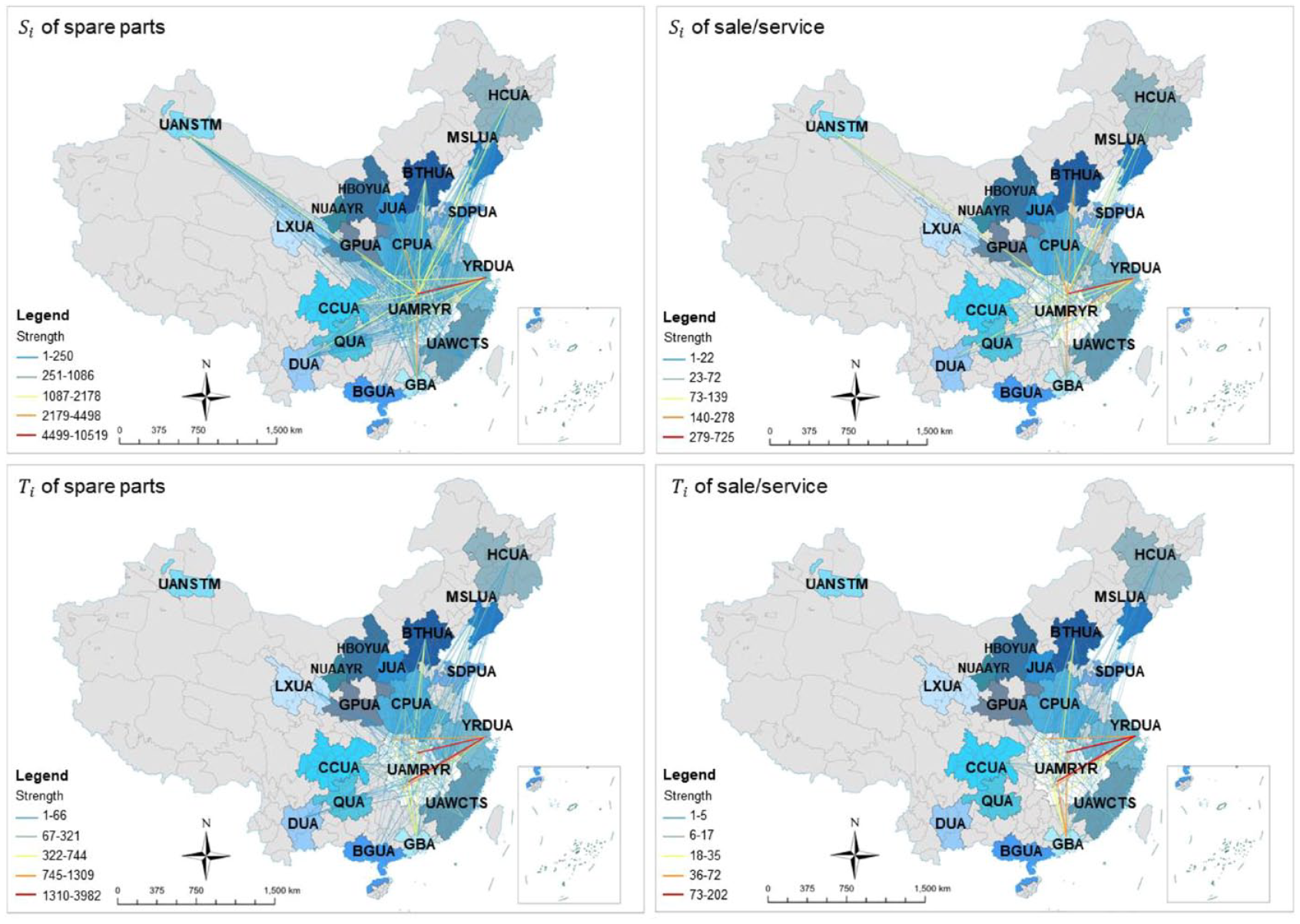
The inter-region networks of UAMRYR based on automotive industry value chain.Due to the lack of data, Hong Kong SAR, Macao SAR, and Taiwan Province of China are not included in this study.
In the specific connections between UAMRYR and other urban agglomerations, Table 3 provides further elaboration that both the connections between spare parts enterprises and production bases and the connections between sales/service enterprises and production bases show hierarchical distribution characteristics. As for cities with production bases, such as Wuhan and Changsha, the primary support for spare parts and sales/service is from the Yangtze River Delta Urban Agglomeration, Beijing–Tianjin–Hebei Urban Agglomeration, and the Greater Bay Area.
Strength of connection in inter-region scale.
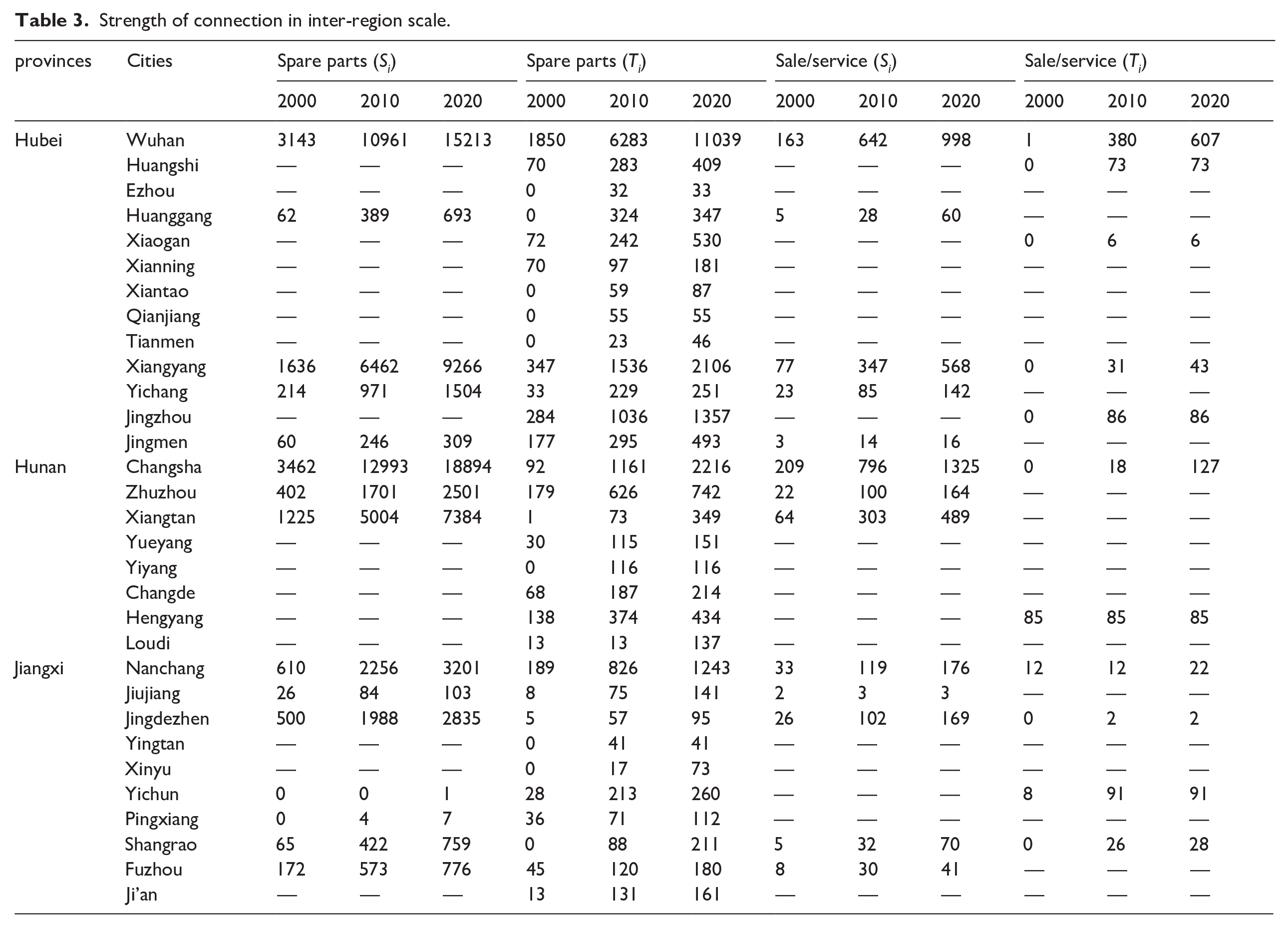
Comparison of city networks in UAMRYR
Table 4 displays the Gini index of connections of the urban agglomeration and three provinces, with all of the Gini indices of UAMRYR much higher than those of the other three provinces. This indicates that there is no significant difference in the strength of connection among cities in the same province. Instead, the difference is mainly reflected in different provinces.
Gini index of connections in city networks among different scales.
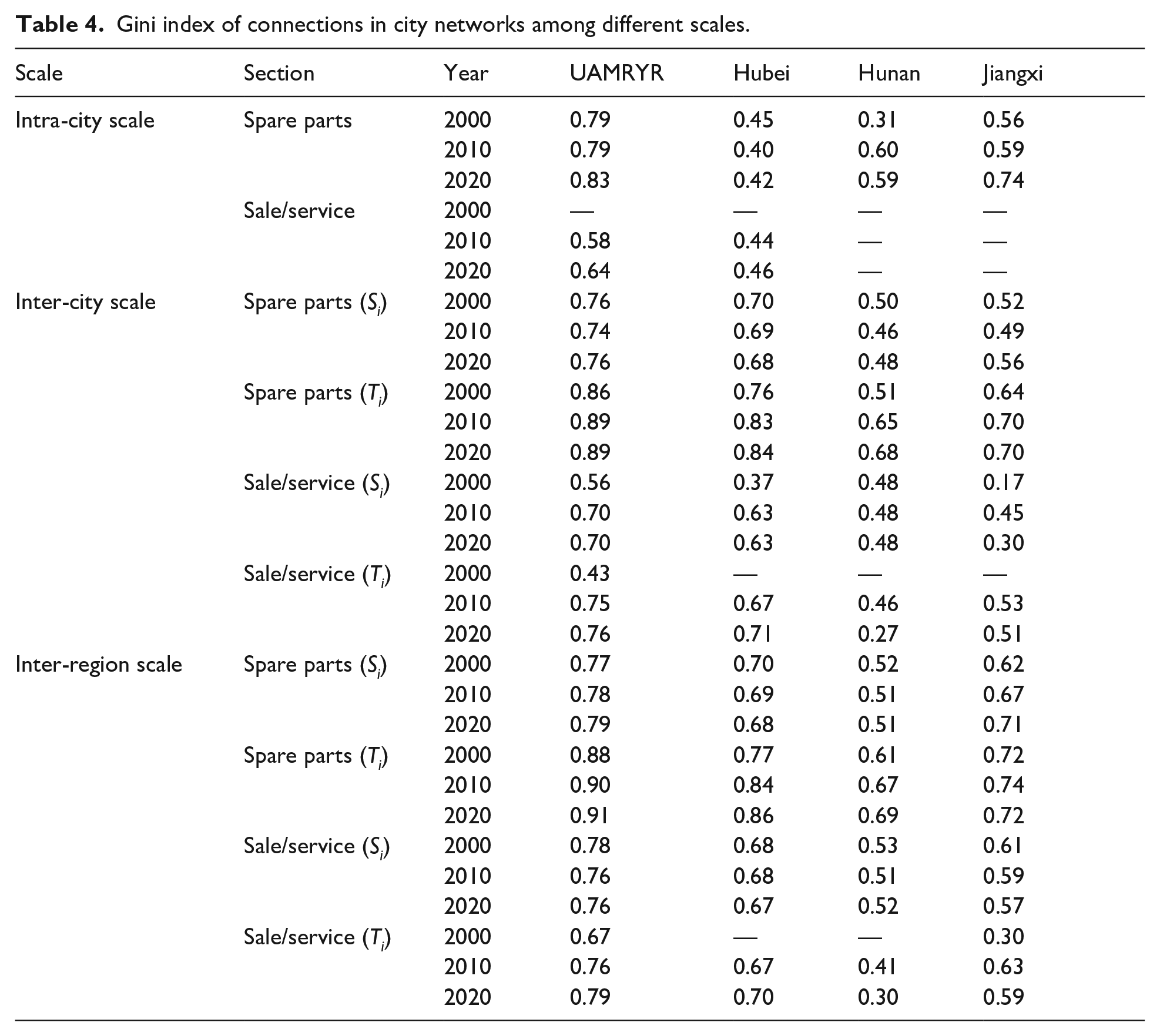
On a local scale, due to the rapid development of automotive industry clusters in Wuhan, Xiangyang, Changsha, and Nanchang, there is an upward trend of the Gini index in Hunan and Jiangxi. On an inter-city scale, more and more cities are providing spare parts and sales/services to cities with production bases and participating in city networks. As indicated in Table 2, cities with better development of the automotive industry, especially Wuhan, have stronger connections with other cities. Therefore, the Gini index of Hubei Province is also much higher than those of the other two provinces. The results of the Gini coefficient are consistent with the regional scale on a global level.
The modes of city networks of UAMRYR based on the automotive industry value chain
According to the analysis above, the UAMRYR has established automotive production bases with several representative automakers and supporting enterprises in Wuhan, Xiangyang, Changsha, Nanchang, and other cities. This has led to a growing city networks formed through supporting relationships in the value chain of the automotive industry. However, the measurement results have indicated notable provincial differences in the value chain connections for the automotive industry. Moreover, the difference between the source and destination objects in spare parts and sale/service is also demonstrated.
In the urban agglomeration, the connections between the three provinces and each other, as well as between the three provinces and other urban agglomerations, are also clearly separated. Based on the results mentioned above, this study delves into providing a historical overview of the growth of the automotive industry in the UAMRYR. The spatial structure of each province are respectively illustrated in Figure 6, Figure 7, and Figure 8. At last, the mode of city networks in the UAMRYR based on the value chain of automotive industry is summarized.
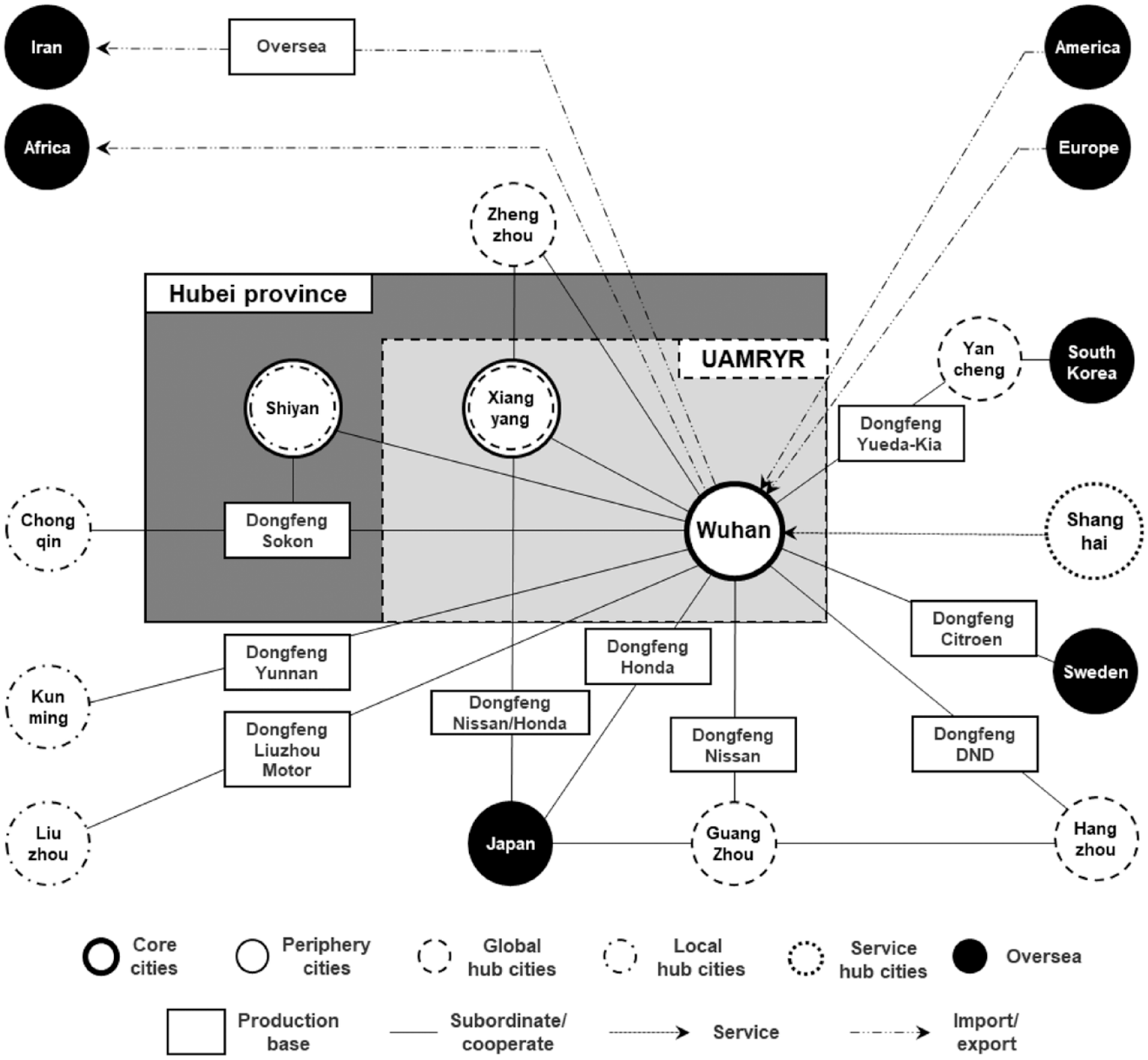
City networks of Hubei province based on automotive industry value chain.
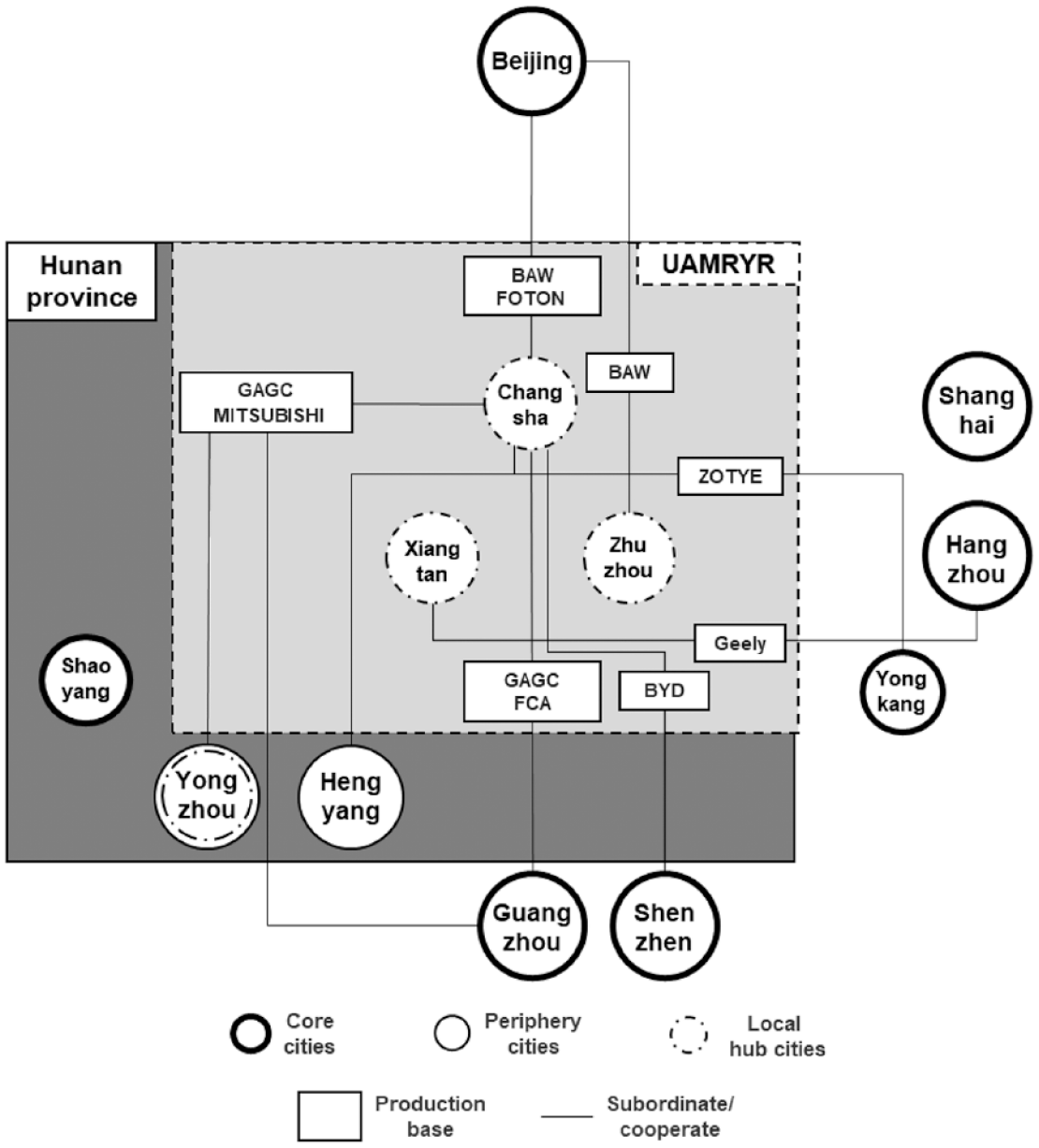
City networks of Hunan province based on automotive industry value chain.
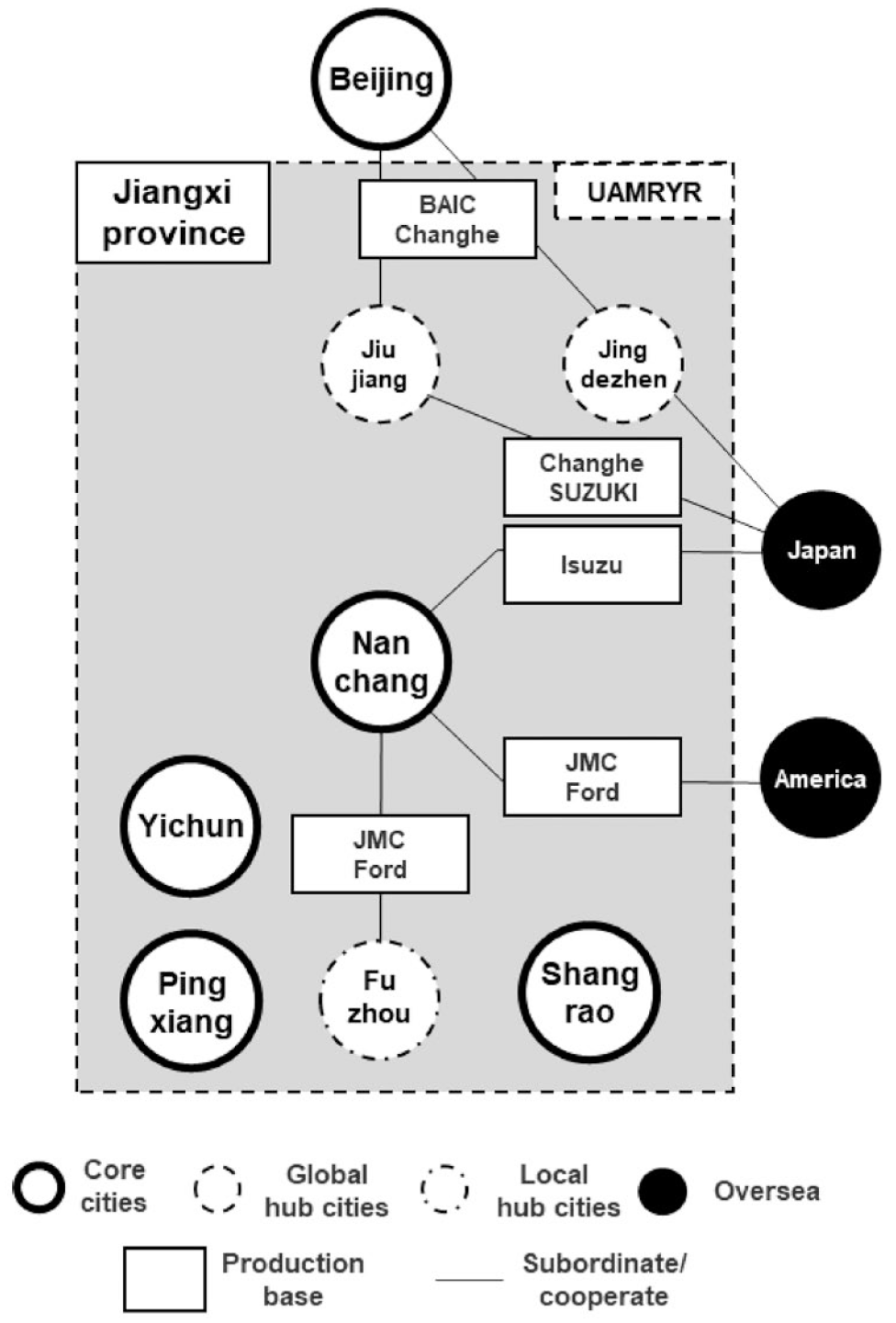
City networks of Jiangxi province based on automotive industry value chain.
Spatial coupling of regional and global production networks: Hubei province
Among the three provinces, Hubei has the strongest foundation in the automotive industry. As a result, it is better equipped to upgrade from low-end links to high-end links and participate in the global automotive production networks, thereby expanding its production scale. The results of the study indicate that Wuhan has the most connections with other cities and urban agglomerations in all scales, specifically in spare parts and services. This is due to the fact that DFM, one of the core automotive enterprises in China, relocated its headquarters to Wuhan in 2003. This caused a city networks to form, with Wuhan being the core, based on the upgrading process of DFM’s automotive industry value chain.
Because of the limited production space and high space stickiness of the automotive sector, DFM established foundries and production bases in Xiangyang and Wuhan, which are closer to Shiyan and have a better location in Hubei Province. Consequently, local automotive industry clusters emerged in Shiyan, Xiangyang, and Wuhan, with many supporting enterprises, particularly spare parts businesses, appearing in these cities. With DFM’s evolution, a ‘Wuhan–Xiangyang–Shiyan’ automotive industry development belt eventually took shape.
DFM also played a role in regional economic development planning as a state-owned organization. By relocating its corporate headquarters from Shiyan to Wuhan in 2003, Xiangyang and Shiyan lost prominence while Wuhan became the automotive hub of Hubei Province. According to the quantitative network analysis, Wuhan increasingly outshone other cities in Hubei Province in terms of spare parts and sale/service connections. However, the differences in the types of automotive products produced at the three different production sites revealed connections between Chinese governance and networks. For example, passenger vehicles were created in Wuhan due to a partnership between DFM, Honda, and Citroen. Meanwhile, small commercial vehicles were present in Xiangyang, and military vehicles and their accompanying spare parts were produced in Shiyan as a legacy of the planned economy era. As a result, the supporting linkages in these three locations disseminated the supporting businesses.
Furthermore, it is important for automotive enterprises to cooperate with foreign automotive enterprises to achieve strategic coupling. Instead of focusing on neighboring provinces while expanding outside of a province, DFM primarily targeted coastal provinces. Most of the new manufacturing facilities, such as Dongfeng-Yueda-Kia in Jiangsu province and Dongfeng-Nissan in Guangzhou, were constructed in southeast coastal regions of China since they were better suited for integration into international production networks.
Regional automotive industry transfer: Hunan province
By establishing production bases in the CZX Urban Agglomeration, Hunan province has taken on the responsibility of facilitating the expansion of other domestic automotive businesses from the coastline to the central regions of China. Unlike Hubei province, Hunan province lacked a strong automotive industry in the past decades, making it challenging to develop an evolution model for dynamic expansion.
However, since 2000, domestic automakers such as BAIC, GAC, SAIC, BYD, and Geely have established production facilities in economic development regions in Changsha, Zhuzhou, and Xiangtan, respectively. These bases have helped to create industry clusters for the automotive sector, and Changsha, Zhuzhou, and Xiangtan have developed into three centers for the car sector in Hunan province. The quantitative findings also showed that these three cities had the highest number of connections to the value chain of the automotive sector in Hunan province. Other automotive businesses primarily produced passenger cars and new energy vehicles, except for the commercial vehicles produced at the BAIC production base. Additionally, the concentration of electrified and intelligently connected businesses in these three locations was also reflected in their supporting industries.
In contrast to the expansion of the automotive production network in Hubei Province, Hunan’s undertaking departments were primarily from coastal provinces rather than provinces in UAMRYR. Besides the Yangtze River Delta Urban Agglomeration, the quantitative results also showed that Hunan Province is the most connected region in the Pan-Pearl River Delta.
Flattening provincial expansion of automotive production networks: Jiangxi province
Compared to Hubei and Hunan provinces, Jiangxi province had fewer well-known automotive enterprises and relied on local automotive enterprises like JMC and Changhe production bases in Nanchang, Fuzhou, Jiujiang, and Jingdezhen to produce passenger and commercial vehicles. Additionally, several bus production bases in Shangrao, Yichun, and Pingxiang resulted in independent small-scale industrial clusters dominated by bus production. As a result, the automotive industry in Jiangxi province had small and scattered spatial characteristics, and there was no relatively core city in its provincial city networks, such as Wuhan, Changsha, and Xiangyang.
Unlike Hubei province, which had a sole MED, or Hunan province, which had automotive companies from other provinces, Jiangxi province’s only two automotive enterprises were located in Jiujiang and Jingdezhen in the north, and Nanchang and Fuzhou in the south and center, forming a spatial competitive relationship. Additionally, the establishment of independent automotive production bases by several bus production bases further added to the weak connections among cities and regions in the provincial and national scale.
The modes of city networks of UAMRYR based on the automotive industry value chain
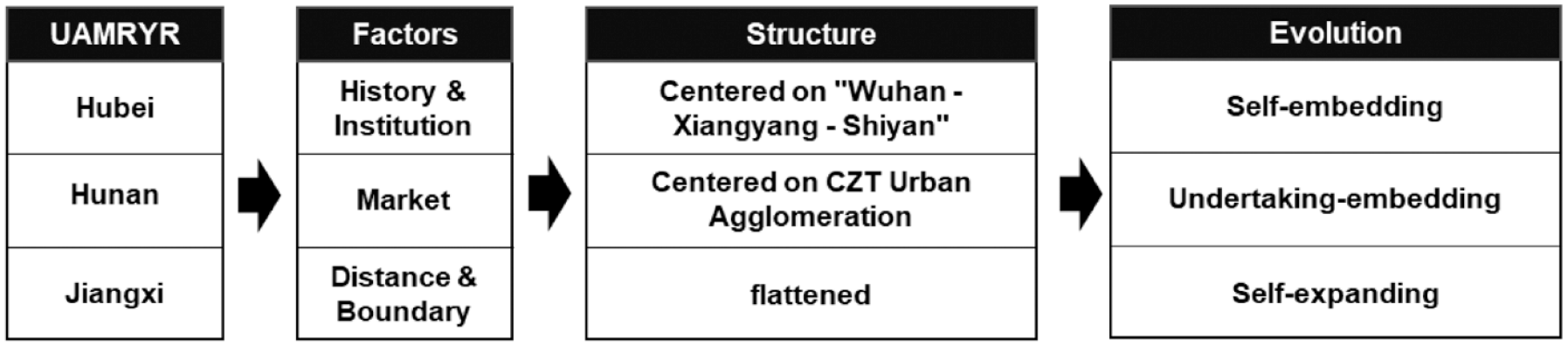
To sum up, this study basically showed three kinds of city networks driven by the automotive industry, as shown in Figure 9: strongly connected city networks centered on ‘Wuhan–Xiangyang–Shiyan’ economic belt in Hubei province, city networks centered on CZX Urban Agglomeration in Hunan province, and flattened city networks in Jiangxi province.
Modes of city networks based on automotive industry value chain in UAMRYR.
The variation in interprovincial networks in the automotive industry can be attributed to several factors. The Chinese government followed an egalitarian institution and developed the spatial organization of the automotive industry in Hubei, Hunan, and Jiangxi provinces. These state-owned automotive companies were not only required to integrate into international manufacturing networks but also to serve as the Chinese government’s liaison for regional city networks. As a result, the model of network expansion in each province was established by the institution, the market, and the foundation of the automotive sector.
Hubei Province successfully implemented a self-embedding city network expansion based on DFM, while Hunan Province finished the process of expanding city networks by taking on the production divisions of automotive businesses in China’s established regions. On the other hand, local city networks in Jiangxi province were flattening out. This distinction between the three regions of UAMRYR demonstrated the tenuous linkages that earlier research had shown, with provincial boundaries becoming the cliff in the expansion of China’s regional city networks due to the provincial economy.
The expansion of industry clusters and provincial city networks was driven by the automotive sector’s desire to increase its scale or value chains in neighboring areas to cut costs associated with management and transportation. On the broader scale, the expansion model became hierarchical. Additionally, the separation brought on by the attraction due to UAMRYR’s proximity to the Greater Bay Area, Beijing–Tianjin–Hebei Urban Agglomeration, and the Yangtze River Delta Urban Agglomeration in different directions was also insignificant.
Conclusion
Regions like urban agglomerations cannot be studied in isolation. Each city is connected to other cities and regions in different ways and different scales. It suggests that every city plays different roles and has different power on different scales. This perspective can highlight how different parts within and beyond urban agglomeration interact with each other. However, those world cities and APS enterprises are the cores in world city networks and promote the expansion of production networks in different industries on a global scale. Those regions and cities with different institutional backgrounds, especially regions and cities in the global south, often have different logics for city networks expansion at the national and regional scales.
The UAMRYR can be regarded simultaneously as a hierarchically organized polycentric region and as a high-grade localized system of automotive industry value chain. The vast geographical hinterland in central China makes spatial division of the value chain and can avoid the cost and risk brought by transnational cooperation, and it is easier to form more regional industrial clusters in the UAMRYR. Here, we find a major value chain of automotive industry and, correspondingly, an extensive network of city networks, have been developed in the UAMRYR. And the evidence shows that provincial cities like Wuhan, Changsha, and Nanchang play an important role as regional power centers and in relation to their national gateway function to other cities and urban agglomerations which have stronger gateway function.
However, compared with the analysis of the world city networks, the analysis of the value chain has highlighted the difference in power of the different actors. The historical heritage of the automotive industry brought about by the spatial planning policy in a planned economy period laid the industrial foundation for the expansion of the city networks of the UAMRYR. The institutional establishment of the UAMRYR reflects the Chinese government’s ambition to promote development in central China. It means that these automotive enterprises have been given the role of driving the development of regional city networks by national government. This also makes the expansion of city networks driven by regional industrial clusters and enterprise value chain division influenced not only by distance, but also by administrative boundaries.
The changing value chain, complex institution background, and different function of cities at different scales make the relationships among all the actors difficult to grasp. On the one hand, changing institution gives a different function to enterprises and cities, and the same enterprises and cities will also play different roles in different scales. On the other hand, the intra-, inter-, and extra- connections among APS, manufacturing industry, and nonbusiness are still not easy to capture.
As a result, further research activities must deal with the following specific aspects. Firstly, the connections among all the actors, including economic and non-economic actors, should be integrated into the city networks framework. Particularly at a time when the world economy and trade have begun to be conservative, those functions of non-economic actors, such as governments, in city networks will be much more important. Secondly, the connections among cities should be analyzed at different scales, from city scale to state or globe scale. This makes it easier to understand the role of different cities in the world economy. Thirdly, to understand better the connections among cities, more accurate and quantifiable connection data of intra-enterprises/cities, inter-enterprises/cities, and between economic and non-economic actors should be used to depict the complex city networks.
Footnotes
Declaration of conflicting interests
The author(s) declared no potential conflicts of interest with respect to the research, authorship, and/or publication of this article.
Funding
The author(s) disclosed receipt of the following financial support for the research, authorship, and/or publication of this article: This research was funded by the National Natural Science Foundation of China (Ref: 42371222; 41971167).