



Abstract
The blue economy purportedly involves equitable and sustainable development across a range of ocean sectors spanning fisheries, aquaculture, tourism, shipping, seabed mining, oil and gas extraction, and renewable energy. Here, we argue that blue economy scholarship and policy gives insufficient attention to coastal regions – and the cities, towns, and villages within – that depend on these sectors. Rather than prioritising the profitability of corporations and expansion of industry, we advise actors to consider three transformative processes that are (re)shaping coastal regions. First, are techno-industrial processes for which we draw on the fourth industrial revolution literature, highlighting that coastal regions must adapt to rapidly changing technological innovations or risk facing decline. Second, are socio-cultural processes for which we draw on the left-behind places literature, which exemplifies spatial inequalities from declining and deindustrialised coastal regions. Third, are physical-environmental processes, highlighting geographically variable opportunities and challenges around natural resources, marine biodiversity, and climate change in coastal regions. We then promote place-based policymaking as a multi-level and participatory mode of managing these transformations. Finally, we present a blue economy research agenda to help navigate these transformative processes, and enable place-based solutions. The article intersects with broader literatures around ocean governance and sustainable transformations.
Keywords
Introduction
Coined in 2010, the ‘blue economy’ purportedly involves the sustainable use of ocean resources for economic growth, improved livelihoods and jobs, social inclusion, ocean ecosystem health, and environmental sustainability (World Bank 2017). Seemingly well-meaning and progressive, the blue economy has captured the interest of major international organisations and become largely synonymous with many of the interactions between humans and the oceans. Increasingly, however, a critical narrative of the blue economy as a mechanism for profit through extractive activities is overshadowing the other proposed benefits, drawing attention to various spatial injustices and inequalities that epitomise studies on human-environment interactions in the Anthropocene (Bennett et al. 2022; Mallin and Barbesgaard 2020). In this regard, the blue economy represents an important topic for environmental geographers to engage with.
Historically our oceans have been seen as an unknown expanse, sometimes considered the last planetary frontier for its ‘high seas’ and deep marine zones (Havice and Zalik 2018). However, scholars assert that in recent decades a neoliberal bearing has transformed human understandings of the blue from the mysterious and unknown quantities of the ‘deep blue sea’ to a cornucopia of valuable resources ripe for extraction (Mansfield 2004, 2007; Munroe et al. 2014). This has directly influenced the rise of the blue economy, and led to blue spaces being increasingly parcelled and (re)spatialised into economic zones based on the most profitable use, in what has been called a ‘blue scramble’ (The Economist 2017; Jouffray et al. 2020). Critics have thus positioned the blue economy as a “frontier for economic development” (Campbell et al. 2021, 1), that is being deliberately planned and developed following a neoliberal doctrine with specific economic interests in mind (Winder and Le Heron 2017). Significantly, this framing of the blue economy allows the extraction of resources for the benefit of governments, large firms, and their shareholders, which are located in places typically far removed from blue spaces, while coastal regions receive little benefit. The blue economy can therefore be seen primarily as a ‘spatial fix’ for capitalism's need to extract resources from a blue frontier, enabled by recent technological advances (Mallin and Barbesgaard 2020). Indeed, even conservation attempts have been criticised for relegating the interests of local people at the expense of broader societal benefits (Gray 2018).
This has prompted a response in the literature towards better consideration of the communities embroiled within the blue economy, so that those most dependent on blue spaces can benefit (Campbell et al. 2021), with academics urging “a global transformation to a socially sustainable and equitable blue economy that benefits coastal populations” (Bennett et al. 2022, 1, emphasis added). The problem for coastal communities is a growing and dynamic one. As more coastal areas are involved with the blue economy, communities are experiencing wide-ranging changes impacting their livelihoods and social and cultural values, leading Bennett et al. (2021) to argue for more ‘blue justice’ for communities. Campbell et al. (2021, 1, emphasis added), in noting the rarity of local communities benefitting from ocean development projects, suggest a reframing “From Blue Economy to Blue Communities”. Indeed, emphasizing community wellbeing would help to avoid the neoliberal pitfalls of the blue economy and provide a perspective that recognizes variations in “what is important to people, communities and society” (Weeratunge et al. 2014, 257). This paper seeks to advance these discussions by arguing for a holistic approach that situates coastal regions in relation to multiple transformative processes influencing the blue economy, with the changing fortunes of coastal regions dependent on their ability to respond to or harness such transformations.
While we agree with the dominant narrative of the blue economy as a collection of neoliberal projects utilising sustainability concerns to extract resources and profit from ocean spaces (Winder and Le Heron 2017), we believe that the transformative capabilities of the blue economy are underappreciated in the literature. The expanding extractivist activities of the blue economy have been enabled by the tsunami of new technologies sweeping across regions and economies globally that are seen as the Fourth Industrial Revolution (FIR) (De Propris and Bailey 2021). Emerging discussions in geography highlight the importance of the FIR, contending that it may be the start of a long-wave of technological innovation (Scherrer 2021) which is likely to destabilise many urban and regional economies, and runs the risk of widening digital divides and spatial inequalities (Barzotto et al. 2019; Chung and Chung 2021; Crowley, Doran and McCann 2021; Cuaresma and Lutz 2021). This transformational wave began with a new suite of digital technologies and processes, but also includes the set of robotics and additive manufacturing described as ‘Industry 4.0’, and further extends to technologies in the areas of autonomy, zero-carbon, and AI; these technologies are creating new industry sectors and revolutionising existing ones. Many of these technologies are increasingly present in the blue economy, such as autonomous vehicles used for deep-sea exploration (Leng et al. 2021) or green-powered ships used in maritime transport or oil and gas sectors (Bach et al. 2020; Bugge, Andersen and Steen 2021). Together, these technologies have been widely described as a FIR due to the scale of the economic, social, and environmental shifts and consequences that they have already had and are expected to have across regions globally (De Propris and Bailey 2021; Jeannerat and Theurillat 2021).
Every industrial revolution has been a regional phenomenon – starting in, spreading to, or altogether bypassing particular regions. Indeed, a series of papers have already shown that there is significant regional variation in the degree to which FIR technologies are being adopted and diffused across the economic landscape (see, for example: Balland and Boschma 2021). Given their proximity to blue spaces, coastal regions and their communities are seemingly well-positioned to take advantage of technological advances in the blue economy, however, the existing challenges within many coastal regions poses problems. In the last 50 years, many coastal regions – particularly in the developed world, but increasingly globally – have experienced significant economic decline as a result of deindustrialisation and globalisation pressures (Kim and Sumner 2019). Around the world, abandoned infrastructure can be found in these regions, rusting, corroding, and polluting coastal waters (Valdez et al. 2016), and serving as remnants of forgotten industries such as shipbuilding that were left behind with little institutional support as the global economy changed (Poulsen and Sornn-Friese 2011). This has led many coastal villages, towns, and cities to be described as ‘left-behind places’ (Corfe 2017; McDowell and Bonner-Thompson 2020; Telford 2022), that is, those places that are experiencing economic hardship, demographic shifts, community disruption, and loss of identity – and are seen as hotbeds for political discontent (Rodríguez-Pose 2018). Today, many coastal regions and communities remain at risk of being (further) left behind due to the industrial transformations of the blue economy.
The problems for coastal regions are accentuated by climate change impacts such as sea level rise and intensifying storms (Edmonds et al. 2020; He and Silliman 2019). For instance, fishing communities have been hit hard by changing fish populations not only because of fishing effort but also due to environmental change (Iversen et al. 2020; Kokorsch and Benediktsson 2018). Simultaneously, population densities in coastal regions are often high and increasing due to coastal migration and urbanisation (Neumann et al. 2015), especially in the world's major river deltas (Edmonds et al. 2020), leading to increased competition for seaspace. For example, fishers are increasingly displaced from their fishing grounds due to increasing coastal traffic and infrastructure for resource extraction, offshore aquaculture, or renewable energy (Andrews et al. 2021; Brent, Barbesgaard and Pedersen 2020; Owusu 2018). This increased competition for ocean space and the ensuing displacement of its traditional users and dwellers is creating environmental and social injustices for coastal communities around the world (Anbleyth-Evans et al. 2022; Okafor-Yarwood et al. 2020; Satizábal et al., 2020), and causing scholars to rethink what constitutes the ‘blue’ in the blue economy, emphasising the intersections between humans, terrestrial land, and the blue (Bear 2013; Steinberg and Peters 2015), as opposed to oceans being a distant and unpeopled frontier.
In light of the above, we see the blue economy as a dynamic nexus of techno-industrial, socio-cultural, and physical-environmental transformative processes that will (re)shape the coastal regions and the communities that are central to it, over the coming decades. During these blue economy transformations, we argue that supporting the fortunes of coastal regions and communities will require a holistic approach and the interrelated techno-industrial, socio-cultural, and physical-environmental transformative processes should be considered simultaneously, to understand what actors can do to ensure coastal regions benefit from the blue economy in place-based ways. In, Section 2 we discuss these interrelated transformative processes in turn. We conclude this section by arguing that such a holistic approach requires place-based policymaking to ensure representation of these transformative processes and assert that local considerations of coastal regions are paramount and represented within changing a blue economy. In Section 3, we then present a research agenda focusing on the theoretical, methodological, and transdisciplinary advances required to ensure a holistic and place-based approach to the blue economy is realised.
Rethinking regional coastal transformations in the blue economy
Techno-Industrial processes: the fourth industrial revolution
The blue economy is increasingly being framed in relation to the FIR, with the World Economic Forum (2017) describing the blue economy as “harnessing the fourth industrial revolution for oceans”. Some have discussed how a ‘digital ocean’ is forming “to support the blue economy [which] is already harnessing key technologies of the fourth industrial revolution (such as artificial intelligence and automation; advanced materials and manufacturing; sensors, platforms and vehicles; bio-technologies) to solve problems such as how to fish sustainably, prevent catchment and ship-based pollution, protect habitats and species and build resilience to climate change” (Steven, Vanderklift and Bohler-Muller 2019, 125). Indeed, others emphasize that the FIR is one of the main driving forces of the blue economy: “It is becoming then a safe assumption that policies, legislation and regulations affecting 4th Industrial Revolution research and innovation as an area, play a direct impact role on the evolution of Blue Economy activities and the values associated with it” (Smith-Godfrey 2021, 3). Consequently, transformative FIR technologies can be seen as driving the blue economy, and engagement with these techno-industrial dynamics are necessary for coastal places that want to benefit from industrial transformation. An important question, therefore, is how can coastal regions benefit from FIR transformations, particularly when decisions regarding the blue economy are so often made away from coastal places?
While some have responded with scepticism as to whether a FIR is here or whether it is simply an extension of the third (Lee and Kee 2021; Moll 2021), it is clear that these technologies are having a profound impact on the fortunes of places and the blue economy. The literature suggests that this new suite of technologies, particularly zero-carbon technologies, are set to significantly disrupt and restructure existing sea-based sectors and create new opportunities (While and Eadson 2022). For example, the Pacific Blue Shipping Partnership has issued a bond to finance new zero-emissions vessels for several small island developing states including Fiji, Samoa, and Vanuatu (Thompson 2022a). Other recent initiatives include the Ocean Supercluster in Canada (Doloreux and Shearmur 2018) – which is developing an ‘innovation roadmap’ that will create large-scale collaboration between firms across the entire ocean-based value chain – are indicative of the scale of potential between the blue economy and technological developments in coastal regions. Meanwhile, studies from Norway have shown how the adoption of new net-zero technologies is aiding the sustainable transformation of the shipping industry (Hessevik 2021), and the greening of the ferry industry (Bach et al. 2020; Bugge, Andersen and Steen 2021). Furthermore, Singapore has developed technologies to become a world-leading knowledge-intensive maritime cluster (Zhou et al. 2021). These projects are upgrading coastal regions by harnessing and advancing novel FIR technologies within the blue economy. However, not all coastal regions are experiencing success stories. Studies have demonstrated that other coastal regions are struggling to adapt, lacking the skills, institutional capacity, and firm presence to harness the transformative drive of the blue economy (Harris and Sunley 2021).
Engagement between the blue economy and FIR literatures can help us understand how coastal places can benefit more from the blue economy by restructuring or transforming the local industrial and technological base to benefit from the rapid technological change. Currently, the burgeoning FIR literature has identified factors that lead to regions having better chances of adapting to and adopting new FIR technologies. Most significantly, industries and regions that have some dynamic capabilities such as know-how, knowledge, and skills embedded in high-skill workers, productive and R&D capabilities, strong capital raising potential, and access to international markets, as well as the ability to not just create or attract new technologies but to translate the knowledge throughout the region, are key (Coro et al. 2021; De Propris and Bailey 2021; Labory and Bianchi 2021). Unsurprisingly, strongly performing ‘core’ regions are well placed in this regard, as they are likely to have higher technological relatedness (Balland and Boschma 2021), absorptive capacity (Corradini, Santini and Vecciolini 2021), and technology-related business services (Vaillant et al. 2021).
Other studies have discussed the importance of value chains that intersect with such regions (Hilpert 2021), emphasizing that firms and regions can receive both beneficial and detrimental effects depending on the power relations in place (Gaddi, Garbellini and Garibaldo 2021; Hickie and Hickie 2021). Within the Norwegian Agder region, Kyllingstad et al. (2021) consider infrastructural and material assets, alongside four other asset classes, for their potential use in asset modification as a route to regional industrial restructuring. They find that while infrastructural assets are important for digitalisation, “sufficient financial resources are crucial” (ibid, p.1770), which poses a significant problem for lagging regions with limited financial recourse. Other studies still have highlighted the importance of clusters or industrial districts for the adoption of FIR technologies, as they often supply appropriate enabling conditions, particularly during the earlier stages of technological innovation (Götz and Jankowska 2017). Indeed, Baker, Gaspard and Zhu (2021), using data from North America, suggest that having one or more industrial clusters is a precondition for regions to develop FIR technologies, and they conclude that collaborative synergies and network intermediaries should be prioritised.
This evidence comes from a FIR literature that has largely focused on studies of core regions where the above factors can frequently be found. However, many coastal places, particularly in the Global South, do not meet the criteria of ‘core’ regions ready to embrace these transformations. For them, the challenge of lagging or less developed regions that lack these factors is primarily a policy-based one, where place-based policy making practices will have to find new and innovative ways of countering the relative lack of industries, capabilities, clusters, and couplings (Bailey and De Propris, 2021; McCann and Ortega-Argiles 2019; Morgan 2019; Potter and Lawton-Smith 2019; Sunley et al. 2023). This is a significant challenge as peripheral coastal regions tend not to have the institutional and organizational capabilities necessary to implement successful policymaking (Harris and Sunley 2021). Too often these regions are layered with some sort of generic policy, such as a cluster initiative, that does not attach to the roots of the region, that does not build on existing capabilities, and will likely fail to generate the benefits necessary (Harris 2021; Sunley et al. 2022). What works in one coastal region may not in another, and considerations of the different techno-industrial qualities and capabilities of the regions must be made.
Some examples of policy reform aiding local coastal places give credence to this argument. For instance, after an influx of international aquaculture companies into Norway's Finnøy archipelago led to complaints from local fishers and tourism companies, local policymakers created reforms stipulating that these international companies were required to make use of local suppliers and mechanics, while a new local foundation was set up to facilitate corporate social responsibility within the municipality (Lindland et al. 2019). Alternatively, following decades of decline across the maritime industry of the South-west UK, regional development agencies created a new institutional framework around three sub-regional ‘centres of excellence’ and facilitated knowledge transfer, upskilling, and collaboration between small-medium enterprises to increase local employment in this sector (Beer and Meethan 2007). This shows that building on local expertise can develop clusters of excellence. In these examples, local issues were identified by local stakeholders, who implemented local solutions. Given the diversity of blue economy activities in regions, there is considerable opportunity for engagement between the blue economy, the FIR literature, and related literatures like clusters and global production networks, to mutually uncover ways in which coastal places can utilise new place-based policy structures to advance within the blue economy.
Socio-cultural processes: ‘left-behind’ places
The literature on coastal communities in the blue economy has begun to highlight the plight of many vulnerable peoples swept aside by the blue economy. However, we focus in on the burgeoning left-behind places literature, to emphasise that socio-cultural issues are often linked to the types of industrial transformations highlighted in the previous section, and that future policies for coastal regions need to find harmony between techno-industrial and socio-cultural transformations.
The ‘left-behind’ moniker is the latest in a long line of terms, such as “spatial ‘disparities’, ‘divides’, ‘gaps’ and ‘imbalances’” (MacKinnon et al. 2022a, 41), that aim to understand spatial inequalities. This particular moniker places an emphasis on the recent expressions of political discontent by those living in these places towards centralised government, such as the 2016 election of Trump or Brexit vote, and consequently has become a political and policy staple with the ‘no place left behind’ discourse in the US (Walker and Williamson 2020) and the ‘levelling up’ agenda in the UK (Tomaney and Pike 2021). Thus, the notion of left-behind places goes beyond the economic to include important demographic, social, political, and cultural concerns. Left-behind places are considered to be a consequence of decades of failed conventional policymaking that focused on economic growth and productivity at the national level without considering spatial ramifications, such as social and environmental sustainability (MacKinnon et al. 2022a). These policies failed to adapt to industrial transformations, the likes of which we are experiencing with the FIR, and consequently left-behind places are often found in old industrial areas that have experienced industrial decline and neglect (Martin et al. 2021). Thus, the ‘left-behind places’ literature has begun to highlight issues that are disproportionately facing coastal places, particularly in the UK and other predominantly Western economies (Corfe 2017; McDowell and Bonner-Thompson 2020; Telford 2022).
Many scholars within this literature have argued for place-based policies that focus on social factors, rather than conventional growth-oriented policies since traditional spatially-blind policymaking focused on economic growth is thought to have not only created these places but also repeatedly failed to fix them. One potential route for policymaking is utilising the Foundational Economy perspective (The Foundational Economy Collective, 2020), which breaks the economy down into the tradeable competitive economy, the overlooked economy of more mundane activities like haircuts, sofas and holidays, the foundational economy of daily essentials like housing and healthcare, and the core economy of family and community. It requires the overlooked, foundational, and core activities “to be managed for the benefit of all citizens, prioritising ‘material well-being, security and socio-cultural participation’” (Engelen et al. 2017, 419). This will likely require a focus on social innovations rather than technological, on incomes and livelihoods rather than productivity (Froud et al. 2020), and on wellbeing and belonging, along with community development, to ensure ongoing social reproduction (MacKinnon et al. 2022a).
Importantly, however, others argue that the policy approach should not wholly abandon more conventional economic policies aimed at traded sectors (MacKinnon et al. 2022a), the likes of which will be particularly important for tackling the techno-industrial transformations brought about by the FIR. Instead, they argue for more alternative policies, such as ‘post-growth’ policy approaches that move towards a more endogenous (Rist et al. 2011), or neo-endogenous development perspective (Bosworth et al. 2016; MacKinnon et al. 2022a), that breaks from the dominant economic growth paradigm to build environmentally and socially sustainable local economies (Jackson 2009), while also recognising the need for complementary industrial development for more general prosperity. Given that coastal regions will face different combinations of industrial trajectories and socio-cultural problems, the need for place-based solutions that finds synergies between these needs becomes greater.
One place-sensitive advantage that coastal regions have is that they can make use of the blue not just for economic but also socio-cultural benefit. For example, Andal (2022) argues for the inseparability of children's lives with blue spaces in coastal cities, which needs to be reflected in the design of both urban and blue spaces. Similarly, Harris and Sunley (2021) found that maritime firms wanted more school trips and leisure activities for young people at sea so that they would foster a love for blue spaces, engender pride in local sectors and communities, and be more likely to stay in the region and work within the marine and maritime sectors when they are older. More broadly, Assmuth et al. (2017), in a study of the use of Helsinki's blue spaces, find that the justified use of blue space needs to recognise the diversity of stakeholders, such as by age bracket, ethnicity, disabilities, or gender, and have these interests be facilitated by experts and authorities.
Coastal regions and their communities experience many socio-cultural issues and place-based policymaking must take this into consideration. We consider the left-behind places literature to be pertinent because of its identification of techno-industrial transformations as significant in relation to many of the socio-cultural issues in coastal regions, with the inability of regions to respond to techno-industrial processes a significant cause of socio-cultural issues. Notably, the left-behind places literature argues for an array of policy measures aimed at socio-cultural issues, but that can and should be pursued in a complementary manner with more conventional industrial policies. This need for complementarity between policies aimed at socio-cultural and techno-industrial process further highlights the need for place-based policymaking to identify complementarities that are specific to regions.
Physical-environmental processes: varying opportunities and challenges
While there is significant challenge in combining the techno-industrial and socio-cultural policy arenas in a conducive manner for regional transformations, this task is made more difficult by the need to balance them with the physical-environmental processes. Every coastal region is experiencing different physical-environmental transformations that condition and constrain possible activities and pathways for regional transformation.
Firstly, physical-environmental processes shape coastal regional transformations through the resources available to the region, influencing the industries that become established. For example, the North-East of the UK benefits from multiple offshore wind farms, including the world's biggest, because of a series of shallow banks in the North Sea along with favourable wind conditions that make it an ideal location. Conversely, the Norwegian coastline has a steep gradient to significant depths. This has meant that while Norwegian regions are arguably more advanced than the North East of England for wind turbine capabilities (MacKinnon et al. 2022b), the size of the industry is limited by the physical conditions. However, this has the potential to give Norwegian regions an advantage in floating wind turbine technology (MacKinnon et al. 2022b). Furthermore, Norwegian regions have also focused on carbon capture in the huge caverns emptied by oil and gas industries (Njøs et al. 2020), another industry that is only relevant to certain regions. Thus, while techno-industrial policies need to be place-based in the sense that they build on existing skill and firm capabilities, they also need to be place-based by working with the opportunities and limits that physical-environmental processes provide.
Physical-environmental processes also influence industries that utilise biotic natural resources. For example, while the biological production potential for marine aquaculture across the globe is generally high, it varies geographically due to water temperatures, dissolved oxygen levels, and ocean depths regarding the feasibility of anchoring floating fish pens (Gentry et al. 2017). Similarly, the suitability of areas for mangrove forest carbon offsetting developments will vary based on vegetation cover, sedimentology, wave energy levels, and the wood densities of the species present (Rogers et al. 2018). Meanwhile, the potential of coastal ecotourism developments is partly determined by the presence of charismatic species that can attract tourists (Thompson 2022b).
The presence of some biotic natural resources – such as endangered species – can also constrain development. For example, spatial and temporal closures of fishing grounds are used as tools to reduce bycatch of endangered species such as cetaceans (Pons et al. 2022). Meanwhile, the use of some beaches by sea turtles for nesting has thwarted plans to create coastal tourism developments in Brazil (Lopez et al. 2015). Furthermore, the presence of endangered northern bottlenose whales in Canadian waters led to the creation of an MPA and, significantly, the rejection of all five subsequent bids by corporations to gain a license for oil and gas activities in adjacent areas (Kapoor, Fraser and Carter 2021). Hence, although there are opportunities for economic development and resource extraction in certain parts of the oceans and coasts, biodiversity can restrict or prohibit such activities.
The physical-environmental properties of a coastal region are constantly in flux. The different economic histories of coastal regions can also be a hindering factor in this regard. Returning to the North East of England, the industrial legacy in the region is believed to have caused a contemporary mass crustacean die-off in the Tees Valley (BBC 2022). This is thought to have occurred because of unusually deep dredging happening as part of a national government plan to make the local area a Freeport, which has released the toxic chemical pyridine, a legacy of past industrial activity (Guardian 2023). Freeport's are an example of a type of spatial policy that often simply promotes movement of firms into the area to avoid taxes, can lead to crime, and is generally seen as unproductive for tackling the core issues of a region (Sunley et al. 2022). Indeed, the proposed Freeport is facing local and environmental resistance, and thus this is a prime example of a spatial policy that fails to engage with place-based issues and capabilities, as evidenced by the fact that this dredging has occurred despite environmental concerns, at potentially great cost to local wildlife and human wellbeing (BBC 2022). However, to make matters more complex, one aim of the dredging is reportedly to clear space for an offshore wind turbine factory (Teesworks 2023), which would help to drive the development of a renewable industry in the region. Thus, this case highlights not just the importance of industrial legacies but also the competing and often contradictory dynamics of change.
While the past can impact future regional trajectories, future climate change impacts will affect coastal regions disproportionately. This is particularly true in the case of regions surrounding the world's river deltas, many of which serve as major centres of agriculture, industry, and commerce (Loucks 2019), but which are particularly vulnerable to land subsidence, reduced sedimentation due to upriver damming, sea level rise, and ultimately, increased coastal flooding (Edmonds et al. 2020). Of these river deltas, those within developing and least-developed economies will be most severely impacted by flooding due to their lower adaptive capacity (Hinkel et al. 2018; Edmonds et al. 2020) – having greater technological limits and facing higher economic and financial limitations (Hinkel et al. 2018).
Socio-cultural processes will also impact what is possible in combination with these other processes. On the one hand, people's attachment to places can strengthen their resolve to stay in poorly performing regions or those that are experiencing significant climate change issues, as “place is deeply embedded in the discourse of adaptation” (Praskievicz 2022, 149). On the other, attachments like NIMBYism can be damaging, blocking progress, particularly industrially. For example, while the Isle of Wight makes wind turbine blades, and has favourable environmental conditions to benefit from wind energy, local NIMBY residents have blocked all attempts at having them installed on aesthetic grounds, despite the potential employment benefits and growth of a green industrial pathway in the region (Harris and Sunley 2021). Meanwhile, the socio-cultural value of seaspace can aid marine protection. For example, the presence of underwater cultural heritage such as shipwrecks – often looted for artefacts and scrap metal – can be used to support the conservation of marine biodiversity, and vice versa, in areas where they are co-located (Pearson and Thompson 2023).
This subsection completes our coverage of the nexus of transformations affecting coastal regions, highlighting not just the significant physical-environmental transformations associated with climate change, but also how these interact with techno-industrial and socio-cultural processes. This amplifies the challenge facing policymakers in coastal regions, who need to combine such diverse transformative pressures in complementary ways to ensure balance between the interests and effects of these three transformative pressures. In the following subsection, we explore some fundamentals of policy making that we recommend coastal regions pursue to maximise the chances that their policies will capture the benefits of the blue economy for their region.
Place-based policymaking
Thus far, we have discussed the interlinked techno-industrial, socio-cultural, and physical-environmental transformations that coastal regions are experiencing within the blue economy. These transformations are diverse, with coastal regions facing different challenges that will require diverse solutions. Place-based policymaking has gained traction in recent years as geographical inequalities have risen to extreme levels, to counter the largely spatially-blind policies that are thought to have produced these inequalities (Sunley et al. 2022). In this subsection, we explain why more geographically oriented policymaking can be useful in this era of blue economy transformations. In doing so, however, we must first make some distinctions between ‘place-based’, ‘place-sensitive’, and the aforementioned ‘spatially blind’ policies. These types of policies are classified based on the geographical scales (i.e., national or regional) that they target, and it is likely that any successful blue economy development will require a coordinated policy mix across these three policy types.
Spatially blind policies are those that ignore geographical difference and stem from neoclassical assumptions that broad policies in areas such as education and training, investment, and labour policy, are all that is necessary for market forces to overpower any regional contexts, nuances, or imbalances (Bailey, Glasmeier and Tomlinson 2019). Spatially blind policies are often called ‘people based’ policies simply because of their focus on upskilling and labour mobility, but have typically led to regional out-migration and worsened spatial inequalities (Barca 2011). Meanwhile, place-sensitive policies are those that can be applied to all places or regions with certain characteristics, for example, coastal regions. Coastal regions share certain similarities which means some place sensitive policies will be broadly relevant for all coastal regions, such as policies relating to coastline development or protection. For example, as outlined in Section 2.2, coastal regions should look to engage young people with blue spaces to nurture the emotional ties that peoples are likely to have in any coastal region, to help retain them in the area and help local industries (Andal 2022; Harris and Sunley 2021). Coastal subcategories could also be devised, such as industrial, urban, or touristic coastal regions, with areas within a given subcategory potentially being able to be targeted with a similar mix of regional policies. Finally, place-based policies emphasise geographical differentiation, considering that “the well-being of each person… also depends on the context in which he/she lives” (Barca 2011, 221). This context can be both local and regional. We assert that for the blue economy, place-based policies will be paramount because of the unique conditions found across coastal regions. For example, even within old industrial coastal regions, any industrial policy will have to be tailored to the industry specialism(s) that once existed with each individual region.
Place-based policymaking is not a purely local venture. A multi-level institutional setting is recommended for “national and subnational government to provide the resources, powers and support to enable” (MacKinnon et al. 2022a, 48) local actors who have the optimal place-based knowledge to enact decisions. This is a purportedly more democratic way of making decisions, and is relevant to a blue economy where important decisions are often made far from the coastal places they are most likely to affect (Midlen 2021). The various needs of local people, particularly those socio-cultural needs, are more likely to be considered when local people, aware of these issues, have the power to participate in decision-making. However, the multi-level setting is necessary so that national levels can empower local actors and because place-based policies will work best when the accompanying national policies are complimentary, working towards a common goal (Barca 2019). Achieving this may require changing environment and development institutions by reinterpreting or adapting national laws, policies, and plans (Thompson and Harris 2021). In practice, this means that states can still play a role in developing national blue economy plans, but that these plans need to be driven primarily by regional needs in conjunction with national needs, and interpreted accurately by all parties.
To achieve this, policymaking needs to be experimental, benefiting from continuous policy experimentation from different coastal regions informing national decisions, which then feedback into regional and local decisions (Bailey, Glasmeier and Tomlinson 2019; Mazzucato 2011; Sunley et al. 2022). This process also needs to adapt to ongoing transformations within regions. Emerging technologies, climate change dynamics, and changing socio-cultural responses means that the challenges policymakers are facing will always be in flux, and require consideration of the complex interconnections between processes in the blue economy (Figure 1).
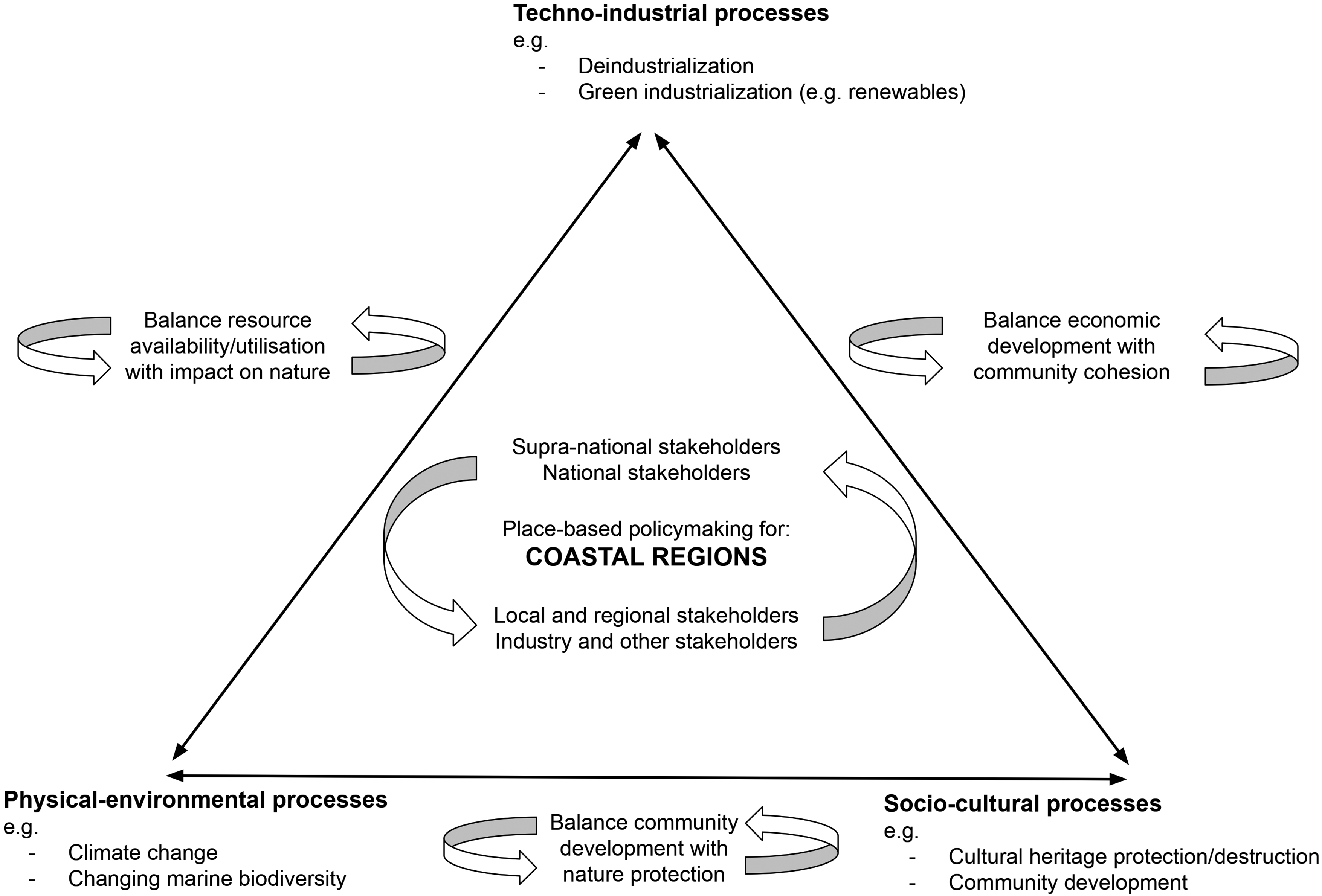
Policy demands for coastal regions’ development in blue economy transformations.
Section 2 identified three transformative processes that are driving uneven development in the blue economy, and emphasized the importance of place-based policymaking for ensuring coastal regions respond to these transformative pressures. Importantly, these three transformative processes should not be seen as distinct from one another but as interconnected, and any research agenda investigating the blue economy should aim to build a holistic understanding of them through theoretical, methodological, and transdisciplinary advancement (Figure 2). Since the three transformative processes have been discussed in the previous section, along with the emphasis on place-based policymaking as an imperative way to develop solutions, we focus here on three cross-sectional areas of research necessary to drive a blue economy research agenda.
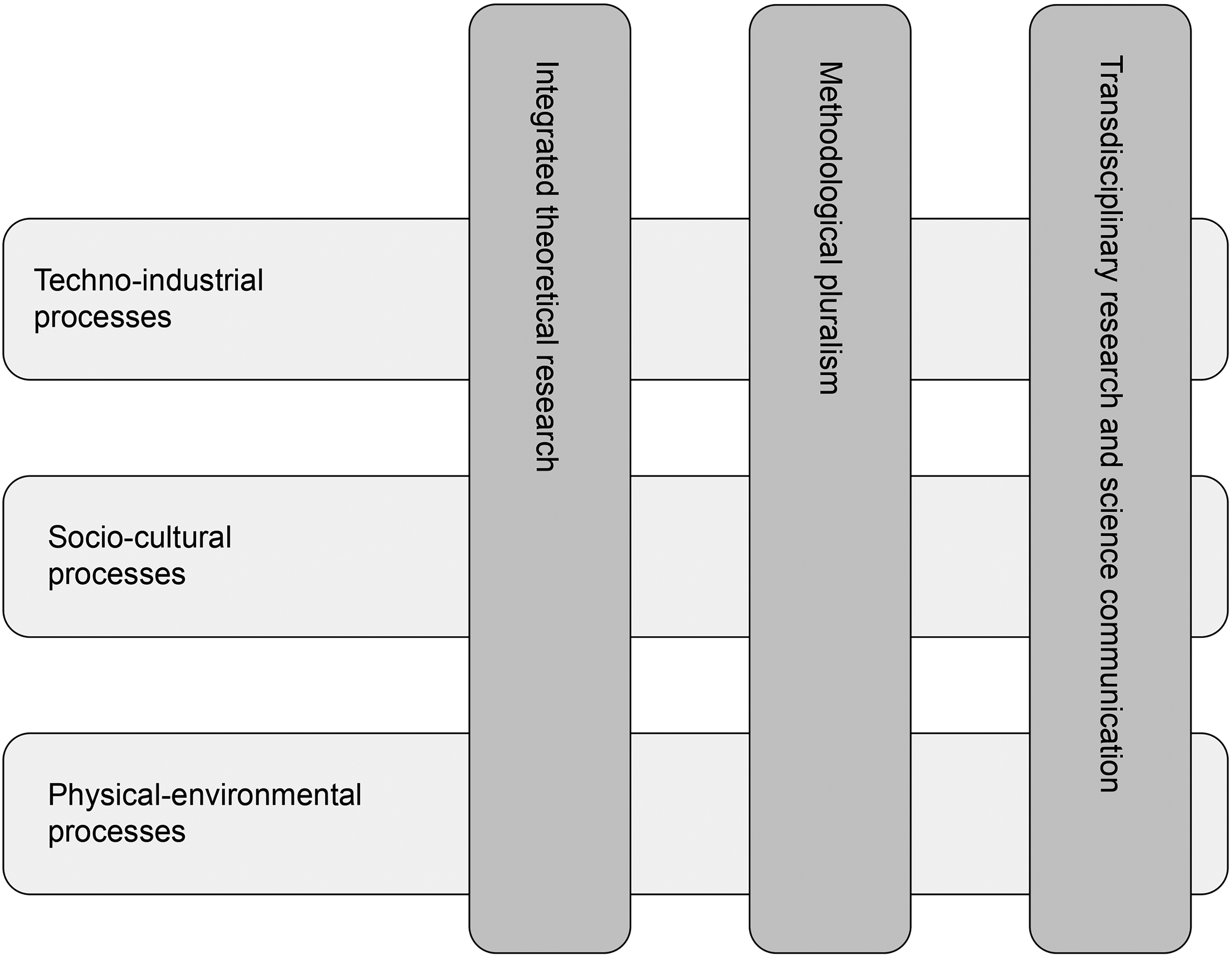
Blue economy research agenda showing the three transformative processes discussed in Section 2, plus three cross-sectional areas of research.
Section 2 highlighted three transformative processes that warrant greater attention within blue economy scholarship, with engagement with the FIR and left-behind places literatures promoted as key to understanding these processes. These literatures were chosen to exemplify just how interrelated these processes can be, with left-behind places often emerging as a consequence of techno-industrial transformations like the FIR. Furthermore, we highlighted the variety of dynamics that these transformative processes can have on coastal regions specifically, emphasizing regional variation and the need for place-based policy solutions. However, there are many further theoretical approaches that geographers could use to explore how these multiple transformative processes are shaping coastal regional development. One challenge is deciding which of these theories, or aspects of the theories, are important for distinguishing the blue economy from other concepts that these same theories investigate, in order to construct specific blue economy theorisations.
Environmental geographers and human geographers are well placed to utilise some of the broad theories that resonate across our transformative processes in some way, and thus could build on the early integration we offer. For example, theory related to socio-ecological systems (Melbourne-Thomas et al. 2023), geographical political economy (Sheppard 2011), socio-technical transitions (Geels 2019), feminist geographies (Barra 2023), political ecology (Jessee 2022), and blue degrowth, are all theoretical frameworks used by geographers that could speak to the three transformative processes to some extent. For example, blue degrowth seeks an alternative and utopian imaginary for the use of, access to, and relations with the seas, oceans and their resources by society – thus emphasizing how socio-cultural change can ensure more sustainable physical-environmental uses of blue resources in techno-industrial activities (Kaşdoğan, 2020; Said and MacMillan 2019). These broad theoretical approaches have thus far seen varied interaction with the blue economy, with plenty of scope for engagement remaining. Importantly, they are designed to consider the place-based geographies of the topic under investigation – largely focusing on (uneven) patterns of development and power relations among stakeholders, and thus lend well to place-based policymaking applications.
Furthermore, within the various subfields of environmental and human geography there are many more theories that can be applied to the blue economy that will greatly expand the remit of these theories while meeting the holistic challenge outlined in this paper. However, experimentation with these theories tends to exist within the subfields in which they reside, and they are not currently embraced fully across the spectrum of geography. Taking economic geography as an example, economic geographers have theories such as regional resilience (Christopherson, Michie and Tyler 2010), (un)related diversification (Boschma 2017), and path development (Hassink, Isaksen and Trippl 2019) that thus far focused predominantly on issues related to the techno-industrial processes outlined in Section 2.1 in diverse regions around the world, but could and indeed should be expanded to incorporate the socio-cultural and physical-environmental processes of the blue economy (see, for discussions on engaged/integrated pluralism: Hassink, Klaerding and Marques 2014). For example, all three approaches share a focus on explaining evolutionary processes of change in regions and could therefore be used to explore the interrelated dynamics of techno-industrial, socio-cultural, and physical-environmental processes over time. Ultimately, the blue economy represents an arena of such significant and multi-faceted change that it provides an ideal opportunity to pursue a more integrative pluralistic theoretical agenda across environmental and human geography (Yeung 2019).
Methodological pluralism
Methodological challenges are seldom acknowledged in blue economy discourse. As we have illustrated in this paper, the blue economy consists of myriad projects across many sectors and regions of the world, making the academic literature very case study-centric (e.g., Depellegrin et al. 2022; Pace, Saritas and Deidun 2023; Turschwell et al. 2022). This is unsurprising as regions typically experience vastly different techno-industrial, socio-cultural, and physical-environmental processes, meaning case studies are often used to uncover these particularities. Case study research typically produces case-specific findings, which can be highly contextual and poorly generalizable, making blue economy theory building difficult (Niner et al. 2022). Furthermore, while place-based policymaking aims to deliver contextual and specific interventions at the local or regional scale, the processes of developing, experimenting with, and implementing policies is importantly informed by generalized findings (Newig and Rose 2020). Therefore, the primary methodological challenge for a place-based blue economy approach is making comparisons between case studies such that we can separate generalizable findings and case-specific nuance to better inform blue economy theorisation and place-based policymaking – with such challenges evident for bycatch policymaking in the fishing sector (Gilman and Chaloupka 2023). Consequently, academics should seek to engage more strongly with the considerable methodological literature on comparative and case study research, to ensure that research contributes useful insights for policymakers.
Academics should consider core questions surrounding the number of cases, which has implications for how generalized or case-specific findings will be, (Lijphart 1971); comparative strategies, which will impact findings based on research approach (Tilly 1984); and issues such as formal equivalence, to ensure that terminology across case studies is shared as much as possible to increase comparability (Ward 2010); wary that the simple presence of multiple cases in a research project does not necessarily constitute comparative research (Walton 1990). For effective comparative research, researchers must focus on developing the conceptual models necessary to make sense of and compare existing and emerging empirical data (Pickvance 1995).
In this case, such conceptualisations must be able to incorporate findings across the three transformative processes. Importantly, Sayer (1984) argues that the theory constructed from these case studies must be based on more than empirically observable patterns and must go deeper into understanding the causal mechanisms that bring these empirics into being. Merely looking at the results without understanding how they came to fruition would be to misunderstand the case studies in an overly positivistic manner. Thus, blue economy research should focus on uncovering the causal mechanisms between the three transformative processes and the dynamic interactions they produce. For place-based policymaking, academics should seek to understand the general processes of developing, experimenting, and implementing policies, notwithstanding that the content and goals of the place-based policies need to be contextualised to understand the intentions behind their usage, rather than interpreting them as catch-all policy solutions for coastal regions. Meanwhile, broader place-sensitive (e.g., regional) and spatially-blind (e.g., research and development incentives targeting specific industries) policies could be more generalizable as they depend less on local conditions.
While the above speaks to general methodological strategy, the breadth of the three transformative processes means that issues of measurement are also apparent. The array of spatial, social, economic, and environmental indicators across the three processes, suggest focus should be on identifying particular interactions, processes, or mechanisms that can provide more real-time indicators of blue economy development. A first difficulty in developing consensus around how case studies should be measured and compared is in synthesizing the volumes of work produced not just by academics but by NGOs and supra-national organisations such as the EU and the UN, who are investing heavily in the blue economy. Thus, key questions surround what constitutes comprehensive assessments of blue economy performance, and which stakeholders view what levels of performance to be preferable.
A second difficulty is in the plethora of different methods employed by these different actors across the three transformative processes. Spatial research methods often include Geographic Information Systems (GIS), as well as more tailored platforms such as Integrated Valuation of Ecosystem Services and Tradeoffs (InVEST), that can be used to measure marine ecosystem service provision, and Marxan, that can be used to design cost-effective marine reserves. Social research methods are dominated by interviews (Hoerterer et al. 2020), surveys (Aanesen et al. 2023), and policy analyses (Daly et al. 2021). A limited number of blue economy studies have also utilised the Delphi method to gauge stakeholder views on port management (Orive et al. 2022) or MPA design (Belgrano et al. 2021), and Q methodology to gauge the stance of stakeholders on the blue economy concept (Schutter et al. 2021). Econometric research methods – often utilising ‘big data’ – have also been used to explore the performance of certain sectors and countries with regard their blue product imports and exports (Du and Ni 2023), and to determine aspects of blue economic development that influence per capita income and economic growth using data from the EU statistical database, Eurostat (Martínez-Vázquez et al. 2023). While there also exists a plethora of technical methods relevant to specific industries such as fisheries (e.g., stock assessments), we advocate the development and use of those that can measure the impact of one sector on others to better interrogate the aforementioned trade-offs and synergies (sensu Crona et al. 2021).
Ultimately, a more comprehensive blue economy must find ways to bring this array of spatial, social, and econometric methods together. This calls for greater methodological pluralism and mixed methods studies that combine qualitative and quantitative methods in new and experimental ways to uncover key interactions between different sectors and stakeholders in the blue economy. Recent progress in this regard includes mixed method studies that scrutinise the views of multiple stakeholder groups within individual countries (Benzaken et al., 2022; Hoerterer et al. 2020) and at the scale of a sea basin (Depellegrin et al. 2022). Pace, Saritas and Deidun (2023) have also used ‘foresight methods’ such as horizon scans, scenario-building, and strategic orientation to help stakeholders map alternative future worlds in a bid to bridge across both disciplinary perspectives and industry sectors.
Transdisciplinary research and science communication
One of the greatest challenges for blue economy practitioners is ensuring that the full range of stakeholders are connected and able to converse in decision making, enabling proper place-based policymaking. The blue economy is made up of diverse actors with purportedly good ambitions – spanning researchers, NGOs, supranational organisations, governments, corporations, and myriad local communities. Yet, it is also heavily critiqued for its capture by corporate actors in extractive industries that has led to a fragmented blue economy agenda which cannot be considered either socially just or environmentally sustainable (Bennett et al. 2019). Hence, while we have recommended place-based policy measures for regional development, there must also be a strategic drive for specific policies, programmes, and projects to achieve a just and sustainable blue economy more generally, often learning from local lessons – and this requires transdisciplinarity.
Transdisciplinarity has been described as a “top-led and bottom-fed” approach (Kokorsch and Benediktsson 2018), whereby the ‘top’ (scientific experts, elected officials, business leaders) must accept input from the ‘bottom’ (the public, local communities, sectoral workers), while the ‘bottom’ must recognise existing limitations and restrictions (i.e., science, law) imposed by the ‘top’ (Conway et al. 2019; Schreiber, Chuenpagdee and Jentoft 2022). Indeed, the UN Ocean Decade calls for the implementation of transdisciplinary approaches to better understand the interrelations between social and ecological systems of the marine realm (Pace, Saritas and Deidun 2023). Transdisciplinary research involves “doing science with society” (Van Breda and Swilling, 2019), by bringing together scientific and non-scientific perspectives, and by promoting deep engagement between researchers and all others with an interest in or influence over various aspects of the blue economy. It is a democratic process involving co-learning and shared experiences to find commonality and consensus around particular matters (Heidkamp et al., 2023), and thus shares significant overlap with place-based policymaking approaches. Incidentally, some of the methods outlined above are particularly useful for transdisciplinary research, such as the Delphi method (Belgrano et al. 2021).
Transdisciplinary researchers should also focus on improving science communication strategies, disseminating research across academic journals, the media, and among politicians, the private sector, and coastal communities using tailored terminology (Schreiber, Chuenpagdee and Jentoft 2022). To accelerate this, education and training programmes should be organised to equip blue economy scholars with transversal skills including creativity, leadership, and entrepreneurship (Pace, Saritas and Deidun 2023). Ultimately, better science communication can help bolster ocean literacy, meaning that informed societies and stakeholders become equipped to start addressing the three transformative processes, by influencing policy change and project or programme design (Pace, Saritas and Deidun 2023). For example, Japan is experiencing a decrease of young fishers entering the industry – a socio-cultural process that threatens the longevity of the sector (Hirokawa and Thompson 2023). This is partly driven by dissatisfaction over recent fisheries policy reforms, and a lack of consumer appreciation for sustainable seafood – with the multi-way transfer of information on physical-environmental processes (e.g., fisheries status) among policymakers, fishers, and consumers considered to be necessary to address this (Hirokawa and Thompson 2023). With roughly 40% of the world's population living within 100 km of a coastline, the blue economy is going to be a positive or negative transformative force for many. Hence transdisciplinary strategies for engaging with such end users is imperative for a just and sustainable blue economy and thus researchers should be exploring innovative ways of presenting their research to make it more end-user friendly, aware of the unique contexts of delivering projects and implementing policies in different places. In doing so, enhanced science communication will not just benefit local populations but aid academic researchers in delivering the pluralist methodologies necessary for blue economy theorisation and place-based policymaking.
Conclusion
This paper has argued for a new place-based research agenda for regional coastal transformations in the blue economy. Perspectives in the blue economy literature have centred around a critical focus of the human impact on blue spaces through neoliberal extractivist projects aimed at securing ocean resources for the economic growth of firms and economies. In practice, this has led to the parcelling of blue spaces through decisions made far from coastal regions, and the bypassing of coastal regions to focus on the (re)spatialisation of ocean spaces. Indeed, even conservation attempts have been criticised for ignoring coastal communities. Increasingly, however, new perspectives are beginning to appreciate the coastal places that are directly affected by the blue economy, and there has been a growing concern in the literature for coastal places and communities, for example through discussions about blue communities and blue justice. This paper has sought to develop these discussions further, arguing that coastal regions do not simply co-exist within or alongside blue spaces and economies, but that the blue economy is enacting significant processes that are going to transform coastal regions for better or for worse.
We argue that the blue economy concept itself has grown dramatically in popularity due to the transformative effects of the FIR. Technological advances have enabled the transformation of blue spaces from mysterious underexplored frontiers to cornucopias of valuable resources ripe for extraction, and this has caught the attention of global organisations like the UN or the World Bank. The blue economy has also been popularised by the intensification and growing recognition of the physical-environmental transformations associated with climate change, while the socio-cultural effects of past and current industrial transformations are increasingly recognised. Consequently, we see the blue economy as a dynamic nexus of techno-industrial, socio-cultural, and physical-environmental transformative processes that will (re)shape the coastal regions and the com 2020 munities that are central to it, over the coming decades. Geographers are well-suited to tackling these interconnected processes, and we recognise a breadth of theories, methodologies, and trans-disciplinary problems that blue economy academics could engage with. Their interconnected nature means that interdisciplinarity is needed, and we highlight the importance of moving beyond theoretical considerations to understanding and evaluating potential place-based policy solutions that could help diverse coastal regions to deal with variegated problems and opportunities. We are at a critical juncture, where the current trajectory of the blue economy is threatening to create further spatial inequalities, through ongoing neglect of coastal regions and their communities. The holistic research agenda and use of place-based policymaking proposed in this article are initial steps to help to rectify this, to better support our coastal regions during this time of heightened change.
Footnotes
Declaration of conflicting interests
The authors declared no potential conflicts of interest with respect to the research, authorship, and/or publication of this article.
Funding
The authors received no financial support for the research, authorship, and/or publication of this article.
