



Abstract
In tropical northern Australia the intersection of workforce shortages, high turnover and geographic location impact workforce sustainability. Inevitably, business leaders find themselves considering how to build workforces within the constraints experienced in tropical regional areas. When it comes to workforce development, the enduring question is about talent acquisition and capability. This study focused on tropical northern Queensland, a region in northern Australia ripe for economic growth, yet impacted by workforce shortages. A rapid review of the literature identified and synthesised publications about workforce development in the region to identify the key workforce development strategies utilised. The literature review identified four overarching themes that characterise workforce development strategies in northern Queensland: individual capability, industry strategies, organisational strategies, and regionalisation. The study concludes that given the changing demographic, technological and societal landscape in the region, a multi-tiered approach is needed. The findings suggest that a workforce development ecosystem could create a path towards workforce sustainability for regional areas negating the internal versus external recruitment, retention and skills development dilemma. Workforce development ecosystems could support ongoing workforce sustainability for business development in the regions with characteristics similar to those of tropical northern Australia.
Introduction
The tropics is a region of many paradoxes. There is great natural beauty, world heritage landscapes and a climate susceptible to extreme temperatures and devastating weather events (Stephens et al., 2015). With 42% of the world's population living in the tropics it is a region of economic opportunity, yet home to some of the most disadvantaged populations on the planet (State of the Tropics, 2022).
There is increased attention on economic development; however, regional areas within the tropics, are experiencing growth opportunities at the same time as workforce shortages, and societal, environmental and technological change (State of the Tropics, 2022; World Health Organisation (WHO), 2023). For example, Infrastructure Australia (2025) report an increase in investment in major infrastructure in Australia; however, workforce shortages and stagnating productivity in the construction industry impact the delivery of major projects (Infrastructure Australia, 2025). In fact, Infrastructure Australia (2025: 7) report that construction industry workforce ‘shortages are projected to surge and could reach 300,000 workers by 2027’ and ‘regional areas will be hardest hit, with shortages forecast to quadruple between 2025 and 2027’. The health industry faces similar challenges, with the WHO (2023) reporting that despite efforts to increase health workforce participation globally, there will be a global shortage of 10 million health workers by 2030. In regional areas, significantly high turnover and vacancy rates further exacerbate national and global workforce shortages (Onnis and Hunter, 2025; Veginadu et al., 2024). For example, Veginadu et al. (2024) reported annual turnover rates of 151% (clinic-level) and 81% (organisational level) for regional and remote health services. In contrast, the Australian HR Institute (AHRI) reports an average 12-month turnover rate of 14% (AHRI, 2024), highlighting the significance of the workforce challenges in regional areas. In northern Queensland, workforce challenges have been reported across the aviation, maritime, construction, healthcare and education industries (Department of Education, n.d.; Jobs Queensland, 2023; Regional Development Australia (RDA), 2025).
In times of workforce shortages, there is opportunity for innovation and a need for practical interventions (Baier et al., 2025). Therefore, employers responding to the changing environment find themselves both leading through innovation and responding to social, technological and environmental change (Ahuchogu et al., 2024). That said, many employers are still focusing on employing for current skill needs. This shortsightedness is exacerbated by emerging technologies which increase ‘skill-based recruitment’ utilising software ‘where candidates are ranked according to the number of skills, skill's competence level and skill's experience’ (Wings et al., 2021: 163). The increasing use of generative technologies (e.g. AI) in recruitment processes, especially screening, and using AI to match skills funnels applicants through technology-driven recruitment processes, which are cost-effective and efficient so likely to continue (Black and van Esch, 2020).
Given the widespread skills shortages across various industries (Babacan and McHugh, 2020; Jobs Queensland, 2023; RDA, 2025; WHO, 2023) it seems unlikely that traditional recruitment practices alone will meet future regional skills needs, particularly, if the system is limited by available skills and the willingness of workers to relocate and remain in regional areas (Carson et al., 2022). This is especially relevant for regional northern Queensland where workforce shortages are common, and the difficulty in recruiting people with highly valued skillsets is a well-known issue (Babacan and McHugh, 2020; Jobs Queensland, 2023; RDA, 2025).
A recent study found that human resources (HR) practitioners working in northern Queensland have broadened their outlook and are using innovative approaches to recruit candidates to regional areas (Gillespie et al., 2022; Onnis, 2023; Onnis et al., 2026). Looking beyond skills, some employers are considering whether candidates are the right fit for the organisation and the tropical northern Australian working environment (Onnis, 2017; Onnis et al., 2026). Studies show that some industries in northern Australia are aware that workers with ties to place are more likely to stay and create career pathways to retain workers in the region (Gillespie et al., 2022; Onnis and Hunter, 2025).
Regional development is typically accompanied by population growth which can put pressure on existing resources (e.g. housing, infrastructure), therefore, innovative workforce solutions are vital. The strategy dilemma commonly encountered is whether to recruit in the skills that organisations need, or to develop from within. Previous literature reviews focus on workforce shortages, and the challenges of recruitment and retention but few studies provide insights into effective strategies (Dolea et al., 2010; Onnis and Hunter, 2025; Onnis and Pryce, 2016). Furthermore, the literature that does describe innovative solutions is lacking evaluation of the impact of the strategies and is largely focused on a single industry or a case study (Onnis and Hunter, 2025). While these studies are important, a synthesis of the findings at a regional level can better inform business leaders, academics and industry bodies about the workforce development strategies being implemented in a particular region. Given the scarcity of published studies, this study seeks to synthesise what is known about workforce development strategies in northern Queensland, to better understand strategy approaches that can improve workforce sustainability and support regional economic development. Previous research has explored the influence of connection to place to workforce outcomes such as recruitment, retention and workforce sustainability (Onnis et al., 2026); hence the focus on ‘region’ is purposeful and posited as providing insights for other regions located in the tropics with similar workforce, social and environmental challenges.
Background
Context
Queensland is a resource rich state comprising a large land mass with the population living mainly in the south-east corner. The north is popular for its tropical climate and laid-back lifestyle. In this study, northern Queensland comprises a geographical area from Townsville (known locally as North Queensland) extending up the east coast to Cairns and the Torres Strait Islands (known locally as Far North Queensland (FNQ)). ‘Northern Australia also has strategic and economic importance to Australia’ (Stephens et al., 2015: 4) with northern Queensland positioned near Asian economic trading partners, significant facilities, such as mines and ports for exports (e.g. cattle, sugar), and large military bases. While northern Queensland is known for tourism, resources and sugarcane farming, the primary industry for employment is Healthcare and Social Assistance (Queensland Government Statistician's Office (QGSO) 2024).
When describing talent and skills requirements in the tropics, a key consideration is the region's demographics. Focusing on FNQ, the Cairns Region Workforce Development Plan from Jobs Queensland provides a population snapshot, predicting population growth from around 178,104 in 2024, to 272,557 people by 2026 (a 53% increase) (Jobs Queensland, 2023). The median age is 43.2 years, and the population is aging. It is predicted that by 2031, people aged 65 and older will comprise almost a quarter (21.5%) of the FNQ population (Jobs Queensland, 2023). Approximately 17.2% of the FNQ population identify as being Aboriginal and/or Torres Strait Islander peoples (Cairns Regional Council, n.d.). Therefore, population growth, together with an aging population, adds a level of complexity to workforce development in Far North Queensland.
Townsville (North Queensland) has a population of approximately 201,433 people, which is estimated to increase to 264,899 by 2046 (Australian Bureau of Statistics (ABS) n.d.; QGSO, 2024). The median age is 36 years, and approximately 8.4% identify as being Aboriginal and/or Torres Strait Islander peoples (ABS, n.d.). In terms of key industries in northern Queensland, an aging population is driving demand for healthcare, with healthcare and social assistance being the largest employer in the region employing 20.7% of the working population in the Cairns region (Jobs Queensland, 2023), and 22.3% in the Townsville region (Jobs and Skills Australia, n.d.).
Regionalisation
Regionalisation is a form of categorising areas based on land borders, cultural similarities or economic rationalisation. In this study, regionalisation describes a geographical area, where the inhabitants experience employment, education, social, economic and political challenges that are more similar within the region than they are outside of the region. For example, northern Australia is described as ‘a land of unique ecosystems, ancient and ongoing cultures and cultural knowledge systems, significant resources, and a sparsely distributed but uniquely talented population’ (Chambers et al., 2018: 616). As a result, northern Queensland, has both distinct features that separate it from other tropical regions, as well as characteristics in common with other regions in the tropics.
Regionalisation contributes to both ‘growing the workforce for the region as a whole, and addressing issues of maldistribution within the regions, particularly urban-rural maldistribution’ (Carson et al., 2022: 100). Despite commonalities in the region, there is some nuance between regional cities, rural towns and remote communities. In their study, Carson et al. (2022: 101) found a growing body of evidence suggesting migration relationships ‘between ‘northern’ cities and rural and remote ‘hinterlands’ across the high-income world, including in Australia’. The hypothesis is that a city is more attractive than rural or remote areas, and therefore, in a staged approach cities can be used as hubs and to attract workers to a region. Once there is increased workforce capability in the regional city, there is opportunity to entice workers out to rural and remote areas.
Ageing demographics and older workers
Ageing populations impact workforce shortages and older worker workforce participation globally. Research from the United Nations (2024: x) shows that ‘by 2080, people aged 65 or older will outnumber children under 18’. In Australia, the population is ageing rapidly at the same time there is more demand for older workers (Farr-Wharton et al., 2023). In fact, participation rates for workers aged 65 and over has more than doubled in the last 20 years in Australia (Australian Institute of Health & Welfare, 2021; Farr-Wharton et al., 2023).
The 2025 Older and Younger Workers report, produced by AHRI in partnership with the Australian Human Rights Commission (AHRC) (2025: 4), shows that Australia-wide, about 80% of HR practitioners are open to hiring people aged between 25 and 49 years, while 18% were not open to hiring people aged 65 and over ‘at all’ (AHRI and AHRC, 2025: 5). In some areas of northern Queensland (e.g. Cairns where the median age of the population is 43.2 years), organisations need to consider what this means for talent management, given that 45 years is often the starting age for being classified as an older worker (Farr-Wharton et al., 2023; Jobs Queensland, 2023). Coupled with the perspectives from the Older and Younger Workers report, it may be that developing from within the region means different expectations, different experiences and different opportunities for workforces in the tropics. With an older demographic in the northern Australia, employers bringing skills in will need to continue to consider what attracts younger workers to the tropics.
Migration
The Regional Movers Index shows that the influx of people from capital cities to Australia's regions has remained elevated each quarter compared to the pre-COVID-19 pandemic figures (Regional Australia Institute, n.d.). The March 2025 quarter showed regional migration increased by 10.5%, and the figures remain about 20.5% higher than the pre-COVID-19 quarterly migration (Regional Australia Institute, n.d.). Additionally, a study conducted by the Regional Australia Institute (2025) found that 57% of millennials and 40% of Gen Z surveyed would consider a move to the regions (Regional Australia Institute, 2025). This is promising for regional workforce development.
In addition, government programs are supporting organisations in northern Queensland to bring workers into the region. For example, the FNQ Designated Area Migration Agreement (DAMA) Scheme has a skilled migration program tailored to the needs of FNQ. The DAMA for FNQ provides opportunities for skilled migration pathways different to standard migration to better meet the workforce needs of the region. Similarly, the PALM Scheme allows eligible Australian businesses to hire workers from nine Pacific Islands and Timor-Leste when not enough local workers available. Hence, the tropical environment and proximity to countries with congruent needs for employment pathways provides an opportunity to bring skills into the region. Both schemes also provide for a full range of skill levels, helping tropical northern Queensland to meet different workforce needs.
Workforce development
Workforce development is a process of planning, training, and retraining a workforce to meet the organisation's needs. It encompasses technical proficiency, adaptability, interdisciplinary competencies, culture, planning, leadership, and continuous learning to address future focused challenges and identified skills gaps (Ahuchogu et al., 2024; Yeager et al., 2023). Workforce development requires the assessment of current and future workforce needs, identifying and managing workforce challenges which encompasses strengthening education initiatives, and training and development strategies (Endalamaw et al., 2024). In this study we use Roche's (2002: 9) conceptualisation of workforce development:
Workforce development has a systems focus. Unlike more traditional approaches, it is broad and comprehensive, and incorporates far more than just education and training of individual frontline workers. [Workforce development works] at different levels, targeting individual, organisational and structural factors.
Methods
A rapid review of the literature was conducted to identify documents about workforce development in tropical northern Queensland published in the past 10 years. Rapid reviews are used to assess ‘what is already known about a policy or practice issue, by using systematic review methods to search and critically appraise existing research’ (Grant and Booth, 2009: 95). Typically, rapid reviews are conducted when a review is required to provide an evidence-based summary on a specific topic where there are resource constraints and a time limited need for the findings. They are typically intended for practitioners, managers, policy and decision makers (Garritty et al., 2025; Grant and Booth, 2009; Moons et al., 2021). Of relevance to this study, rapid reviews can ‘efficiently identify evidence gaps and areas where evidence is scarce or lacking, guiding future research priorities’ (Garritty et al., 2025: 56). Hence, rapid reviews are a ‘method to provide summaries of the literature in a timely and resource-efficient manner by using methods to accelerate or streamline traditional systematic review processes’ (Moons et al., 2021: 516).
Though this was a rapid review, a transparent methodical approach is taken to the identification, selection and analysis of the literature following the Cochrane rapid review methods recommendations (Grant and Booth, 2009; Moons et al., 2021). For example, involving key stakeholders, inclusion criteria, date restriction, limit language to English, limit database searching, limit grey literature search and supplemental searching (Grant and Booth, 2009; Moons et al., 2021). The synthesis of the literature in a rapid review is typically narrative (Garritty et al., 2025; Grant and Booth, 2009).
The study investigates the research question: Which workforce development strategies are being used in northern Queensland to support regional development?
Scholarly literature
A search was conducted on the SCOPUS and ProQuest Business databases using the search terms, ‘workforce development’ AND ‘north Queensland’ OR ‘northern Queensland’ OR ‘northern Australia’.
The following inclusion criteria were used to screen the literature:
Published in English Published between 2015–2025 Workforce development focused (not limited to workforce development but must include training, education or skills for workers) Includes northern Queensland sample (not limited to Queensland studies, but must include northern Queensland)
The search of the SCOPUS database returned 52 matches, and ProQuest Business returned 225 matches. The Abstracts of 277 documents were screened from which 24 met the criteria for full paper review. Documents were excluded if they were not focused on workforce development, did not include a northern Queensland sample or were outside the date range. From the full paper reviews, a further 15 were excluded because on a closer read, the paper was not scholarly, it was not workforce development focused, or did not include a northern Queensland sample. The remaining nine scholarly documents were included in this review (Figure 1). Next, the references were screened to identify additional documents for inclusion. No additional documents were identified. Most of the scholarly studies (7 out of 9) were from the health industry. Given that this study was interested in regional development, a review of the grey literature was conducted as well to identify workforce development activities from other industries, and across industries, to provide a more comprehensive understanding about workforce development in regional northern Australia.
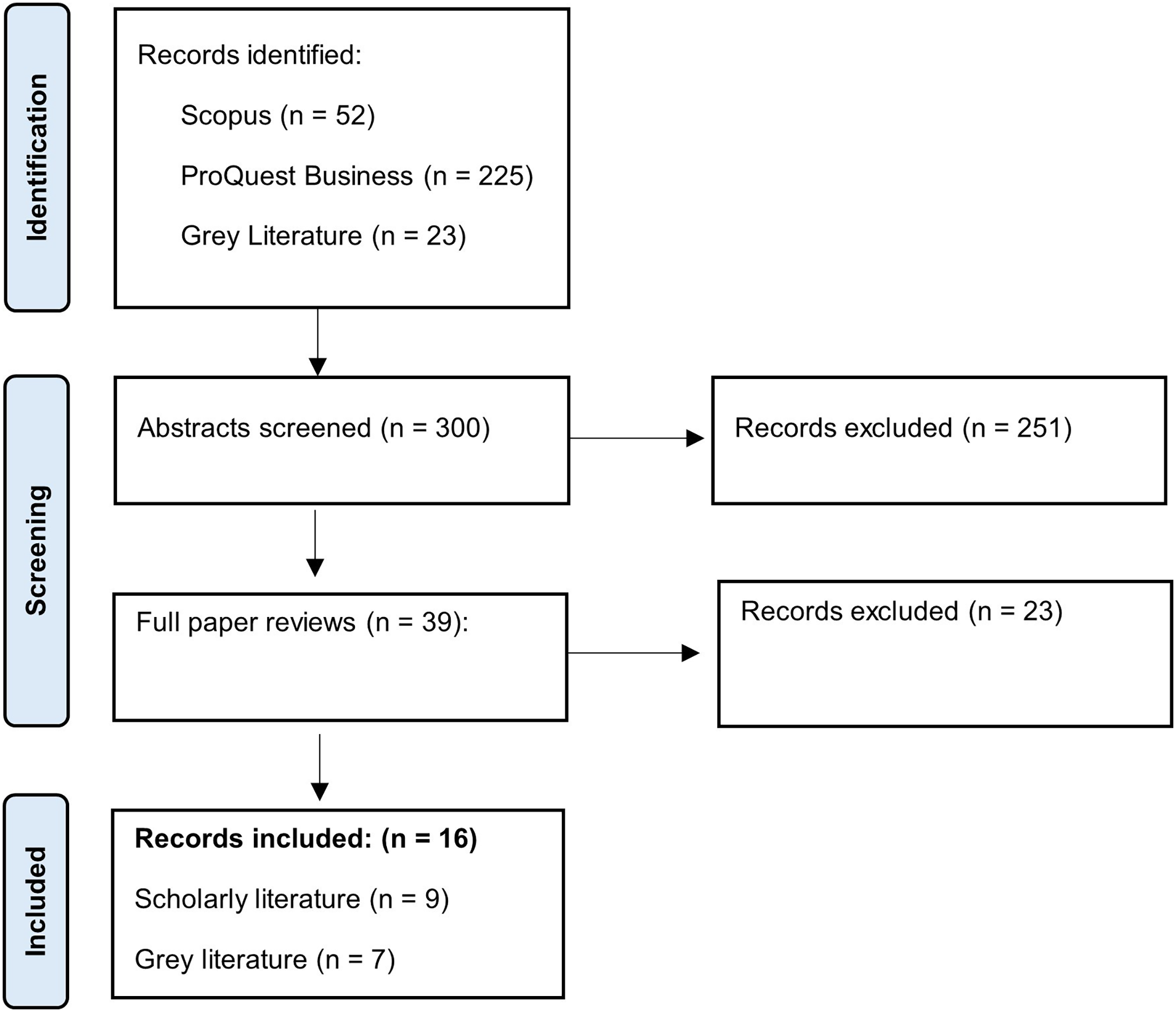
PRISMA statement for the literature review.
Grey literature
The review of the grey literature was structured and analytical in its approach. A Google search was conducted using a search string comparable to the scholarly literature search (‘workforce development’ AND ‘north Queensland’ OR ‘northern Queensland’ OR ‘northern Australia’) to identify grey literature for inclusion in the study. The same inclusion criteria were used to ensure the grey literature published from 2015, in English and included a focus on northern Queensland. In addition, the references from the scholarly literature were reviewed to identify grey literature suitable for review. The grey literature was included in the study to ensure that workforce development strategies from government and industry reports, and strategic plans that may not be contained in scholarly articles were included in the literature review. A total of 23 documents were identified. The documents were reviewed and sixteen excluded for not being workforce development focused or not including a northern Queensland sample. Seven documents were selected for this study (Figure 1).
The scholarly database search and the grey literature searches were conducted in June-July 2025.
Quality checks
Rapid reviews do not always include a quality assessment (Grant and Booth, 2009); however, for this study the inclusion of only peer-reviewed scholarly literature was an assessment of quality. The grey literature was not assessed for quality using an academic system of analysis which is consistent with the rapid review method (Grant and Booth, 2009). However, the author of the grey literature was used to determine the level of quality for inclusion in the study with the included studies authored by government agencies, industry bodies or credible professional networks.
Data analysis
A thematic analysis was conducted using NVIVO software (Release 1.7.1). Inductive coding was used to identify the overarching categories for the workforce development strategies contained in the literature (Clarke and Braun, 2017). Then, using the three categories (individual, organisational and regional), a subsequent thematic analysis was used for second-level coding of the strategies and initiatives to each category. After discussion with the co-authors, the content for the category organisation, was re-coded as organisation and industry to capture strategies focusing at the industry-level rather than being constrained to the organisation-level (e.g. agricultural industry vs. individual farm). The data were then synthesised and presented in summary tables.
Results
Characteristics of the literature
Tables 1 and 2 provide a summary of the key characteristics of the 16 documents reviewed for this study. The study comprises documents from seven unique industries (Figure 2). Most of the scholarly articles are from the health industry (78%), and most of the grey literature is published by the government – Queensland Government (71%) and government agencies (29%).
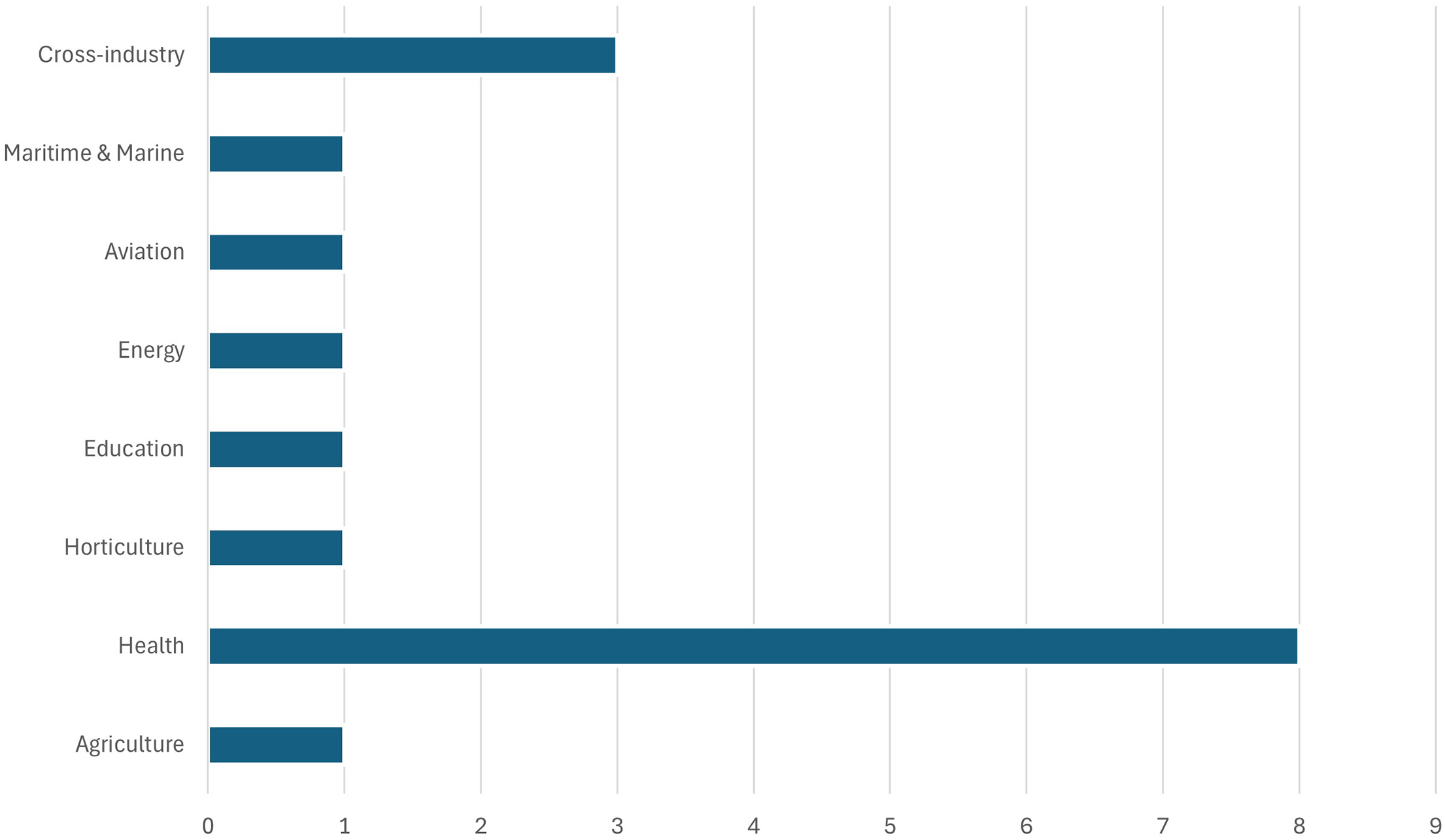
Industries included in the selected documents.
Summary of workforce development strategies in the selected scholarly literature.
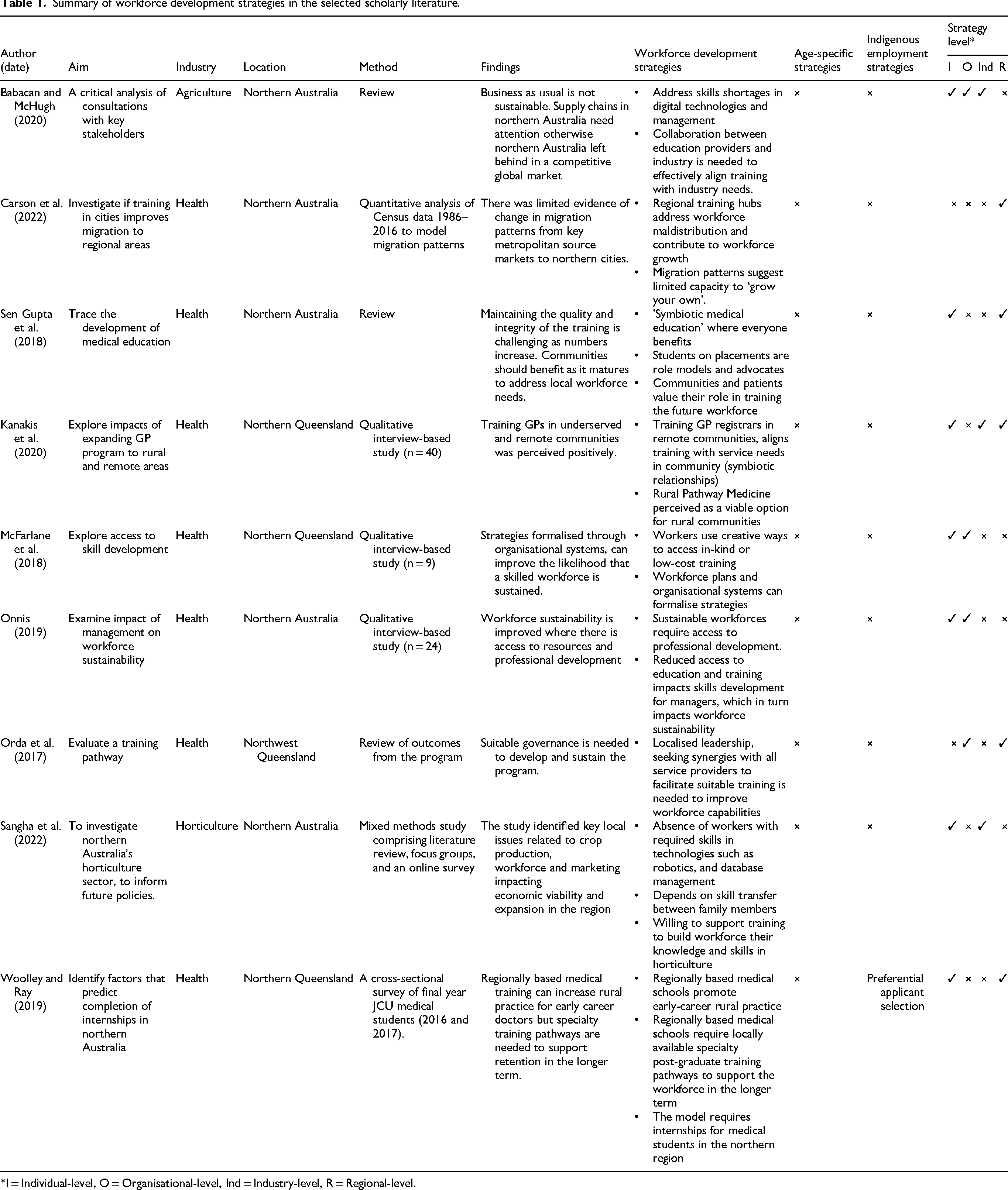
*I = Individual-level, O = Organisational-level, Ind = Industry-level, R = Regional-level.
Summary of workforce development strategies in the selected grey literature.
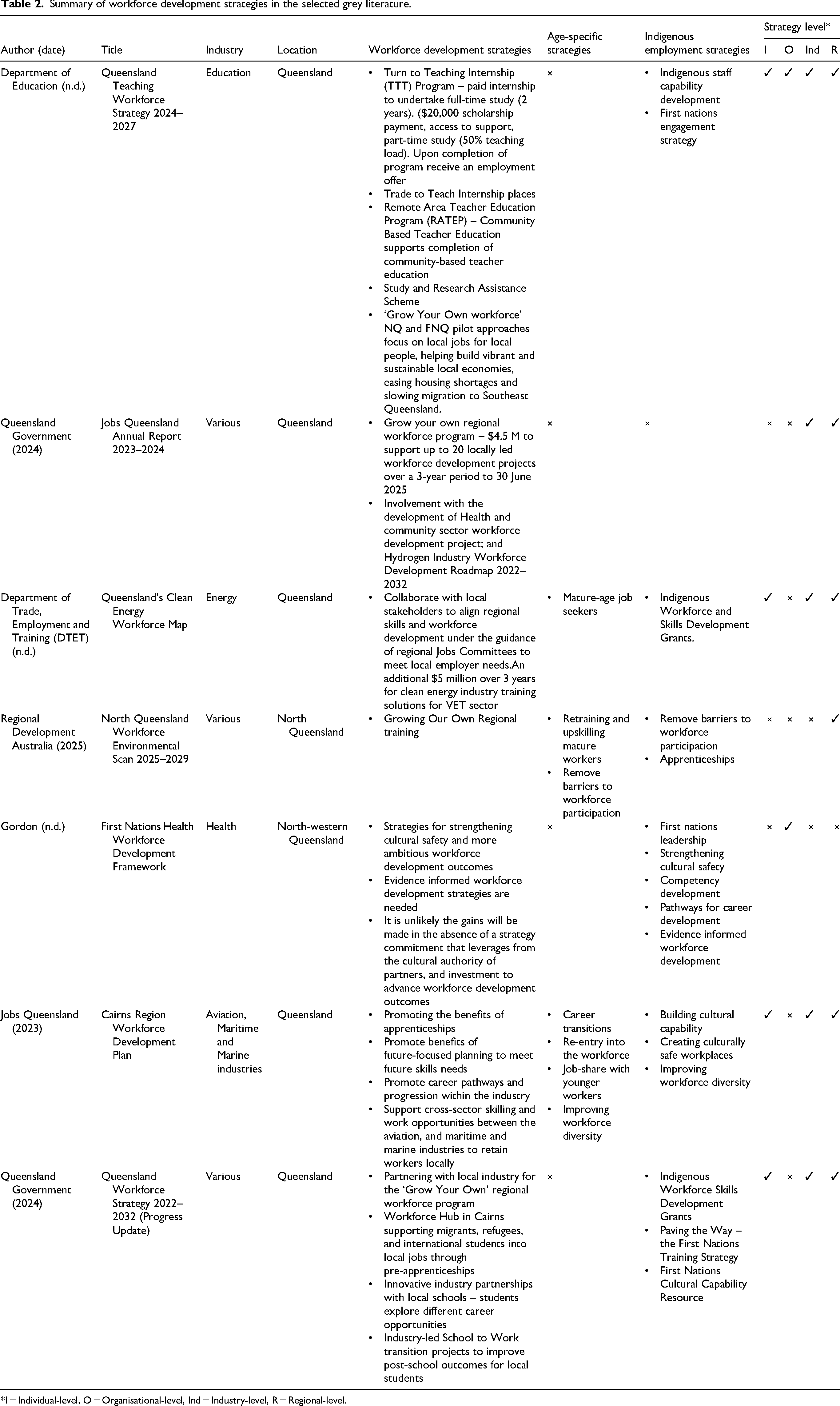
*I = Individual-level, O = Organisational-level, Ind = Industry-level, R = Regional-level.
Workforce development strategies
The inclusion of the grey literature is valuable as it provided a more comprehensive range of strategies for workforce development in northern Queensland. In terms of document type, the grey literature includes – two workforce strategy documents, a workforce plan, a workforce roadmap, a workforce framework, an annual report and an environment scan (Table 2). Where environmental scans were conducted in tropical northern Queensland the findings highlight the current and forecasted workforce challenges, and strategies for the anticipated challenges. Although there are a range of strategies listed, few report the benefits of implemented strategies. Where they do report progress, most report uptake rather than impact (e.g. ‘Over 3100 people supported by the First Nations Training Strategy’ (Queensland Government, 2024: 4), and ‘200 new Turn to Teaching Internship placements’ (Department of Education, n.d.: 4)). There is no indication of short- or long-term benefits.
The analysis of the literature identified four overarching themes describing the categories of workforce development strategies utilised in northern Queensland: individual capacity and skill development, organisational-level strategies to improve business performance, industry-level strategies to meeting changing industry needs, and regionalisation to build workforce capabilities in the region (Figure 3). Each of these themes is described in more detail in this section starting with individual capability.
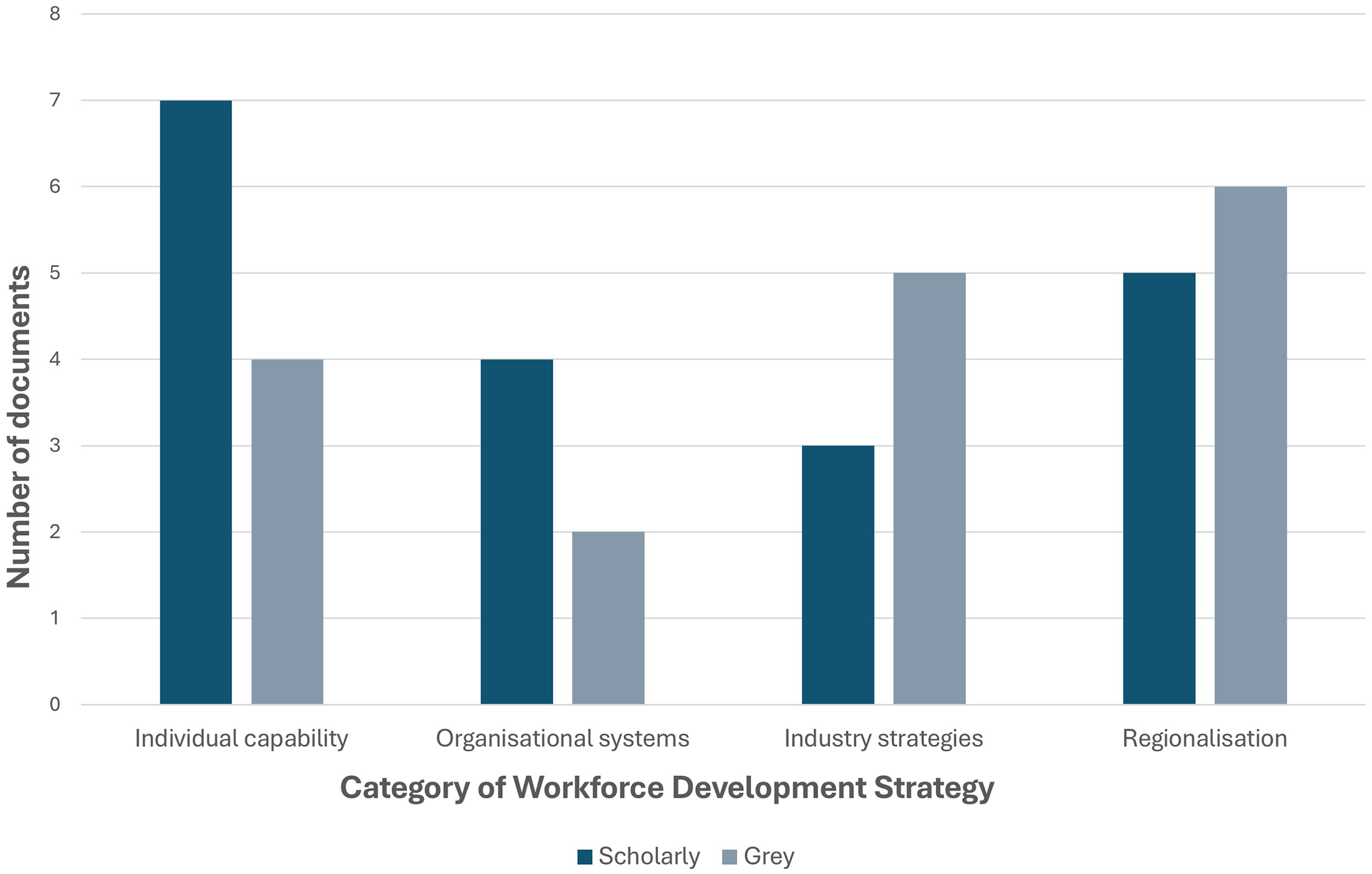
Categories of workforce development strategy by literature type.
Theme: Individual capabilities
There are seven scholarly documents and four grey literature documents that included individual-level capabilities and skills development (Tables 1 and 2). There is one scholarly article and six grey literature documents that contain an individual level strategy for Indigenous workforce development (Department of Education, n.d.; Gordon, n.d.; Department of Trade, Employment and Training (DTET) n.d.; Jobs Queensland, 2023; Queensland Government, 2024; RDA, 2025; Woolley and Ray, 2019). The Indigenous workforce development strategies include: a preferential selection strategy for Indigenous applicants in a rural medical school program, apprenticeships, cultural safety and capability training. In terms of age-related strategies, there are no scholarly articles with age-related strategies and three in the grey literature. The age-related strategies include: re-training and upskilling for mature aged workers, increase workforce flexibility and removal of barriers for older worker workforce participation.
Individual-level strategies are being implemented in a range of industries, including: education, energy, aviation, maritime and marine industries. Several scholarly studies identify the challenges that individuals experience in managing their careers, especially the barriers to accessing professional development (McFarlane et al., 2018). In contrast the grey literature contains information about programs aiming for individual-level change (e.g. incentives to retrain, scholarships and subsidies), industry and community initiatives (e.g. pathways from education-to-employment). For example, the future teachers program is a structured school-based pathway ‘for students to commence university study at the same time as undertaking their senior secondary studies’ (Department of Education, n.d.). The disparity in narrative in the literature types is apparent with the grey literature describing an environment of development opportunity that is not as evident in the scholarly literature.
Some scholarly studies report challenges with accessing professional networks, peer support and mentorship (McFarlane et al., 2018; Onnis, 2019; Orda et al., 2017). The key barrier to professional development in the literature is access which has the dual constraints of distance and cost. Orda et al. (2017: 117) report that a major obstacle in attracting health professionals is a lack ‘of appropriate (vocational) postgraduate training’, and Onnis (2019) reports that clinicians transitioning into management roles in rural and remote northern Australia lack access to contextualised management development training. In contrast, others ‘viewed remote regions as opportunities to gain experience and fast-track their career’ (Onnis, 2019).
Organisational systems
There are four scholarly documents and two grey literature documents that contain orgnisational-level capability and skills development strategies (Tables 1 and 2). The grey literature does not contain many organisation-level strategies; however, strategies such as ‘Grow Your Own workforce’, and creating internal career pathways for local workers are two long-term strategies for workforce development (Department of Education, n.d.). There are no scholarly articles with specific organisation-level strategies for Indigenous workforce development. Four grey literature documents contain organisation-level strategies specifically targeting Indigenous workforce development, and capacity building (Department of Education, n.d.; Queensland Government, 2024; RDA, 2025). The Indigenous workforce development strategies include: Indigenous workforce skills development grants; creating culturally safe workplaces and improving workforce diversity. In terms of age-related strategies one grey literature document contained organisation-level strategies for young or aging workforces (Gordon, n.d.) there are no scholarly articles with age-related organisation-level strategies. The age-related strategies include: flexible work arrangements, job-sharing with younger workers, and promoting workforce diversity.
Organisation-level strategies include traditional employee recruitment as well as labour hire strategies. For example, in regional areas the agriculture industry relies on labour hire, and seasonal labour; however, there are immense challenges in securing the skilled workforce needed for a sustainable future (Sangha et al., 2022). Babacan and McHugh (2020: 257) propose:
Developing strong career pathways, coordination of industries for strong labour market growth, building employer capacity to attract and retain and addressing liveability as part of supply chain infrastructure are critical considerations.
Industry strategies
There were three scholarly documents and five grey literature documents that contain industry-level capability and skills development strategies (see Tables 1 and 2). Industry level strategies include: rural pathways for medical students, career paths, access to training in emerging industry skill requirements (Babacan and McHugh, 2020; DTET, n.d.; Jobs Queensland, 2023; Kanakis et al., 2020; Queensland Government, 2024; Sangha et al., 2022). For example, Babacan and McHugh (2020: 255) argue that ‘education providers have a critical role to play in supporting the workforce development needs of both agricultural development and supply chains sector in Northern Australia’ calling for ‘better engagement between education providers and industry and agility on behalf of educational institutions to respond to industry needs’. Meanwhile, Sangha et al. (2022: 11) report that a ‘growing demand for a skilled workforce in the sector offers another opportunity to train young Australians in VET and agriculture-related courses in universities to meet the industry needs and enhance the application of technology in farming systems’.
There are no scholarly articles with specific industry-level strategies for Indigenous workforce development. Three grey literature documents contain industry-level strategies specifically targeting Indigenous workforce development and capacity building (DTET, n.d.; Queensland Government, 2024; RDA, 2025). The Indigenous workforce development strategies include: industry training programs, and apprenticeships. In terms of age-related strategies one grey literature document contains industry-level strategies for young or aging workforces (Jobs Queensland, 2023). There are no scholarly articles with industry-level age-related strategies. The age-related industry-level strategies include: supporting career transitions and removing barriers for re-entry into the workforce.
Both Babacan and McHugh (2020) and Sangha et al. (2022) report that technological advances are reshaping skill requirements in the agricultural industry with employers requiring a workforce with ‘skills in new technological innovations’ (e.g. robotics, machine learning, cyber security, digital customer communication). ‘In addition to the digital technologies skills, the industry survey has also identified the need for “soft skills” such as leadership, management, teamwork, problem solving, critical thinking, communication’ (Babacan and McHugh, 2020: 256). Queensland Government (2024) and DTET (n.d.) report emerging industry needs (e.g. technological advances) that require an industry-level approach for workforce development.
Regionalisation
There are four scholarly articles and six grey literature documents with regional workforce development strategies. There are no scholarly articles with specific regional strategies for Indigenous workforce development. Two grey literature documents contained regional-level strategies specifically targeting Indigenous workforce development and capacity building (Queensland Government, Jobs Queensland, 2023; Queensland Government, 2024). The Indigenous workforce development strategies include: local career pathways, consortiums with governments, education providers and industry partners. In terms of age-related strategies, no scholarly or grey literature documents contain regional strategies for young or aging workforces.
The regionalisation approach focuses on regional (internal) workforce development (Carson et al., 2022). The scholarly literature contains examples of this strategy in the health industry (Carson et al., 2022; Kanakis et al., 2020; Orda et al., 2017; Woolley and Ray, 2019). The establishment of the medical school at James Cook University with the intention of immersing medical students in the northern Australia environment increased the number of doctors in the region (Carson et al., 2022). While international migration is a primary driver of health workforce growth, it is noted that workforce growth is a result, in part, of the regionalisation process which enables ‘people to grow up, be educated and trained, and then find work in the same region’ (Carson et al., 2022: 101). While research has not established whether regionalisation is responsible for workforce gains, Carson et al. (2022: 101) report that ‘it is clear that the home-grown health workforce has been insufficient to meet demand, especially in periods of rapid increase in demand’. Though promising, Carson et al. (2022: 105) conclude that the regionalisation model ‘will have reduced impacts on the volume of supply to the regional north because of limited capacity to “grow your own” and the differences in living and working conditions between northern cities and the regional north [rural/remote]’.
While the regional training hubs show progress and some success in developing career opportunities within the region (Carson et al., 2022), there are still factors that limit the success of this model. One health service in northern Queensland found that ‘increasing supply did not translate into an increase in medical workforce’ in the remote regional town (Orda et al., 2017: 117). While the principle for establishing regionally based medical training has been proven as a successful model for improving workforce capability for northern Australia, there is limited capacity for expansion because ‘the establishment of any new regionally based medical school would concurrently require sufficient numbers of locally available intern places to promote rural practice in the short term and likely specialty training pathways to promote rural practice in the long term’ (Orda et al., 2017: 130). Hence, while regionalisation may not be the panacea, it supports regional development.
In summary, the review of the literature identified four overarching themes that characterise workforce development in northern Queensland, revealing a range of workforce development strategies and initiatives, few of which report their impact. One exception was regional training hubs where medical students were trained in regional northern Australia, an initiative that created a career pathway for local populations and improved the retention of medical graduates in the region (Carson et al., 2022).
Discussion
This study, framed within the dichotomy of recruiting skills into the region or developing from within, set out to identify workforce development strategies used in northern Queensland. The findings lend themselves to a multi-faceted approach like that of a workforce development ecosystem. The literature reveals four categories of strategy as well as a need to look at the complexity of regional life, particularly given the technological advancements, emerging industries, population characteristics, and political, societal and demographic shifts in the tropics.
The findings from this literature review suggest that the demographic and societal shifts emerging as cross-cutting factors in industry narratives (e.g. aging workforces, workforce development for Indigenous peoples) are not yet emerging in the scholarly literature. With technology at the heart of current workforce disruption, workforce development for emerging skills needs and innovation solutions for anticipated future economic development requires a strategic long-term focus on workforce development (Aluko and Burgess, 2025). Challenges in achieving transformational change in multifaceted systems will require multifaceted interventions with interacting components (Leake et al., 2020). An ecosystem approach is proposed as a practical solution to the management of the complex challenges. According to Tsujimoto et al. (2018: 49), ‘In the field of management of technology and innovation, the eco-system concept is of increasing significance’.
Workforce development ecosystems
An ecosystem differs from a process which is the common approach to workforce development (Endalamaw et al., 2024; Roche, 2002). A process is defined, repeatable with measurable outcomes and regular paths to uniform outcomes. It is ‘routine, fixed, static, and usually has a primary goal and a measurable output’ (O’Leary et al., 2023: 2). Processes are linear and address problems to be solved. In contrast, an ecosystem is, A naturally occurring set of related activities. It may have multiple participants with different goals, varied relationships, feedback loops, and constant evolution. An ecosystem has no start or finish. Ecosystems are shaped, not managed (O’Leary et al., 2023, 2).
Contextualising an ecosystem
In the workforce development ecosystem, new approaches are required to shift mindsets to what works. This need for ‘adaptation applies not only apply to individuals but also to organizations, regions, and entire industries’ (O’Leary et al., 2023: 3; Garavan et al., 2019). In an ecosystem, actors benefit from connections, a change for one actor in the ecosystem, impacts others in a connected environment. For example, the national Closing the Gap Agreement set out the national priorities for improving the lives of Aboriginal and Torres Strait Islander peoples. Where a workforce development ecosystem can remove ‘structural barriers to employment’ through ‘working collaboratively with Aboriginal and Torres Strait Islander communities and building a more inclusive education system, [that will] support workforce participation’ there is improved likelihood that the Closing the Gap targets can be achieved (Liddle, 2018; Productivity Commission, 2024). As such, an ecosystem strengthens the pillars that support financial security not simply though linking a person to a job, but supporting them in terms of housing, education, health and wellbeing, etc., so that employment participation continues in the long-term, and regions can realise economic development aspirations.
An ecosystem requires ‘local coordination and leadership, seeking synergies with all service providers to facilitate excellent training opportunities’ (Orda et al., 2017: 119). Sen Gupta et al. (2018: 499) highlight the role of vision in their ‘symbiotic medical education’ model, saying that where an educational institution's vision reflects the needs of the community and emphasises ‘the distinctive and unique features of the region’ and values community engagement (e.g. community advisory committees, advocacy) it is reciprocated through industry support in providing community placements. It is through this type of ecosystem that education providers, students, patients, and the broader community can all benefit and the region more broadly benefits from improvements in workforce sustainability (Sen Sen Gupta et al., 2018). Educational institutions will be pivotal in regional innovation systems providing access to leading edge research and meeting emerging industry and regional needs, through technological innovation (Atta-Owusu et al., 2021; Bilderback et al., 2025).
Further, the Jobs Queensland (2023) report describes the Aviation, Maritime and Marine industries as an ecosystem because they are a conglomerate of industries, not a single industry. Within this ecosystem, workforce development strategies are proposed for a range of workforce issues; however, within the ecosystem context, broader workforce outcomes were described. For example, one challenge identified was limited capacity of the core skills needed to run a SME business successfully, the strategy was for SME-focused leadership and management skills training, and the proposed outcome was stronger leadership and management capabilities for all businesses which had a broader impact in the region, particularly as those skills are transferable to other industries. Further, a workforce ecosystem that ‘enables a more dynamic and inclusive view of fit and alignment by making more explicit the interconnections between organizational strategy and workforce capabilities, composition, and culture(s)’ contributes to a stronger broader ecosystem (Donnelly and Hughes, 2023: 81).
Many of the grey literature documents contained in this review are published by government departments, further highlighting the key role of governments in economic development in the region. As key actors in an ecosystem, governments, business groups and industry representative with regional interests will need to work together with community if progress is to be realised. As Stephens et al. (2015: 2) explain, there is:
a need for an alternative account of governance in northern Australia which renders explicit the multiple agendas, worldviews and resulting tensions and which moves towards a politics of engagement that seeks a more open, genuine dialogue that is inclusive of, and respectful towards, the beliefs and values of all communities residing in northern Australia.
Finally, the North Queensland Workforce Environmental Scan 2025 posits that for the next 5 years efforts for northern Queensland to grow their own workforce ‘will need to be complemented by bringing workers into the regions’ and mitigating issues preventing migration such as ‘the tight housing market by developing solutions that provide housing and community support for sustainable population growth’ (RDA, 2025: 49), To support this strategy, recruitment practices focused on improving diversity across the region could create new pathways for underrepresented groups and improve workforce participation in the region (Klysing et al., 2022).
Future directions
The findings from this review suggest that a significant shift in mindset is needed for long-term workforce sustainability to support economic growth in northern Queensland. Further, the findings from the grey literature suggest industry-led initiatives could be the levers to drive change. It is not unusual for community groups and networks to initiate change. For example, in the 1970s amidst an era of political activism, a group of disability advocates poured cement to create a ramp from a curb in Berkeley, California (Blackwell, 2017). These makeshift sloping curbs, intended to make a political statement, did much more – they provided mobility to people with disabilities. While the idea was not entirely new, it paved the way for change. There was a ripple effect across so many areas, when ‘the wall of exclusion came down, everybody benefited—not only people in wheelchairs. Parents pushing strollers headed straight for curb cuts. So did workers pushing heavy carts, business travellers wheeling luggage, even runners and skateboarders’ (Blackwell, 2017: 28). The curb-cut effect is evidence that modification for one group, can benefit many groups, and our society as a whole (Blackwell, 2017). An ecosystem brings the actors together to improve capability rather than focusing on barriers or limitations. Therefore, when we think about workforce development ecosystems – there are many opportunities for the curb-cut effect to come through in the tropics. Policies and workforce roadmaps for one industry can benefit other industries. For example, the workforce development plan for the Aviation, Marine and Maritime industries, also benefits the agriculture; forestry and fishing; manufacturing; retail; construction, education and training, transport and postal, warehousing; and professional, scientific and technical services industries (Jobs Queensland, 2023). Therefore, seizing opportunities through industry innovations creates a ripple effect that benefits other businesses, society and the region.
Implications for practice and research
The findings suggest that some industries are already leading the way (Jobs Queensland, 2023; RDA, 2025); hence, more cross-industry collaborations, and partnerships with all levels of government could improve the long-term sustainability of potentially effective initiatives. Further, such collaborations will ensure the workforce planning and government policies are agile to embrace emerging challenges. This could extend to regional policies that reflect the challenges presented such as remoteness, isolation and limited infrastructure. For business leaders, managers and HR professionals, practical approaches range from individual focused strategies, such as education-to-employment pathways, internal career develop pathways; to organisational strategies focused creating culturally safe, inclusive, flexible workplaces and HR policies.
The evidence-based scholarly literature contains insights for workforce sustainability that could inform HR practitioners and business leaders. Future workforces will need to be skilled in emerging technologies, have improved access to employment opportunities (especially underemployed or unemployed populations living in the region, e.g. older workers). Workers will need to be upskilled or re-skilled to mitigate the impacts of forecasted workforce shortages. Further research can investigate the ‘practical implications [which] come from understanding the interconnectedness, interdependencies, and interactions among the loosely coupled actors’, such as the needs of each of the actors and what ‘each of the actors provide to ensure sustainability’ for the ecosystem (Donald, 2023).
Finally, the rapid review of the literature identified the challenges and opportunities for regional development in tropical northern Queensland. However, one notable finding from the review was the lack of evaluation and discussion about the impact of previously implemented workforce development strategies and initiatives. The stakes are high for future generations; therefore, it is imperative that the impact of workforce initiatives is measured and evaluated to inform future workforce development strategies that support growth in the region.
Limitations
The academic literature contained a large proportion of publications from the health industry which is acknowledged as a limitation to the findings presented in this review. However, the grey literature introduced findings from across a range of industries, therefore the authors believe that the findings cover sufficient industries to make them of interest to a broad readership. The authors acknowledge the limitation of a rapid literature review; however, given the focus of the review we believe that the findings support the argument formulated. Moons et al. (2021: 516) reported that ‘direct comparison of the findings from rapid and full systematic reviews showed that the essential conclusions did not differ extensively’. Therefore, the authors stand by the decision to conduct a rapid review to identify workforce development strategies utilised in northern Australia in a time-efficient manner. Finally, it is acknowledged that there is potential bias in the data collection and analysis which was performed by one researcher; however, the first two co-authors discussed the emerging themes and considered the academic findings within industry narratives. All co-authors agree with the final themes identified from the literature review.
Conclusion
This study presented a salient issue for organisations operating in tropical northern Queensland – do they recruit workers in or develop from within? Organisations in the tropics know the frustration of looking for the right person with the right skills who will remain in the region for a reasonable timeframe. The global economy challenges organisations to be strategic, agile and responsive to a multitude of environmental influences and this requires skilled and engaged workers. In response, many organisations are increasingly cognisant that attracting and retaining talent can be a way to sustain a competitive advantage (Cooke et al., 2022) but may overlook the broader opportunities for workforce sustainability at the regional level. HR professionals spend considerable time outlining the strengths of the organisation, the values, culture, employee benefits, environmental and sustainability credentials, flexible working conditions, pay, allowances, and the wellbeing programs, but often promoting the employee value proposition, is not translating into successful recruitment outcomes. Largely, because it is bigger than the organisation. Employers, solely, cannot fix other economic and social issues, such as, lack of available housing, limited access to public transport, cyclones, flooding and a 6-month stinger season. These are the environmental conditions for organisations in the tropics, and the best workplace is not necessarily enough.
In this study, a range of workforce development strategies are identified at the individual, organisational, industry and regional level. If focusing too closely on the individual or the organisation, leaders may not see the real problem. Drawing from the adage that it takes a village to raise a child, we argue that it takes a region to improve workforce sustainability for that region. Organisations sending a candidate overseas would conduct cross-cultural orientation, but when people are relocated to the tropics is there any cross-cultural orientation? Within country (i.e. southern city dwellers relocating to regional tropics towns) cross-cultural orientation could be a regional curb-cut, the orientation is for the individual, but it has a ripple effect for many. By looking at place-based, community-engaged, collaborative solutions and innovative strategies, it is possible to overcome the challenges of workforce shortages in regional areas. There are some brilliant examples of this in practice, such as the ‘Attract – Connect – Stay’ model with community connector positions (Gillespie et al., 2022), Mallacoota's Doctor Search – an ongoing campaign to recruit doctors to the small community with collaborative community-driven ideas (Gillespie et al., 2022) and Bundaberg's Community Connector Program (Reynolds, 2025).
Imagine if the perceived downside of living and working in the tropics was in fact an advantage. Tropical regions are well placed to create workforce development ecosystems, to work together and advocate for the region. The competition for talent is not slowing down, so it is imperative to look beyond individuals and organisations to improve workforce sustainability, and the signs are that workforce development ecosystems are a key step in regional development into the future.
Footnotes

Author contributions
LO and LM conceptualised the research and developed the research design, LO conducted the literature review and identified the key themes. LO, LM and JO all contributed to the introduction, and background sections. LM contributed substantially to the discussion section. LO completed the first full draft, and all three co-authors edited and revised the manuscript prior to submission.
Funding
The authors received no financial support for the research, authorship, and/or publication of this article.
Declaration of conflicting interests
The authors declared no potential conflicts of interest with respect to the research, authorship, and/or publication of this article.
Data availability statement
Data available via request to the corresponding author.