



Abstract
This research investigates how circular business managers develop, innovate, and implement circular economy business models (CEBMs). We apply the COM-B model as an analytical lens to identify key factors that drive CEBM development, innovation and implementation in an attempt to offer context-forging opportunities to facilitate more sustainable consumption behaviours. Based on semi-structured interviews with circular business managers in Brazil as emerging economy context, nonparticipant observations, and documentary analysis of secondary data, we explore CE managers’ motivation, capabilities and the opportunities presented to them, and how these drive CE ambitions. Findings underscore the both crucial and emerging role of circular managers and their influence on CEBMs as context-forging opportunities that can operate as pivotal agents in both enabling and encouraging consumers to enact sustainable behaviours. We conclude that CEBMs are essential for advancing cleaner production and consumption, as they introduce new approaches to doing business, producing, and consuming.
Keywords
1. Introduction
In recent decades, a myriad of challenges stemming from our prevailing system of production and consumption have come to the forefront, manifesting as ecological, economic, and social issues (Steffen et al., 2015). The current linear economy, characterized by its ‘take-make-dispose’ logic and processes (Ahmad et al., 2023), has significantly contributed to the status quo, causing resource depletion (Merli et al., 2018) and waste-creation, further accelerating often ‘wicked’ socio-ecological problems (Pryshlakivsky and Searcy, 2013). As a potentially powerful response to the growing pressure on our social and environmental limits, the concept of the circular economy (CE) and the emerging field of circular economy business models (CEBMs) have gained significant traction (e.g., EMF, 2019; Ferasso et al., 2020).
Previous studies on CEBMs have extensively examined strategies for extending product life cycles, implementing sharing platforms, and promoting consumption as a service (Accenture, 2014; Lüdeke-Freund et al., 2019), pointing to both a growing interest and with increasing attention to environmental, organizational, and sectoral dimensions. For instance, Wralsen and O'Born (2023) demonstrated how life cycle assessment (LCA) methods can quantify environmental benefits, particularly in remanufacturing lithium-ion batteries, highlighting the importance of practices that reduce environmental impacts. Moreover, advancements in the literature emphasize the integration of dynamic capabilities and flexible strategies to support circular practices (De Angelis et al., 2023; Elf et al., 2022) and the development of taxonomies addressing value propositions, networks, and circularity levels (Urbinati et al., 2021), to name just a few.
Sectoral studies, especially on small- and medium-sized enterprises (SMEs) in fashion and manufacturing, reveal opportunities driven by digitalization and changing consumer behaviour while identifying barriers such as regulatory gaps and cultural challenges (e.g., Elf et al., 2022; Werner et al., 2025). Despite these advancements, limited attention has been given to human and contextual factors, as well as capabilities, and motivations of key factors such as circular managers (CMs), which are critical to the success of CEBMs—particularly in emerging markets like Brazil. These gaps highlight the need for a deeper understanding of how these elements influence the adoption and effectiveness of circular practices and entire business models in diverse contexts.
At its most basic level, the CE is considered a means to achieving wider sustainability ambitions (Linder and Williander, 2017) by reconfiguring how value is extracted and kept in circulation (Hobson, 2020). It calls for a more holistic approach with the aim to dissociate value creation from waste generation and the use of resources, through the promotion of CEBMs (Camacho-Otero et al., 2018). As a ‘big picture’ sustainability framework (Stahel, 2016), the CE operates as an umbrella-term for a variety of concepts, approaches and business models, including the sharing economy (Curtis and Mont, 2020), cradle-to-cradle (Braungart et al., 2007), and production and service systems (Mont and Tukker, 2006), to name just a few.
While holding considerable potential, the shift towards a CE and sustainable business model adoption, epitomized by CEBMs, confronts notable barriers that challenge their implementation and market competition with traditional production and consumption frameworks (Hazen et al., 2017). The growing interest in more sustainable business models is not only a testament to innovation but also a response to the pressing need for a fundamental change in business and consumer behaviour. However, literature on the specific role of different actors such as CMs and consumers in CE transition is only emerging (Kirchherr et al., 2017; Testa et al., 2020) with enablers of CEBM innovation and implementation remaining widely under-researched (Vecchio et al., 2024).
In other words, the social dimension of the CE is ‘virtually silent’ as pointedly noted by Murray et al. (2017: 476). Indeed, as argued by Jaeger-Erben et al. (2021), ‘there is no sustainable circular economy without a circular society’. In an attempt to close this gap, we posit that individuals hold sufficient levels of agency to act upon their motivations, opportunities and capabilities, which introduce change. That is, whereas behaviours are dependent on socio-economic factors and contextual factors that facilitate or inhibit sustainable behaviours (White et al., 2019), individuals and groups can initiate change. We thus depart from the point that CMs can hold a critical role in translating CE ambitions into practice (Ahmad et al., 2023).
The central question guiding our work is: How can CMs play a pivotal role in the successful implementation of CEBMs to foster sustainable behaviours? To answer the above question, this study seeks to address the existing gap by examining the role of CMs in developing and implementing CEBMs.
1.2 Brazil as study context
In our research, we focus on Brazil as an emerging market context. Data from the Brazilian Industry Confederation (CNI, 2019) indicate that over 76% of Brazilian companies have developed some type of CE initiative, and the vast majority of managers believe in the significance of the CE in the national industry. While this seemingly poses a welcome development, the vague formulation of CE in Brazil and its exploratory nature (e.g., EMF, 2017; Mancini et al., 2021), hint to the urgent need to further investigate how (and why) CEBMs emerge are developed and innovated.
Brazil’s unique socio-economic and cultural characteristics sets it apart from other emerging and nonemerging markets. The high level of economic informality, which reached 39.2% of the workforce in 2023 (IBGE, 2023), combined with the lack of robust infrastructure for reverse logistics and the growing appreciation for community-based and local practices, creates a challenging yet opportunity-rich environment for circular innovation. These factors, along with recent global changes—such as the pandemic, extreme climate events, and economic crises—have profoundly impacted how circular business models are conceived and implemented, particularly in the realms of social and sustainable entrepreneurship, pointing to the need and urgency for more research in this particular context.
Furthermore, Brazil serves as a case in point for other contexts, illustrating the unique dynamics of emerging markets, where regulatory challenges, economic infrastructure, and sociocultural factors shape opportunities for the adoption and innovation of CEBMs. In this context, CMs play a central role in transforming these challenges into opportunities, redefining business practices and consumption patterns.
To investigate the factors that enable CM to drive the innovation and implementation of CEBMs, we adopt Michie et al.'s (2011) COM-B model as both a methodological and analytical framework. This model allows us to link CEBMs to sustainable consumption and its driving factors by examining the capabilities, opportunities, and motivations of CMs. We apply the COM-B framework to qualitative data derived from interviews with CMs and secondary sources (Figure 1), enabling a comprehensive analysis of how these factors interact with one another and influence sustainable (business) practices.
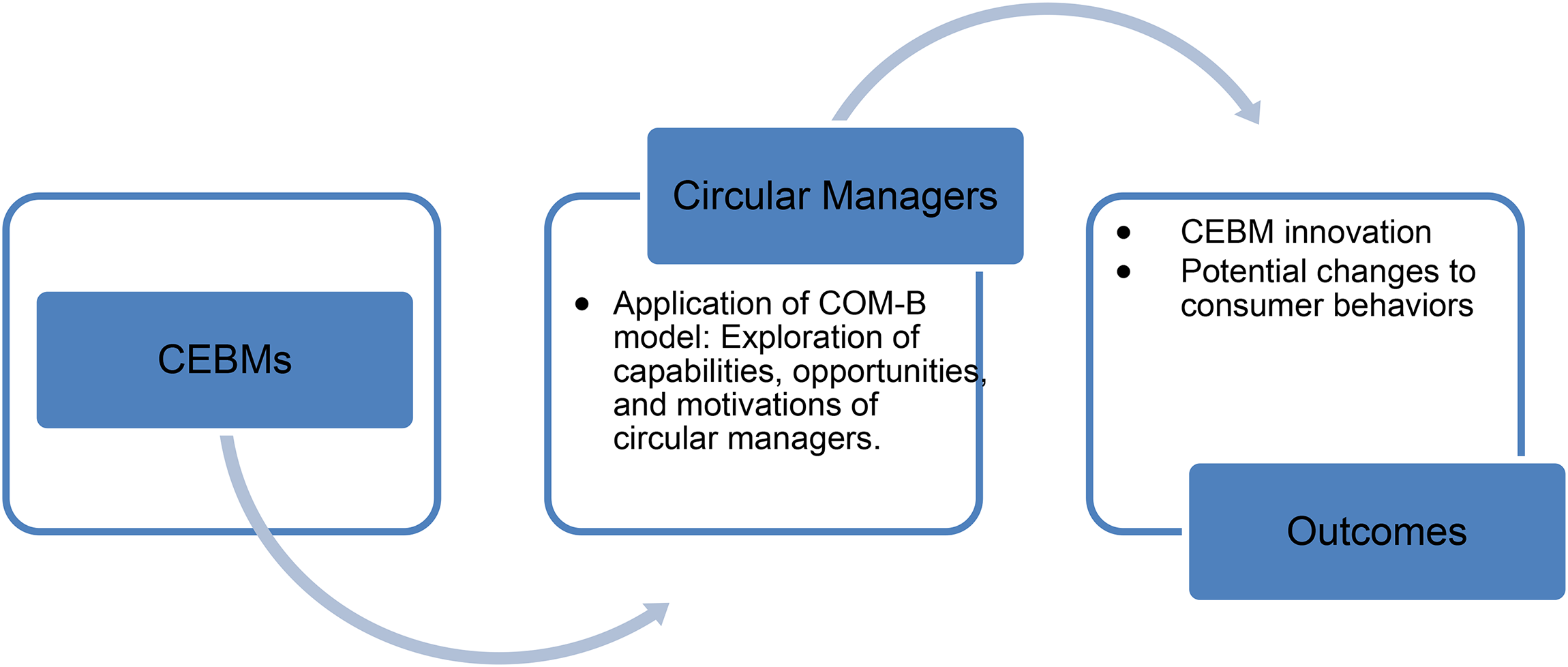
Research approach.
The paper is divided into five sections. In the remainder of the introduction, we review literature on sustainable business models and CEBM. We then briefly introduce the COM-B model and detail our methods, followed by the analysis. We finish with a discussion of our findings before offering concluding remarks.
1.3. (Sustainable) business models and CEBMs
On the most basic level, business models aim to define how companies create competitive strategies through the design of products and services offered to the consumers market (Freudenreich et al., 2020). They are characterized as the way in which companies conduct business and portray the way resources are transformed into economic value (Teece, 2010). According to Osterwalder and Pigneur (2010), business models can be oriented towards at least three positions: (1) value proposition (offer of products and/or services, customer segmentation and relationship with customers); (2) creation and delivery of value (activities, resources, partnerships and distribution channels); and (3) value capture (revenue models and cost structuring). That is, they are configurations of resources that create, deliver, and capture value (Ortiz-Avram et al., 2023). Moreover, they are informed by, and are the result of, the core logic of how organizations and involved actors (co-)create value (Schaltegger et al., 2016).
Important to our study, conventional business models are usually rooted in linear production and consumption logics. In contrast, sustainable business models, including CEBMs, seek to deliver value beyond purely economic value (De Angelis, 2021), presenting normative aspects focused on a systemic perspective, which considers creating new systems that generate value for the entire network of stakeholders. In other words, they create multiple mixed types of value to satisfy multiple stakeholder groups (Freudenreich et al., 2020), and beyond, i.e., the natural environment.
As a subset of sustainable business frameworks, CEBMs distinguish themselves from traditional linear models. Definitions are numerous (see, e.g., Kirchherr et al., 2017), and, for the purpose of this paper, we draw on Blomsma and Brennan (2017: 609) who suggest that CEBMs ‘aim to extend the productive life of resources as a means to create value and reduce value destruction’.
More generally, as an umbrella term, CEBMs subsume a number of business models with the aim to close the loop of production and consumption, requiring no less than a transformation of the products’ life cycles (Lüdeke-Freund et al., 2019). In recent years, different authors have examined a growing variety of CEBMs. For instance, resulting from an analysis of 121 companies that showed improvements in resource productivity, Accenture (2014) propose five CEBMs, namely (1) circular supplies, (2) sharing platforms, (3) product life extension, (4) resource recovery, and (5) product-as-service. Offering a comprehensive typology based on the existing literature, Lüdeke-Freund et al. (2019) identified 26 CEBMs ranging from technological-driven approaches trying to foster efficiency, to sufficiency approaches such as sharing models. Overall, the authors propose a categorization of six overarching CEBM patterns: (1) repair and maintenance, (2) reuse and redistribution, (3) refurbishment and remanufacturing, (4) recycling, (5) cascading and repurposing, and (6) organic feedstock business models (Lüdeke-Freund et al., 2019).
Besides greater attention and interest in CEBMs, Bocken et al. (2020) as well as Ferasso et al. (2020), emphasize the necessity for organizations to transition sustainably, that is, maintaining financial viability and securing (and further developing) competitive advantages. Notably, and besides the need to pay attention to the financial bottom line, the shift from linear to CEBMs necessitates the adoption of transformative strategies that challenge established consumption and production norms (Greene et al., 2024), and navigate a complex landscape of technical, economic, institutional, regulatory, and cultural obstacles (Schaltegger et al., 2023) to reduce environmental and social impacts.
Innovative strategies are crucial for overcoming resistance and addressing the obstacles that hinder the widespread adoption of CEBMs (Tura et al., 2019). To navigate potential barriers, Bocken and Ritala (2021) propose a number of ways to introduce CEBMs, including resource strategies (e.g., narrowing, closing or decreasing resource loops), or through innovation strategies (referring to the open and/or closed model of shaping the business) (see also Bocken et al., 2016).
1.4. CEBMs and sustainable consumption
CEBMs have emerged as potential enabler of more sustainable practices, representing one of the most dynamic sub-fields in the study of the CE (Geissdoerfer et al., 2017). With regards to consumption issues, Tunn et al. (2019) argue that CEBMs have greater potential to achieve sustainable consumption when innovating in a way that has as goal to reduce overall consumption levels and when changing consumption patterns. In this process, a crucial but often overlooked factor is the role of the consumer in CEBM innovation. Under this notion, the transition to a CE via the adoption of CEBMs is, ideally, co-created (Elf et al., 2022) to ensure customer acceptance and loyalty in the transition, while facilitating a simultaneous transformation of consumer behaviours that generate virtuous, reinforcing cycles.
So, can consumer preferences and purchases significantly shape the demand for sustainable products and services, encouraging companies to adopt greener practices (Liu et al., 2016)? The saliency of this question is underscored by Hobson and Lynch (2016) who argue that consumer behaviour wields considerable influence on the economic feasibility of corporate sustainability. In this context, the introduction of the concept of the ‘prosumer’—where consumers are also seen as producers—provides additional evidence of the paradigm shift that has occurred over the last few decades and which positions the consumer as a co-creator of value rather than merely a final recipient (Filho et al., 2024). This reconceptualization of the consumer's role suggests a more symbiotic relationship between businesses and consumers (Elf et al., 2020), in which sustainable futures are co-created. On the other hand, businesses and their respective business models have considerable impact on people's behaviours (i.e., consumer behaviour) as well as on society and the natural environment.
Notably, besides the CE's potential to operate as an enabler for more sustainable consumer behaviours (including sustainable consumption behaviours) and first studies in the field (Coderoni and Perito, 2020; van Weelden et al., 2016), it remains widely under-researched. In this research, we follow the notion that a reconfiguration of existing business models can instigate changes in existing (infra)structures as well as mindsets and behaviours required to drive progress towards more sustainable practices.
2. Methods
2.1. The COM-B model
This study adopts the COM-B model (Figure 2) as an analytical lens to investigate how CEBMs become adopted and innovated from the CMs’ perspective, and seeks to understand how CEBMs can contribute to adopting more sustainable consumption behaviours. We do so by setting out to: (1) understand how CEBMs are developed, innovated and eventually implemented; and, (2) identify elements in CEBMs that contribute to the unlocking of sustainable consumption behaviours. We deliberately focus on small and medium enterprises (SMEs) since their business models are usually more dynamic and malleable.
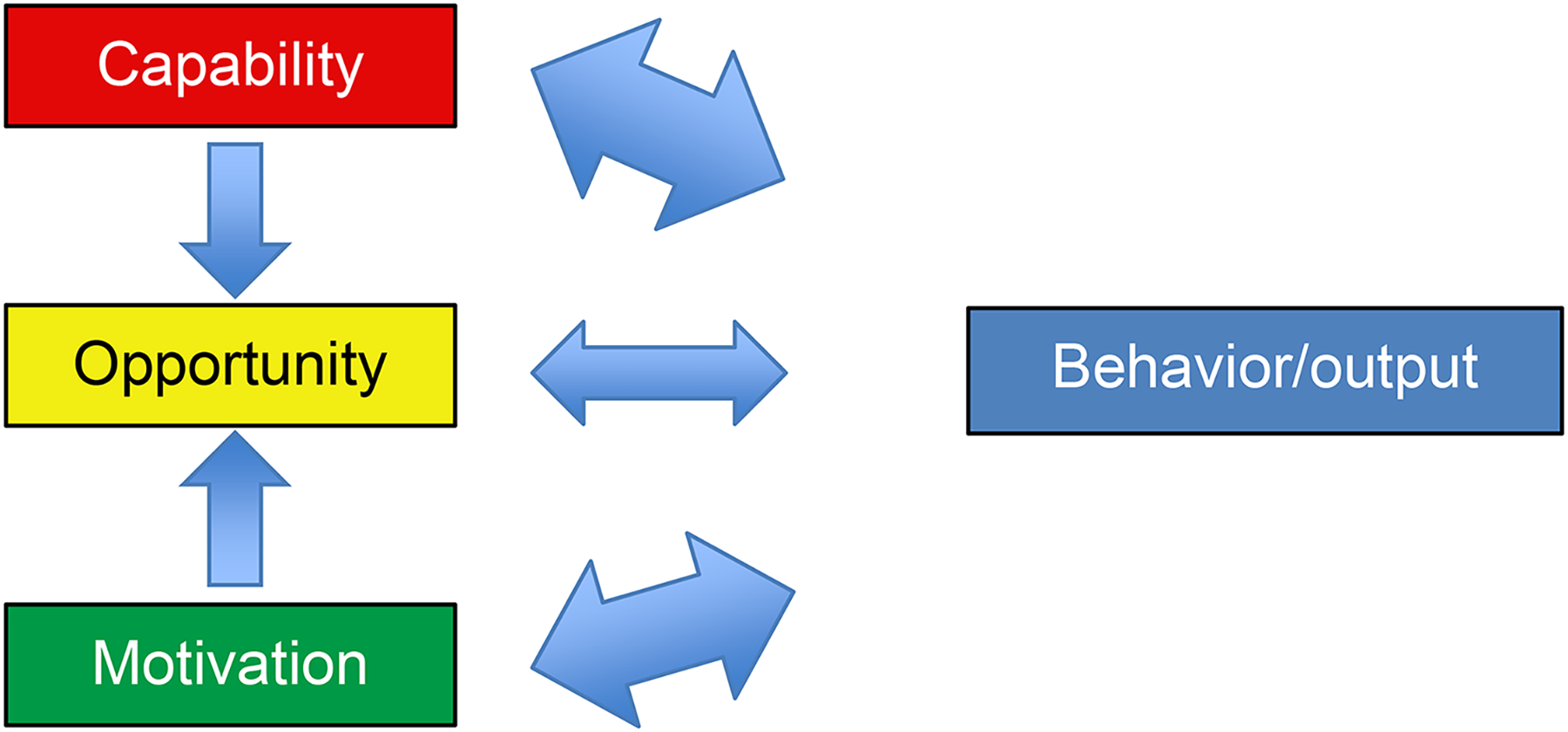
The COM-B model.
The COM-B model is anchored in three main components: Capabilities (C), Opportunities (O), and Motivations (M), which collectively influence Behaviour (B) (Michie et al., 2011), with ‘behaviour’ being the output, that is, the CEBM that was set up by and made possible through certain capabilities, opportunities and motivations from the CM. We acknowledge the dynamic and often non-sequential nature of how people are informed by the three interacting components; one might argue that we, in a sense, work ‘backward’ to determine which types of capabilities, opportunities, and motivations are required to develop, advance, and innovate the CE, and for which particular ends.
Capabilities refers to an individual's ability to perform the desired behaviour. We follow Dosi et al.'s (2001: (2) suggestion that ‘to be capable of something is to have a generally reliable capacity to bring that something about as the result of intended action’. It encompasses the skills, knowledge, resources, and competencies necessary for action, including physical and mental abilities (Camacho-Otero et al., 2018; Michie et al., 2011). Notably, to be capable of something is—at least to some extend—dependent on the context and related factors. Opportunities pertain to the context within which the behaviour occurs, including factors such as access to resources, physical environments, social norms, and external influences (Michie et al., 2011). That is, they embody the contextual landscape provided by CEBMs that can enable the construction of a more sustainable economic system. These include innovative production and consumption methodologies, as well as novel approaches to consumer interactions (Elf et al., 2022). Opportunities are highly relevant but, to (fully) exploit their potential, they are equally dependent on the existing capabilities and motivations. Motivations are related to the energizing force grounded in reasons and/or incentives that lead someone to perform or avoid a behaviour, involving beliefs, values, goals, and emotions that ultimately drive individual choices (Camacho-Otero et al., 2018). On the most basic level, motivation is the cognitive impetus that directs consumer choices (Michie et al., 2011). The strength of motivation can ebb and flow as capabilities and opportunities are engaged, clearing a path for strategic interventions to foster behavioural shifts (White et al., 2019).
Taken together, the COM-B model allows us to explore key factors that inform the (CMs’) behaviours, that is, the setting up of circular businesses and CEBMs.
2.2. Identifications of CEBMs with a focus on behaviour
Initially, we applied Lüdeke-Freund et al.'s (2019) typology of 26 CEBMs to identify those with the potential to directly influence consumer behaviour. This approach was chosen due to our focus on sustainable consumption, aiming to pinpoint the models that actively engage and modify consumer behaviour towards more sustainable practices. Through the help of the initial literature, we coded CEBMs in several steps, which eventually led to the identification of three CEBMs that hold the greatest capacity to influence the consumer behaviour: (1) sharing, (2) product-as-service, and (3) lifecycle extension.
Common practices as part of sharing business models include peer-to-peer exchange between consumers (C2C), temporary access to goods through leasing and rentals and through the sharing of underutilized assets as well as through collaborative consumption practices (Oliveira et al., 2022). Sharing has the potential to meet the needs of more than a single person by offering the owner financial benefits for sharing the product with others. Product-as-service/Product-Service Systems are B2C CEBMs, in which the customer becomes a user, refraining from any ownership. A prominent example is the ‘library of things’ that allow customers to utilize but not purchase the produce and only use it as a service with potentially positive implications for the business, its customers and the environment (Pialot et al., 2017). Product life extension CEBMs adopt strategies through remanufacturing, maintenance, upgrading, and reuse (Accenture, 2014). Consumers can engage in second-hand purchases, collaborating to reduce the impact resulting from waste production and management by extending the useful life of products (Edbring et al., 2016). Thus, consumers can be essential agents to close the cycle of products.
2.3. Data collection
In a second step, we identified Brazilian businesses with one of the identified CEBMs. An initial screening of websites and social networks of Brazilian companies was conducted following the parameters developed in step one. This resulted in an initial sample of 55 companies that were contacted subsequently. Eventually, eight businesses represented by senior personnel or founders (hereafter referred to as ‘circular managers’; CMs) were interviewed, spanning a variety of sectors (see Table 1 for further details). These businesses (see first column) implement diverse CEBMs, providing a comprehensive view of practices across Brazil as emerging market. For instance, CM1 adopts slow fashion, integrating product life cycle extension and the use of low-impact materials. Meanwhile, CM2 stands out for its social impact, employing women in vulnerable situations and using biodegradable fibres in its products. Notably, both businesses face challenges related to consumer awareness and the scarcity of suppliers aligned with sustainability principles.
Overview of interviewee profiles and data collection.
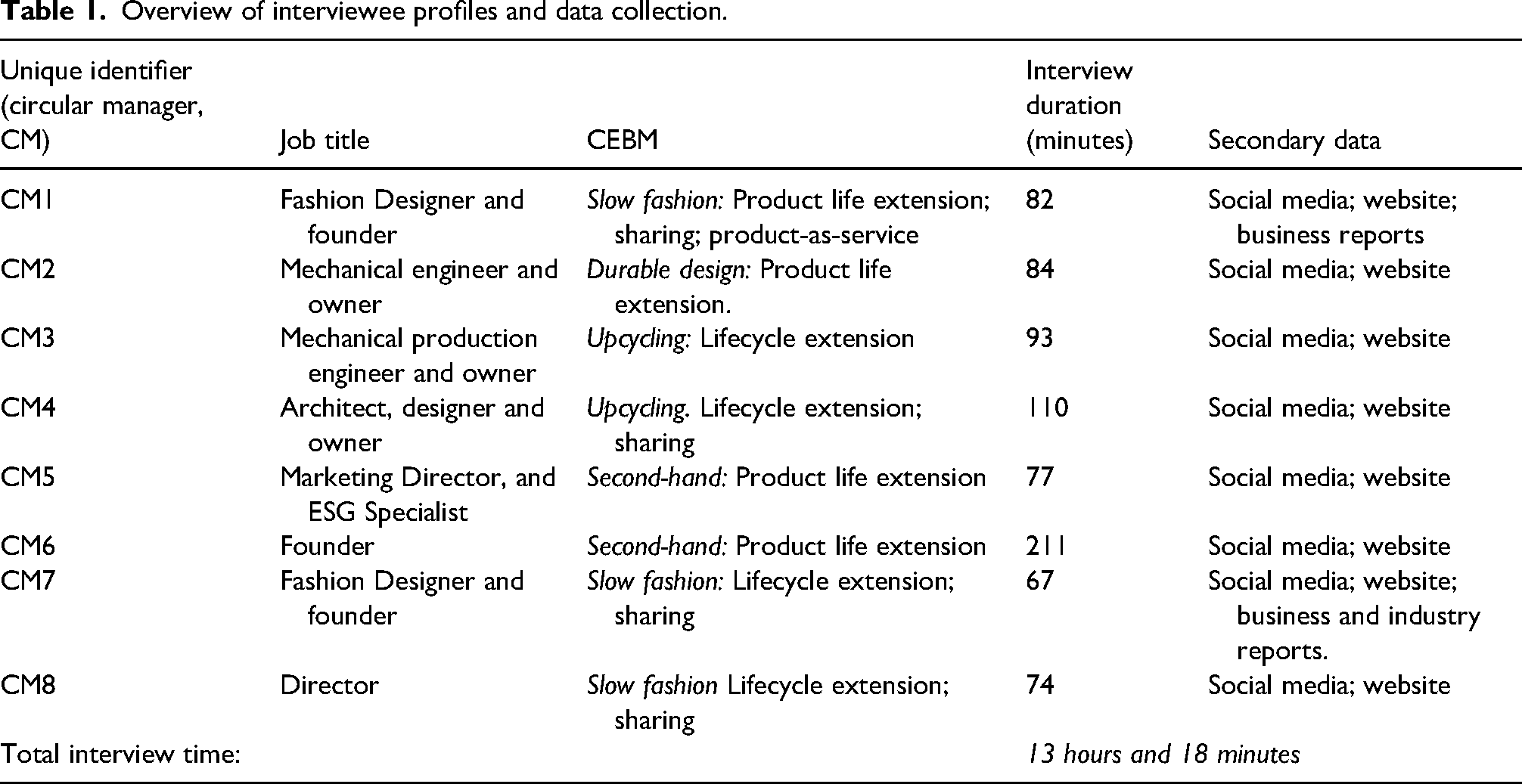
Other cases demonstrate unique innovations to overcome operational barriers. For example, CM3 is a pioneer in reusing textile waste, transforming it into timeless products, while CM4, operating in the bicycle sector, implements robust CE strategies ranging from material selection to employee training. Storytelling and educational campaigns have been widely employed to overcome cultural resistance and strengthen consumers’ emotional connection to the purpose of these brands.
CM5 and CM6 further expand the diversity of approaches within the sample. CM5 focuses on upcycling, transforming used clothes into new, unique products while fostering artisanal work and reducing waste. CM6 operates in the second-hand retail sector, utilizing a thorough curation process to ensure high-quality products. For unsellable items, CM6 channels them toward donations, promoting accessibility and sustainability.
Lastly, CM7 and CM8 provide complementary perspectives that underscore the flexibility of CEBMs. CM7, a second-hand luxury retail company, combines circular practices with a strong focus on educating consumers about the economic and environmental benefits of the second-hand market. Meanwhile, CM8 specializes in creative reuse, transforming industrial and household waste into new functional and artistic products. These cases exemplify how integrating sustainable practices and alternative economic models can generate positive impacts in emerging markets.
To enhance the analytical framework, case-specific examples illustrate how distinct challenges and contextual factors have influenced each CM's strategic approach to circularity. For example, CM4's involvement in the bicycle sector reflects considerations of technical design, infrastructure constraints, and prevailing cultural attitudes toward urban mobility. Similarly, CM5's dedication to upcycling emerged as a response to local surpluses of textile waste and a longstanding tradition of community-based artisanal production. These examples highlight that the capabilities, opportunities, and motivations outlined are not merely theoretical constructs; rather, they are realized within—and significantly shaped by—specific socio-economic, cultural, and material contexts.
Here, by focusing on CMs and their link to consumer dynamics, we explored the drivers of CEBM innovation. That is, we systematically approached an understanding of how changes to existing business models came about and how CEBMs can potentially facilitate changes in (sustainable) consumption behaviours.
2.3.1. Data analysis procedure
To ensure reliability, the collected data were initially explored and then coded to identify categories as part of wider themes (Bryman and Bell, 2015). All authors coded the data and parent codes emerged that were based on the CE literature and the COM-B model. Emerging codes were eventually compared and grouped into themes. In addition, we collected website accounts, blog posts, reports, and grey literature to triangulate findings from multiple sources in the process to gain deeper, more robust insights (Natow, 2020). Qualitative data extracts introduced below provide examples that are representative of the respective themes.
3. Results
3.1. CMs’ understanding of the CE
We first explored the CMs’ understanding of different CEBMs. Interviewees showed understanding of various CEBMs and circular practices linked to cradle-to-cradle approaches (CM1; CM2), reverse logistics (CM1; CM3), life-extension through design possibilities (CM8), practices to close the loop (CM4; CM5) and circularity (CM6) more generally, as well as the collaborative economy (CM7). We subsequently explored behaviours relevant for CEBM innovation by adopting the COM-B framework as analytical lens.
In applying the COM-B framework to the analysis of CEBM innovation, we note that the framework's dimensions do not operate as discrete or mutually exclusive categories. Instead, these elements often intersect and reinforce each other in practice, reflecting the complex and iterative nature of behaviour change processes within circular business innovation.
For interviewees, the CE represents an opportunity to embrace sustainability more widely by adopting ‘that tripod of socially fair, environmentally correct […] and economically viable [aspects]’ (CM7). Others went further, arguing that the CE offers a ‘regenerative business [which] can change the world’, and that ‘[i]t is what can bring a little hope to the situation we find ourselves in now’ (CM1).
Notably, CMs understood CEBMs, and the CE more widely, not solely as a technical concept but as an opportunity to improve the sustainability and the well-being of themselves and quality of life for all. In the following, we further explore key factors—capabilities, opportunities and motivations—that influence behavioural outputs (Michie et al., 2011) and the CMs’ ability to achieve their goals.
3.2. Capabilities, opportunities, and motivations as tenants for CEBM innovation
3.2.1. Capability
The ‘capability’ dimension examines the factors that influence CMs’ abilities to adopt, develop and innovate CEBMs. Notably, responses from CMs included reflections on their own and their customers’ capabilities. Capabilities were influenced by various factors, and we identify four themes (Table 2), namely: (C1) knowledge generation, (C2) ludic learning, and learning and awareness, (C3) trust and knowledge, and (C4) government policies.
Capabilities to drive circular behaviour, its adoption, and CEBM innovation.
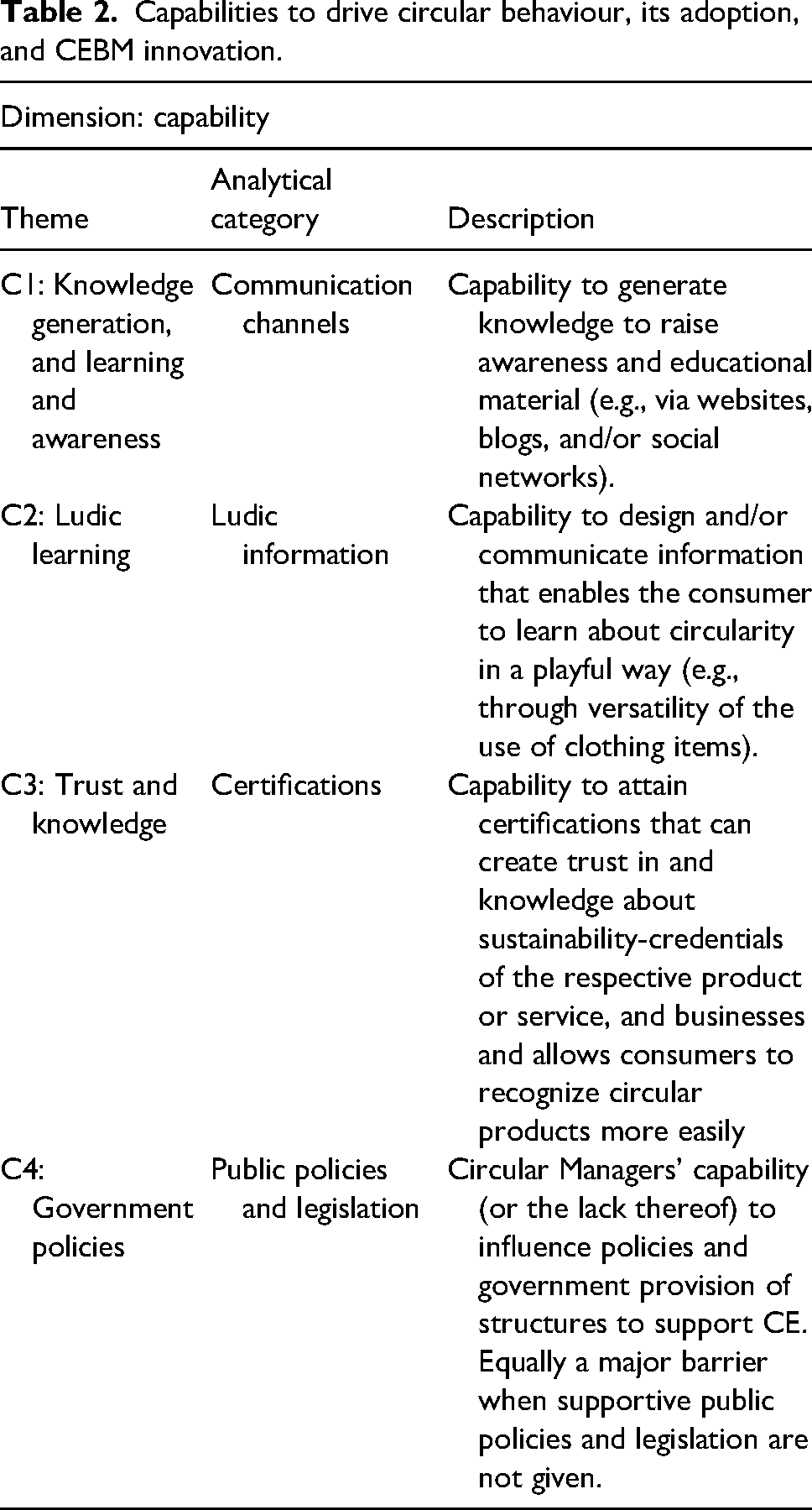
According to our findings, CMs’ capabilities informed the proactive development of opportunities and their behaviours. It thus influenced how they changed and innovated their corresponding CEBMs. Data suggest that ludic learning (C1)—for consumers and as part of CEBM's creative innovation process—is a key capability. For example, materials are used to make clothes for a collection, and after a period of time the scraps that were generated are reused in a playful way in future collections: I do a collection where the source of inspiration was cashews. The pieces were all printed with cashews and we keep the scraps. In two years, when we do a collection that has nothing to do with cashews, we bring the detail in the collar and in the internal finish. And people start to think, ‘wow that collection I bought two years ago is now back as a detail’. And we see that this is circularity, that piece that was now used in the trash, it's back. And people understand it in this playful way, so it's a reflection, it's a discursive process. (CM8)
Notably, certain factors such as ludic learning play a pivotal role in shaping consumers’ ability to recognize opportunities for embracing (sustainable) consumer behaviours. These interventions can occur naturally and gradually as CEBMs inform consumers through practical examples. This is in line with existing work, emphasizing that one of the elementary factors for behaviour change to occur comprises individuals’ capabilities to increase the degree of awareness in a specific situation (White et al., 2019). This means breaking unsustainable habits by starting to create favourable conditions for a new sustainable consumption behaviour (Verplanken et al., 2018).
Indeed, by making circular practices more desirable and fun, people become motivated to engage in the knowledge construction process that supports the CEBM. That is, bringing lightness to consumers’ learning processes was seen as important since changes in behaviour do not need to be imposed (e.g., via legislation) but should be seen as positive opportunities to develop new capabilities and contribute to broader progress through co-creational processes (Elf et al., 2022).
Acknowledging their influence and responsibility (Werner et al., 2025), CMs were concerned with the quality and type of information they pass on to their consumers when attempting to generate knowledge, learning and awareness (C2), and when positioning themselves as vehicles for promoting the generation of knowledge: We explain. We have this place of the knowledgeable…of bringing the explanations, [that] of the specialist. So, we put ourselves in that specialist's position a lot to instruct people because…if they are not going to consume from us, they are going to consume other pieces. So, we have a very strong responsibility to instruct the people who are in our circle, you know, those who accompany us. (CM5)
That is, they reflected on their capabilities and the effectiveness of how they use them to generate new opportunities—indicating the interplay between different factors underpinning the COM-B model. Indeed, CMs saw their businesses as opportunities to raise awareness and ensure access to appropriate information, allowing their customers to make better consumption decisions (Testa et al., 2020): The letters I send with the product are telling our and the [product's] story…I think it is, yeah, education. Information so that people can really become aware. (CM1)
The capability to create and ensure credibility and trust here is critical (C3), as sustainability has become a broader trend and is increasingly coopted by companies for reasons of greenwashing (Wright and Nyberg, 2015) due to a lack of appropriate legislation (C4). 4
Consequently, CMs’ capabilities inform their behaviours, that is, how they innovate their business models. However, it is worth noting that CEBMs also foster consumer capabilities via, for instance, playful knowledge creation (C1, C2). Interviewees stressed their role as communicators convening the importance of more sustainable consumption behaviours through different communication channels (e.g., websites, blogs, social media). In addition, they offered what Elf et al. (2022) call ‘extended customer eco-engagement’, provided through customer-facing and co-creational activities that go beyond conventional business-customer exchange interactions (e.g., informative lectures, courses and opportunities for open dialogues with consumers), further fostering CEBM innovation. These in turn can, again, generate greater trust and knowledge (C3).
3.2.1. Opportunity
Next, we introduce three main themes (Table 3) that were identified to offer opportunities to consumers and CMs.
Opportunities for greater CEBM innovation and interaction.
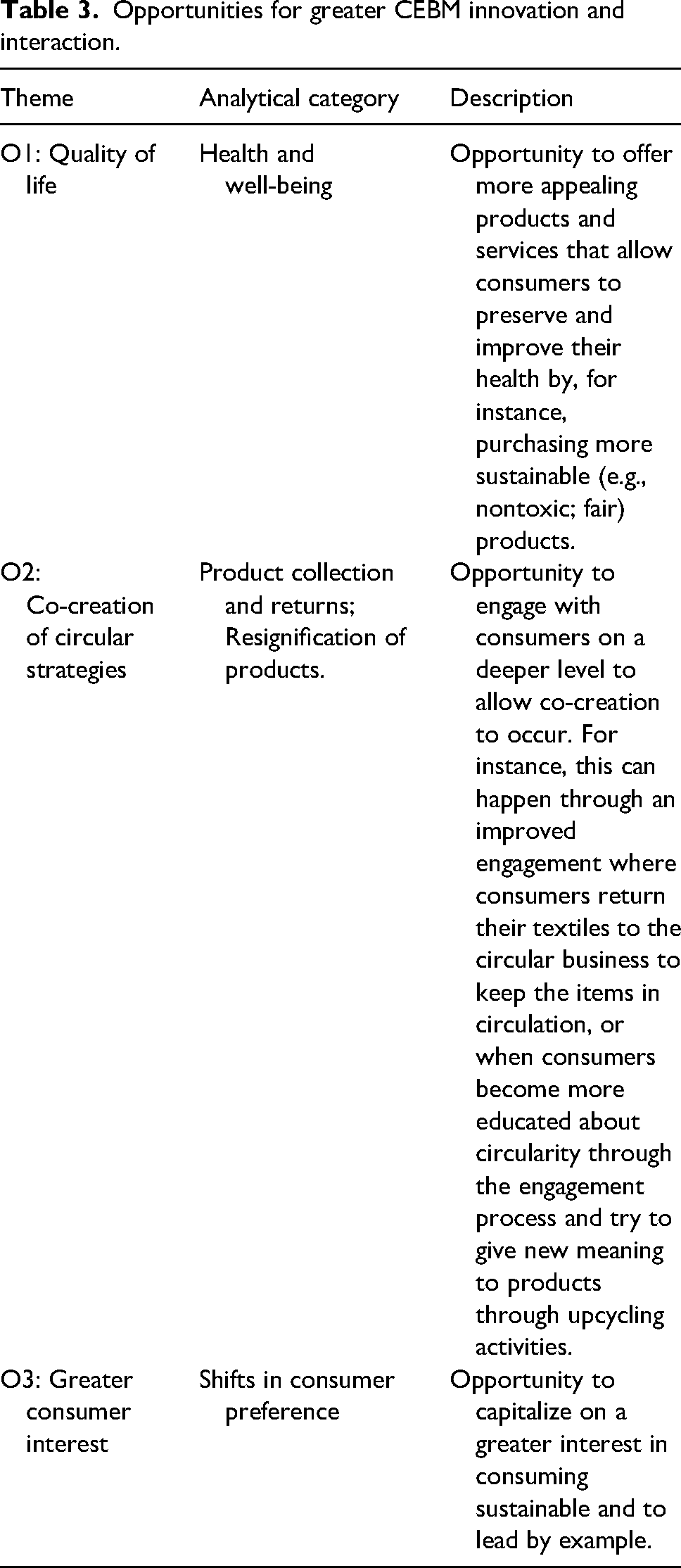
Interviewees reported that quality of life (O1) is a fundamental feature in the development of circular products since they seek materials that provide benefits for both people and planet: The pigments I use are all non-toxic and non-polluting water-based, in short, all the values, pillars, techniques, practices that I have so often mentioned on the website. (CM1)
CM thus embraced opportunities to produce more responsibly and to offer healthier products and services that can improve their own as well as consumers’ well-being. This ‘bi-directional’ opportunity for the business and the consumer is in line with earlier work by Jackson (2005), which emphasizes that, at its core, consumption has the function of providing goods and services necessary to meet human needs, improving the well-being at an individual and collective level. This example is also particularly interesting since it demonstrates the interaction between the different components of the COM-B model.
Moreover, while much attention has been given to strategies to accelerate market penetration of circular businesses (Assmann et al., 2023), the potential to co-create circular strategies and the resulting opportunities for businesses to expand consumer participation (e.g., product returns to close the loop) remain understudied. For instance, in our research, one interviewee highlighted the importance of sentimental value. That is, a piece may be out of fashion but circular businesses can draw on their existing and newly developing capabilities (capability → opportunity interaction) to reimagine the piece and employ upcycling strategies to prolong the product's lifecycle (O2). This involves imbuing the respective piece with new meaning thereby not only extending its practical utility but also creating added value for the consumer: Every sailor has a jacket with a story, so practically every sailor will want to turn his obsolete equipment into a jacket. (CM4)
Other opportunities linked to (extrinsic) motivations (see next section) include product collections and return strategies. Consumers can be included in activities that encourage the active closing of the cycle of systems. For instance, discount policies can be implemented in CEBMs allowing consumers who return parts to enjoy financial benefits while avoiding resource consumption: So, our customer buys the part. When the part no longer makes sense to them and they no longer want to use that part, they return it to the brand and get a discount on the next purchase. (CM7)
Moreover, CMs observed changes in consumer purchase intentions. Indeed, research has shown that customers are increasingly interested in consuming products from brands that contribute positively to society and the planet (Gomes et al., 2023), and demonstrate greater interest in purpose-led businesses as can be observed by the rise of Sistema B.
5
As a result, businesses are required to demonstrate transparency and consistency in what they communicate and, importantly, do: The consumer who is concerned about…sustainability, but does not know who is behind it, where the raw materials are from…she will think that it is greenwashing, that is just marketing, [and that] it is not part of the company's DNA. (CM7)
This was therefore perceived as opportunity to differentiate their products and services from conventional businesses and educate the consumer (see also Capability: C1). Respondents also highlighted that consumers are increasingly interested in fostering support for the local economy. They feel joy and pleasure in buying from small producers and brands due to the proximity that business can offer between company and consumer, generating relationships of trust. Interviewee CM7 emphasized their consumers’ attitude: I go shopping here because it's local, I know the person who makes it, I know the person behind it, I know the owner, she who personally assists me.
In this sense, the provision of more sustainable products and services on a local level is not only an opportunity for CEBMs to become a financially sustainable business but they can also operate as contributory agents to influence change in consumer motivation and behaviour by modelling sustainable behaviours (White et al., 2019), representing moral, ethical and sustainable values through leading by example: It is through example. We are the example, we tell the stories to the customers: (…) [it's] concrete action. (CM3)
This, in turn, can have positive implications for businesses in terms of customer retention as shown by recent research (e.g., Elf et al., 2022). Indeed, with greater interaction between businesses and consumers, it is possible to increase consumer satisfaction and loyalty, as they experience better involvement in business practices and, consequently, greater empowerment or group efficacy via belongingness (M1).
Taken together, these opportunities influence CMs’ behaviours but also hold significant potential for consumer behaviour change. Finally, the importance of digitalization as part of the business-customer co-creational (O2) process is stressed. Online interactions provide CMs with business opportunities to influences customers’ consumption behaviours and to offer awareness-raising material that can result in new capabilities and motivate people to behave more sustainably. It can even foster CEBM innovation through extensions of CEBMs (e.g., inclusion of sharing offerings). This, in turn, can result in development of further opportunities.
3.2.2. Motivation
This dimension aims to identify CMs’ motivation to set up CEBMs and drive CEBM innovation. We identified three main themes as shown in Table 4.
Motivations to foster CEBM innovation.
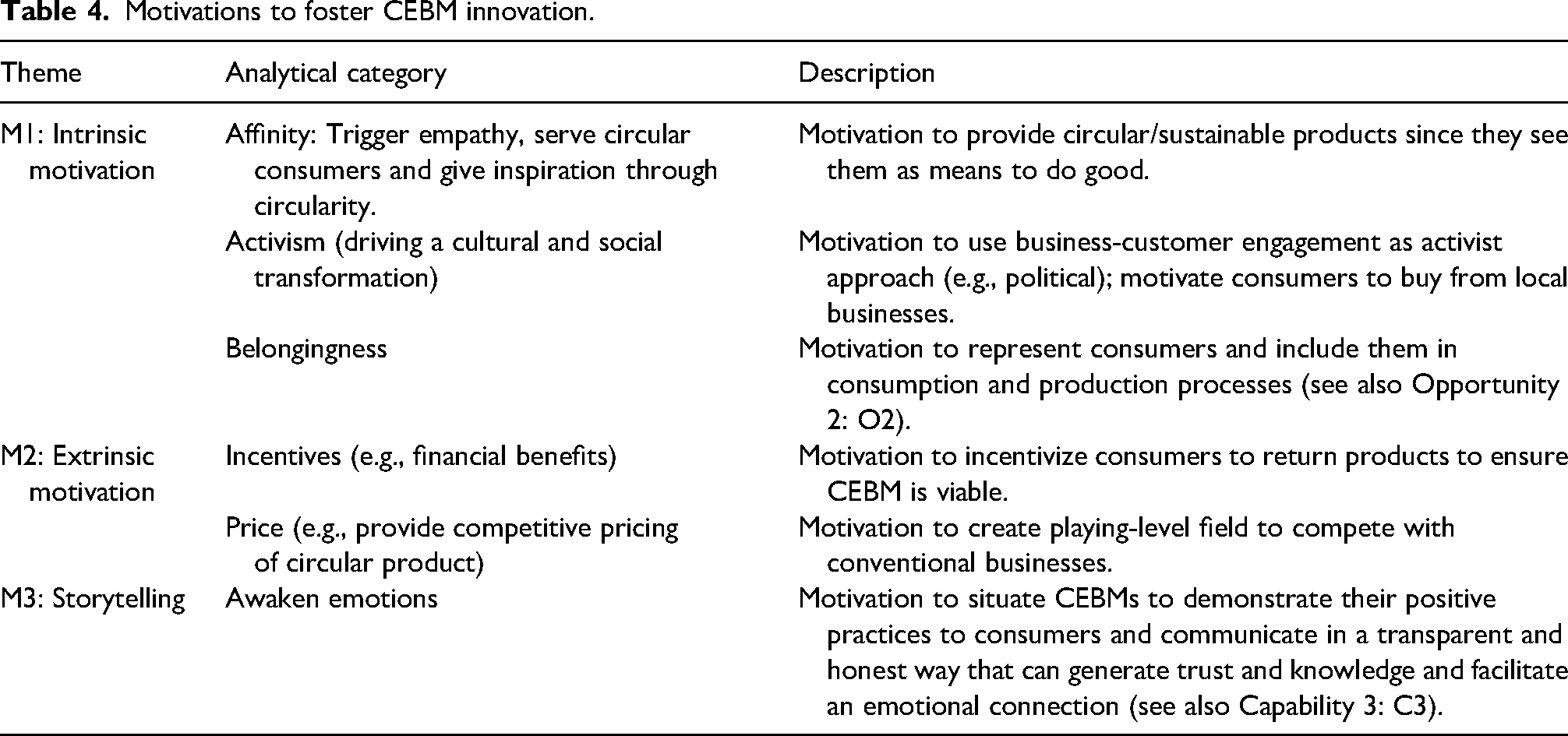
Motivation corresponds to the intrinsic and extrinsic factors (M1; M2) that influence decision-making and behaviours (Ryan and Deci, 2017). For our purposes here, it can be understood as the energizing force that determines to what extent capabilities are activated and opportunities are utilized.
For instance, CEBMs can offer awareness-raising opportunities that can strengthen motivations and develop capabilities to enact coherent consumer behaviours: The person becomes more in control of his behavior; becomes more aware of these triggers and desires and starts to make healthier choices for the planet as a whole and for himself, for his economy. ‘Do I really need this? Or…Am I following impulses here?’. (CM1)
This, in turn, can foster new behaviours such as consumer activism (e.g., ‘buycott’, see, e.g., Neilson, 2010) and motivate consumers to consume differently.
Besides intrinsic motivators, extrinsic motivators (M2; e.g., monetary benefits) constitute important factor to motivate behaviour and engage in practices that have as a goal to create new capabilities and opportunities. For CM to make a living and establish a positive reputation for customers to, for instance, feel incentivized for and/or through their purchase decisions. Here, the sharing economy and the second-hand market (see CM5, CM6) have gained increasing interest and acceptance as an alternative to conventional business models (Curtis and Mont, 2020). These alternatives allow consumers to access exclusive items at an affordable price: [T]he main factor is always a good price, right. We have to give people an attractive price […] it has to be an affordable price, it has to bring the feeling of access to luxury to people. (CM5)
Moreover, respondents highlighted that aligned values (intrinsically) motivate their customers to buy from them, in turn, motivating CM to offer desirable and affordable products and services: We have people who are like zero waste ambassadors, you know, many people who have strong ideals of being vegetarian, vegan…they like to buy at thrift stores. (CM3)
As argued previously (Section 3.1), CM understand CEBMs as opportunity to align business practices with their own values and lifestyles. Therefore, CMs’ intrinsic motivation was a key nurturing force in their attempt to attract customers not only via price but also as like-minded people with similar values that resemble them and their value system. Here, honesty and transparency as part of the wider storytelling (M3) can build trust and trigger emotions, and eventually facilitate motivation to change behaviours (e.g., purchasing, upcycling) which can drive the success of CEBMs. Indeed, transparency plays an important role, enhancing the care, attention and respect that businesses convey to consumers.
This motivation to bring others with them on the journey works better with certain consumer segments offering more fertile opportunities. CM observed that younger consumers and women in particular are often more receptive to sustainability-related communication since they hold more pro-social and pro-environmental attitudes, as observed in previous research (Vecchio et al., 2024). With regards to younger customers born in mostly digital environments, CM8 reported that, ‘… a new generation [emerges] that is very curious and critical about what products and services to consume, but [one that is] still without purchasing power’. Similarly, CM5 highlighted, again, the importance of transparency and particularly purpose when trying to connect with younger customers: Especially [with] this new generation that is coming, Generation Z…everything has to make sense, everything has to have meaning.
Businesses’ storytelling aims to awaken customers’ emotions (M3), demonstrate their commitment to circularity and build strong customer–business relationships: If we tell that brand story to that person, the person already looks at the brand with different eyes. We tell how it is; we care about what we are doing, how we are producing. (CM7)
Moreover, this motivation yet again is tightly intertwined with an opportunity—if executed correctly—demonstrating the interrelatedness of the different factors constituting the model. Lastly, and SS stressed previously, our findings provided insights into how CEBMs can create motivations for customers to engage in sustainable consumption behaviours and sustainable consumer behaviour more widely.
3.2.3. Behaviour
Lastly, the behaviour dimension is the result of the interaction of capabilities, opportunities and motivations in the model. Both circular manages and consumer behaviours are based on capabilities, existing opportunities and the underlying motivation to enact the behaviour in question (Michie et al., 2011). That is, people go through continuous processes of behavioural (re)construction through factors that act on the capabilities and motivations to identify opportunities to change behaviour (West and Michie, 2020). We posit CEBMs as behavioural outputs of CMs.
For CM this means that, based on their capabilities, opportunities and motivations, they can (or cannot) innovate the exiting CEBM (see also Teece, 2010). As mentioned previously, a key desire expressed throughout the interviews was the CMs’ both desire and attempt to innovate existing CEBMs (i.e., behavioural output) to align their business practices with their own (sustainable) lifestyle: The truth is this: I live this in my life, I am this person, I'm a vegetarian and I keep all the plastic pots I have in my life to reuse, I do things on foot. (CM1)
In other words, depending on their capabilities and opportunities, they were motivated to act upon their motivations to innovate CEBMs in a way that they foster sustainable lifestyles – lifestyles that they themselves felt are desirable.
Importantly, this approach marks a shift in business thinking through the positioning of circularity, and sustainability more widely, not as a peripheral concern but as a central, guiding principle, informing CM's ambitions and behaviours as well as CEBM innovation. Whereas previous research demonstrates that awareness and/or knowledge does not automatically lead to more sustainable behaviours (e.g., Barth et al., 2012) due to structural lock-ins (Sanne, 2002), our data show that companies are able to support gradual changes in consumer behaviours. This, in turn, can lead to so-called positive spillover effects into other behavioural domains (Elf et al., 2019): If the consumer starts to see that companies are more circular, they are adopting this model, talking about it…their behaviors will change automatically. (CM5)
This reciprocal interaction favours consumer participation and collaboration in circular practices influences CMs’ behaviours that, in turn, can inform CEBM innovation. That is, (co-created) changes in (consumer) behaviours may offer circular businesses opportunities for learning and business model innovation.
For instance, through the integration of innovative product collection and return strategies, greater consumer participation can be achieved that actively closes the loop of product lifecycles, adhering to sustainable practices and environmental stewardship. A case in point are circular discount strategies. As explained by interviewee CM7, ‘When a customer purchases an item that subsequently loses its relevance or appeal, returning it to the brand results in a discount on their future purchases’. This practice epitomizes a circular approach that emphasizes the longevity and enduring significance of products, fostering a more sustainable and responsible consumption cycle. Consequently, the greater ensuing link between CEBMs and consumers holds the potential to generate more opportunities to actively drive the transition toward a ‘new normal’ (Velenturf and Purnell, 2021).
4. Discussion
This study examined how key factors influence CMs’ behaviours in the process of innovating CEBMs. To this end, we applied Michie et al.'s (2011) COM-B model as an analytical lens in our qualitative research of semi-structured in-depth interviews, nonparticipant observation and document analysis with CM to understand how capabilities, opportunities and motivations influence their behavioural outputs.
The analysis demonstrates how interrelated the different factors in the COM-B model are. That is, the three categories are not mutually exclusive but engage, inform and interact with one another through and in dynamic processes. For instance, the capability to generate knowledge, learning and awareness (C1) can nurture opportunities to foster greater consumer interest (O3) and even go beyond conventional consumer-business interactions to afford the co-creation of circular strategies (O2). It can also hone intrinsic motivation (M1) and strengthen a sense of belongingness (M1), giving meaning to consumption behaviours and, in turn, to develop trust (C3).
Regarding CEBMs and how this played out in practice, CM1 demonstrated how technical capabilities in sustainable fashion design (e.g., slow fashion and upcycling) were leveraged through consumer education campaigns (opportunities) to foster a culture of mindful consumption. Similarly, CM7 utilized financial incentives (motivations) to encourage product returns, thereby closing resource loops and enhancing consumer participation in circular practices. These examples underscore the iterative nature of COM-B components, where opportunities are not only utilized but also co-created through innovative practices. Moreover, these interactions between different factors are crucial and both influence and underpin the actual behavioural output of CM, that is, their attempt to innovate CEBM to offer context-forging opportunities for customers to engage in more sustainable lifestyles.
Our findings also reveal that CMs proactively identify, engage with and nurture capabilities and opportunities for their customers. In other words, whereas we first explored the extensive CE literature, following the notion that an array of CEBMs are predicated on more substantial consumer engagement, which can be influenced through CEBM and CEBM innovation (Elf et al., 2022), the consumer was secondary to our research aim. However, in the research process, we came to understand that certain CEBMs have a more direct relevance for consumer behaviour change; these models range from those that extend the useful life of products (such as second-hand goods) to those based on access (like rental models) to collaborative consumption (e.g., sharing platforms), all of which rely heavily on consumer participation across actors and sectors (Edbring et al., 2016; Oliveira et al., 2021). Such models not only invite consumers to rethink their role from passive end-users to active participants in the sustainability chain but also underscore the co-creative value of consumers as ‘prosumers’ (Filho et al., 2024). Notably, consumer behaviour is not static, and requires continuous, bilateral learning that can foster consumers’ availability to assume a responsive role in the face of their consumption behaviour.
Here, it is imperative that consumers have the capability to recognize the opportunities offered by market actors, which stresses the role of education as an essential factor in supporting more informed and empowered citizen consumers (Spaargaren and Oosterveer, 2010). These, in turn, are dependent on various individual factors such as awareness and motivation, as well as socio-economic factors and contextual factors that facilitate or inhibit sustainable behaviours (White et al., 2019).
Consumer behaviours are influenced through various factors. As argued previously, CEBMs provide customers with opportunities to behave differently and provide the context to facilitate capabilities and motivation for sustainable consumption behaviours. By doing so, CMs’ motivation is fulfilled and CMs act upon their opportunities and capabilities. We thus not only position CEBMs as CMs’ behavioural output but can also ‘connect’ our findings with the consumer realm. We do so by positioning CMs’ behaviours as affording opportunities for consumers. Opportunities here can be understood as synonyms with CEBMs since they provide context-forging opportunities for consumers to, for example, consume more sustainably. That is, CEBMs provide conditions (i.e., context-forging opportunities) that develop more sustainable practices—through new ways of producing, creating opportunities for consumption and strengthening relationships with consumers.
Figure 3 summarizes the findings, demonstrating the interaction and the CEBMs’ influences on consumer behaviours and their potential to provide context-forging opportunities for consumers to enact more sustainable, circular behaviours. It positions CEBM innovation and circular practices as an outcome of CMs’ behaviours—influenced by their capabilities, the opportunities they had themselves and their motivations—offering consumers with context-forging opportunities to enact more sustainable, circular behaviours. That is, the CEBM and CEBM innovation and implementation is the behavioural output of CM and offers consumers an opportunity to develop new capabilities and fuel motivations to eventually enact circular behaviours. The consumers circular behaviours, in turn, can inform CMs’ motivation and capabilities and offer further opportunities to establish a sustainable, circular business model and engage in continuous innovation, illustrating the potential of CEBMs to operate as vehicles for change.
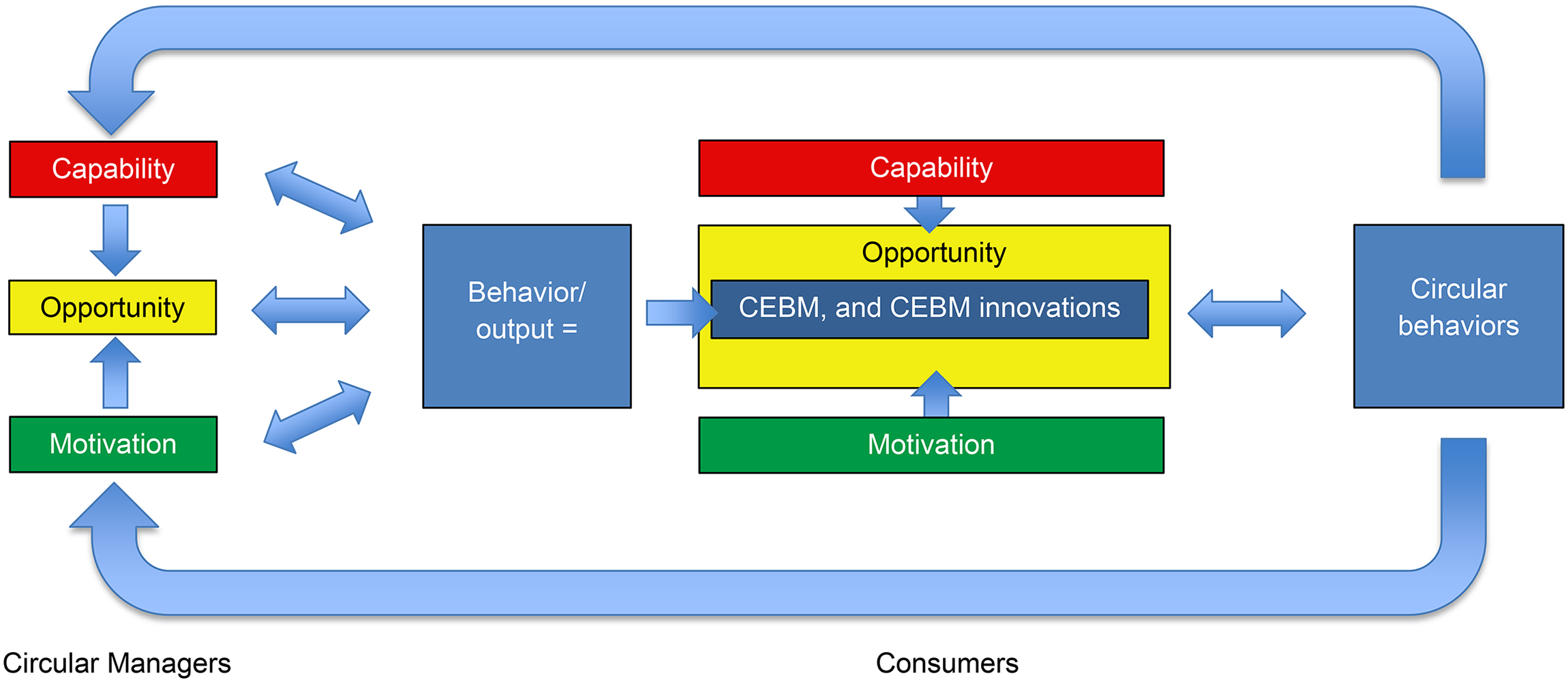
CMS’ behavioural output as context-forging opportunities, and the influence on circular consumer behaviours.
In this context, consumer readiness to participate in circular practices is crucial (Elf et al., 2022; Spaargaren and Oosterveer, 2010), and relies on the availability of the appropriate CEBM. This transformation can be catalyzed by engaging with the components of the COM-B model and continuous CEBM innovations through constant ‘course corrections’, wherein CEBMs act as a conduit for interventions that cultivate sustainable consumption behaviours such as active participation, lifestyle alteration, and collaborative co-creation (Urbinati et al., 2017).
Our findings are also an acknowledgement of consumers’ role for CEBM innovation and in the CE more widely. Indeed, CMs acknowledged that consumers occupy multiple roles: from buyers to sellers, from repairers and upcycler to collaborators. Bringing out the relevance of the consumer for the advancement of the CE and, importantly the proactive listening of CE managers, we stress the need for a better understanding of interconnections such as the business-consumer link.
Moreover, Figure 3 illustrates that, for behaviour change to occur, the consumer must be able to take advantage of opportunities to engage in change processes. In other words, for a change in consumer behaviour to occur, it is not enough just to raise awareness only or to offer more sustainable products. Instead, it is necessary to provide opportunities that facilitate capability development and nurture motivations that foster a greater commitment to sustainable consumption behaviours. This, in turn, provides an opportunity for businesses and consumers to proactively assume more responsibility in the transformation that is necessary as part of sustainable development. It also offers potential to create positive feedback loops that can fuel CM motivation, develop new capabilities and business opportunities. Here, co-creation is at the heart of CEBMs and allows the consumer to become a more active agent in developing potential solutions. Indeed, making CEBMs and sustainable consumption the norm might hold the potential to introduce a cultural change in wider consumer behaviours opting for access instead of ownership (Camacho-Otero et al., 2018) and, in time, even facilitate positive behavioural spillover effects (Elf et al., 2019).
A limitation of the work is the relatively small sample size, which constrains the generalizability of our findings across Brazil as continental country of significant size. Moreover, a key characteristic of Brazil, as a respective emerging market context, is how entrepreneurship emerges and is being nurtured through key actors (see, e.g., Elf et al., 2025). As a result, the study at hand offers exciting yet exploratory insights, and further research is required to identify mechanisms that can drive the transformation from a linear to a CE.
Notably, while we considered the specificities of the businesses when exploring opportunities, motivations, and capabilities throughout the analytical process, we aimed to provide a level of abstraction that allow our findings to be more applicable across sectors. Future research might want to delve more into business and/or sector specificities. In addition, future research should test insights from a consumer angle to permit a deeper understanding of the relationships between CEBMs and consumer behaviours. Indeed, with only 19% of over 114 CE definitions explicitly placing the ‘consumer’ or ‘consumption’ as core tenant (Kirchherr et al., 2017), there seems ample opportunity and need to explore circular behaviours and the factors that inform it.
Conclusion
Our research explored which capabilities, opportunities and motivations inform CMs to develop and innovate. We make a theoretical contribution by applying the COM-B model as psychological behaviour change model to the study of CEBM innovation. Our empirical findings demonstrate that CEBMs offer context-forging opportunities allowing consumers to engage in more sustainable consumer behaviours. Here, to draw down consumption-based carbon emissions, continuous CEBM innovation and implementation is required to operate as a force for good, replace unsustainable alternatives, and to facilitate far-reaching changes to consumption behaviours (Mont et al., 2025). In this process, continued feedback loops between CMs and/or CEBMs and consumers are required to fuel motivations, (re)configure capabilities and co-crate reciprocal opportunities. Moreover, the role of CMs as active agents of change is crucial to ensure that consumers become more involved in the (co-)creation of CEBMs and, consequently, opportunities. Thus, the iterative nature of these interactions suggests that CMs must continuously adapt their capabilities and motivations in response to emerging opportunities, such as shifts in consumer preferences or policy incentives.
By researching a variety of CEBMs across Brazil as emerging market context, we have demonstrated how the practical application of the COM-B model can inform targeted interventions to enhance the adoption and innovation of CEBMs. As a result, our research reveals that CEBMs hold the potential to offer context-forging opportunities and can serve as potentially potent vehicles of change to build more sustainable means of responsible production and consumption.
Footnotes
Declaration of conflicting interests
The authors declared no potential conflicts of interest with respect to the research, authorship, and/or publication of this article.
Funding
The authors disclosed receipt of the following financial support for the research, authorship, and/or publication of this article: This work was supported by the Economic and Social Research Council (grant number ES/M010163/1).
