



Abstract
The Latin American tropics have been considered spaces where the taken-for-granted vulnerability of the international assignment experience is exacerbated because of poor working conditions. In classical approaches to international management studies, the complexity attributed to the role of global managers resides in the ‘fact’ that they live under conditions of permanent confrontation, adjustment, change and adaptation. The literature typically portrays the international manager as perpetually experiencing an ‘out-of-place’ existence, as their supposed ‘national culture’ of origin is by definition different from the ‘national culture’ of the destination country. The stereotyped exoticism of the tropics – constructed as spaces for tourism and adventure, but also characterised as precarious in terms of their health infrastructures, uncomfortable climates, and socio-economic and political instability – contributes to the framing of international management in these regions as highly challenging. In this article, these stereotypical conceptions are challenged. Evidence is provided indicating that managers’ narratives about ‘the experience of working and living in the tropics’ have more to do with their negative experiences of organisational power and the creation of a singular organisational culture of control and commitment than with the experience of the tropical context per se. The analysis is based on 6 years of intermittent longitudinal ethnographic fieldwork (2005–2009; 2020–2022) with international and nomadic Latin American professionals working in two factories located in the tropics owned by an industrial corporation.
Keywords
Introduction
In this article, I explore how international managers assigned to work in two factories in the Latin American tropics talk about the experiences of their professional life. From the classical multinational and managerial perspective of global working, international management is a difficult and traumatic experience that makes managers vulnerable because, among other factors, the location and the cultural encounters (Dowling et al., 1999). My point in the article is that without underestimating the singularities of living and working in the tropics, Latin American tropics per se do not make international managers vulnerable. Rather, organisational circumstances are dominant when creating the international managers experience of vulnerability (Martin, 2013).
The vulnerability of international assignments has been addressed through complex management systems that intend to ensure adaptability, resistance to rejection, motivation, commitment, loyalty, and performance. The existing literature in mainstream management, international assignments health, and postcolonial studies describes global work mobility – especially tropical work mobility – as an always-problematic experience both for international managers and corporations. In this article I challenge the taken-for-granted notion that international – and, in particular, tropical – assignment leads to a vulnerable condition in advance, showing how, in the case of the companies I conducted my fieldwork with, managers’ talk about ‘the tropics’ had less to do with poor working and living circumstances (Lowengart and Zaidman, 2003; Zaidman, 2000) and more to do with their negative organisational experiences. Moreover, this narrative is maintained across long periods of time, suggesting the creation of a singular organisational culture of control and commitment (Kunda, 2006) that is perceived as a dominant source of vulnerability. My study can be framed as belonging to the anthropology of experience (Turner and Bruner, 1986). Through listening to narratives and observing the world of the international managers, I tried to understand their construction of the tropics as vulnerable spaces but only when they became located in particular situated experiences.
Accordingly, I am adopting a cultural relativistic use of the concept of vulnerability and its discursive connections with the construction of the meaning of precarity and risk, which the sociologist Robert Castel defined as spaces of ‘instability and of turbulences populated with individuals insecure in their relation to work and fragile in their relational integration (1991: 138)’. I assume here the emphasis that anthropological perspectives of vulnerability put on the ubiquity of the term (Han, 2018; Han and Das, 2015) and the situations in which precarity and risk are constructed within individual forms of organisational life, or what philosophers like Catriona Mackenzie, Wendy Rogers, and Sussan Dodds have defined as ‘situational vulnerability’ (Mackenzie et al., 2014: 7–8). The anthropological perspective on vulnerability assumes not static and fixed predefinitions of vulnerability but the production, instead, of ‘textures of vulnerability’ (Han, 2018: 341) as manifestations of how precarity and risk are ethnically constructed. Emphasising the organisational dimension of vulnerability, Turner (2006:32) argued that it is always a manifestation of ‘institutional precariousness’. The anthropologists Clara Han and Vena Das advocate that with respect to the vulnerable condition, ‘the range of the human voice cannot be determined in advance but must be found in each case’ (Han and Das, 2015: 17).
The analysis is based on 6 years of intermittent longitudinal fieldwork (2005–2009; 2020–2022) with international and nomadic Latin American professionals who worked in two factories located in the tropics (TubSteel Gulf, Veracruz, Mexico and SteelCo Orinoco, Puerto Ordaz, Venezuela) both belonging to an industrial corporation (GloTech) (all names are fictitious), which expanded aggressively through takeovers, mergers, and acquisitions, mostly between 1990 and 2010, from its main company and headquarter in Buenos Aires (Argentina). I draw on fieldnotes and 52 interviews – better described as talks or participatory listening (Forsey, 2010) – with international managers and repatriated employees of various ages (35–45), genders (87% men, 13% women), assignment locations (Europe and Latin America), and hierarchal levels (medium-, high-, and top-level management), as well as written and visual ethnographic material.
I frame global work as a social phenomenon that occurs in an organisation (in this case, a multinational company) viewed as an ethnic group. Here, I follow the principle of ‘symmetric ethnology’ (Czarniawska, 2004), trying not to decide in advance what does or does not produce vulnerability or what comes from where. Symmetric ethnology is rooted in ethnography and discourse analysis and is considered appropriate to emplace the ethnographer as part of and not detached from the social (Pink, 2009).
The research contributes through the scrutiny of nomadic managers' narratives and corporate discourse to a better understanding of how a rhetoric of vulnerability draws on stereotypes of life in the tropics while staying detached from organisational particularities like the one in which I conducted my fieldwork. The experience of addressing power relations during the expansion and contraction of a corporation, the perception of the imbalances in the fluxes of managerial circulation among the corporation and how managerial power is distributed, are key factors that produce and reproduce organisational vulnerability. This has concrete practical consequences. The training of international managers on how to deal with particular representations of symbolic and material power during their assignments in the tropics should be paid at least the same attention as the traditional training they typically receive on the differences in culture, food, hygiene, and health.
In my analysis of how organisational power is manifested among international managers at Tubsteel Gulf and SteelCo Orinoco, in addition to the postcolonial literature that has addressed how symbolic power is constructed in international contexts, I found it useful to draw on the sociological Bourdieusian conception of symbolic power relations (Bourdieu, 2005) and the ethnohistorical theorisation on the symbolic recognition of power (Levi, 1985).
Seen through Bourdieu's conceptual rendering of symbolic power, international managers construct themselves in a way that occupy spaces that ‘determine the positions they take’ (Bourdieu, 2005: 30). This is not independent of what ethnohistorians like Levi (1985) have referred to as symbolic recognition or ‘immaterial heritage’, by which organisational recognition of knowledge, prestige, skills, professionalism and reputation are part of the everyday organisational exchanges and distribution of power. For Levi, this distribution has an immaterial dimension; power relations and power exchanges are part of a taken-for-granted fabric and, in most of the cases, reproduce a power imbalance between those who are recognised ‘in power’ and those who are not.
Working global mobility: a theoretical discussion
The globalisation of economic relations – which has occurred with particular intensity since the late 20th century but which in fact dates to the 16th century – brought a new organisational phenomenon, namely, the management of mobile workers. Most of the seminal literature on the subject was produced in the 1980s and 1990s. The works of Adler (1981, 1984a, 1984b, 1984c, 1987, 1991), Tung (1981, 1984, 1987, 1988, 1998a, 1998b), Black (1992), and Brewster (1991, 1998) considered the management of mobile workers to be a consequence of the movement from central countries, where headquarters were located, to peripheral countries or ‘hosts’, where subsidiaries were located. Most of the literature in this period about international management is inspired by a similar conception (Black et al., 1991; Bonache et al., 2001; Conway, 1996; Dowling, 1999; Dowling et al., 1999; Dowling and Welch, 2004; Doz et al., 2001; Gates, 1996; Holt, 1998; Kamoche, 1997). This seminal literature paid minimal attention to differences in terms of, for example, health and environmental conditions at the regional level (for example Tropical, Caribbean, or Latin America), and was focused instead on analysing regions and nations as different ‘cultures’ with the potential to provoke ‘cultural shocks’, ‘adjustments’ and ‘disappointments’ and have an impact on professional performance (Cox, 2004; Johnson et al., 2003; Selmer, 1998, 1999, 2002; Wang, 2002).
Particular characteristics of each nation and region were constructed as different ‘cultures’. This is why in most of the literature, what was considered ‘inter-national’ has also been assumed to be ‘inter-cultural’. In fact, multiple studies linked national states with cultural differences, and the latter with differences in the behaviour of individuals; three authors who are best known for establishing this ‘cultural’ perspective are Edgar Schein, Geert Hofstede, and Fons Trompenaars (Schein, 1985, 1989, 1999; Hofstede, 1980, 1991, 1998; Trompenaars, 1993, 1994.) In this classical approach, the complexity attributed to the role of global managers resides in the ‘fact’ that their national culture of origin is different from the national culture of the destination country. It is believed that the global manager will ‘carry on’ two cultures: their own national culture (systematised in Hofstede's studies) and also the ‘organisational’ culture of their home organisation (Black, 2003; Deal and Kennedy, 1982; Kotter, 1992; Parker, 2000; Schein, 1999). ‘Home’ is in this way constructed as necessarily different from the destination that engenders displacement. No matter what the destination in tropics, East Europe, Latin America, or Africa, otherness and differentiation dominate the international manager's life experience. There are even practical manuals on how to plan, implement, and measure organisational culture to deal with changes (Phegan, 2000). Scholars attempted to establish the principles of what they originally named ‘expatriation’ (the international assignment of a manager to work abroad), describe its problems and solutions, and define ‘proper’ ways of manage this work force (Black and Gregersen, 1999). International human resource management was conceived indeed as an area of study dedicated to the supposed particularities that needed to be considered when managing employees working abroad.
At the end of the 1990s, some studies suggested that due to the impact of cultural differences, there was a shortage of international managers. Gregersen's (1998) research on major multinationals showed that CEOs assumed that their companies did not have adequate numbers of international managers who would be able to direct their global operations, expansions, and takeovers because of multinational corporations’ lack of investment in training global managers, inadequate compensation, and absense of appropriate ways to tackle vulnerable working conditions. To address these issues, scholars recognised two main changes. Firstly, contemporary practices of working mobility became multi-local (please see, among others, the prolific production of Baruch, 2006; Cerdin and Le Pargneux, 2009; Chen et al., 2002; Collings et al., 2007; Cox, 2004). Second, they suggested that the nature, motives, and intrinsic aspects of deciding to become an international manager had changed. A study conducted by the OCDE, Dumon and Lemaitre (2004) explained how potential international managers were reluctant to accept international assignments for the fear of losing their friends, families, and networks – in other words, they were troubled by the vulnerability caused by relocation itself, not by specificities of the destinations. Baruch (2006) and Suutari (2003) suggested that, in order to avoid organisational vulnerability when returning, international managers were becoming itinerant, or nomadic managers, reluctant to move laterally within the company, but willing to move to other companies for vertical movement; even to places where, hypothetically, they could experience more vulnerable conditions than before.
These new understandings of international management helped to approach mobility in terms of the individual and created interest in exploring topics such as managers’ feelings, fears, identities, cultural stereotypes, and power (Collings and Scullion, 2006). While in the past international managers had been considered passive subjects who were at the mercy of corporations, they began to be understood as having agency. Some suggested that these new approaches were starting to address the interdisciplinary nature of global mobility and its complexity and overcome limitations in how it was conceptualised in the early literature (Welch and Worm, 2006).
As such, research on ‘global careerism’ has mainly focused on the behaviours and experiences of individuals, such as their performance, adjustment, failures, and career trajectories (Lazarova and Tarique, 2005; Richardson and McKenna, 2000, 2006; Collings and Scullion, 2006; Collings et al., 2007), but organisations are still seen as playing a dominant role in signifying, manipulating and ultimately deciding on global careers, depending on how the global opportunity is conceived within a given organisation (Baruch, 2006). As Dickmann and Baruch (2011) have pointed out, the meaning of being an international worker has evolved, following not only the tendency of firms to become mobile multinationals but also the changing nature of how and whether organisations define themselves as global and how managers define being a ‘global careerist’ (Mäkelä and Suutari, 2009) and working internationally (Suutari and Brewster, 2009).
The literature produced in the last 20 years has also indicated that, besides multinational and cultural aspects, global careerism involves power relations. Peltonen (2004) suggested that the original discourse on international workers revolves around the role of international assignment as an organisational control mechanism. The implicit assumption in this approach has been that every worker goes from a place of power to a periphery of a corporation and acts as the modern equivalent of the colonial governor. That is to say that the managers move to another country because they ‘have the power’ and, therefore, ‘they are in power’, while local individuals remain within the confines of their own limited territory and, therefore, do not belong to the ‘international managers’ category’ (Peltonen, 2004). The emergent practice of employing local managers ‘as expatriates’ in multinationals has added complexity to this traditional approach. Interestingly, there are examples from multinationals located in the tropics that are used to discuss the case of the ambivalent encounter and power distribution between international managers and local managers from a postcolonial perspective. The work of Lee (2013) on the case of leadership power recognition among the management in a French multinational corporation located in Singapore, shows that local and foreign managers negotiate ‘assertiveness’ when leading depending on the circumstances and organisational changes. When analysing a Finnish community of expatriates living in Laos, Peltonen and Huhtinen (2023) found that symbolic boundaries separating local and foreign managers are not rigid but permanently negotiated.
In synthesis, the whole corpus of literature produced in the last 30 years has contributed to create a taken-for-granted a priori conception that working mobility needs to be always addressed as complex in nature and questionable in its purpose.
The complexities of working abroad and the ‘tropical’ case
The complexity that management scholars attribute to working abroad is specifically due to its global dimension, which is depicted as diverse, unknown, risky, surprising, and, as Vaara (2000) noticed, always problematic. However, as Dickmann and Baruch (2011: 6) point out, ‘There is no clear definition about what a global career is, and it is unclear what is meant by “global firm” or “global organisation” despite the fact that those involved in international careers used to refer themselves as “global managers”, to their firms as “global corporations” and to the place where they do business as a “global market”’. In previous research, I have shown that global managers themselves usually have a clearer definition of ‘the global’ than the literature. Their definitions draw on a simple narrative that combines their own experiences of living and working abroad with the corporate chronicles established by the companies they work for (Gaggiotti, 2010).
As one of the managers I interviewed in 2009 explained, ‘GloTech had always been national, bi-national and, later on, international, but not global, in some way, in modern terms. TubSteel Gulf, in contrast, was aways global, as a concept….’ (Interviewee 6). In this sense, the shared story of the globalisation of TubSteel Gulf (please see the description of the case in the following section) is not a homogeneous evolution from national to global, as the literature used to hold, but the creation of a concept embedded in the corporate culture (Ailon-Souday and Kunda, 2003). This corporate culture is based on historical roots that are discursively reproduced in different companies of the corporation and used when there is a need to account for ‘the global’.
This kind of complexity in corporate discourse has been ignored in the seminal international management literature. As part of an attempt to simplify and clarify, the characteristics of the global complexities tended to be considered as differential and established according to national or regional cultural stereotypes, as Cooper has pointed out (1995).
The core argument of this literature is that culture is something ‘solid’, stable, specific, and definable, and therefore something that international managers ‘take’ with them anywhere they go (Dabic et al., 2015). It is possible to be culturally labelled, named and defined in ‘national’ (British, American -US-, German, Japanese, Italian, etc.), ‘continental’ (Asian, European, African, etc.) or ‘regional’ terms (Tropical, Latin American, Scandinavian, etc.). According to Bauman (2003), culture has increasingly been considered an inherited part of special and fixed identity that cannot and should not be questioned. The ‘solidity’ of culture is one of the reasons why global working is still considered complex and difficult; it always implies friction, collusion and an act of quasi trespassing. Whether coming from the tropics or Scandinavia, origins provide the individual with a cultural imprint that will necessarily construct differences and otherness (Tahir, 2022) and therefore make any movement “abroad” traumatic and challenging.
The tropics do not escape the narrative that emphasises the always difficult, risky and vulnerable experience of moving, living and working abroad. It, however, has its own characteristics. From being invisible in the seminal literature on international management as a ‘cultural’ distinctive place, the vulnerable tropical working experience has been constructed in the literature of transnational connections using elements of two topics: health, and its relation with. among other issues, the lack of hygiene, and the colonial encounter. While space prevents me from exploring all the literature related to these two topics, I have drawn selectively on sources devoted to international managers and professionals working and living in the tropics.
With respect to health, the emphasis is on pathologies, risk, and prevention of diseases. Particular attention is paid to the prevention of infectious diseases among expatriates (Pierre et al., 2013; Sahimin et al., 2016; Ross et al., 2008), to be prepared for the risks associated to precarious healthcare (Hiranrusme et al., 2020; Hamer et al., 2008), and the unhealthy weather (Ezzedine et al., 2007). This literature emphasises the need for prevention, risk awareness and assumes a taken-for-granted future problematic experience for someone coming from abroad. However, the general literature on global traveller medicine does not emphasize the particularities of tropical health. Some studies show that tropical diseases are not the leading cause of medical consultation in travellers returning from the tropics (Ansart et al., 2005). In this literature, a ‘hygienist’ discourse has permeated the way that vulnerability in the tropics is narratively presented to international workers. In her study of expatriates in Indonesia, Anne-Meike Fechter refers to the emphasis on hygiene for international workers living in the tropics as ‘the exaggerated sensitivities of anxious Euro-Americans’ (2007: 58). I am not negating the risks of working in the tropics, their local diseases, hygiene practices, and understandings of what the meaning of ‘clean’ and ‘dirty’ is. What I am trying to emphasise is that risk and vulnerability have always been constructed in the literature devoted to analysing international workers living in any other part of the world. Living in a place where you do not know the language, are unaware of the symbolic construction of the world, or the basic norms of the social and the emotional and rational mindsets, create ideal conditions to making unwise decisions, including with respect to one's health.
The second important topic in the literature on international assignments in the tropics is devoted to exploring how workers perceived themselves and others, not in relation to cultural differences but, rather, organisational interactions. Tropical countries are used as examples to explain postcolonial perspectives on international assignments (d’Auria, 2016; Lee, 2013; Leonard, 2010; Wang et al., 2014). This is an interesting corpus that has helped to make sense of my experiences in the fieldwork when observing and discussing the power relations established between foreigners and locals in Tubsteel Gulf and SteelCo Orinoco. Tropical countries have a strong colonial past and heritage. Postcolonial relations are embedded in social conditions and still permeate organisational practices, such as, the distribution of power and authority. The ‘tropics’ should not be considered only because of ‘observable’ particularities (food, hygiene, weather, etc.) and stereotyped cultural representations, but also because of the symbolical and ideological imprints – for instance, postcolonial heritage – that manifest in organisational settings.
Ethnography at TubSteel Gulf and SteelCo Orinoco
To describe the sites, I started with GloTech companies’ own written material. I mostly used brochures and websites of the companies that are part of GloTech, the corporation that TubSteel Gulf and SteelCo Orinoco belonged too.
GloTech companies’ websites include chronicles (sometimes called ‘milestones’) which are often found on the company's ‘history’ sub-page. A chronicle is a timeline that provides important dates and events (the takeover of another company, the opening of production of a new product, the flotation of the company on a new stock market, etc.). GloTech's website defines GloTech as a ‘group of more than one hundred companies’, ‘founded’ by the pioneering work of an engineer, with more than one hundred companies operating worldwide, many of them global or regional. For the fiscal year that ended in 2021, the entire GloTech group had a total revenue of USD 27.1 billion. At that time, the group had 55,800 employees worldwide. The sub-page ‘History and Expansion of the GloTech Group’ explains what the corporation actually ‘is’.
The main companies of GloTech include TubSteel Corp. (to which TubSteel Gulf belongs), a global supplier of tubular products and services used in drilling, completion, and production of oil and gas, in the process and power plants, and in specialised industrial and automotive applications; SteelCo Corp. (to which Steel Orinoco belongs), a Latin American supplier of flat and long steel products; GloTech Engineering & Construction, a group of companies specialised in the design and construction of pipelines, oil and gas facilities, petrochemical plants, power plants, and transmission lines, and mining and metal complexes; TreTechnic, a group of companies that supply direct reduction plants, melt shops, secondary steel making, reheating furnaces, heat treatment furnaces, strip processing lines, roll grinders, automated roll shops and bulk material handling systems for mining, power, and other industrial operations; GloPetrol, a company that focuses on oil and gas exploration and production in several Latin American countries, which also manages natural gas transportation and distribution networks in the region; and GloMedic, a company that holds research-committed healthcare institutions in Italy.
I conducted interviews at two GloTech companies: TubSteel Gulf (Mexico) and SteelCo Orinoco (Venezuela). TubSteel Gulf, located in Veracruz (see Figure 1) produces welded tubular products and belongs to TubSteel Corp. The official chronicle of TubSteel Gulf identifies its origins in 1952 with the founding of Metallic Tubes. A year later, TubSteel Gulf began trading on the Mexican Stock Exchange. In 1954 it began industrial operations in Mexico, and in 1967 it became the first Mexican company listed on the New York Stock Exchange through a programme of American Depositary Receipts. It has expanded its operations through mergers, acquisitions, and takeovers from 1993 until the present. SteelCo Orinoco, located in Puerto Ordaz, Venezuela (see Figure 1) was founded in 1953. In 1997 SteelCo Corp. took control of the plant. The company was nationalised by the Venezuelan government in 2008.
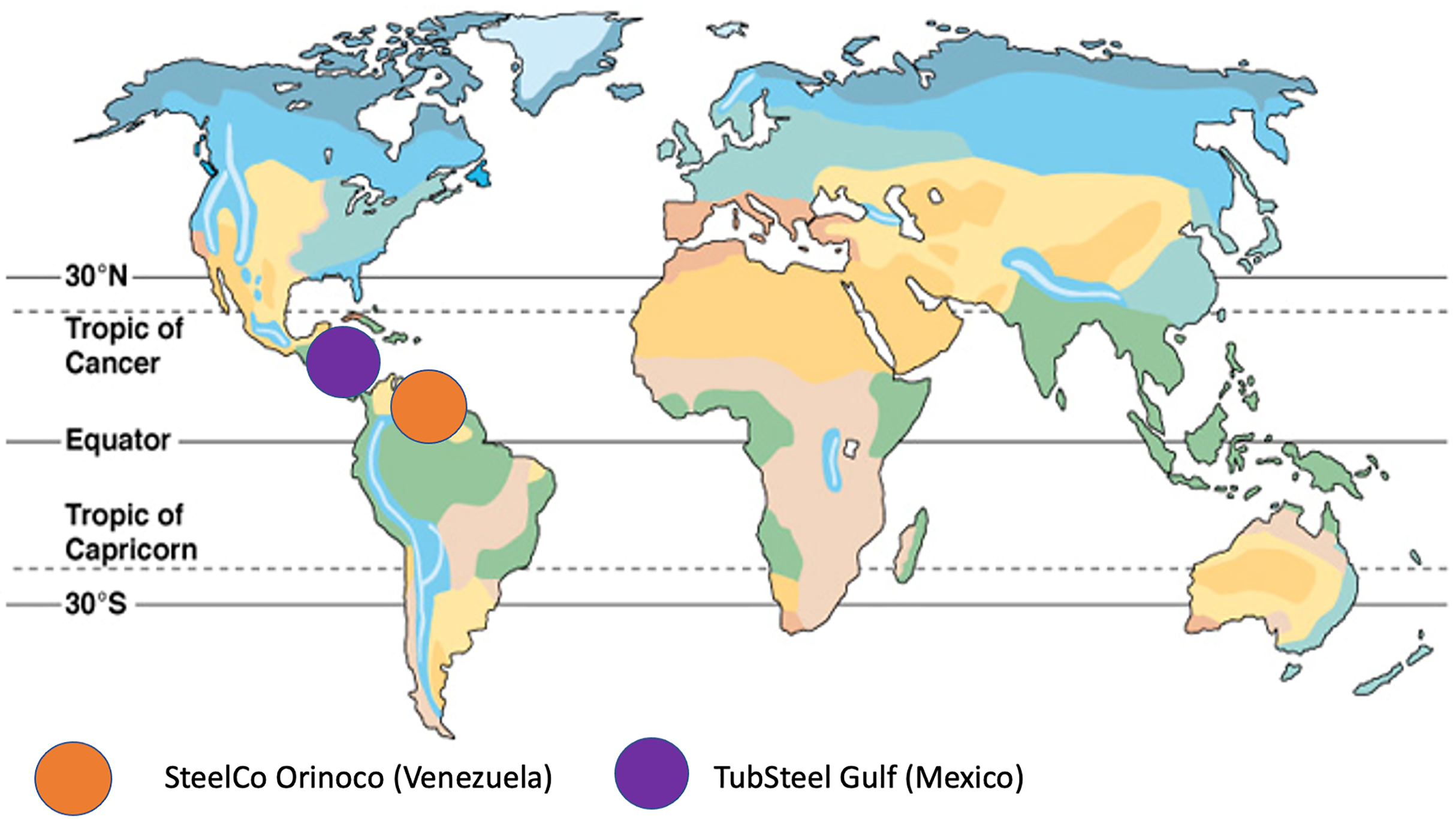
Places of fieldwork.
Methodological choices
Originally, I designed the research based exclusively on unstructured face-to-face interviews. However, soon the social world of the international managers became part of my research: factories, machines, buildings, offices, canteens, webpages, sport clubs, graffiti and even cemeteries became spaces where managers’ global experience was manifested.
Most of the work reported here consists of my analysis of 52 interviews, which are better described as talks. Forty-six of these talks were conducted on the companies’ premises in the participants’ offices and corridors and around coffee machines and the edges of the factories. Ten interviews were conducted in offices that the companies had offered to me for meeting with the managers. Three interviews were conducted by video conference. All interviews were open-ended, with a single theme: ‘your international assignment’. Interviews lasted between 45 and 70 min. I interviewed each interviewee one time.
For 26 TubSteel Corp managers, I was able to complement the interview with observing their working routines. To do so, I spent approximately 10 to 12 hours a day over a period of 10 days in the industrial plant where they worked and also accompanied them on their breaks and lunch periods, spending time at the coffee machine, the cafeteria, and the bar located outside the buildings.
The interviews were conducted using the languages chosen by the interviewees (Italian, Spanish or English). I recorded the interviews and later transcribed them verbatim. To protect participants’ identities, I assigned them chronological numbers from 1 to 52.
The study was restricted to critical moments in the organisational life of GloTech when expansions, takeovers and acquisitions occurred, and the fieldwork was conducted at the TubSteel Corp factories that are considered part of the nucleus of the corporation (Gaggiotti, 2010).
I realised two things from the very beginning of the fieldwork: the impossibility of conducting traditional interviews and my changing understanding of the field. As to the first, I was in the factories with my helmet on, sometimes in very noisy and hot rooms, surrounded by machines with red-hot billets moving up and down (Figure 2).
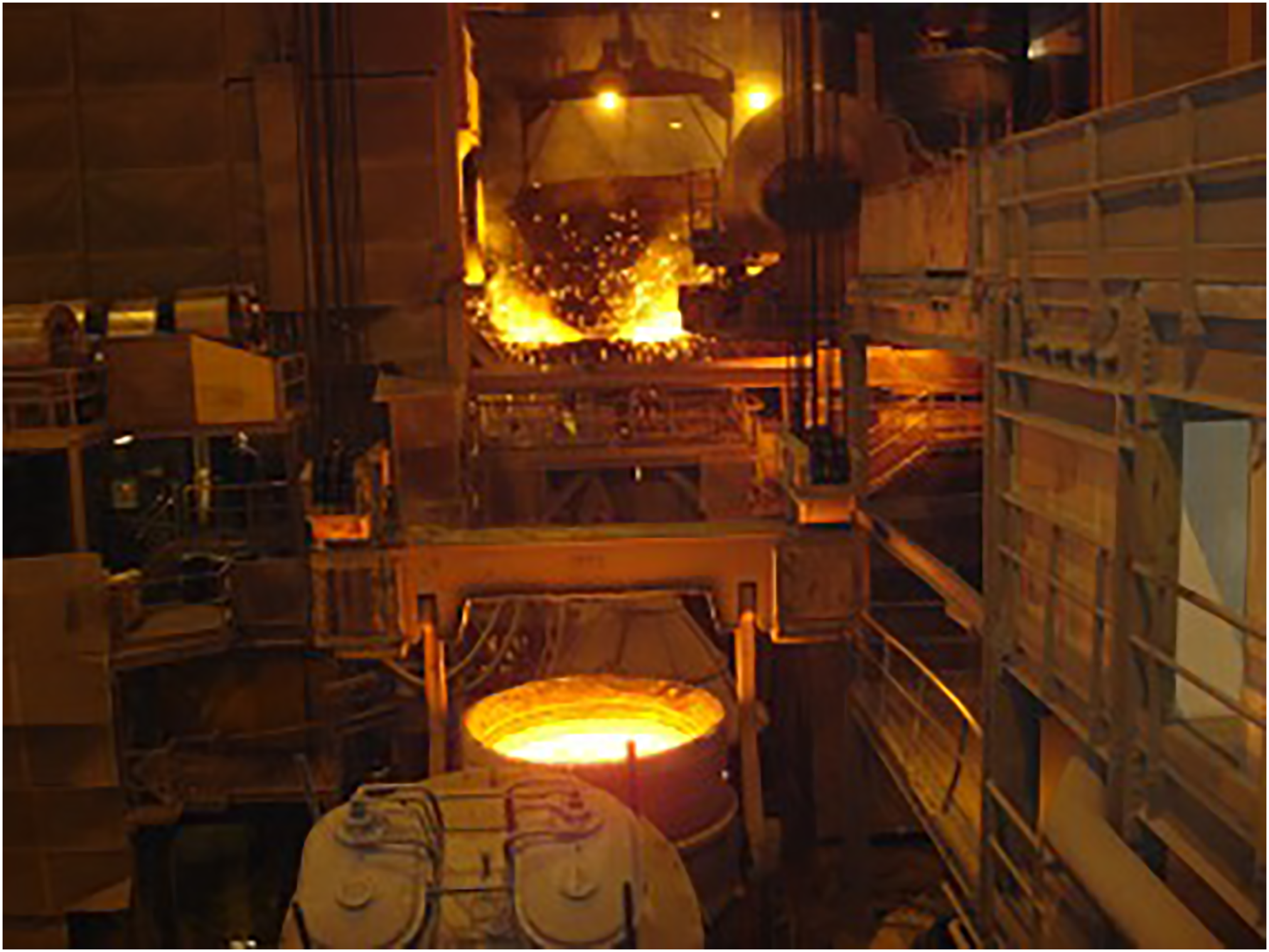
Example of a Fieldwork Setting at TubSteel.
I began by simply asking the managers to talk about their work at TubSteel Gulf and SteelCo Orinoco, without asking detailed questions. My interlocutors felt comfortable with this kind of relaxed talk and seemed to enjoy it.
As to the second, I noticed that managers’ tendency to tell complex but consistent stories was a product of how I asked questions during our meetings, basically, without asking anything in particular. Indeed, managers suggested that previous interlocutors (human resources management professionals, consultants, line managers, and even family members) had usually implied with their questions and advising that global management in the tropics is a problematic, traumatic experience that necessarily should have affected them; a problem that, supposedly, the organisation and managers had solved and consequently should be able to explain. I realised that my position in the field needed to be distinguishable from that of consultants and human resource management professionals. Any suggestion that I was ‘asking questions about something’ had the potential to undermine my relationship with the managers. I instead framed the interviews as open conversations, a succession of comments, clarifications, analogies, jokes, anecdotes, and a space for sharing personal and professional stories.
Discovering the tropics with a global manager's eye
Despite the literature focused on the vulnerability to which international managers are exposed, SteelCo Orinoco international managers were not interested in talking about problems related to moving around the world or to living in the tropics, like the weather or the potential risk to their health from tropical diseases, such as, malaria. Rather, they wanted to talk about problems with their work, takeovers, and the power they used when restructuring and downsizing. No, no problem with the heat, with living in the tropics, the mosquitoes… you get used to it. It is finally part of your day-to-day [life]. The issue was with the factory, the restructuring. Yes, a lot of people were let go. But the guys took a lot of money. It was one of those state companies with a very high level of corruption. It had 16 thousand people, and it was a factory of 3 thousand. And [after the take-over] it produced more than double what it produced when it had 16 thousand. That gives you an idea of the handling there was. A lot of money was given to the people who left. In other words, I even think it was a mistake because the company spent a lot of money. We’re talking about 100 million dollars. (Interviewee 15)
When managers mentioned the tropics, they did not identify them as places of vulnerability, but rather organisational places to which they did not belong and where they can be instrumentalised as ‘managing’ others, instead of delegating management. Said (1979, 1999) refers to this experience as being traumatically ‘out of place’. The tropics become a ‘tropos’, a metaphor to refer to something difficult to be attached, as it presents ethical dilemmas in respect of how the power of managing should be used. You know what it is to live there. The heat, the people, the food. Everything is different. It seems that there is no way to get used to it. But, finally you like it, you get used to it, but you always feel strange, it's not your place… you’re not from there, not because of the people, it's because of you; you feel that it's not the place where you should be, it should be somewhere else, I don’t know… at least after a while, not forever. That is the place of the people from there and the management should be mostly in the hands of the people [from] there. (Interviewee 23)
Conversations like this one led me to wonder if there was any evidence that tropical spaces are distinguishable from other spaces or if, on the other hand, the notion of the tropics was constructed as an organisational argument around vulnerability, conflicts, problems, and traumas that have to be solved in order to construct the character of a ‘suffering’ international manager. In fact, when discussing the process of internationalisation put in place by the Human Resource department, managers suggested that the recommendations were presented in a way that they have the effect of producing mistrust with respect to the motives underlying their overseas posting. For example: Fieldnote 8: I asked a lot of former SteelCo managers if that feeling of not being from the place came from living there, from having to go to work to another country, and they told me that it wasn’t the case, that they liked to move, that moving made them feel good, it made them think differently, globally. The problem, they told me, is that at TubSteel they make everything complicated, they treat them ‘as if they were going to another planet’, they “put fear into their bodies” … instead of giving them concrete and practical support, they help them with superficial, basic things. ‘You suffer every day…’, the managers said.
This discourse – according to which working in another country is supposedly inherently problematic – might not be particular to the tropics but to other non-tropical places too. Gabriel (2012) has suggested that all contemporary managerial discourses, independent of the location, have the propensity to depict the global manager as a vulnerable victim of a forced mobility. Living in Puerto Ordaz … you know what it is. But the problem was different. The people who got there had a hard time. They came with their children, who later had to go to school. Education was poor. So … it was expensive but poor. Yes, the company helped you to find a primary school and you sent the children to the best school, but they didn’t learn anything. And security was also a problem, being on the street, everything was closed, you had to go to a private club. I think it was a strong experience … But, at the same time, when people were outside, they came together and they more or less got over it well, but it was quite traumatic. I think the most traumatic of all was Venezuela's takeover. (Interviewee 15)
Gregersen's (1998) study among 130 international managers from 108 Fortune-500 multinationals revealed that both multinationals and managers are unsatisfied or think that they do not have a proper global working force. However, TubSteel Gulf international managers’ narratives suggest something different: doubts and strangeness, not dissatisfaction. You know. Nothing bad with Veracruz. It's the process, the offer. What would have happened if I hadn’t accepted the offer? Should I accept a second or a third assignment? Should I reject it? Why am I thinking that it would have been better for me to never have come back to Italy and to remain in Mexico or “up in the air”? (Interviewee 46)
This interviewee didn’t express particular dissatisfaction with his post in Veracruz, but rather more general doubts about his career choices.
Talking to managers of TubSteel Gulf, I have found that their doubts about international assignments were not those cited in the existing literature, such as administration, compensation, managerial skills, or ‘cultural’ issues. Rather they were concerned about disinterest, insecurity, apathy, the abuse of power, and arrogant management (Gaggiotti, 2010). The most important reasons for vulnerability are not missing skills, hard work, or the supposedly difficult adjustment; more important are other reasons, such as how they are identified within the company, their sense of being forced to live in a ‘bubble’ by the company or the propensity to use managerial power on others. Fieldnote 22: The monotony, the days that pass. The managers tell me: ‘There's nothing to do in Puerto Ordaz you know, you need to go to Caracas [to find something to do]. You live in a sort of “bubble”’. They say they fall in love with the forest … the Orinoco. ‘But you get tired. On top of that, the locals could think you’re a bad person, and sometimes they have reasons for thinking so’ …
But … I think little by little we [the managers] are going to start to change, we have to start to change … and well, the issue that we are pedantic is very noticeable in these places … and it depends where, because we are known as pedantic and unbearable [by the locals] when we are going to take over [companies) in Peru, Colombia, Venezuela, when you move within Latin America …but probably not in Brazil or Mexico… (Interviewee 59)
The managers construct vulnerability in the multinational space of the Latin American tropics as an epiphenomenon of doubts, strangeness, and experiences of the liminal and how power is symbolically constructed at work with respect to their future. There is nothing associated with the ‘tropics’ or the regional or national culture of the managers working there per se that contributes to the vulnerability being produced or reproduced. Their concerns were more about ‘what happens next’, what the organisation is going to do, if they are going to extend the assignment, relocate to other places or ‘repatriate’ them. I really liked living there. Yes, but for a while … knowing that you were going to leave at any moment. And that my wife is Venezuelan. I knew it wasn’t for life. I don’t know if one could hold out, either there or in another place, forever. (Interviewee 40)
At one point of the fieldwork, I started to notice managers’ stories of their lives in the tropics as more broadly figurative and metaphorical. I came later to the idea that their narratives revealed meaning in sequences of organisational events that would otherwise be perceived as both intolerable and meaningless, like takeovers and expansions. This insight accounts for the always-metaphorical discursive consistency across the stories of TubSteel Gulf and SteelCo Orinoco managers, the controversies of being ‘in power’, to be put in powerful positions over local people. Fieldnote 33. They [the managers] constantly speak to me with analogies and metaphors: ‘In the context of the company everything made sense and was coherent’. They suggest that one should ‘feel’ how hard the expansion was, to be prepared to be a ‘global’ multinational; it was worth, they said, ‘putting your head down’ and being in Puerto Ordaz, even though at the end they left the place. It was the second ‘test’ the company had gone through. A lot was learned, it was a good learning ‘curve’, they say; it helped a lot to be able to have ‘synergies’. The take-over was like a ‘landing’.
This figurative way of telling stories was particularly evident when the managers referred to ‘synergy’. The rhetoric of synergy in TubSteel Gulf, with its strong emphasis on similarity and togetherness legitimated the power of TubSteel Corp to lead the expansion from 1993 until the present. Any talk that undermined the rhetoric of synergy implied opposition to the corporate discourse and to the expansion. One aspect of the rhetoric of synergy was mimesis, in the sense of repetition, copy, and sameness (Mead, 1934; Benjamin (1978)[1933]). It embedded power relations in a discourse focused on similarity, indistinguishable places of work, and global tropics similar to any other part of the world. The failure of the Venezuela expansion (the company was nationalised by the government) was attributed, figuratively, to the impossibility of producing a corporate narrative based on a rhetoric of mimesis and synergy. In this respect, the corporate narrative superseded any other – regional, cultural, even political – and imposed a dominant rhetoric by which mimesis and synergy are just as important in the tropics as they are elsewhere in the organisation. It was clear that there were no synergies there. We [the managers at the Buenos Aires headquarters] did one thing and they [the international managers in Venezuela] did something different. They didn’t look similar to us at all. They were totally different. Us and them. We are there in Buenos Aires, eh… yes, very similar … I travel a lot and I’m a foreigner, but everyone there [in Buenos Aires] is like me. They are in Buenos Aires more than me … what happens is that it's not the project, but the project was never going to be something different, but… uh… the same. It has to be the same, and it wasn’t. It doesn’t make sense because my visit to Venezuela, I knew that even though it was long, it would be incidental, therefore it made sense to have someone like me there, not now, right? With this new situation that Venezuela doesn’t exist, so I would have had to go back anyway, so no, no, no… everyone here is like me, so now I try to travel as little as possible … (Interviewee 6, emphasis added)
It was possible to be similar in TubSteel Gulf, to be together, to assimilate to the rest of the corporation. Images – not merely metaphors – of TubSteel Corp were produced and replicated to undergird the emphasis on similarity and synergy, and buildings, gardens, gates, water tanks, logos, and mottos, all are the same in the factories of TubSteel Corp. Mimetic objects and imageries of the corporation were created before the expansion occurred and spread among both Venezuelan and Mexican factories. Several authors have suggested that the creation of mimetic objects is crucial when constructing an organisational discourse to justify mergers and takeovers (Gebauer et al., 1996). They constitute cultural devices of corporate globalisation (Gertsen et al., 1998). A common past has also been constructed though chronicles on web pages and digital corporate marketing to justify not only what was done but also what is currently being done and, in particular, the similar way of doing things in the present and the future of TubSteel Corp. A longitudinal analysis comparing the construction of synergy at different stages of the corporate and individual narratives in more locations could illuminate other aspects of this powerful rhetoric. Fieldwork in other factories would certainly help inform and develop a more comprehensive and nuanced view of TubSteel Corp's ‘synergy rhetoric’.
Conclusion
As I discussed above, over the past three decades, the literature on global careerism has been broadening to include European companies (Brewster and Harris, 1999; Peltonen, 1998; Sparrow et al., 2004), but Latin American countries remain underrepresented. Research on international assignments in Latin American companies located in the tropics is even more scarce. Except for Brazil (Araujo et al., 2014; Felix et al., 2019; Motta et al., 2001) no studies have focused on the particularities of international management experiences in the countries of the region. The global careerism literature has been closely critiqued by management scholars, some of them inspired by a postcolonial approach and drawing on North European cases (Peltonen, 1999). Attempts to update this literature have focused on the inclusion of non-American cases (mainly European and Asian countries) and on the addition of new variables of analysis (formality, legality, self-initiation, repetition). But the cases of TubSteel Gulf and SteelCo Orinoco illuminate a different perspective on the relation of global careerism and power. This is not only the traditional Western–non-Western flux of managers and a postcolonial relationships, but could be also interpreted, as some literature on power and global organising suggests, as a case of reverse colonialism (Gordon, 2014). The presence of multinational corporations and international managers from Spain or Portugal, former colonial powers, has not established a strong and lasting legacy. The case of Brazil is paradigmatic of the difficulties of considering a traditional postcolonial perspective of global careerism for the Latin American tropics multinationals, as between 1808 and 1821, the Portuguese Royal Crown and the capital of the Empire, formally the United Kingdom of Portugal, Brazil and the Algarves, were transferred from Portugal to Brazil; the tropical city of Rio de Janeiro became the capital of the empire, ruling colonies in Europe, Africa, and Asia. Portugal, in fact, it became the only instance of a European country being ruled from one of its colonies. When conducting my fieldwork, the ambivalence of being central (the power of the Buenos Aires headquarter) or peripheral (the subsidiaries in the tropics) permeated the mindsets of the managers I encountered, whose power, managerial capacity and skills, they suggested, were better and more sophisticated than their European and North American counterparts.
In a Latin American context of permanent emigration–immigration, where the most influential companies of GloTech are located, the central–peripheral relationship is ambivalent. It depends upon power relations, the historical centralisation of cities such as Sao Paulo, Mexico City and Buenos Aires, and the context of mergers and acquisitions. My observations and testimonies have shown that GloTech managers who worked and lived in the tropics were marginally concerned with the physiological factors (e.g. health, hygiene, and food) as these did not make them feel ‘vulnerable’ in comparison to their organisational experiences of assuming and using managerial power. The symbolic power of the location of the companies – where the decisions were made and from where the managers come – was important in how international managers described their global careers: I was part of the original nuclear team of TubSteel Corp., coming from Buenos Aires, where the global origins of TubSteel Gulf were founded. (Interviewee 34).
Suggesting that he belonged to the ‘foundational’ locations of the corporation gives evidence of not only his prestige, but also his power: the power of knowing where the decisions were made and will be made. Indeed, the construction of the meaning of globalisation in Latin American global corporations like TubSteel Gulf, operates not only in a prospective dimension that justifies the future of the manager's own career, but also in a retrospective dimension that helps to create a uniform and sometimes mythical past of a hierarchised place and country from which to emigrate in order to start or continue a professional career or a new life (Gaggotti, 2010). A narrative analysis of the rhetorical uses of the industrial heritage of TubSteel Gulf in global careerist narratives is not a nostalgic way of explaining global careerism in Mexico or Venezuela, but rather an explanation of the contextual situation of this social issue that affects emigrants, immigrants, international managers, and any other global careerists. This is an important contribution to make to the study of the international management in the tropics. In short, the tropics do not produce or reproduce vulnerabilities per se; organisational particularities are equally or more relevant than a supposed characterisation of the space as a vulnerable region. The implications of this conclusion for the management of international assignments in companies operating in the Latin American tropics are significant, as it implies the need for organisations to scrutinise in detail how power is symbolically constructed. If ‘otherness’ is related to who is in power ‘now’ because the takeover or the merger, or a result of the dynamic of management, who came here from abroad and from where – the headquarters or other subsidiaries? Who is replacing whom? Who is asked to do what and who is replaced? Attention should be paid to the more complex issues relating to accepted intra-organisational discourses, such as, heritage, traditions, rituals, and the flux of decision making. In the case of GloTech the symbolic dominance of the Buenos Aires nucleus was omnipresent. Anyone coming from Buenos Aires was considered the exemplar to emulate and follow. In comparison, anyone coming from Venezuela was considered much more vulnerable than those coming from Mexico. A strict hierarchy of institutional vulnerability was constructed in GloTech, independent of tropical or non-tropical location, but with the result that some companies were perceived to be more precarious than others (Turner, 2006).
As with other approaches to the narratives of global careerism (Fougère, 2005; Fougère and Moulettes, 2012), the imagery of a global career in TubSteel Gulf and SteelCo Orinoco emerged through international managers’ stories with no necessary connection to the positive or negative outcome of the experience itself. The ‘problems’ associated with international assignments typically identified in the literature, such as, requests to move from one destination to another, failures of cultural adjustment, illegal status, or repatriation failure, were not the main concerns of the international managers working in the tropics for these companies. TubSteel Gulf and SteelCo Orinoco managers were more concerned about the ways of dealing with doubts, power relations, status aspirations, preferred locations to live and work with their families, and a concrete place, and making sense of the decisions they made to move in or out of the tropics, sometimes with the only intention of starting a new career abroad or making a change. My talks with interviewees contradict the notion that the tropics are unique in their ability to attract or repel international managers or to make them vulnerable. This is consistent with my observations of those GloTech international managers who were not living and working in the tropics. Rather, GloTech, TubSteel Gulf, and SteelCo Orinoco managers were more or less vulnerable depending on the corporate circumstances. The fluxes of managerial circulation among the corporation (headquarter to subsidiary, subsidiary to subsidiary) and how the managing decision power was constructed during critical organisational events (factories closing, redundancies, reorganisations) contributed principally to vulnerability in the experiences of global managers I researched. Organisational ethos – rather than place – is what makes a ‘good’ or ‘bad’ place to work and this same ethos provides the components of the trope of the vulnerable, long-suffering global managers.
Footnotes
Declaration of Conflicting Interests
The author declared no potential conflicts of interest with respect to the research, authorship, and/or publication of this article.
Funding
The author disclosed receipt of the following financial support for the research, authorship, and/or publication of this article.

References
Supplementary Material
Please find the following supplemental material available below.
For Open Access articles published under a Creative Commons License, all supplemental material carries the same license as the article it is associated with.
For non-Open Access articles published, all supplemental material carries a non-exclusive license, and permission requests for re-use of supplemental material or any part of supplemental material shall be sent directly to the copyright owner as specified in the copyright notice associated with the article.
