



Abstract
Approaches to operationalising the linkages between climate, peace and security are increasingly demanded by international organisations. Yet, there is a limited understanding of what effective programming practices that address climate-related security risks entail. Critical voices argue that programme designs often rely on analyses that ignore structural and cultural realities on the ground, leading to technocratic understandings of risks, and prescriptions for action that do not relate to people’s experiences, perceptions and values. Advised by social learning theory, this study developed and evaluated a participatory appraisal method to guide the design of environmental peacebuilding programming strategies meant to address climate-related security risks. The method was evaluated across nine rural locations in Kenya, Senegal and Guatemala, involving 221 participants. Based on a critical evaluation of the method, opportunities and challenges for the use of social learning approaches to advise environmental peacebuilding programming are discussed. Results indicate that appraisal processes of collective reflection can support jointly articulated and context-relevant understandings of climate-related security risks. This shared knowledge can then support local communities in the design of climate adaptation strategies that potentially contribute to sustainable peacebuilding. Settings characterised by low political legitimacy and the unwillingness of conflictive actors to engage in dialogue are identified as barriers for the development of feasible programming strategies.
1. Introduction
Awareness of the intricate relationships between climate change, insecurity and conflict has gradually spread among various national, international and multilateral players (e.g. Black et al., 2022; Bremberg et al., 2022; UNDP, 2022). Most stakeholders engaged in this field now acknowledge climate-related security risks, recognising that climate impacts can profoundly affect the well-being, food security, health and safety of vulnerable populations, and that, particularly in fragile contexts, these insecurities can potentially trigger new conflicts or exacerbate existing ones, contributing to various forms of violence and instability.
Organisations operating at the crossroads of climate adaptation and the human-development-peace nexus are increasingly calling for effective programmatic approaches that not only avoid worsening climate-related security risks but actively address them (de Coning et al., 2021). This is often referred to as ‘conflict-sensitive’ climate adaptation: (Darwish et al., 2023). For instance, the Intergovernmental Panel on Climate Change (IPCC) acknowledges the role of climate in heightening vulnerabilities linked to conflict and emphasises the need for climate adaptation strategies to contribute to sustainable peacebuilding (Adger et al., 2014). Despite this development, there is a ‘lack of sectoral or organisational consistency’ in conflict-sensitive programming across policy communities (Abrahams, 2019: p. 324). This inconsistency is due in large part to the high complexity of using climate adaptation to effectively address societal grievances acting as the root causes of conflict (Busby, 2022) and their ever-changing dynamics (de Coning, 2018).
One significant factor contributing to this programmatic gap is that assessments on the linkages between climate and conflict tend to centre on arguments around the causal pathways of conflict, such as natural resource scarcity versus abundance, or greed versus grievance explanations. These debates frequently pit arguments such as natural resource scarcity versus abundance, or greed versus grievance explanations, against each other. However, this often overlooks the structural and cultural complexities on the ground. As a result, the understanding of climate-related security risks can become overly technocratic, leading to recommendations that emphasise high-level governance solutions and security strategies that do not relate to people’s experiences, perceptions and values (Augsten et al., 2022).
Ide, Bruch et al. (2021) and Ide, Palmer et al. (2021)argued that relying heavily on external stakeholders for interventions can undermine the legitimacy of projects concerning local cultural nuances and power dynamics, implicitly ‘depoliticising’ peacebuilding (Ide, 2020). This suggests, firstly, a need for conflict-sensitive interventions that are built upon an understanding of climate-related security risks as perceived by the people who directly experience them. Secondly, there is a need for programming practices that not only recognise but actively address the structural drivers of conflict. These drivers encompass a range of socio-economic, political and cultural factors that can make a region more susceptible to conflict, including issues such as inequalities in access, distribution and representation in natural resource management (Leach et al., 1999; Temper et al., 2018).
Environmental peacebuilding (EPB) has been put forward as a way of advising conflict-sensitive climate adaptation programming (Leonardsson et al., 2021). EPB refers to the ‘multiple approaches and pathways by which the management of environmental issues is integrated in and can support conflict prevention, mitigation, resolution and recovery’ (Ide, Bruch et al., 2021; Ide, Palmer et al., 2021: p. 2). Considering that conflict-sensitivity in practice demands for climate adaptation, ‘at minimum, to avoid causing harm and, at maximum, contribute to peace’ (Tänzler & Scherer, 2019: p. 8), we viewed it as a practical form of environmental peacebuilding. In this article, conflict-sensitive is used to describe EPB solutions, which represent climate adaptation strategies potentially capable of contributing to peace, as well as the criteria adopted by the study’s methodology to avoid fuelling grievances among participating communities.
EPB’s main tenet is that the management of natural resources on which conflictive parties rely, or of the environmental risks shared by conflictive parties, can serve as a platform for peacebuilding. The field emerged in the early 2000s by focusing on the management of transboundary resources to facilitate peacemaking between states involved in armed conflict (Conca & Dabelko, 2003). This focus later shifted towards the ‘spillover effects’ through which benefits from environmental management can contribute to sustainable peacebuilding in post-conflict settings (Krampe, 2017). More recently, EPB research has expanded its scope as part of the broader ‘environmental peace and conflict’ field, which explores the relation between topics such as human security, climate change, critical security, peace and conflict studies, political ecology and decolonisation (Ide et al., 2023; Schilling et al., 2017).
A broader focus in EPB has pointed to a need of expanding common analytical understandings of conflict towards broader forms of societal relations and experiences of (in)security. For instance, recent calls in the literature for a ‘climate-resilient peace’ recognise that social relations are shaped more often by collaboration than conflict (Barnett, 2019), and conflict situations can have positive societal outcomes (Barnett, 2020). Despite recent progress in programmatic strategies by practitioner and international organisations (Black et al., 2022; Boudreaux & Abrahams, 2022; Kron et al., 2022), the array of disciplines converging under the field has made it difficult for organisations looking to integrate EPB in climate adaptation (Maas et al., 2013). Furthermore, strategies for the selection and design of context-suitable EPB mechanisms under this broader conceptual paradigm remain underexplored (Jensen & Lonergan, 2012).
The main objective of this study is to test and critically evaluate a participatory and qualitative method experimenting with social learning theory to advise environmental peacebuilding programming strategies through climate adaptation. The method includes systematic efforts to (a) guide an assessment of climate-related security risks as experienced by agriculture-dependent communities; (b) identify ongoing community-level responses, their effectiveness and management processes and (c) develop EPB strategies through climate adaptation that build upon existing adaptive capacities and which account for local drivers of conflict. The assessment was tested in nine rural locations across Kenya, Senegal and Guatemala, which evidence high exposure to climate threats but different degrees and types of conflict risk. Adaptive capacities are understood here as the collective ability of communities to respond to and manage climate-related security risks. Following calls for a wider conceptualisation of peace and conflict in EPB theory, this article understands ‘conflict risk’ as any process threatening to increase direct violence or undermine positive peace. This definition highlights the importance of focusing on the attitudes, institutions and structures that uphold cohesive and harmonious societies, rather than the occurrence of violence only (Barnett et al., 2007; Galtung, 1969).
The remainder of the article presents the theoretical framework of social learning that guided the method’s design and evaluation, followed by a description of the participatory appraisal method. Results are presented by evaluating the method’s capacity to guide EPB programming and trigger social learning, and lessons learned are discussed in relation to the contribution of social learning approaches to programming EPB in climate adaptation, along with the main barriers identified. The article concludes with a summary of results and the study’s implications for future research on EPB.
2. A social learning approach to environmental peacebuilding
Social learning theory builds upon participatory action-research on natural resource management to address highly intractable and interconnected policy problems, thereby resonating with recent climate security literature (Beaumont & Coning, 2022). Social learning has long been recognised as an effective mechanism for natural resource management in context of high complexity and disagreement on solutions (Muro & Jeffrey, 2008). The term can have a diversity of meanings in relation to the theoretical traditions that advice it (Blackmore, 2007). Specifically, with particular relevance to EPB, Collins & Ison (2009) proposed an interpretation of social learning as the processes of (a) the convergence of goals and knowledge that fosters mutual expectations and the building of relational capital; (b) the co-creation of knowledge around a problem situation and the means to address it and (c) the change in behaviours, including relational, that lead to more concerted action. Social learning scholarship understands collective transformations as most prominent when led by a dialectical approach centred around iterative cycles of action and reflection -or praxis (Bonatti et al., 2018). This involves a process in which individual actors, through engagement-action iterations, analyse their reality, become aware of their own and others conception of such reality, and thereby jointly evolve a new perception by critical reflection (Sarpong, 2008).
Johnson et al. (2021), in their review of intrastate EPB empirical cases, concluded that collaborative environmental management most often contributes to peace by increasing capabilities and shared identities among conflictive parties. Social learning processes facilitate a reflection on the role of individuals within a given situation, their relation to other actors and their respective roles and the way in which system structures can be challenged based on alternative values (Wals et al., 2009). By emphasising the role of actors and institutions in perpetuating conflict risks, and by encouraging people to identify strategies to enhance collective responses to these risks, social learning integrates a focus on people’s capabilities to maintain security. In essence, it centres on their ‘capacity to respond to threats to their basic needs and rights’ (O’Brien & Barnett, 2013: p. 375).
Furthermore, by integrating a plurality of voices in addressing problem situations, social learning approaches avoid the risk of further marginalising subordinated groups – namely, women and members of other disenfranchised groups (Ensor et al., 2018). Social learning can hence put the lived experiences, motivations and rationales of the various affected populations at the centre of EPB programming. It does so through an emphasis on knowledge co-creation, the joined design of solutions that build upon collective action and existing adaptive capacities and the creation of opportunities to challenge dominant institutional practices (Hellin et al., 2018).
Literature also cautions against idealising local capabilities for adaptation. For instance, community-led processes can often reinforce mechanisms of inequality and exclusion within communities and favour maladaptive actions influenced by local power struggles for entitlements (Agrawal, 2008). Social learning theory recognises that any process of deliberation is also linked to political inequality and power relations (Ernst, 2019). Indeed, the use of facilitated processes of critical reflection and learning as tools to manage resource-driven conflicts has been studied under a variety of settings (Ojha et al., 2019; Ratner et al., 2018; Walker & Daniels, 2019). These studies underscore that the way institutions manage resources can significantly impact people’s willingness to cooperate or become involved in conflicts. They also emphasise that joint reflection can help clarify differing perspectives among conflicting parties, facilitate the challenging of institutional practices that perpetuate conflicts and foster a sense of ownership and empowerment in resolving conflicts.
In this context, several key factors become particularly crucial for the development of social learning in settings characterised by conflict and inequality. These factors include inclusiveness, the perception of opportunities for dialogue, information exchange and ensuring equitable processes (Koontz, 2014). When participants engage in deliberative spaces as equals and are perceived to be treated fairly, it incentivises the emergence of social learning and contributes to perceived capabilities (Muro & Jeffrey, 2008).
Social learning processes have been linked to the conscious transformation of cognitive perceptions, practices and societal relations (Wals, 2007). Such processes of change can foster the development of shared identities by leveraging the management of environmental problems to build trust, interdependence and a sense of belonging based on the cultural significance of natural resources (Morales-Muñoz et al., 2021). Comprehending climate-related security risks and designing collaborative adaptation strategies through social learning can spark collective explorations of the broader normative and cultural contexts that act as barriers to societal change (Smith & Stirling, 2007). Consequently, the leveraging social learning towards confronting obstacles to peace could initiate ‘social and psychological processes by which former enemies come to reassess the hostile perceptions and negative beliefs they once held’ (Aiken, 2014). Social learning thus is theorised here to serve as both a process supporting the design of effective EPB strategies, and as a peacebuilding outcome. However, the application of social learning approaches in EPB have not yet been explored.
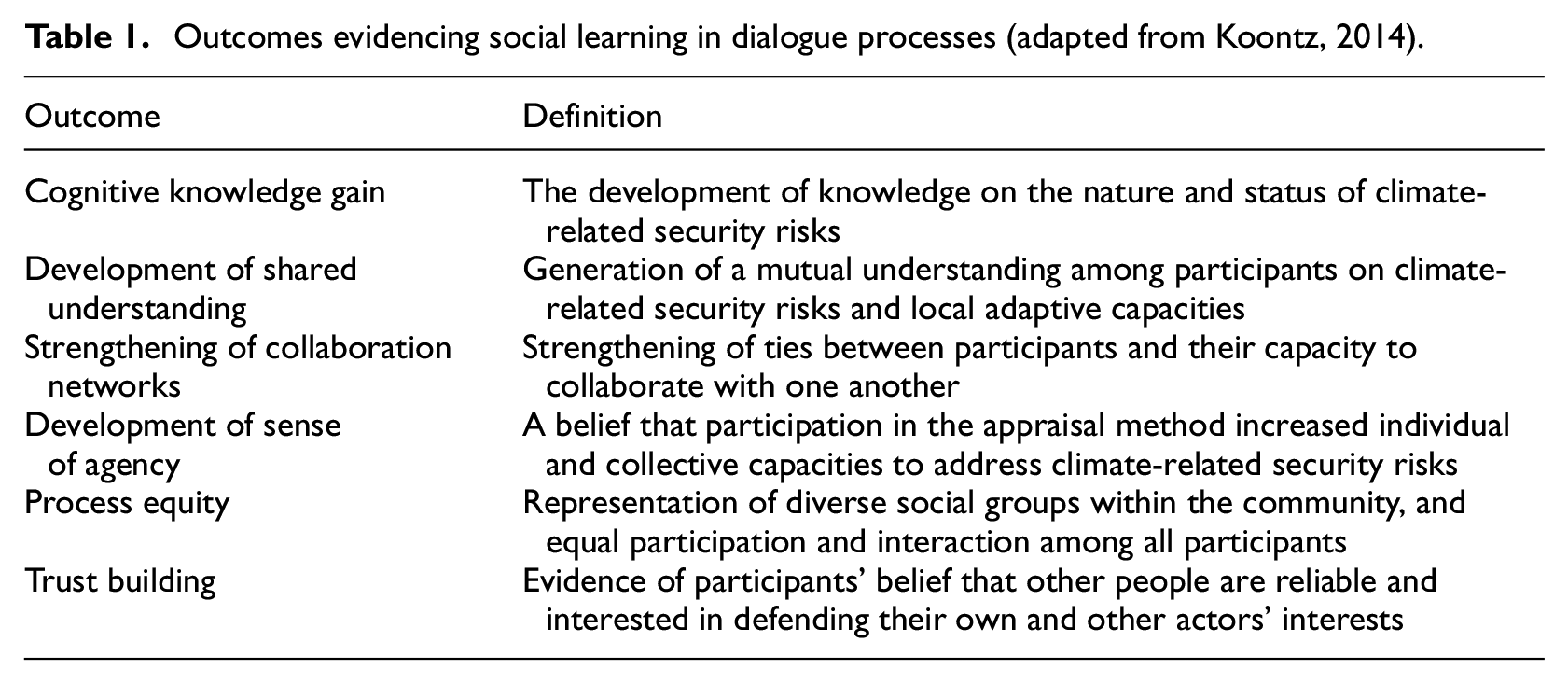
To address this research gap, this article leverages social learning theory to develop a programming tool. This tool is intended to facilitate climate adaptation efforts that incorporate local aspirations, multiple knowledge systems and the goal of empowering communities to take collective action that engages groups across conflictive divides and confronts structural sources of grievance. Koontz (2014) proposed five outcomes of reflection processes to evidence the occurrence of social learning (Table 1), including cognitive knowledge gain, development of shared understanding, the strengthening of collaboration networks, trust building and process equity. Following the discussion above, we have added the development of a sense of agency to our social learning framework (Table 1). In seeking to assess the potential of social learning approaches to EPB programming, these outcome dimensions guided both the design and evaluation of the methodology evaluated in this study.
Outcomes evidencing social learning in dialogue processes (adapted from Koontz, 2014).
3. Methodology
3.1. Participatory appraisal method
A diversity of formerly applied facilitation methods were used as a base toolkit to design a participatory appraisal at community level that intended to understand climate-related security risks as experienced by local populations. Traditional appraisal methods for climate change vulnerability (Ulrichs et al., 2015) and conflict analysis (Ruettinger et al., 2014) were merged. The data gathering process integrated qualitative methods combining direct observation and focus group discussions (FGDs). The method was designed by following the RUV methodological framework adopted by Bonatti et al. (2018) in their assessment of food insecurity risks in Tanzania, as advised by social learning theory. This framework organises a joint critical reflection in three phases: (a) recognition of collective problems and knowledge (R); (b) critical understanding of the current situation (U) and visualisation of the future unknown (V).
Following this framework, each case study analysis included three phases with a specific objective. The first phase aimed to foster a better understanding and shared perception of existing knowledge concerning climate and environmental trends, adaptive capacities and conflict risks. In the second phase, the goal was to develop a more comprehensive perspective on the effects of climate change on local livelihoods within the community. This phase also involved exploring the various ways in which climate impacts were linked to both conflictual and cooperative societal relations. Finally, the third phase focused on identifying climate adaptation solutions through collective action that not only addressed climate challenges but also contributed to sustainable peacebuilding efforts.
The three phases included six tools to facilitate a joint dialogue around specific issues (see details in Figure 1). The first and second phases were conducted through FGDs held separately for women and men. This allowed to identify gendered drivers of vulnerability and different perceptions of community-level responses to risk management strategies. Phase three was facilitated through multiple working groups in which women and men worked together and were distributed equally. Each working group was tasked with proposing solutions to one major challenge identified during phase two. Unstructured interviews with community leaders and local government representatives were conducted in each location to gather data on institutional structures within the community and its relation to local government. Each case study analysis was completed within 4 days.
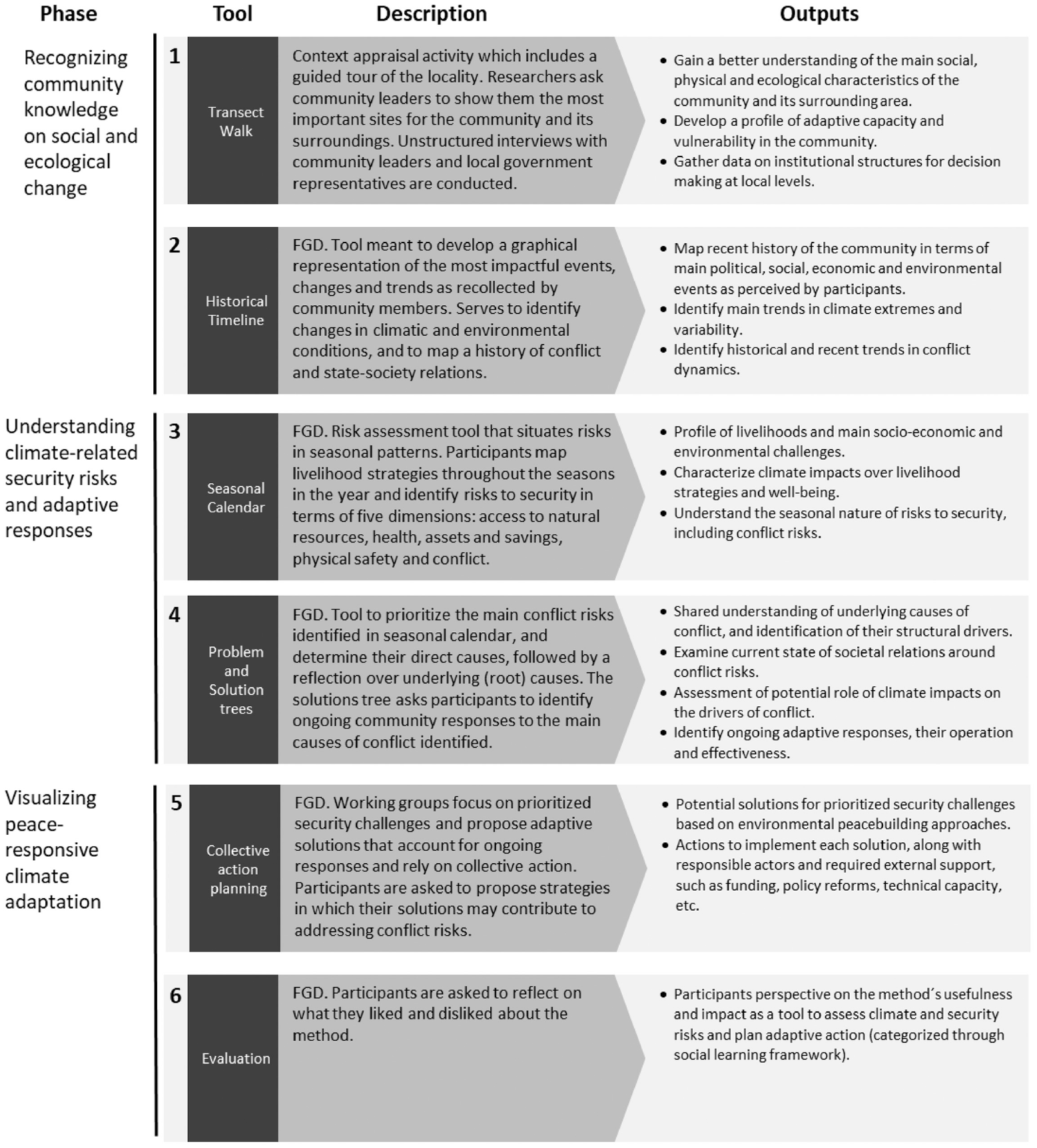
Methodological framework.
The appraisal method invites participants to engage in a deep reflection about the social and political context in which their community is embedded. In order to understand and manage the interactions between conflict contexts and the research project, the data gathering process adopted a conflict-sensitive approach meant to avoid unintended consequences, such as proposed by the Swiss Academies of Arts and Sciences (2017). Criteria for conflict-sensitivity included:
Rely on local partner organisations for logistical support and planning, including locations, venues and participants.
Have members of the research team receive a debriefing on cultural sensitiveness and conflict dynamics before each case study. Local partner organisations supported this process.
Mediate engagement with local populations through the support of one local facilitator and one local interpreter who are familiar with the cultural and political background of the locality.
Avoid simultaneous presence of conflictive parties.
Avoid the presence of actors who may trigger hostile sentiments.
Ensure separate dialogues for men and women and avoid calling attention during plenary sessions to differences in women’s and men’s perceptions of risks.
3.2. Method evaluation
The method was evaluated in two main analyses. The qualitative data gathered through tools 1 to 5 of the appraisal methodology (Figure 1) was analysed through a hybrid process of deductive and inductive thematic analysis. Emerging themes were interpreted with an inductive approach to develop conceptualisations of climate-related security risks as experienced by community members in their everyday lives. Next, the EPB solutions developed by participants were deductively coded by using the EPB mechanisms identified by Johnson et al. (2021) in their review of empirical studies on intra-state environmental peacebuilding. Our goal with this codification is not to develop new theories or concepts, but to use the diversity of mechanisms as evidence of the context suitability of the proposed EPB solutions.
To assess the context-suitability and feasibility of EPB solutions, a qualitative evaluation was conducted. This evaluation involved comparing the design of each proposal with how local communities perceived the level of conflict risks in their area and their understanding of climate-related security risks. The state of conflict in each case study was in turn determined by several factors, including: (a) how participants perceived the degree and intensity of violence in their locality; (b) the willingness of conflict parties to engage in negotiations; (c) political legitimacy, understood as the degree to which participants believe government agencies to be fair and capable of supporting them in facing threats to their well-being and (d) social cohesion, defined as the willingness and ability of community members to collaborate and pool resources and capacities to address challenges related to climate and conflict.
For the second analysis, participants were asked to describe what they liked most and least about the activity. Their responses were translated in-time (when required) and transcribed as direct quotes to avoid bias interpretation by the researchers. In a second phase of the evaluation, the transcriptions were coded through the adjusted version of Koontz’s (2014) outcomes (see Table 1), to assess participants’ perceptions on the occurrence of social learning during the appraisal. Similarly to other studies evaluating the occurrence of social learning, this study relies on perceptual data gathered directly from participants through dialogue. Participant perceptions are deemed a suitable form of data, as factors that determine social learning are relative to people’s experiences and expectations (Webler et al., 1995).
3.3. Case studies
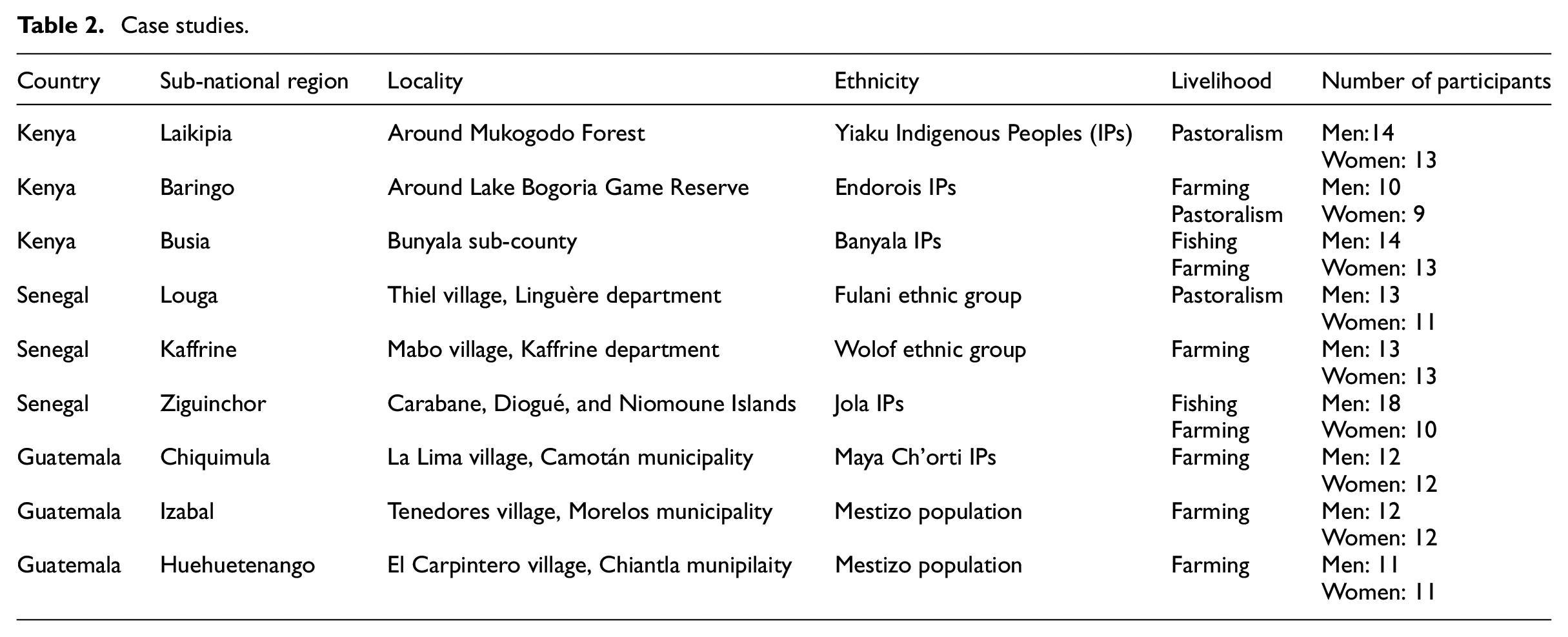
The method was tested in nine rural locations across Kenya, Senegal and Guatemala. Case studies were selected through engagement with civil society organisations with presence across each country. Villages currently experiencing climate-related threats were prioritised, which included communities facing increasing seasonal variability, drought, floods, heavy rains, coastal erosion, landslides or a combination of these. All locations evidence a predominance of agricultural-based livelihoods -farming, pastoralism or fishing, while levels of conflict risk varied between localities, including communities facing armed conflict, criminal violence, non-violent conflict and divergent levels of political legitimacy and social cohesion. Table 2 summarises the assessed case studies. A total of 221 people, 117 men and 104 women, participated in the study, each of them being present in five FGDs.
Case studies.
4. Results
Results are presented in two main sections. The first summarises the appraisal method’s outcomes in the form of climate-related security risks and EPB programmatic strategies as conceptualised by community members. The section intends to demonstrate the outcomes from each of the appraisal phases, rather than present a full account for results in each case study. As such, a limited amount of outcome examples are discussed. The second section evaluates the degree to which the appraisal method, by triggering social learning, guided participants in identifying context-specific climate-related security risks and developing feasible EPB strategies to address these.
4.1. From climate-related security risks to environmental peacebuilding
Members from each participating community identified between two and four correlational pathways through which climate effects and conflict risk are interlinked. The study revealed that local populations conceptualised climate-related security risks in terms of their sense of security in their daily lives. This perception of security was influenced by a wide range of social dynamics that reflected hostile relationships or grievances among various actors, both violent and non-violent, and which could be potentially worsened by present and future climate change under constant adaptive capacities. Participants in each case study also developed three to six EPB proposals based on climate adaptation. Considerable variances were found in the proposed EPB solutions according to community-level understandings of climate-related security risks. The developed proposals account for specific natural resources available in each region, the concrete climate threats that communities face, existing institutional practices and arrangements and the state and nature of conflictive relations within the community, between communities or between government and the community.
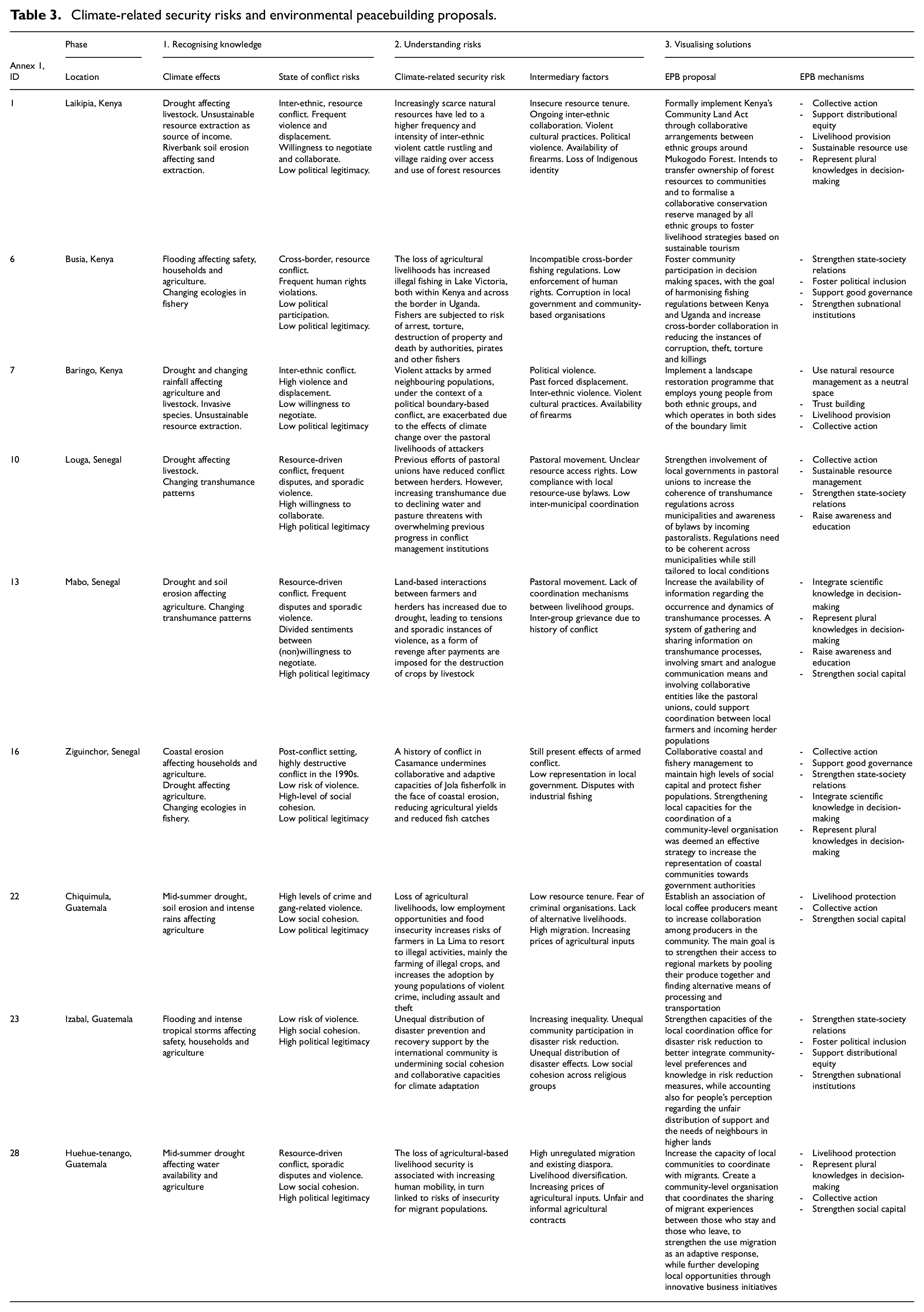
For each case study, Table 3 summarises the outcomes from each assessment phase. Climate threats and the current state of conflict risks as experienced in the locality are shown for phase 1. Phase 2 outcomes include a brief description of one type of climate-related security risk prioritised by participants and the non-climatic factors that mediate the relation between climate threats and conflict risks. Phase 3 outcomes are summarised through one EPB proposal developed to address the risk and the EPB mechanisms guiding the proposal, as detailed in Section 3.2 of the methodology. Readers can refer to Annex 1 in Supplemental Material to consult the full list of climate-related security risks and EPB proposals in each case study.
Climate-related security risks and environmental peacebuilding proposals.
In addition, Annex 2 (Supplemental Material) offers a comprehensive breakdown of the outcomes from one specific case study. This detailed example illustrates how the first and second appraisal phases guided the contextually relevant understanding of climate-related security risks, taking into account their mediation by non-climatic factors. The third phases then guided the development of EPB strategies that took into consideration the structural sources of grievances within the community. This case study was selected based on the chronological order of the assessments; it was the first conducted analysis.
4.2. Method evaluation
All assessed social learning outcomes were identified in the participants’ evaluation of the method, although to different degrees. The social learning outcomes of process equity and development of shared understanding were the most commonly discussed by participants as being fostered by the appraisal method. This was followed by cognitive development, formation of collaborative networks and developing a sense of agency. Trust building was the least discussed outcome (Figure 2). See Annex 3 in Supplemental Material for the full list of coded quotes from study participants. Participants evaluation of the method and the results presented above are jointly interpreted here to show the occurrence of social learning outcomes during the appraisal.
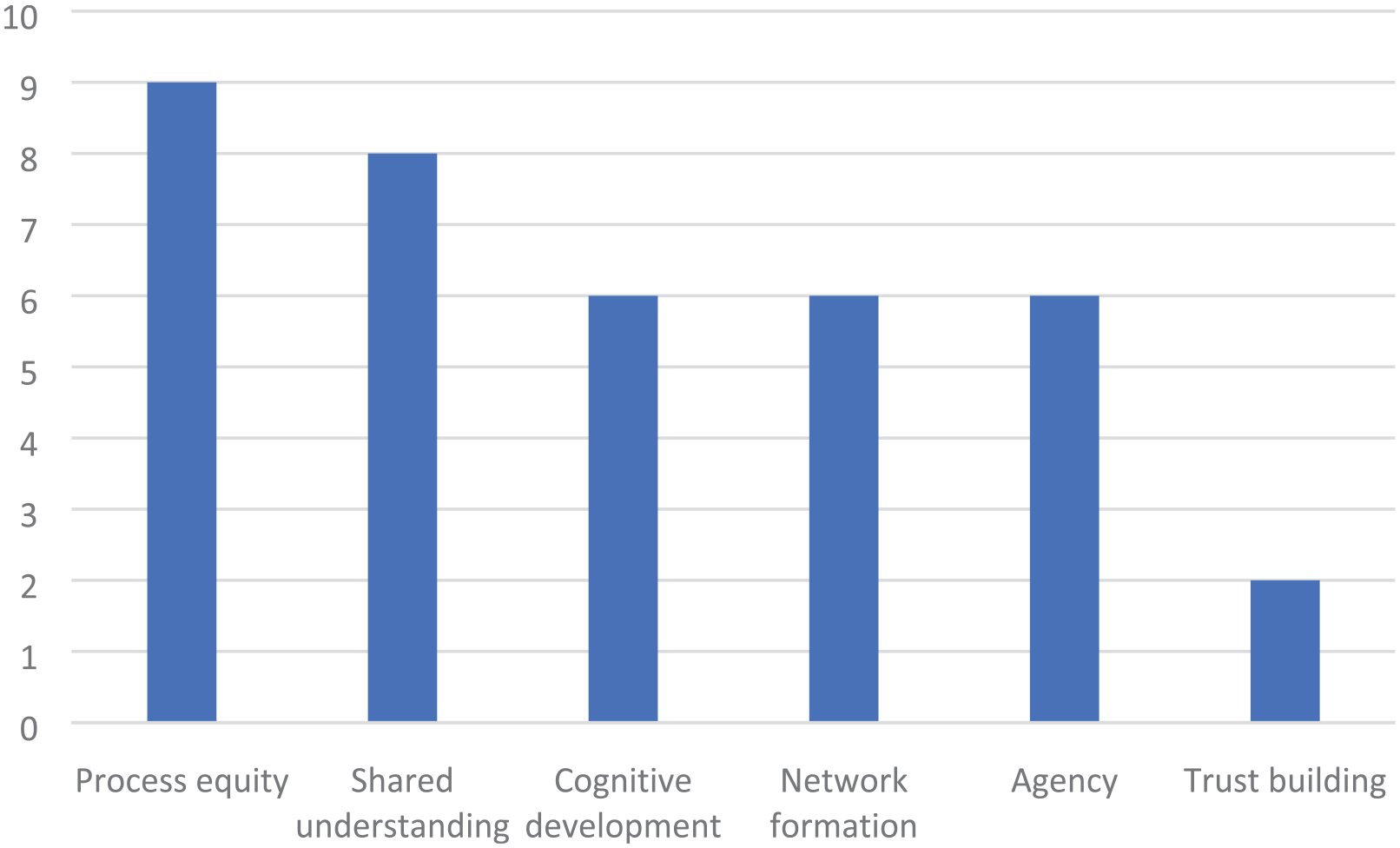
Number of quotes coded for each social learning outcome (Annex 3, Supplemental Material).
4.2.1. Process equity
Participants unanimously perceived that the process allowed for the representation of diverse social groups within the community, along with a fair and equal treatment of all present members. The discussions regarding this aspect primarily cantered on the establishment of secure spaces for dialogue. These spaces were seen as essential for acknowledging gender-specific risks and adaptive capacities throughout both the risk assessment process and the formulation of solutions. Other reflections focused on the inclusion of youth and illiterate populations, as well as people with disabilities, as a method characteristic that fostered process equity. Process equity was noted to have an impact on how climate-related security risks were conceptualised, and how EPB solutions were formulated. In essence, ensuring that all voices were heard and that everyone had an equal opportunity to participate contributed to a more comprehensive understanding of the challenges and potential solutions.
The Yiaku case study, as detailed in Annex 2 (Supplemental Material), provides a concrete example of these dynamics. Initially, the proposals for EPB in this case primarily focused on establishing conservation and police reserves that would be collectively managed by various ethnic groups. One of the goals was to provide employment opportunities to disarmed male raiders. However, the analysis of climate-related security risks drew attention to another critical issue: the disproportionate burden on women in finding alternative income sources. This issue was equally recognised as a priority security risk, particularly due to its connection to gender-based violence. As a result, the proposed solutions were revised to include strengthening a cultural community-based organisation to create more employment opportunities for women, safeguarding cultural heritage and advocating for increased representation of women in local government.
4.2.2. Shared understanding
By learning from one another, participants found that they could blend their distinct experiences, perspectives and values into a collective comprehension of the current condition and changes in climate-related security risks. They also gained insights into each other’s expectations regarding potential EPB solutions and their feasibility. Discussions around the status of identified conflict risks and societal relations where especially influential in shaping the development of potential responses to climate-related security risks. For example, the Endorois Indigenous peoples in Kenya (Table 3, ID6), in the face of armed attacks by outsider pastoralist groups, perceived an unwillingness from their attackers to engage in peacebuilding dialogues. They hence prioritised conflict de-escalation through landscape restoration as a neutral platform for inter-group contact. Similarly, collective awareness on the structural drivers of conflict risks and how to account for them in climate adaptation proposals was also reported to increase.
During the appraisal, lengthy discussions emerged about the way climate effects over livelihoods interact with structural drivers of grievances, potentially leading to higher conflict risks. Maya Ch’orti’ farmers in Guatemala, for example, observed a decrease in agricultural productivity due to more frequent droughts and heavy rainfall. These climate-related challenges were intertwined with informal land tenure arrangements that were perceived as unjust. Consequently, they linked these arrangements to the exacerbation of tensions between landowners and land leasers (Annex 1, ID19; Supplemental Material). Their proposals for EPB include the formalisation of leasing contracts that distribute rights and obligations in a fairer manner and incentivises conservation agriculture.
4.2.3. Cognitive development
The appraisal process facilitated a better understanding of the relationship between multiple climate effects, adaptive capacities and conflict risks, as well as how and why these might have undergone changes over time. Participants reported becoming more aware of the social and ecological problems faced by their communities, along with the relationship between them. They recognised knowledge gain as the result of learning from each other by engaging in dialogue. This knowledge supported the design of EPB strategies which relate to people’s experience of climate-related security risks and that account for the complex nature of societal relations that shape them. The Yiaku case study detailed in Annex 2 (Supplemental Material) evidences four forms of climate-related security risks: drought increases inter-ethnic conflict over access to natural resources; climate and conflict impacts over livelihoods erode social cohesion and increase gender-based violence; maladaptive responses to climate and conflict exacerbate fears of forced eviction from Mukogodo forest and the political instigation of violence impair efforts for conflict resolution and climate adaptation. The interconnected nature of these risks, along with the participant’s recognition of these interconnections, allowed for the development of synergistic EPB mechanisms to be deployed at multiple scales and which account for conflict dynamics as prioritised by community members.
4.2.4. Network formation
The method also invited participants to reflect upon the intra- and inter-communal conflict resolution and climate response mechanisms that are currently in place, or that existed previously, along with their current functioning and effectiveness. By examining the factors, which facilitate the implementation of risk management strategies, and the differentiated roles of social groups in sustaining them, the analysis triggered a reflection on existent adaptive capacities within the community. This in turn fostered a sense of interdependence and highlighted the need to strengthen collaboration networks within and beyond the community. Such is the case of participants in Kaffrine, Senegal (Annex 1, ID15; Supplemental Material), where undermined agricultural livelihoods are associated with increasing migration within and beyond Senegal, in turn thought to be related to insecurity risks faced by migrants. Participants proposed a community-level organisation that coordinates the sharing of migratory experiences between those who stay and those who leave. This was meant to strengthen the use of migration as an adaptation strategy and develop employment opportunities.
Across all participating communities, various organisational structures that promoted collective action were identified. These structures existed in both informal and formally recognised capacities by the state. For instance, pastoral unions were active in Louga, Senegal, while water management and irrigation committees operated in Huehuetenango, Guatemala, and beach management units were functional in Busia, Kenya. EPB proposals in these locations extended beyond conventional approaches aimed solely at enhancing institutional capacity, such as strengthening the community’s political representation, enforcing resource-use bylaws and transparent governing processes. Participants sought to include social groups whose resource-use practices carried conflict risks. For instance, where population movement is prominent, as is the case with transhumance processes in Louga, Senegal (Table 3, ID10), EPB proposals included the use of pastoral unions. These unions were envisioned as platforms for negotiating temporary resource tenure and access arrangements between migrating and local populations.
4.2.5. Agency
During the method’s evaluation, participants suggested that the process provided insights into individual and collective capacities towards implementing the proposed EPB solutions, as well as the limits to their agency in doing so. Contexts marked by high social cohesion (Table 3) were more likely to perceive intra-community collective action as a feasible task. Such is the case of Jola communities in Ziguinchor, Senegal (Table 3, ID16), who focused on strategies to strengthen the community-led monitoring and management of coastal erosion as a way of increasing adaptive capacities in a post-conflict setting. In contrast, participants in case studies characterised by low social cohesion struggled to identify the means of mobilising the community in implementing their proposals. Farmers in Huehuetenango, Guatemala (Annex 1, ID29; Supplemental Material), found it challenging foster collective action around the processing of joint-credit schemes to buy private water springs in their locality, even though micro-irrigation projects were financed through this strategy during the 1990s. Perceived causes for the reduction in social cohesion included the undermining of agricultural livelihoods, migration and livelihood diversification and increasing inequality.
Similarly, in settings marked by low political legitimacy (Table 3), participants in this study perceived government authorities and other political elites, as overlooking or actively constraining the adaptive and peacebuilding capacities already present within their communities. These actors were thought to undermine the political agency of local constituents by either actively sabotaging peace processes for economic interest (Annex 1, ID7; Supplemental Material); favouring extractive industries over local resource users (Annex 1, ID18; Supplemental Material); supporting regulations that undermine the resource tenure of local populations (Annex 1, ID5; Supplemental Material) or sustain informal arrangements perceived as unfair (Annex 1, ID19; Supplemental Material); or acting as gatekeepers of development benefits (Annex 1, ID22; Supplemental Material). As a response, certain communities anticipated the need to involve specific political actors deemed as legitimate to increase the feasibility of their proposals (e.g. Annex 1, ID23; Supplemental Material). Although local agencies for adaptive capacity were reported to have increased through our methodology, many of the proposed EPB strategies reached an impasse when identifying the need for policy reform, willingness and support from political actors or addressing the effects of corruption.
4.2.6. Trust building
Phase 3 of the appraisal method intended to foster a shared sense of responsibility for climate adaptation and peacebuilding in the community. This was meant to foster trust between community members, as a belief that people will act in accordance with their commitments and care for each other’s interests. However, very few participants addressed trust building as an outcome of the method during the evaluation discussion. This is not surprising, as social learning theory recognises significant limits to which a single engagement can cultivate collective awareness capable of impacting societal relations (Macintyre et al., 2018).
5. Discussion
In this study, a participatory appraisal method guided by social learning theory was assessed as a means to inform programming strategies for environmental peacebuilding through climate adaptation. The method enabled collaborative processes of reflection among participants, allowing them to conceptualise climate-related security risks in a way that resonated with people’s everyday experience. It also explored the intermediate socio-economic, political and economic factors that can enable or mitigate climate-related security risks and shape societal responses. Ultimately, the method guided participants in co-creating EPB solutions, which build upon existing adaptive capacities. This section presents a critical assessment of the opportunities and challenges identified from using social learning approaches to programming EPB.
5.1. Opportunities for programming EPB
The participatory appraisal method evaluated in this study effectively advised EPB programming through climate adaptation in five ways. Firstly, it supported the design of EPB mechanisms, which considered suitable by those experiencing climate-related security risks and that account for the highly complex nature of societal relations that shape them. Climate-related security risks are manifested through a non-linear interplay between climate threats, sources of vulnerability and drivers of conflict (Buhaug & von Uexkull, 2021). Theoretical understandings of climate and security linkages must therefore be unpacked and localised through the recognition of multiple forms of local knowledge (Abrahams & Carr, 2017). Facilitating joint processes of learning with local populations, which situate knowledge in a historical and institutional setting shaping conflict risks and adaptive capacities, was evidenced to guide a comprehensive and shared understanding of climate-related security risks. This, in turn, enabled the identification of entry points for EPB.
Dresse et al. (2019) argued that EPB mechanisms guiding programmatic strategies can be more effective if they account for a set of ‘initial conditions’, including the current state of relations between conflictive parties. This study shows that the willingness of parties involved in a conflict risk to engage in conflict prevention, management and resolution, is indeed a major factor in the feasibility of EPB strategies as perceived by local populations. However, our results also suggest that focusing programmatic strategies in conflict risks commonly prioritised by external organisations (e.g. violent conflict) can lead to the exclusion of other societal dynamics perpetuating conflict and ignore opportunities for alternative EPB mechanisms. Accounting for all conflict dynamics as experienced, and prioritised, by local populations was evidenced to support the design of synergistic EPB mechanisms that act at multiple scales of conflict risks and better align to people’s self-articulated understanding of security.
Secondly, this method guided participants in establishing a shared understanding on climate-related security risks. This understanding acknowledged that the environment can be a battleground for political conflicts and that power imbalances can lead to unequal distribution of resources. It highlighted that both individual and collective adaptive capacities are shaped by the entitlement of natural resources (Le Billon & Duffy, 2018; McAllister & Wright, 2019). Drivers of conflict are typically related to structural sources of grievance on the basis of, among others, ethnicity and cultural difference, economic inequality, institutional structures and behaviours, disparities in political representation and hostile sentiments based colonialist histories, rather than climatic impacts per se (Mach et al., 2019). If climate adaptation is to foster cohesive societies, programmatic processes ought to trigger dialogue spaces allowing to question institutional structures that sustain low adaptive capacities and conflict (Ensor et al., 2018). Participants in this study openly discussed the hidden intentions and behaviours of relevant local actors, which shape political and cultural dynamics in the experience of risks associated with environmental and conflict-related threats. By discussing the direct and root causes of prioritised conflict risks during Phase 2 of the appraisal, a diversity of factors were recognised to act as structural sources of grievance and to mediate the relation between climate threats and conflict risks. This allowed participants to target these factors during Phase 3 while developing EPB strategies. This dynamics were evidenced by the unique combination of EPB mechanisms guiding the design of proposals in each location.
Thirdly, social learning approaches to EPB programming facilitate the recognition that vulnerable populations respond in unique ways to the climate- and conflict-related risks that afflict them, including through both conflictive and collaborative forms of action (Ide et al., 2023). By incentivising community members to reflect on locally led mechanisms for risk distribution and conflict management, appraisal processes can identify existing adaptive capacities and everyday peace formation practices (Richmond, 2013). Solutions can then build upon the different and interlinked forms of collaboration that exist at multiple scales (Barnett, 2020). For example, proposals towards strengthening collective action for natural resource management and conflict resolution in the Yiaku case study (Annex 3, Supplemental Material), considered the complementarity between customary and statutory mechanisms, while acknowledging and addressing weaknesses in both.
Interventions that overlook gender and other intersections of diversity can amplify existing inequalities, or introduce new ones, creating unintended consequences for individuals and communities. A fourth way in which the tested methodology advised EPB programming was through its ability to identify multidimensional inequalities along the lines of gender, age, disability or ethnic identity – referred to as ‘intersectionality’ (Colfer et al., 2021). When made available, intersectional gendered data can allow for more tailored solutions and informed decision-making. Nevertheless, and despite widespread knowledge that changing environmental, political and socioeconomic conditions affect people differently depending on their gender and other axes of social differentiation, assessments often lack intersectional analyses (Alston, 2014; Carr & Thompson, 2014).
Extended triangulation and systematic iteration, as illustrated through our approach, were evidenced to be of particularly importance when working with women and girls (or other members of marginalised groups) from societies exhibiting a high degree of hegemonic masculinity (Jewkes et al., 2015). 1 In these contexts, where female subordination is legitimised and perpetuated through cultural hegemony (Cortes-Ramirez, 2015), 2 women are initially prone to avoid participation, provide culturally approved ‘scripted’ responses and/or simply go along with the views of dominant male respondents. A social learning approach to EPB programming with an analytical lens on intersectionality, thus, allowed for climate-related security risks to be conceptualised in differentiated terms across social groups and for institutional practices that hinder intersectional adaptive capacities to emerge as targets of EPB.
Previous studies (e.g. Chavez-Miguel et al., 2022; Hellin et al., 2018; Löhr et al., 2021) have shown how bottom-up collective action for resource management can contribute to the formation of community capabilities and the strengthening of social cohesion, both crucial to EPB (Johnson et al., 2021). However, EPB theory recognises that a lack of local capacities towards facilitating climate adaptation that targets structural and institutional drivers of conflict is a significant barrier for collective action (Hachmann et al., 2023; Oliver et al., 2023). In this study, participants in settings characterised by low social cohesion recognised an additional challenge in fostering collective action, an observation that has been reported elsewhere (Akter, 2020; Surtiari et al., 2017). As a response, participants focused their EPB proposals in defining the role of external actors like government, non-governmental and international organisations in facilitating community mobilisation. In this sense, a fifth way in which social learning approaches can guide EPB programming is through the identification of actor networks, within and beyond the community, that play a role in shaping local socio-political environments and to develop action proposals to mobilise them in addressing climate-related security risks.
The above opportunities suggest the need for EPB research to reflect upon the set of conditions under which environmental management and climate adaptation can be used for peacebuilding purposes. EPB research so far has been empirically assessed mostly in (post-) conflict settings as traditionally understood by peace and conflict research, whereas climate-related security risks are most frequently understood in contexts of armed violence (e.g. Ide, 2023). However, participants in this study identified opportunities for sustainable peacebuilding in relation to a wide set of societal dynamics and institutional structures which do not necessarily risk the onset of violence, but nonetheless relate to their experience of security and stability. Such was the case for all case studies, including those experiencing highly intensive violent conflict and high social cohesion. This suggests that an EPB approach to climate adaptation should at least be considered as potentially relevant in the initial phases of programming under every context. Our results also advise exploring the causal links between climate and security by embracing a broader understanding of peace that aligns with everyday experience (Mac Ginty, 2013). This resonates with recent EPB literature, which suggests adopting positive peace as an analytical framework (Fisher et al., 2021; Simangan et al., 2023).
5.2. Barriers to programming EPB
The fact that facilitation support is seen as a crucial factor for the implementation of EPB proposals, as developed by participants of this study, calls attention to the barriers presented by low political legitimacy in the feasibility of EPB and the agency of local constituents to implementing them through collaborative action. EPB research has for the most part discussed political legitimacy by assessing how environmental-related development projects, such as water provision (Krampe & Gignoux, 2018), can increase government legitimacy towards local constituents and strengthen state-society relations. Studies have also shown that low political legitimacy is an important intermediary factor in linking climate impacts and conflict (Detges, 2017). Less attention has been put on the practical challenges of programming and implementing EPB in settings marked by low legitimacy.
Simangan et al. (2023: p. 14) concluded, from their assessment in Afghanistan and Nepal, that there is a ‘need for more bottom-up environmental peacebuilding approaches’ in response to the barriers posed by low political legitimacy. All EPB proposals developed by participants certainly build upon existing adaptive capacities, many of them beginning from the bottom-up. However, they eventually rely on different forms of external support – be it funding, political reform and representation, technical capacities or undermining the influence of peace spoilers –, which are perceived to be mediated by government entities. However, our results suggest that there is a limit to the degree in which bottom-up action for climate adaptation can effectively target the structural factors sustaining climate-related security risks. Especially when such factors are related to frustrations over government issues. In contexts of low political legitimacy, strong government meditation was considered a significant barrier to implementing EPB, which community members deemed beyond their influence.
We recognised low political legitimacy as a main challenge in guiding EPB programming through our approach. The method certainly allows to develop better understandings of the institutional practices driving low political legitimacy, and hence undermining peace and adaptive capacities. However, it fell short in identifying EPB strategies which implementation is feasible under such contexts. Adaptation actions prioritised through collective appraisals, in seeking to contribute to sustainable peacebuilding, will need to account for development models that challenge political barriers towards building adaptive capacities, such as political exclusion, corruption and resource entitlements perceived as unfair (Nicoson, 2021). In endorsing political reforms, programmes will also need to adopt positive ontologies of conflict as productive mechanisms for social justice (Temper et al., 2018).
EPB interventions hence require the support of formal policy processes and the willingness of government actors to recognise the value of conflict and advocate for reforms. While government actors are commonly reported as required but missing in EPB processes (Hachmann et al., 2023), their presence is also recognised to increase power asymmetries, which hinders environmental cooperation and local ownership (Ide, 2020). Addressing this trade-off requires identifying highly legitimate political actors that can support in navigating institutional networks marked by low legitimacy. Programmes designed to strengthen hybrid governance systems, which consciously account for complex State-society relations and integrate locally- and government-led institutions for power balance, may advance EPB efforts in this regard (Eufemia et al., 2021; Krampe, 2016).
Participants highlighted that only members of their own community were present in the appraisal process as a limitation in the method’s capacity to develop EPB strategies perceived as feasible. In compliance with our conflict-sensitive criteria (see Section 3.1), each case study appraisal engaged members from single communities only and avoided the presence of individuals who may trigger hostile sentiments among participants. As such, the analysis of conflict risks failed to integrate perceptions, experiences and expectations from members of different, often conflictive, social groups.
While the appraisal method employed in this study yielded valuable insights, it is crucial to acknowledge its partial consideration of the diverse perspectives inherent in conflict situations. Consequently, it may not have fully mitigated the potential negative consequences frequently discussed in the social learning literature. These consequences encompass several aspects. Firstly, there is the risk of exacerbating existing power differentials within the community rather than addressing or reducing them. Secondly, the limited consideration of various viewpoints may have led to the incorporation of incorrect information into action strategies, potentially resulting in the development of unfeasible or ineffective solutions. Lastly, there is the possibility that the method favoured more obvious but potentially less impactful solutions, potentially overlooking more nuanced or innovative approaches (van den Hove, 2006).
In his account of reconciliation processes through social learning approaches, Aiken (2014) contended that the creation of joint institutions – -for example, for environmental management – can provide a crucial ‘first space’ for renewed interaction and communication among hostile populations. These spaces function as social learning mechanisms, capable of fostering the ‘new knowledge’ needed to trigger reconciliatory processes that transform identities, beliefs and relationships. Many of the EPB proposals developed in this study involve the creation of institutional spaces, which can potentially serve to advance reconciliation and social cohesion. However, it can hardly be expected that developing EPB strategies through dialogue with a single social group will lead to spaces perceived as legitimate by others.
This is illustrated by the case of the Maya Chorti farmers in Chiquimula, Guatemala (Annex 3, ID18; Supplemental Material). Participants proposed a dialogue process between landowners and leasers aimed at negotiating the formalisation of land leasing agreements and promoted the adoption of conservation agriculture practices. The objective was to address grievances between landowners and leasers and to mitigate climate-related security risks linked to climate effects over agricultural livelihoods. However, it is highly unlikely that such a proposal will be welcomed by land owners. As such, the method presented here for EPB programming would be strengthened if implemented in parallel with a multiplicity of social groups involved in a conflict risk. By separately gathering perceptions and proposals from different social groups and by having them reflect on each other’s appraisal outcomes iteratively – either through direct engagement or indirect facilitation – a shared vision for climate adaptation could be reached. We theorise that this process, as advised by social learning theory during the appraisal phase of climate adaptation programming, can serve as an environmental peacebuilding mechanism in itself.
6. Conclusion
This study evaluates the implementation of a participatory appraisal method, advised by social learning theory, as a tool to guide the design of environmental peacebuilding strategies to address climate-related security risks. The study finds that providing a setting for dialogue, through a process that is perceived as equitable and inclusive, supported community members in developing joint but differentiated understandings of climate-related security risks, in accordance with intersectional experiences and self-articulated conceptualisations of security. The method allows also to identify the non-climatic factors that mediate and perpetuate security risks and guides the development of climate adaptation solutions, based on EPB approaches, that account for locally situated drivers of conflict and ongoing collaborative relations. As supported by the appraisal method’s evaluation, we maintained that climate adaptation interventions are most effective when they prioritise local experiences from the outset, beginning with the context analysis phase. This approach enables the development of action proposals that resonate with local populations, align with their own understanding of peace and leverage their existing adaptive capacities. We argued that the climate security and environmental peacebuilding literatures would benefit from wider conceptualisations of key concepts, such as conflict, peace and adaptive capacities, in way that better relate to people’s everyday experience.
The evaluated social learning approach effectively addresses several common challenges encountered in EPB programming. These challenges include the need to conceptualise climate-related security risks in relation to people’s actual experiences, to gain a more comprehensive understanding of the interplay between intersectional and gender perspectives concerning the impacts of climate and conflict, to bridge organisational capacity gaps when addressing the structural sources of grievances among different social actors and to promote the adoption of positive ontologies of peace.
The method’s evaluation, however, suggests additional constraints in its ability to advise EPB strategies that are perceived as feasible by community members. Settings characterised by low political legitimacy – especially where climate-related security risks were perceived as mediated by government inaction, corruption or the political instigation of violence – pose significant barriers when proposing actions to implement EPB strategies. Furthermore, conducting each case study appraisal exclusively with members from a single community and excluding social actors who might provoke hostile sentiments, while designed as a conflict-sensitive strategy, is observed to hinder the integration of perspectives and expectations from conflictive social groups.
Strategies to overcome these barriers are theorised but require further testing, such as collaborating with highly legitimate political actors in the design of EPB strategies to better navigate complex institutional networks and the hybrid integration of community- and government-led institutions to address power imbalances. The role of social learning in bottom-up collective action under settings marked by low political legitimacy is identified here as a research gap. Furthermore, the analysis also suggests implementing the method with multiple social groups involved in a conflict risk. However, attempts to scale up the method towards integrating conflictive perspectives and the challenging of dominant political practices should take additional measures for conflict-sensitiveness. Lastly, it is argued that social learning theory remains pertinent beyond the appraisal phase of programme management. Future analyses should extend the findings from this study by examining the role of social learning throughout the entire lifecycle of an EPB programme. This expanded perspective should encompass social learning not only as a process that informs effective program implementation, monitoring and evaluation but also as an outcome of peacebuilding in its own right.
Supplemental Material
sj-docx-2-eas-10.1177_27538796231207030 – Supplemental material for Community voices on climate, peace and security: A social learning approach to programming environmental peacebuilding
Supplemental material, sj-docx-2-eas-10.1177_27538796231207030 for Community voices on climate, peace and security: A social learning approach to programming environmental peacebuilding by Leonardo Medina, Marisa O. Ensor, Frans Schapendonk, Stefan Sieber, Grazia Pacillo, Peter Laderach, Jon Hellin and Michelle Bonatti in Environment and Security
Supplemental Material
sj-xlsx-1-eas-10.1177_27538796231207030 – Supplemental material for Community voices on climate, peace and security: A social learning approach to programming environmental peacebuilding
Supplemental material, sj-xlsx-1-eas-10.1177_27538796231207030 for Community voices on climate, peace and security: A social learning approach to programming environmental peacebuilding by Leonardo Medina, Marisa O. Ensor, Frans Schapendonk, Stefan Sieber, Grazia Pacillo, Peter Laderach, Jon Hellin and Michelle Bonatti in Environment and Security
Supplemental Material
sj-xlsx-3-eas-10.1177_27538796231207030 – Supplemental material for Community voices on climate, peace and security: A social learning approach to programming environmental peacebuilding
Supplemental material, sj-xlsx-3-eas-10.1177_27538796231207030 for Community voices on climate, peace and security: A social learning approach to programming environmental peacebuilding by Leonardo Medina, Marisa O. Ensor, Frans Schapendonk, Stefan Sieber, Grazia Pacillo, Peter Laderach, Jon Hellin and Michelle Bonatti in Environment and Security
Footnotes
Declaration of conflicting interests
The authors declared no potential conflicts of interest with respect to the research, authorship, and/or publication of this article.
Funding
The authors disclosed receipt of the following financial support for the research, authorship, and/or publication of this article: This work was carried out with support from the CGIAR Initiative on Climate Resilience, ClimBeR. We would like to thank all funders who supported this research through their contributions to the CGIAR Trust Fund.

Data availability statement
These datasets were derived from focus group discussions with participating community members and the application of an evaluation methodology on the gathered qualitative data.
Notes
Author Biographies
References
Supplementary Material
Please find the following supplemental material available below.
For Open Access articles published under a Creative Commons License, all supplemental material carries the same license as the article it is associated with.
For non-Open Access articles published, all supplemental material carries a non-exclusive license, and permission requests for re-use of supplemental material or any part of supplemental material shall be sent directly to the copyright owner as specified in the copyright notice associated with the article.
