



Abstract
This article analyzes the artistic trajectory of the Portuguese filmmaker Edgar Pêra, with the aim of identifying elements in his career that align with the DIY practices and the Portuguese punk movement that emerged after 25 April 1974. While research in this field (both theoretical and empirical) has traditionally focused on music bands, this cinema's study seeks to contribute new perspectives on the specificities of the Portuguese context and on this life trajectory. The approach is based on primary data, intersected with previously published research by Guerra and Bennett. For Edgar Pêra, DIY strategies initially served a practical purpose (overcoming resource scarcity) but became embedded as an artistic manifesto that endured beyond professionalization. Four decades after his early ventures, and with an established career, Pêra continues to embody a restless spirit, embracing new techniques while remaining loyal to the habit of testing the boundaries between fiction and reality
Introduction
The aim of this article, based on the artistic path of Portuguese filmmaker Edgar Pêra, is to discuss the relevance of the DIY counter-culture movements that emerged in Portugal during the postrevolutionary period. Based on Pêra's praxis, we will ponder on DIY as a phenomenon that begins as a necessity and becomes an identity issue. This article proposes an immersion into his artistic trajectory through two paths: the sensations evoked by his work and the author's reflective digressions, drawn from a life history interview conducted between November 2021 and November 2022, as part of a doctoral thesis on biography, art, and communication. The study explores modes of production and the effects of Pêra's works, continuously situating them within their proper context: the ongoing dialogue that endlessly renews the social and symbolic exchanges of the community (Carey, 1989–2009). It pursues the relationship between the artist and art, as well as the invented life materialized in this practice, expanding the notion of art beyond the work itself (Heinich, 2021). The focus, therefore, is on communication as a social phenomenon and as a cultural and communal process. In this field, not only language and discourse come into play. The analysis also summons the agency of the body, with its cyclical, pendular movement between the organic (the senses) and the inorganic (art) (Perniola cited by Neves, 2010). This case aims to contribute new data and conclusions to the studies initiated by Guerra and Bennett on the punk movement and DIY practices in the post-25th April period. The study of various collected data (life history interview, films, and personal archive documents) reveals that DIY initially emerged as a pragmatic solution, later evolving into an artistic manifesto that, over the years, became a substantial part of Pêra's artistic praxis, even within a context of professionalization. Throughout the article, we will also discuss how this praxis relates to the dichotomy of independent cinema versus cultural industry. As such, this text will be structured in the following parts: starting with an overview of Edgar Pêra's life and work and then framing his activity in the realm of the DIY cultures that emerged after 25 April 1974 (the end of the dictatorship) in Portugal. Then, we will situate the filmmaker in the context of Portuguese cinema and illustrate our point of view with the films: A Janela (Maryalva Mix) [The Window (D. Juan Mix)] (2001), The Nothingness Club (2023), 1 Telepathic Letters (2024), 2 and Guerrilha (ongoing).
Life trajectory and circumstances
Edgar Pêra was born on 19 November 1960, in Lisbon, and his birth could be described as his first performative act, as it was attended by a team of doctors and medical students. Pêra jokingly refers to the fact that he came into the world with a large audience. This, along with playing ping-pong in the schoolyard (he was more interested in the trajectory of the ball than the outcome of the game), practicing judo (learning to exploit the conditions of the moment to explore strengths and weaknesses), and the concept of accident as an agent of change, became recurring motifs. For instance, the first time he stepped on stage, during a play at Externato Cesário Verde in Lisbon, he was holding a sign-map with a classmate, but he forgot to move forward with his partner, causing the paper to tear in half and prompting an audience reaction. Biographical notes of this kind emerged during the initial conversations. To provide some context about Pêra, it is relevant to include other objective details. For example, he spent his childhood and adolescence between Moscavide (where he lived) and Olivais. His parents’ home was a tiny one-bedroom apartment, which he described both as a constraint (lack of privacy) and as a defining characteristic of daily life. The apartment was a gathering place for friends and had a window on the third floor where his parents would wait for him after school. The mention of the window is intentional, as it serves as a metaphorical concept of great importance in one of many possible approaches to Edgar Pêra.
In Pêra's narrative, there is an almost complete absence of concrete childhood memories, except for references to his family nucleus (parents and brother), his friend Rui Brazuna, and recurring significant health episodes. Nearly all his life is recounted from adolescence onward. It is during this period that Pêra constantly returns in his reflections, touching on topics such as friendship, musical influences (saving coins to buy records, attending a Hawkwind concert in the 70s in London with his brother), literature (comic books, Fernando Pessoa, and Howard Phillips Lovecraft), cinema (spending cinephile afternoons during vacations in Monte Gordo), as well as writing and drawing (his first notebooks date back to late adolescence). The Carnation Revolution on 25 April 1974, caught Pêra in his adolescence. The events of that day (and those that followed) were fundamental and became a structuring force in the filmmaker's entire journey. “My films breathe the post-April 25th freedom. If the revolution hadn’t happened, I might still have made films, but they wouldn’t be the same” (Pêra, E., personal communication, 22 December 2021). It may seem clear and obvious when organized and translated, but the conversational entanglement is rarely so evident now of its expression. All of Edgar Pêra's discourse resembles a concentrated point, with no past or future, where relevant yet seemingly scattered memories converge. Since memories, by definition, are fragments of thought, they must be disassembled and reassembled, forming a puzzle that gradually takes shape. The post-April period, and the four decades of activity that followed it, represents the “whirlwind” and the “impetus” (Pêra, E., personal communication, 23 November 2022) of a life fundamentally oriented toward creation. Before that, there were summer camps in Monsanto with his family, the Carnival celebrations that transformed Avenida de Moscavide into a battlefield, and a house with a device “that has a mouth and speaks,” as he referred to the television (Pêra, E., personal communication, 23 November 2022). There is an urgency to unearth more fragments to complete the picture, which could be likened to a mirror, that is another symbol of Pêra's universe.
In adulthood, Edgar Pêra enrolled in Psychology, where he met Pedro Ayres Magalhães, founder of the bands Faíscas, Heróis do Mar, and Madredeus. However, he abandoned psychology to pursue studies at the Escola Superior de Cinema. His cinema education provided visual and intellectual stimuli, friendships (such as Rui Reininho from the band GNR), and a new social circuit in Lisbon. From those early years in the mid-1980s to the present, his artistic torrent has never ceased. An overview of his career reveals 65 films (including cine-performances, short and feature films, documentaries, and video installations) made between 1985 and 2024. Of these, two refer to the documentary series Arquivos Kino-Pop (23 episodes) and Cinekomix!!! (13 episodes), making a total of 99 artistic objects, including seven feature films. Not to mention the number of unfinished or idealized projects, 22 in all. He has also curated exhibitions and retrospectives (including Mostra de València, in 2023, 3 International Film Festival Rotterdam, 4 in 2019, and Serralves 5 in 2016), delivered conferences, and written regularly (notably contributing to Argumento, 6 the magazine of Cineclube de Viseu). Additionally, he hosted a weekly radio program titled Kinorama (Pêra, n.d.) and maintains unedited or partially published extensive daily records as Homem-Kâmara [Camera-Man], a reference to Vertov's Man With a Movie Camera. With four decades of consistent activity, Pêra is not an unknown figure in the field. Despite this, the filmmaker is scarcely mentioned in the bibliography of Portuguese cinema, has not been the subject of extensive academic study. At the same time, he transitioned from a career of self-sufficiency and commissions to a routine of periodic funding from state institutions.
From the beginning of his activity, Edgar Pêra did not identify himself esthetically with the group of new Portuguese cinema, with a neo-realist heritage dating back to the 1960s. In the aftermath of the revolution, Portuguese Cinema Novo (an approximation of French Nouvelle Vague) took leadership over the laws that regulated movies, including the criteria that guided financing of the sector (Graça, 2016). Ribas and Cunha (2020) mark the year 2000, with Pedro Costa's O Quarto de Vanda, as the turning point in the tradition of new Portuguese cinema. The authors highlight the financial crises of the following years as blocking traditional production processes, which ended up having repercussions on new ways of making, including the hybridization of works, with a mix between fiction and documentary.
Ribas and Cunha consider that, “in terms of creative observation of reality, Edgar Pêra is a particularly experimental author in the Portuguese context. Exploring all the technological potential of digital in a punk and delirious register, Pêra continues a work that began in the mid-1980s of revisiting and rewriting reality by crossing it with less obvious references” (2020: 12). Positioning himself with a type of art that is closer to ideas and not so much to narrative, Pêra claims the legacy of the early twentieth-century avant-garde, including the Russian cinema of Eisenstein, Vertov, and Dadaism. As a result, the first few years of activity were marked by successive rejections of funding applications, which forced the filmmaker to look for other ways to survive both artistically and financially.
Although he began his artistic activity in 1985, the first short film, Reproduta Interdita (1990), only comes about in 1990. A year later, he accepted his first commissioned work, A Cidade de Cassiano (1991). As previously mentioned, many recordings from this period were only edited and turned into films much later. However, the Homem-Kâmara never missed an opportunity to experiment and shape his cinematic identity. The video magazines published under the Ficção & Realidade (Fiction and Reality) column of the weekly newspaper O Independente, between 1989 and 1993, reflect this stage. What are they? Pure DIY, accidental, and bordering on naïve. Why classify these publications in this way? Pêra accidentally discovered an image distortion when he connected the recorder before the camera, with both devices linked by cables. The result led him to intentionally provoke the same “error” going forward, producing visuals with effects for the weekly publication. This approach compensated for the lack of a mixing desk or other professional editing tools. Additionally, during this period, he began filming TV screens and directly altering the filmstrip itself.
Initially driven by financial constraints and later by exploratory impulses, Edgar Pêra refused to limit himself solely to film strip. Between 1990 and 1995, he utilized Hi8 video, which allowed for postproduction during the filming process itself, resulting in “pictorial interpretations of artistic events” (Pêra, 2018, para 1). Exploiting the potential of various formats, the filmmaker explored diverse tools, thus constructing his visual identity. Since he often filmed without a specific purpose, he felt free to manipulate the material without considering its final form. Using a 16 mm Bolex camera (employed between 1988 and 1997), he adhered to the Dogma 95 method (from Lars von Trier), as it allowed for live postproduction. Yet these experiments did not prevent him from branding A Janela (Maryalva Mix)—a film in which he applied some of these techniques—as an “anti-Dogma 2000,” opposing the Danish director's method. By adopting an anti-dogma stance, Edgar Pêra positioned himself against any kind of convention, practicing maxims tailored to his creative process: make to unmake, test the material to exhaustion, and explore all possibilities, even those seemingly leading nowhere. In 1996, Pêra acquired a digital camera capable of filming five frames at a time. This filming exercise turned into a reflection on time itself. “When I filmed during the day and then projected at night—including the arrival of the audience at the screening—my memory was activated, and each 0.2-s shot was mentally stretched, making the session feel much longer than the duration of the film” (Pêra, 2018, para 3). Finally, Edgar Pêra also worked extensively with Super 8 film, leveraging the format's nostalgic effect, which he sometimes combined with 35 mm film, creating a striking visual contrast between the two. Beyond or despite the films—or because of them or orbiting around them—Pêra diversified into other esthetic languages (music and painting), which once again drew him to the DIY ethos. While he is creatively polyamorous, his fidelity to cinema is undeniable. “What interests me is life,” he stated (Pêra, 2021). At times, he expressed weariness with cinema during interviews, but like old, deeply connected couples, he never gives it up. He documented and participated in the genesis of Heróis do Mar, followed and filmed the lives of Madredeus, captured the journey of Xutos e Pontapés, collaborated with or received contributions from Paulo Furtado, witnessed the birth of Dead Combo, and maintains a regular friendship and partnership with Tó Trips. He chronicled the cultural movements of Lisbon's South Bank (notably in Ginjal, between 1994 and the early 2000s), interviewed cult comic book authors (Neil Gaiman, Tommi Musturi, and osé Carlos Fernandes), experimented with 3D, and explored the works of Almada Negreiros, Branquinho da Fonseca, António Pedro, and Amadeo de Souza Cardoso. With a restless mind, Pêra combats boredom through art, making it a way of life.
A retrospective analysis of Edgar Pêra's artistic career shows that those first years of inventiveness (with O Independente) were replaced (on late 90s) by a regular activity of accepting commissions and, finally, predominantly by the result of state-funded projects in the last decade and a half. This most recent stage happens, coincidentally, with the partnership with the production company Bando À Parte, owned by filmmaker Rodrigo Areias.
How can Edgar Pêra's activity be characterized in the context of the cultural industry, considering that he has made cinema a way of living and maintains an aura of independent rebellion? In an article published in Argumento Edgar Pêra said: “I wish there were an industrial cinema alongside auteur cinema, which would separate the waters” (2014: 7). In 2014, the filmmaker made two totally different films which, taken together, seem to confirm the possibility of high and low culture cohabiting. Lisbon Revisited (2014) 7 contrasts in both means and form with Virados do Avesso (2014). 8 The former is a low budget film made solo, without actors (just their voices). The second was a commission aimed explicitly at a wider audience, with an abundance of means. As Olaf Möller pointed out, referring to Virados do Avesso, “Pêra accepted an implicit challenge by one of his producers to make a piece of popular entertainment; and that, nobody expected from Pêra, N-O-B-O-D-Y!” (2019: 6). Pêra summarizes his utopia in this way: “On the one hand, when you want to tell a straight story, whatever the subject, you accept the institution of cinema and its rules. And anyone who is concerned about pushing the boundaries of that institution should be able to do so without having to worry about audiences or volatile juries” (2014: 7).
Post-DIY-revolutionary art
The above analysis leads us to some conclusions. Edgar Pêra was born into a middle-class Lisbon family, completed his academic training, benefited from and contributed to the cultural and political opening that followed the 25th of April 1974 revolution, and has dedicated his entire adult life to artistic activities. In the mid-1980s, lacking resources and almost without film experience (the author began his career in 1983 as a screenwriter for films directed by others), Edgar Pêra found in his rock musician friends the model he needed for himself. “I was very inspired by the attitude of musicians – picking up guitars, not knowing how to play – and that direct action is what made me learn to film by hand,” he recalls. As described by Bennett (et al., 2021), referring to DIY cultures, this attitude initially served as an act of resistance (and a form of survival) against the prevailing practices in the industry.
In many of these points, we recognize the descriptions made by Guerra to characterize the DIY and punk generation that developed between the mid-1970s and the 1980s (extending into the 1990s) in Portugal (2017). Thus, the group of affinities formed by Pêra and his friends at the time united in the construction of a different country, rejecting the atavistic legacy of 40 years of dictatorship, but not aligning with the institutional substitute that was being shaped in the post-April period. As Guerra notes, “although Portugal had become a democratic country by this time, it was still deeply defined by a rural, largely uneducated community and by a patriarchal organization of society” (2020: 7). As a subculture, the group (which was predominantly made up of musicians) united in a style of dress, a nightlife circuit and the symbols they created, materialized in artistic projects. Fundamentally, adopting DIY practices, they created conditions to make art as a manifesto, as resistance, and as action (Guerra, 2018).
However, there are some distinctive characteristics in Edgar Pêra. Starting with the fact that he was not only a participant but also a witness (embodied in the alter-ego Homem-Kâmara) to these movements, which were entirely based on a culture of “doing what you must with what you can” (Guerra, 2017: 4). Transferring the knowledge acquired from the music bands to film (through unprecedented formulas to control the entire production process, direction, and even, at one point, exhibition), this praxis allowed him to survive in the industry without many resources, but also deepen his esthetic identity, which confirms Guerra's idea that punk thrived through a scarcity of resources and, at the same time, a need for personal and social transformation (2017). There are also other practical factors that help explain this phenomenon. While it is true that the goal was, from the beginning, to do things differently while maintaining independence, Guerra (quoting Bennett) points out that in many of these cases, survival was only possible for “individuals with stable economic foundations, and often family support, [who] are able to remain in this economy, which is based on underpaid or unpaid work for a long period of time” (2021: 4). The fact that he replicated the practices he observed in music bands to cinema ended up making Edgar Pêra a singular case in Portugal, as the director implemented in his films the cosmopolitanism typical of punk movements (2018), without losing the local dimension, all of this condensed into technical and artistic formulas distinct from those of his cinematic peers in Portugal. This “glocalization,” which is evident in Edgar Pêra, does not translate into any subgenre within Portuguese cinema, unlike what happened with national indie rock (Silva and Guerra, 2015).
We may identify other derivations of the DIY spirit in Pêra's work: in music (with the alter ego Artur Cyaneto, who composes the soundtracks for numerous films and the cine-concerts he regularly performs); in painting (Edgar Pêra does not have a classical background in the visual arts, although he draws and paints frequently without a predefined agenda); and in cinema, from his earliest experiments to the present day, simply by noting the artisanal style, the use of distinct tools, from 3D to slow-motion, and even mobile phones for prefilmic experiments. Taking on a vampire-like conduct, the filmmaker takes advantage of current technological possibilities to his favor, constantly exploring new ways of creating. This brings him closer to the current DIY generation, which, in a transnational scenario, appropriates global tools to create esthetic affinities beyond the neighborhood or social stratum (Bennett et al., 2021). With Telepathic Letters, the filmmaker used a global tool (artificial intelligence (AI)), adapting it to his esthetic visions and ideas.
Edgar Pêra embarked on a strategy of autonomy regarding production means (not alienating them, but bringing them under his control), which ultimately translated into artistic independence. That is, independence to do things as he saw fit, rather than having others do them for him. Initially, he started filming almost alone (inviting friends to join the cinematic adventure), avoiding hierarchical team management. Then, he began to take control of every component. When he gained autonomy to have a computer and appropriate software, he invested in music. The cameras he acquired were used to make films by trial and error. His journey through Lisbon's alternative cultural circuit led him to interact with bands, actors, theater, music, advertising, and comic books, forming a network of affinities that built identity through similarity, but also through a firm difference. “The word terrorism always has a negative connotation, but I understand it in the sense of frightening backward minds. A film doesn’t kill, but this type of terrorism aims to demolish the prevailing perception, both of art and of reality itself. To give a different vision of the world. There is no need for compromise, and one must be a guerrilla artist” (E. Pêra, personal communication, 10th March 2022).
Since the mid-1980s, Edgar Pêra has been creating, feeding off accidents while drawing a country that, while an individual map, closely intertwines with the collective national history. Edgar Pêra's country is bizarre (often referred to as eccentric, dystopian, psychotropic), especially in its retro-futuristic predictions and heteronymous fallacies. As uncommon as it is popular and trivial. Pêra uses other expressions to classify his work: “stray cinema,” “amphibious cinema,” “all-terrain cinema” (E. Pêra, personal communication, 10th March 2022). Between the factual materiality and the immaterial fictitiousness, there remains a vast audiovisual archive still to be unveiled. Edgar Pêra has recorded a lot, intentionally, possessed by absorbent pores, like Recorder. 9 He has stored, processed, and recreated parts of a whole that is almost infernal in its scope. Evidence of this is the series Arquivos Kino-Pop (2018), CINEKOMIX!!! (a series about comic book authors, which will premiere in 2024), Kino Performance! (Archives from the South Bank, a documentary series currently in preparation with records of artistic performances from the South Bank, Lisbon, between the second half of the 1990s and 2004), and the documentary O Homem Pykante—Diálogos Kom Pimenta (2018), about poet Alberto Pimenta.
These archives are nothing but obsessive collections of everyday life, created from distant yet sharp observation points. The mistake is looking at the past. The recording continues, as does the permanent reinvention. Just mention Telepathic Letters, a film made with AI, that premiered in Locarno Film Festival in August 2024. In this country, the boundaries between fiction and reality are blurred, and the territories are as volatile as the notions of time. Another example? The (still untitled) fictional, documentary, autobiographical, postrevolutionary film, which we will call Guerrilha.
This predisposition for deviation places Edgar Pêra's works within the category of contemporary art, as defined by Heinich (2021). In this sense, art dissolves boundaries and, in certain circumstances, appeals to the ephemeral. We have seen that breaking barriers is a trait that clearly defines Edgar Pêra. But there is also a tendency to emphasize the ephemerality of the work, if only to transform it into an object of permanent creation, and therefore infinite within the multiple possibilities it holds, but fleeting by the creator's decision. It is worth noting that many of Edgar Pêra's early paintings already exist buried beneath new plastic layers, as he often paints over works, he considers finished.
He also constantly rewrites, with new notes, the content of his notebooks, in addition to having a considerable number of films he considers unfinished, updating them sporadically. Other signs identified by Heinich to typify contemporary art seem to be present in Edgar Pêra. One of these characteristics is the production of works linked to life (here we can mention the films about Fernando Pessoa, Alberto Pimenta, Carlos Paredes), as opposed to total art, permanent and above ordinary life. Pêra's art aims to build imagined universes. A dreamed reality. The author understands art as an alarm clock. That is, as a tool for promoting a state of consciousness that, irresistibly, through hybridity, drives unknown scenarios. In this regard, he is similar to the indie movement, in which, as Guerra notes, “hybridizing appears to be an important component” (2016: 620).
It is not the purpose of this article to evaluate the consequences of pushing boundaries. Have the works been integrated into the sociocultural fabric? How does the spectator react to them? Do these changes influence other artists? While there are no consistent answers to these questions, we do have information about the author's self-perception regarding what he does. The essential thing to say about Pêra's art is its fidelity to an idea, which makes it incompatible with predefined notions. Hence, Edgar Pêra is absolutely influenced by the end of dictatorship in Portugal but constantly challenges the limits of Democracy. “I am always testing Democracy, to see how far one can go” (E. Pêra, personal communication, 22 December 2021). Examples? Arquitectura de Peso (2007). A project that resulted from a commission for Lisbon Architecture Triennale and became a satire addressed to the main works built by the State after the 25th of April.
In Edgar Pêra, much like Becker (2010) argues in The Worlds of Art, the work does not emerge isolated from the universe in which it sprouted. However, it would be premature to extrapolate from this a predictable and irreversible generalization between the individual and the collective. We leave clues for what the director does with the available material and react to what we encounter along the way. It is an inductive process (Heinich, 2021), as we do not operate within the confines of a preestablished conceptual framework. In this ebb and flow, nothing remains as it was. Destruction is as evident as the construction of new realities. Heinich (2004) warns about the paradoxes of art and how sociology tries to tame them. Compartmentalizing and shaping these contradictions will surely lead to more comprehensible studies. We want, however, to respect and recognize the subtle complexity of an object that creates epistemological problems, but that, in return, offers exceptionally rich hypotheses for understanding our individual lives (what art does to us) and society (the ruptures it operates).
By making cinema a starting point to exercise playing, he picks up, at each step, new toys, exploring them to exhaustion. This has been the case with 3D—which led to the thesis The Amazed Spectator (Pêra, 2018)—and now, recently, with AI. We can define these tools as enactments of a game that unfolds in a semiotic and phenomenological process, as Eicher-Catt argues, based on Peirce, Bateson and Huizinga (2016).
He may also combine various formats in the same artwork or make each film's successor the saboteur of previous beliefs. Plastic language is the key to understanding Pêra's cinema, but it is not exhausted in its own formalism. The tools always serve a purpose of thought, whether it is the production of “altered states of cinema,” “visceral cinema,” or “thinking cinema.” In this sense, transformation and manipulation are key concepts of this visual country. It is not enough to observe and record. Reinvention is the goal.
Camera as a weapon
In The Nothingness Club, Edgar Pêra created an alter-ego (Marvel Kisch, played by Pêra) that accompanied him for much of the project's creation. This figure, almost absent in the final product (only mentioned in the credits and appearing in one scene from behind, without even being named), lingered throughout the film, at least during its creation. A scene photograph shows Kisch with the camera pointed like a weapon (Figures 1–9). Other images of Edgar Pêra refer to this metaphor: the director who shoots at reality, recreating it. The gaze is projected onto films that play out upon the spectator. In this regard, it is worth recalling that cameras also worked for the author as weapons against the resignation of the one-size-fits-all format. These notes serve as a framework for the subsequent analysis of four projects: A Janela (Maryalva Mix), The Nothingness Club, Telepathic Letters, and Guerrilha. In the analysis, we will attempt to frame the idea of the camera as a weapon transforming reality.
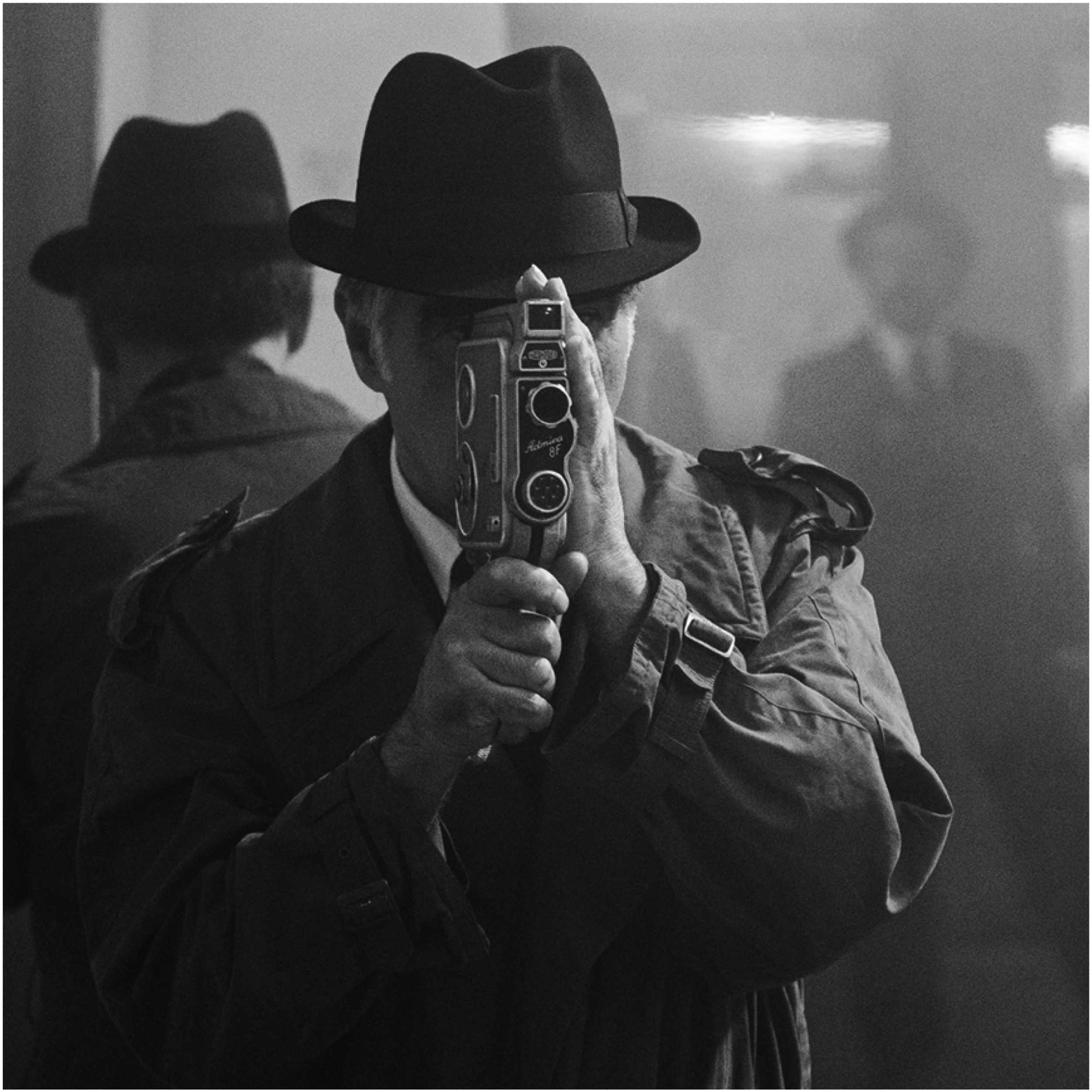
Marvel Kisch, copyright José Caldeira.
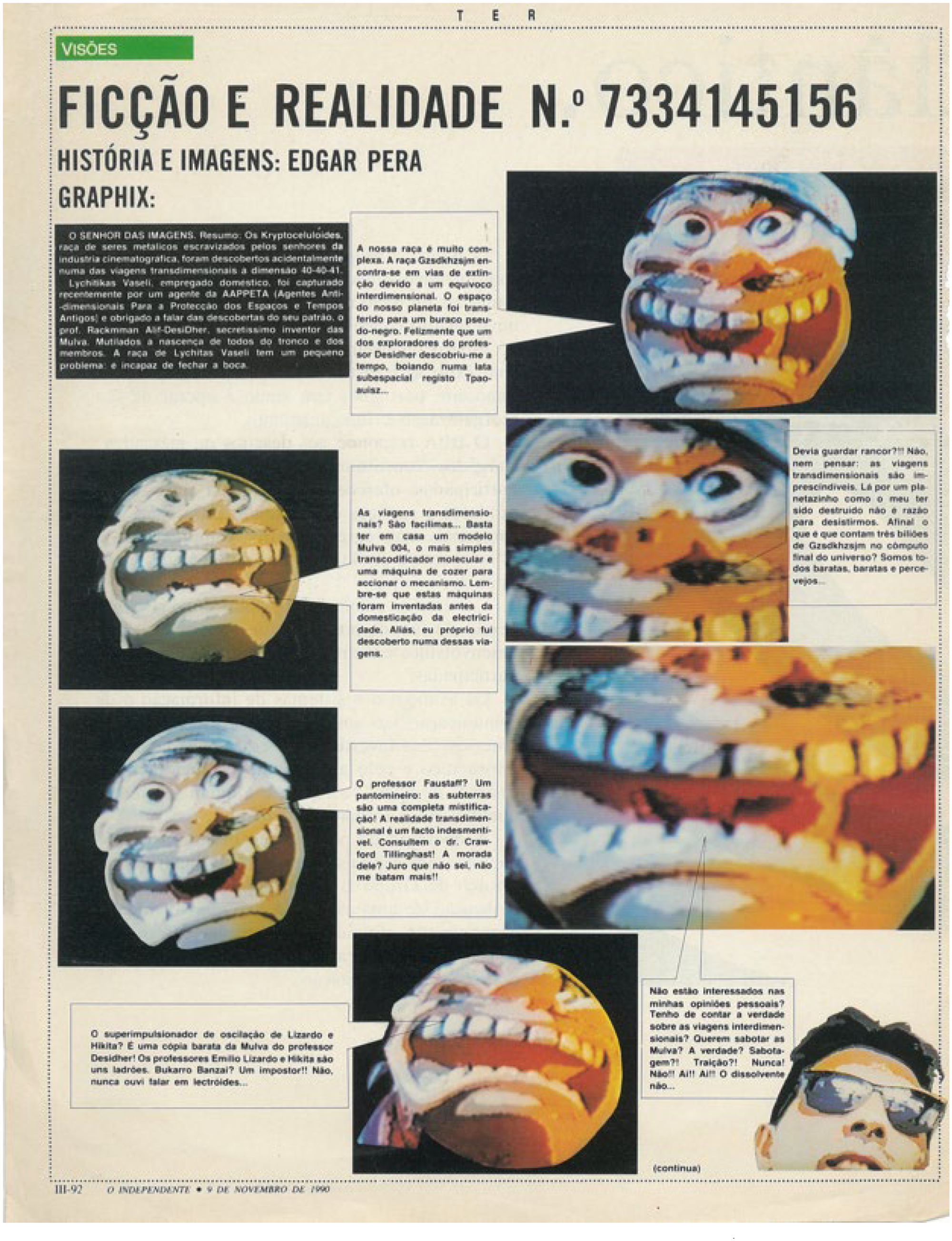
O Independente, 9th November 1990.
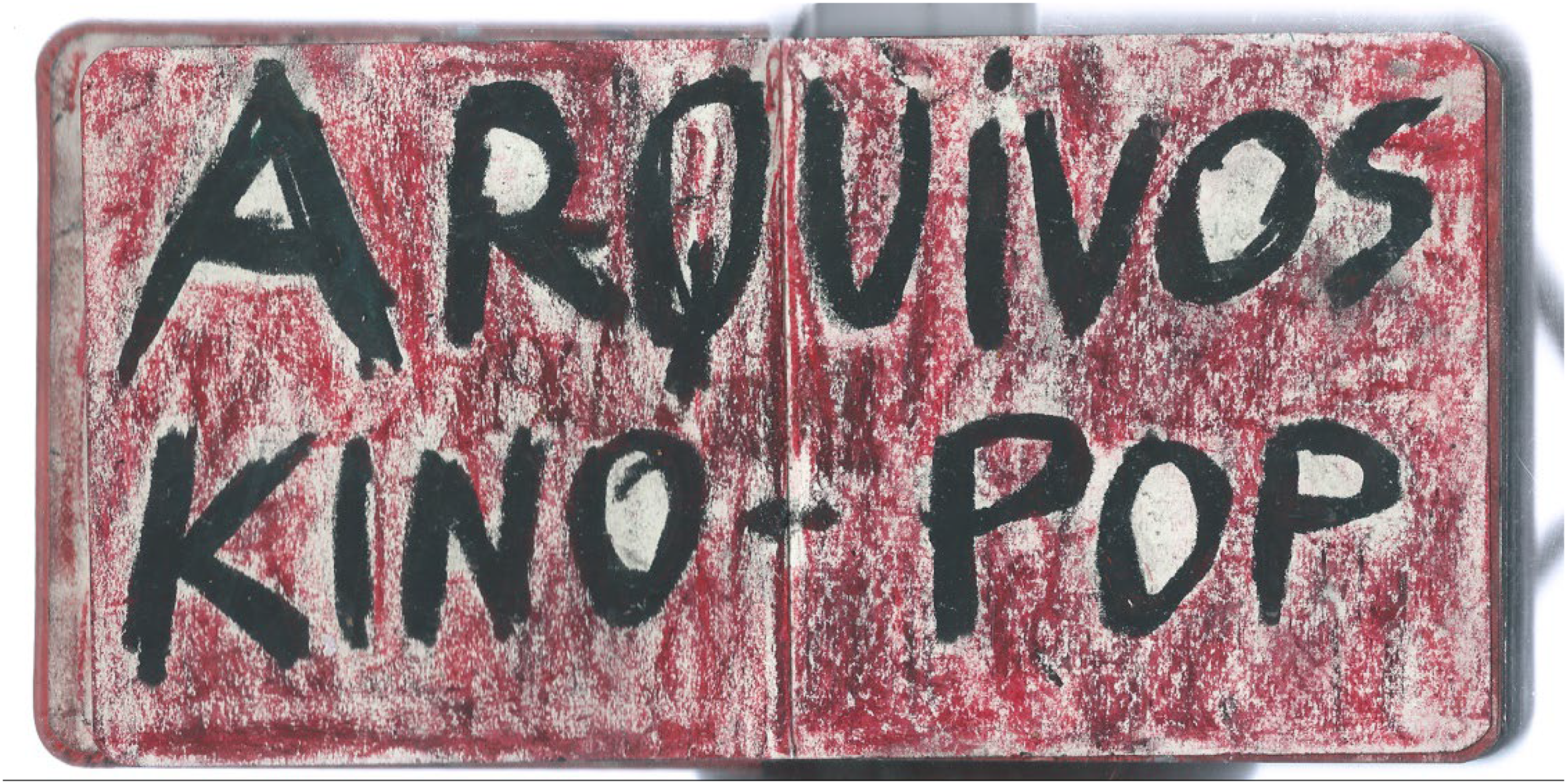
Arquivos Kino-Pop, Edgar Pêra’s notebook, 2016, July.
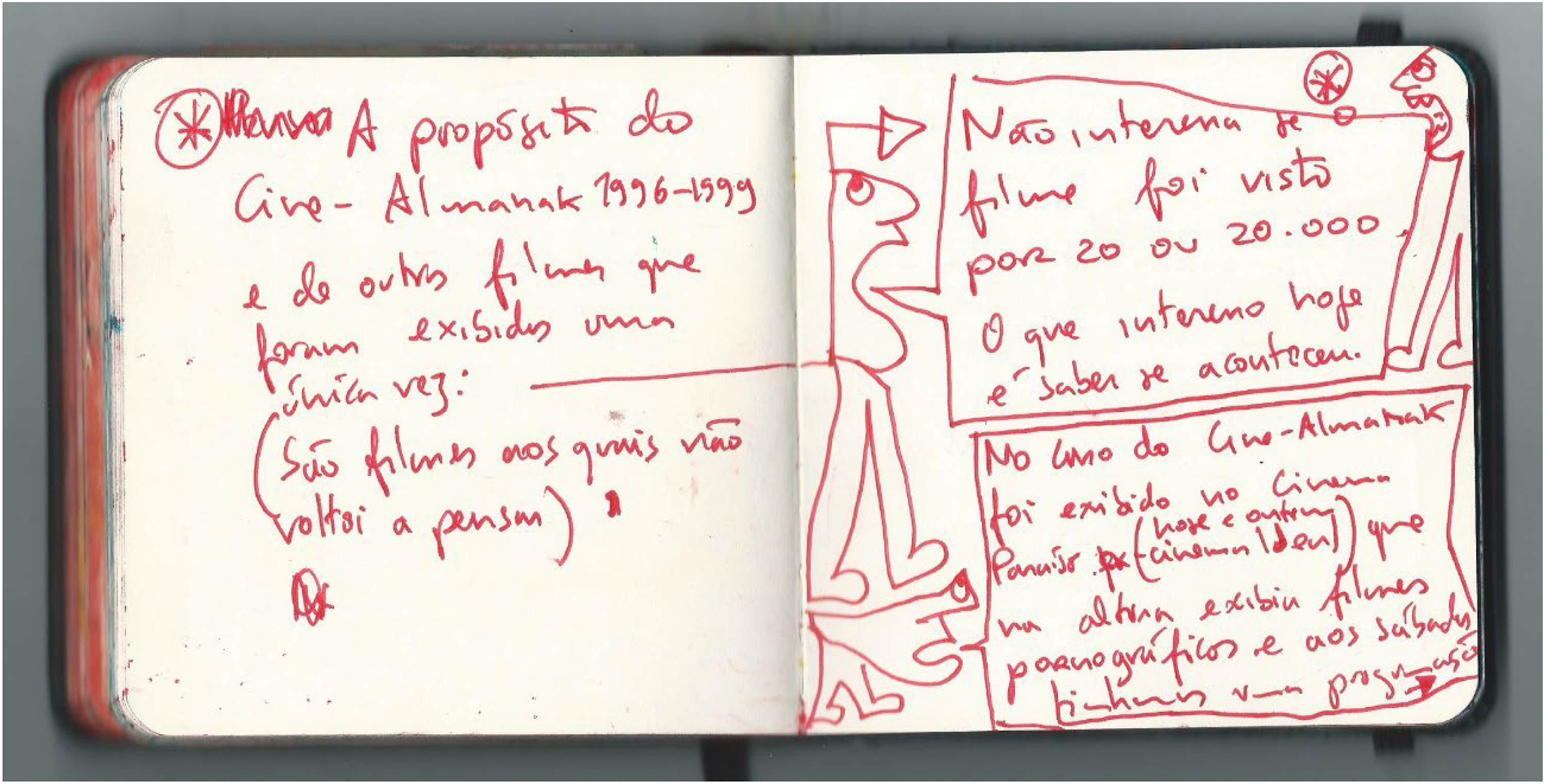
“It doesn’t matter if the movie was seen by 20 or 20,000,” Edgar Pêra’s notebook, 2016, December.
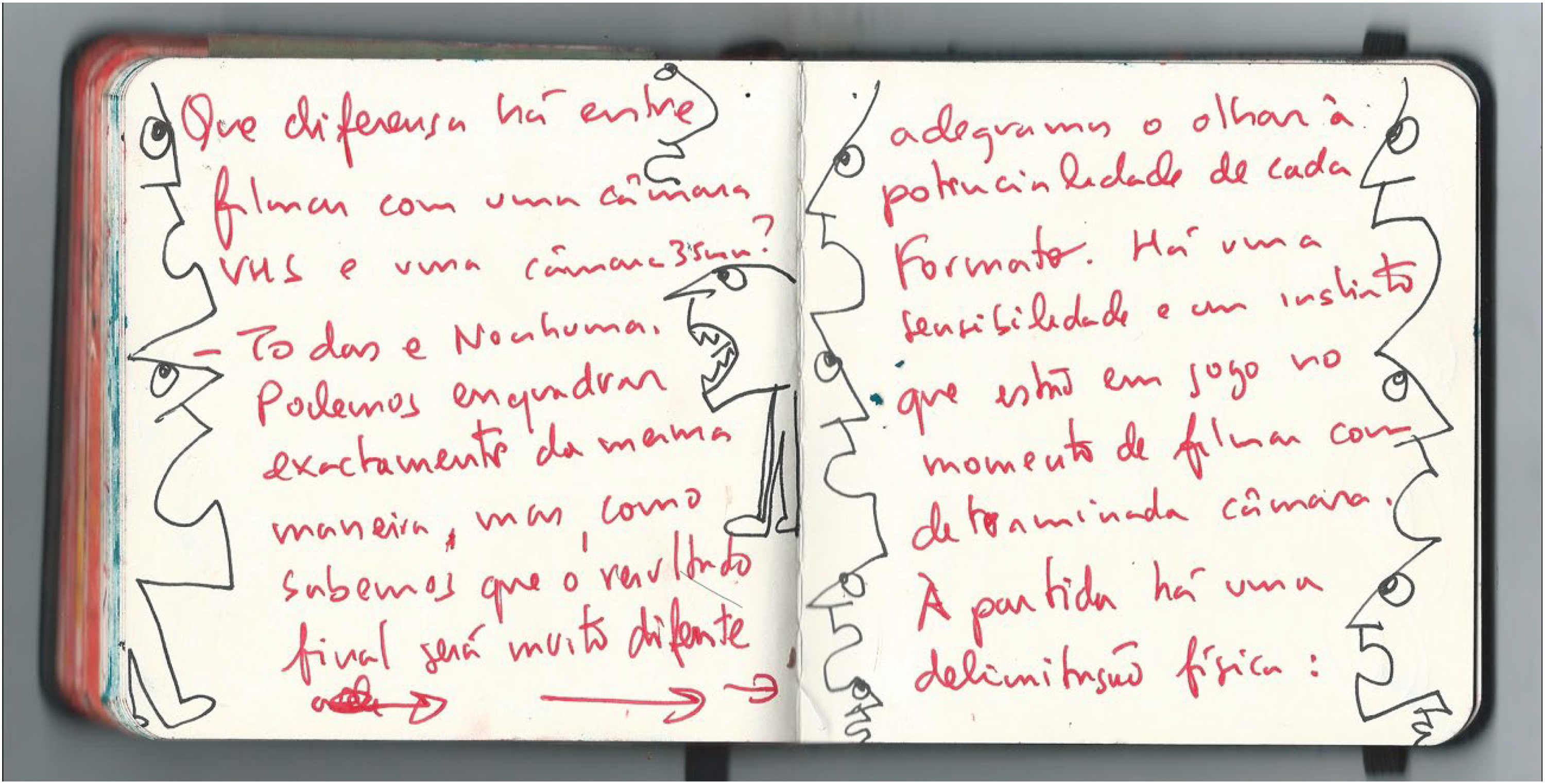
“What's the difference between filming with a VHS camera and a 35 mm camera?,” Edgar Pêra’s notebook, 2016, December.
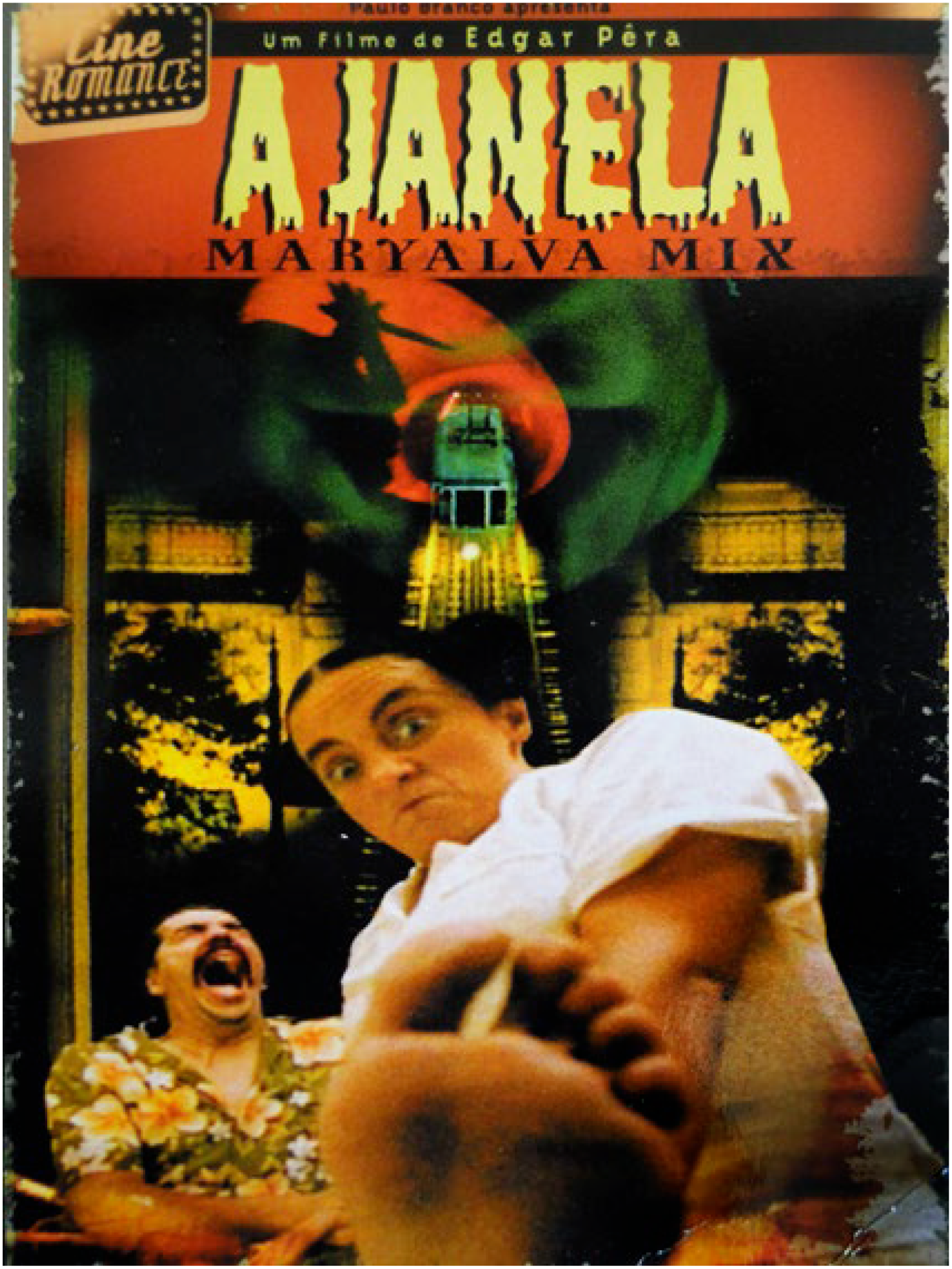
A Janela (Maryalva Mix) poster. Credits: Tó Trips.
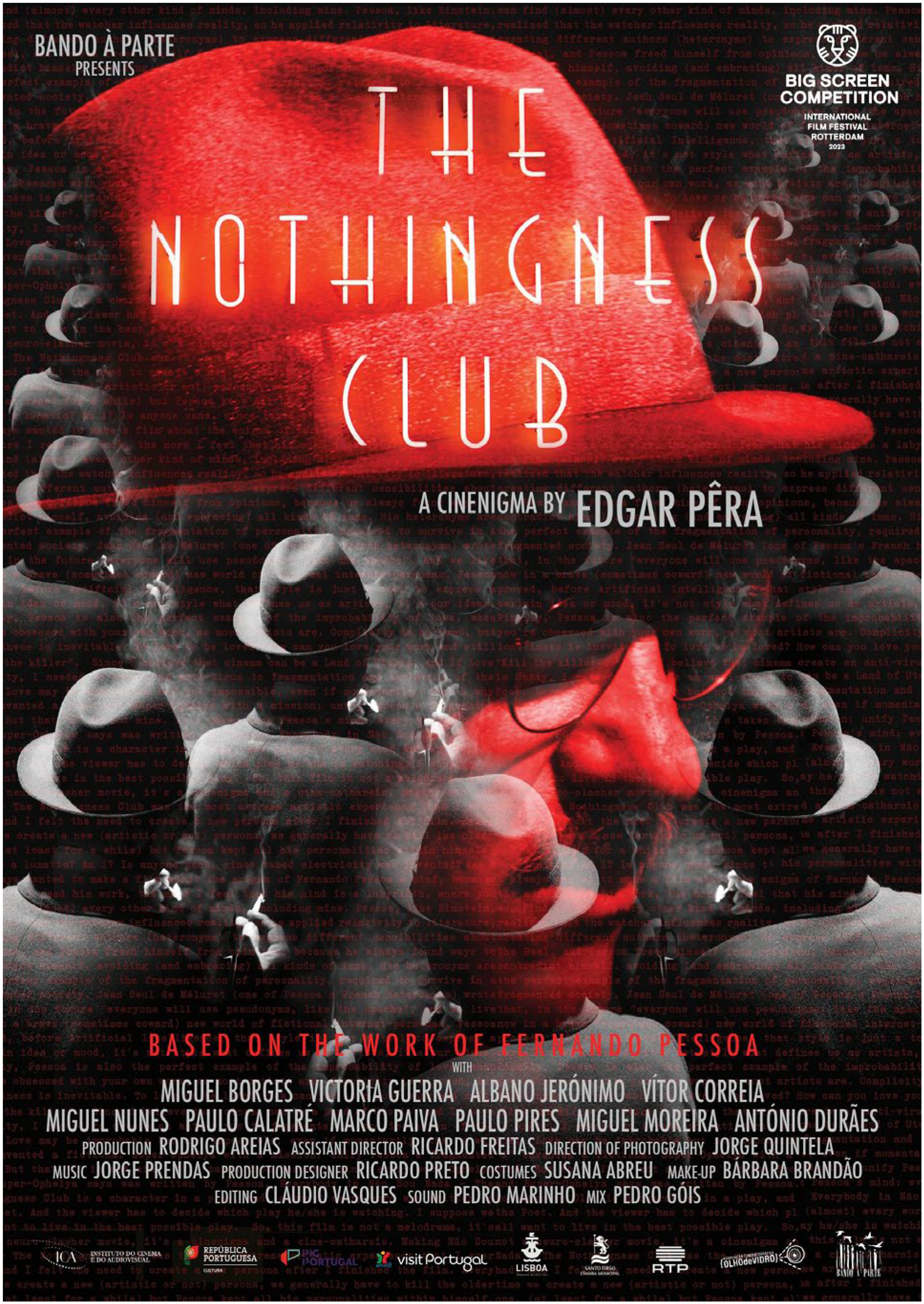
The Nothingness Club poster. Credits: Tó Trips.
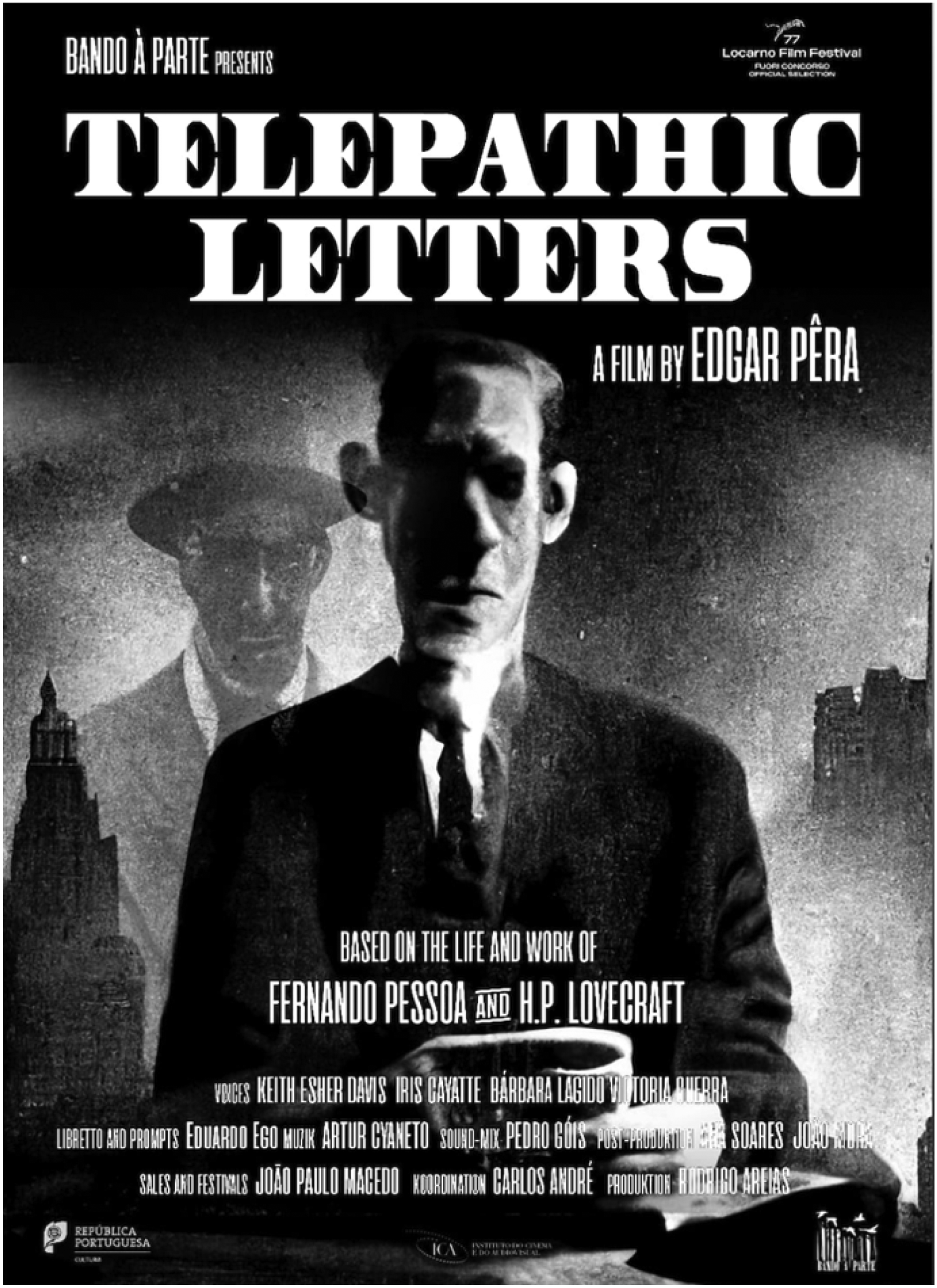
Telepathic Letters poster. Credits: Tó Trips.
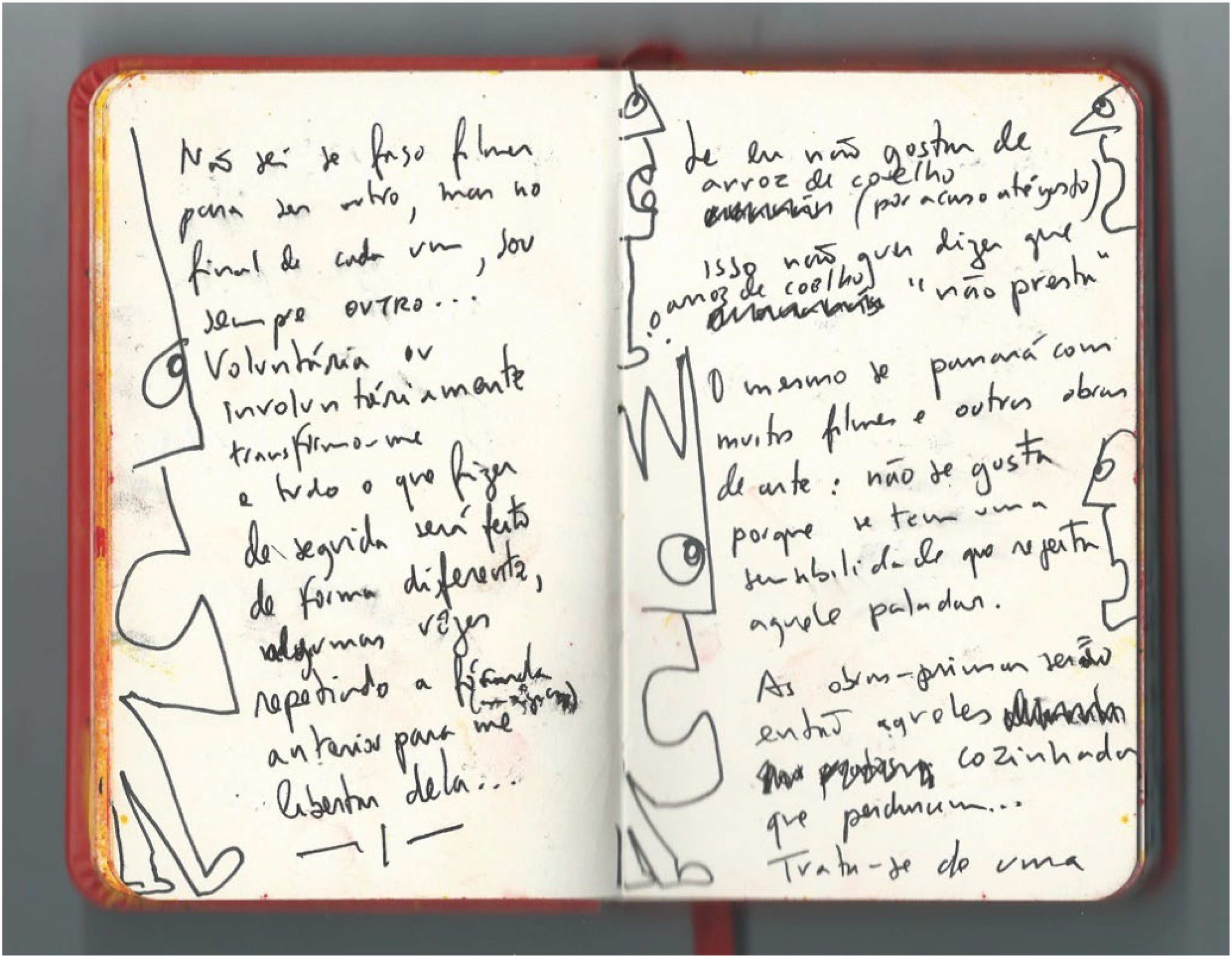
“I don’t know if I make movies to be someone else, but at the end of each one I’m always someone else…,” Edgar Pêra’s booknotes, 2016, November.
One of the themes in Pêra's filmography is time. The interviews conducted were also often overtaken by this theme. The author reflects on the existence of temporal waves in retroaction, so that the present contaminates (like an ebbing tide) the past. Perhaps the best example of this perspective can be found in the feature film A Janela (Maryalva Mix) (2001). There are numerous points to be dissected in this artistic object, starting with the impressive mix of formats, as the filmmaker filmed in Super 8, 35 mm, 16 mm, and video. The film is structured in numerous layers, many of them subliminal, making it apt for continuous interpretive movement. When The Nothingness Club (a film about Fernando Pessoa) premiered, in October 2023, the author repeatedly classified A Janela (Maryalva Mix) in the media as a Pessoa-esque film, relating both works. However, the relationship between the multiplicity of being characteristic of Fernando Pessoa (and present in The Nothingness Club) and the heteronymy of A Janela (Maryalva Mix) was not noted at the time of the film's release in 2001, as can be seen in the press kit for the film. However, this connection between the two objects is not entirely unexpected. A Janela (Maryalva Mix) constantly resonates in Pêra. The director regularly revisits the notebooks of this film, where many of Edgar Pêra's heteronyms, such as Artur Cyaneto and Eu-Gényo, were drawn. Each revisit implies a change (in 2015, he colored the drawings originally done in black and white) and a reflection on identity. The multiplicity of António (the film's protagonist, divided among six actors) and his women (seven characters, played by Lúcia Sigalho) encapsulates identity issues that involve both crisis and overcoming. As Edgar Pêra states: “When I wrote the script, I had not entered the head of António at all, I only entered the head of Mr Ego.” He concludes: “I had to understand António to finish the film” (Pêra, E., personal communication, 21 April 2022). The same is true for The Nothingness Club, where crisis and overcoming are the central narrative matter. As mentioned earlier, the esthetic choices arise from the need to test boundaries. These languages are thus intrinsically tied to thoughts, which in turn arise at the very first line of the starting point for creative action. It is, in fact, a fusion of technique and intuition, as every cinematic act is preceded by a thorough investigation, which may even be abandoned (at least in the strict sense of its previous formulations) at the time of creation. “The visual idea only appears when I pick up the camera. Until then, everything starts with the intention of transmitting certain sensations, emotions, or thoughts,” he concludes (Pêra, E., personal communication, 29th December 2021).
Despite the apparent radicalism of the method and the somewhat surprising effect of most results, technique is not an end in itself. Returning to the film A Janela (Maryalva Mix), we see that it contains the reality of Bairro da Bica, in Lisbon, which brings it closer to documentary. But it also embraces fiction, which intertwines with the identity crisis of an Ego waiting in the window. All in all, the film focuses on the universal micro-reality of an artist, not highlighting his personal dilemmas, even though they are contained in every visual and sound particle.
At the culmination of the life history interview cycle in November 2022, I asked Edgar Pêra to talk to me about the relevant windows of his trajectory, including the ones from the Ateliers de S. Paulo, overlooking Bairro da Bica, which was the gravitational center of A Janela (Maryalva Mix). I was interested in reflecting on the window, simultaneously as an observation post, filter, and reflection. The concept of the window applied to cinema is everything Edgar Pêra says he wants to avoid with his films, which are seen more as a canvas where textures are imprinted, rather than as a window into a mimicked reality. However, I cannot help but associate this filtering aspect, which the window provides, with how Pêra navigates through daily life, using a mechanical or digital extension of the gaze (a medium like the window itself, additionally) to manipulate the world his way. In The Nothingness Club, there is a scenographic effect in Fernando Pessoa's room, based on mirrors, which function as portals to the writer's turbulent thoughts. The window becomes both observation and mirror, while the door represents perception. In The Nothingness Club, beyond the portals, there is a mirror that shatters. These fragmented pieces destroy the illusion of unity, pacifying the poet. In A Janela (Maryalva Mix), the shots are fragmented at the second level, creating a frantic effect. The film itself is a fragmented mirror, glued together by the mind of its author. From here, I move on to the relevance of editing in Edgar Pêra, which is crucial to understanding the director's production modes. Even at this stage, everything is relentlessly sacrificed for an idea.
The solutions sought by Edgar Pêra in the editing (which involved the collaboration of Cláudio Vasques) presented themselves as visual poetry, meaning, as cinematic translations of Pessoa's writings. As a poet, Edgar Pêra never cuts straight, except for the arrow of the gaze. The Nothingness Club is elegant, while A Janela (Maryalva Mix) is burlesque. The filmmaker considers the former a cinema of emotions, while the latter fits within sensations. Could a casual viewer mistakenly attribute the same authorship to two formally distinct films that, at the same time, share such similar concerns?
Well, Edgar Pêra, as he has said, jumps from the certainties of one film to the tightrope of the next. Therefore, after creating a product in which the available means allowed him to do exactly what he wanted and how he wanted, Pêra deliberately embarks on the path of AI. In this new, still unfinished experience, a renewed taste for novelty stands out. For Telepathic Letters, a film about the fictional correspondence exchanged between Fernando Pessoa and H.P. Lovecraft, the director experimented with visually uniting both authors through AI, opening up new questions. These include variations of images, authorship, the relationship between man and machine, and the recording and collection of technological archives. The multiplicity of being continues to be one of the dominant themes. Venturing into unknown territory, he returned to the inventive spirit of his early, distinctly DIY years.
Finally, Guerrilha. We return, in this film still in preparation, to the mix between documentary and fiction. In short, as of today, it is known that the film will intertwine a book, with an individual personal story and the life story of the director. The narrative takes place in the mid-1980s, but the temporal spectrum starts in 1918 (at the Battle of La Lys, in which, by chance, Pêra's paternal grandfather did not participate) and focuses largely on the post-25th April period. In a few words, just after 25th April revolution, Edgar Pêra attended the D. Dinis high school, where tensions between leftist factions (connected to the PSR and what would become the Brigadas Revolucionárias (Revolutionary Brigades) and right-wing factions (whom Pêra calls neo-Nazis) escalated, leading to physical confrontations between both sides. Later, Pêra distanced himself from political activism, but a colleague remained involved, dying during these actions in a bank robbery in Malveira in 1980, carried out by the FP25 group, to which he belonged. This was followed by, years later, reading the book Guerrilha no Asfalto—As FP25 e o tempo português by Manuel Ricardo de Sousa, which served as the basis for the fictional plot of Guerrilha.
In any creative process (at least from what I could observe), Edgar Pêra invests in compulsive consumption of a wide variety of information. Even if this first research effort does not directly reflect in the final product, the journey toward it gives us ample data on the author's praxis and work. For Guerrilha, Pêra researched anarchism, expanded his vinyl collection (the film's soundtrack became a matter of utmost importance), drew inspiration from everyday objects of 1980s Portugal, and gathered documentary data on the FP25 and the historical context of the time. Months after these investigations, he informed me that the film would, after all, be a fictionalized autobiography. The book remains the backbone, but it now includes the director's life story, told through his filmic records. The use of his own archival materials is immensely revealing of who Edgar Pêra is as an artist. It starts right away with the fact that he assumes his own story through records he collected (which are more about others he films than about his own individuality), as if they functioned like mental backups that, as expected from what Pêra has presented us, will never be realistic reproductions of the events they contain. Moreover, there will be fabricated archives and transmuted realities.
It is not expected that others will explore what the director has left to gather dust. To put it differently, others may do so in the future, but the first word will always be his, given that he has 40 years of unreleased material collected and the opportunity to manipulate, shuffle, and transform by vocation the retroactive waves named, but also a found footage heritage that turns back on itself. It will certainly be redundant and too obvious to mention here the concept of the mirror. I await the film to expand the manifestation of the author as someone who rebels against himself (confirming theories about annulment, depersonalization, and the death of the author) to better progress in his identity crises. A practice of detournement that has its roots in the first DIY movements after the Second World War (Guerra, 2017).
The analysis of the selected films for this article, along with the conversations gathered, allows us to highlight a symbolic capital that builds an identity (Guerra, 2017). Differentiating himself from his peers in national cinema by difference, Edgar Pêra seeks similarities in other sources, which, at first glance, seems to contradict a certain collective spirit in DIY practices, but ultimately confirms it with even more vigor. After all, not aligning institutionally with the so-called Portuguese cinema, he creates local levels of identification, particularly through the teams that are formed for each project. For instance, some actors repeatedly appear, film after film. The same happened with the actor Nuno Melo (who passed away in 2016), with whom Edgar Pêra built such a lasting artistic and personal friendship that it led him to incorporate Melo into his last film, The Nothingness Club, through the use of archival material. Beyond the local ties, he also creates bridges beyond the earthly. Thus, he recreated a friendship between Fernando Pessoa and Lovecraft, continues to extend his relationship with Terence McKenna—initiated for the film Manual de Evasão Lx94 (1994), which he considers unfinished and to which he is slowly adding new perspectives. He sees the artists he adapts (Almada Negreiros, Fernando Pessoa) as collaborators. In the end, he weaves a network of relationships, fleeing the expected and truly creating new realities through art. The analysis of Edgar Pêra's work leads us to conclude that it's, clearly, using art (and life) as a throw. In this sense, thinking of artwork as an object launched into the community goes hand in hand with Gadamer's (1986) defense of art as a communal activity that elicits a reaction. We might consider it survival, resistance, a fight against boredom, or activism. Or simply as an unease that cannot be explained. Observing Pêra's journey, we see a coexistence between the professionalization of art and a militant heterodoxy. It is easy to slip into the contradictions typical of the avant-garde: to belong or not to belong, to desire recognition, without yielding to the lowest common denominator. It is likely that these questions are not as significant as they appear. The essential lies in a way of making art that merges with life, not in a strictly essentialist sense, but relationally. And it may even be that the connection to life, by extension, is a negation of it. Edgar Pêra cannot bear to passively observe a landscape fully arranged to be enjoyed, like a perfect sunset. That's why he creates his windows to imagined landscapes, as advocated by Tim Ingold (2007) in Four objections to the concept of soundscape. The window, as we know, is not the landscape. But the landscape is, in the end, a frame (a canvas) where those readings of intersection between the observed and the desired are inscribed.
Conclusion
In this text, we used Edgar Pêra's trajectory (his artistic journey, as told by the author, combined with film analysis and consultation of personal archive documents) to stimulate further discussion on DIY and punk practices in Portugal during the postrevolutionary period. The very discursive development resulting from the analysis, reinterpretation, and combination of data led us to identify similarities between the artistic profiles highlighted by Guerra and the case of Edgar Pêra. However, there are some distinguishing notes that add new information to the discussion. One of them is the fact that most existing studies focus on the realm of rock, pop, and punk bands, while Edgar Pêra is a filmmaker. The contamination of the praxis of these bands is acknowledged by the author himself. His inventiveness, however, makes his trajectory a uniquely individual story, one worth retaining. Moreover (and this is the second distinguishing point), he distances himself from the amateurism highlighted by Guerra in many of the artists from the 70s to the 90s, opting instead for professionalization. Even when considering other phenomena of punk professionalization on a global scale (an absorption by neoliberalism, as Guerra notes), what is interesting about Pêra is that he began to live from cinema (securing public funding), while persisting in a path of permanent reinvention. If it's true that the last 15 years of activity (since joining the production company Bando À Parte) have been characterized by a dependance on subsidies to make films, does this mean deference to the cultural industry? Cases like Telepathic Letters at least prove that curiosity, satiety and a sense of playing are never exhausted, pushing the author toward a recurrent DIY and punk attitude. At the same time, and as contradictory as it may seem, the author desires the best of both worlds, aspiring to a scenario where he could film for the mainstream without giving up the impulse to break down barriers.
This text is, additionally, an attempt to grasp a life story by tracking its artistic practices, self-perception, and effects, to better frame the transformative dimension inherent in its genesis. Through this work, I tried to reproduce, on one hand, the conversational flow of interviews conducted with Edgar Pêra and, on the other, to induce the esthetic sensations stimulated by his work. I sought a balance between expressing an intelligible narrative and the unknowns of the experiences gathered, aiming to stay faithful to the revealing imprecision of this object of study. If Edgar Pêra's beginnings were driven by the need to make films without the means to do so, one could quickly conclude (by analyzing his artistic activity) that the author prefers the adrenaline of reinventing himself with each new project (exposing himself to the insecurity of knowing nothing) rather than seeing himself as a fixed collection of convictions embedded in ways of doing. “Identity is born from error” (E. Pêra, personal communication, 23rd November 2022), he considers.
Footnotes
Declaration of conflicting interests
The author declared no potential conflicts of interest with respect to the research, authorship, and/or publication of this article.
Funding
The author received no financial support for the research, authorship, and/or publication of this article.
Notes
Author biography
 ).
).