



Abstract
The research explored DIY (do-it-yourself) as a sustainable approach within the design praxis of a South African clothing label. DIY is characterized by “creating,” “doing,” and “making” to formulate temporary expressions about who we are, rather than passive engagement and consumption. DIY, as a degrowth anti-capitalist practice, echoes the slow fashion movement by addressing questions of individual accomplishment, creativity, self-confidence, independence, self-reliance, and developing new skill sets. The findings from the study of fashion design praxis suggest that the motivation for DIY activities and behavior within the studied design praxis is holistic and ontological. The design praxis no longer focuses on producing for self-use (DIY), but rather that DIY is a meaningful tool for engaging with a living object that is informed by users’ meaningful association with the product and the making process. The study revealed significant similarities between DIY and emotional durability, suggesting an ontological framework, “doing-it-for-yourself-and-others” (DI4Y2).
Keywords
Introduction
This article explores do-it-yourself (DIY) as an approach to sustainability using the case study of Superella, a Johannesburg-based South African clothing label. De Waal (2019: 4) notes: Firstly, DIY extends beyond hands-on activities of repairing and making things to saving money, and as an approach is much broader, providing a holistic perspective on making and using, rather than being merely a series of acts. Furthermore, the user and the maker become the same person, giving rise to a seemingly ontological way of being in this world, where the DIYer is knowledgeable, responsible, independent, empowered and empathically connected to the product, the making process and other like-minded individuals.
The case study followed an interpretive phenomenological paradigm and a qualitative research approach to exploring and describing the design praxis of the South African clothing label Superella. Ella Buter, the designer, does not follow a trend-based design approach but instead appears to implement a “Do-It-Yourself” (DIY) approach underpinned by sustainability to its design praxis. The sample (Superella) was purposefully selected as the designer needed to be experienced, respected, and recognized within the South African fashion industry. Data collection included semi-structured in-depth interviews with the designer, archival content, and reflective field notes that were kept during all observations.
In this article, we present one of the prominent areas developed from the findings of the study. The study used two models to explore the design praxis of the selected design label, firstly as a method for exploring sustainable fashion, and secondly, the DIY motivators that inform the practice are explored, more particularly the relationship between the maker, user, and the business of selling product. The article contextualizes the study and focuses on relevant literature in order to present the findings in relation to re-thinking DIY as a strategy for environmental, social, cultural, and economic sustainability within a fashion design praxis. The article concludes by suggesting an emergent framework, “doing-it-for-yourself-and-others” (DI4Y2), as a more holistic approach to a sustainable design praxis.
“Sustainable fashion” takes on a paradoxical quality, as today's fast fashion industry is dominated by continuous consumption and globalized production systems where products are designed for obsolescence (Bly et al., 2015; Jenkins and Hilimire, 2015). Notably, there has been a vast increase in research on sustainability and fashion in the past couple of decades, which has been critical in expanding the understanding of sustainability away from purely process-driven systems and technological solutions to a more comprehensive holistic approach. Spangenberg et al. (2010) suggested that reconsidering ideas around “sustainable fashion” would aid in furthering the development of fashion sustainability. Kiem (2011) suggests Tony Fry's (1999) constructed term “sustainability,” implying that sustainable materials such as wood, cotton, and hemp cannot be regarded as fundamentally sustainable, just because of the possible sustainable metabolic cycle.
The term “sustainability” allows for the exploration of individuals, groups, and their relation to the built world, questioning the current cultural conditioning of unsustainability, which is symbolically and materially constituted (Kiem, 2011). “Sustainable fashion” encompasses a more significant number of critical issues, which by proxy, are more complex and involved than mere ecological concerns (Black, 2013). Fletcher and Tham (2023) concur, suggesting that sustainable prosperity needs to draw attention to the critical interdependencies between culture, society, environment, and economic imbalances.
The root of unsustainability is not just environmental problems, but equally important are the cultural beliefs and practices of the end-user (Ehrenfeld, 2015). Ehrenfeld (2015) continues to suggest that design could produce a change in the belief system of the end-user, raising awareness of the user's multiple connections to the world, shifting towards “sustainability-as-flourishing,” where the user has a caring and responsible stance towards the world and the products they consume. In line with Ehrenfeld (2015), Fletcher (2008) proposes a vision (slow fashion) where pleasure and fashion are linked with awareness and responsibility, connecting pleasure and the product with awareness and responsibility by seeking diversity, opposing standardization, promoting collaboration as well as embracing cultural identity.
Slow fashion is about designing, producing, and consuming in a state of awareness of the product's impact on the environment, the user, and the maker by combining ideas of “valuing nature's time” and “culture's time” (Fletcher, 2008). Jenkins and Hilimire (2015) described slow fashion as a form of eco-fashion whereby developing and creating awareness around slowing down production and consumption, therefore, increasing the value and the lifespan of the garment. Thus, having a greater understanding of the product's makeup, the raw materials used, and who made the end product allows the consumer to value the product differently (Clark, 2008). Armstrong and LeHew (2011) agreed and suggested that “slow design” is a shift away from purely designing for the individual, towards designing for social and environmental prosperity, with less emphasis on acquisition and more on sustainable development and well-being.
Niessen (2022: 439) proposes that the fashion industry needs to “put the well-being of people, their lifeways and the earth first,” aligning with Fletcher and Tham's (2019) Earth Logic Fashion Action Research Plan. The Earth Logic Research Plan by Fletcher and Tham (2019) was born out of frustration with the fictional idea that sustainability can be achieved within growth logic, where growth is measured by profit. The plan calls for the active participation of global citizens to rethink, reimagine, and dismantle the fashion system within six holistic landscapes, namely less (degrowth), local (scaling and localism), plural (re-centering and diversifying), learning (open-source knowledge), language (constructs and terms), and governance (systems and models) suggesting a nuanced and profoundly holistic approach.
Shifting the emphasis of design from the “design of products” to the “design of modes of engagement” allows for a new kind of relationship with the environment and human beings to be established, which is based on the emphatic connection between the user, the product and the maker (Fraser et al., 2016). The newly formed relationship allows the user to pause and reflect, become aware of the product in a new way, considering how the product was made, what it took to grow the raw materials, what challenges there were in the production, and ultimately, who made the product. Empowering the user to engage more with what they buy allows the user to have a profound holistic understanding of the product and the making process, thus shifting the power back to the user to meet their own unique needs. As suggested by Fletcher (2008) and Smal (2016), sustainability is not isolated to the individual or the industry but is instead about self-awareness as human beings and building relationships with others, including the makers of the product as well as the making process.
Considering a product beyond the product itself, knowing what natural resources were used, and the individuals involved in the growing and making of a product require the user and the maker to take social and ethical responsibility for their actions. To move past the submissive nature of the current fashion system would require the wearer to become an empowered, skilled, informed, and ultimately, an active participant in the making process (Fletcher, 2008). Salvia (2016) suggests that everyone can and does design, describing this contemporary phenomenon as DIY within a “post-professional era,” signaling a paradigm shift towards self-production.
Rogers (2012) argues that DIY does not necessarily involve concrete plans, methods, tools, or checklists, that is, DIY activities are more fluid, flexible, and open-ended than traditional linear approaches to production. Wolf and McQuitty (2011) suggested that DIY activities create experiences beyond the making and use of the product, allowing the DIYer to make-or-buy, circumventing product dissatisfaction and lack of diversity. Wolf and McQuitty (2011) identified eight motivators for partaking in DIY, arguing that the primary focus of DIY is not monetary gain but rather an empathic way of engaging with products and the making process, thus changing the perceived material value of the product.
The fashion system and prosumption 1
Fast versus slow
As time goes by, consumers and the fashion industry keep pushing harder against the earth to continue supplying more materials and fossil fuel to enable the fashion industry to produce “just-in-time” products, in an attempt to satisfy consumers’ endless pursuit for more (Clark, 2008). Armstrong and LeHew (2011: 30) continued this argument by describing the ongoing industrial revolution “to have an endless hunger for growth and expansion, where the environment is considered an income and not capital.” For the fast fashion industry to meet this endless pursuit for more, the products designed and sold are characterized as throwaway goods, fueled by multiple seasons instead of the traditional two collections per year (Bly et al., 2015). Furthermore, the overstimulation of consumption “desires” with regularly changing styles encourages consumers to experience a never-ending sense of perceived gratification (Niinimäki and Hassi, 2011).
“Slow Fashion” as an alternative view of fashion has emerged as a more sustainable means to produce and consume clothing, whereby the pleasure associated with making and buying fashion products are linked to accountability. “Slow fashion” suggests slowing down and fostering sensitivity towards all levels of speed, in production as well as reducing consumption. By slowing down production and consumption, awareness of the impact on the environment and the human race is cultivated, by shifting from quantity to quality, valuing natural resources and the people involved in the making process (Fletcher, 2008).
Clark (2008) suggests that a slow approach allows the maker to impart knowledge of the making process and the raw materials used, enabling the user to be knowledgeable and empowered in knowing who made the garment and what went into the construction. Encouraging participation, the user develops an empathic connection with all aspects of the product, by slowing down the preserved need to replace the item. The critical focus of “slow design” is to design with greater awareness, reigniting the user–product relationship and allowing the wearer to rediscover the pleasure clothing provides (Clark, 2008). Ultimately, slow fashion presents an alternative to design with less focus on acquisition and more on sustainable development and well-being (Armstrong and LeHew, 2011).
Armstrong and LeHew (2011) argued that current attempts to address sustainability within the fashion system have primarily been supply-driven, concentrating on product interventions and results-based approaches. Results-based approaches aim to limit the environmental impact of a product, however, the strategy remains symptomatic and needs to address the underlying issue, which is to bring fashion to a sustainable level. McGrath (2012: 4) adds that by focusing on environmental and ecological strategies, consumers are misled into believing that they are purchasing and partaking in sustainable fashion through what they buy, whereas the underlying problem remains rampant consumerism and the basis on which consumers “seek, desire, acquire, and use fashion.”
“Despite the significant increase in awareness, interest, knowledge, measures and technologies directed to fashion and sustainability in recent decades; levels of environmental impact have shown no net reduction” (Fletcher and Tham, 2019: 20). Niessen (2020) demands that the fashion industry must degrow by radical reduction of the material and energy throughputs in clothing production, concurring with Hickel's (2021: 1105) proposition that “degrowth is a planned reduction of energy and resource use designed to bring the economy back into balance with the living world in a way that reduces inequality and improves human well-being.”
Thinking differently
Armstrong and LeHew (2011) developed the new Dominant Social Paradigm (DSP), suggesting a non-linear approach to fashion sustainability, by dividing “fashion sustainability” into two main categories, production and post-production. The subcategories, “product,” “results,” “needs,” and “lifestyle” present possible interventions or solutions to achieve sustainability. Level one of the paradigm addresses production-related interventions, with concern for waste due to “traditional” production consumption. Level two considers more efficient systems, as well as the Life Cycle Assessment (LCA), whereby the full life cycle of a product is assessed. Levels three and four comprise the post-production phase, in which consumer needs, and behaviors are regarded. In this phase, the consumer has the opportunity to engage with the product actively, which could lead to the development of a more holistic, sustainable lifestyle and the transformation of the fashion industry to be more sustainable (Armstrong and LeHew, 2011; Fletcher and Grose, 2012; Payne, 2011; Smal, 2016).
Smal (2016) argues that the Armstrong and LeHew paradigm has a fifth level, which is the foundation for all four levels in the DSP. This level is informed by the underlying social and ethical responsibility of the producer and the user towards natural and human resources. Smal (2016: 238) maintains that “not only should environmental sustainability be achieved by using components that are less harmful to the environment,” but that business models should also consider transformative processes and approaches. Furthermore, a fifth level to the DSP, based on empathy, would be a broader more encompassing approach. Smal (2016) continues that the empathic relationship that the user and maker have with the product and the making process becomes the main driving force in achieving a genuinely transformative sustainable change in the fashion industry which aligns with Fletcher's (2008) suggestion that by nurturing the emphatic relationship between the user, the maker and the product, allows for sustainability to move beyond ecological concerns.
Bly et al. (2015) argued that sustainable consumption behavior provides a greater sense of personal growth and pleasure through participation and promoting general wellbeing. Furthermore, there is also an intuitive, emotional association with sustainability, which appears to be less focused on environmental change, based rather on a holistic and integrated choice by the consumer. Bly et al. (2015) continued to suggest that sustainable consumers can be divided into two categories: those who “consume less/consume better” (CLCB) and those who consume “second-hand/DIY” (2DIY). The CLCB consumers notably buy fewer products, preferring to purchase better quality goods from local or artisanal producers, which aligns with the slow fashion movement. The 2DIY consumer, on the other hand, exclusively buys second-hand garments or makes their own garments to meet their own needs.
Do-it-yourself
DIY is generally associated with home improvements and craft activities; however, DIY is a “meaning-making” process (Geczy and Karaminas, 2017; Rogers, 2012), whereby the DIY’er creates meaning and conveys their own narrative using tools, skills, and materials that are on hand. DIY’ers are described as “craft consumers” (Von Busch, 2008), “professional amateurs” (Ratto and Boler, 2014), and “prosumers” (Ritzer and Jurgenson, 2010), driven with the same will and commitment to create their own products and meeting their unique need. Wolf and McQuitty (2011) suggested that DIY activities create experiences beyond making and using the product, enabling the DIY’er to make-or-buy, circumventing product dissatisfaction, and lack of diversity.
Research on DIY predominantly focuses on subcultures and identity-related studies, 2 and in the context of fashion, most of the discourse is centered around the subversive nature of the Anti-Fashion and Punk Movements 3 and domestic making kits. More recently, DIY research has extended to counter-consumption (Peters [sa]), prosumerism (Makosiewicz, 2010; Ritzer, 2014) and hacktivism (von Busch, 2008). Other fields of study consider DIY as a means for critical making (Ratto and Boler, 2014; Ting, 2015), and DIY is an anti-capitalist form of consumption (Carelli et al., 2014). Wolf and McQuitty (2011) addressed the motivation for partaking in DIY activities and behaviors, and Salvia (2016) explores the role design plays in DIY as a sustainable practice.
Sustainable consumers: The DIY’er
DIY denotes a sense of engagement in which the user and the maker merge into one (Fraser et al., 2016; Salvia, 2016). Furthermore, DIY fosters a stronger relationship with the product, transcending beyond the subservient mentality and dependency imposed by a capitalist, trend-driven system. Through active participation in the creating process, this empathic connection empowers the user by imparting skills and knowledge (Fletcher, 2008; Fraser et al., 2016).
DIYers combine products from various sources, such as second-hand stores, high fashion boutiques, and mass-produced fashion, to create a new, distinctive, and unique appearance (Reiley and DeLong, 2011). Furthermore, DIYers ultimately become the creators of their own visual identity, where fashion products become a choice to the DIYer, rather than a prescribed mandate from a fashion system designed to disempower and limit consumer choice (Reiley and DeLong, 2011).
According to Wolf and McQuitty (2011), DIY activities create experiences beyond making and using the product, enabling the DIY’er to make or buy, circumventing product dissatisfaction and lack of diversity. Wolf and McQuitty (2011) continued and proposed that the motivation for DIY can be divided into two main categories: “Product and Service Evaluation” and “Identity Enhancement,” each consisting of four motivators as presented in Figure 1.
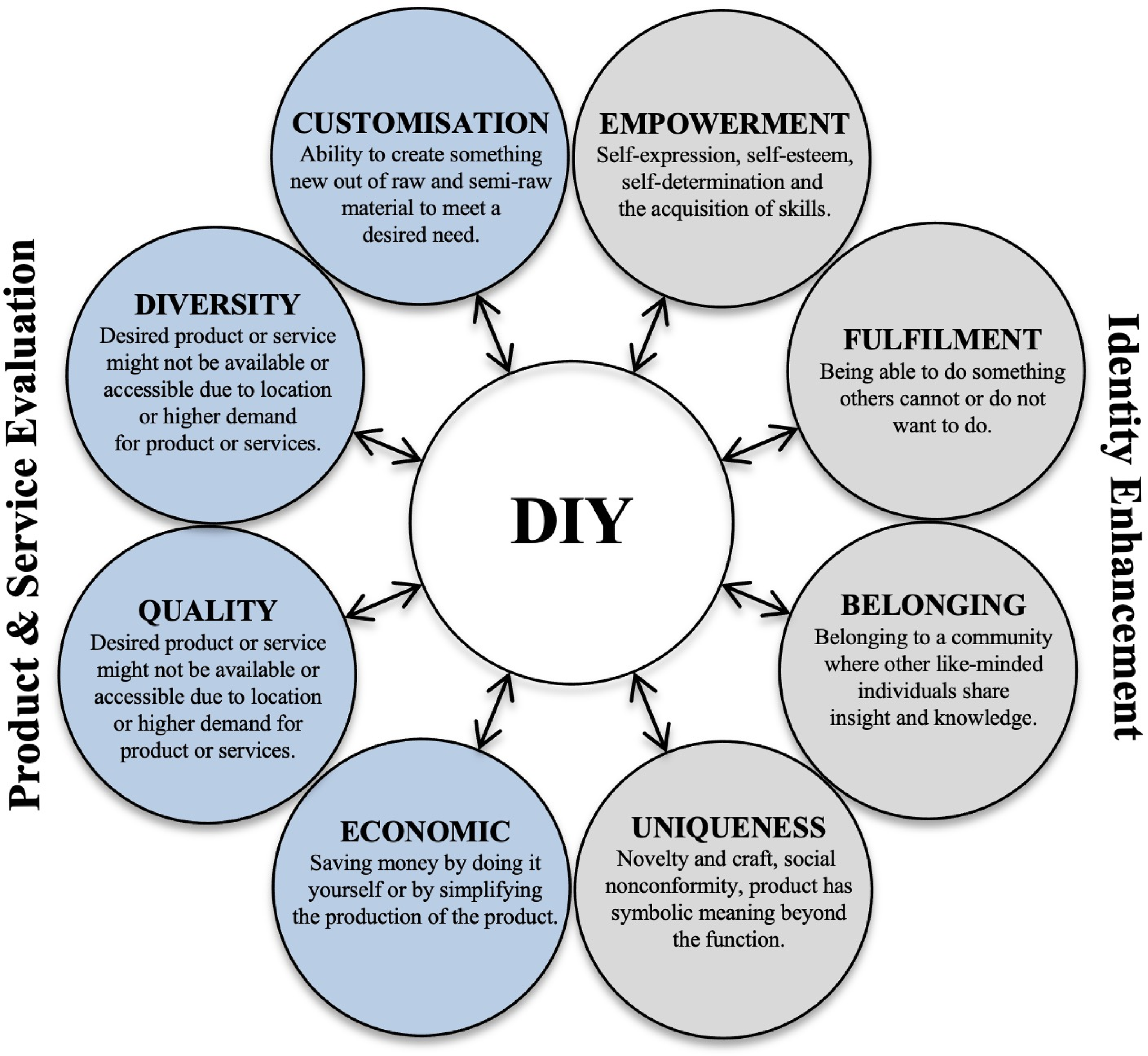
Do-it-yourself (DIY) motivator framework (developed by de Waal, 2019 based on Wolf and McQuitty, 2011).
The category “Product and Service Evaluation” deals with self-production in relation to product and service evaluation, with the first motivator “economic benefits” stemming from saving money by doing-it-yourself. The second “quality of a product” considers the inferior quality of mass-produced items. Thirdly “diversity of product” is concerned with a desired product or service not being accessible due to location or price, and lastly “customization of a product” is the ability to create something new out of raw and semi-raw materials.
The second category, “Identity Enhancement” deals with ways that DIY enhances and promotes a more authentic self. “Empowerment by creating,” explores how DIY’ers develop skills and express themselves thru the making process. Secondly, “fulfillment by creating” suggests that a sense of accomplishment is achieved by doing something others cannot or do not want to do. “Belonging to a community” is the third motivator, whereby the DIY’er belongs to a community and has support in the making process by other like-minded individuals. The fourth motivator, “uniqueness in identity,” is not just a motivation for social non-conformity, but also how DIY products add to the DIY’ers authentic identity.
Methods
Research design and framework
The primary concern of the research was to explore and describe the design praxis of a South African clothing label Superella within an interpretive phenomenological paradigm. A qualitative research approach was used to gain an in-depth understanding of the designer's praxis concerning DIY as a sustainable approach within the developed framework. An intrinsic case study research design was used, as the focus of the study was to investigate a single unit within a unique phenomenon in its real-life context to align with the study’s framework by providing a thick description of the design praxis.
The case study is a research strategy on a unit of analysis (the case) within its real-life context (Merriam, 2009; Robson, 2000; Yin, 2014), whilst discovering new knowledge to contribute to a specific discourse, with the intent to obtain an in-depth understanding of the given phenomenon through the case within a real-life context (Stake, 1995). Generally, a case investigates and studies human activity at present, with the intention of exploring a particular phenomenon, enabling the researcher to answer a specific research question using multiple sources of data that emerge within the case and thus allows for rich description and multiple perspectives and obtaining a holistic and comprehensive understanding of the case (Babbie and Mouton, 2001; Gillham, 2000; Merriam, 2009; Stake, 1995; Yin, 2014). In turn, an intrinsic case study, which was selected for the study, allowed the research to focus on learning more about the uniqueness of Superella in its approach to design, making, and business operation. The methodology applied allowed for gaining an in-depth and extensive understanding of the case (Superella) within the context of the unique phenomenon.
Superella was purposefully selected as they seemingly implemented DIY as an approach to their design praxis underpinned by sustainability. Superella was chosen as the designer who has been in business for over twenty years and regularly showcases collections at fashion weeks and other design platforms. Data collection included semi-structured in-depth interviews, archival content, and reflective field notes. The qualitative content analysis allowed for the data to be coded into the lines of reflection following the DIY Motivator framework developed by Wolf and McQuitty (2011). The institution approved the research project where the master’s study was completed, with the relevant research ethical practices in place. Permission was obtained from the design label for the use of the name and all relevant ethical research protocols were observed.
The findings
The findings in the study indicate that the designer's way of being in this world, her philosophy, beliefs, values, and personal practices are the same as the philosophical underpinning of her clothing label. The designer believes that objects have meaning, which extends beyond the here and now, and through embracing the in-use qualities of aging, the lifespan of the object can be prolonged. She believes in creating something out of nothing by fostering an empathic connection with the item, using old found objects in new ways, and changing the function to meet her immediate need, rather than partaking in mass consumerism.
The designer
Ella Buter, designer of Superella, describes herself as a “lifestyle clothing designer” who creates clothing that is not necessarily seasonally bound or “trendy” saying “I am not a fashion designer I make clothes” (de Waal, 2019: 17). The Johannesburg-based store operates as a retail space and studio, allowing customers to see how the garment is produced, rendering engagement with the clothing items and the making process as authentic and unique, reminding consumers, that “clothes don’t fall from the sky, but are made by human hands” (Kornelius, 2012: [sp]).
Superella was started in 2003 with no financial backing, the designer made all the garments herself on a domestic sewing machine, until she could employ a single tailor on weekends. The designer states, “it is a very difficult way to go about doing business, but in a way, it is also more liberating to do your own thing and just put the money you make right back into the business” (Get it Online, 2014: [sp]). She continues to run her label, by herself, being hands-on in every aspect of the design process, the store, and the selling of her garments.
DIY: Product and service evaluation within the design praxis of the designer
The category “Product and Service Evaluation” within the Wolf and McQuitty (2011) framework addresses inferior quality, lack of product diversity, and not meeting unique needs but also refers to circumventing the costs by doing-it-yourself. Notable, there is a shift in how products are being consumed, whereby the value of the product extends the immediate goods-centered logic (Wolf and McQuitty, 2011).
As an approach to a design praxis, DIYers can employ various strategies and methods to save money, such as recycling, up-cycling, to streamlining production and construction processes (de Waal, 2019). De Waal (2019: 164) notes that rather than partaking in mass consumerism, the “designer rarely buys new things as she finds them characterless and cheap, preferring to purchase second-hand items that display a narrative and have history, texture and character.” As shown in Figure 2, the designer believes in reusing and re-purposing old found objects in new ways by using “discarded items such as ladders, headboards and butchers’ hooks as display units” (de Waal, 2019: 164). Using what is on hand is also evident in the finishings of the products as the designer often mixes and matches second-hand and vintage hardware, such as buttons and trims, with new or vintage fabrics to create new clothing items.
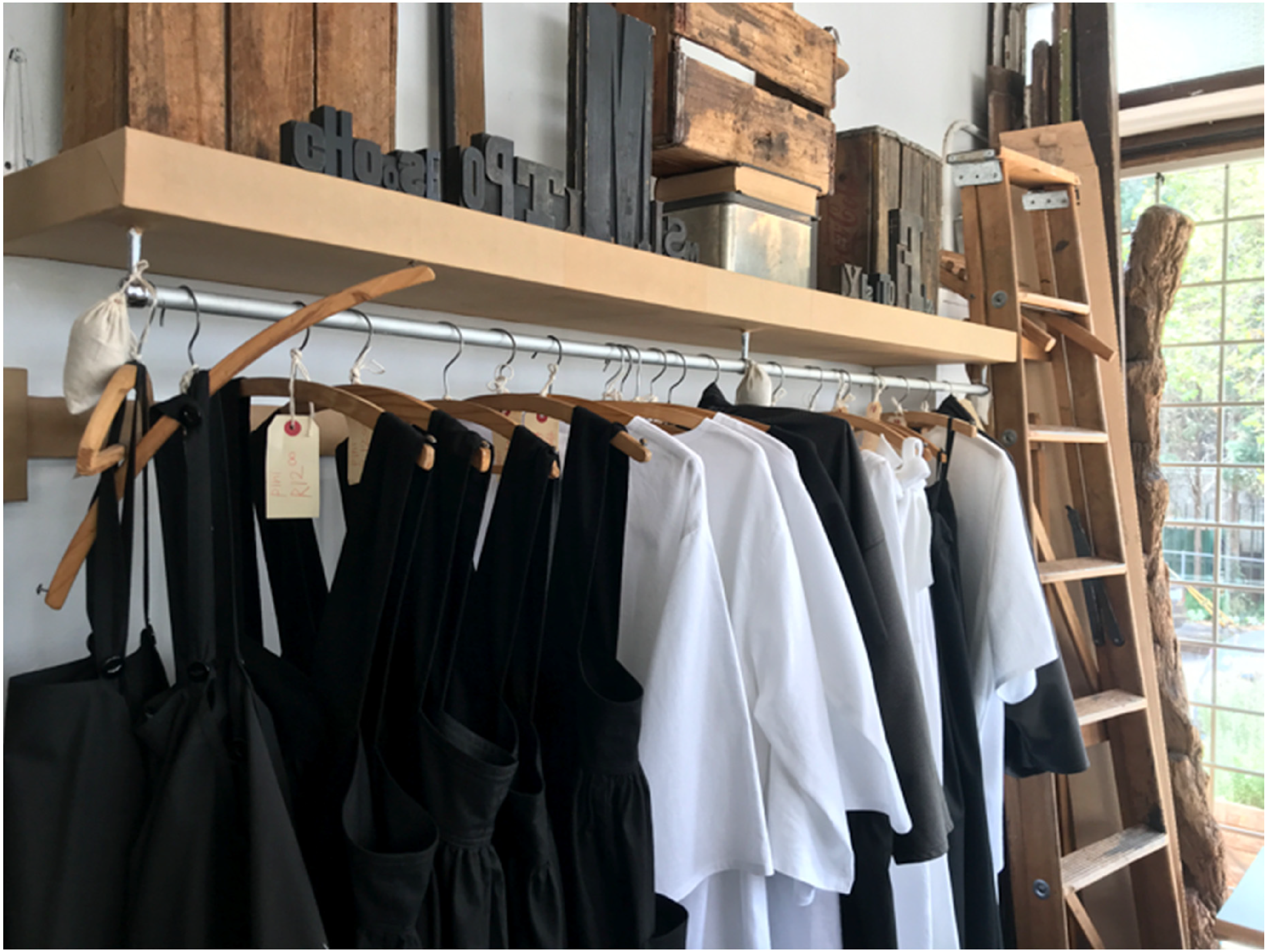
Interior of the Superella store. Dirk de Waal (photographer), Interior of Superella Store, 2019.
Buter is not driven by the pursuit to increase sales, allowing her to design undefined collections based on a season where items are organically developed throughout the season, thus reducing the number of items on sale at the end of a season. The designer often repeats styles from previous collections, considers her garments to be trans-seasonal, and admits that most of her products are not “fashion” items but are “functional” items designed to cover the body and encourages her clients to mix and match items to express their own authentic visual identity thus subverting the current homogenous fast fashion system.
The garments are characterized as being multi-functional in design, garments are not “closed” or “complete,” and the freedom to engage with clothing differently is encouraged. Multi-functionality is built into most of the Superella garments, enabling customers to easily change an “item into a variety of styles by simply folding, tying and buttoning the item differently” (de Waal, 2019: 175). Buter often designs back-to-front garments and “half” garments, giving the wearer the option to combine garment components to create their own unique item. Moreover, the capacity to modify and adjust a garment fosters a feeling of self-expression and uniqueness and strengthens the bond between the user and the product.
Simplification of garments, styles, and processes is not just a practical approach by the designer; aesthetically, the simplicity of the designs references folkloric and cultural dress. As seen in Buter's pattern notebook (Figure 3), she primarily uses basic shapes such as squares, rectangles, and circles when designing garments, as these are easier to cut and sew, thus reducing production time and saving money. By simplifying the construction and manufacturing processes, and eliminating facings, zips, and button stands, the manufacturing time and the garment costs are reduced. In addition, she often develops one or two-sized garments instead of a full spectrum of sizes to reduce the number of “odd” sizes that don’t sell at the end of a season.
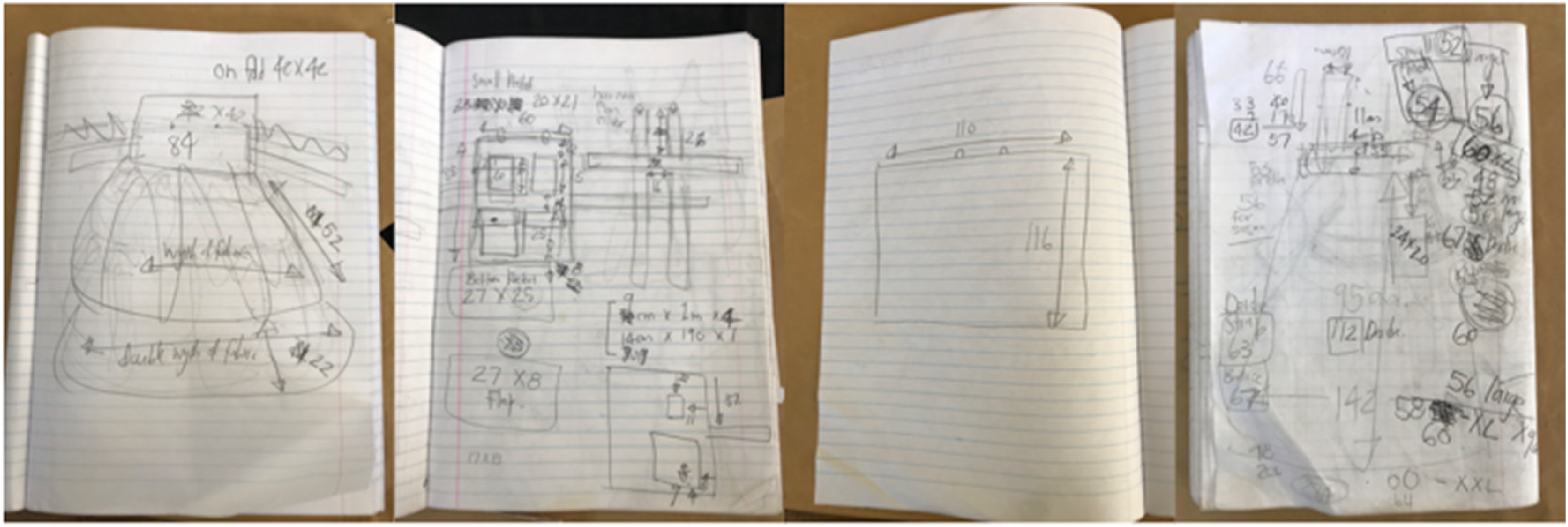
Buter's pattern notebook. Dirk de Waal (photographer), Buter's Pattern Notebook, 2019.
Buter strongly believes in slowing down and reconsidering what we buy and how we make things, being more conscious of craftsmanship and the artistry involved in the making process. Garments are constructed with great attention to detail, using the best fabric and production process to enhance quality, as the designer believes the fabric's quality directly affects the garment's quality and the item's lifespan. “Buter admits that she makes fewer sales because Superella garments last longer, and there is less of a need to replace the item due to the durability and craftsmanship” (de Waal, 2019: 169). Craftsmanship, working by hand, and preserving items are embedded in the relationship that the designer has with items, as she often patches and mends her own clothing, believing that the feeling of the garment changes and develops over time, extending the item's lifespan and enjoyment. The designer embraces in-use signs, aging, and the natural cycle of decay; she exhibits a sense of satisfaction and fulfillment by rescuing and re-using objects in new ways. The idea of re-use and preserving extends beyond the designer's personal attire and the interior of the store, as she would often use vintage fabric, buttons, and trims when designing new collections.
Buter believes it is essential to educate clients that clothing does not fall out of the sky, which is one of her motivators for having the atelier in full view to anyone entering the store. By showcasing the making process, clients can see what goes into realizing the item, fostering a great sense of surety and building a closer connection between the maker, the user, and the product. With a focus on production processes that ensure quality and durability, using longer-lasting fabrics that keep shape and color, and producing better quality garments due to the slow-making process, the designer can extend the lifespan of the garments.
DIY: Identity enhancement within the design praxis of the designer
The second category, “Identity Enhancement” in the DIY Motivator framework (Wolf and McQuitty, 2011) relates to motivators, that stem from the need to express authenticity by establishing a sense of “empowerment,” “fulfillment,” “belonging to a community,” and “uniqueness in identity.” The empathic connection with a product is amplified in DIY as the maker engages with the product both on a psychological and physical level, encompassing the physical and monetary value of the product. The longer-lasting empathic connection with products both during the making process and the “satisfaction of use” adds to the in-use value of the product (Fletcher, 2016). Furthermore, by meeting material and immaterial needs through engagement, the user also develops a relationship with the maker, the product, and the making process.
The designer displays a sense of freedom to explore creatively, “not being forced to follow any prescribed ideas of what is considered fashionable, has set the foundation for her design praxis” (de Waal, 2019: 193). She thinks that most of society feels disempowered and unrepresented by the current fashion system, making consumers think that they need to follow trends and compare what they wear with peers and influencers. She deems clothing has the potential to explore and express identity and feelings without feeling pressured to follow homogeneous ideas. Empowering customers and encouraging them to express their individuality enables them to expand and build on their psychological well-being, which could lead to meeting immaterial needs such as happiness, security, and freedom.
The designer's relationship with her customers extends beyond mere product sales, as her clients experience a sense of empowerment and connection with her, often providing their own fabric, allowing her to create one-of-a-kind pieces just for them. Superella garments are only available from her own store in Johannesburg, allowing Buter to share the brand's philosophy, her worldview, and most importantly the making process, showing that “clothes don’t fall from the sky, but are made by human hands” (Kornelius, 2012: [sp]). Buter works within the store, constantly engaging with her clients, suggesting styles, and advising them on how to wear Superella items with other clothing items, furthering trust and a sense of belonging.
Buter will never coerce or impose products upon her customers; instead, she encourages them to interact actively with their purchases. For Buter, it is critical that her clients can freely and authentically express themselves, regardless of their body shape or age, while embracing their own personal style. Furthermore, Superealla collections are not prescriptive, and “looks” are not contrived or portray a specific ideal, as Buter believes “people should express their individuality by being themselves through what they wear” (de Waal, 2019: 193).
Buter has a subversive DIY approach to her presentations, often staging their show on the sidewalk outside the Superella store, open and accessible to passers-by, and not just the elite fashion week audience. Unlike “traditional” shows Buter will not use standard sizes and commercially “pretty” models opting for using friends and family as she believes Superella clients are ordinary people who cannot be defined by size, age, gender, or race. Buter is known for celebrating individual uniqueness, and questioning what is considered beautiful as seen in her Young at Heart collection (Figure 4), which was modeled only by older ladies, ranging in age from 66 to 88 years.
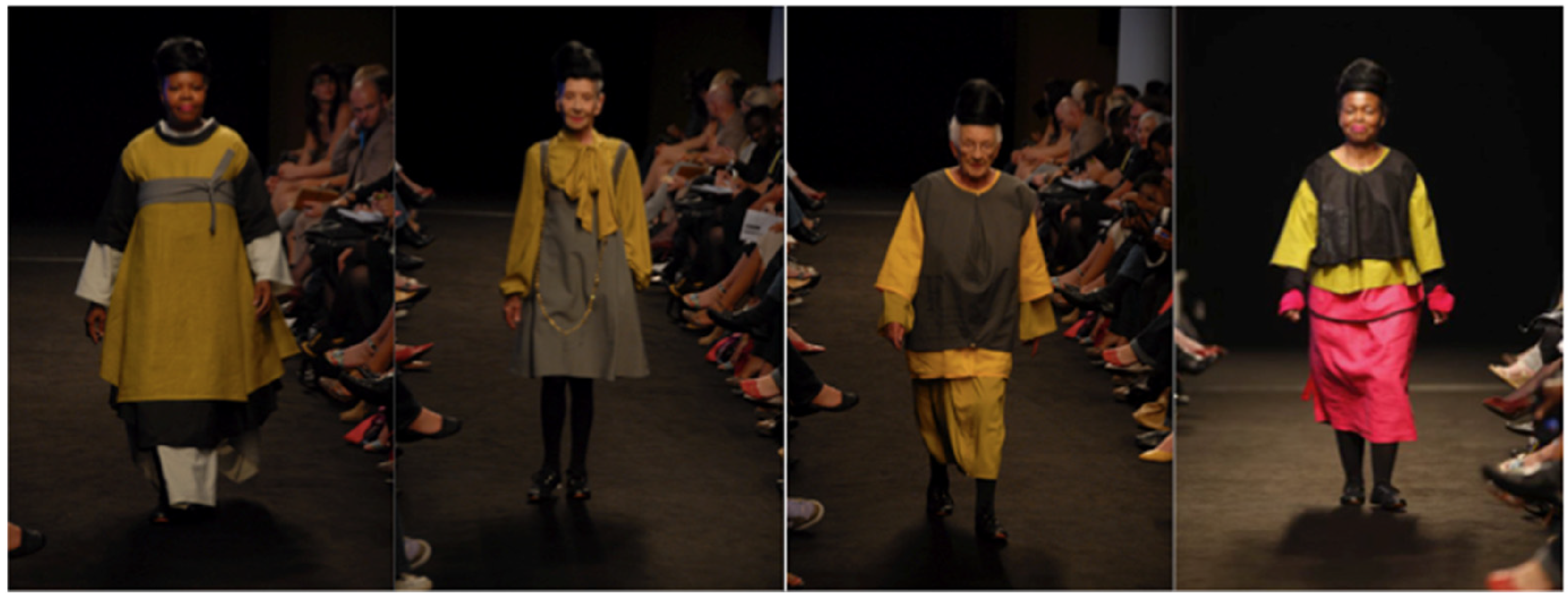
South African Fashion Week – Collection 2008. Designer Superella, photographer unknown, South African Fashion Week, 2008.
In the context of DIY as an approach within a design praxis, the hierarchies of designer, producer, and consumer no longer exist. The designer becomes the educator or facilitator sharing know-how and skills, enabling the consumer to foster an empathic relationship that extends beyond the product. Instead, consumers develop their own holistic, sustainable worldview that is not limited to one kind of product or brand but a changed perspective and lifestyle.
Discussion
Achieving sustainability within the fashion industry calls for new approaches in production, consumption, use, and disposal (Armstrong and LeHew, 2011; Fletcher, 2008). There is no doubt that using eco-friendly textiles (Jenkins and Hilimire, 2015), natural dyes, and growing methods (Black and Anderson, 2010) paired with ethical labor practices (Clark, 2008), contributes to a more sustainable product being manufactured and sold. Further interventions suggest reducing waste (McGrath, 2012), having transparent production processes (Bly et al., 2015; Fletcher, 2008; Reiley and DeLong, 2011), and producing locally (Clark, 2008; Payne, 2011), the negative impact on the environment and human well-being is curbed.
Sustainability is not an isolated problem, and the user plays an integral part in shifting consumption towards being more sustainable, by engaging differently develops a deeper empathic relationship between the user, maker, and what they buy (Fletcher, 2008). However, currently, the user is still reliant on buying homogeneous products manufactured by profit-driven companies, leaving the user feeling disempowered and unrepresented (Fletcher, 2008; Reiley and DeLong, 2011; Shah, 2014). To begin to change the current hierarchy within the fashion industry requires the designer to become an educator and facilitator (Wolf and McQuitty, 2011; Langdown, 2014). The user being responsible, having a holistic and sustainable worldview informed by their own material and immaterial needs, and does not feel dependent or pressured to follow needs created by marketers to increase sales.
The motivation for engaging with a product wholeheartedly is fueled by improving a product or service, aiding in the enhancement and authenticity of the user's identity. Following the Wolf and McQuitty (2011) framework for partaking in DIY activities, whereby the motivation for DIY behavior is not only based on economic benefits, inferior quality, lack of diversity, or the motivation to customize or create a unique product out of raw and semi-raw materials to meet a specific need. DIY can enhance and enrich the user's identity by empowering the user to express themselves, learn new skills, and have a sense of fulfillment by doing something others cannot or do not want to do. Furthermore, by not following homogenous views and not conforming to mass-produced ideas, the user can express their uniqueness by developing symbolic meaning with the product that they make and use.
Finding the connection between the user and the maker
Fostering an emotional connection between the user and the product as a sustainable approach is suggested by Fletcher (2012), who argues that emotional durability can be divided into three groups of interventions; “the product-user relationship within time and space,” “the product-user relationship with an emotional or personal connection,” and lastly “the product-user relationship which is limited to function and skills development.” Each of the three groups consists of two components relating to the product-user link and suggests possible points of intervention to further emotional durability between the user and the product. Battarbee and Mattelmäki (2004) suggested that by categorizing the objectives of the user's emotional connection to a product, a holistic understanding of the user's meaningful relationship to the product or experience would be better understood. Battarbee (2004) furthers the argument and suggests that the objectives of an emotional connection with a product comprise of; a “meaningful tool” whereby the product enables user satisfaction, the “meaningful association” implying that a product is an extension of cultural or individual meaning to the user, and lastly the product is a “living object,” and the user has an emotional bond with the item beyond immediate use.
Merging the conceptual framework of Fletcher (2012) and the objectives for emotional connection as identified by Batterbee and Mattelmäki (2004), “it becomes clear that the emotional relationship between the user and the product is based on, the product satisfying the user's need as a meaningful tool, and the product being an extension of the user's cultural and individual meaning.”
As illustrated in Figure 5, fostering an emotional connection with the product, allows the user–product relationship to shift towards embracing the in-use qualities within time and space, whereby the product ages over time, develops character, and enchants the user in the process of discovery. The product allows the user's personal narrative to unfold, evoking a deeply personal connection based on the emotional and sentimental bond with the product. The user cultivates a conscious awareness of the functional value of the product by developing and learning new skills, furthering the bond, which leads to prolonged use and extending the lifespan of the item. The significant similarities between DIY and emotional durability, indicate an emergent framework, “doing-it-for-yourself-and-others” (DI4Y2).
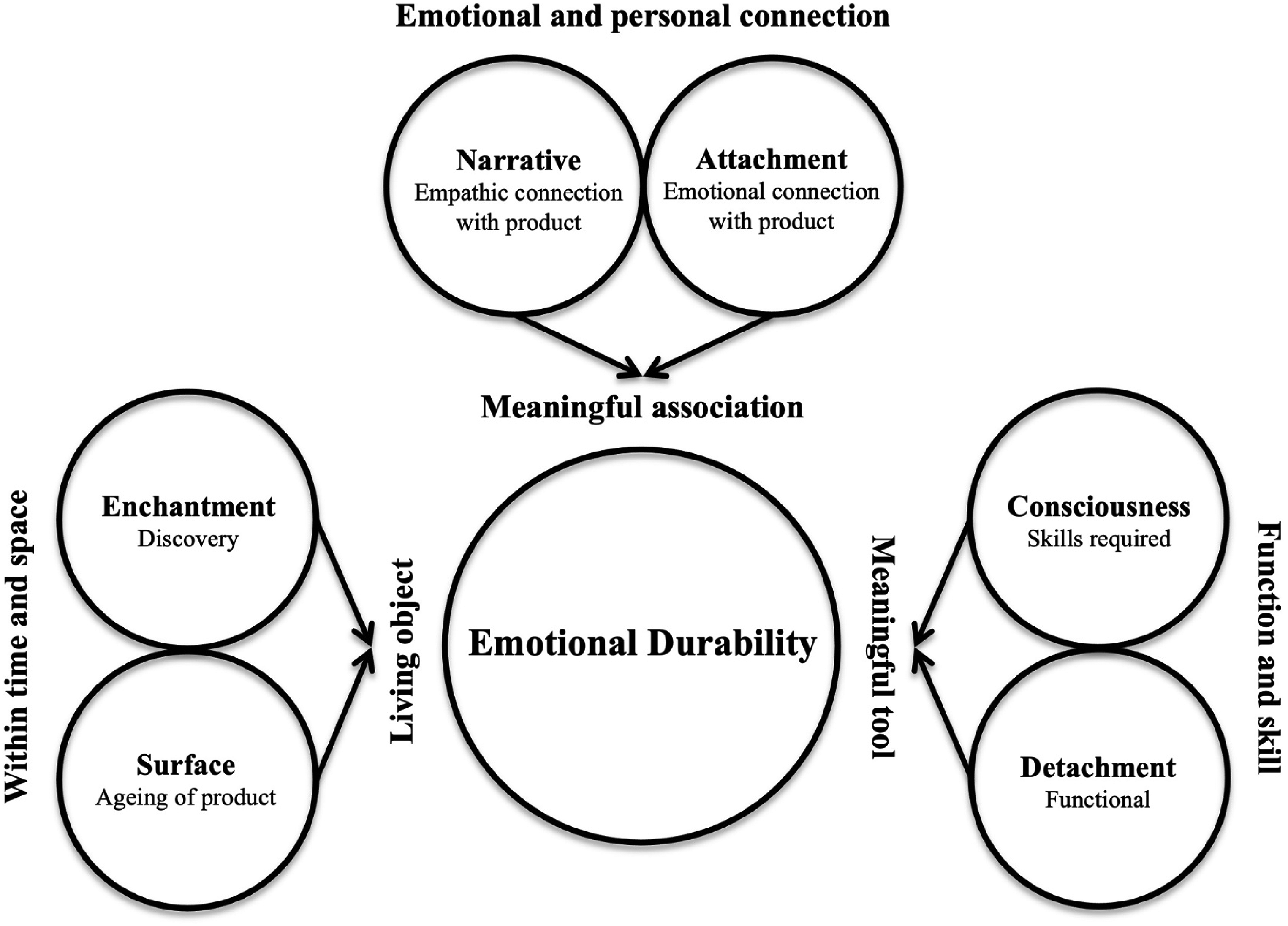
Emotional durability framework (developed by de Waal, 2019 based on Fletcher, 2012; Batterbee and Mattelmäki, 2004).
A new approach: DI4Y2
In the construct “doing-it-for-yourself-and-others” (DI4Y2) as presented in Figure 6, the primary motivation remains self-production, where the user-maker makes products to solve their own problem first, and by doing so, solves the problem of other individuals. DI4Y2 as a sustainable approach encompasses the DSP model developed by Armstrong and LeHew (2011), social and ethical awareness as suggested by Smal (2016), the fostering of an empathic connection between the user-maker and the product, aligning to emotional durability (Batterbee and Mattelmäki, 2004; Chapman, 2005; Fletcher, 2012) and the motivation for partaking in DIY as identified by Wolf and McQuitty (2011).
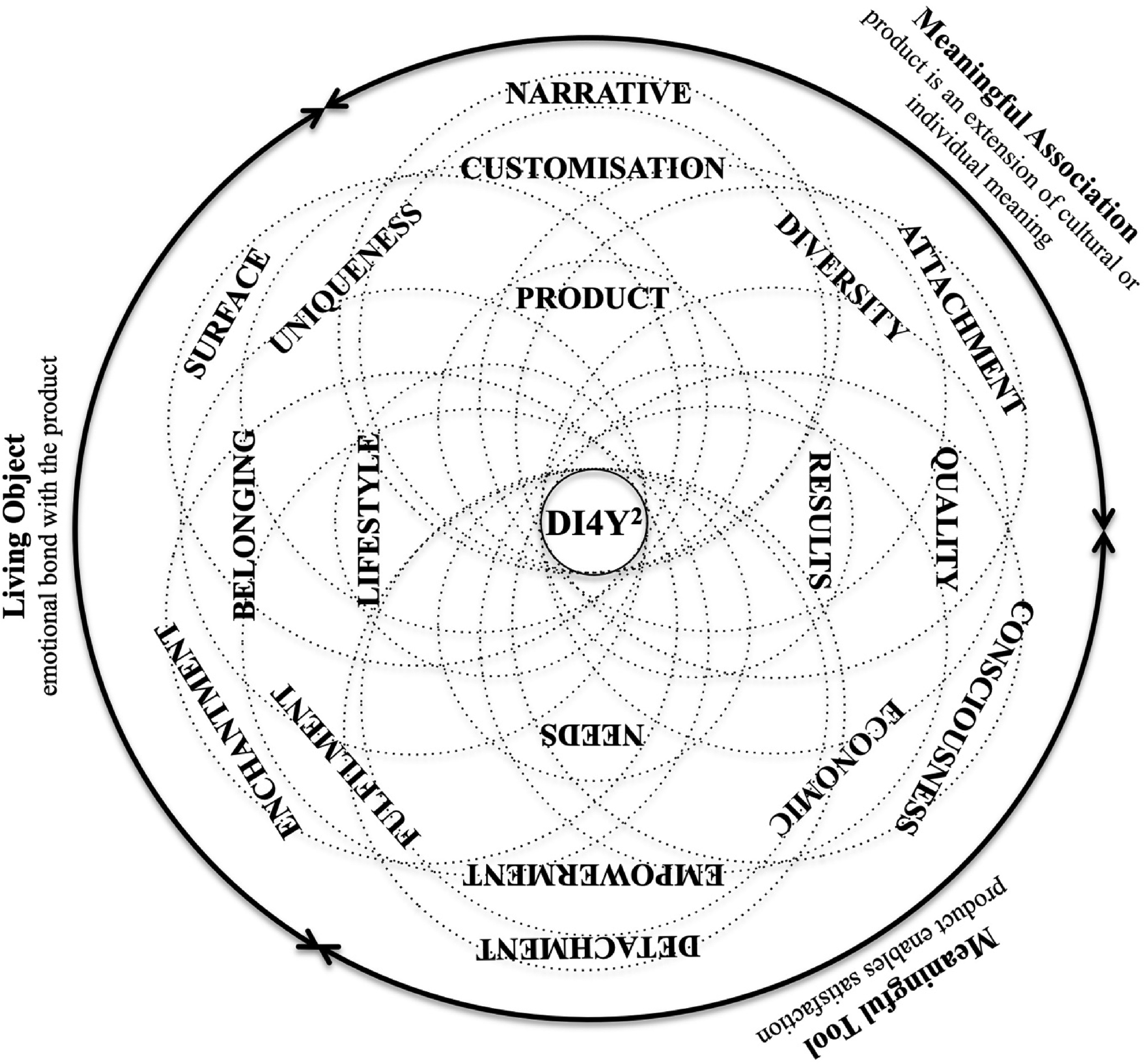
Re-thinking do-it-yourself (DIY) (developed by de Waal, 2019).
The governing and underlining factor within the construct of DI4Y2 is that the user-maker is consciously aware of all the elements within the new framework, not following a specific route or course or even applying all of the aspects within their making process or in use. Furthermore, “doing-it-for-yourself-and-others” (DI4Y2) refers to the concept of engaging in activities or actions for both personal benefit and the benefit of others. It encapsulates a sense of altruism and selflessness, where individuals strive to achieve goals or make choices that not only satisfy their own needs but also contribute positively to the well-being of others—aligning with Wahl (2022), who proposes the construct of “interbeing” as a way of whole-systems thinking which strives to design regenerative cultures. These elements instead engender “sustainability-as-flourishing,” as suggested by Ehrenfeld (2008), whereby the user-maker acts from within and has a caring and responsible stance towards the greater good of the environment and all living beings.
Footnotes
Declaration of conflicting interests
The author(s) declared no potential conflicts of interest with respect to the research, authorship, and/or publication of this article.
Funding
The author(s) received no financial support for the research, authorship, and/or publication of this article.
