



Abstract
This article examines the relationship between activism and models of creative resistance, specifically focusing on subvertising as a form of DIY artivism, through a case study of the #BanFossilAds campaign. The campaign supports the European Citizen Initiative for a ban on fossil fuel advertising and sponsorships. The study aims to investigate the operational dynamics of this subvertising campaign. Through a visual sociology perspective, a sample of 69 unique images from the campaign was analyzed. The findings reveal the professionalism of the artworks, the activists’ use of media, and the campaign's circulation through digital platforms. By employing creative and subversive tactics, the campaign challenged prevailing discourses and established new narratives related to climate justice, highlighting the significant impact of subvertising and its potential to promote social values. The study also assesses the effectiveness of the campaign's communication strategy and suggests potential areas for improvement.
Introduction
The 21st century has seen the rise of a global climate justice movement, demanding immediate action to address pressing environmental challenges. Environmental activism has become a potent catalyst for societal transformation, focusing on environmental protection, biodiversity conservation, and sustainable practices. Environmental activism strives to mobilize individuals and communities to demand accountability from governments and corporations while promoting sustainable behaviors in daily life (Klein, 2015).
Nowadays, the urgency of the climate crisis has fueled a global movement for climate advocacy. The environmental activism has been transforming and adapting as society and politics have evolved. At a time when the urgency of action on climate change has shaped a new rhetoric of emergency (Clot-Garrell, 2023) current ecological forces have favored a more diverse movement with multidisciplinary actors bringing knowledge and strengths from multiple perspectives. “Now it's a movement of scientists, academics, lawyers, diplomats, councilors, activists, teachers, doctors, nurses, artists, writers, actors, graphic designers, psychologists, and many, many more” (Extinction Rebellion (XR), 2019: 131). Alongside the pervasive environmental protests, a noticeable paradigm shift within environmental activism emphasizes holding corporate entities accountable for their ecological practices rather than relying solely on political engagement. This strategic realignment acknowledges businesses’ pivotal role in shaping environmental outcomes and policy decisions, urging environmental activists to advocate for greater sustainability, responsible resource management, and a diminished carbon footprint from corporations (Carberry et al., 2019). By directing attention toward corporate entities, the environmental movement becomes a central force in influencing how businesses address climate change, emphasizing the imperative of holding these companies accountable for their actions. Given the limited effectiveness of political and legal measures in addressing environmental concerns, activists pivot toward targeting corporations, aiming for more meaningful advancements amidst the current dire environmental situation.
This essay aims to explore the case of the #BanFossilAds campaign that gave media support to the European Citizens’ Initiative created in 2021 to demand a European ban on fossil fuel advertising and sponsorship. By examining this case study and reviewing relevant literature, we seek to understand the campaign's characteristics and strategies, highlighting opportunities for greater congruence.
Background and framework
Environmental activism against fossil fuels has an extensive history dating back decades (Martínez-Alier et al., 2018). The Climate Accountability Institute's (2019) report reveals that the top 20 carbon-emitting companies are predominantly engaged in fossil fuel extraction and management. While historical attention has centered on oil companies, recent environmental campaigns broaden their scope to encompass companies linked to fuel consumption. However, to resonate with a broader audience, environmental activists must contemporize their campaigns by reevaluating protest organization and public communication strategies, aligning with current societal characteristics.
The transition from physical to digital socialization has revolutionized society, culture, and communication in recent decades (Boyd, 2014). Technology has enhanced global connectivity, enabling faster and more accessible communication (Castells, 1996) for citizens but also for companies. The rise of social media platforms has fundamentally transformed interpersonal communication and information consumption (Van Dijck, 2013). However, this digital landscape has also led to an overload of information, known as infoxication, necessitating content filtering and selection to cope with the overwhelming volume of data (Cornellá, 1996). In response, activists have recognized the importance of capturing the attention of information-saturated individuals by creating visually captivating actions and esthetically pleasing messages (Kester, 2011). In the environmental battlefield, linguistic metaphors such as “the greenhouse effect” have demonstrated their efficacy in resonating with the public mind by creating a powerful mental image (Ungar, 2000), pointing to the potential effectiveness of such visual resources associated with complex issues like the climate emergency.
Social movements have then undergone a process of estheticization, understood not only as the role of the arts and images in social change but also as complex communicative and expressive processes in protest action (McGarry et al., 2019). This process has been triggered by the image-saturated nature of our media culture (Nurmis, 2016) and the necessity to foster citizen engagement in an environment inundated with persuasive messages (Wang et al., 2018). Recognizing the significance of visual communication in a semiocapitalist (Berardi, 2009) landscape, more focused on the control and exploitation of semiotic processes and the creation of immaterial value, activists employ creative and captivating elements to effectively engage and resonate with their audience. This dynamic introduces a semiotic dimension to social struggles, prompting the creation of visually striking and provocatively disruptive situations. Consequently, creative and artivist techniques emerge as valuable and potent tools in the realm of environmental activism.
In contemporary environmental activism, the imperative to utilize compelling visual resources that engage audiences, instill interest in ecological concerns, and underscore the exigency of requisite responses is evident across various active collectives. Notably, the Fridays for Future movement, founded by Greta Thunberg in 2018, employs visually impactful strikes and marches to advocate for climate action on a global scale (Fridays for Future, n.d.). The Climate Clock initiative utilizes public art installations, such as digital billboards featuring countdowns to signify the limited time for meaningful climate action, to heighten awareness about the pressing nature of the climate crisis (Climate Clock, n.d.). Furthermore, Extinction Rebellion (XR), originating as a grassroots collective of friends, has evolved into a global movement with a presence in 86 countries and over 1000 local activist groups (Extinction Rebellion, n.d.). XR employs creative and disruptive methods, including colorful protests, road blockades, and symbolic performances, thereby exemplifying the globalization and estheticization of environmental protests. The movement is globally recognized for its visually striking symbols and the creative methods employed to convey its messages.
According to Harrebye (2016), “creative activism” encompasses a range of strategies, including pranks, happenings, street art, tactical media, social utopian experiments, viral campaigns, flash mobs, and subvertisement, extending beyond traditional activist methods like demonstrations and sit-ins. This form of activism emphasizes self-creation, showcasing the ingenuity of activists, and has gained prominence globally. Its focus lies in highlighting creativity as a powerful element, estheticizing practices by emphasizing their visual aspects. Nicholas Mirzoeff (2016) defines visual activism as the “interaction of pixels and actions to make change” (p. 258), emphasizing the importance of visual actions’ interactivity and feedback with physical and performative actions. Thus, visual activism exists “at the intersection of visual culture, artistic practice, social action, and movement” (Sliwinska, 2020: 5).
Artivism is a term coined to describe the intersection of art and activism and involves individuals creating works that link art and social change (Sandoval and Latorre, 2008). It employs various artistic forms, including street art, performance art, graffiti, installations, music, film, and digital media. Artivism transcends communication boundaries, disseminating messages widely and amplifying the impact of protest movements (Lippard, 1984). Beyond mere political art, it operates within specific contexts, engages public spaces, and establishes direct connections with recipients (Gianetti, 2004). Art can play a pivotal role in shaping resistance, employing its expressive qualities to elicit empathy, challenge narratives, and inspire collective action. Artivism's strength lies not only in its avant-garde esthetics but also in its ability to expose injustice and societal gaps (Aladro-Vico et al., 2018). This defining characteristic of conveying messages makes artivism adaptable to various social movements, acting as a catalyst for artistic creation and visual representation within specific contexts. The role of art in enhancing the effectiveness of protests is grounded in its utilization as a mobilization tactic due to its high capacity to evoke emotions and incorporate them into the creation of a collective and affective identity (Mobaraki, 2021). This process strengthens the bonds among protesters and ultimately is able to reinforce the movement.
In the case of the environment advocacy, “climate change art plays a crucial role in allowing the public to rethink the role of human beings’ everyday activities in irrevocably altering the climate system” (Nurmis, 2016: 501). The utilization of these practices within the environmental justice movement can be justified by their capacity to amplify voices, elicit emotions, and stimulate transformative societal shifts. As an innovative approach, artivism challenges dominant narratives and disrupts the status quo by offering alternative perspectives and imaginaries (Swyngedouw, 2011). Through provocative and visually striking works, artivists try to stimulate critical thinking and encourage viewers to question prevailing social, economic, and political systems that perpetuate environmental injustices. This engagement inspires individuals to take action and advocate for environmental justice. Furthermore, artivism, through collaborations between artists and environmental activists, exposes green illusions and stimulates demands for corporate accountability (Richardson, 2019). Leveraging innovative communication and social media, it transcends cultural and socioeconomic divides (Swyngedouw, 2011), responding to the imperative of collectively addressing the climate crisis.
Citizenship grassroots in artivism
Artivism encompasses creative resistance, merging artistic expression with activism to challenge norms and champion change. A key tactic within this strategy is Culture Jamming, a movement striving to critically engage and reshape cultural dynamics, providing alternative perspectives, and nurturing a culture of resistance (Lasn, 1999) through the weaponization of cultural and visual imagery.
Culture Jamming, as outlined by Wettergren (2005), is a protest strategy targeting central symbols of dominant discourses. It involves deconstructing these symbols and reintroducing them in alternative contexts to unveil their contingency and political/ideological content. Culture jammers appropriate and remix popular culture to critique issues like consumerism, corporate power, social inequalities, and political oppression. This transformative approach challenges dominant ideologies, proposes alternative narratives, and encourages collective action. While not universally adopted, culture jamming holds potential, particularly in artistic and cultural contexts.
Culture Jamming encompasses various artistic practices, including subvertising, détournement, and guerrilla communication (Klein, 2000). This study concentrates on subvertising, considered “one of the most popular forms of culture jamming” (Sandlin and Callahan, 2009: 97), particularly focused on creating parodies of advertising messages, engaging in semiotic subversion. As an integral aspect of Culture Jamming, subvertising uniquely targets corporate brands and their communication, transforming commercial messages into open subjects for debate, inviting citizens, consumers, and activists to a social re-reading and subversion of meaning and media (Leal-Rico et al., 2023). Subvertisers groups, therefore, “targets advertising both as a practice and as a space” (Lekakis, 2017: 317), understanding that advertising is not only a marketing tool but also a cultural homologator with great influence on shaping collective identity (Goldman and Papson, 2000). Subvertising aims to challenge the role of media in culture, promoting interference within the medium itself and the messages it generates without seeking to destroy it but rather questioning its influence and mechanisms (Diniz, 2008).
Involving activists actively, featuring media advertisements, and disseminating social critique based on diverse ideological principles, subvertising is multifaceted and can be seen both as a movement and a tactical tool (Leal-Rico et al., 2023). As a movement, it acts as a form of anticonsumerist discourse within consumer culture, responding to the power monologue conveyed through mass media advertisements (Cherrier, 2009). Alternatively, as a tool, subvertising traces its roots to the Situationist International (SI) (Kuehn, 2015) and employs détournement to repurpose and reconfigure pre-existing elements (Millstein and Pulos, 2015), transforming advertising styles and media into vehicles for conveying critical messages centered on social causes.
Regardless of its classification, subvertising consistently embodies a counter-systemic character, aiming to reclaim citizen agency within public media and challenge prevailing market narratives through the subversion of commercial messages. Crafted using do-it-yourself (DIY) techniques, subvertisements transcend their role as mere tools for manipulating advertisements, becoming intertwined with the defense of social values and the promotion of democratic citizenship. Simultaneously, subvertising serves as a contemporary practice of power-contestation (Dekeyser, 2018), bearing responsibility for advertising saturation, fostering overconsumption and the associated physical and mental consequences in contemporary society.
Within subvertising practice, it is pertinent to underscore the significance of inclusive engagement and participation, which extends beyond professional artists, encompassing DIY methodologies as facilitative means for broader public involvement. DIY practices have been recognized as empowering tools for grassroots activism, promoting active engagement and fostering a sense of agency among participants (Bennett and Guerra, 2018). DIY culture is characterized by a rejection of mainstream media and culture, and the emergence of alternative networks of communication and cultural production (McKay, 1998). De Certeau (1984) highlights the subversive potential of everyday practices and tactics employed by ordinary people in their pursuit of social transformation. In this way, DIY practices can serve as spaces of resistance, allowing individuals to challenge dominant power structures and express dissent (Guerra, 2018) while promoting sustainable lifestyles and alternative models of production and consumption (Bennett and Guerra, 2018). This is particularly important in the area of urban spaces, where the very production of space is a process of contestation (Lefebvre, 1991). Within the expansive range of tools made available by DIY culture, subvertising often follows a modus operandi characteristic of such actions, including resource sharing (both physical and digital) among participants, collective performances, refamiliarization of the space through subversive tactics and a context marked by anonymity, illegality and collective performance.
As a form of cultural resistance, subvertising aligns closely with the ethos and praxis dimensions of the DIY movement. The DIY ethos is a cultural and social phenomenon that emphasizes self-reliance, independence, and resistance to mainstream commercial culture (Guerra, 2018). This philosophy promotes individual empowerment, advocating for the creation and production of cultural products independently of conventional institutions or commercial channels. Moreover, subvertising engages in the DIY praxis what involves not only the creation and production of cultural products but also the development of alternative social and political structures that challenge dominant power relations and promote more egalitarian and participatory forms of cultural production and consumption (Guerra, 2018).
Therefore, subvertising aligns with the ethos and praxis of the DIY philosophy, accentuating individuals’ proactive, self-reliant, and engaged approach to crafting and disseminating cultural artifacts. This underscores a deviation from the conventional framework of cultural production. Nevertheless, as Paula Guerra (2018) points out about the new artistic objects created through DIY practices, the societal and political integration of these novel art forms, akin to advertisements in subvertising processes, is contingent upon the particular context and the influential social and political structures therein. In essence, subvertising manifests as a robust manifestation of the DIY movement, encapsulating its ethos and praxis in contesting established norms and nurturing a participatory, imaginative, and emotionally evocative mode of activism.
In various fields, including activism, DIY practices have gained prominence and have been applied to address diverse causes. Within the realm of environmental activism, there is a proliferation of self-produced visual imagery, involving multiple actors. The sharing of this repertoire of DIY images predominantly occurs through digital platforms and social networks, aligned with contemporary digital information dissemination. Notably, the environmental activism sphere has witnessed the emergence of not only a wide array of logos, banners, slogans, and visual imagery, but also the formation of professional collectives comprising individuals from creative and graphic design backgrounds. These collectives actively contribute to the production of visually compelling images that lend media support to environmental causes. Such images are freely distributed on the internet, aiming to reach a broader audience and enhance the esthetic presentation of environmental activism. In fact, the role of digital media in both training and communication of activist media has been accentuated in recent times. Considering that currently “…political activists and minorities are even farther removed from the mass media picture” (Bennet, 2003: 17), activists find in the digital landscape a free and massive communication opportunity for their struggles. Examples like the collective Creatives for Climate (n.d.) or Clean Creatives (Timperley, 2021), represent the high level of penetration of environmental concerns into the fields of communication and advertising.
And beyond the entry of environmental issues into the creative professions systematically, other collectives decide to gather together in response to specific needs for conducting targeted campaigns. This study specifically examines the case of the #BanFossilAds campaign, a performance developed by a coalition of collectives that aimed to subvert advertising media in various European countries giving support and raising awareness for the European Initiative with the same name.
Ban fossil ads
Since the inception of the “Break free from fossil fuels” campaign in 2016, 1 environmental ecologists have been advocating for governmental action to halt the extraction and consumption of fossil fuels, while also proposing practical measures to mitigate the environmental impact of this polluting industry. Subsequently, various activist organizations have initiated similar campaigns timed with the United Nations Conference of the Parties (COP) events held in different countries. Each of these campaigns aims to raise awareness about the detrimental role of fossil fuels in sustaining a highly polluting and environmentally destructive energy sector, thereby impeding the progress towards transitioning to renewable energy sources.
The 2021 campaign was focused not only on fossil fuel companies, but also created a European citizens’ initiative calling for a European ban of fossil fuel advertising and sponsorships. By targeting fossil fuel advertising, the “Ban Fossil Ads” campaign was sought to challenge the dominant discourse and create new narratives around climate justice and environmental activism. The initiative was organized by a coalition of nonprofit organizations and grassroots groups which aim is “to legally prevent the fossil fuel industry, and vehicle, airline and maritime companies who use fossil fuels, from advertising and sponsoring in the EU” (Ban Fossil Ads, n.d.). It was led by the European Climate Foundation and included the groups Greenpeace, 350.org, Friends of the Earth, Actionaids, Adfree Cities, Airclim, Avaaz, Badvertising, Bomiastro.pl, Client Earth, Climaximo, Communication & Democratie, Collapse Total, Ecologistas en Acción, Europe Beyond Coal, Federazione Italiana Ambiente e Bicicletta, Voluntari Nel Mondo, Friends of the Earth Europe, Friends of the Earth Ireland, Food & Water Action Europe, Fossil Vrij Nl, Fossil Free Culture, Fundación Renovables, G, Global Witness, Hamburg Werbefrei, Inforse Europe, Klima Bevaegelsen, New Weather Sweden, Oxfam Belgique, Oxfam Ireland, Plataforma por un Nuevo Modelo Energético, Reclaim Fossielvrij, Recommon, Résistance a l’Agression Publicitaire, Stop Funding Heat, STPC, The Green Student Movement, Uplift, Werbefrei, WWF y Zero 2 . It is, then, a collaborative effort between multiple organizations, each bringing their own strengths and approaches to the climate advocacy.
The citizen's initiative was informally complemented by a subvertising campaign (Figure 1), encompassing the illicit takeover of physical spaces in European cities and the sharing of corresponding digital images. Coordinated efforts by climate activists and subvertising collectives involved orchestrating disruptions in urban media, meticulously documented through photographs. The subsequent dissemination of these images occurred through diverse online channels, encompassing websites, news outlets, and social media platforms, employing the hashtag #BanFossilAds to amplify visibility and rally support for the citizens’ initiative. Principio del formulario Final del formulario
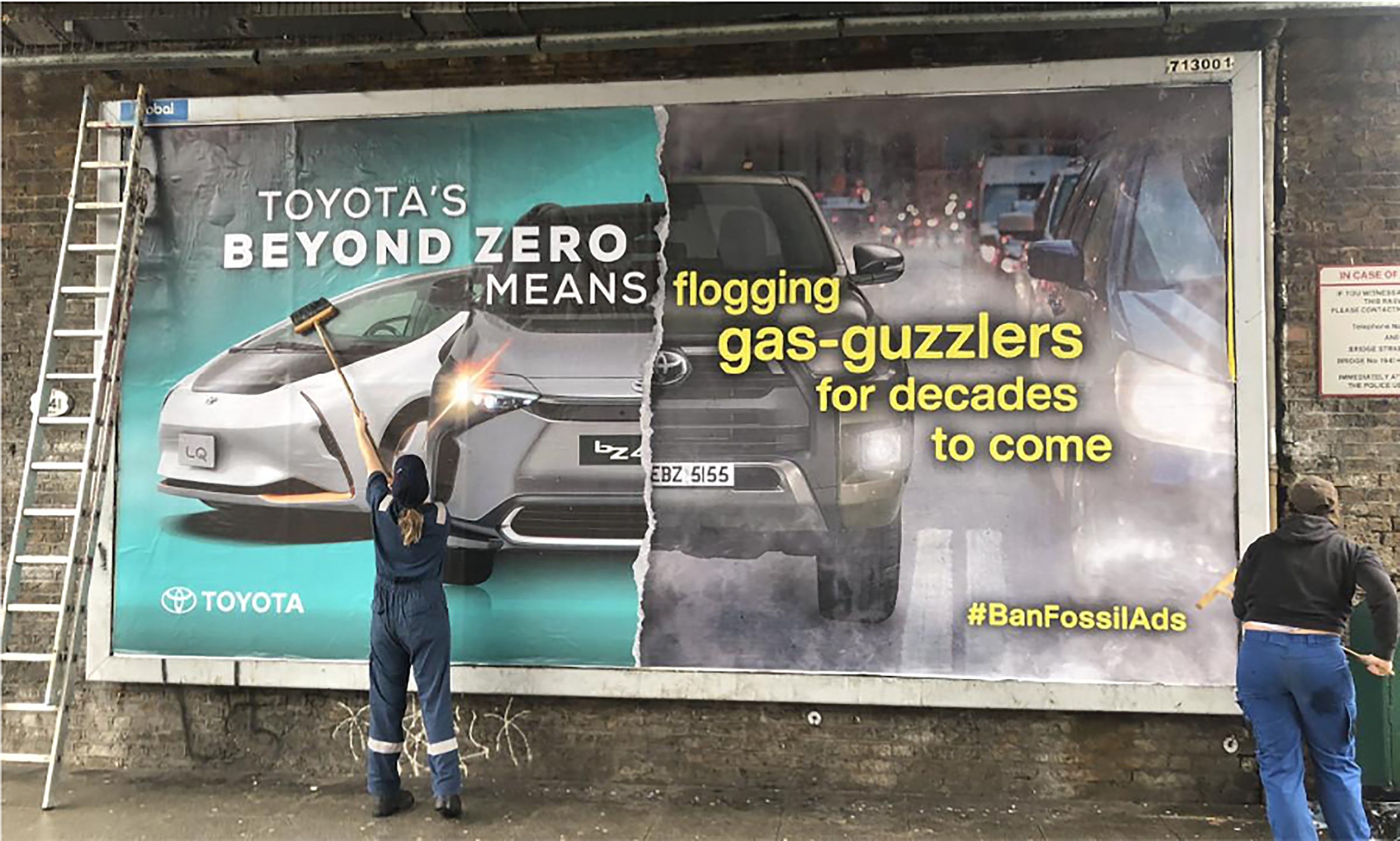
Subvertising billboard in London. Source: http://brandalism.ch/projects/toyota-bmw-greenwash/.
This subvertising campaign, launched independently of the European initiative, lacks an official affiliation and doesn't explicitly reference the European initiative in its subvertisements. It primarily focuses on condemning fossil fuel advertising, sharing a hashtag identical to the European initiative's name. While subvertising falls outside the realm of illegal activities (Katyal, 2012), it does involve appropriating privately owned outdoor media, introducing an element of potential illegality in its execution. Due to its operation outside legal boundaries, the authorship of subvertising works happens to be anonymous or signed under group pseudonyms.
Objectives and methodology
The main aim of this article is to investigate the operational dynamics of the subvertising campaign #BanFossilAds. In pursuit of this objective, several specific aims have been identified: (a) to geographically map the areas where the campaign was implemented and explore its online dissemination; (b) to identify the predominant media platforms and formats utilized during the campaign; (c) to analyze the artistic techniques employed in the subvertising works; (d) to categorize the propagated critiques and examine the companies targeted; and (e) to assess the effectiveness of the campaign's communication strategy.
In this research, we adopt a case study approach to examine the #BanFossilAds campaign. The case study methodology offers an in-depth exploration of the campaign, allowing us to delve into its unique characteristics and contextual factors that influence its outcomes. As Yin (1994) emphasizes, the case study method facilitates the examination of complex phenomena within real-world contexts, enabling researchers to capture rich and nuanced insights.
To approach the study of this case, a comprehensive process involving the search, retrieval, classification, and analysis of a sample comprising images from the #BanFossilAds campaign has been undertaken. This search was conducted online, utilizing the official campaign websites, social media profiles (Twitter and Instagram) of the organizers, and a search using the hashtag #BanFossilAds on social media platforms (Twitter and Instagram) as starting points. From these sources, all organically related results that were located were also included in the search. The inclusion criteria for sample selection were (1) the availability of images online and (2) the inclusion of the hashtag #BanFossilAds within the artwork. Once all images were retrieved, duplicates with identical design and format were removed, retaining in the sample those with the same design but different formats. Once the search and image selection were completed, a total of 69 unique DIY artworks from the #BanFossilAds campaign constitute the analyzed sample.
To conduct the analysis of this visual sample, visual sociology was adopted as the methodological framework of reference due to, as suggested by Zuev and Bratchford (2020) “(…) is the study of the visual and the way it interacts with society, people and the spaces they inhabit (…)” (p. 3). This approach provides a methodological framework guiding the selection of variables and categories for sample analysis. According to this analytical methodology, visual works should be approached not only as representatives of reality but also as social agents. The contextualization of the artworks is deemed essential for a nuanced interpretation, aligning with Zuev and Bratchford (2020) perspective on the ways images interact with cultures and spaces. This requirement for contextualizint the images as objects of analysis were duly acknowledged to provide an interpretation beyond the researchers’ perspective.
To analyze the #BanFossilAds campaign, analysis variables were created to cover the three aspects of visual works highlighted by Rose (2016). First, variables related to the technological aspects of each image were defined (digital image link, publication date, other hashtags, location, and media). Secondly, variables related to the compositional aspects of the images were defined (image format, size, originality of creation, artistic style, color palette, language, allusion to original advertising or brand, inclusion of original slogans, appearance of logos, and explanatory captions). Thirdly, variables related to the social contextualization dimension, defining the consumption of these subvertisements, were included. These variables encompass whether it's a traditional advertising media, the perceived level of professionalism in image production, the targeted category of commercial products, the attacked trademark, and the accusation made in the artwork.
It is noteworthy that no attempt was made to collect data concerning the personal authorship of the works, adhering to the subvertising practice of not publicly disclosing individual authorship. Information is compiled regarding the nature (environmental or subvertiser) of the groups publishing campaign images on the internet, but details about the individual creators of the works or those accountable for their physical installations are not included, given the legal contentiousness associated with this aspect.
Once all the analysis variables were established, all images in the sample were scrutinized using a spreadsheet, where corresponding categories were created to code each variable. This coding allows us to obtain frequencies and to visualize the analysis of the works on the basis of these dimensions.
Results
Following the first specific objective aimed at geographically mapping the areas of campaign placement, the findings reveal a notable concentration of subvertisements of the #BanFossilAds campaign in the United Kingdom, accounting for 44% of the sampled cases. Cities such as London, Bristol, and Brighton emerge as prominent hotspots for these subversive artistic interventions. Furthermore, subvertising instances were identified in various other European countries, including France, Spain, the Netherlands, Portugal, Belgium, Romania, Italy, and Slovakia. However, it is important to acknowledge that a quarter of the sampled cases did not provide information regarding the specific locations of the subvertisements, thus warranting further investigation in this regard. The predominant language used was English (78%), with images also found in French, Portuguese, Romanian, Italian, Slovenian, Catalan, and Dutch. It is worth noting that a small portion of the sample (7%) featured identical designs as the English works, but translated into other languages.
Regarding its online spread, the subvertisements from the #BanFossilAds campaign were widely disseminated on digital media platforms, particularly on social networks. Interestingly, the organizers’ websites played a lesser role in showcasing these works compared to social networks. Notably, the campaign's content was predominantly shared through personal accounts rather than official organizer accounts on social networks. This indicates a decentralized and grassroots approach to dissemination, with individuals actively participating in promoting and amplifying the subvertising messages.
In accordance with the stated objective of identifying the predominant media employed by the campaign, it is noteworthy that the majority of subvertisements (84% of the sample) were found in advertising media, with bus shelters (46%), billboards (26%), and subway interiors (10%) being the primary locations. It is worth noting that digital-only images made up a small portion of the campaign (12%), indicating a predominantly physical campaign. In terms of the primary layouts utilized in the campaign, medium-sized formats, specifically posters, accounted for 52% of the sample, while large-format works were displayed on billboards, comprising 26% of the sample, with an average size of 3 meters in height by 9 meters in width. Recurring appearances of the same artwork adapted to different media formats (as seen in Figure 2) were observed.
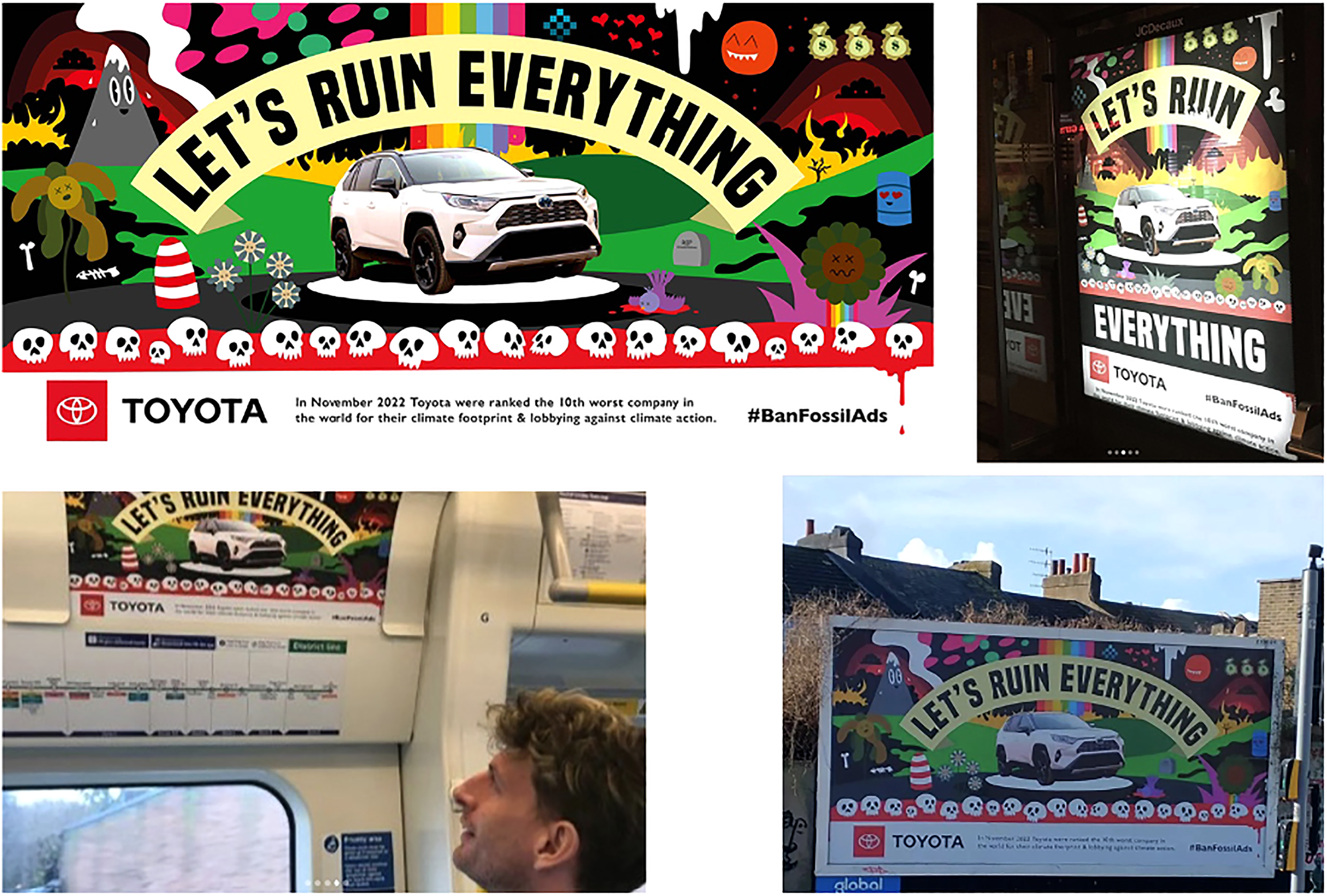
“Lets ruin everything” subvertisements (digital image, bus shelter, underground interior and billboard) for the #BanFossilAdss campaign placed in different media and locations. Source: own elaboration based on the sample images.
Regarding the set objective in this investigation aimed at analyzing the artistic techniques used in the advertising works, the results demonstrate that the majority of works in the #BanFossilAds campaign (90%) exhibited a professional execution, resembling conventional advertising styles. Only a small number had an amateur or handmade esthetic. Printing techniques were prevalent (83%), while simpler techniques like painting, collage, or graffiti were less common. All campaign works were original creations, without modifying existing advertisements. Illustration (60%) and photography (25%) were the dominant artistic techniques. The remaining artworks (15%) consist of other visual elements such as typography, handwritten letters, comic styles, collage, painting, and the appropriation of air safety brochure esthetics. The color palette was divided between bright, vibrant colors (reds, greens, blues) and darker tones (blacks, grays, muted hues), each comprising roughly half of the sample.
In terms of the results that will allow us to achieve the objective of categorizing the criticisms expressed in this campaign, we find that the primary criticisms depicted in the works revolved around exposing brand or industry pollution (71%), followed by criticism of greenwashing practices (19%) employed by these companies. Other less prevalent criticisms included accusations of collaboration with polluting companies in other commercial sectors such as advertising, fostering reflection on fossil fuel-related pollution, and promoting the Ban Fossil Ads iniciative, which was represented in only two analyzed pieces.
The subvertisements primarily targeted the automotive industry (38% of the sample), followed by the aviation sector (33%). Other categories included oil companies, airports, and advertising companies. Notably, none of the subvertising works explicitly mentioned specific oil company brands, instead focusing on criticizing the sector as a whole without naming specific brands. Among the subverted corporate brands, Toyota was the most frequently depicted, appearing in 23% of the works. Other automotive brands included BMW and Land Rover. In the aviation category, represented brands included EasyJet, Lufthansa, British Airways, KLM, Ryanair, ITA Airways, and Air France. Specific airports, such as Lisbon, Bristol, and Liege, were referenced in works critiquing airport expansion. Furthermore, the advertising agency Ogilvy was targeted for its collaboration with oil companies. It is important to note that 22% of the sample did not explicitly reference any specific brand, focusing instead on broader criticisms of the industry or the consequences of fossil fuel usage.
Finally, regarding the allusion to commercial brands and advertising, we found that 42% of the sample directly referenced aspects related to the persuasive communication of the criticized brands. For instance, a Lufthansa subvertisement billboard in London included the phrase “At Lufthansa, we distract you with pictures of trees while we fry the planet” (Figure 3), making references to the #MakeChangeFly campaign of this airline that has been banned in the United Kingdom in 2023 by the Advertising Standards Authority (Russell, 2023).The reason for this ban was the declaration of this campaign as misleading advertising, as it does not clarify the company's environmental efforts and, therefore, can be deemed as greenwashing. In this subvertisement included in the sample, activists emphasize this declaration of misleading advertising from Lufthansa's campaign launched in 2022 (Russell, 2023), subverting their slogan #sayyestotheworld from their 2018 campaign (FWA, 2018). In terms of brand allusions, the majority of artworks maintained the original commercial name and logo of the targeted brand (90% of the sample), while approximately half of the sample modified the brand's slogan, and 60% included a caption explaining the criticism.
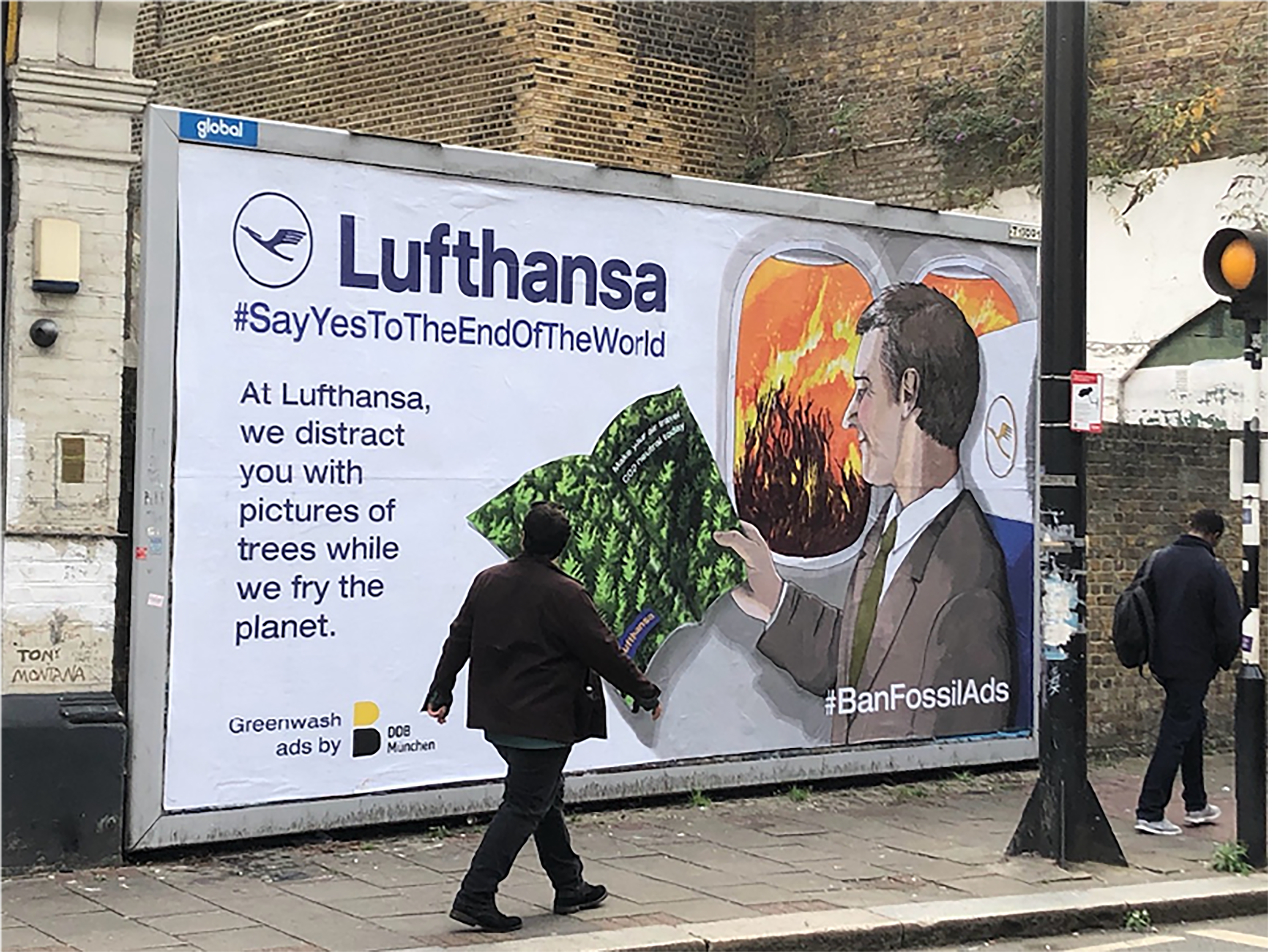
Subvertising billboard in London. Source: http://brandalism.ch/projects/toyota-bmw-greenwash/.
The review and interpretation of all these results allow us to draw a series of conclusions that will help us achieve our last specific objective focused on evaluating the effectiveness of the campaign's communication strategy.
Conclusions
First and foremost, it is important to highlight the diverse range of senders who contribute to the dissemination of DIY works within this campaign. Certainly, this observation is supported by the recurrence of identical subvertisements posted by various individuals encountered during the sample search. There is a notable predominance of image sharing through social media platforms, which host a significantly larger volume of content from this campaign compared to the organizers’ websites or other channels shuch as magazine news. There seems to be also a lack of centralization in the campaign's communication. Notably, there is no official BanFossilAds or BanFossilFuelAds account on any social network.
The use of social media, particularly Twitter and Instagram, as the primary communication platform for campaign images, along with an uncoordinated approach across multiple accounts (both group and personal) sharing identical images with different hashtags, does not facilitate effective campaign tracking or access for individuals without social media or even internet connectivity.
Furthermore, there seems to be a communication gap between environmentalist groups and subvertising factions among the organizers of the European initiative when it comes to communicating the studied campaign. Subvertisers actively communicate and propagate artistic creations through their official websites and social media profiles, while environmentalist groups have limited participation in the digital communication of this campaign. As an example, we observe that the environmental association 350.org, one of the organizers of the initiative, has only posted one tweet using #BanFossilAds, without sharing any images from the campaign. On the other hand, the subvertising organization Badvertising, also an organizer of the initiative, has a total of 52 posts on its official Twitter account using #BanFossilAds, within which a total of 8 images from the subvertising campaign are shared. Thus, subvertising groups affiliated with the campaign, overall, demonstrate higher engagement by actively sharing subvertising works and utilizing the associated hashtag.
All the DIY images from the campaign have been widely disseminated through personal accounts sharing subvertising content on social networks. However, there is a dispersion in communication efforts, both within organizational hierarchies and in the use of hashtags. Multiple organizations focusing on the ban of fossil fuel advertising, such as FossilAdBan.org and vanwieisdelucht.nl, compete for public attention regarding the common goal. Additionally, various hashtags in different languages, including #fossiladban, #stopfossielereclame, #AdBrake, #FossilFreeRevolution, #FimAoFóssil, #PararOGás, #Stoppubfossile, and #EndFossil, contribute to the dispersal of content circulation, potentially reducing the impact of subvertising messages.
Organizers of the #BanFossilAds campaign engage in various activities such as workshops, meetings, and disruptions of corporate events. However, inadequate use of the campaign hashtag in posts and subvertising works limits the cohesive visualization of these efforts. This underutilization represents a missed opportunity to construct a more unified campaign narrative, which could enhance narrative agency in hashtag activism and increase media coverage (Yang, 2016).
In terms of the geographical distribution of the subvertising campaign, although a significant number of artworks remain unlocated, it is evident that the United Kingdom stands out as the most active country in terms of placing images in public spaces. Other countries, such as Spain, Portugal, Slovakia, and Romania, have limited online representation, with only one image found in each respective country. The prevalence of works written in English further underscores the campaign's central focus within the Anglo-Saxon world, not only in its physical realization but also in its communication.
The #BanFossilAds campaign predominantly utilized typical advertising media such as posters and bus stops, which aligns with the subvertising design of the works and the ease of accessing and manipulating these media for activists. Posters and bus stops were accessible and suitable formats for DIY activism, both within organized groups and at an individual level. These media formats can be easily modified, including the subversion of materials like printed posters with white backing, to conserve resources. Billboards also played a significant role (26%) in the campaign, although their larger size and production challenges suggest that group efforts were likely involved in subverting these larger format messages (as seen in Figure 4). Overall, the choice of media focused on public streets and pedestrian areas effectively evokes climate change and integrates the theme into everyday discourse (O’Neill and Smith, 2014).
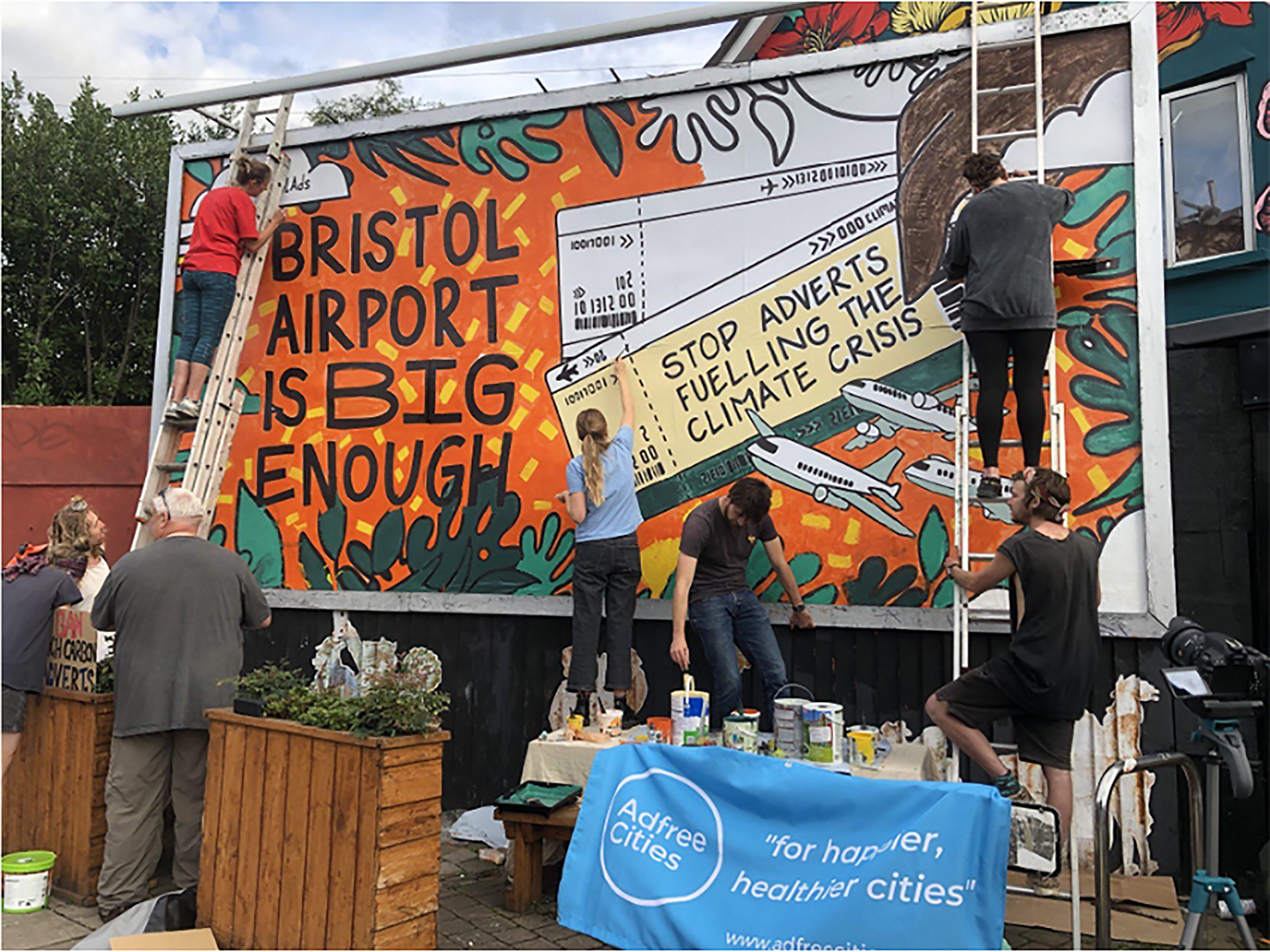
Members of Adblock Bristol painting a #BanFossilAds billboard in Bristol. Source: https://twitter.com/AdblockBristol/status/1570465069284356100/photo/1.
The subvertisements in the campaign demonstrate a high level of artistic sophistication, suggesting the involvement of artists and design professionals in their creation. The prevalence of digitally printed images indicates the contribution of individuals with advanced design skills, further supported by the predominance of illustrations as the chosen artistic technique. These images are considered valid for promoting public engagement with climate issues (Wang et al., 2018). On the other hand, there is a minority of works in this campaign with an amateur appearance that actively encourage citizen participation by incorporating compositional tools and appealing content to engage people in public spaces. While diverging from conventional professional advertising styles, these works maintain their subversive nature through the appropriation of advertising space. However, their esthetics align more closely with traditional handmade protest banners than the typical subvertising, potentially reducing the element of surprise for viewers. Thus, the campaign amalgamates subvertising works of diverse characteristics. On the one hand, artistically curated pieces with visual appeal and, on the other hand, a more amateurish but open designs, capable of encouraging citizen participation in the creation of the campaign.
The composition of the works can be categorized into two main groups based on their color palette: vibrant and colorful images, and darker and more neutral tones. As Albers (1963) noted, color is not just a decorative element; it has a tremendous emotional and psychological impact on viewers. Applying color theory, the works featuring bright colors combined with sarcastic slogans can be interpreted as having an ironic intention, while those with predominantly dark colors may convey a more pessimistic or catastrophic tone. In the context of art displayed in advertising spaces, the use of vibrant colors may enhance visibility and facilitate the gist perception and to promote a rapid semantically holistic acquisition of the scene representation (Wedel and Pieters, 2015).
The subvertising campaign demonstrates a clear collaboration among the participating collectives, as evidenced by the sharing of resources. The designs of the subvertisements are distributed across various locations and countries, indicating a widespread presence and engagement. Moreover, there are instances where the same designs have been translated into different languages (Figure 5), highlighting the international nature of the collaborative activist efforts in sharing DIY works among the participants.
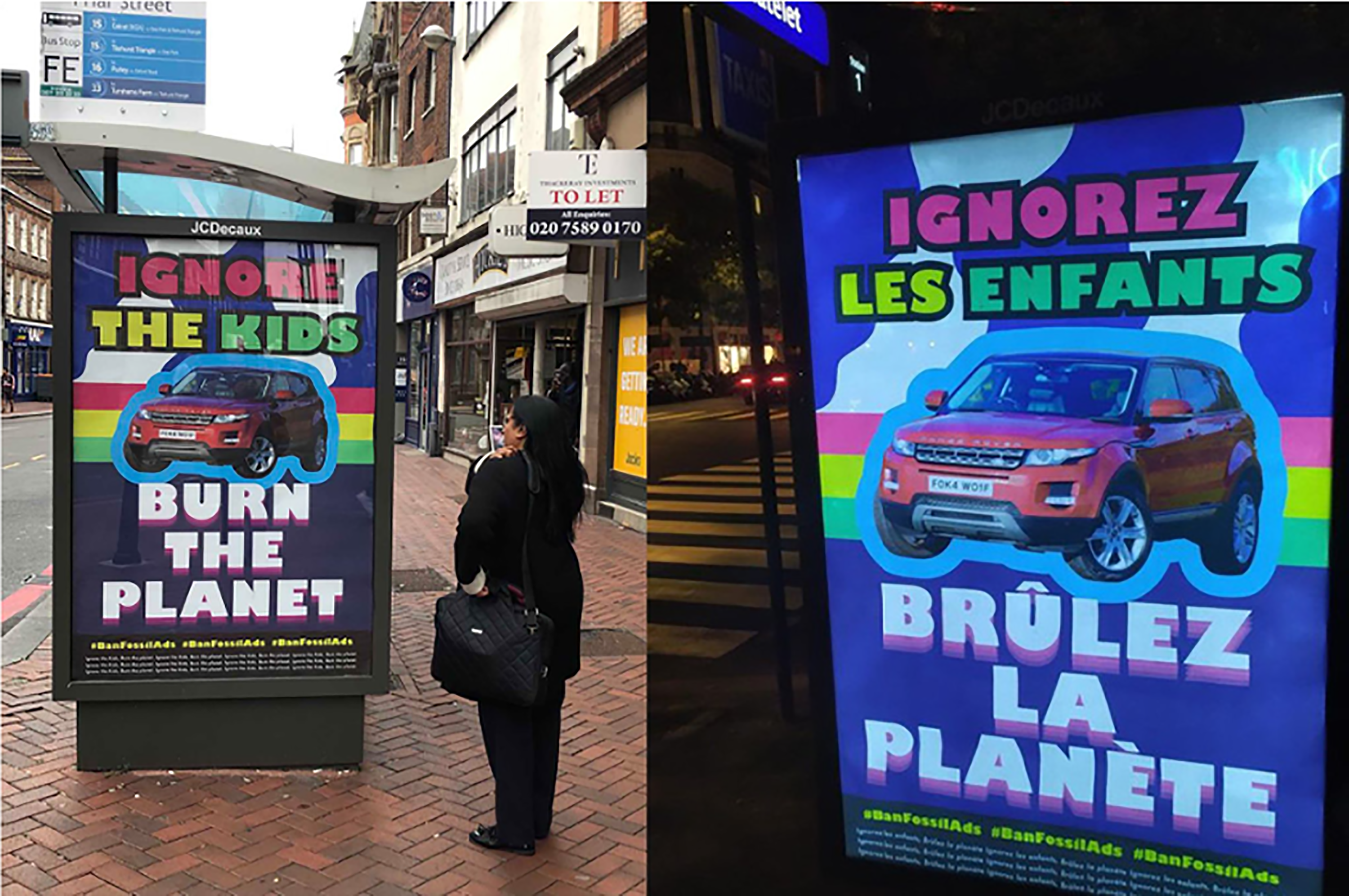
Subvertisements of #BanFossilAds. Source: http://brandalism.ch/projects/ad-agencies/.
As indicated by the results, the critique expressed in this campaign primarily focuses on pollution, but it also encompasses concerns about greenwashing practices within these industries. Greenwashing, which refers to the misleading or deceptive communication of environmentally friendly practices by companies, is a significant concern for environmentalists (Friedman and Campbell, 2023; Supran and Hickey, 2022). Activists emphasize both symbolic and physical resistance, highlighting the importance of addressing communicative elements alongside the actions of fossil fuel industries. Using advertising as a form of protest engages with the same realm of communication used by opponents and aligns with the use of subvertising as an anti-greenwashing practice previously employed by NGOs (Pacheco Rueda, 2009, 2010).
The automotive industry takes precedence over oil companies in the analyzed sample, implying a focus on end-consumers. The campaign emphasizes consumer-oriented sectors like cars and airlines, encouraging political consumption where individuals can influence environmental performance through boycotts or buycotts (Neilson, 2010).
Regarding the resemblance of subvertisements to the overall esthetics of advertising, there is a notable degree of similarity that enhances the element of surprise for individuals who are culturally inclined to perceive and comprehend advertisements, confronting ecological critiques instead of typical commercial messages. This observation is supported by the fact that majority of the works in the sample maintain the original logos and visual identities of the criticized brands, subverting only the slogans and incorporating concise explanatory texts. As a result, the DIY works closely resemble authentic advertisements, applying the situationist concept of detournement and rendering the surprise experienced upon reading the visuals and texts more impactful and memorable.
In evaluating the overall communication strategy of the #BanFossilAds campaign, it displayed commendable qualities, utilizing diverse communication channels and showcasing a high level of artistic professionalism in its works. However, a notable drawback was the absence of a comprehensive international communication strategy within the subvertising campaign, impeding the cohesive circulation of collective actions. In the digital age, social media plays a pivotal role in successful communication for social movements, offering unmatched reach and speed. Leveraging the capabilities of these platforms through the consolidation of hashtags and synchronized dissemination of the campaign content could have facilitated heightened awareness and encouraged increased engagement, particularly in signature collection. Nevertheless, it is imperative to acknowledge that the efficacy of this visual activism would have been enhanced by complementary protest strategies involving tangible actions due to, as pointed by Critical Art Ensemble, “Virtual intervention in and of itself is not enough” (Vlavo, 2017: 131).
The identified underutilization of resources and the absence of a comprehensive communication strategy within the campaign may have contributed to its limited support from European citizens. In fact, the European initiative failed to collect the one million signatures it needed to urge the European Commission to propose new EU legislation on the issue. The total number of signatures collected was 353.103 (Ban Fossil Ads, n.d.). Given that there is a call to revitalize the initiative in the future (Ban Fossil Ads, n.d.), it would be a great help to build global outreach strategies for global activist campaigns, putting more emphasis on communication issues and improving the planning that encompasses both the presentation of the campaign and its transmedia dissemination. These efforts at the communication level could increase the likelihood of achieving the overall objective of the campaign in its next call.
Subsequent research directions might explore unaddressed facets influencing the effectiveness of any subvertising campaign, enhancing understanding in areas like the individual authorship of subvertising, the communicative dynamics within groups on national and international scales, and the financial structures sustaining subvertising entities. These inquiries would deepen insights into this contemporary phenomenon, challenging established communicative norms and potentially fostering a realm for civic dissent.
Footnotes
Declaration of conflicting interests
The author declared no potential conflicts of interest with respect to the research, authorship, and/or publication of this article.
Funding
The author received no financial support for the research, authorship, and/or publication of this article.
